Sri Lanka's Cultural Triangle in 5 Days: Anuradhapura, Polonnaruwa, Sigiriya and Dambulla
5 DAYS22 placesby WaTrips
Anuradhapura's stupas and the sacred Bodhi tree, Mihintale and Aukana, Polonnaruwa, Kaudulla, Sigiriya, Pidurangala, Dambulla and Aluvihare.
The Cultural Triangle holds five of Sri Lanka's UNESCO World Heritage Sites. Day one walks Anuradhapura, capital for over a thousand years, with the sacred Jaya Sri Maha Bodhi tree and the great stupas of Ruwanwelisaya, Jetavanaramaya and Abhayagiri. Day two visits Mihintale, where Buddhism arrived, and the giant Aukana Buddha. Day three explores the medieval capital Polonnaruwa and the rock Buddhas of Gal Vihara. Day four watches elephants at Kaudulla and climbs Sigiriya, the lion rock fortress. Day five visits the cave temples of Dambulla and Aluvihare. Wear modest clothes, white is ideal, and remove shoes and hats at sacred sites.
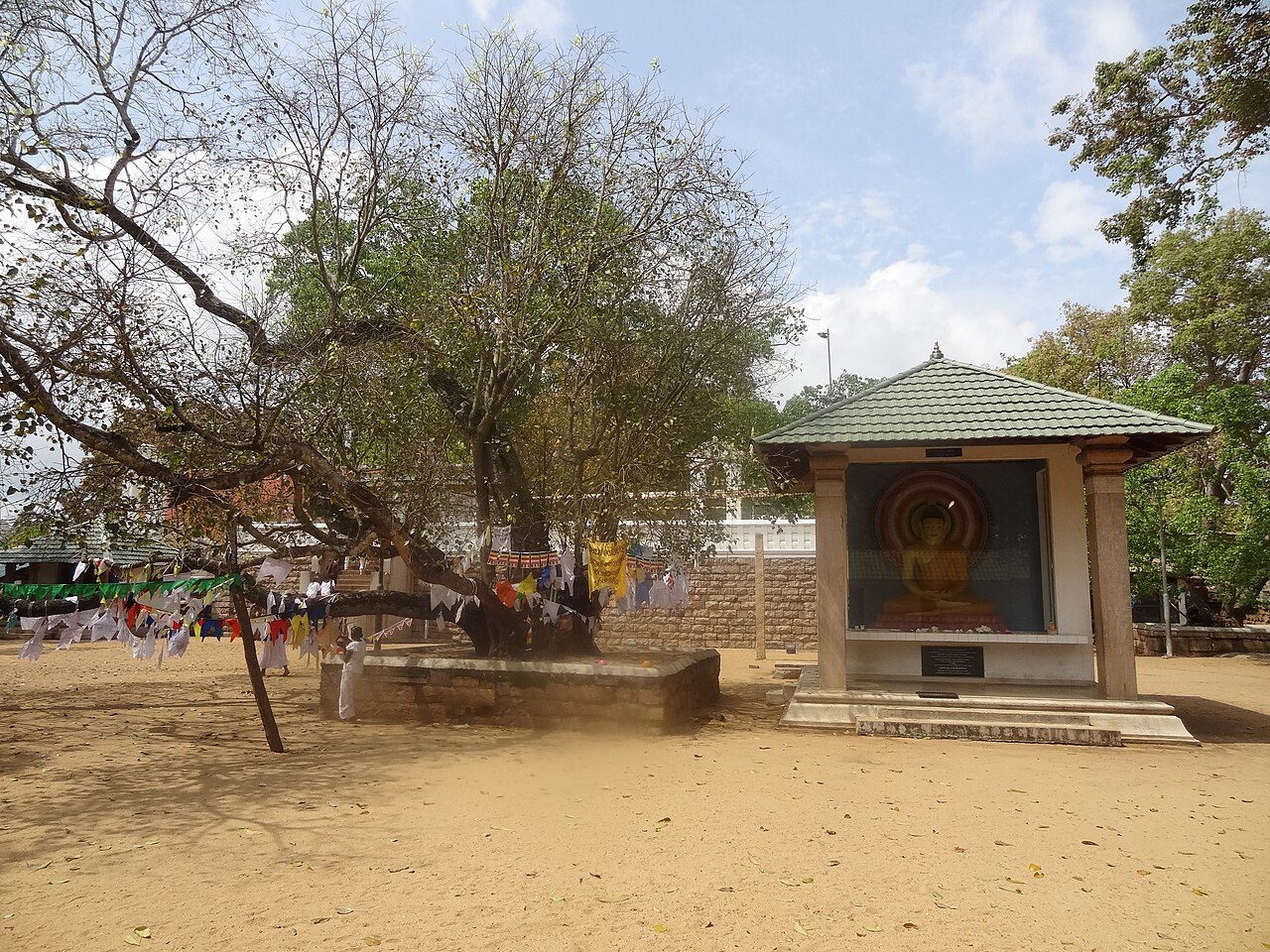
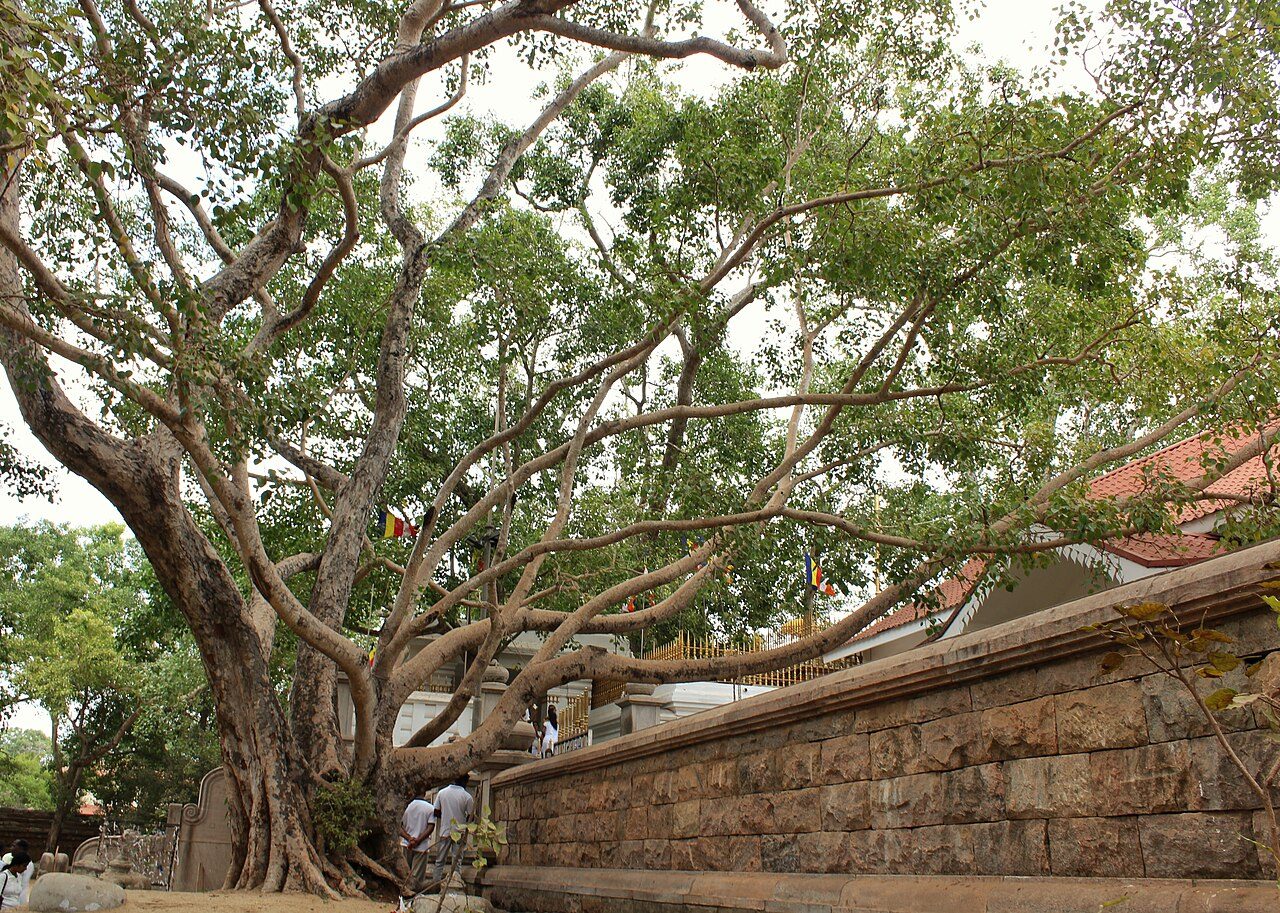
Jaya Sri Maha Bodhi in Anuradhapura is a sacred fig tree grown from a cutting of the tree at Bodh Gaya under which the Buddha attained enlightenment. It was brought here in the 3rd century BCE by Sanghamitta, daughter of Emperor Ashoka, and is said to be the oldest living tree planted by humans with a known planting date. Pilgrims in white offer flowers on its terraces.
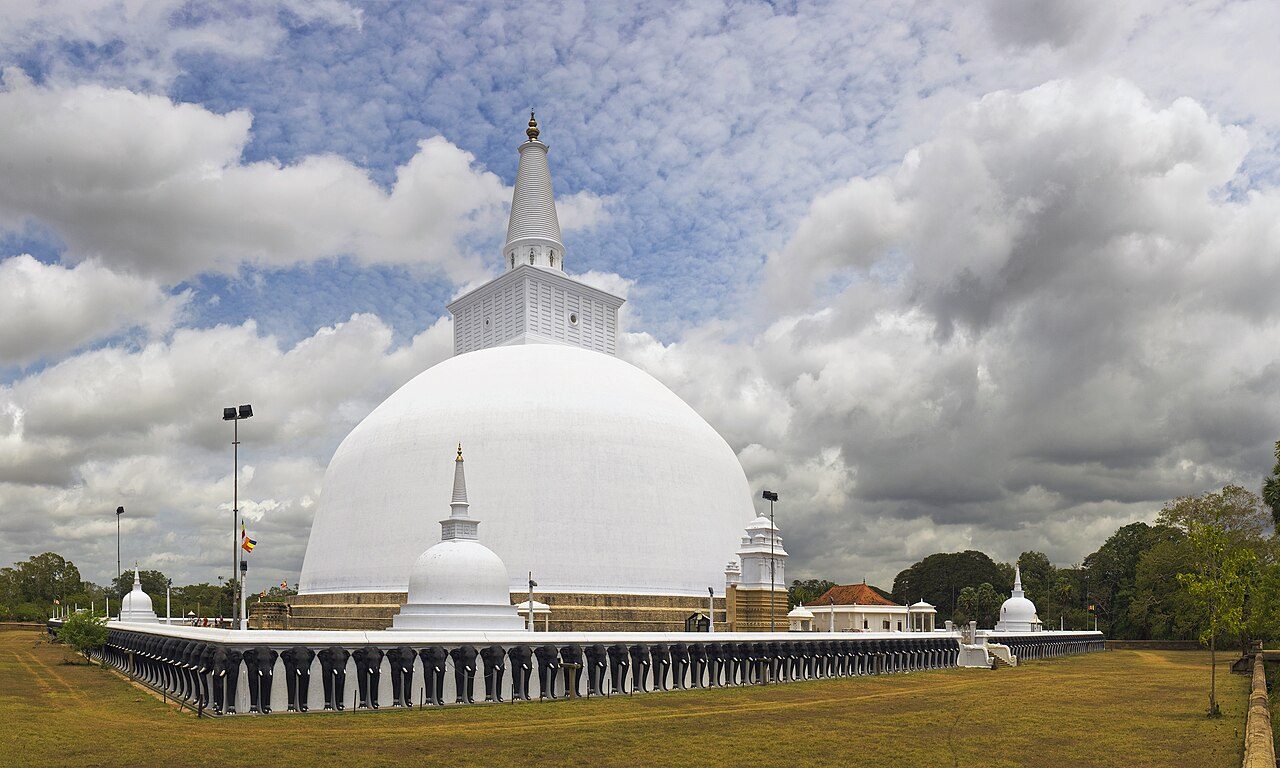
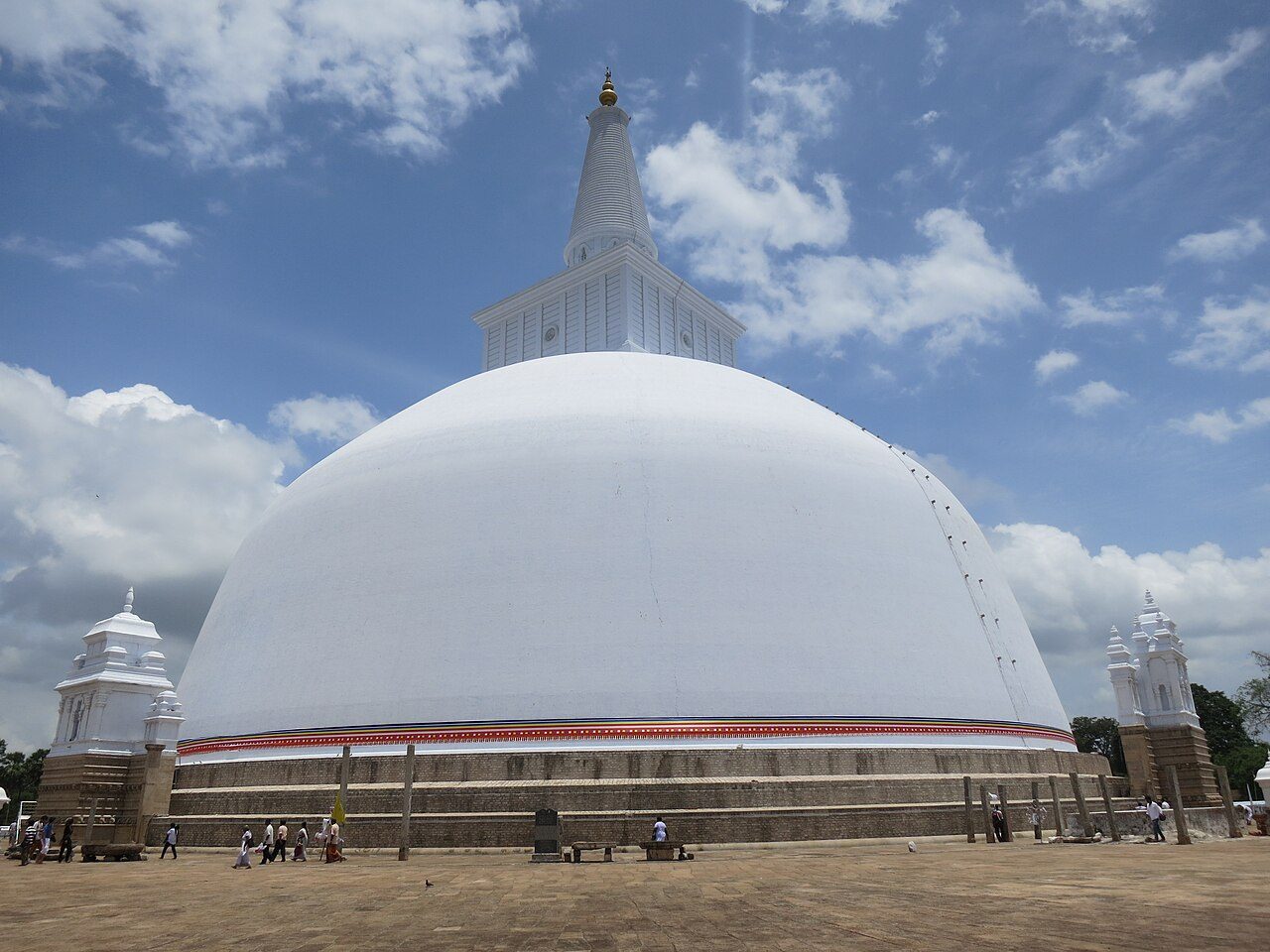
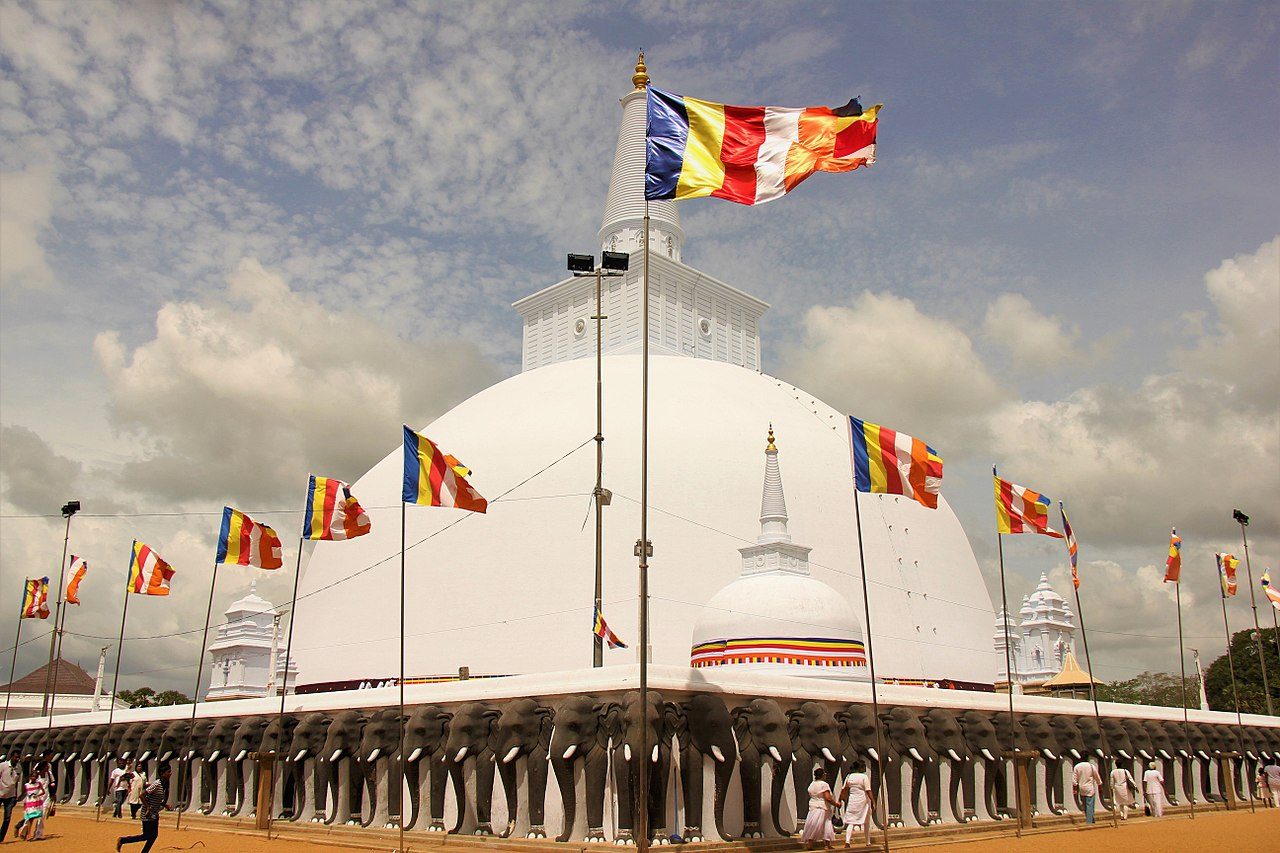
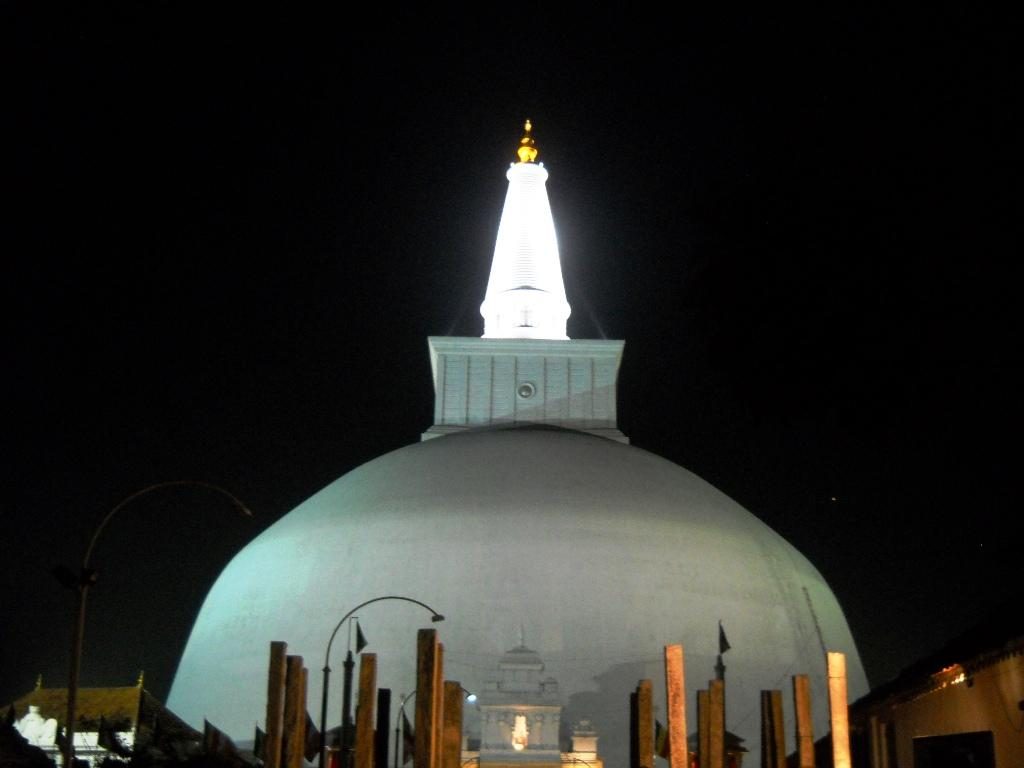
Ruwanwelisaya is the great white stupa of Anuradhapura, built by King Dutugemunu in the 2nd century BCE after his victory over the Chola king Elara. It stands about 103 metres high after restoration and is ringed by a wall of sculpted elephants. It is one of the most venerated Buddhist monuments in the world.
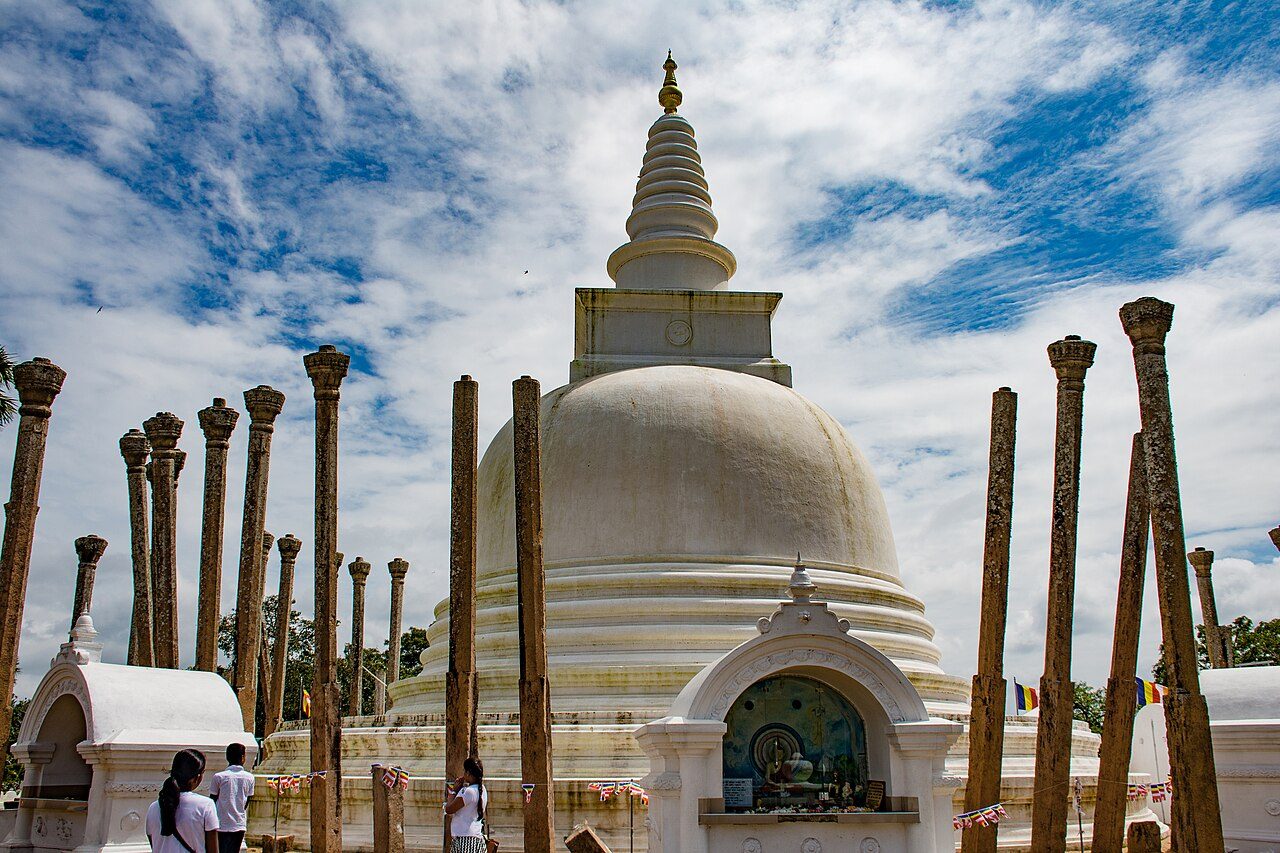
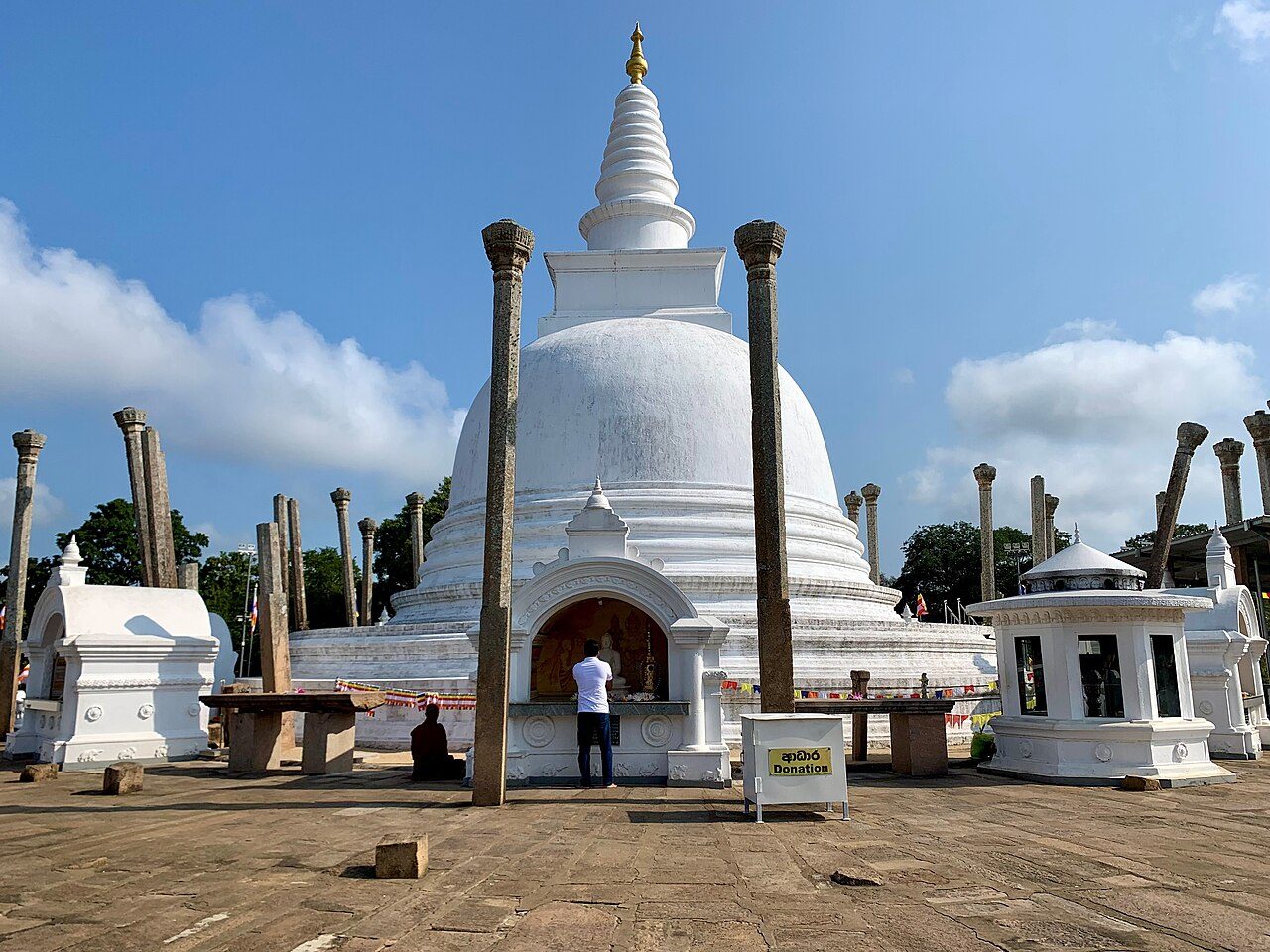
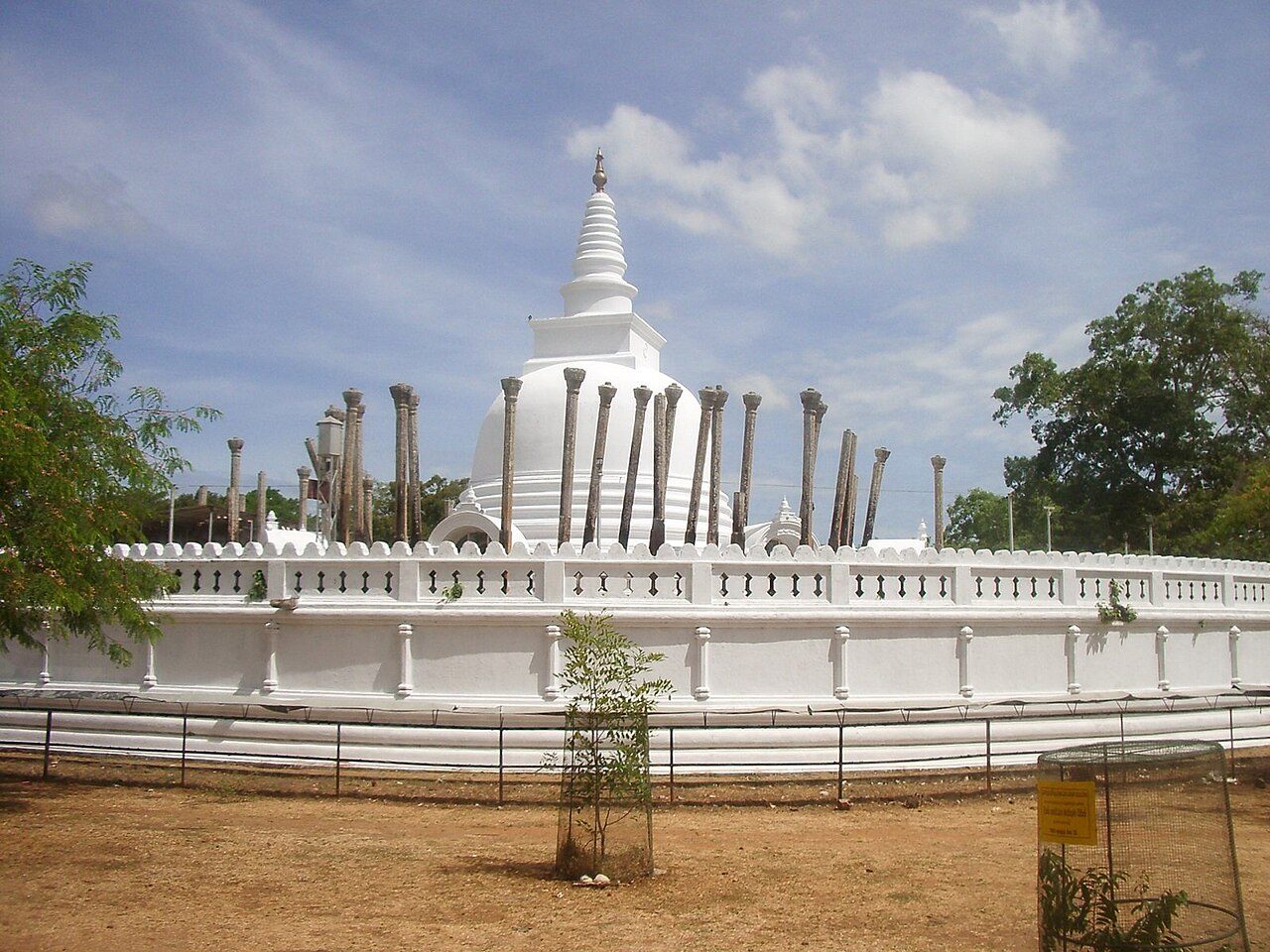
Thuparamaya in Anuradhapura is regarded as the first stupa built in Sri Lanka after the arrival of Buddhism. King Devanampiya Tissa built it in the 3rd century BCE to enshrine the right collarbone relic of the Buddha. The present bell shape dates from a 19th-century restoration. Rings of slender stone pillars remain from a roofed vatadage that once covered it.
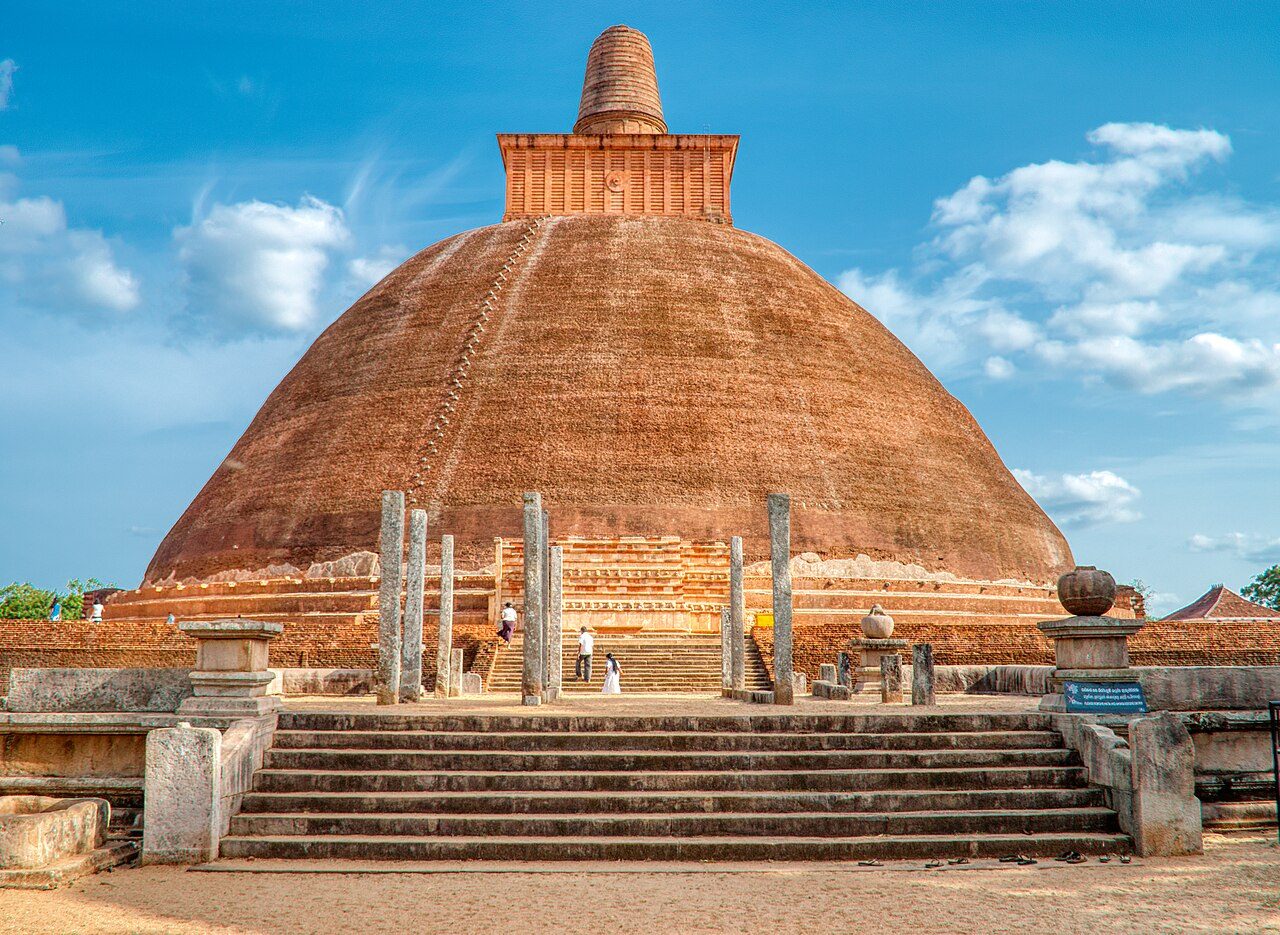
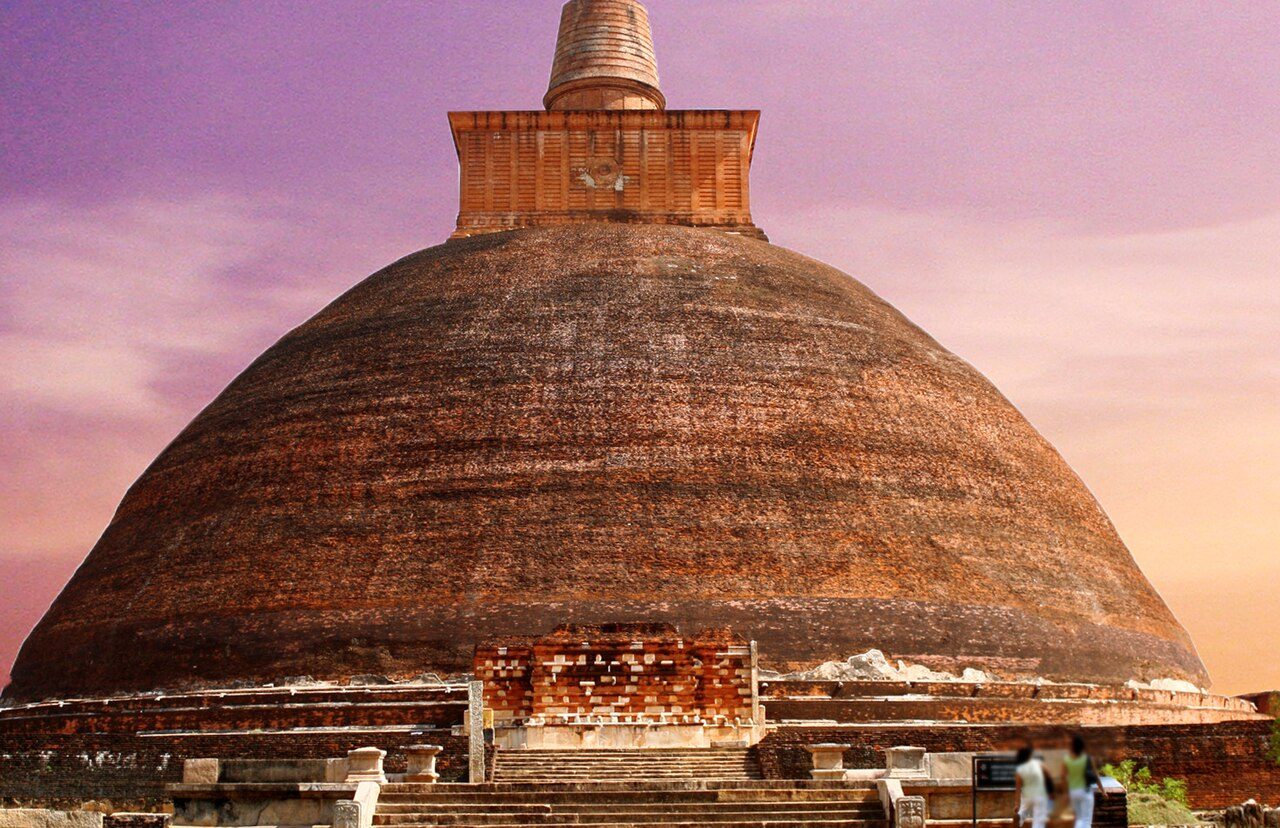
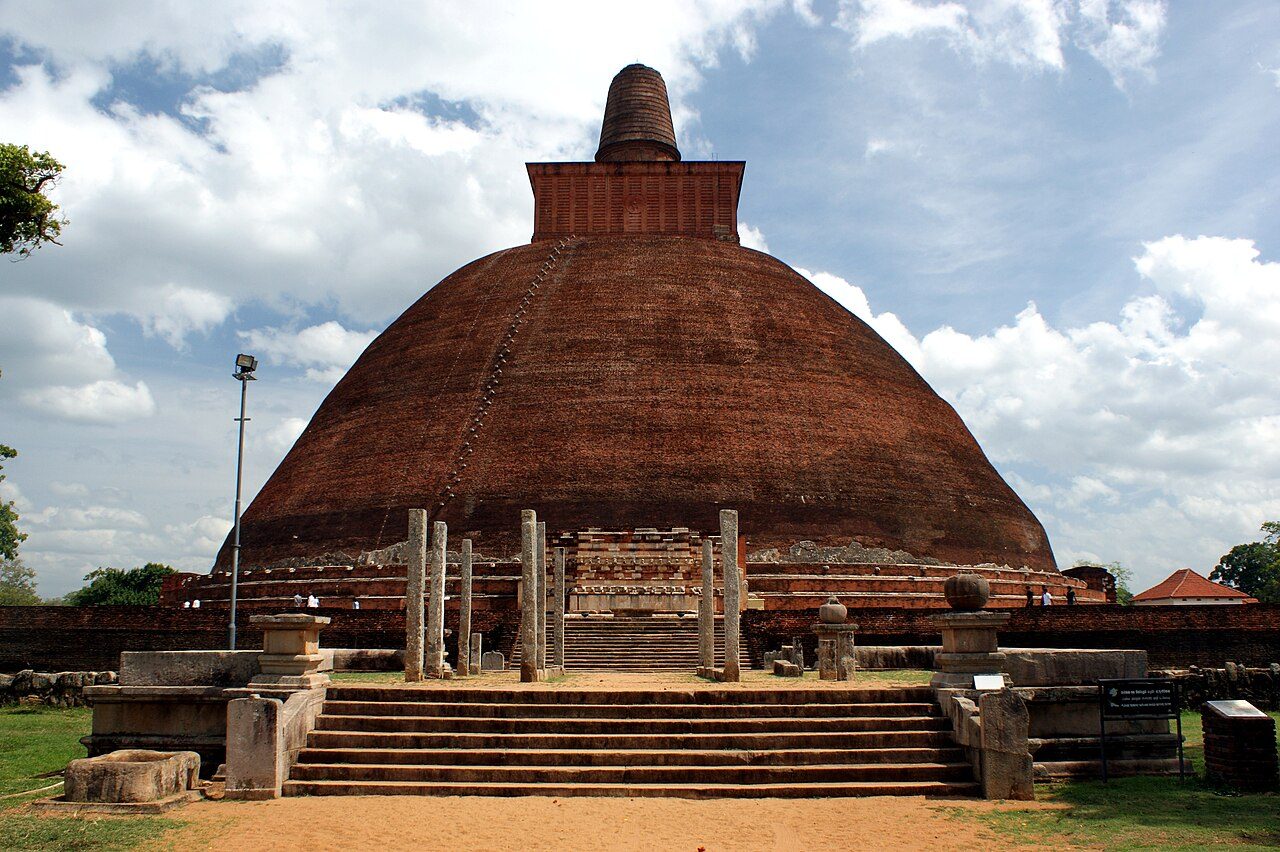
Jetavanaramaya in Anuradhapura was built by King Mahasena in the 3rd century CE. At its original height of about 122 metres it was the third tallest structure in the ancient world, after two of the pyramids of Giza, and the largest brick building ever made. Some 93 million baked bricks went into it. The restored dome still stands about 71 metres high.
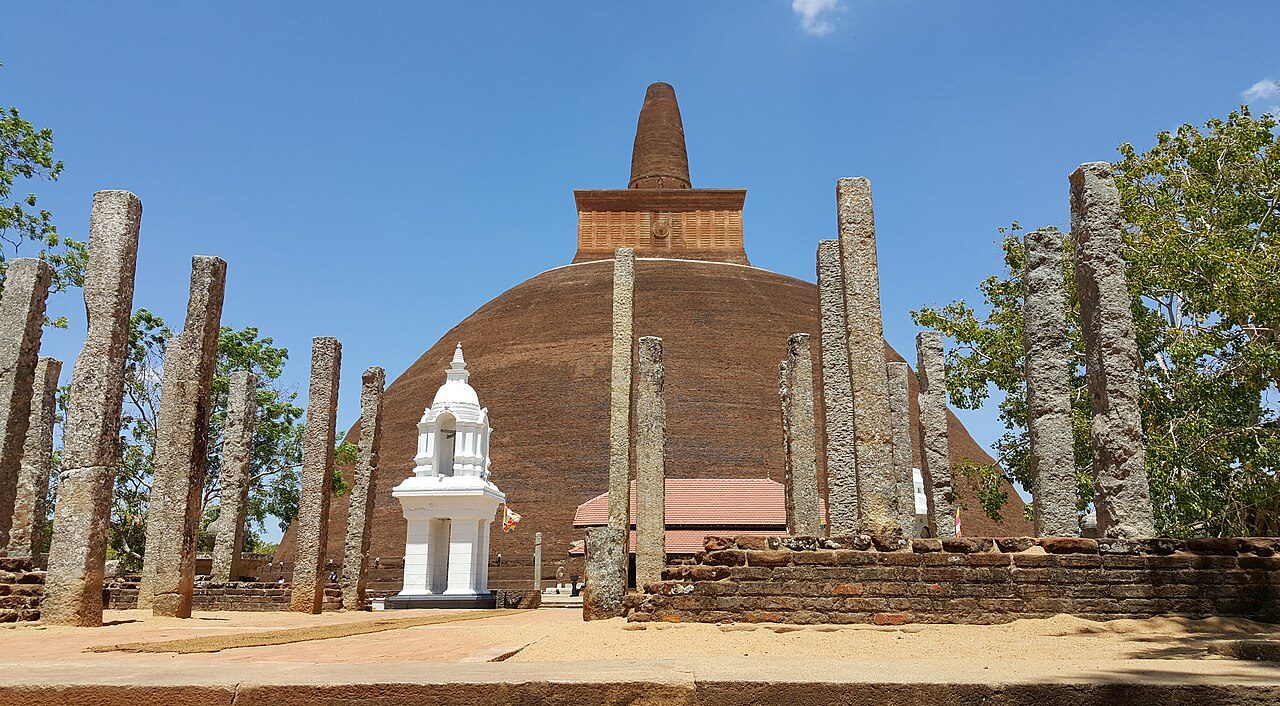
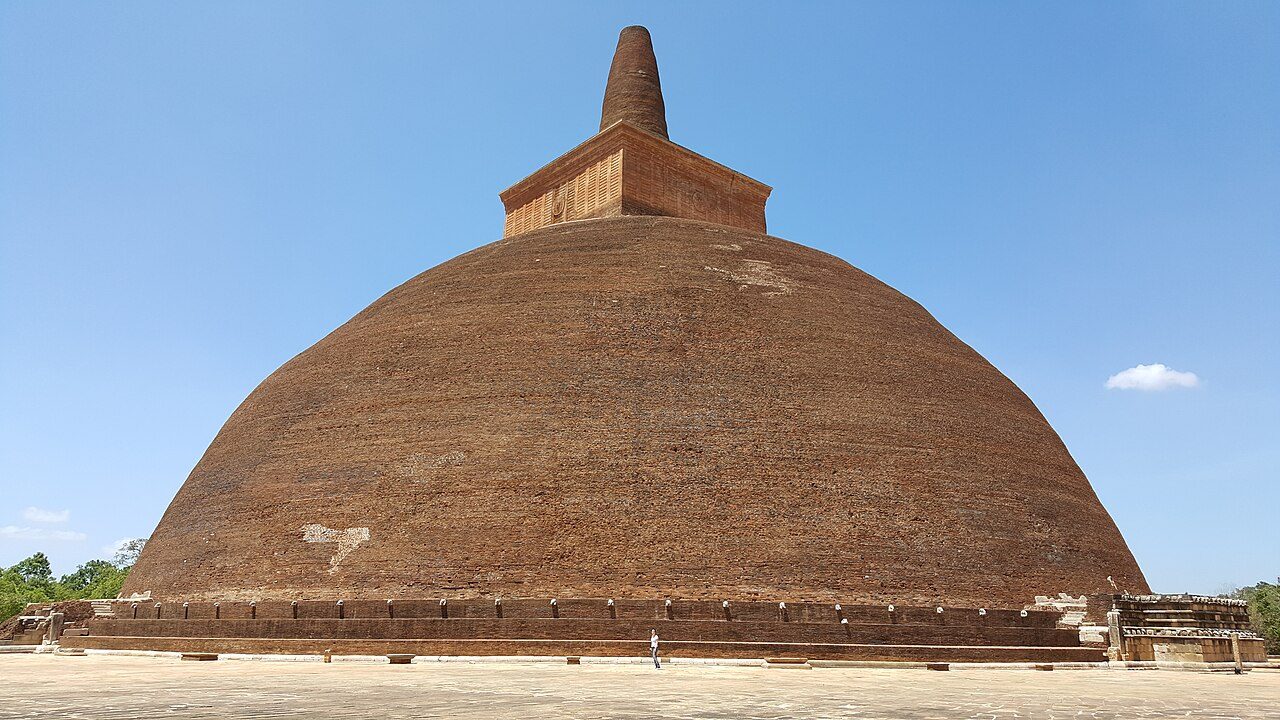
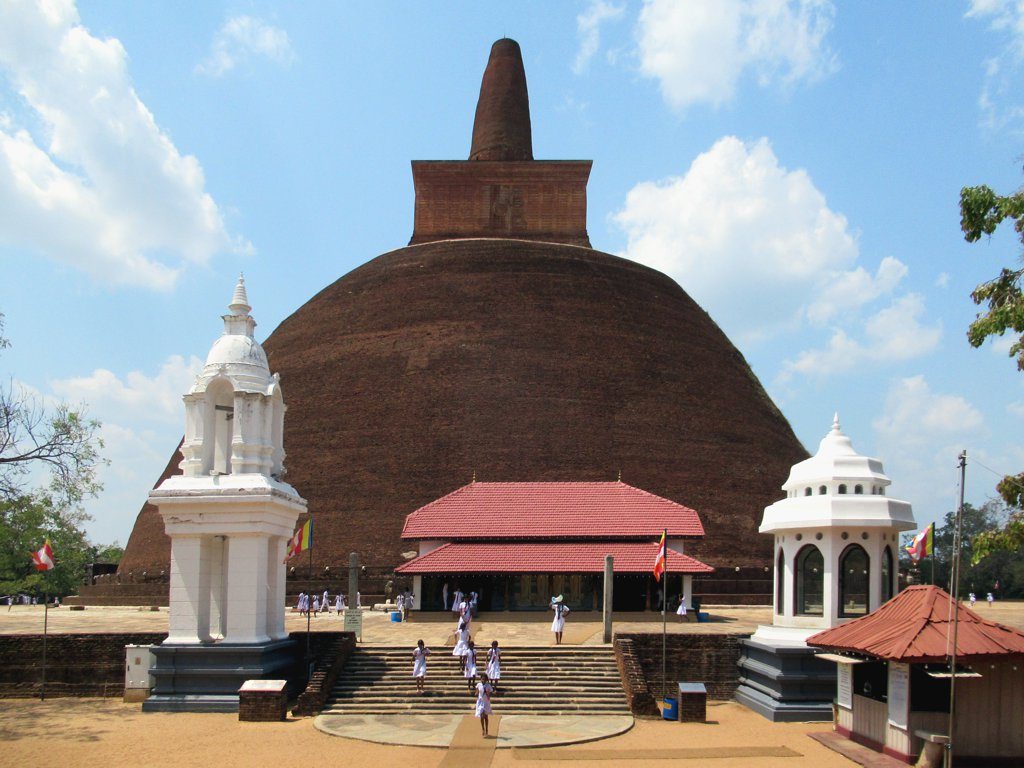
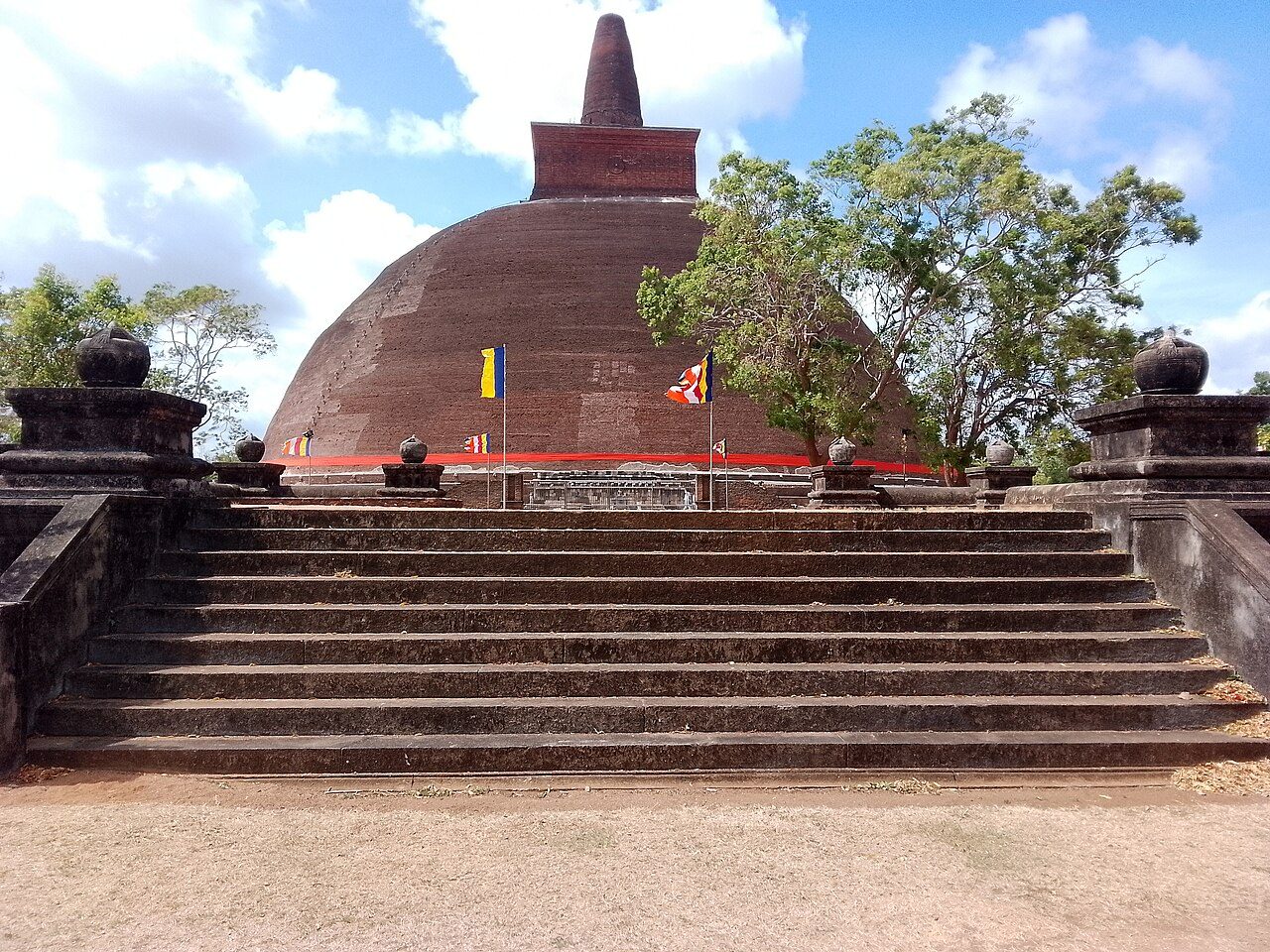
Abhayagiri Dagoba was the centre of a great monastery in northern Anuradhapura, founded in the 1st century BCE by King Valagamba. It became a seat of learning that welcomed Mahayana as well as Theravada teaching and drew monks from abroad. The brick stupa, about 75 metres high today, has been restored after long conservation work.
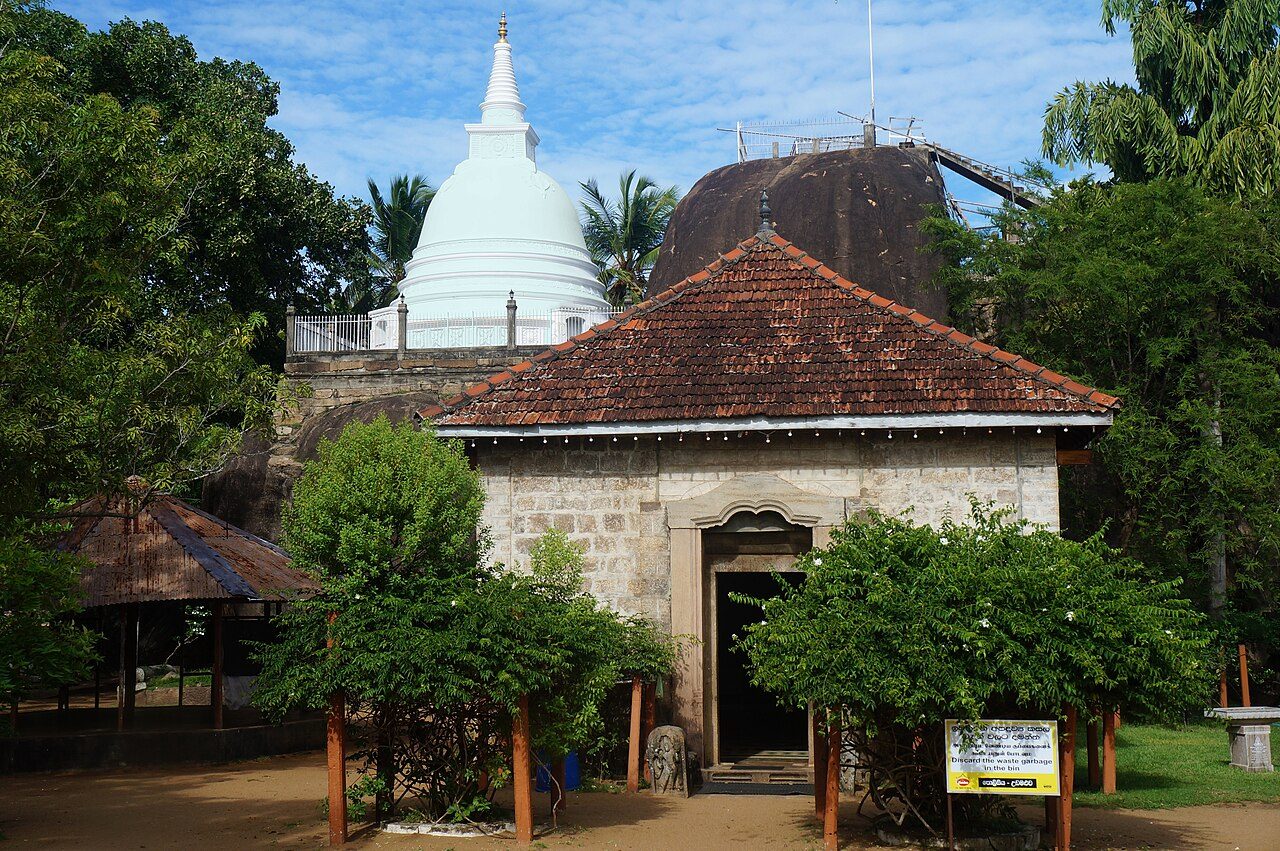
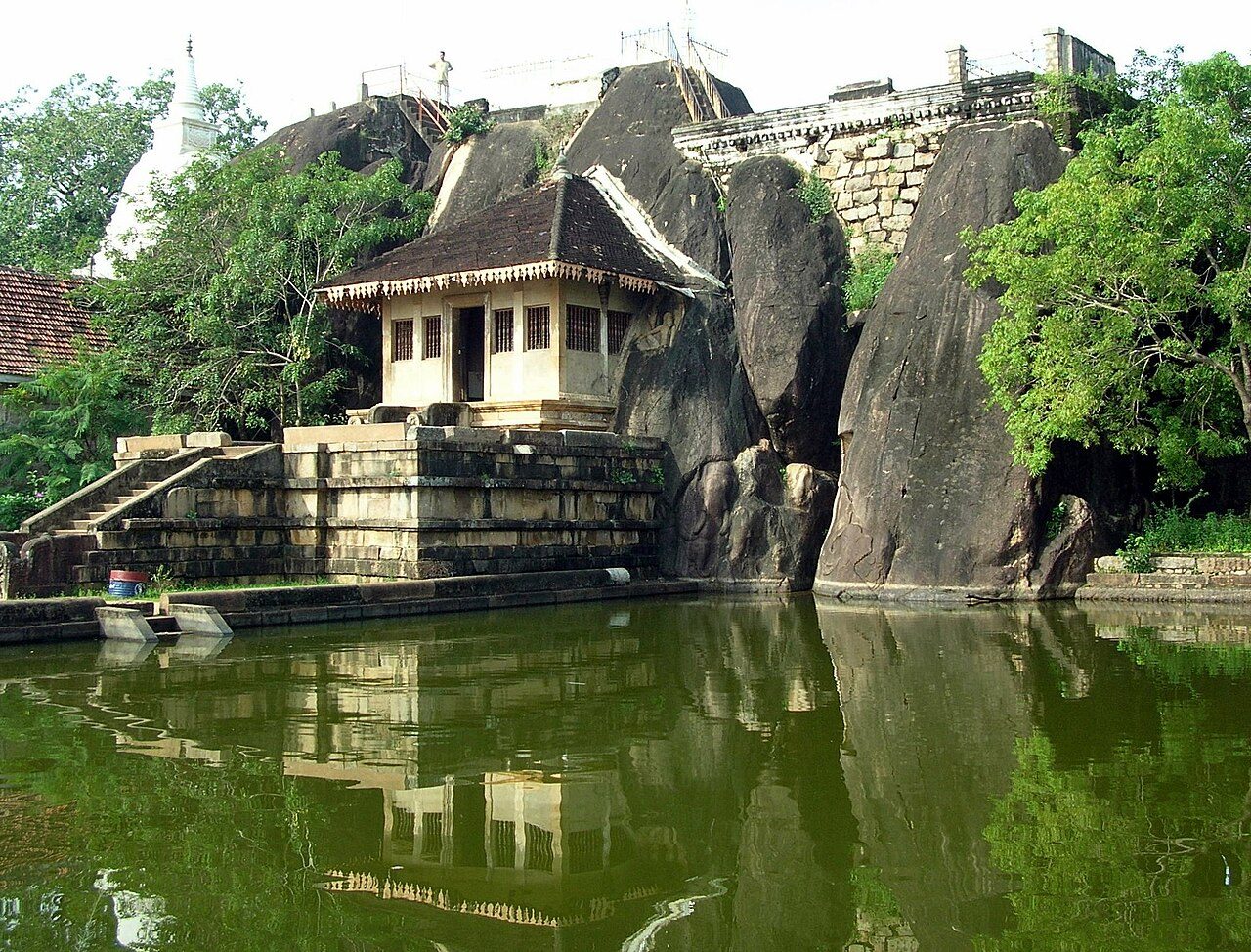
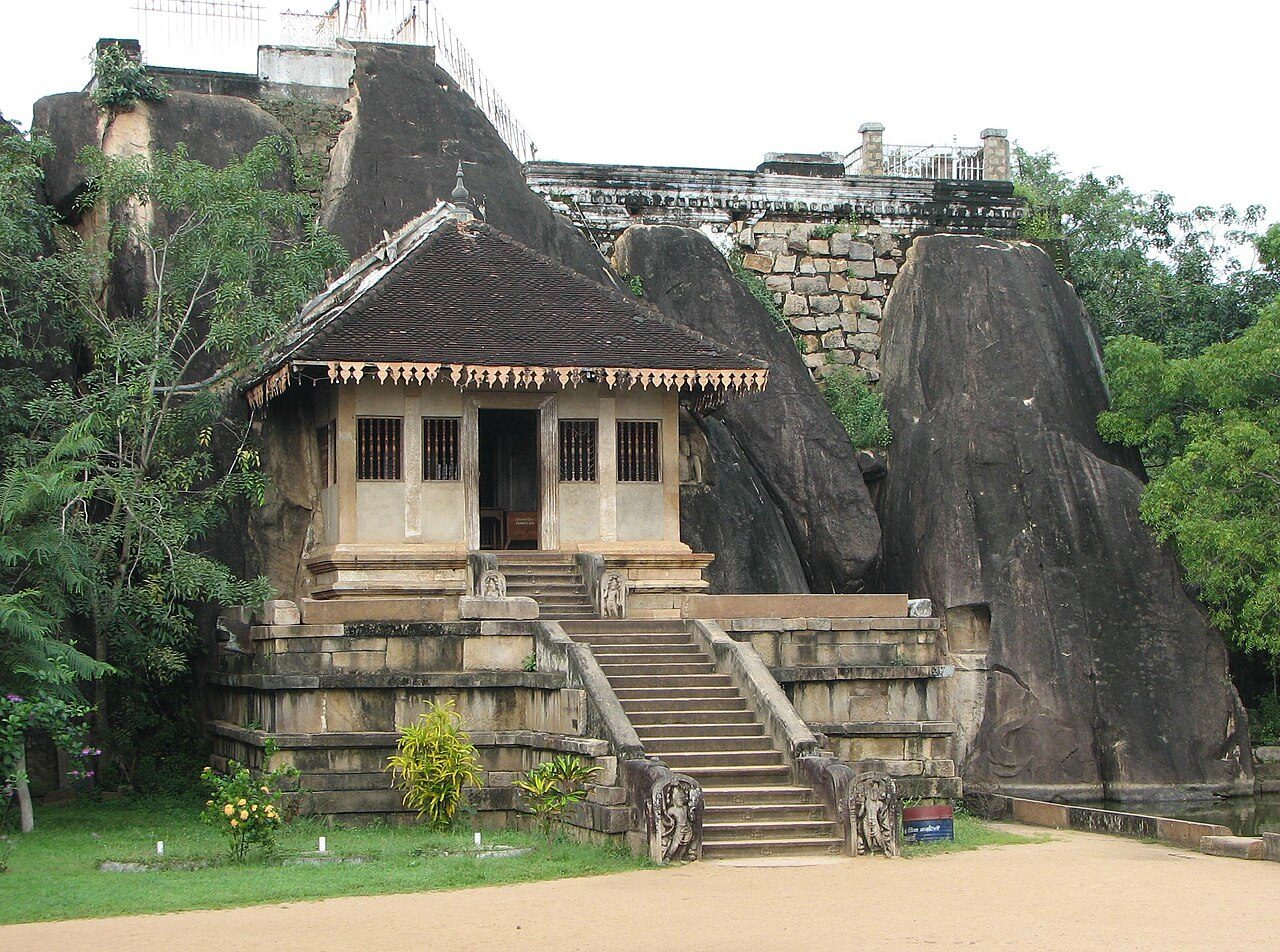
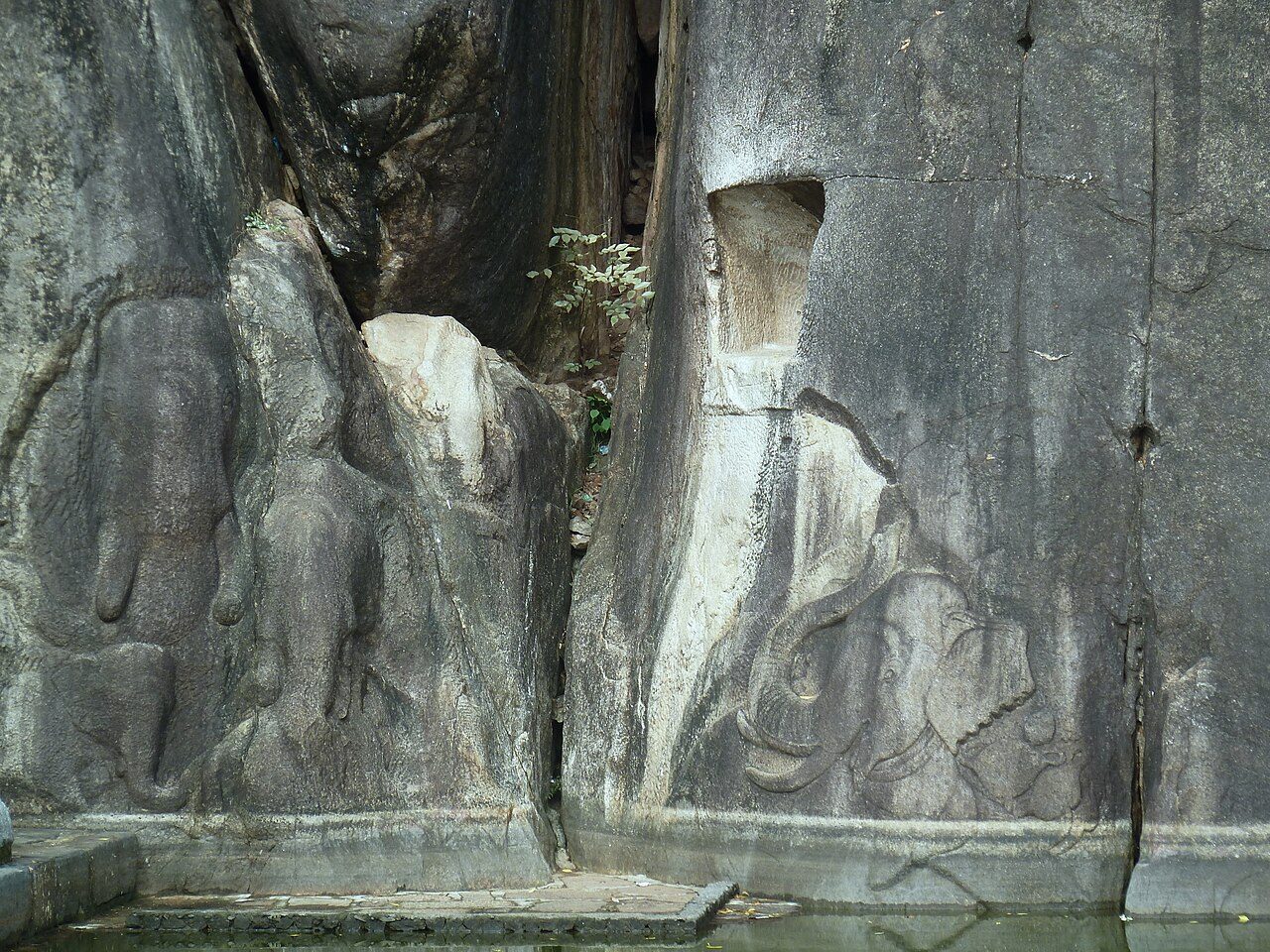
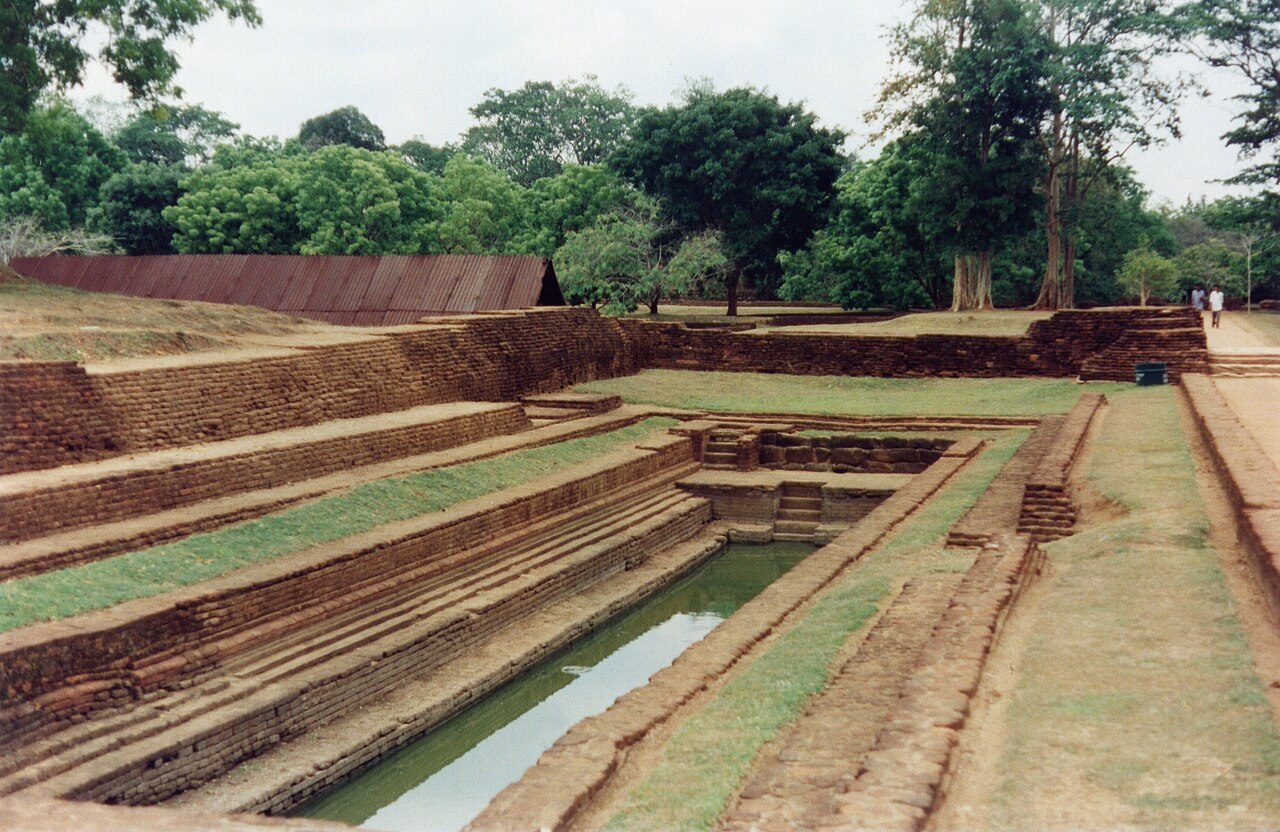
Isurumuniya is a rock temple beside the Tissa Wewa in Anuradhapura, founded in the 3rd century BCE by King Devanampiya Tissa. It is famous for its stone carvings: the Isurumuniya Lovers, the royal family, and elephants playing in the water carved on the rock by the pond. A small museum beside the shrine displays the originals.
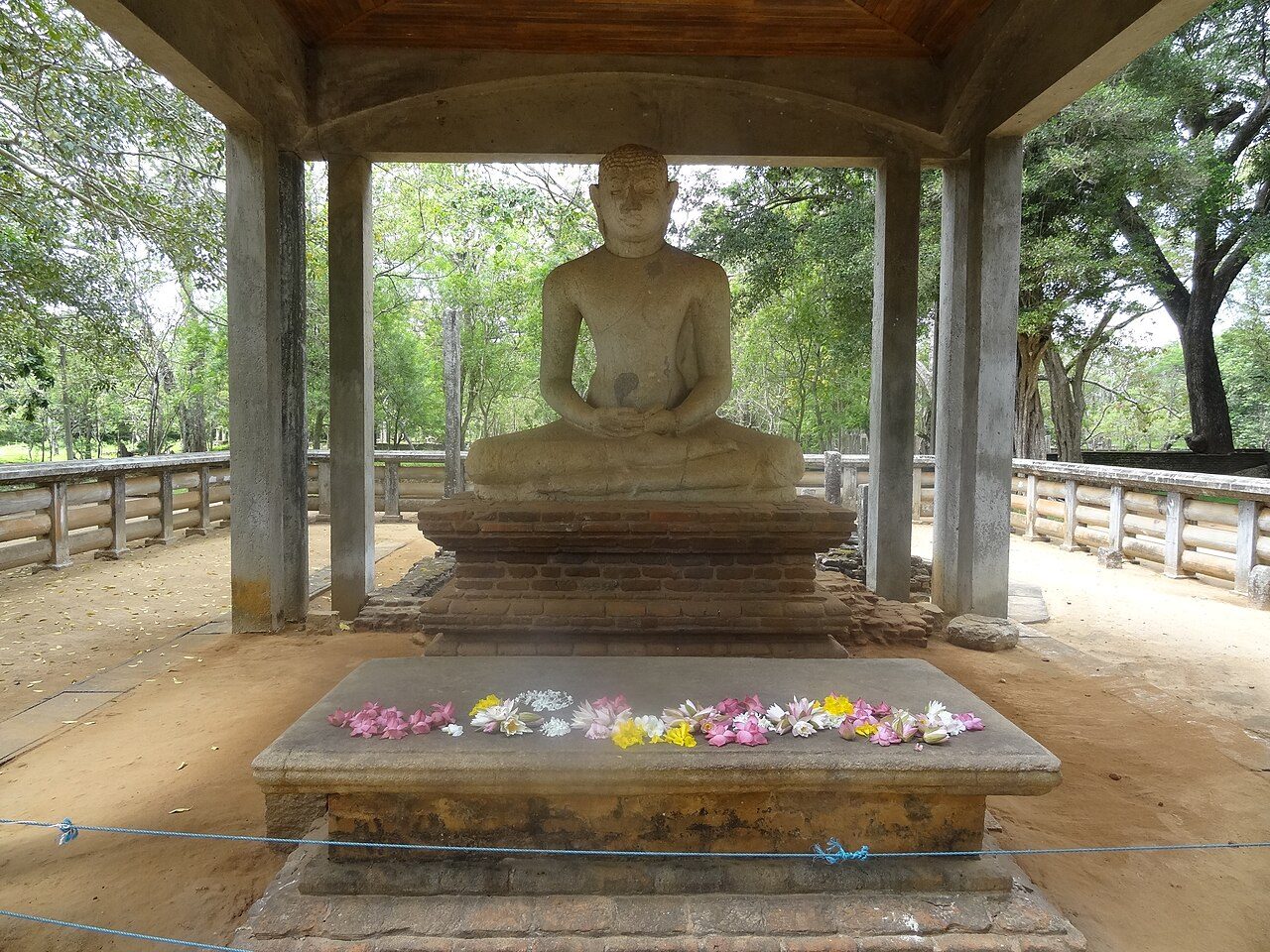
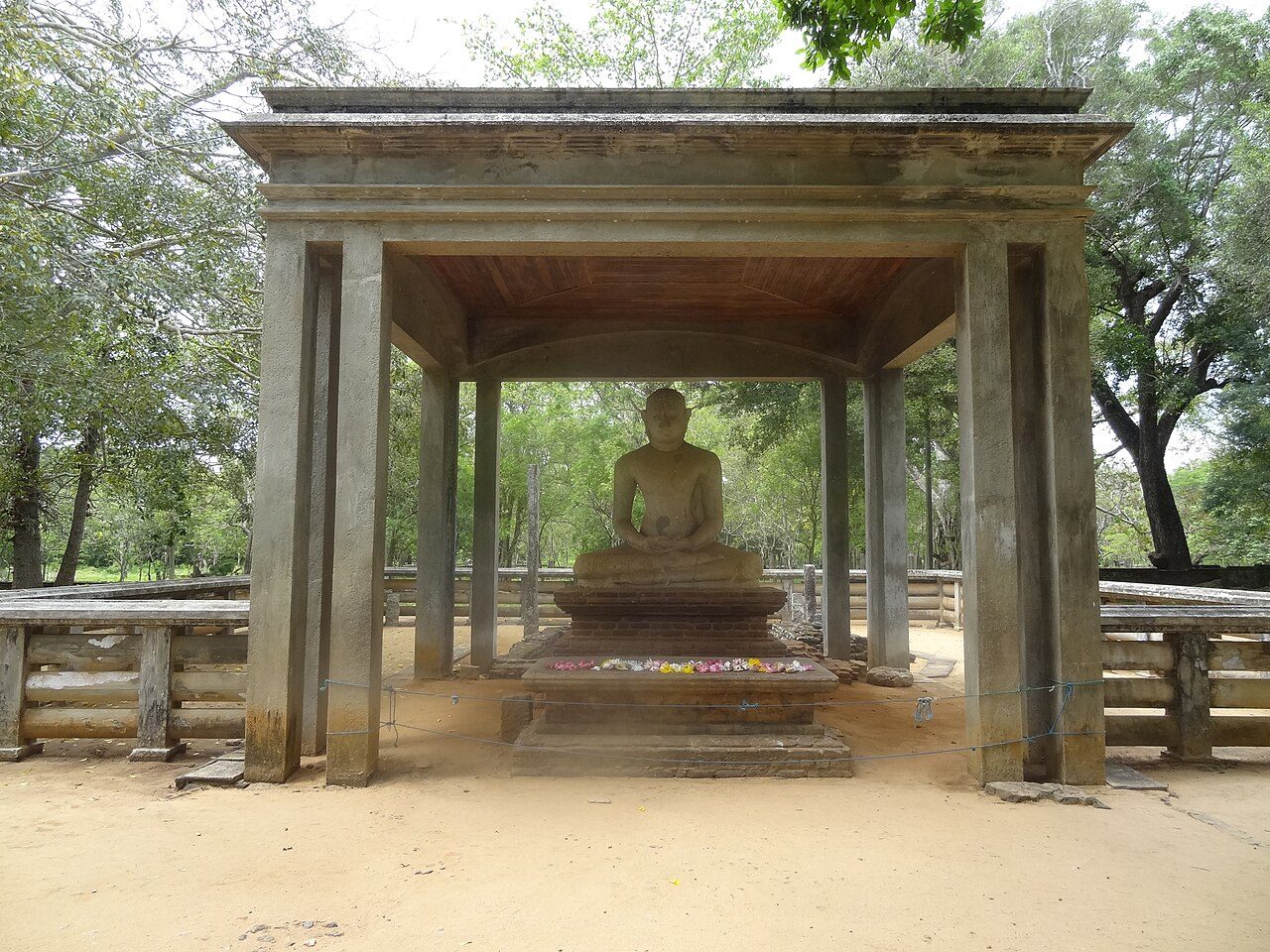
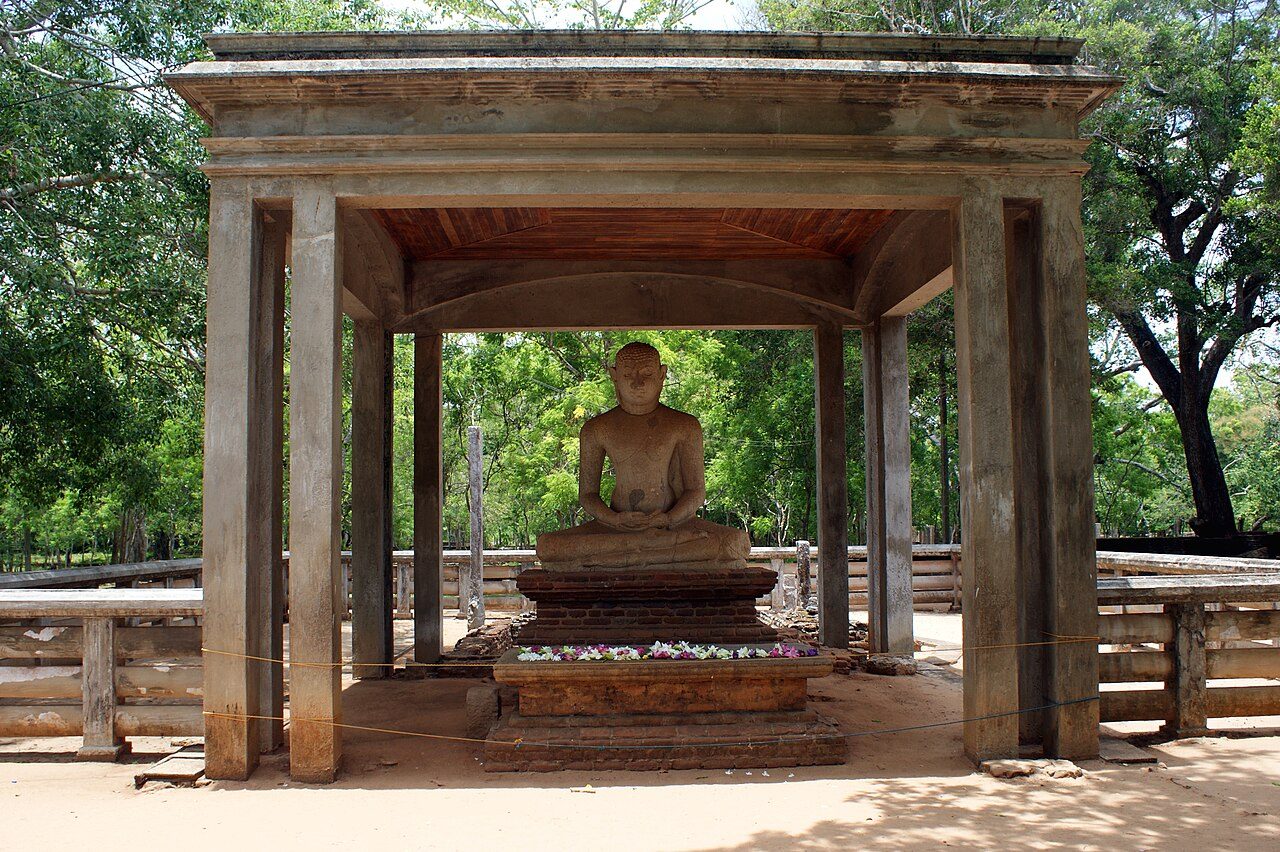
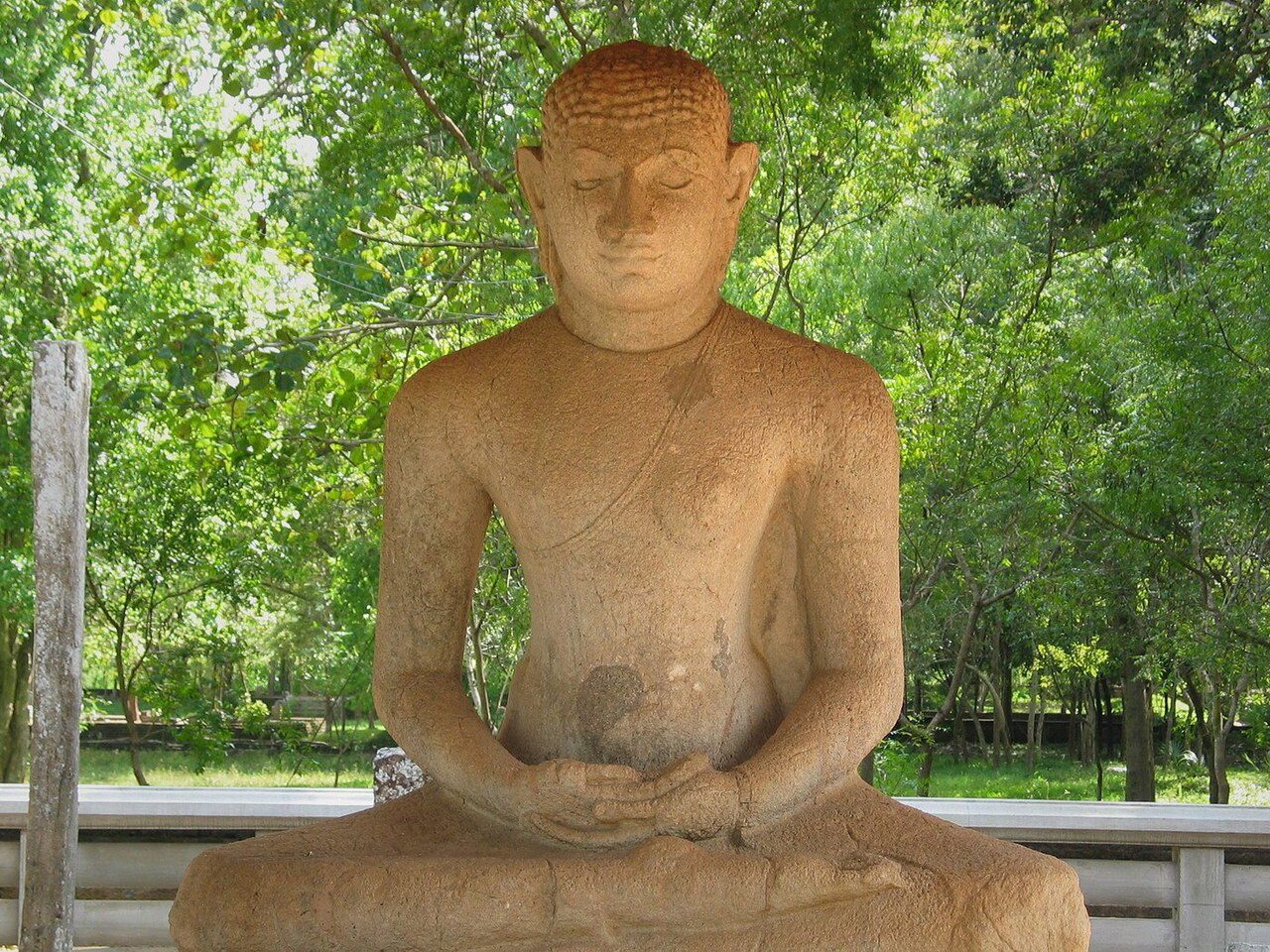
The Samadhi Buddha Statue sits in Mahamevnawa Park in Anuradhapura. Carved from dolomite marble around the 4th century, it shows the Buddha seated in deep meditation and is about 2.2 metres high. It is considered one of the finest pieces of sculpture in Sri Lanka. It was one of four statues that once surrounded a bodhi tree.
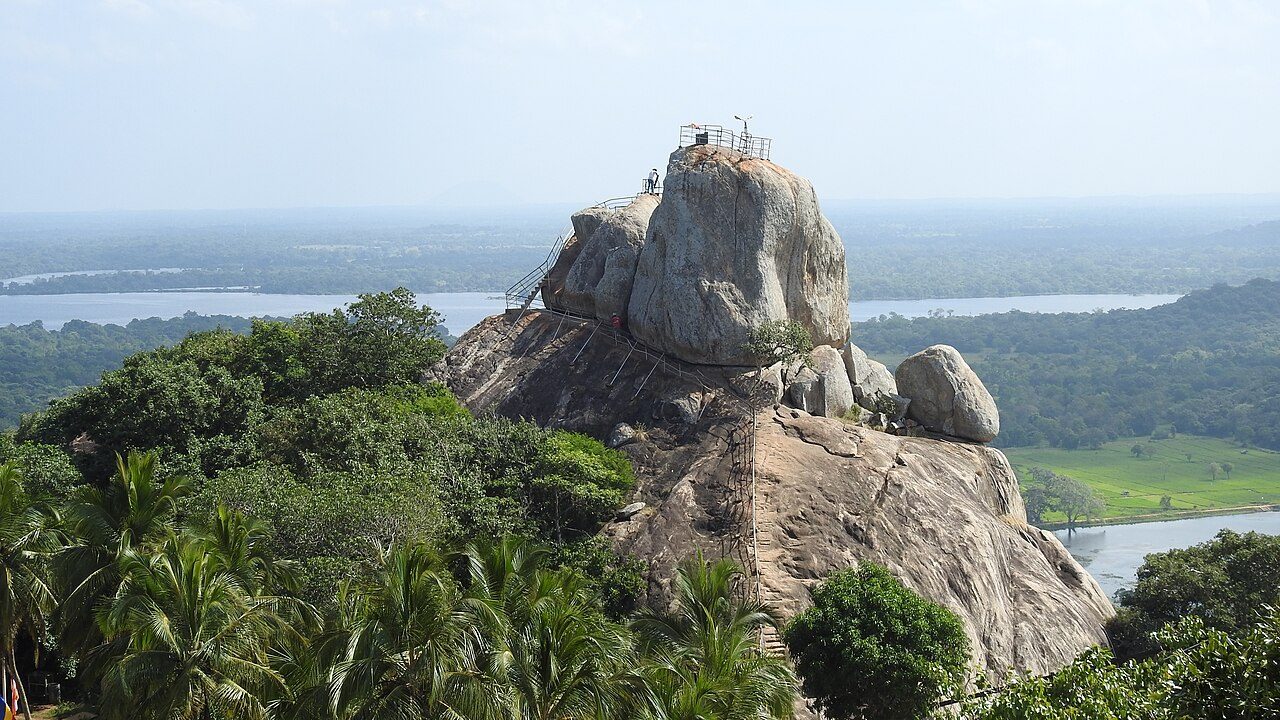
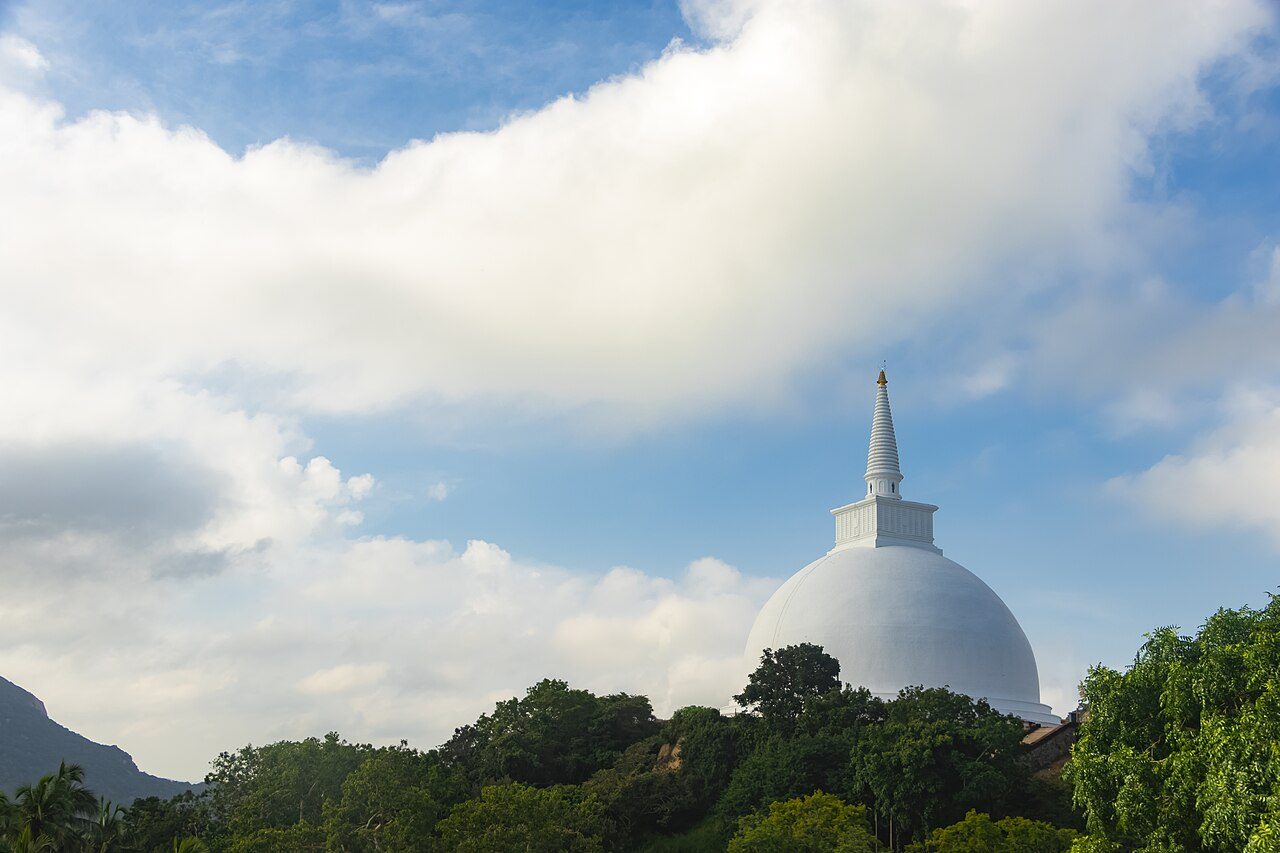
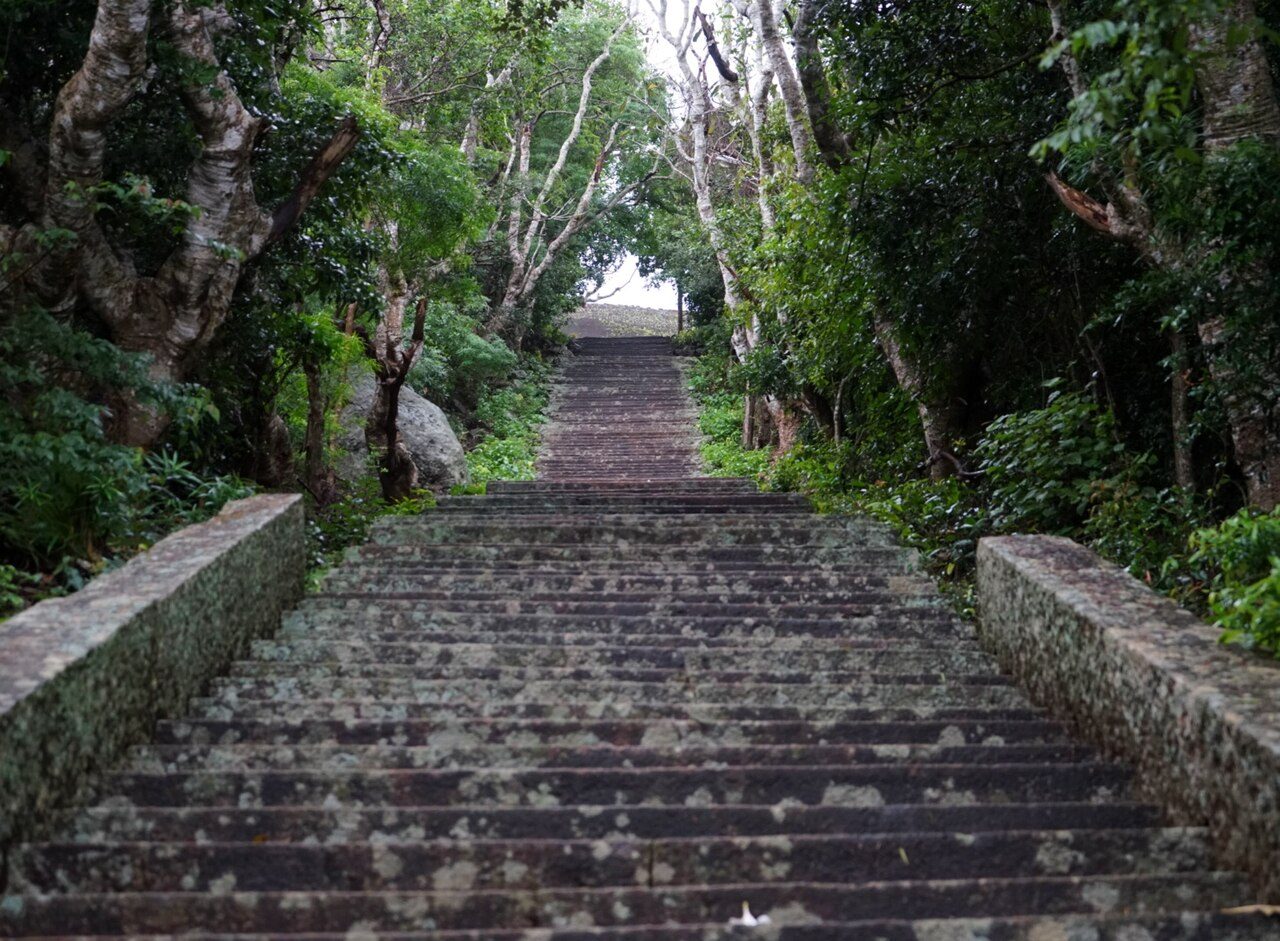
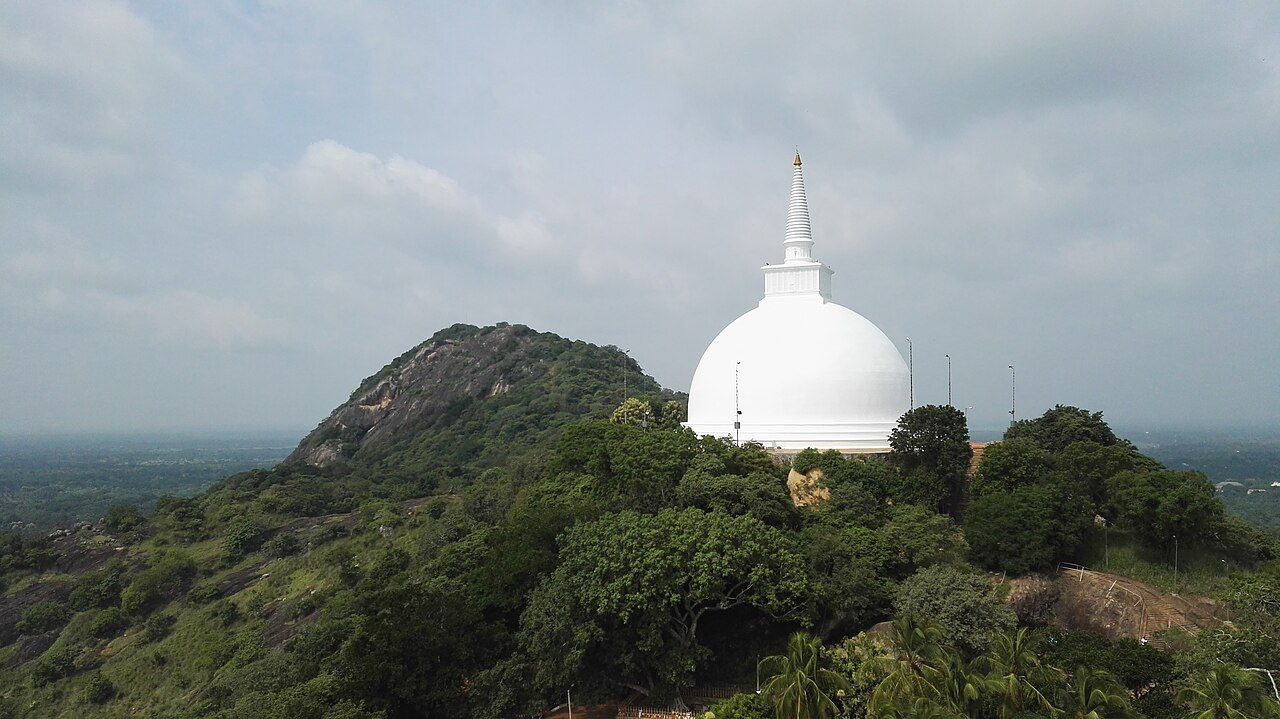
Mihintale, a rocky hill about 13 km east of Anuradhapura, is regarded as the cradle of Buddhism in Sri Lanka. Here in 247 BCE the monk Mahinda, son of Emperor Ashoka, met King Devanampiya Tissa and preached to him. A stairway of 1,840 granite steps climbs to the Ambasthala stupa, Mahinda's cave and the meditation rock. The Poson full moon in June draws huge crowds.
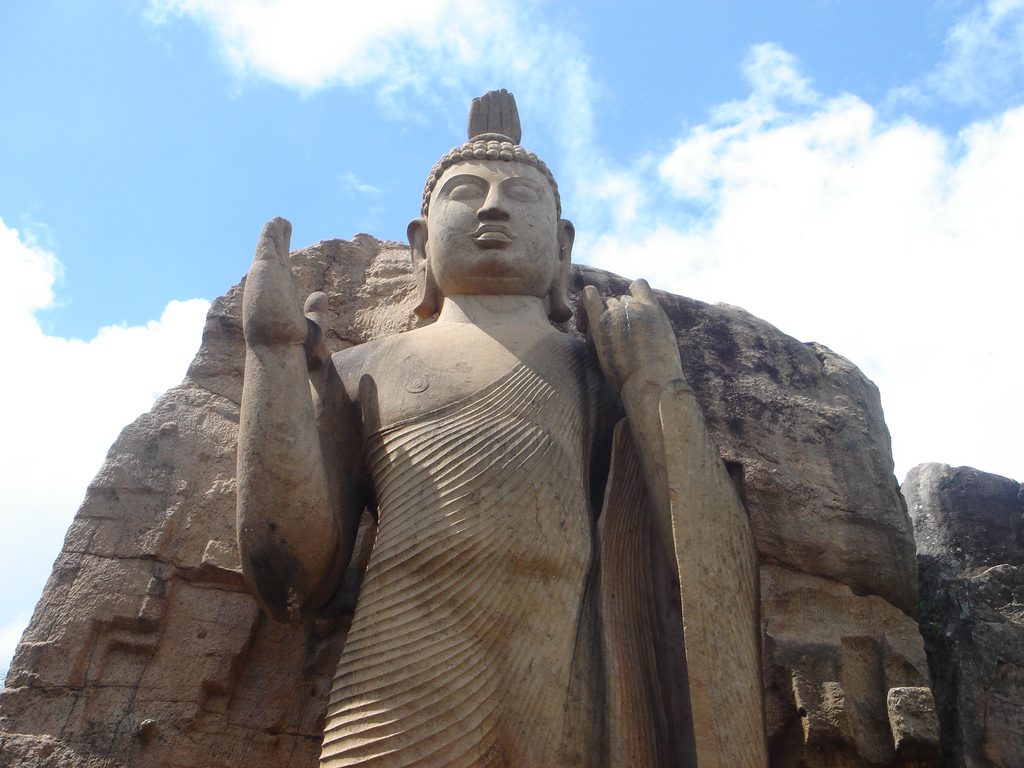
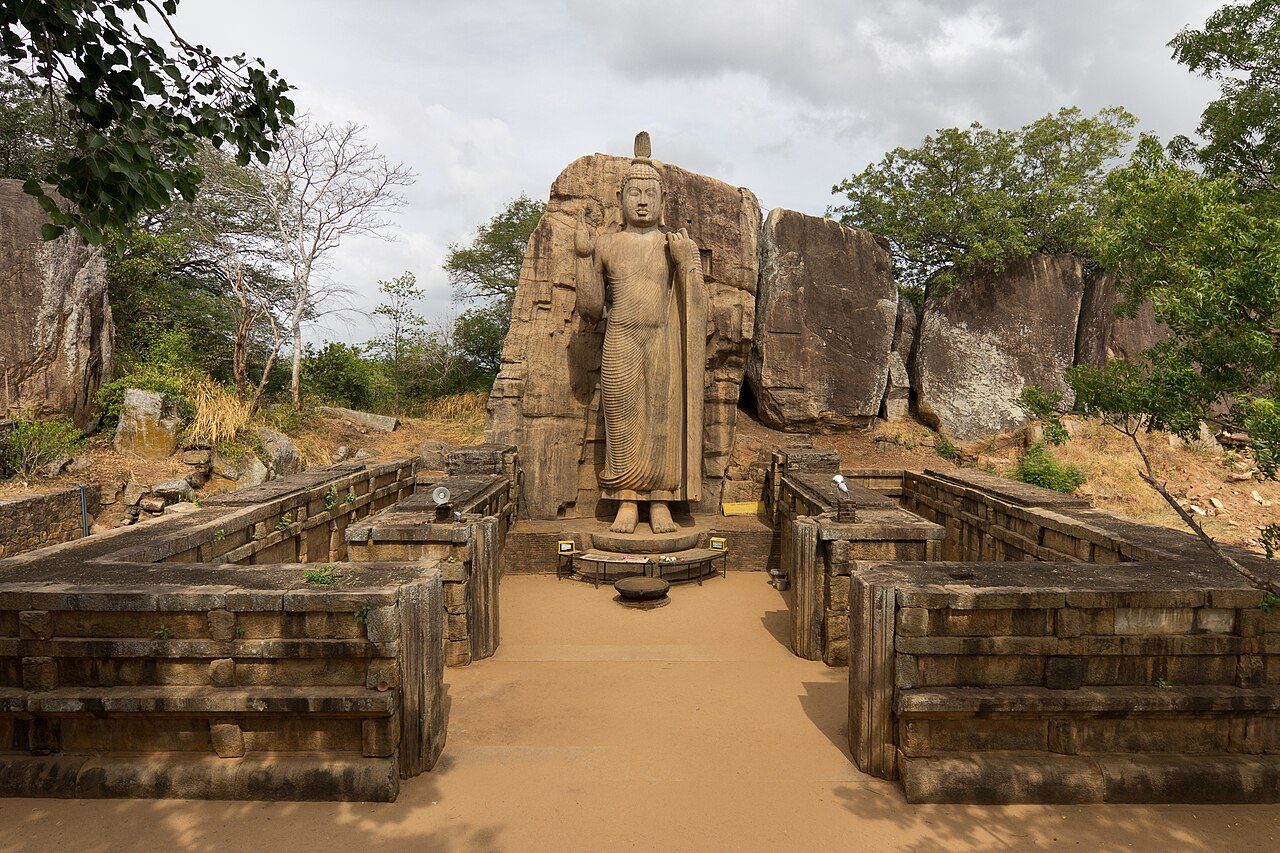
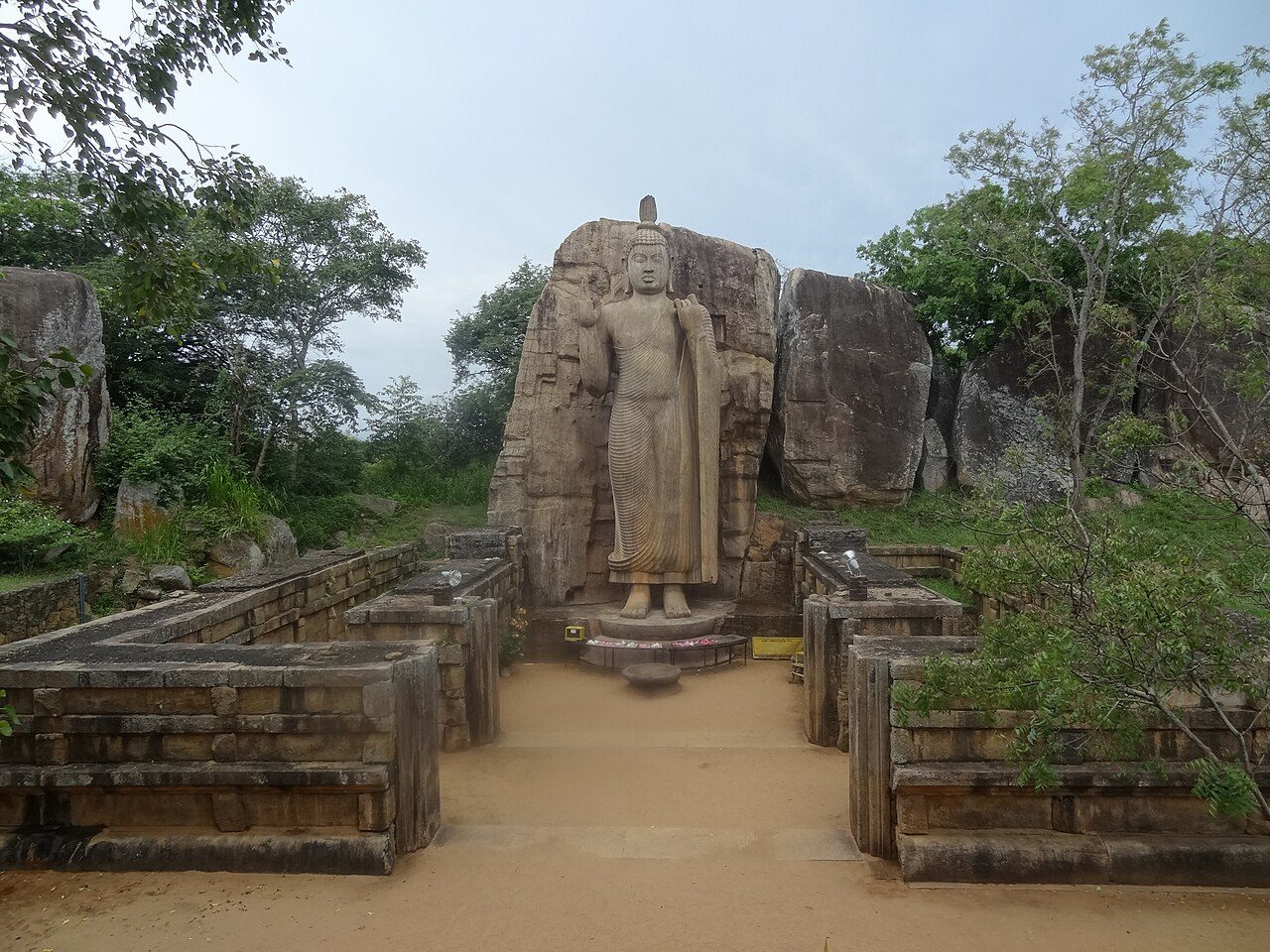
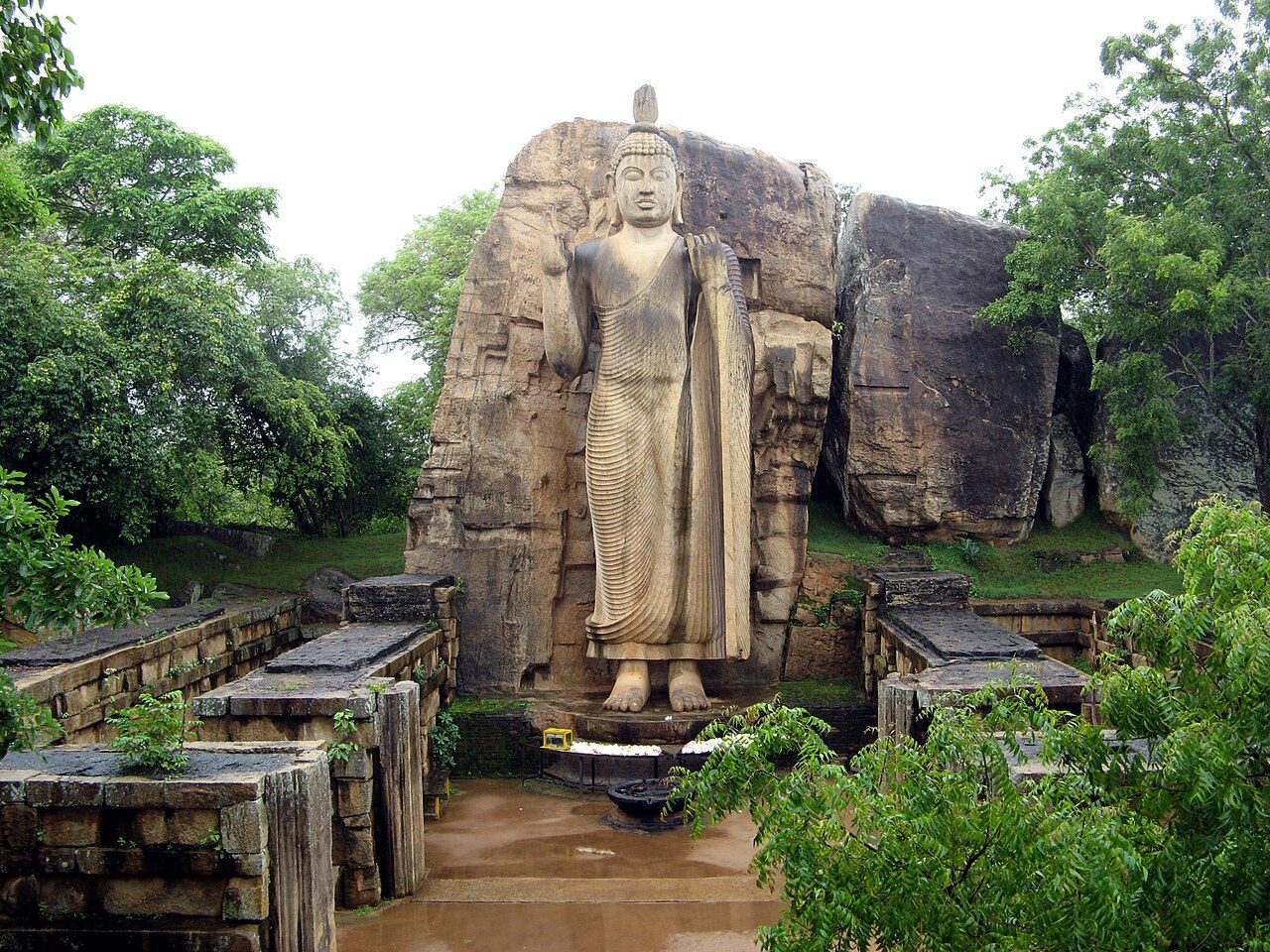
The Aukana Buddha is a standing statue about 12 metres high carved from a granite rock face near the Kala Wewa reservoir, usually dated to the 5th century and the reign of King Dhatusena. The robe is carved with such precision that a raindrop from the nose is said to fall between the feet. It remains joined to the rock by a narrow strip at the back.
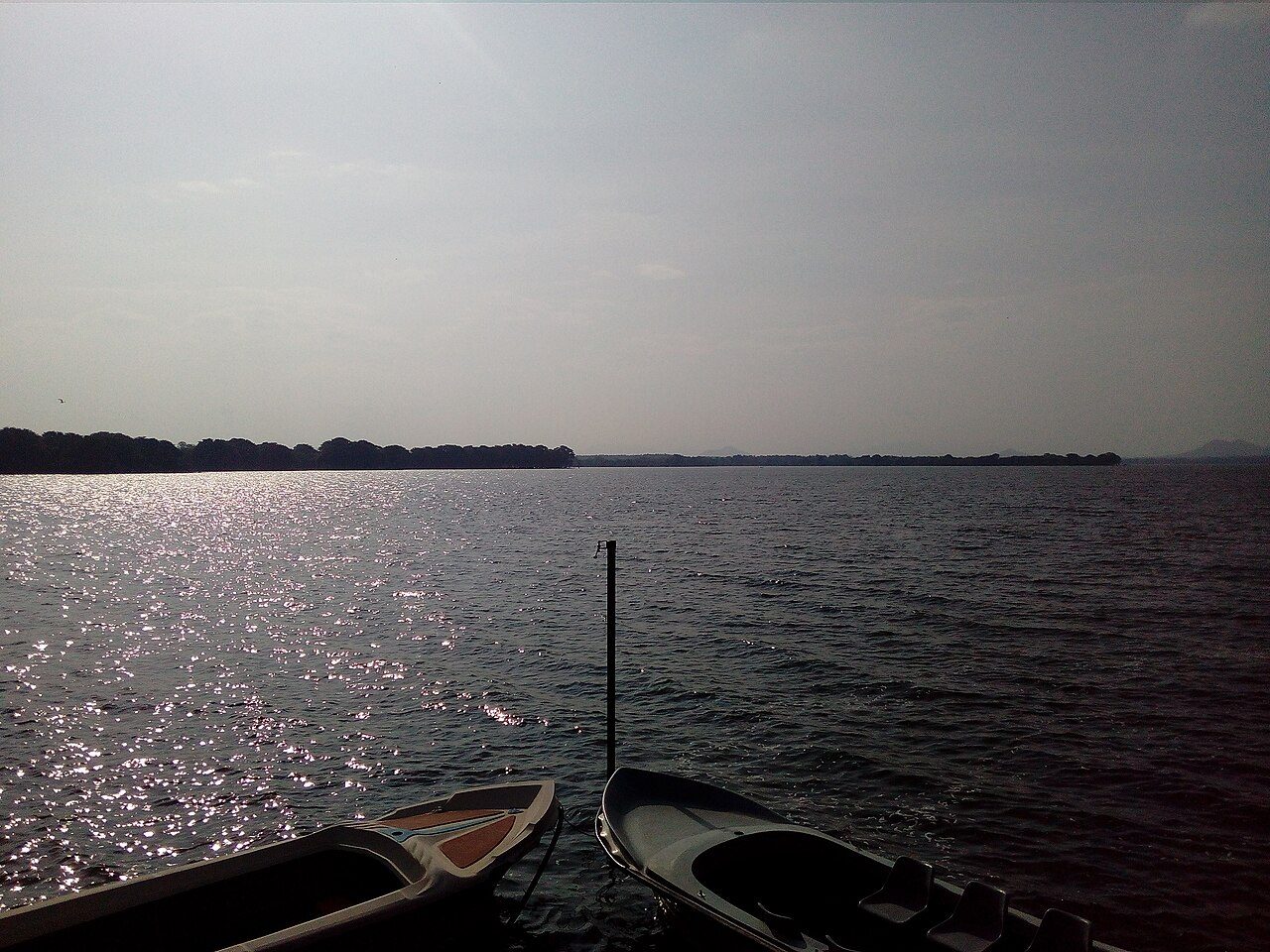
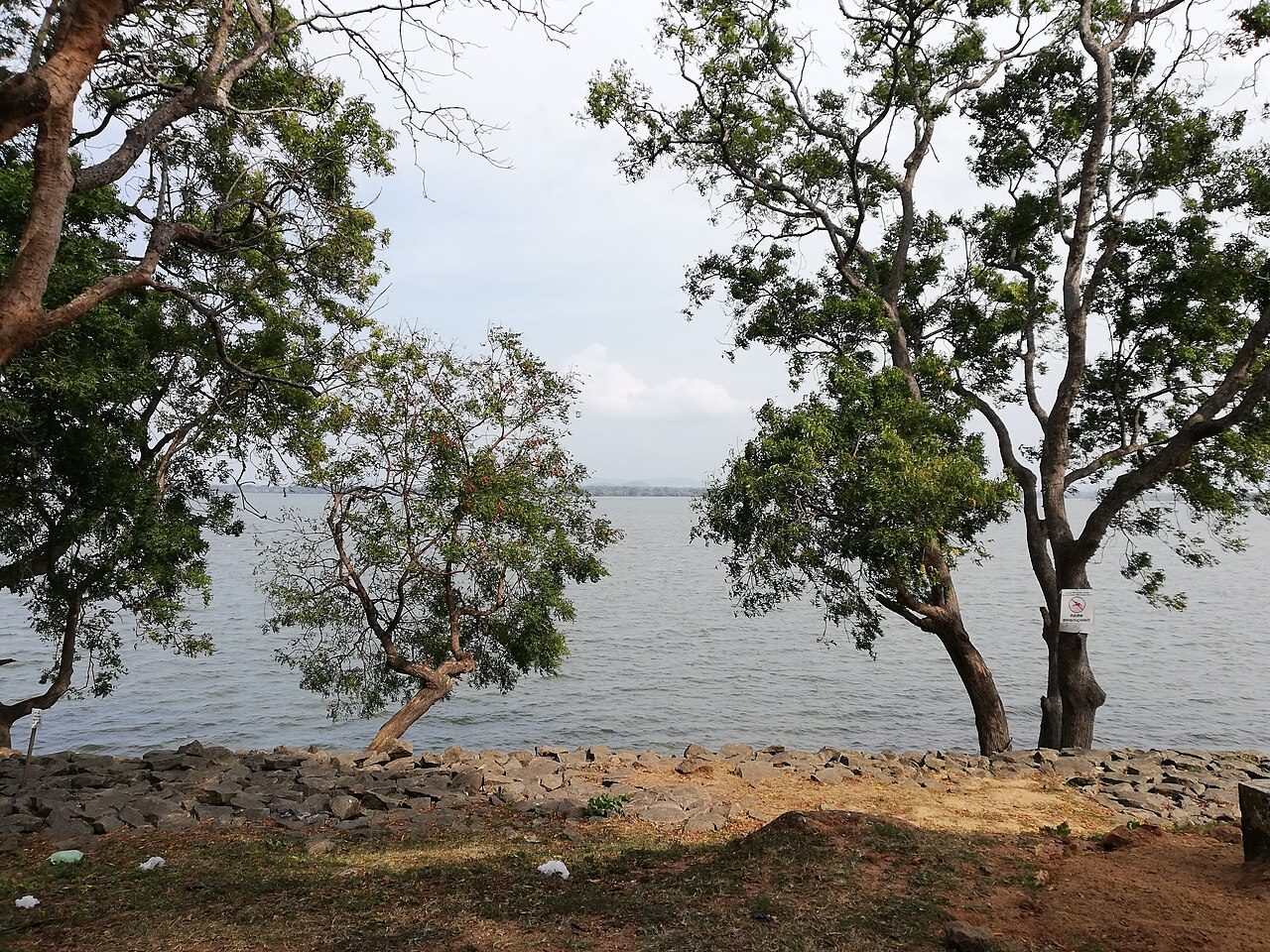
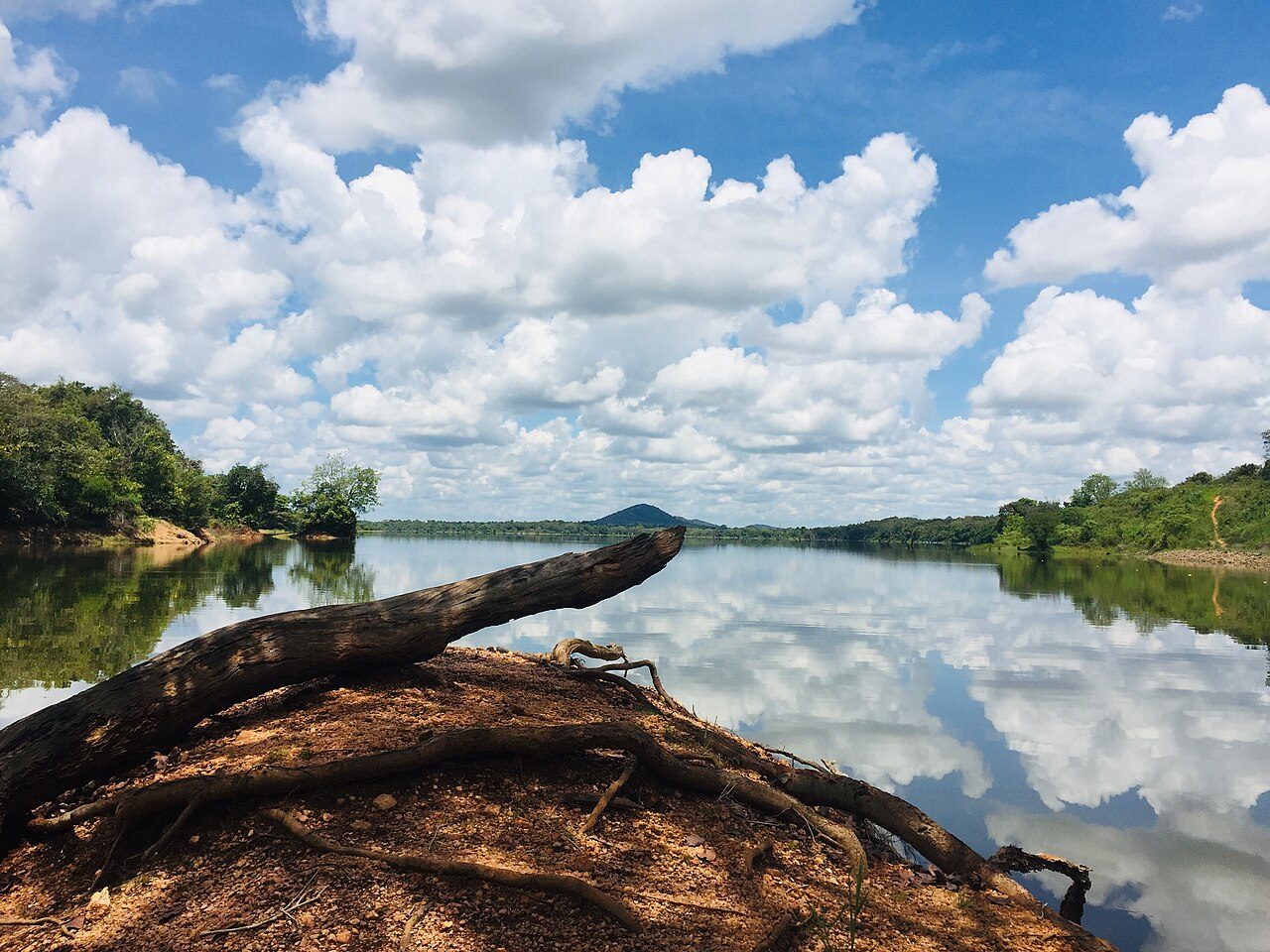
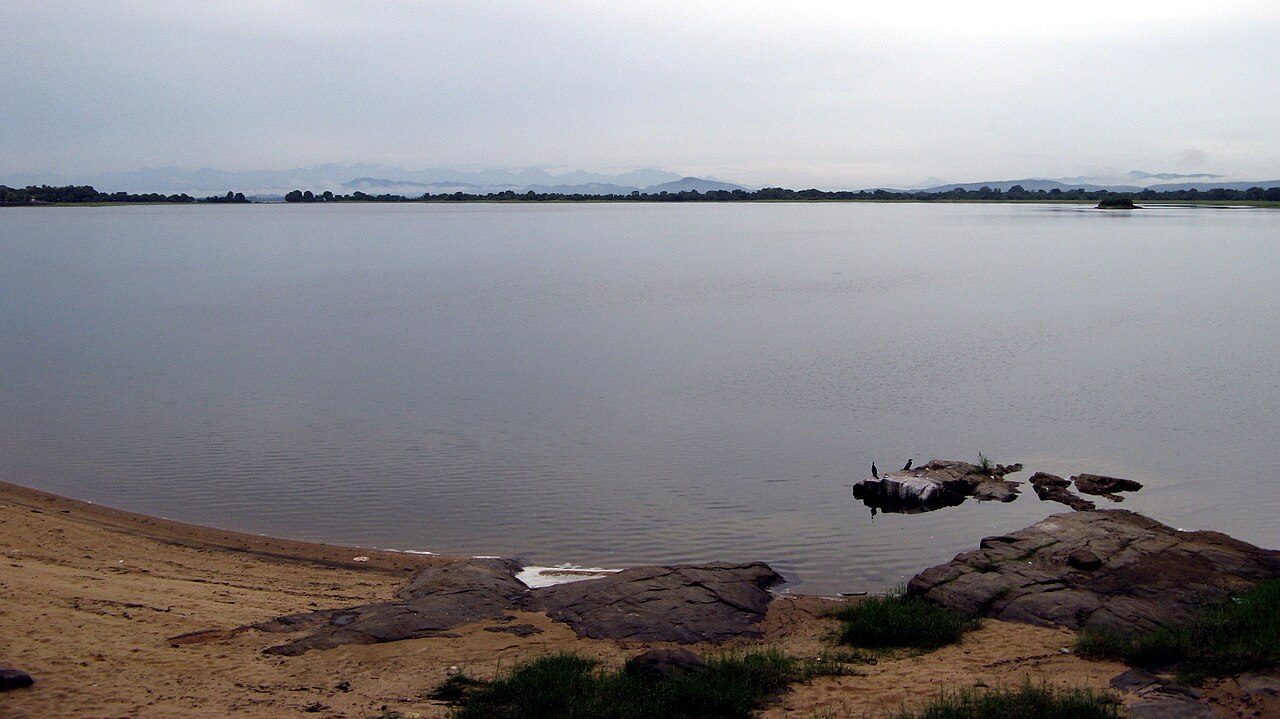
Kala Wewa is a huge reservoir built by King Dhatusena in the 5th century. From here the Yoda Ela, or giant canal, carries water about 87 km to Anuradhapura on a gradient so slight that it is still admired by engineers. The bund road gives wide views of the water, and herds of wild elephants gather on its shores in the dry season.
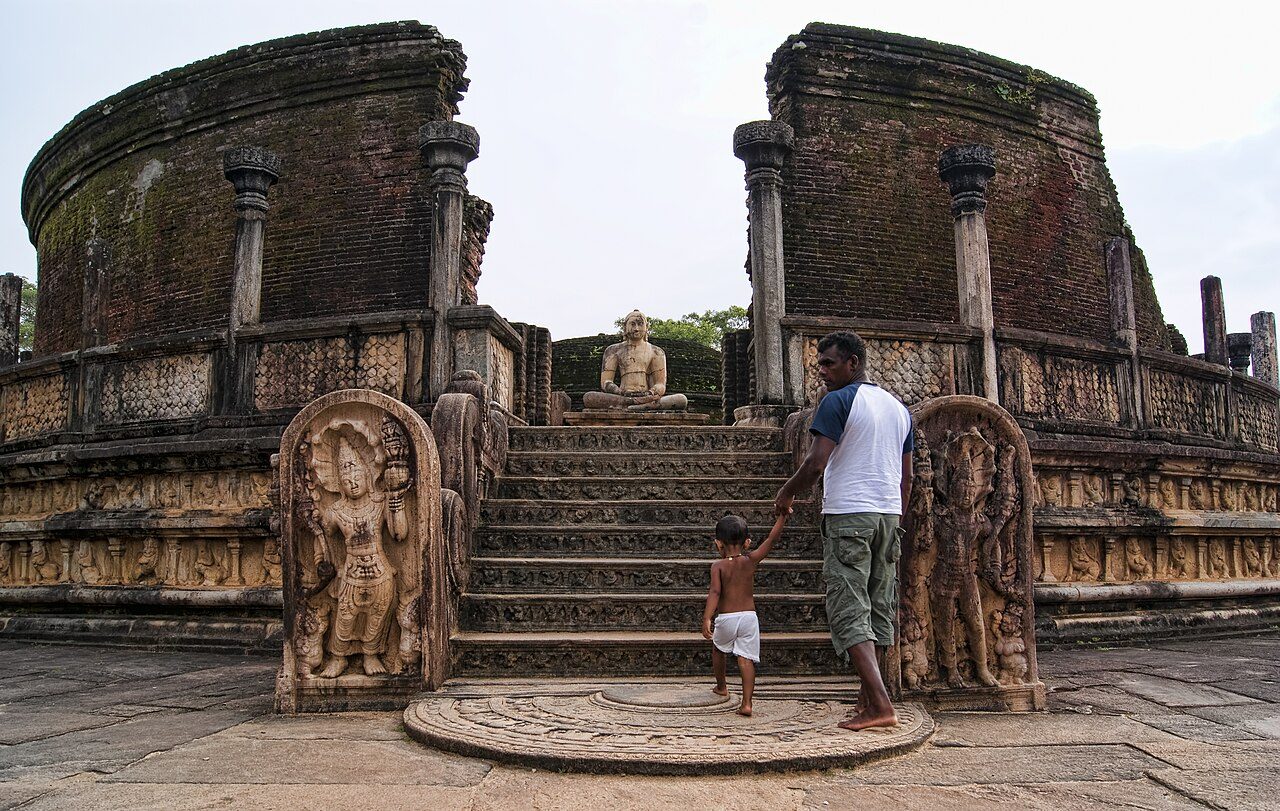
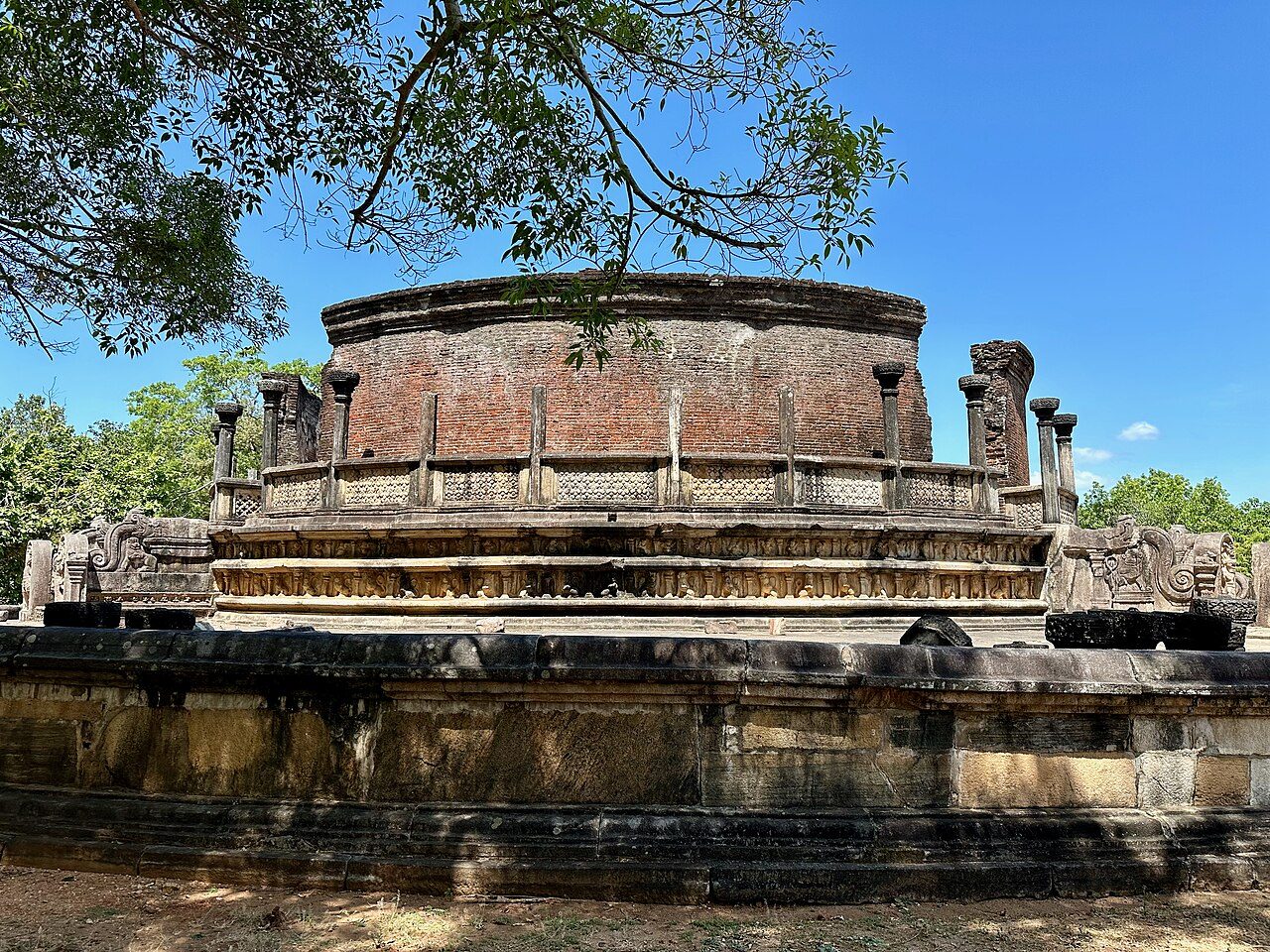
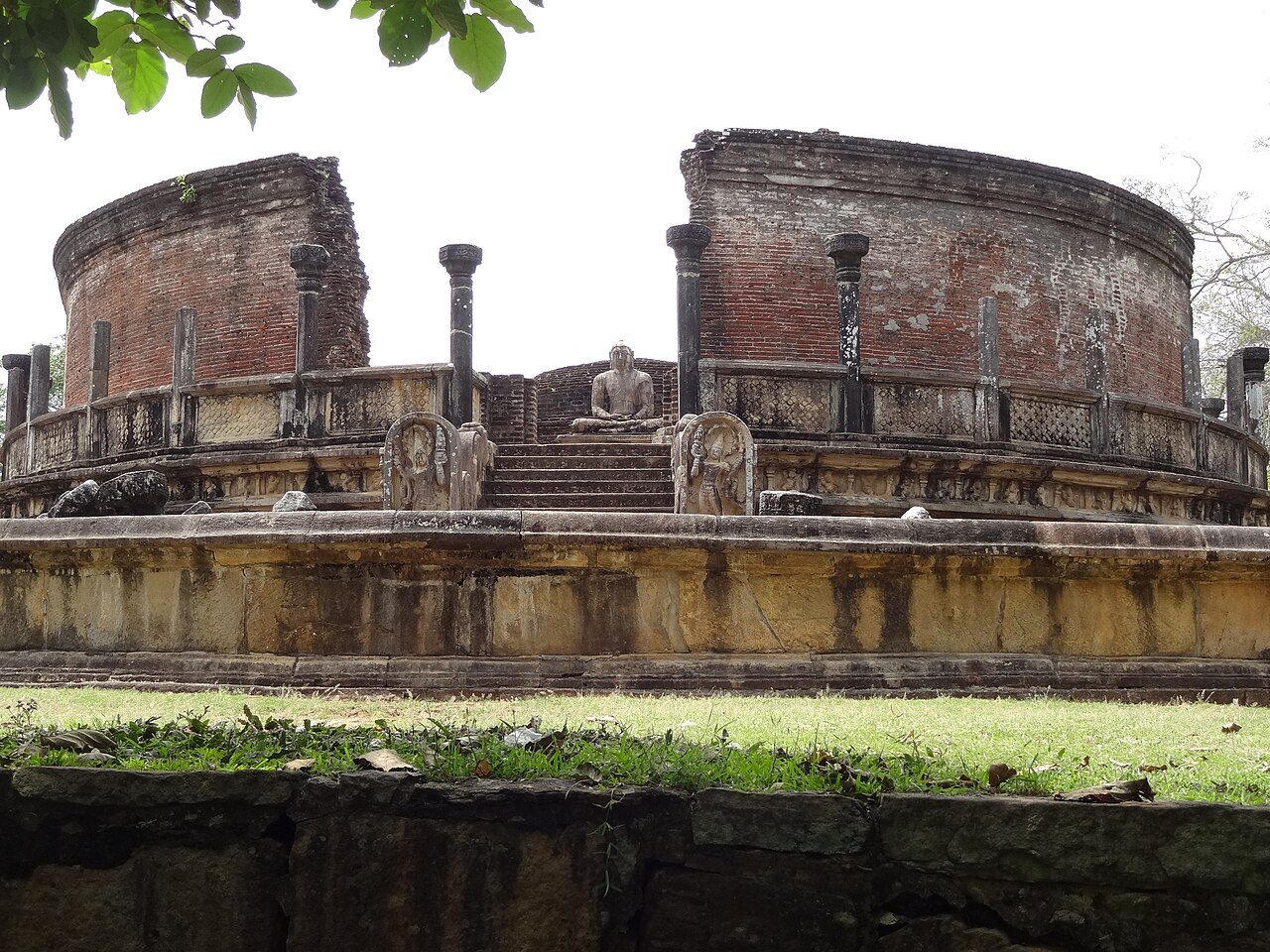
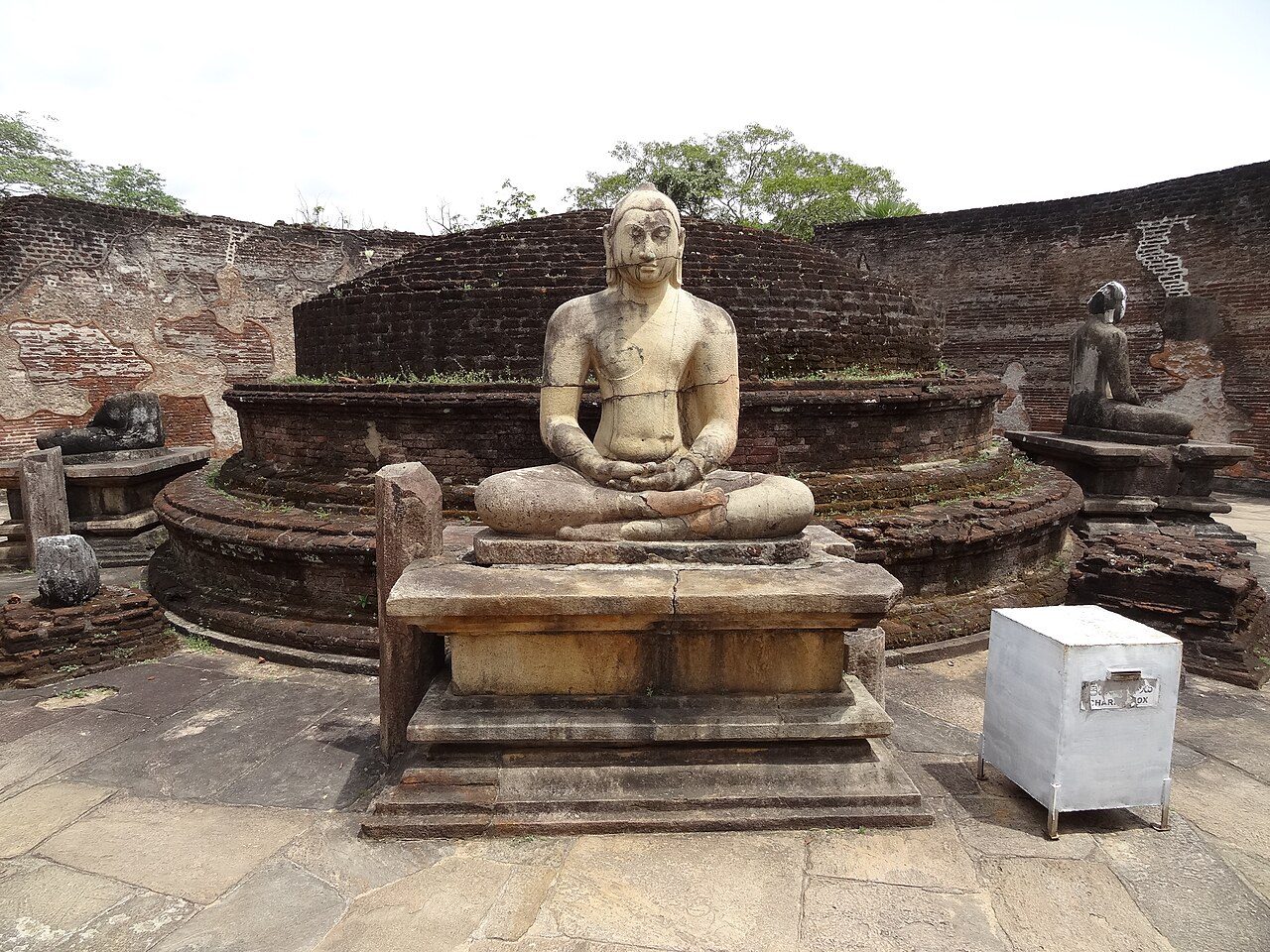
The Polonnaruwa Vatadage is a circular relic house in the Sacred Quadrangle, attributed to Parakramabahu I or Nissanka Malla in the 12th century. Two stone terraces with finely carved guardstones and moonstones lead to four seated Buddhas facing the entrances around a small central stupa. It is the best-preserved example of this building type.
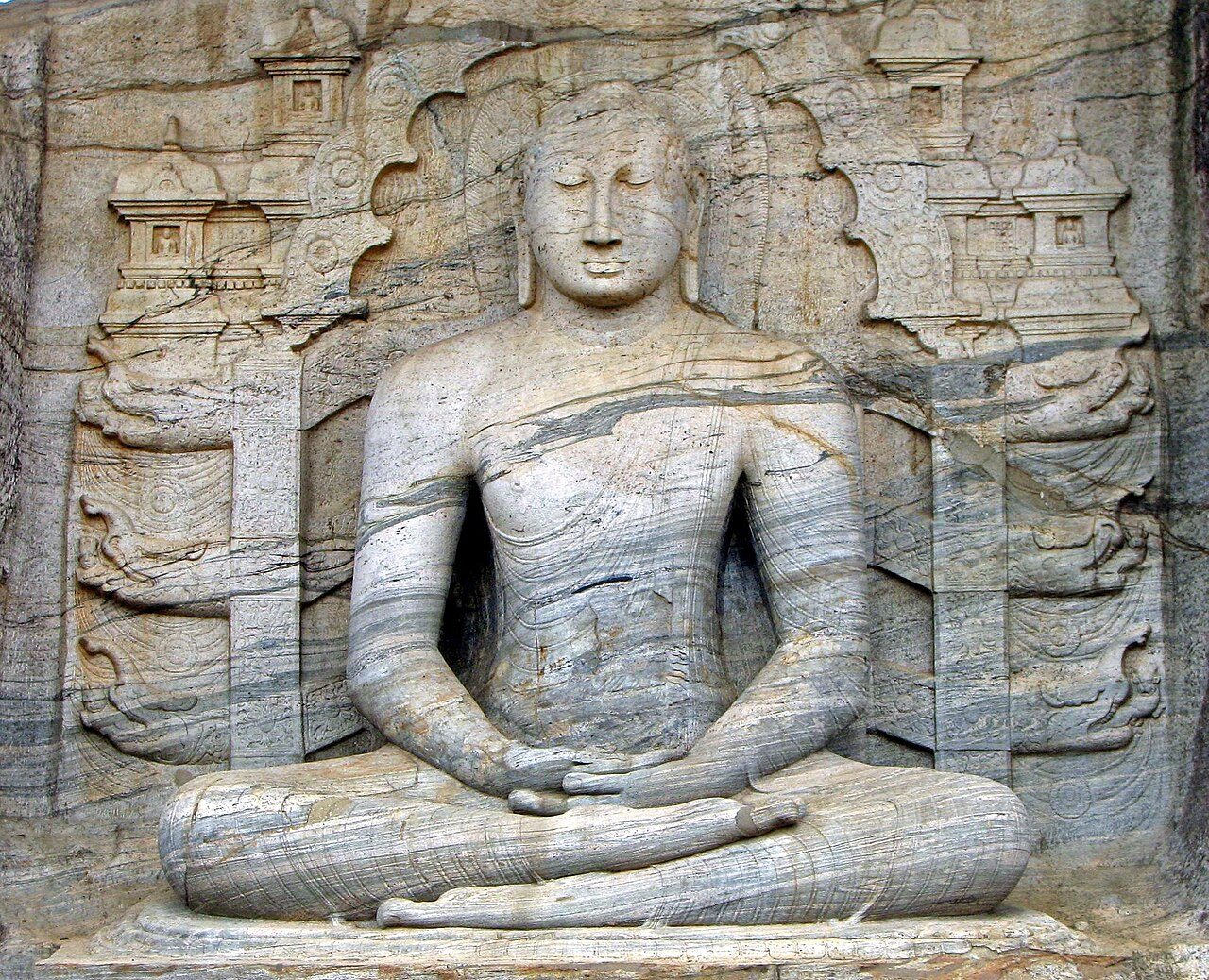
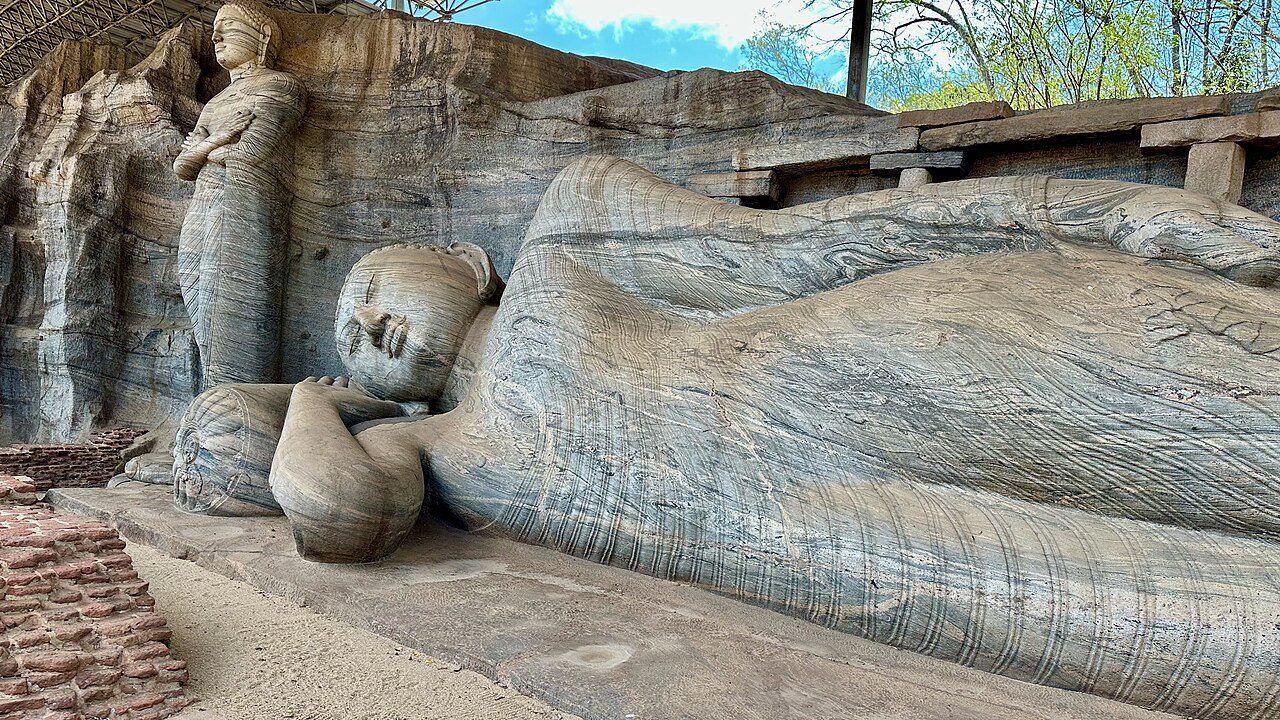
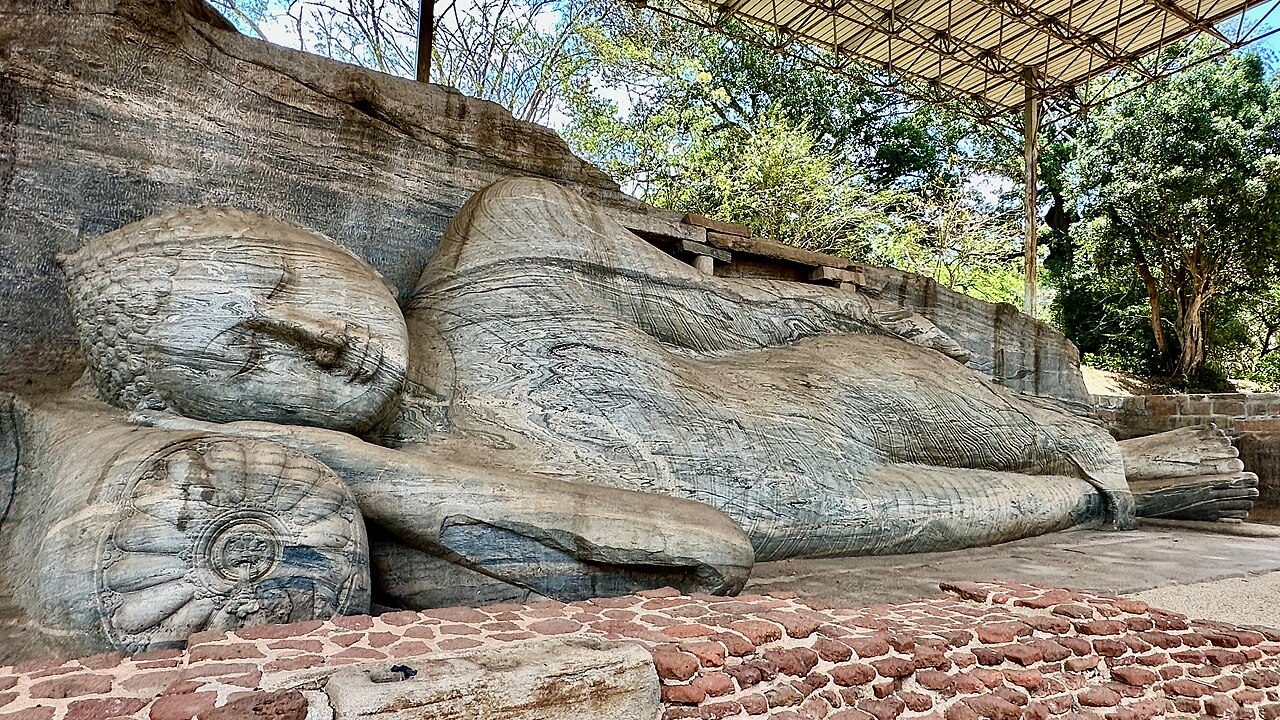
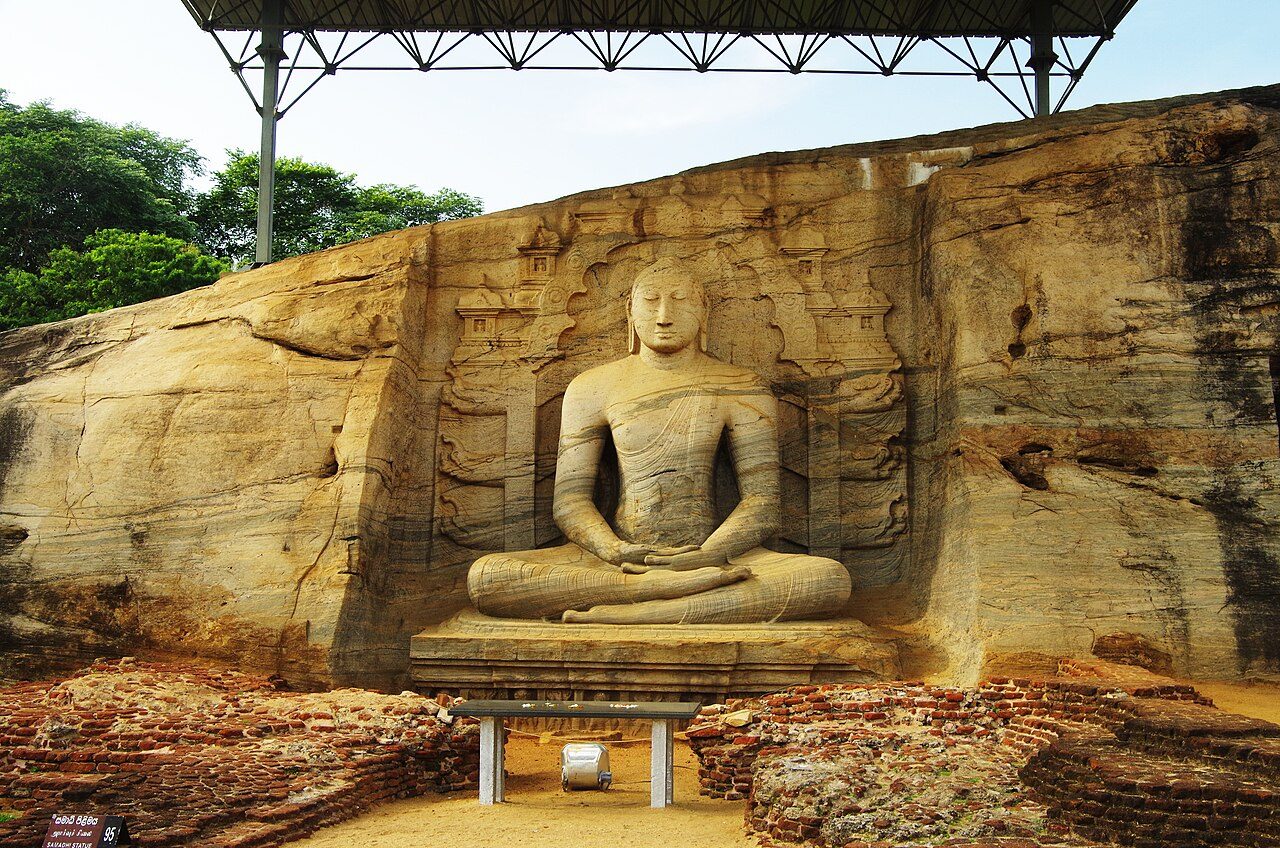
Gal Vihara at Polonnaruwa is a group of four Buddha figures carved from one long granite outcrop in the 12th century under King Parakramabahu I. There are two seated images, a standing figure about 7 metres high with crossed arms, and a reclining Buddha 14 metres long. They are considered the high point of ancient Sinhalese rock carving.
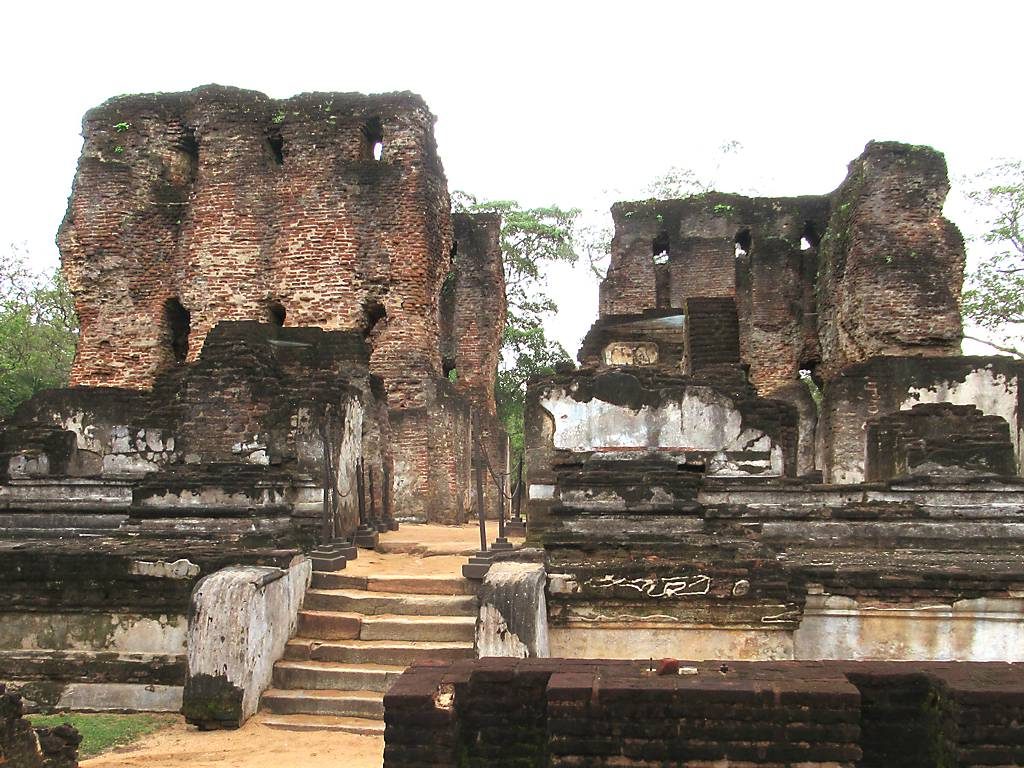
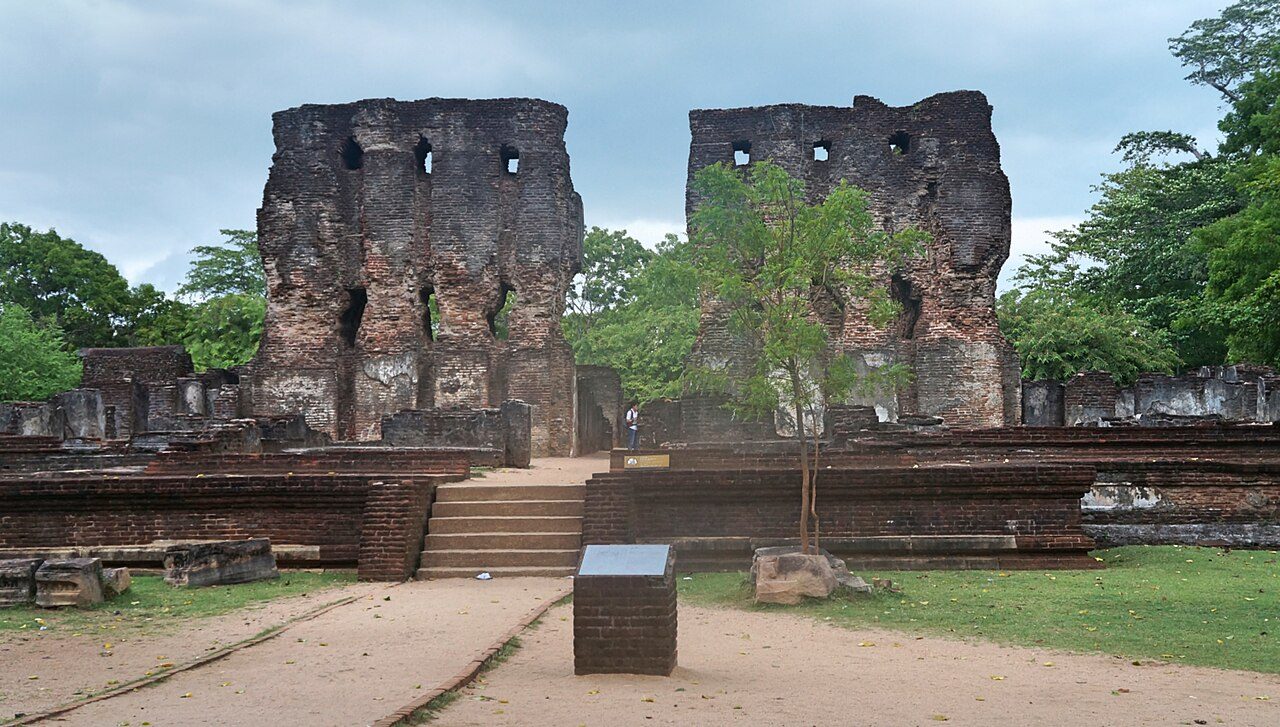
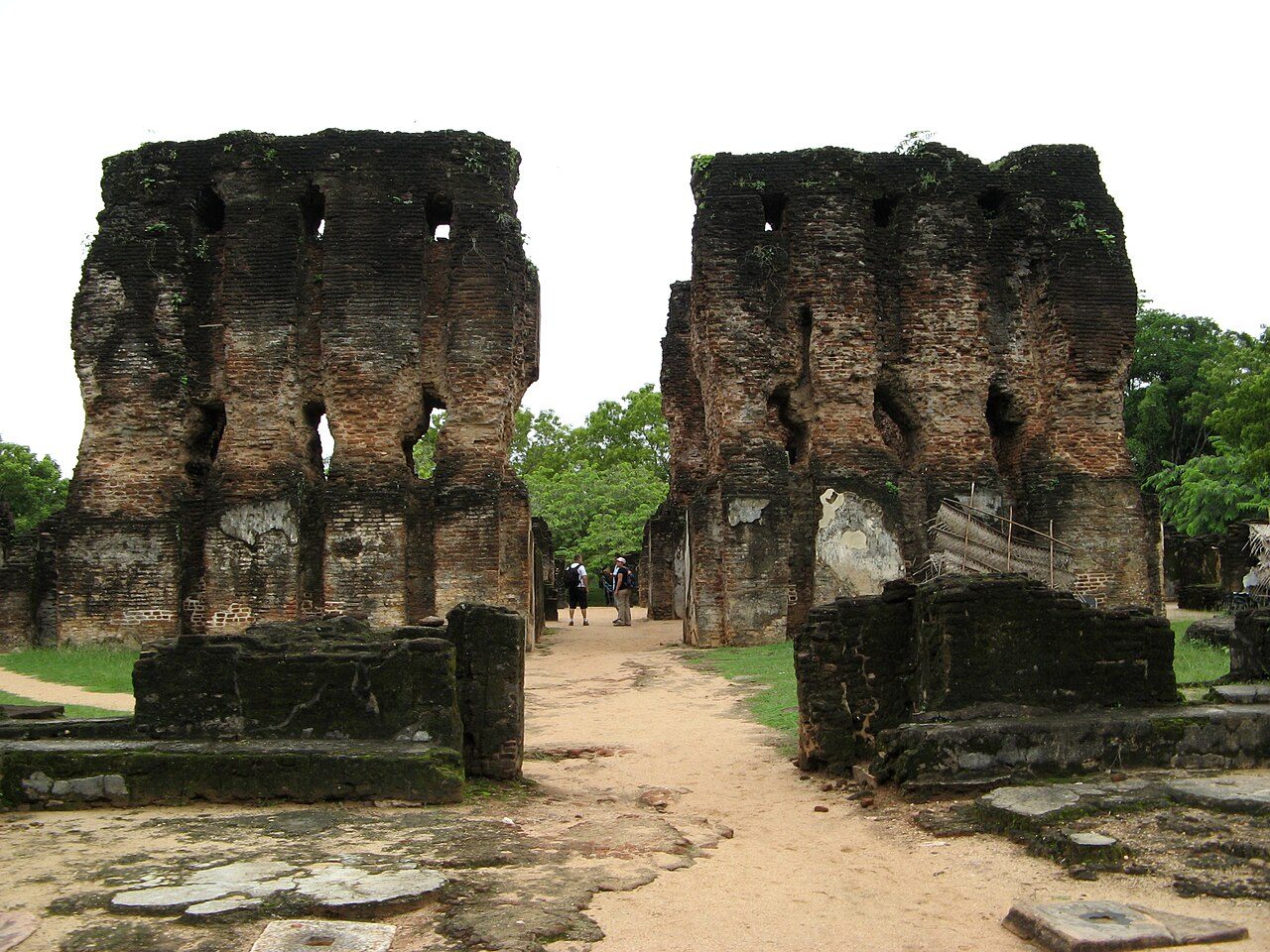
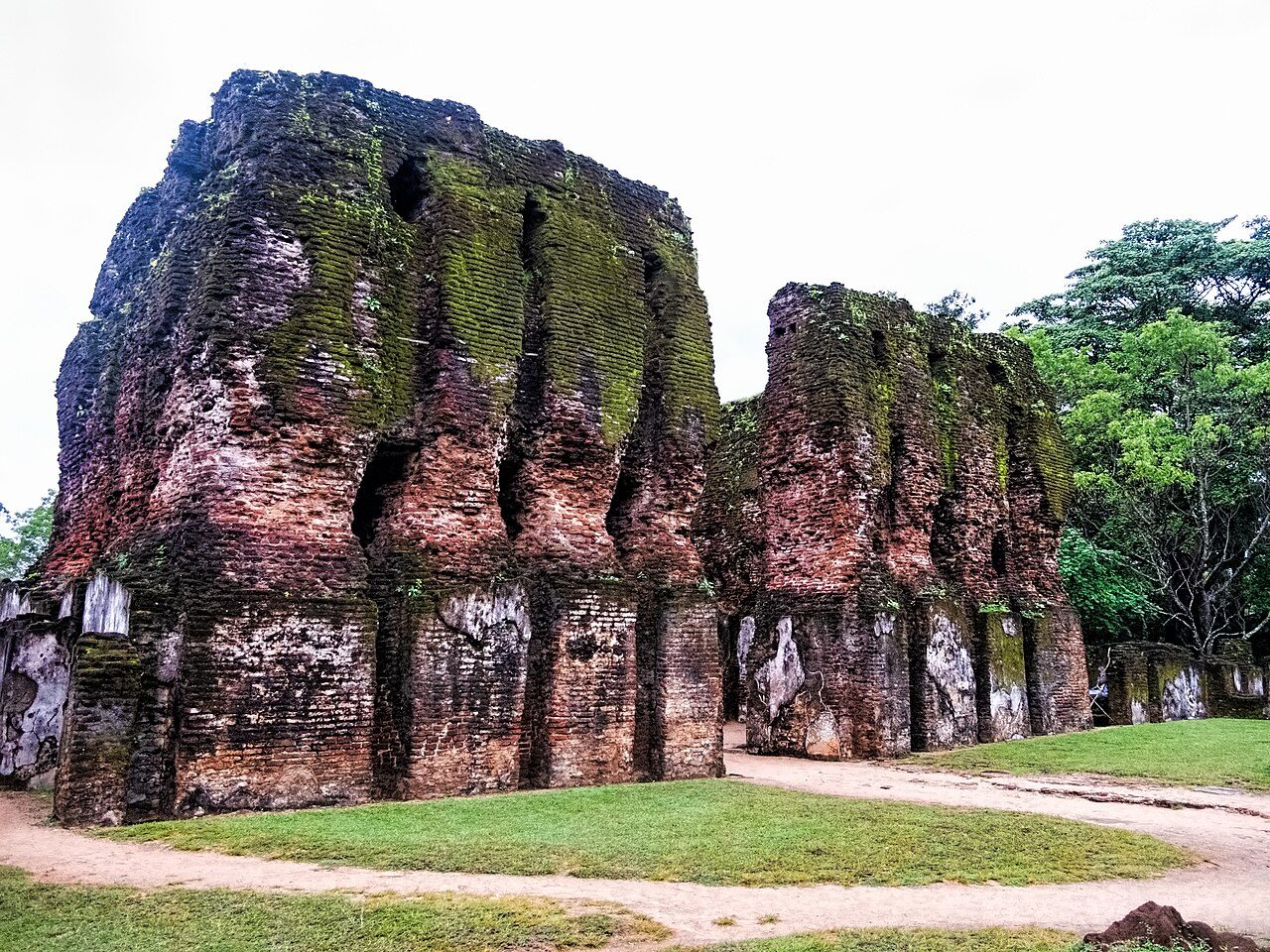
The Royal Palace of King Parakramabahu I stands in the citadel of Polonnaruwa. Built in the 12th century, it is said to have had seven storeys and a thousand rooms. The massive brick walls of the lower floors remain, with sockets for the timber beams of the upper levels. The king's audience hall, with rows of carved elephants, stands close by.
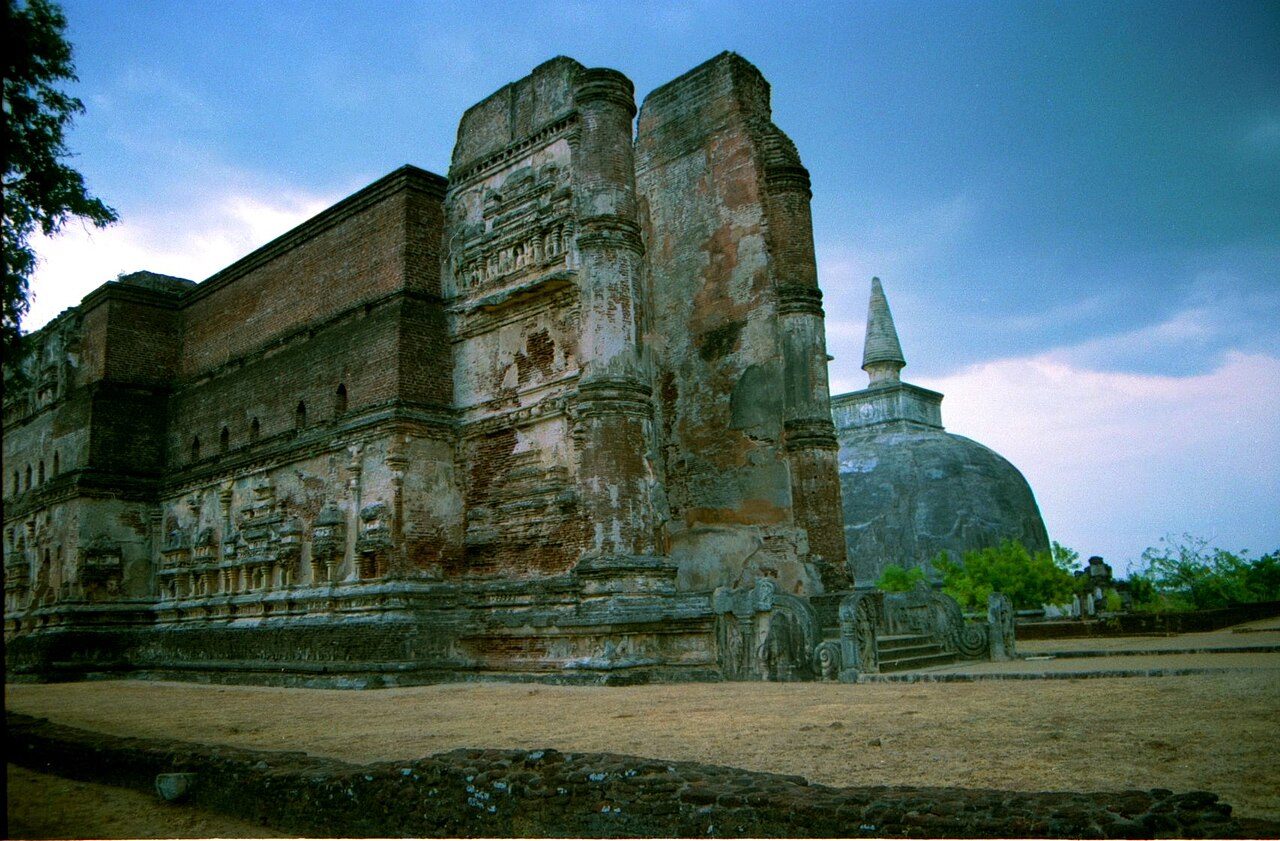
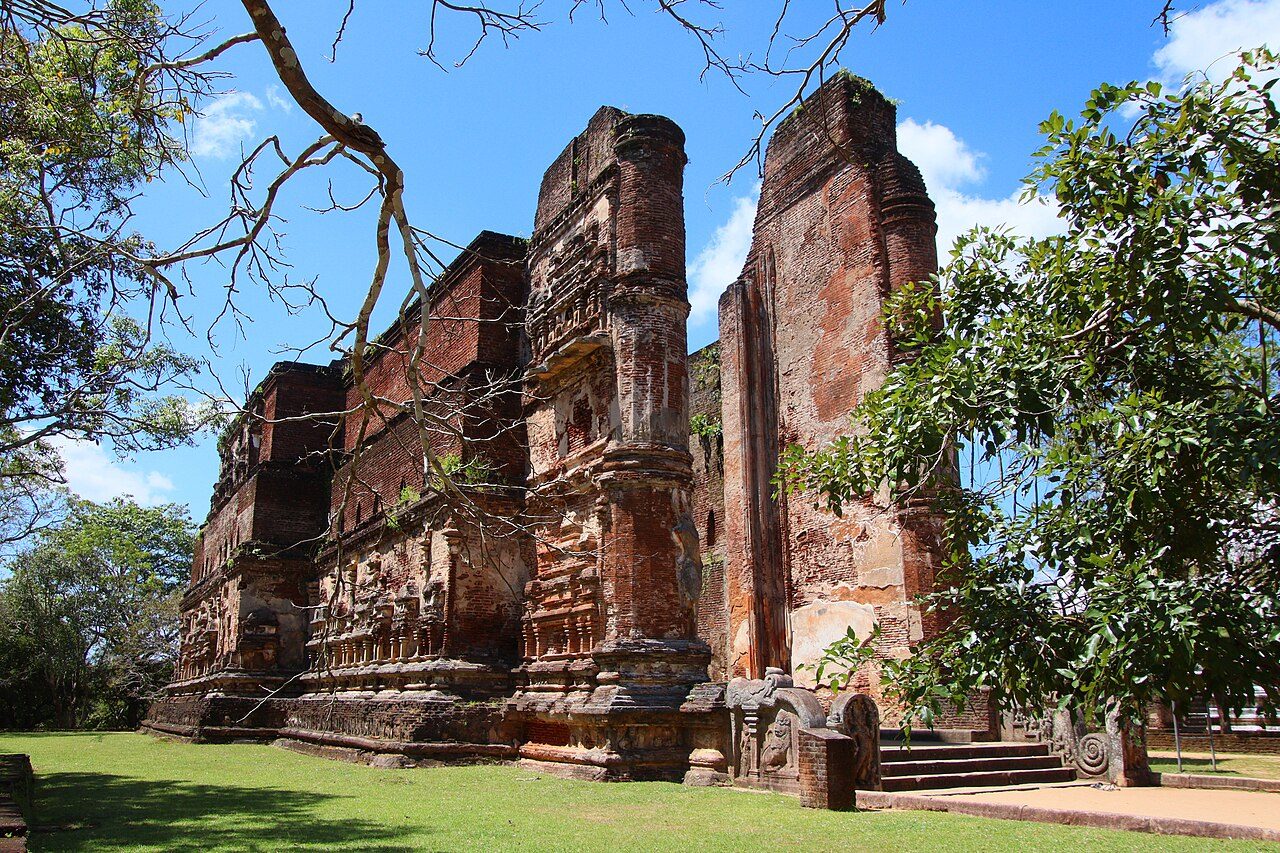
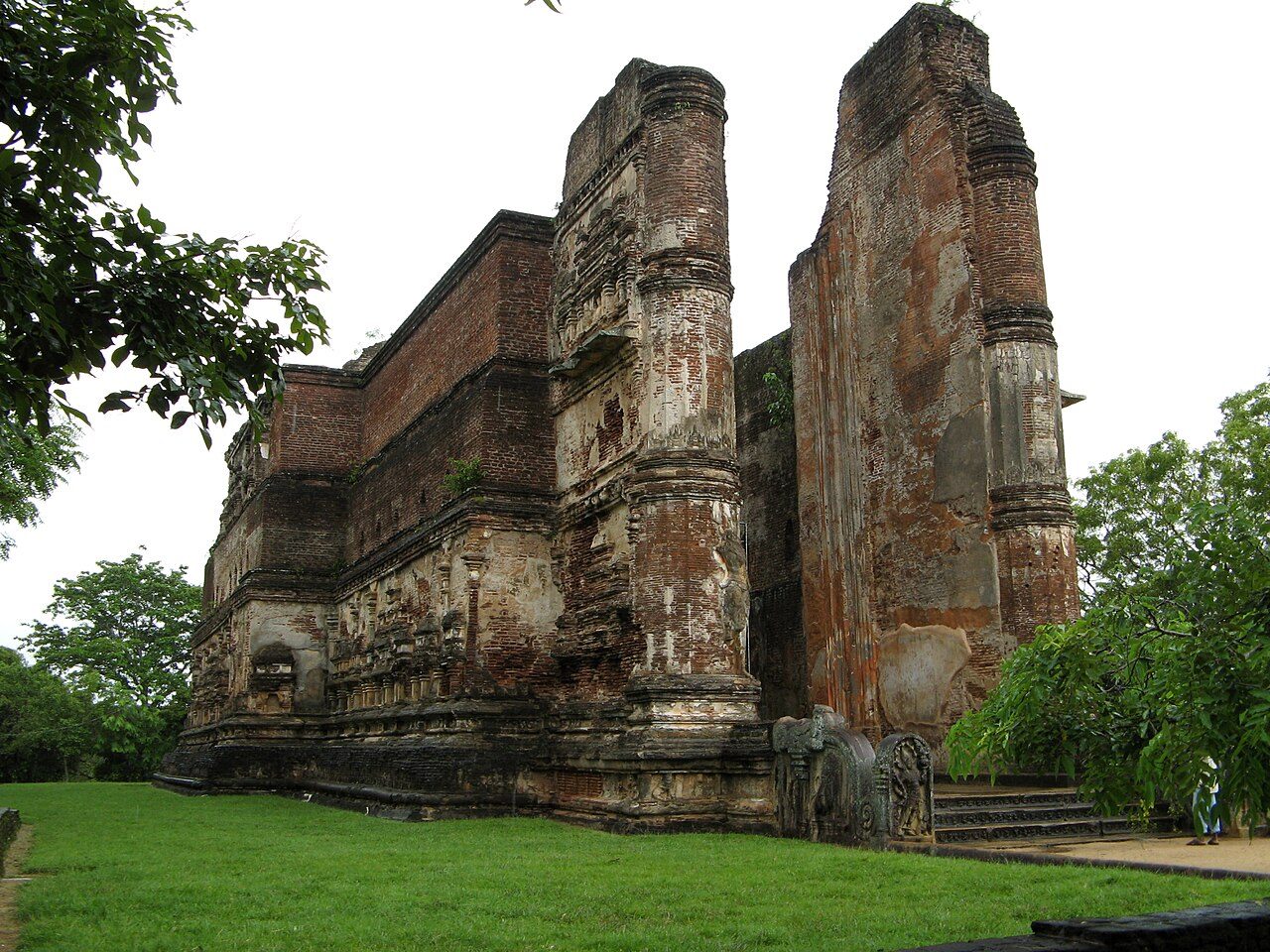
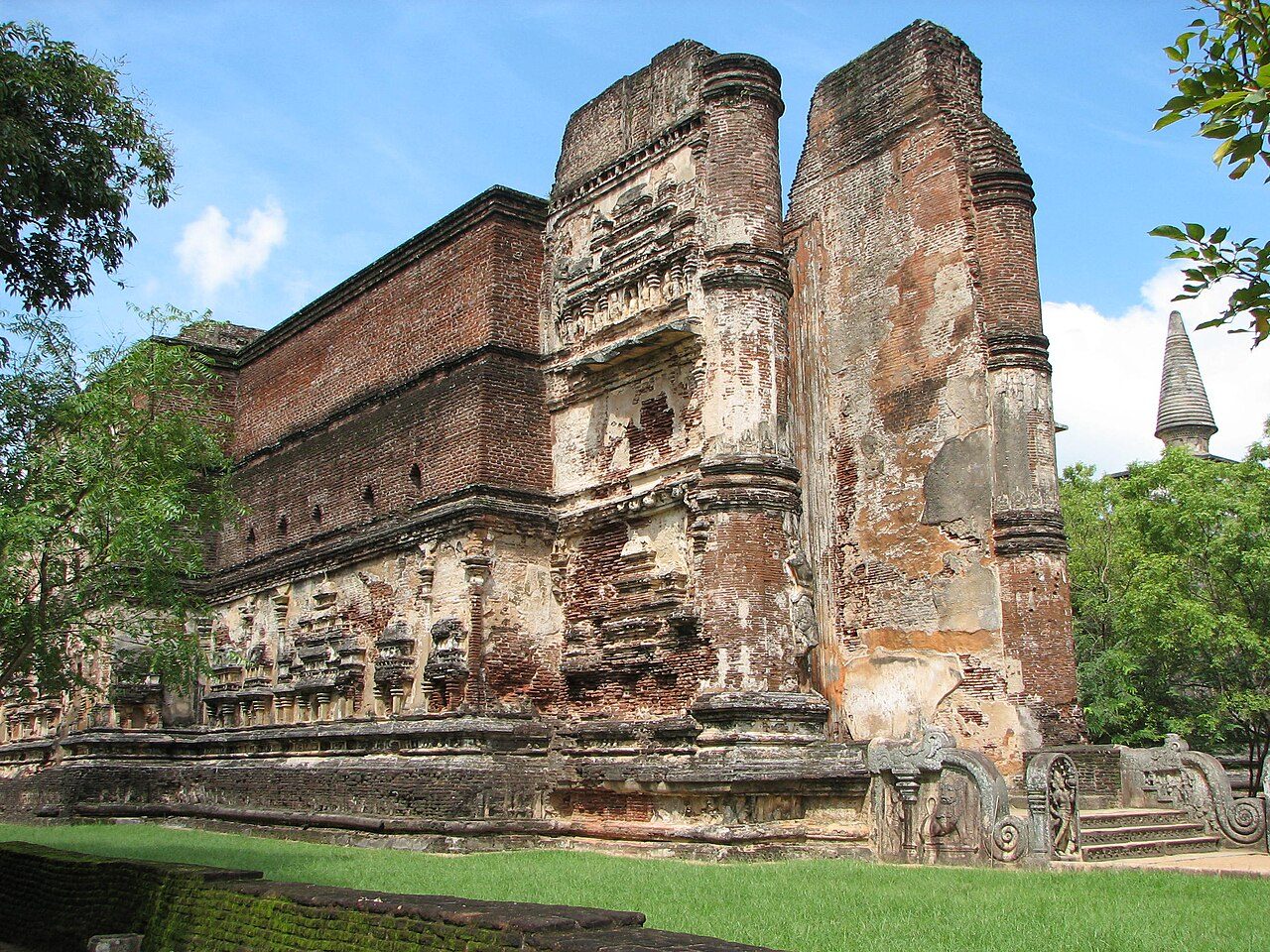
Lankatilaka at Polonnaruwa is a large brick image house built by Parakramabahu I in the 12th century. Two walls about 17 metres high form a narrow aisle leading to a headless standing Buddha that once rose to the vaulted roof. The outer walls are decorated with reliefs of buildings that show what Polonnaruwa architecture looked like.
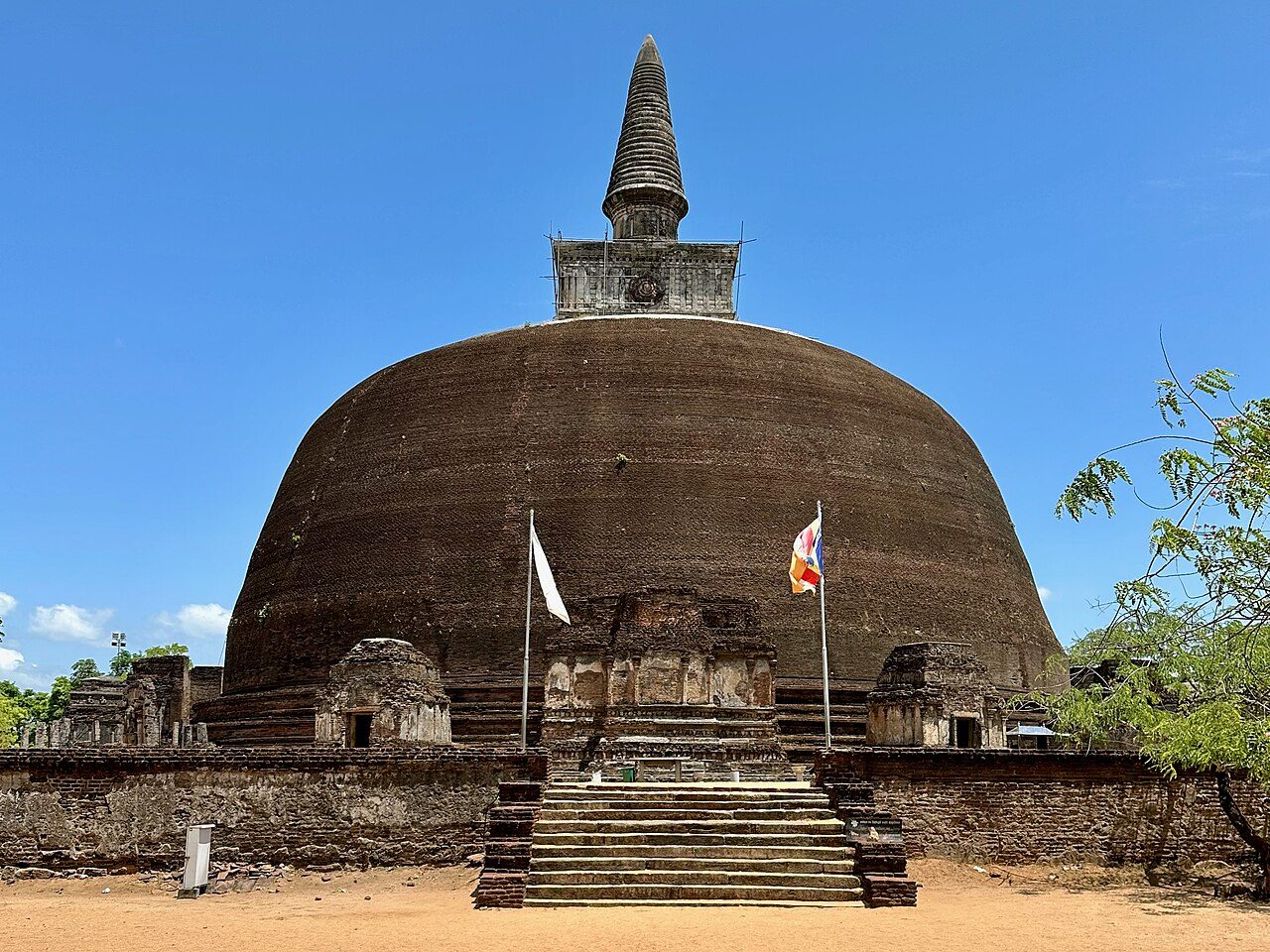
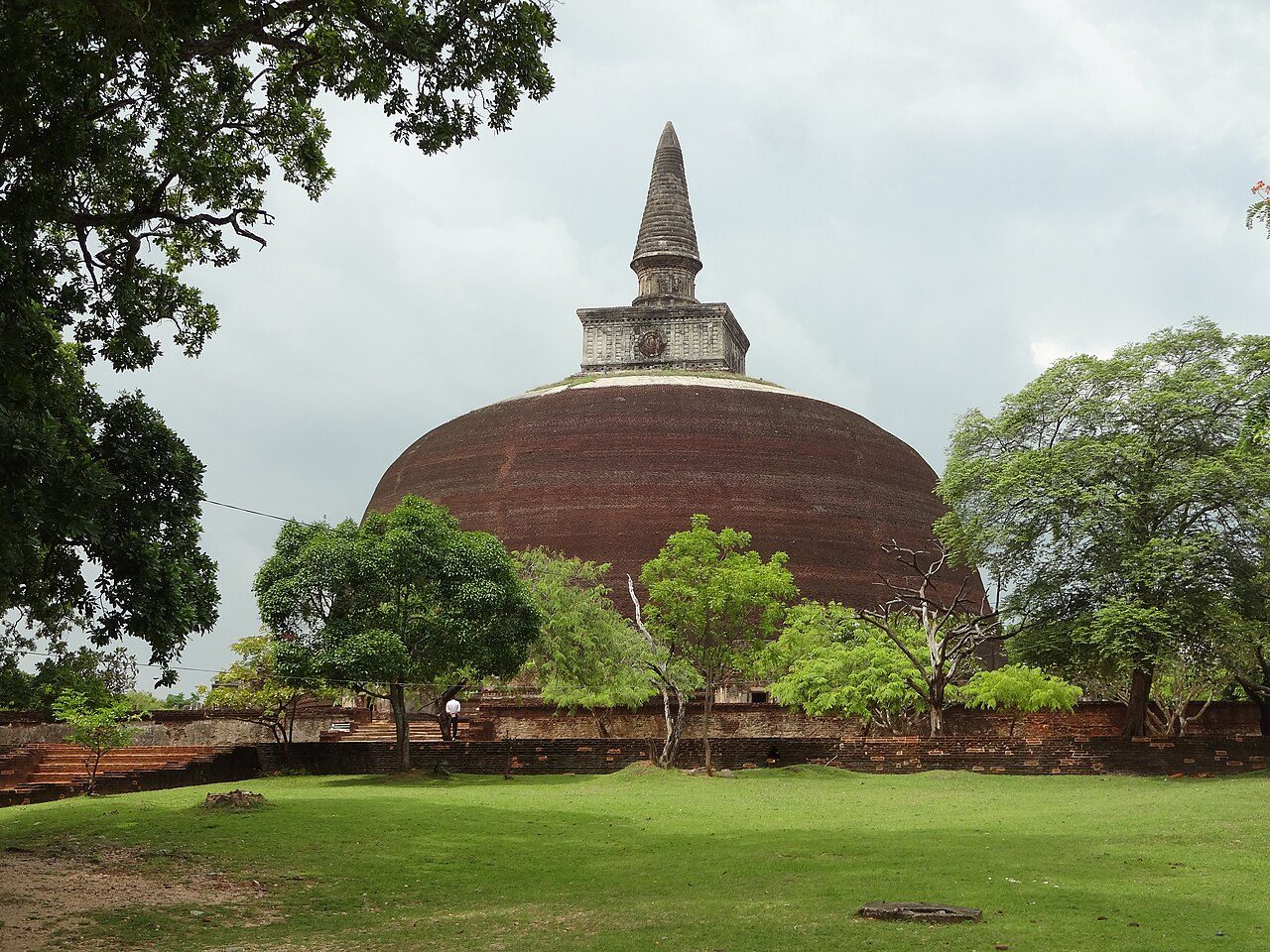
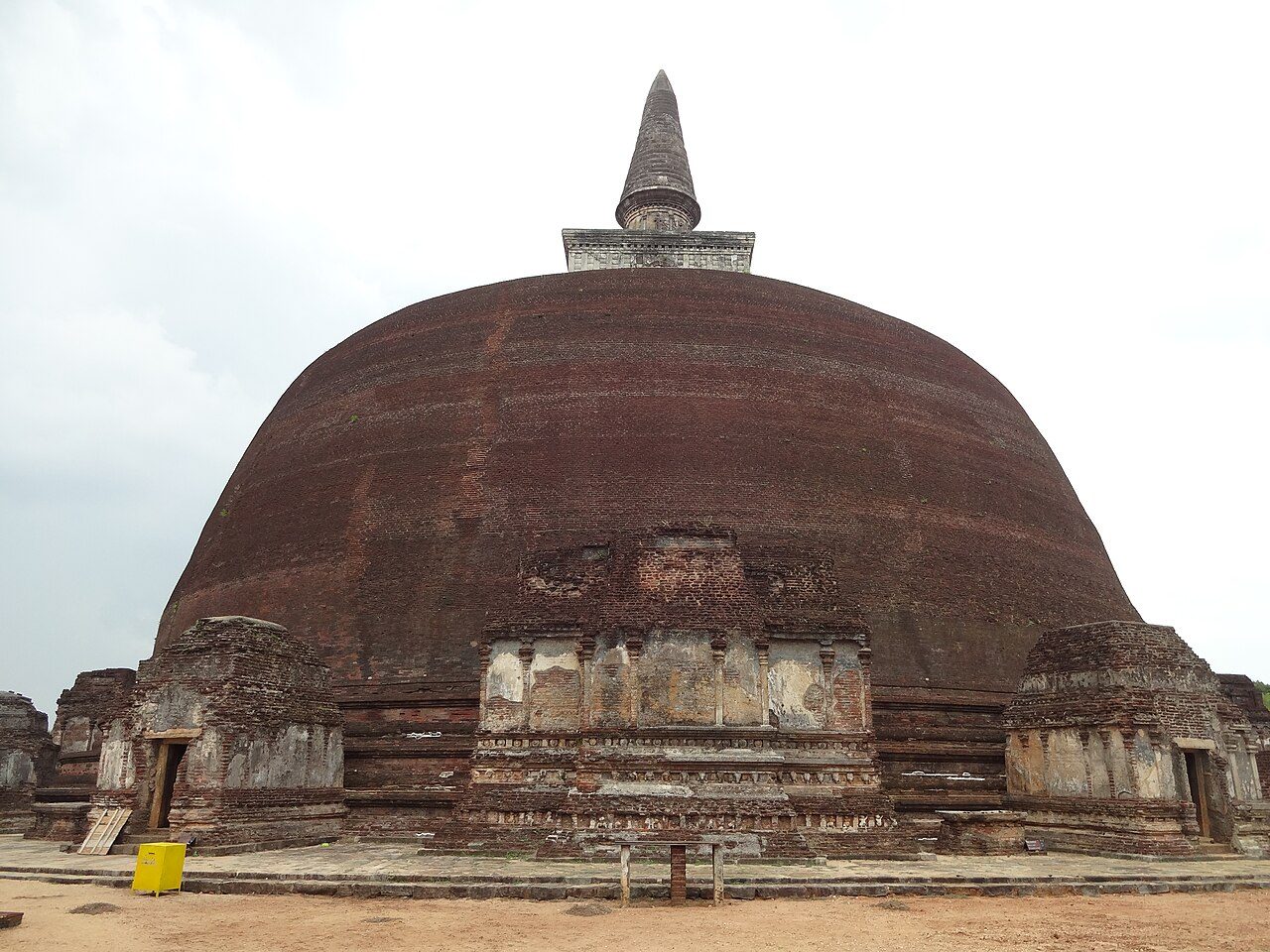
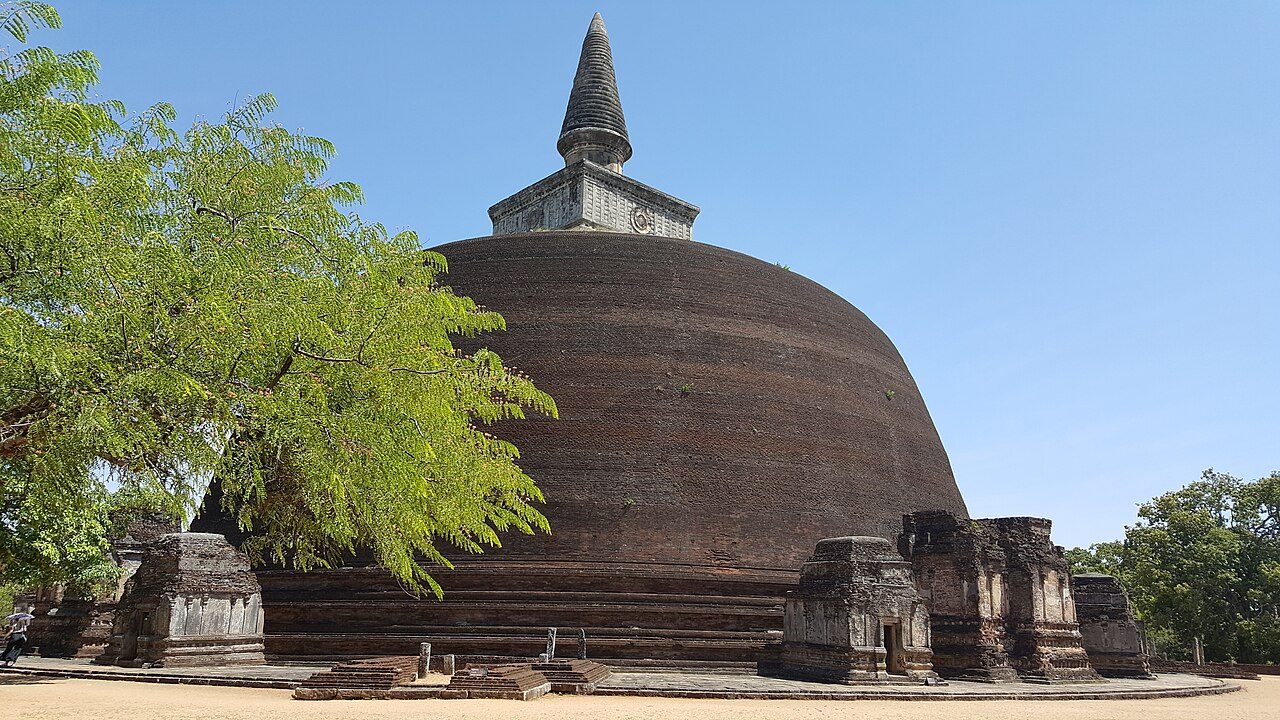
Rankoth Vehera is the largest stupa in Polonnaruwa, built by King Nissanka Malla at the end of the 12th century. Modelled on the great stupas of Anuradhapura, the brick dome stands about 54 metres high. Its name means gold-pinnacled stupa. Small image houses surround the base, and an inscription nearby records the king overseeing the work.
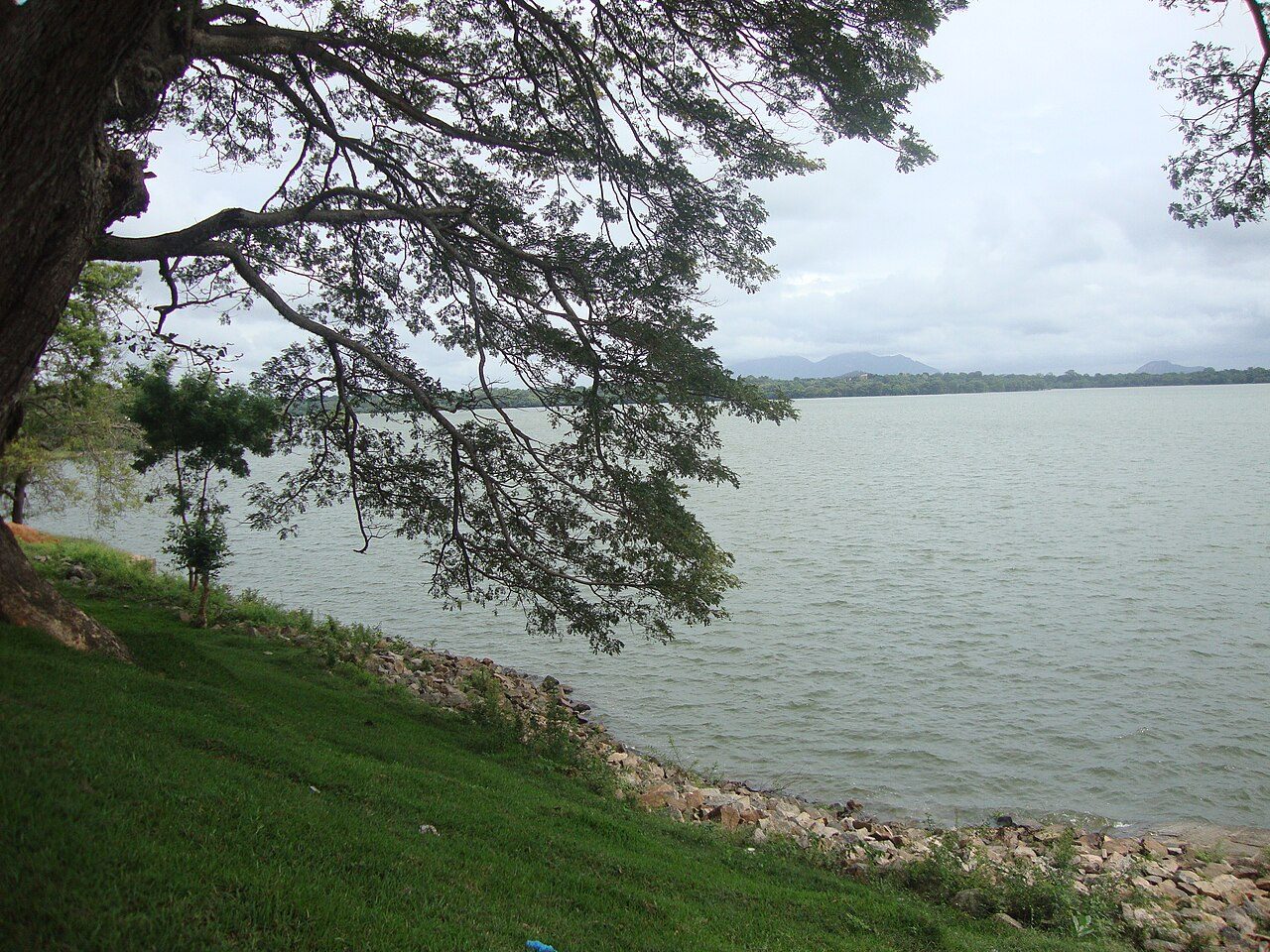
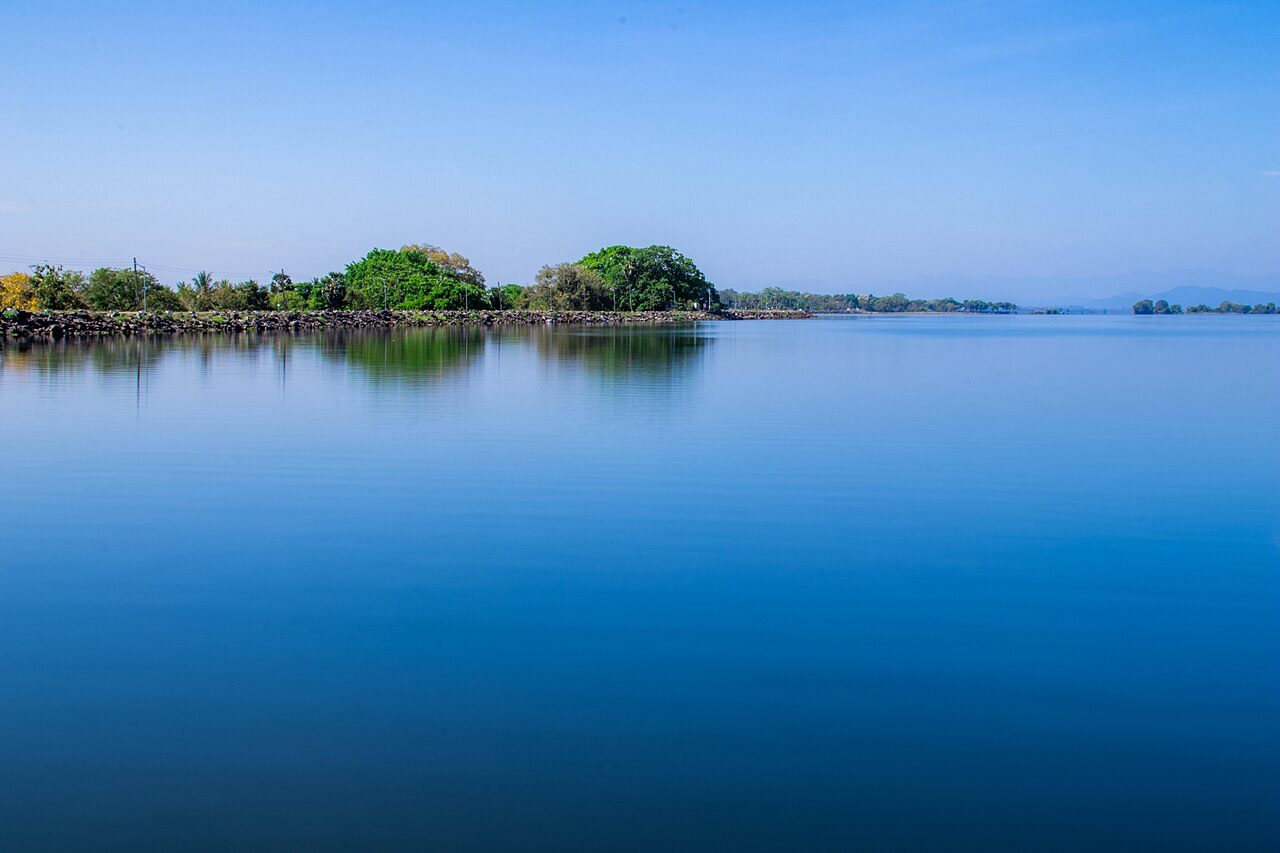
Parakrama Samudra, the Sea of Parakrama, is a vast reservoir on the western side of Polonnaruwa, built in the 12th century by King Parakramabahu I, who declared that not a drop of rain should reach the sea without serving man. It still irrigates the surrounding rice fields. The bund road is a pleasant place at sunset.
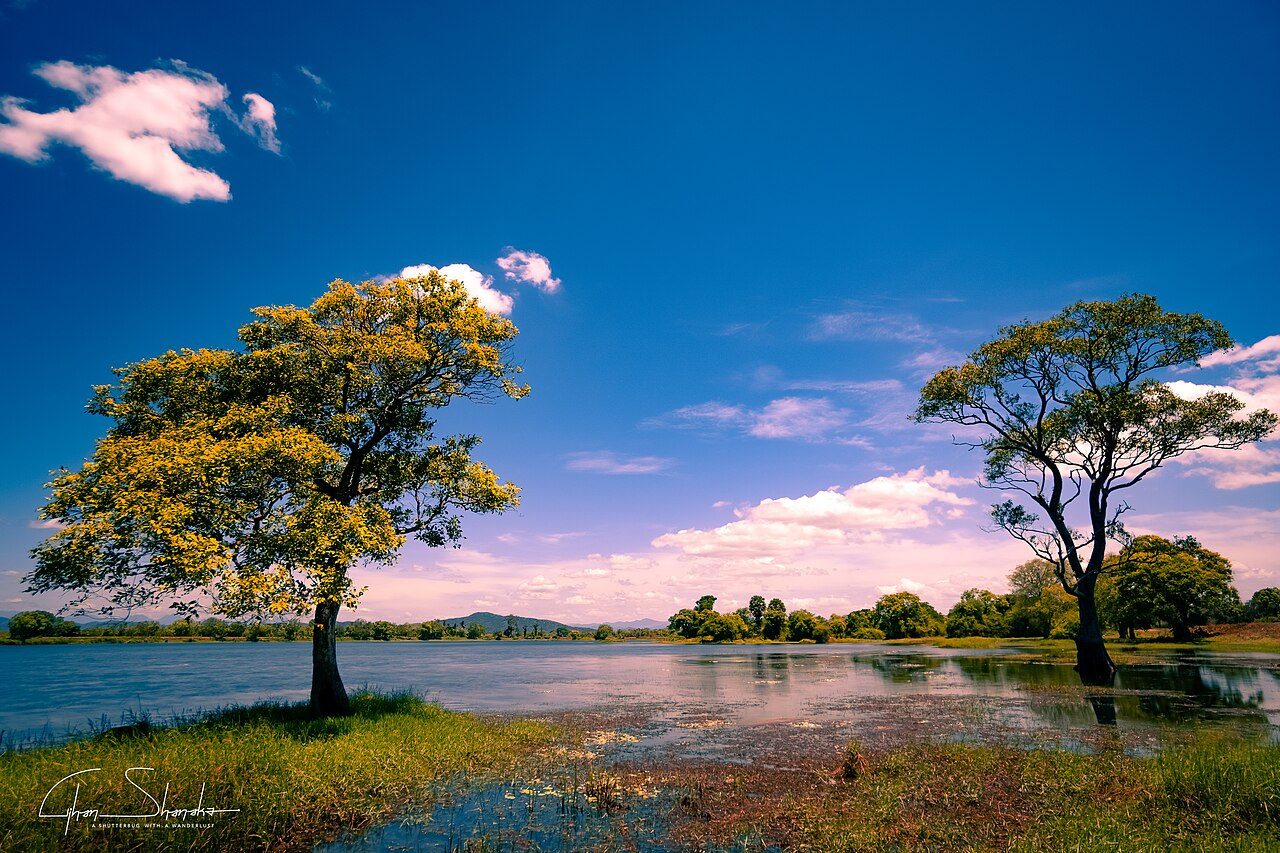
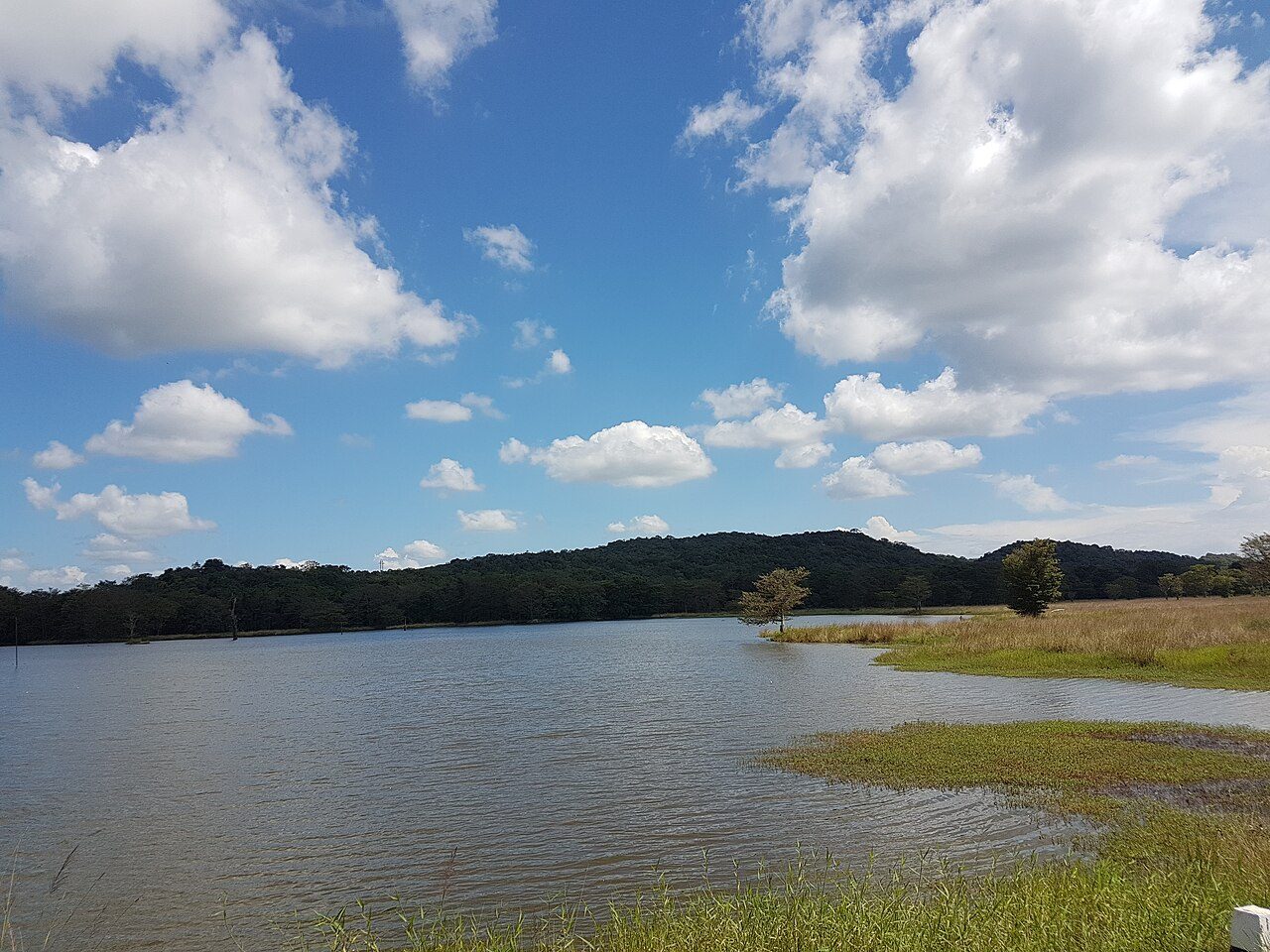
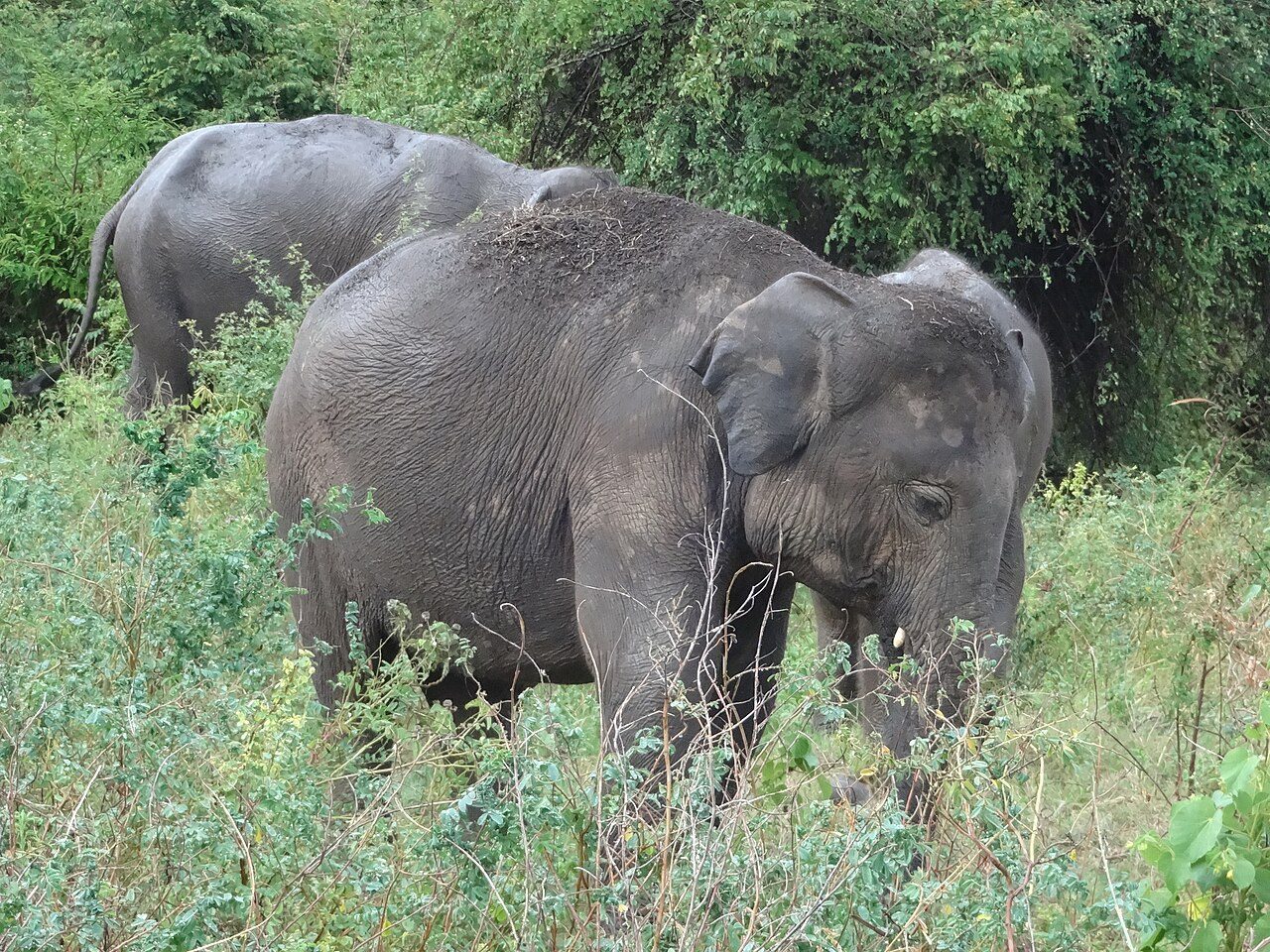
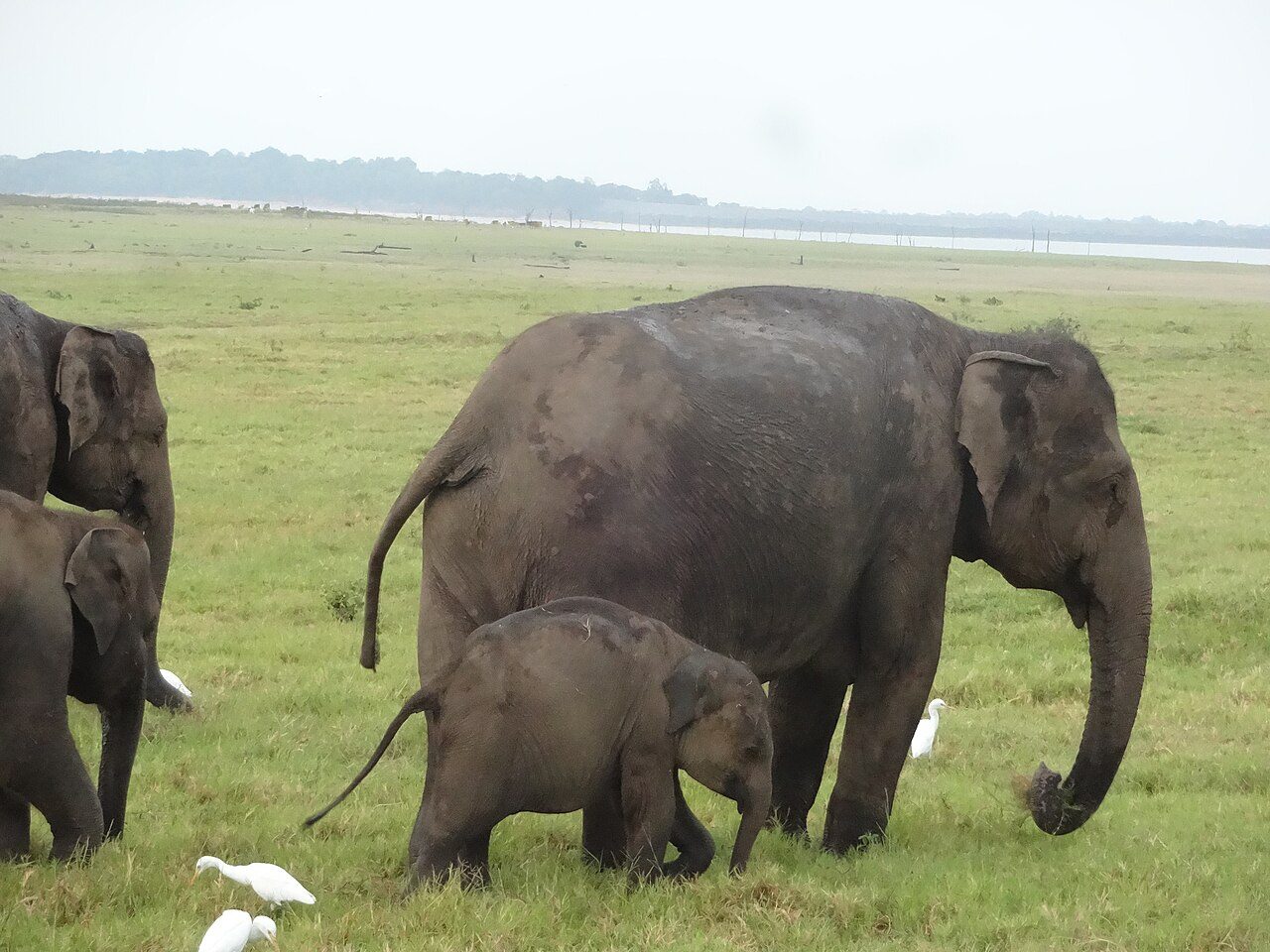
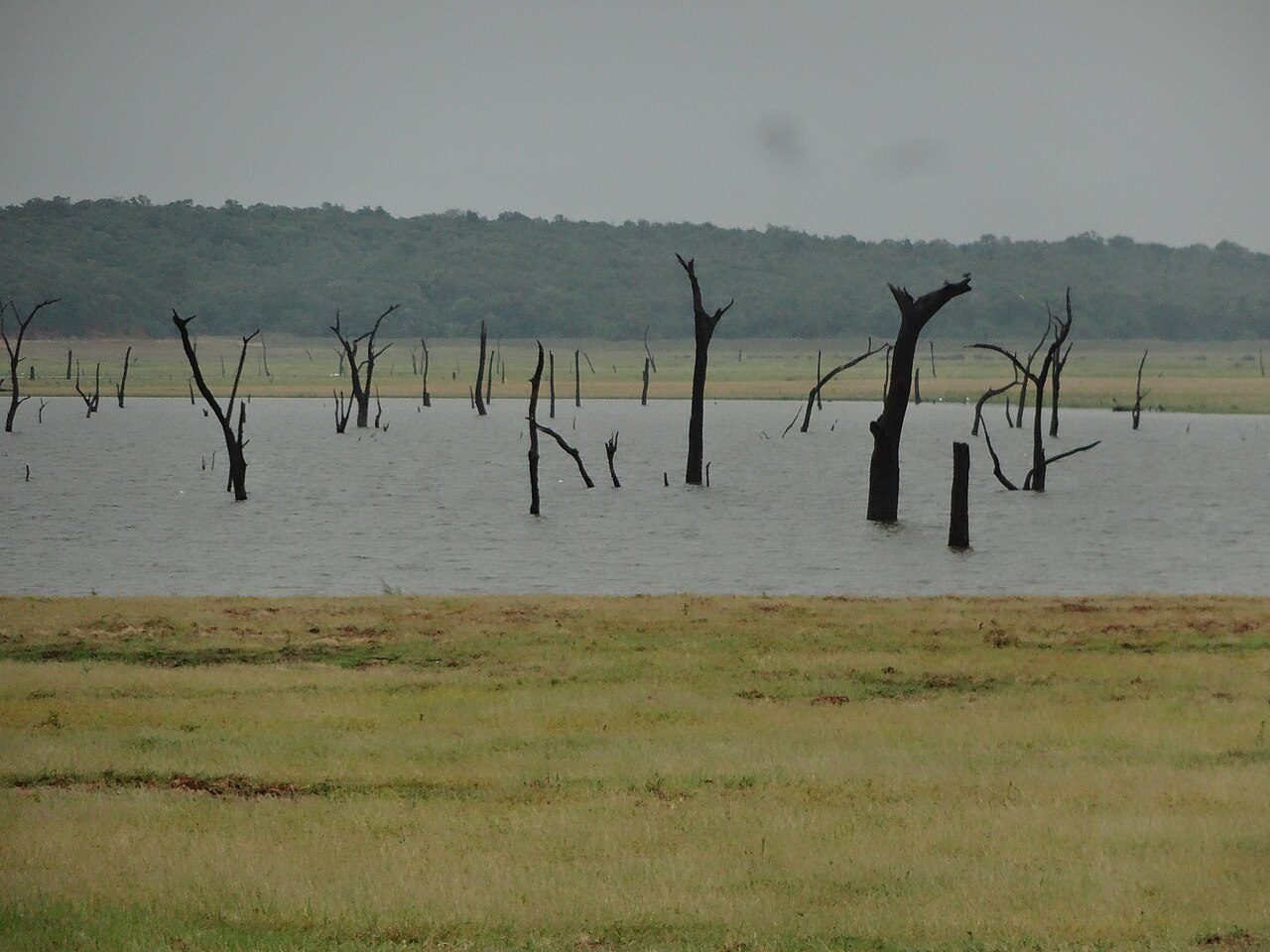
Kaudulla National Park, north of Minneriya, is centred on another ancient reservoir and forms part of the same elephant corridor. Herds move between the two parks as water levels change, and are often here from about August to December. The open lake bed makes elephants easy to see. Deer, monkeys and many water birds are also found.
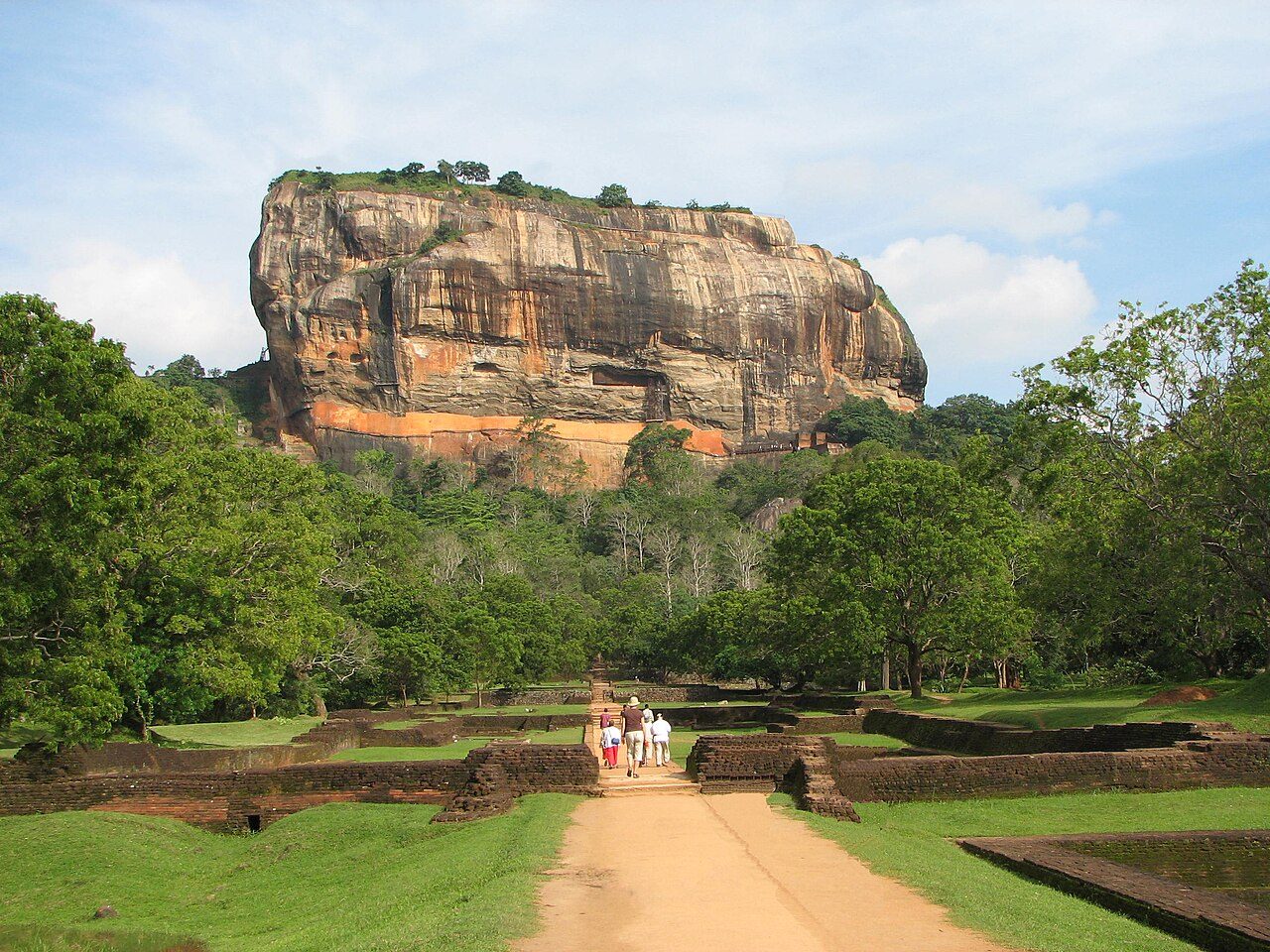
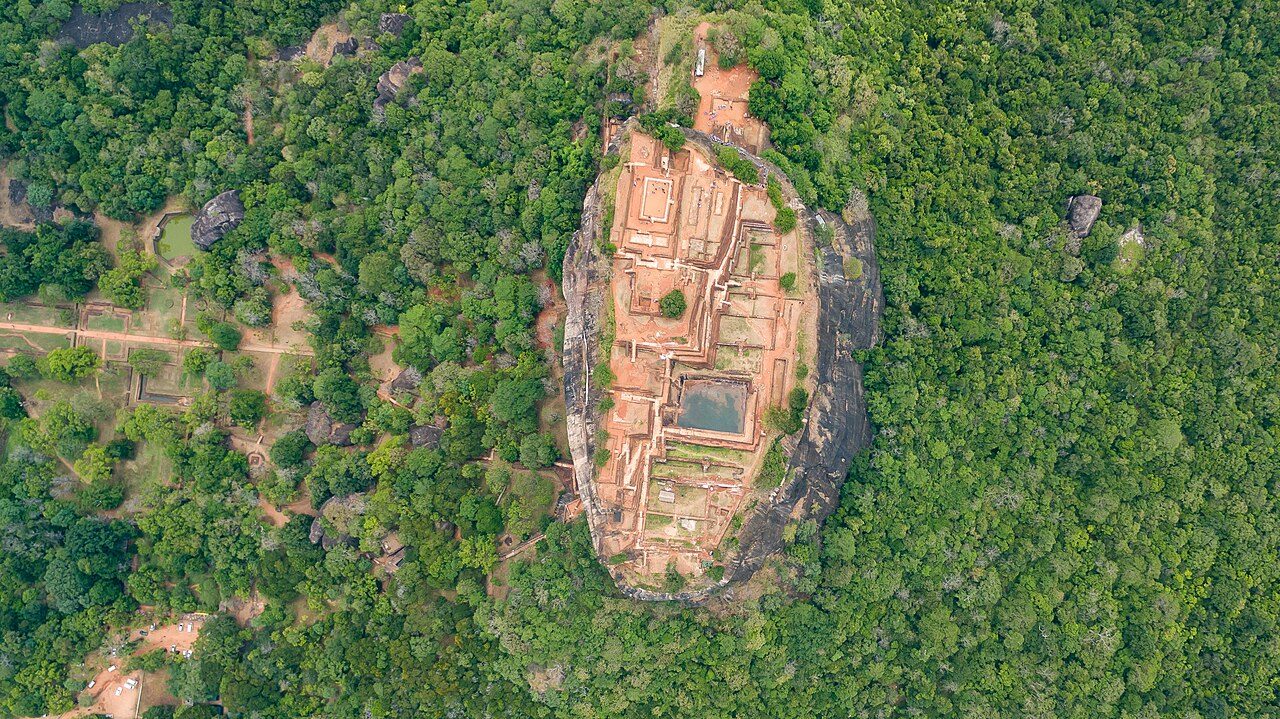
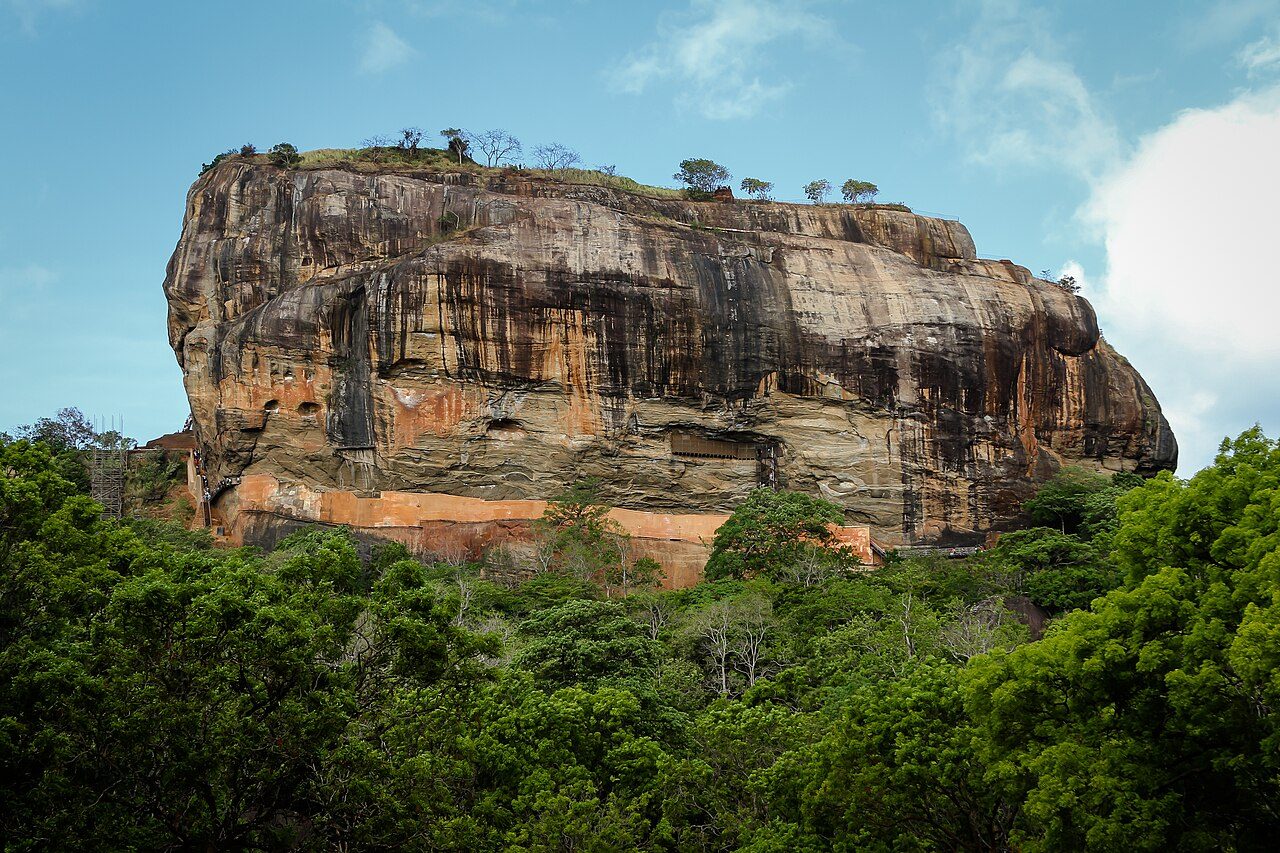
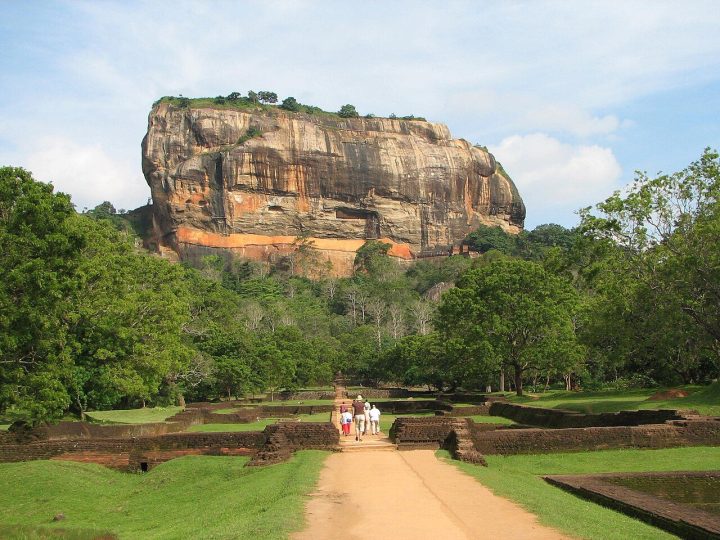
Sigiriya, the Lion Rock, is a 200-metre column of rock rising from the plains, on which King Kashyapa built his palace and capital in the 5th century. Visitors climb past water gardens, the painted Sigiriya maidens, the Mirror Wall with its ancient graffiti and the huge lion paws at the final stairway. It is a UNESCO World Heritage Site.
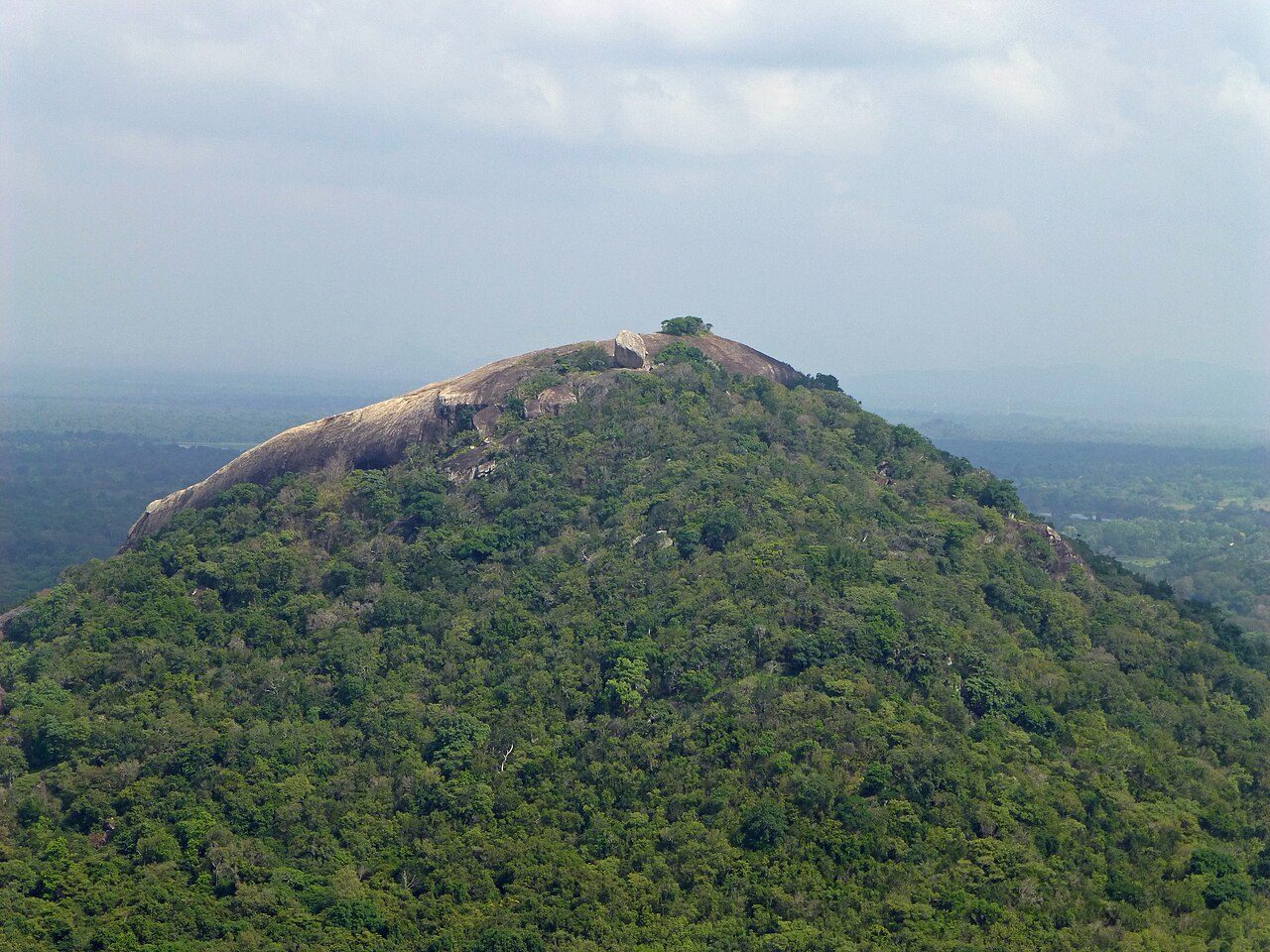
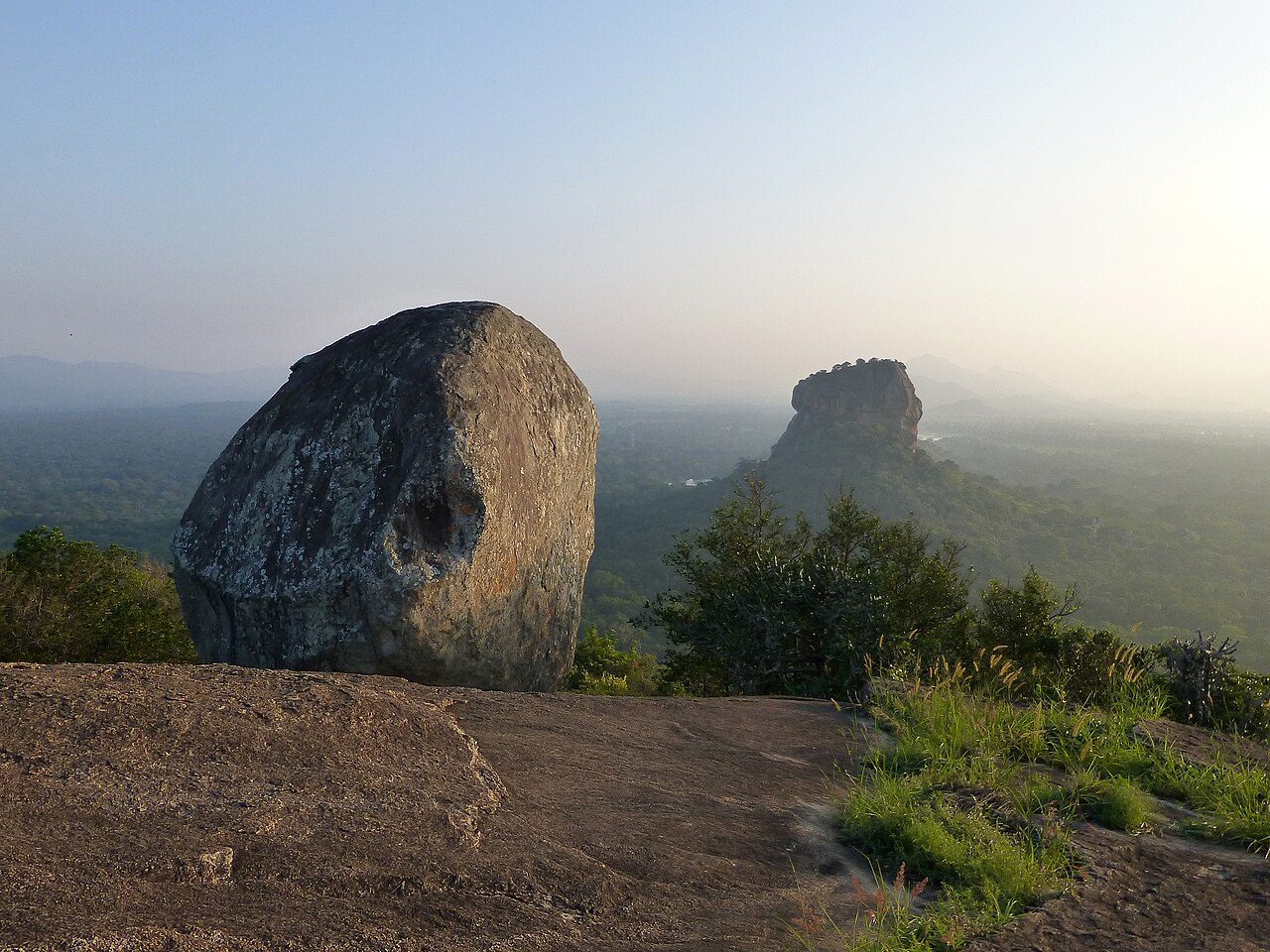
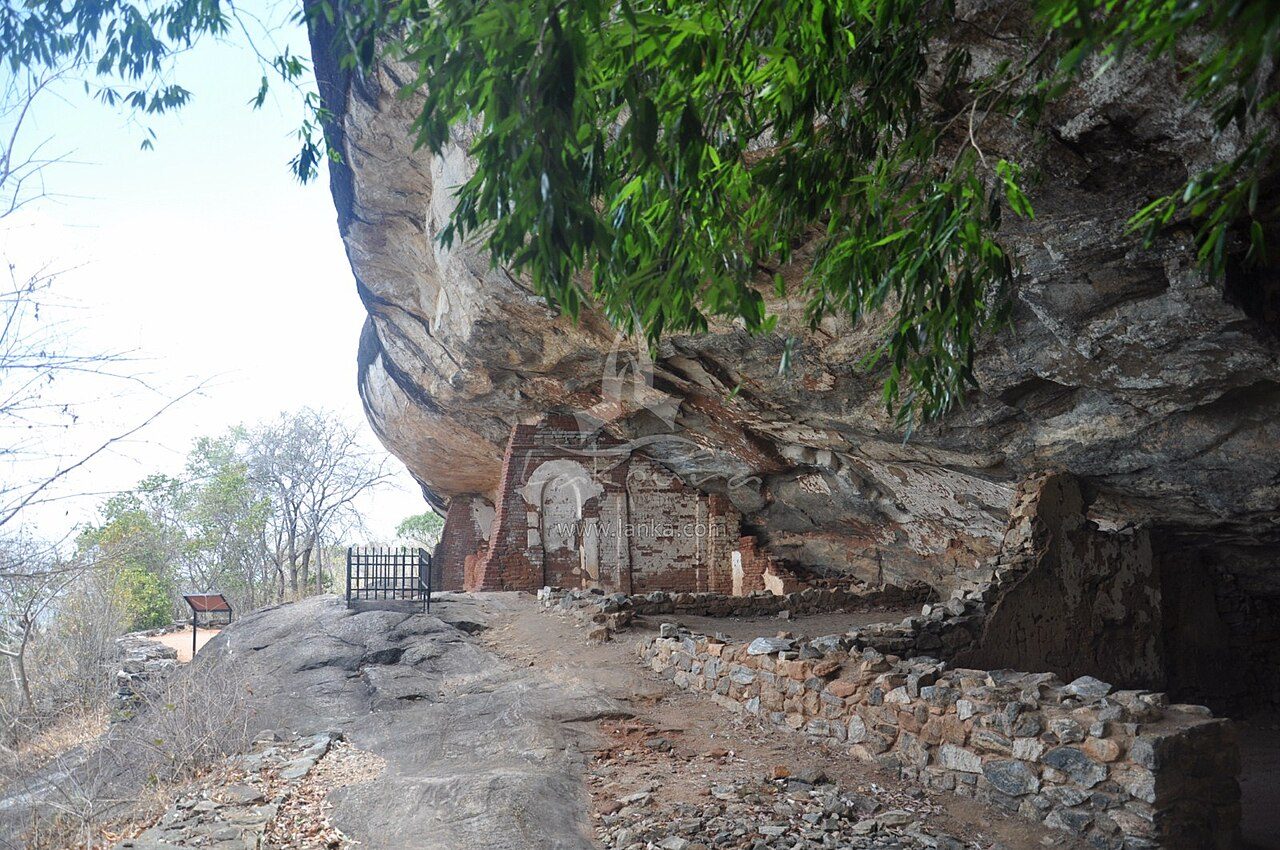
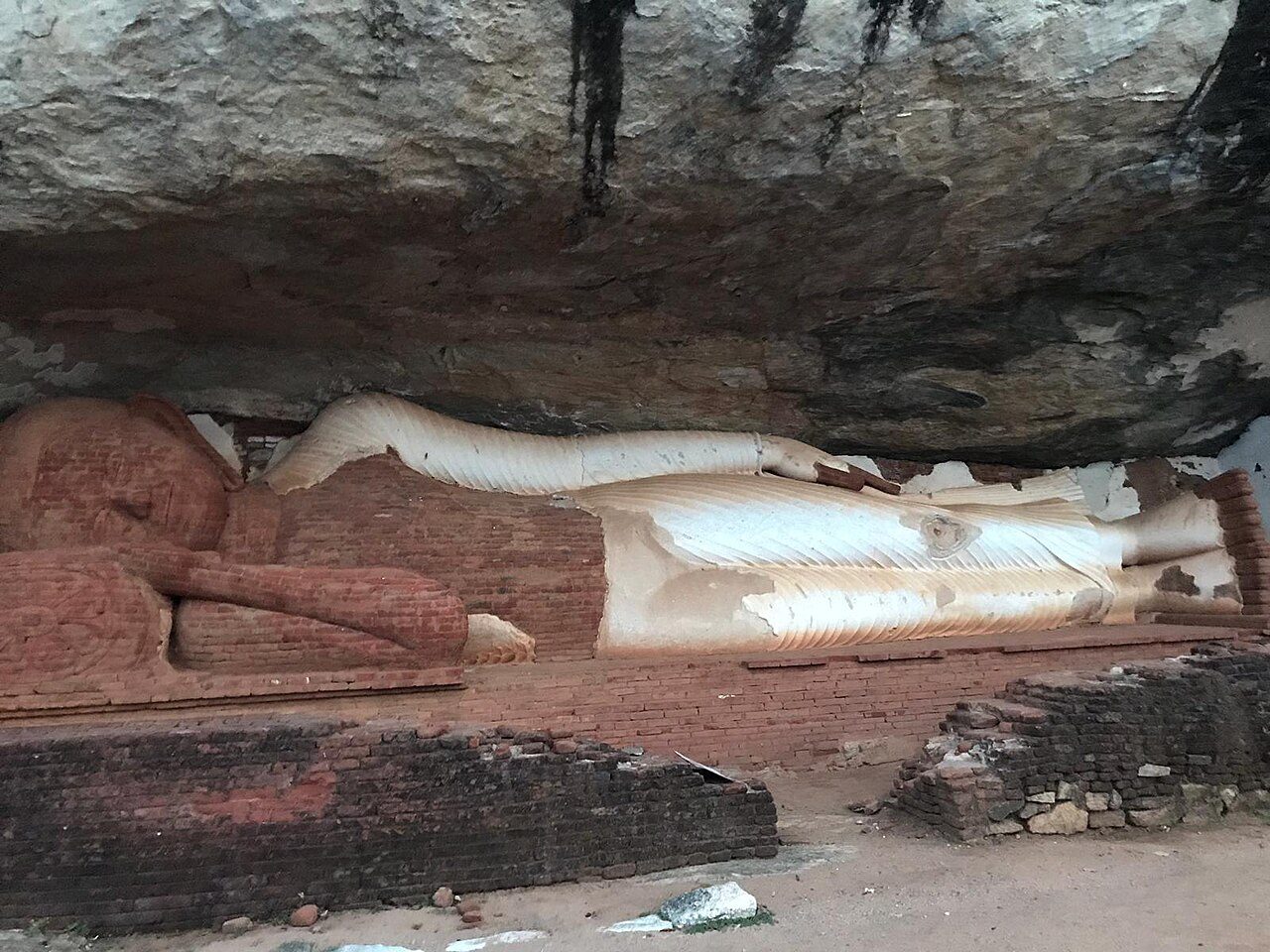
Pidurangala Rock stands about a kilometre north of Sigiriya and gives the best view of the Lion Rock itself. The climb starts at a cave temple with a large reclining Buddha, part of a monastery said to have been given to monks by King Kashyapa. The last stretch is a scramble over boulders. Sunrise is the most popular time to go up.
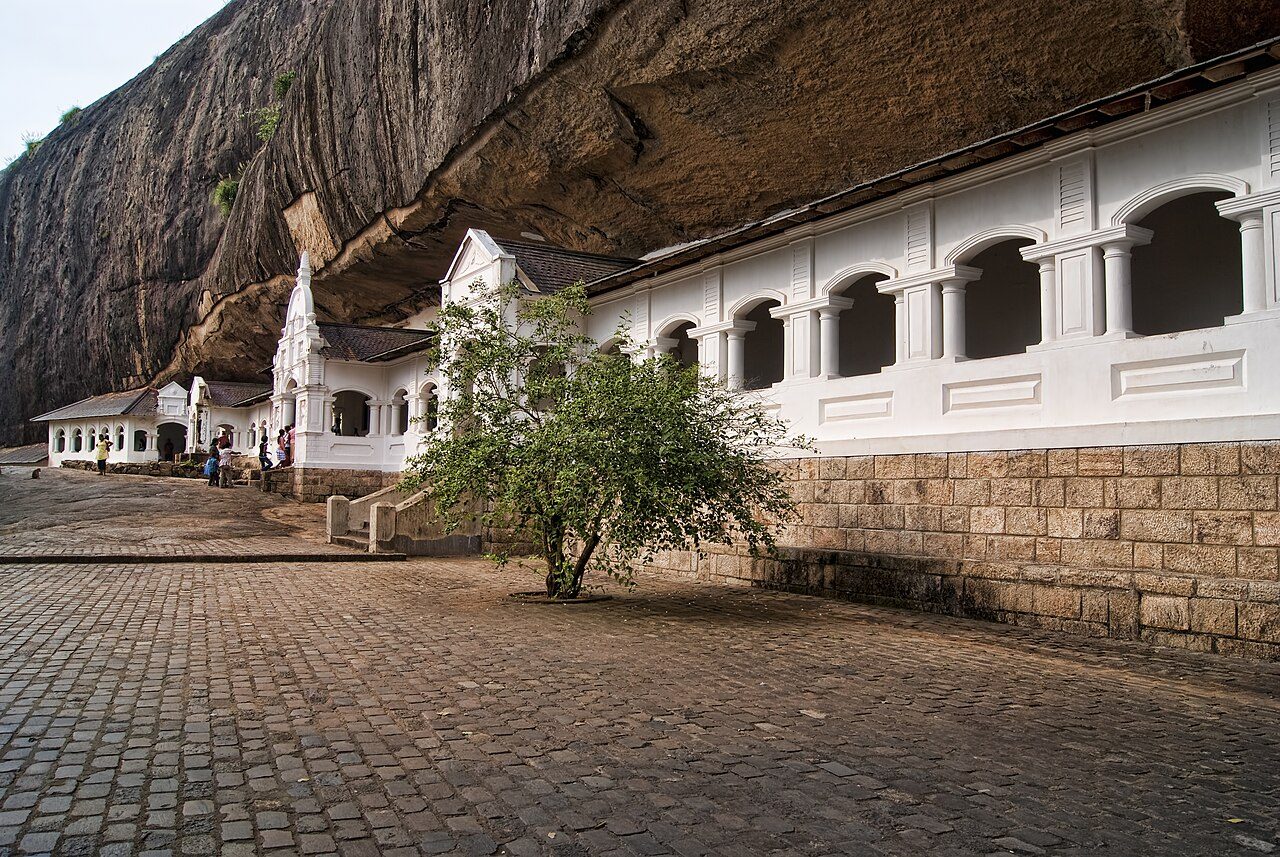
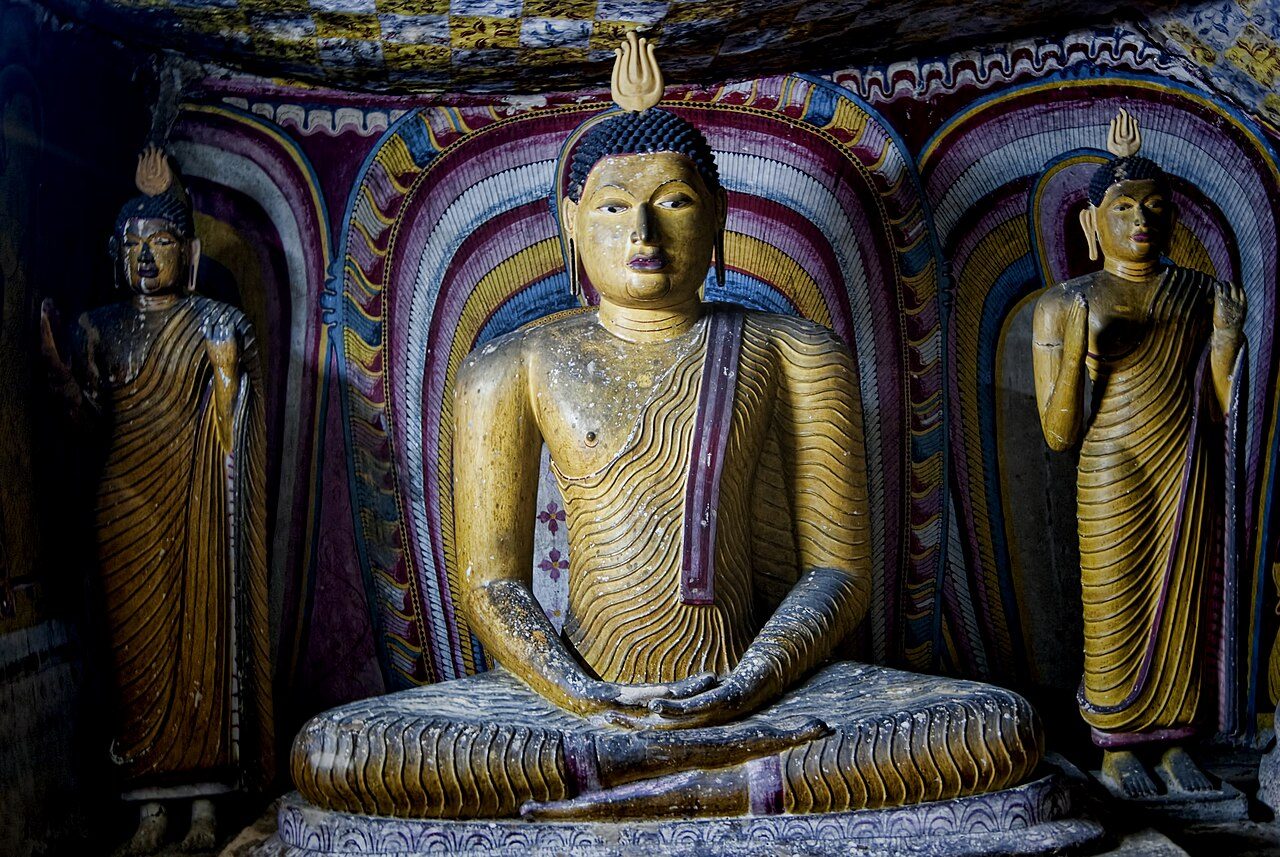
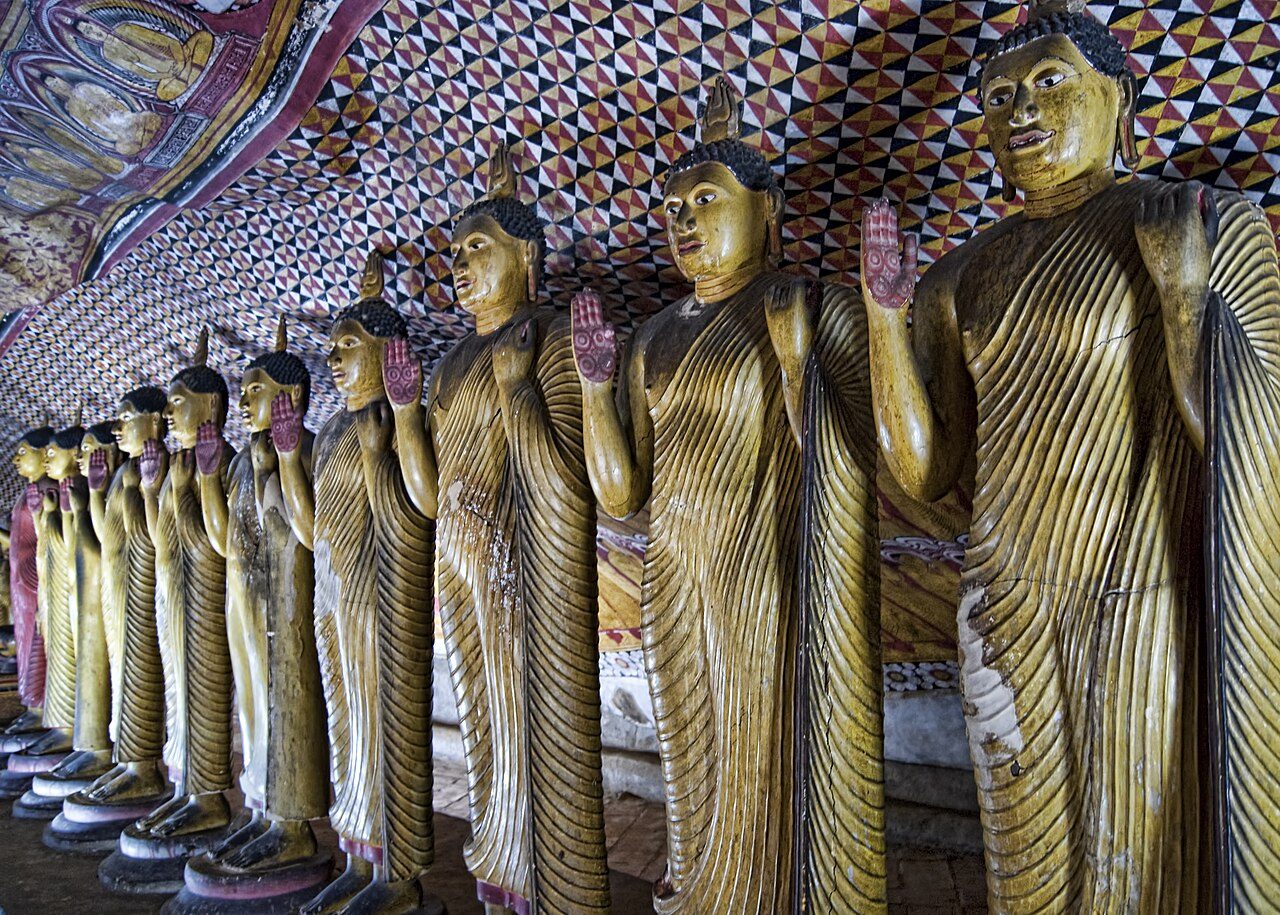
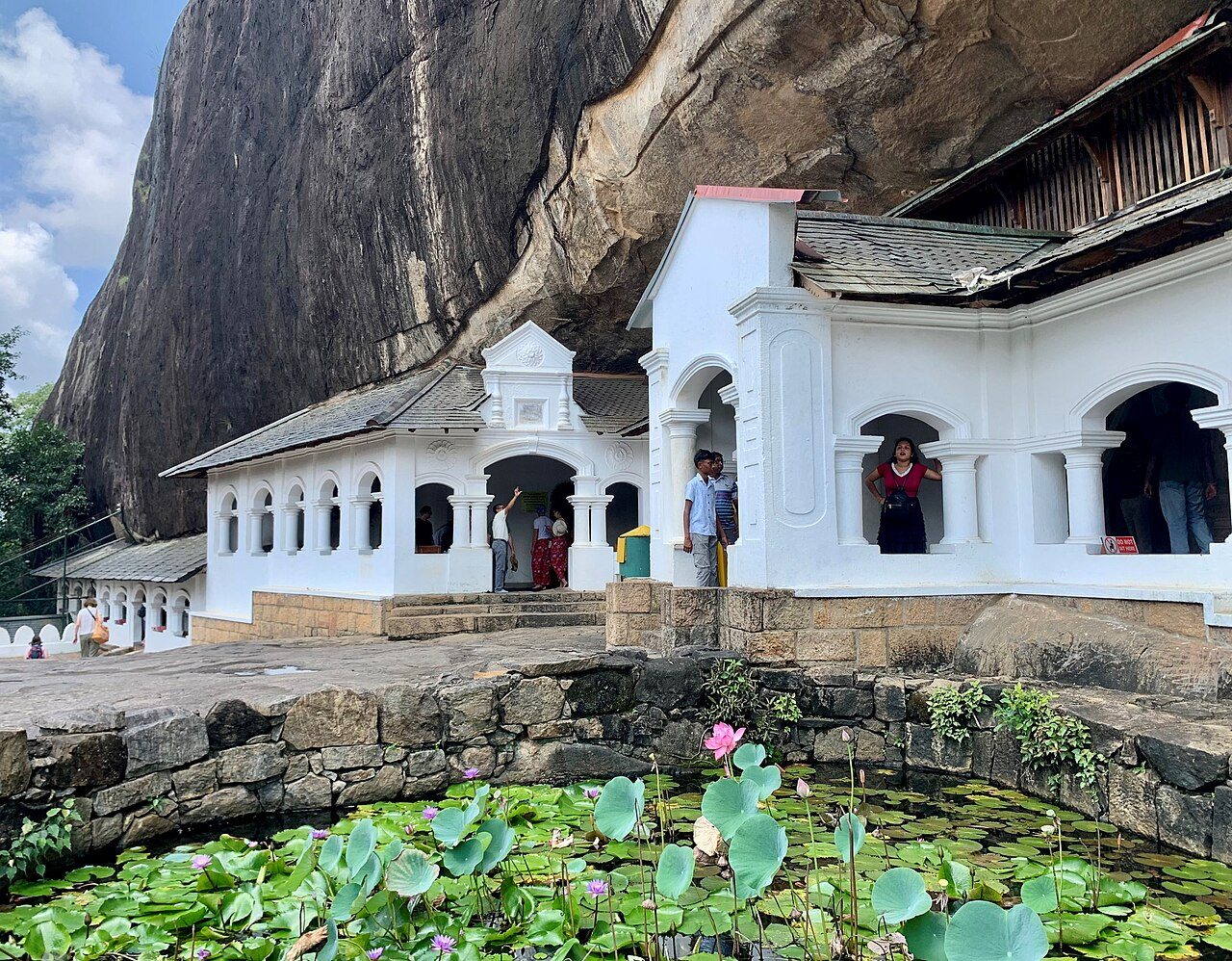
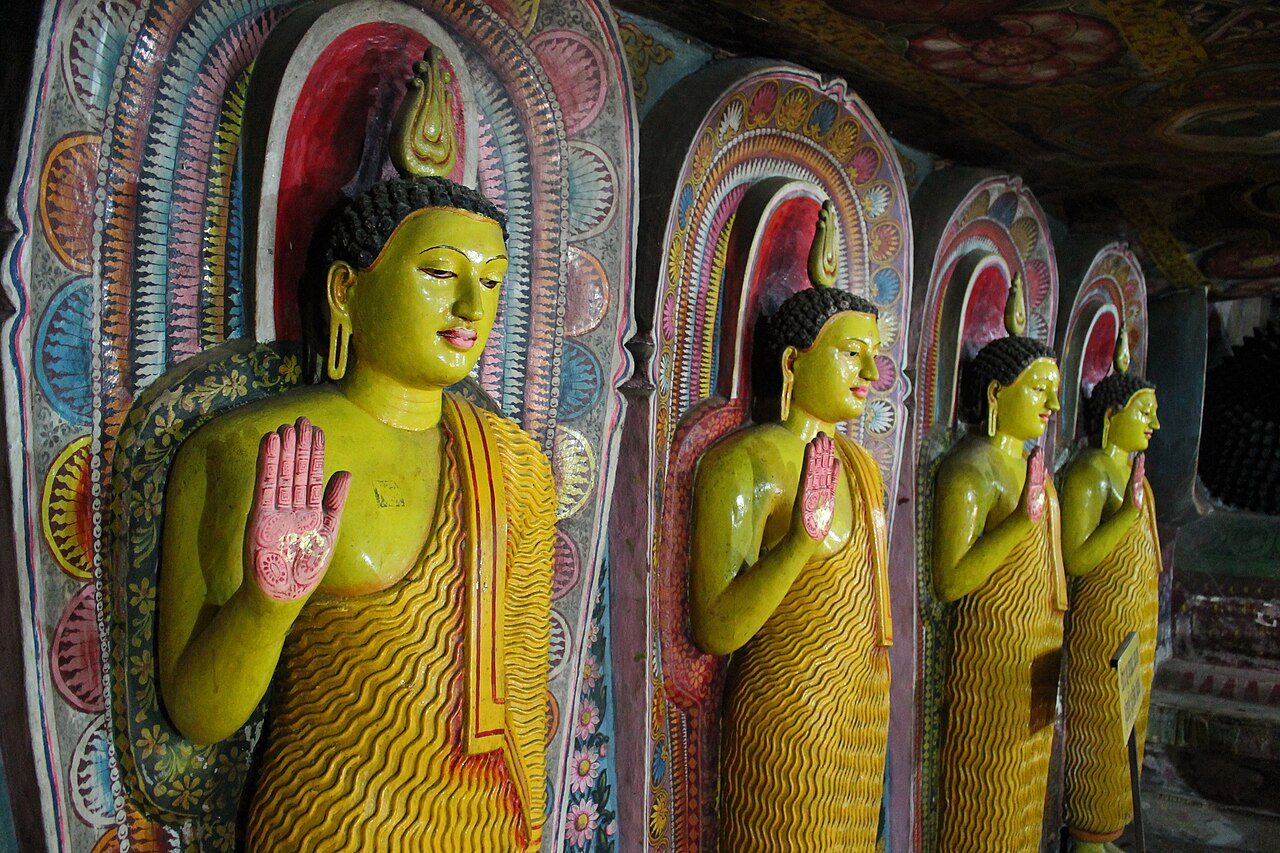
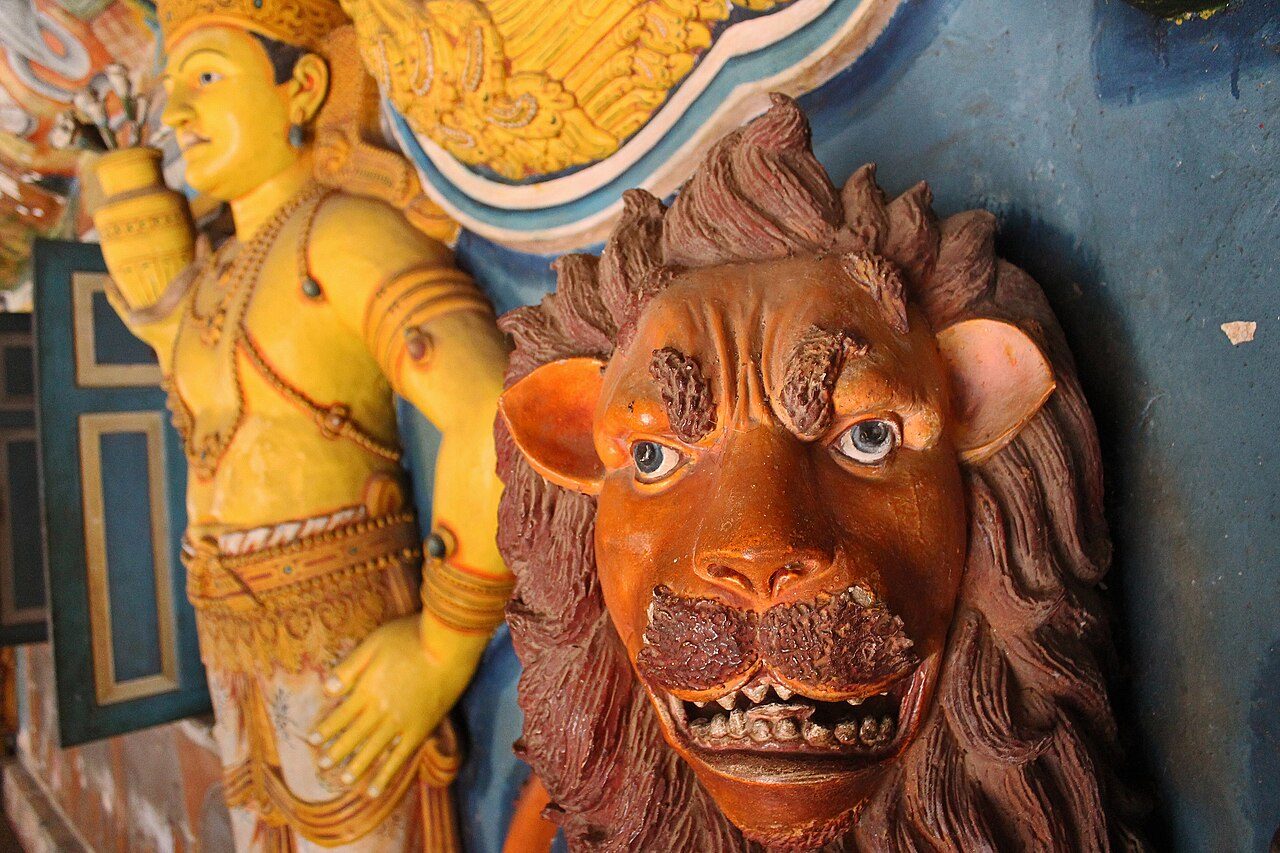
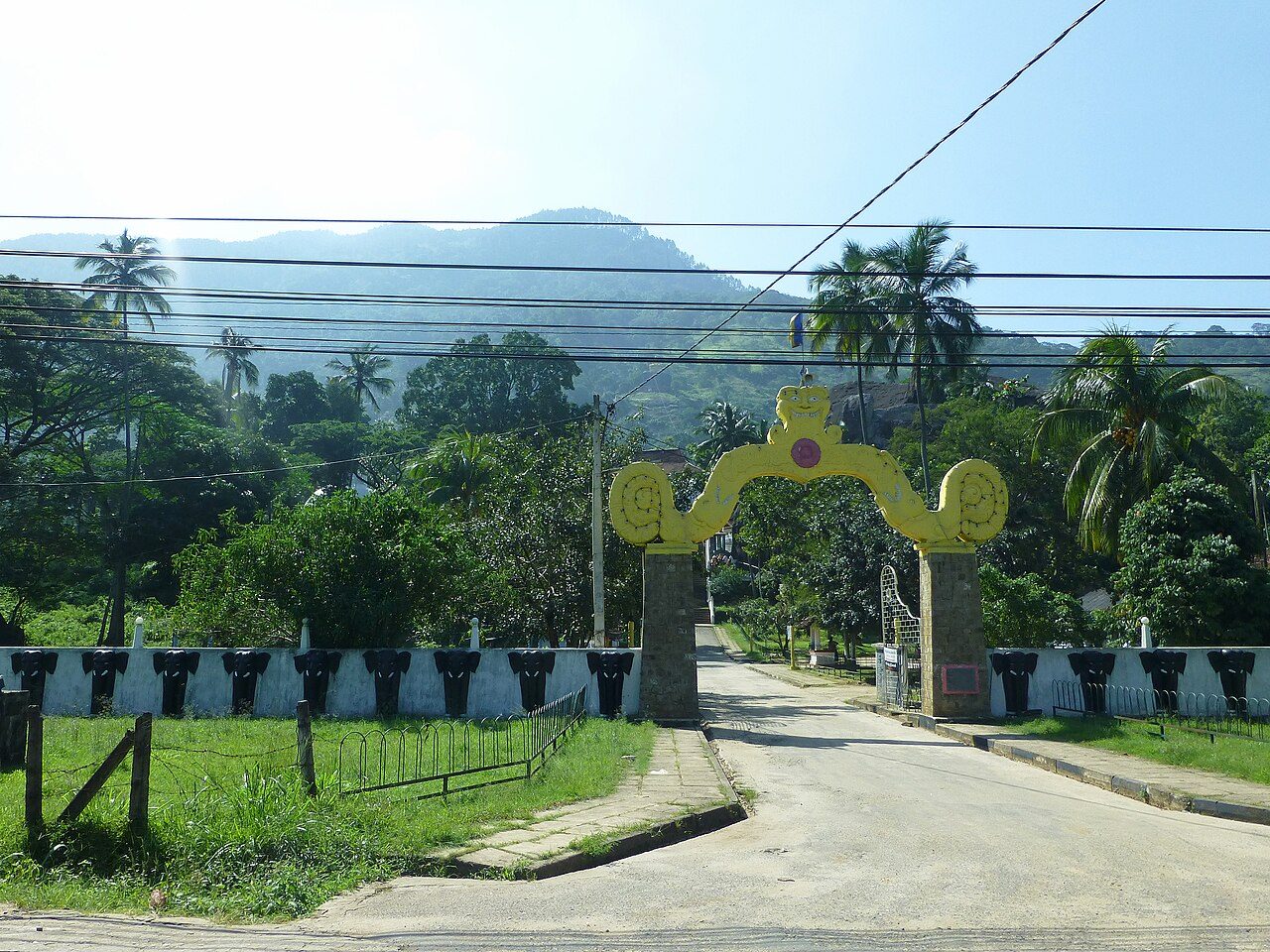
The Dambulla Cave Temple, also called the Golden Temple of Dambulla, is the largest and best-preserved cave temple complex in Sri Lanka. Five caves beneath a huge overhanging rock hold more than 150 Buddha statues, and painted murals cover the ceilings. The site has been a place of worship since the 1st century BCE and is a UNESCO World Heritage Site.
Aluvihare Rock Temple lies among boulders beside the Kandy to Dambulla road, just north of Matale. Tradition holds that the Pali Canon was first written down here on palm leaves in the 1st century BCE, after centuries of being passed on by memory. The caves hold Buddha images, murals, and vivid scenes of the punishments of hell.
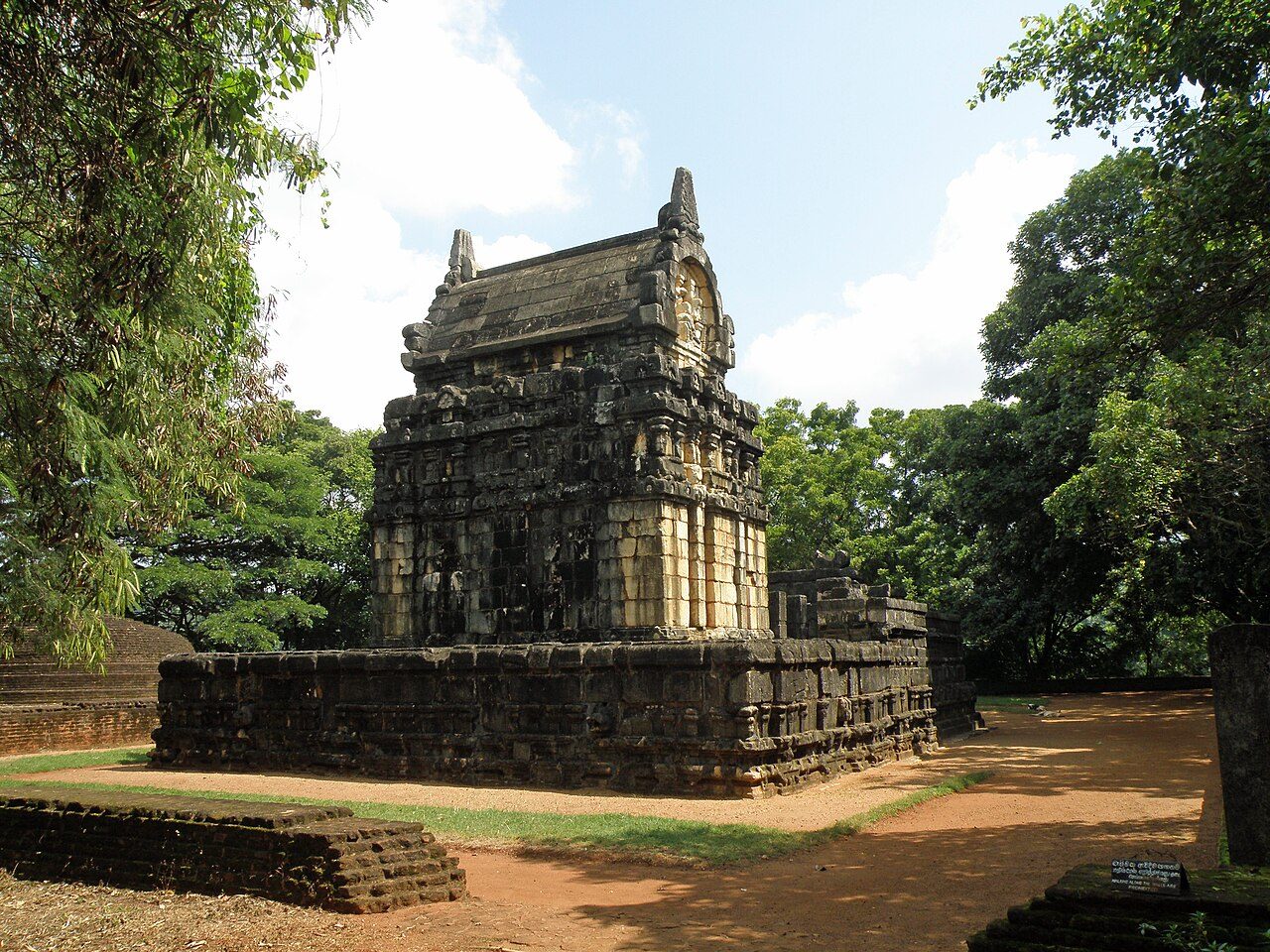
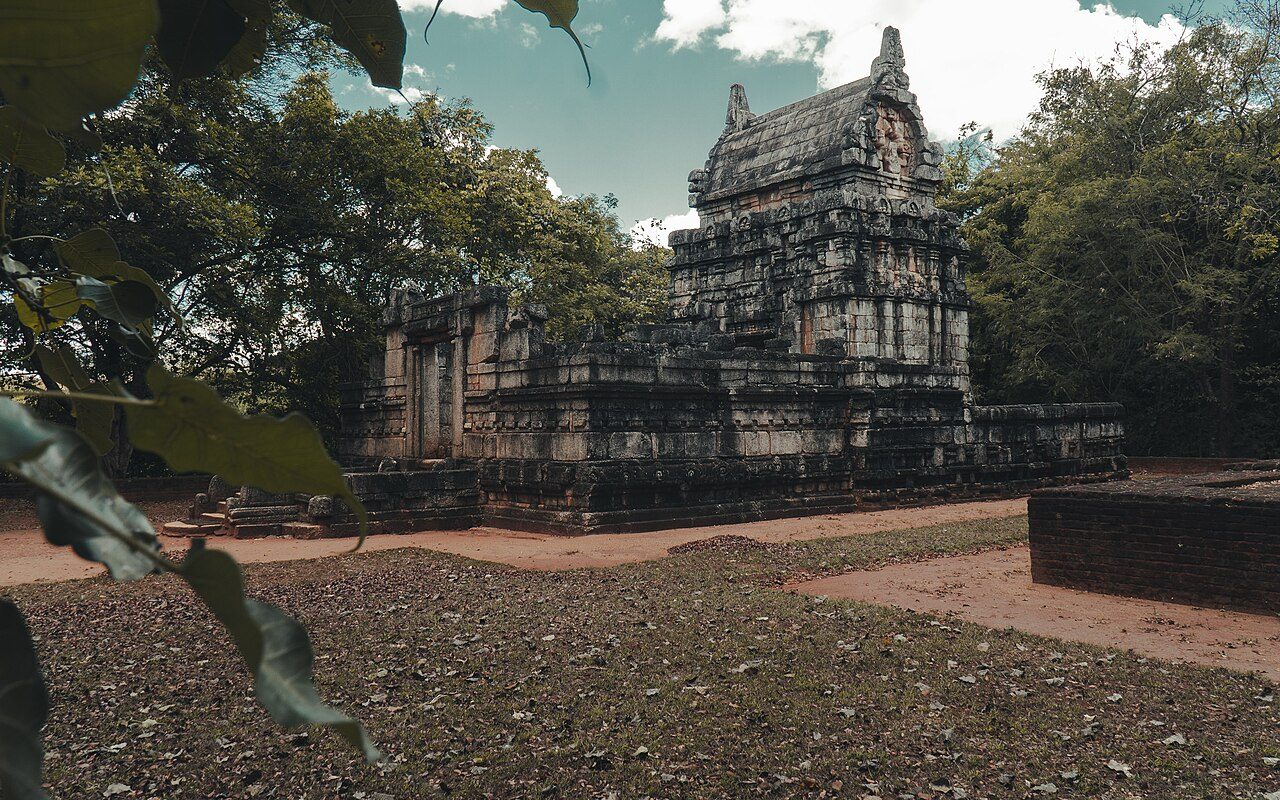
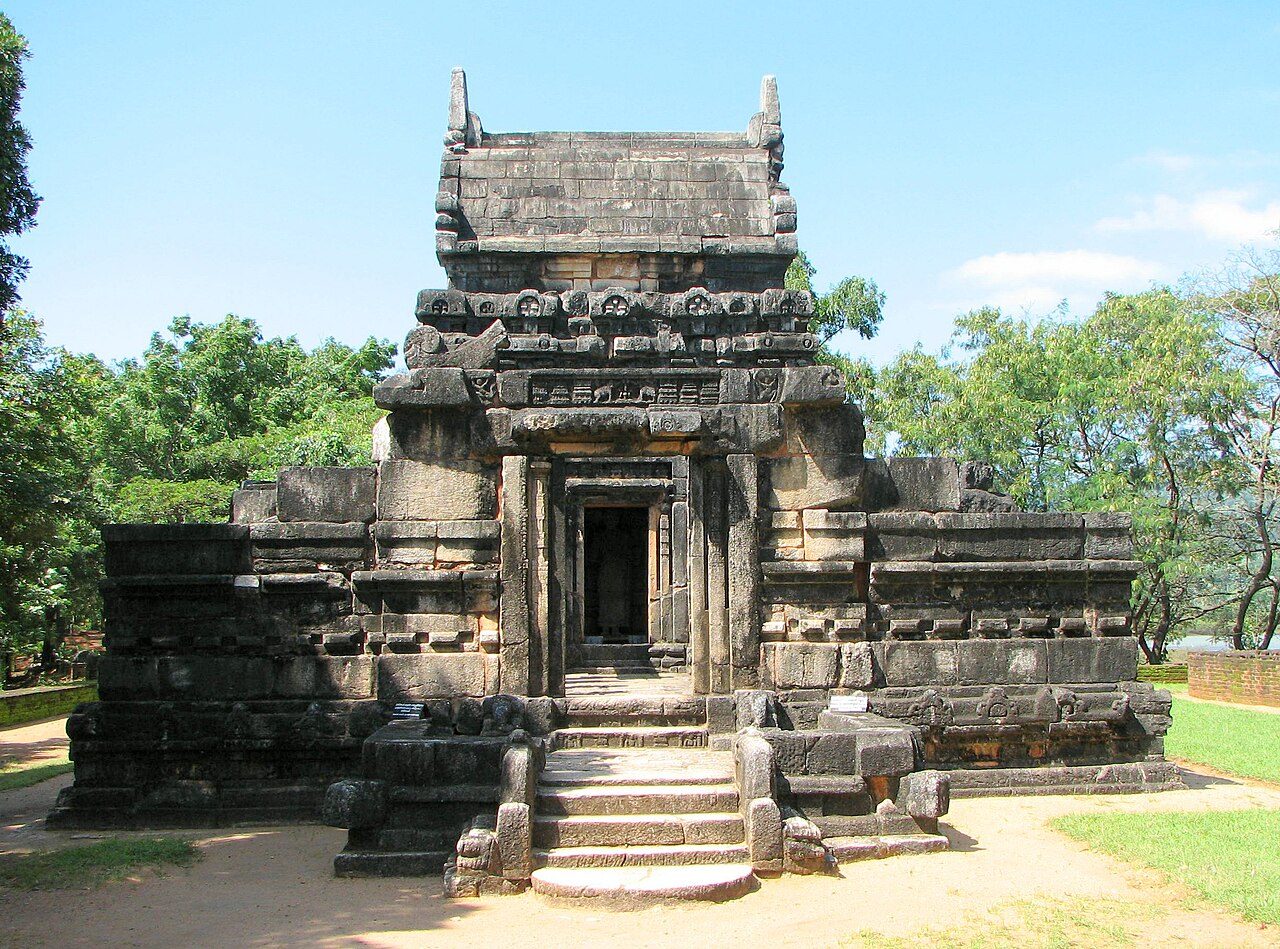
Nalanda Gedige is a small stone shrine near Naula, usually dated between the 8th and 10th centuries. It was built in a South Indian Hindu temple style yet used for Buddhist worship, with some Tantric carvings. The whole building was dismantled and rebuilt on higher ground in the 1980s when a reservoir flooded its original site.
Best weather: May – SepHeavy rain: Nov
Seasons from 20 years of NASA POWER climate data.
Was this trip blog helpful?
0
0
Ready to follow this route?
Copy all 22 stops into your trip plans in the app.
 WaTrips