Sri Lanka in 10 Days: Ancient Cities, Tea Hills, Leopards and Beaches
10 DAYS32 placesby WaTrips
Negombo, Anuradhapura and Polonnaruwa, Sigiriya and Dambulla, Kandy, Nuwara Eliya, the Ella train, Yala, Mirissa and Galle.
Ten days is the classic first trip around Sri Lanka, and the island packs a lot into a small space. Start by the airport in Negombo, then head north to the ancient capitals of Anuradhapura and Polonnaruwa, with an evening elephant safari at Minneriya. Climb Sigiriya at dawn and see the painted caves of Dambulla, then visit Kandy's Temple of the Tooth. Ride up through the tea country to Nuwara Eliya and Horton Plains, take one of the world's most scenic train rides to Ella, and drop down to Yala for leopards. End on the south coast at Mirissa and the old Dutch fort of Galle. December to April suits the west and south; the east coast is better from April to September.
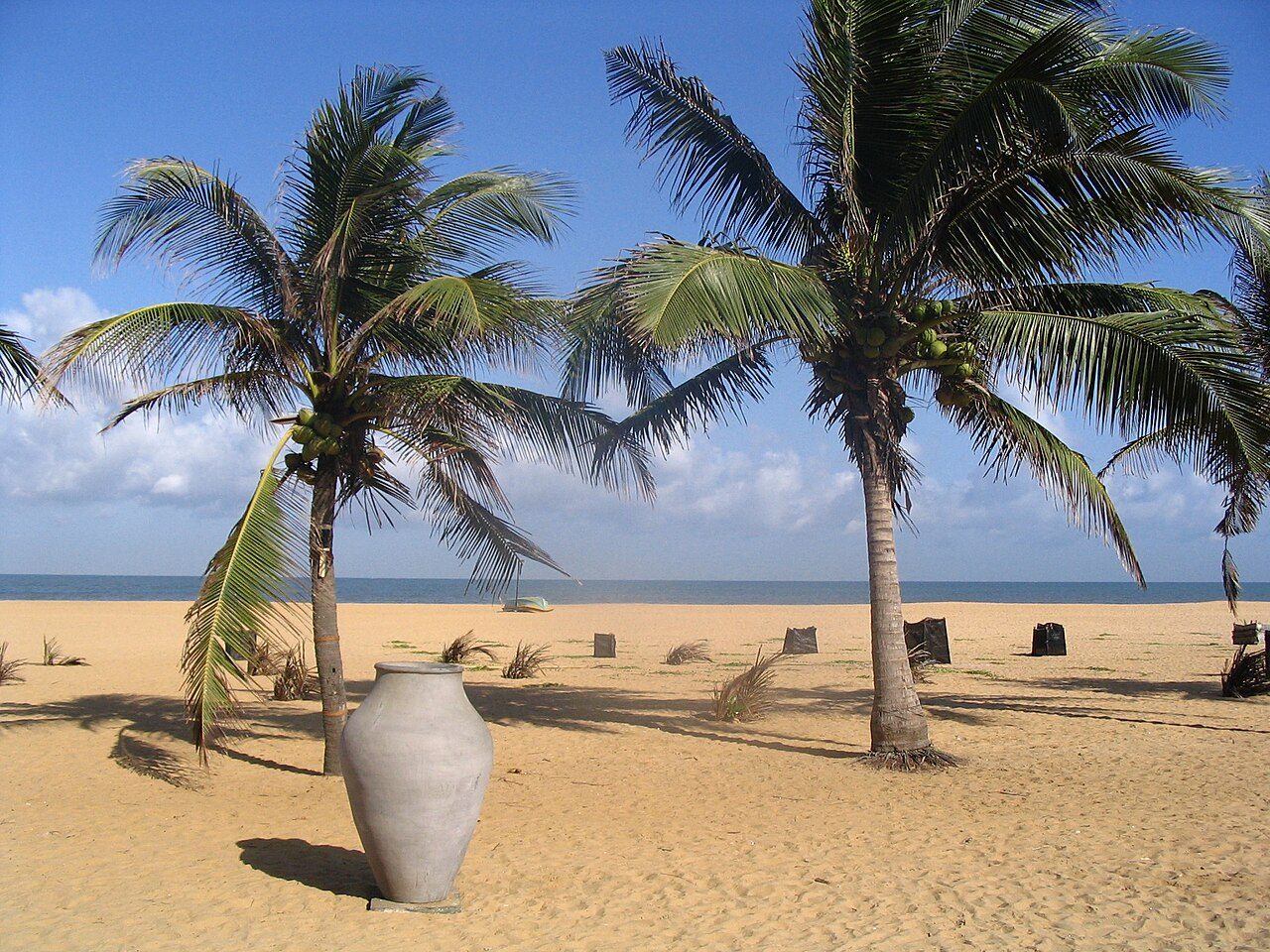
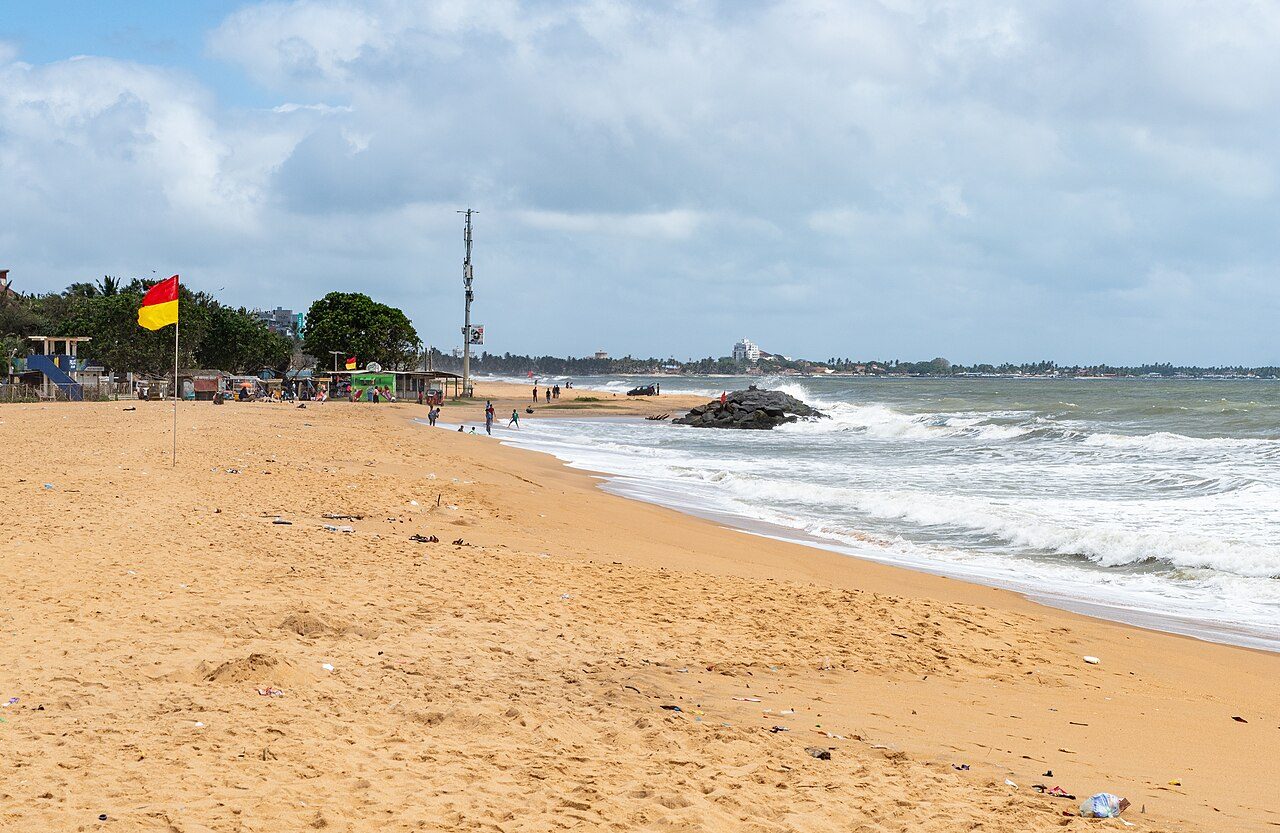
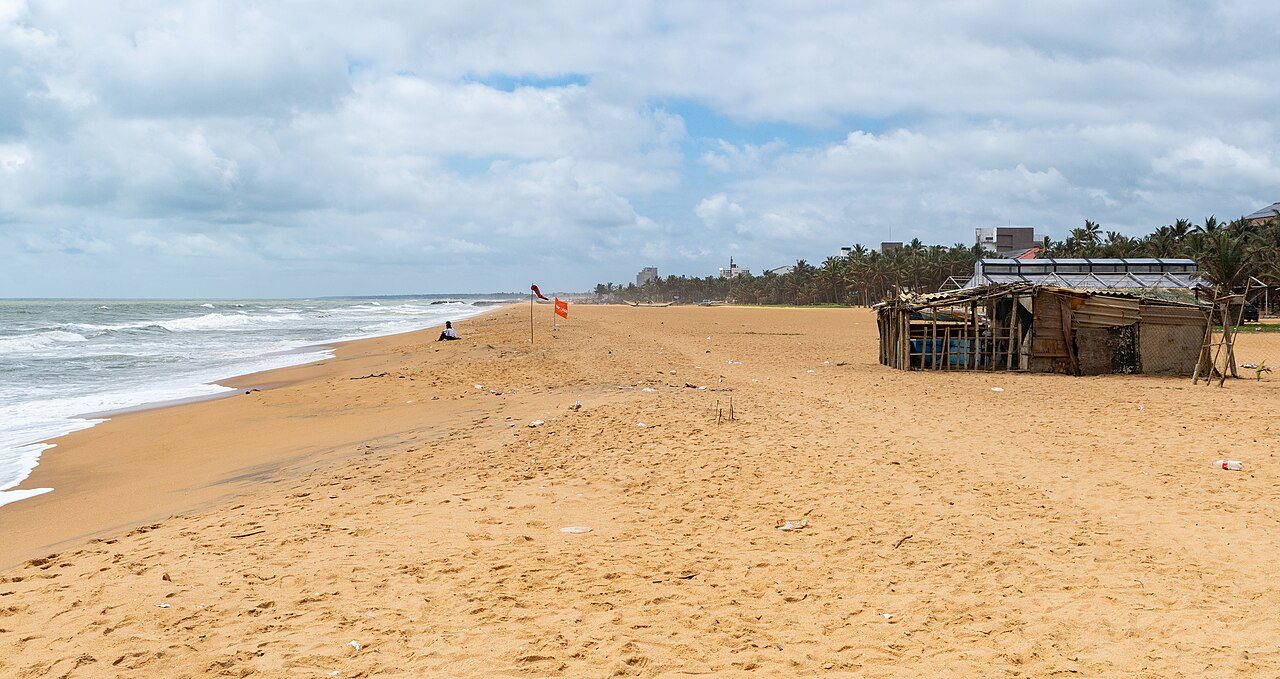
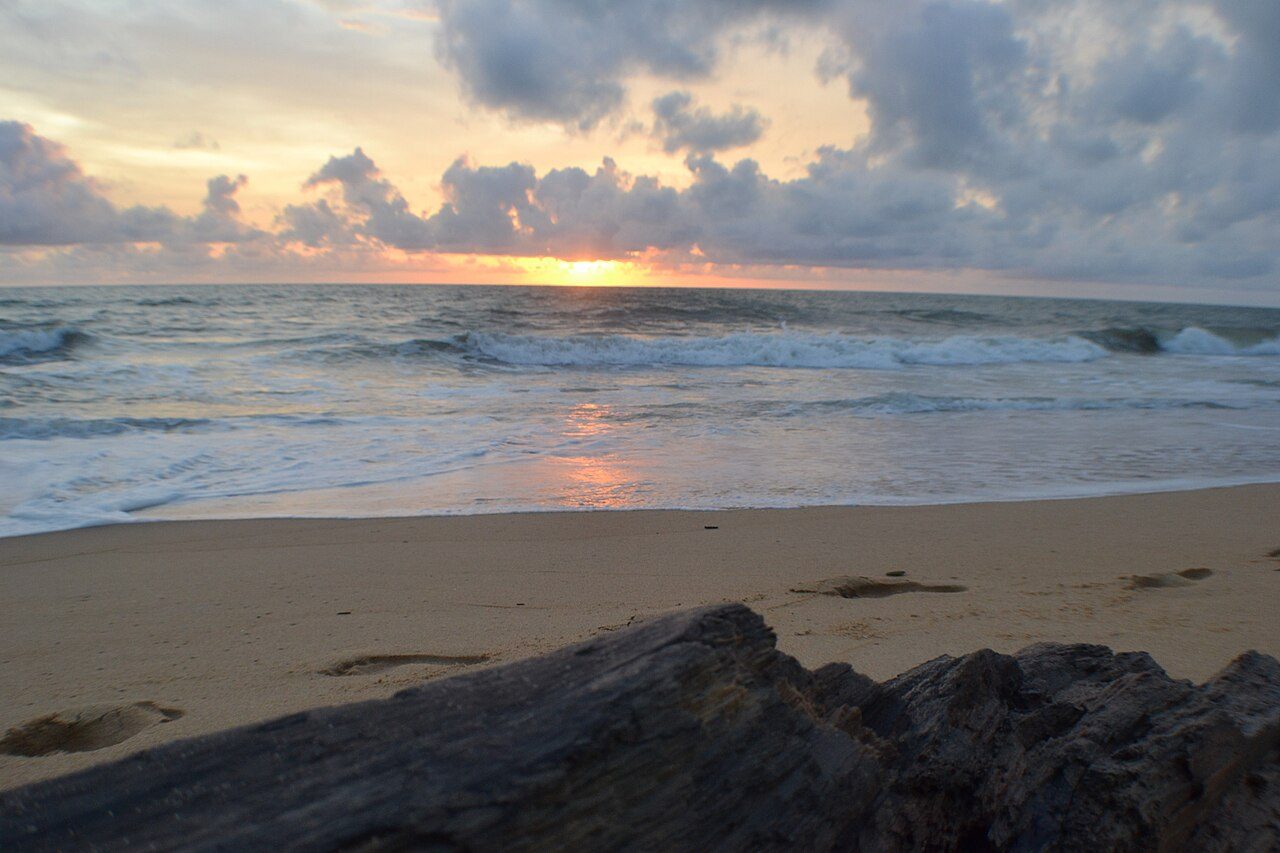
Negombo Beach stretches along the west coast a short drive from the international airport. The wide sandy shore is backed by hotels and restaurants, while the southern end belongs to the fishing community. Traditional outrigger sailing boats called oruwa go out for prawns and fish, and the morning fish market at the lagoon mouth is a lively sight.
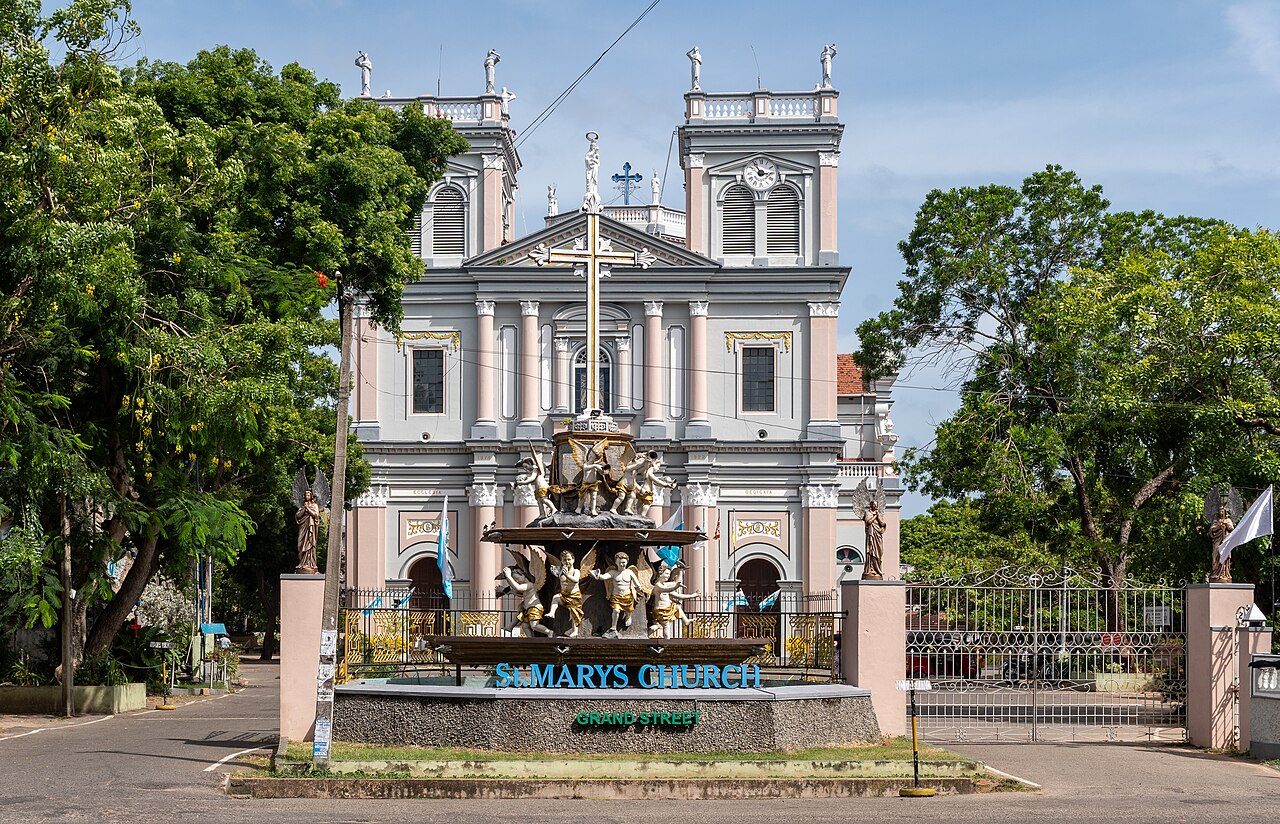
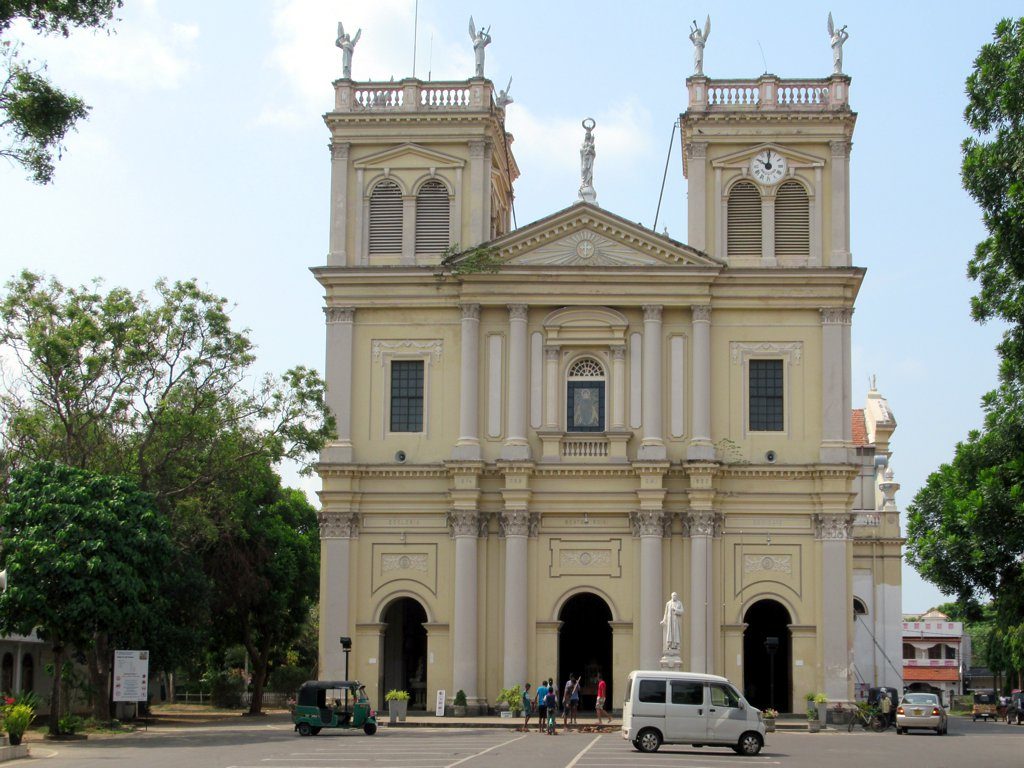
St. Mary's Church is one of the largest churches in Negombo, a town with so many Catholic churches that it is nicknamed Little Rome. Building started in 1874 and took several decades to finish. The neoclassical front has tall columns, and the ceiling inside is covered with paintings of the life of Christ by a local artist.
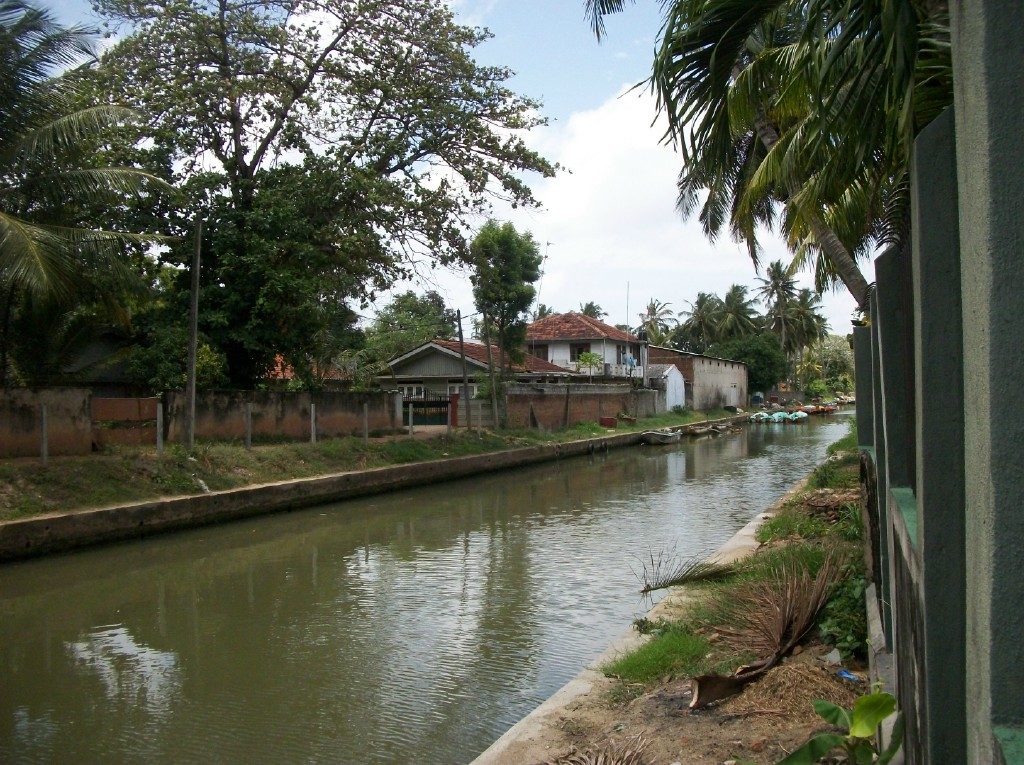
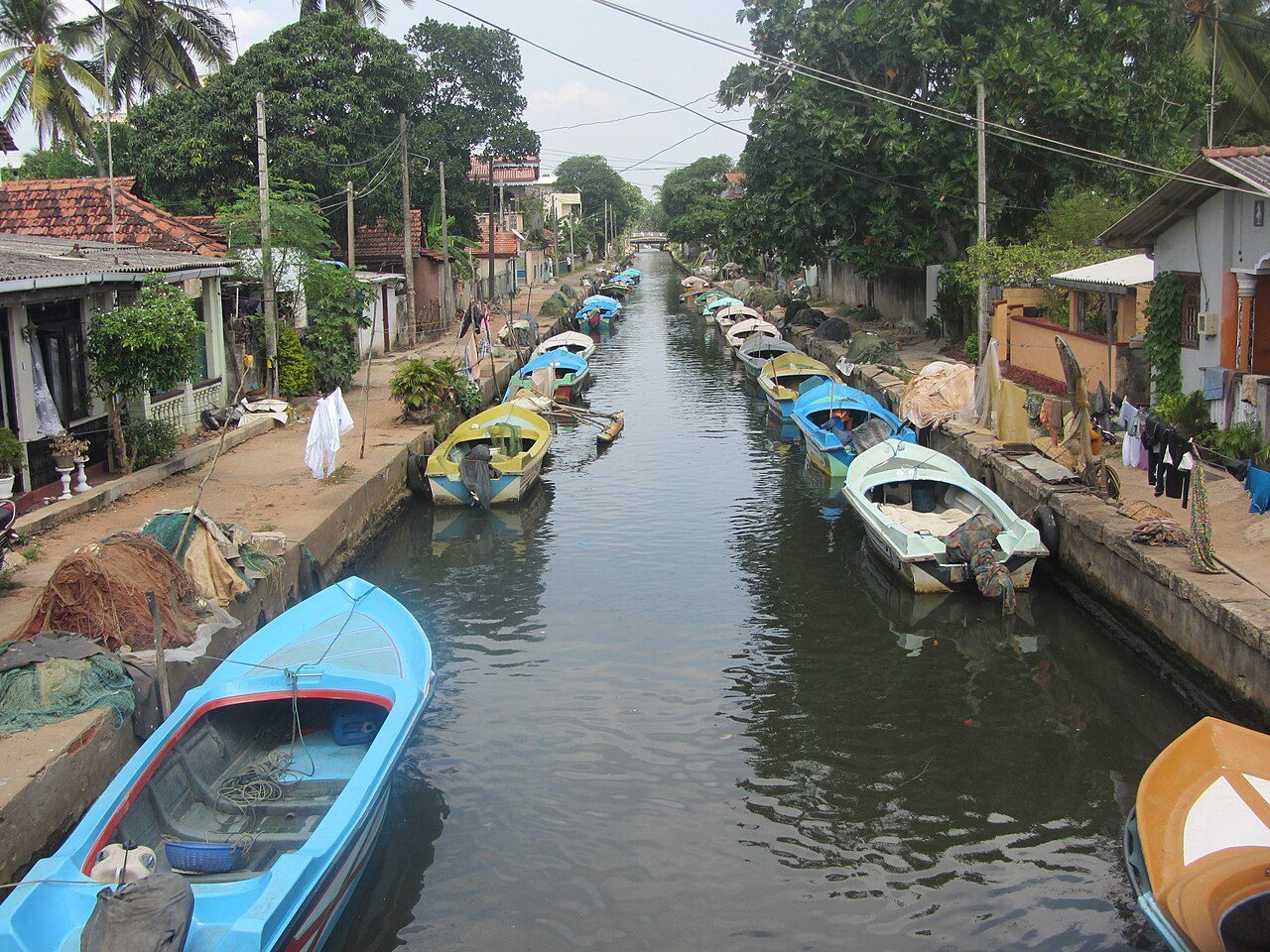
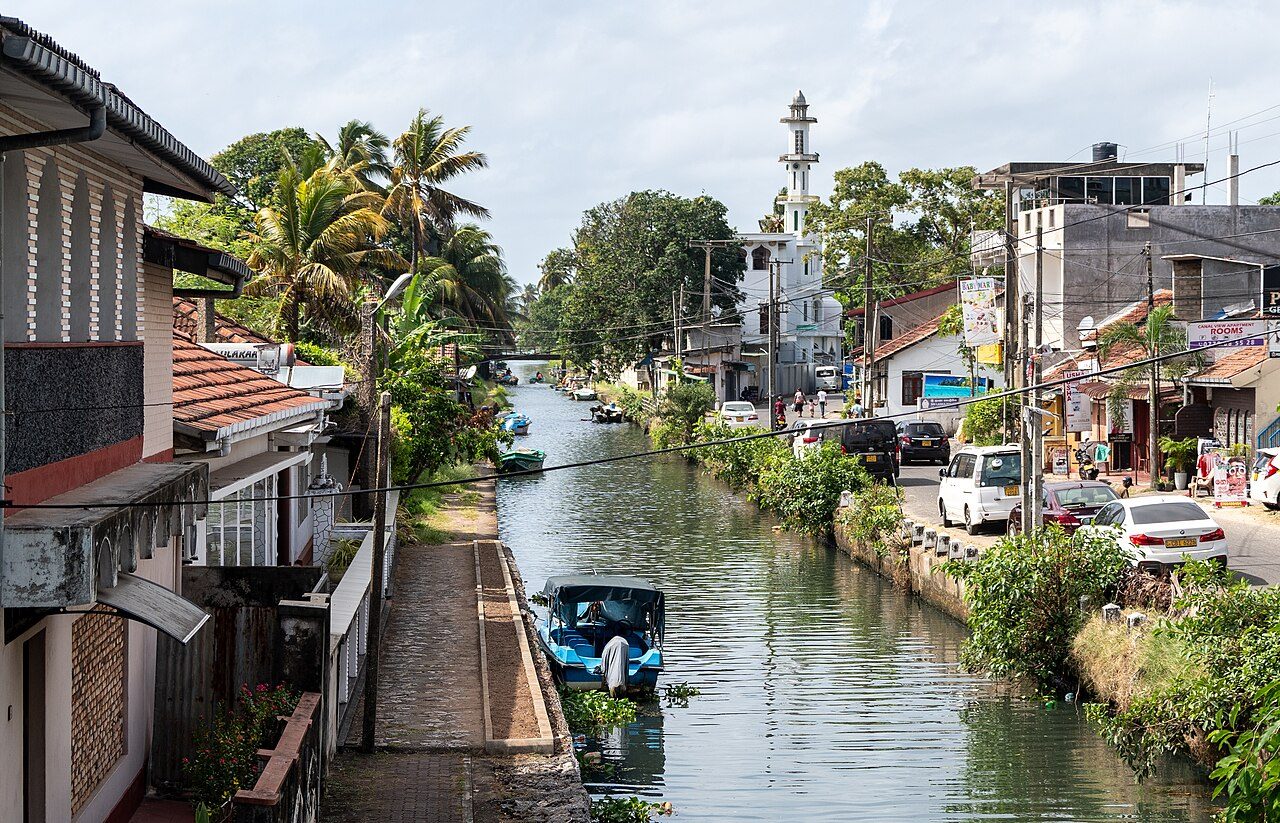
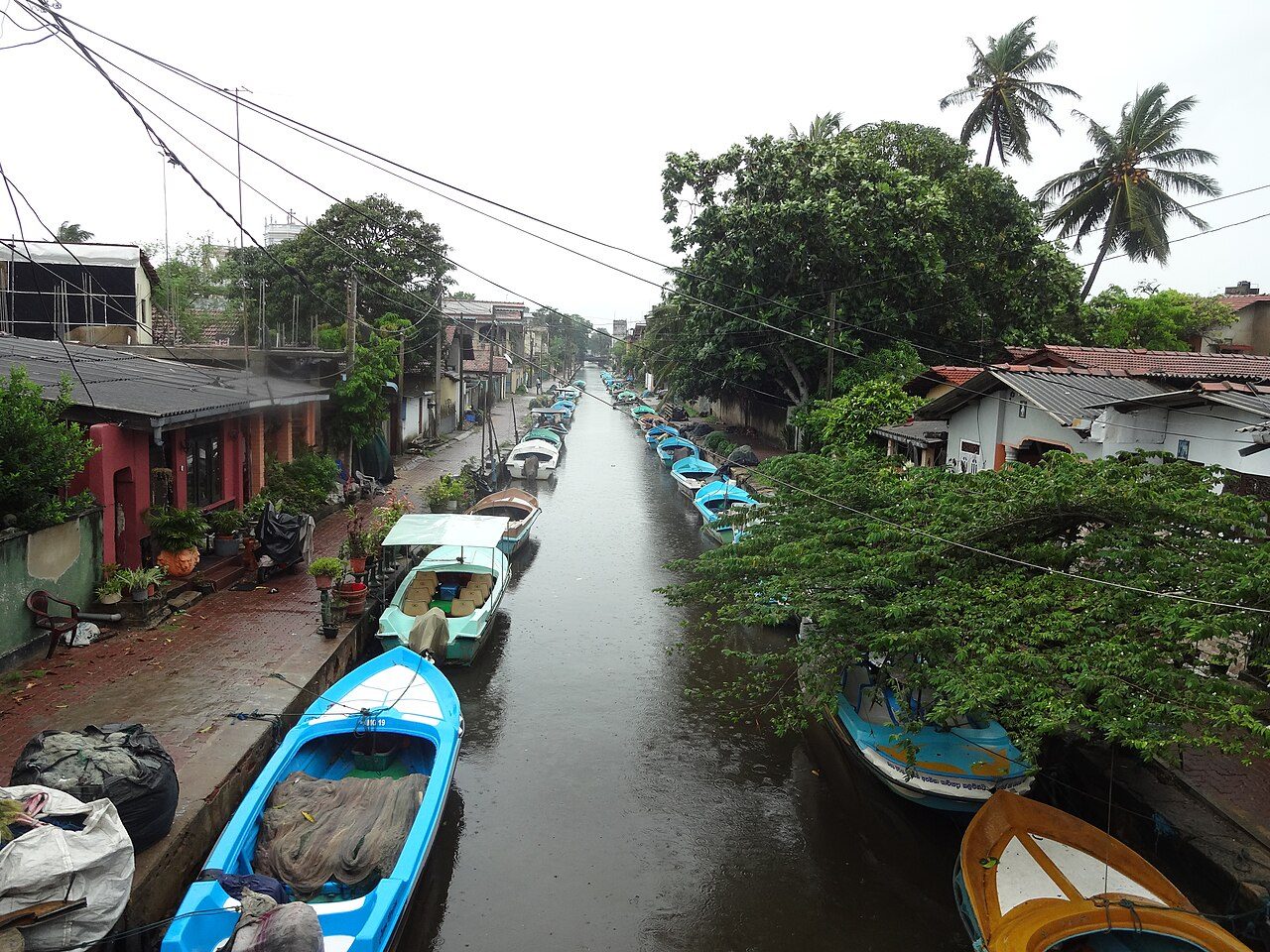
The Hamilton Canal runs for about 14 km between Negombo and Colombo, linking the Negombo lagoon with the Kelani River. It was built by the British in the early 19th century, alongside the older Dutch canal network used to carry cinnamon and other goods. In Negombo, fishing boats line its banks, and boat rides pass houses, churches and birdlife.
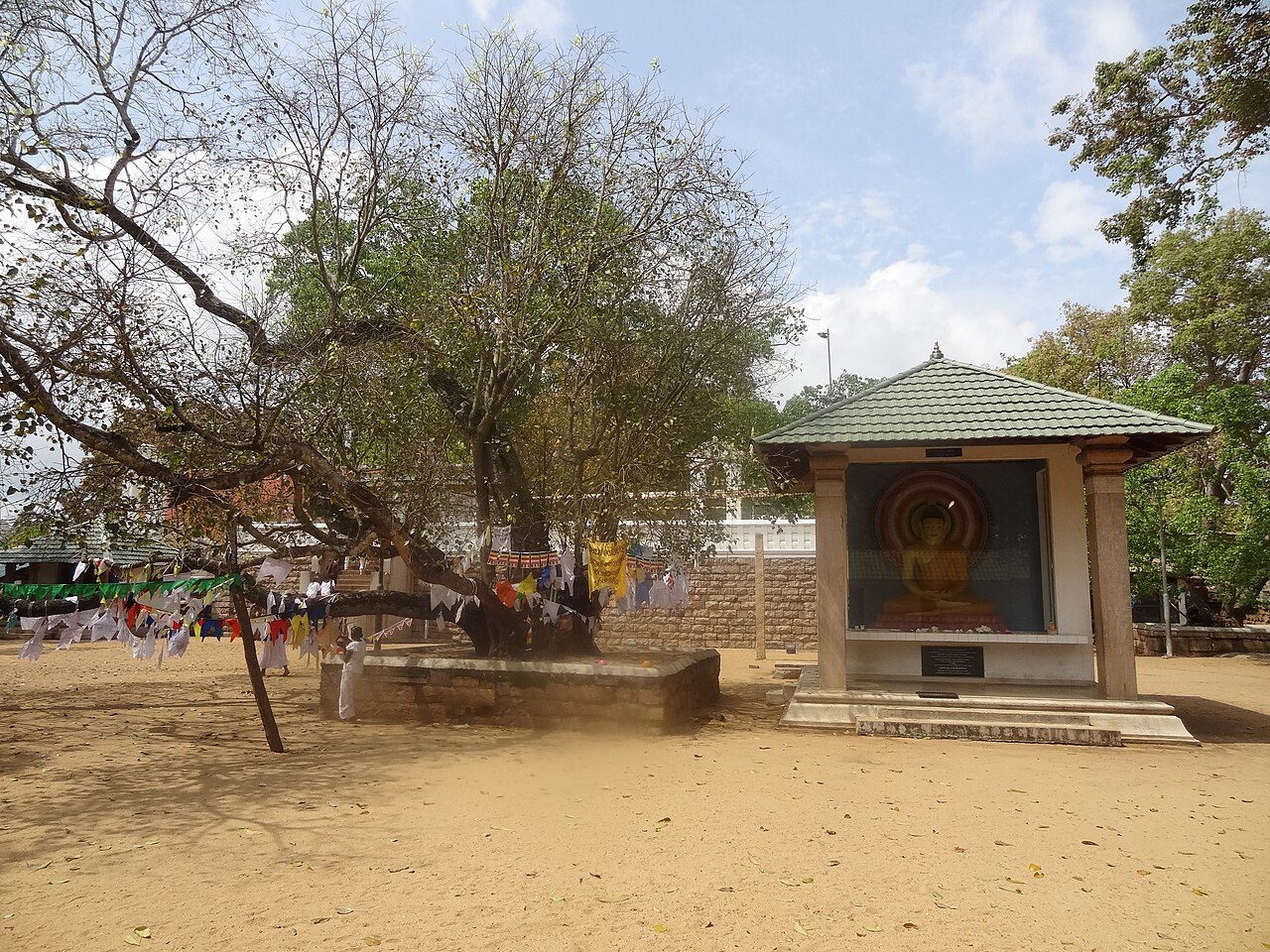
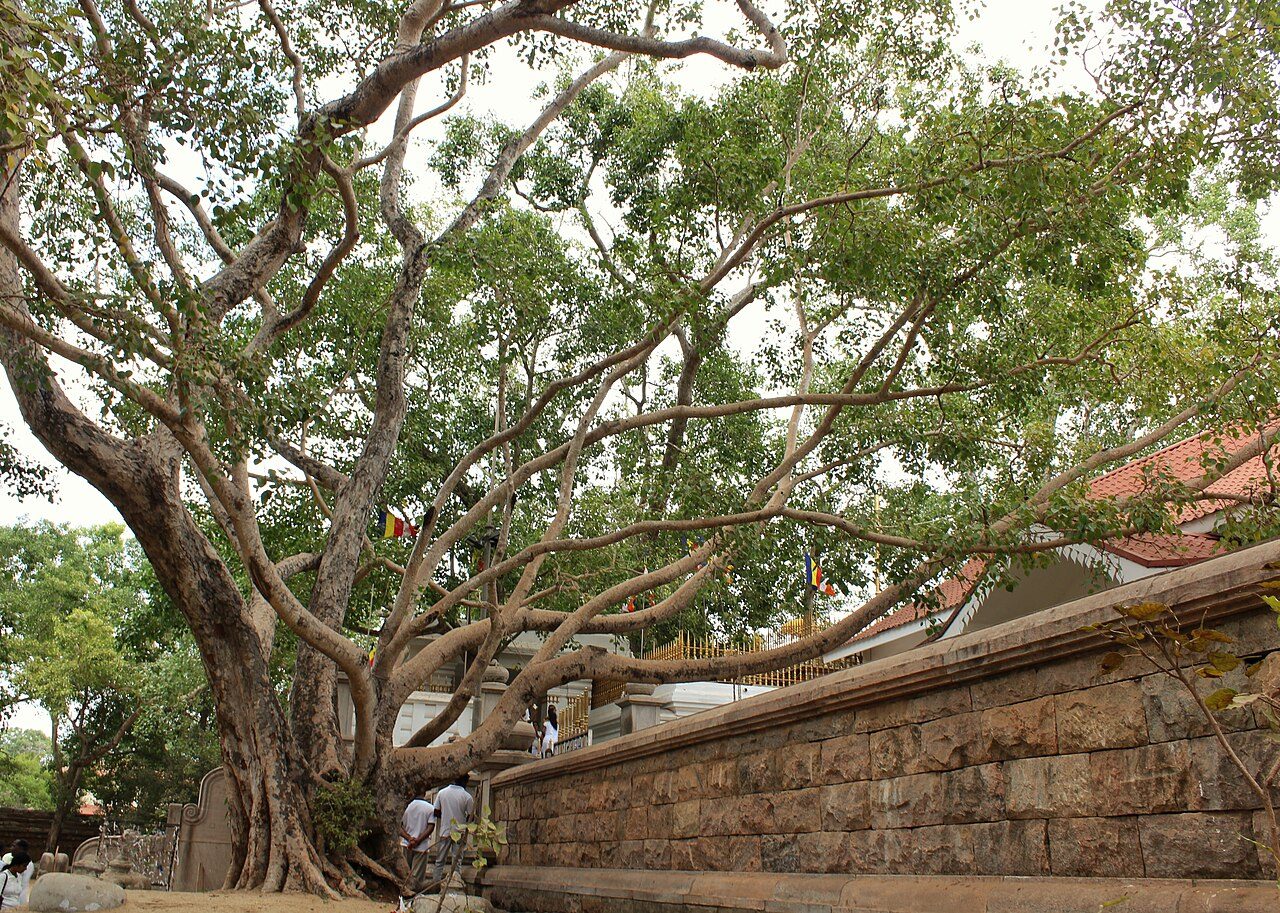
Jaya Sri Maha Bodhi in Anuradhapura is a sacred fig tree grown from a cutting of the tree at Bodh Gaya under which the Buddha attained enlightenment. It was brought here in the 3rd century BCE by Sanghamitta, daughter of Emperor Ashoka, and is said to be the oldest living tree planted by humans with a known planting date. Pilgrims in white offer flowers on its terraces.
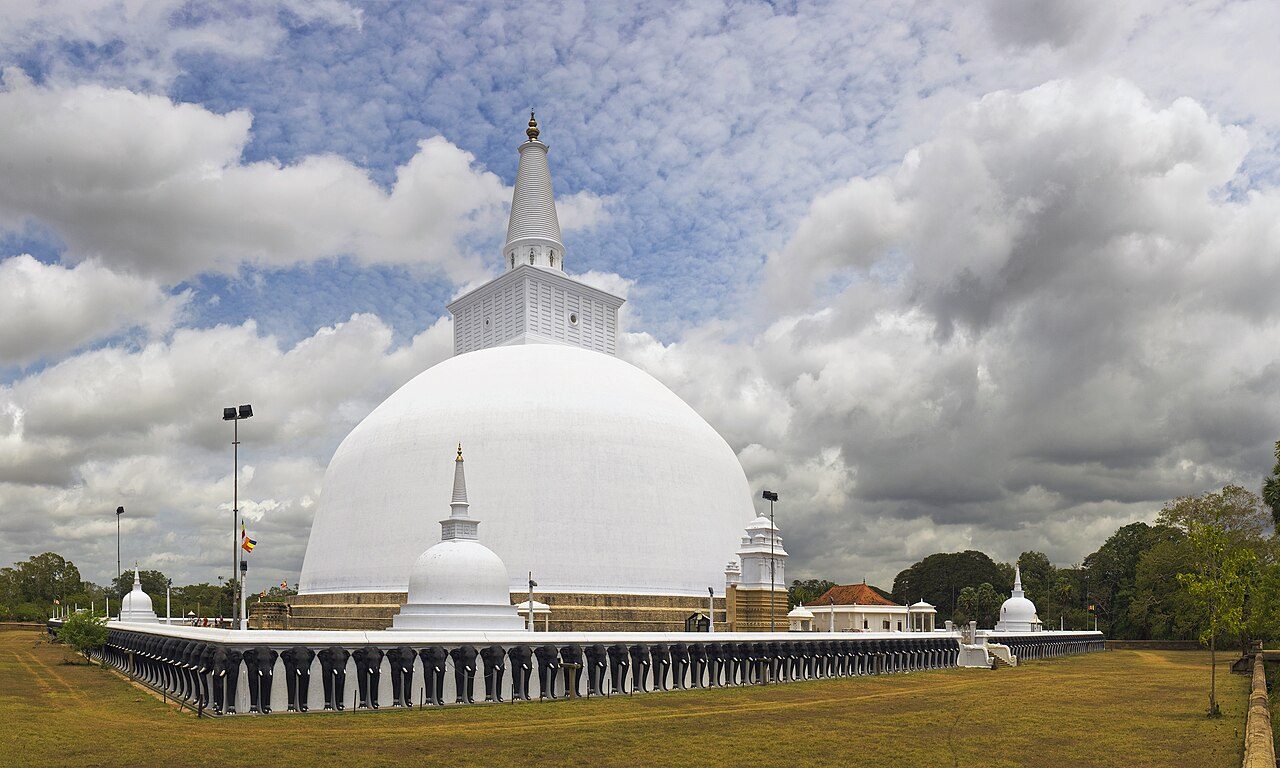
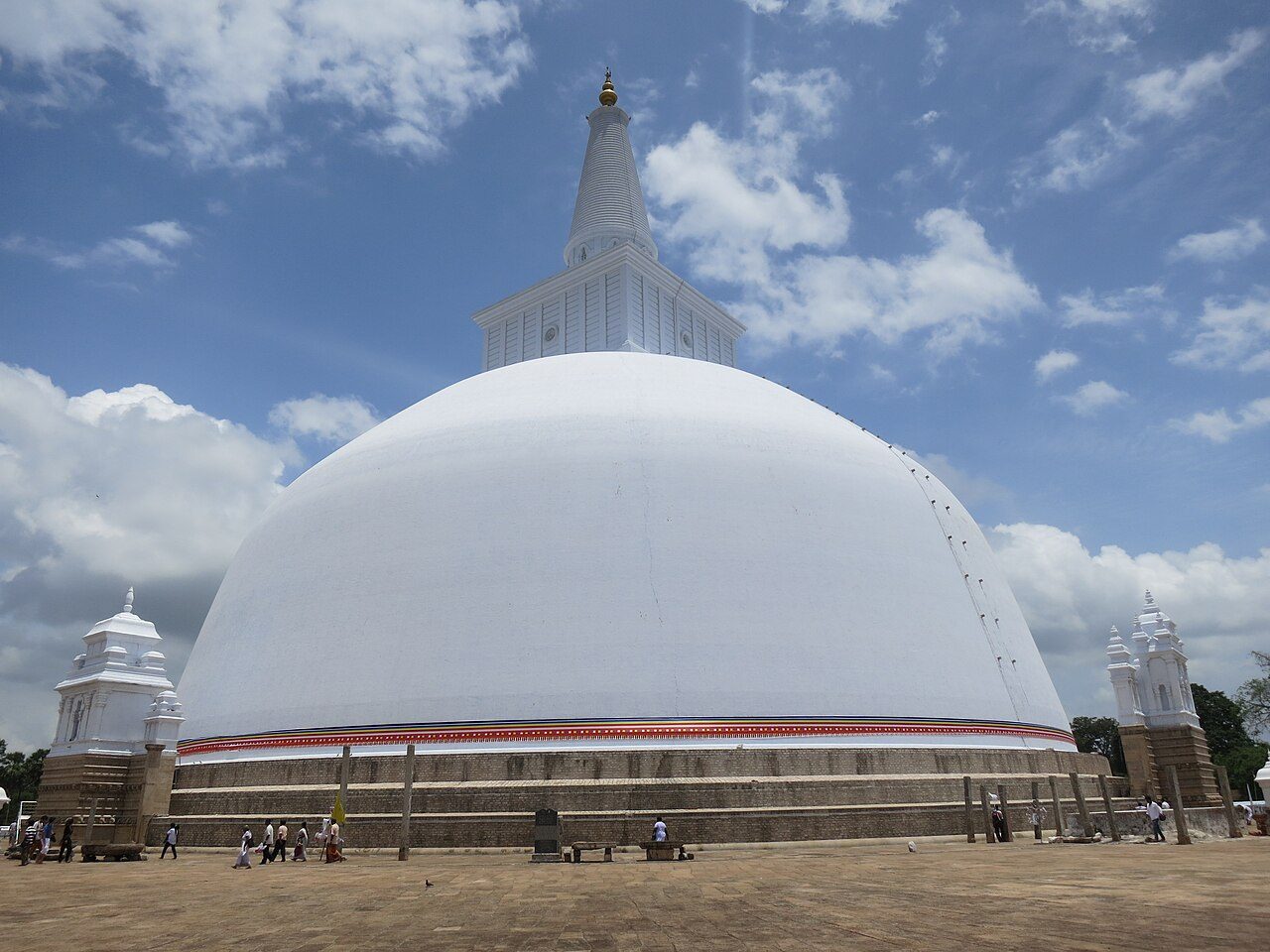
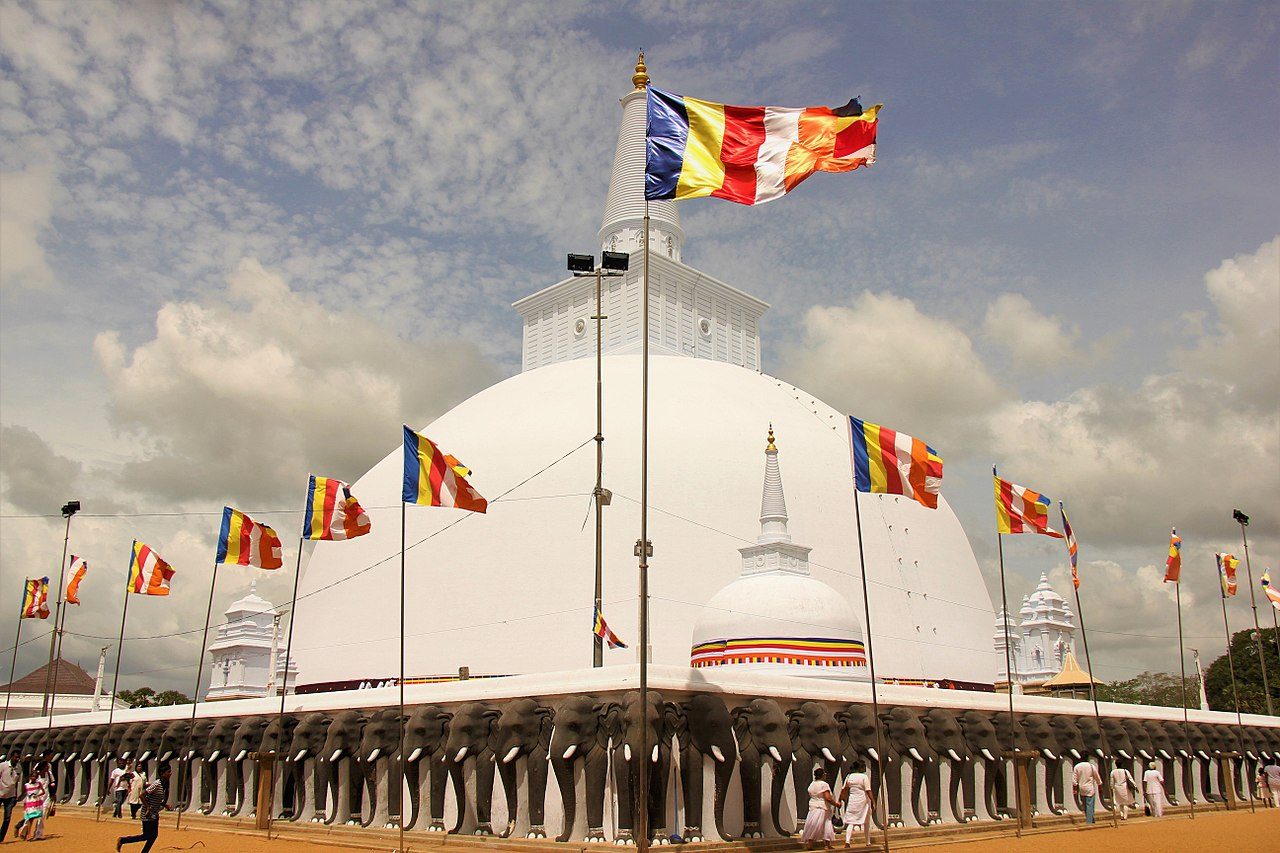
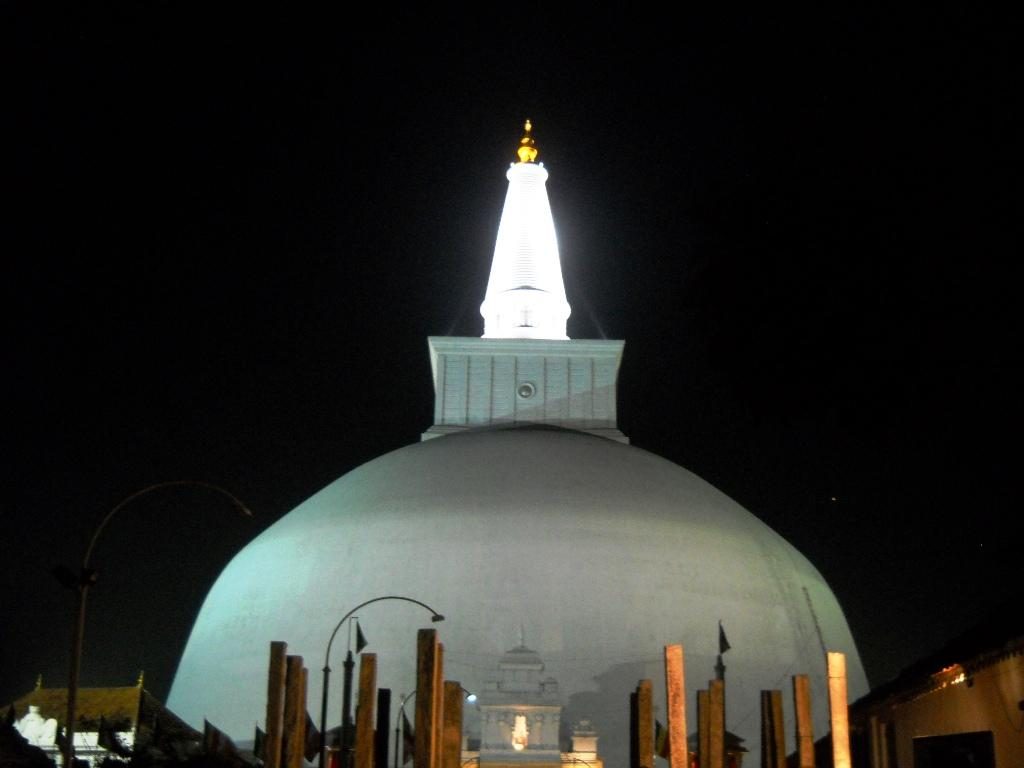
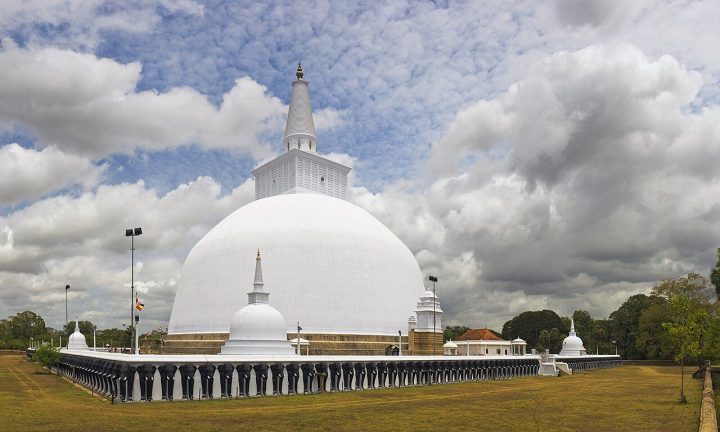
Ruwanwelisaya is the great white stupa of Anuradhapura, built by King Dutugemunu in the 2nd century BCE after his victory over the Chola king Elara. It stands about 103 metres high after restoration and is ringed by a wall of sculpted elephants. It is one of the most venerated Buddhist monuments in the world.
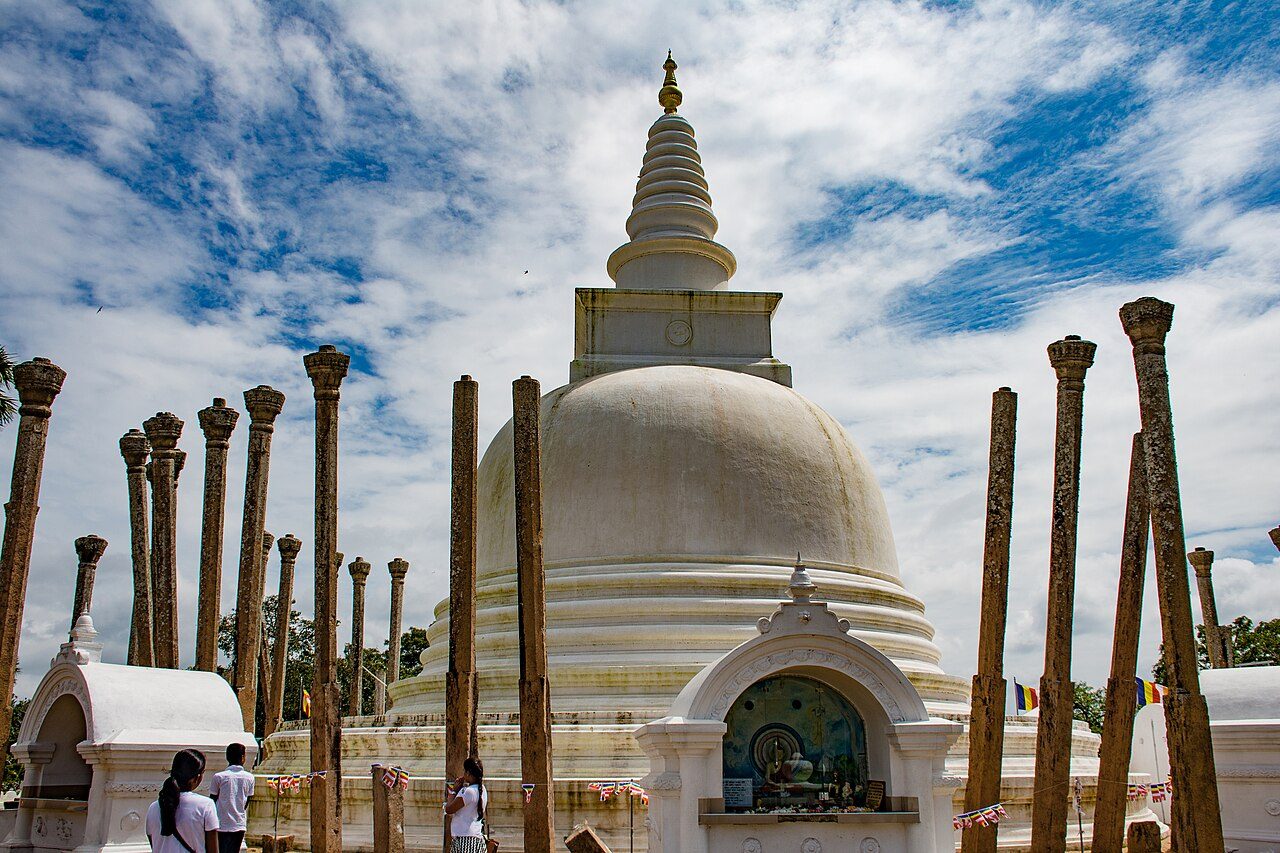
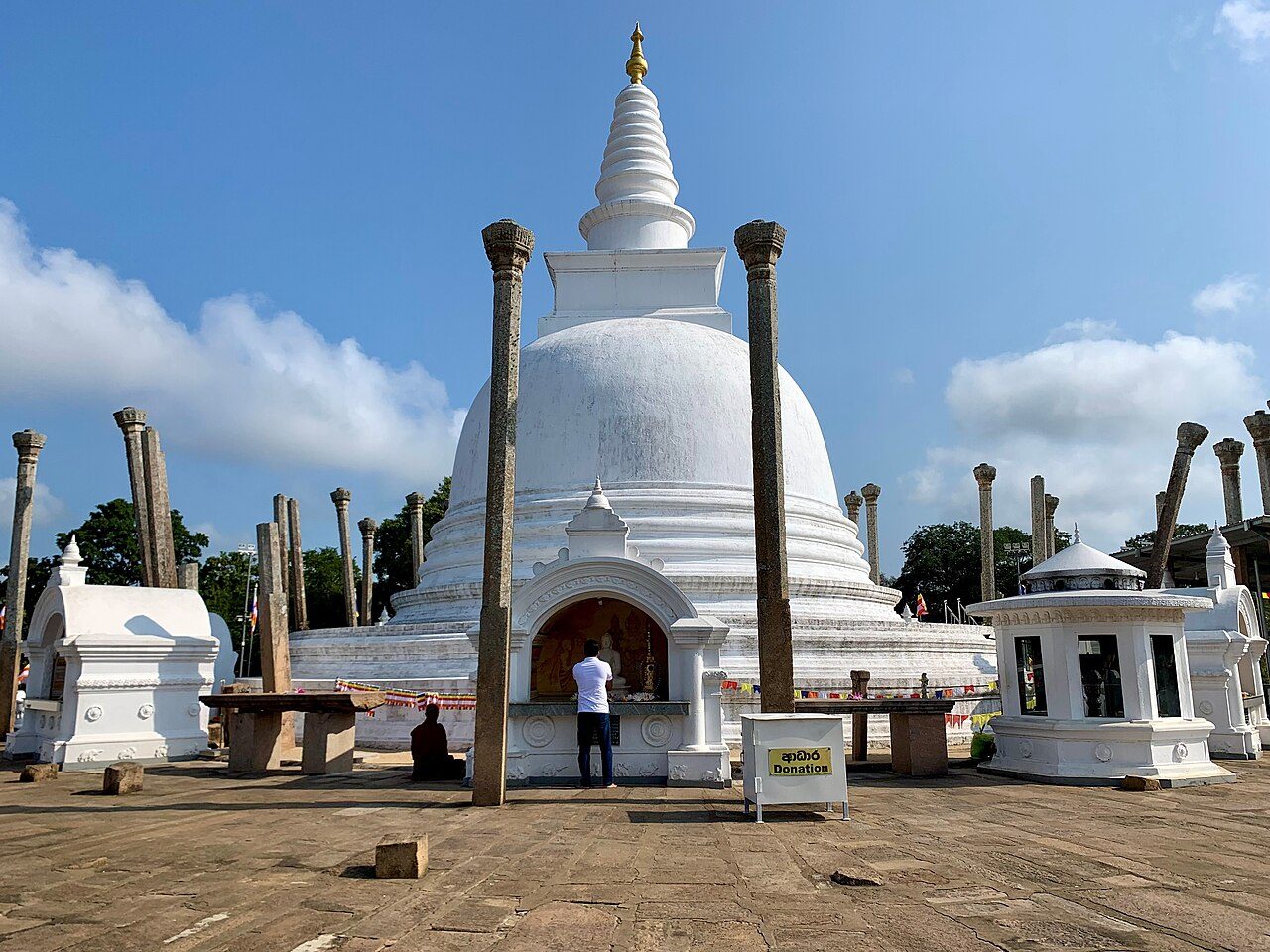
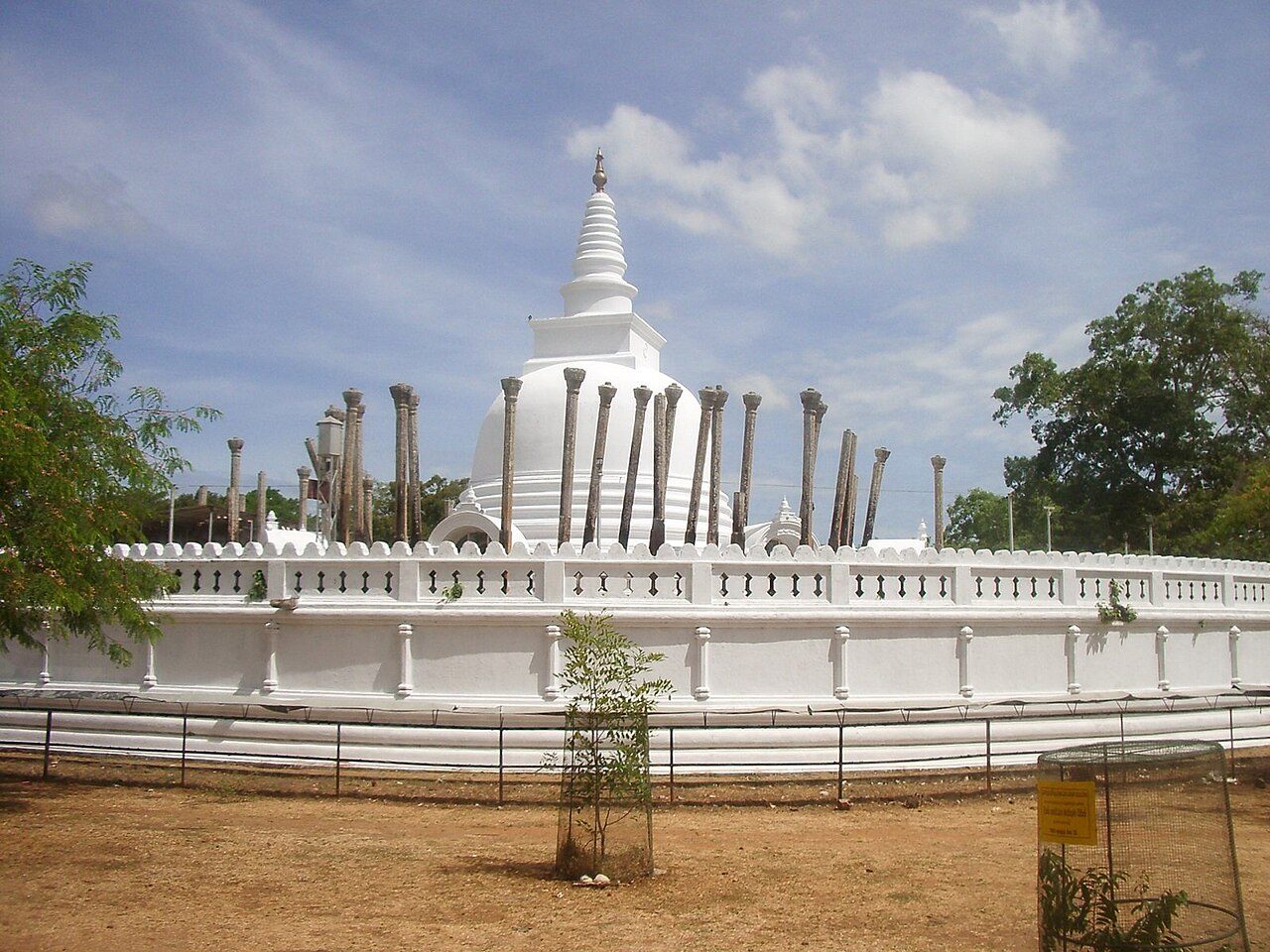
Thuparamaya in Anuradhapura is regarded as the first stupa built in Sri Lanka after the arrival of Buddhism. King Devanampiya Tissa built it in the 3rd century BCE to enshrine the right collarbone relic of the Buddha. The present bell shape dates from a 19th-century restoration. Rings of slender stone pillars remain from a roofed vatadage that once covered it.
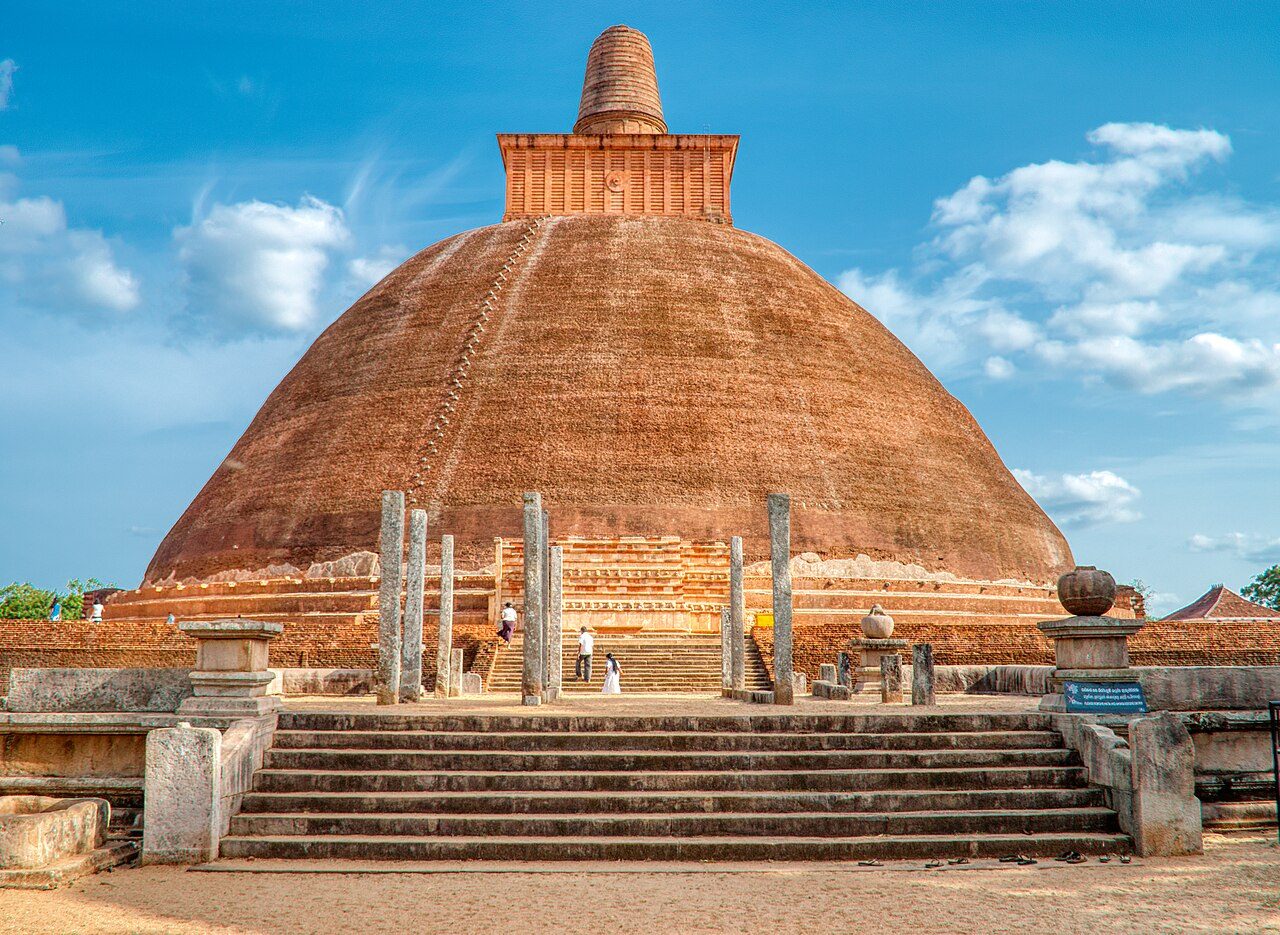
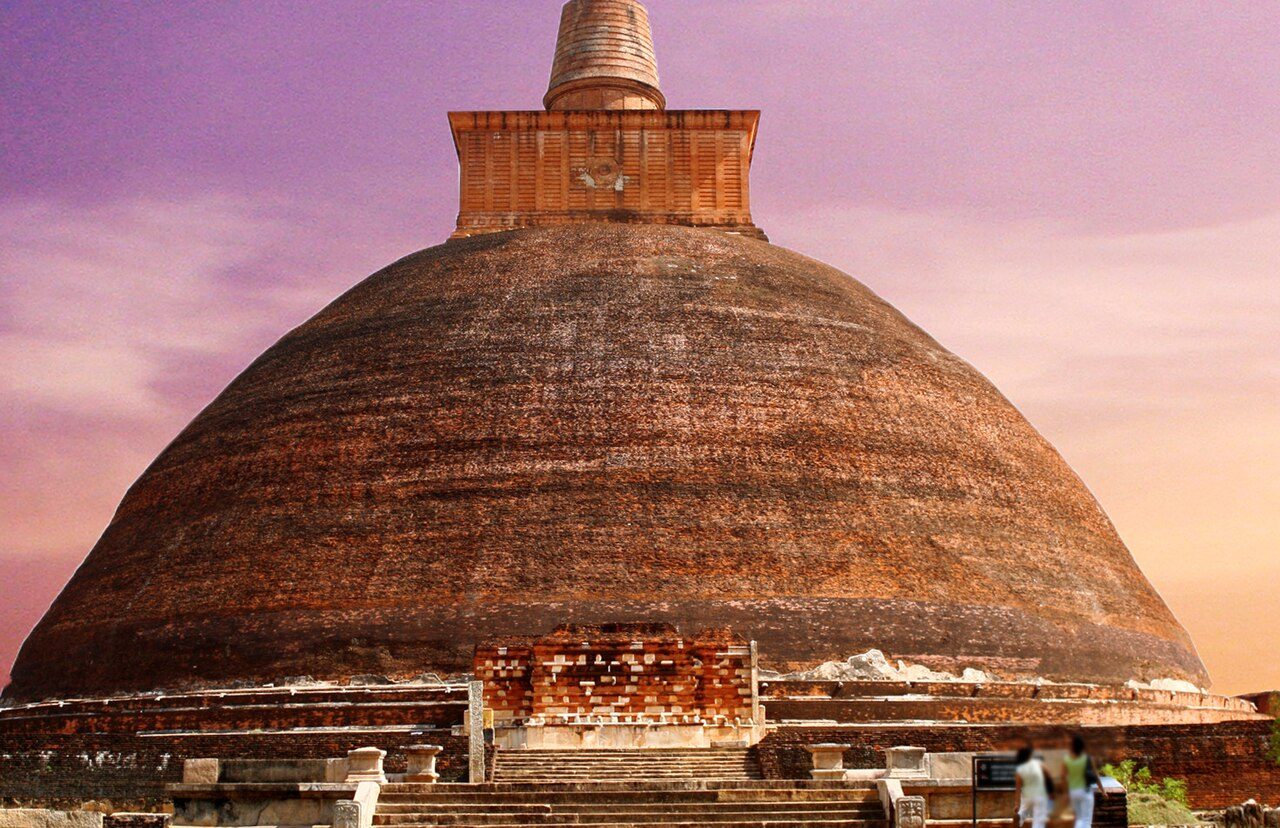
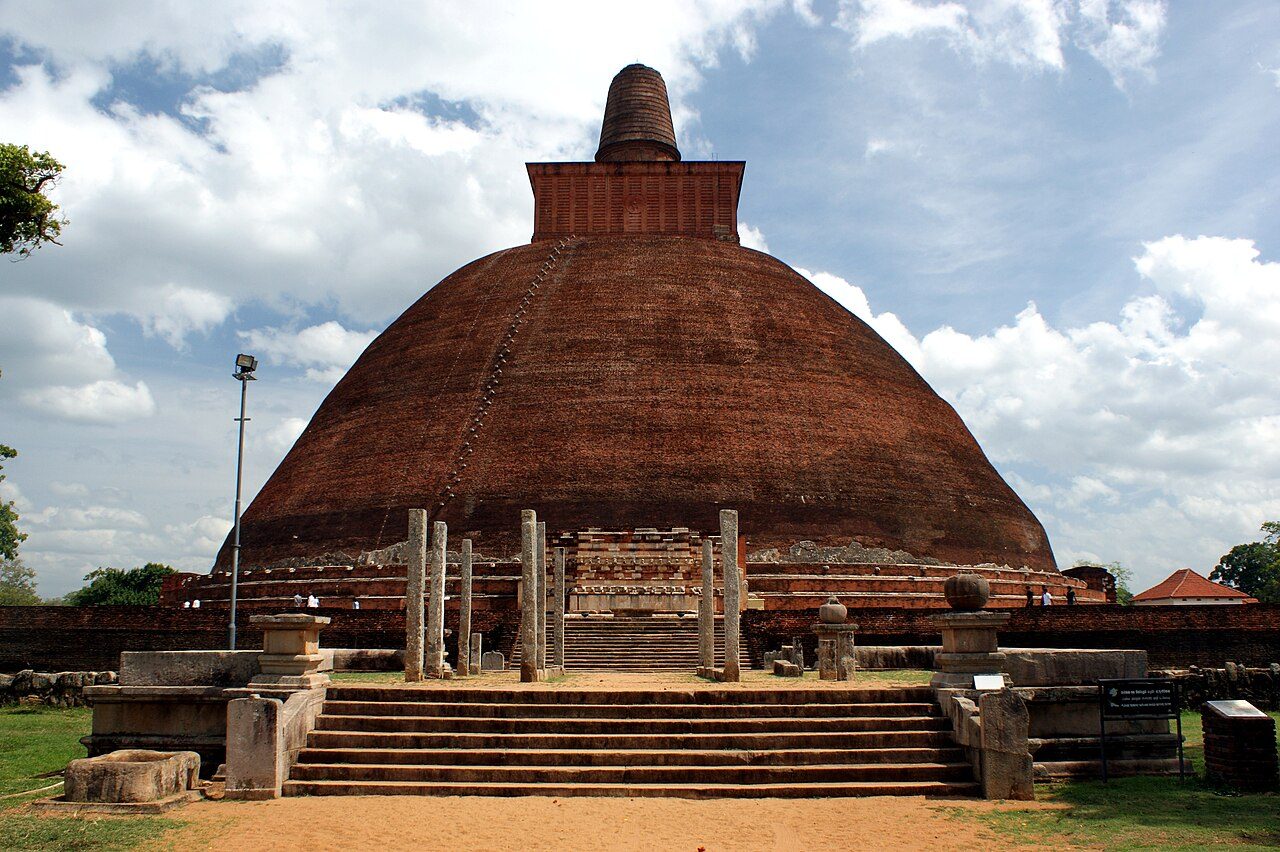
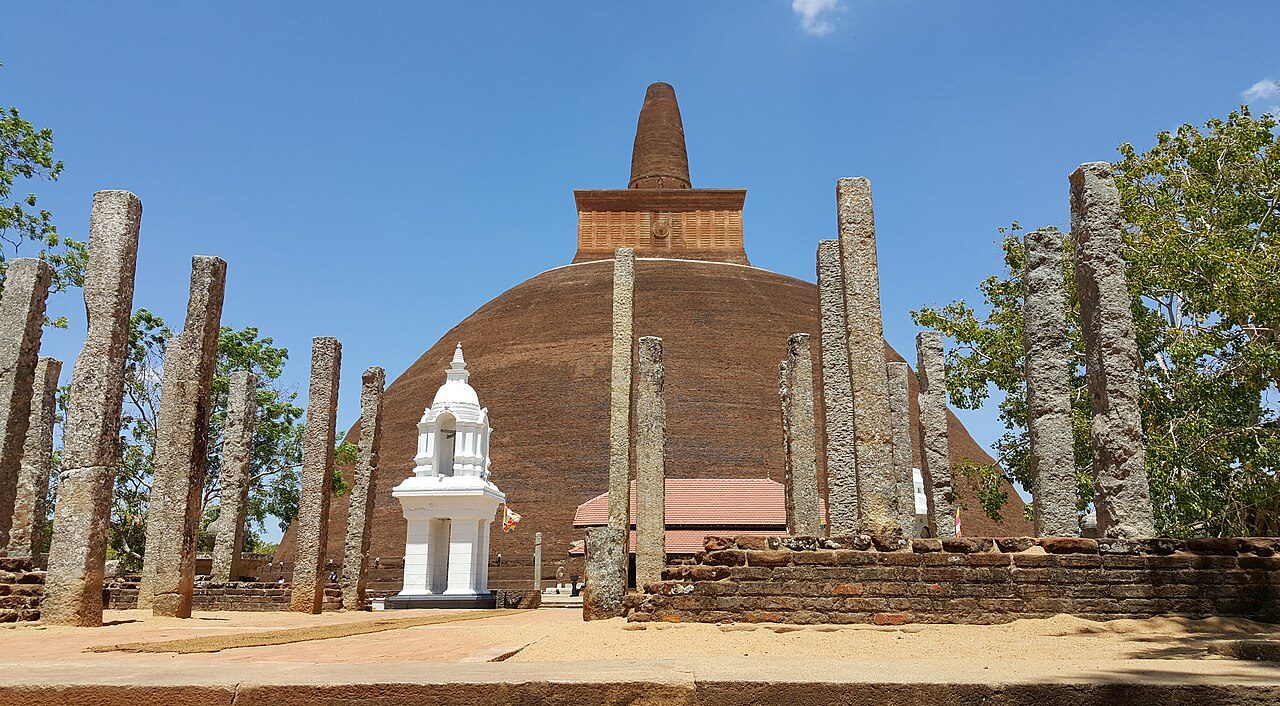
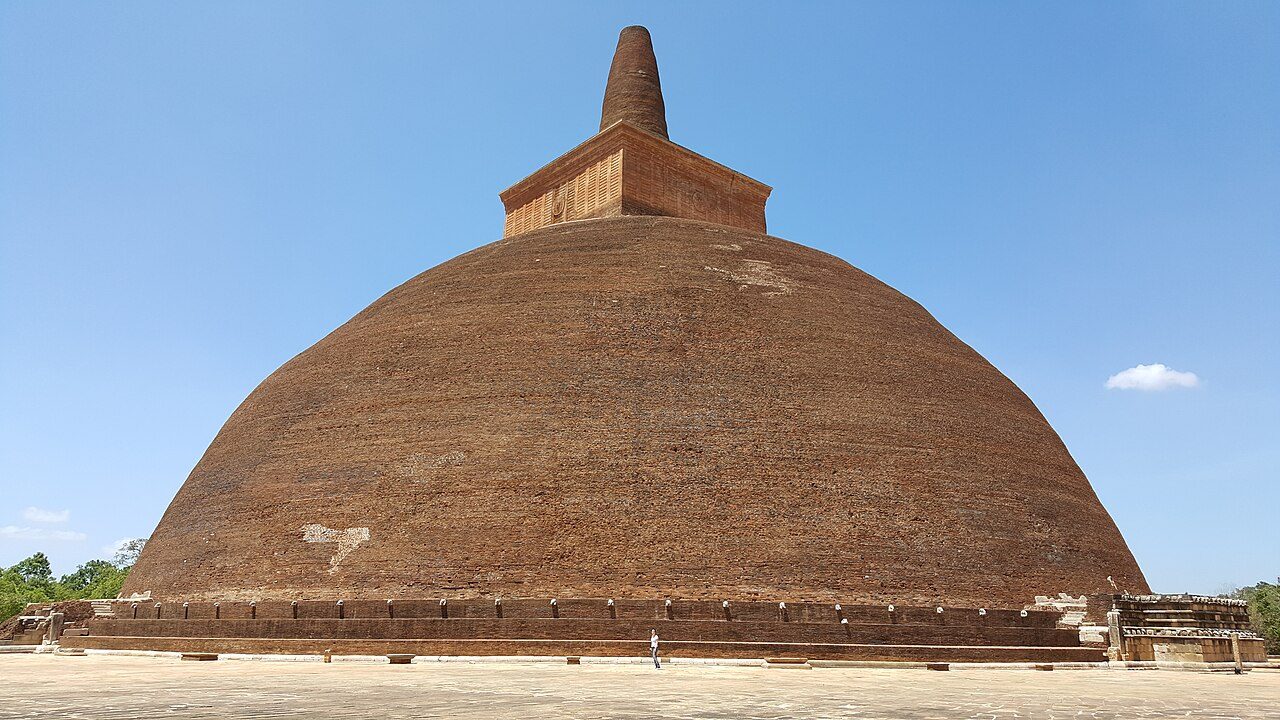
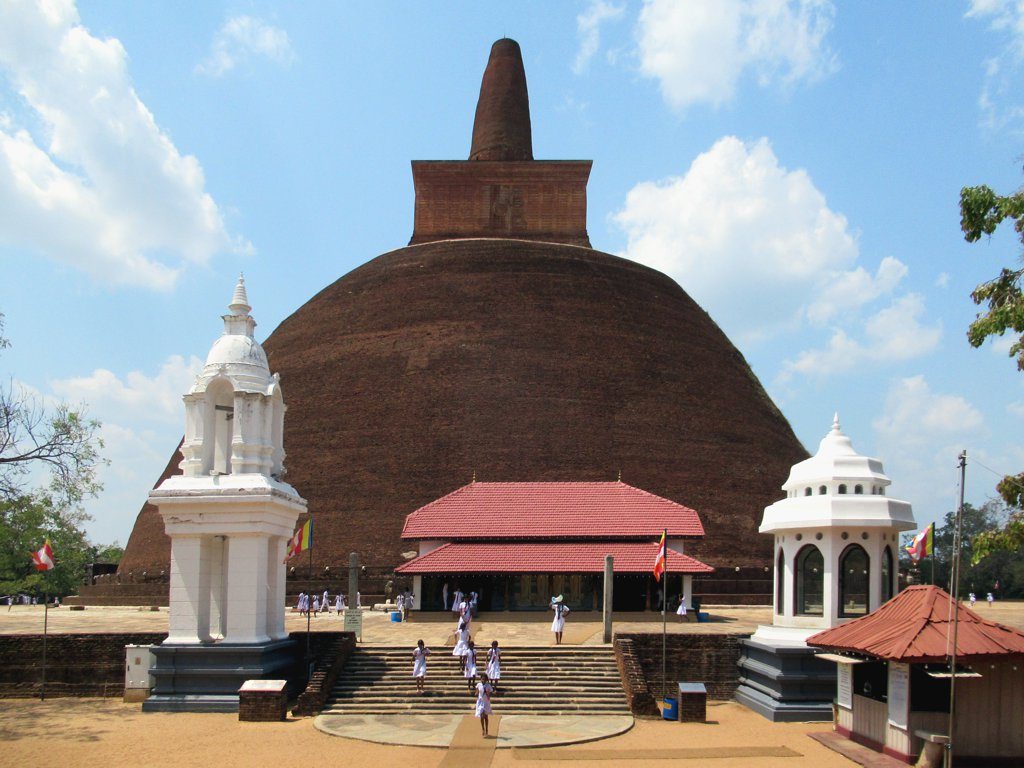
Jetavanaramaya in Anuradhapura was built by King Mahasena in the 3rd century CE. At its original height of about 122 metres it was the third tallest structure in the ancient world, after two of the pyramids of Giza, and the largest brick building ever made. Some 93 million baked bricks went into it. The restored dome still stands about 71 metres high.
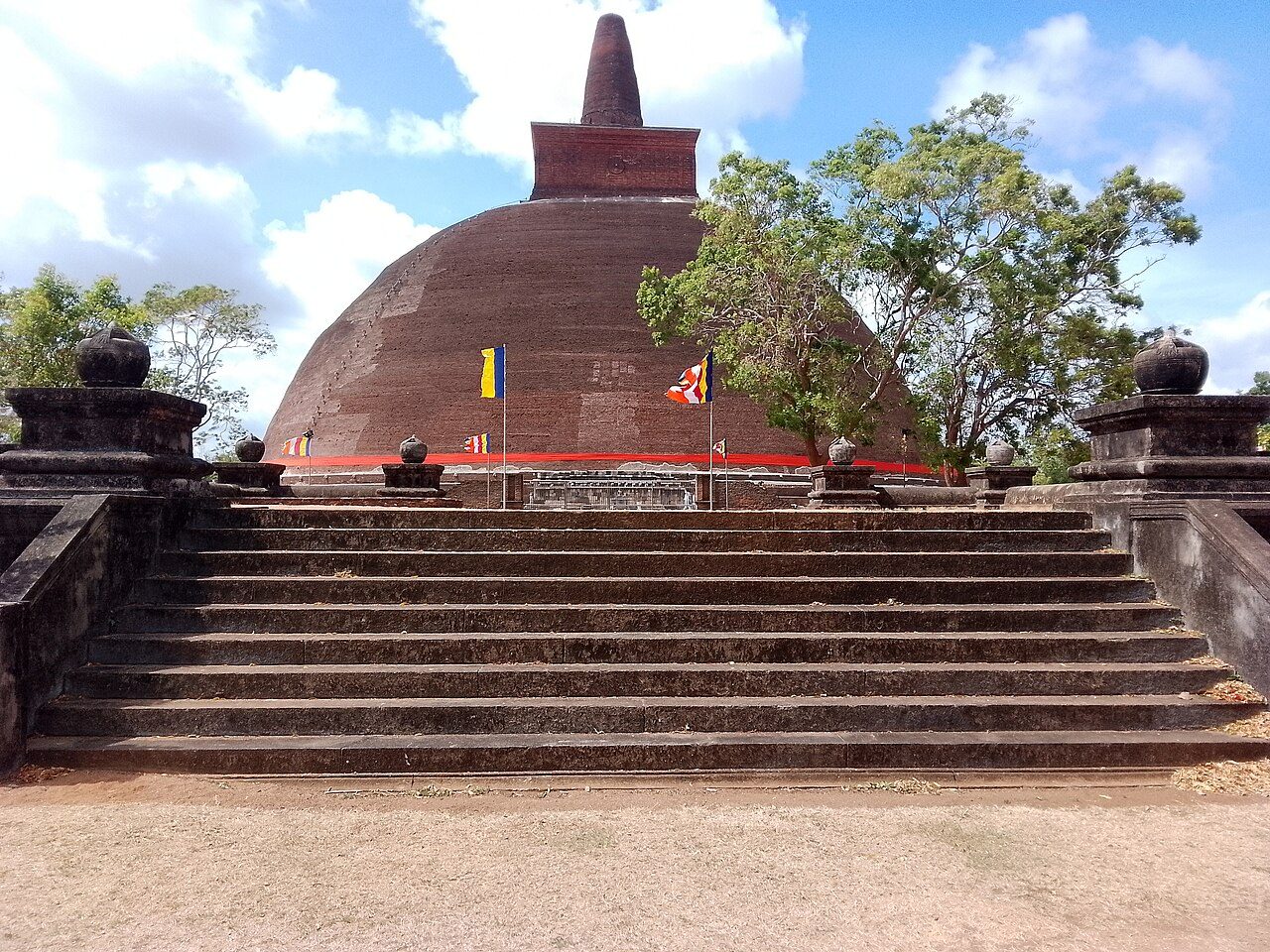
Abhayagiri Dagoba was the centre of a great monastery in northern Anuradhapura, founded in the 1st century BCE by King Valagamba. It became a seat of learning that welcomed Mahayana as well as Theravada teaching and drew monks from abroad. The brick stupa, about 75 metres high today, has been restored after long conservation work.
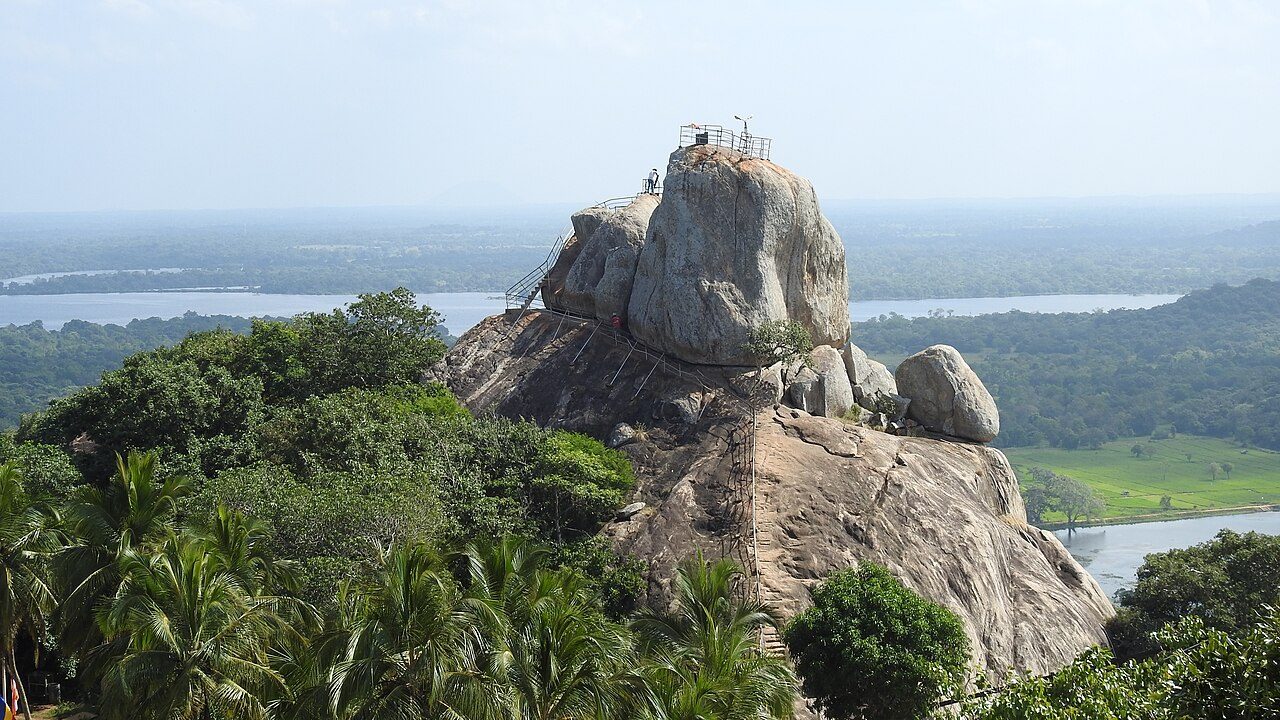
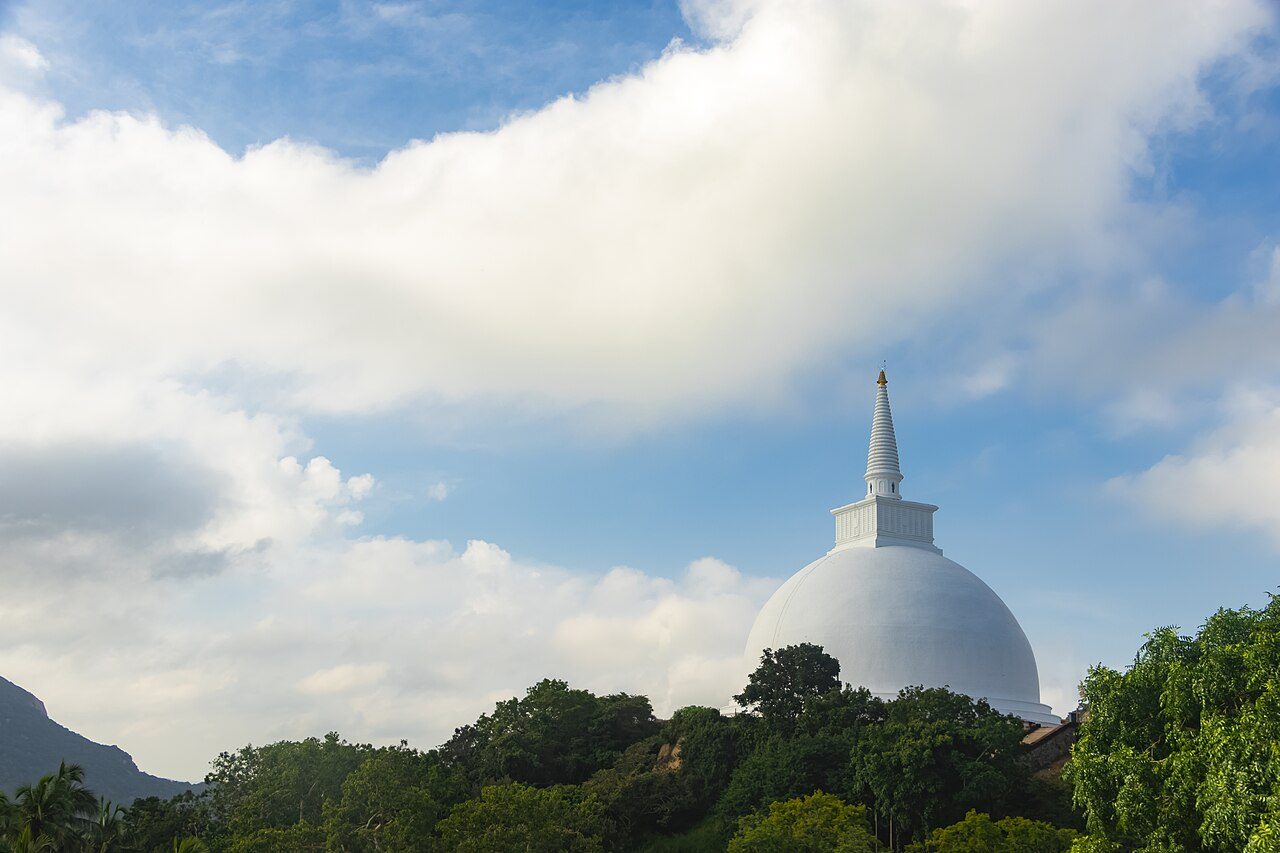
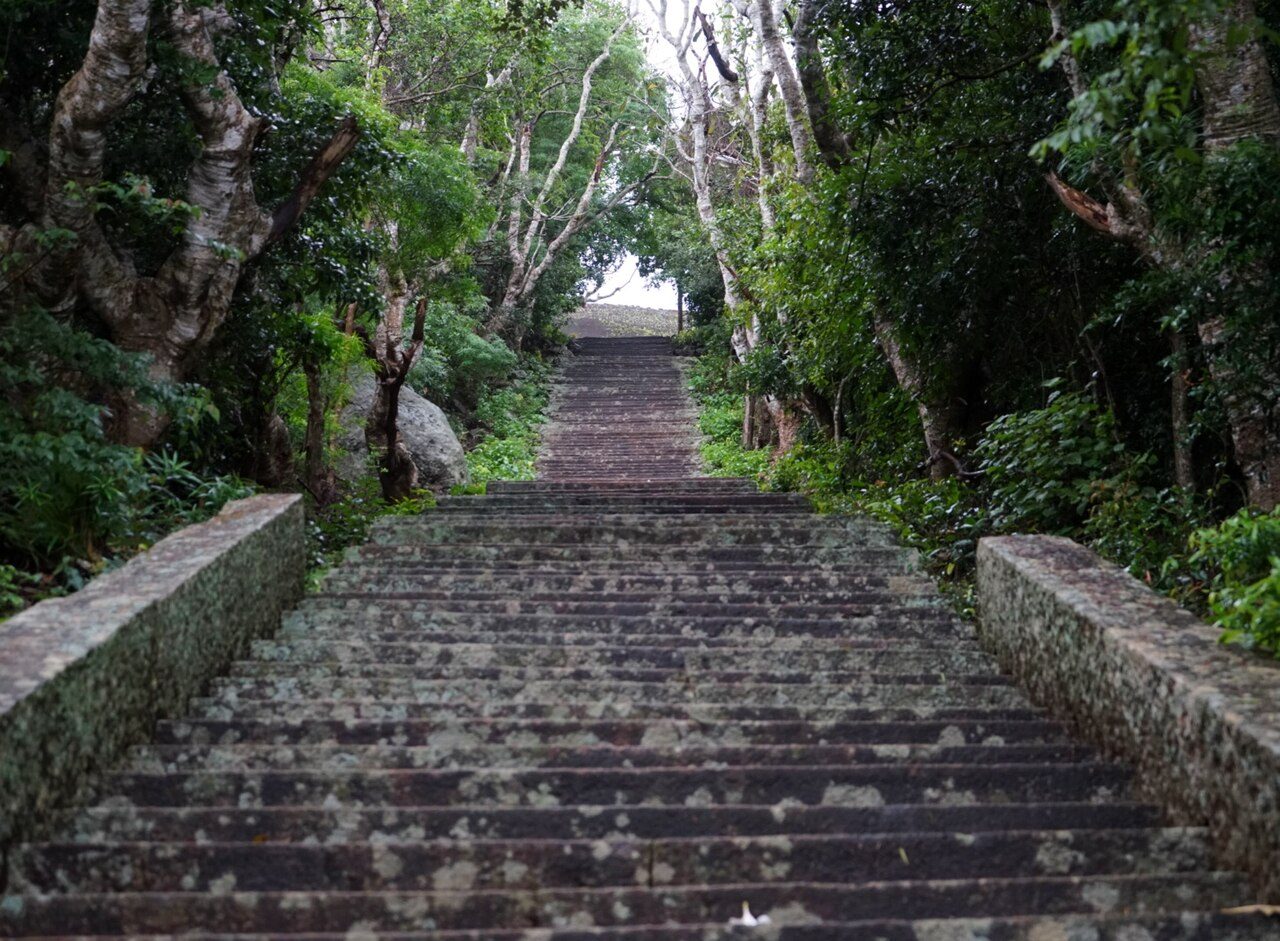
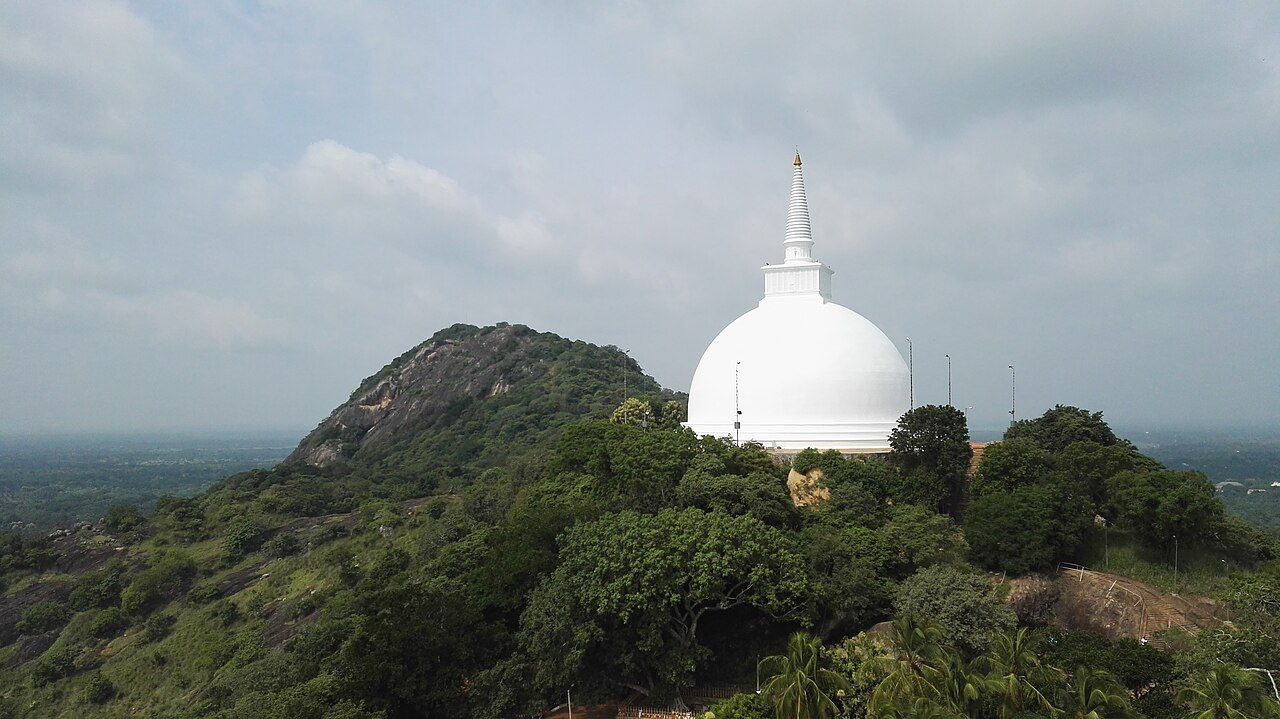
Mihintale, a rocky hill about 13 km east of Anuradhapura, is regarded as the cradle of Buddhism in Sri Lanka. Here in 247 BCE the monk Mahinda, son of Emperor Ashoka, met King Devanampiya Tissa and preached to him. A stairway of 1,840 granite steps climbs to the Ambasthala stupa, Mahinda's cave and the meditation rock. The Poson full moon in June draws huge crowds.
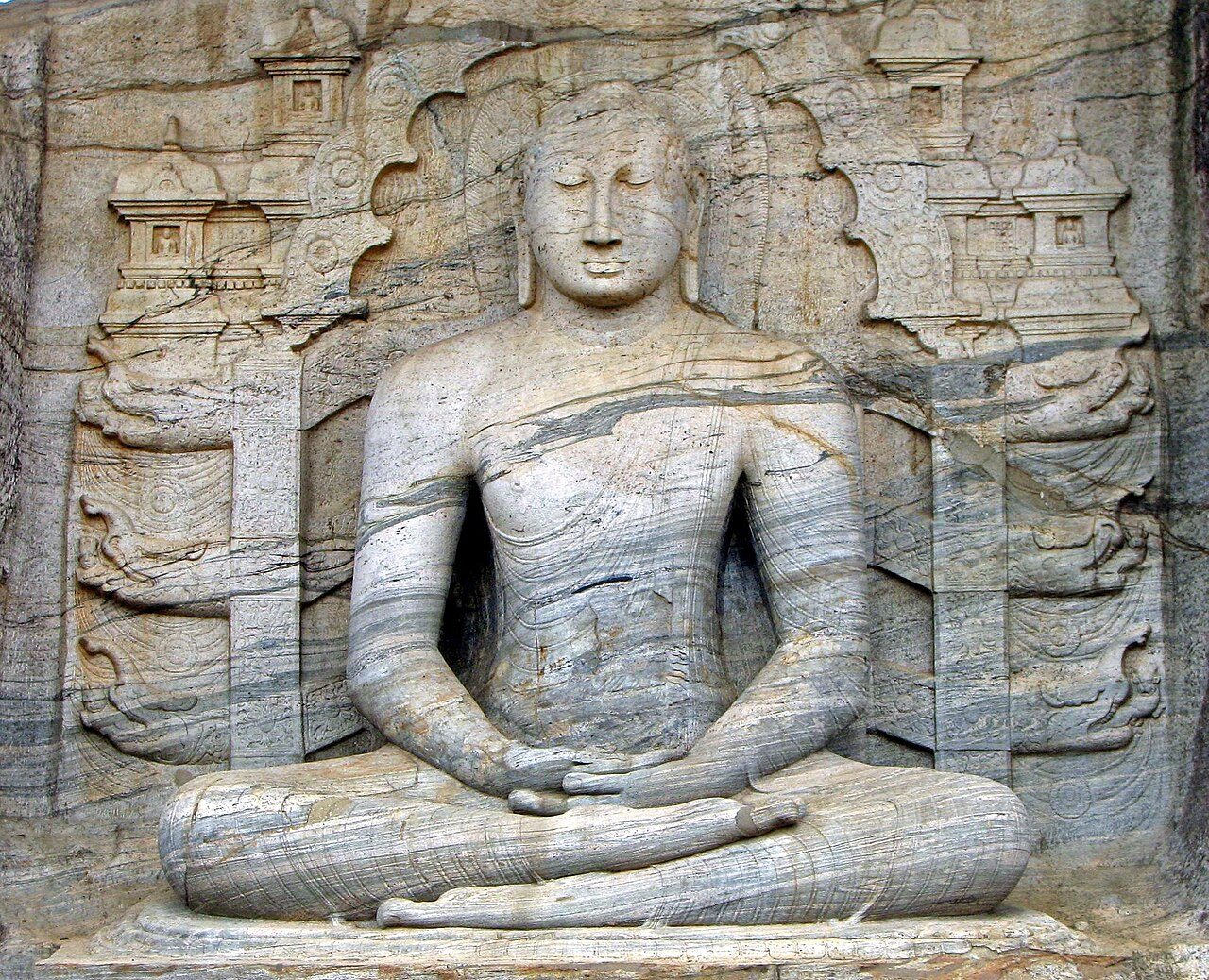
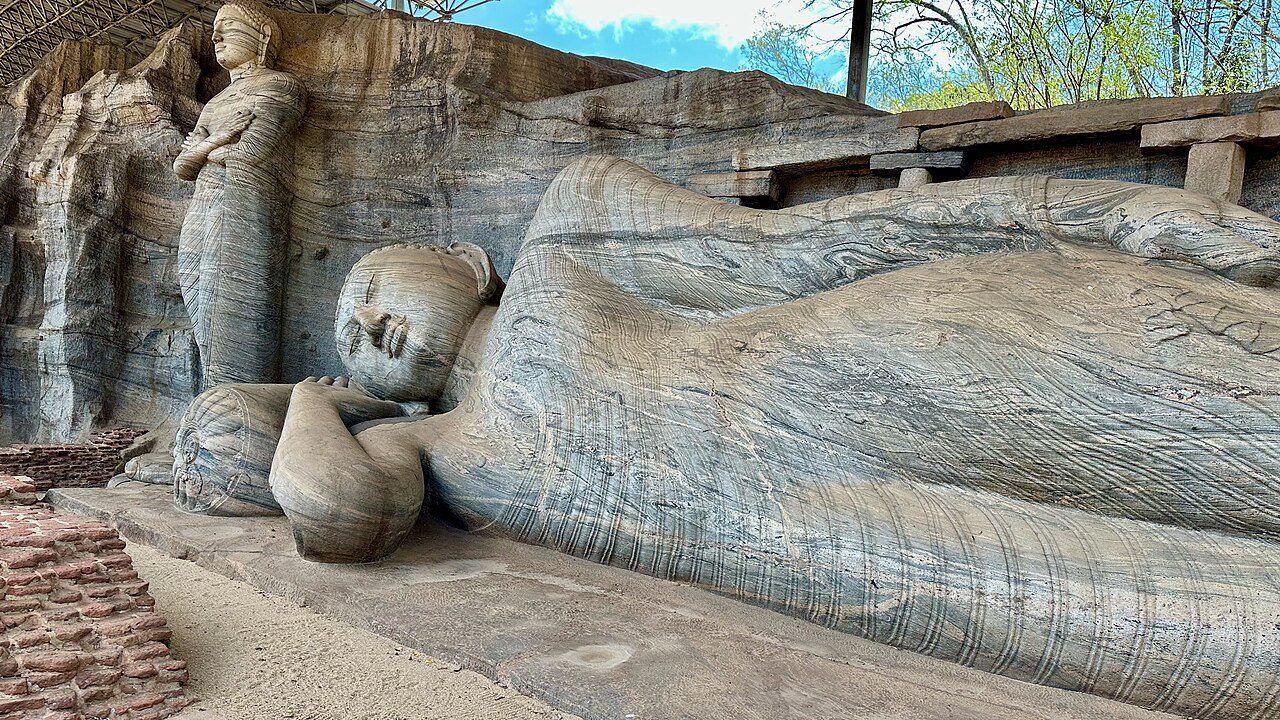
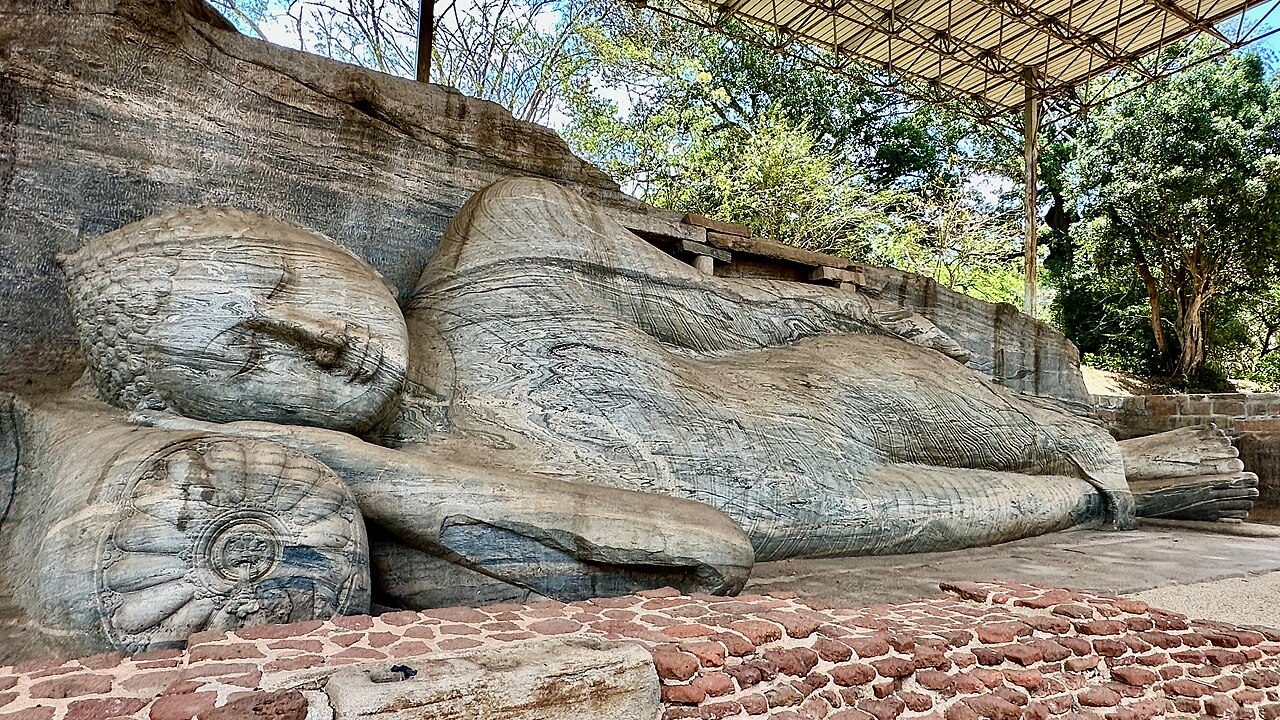
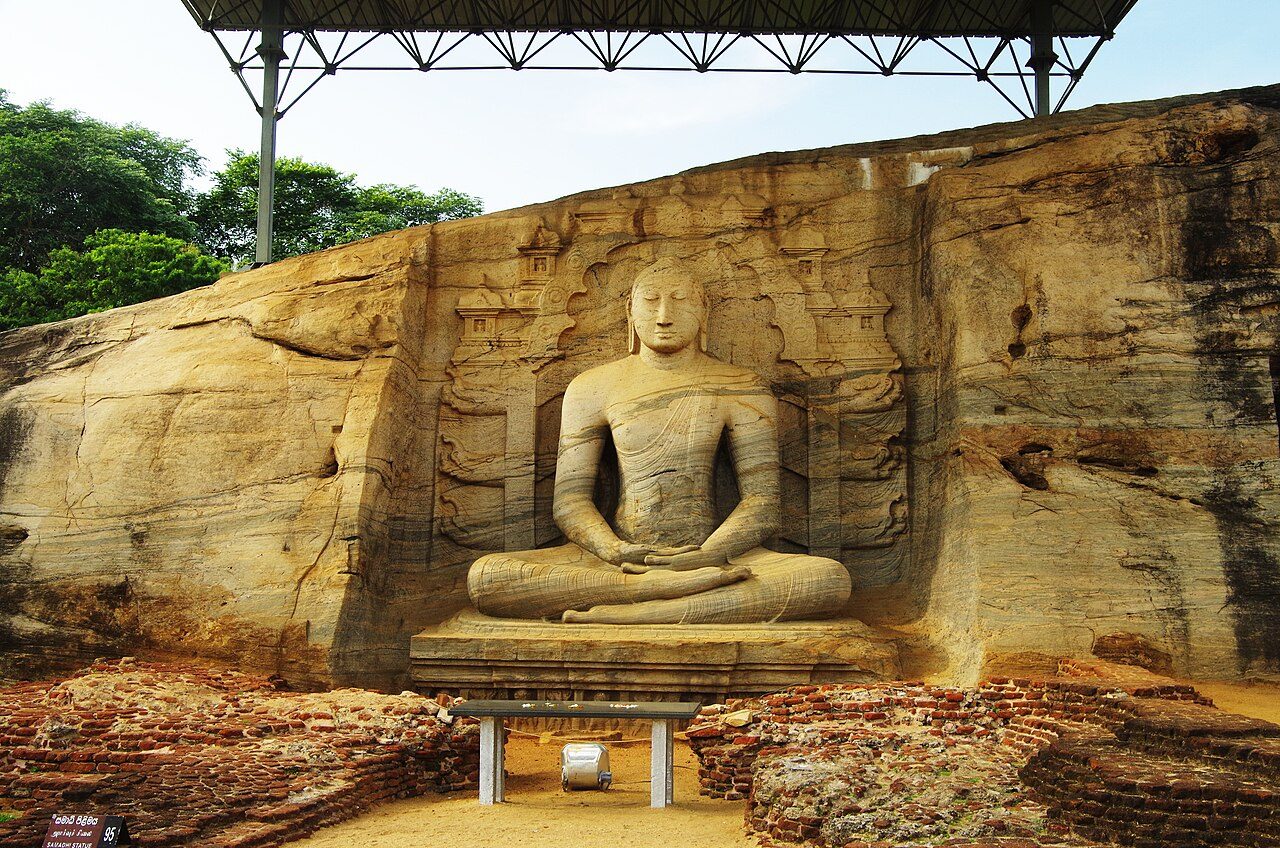
Gal Vihara at Polonnaruwa is a group of four Buddha figures carved from one long granite outcrop in the 12th century under King Parakramabahu I. There are two seated images, a standing figure about 7 metres high with crossed arms, and a reclining Buddha 14 metres long. They are considered the high point of ancient Sinhalese rock carving.
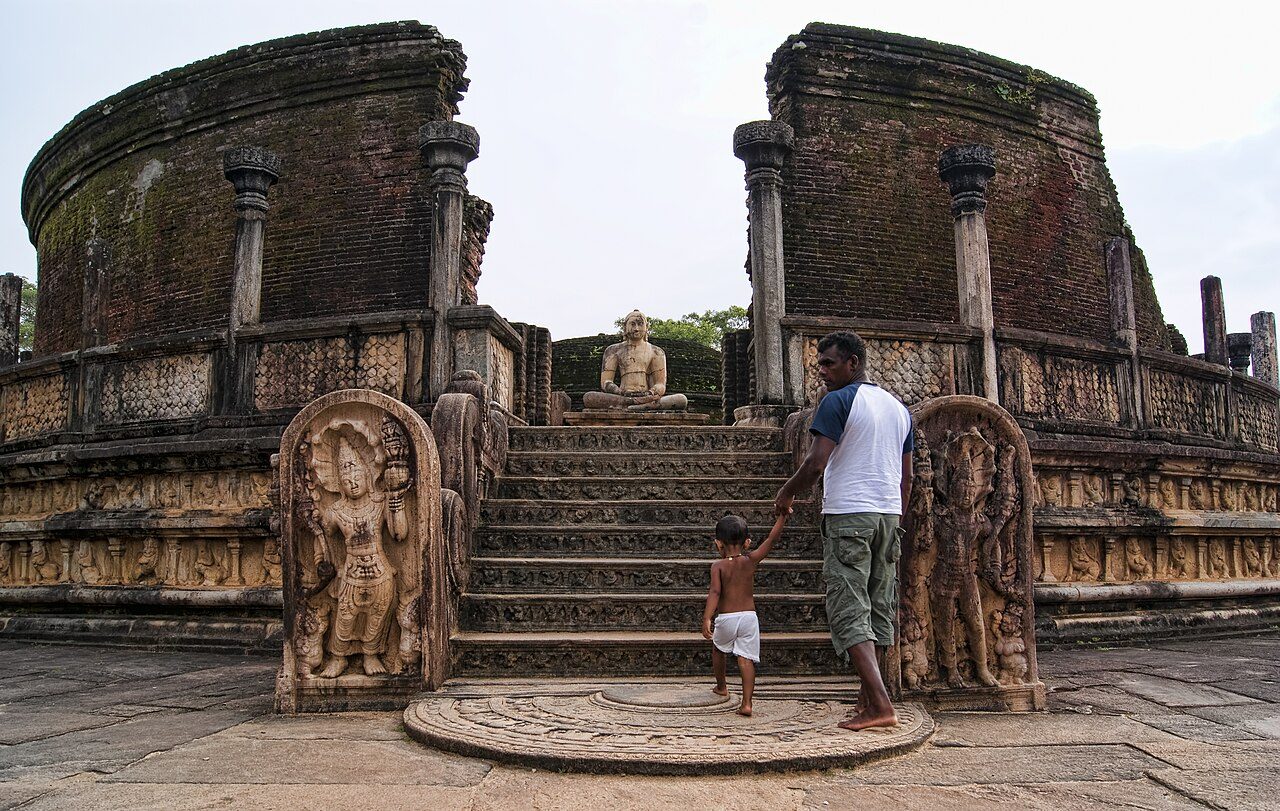
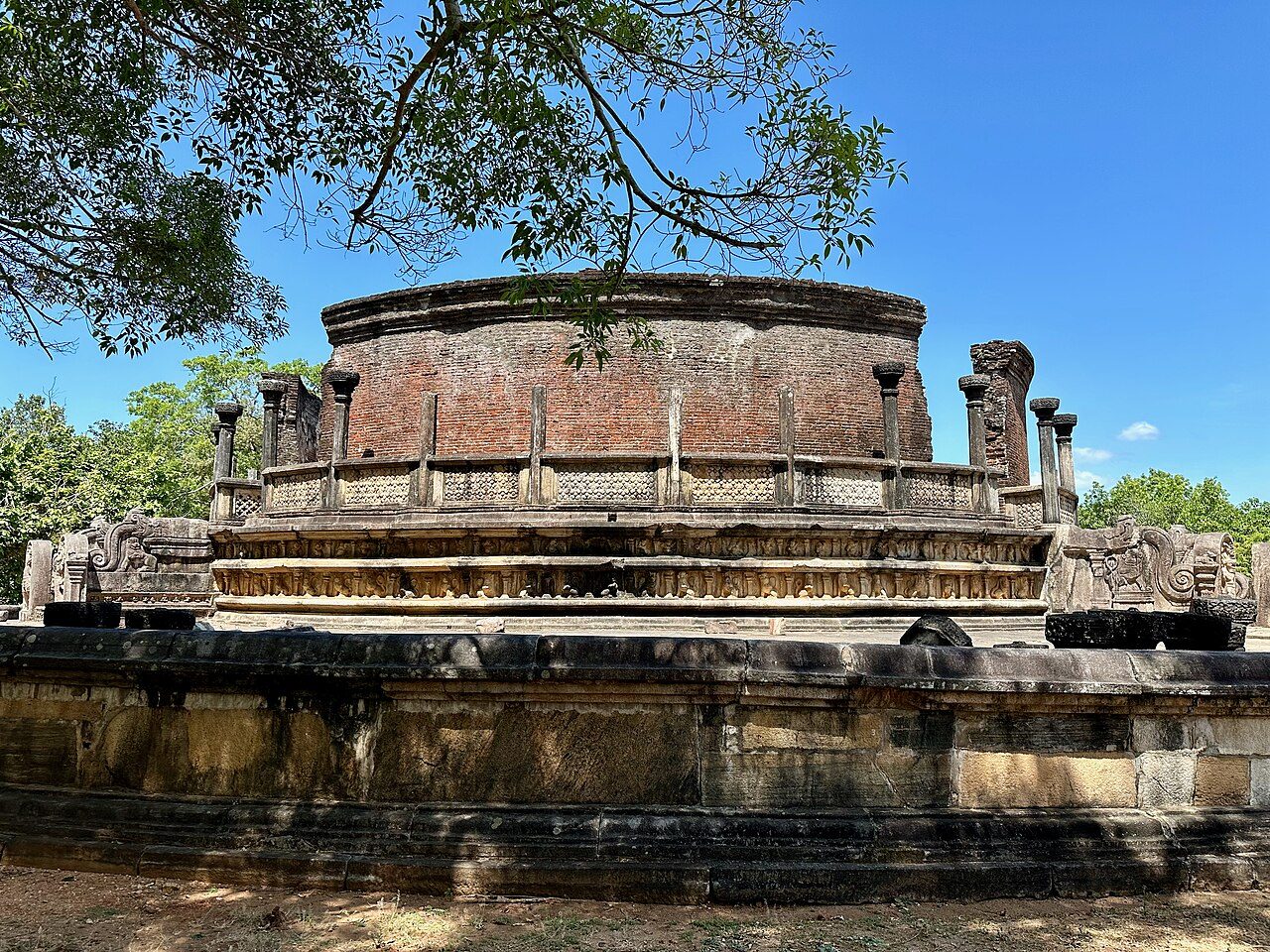
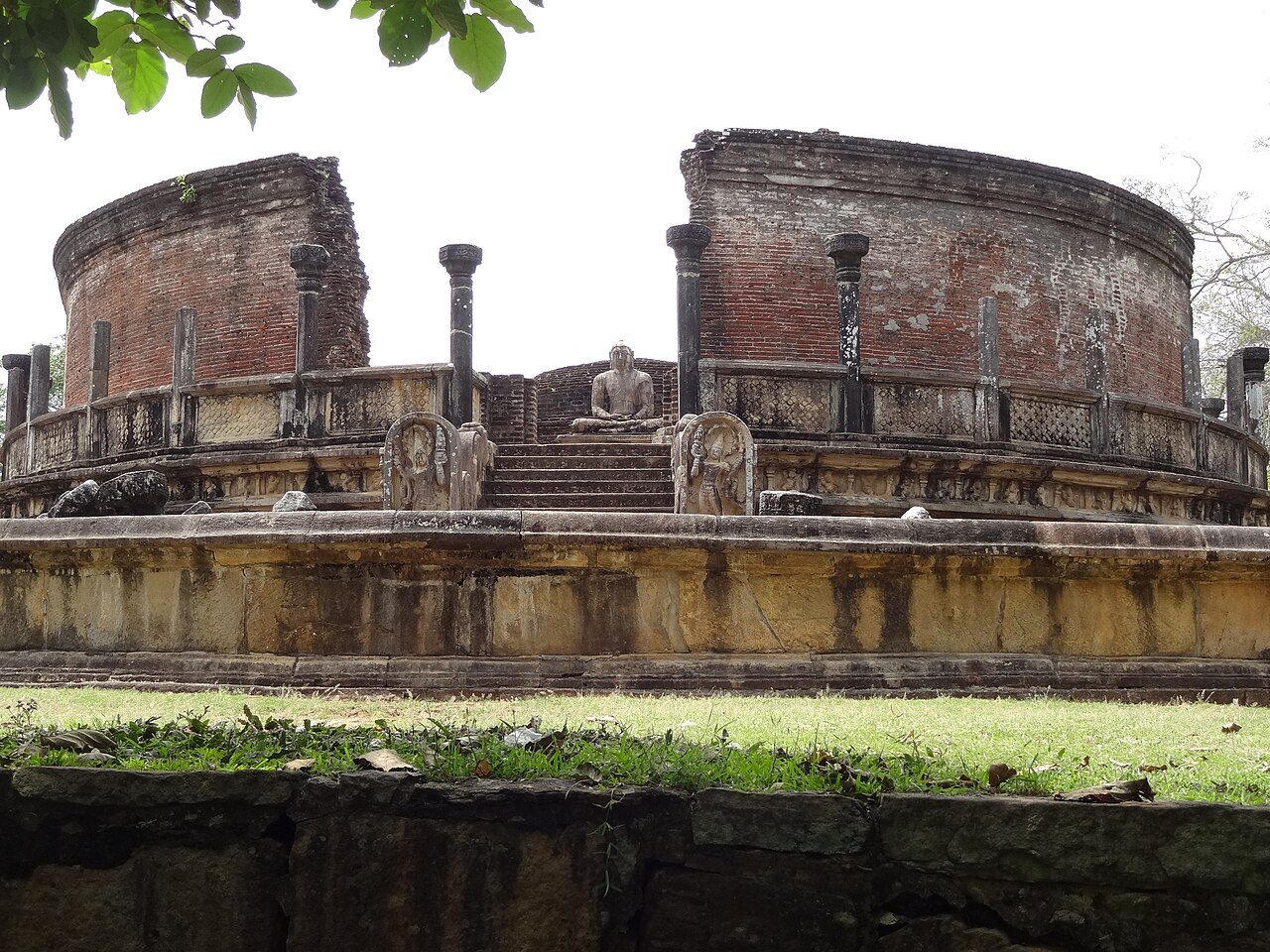
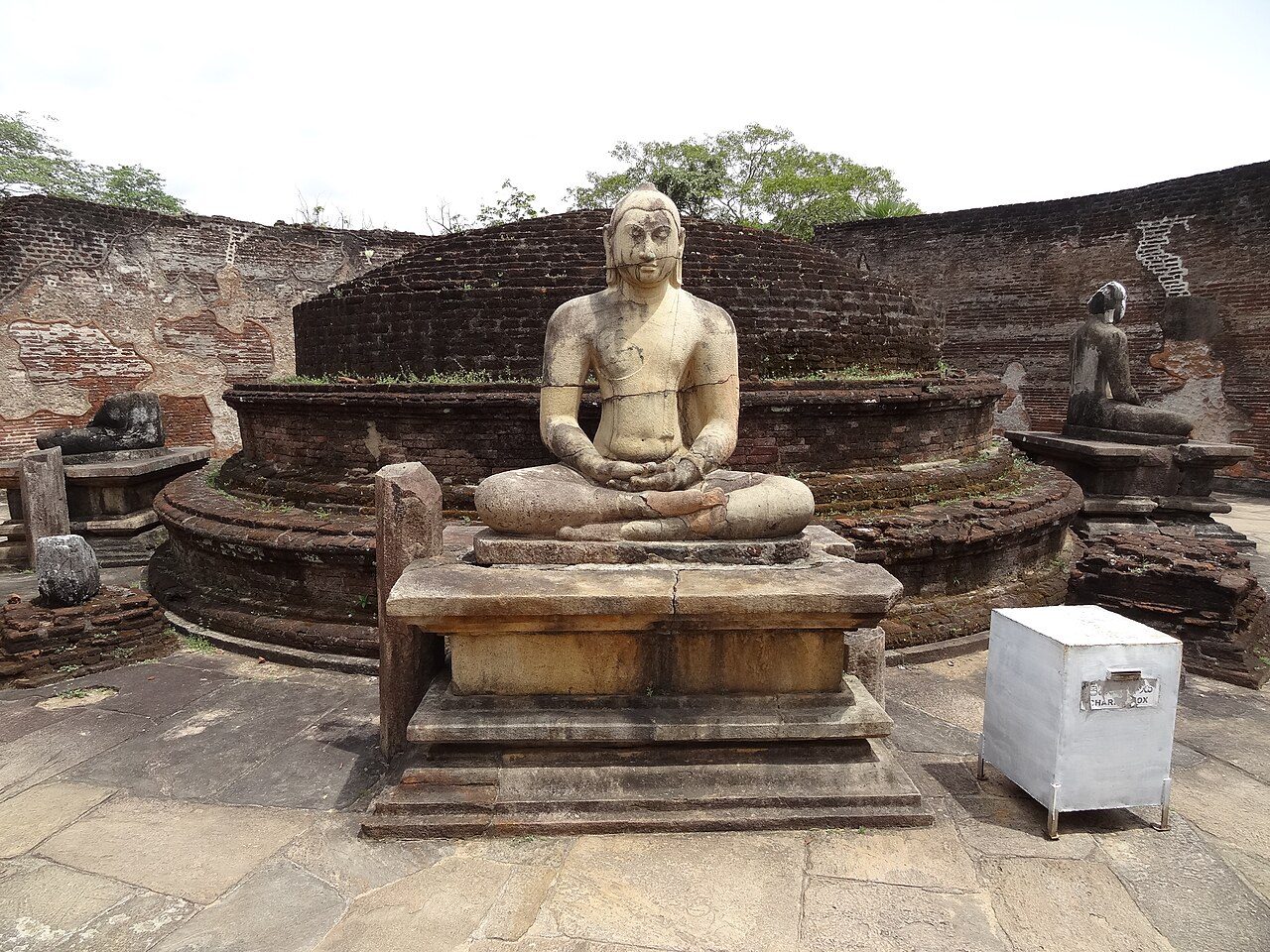
The Polonnaruwa Vatadage is a circular relic house in the Sacred Quadrangle, attributed to Parakramabahu I or Nissanka Malla in the 12th century. Two stone terraces with finely carved guardstones and moonstones lead to four seated Buddhas facing the entrances around a small central stupa. It is the best-preserved example of this building type.
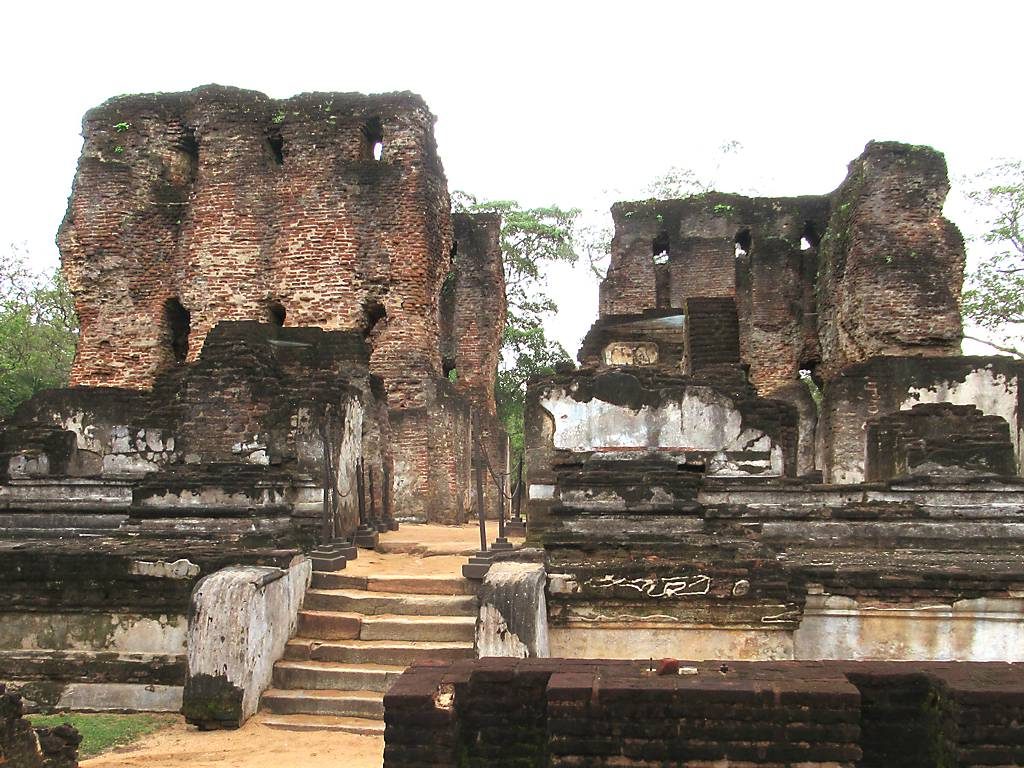
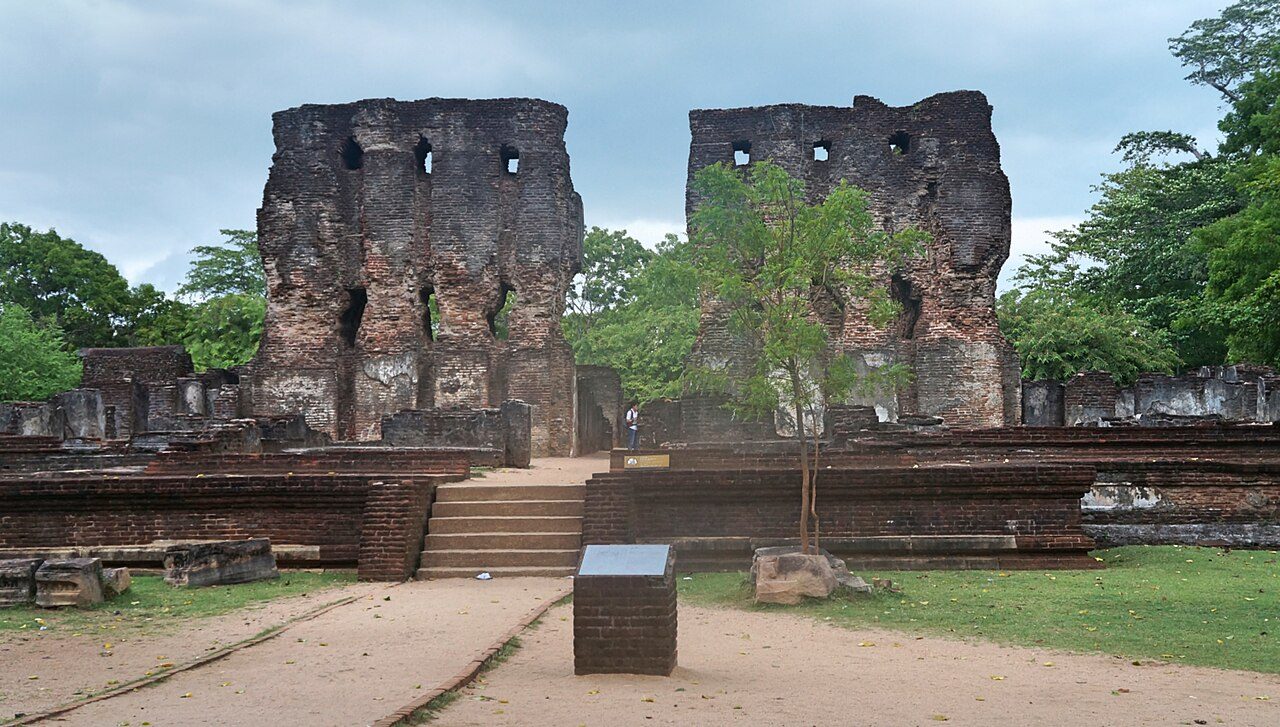
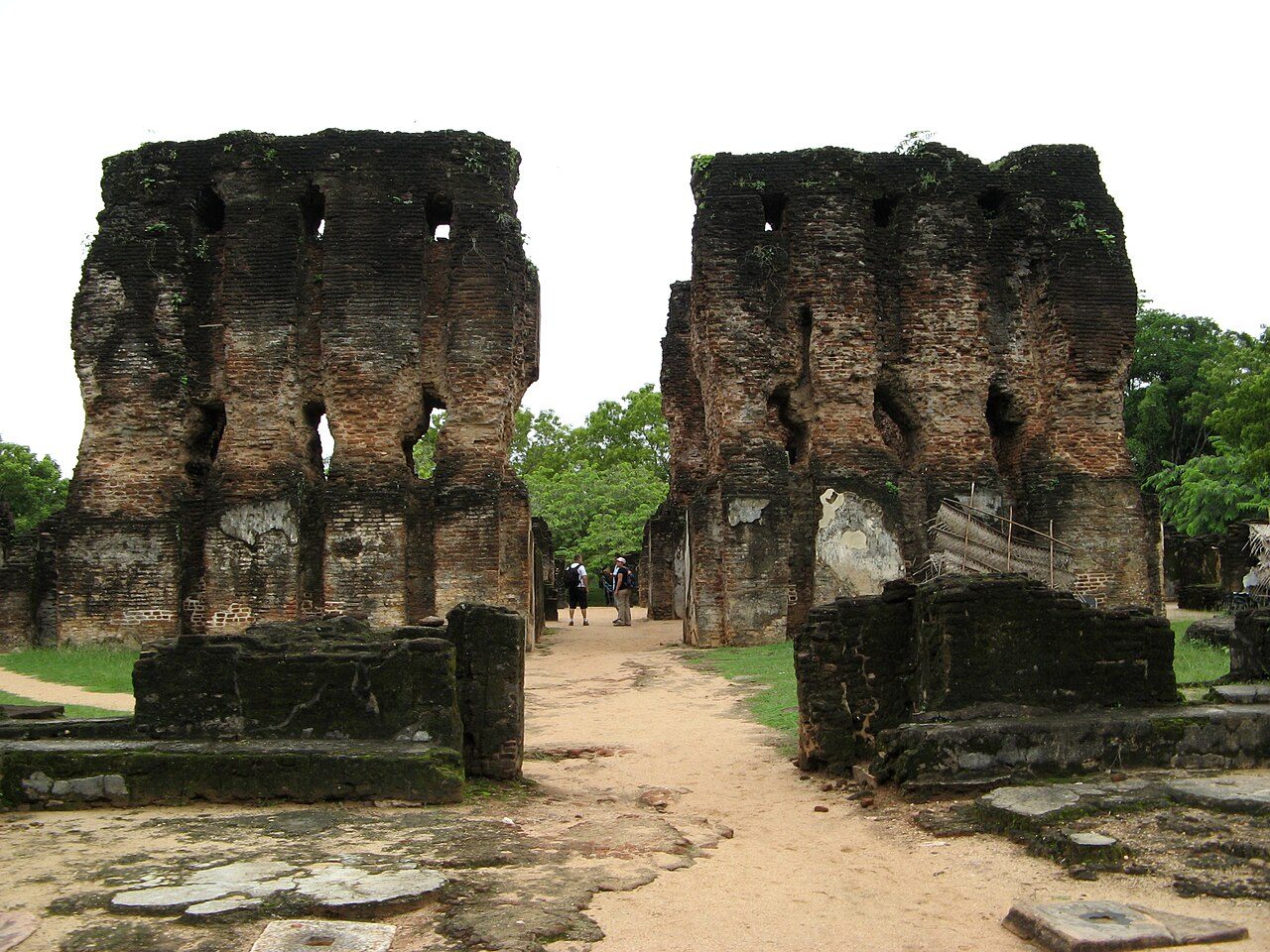
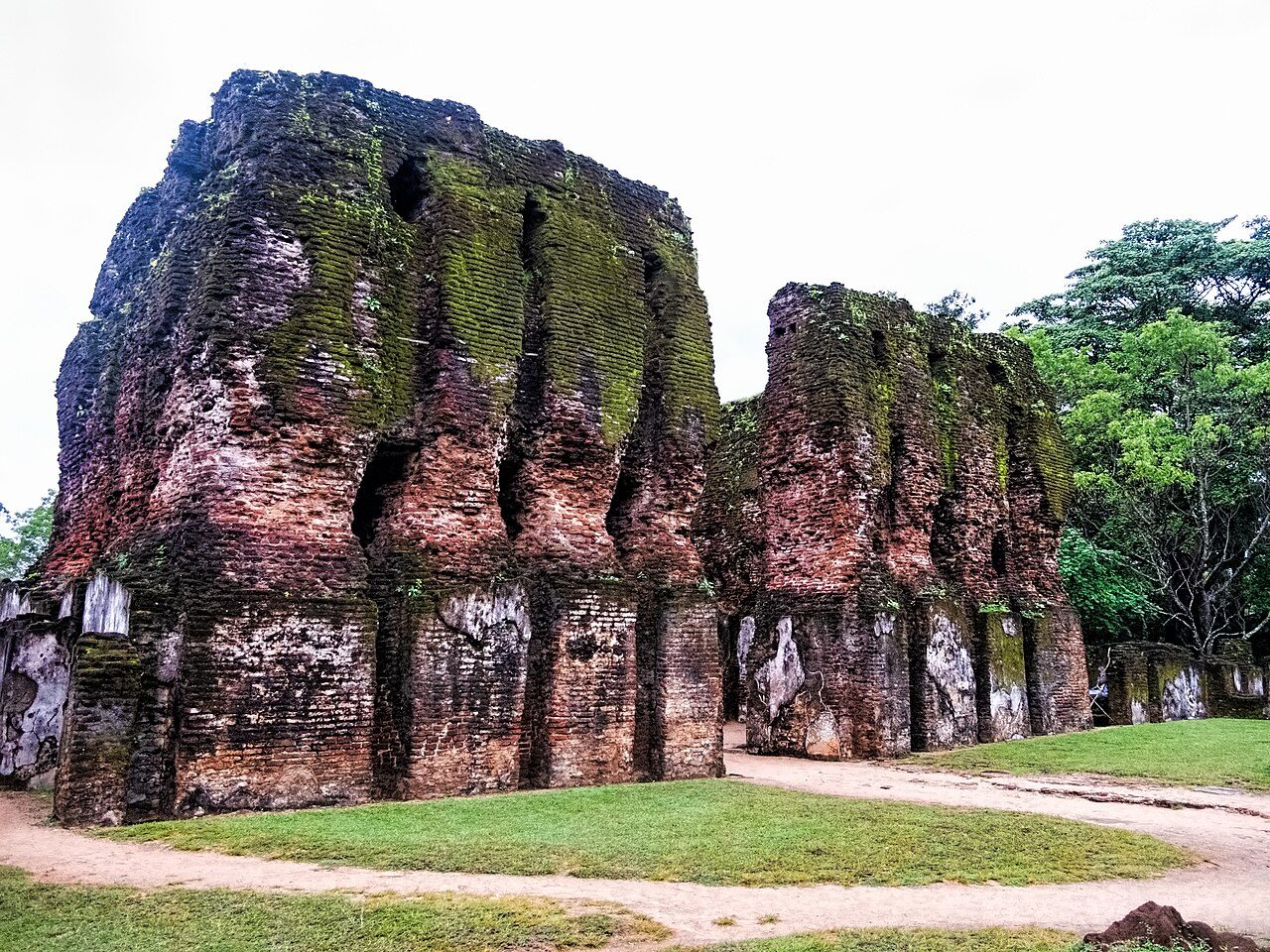
The Royal Palace of King Parakramabahu I stands in the citadel of Polonnaruwa. Built in the 12th century, it is said to have had seven storeys and a thousand rooms. The massive brick walls of the lower floors remain, with sockets for the timber beams of the upper levels. The king's audience hall, with rows of carved elephants, stands close by.
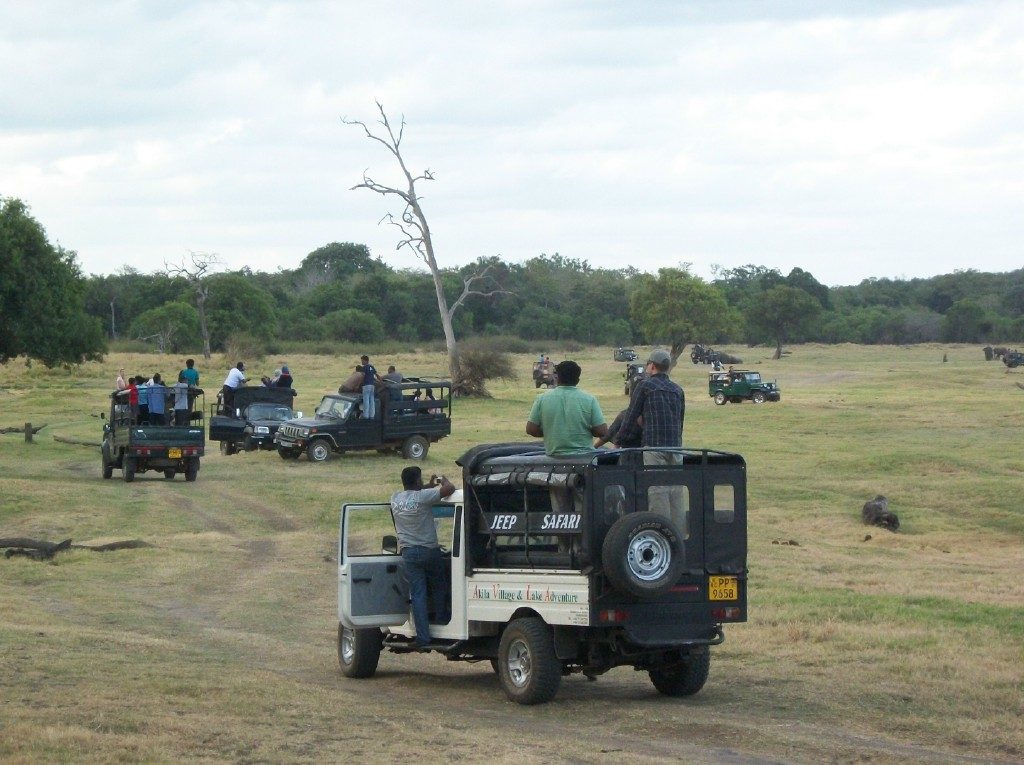
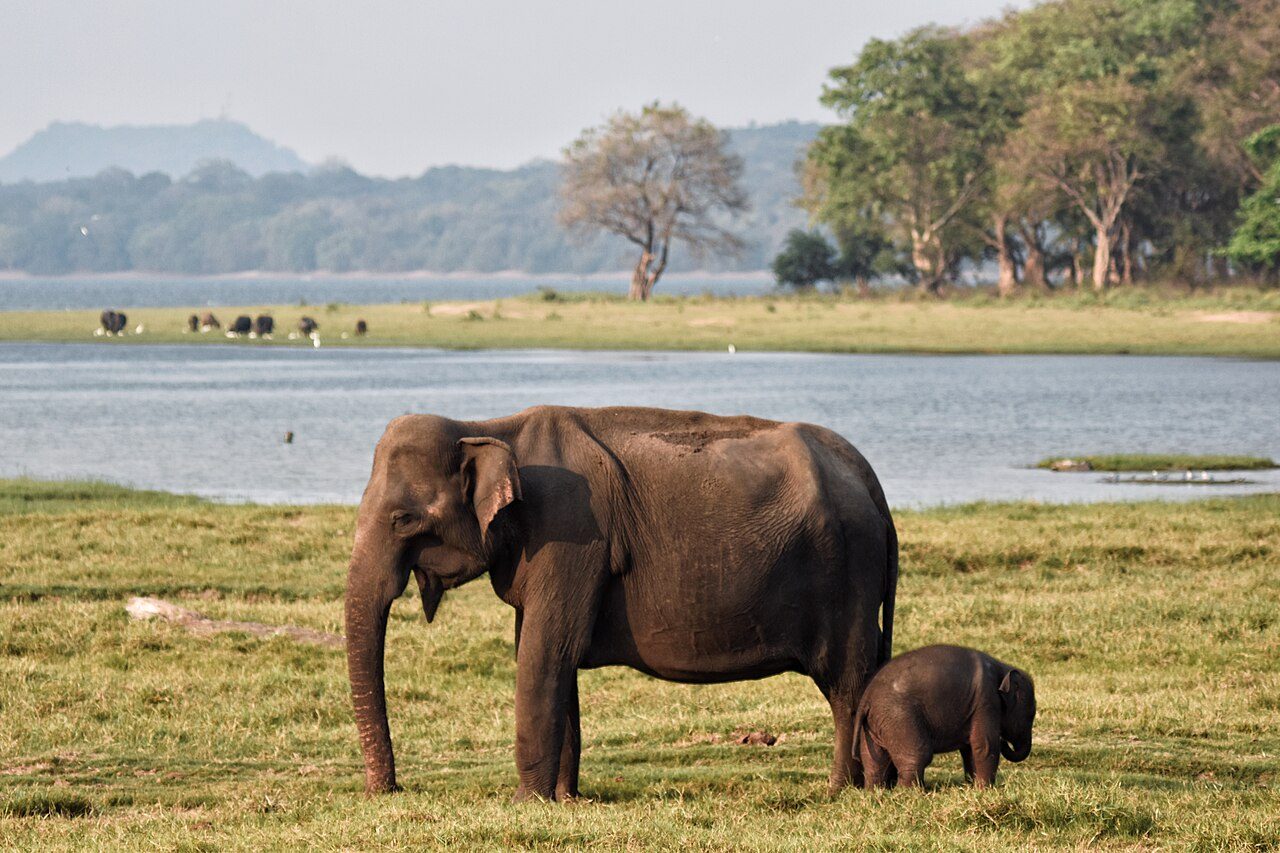
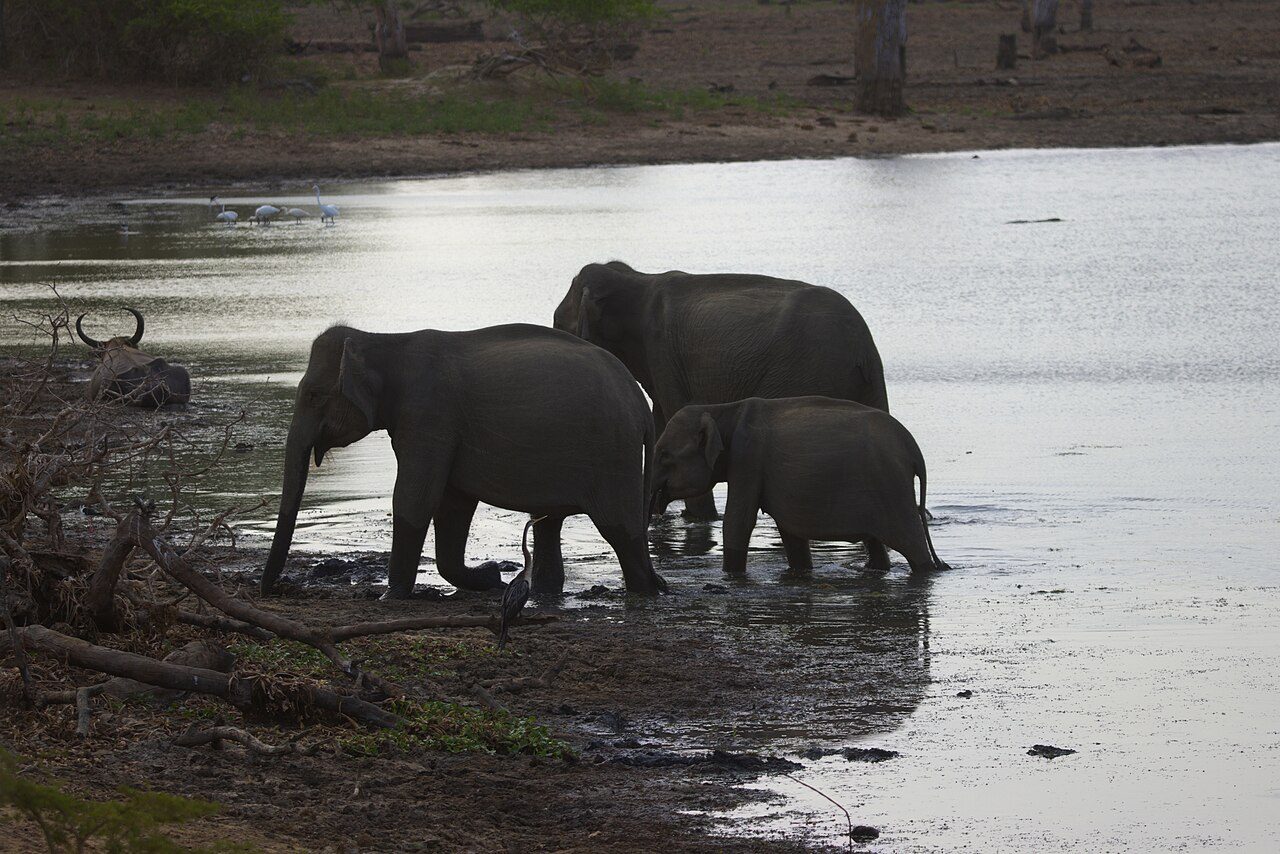
Minneriya National Park surrounds an ancient reservoir built by King Mahasena in the 3rd century. In the dry season, roughly July to October, the water shrinks and fresh grass grows on the lake bed, drawing hundreds of wild elephants in what is called the Gathering. Jeep safaris start near Habarana, usually in the afternoon.
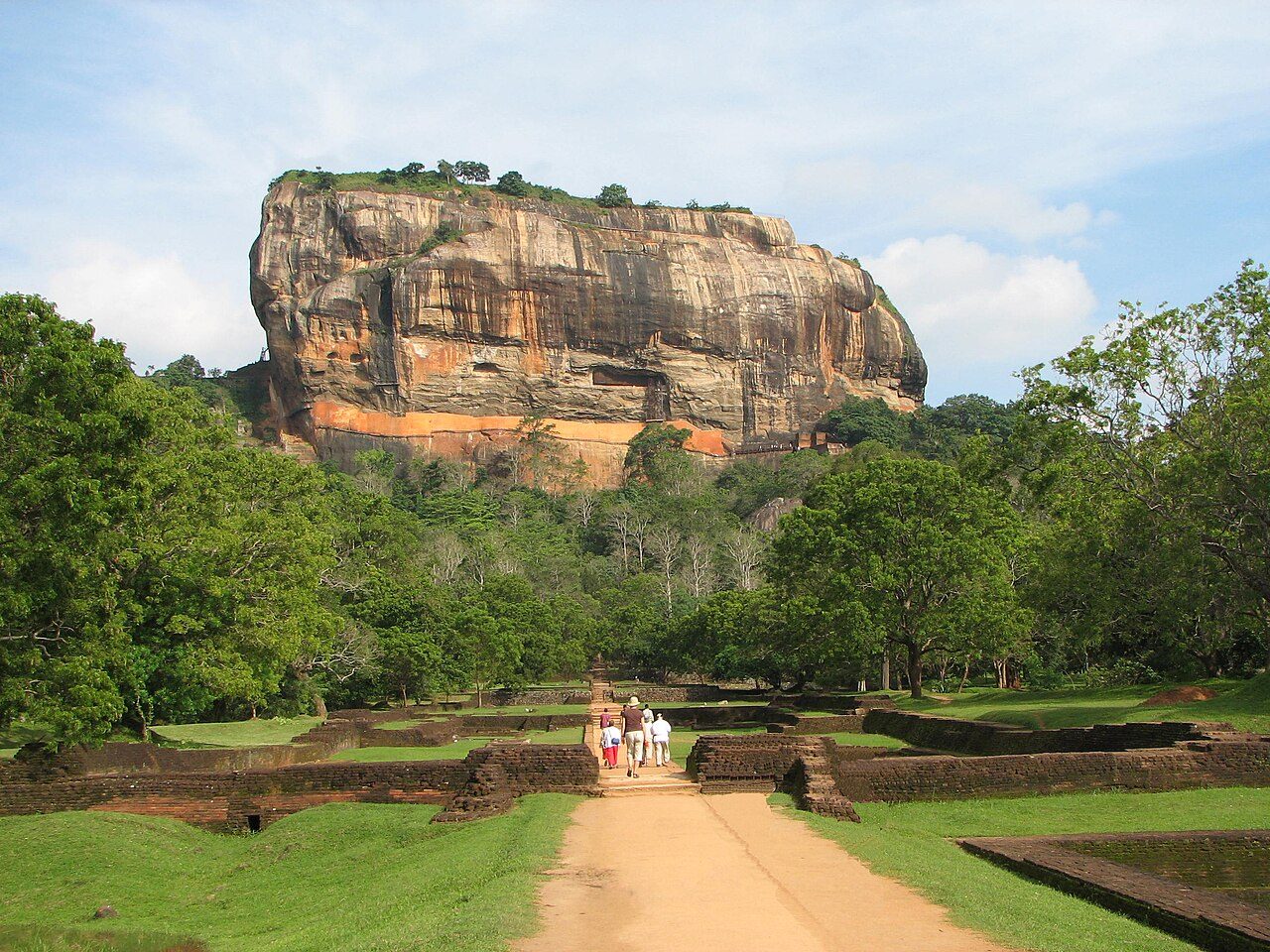
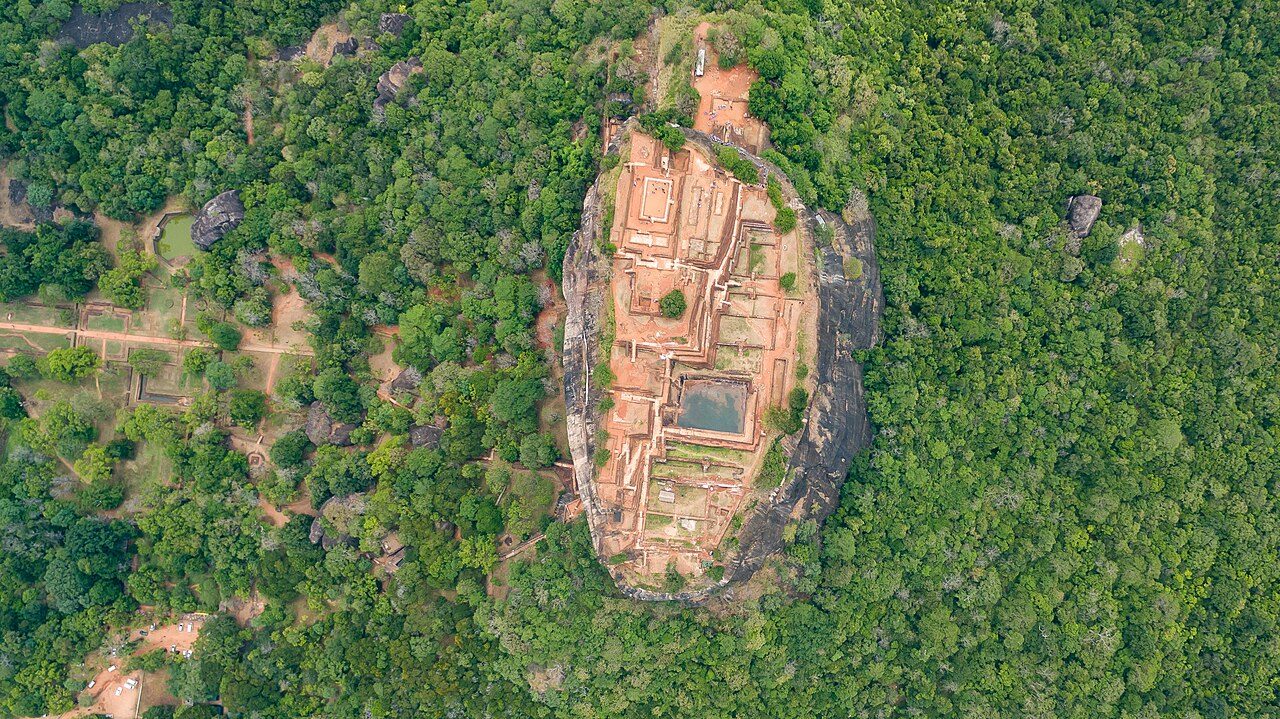
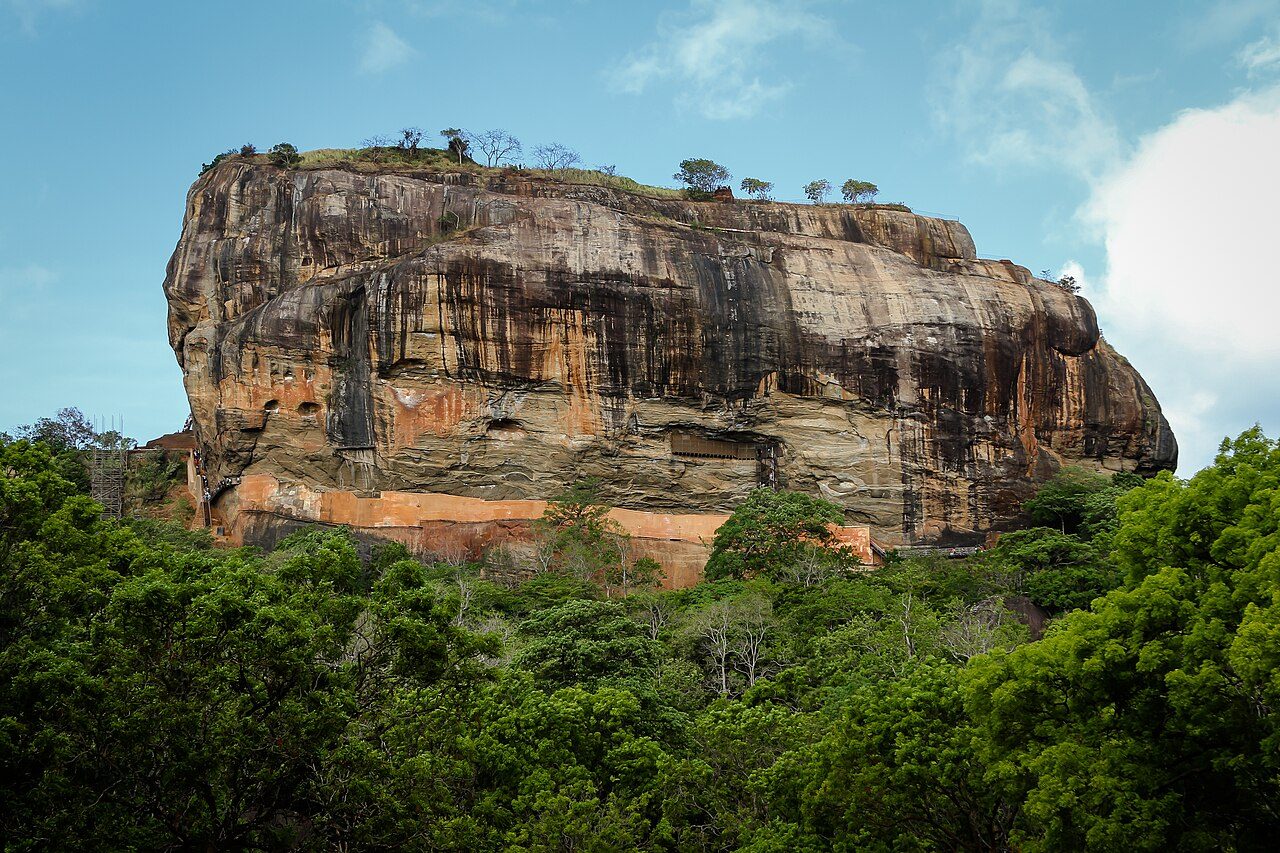
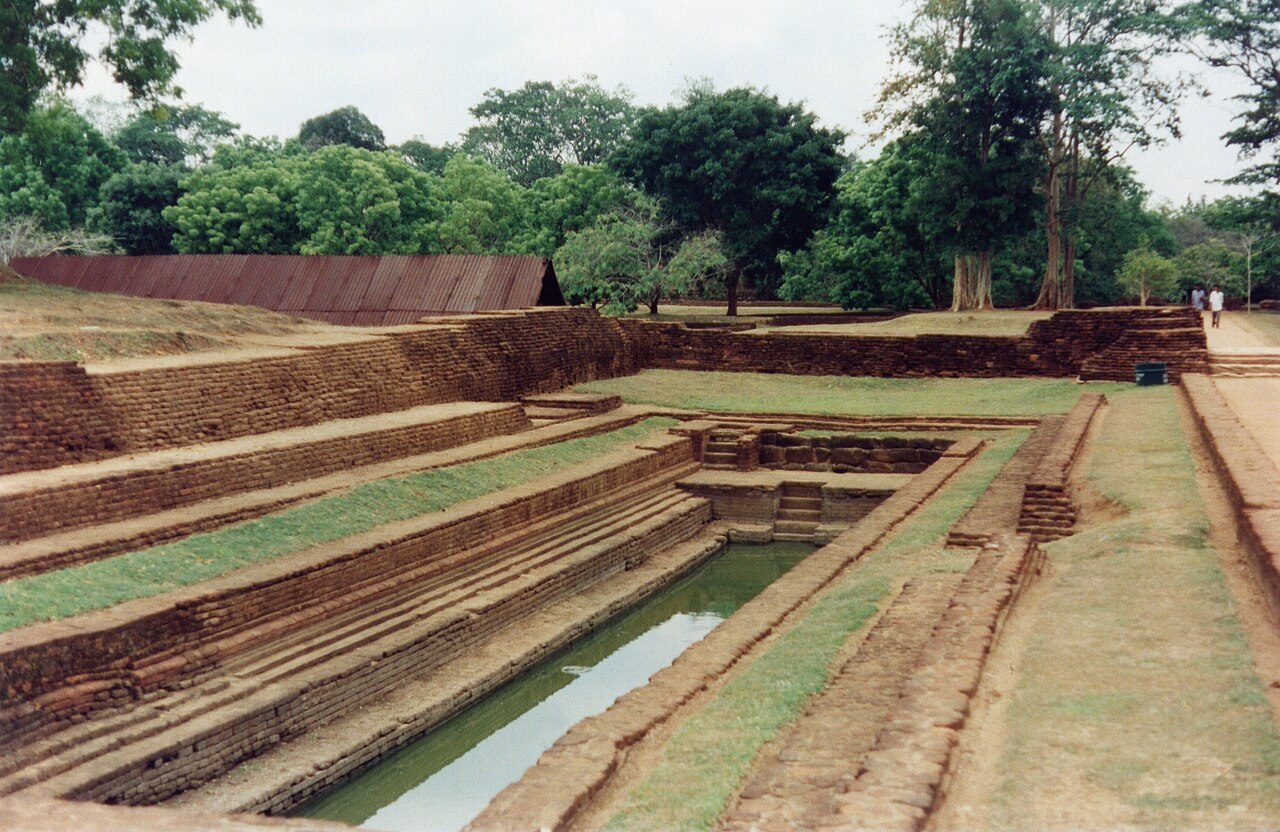
Sigiriya, the Lion Rock, is a 200-metre column of rock rising from the plains, on which King Kashyapa built his palace and capital in the 5th century. Visitors climb past water gardens, the painted Sigiriya maidens, the Mirror Wall with its ancient graffiti and the huge lion paws at the final stairway. It is a UNESCO World Heritage Site.
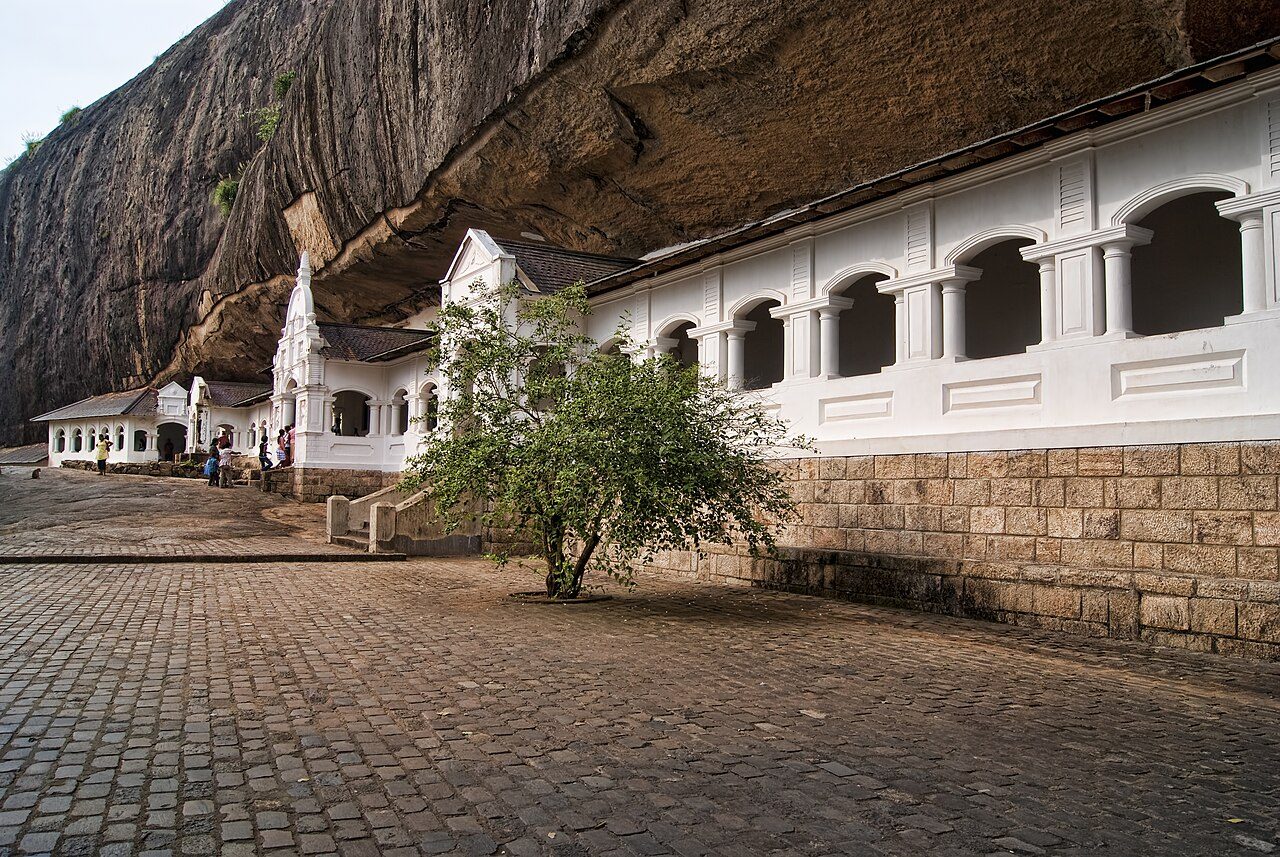
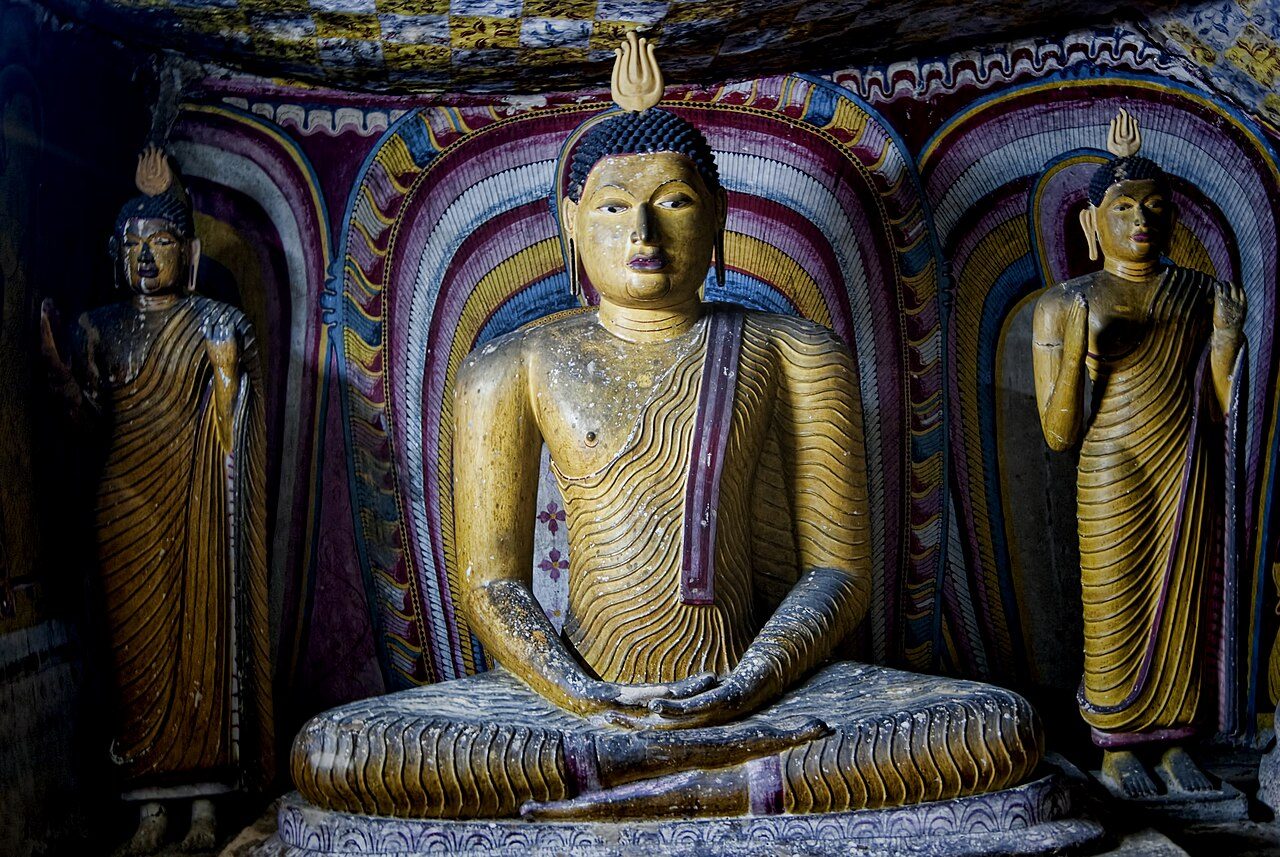
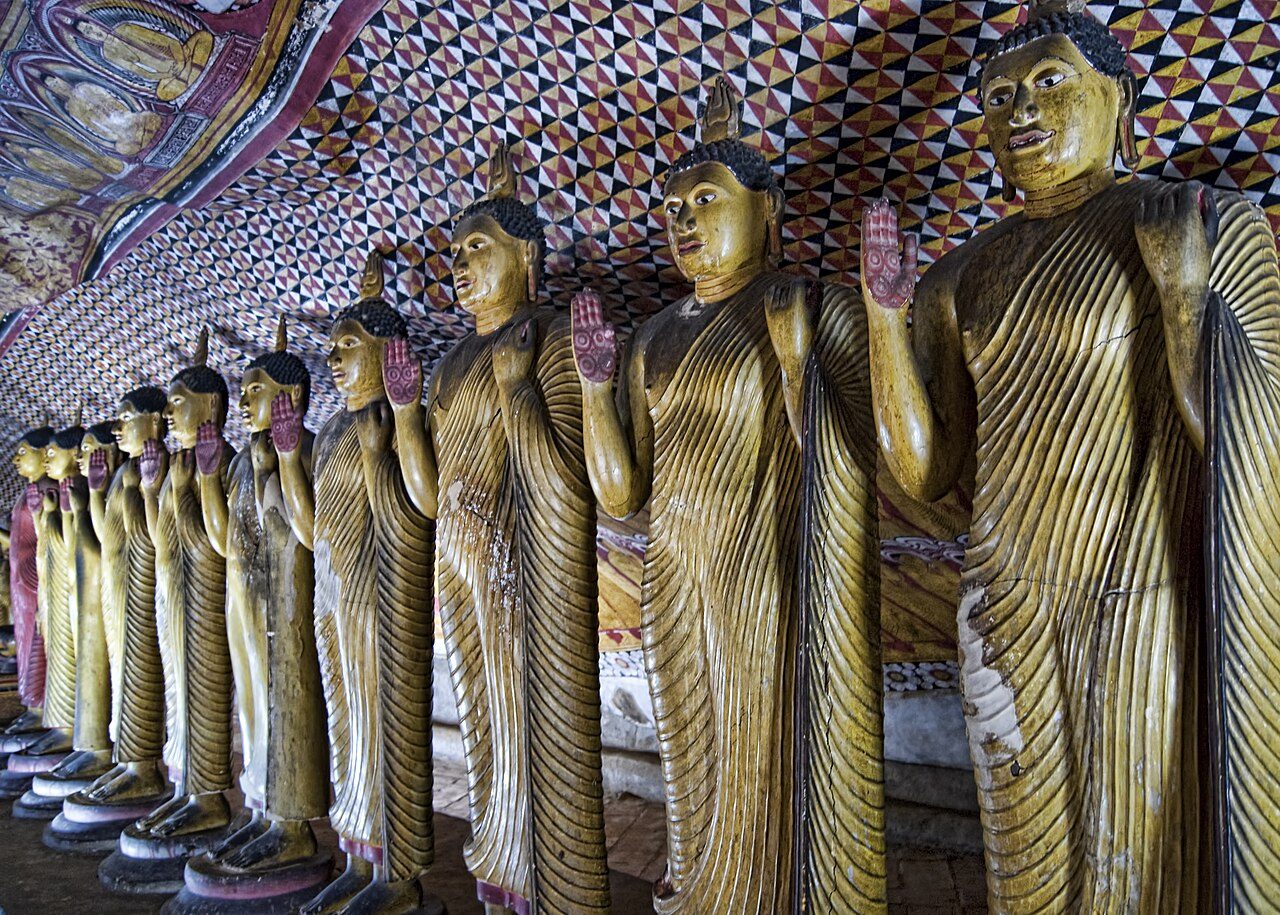
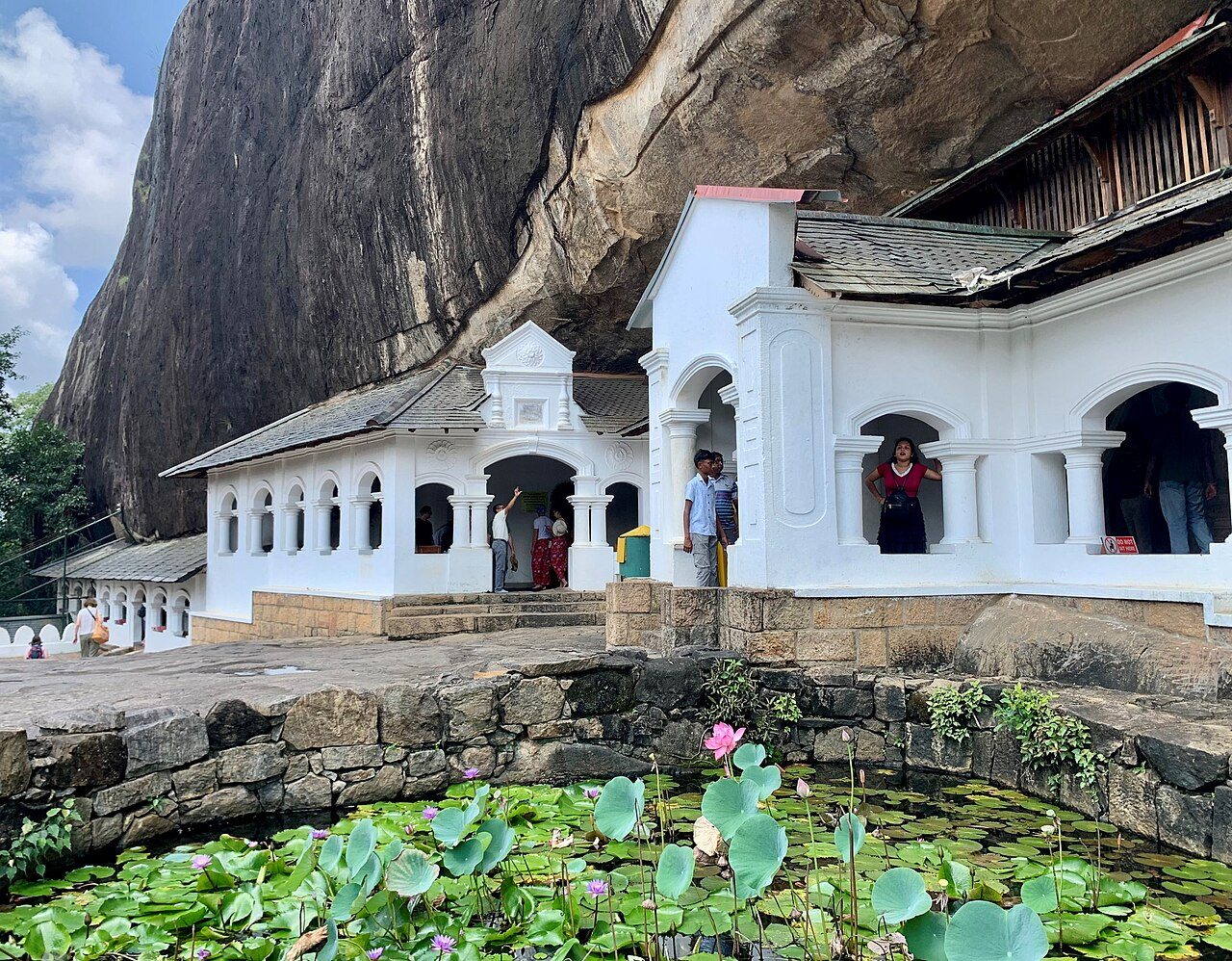
The Dambulla Cave Temple, also called the Golden Temple of Dambulla, is the largest and best-preserved cave temple complex in Sri Lanka. Five caves beneath a huge overhanging rock hold more than 150 Buddha statues, and painted murals cover the ceilings. The site has been a place of worship since the 1st century BCE and is a UNESCO World Heritage Site.
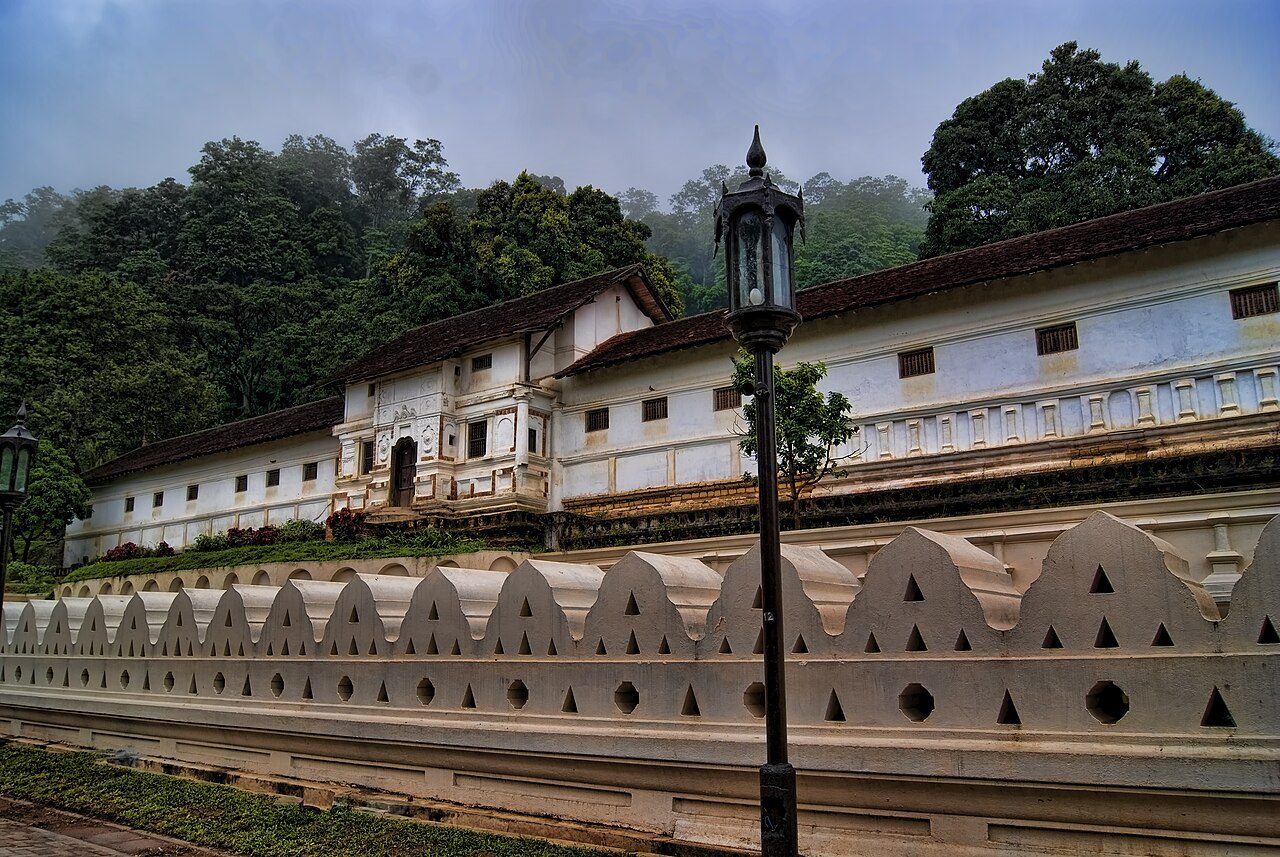
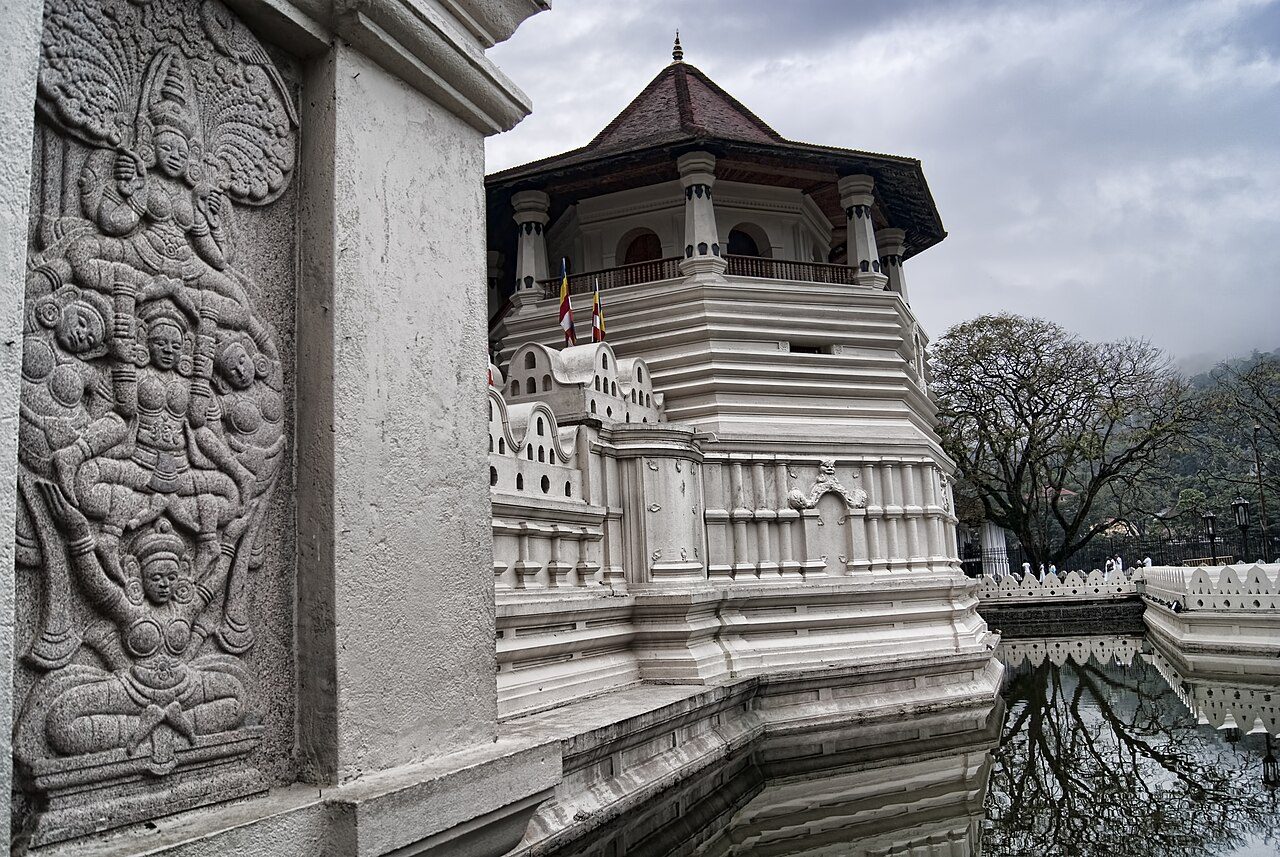
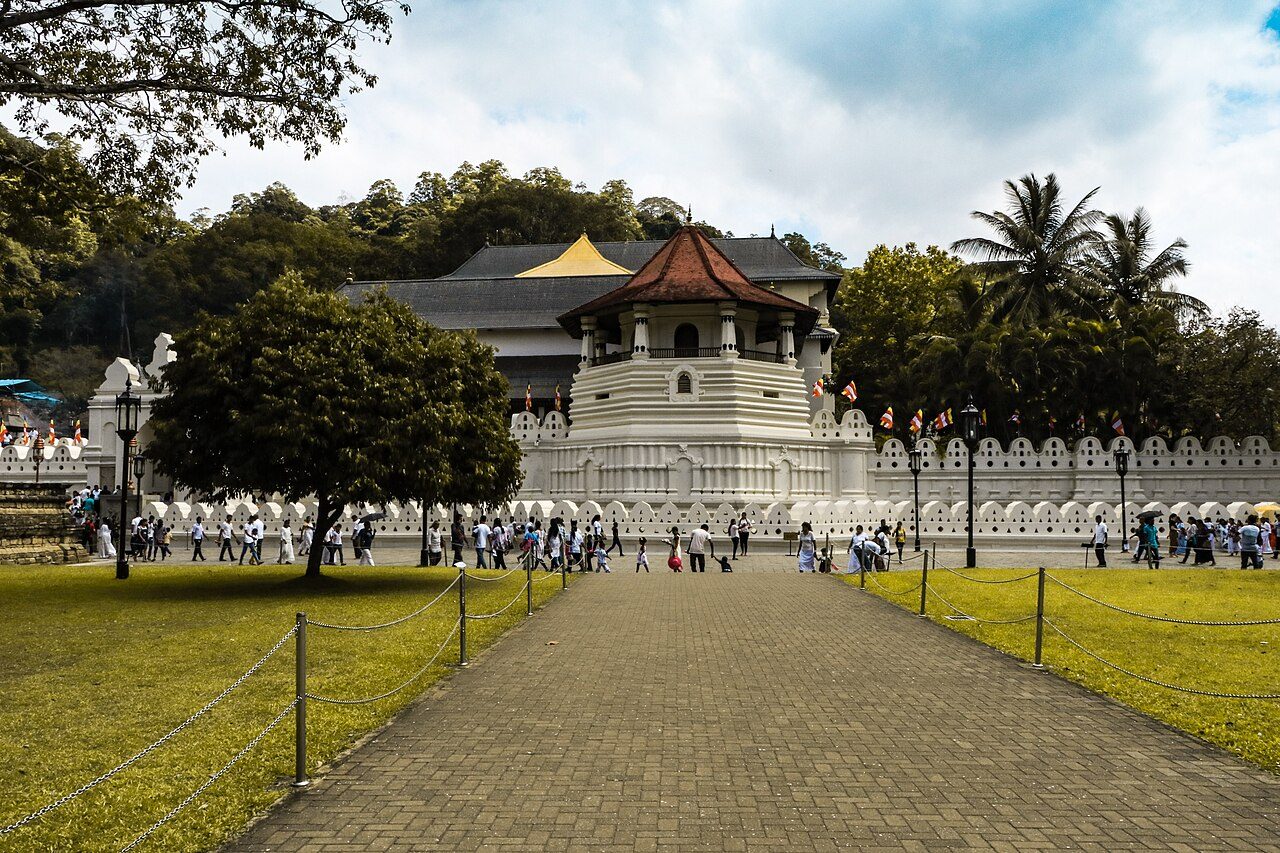
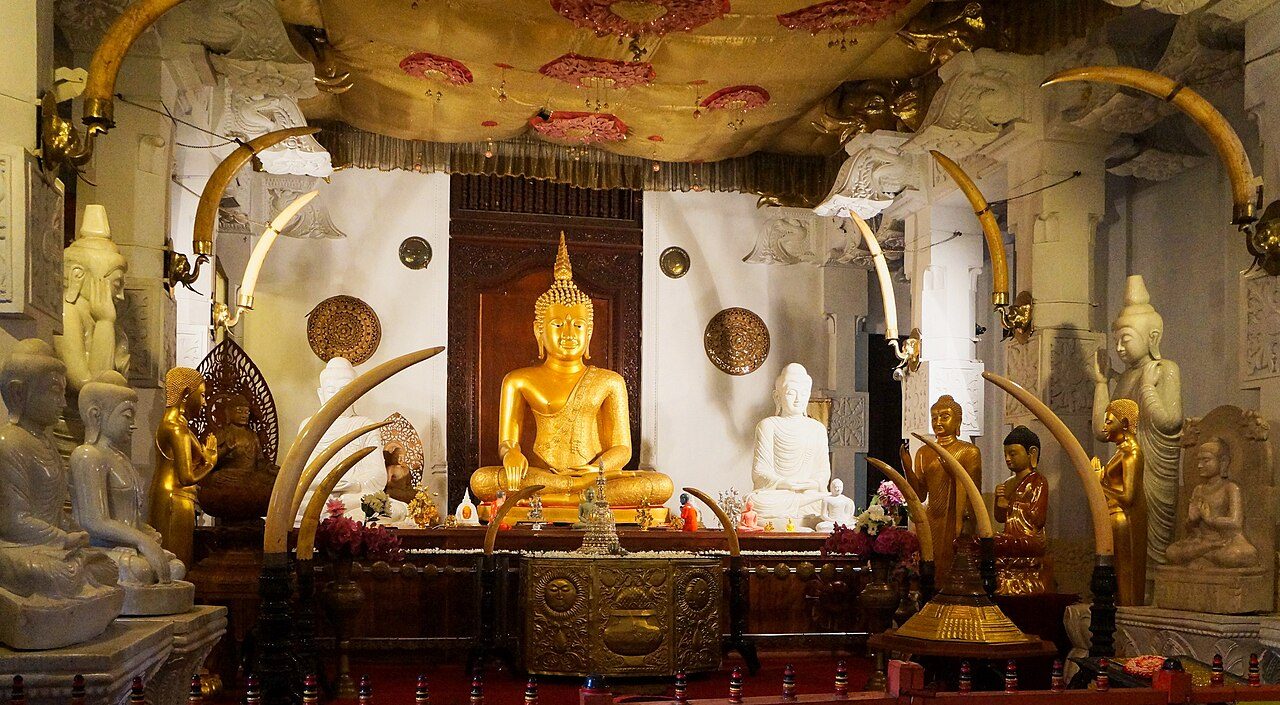
The Temple of the Sacred Tooth Relic, Sri Dalada Maligawa, stands in the old royal palace complex beside Kandy Lake. It houses a tooth relic of the Buddha, brought to the island in the 4th century and long regarded as the symbol of the right to rule. Drummers play at the daily offerings. The Esala Perahera in July or August honours the relic.
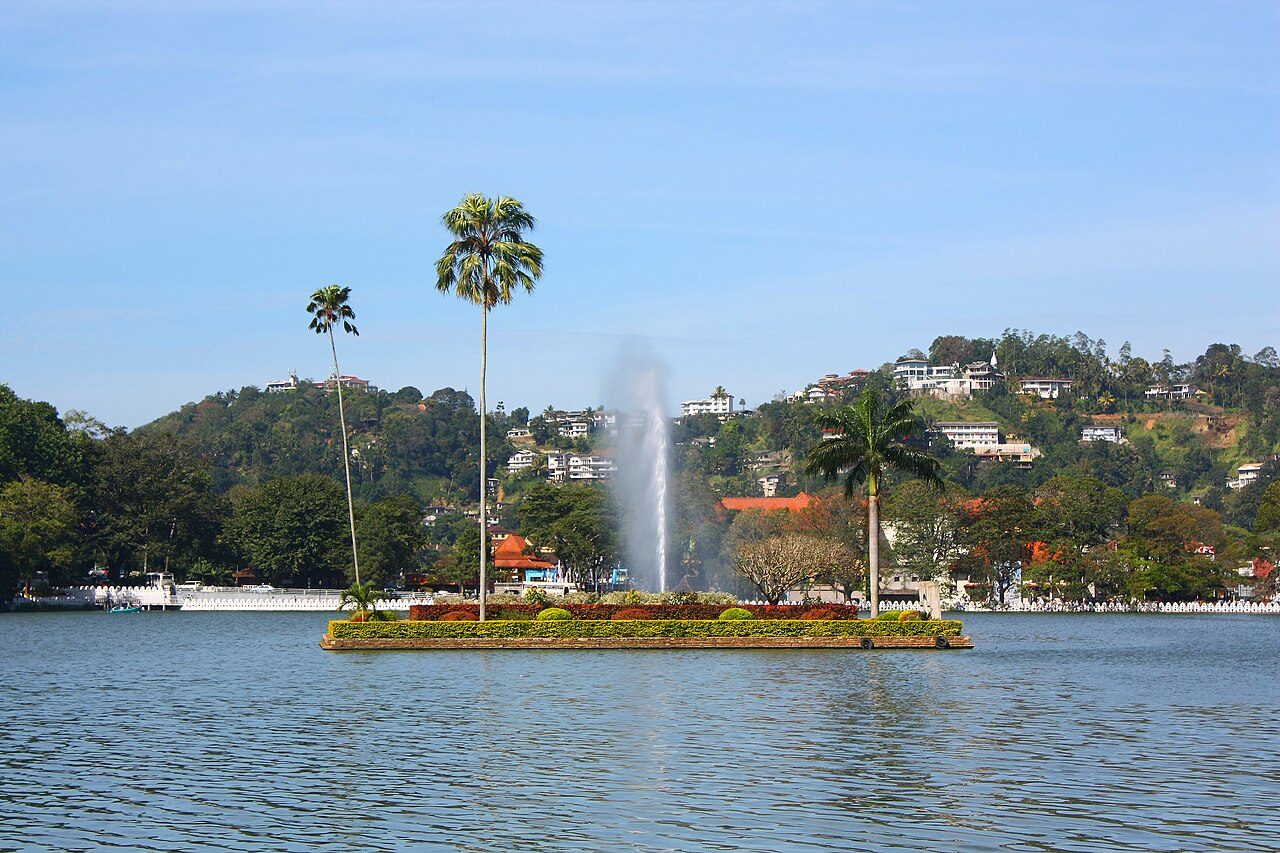
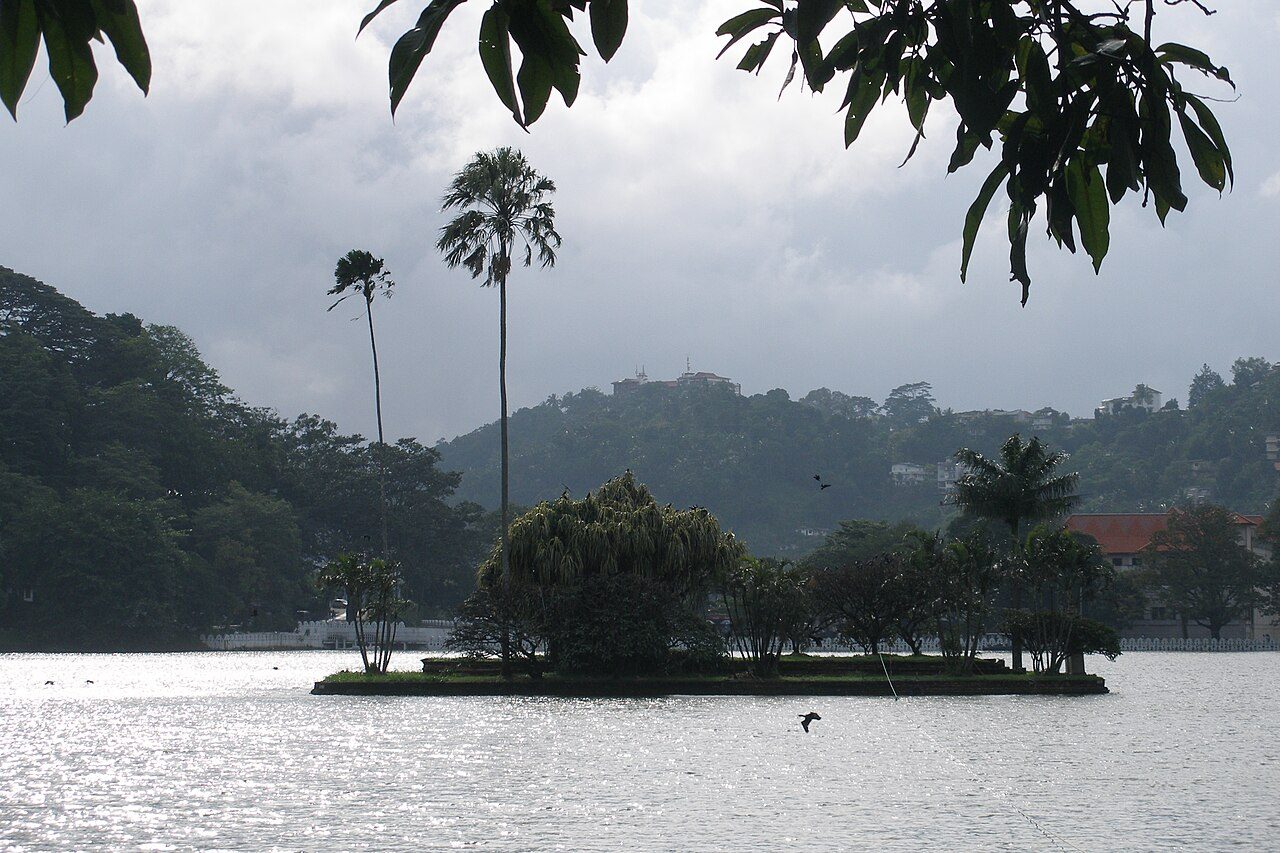
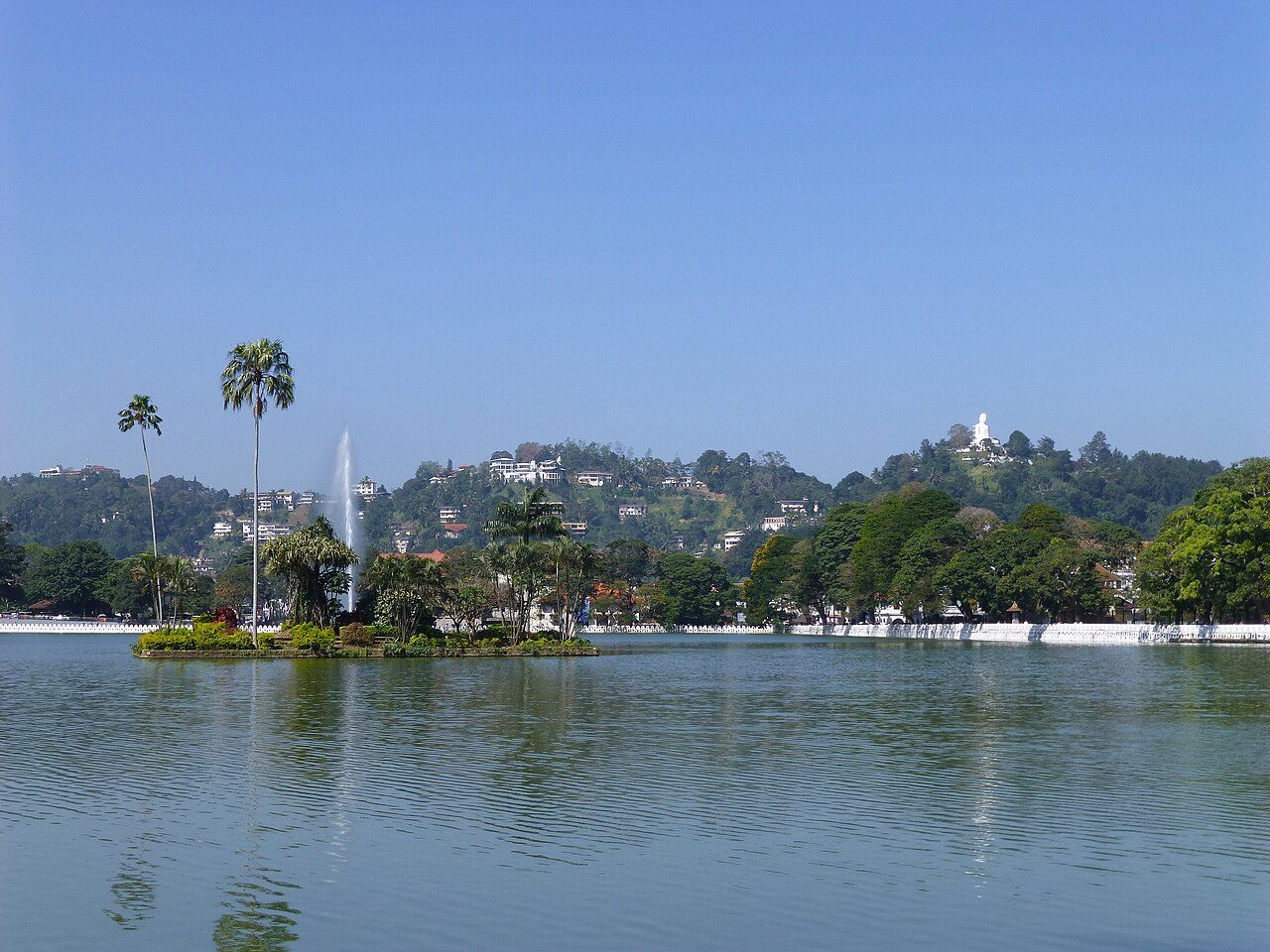
Kandy Lake, or Kiri Muhuda, lies in the centre of Kandy beside the Temple of the Tooth. It was created in 1807 by Sri Wickrama Rajasinha, the last king of Kandy, by damming paddy fields. A decorative wall called the Walakulu Bemma runs along part of the shore. The shaded path around the lake is about 3.4 km and popular for walks.
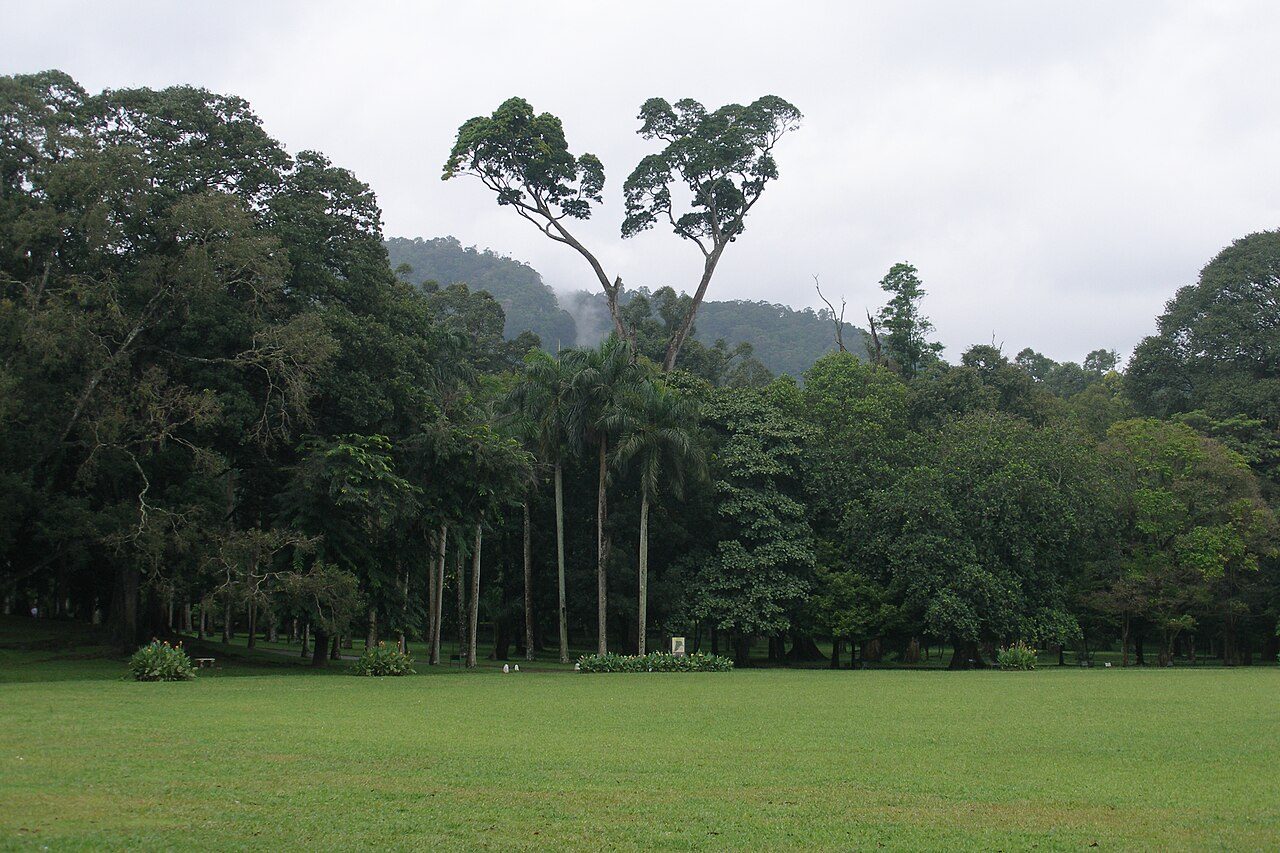
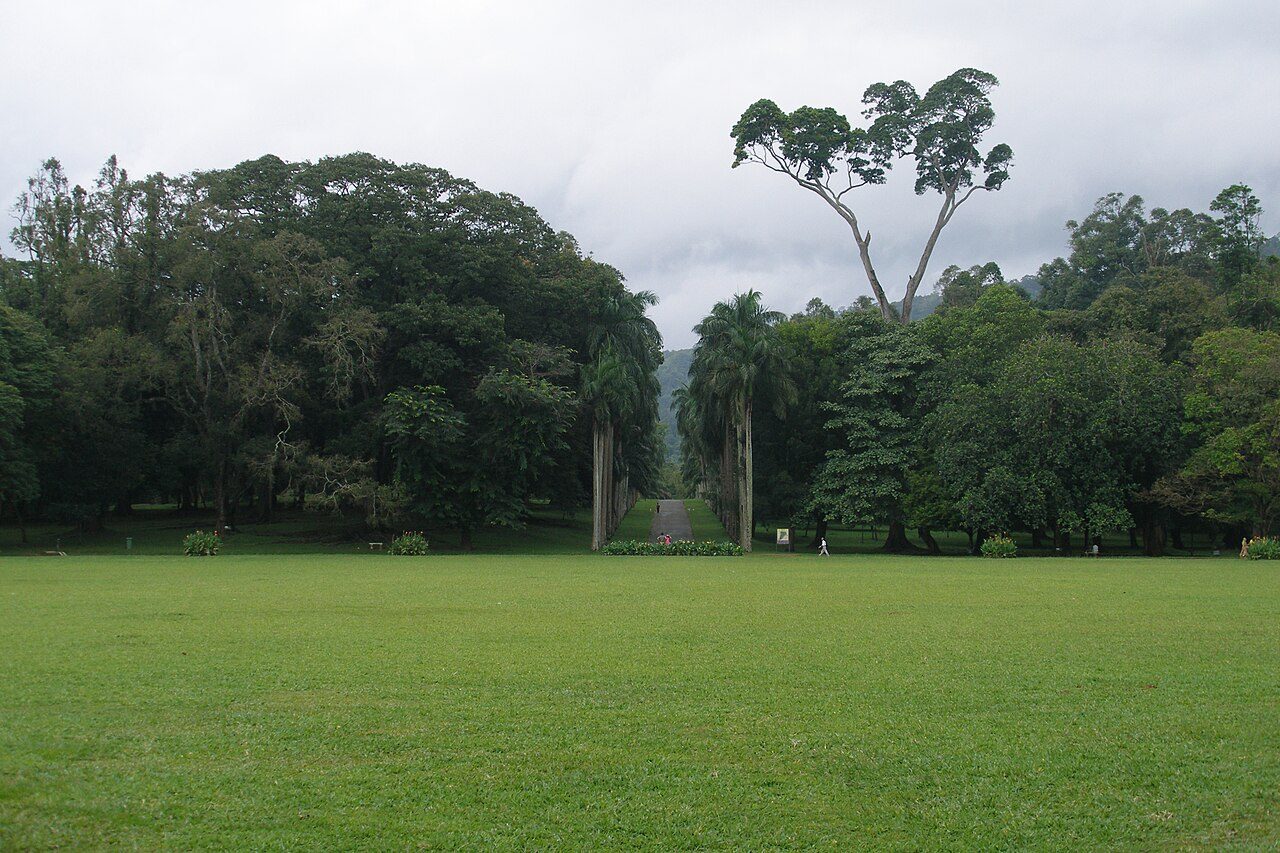
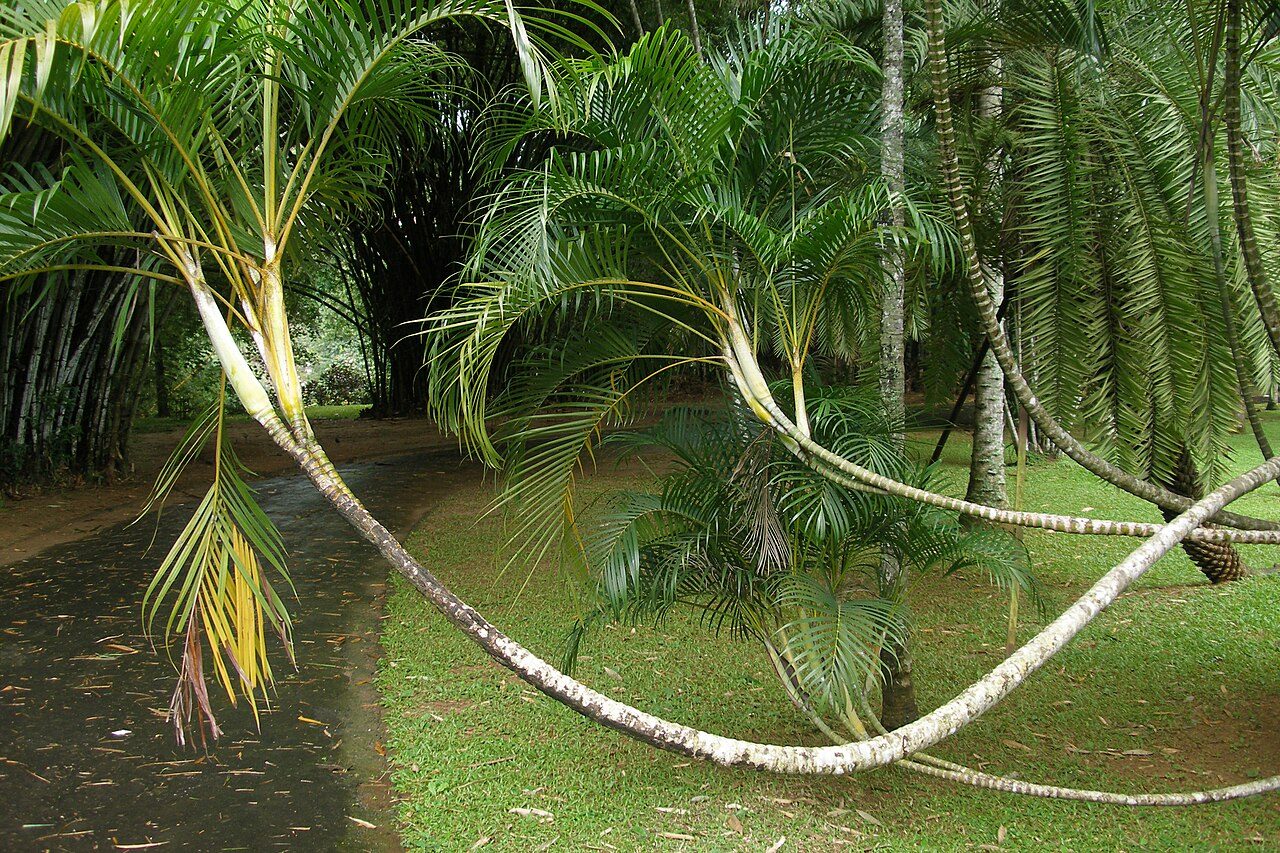
The Royal Botanic Gardens at Peradeniya lie in a loop of the Mahaweli River about 5 km from Kandy. The site has royal origins, and the present garden was established by the British in 1821. It is known for its orchid house, avenue of royal palms, giant Javan fig tree and trees planted by visiting heads of state. The grounds cover about 60 hectares.
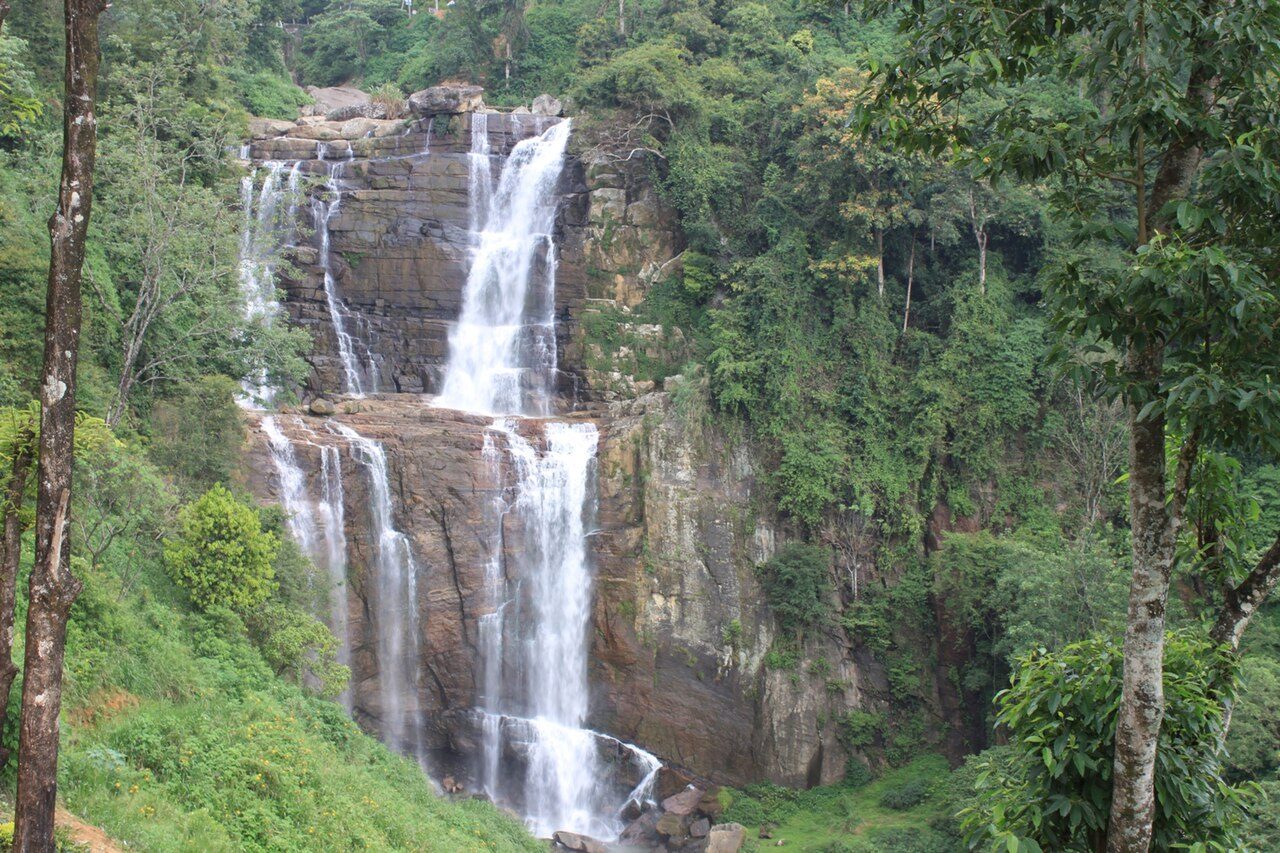
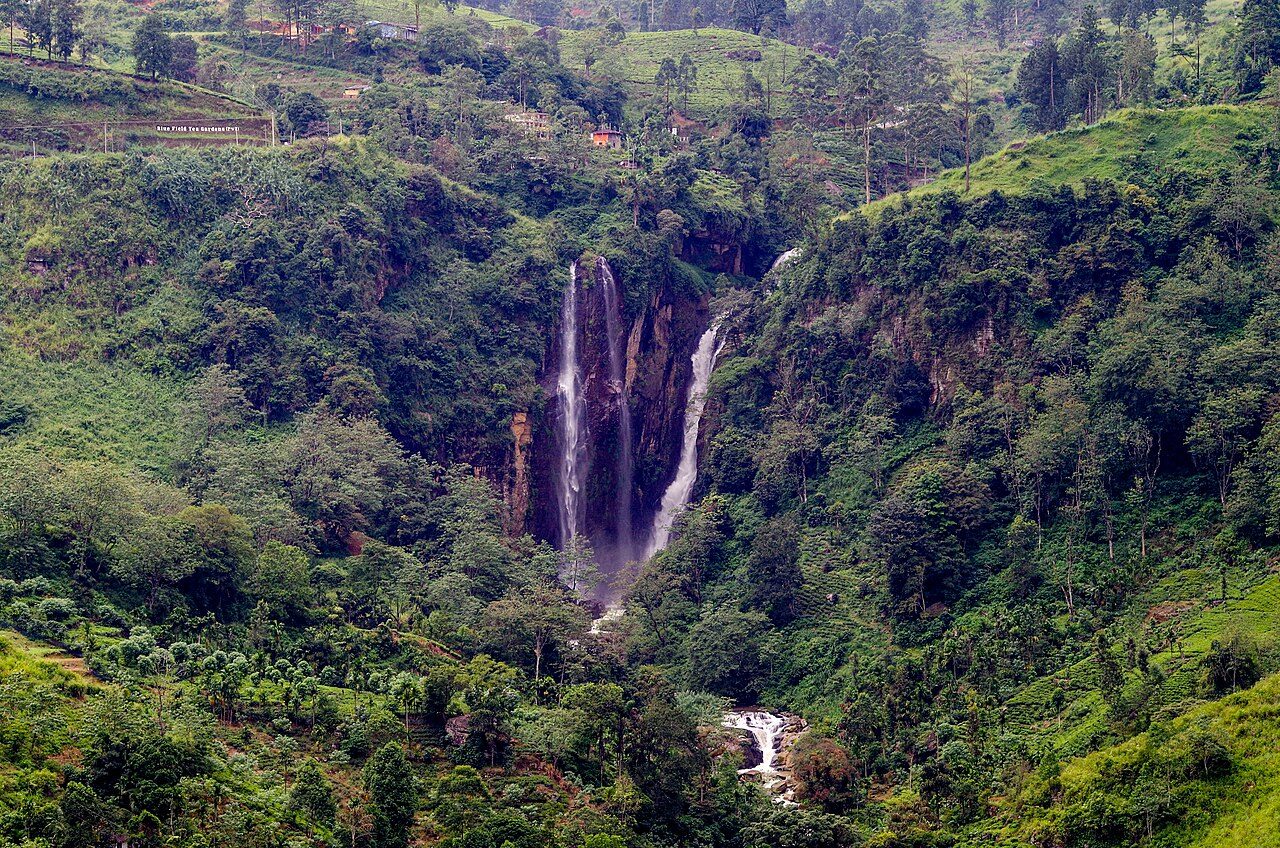
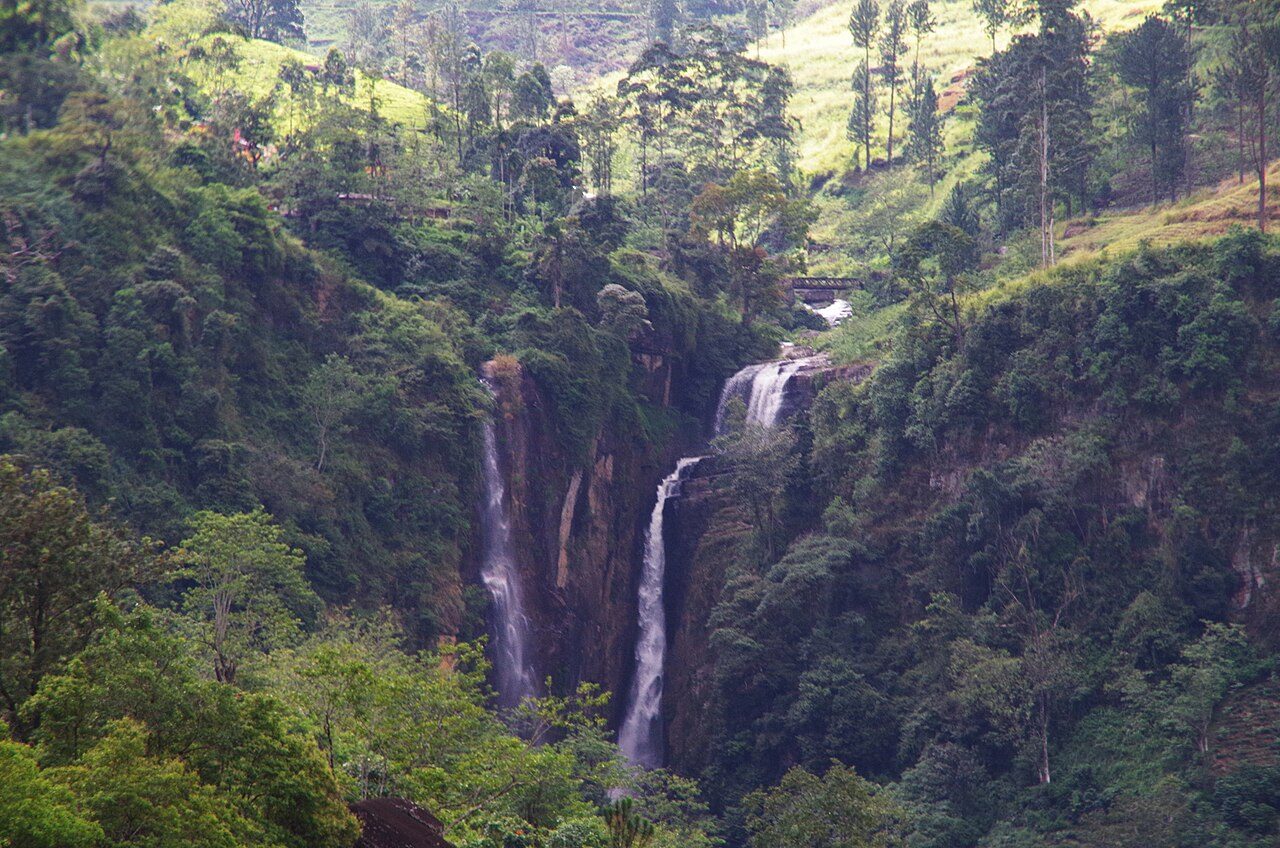
Ramboda Falls lies beside the Kandy to Nuwara Eliya road near the Ramboda Pass. With a total height of about 109 metres, it is among the highest waterfalls in Sri Lanka. The stream falls in several sections above and below the road. A short climb beside a hotel leads to a viewing platform close to the main drop.
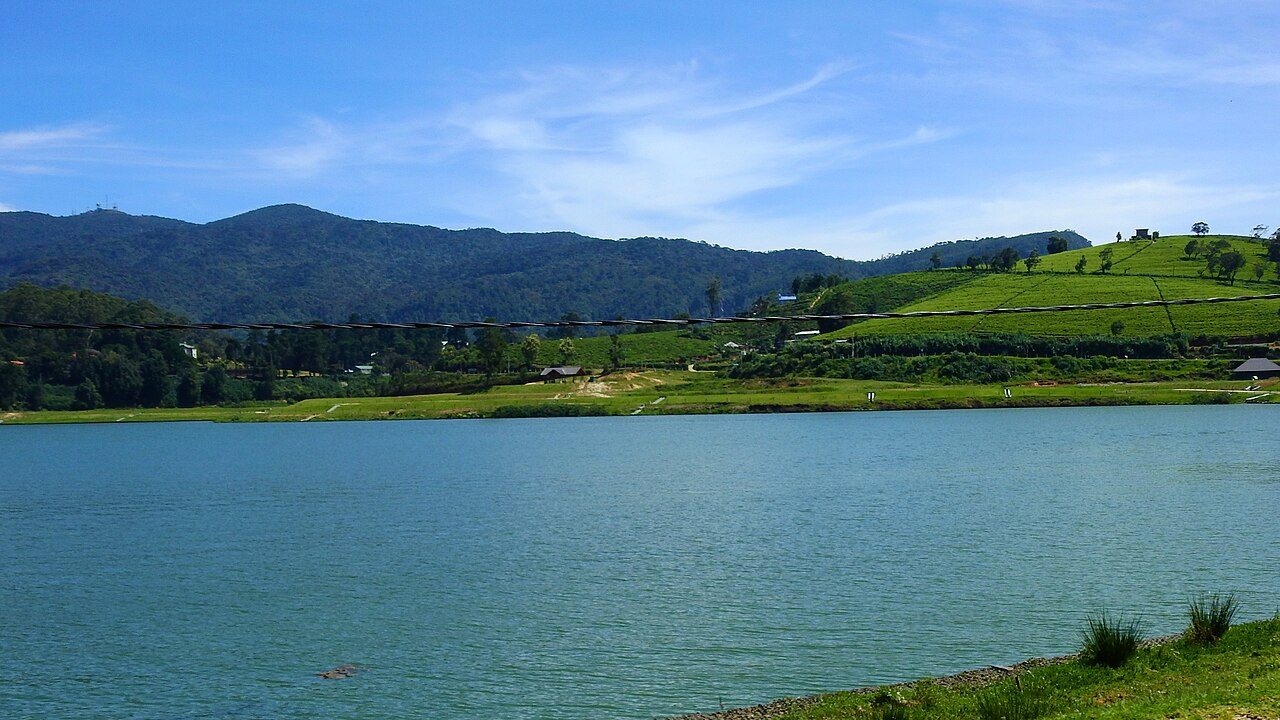
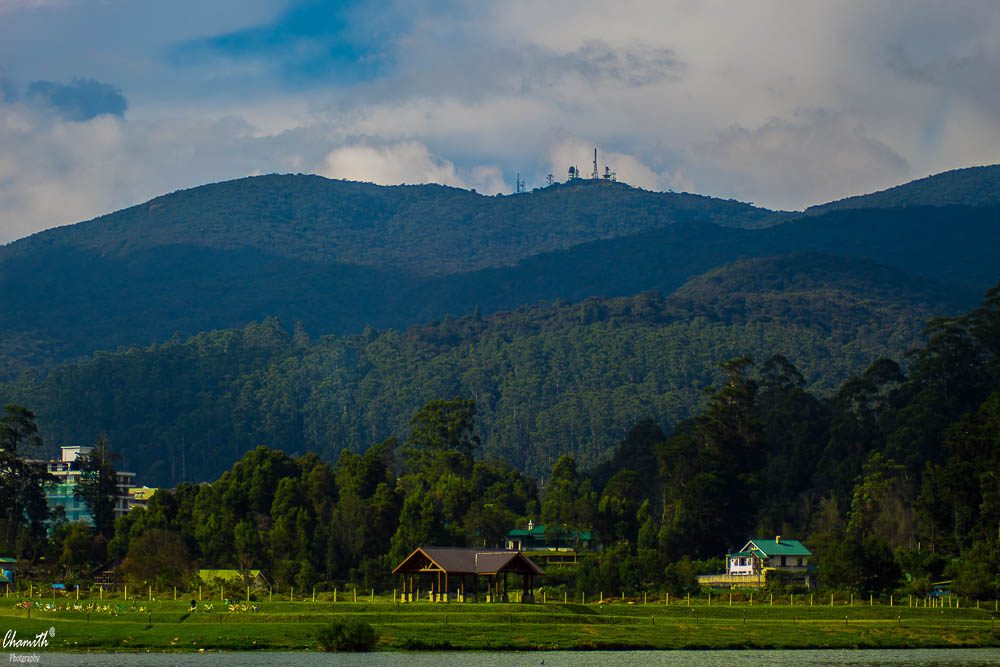
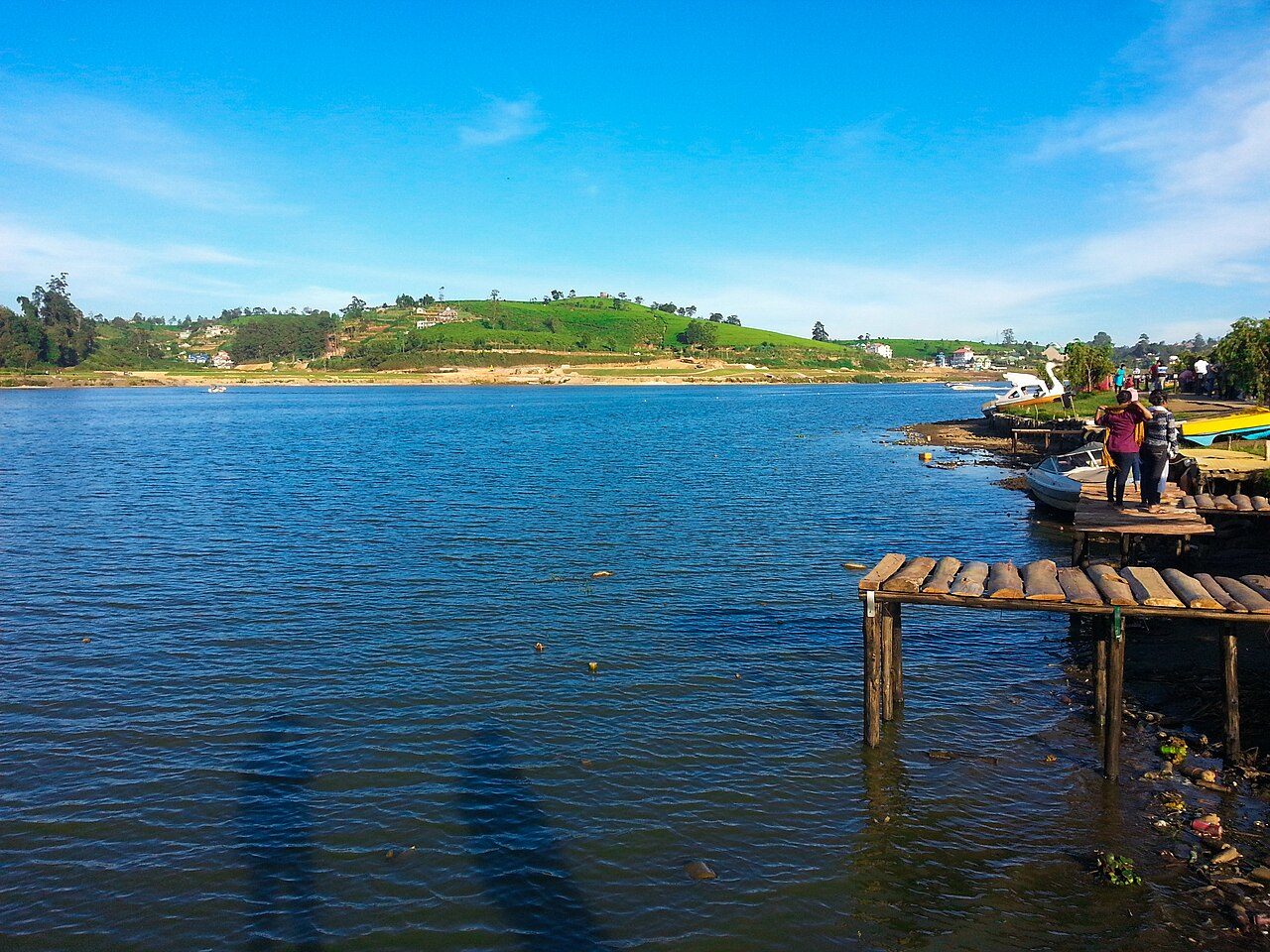
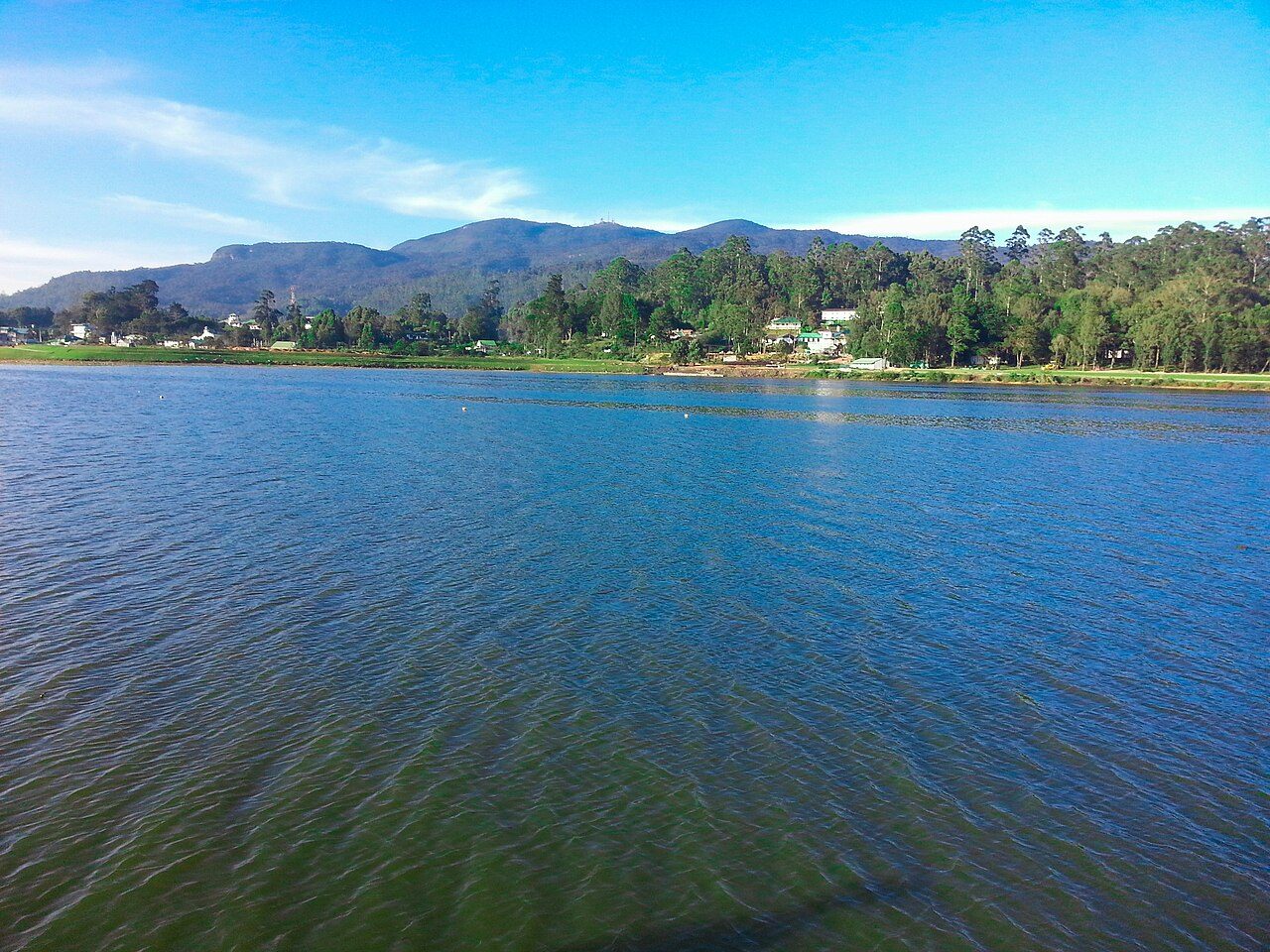
Gregory Lake lies at the southern edge of Nuwara Eliya town. It was created in 1873 under the British governor Sir William Gregory by damming the Nanu Oya stream. A landscaped park runs along the shore with walking paths, pony rides and food stalls, and swan boats and jet skis are offered on the water. Evenings can be cold.
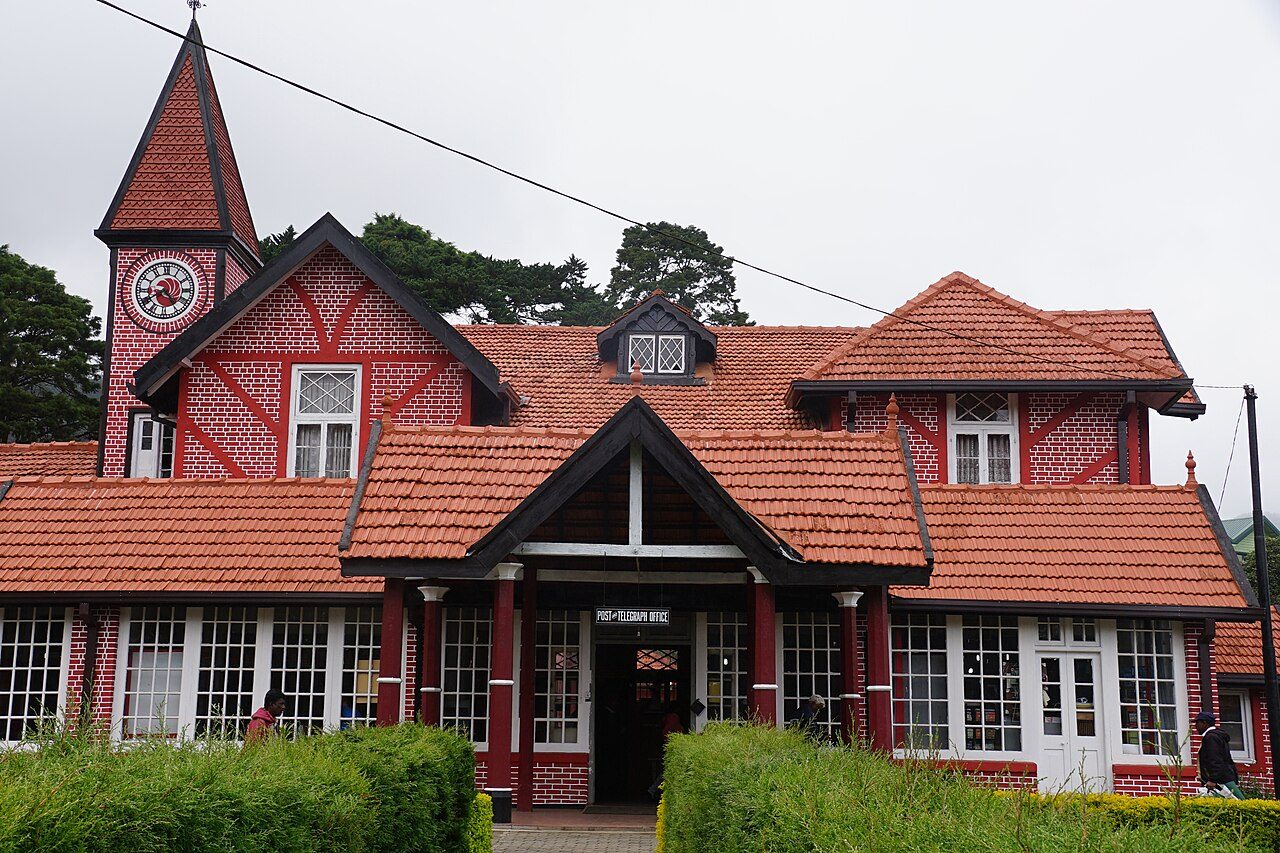
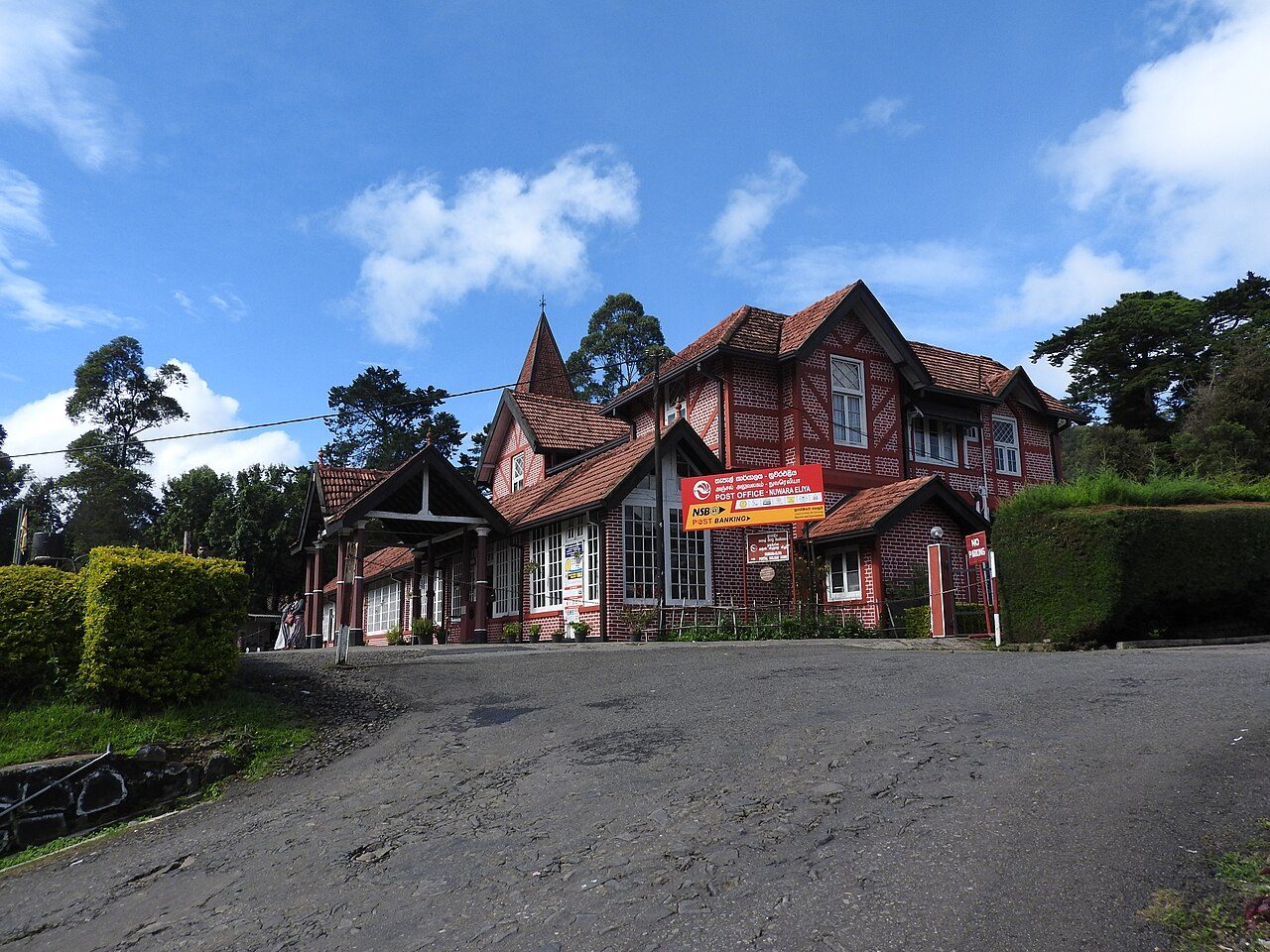
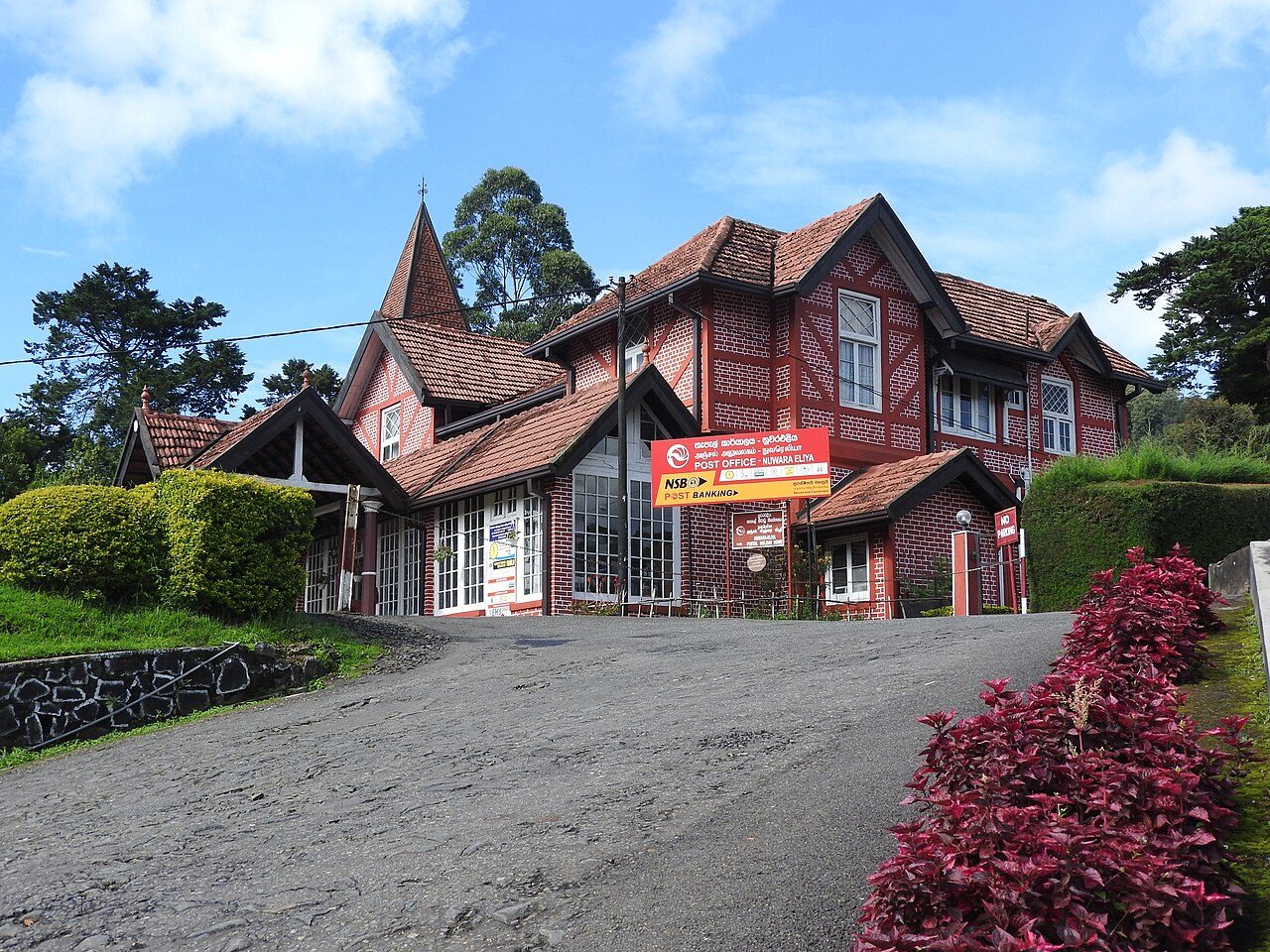
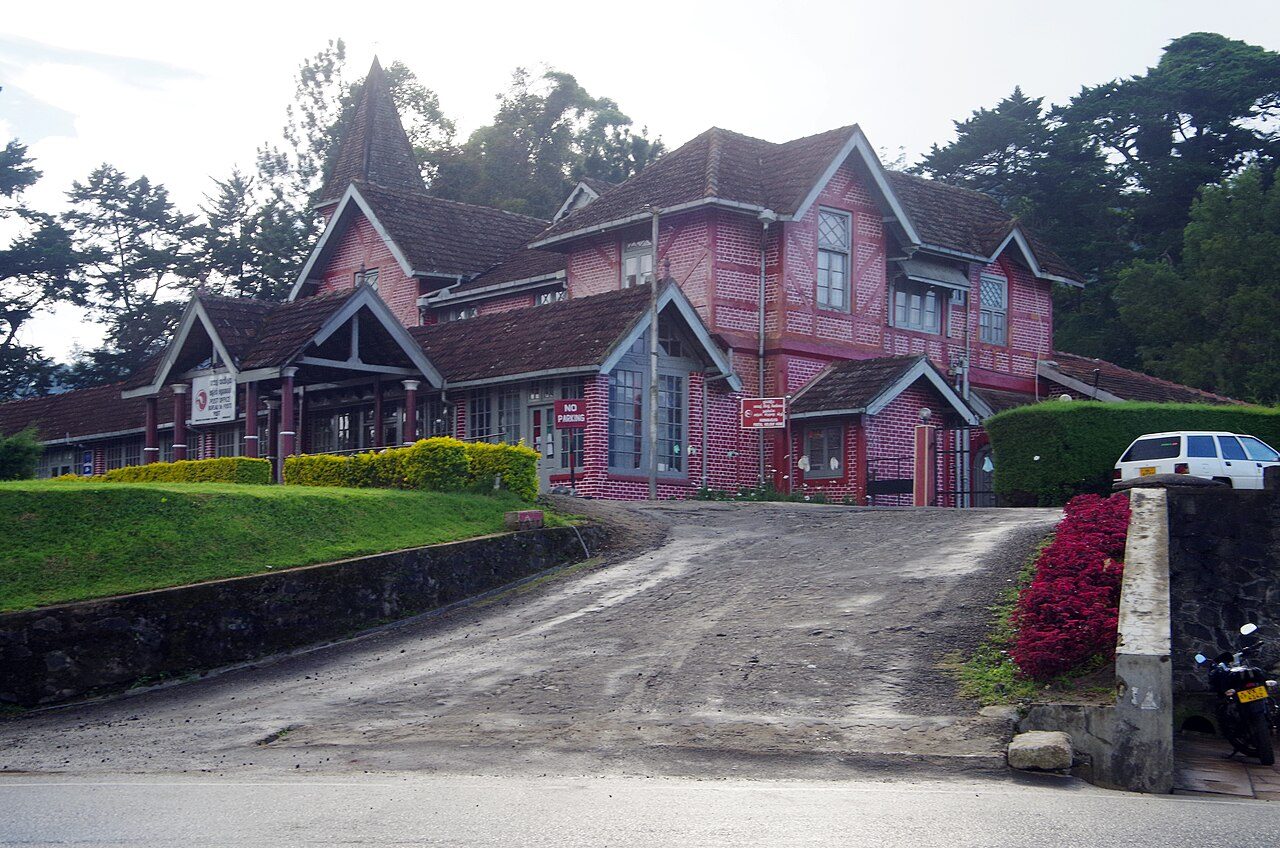
The Nuwara Eliya Post Office is a two-storey red-brick building with a clock tower in the centre of town, built by the British in 1894 in Tudor style. It is one of the oldest post offices in Sri Lanka and still works as one. Visitors come to post a card from the hills and to photograph the building.
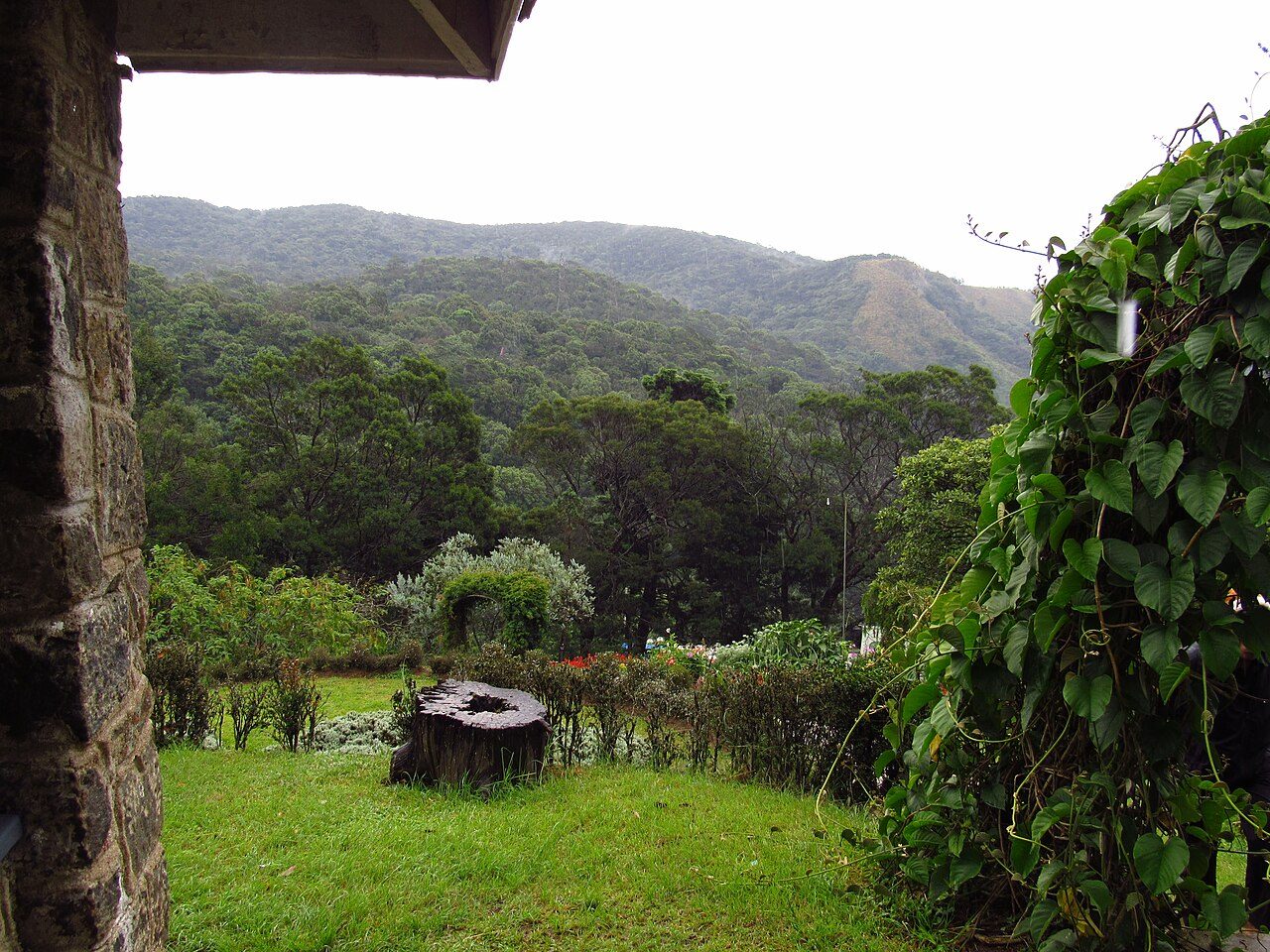
Hakgala Botanical Garden lies about 10 km from Nuwara Eliya on the Badulla road, below the Hakgala rock. It was started in 1861 for experiments with cinchona, the source of quinine, and later with tea. At about 1,750 metres it suits temperate plants, and it is known for roses, orchids and a fernery. Legend links the site with Sita of the Ramayana.
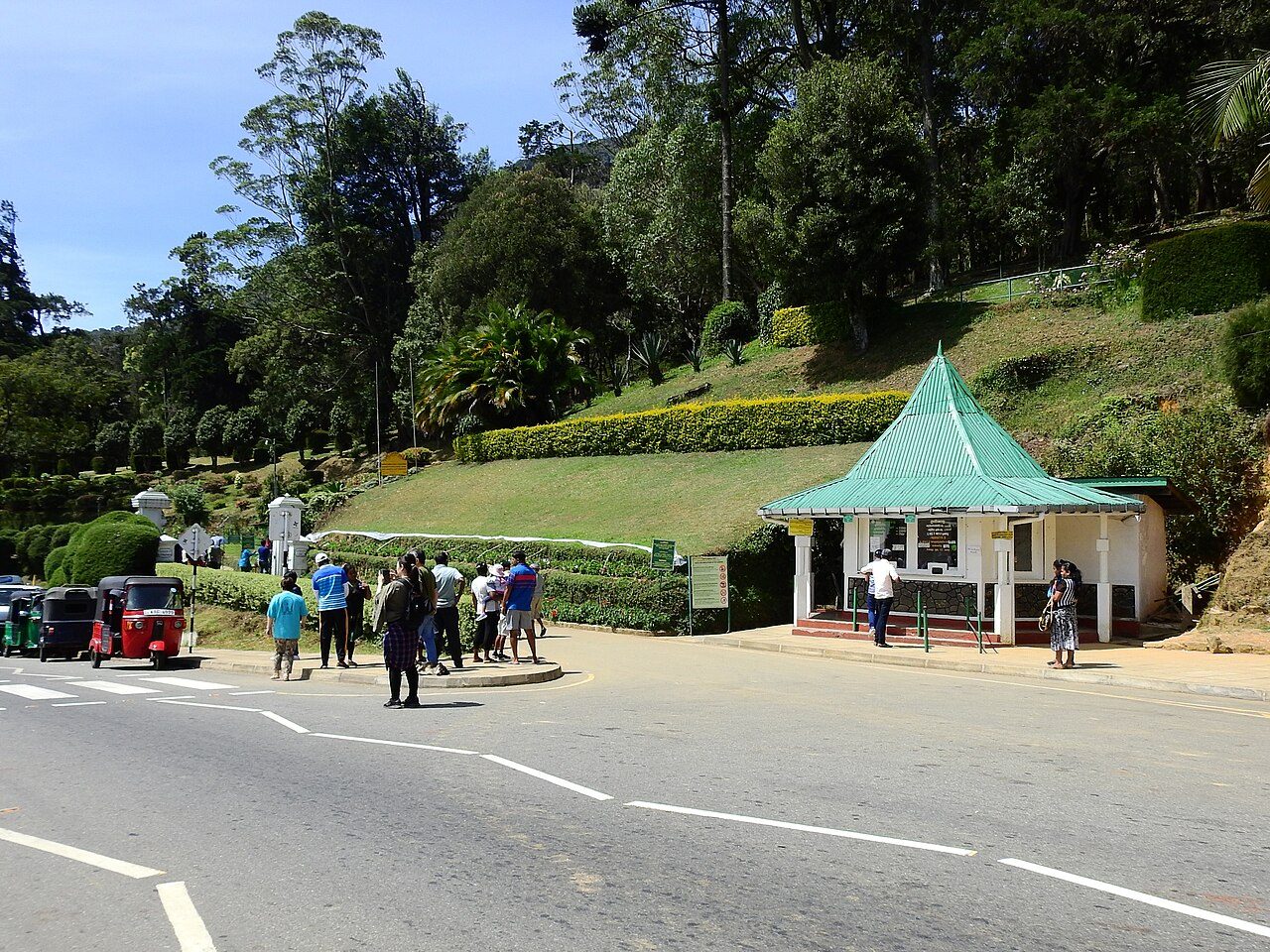
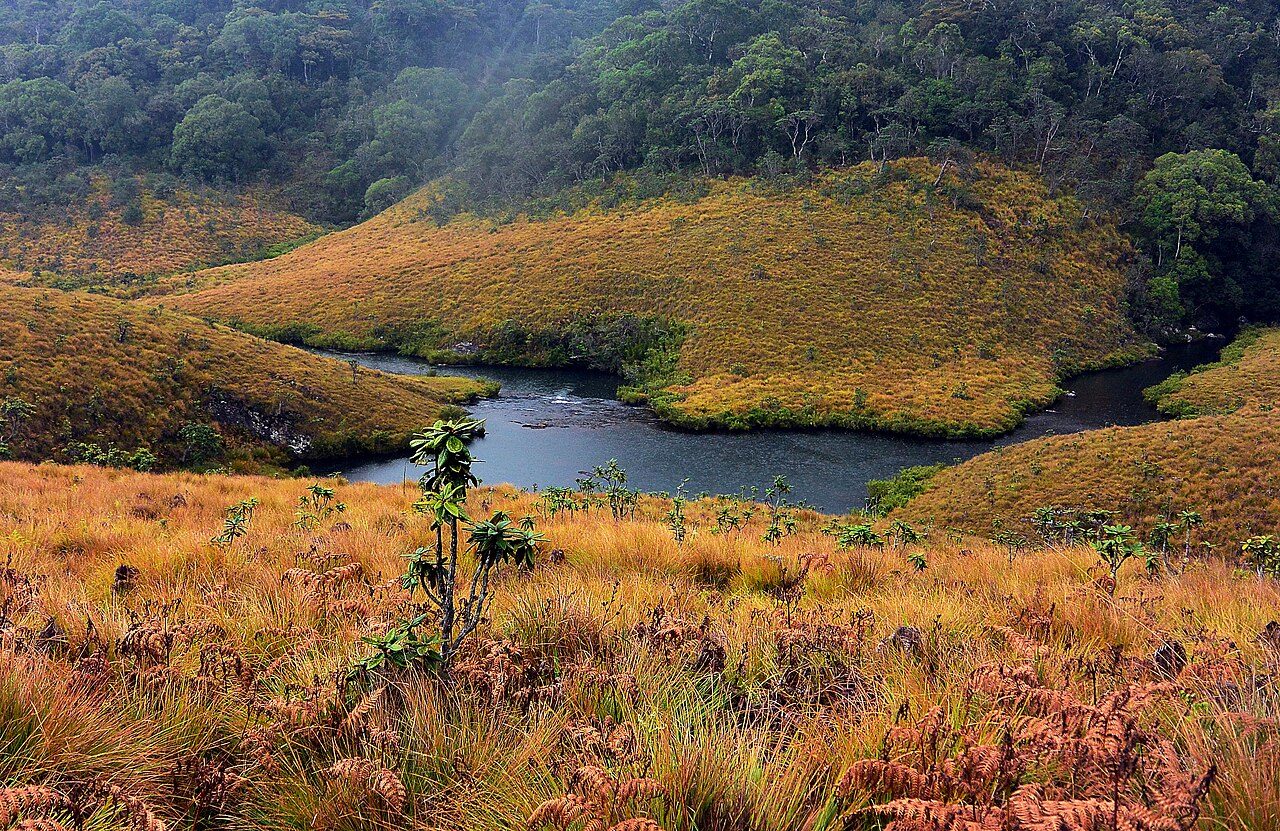
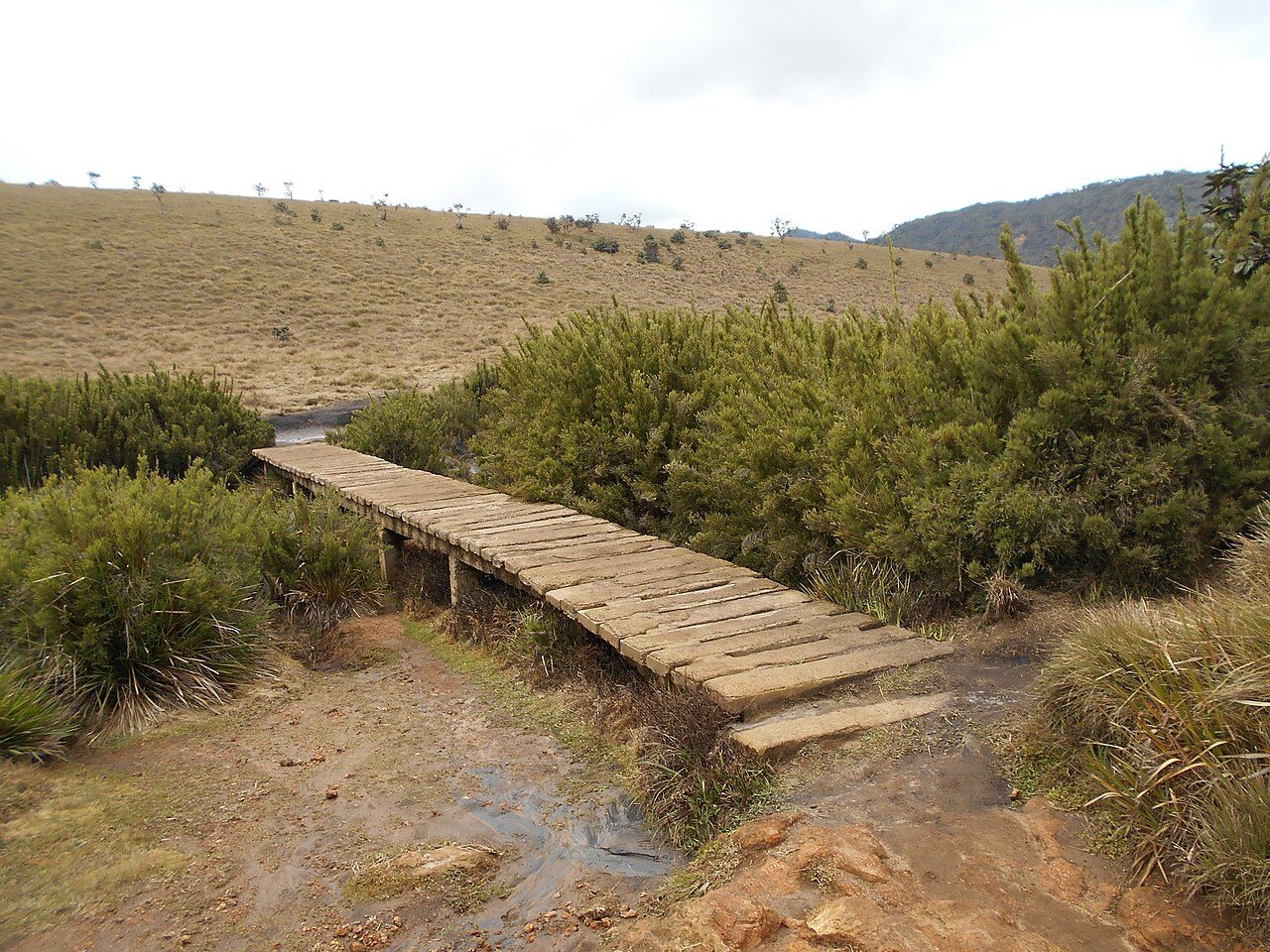
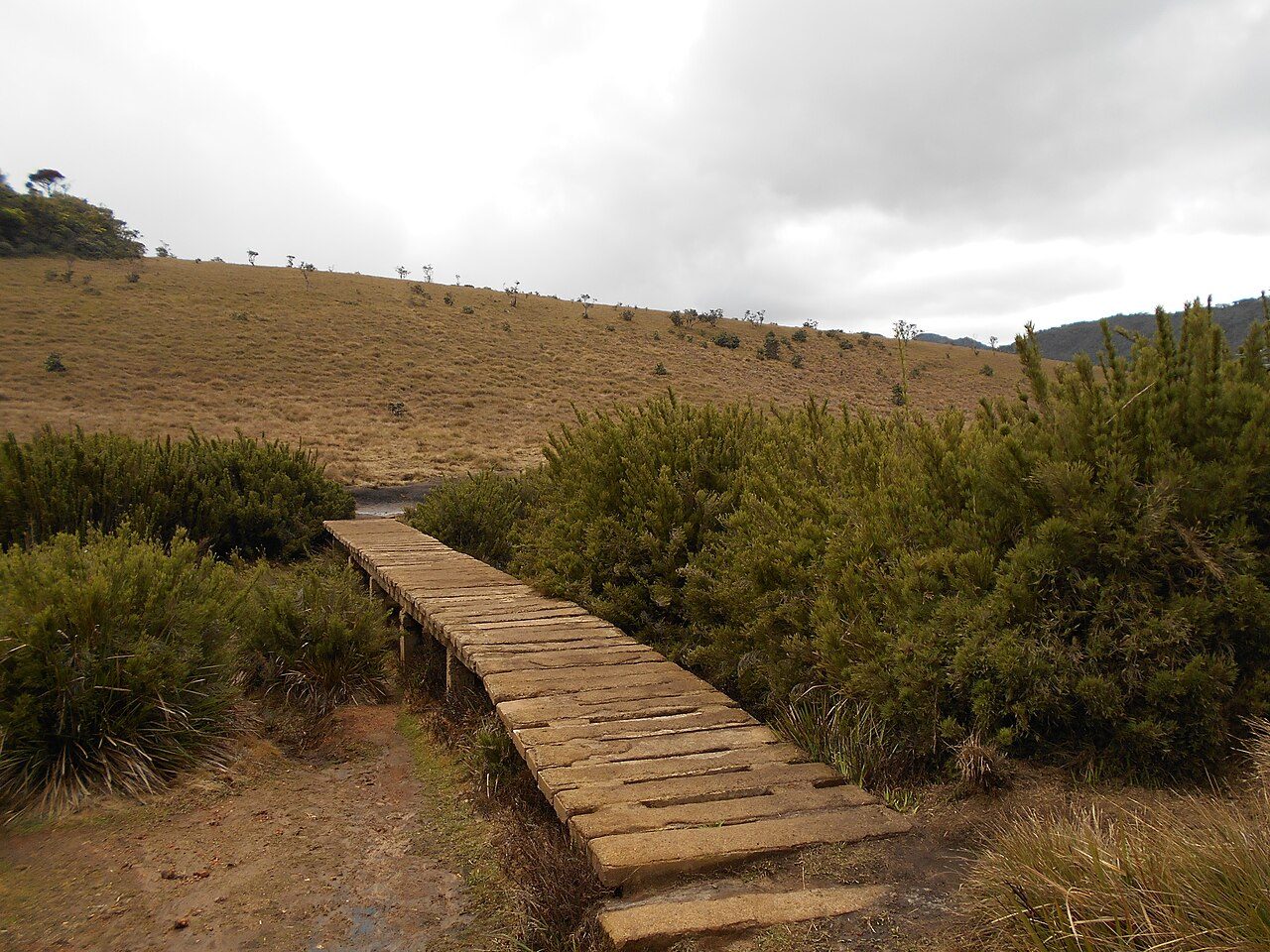
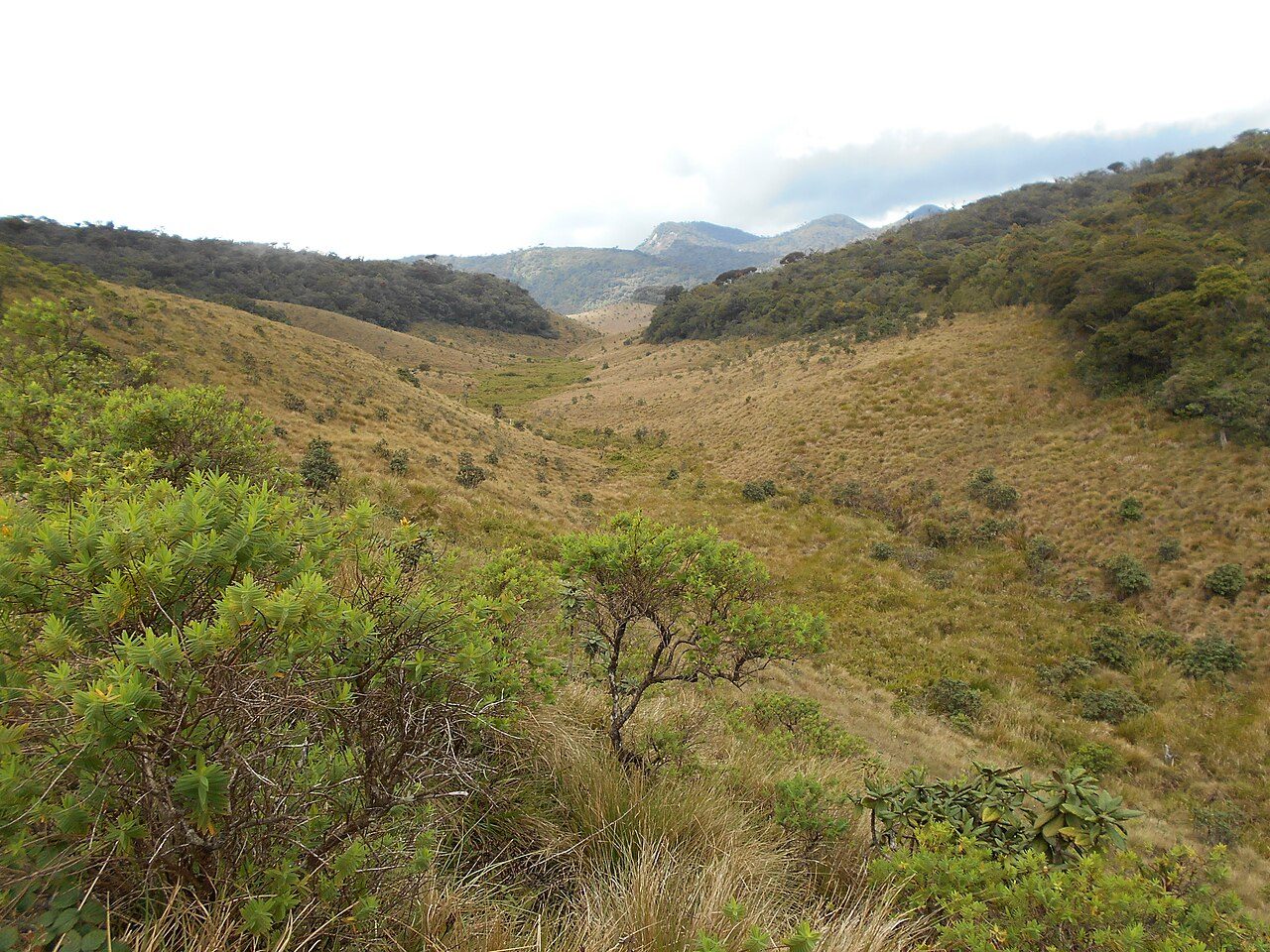
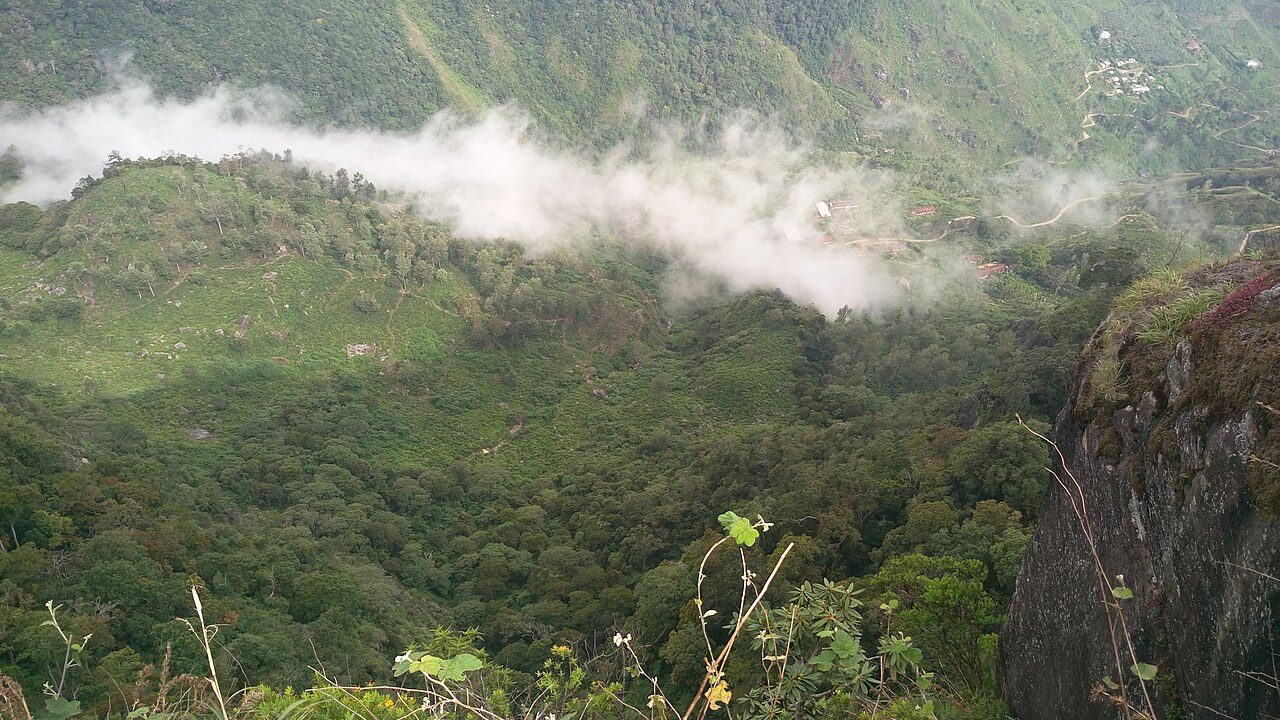
Horton Plains National Park is a high plateau at about 2,100 metres, covered with montane grassland and cloud forest. Three major rivers rise here. A circular trail of about 9 km leads to World's End and Baker's Falls. Sambar deer graze near the entrance, and the park is part of the Central Highlands World Heritage Site. Go early before mist closes in.
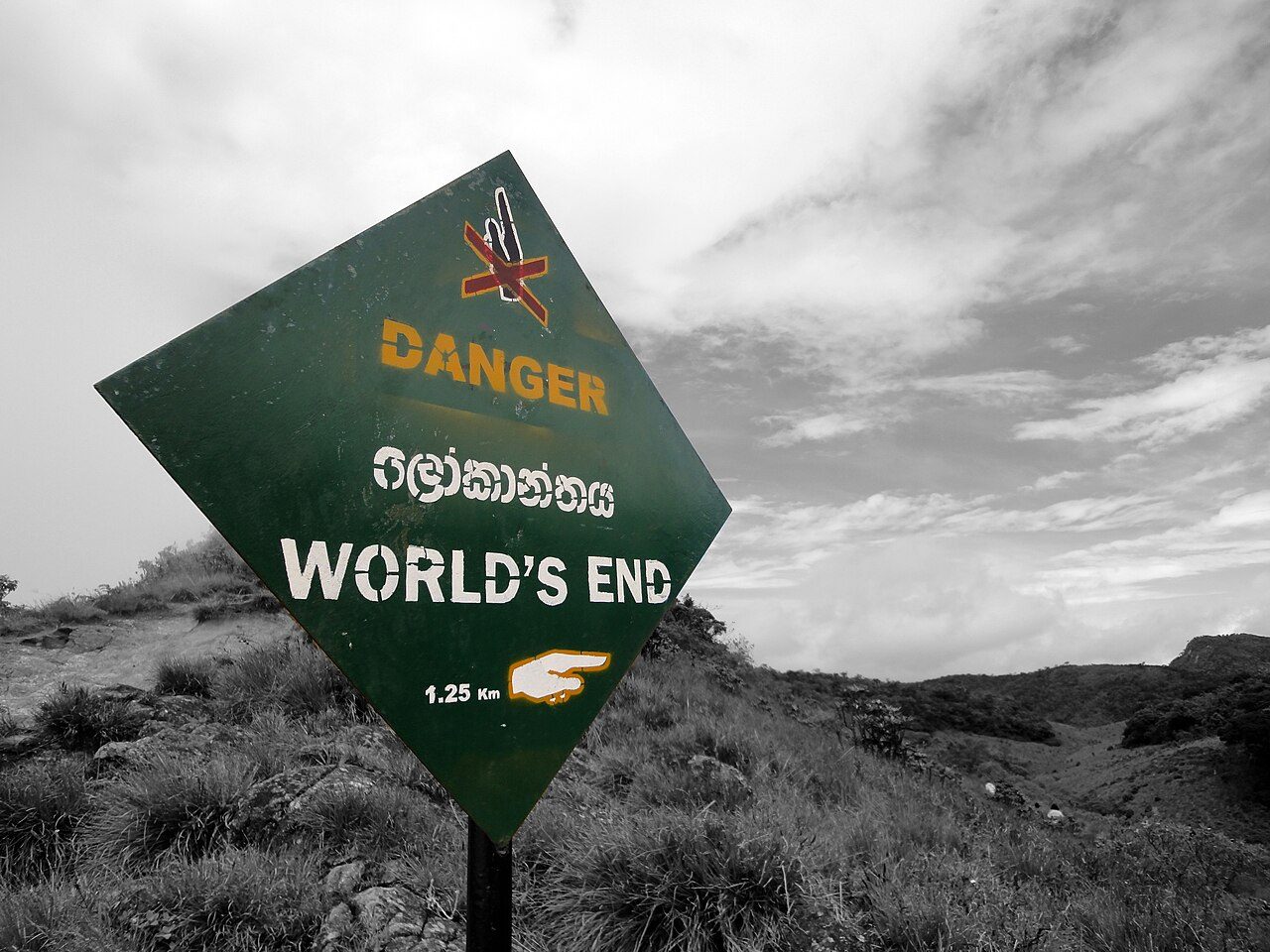
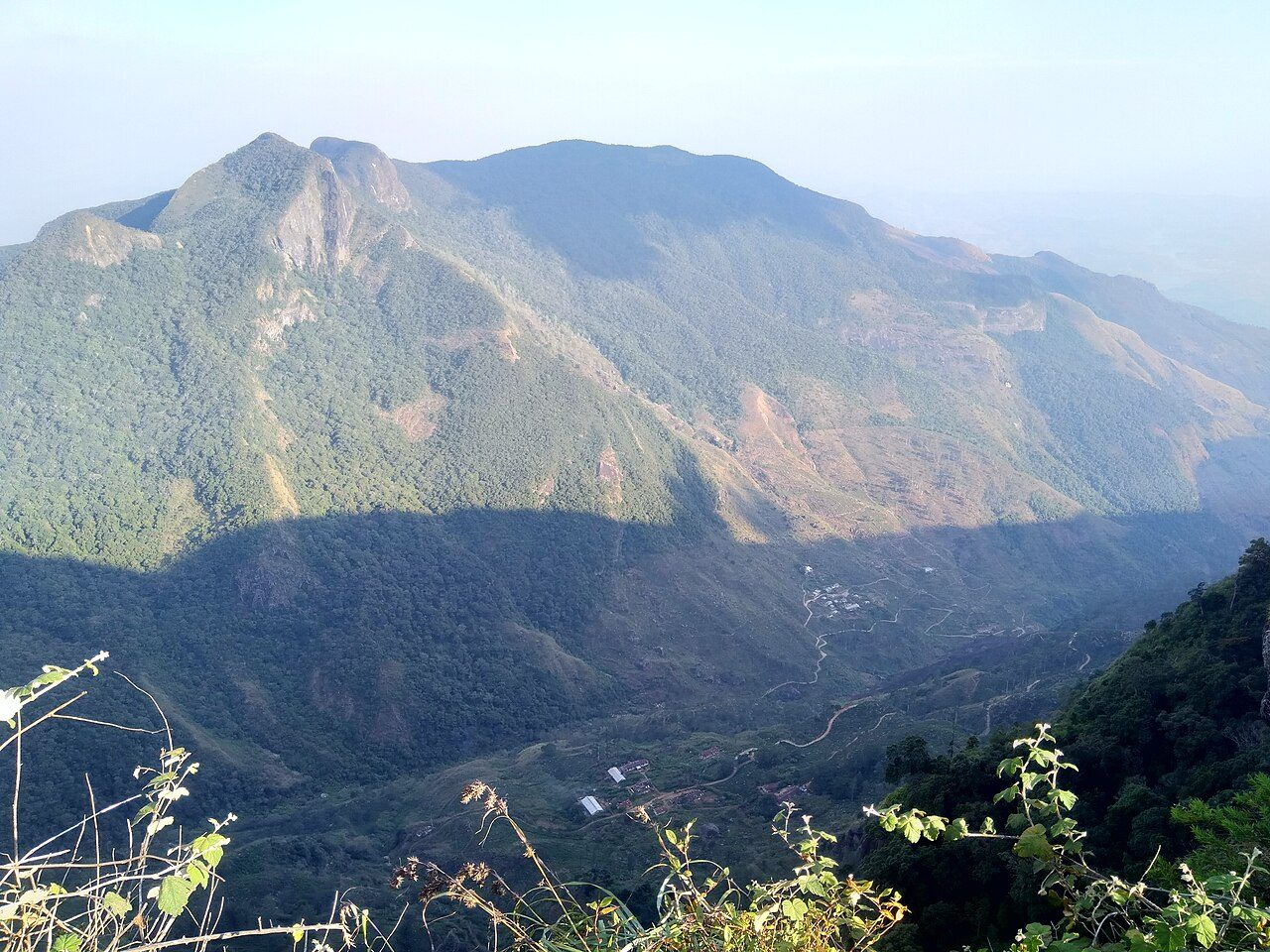
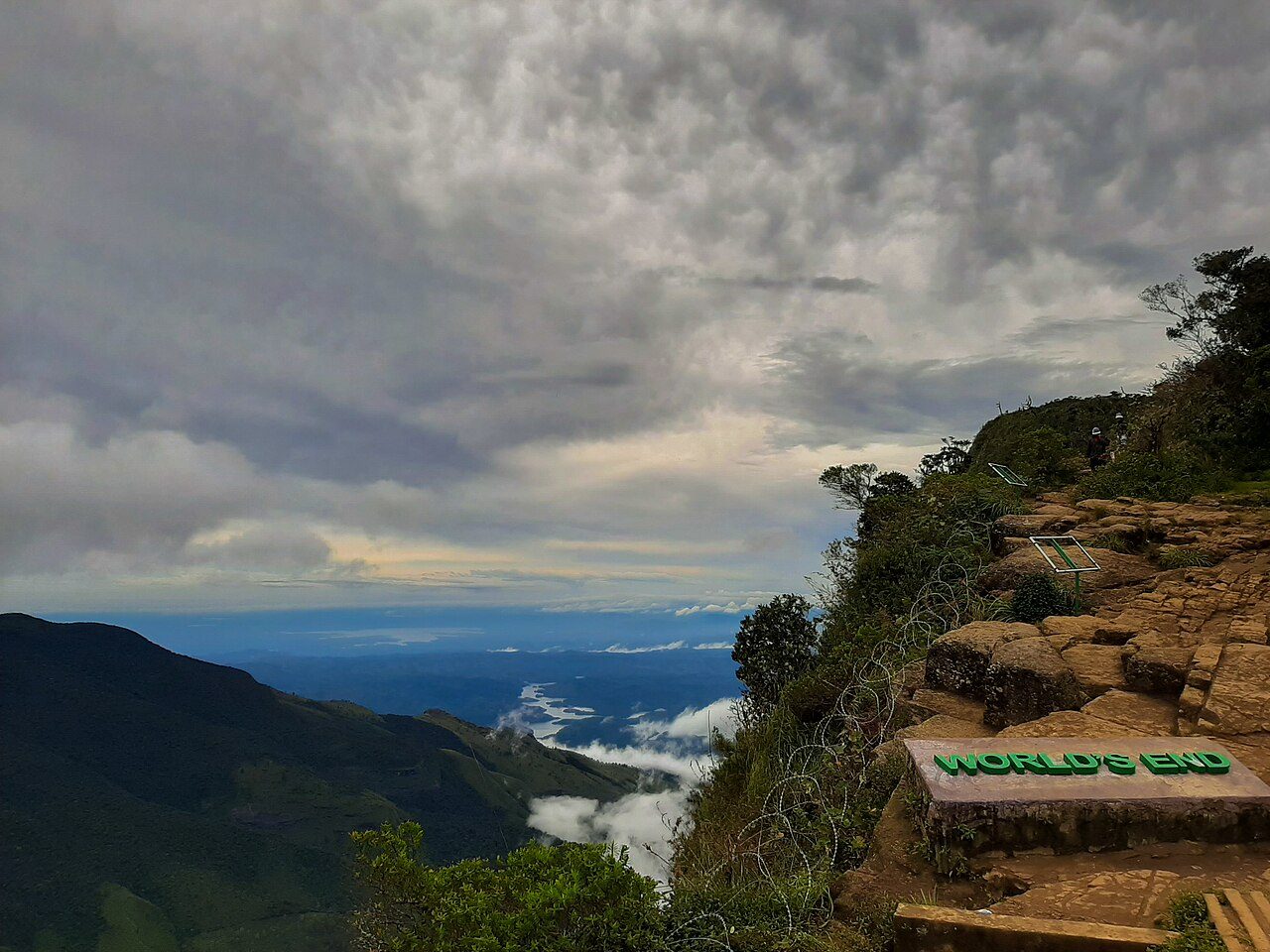
World's End is a sheer cliff on the southern edge of Horton Plains, with a drop of about 870 metres to the lowlands. On a clear morning the view reaches tea estates and villages far below and, at times, the south coast. A smaller cliff called Mini World's End lies a short walk before it. Mist usually hides the view by mid-morning.
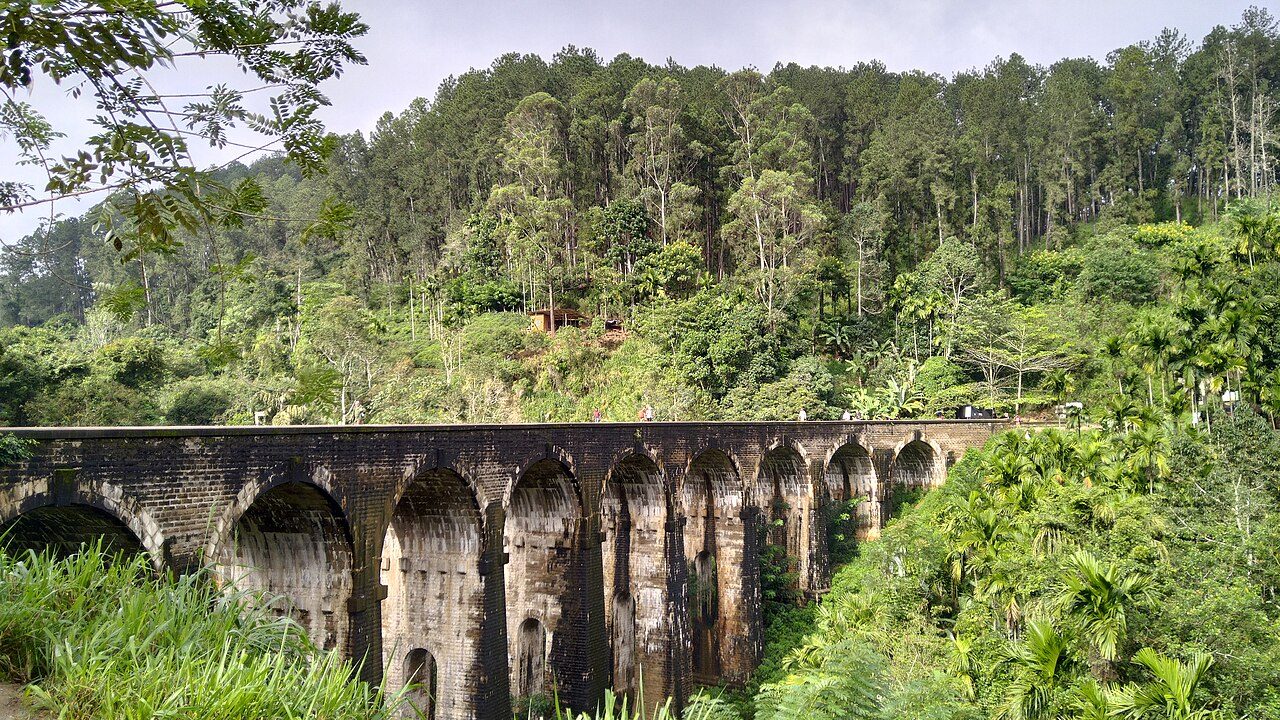
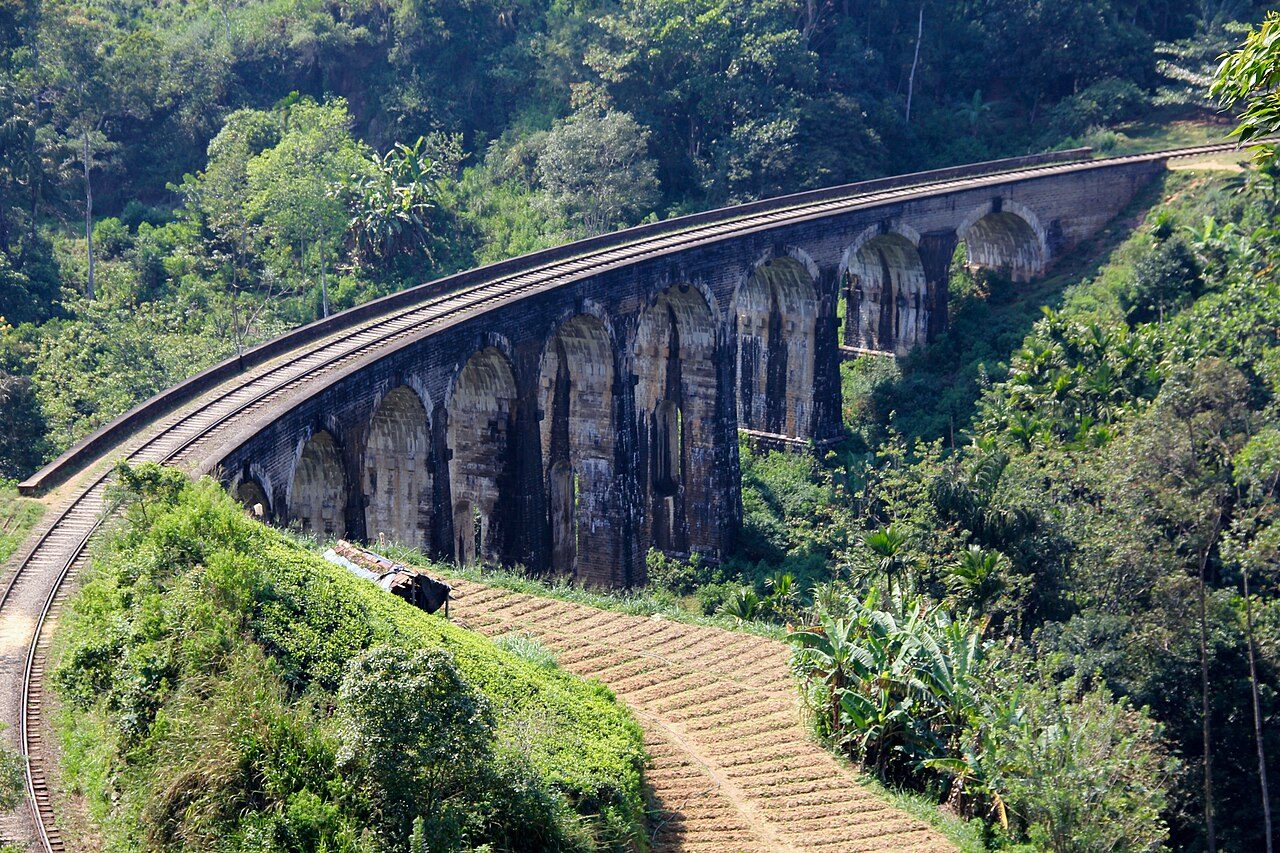
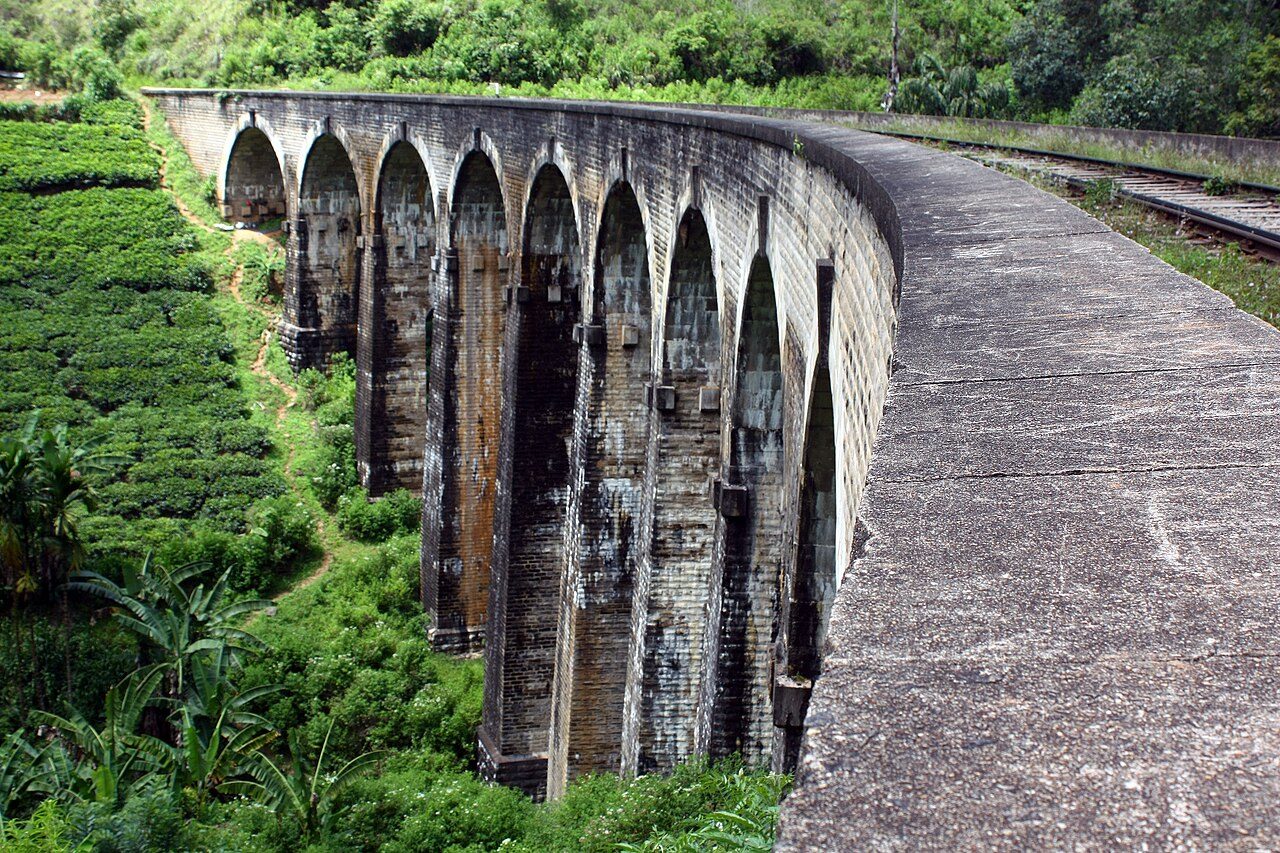
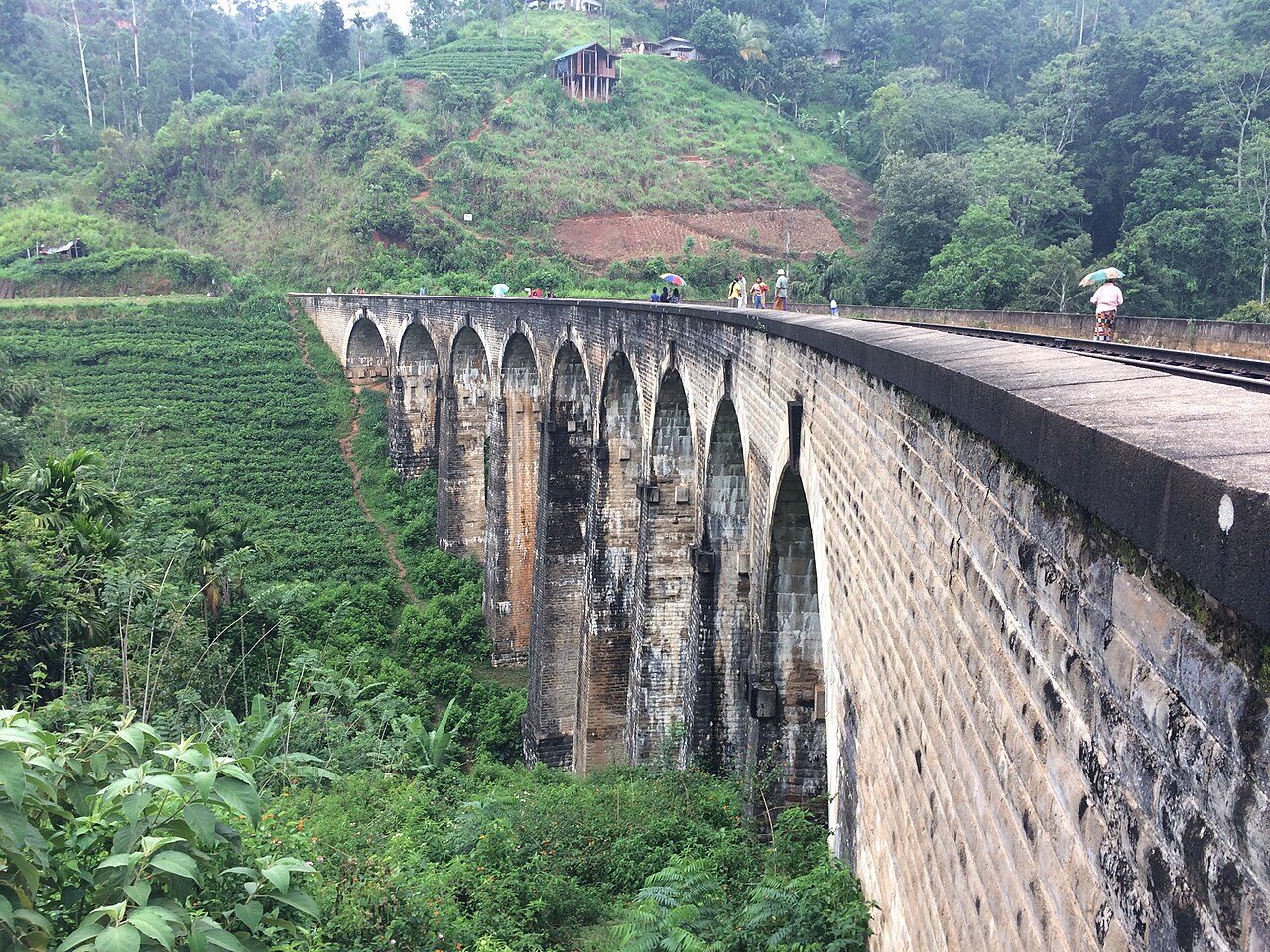
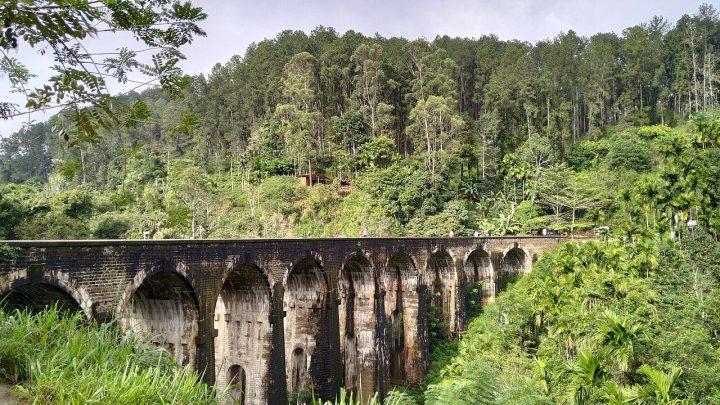
The Nine Arch Bridge spans a jungle gorge between Ella and Demodara stations on the hill country railway. Completed in 1921 in the British period, it is about 91 metres long and 24 metres high and was built entirely of stone, brick and cement, without steel. Visitors walk down through tea and forest to watch the blue trains curve across it.
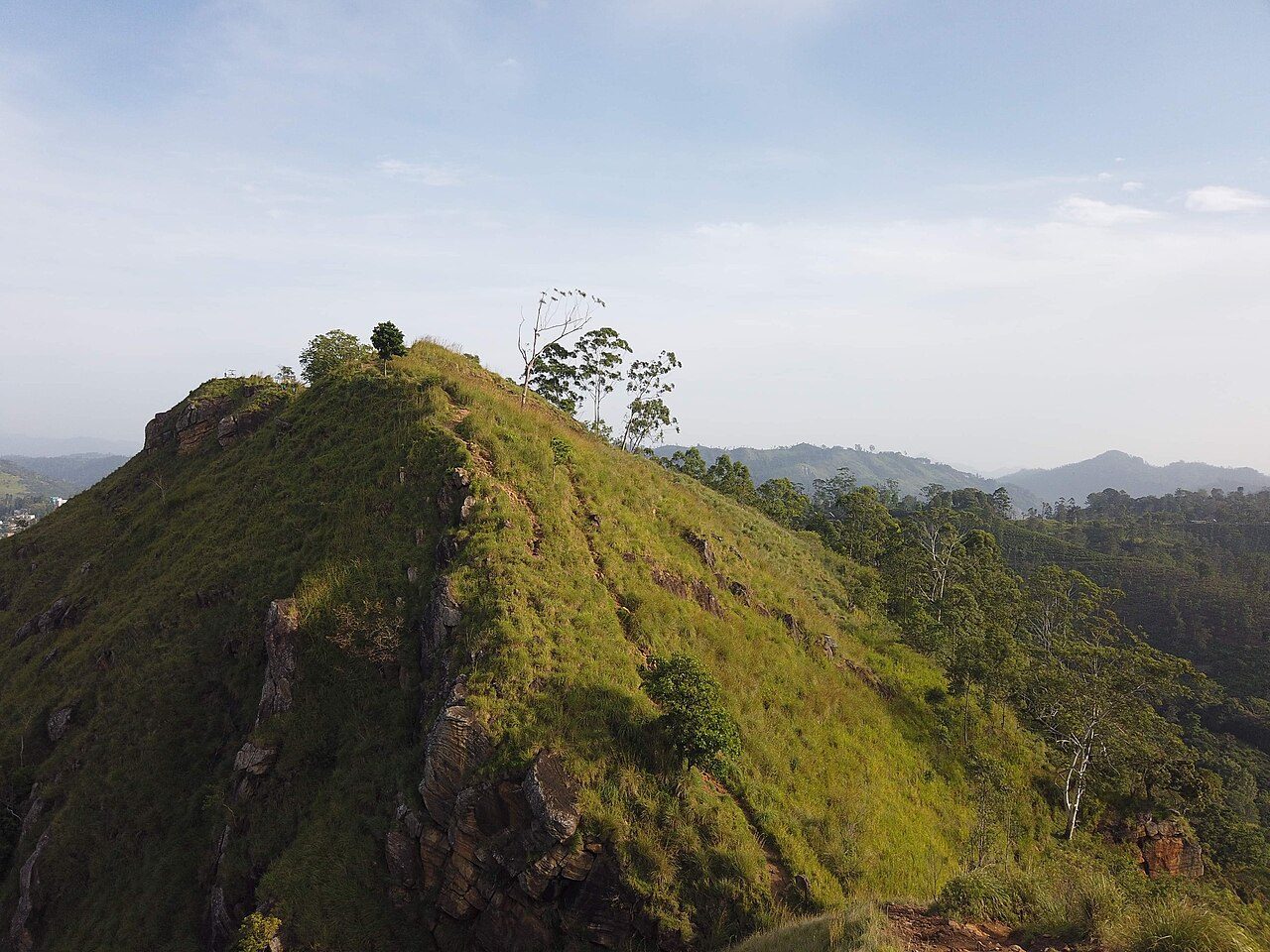
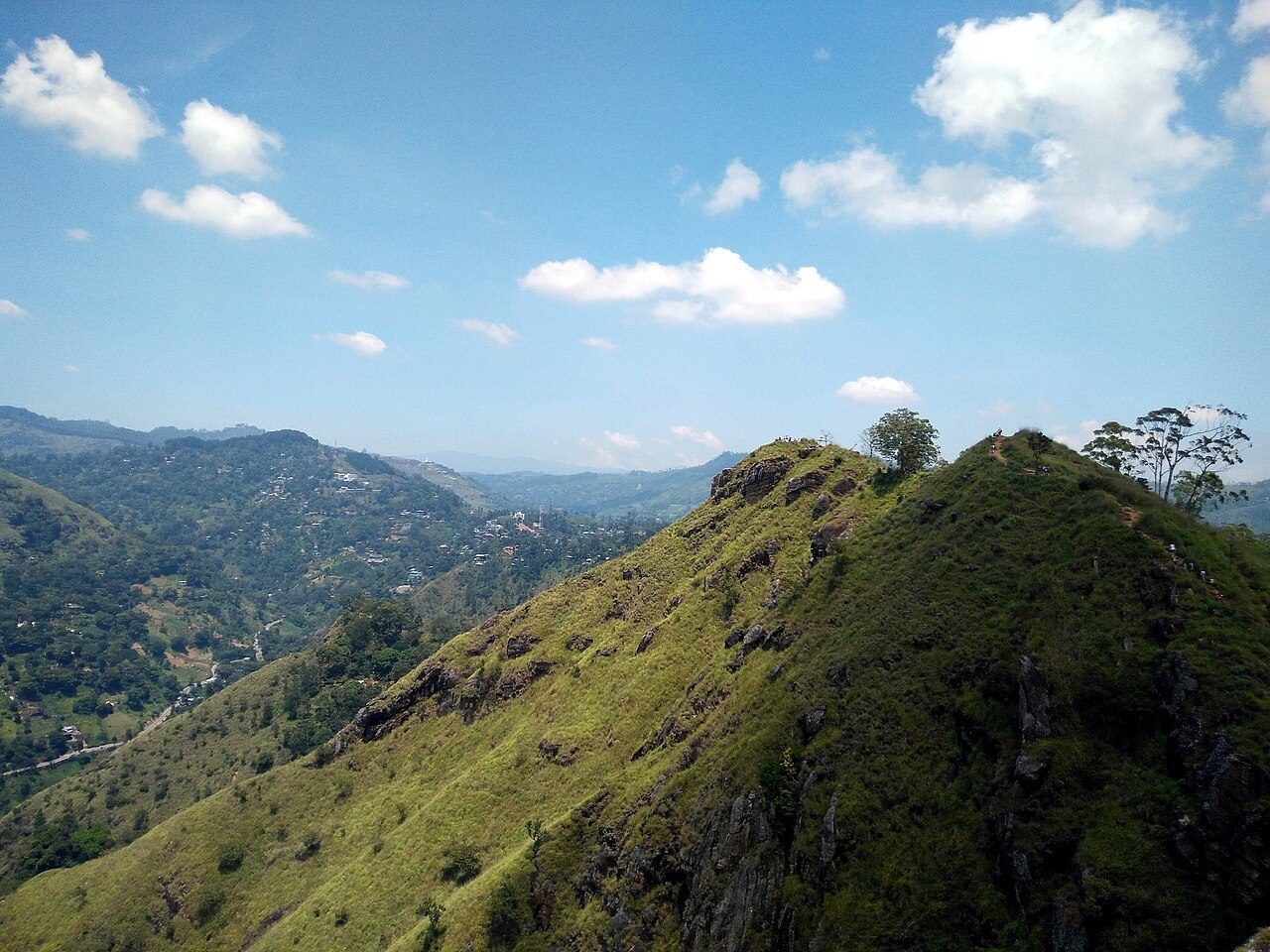
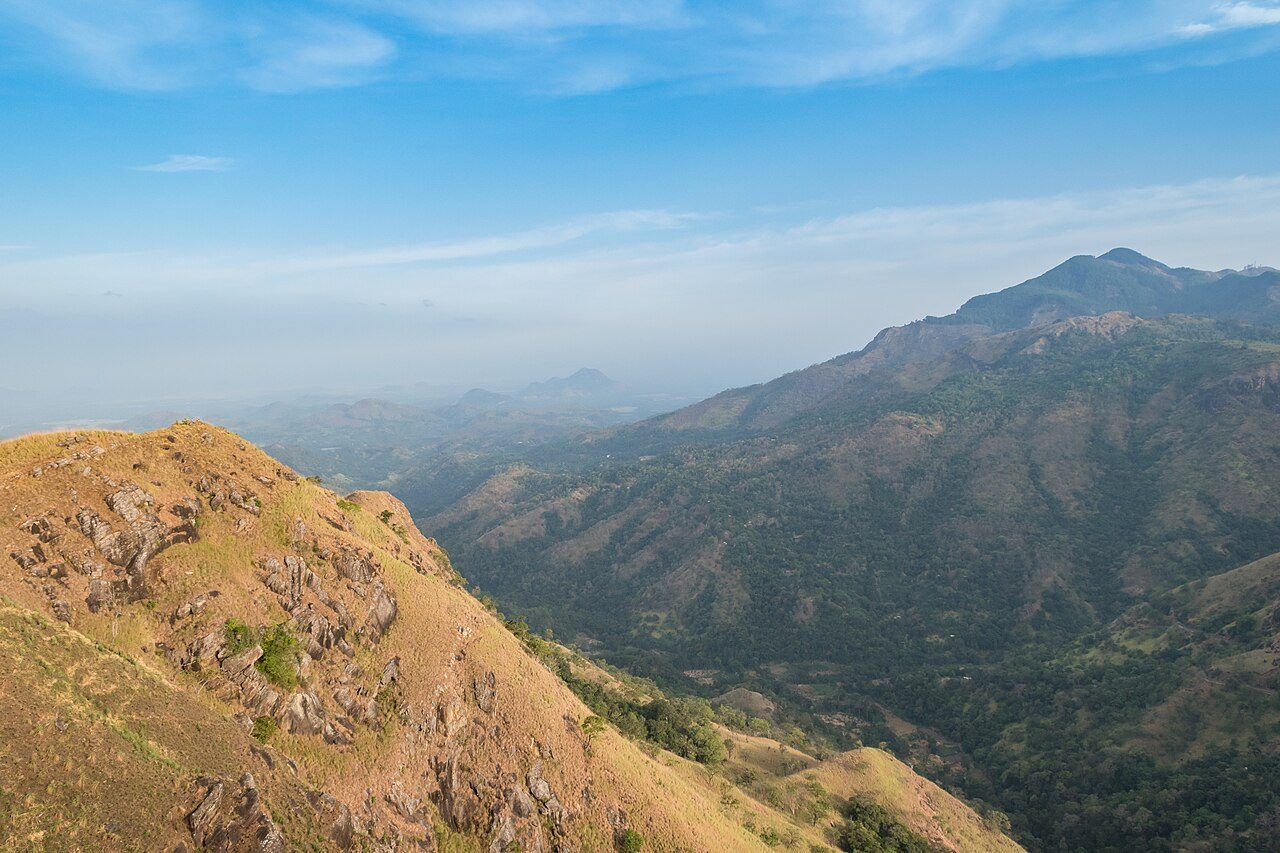
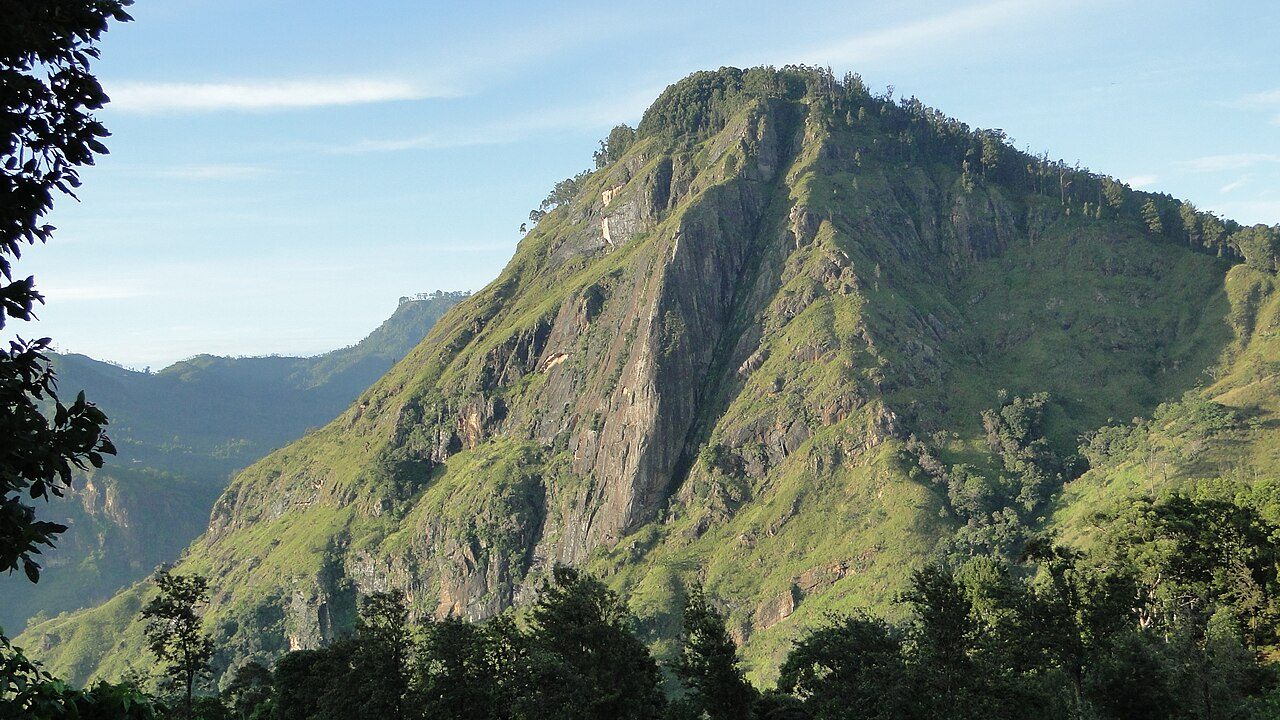
Little Adam's Peak is a pointed hill of about 1,141 metres just outside Ella, named for its likeness to the sacred Adam's Peak. An easy walk of under an hour leads through a tea estate and up steps to the top, with views of Ella Rock, the Ella Gap and the plains to the south. It is the gentlest of the Ella hikes.
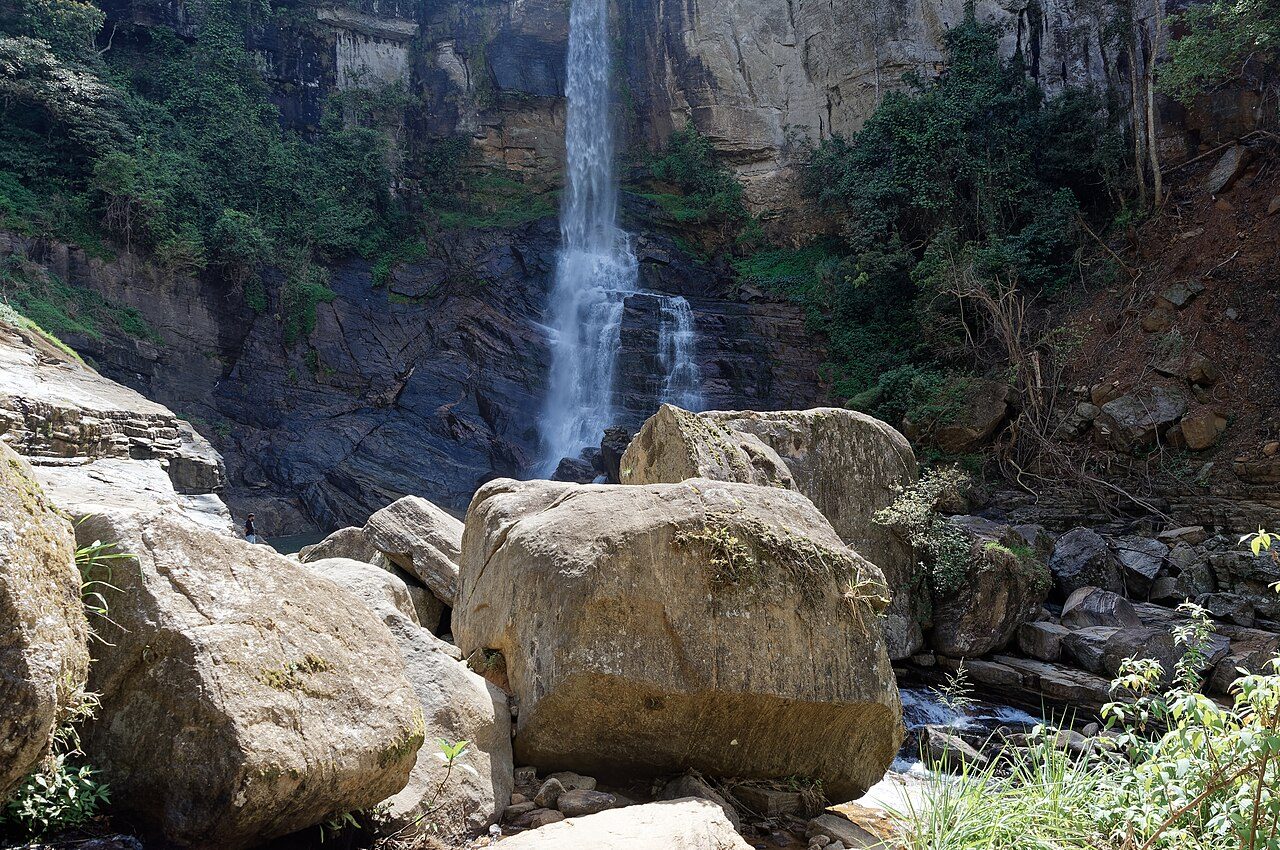
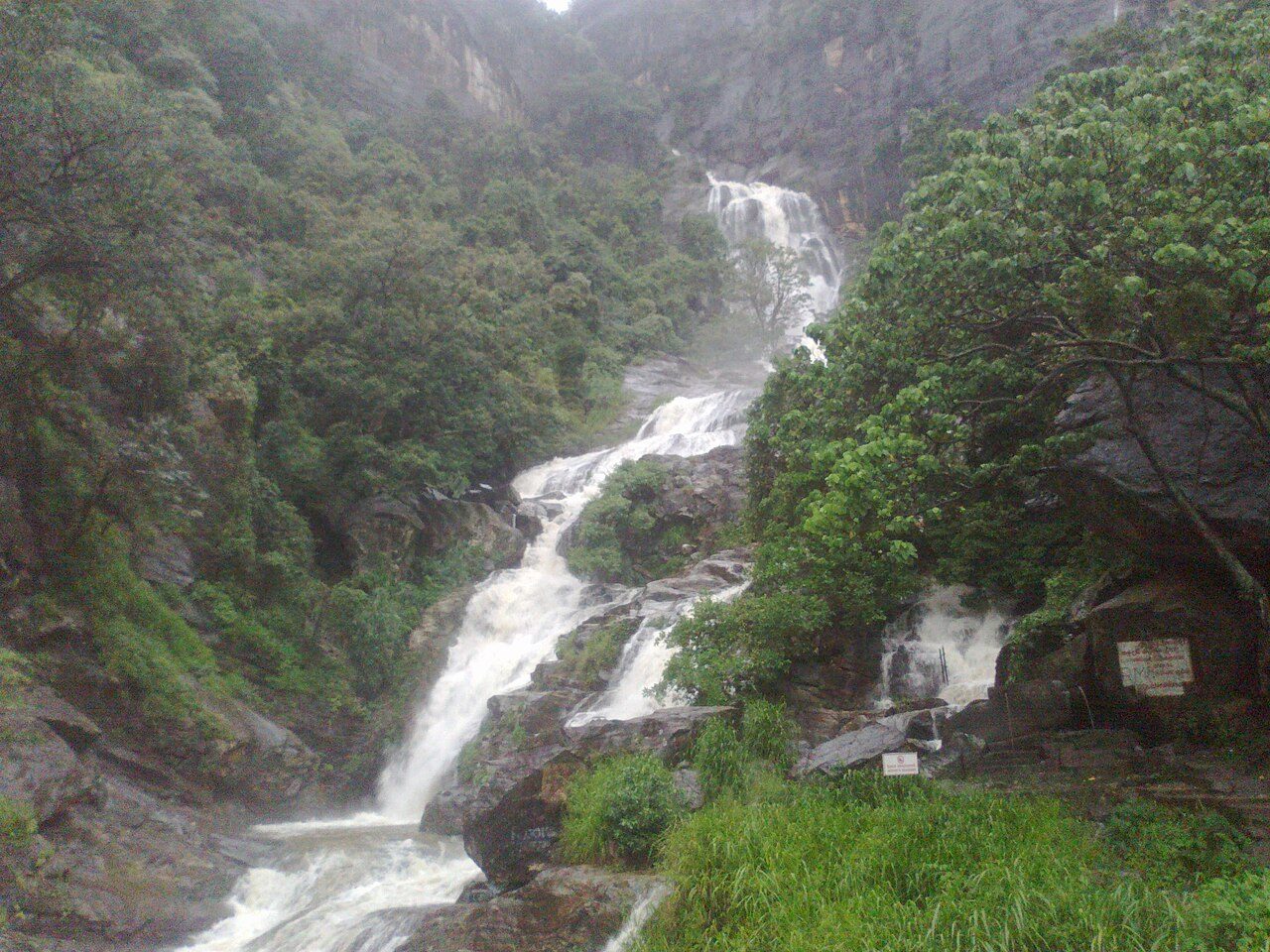
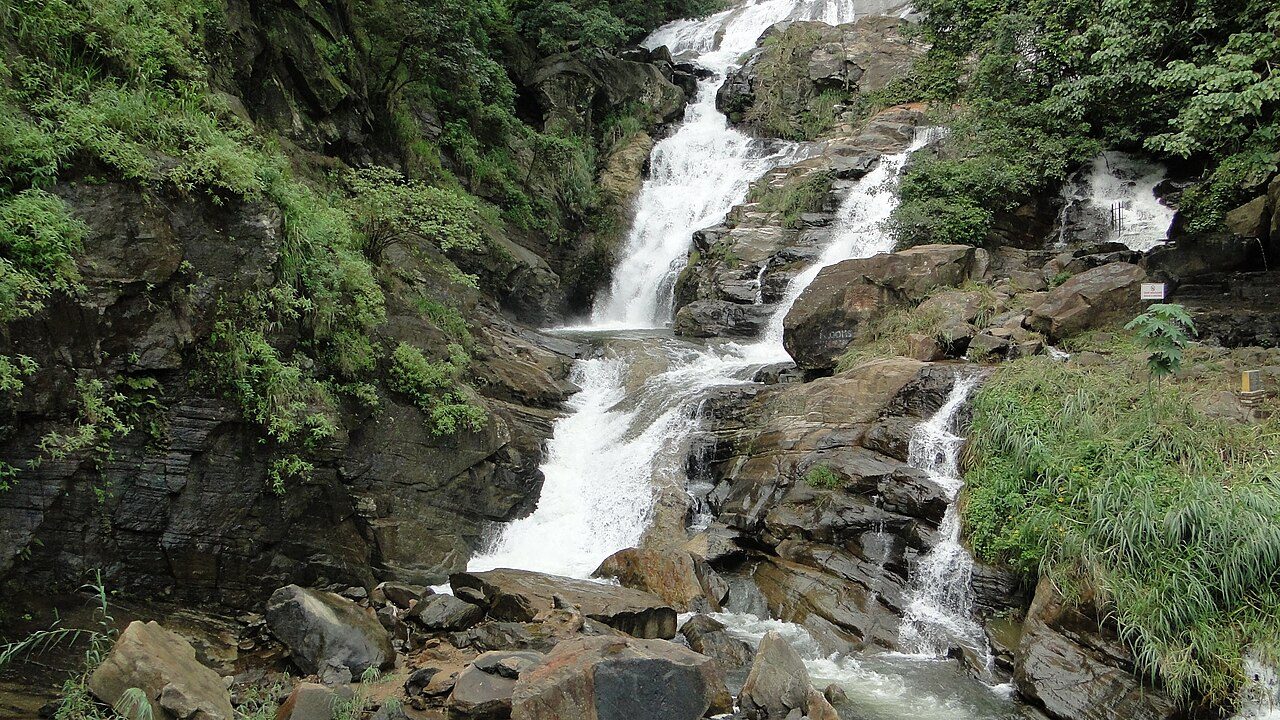
Ravana Falls drops in several tiers beside the main road about 6 km below Ella, on the way to Wellawaya. It is about 25 metres high and widest in the rainy season. The falls are named after Ravana, king of Lanka in the Ramayana, who is said to have hidden Sita in a cave nearby. Rocks at the base are slippery.
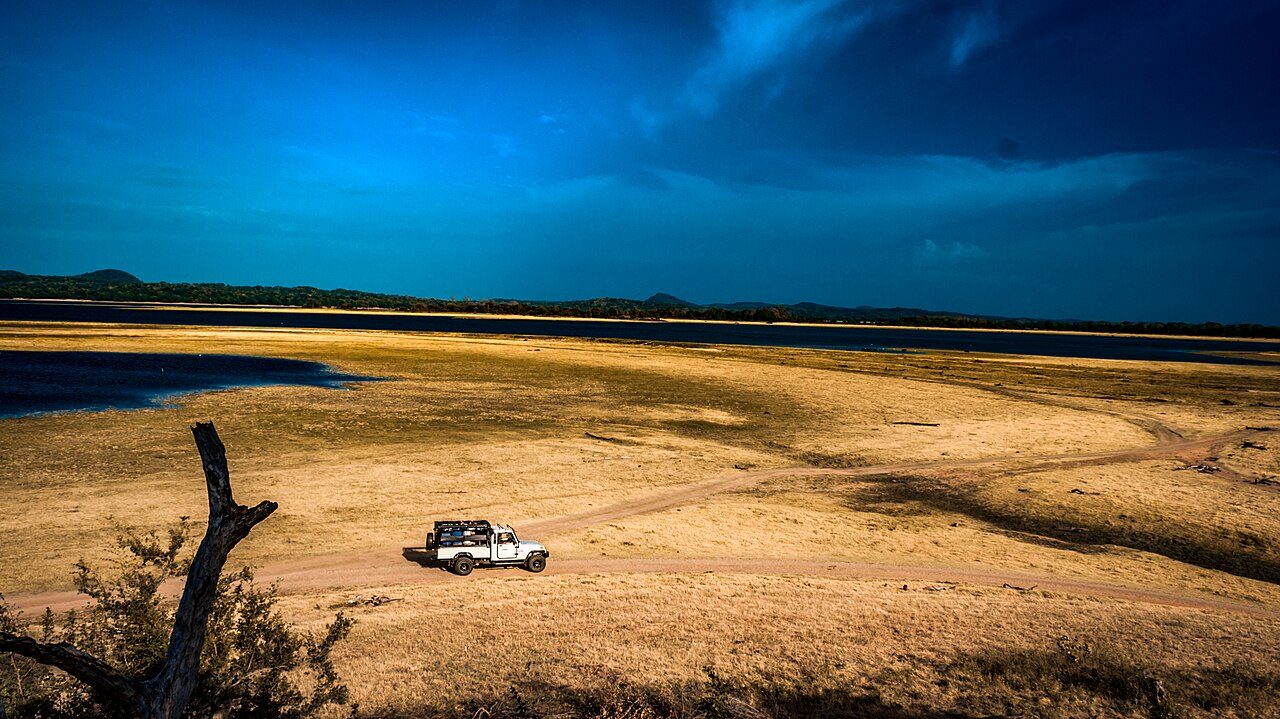
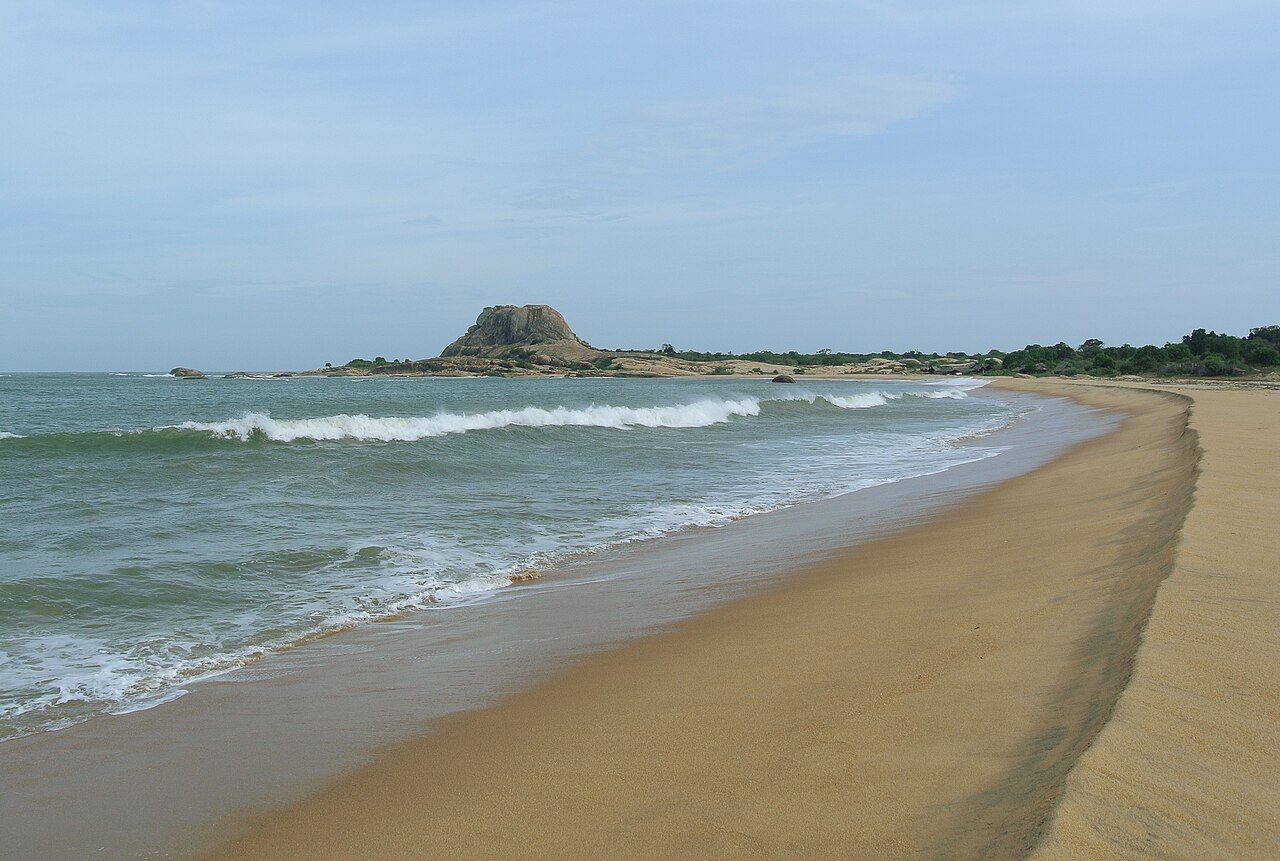
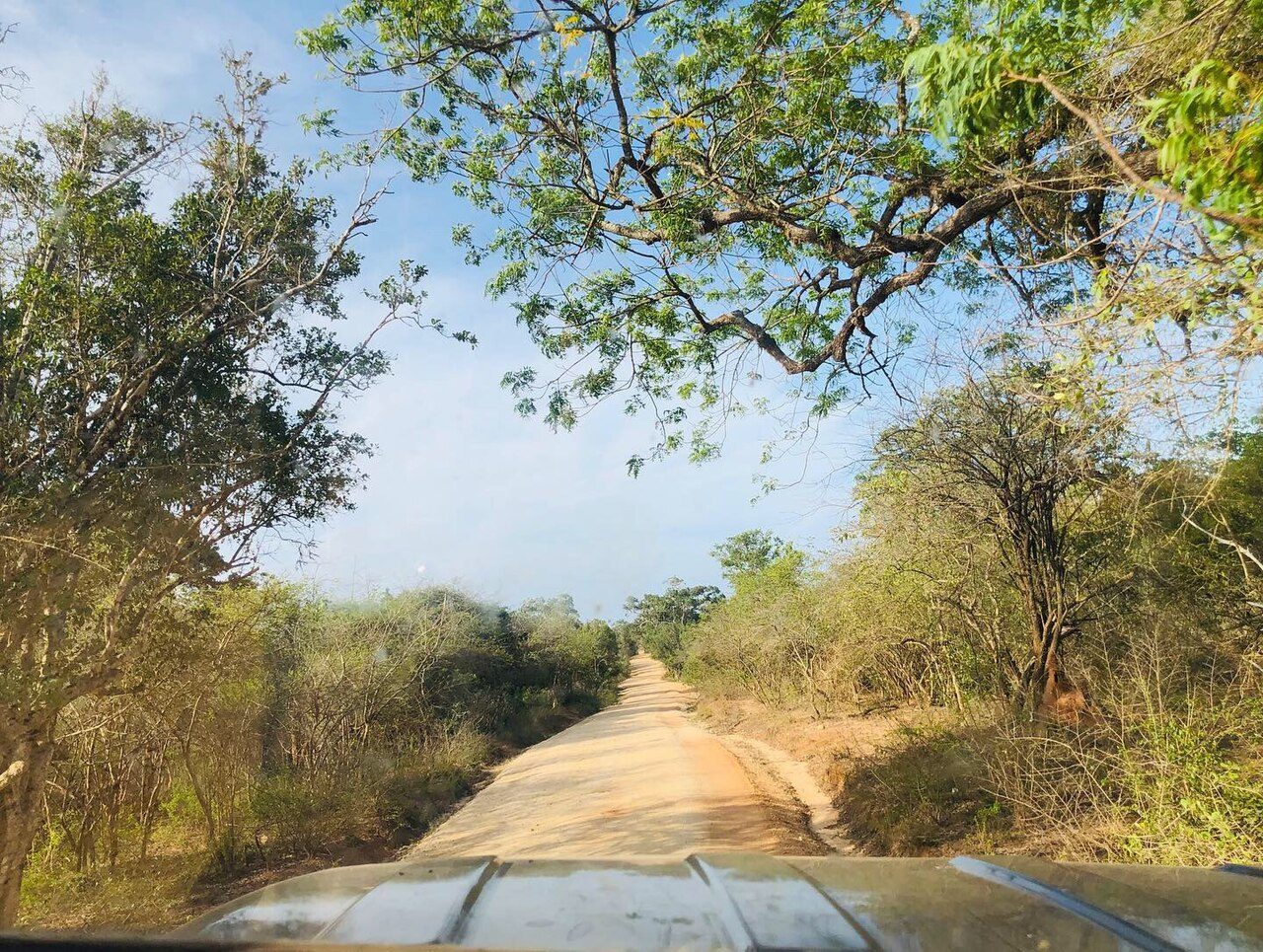
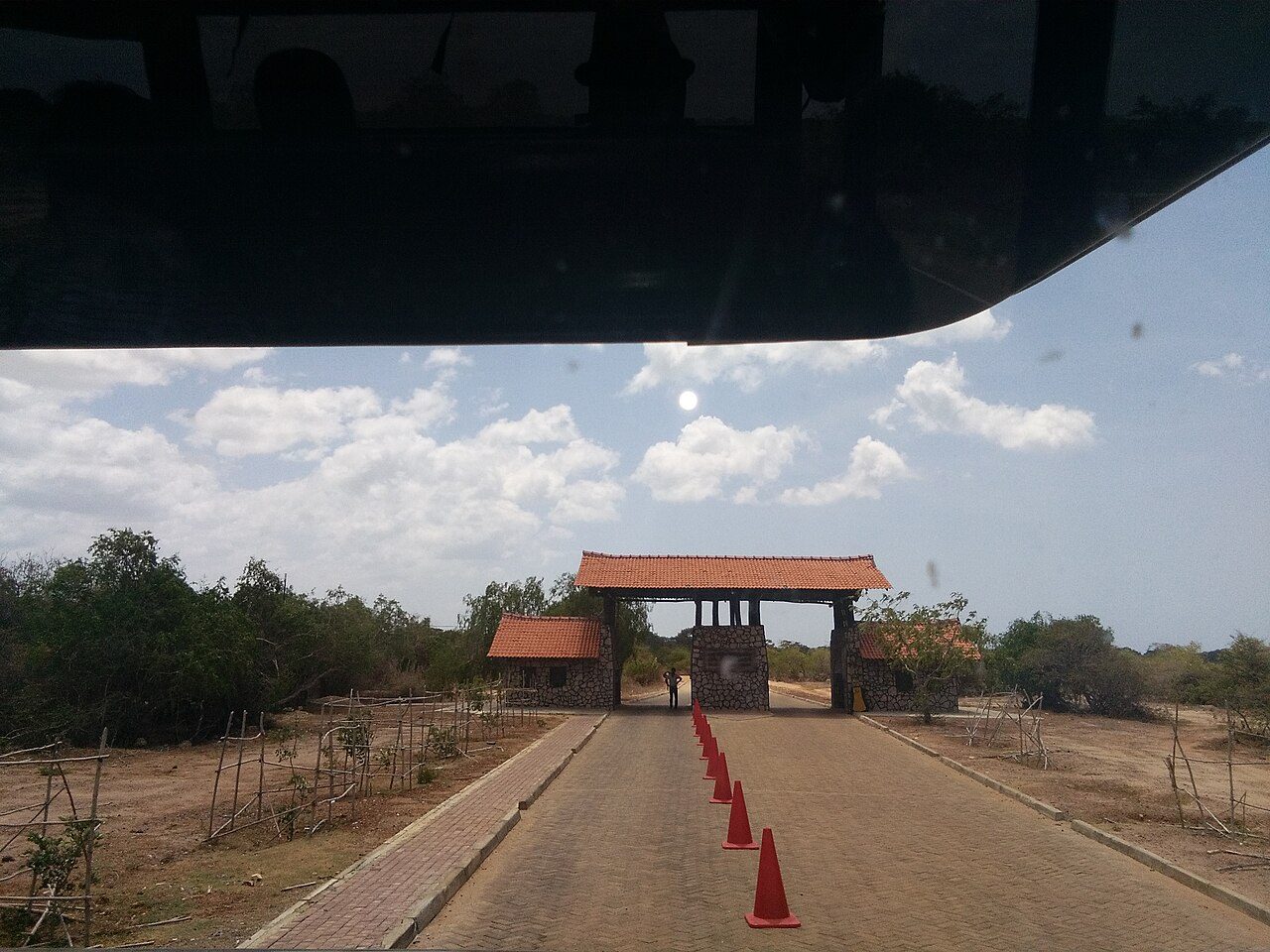
Yala National Park, in the dry south-east, is the most visited national park in Sri Lanka and has one of the highest densities of leopards in the world. Its scrub forest, lagoons, rock outcrops and beaches also hold elephants, sloth bears, crocodiles and over 200 bird species. Jeep safaris enter from Palatupana; the park usually closes for some weeks around September.
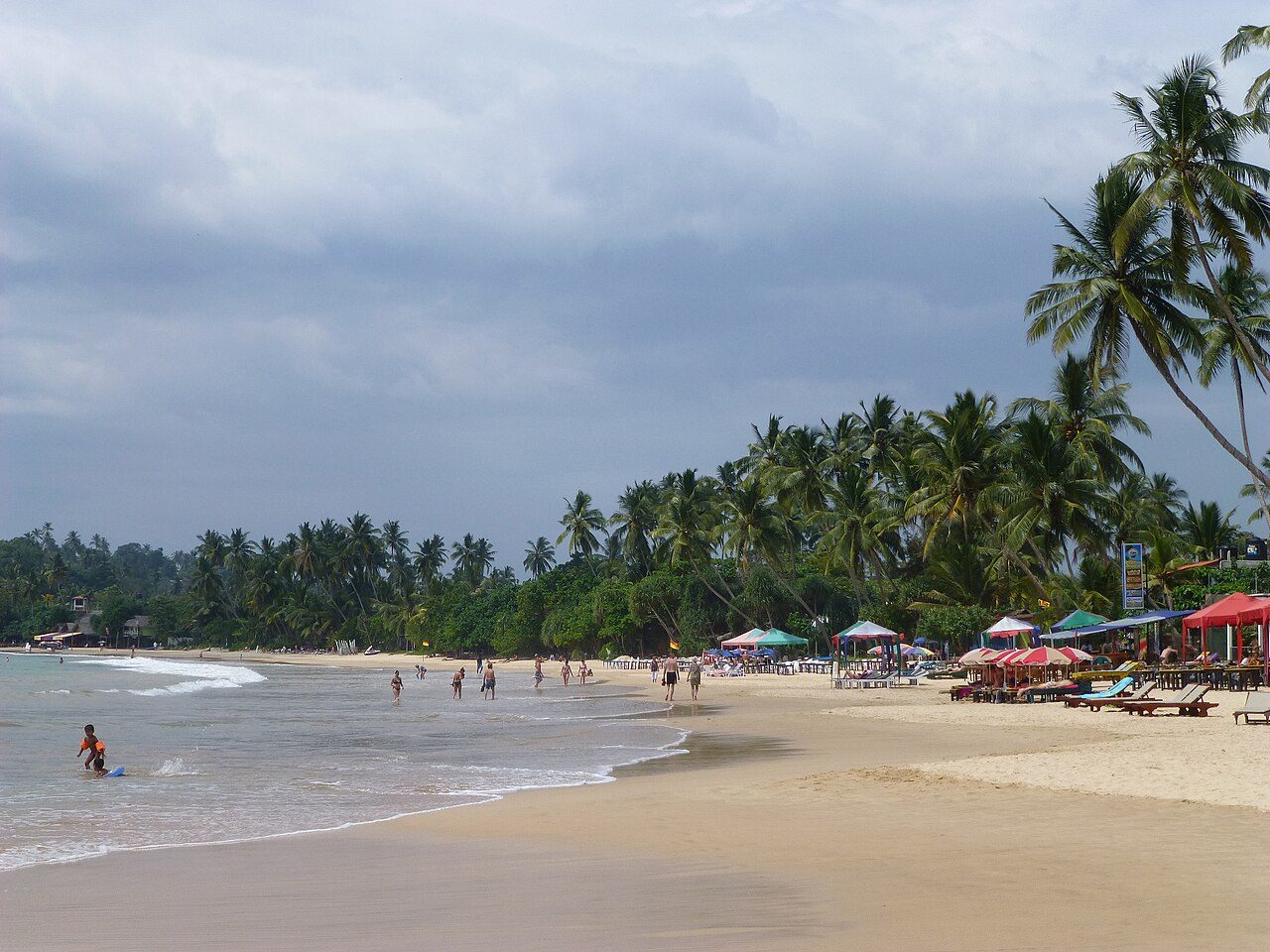
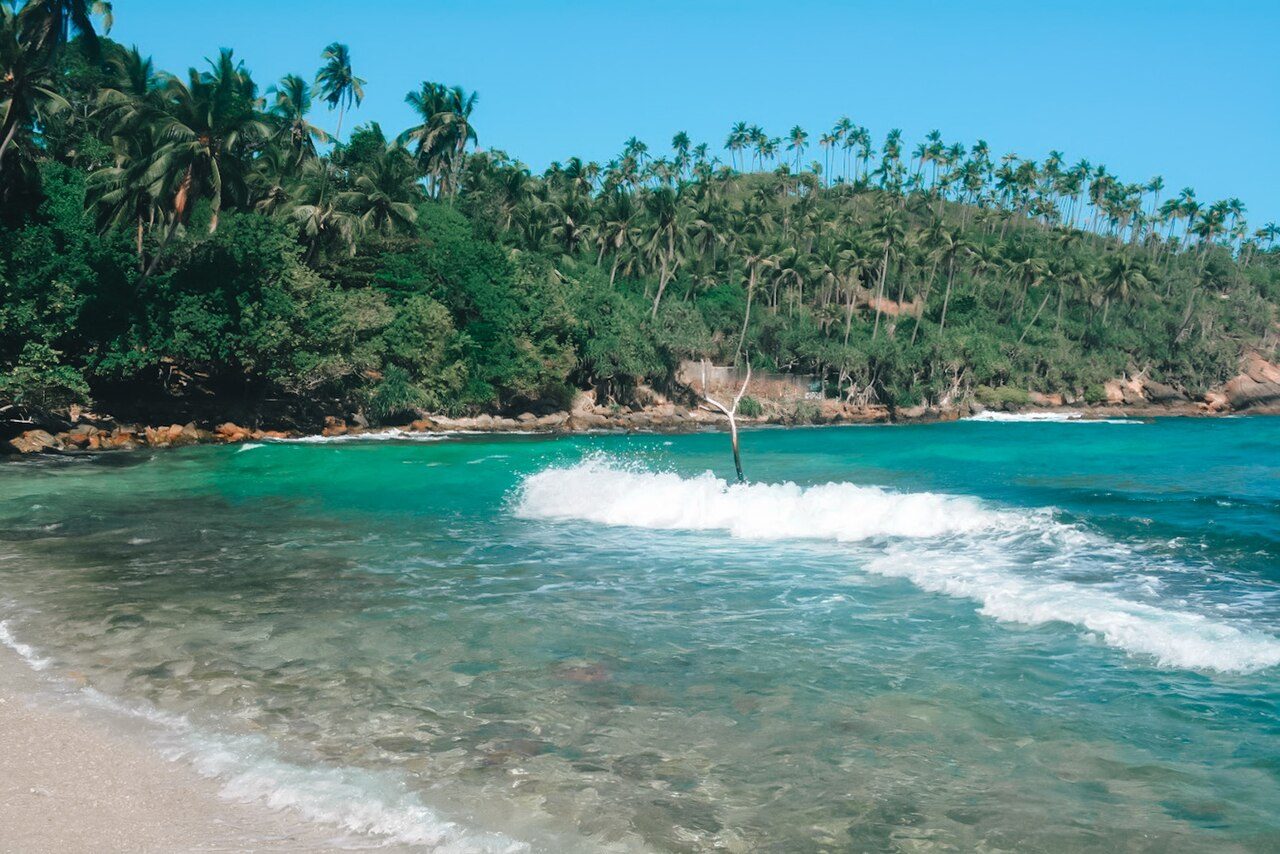
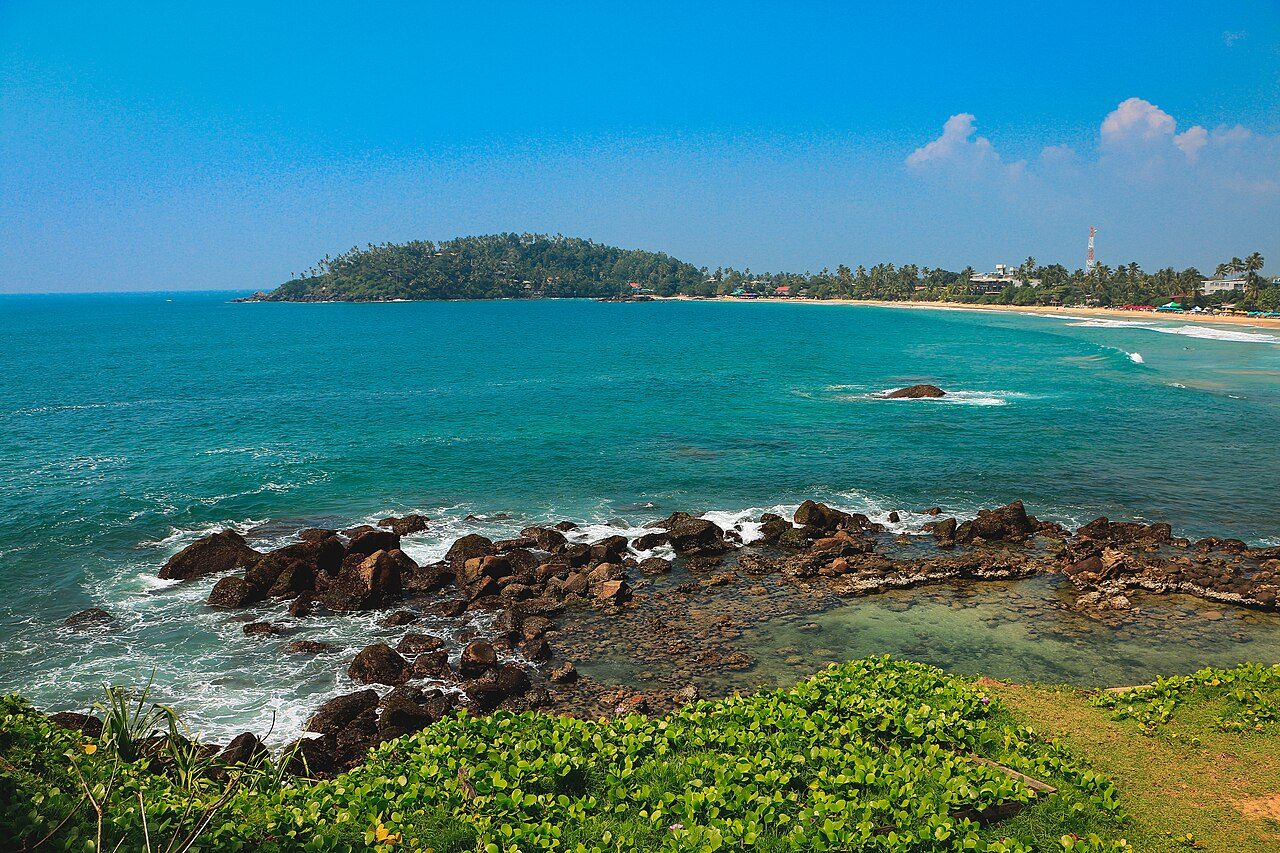
Mirissa Beach is a curved bay of soft sand on the south coast, between Weligama and Matara. It is the main base in Sri Lanka for whale watching, with boats leaving the nearby harbour from about November to April in search of blue whales and dolphins. The western end has small waves suited to beginner surfers, and Parrot Rock gives a view over the bay.
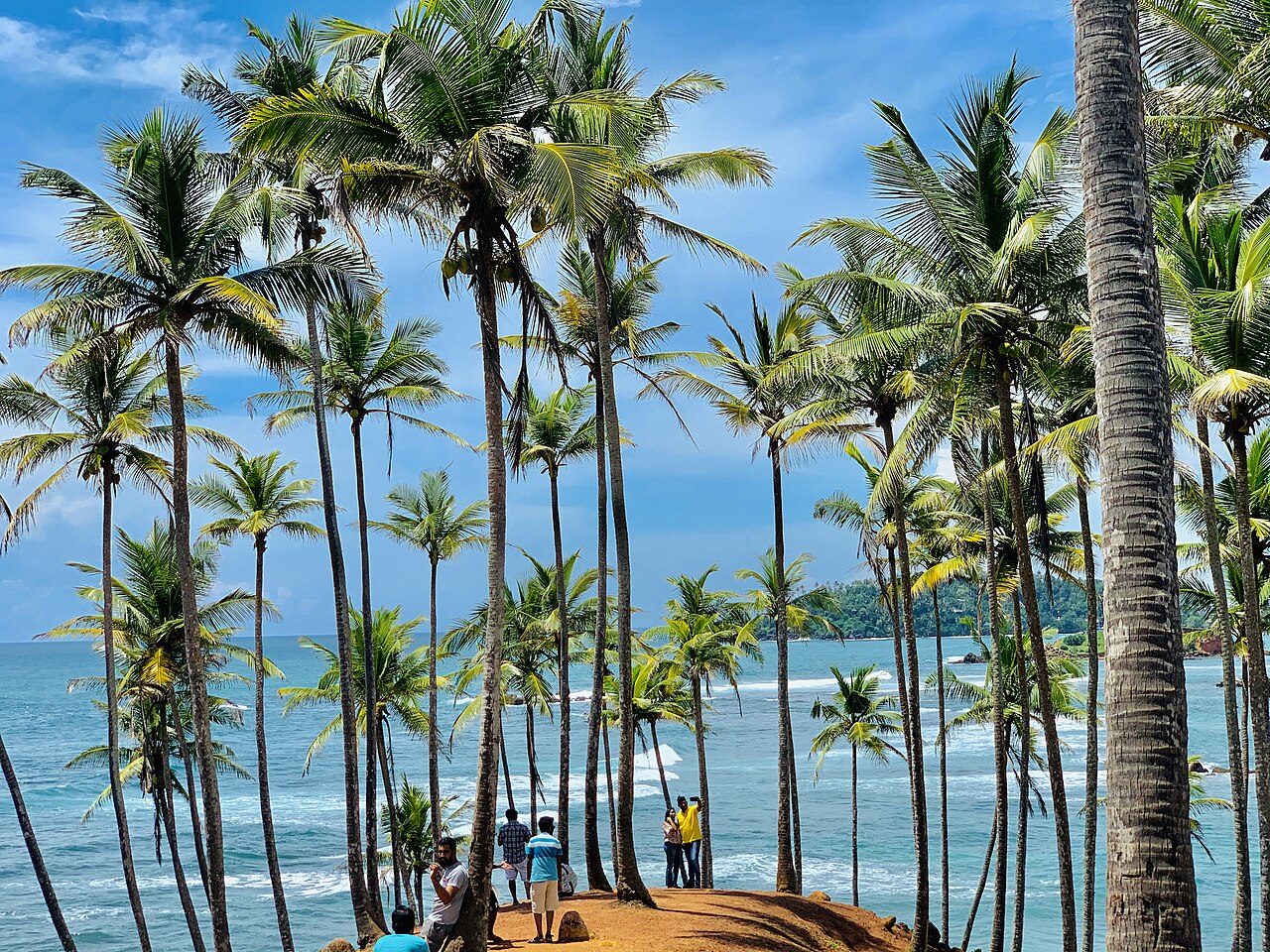
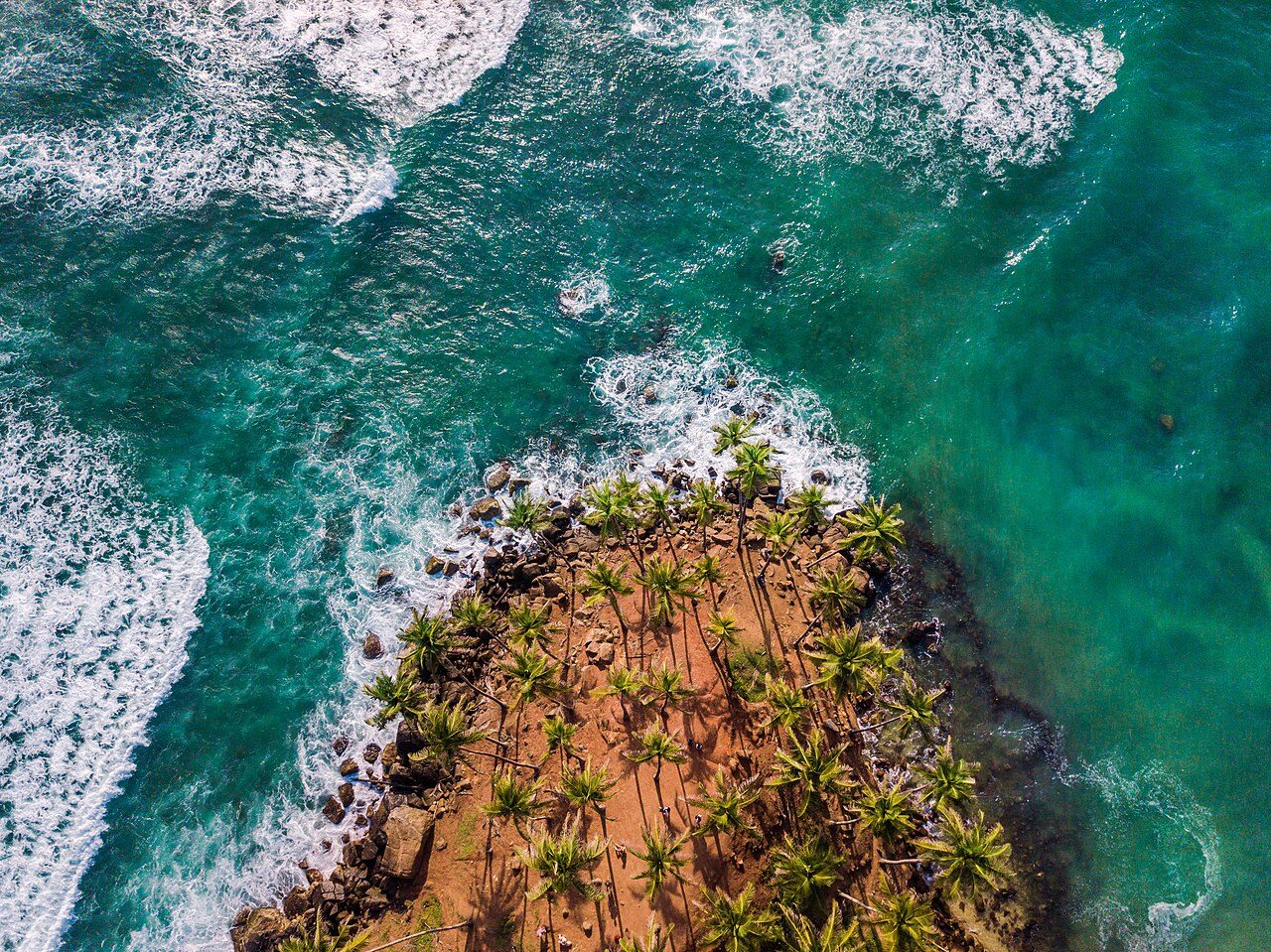
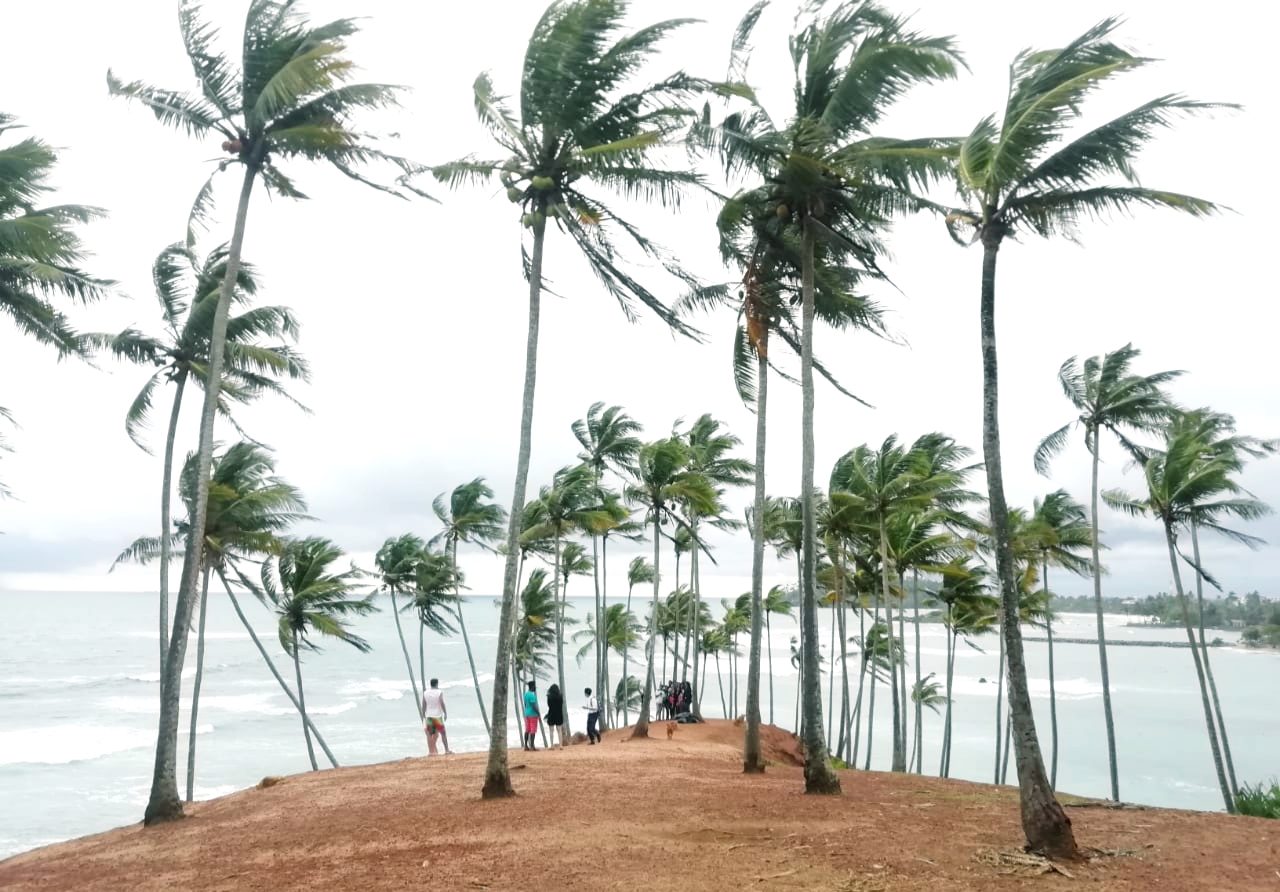
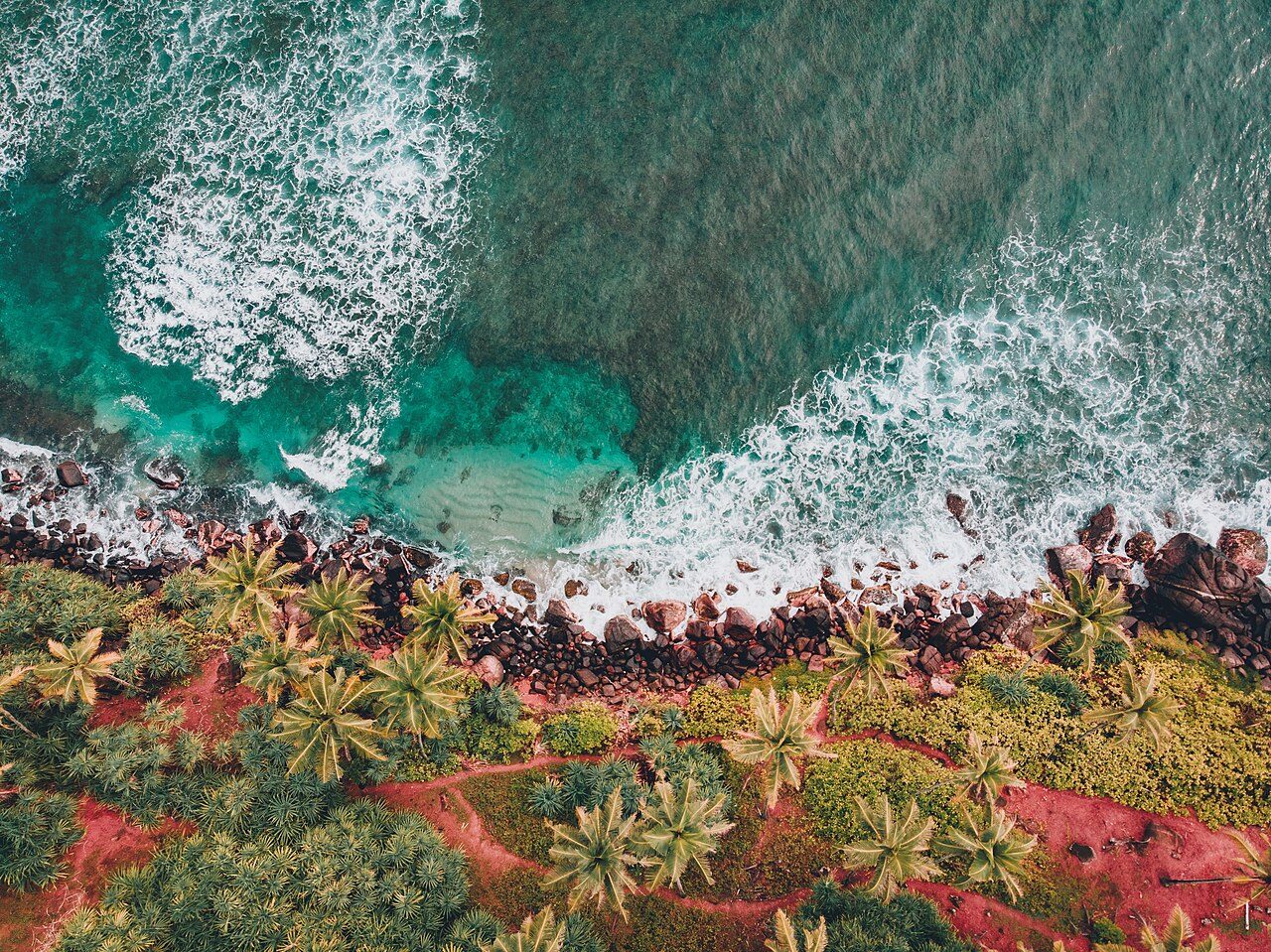
Coconut Tree Hill is a small red-earth headland at the eastern end of Mirissa, covered with a grove of tall coconut palms above the sea. It is private coconut land that has become one of the most photographed spots on the south coast. A short walk from the main road or along the beach leads up to it; sunrise and sunset are the best times.
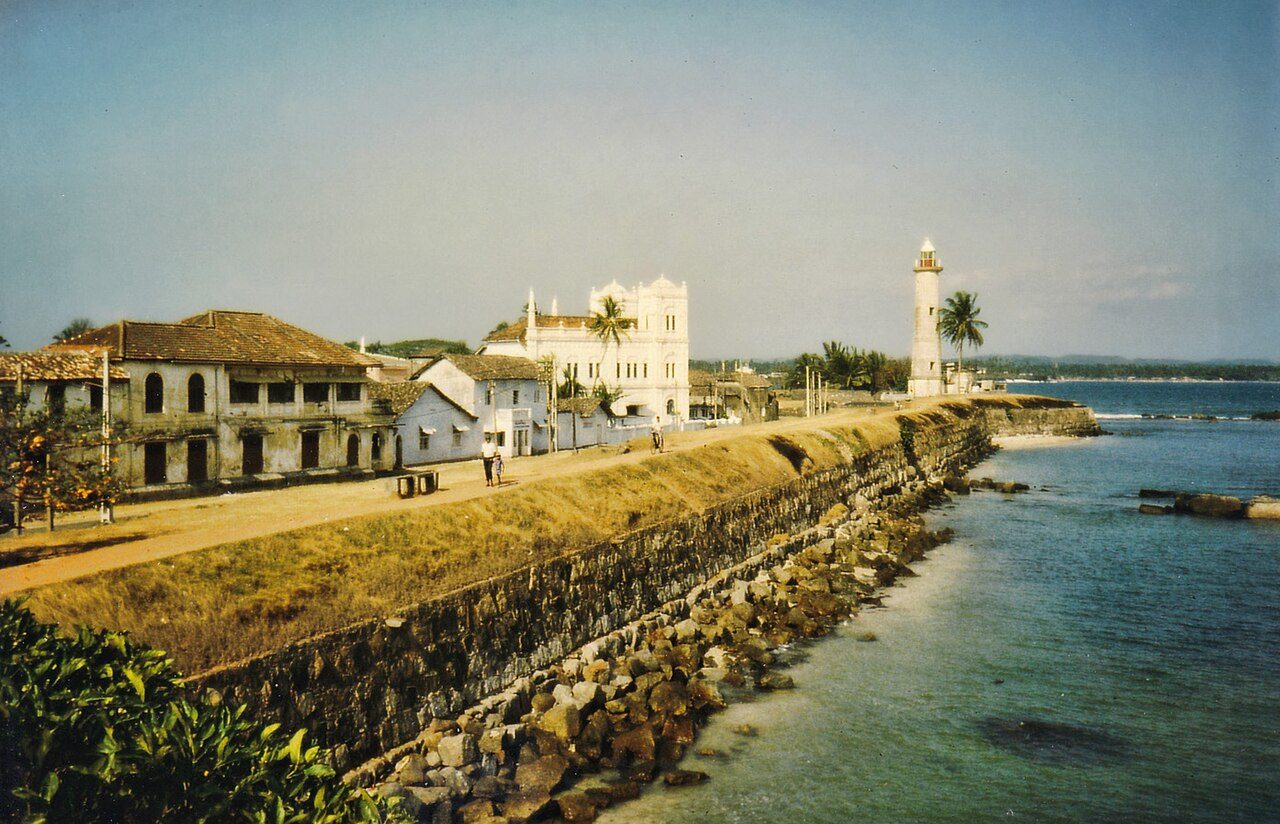
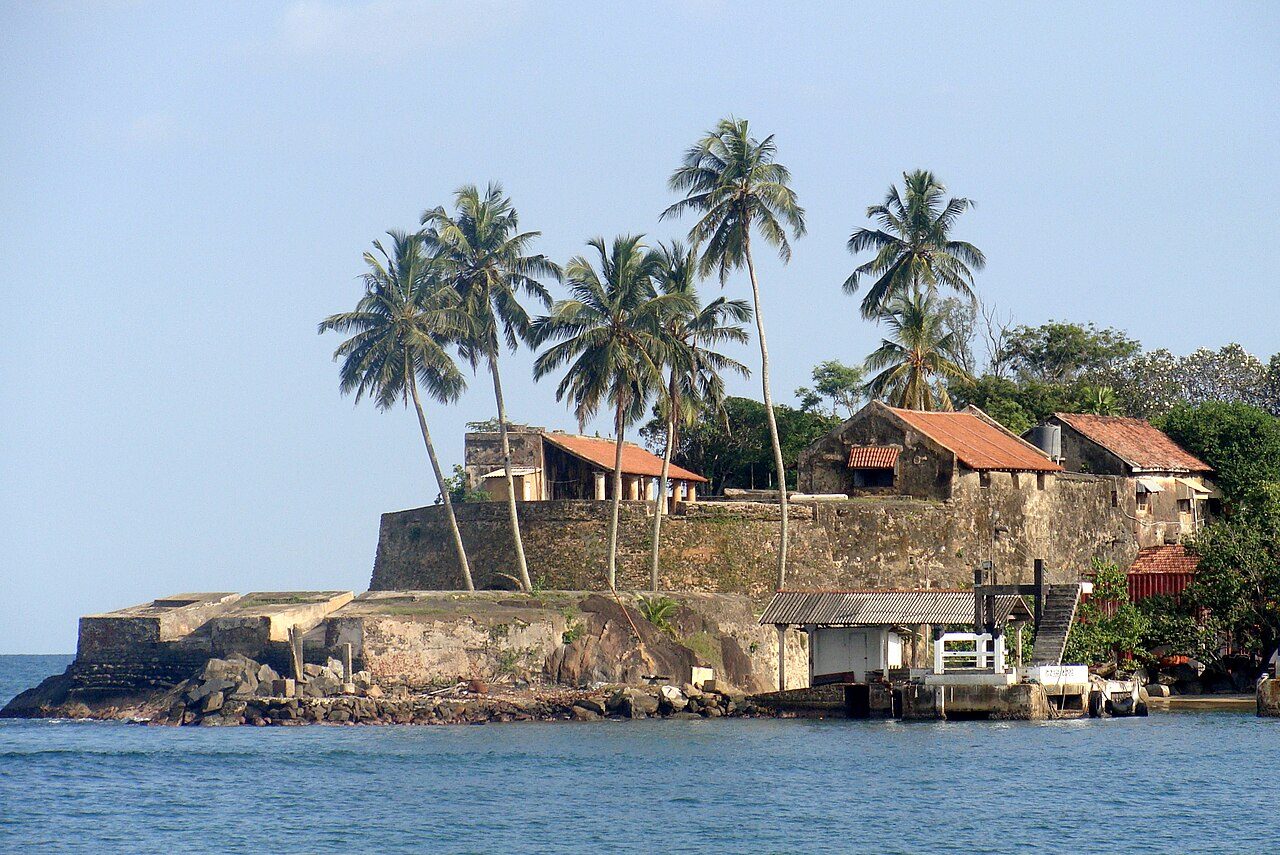
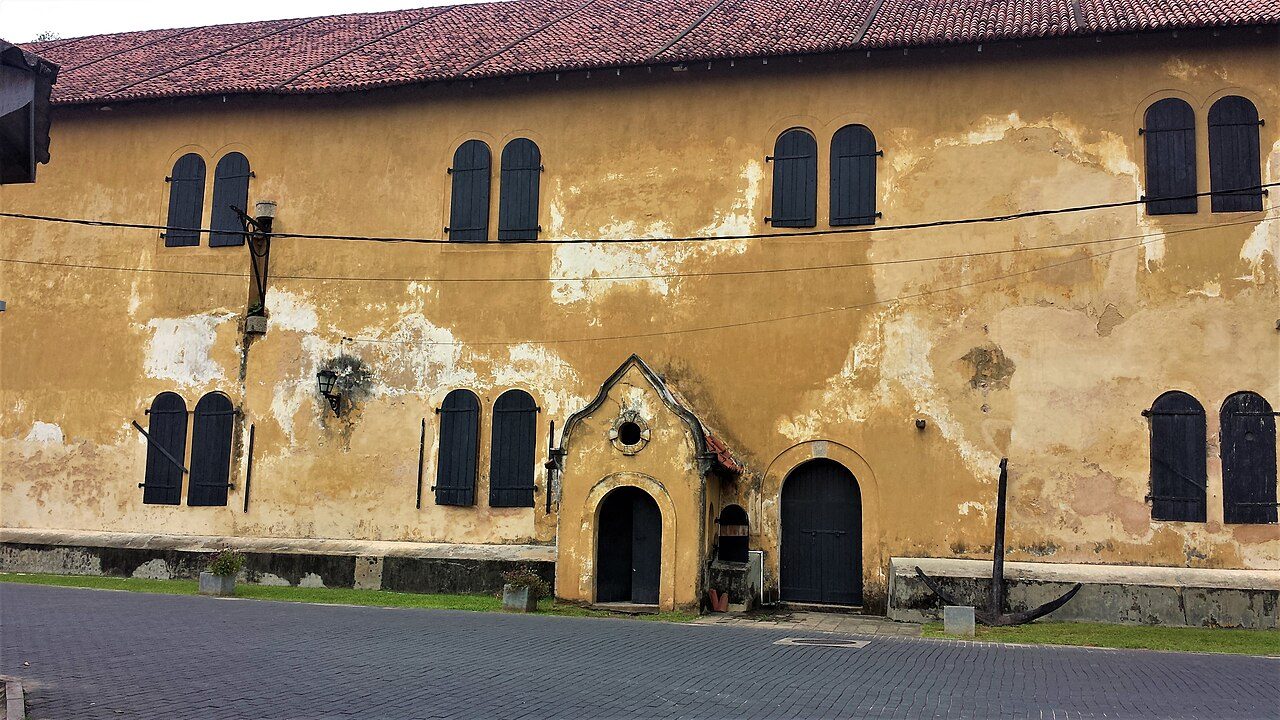
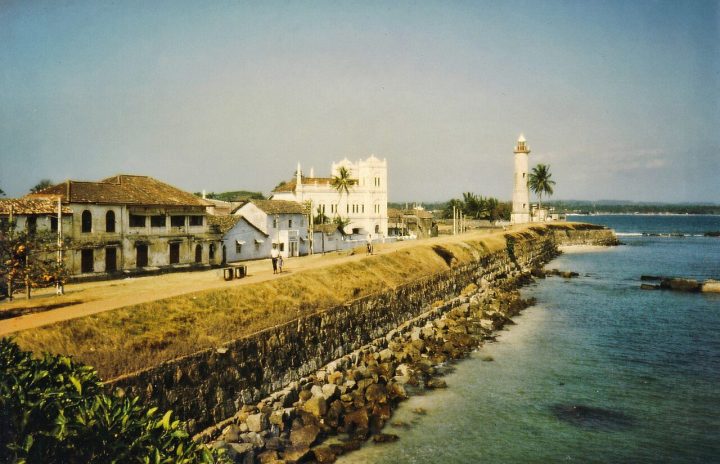
Galle Fort occupies a rocky headland on the south-west coast. The Portuguese first fortified it in 1588, and the Dutch rebuilt it from 1649 with massive ramparts and bastions that survive almost intact. Inside is a living town of narrow streets, churches, mosques, old warehouses and villas. It is a UNESCO World Heritage Site, and the rampart walk at sunset is a daily ritual.
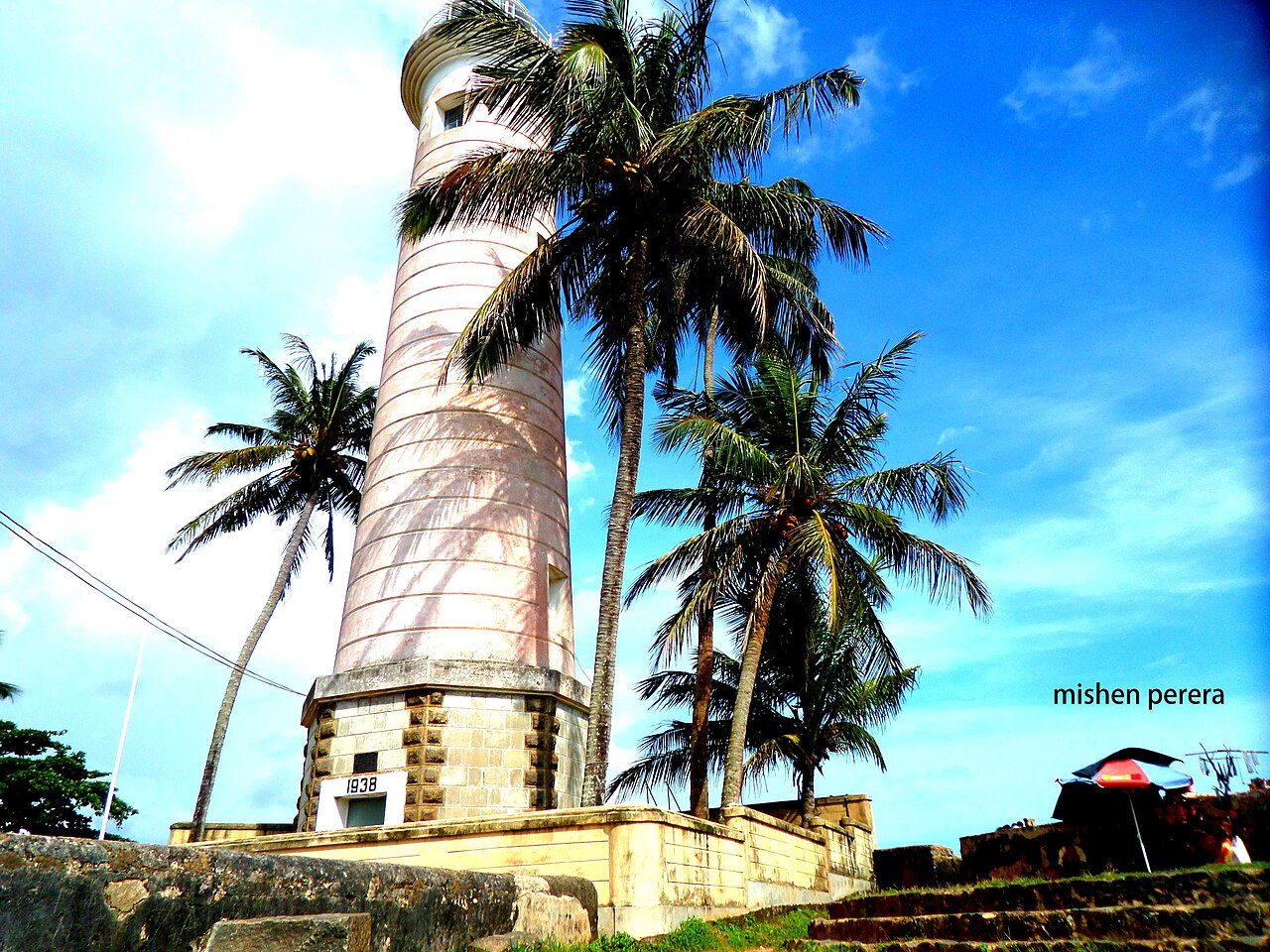
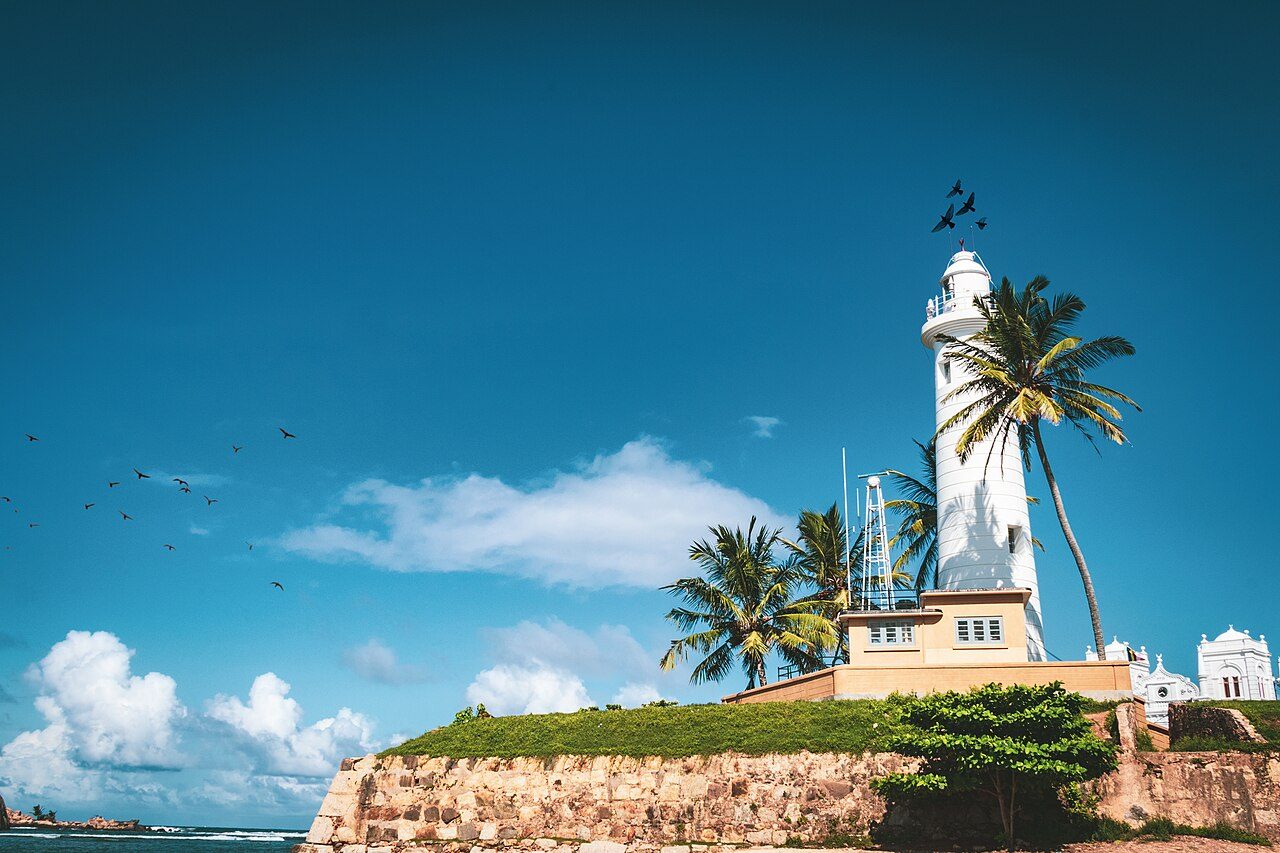
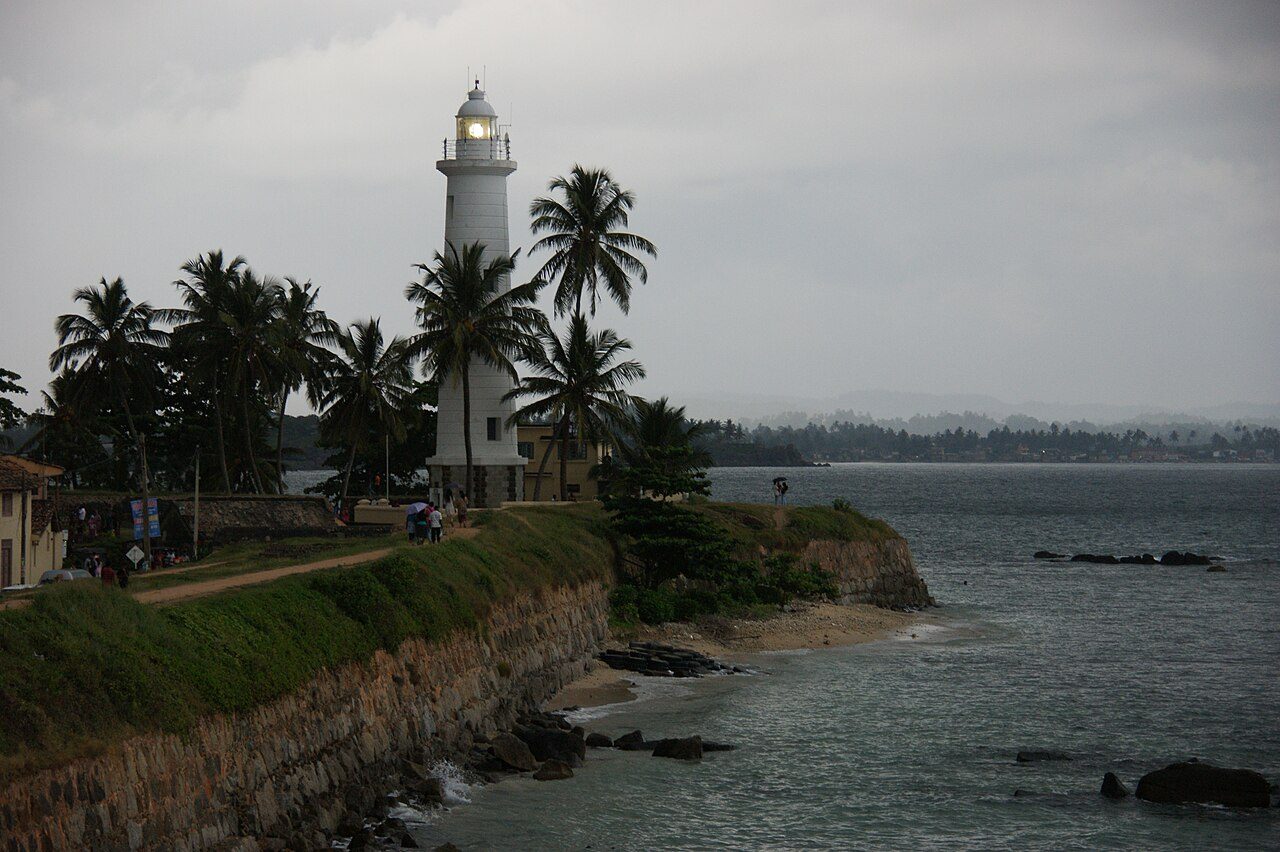
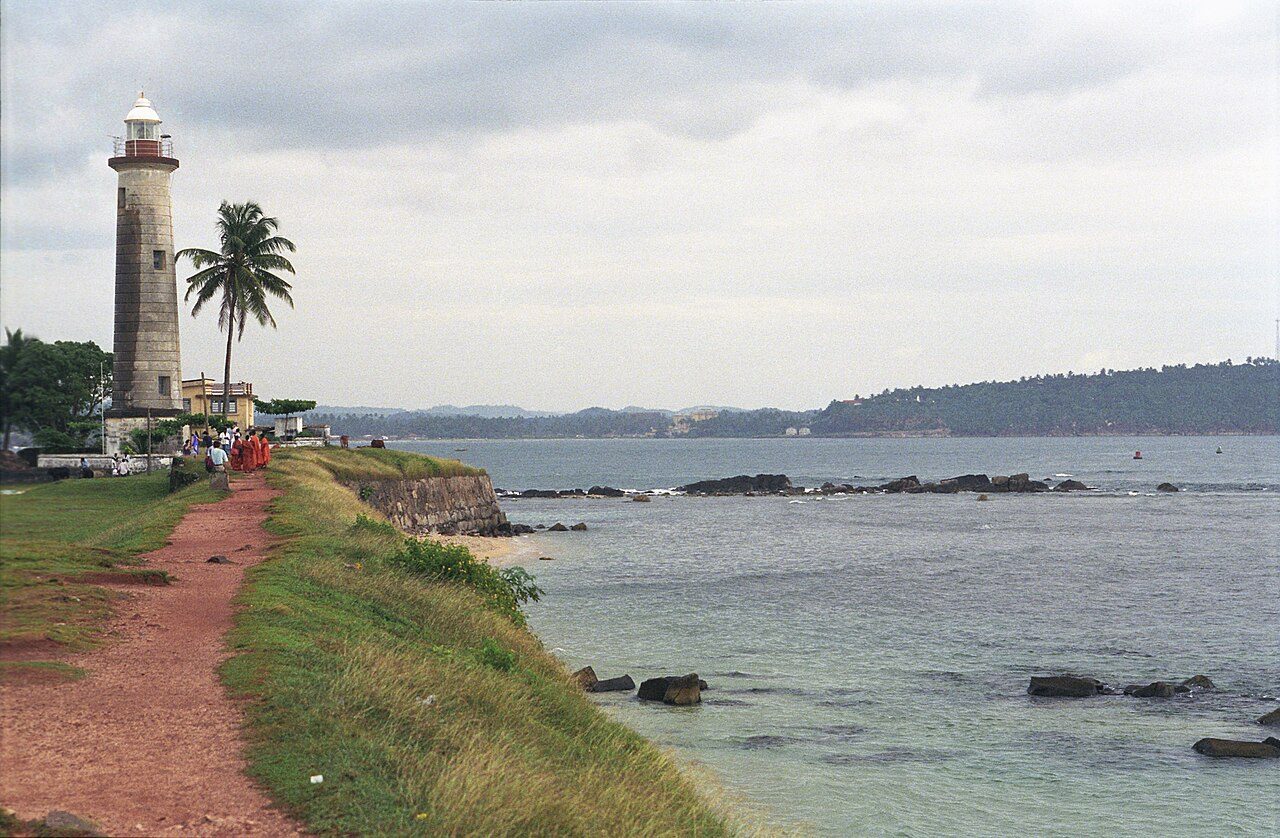
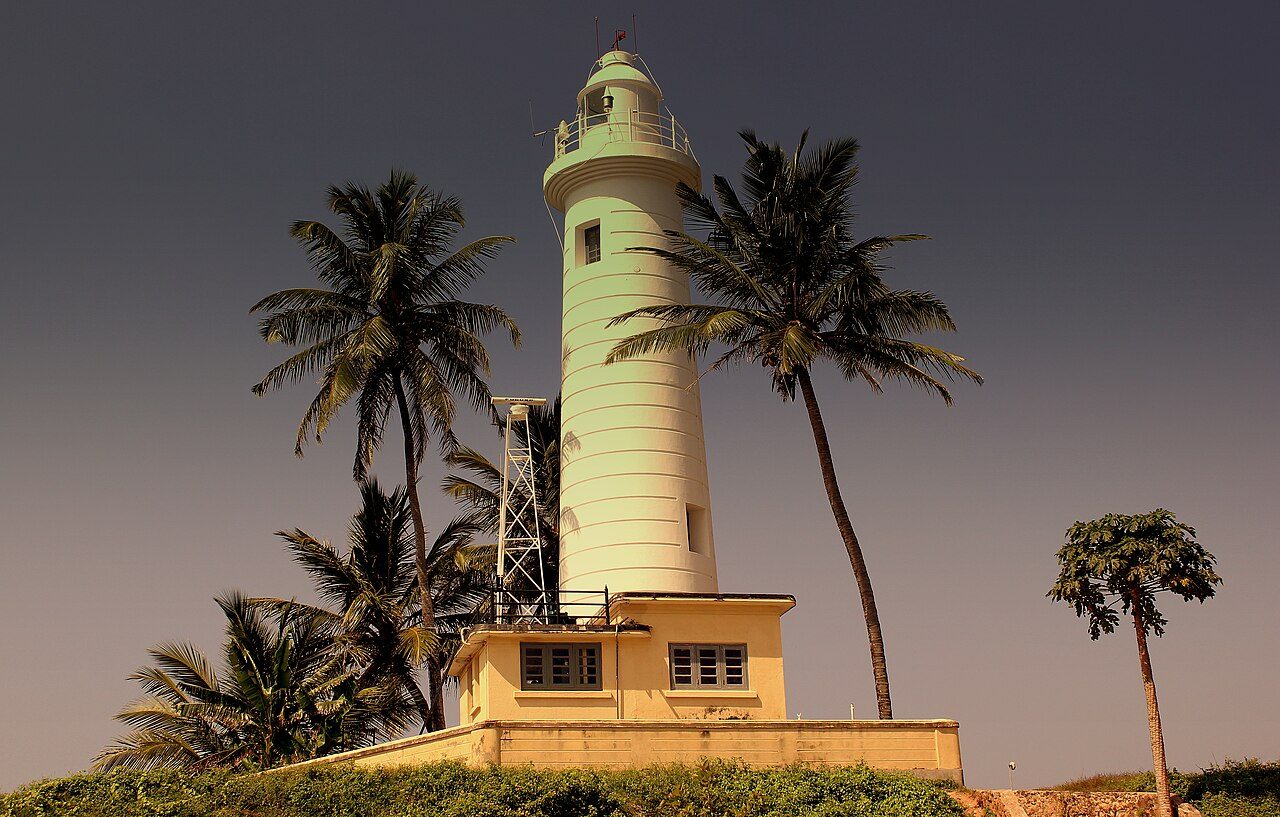
Galle Lighthouse stands on the Point Utrecht bastion at the south-eastern corner of Galle Fort. Sri Lanka's first lighthouse was built in Galle in 1848; after it burned down, the present white tower, about 26 metres high, was built in 1939. It is still in use and cannot be climbed, but the small beach and ramparts beside it are favourite photo spots.
Best weather: Jan – MarHeavy rain: Oct – Nov
Seasons from 20 years of NASA POWER climate data.
Was this trip blog helpful?
0
0
Ready to follow this route?
Copy all 32 stops into your trip plans in the app.
 WaTrips