Muscat's Grand Mosque and souq, Bimmah and Wadi Shab, Sur and Ras Al Jinz, Wadi Bani Khalid and the Wahiba Sands, Nizwa, Jebel Shams, Jabrin and Bahla.
Oman is one of the friendliest and most beautiful countries in Arabia, and a week covers its classic loop. Day one is Muscat's Sultan Qaboos Grand Mosque, Mutrah Corniche and souq. Day two swims in the Bimmah sinkhole and hikes through Wadi Shab. Day three sees Sur's dhow yard and nesting turtles at Ras Al Jinz. Day four visits Wadi Bani Khalid and spends a night in the Wahiba Sands. Days five to seven explore Nizwa's fort and souq, Jebel Shams and its canyon, the old villages of Al Hamra and Misfat, Jabrin Castle and Bahla Fort. October to April is best; rent a car, as public transport is limited.
01
STOP 1 OF 17
Sultan Qaboos Grand Mosque
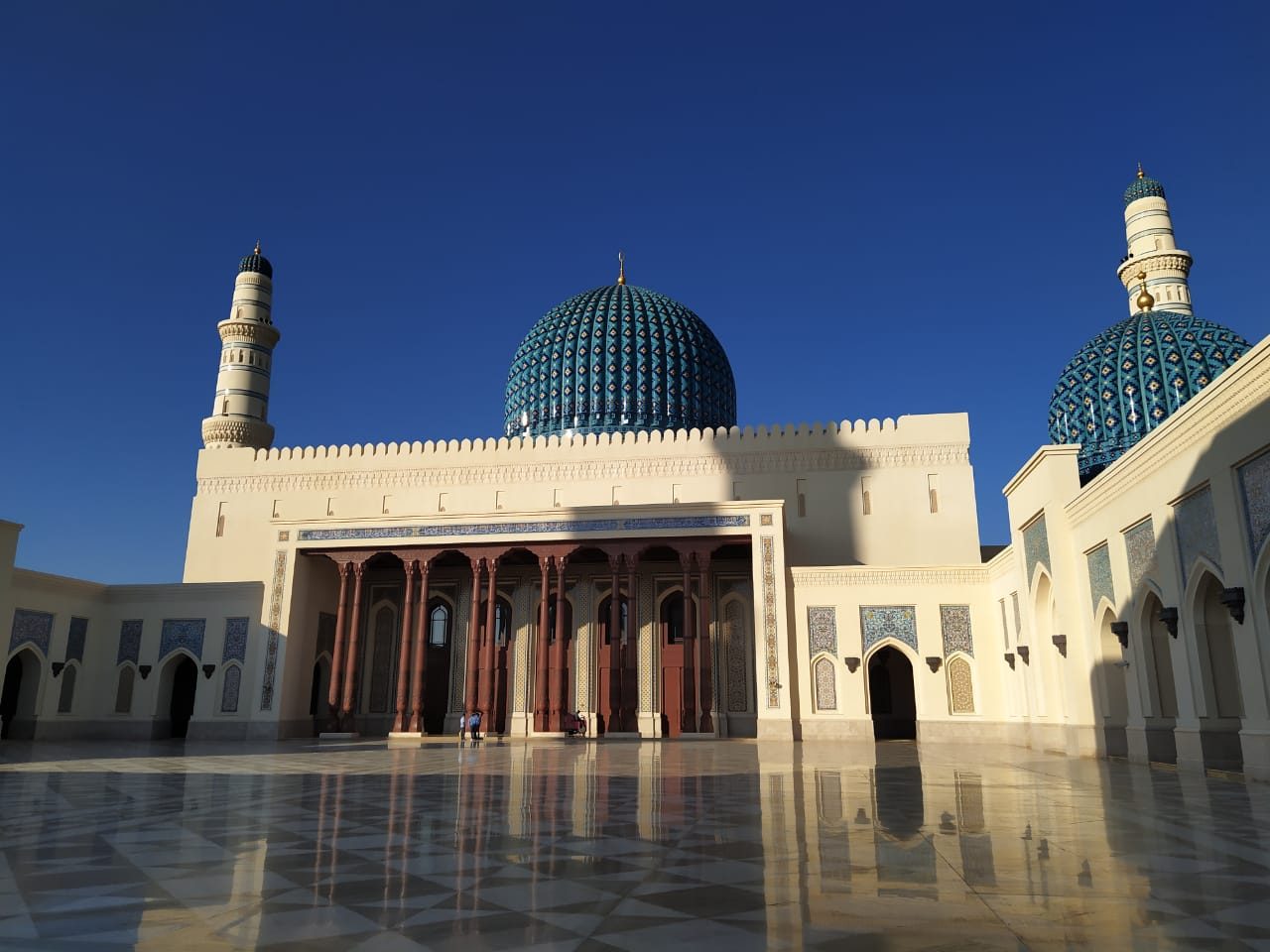
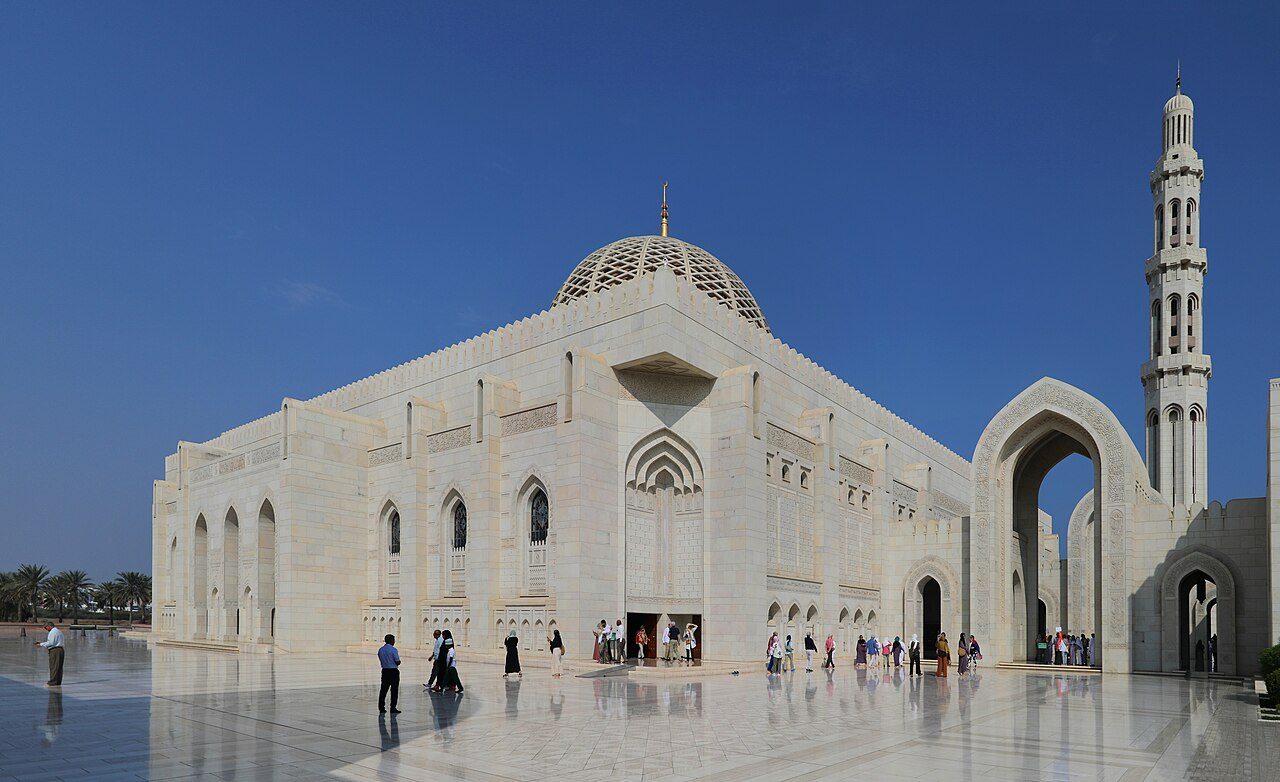
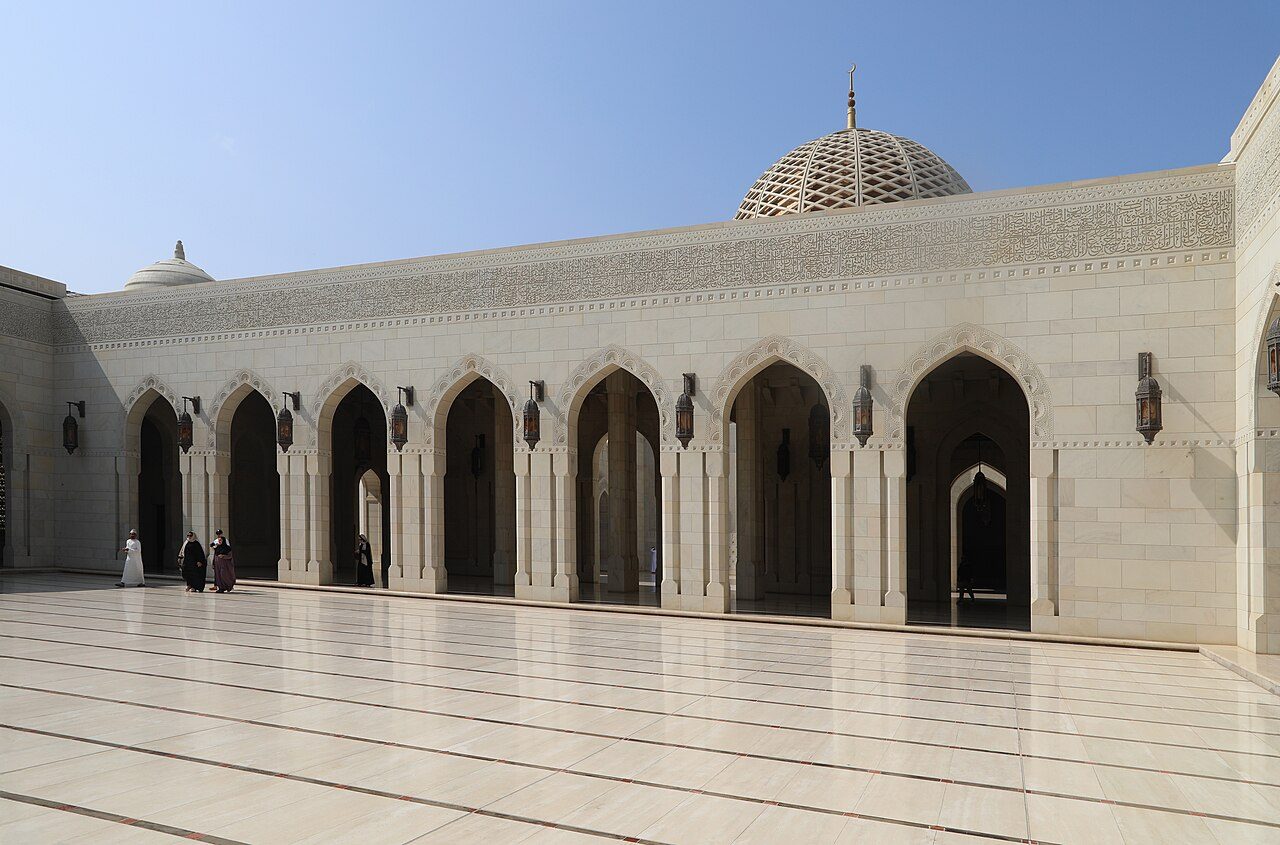
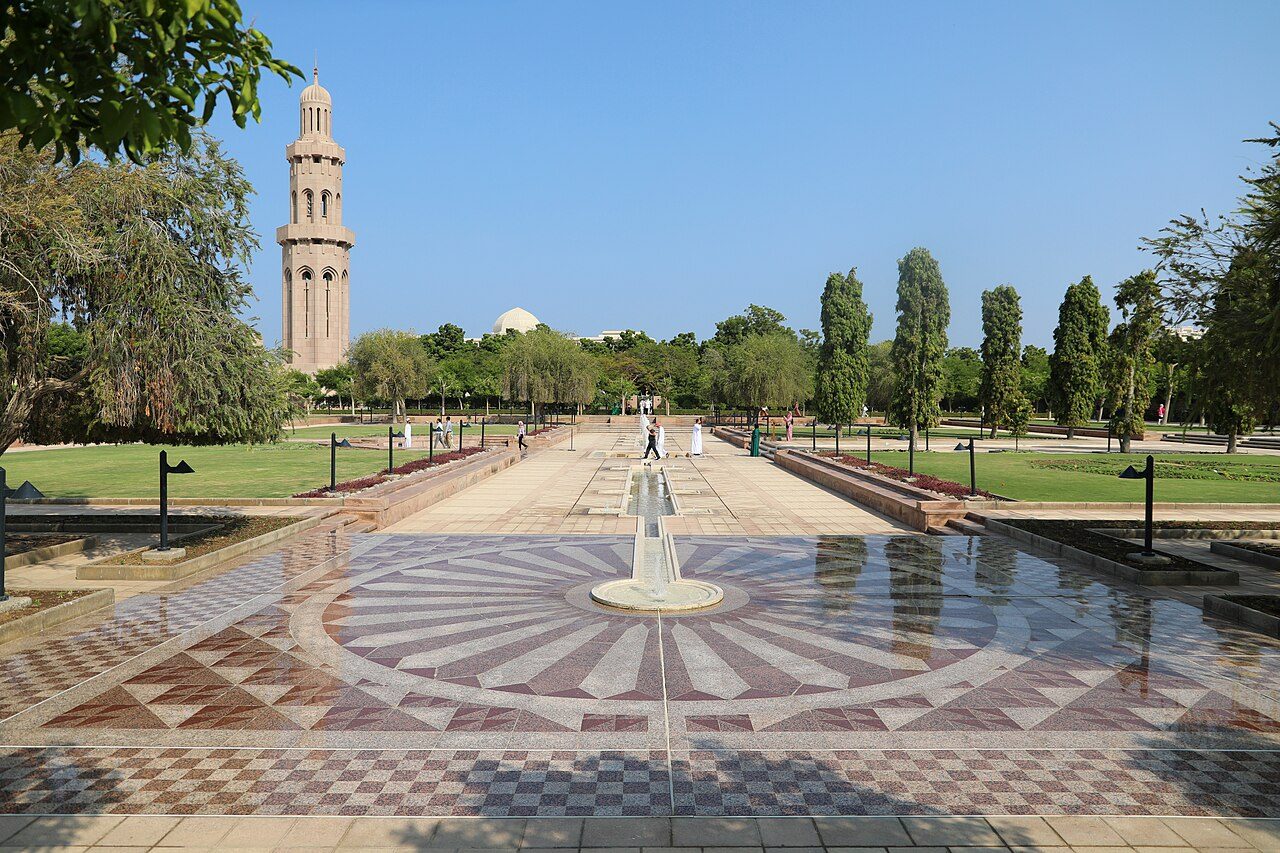
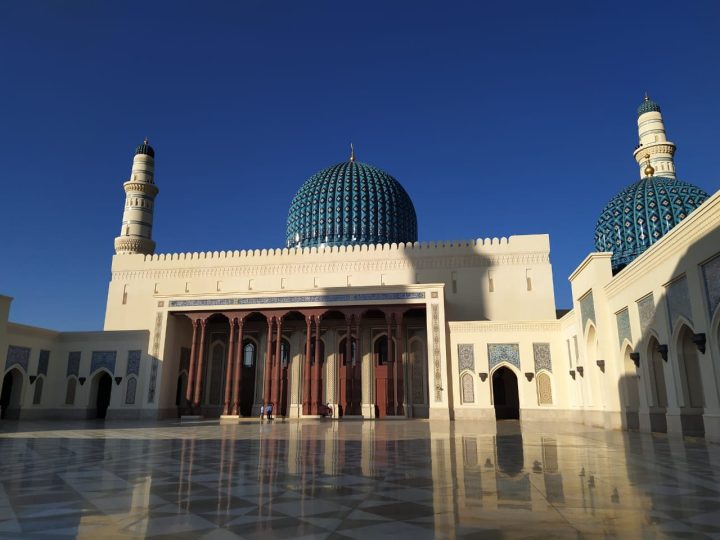
Opened in 2001, the Sultan Qaboos Grand Mosque is Oman's largest mosque and one of the few open to non-Muslim visitors. Built of Indian sandstone, it has a 50-metre central dome and five minarets. The main prayer hall is famous for its enormous hand-woven Persian carpet, which took hundreds of weavers four years to make, and a giant crystal chandelier hanging beneath the dome.
02
STOP 2 OF 17
Mutrah Corniche
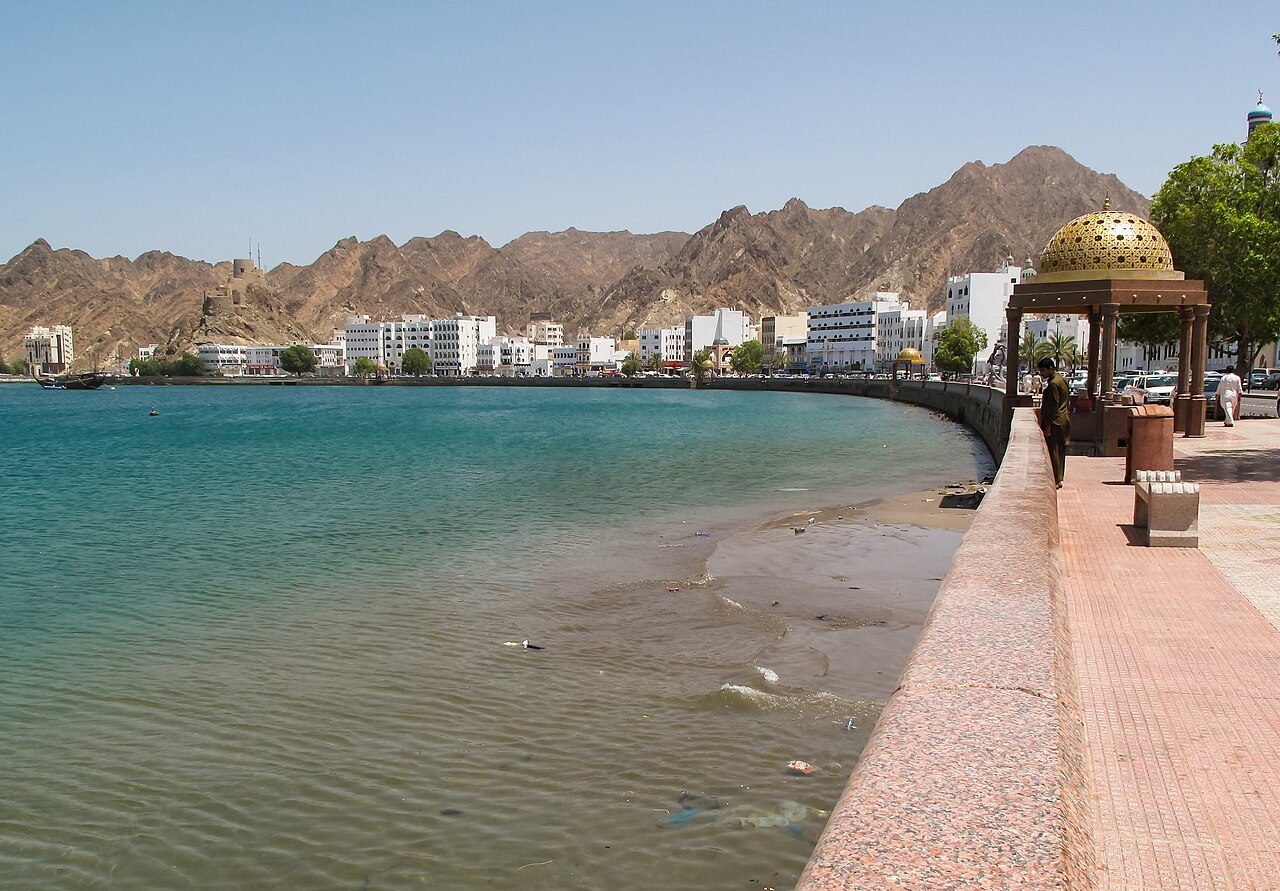
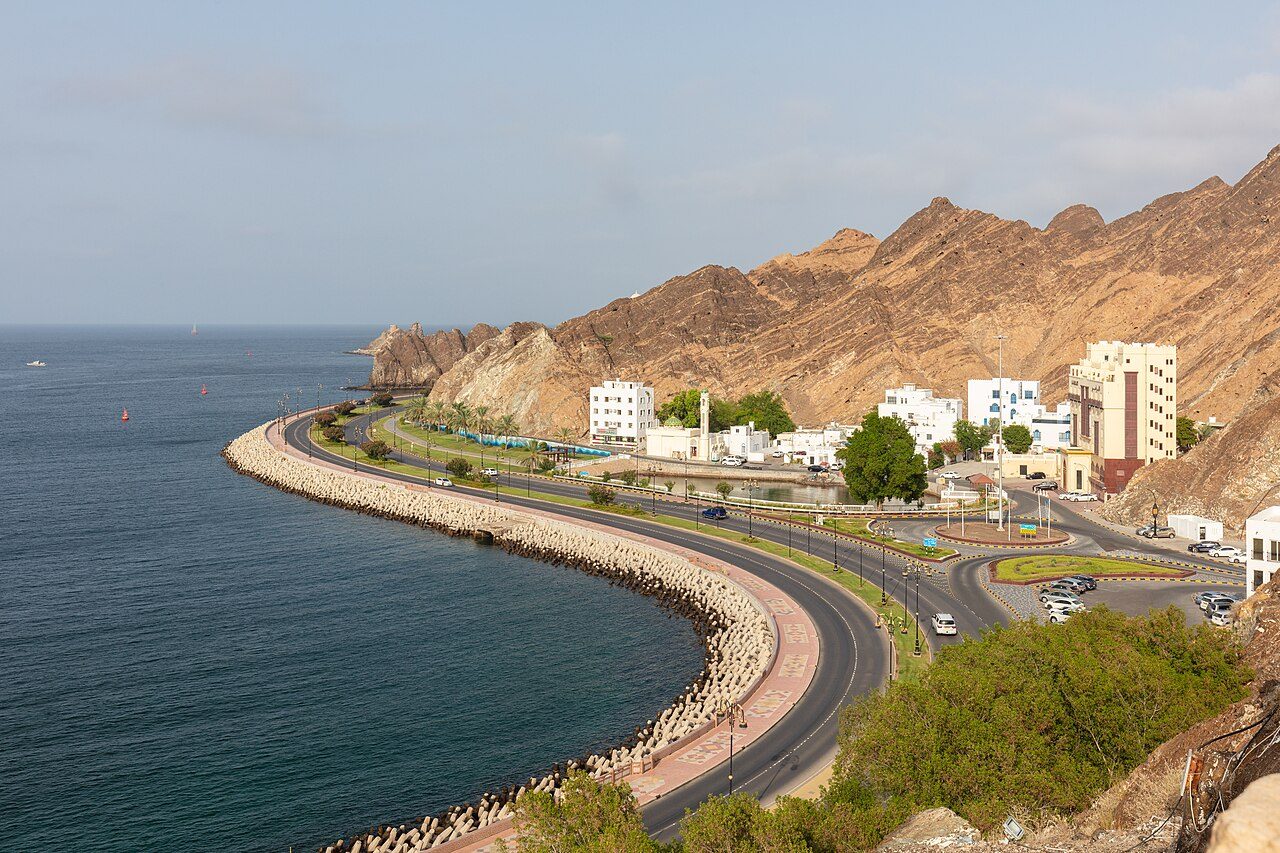
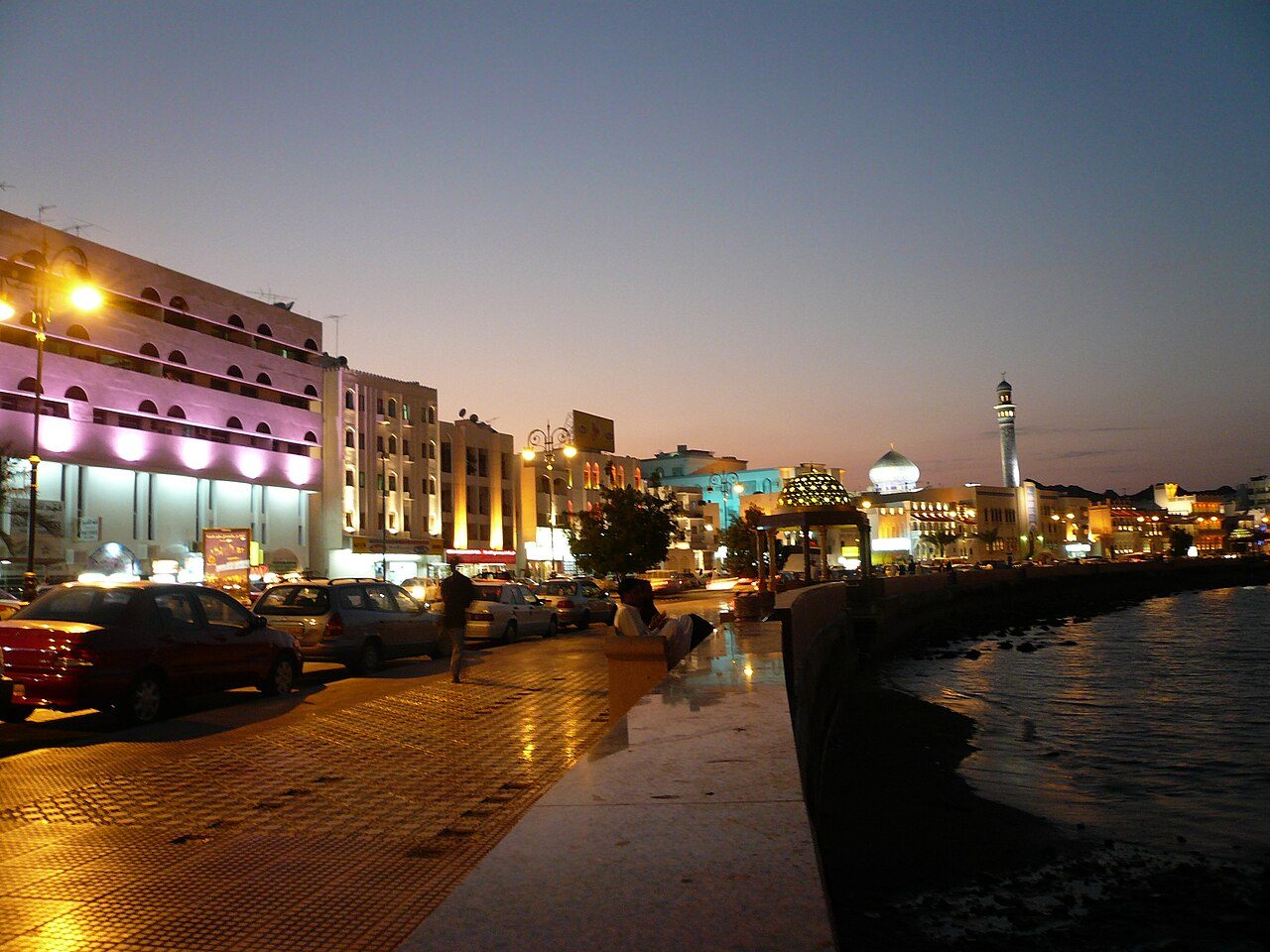
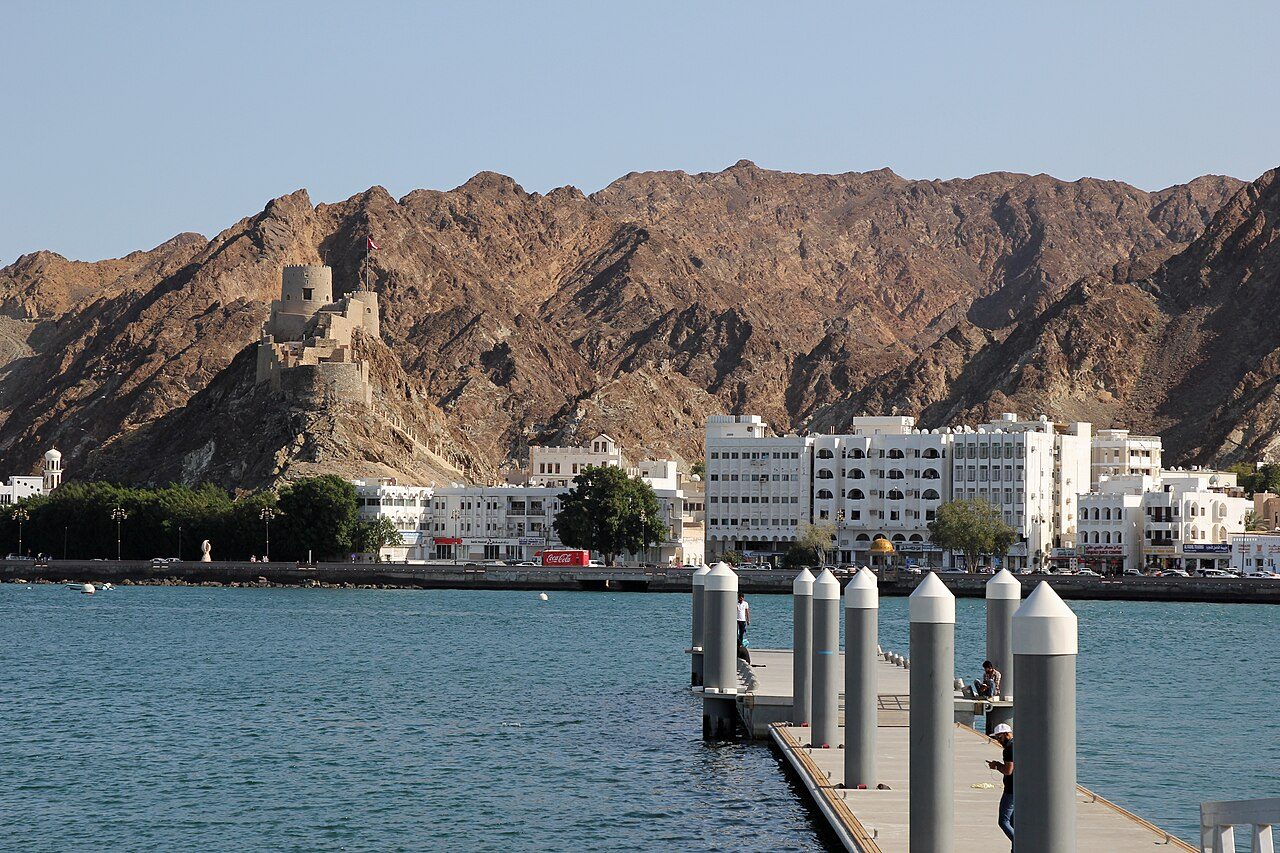
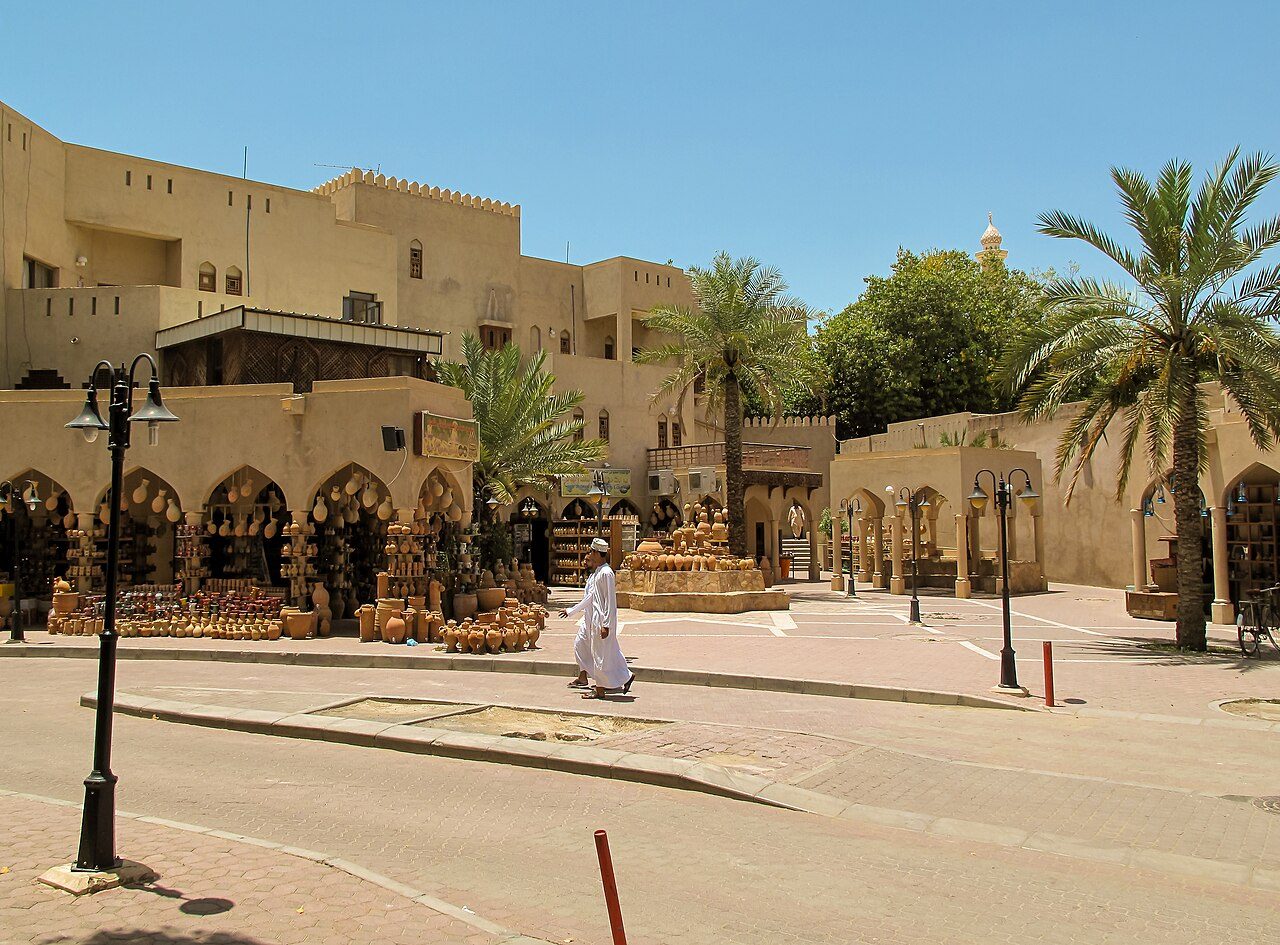
Mutrah Corniche curves for about three kilometres along the old harbour of Mutrah. On one side are white merchant houses with carved wooden balconies and blue-domed mosques; on the other the sea, fishing boats and dhows. The promenade runs from the fish market past the souq to Riyam Park, with the brown mountains and old watchtowers rising right behind it. It is busiest at sunset.
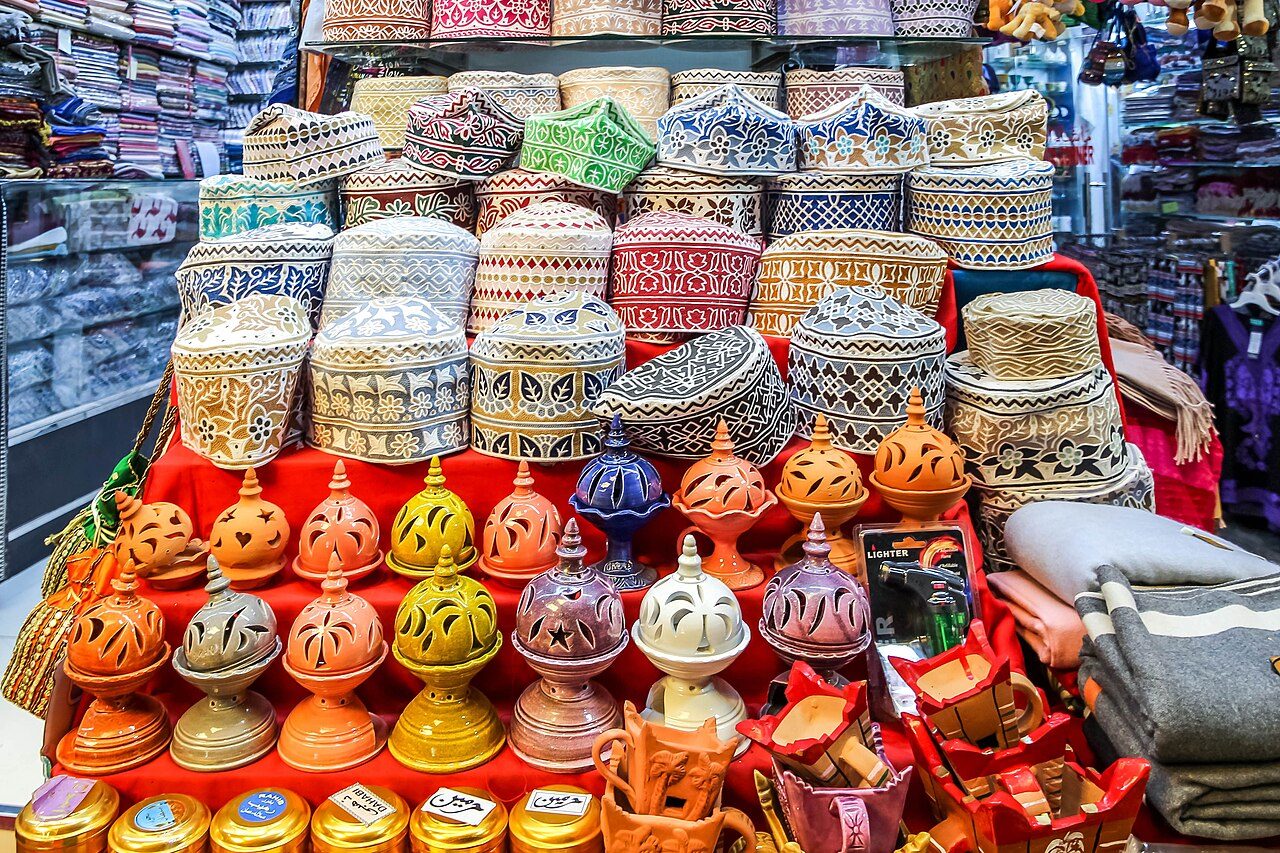
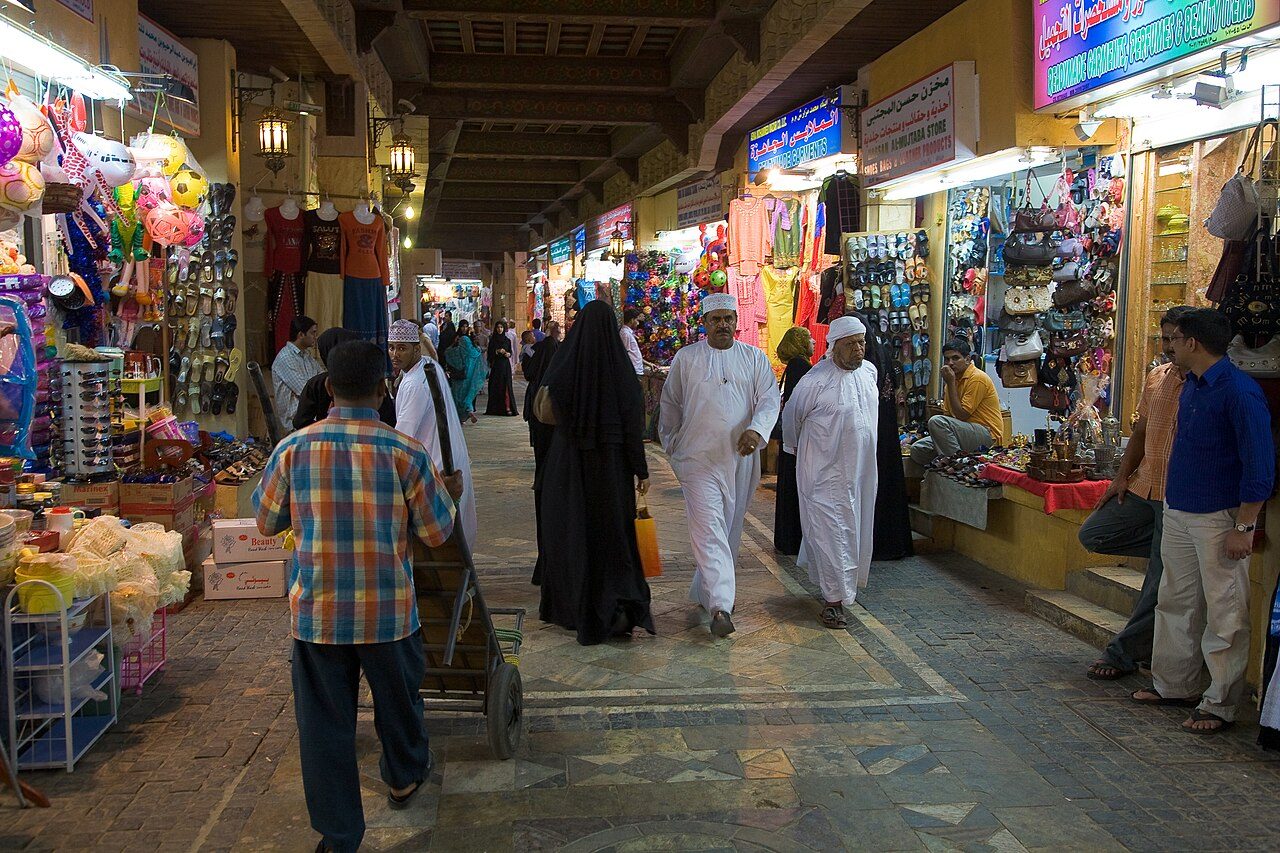
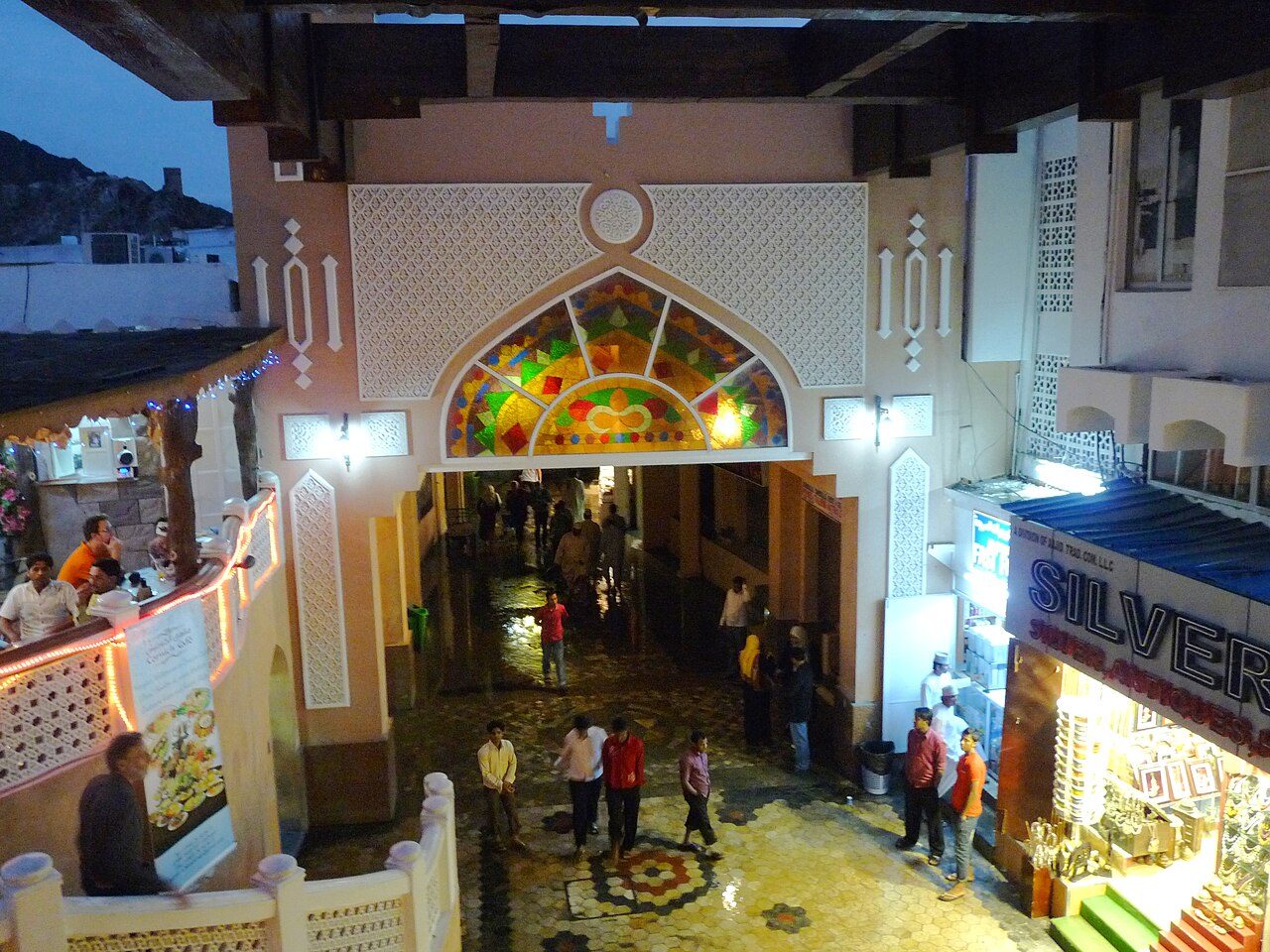
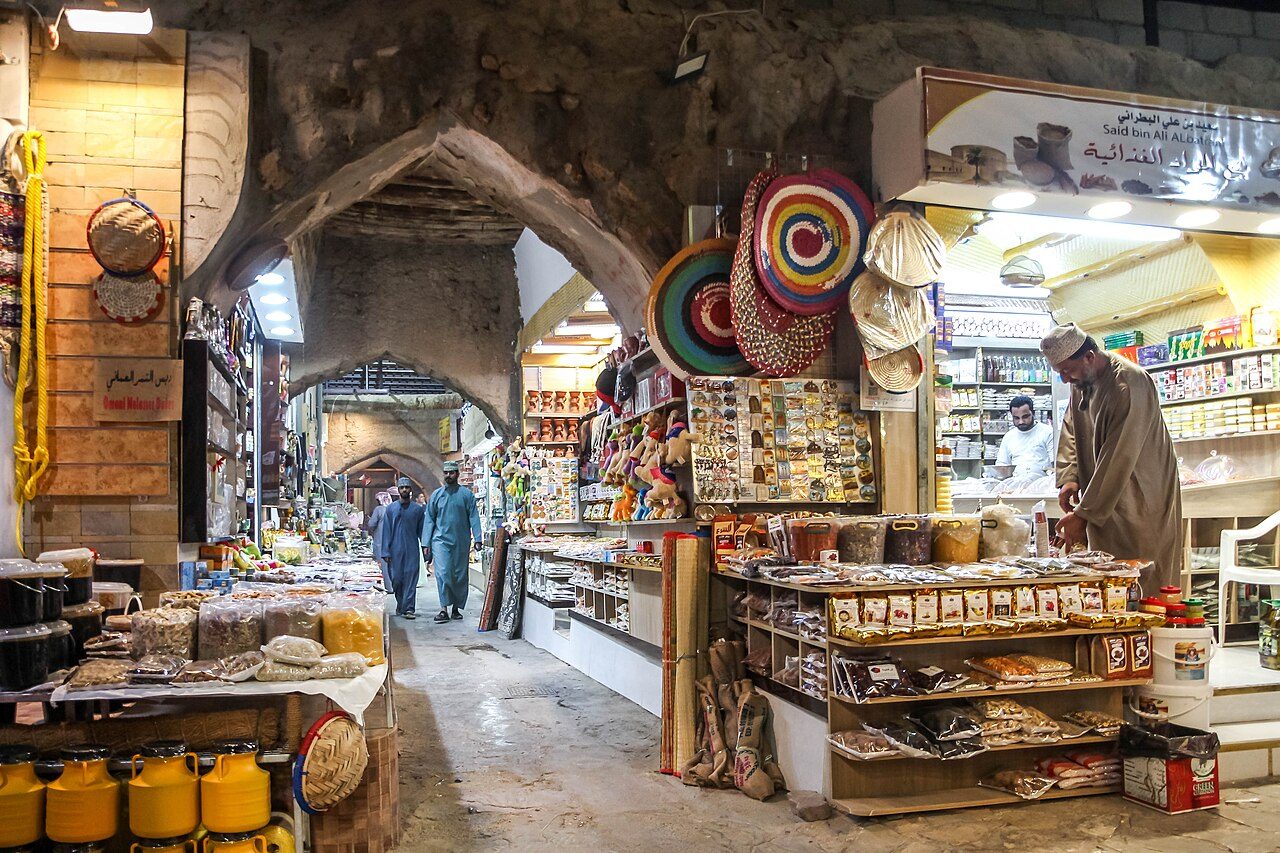
Mutrah Souq is one of the oldest markets in Oman, set just behind the corniche. It is sometimes called Al Dhalam, the dark souq, because its narrow covered lanes let in so little sunlight. Under a painted timber roof, stalls sell frankincense, silver khanjar daggers, spices, Omani caps, textiles and gold. The lanes branch off in many directions, and getting a little lost is part of the visit.
04
STOP 4 OF 17
Bimmah Sinkhole
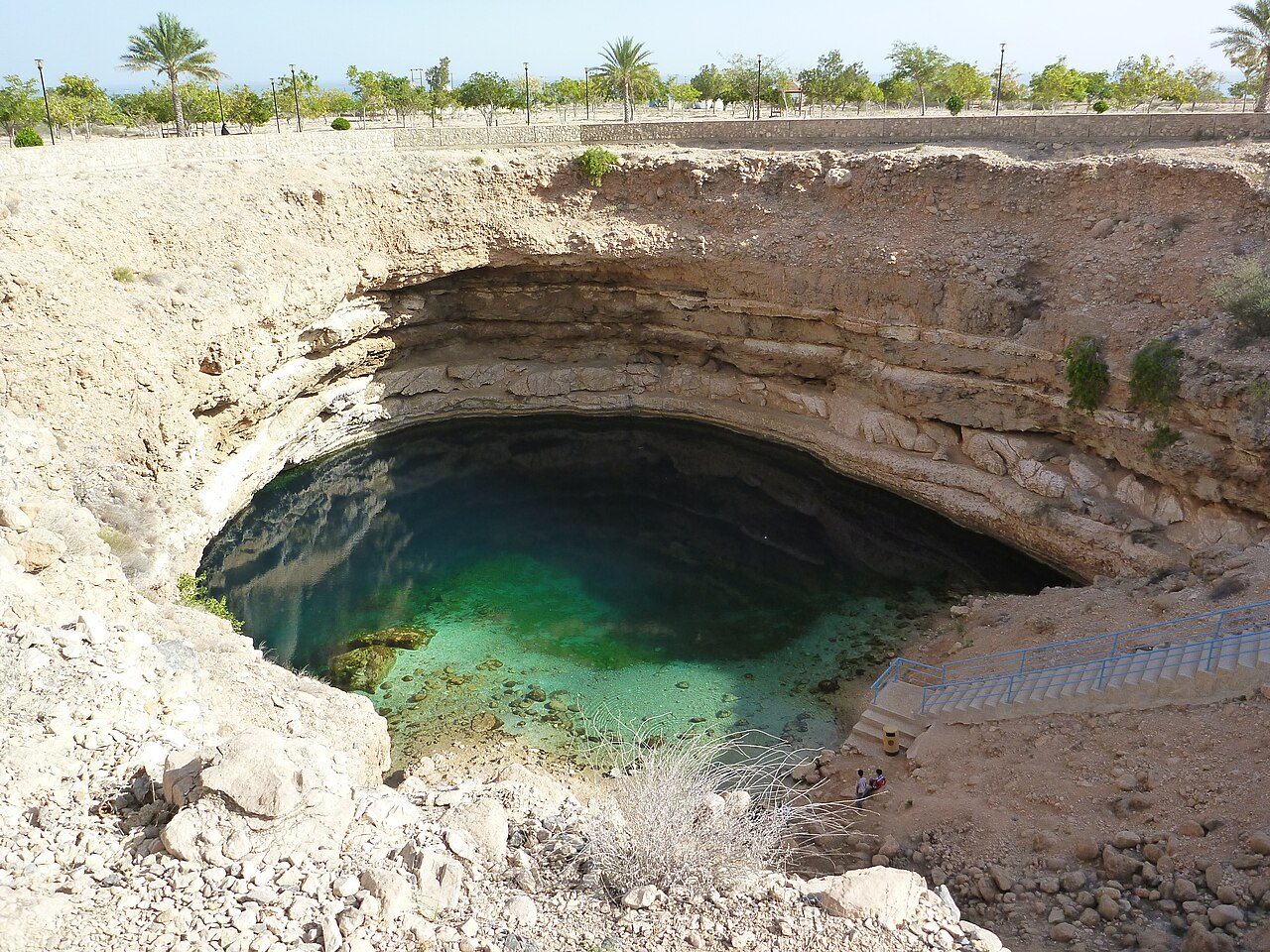
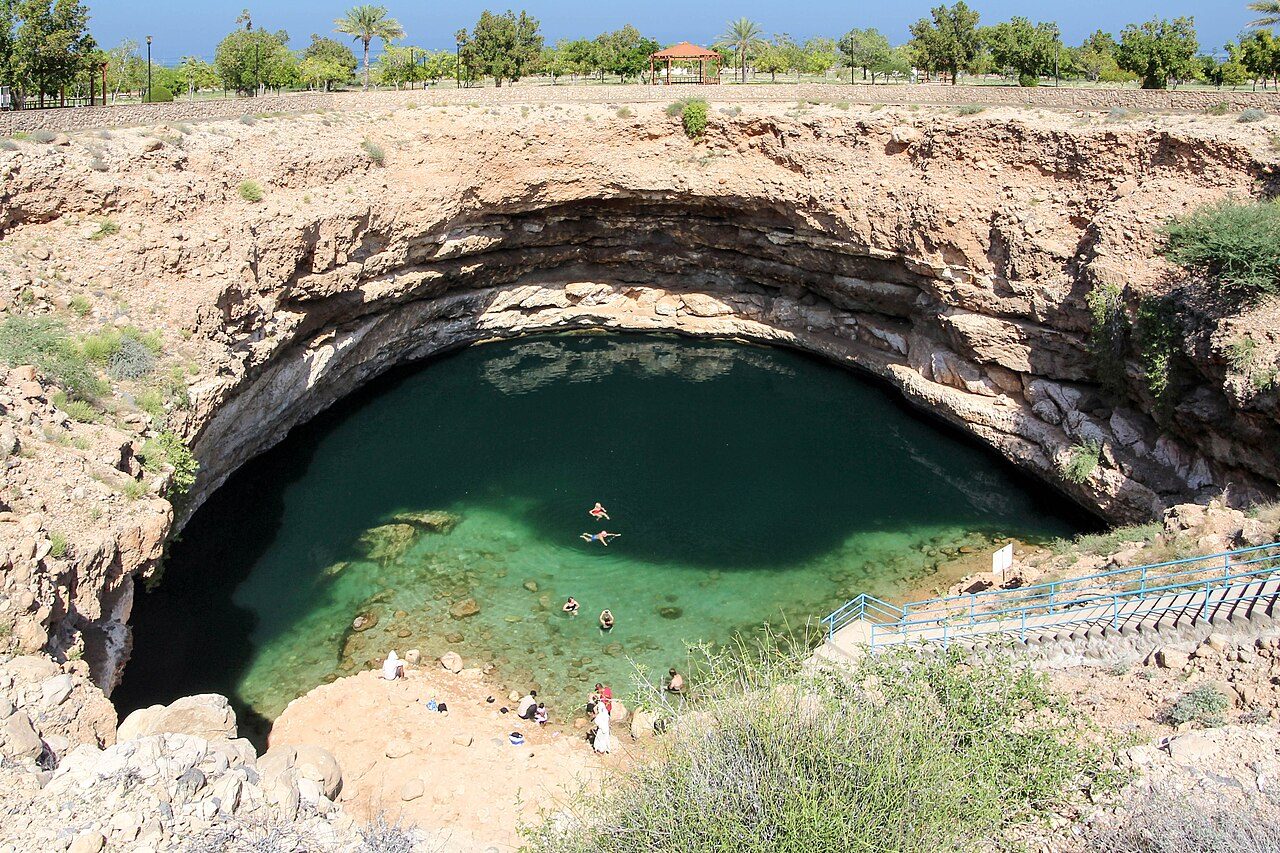
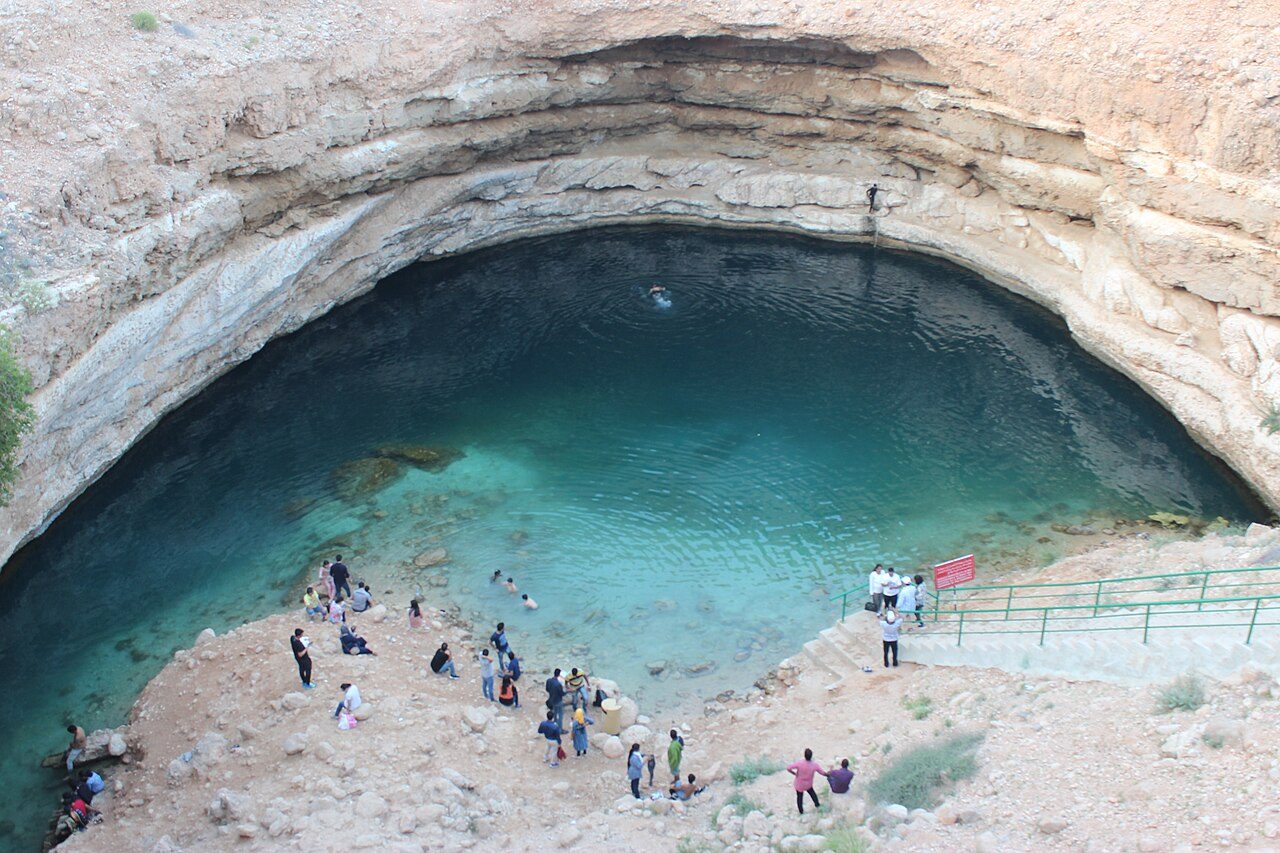
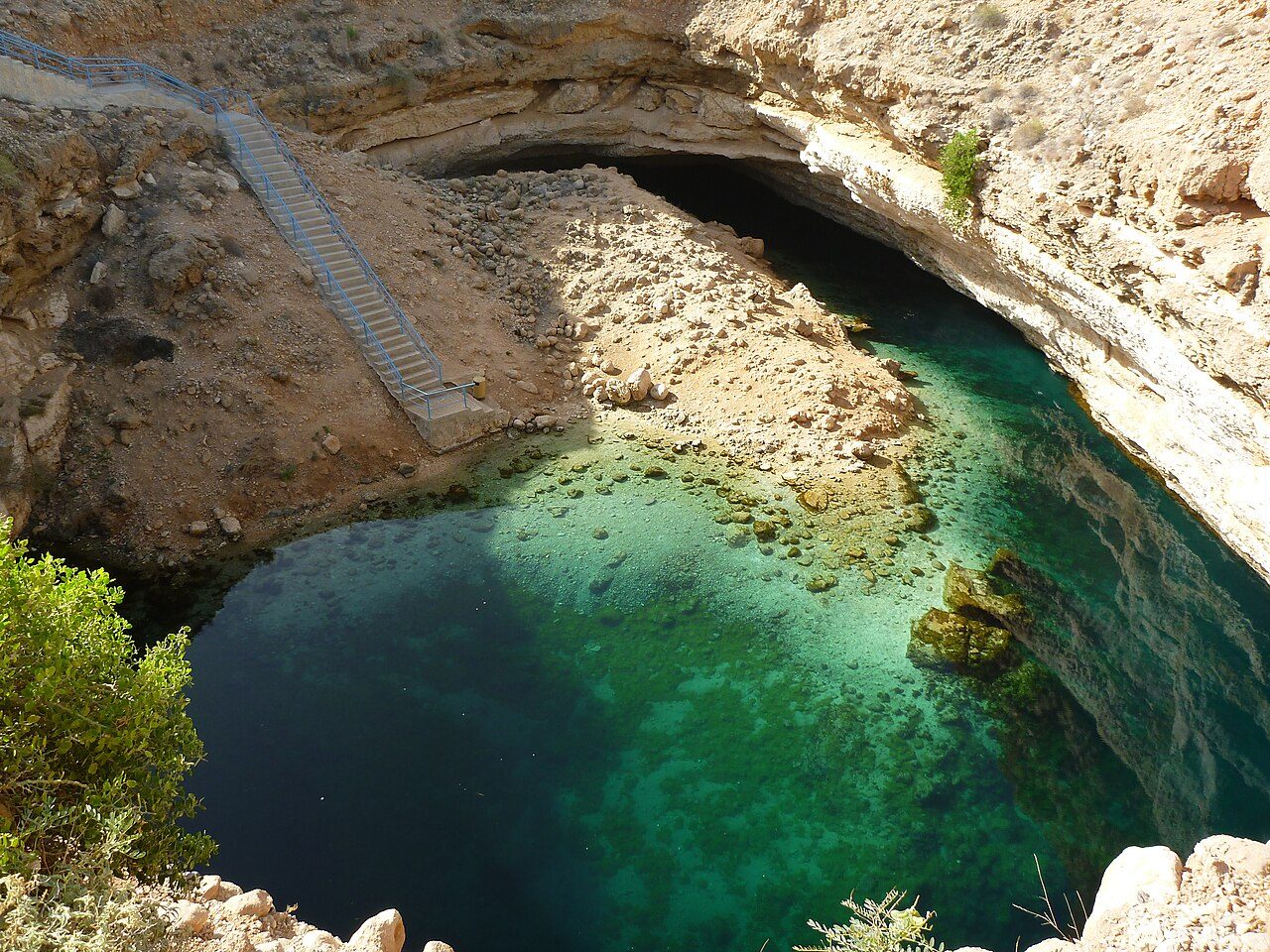
Bimmah Sinkhole is a natural pool of blue-green water in a limestone hollow near the coast road between Muscat and Sur. It formed when the roof of an underground cave collapsed. The hole is about 50 by 70 metres wide and around 20 metres deep. A stairway leads down to the water, where people swim. A small park, Hawiyat Najm Park, has been built around it.
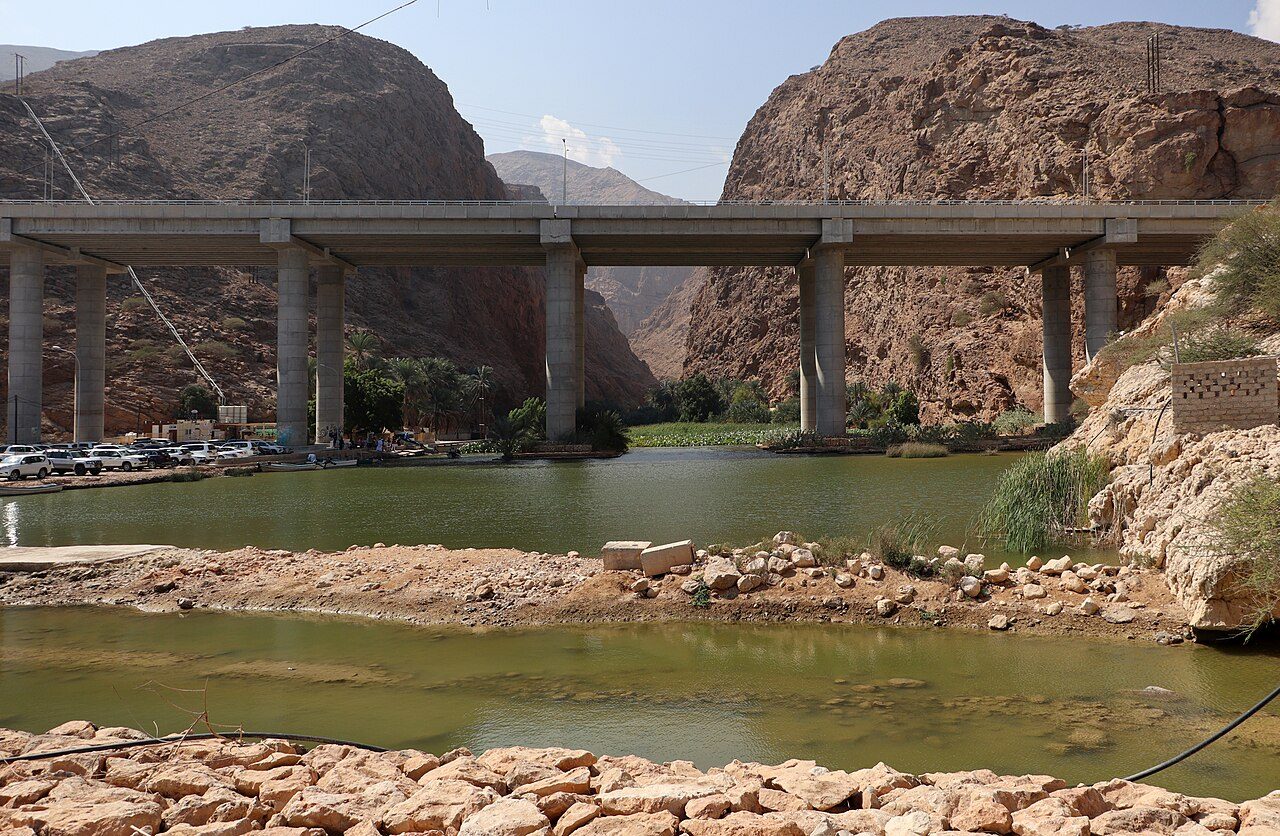
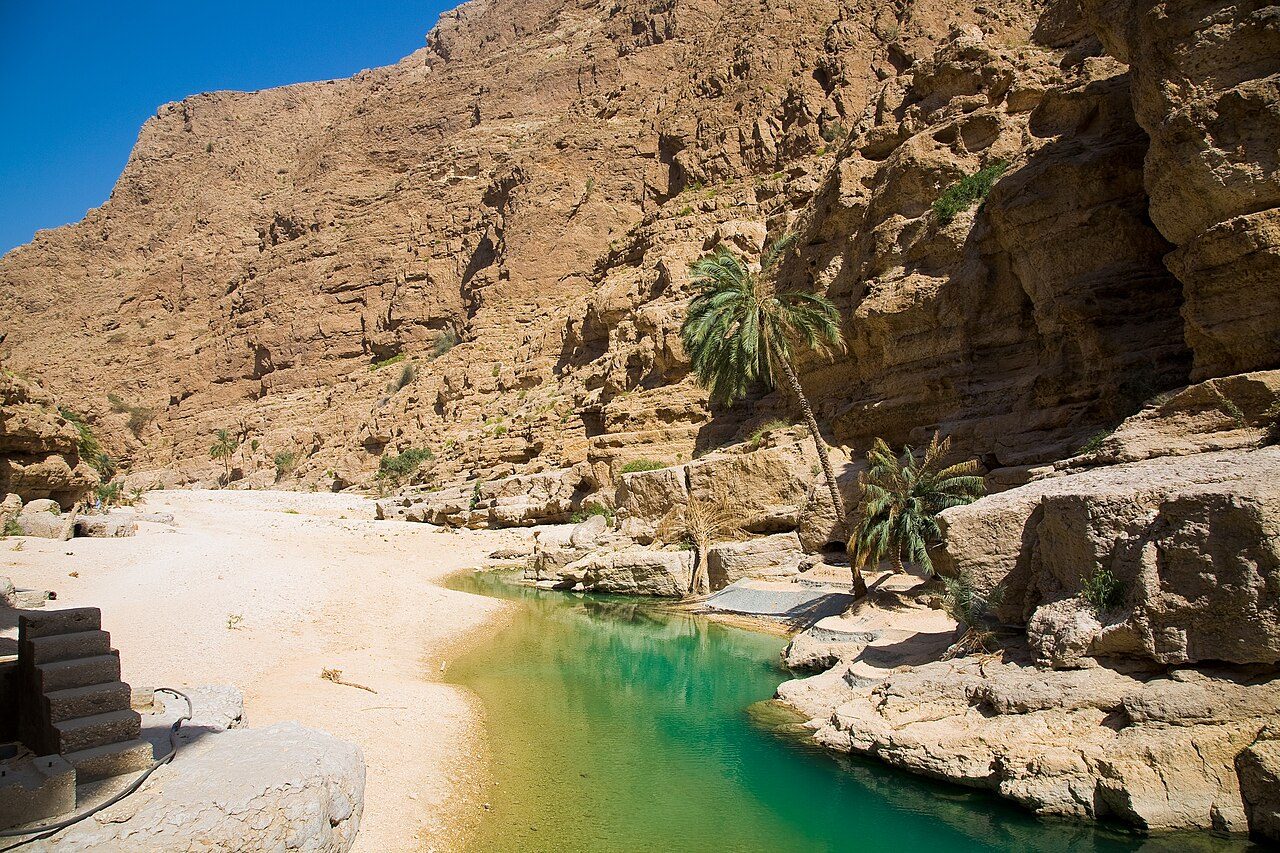
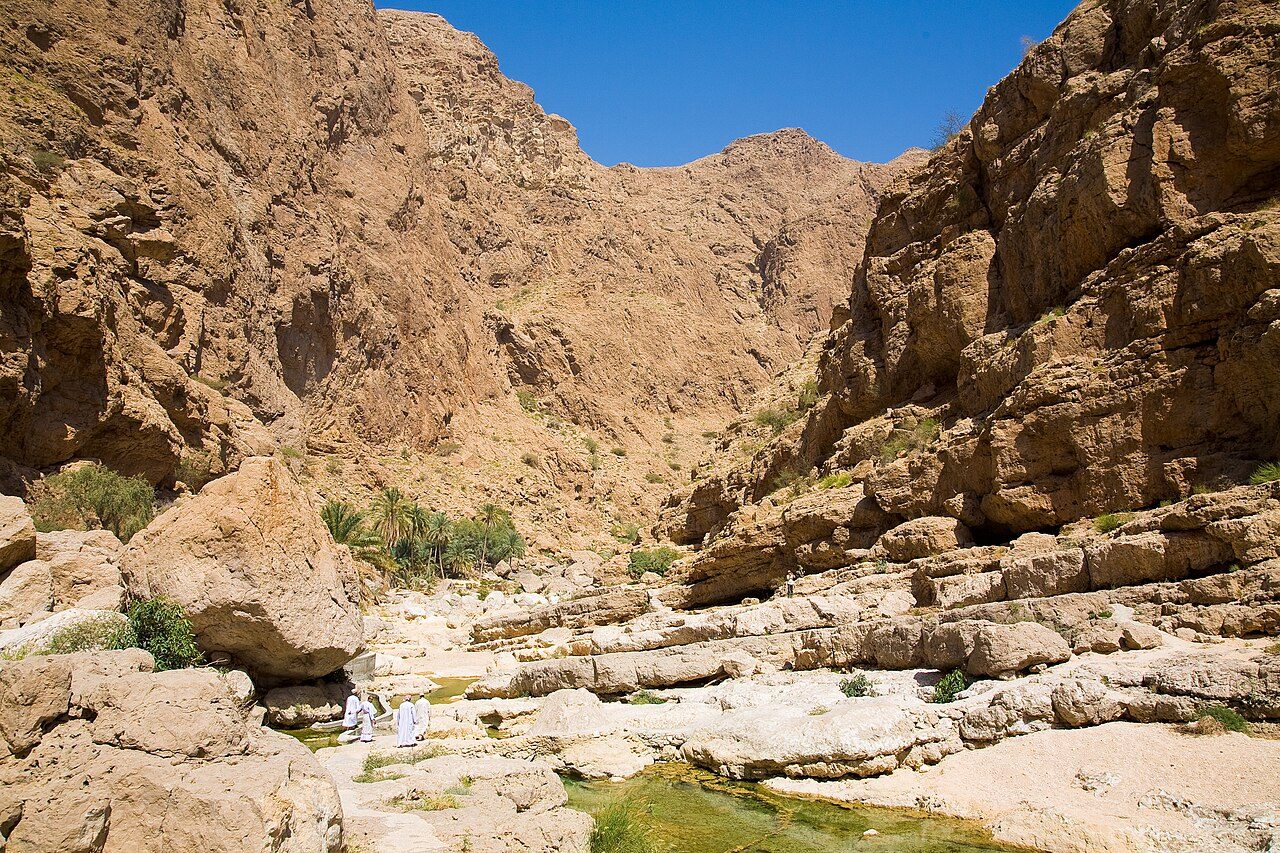
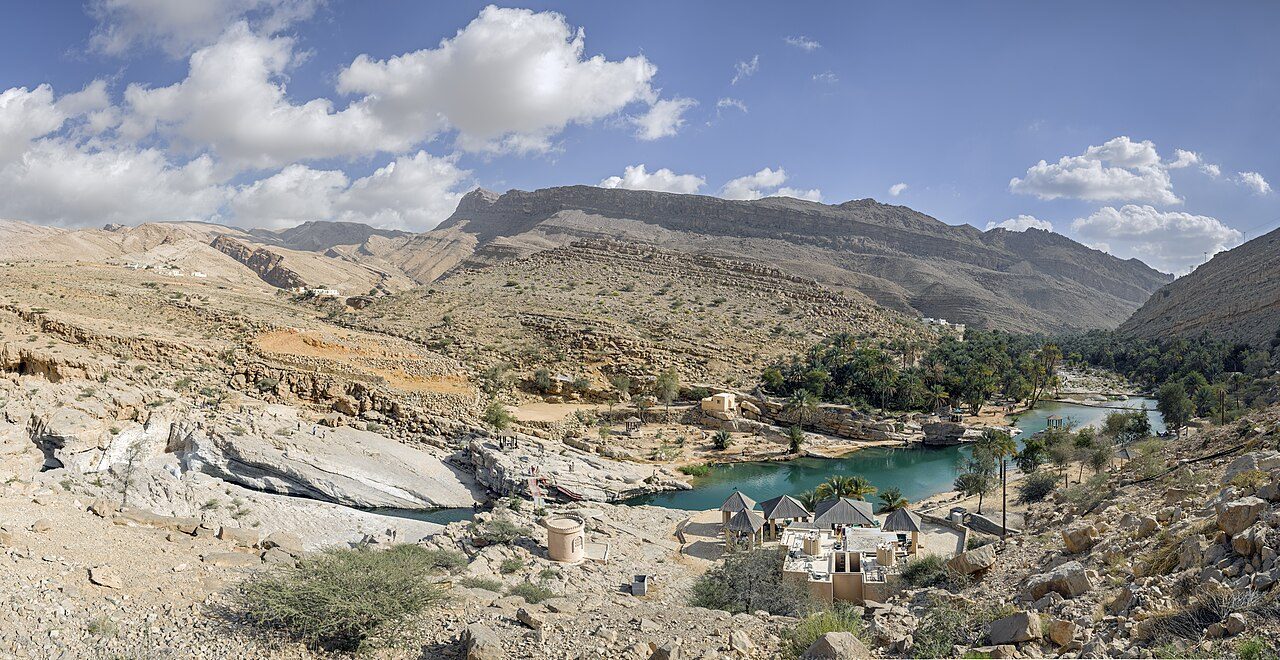
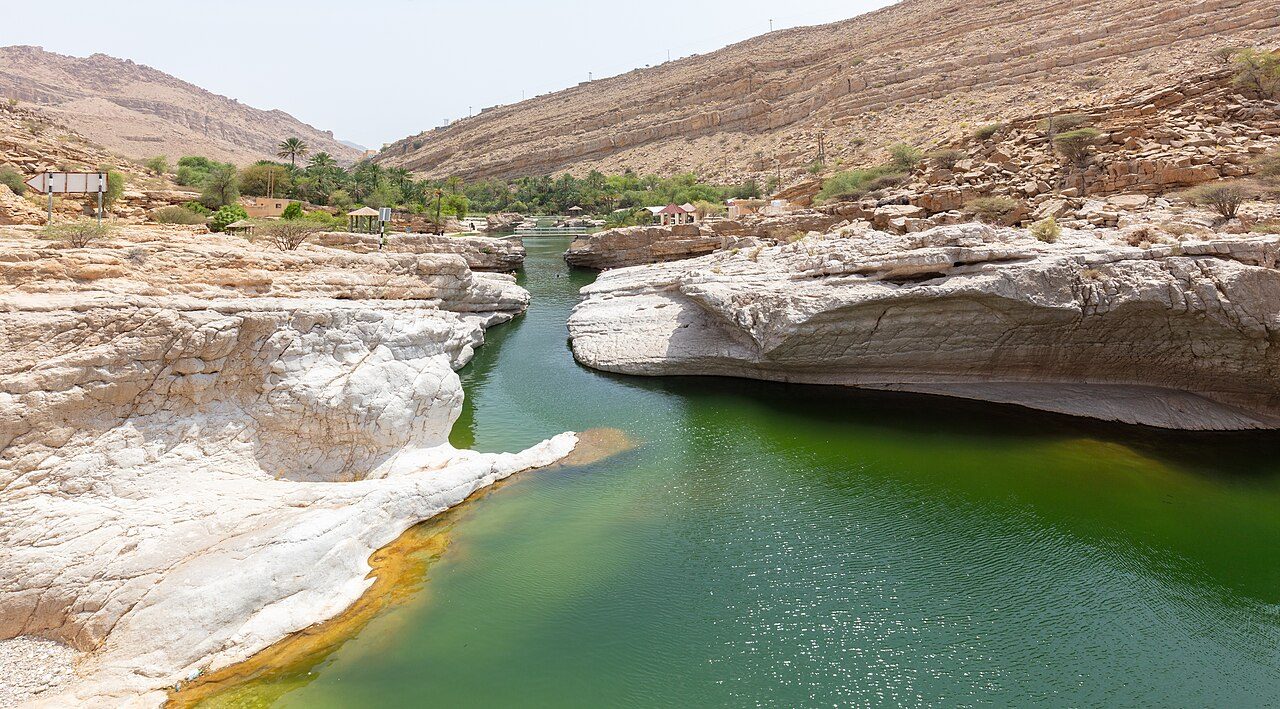
Wadi Shab is a narrow gorge that meets the sea near Tiwi, on the coast road to Sur. A short boat ride crosses the river mouth, then a path follows the canyon for about 45 minutes past palms, boulders and water channels. At the end are deep green pools for swimming. The last pool leads through a gap in the rock into a cave with a small waterfall.
06
STOP 6 OF 17
Sur Dhow Yard
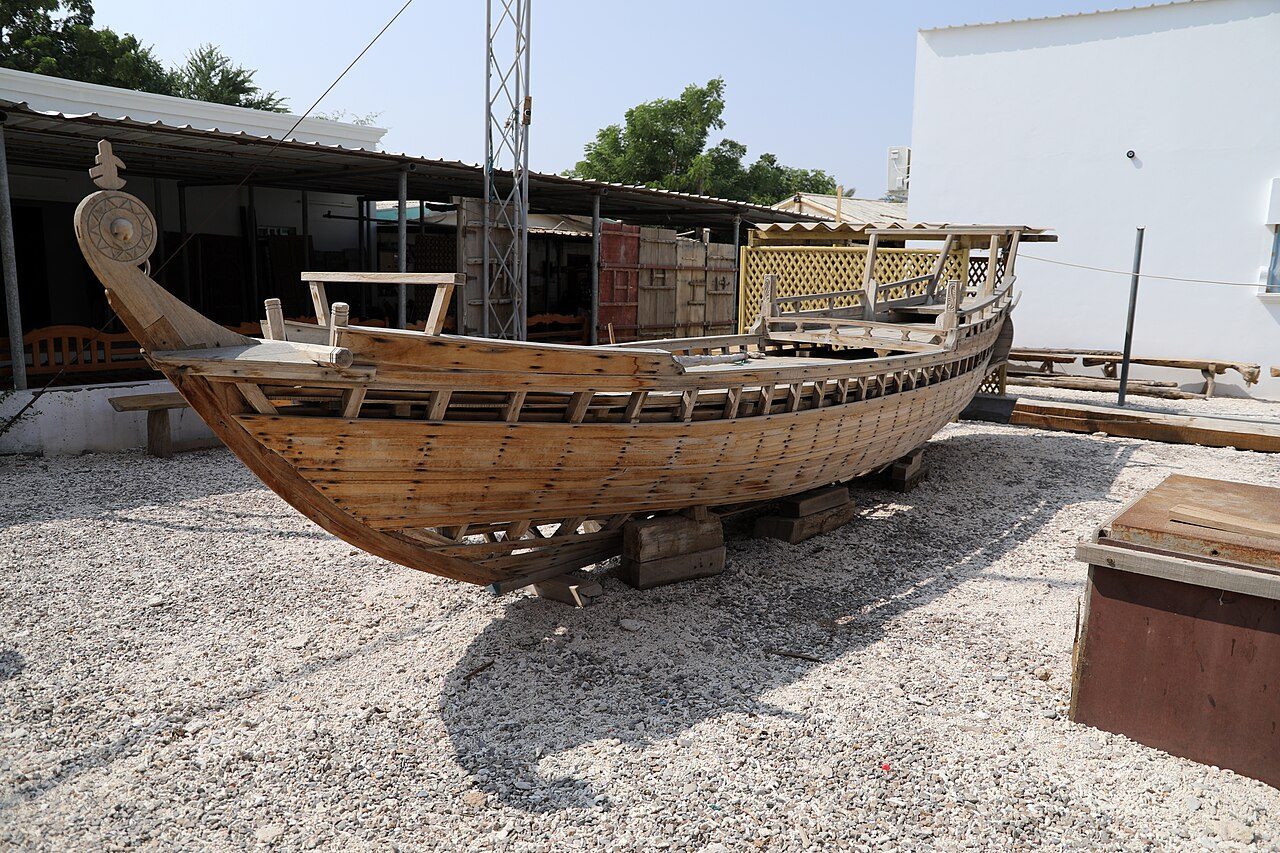
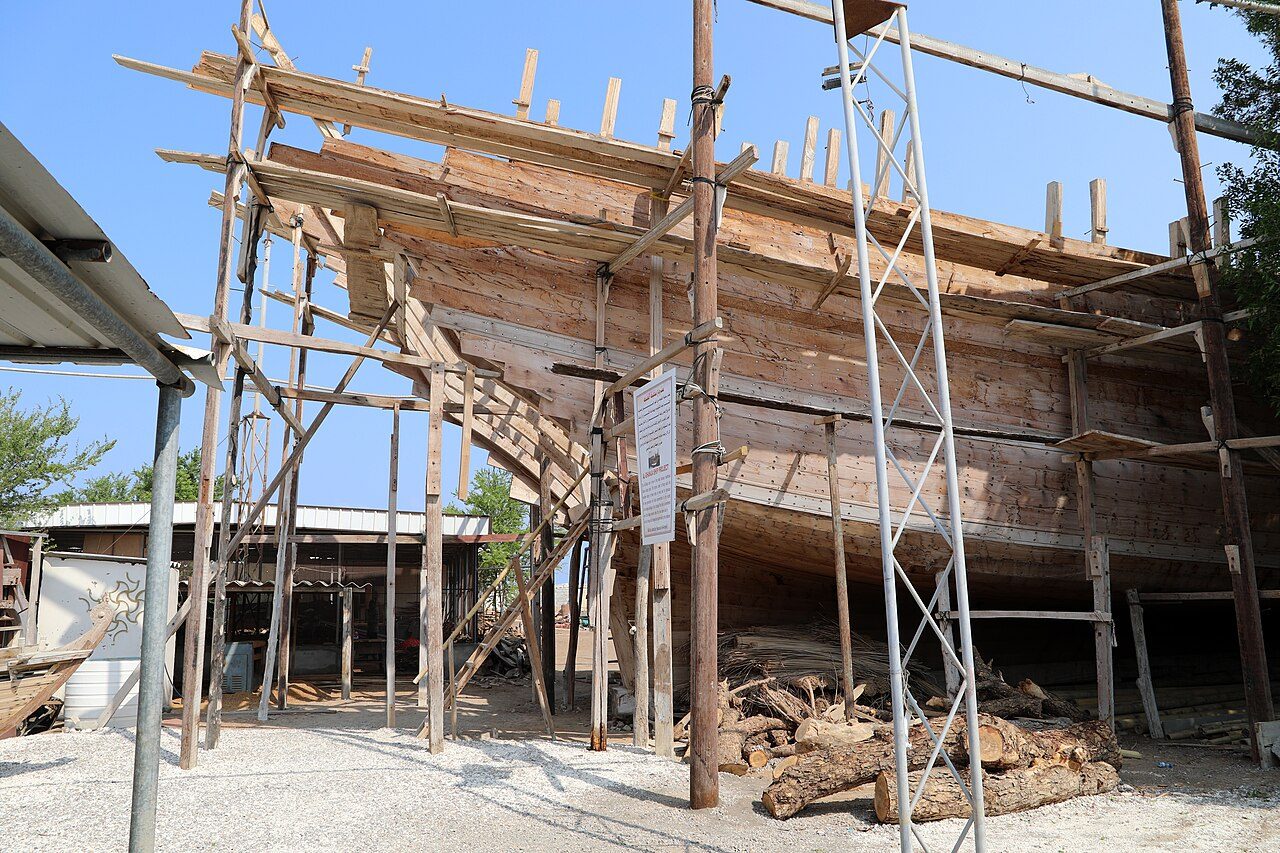
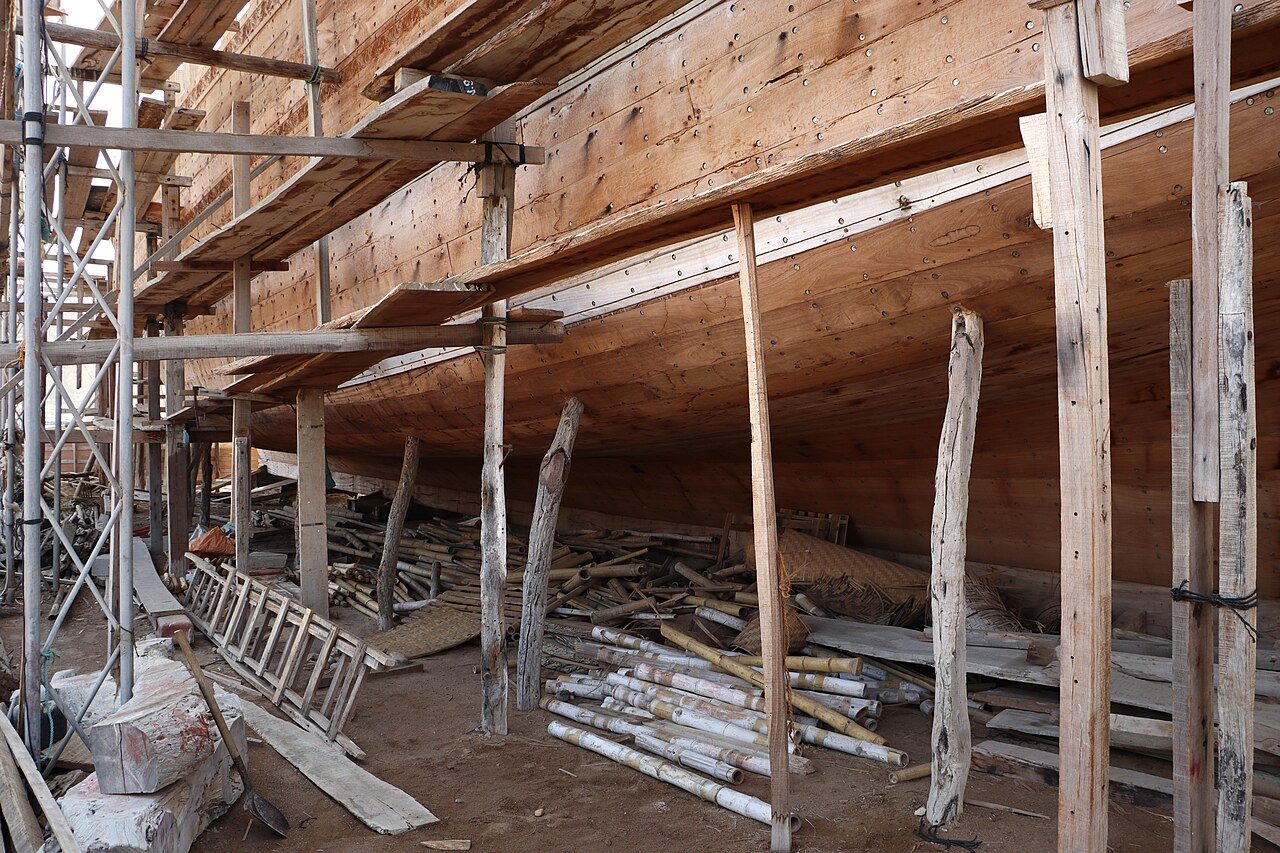
The dhow yard at Sur keeps alive the craft that made the town famous. For centuries Sur was a main shipbuilding centre of the Arabian Sea, and its wooden dhows sailed to India and East Africa. In the yard beside the lagoon, craftsmen still build large timber vessels largely by hand. Visitors can walk among the hulls and watch the carpenters at work.
07
STOP 7 OF 17
Ras Al Jinz Turtle Reserve
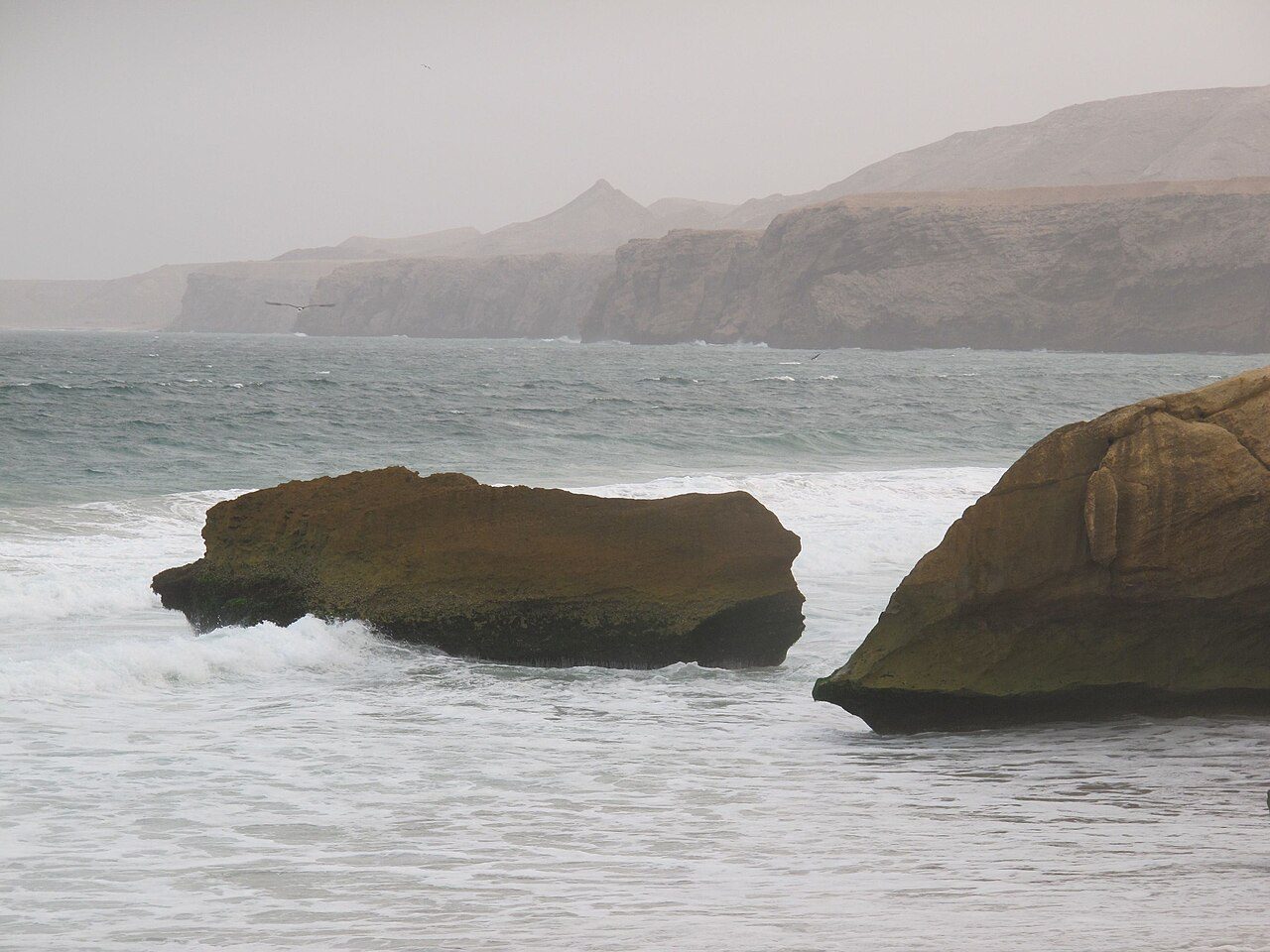
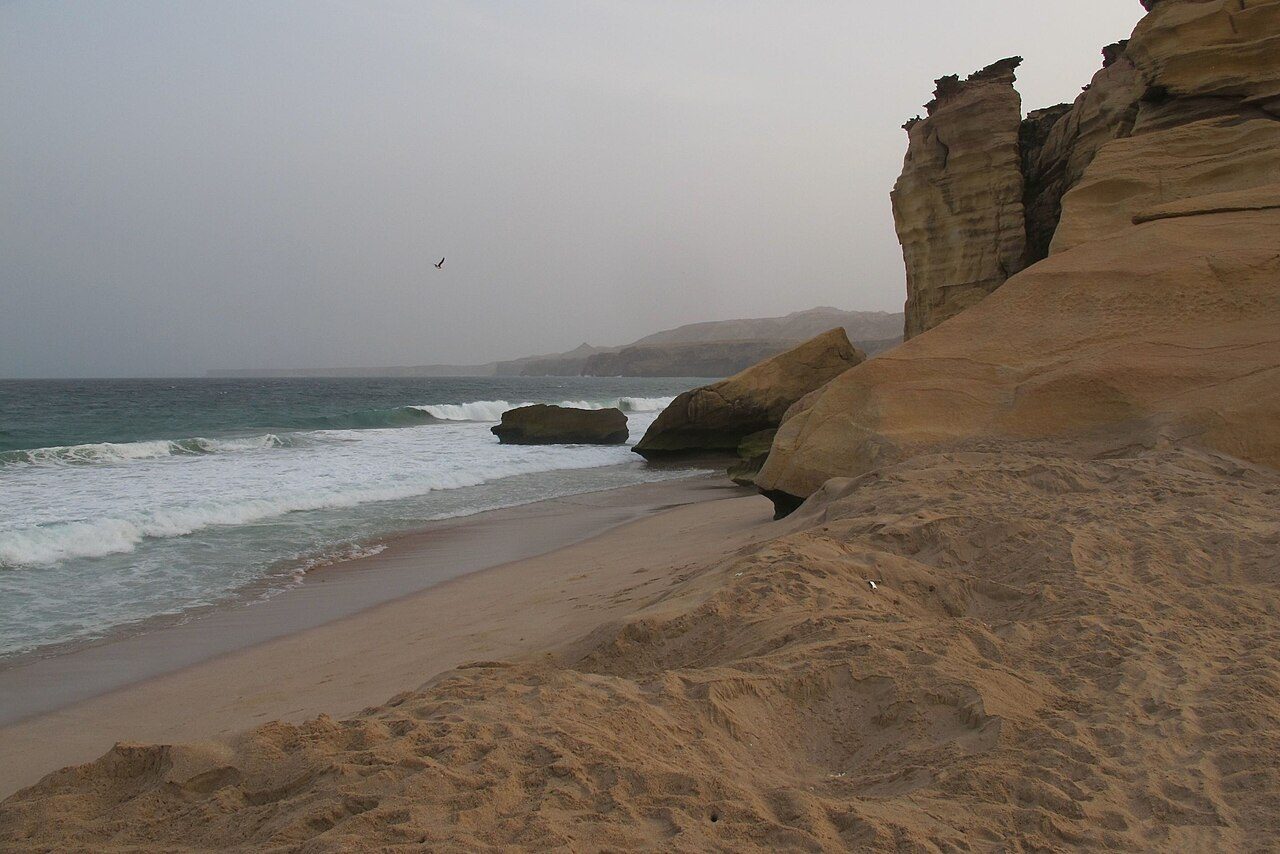
Ras Al Jinz is the easternmost point of the Arabian Peninsula and one of the most important nesting beaches for green turtles in the Indian Ocean. Turtles come ashore here almost every night of the year, with the peak in summer. The area is a protected reserve. Visitors join guided walks from the visitor centre at night or before dawn to watch the turtles nesting.
08
STOP 8 OF 17
Wadi Bani Khalid
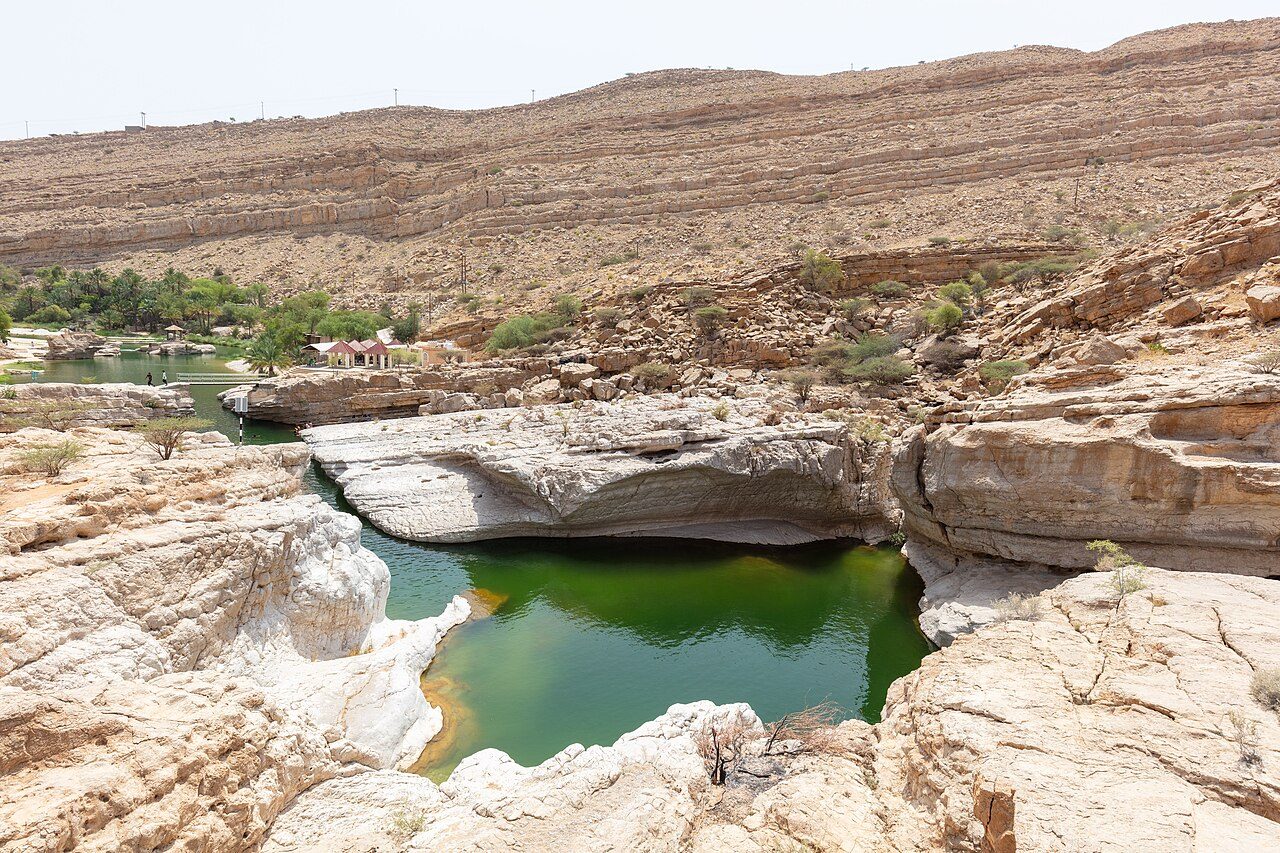
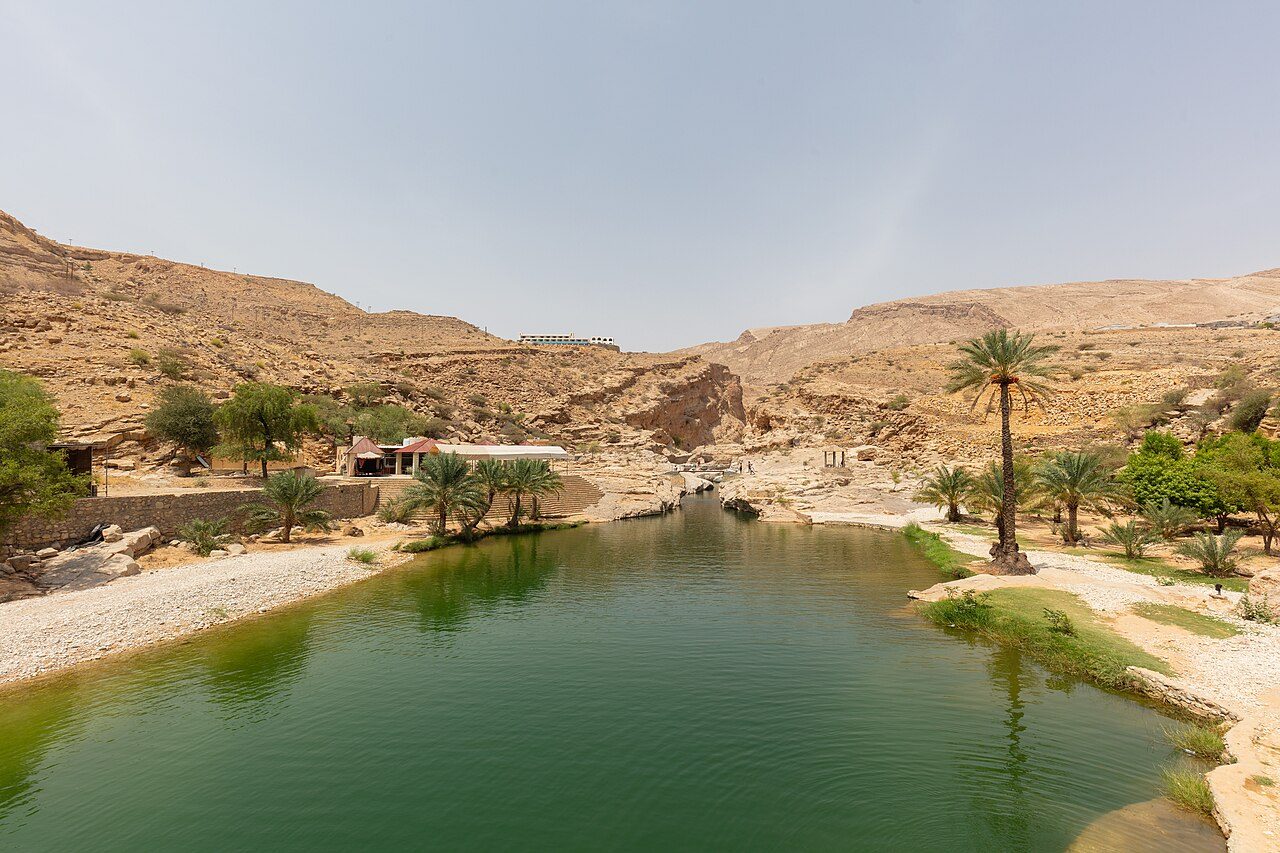
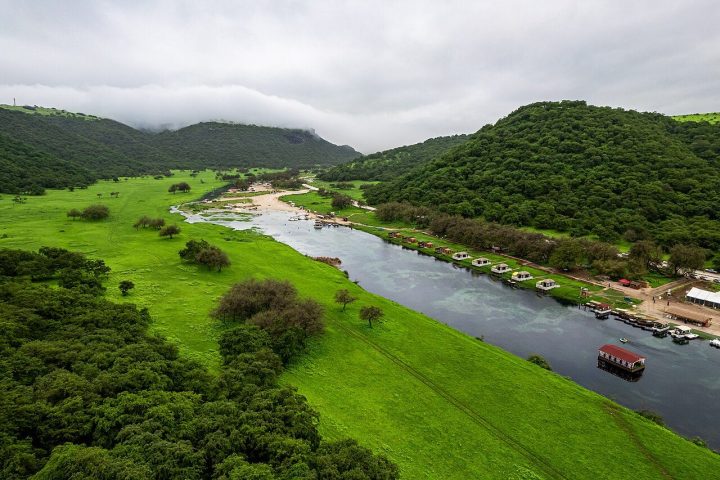
Wadi Bani Khalid is one of the best known wadis in Oman. A spring keeps its stream flowing all year, feeding large pools of clear green water among pale boulders and date palms. The main pool is easy to reach by a short path and has a small cafe. Further up, the gorge narrows to smaller pools and a cave. Villages and gardens line the valley below.
09
STOP 9 OF 17
Wahiba Sands
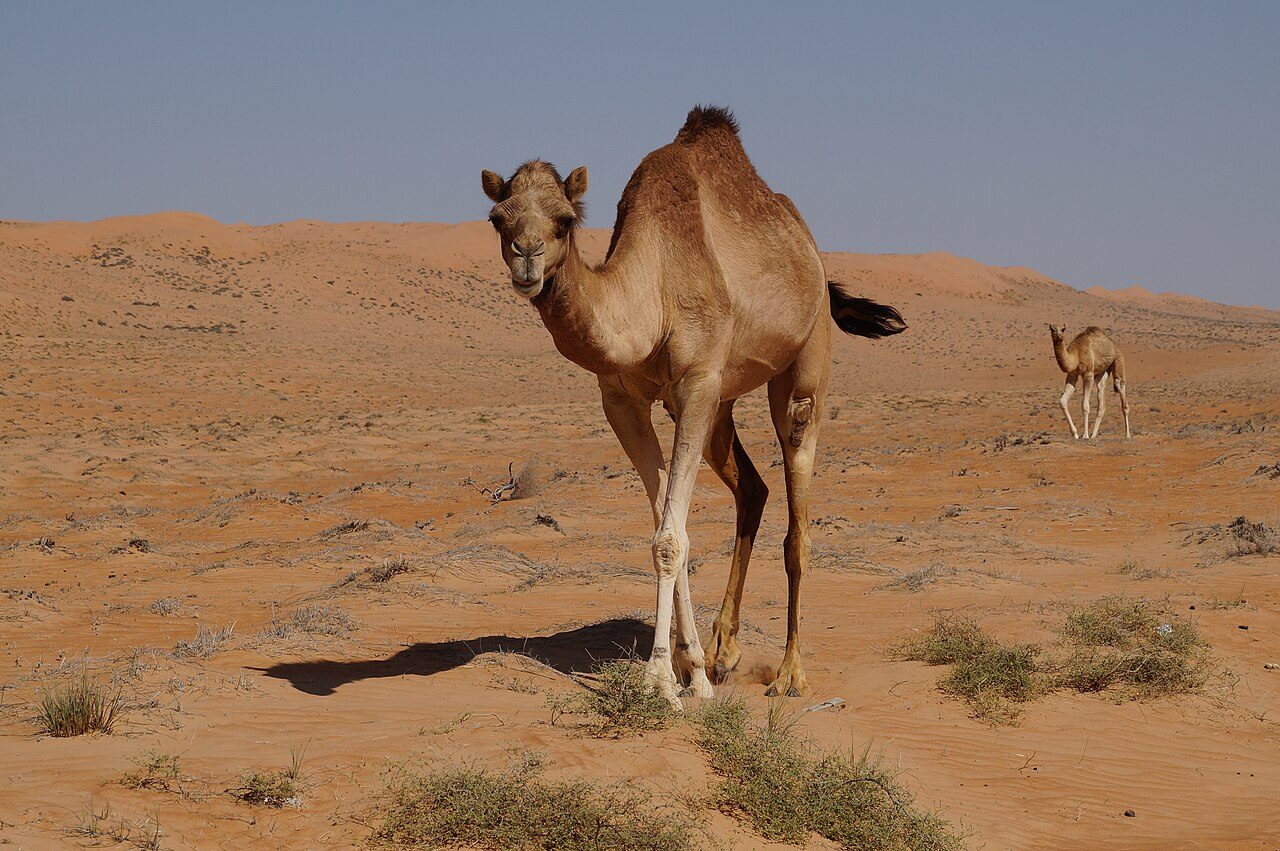
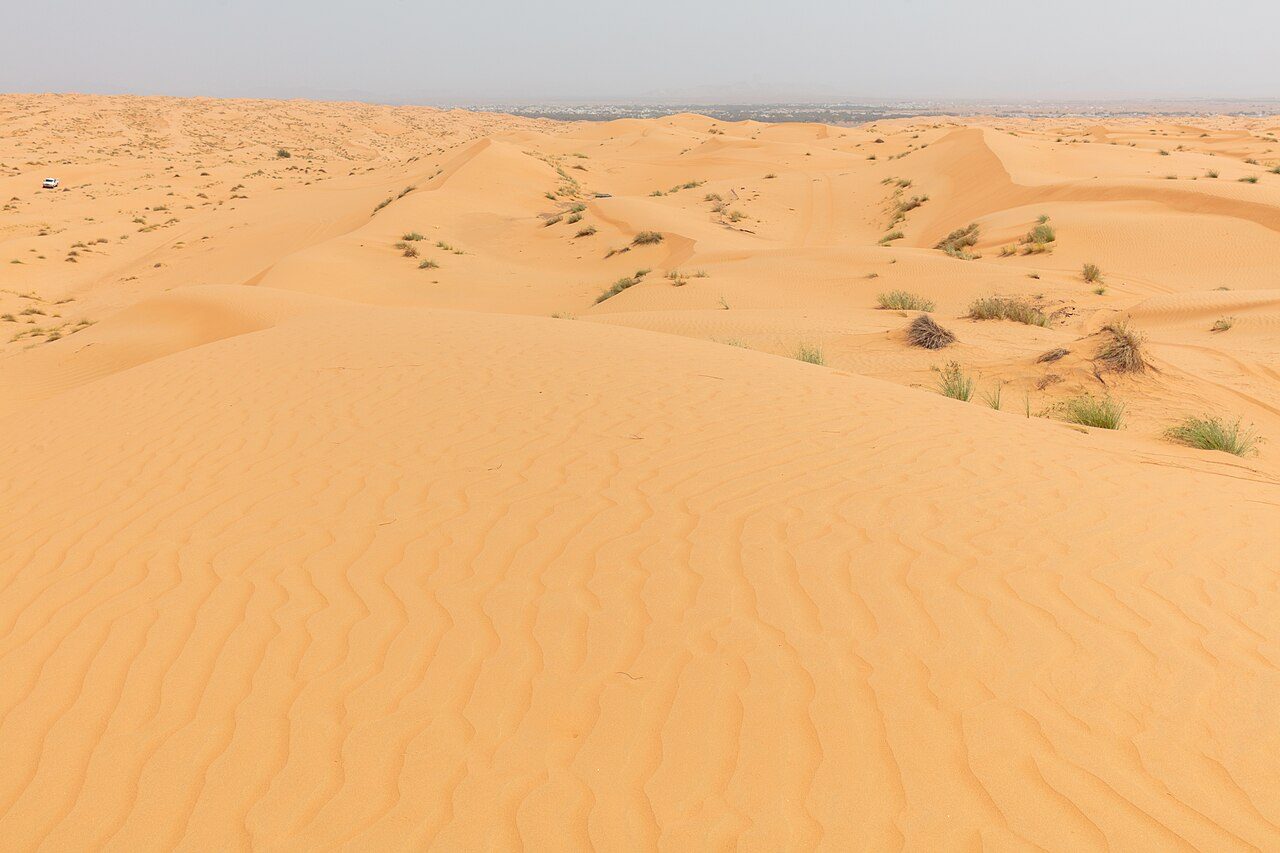
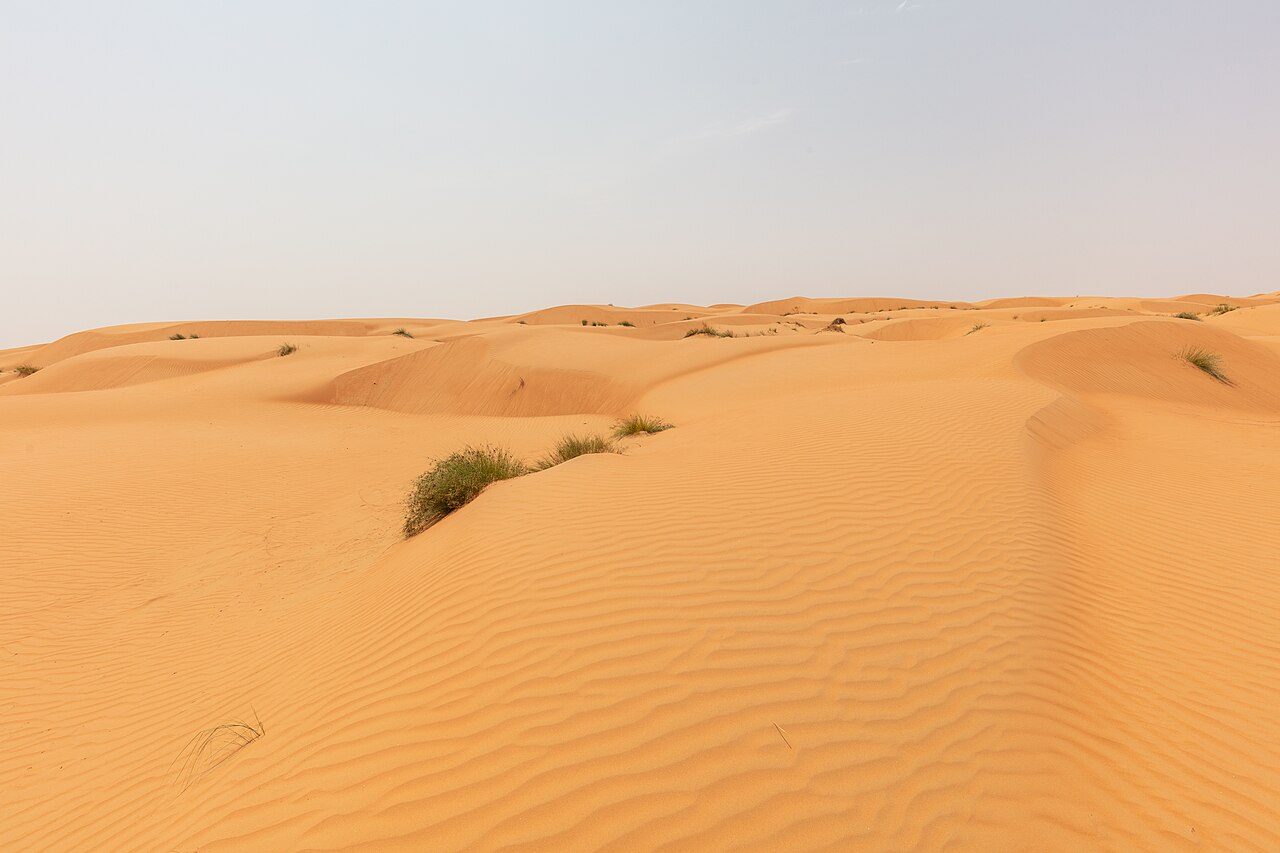
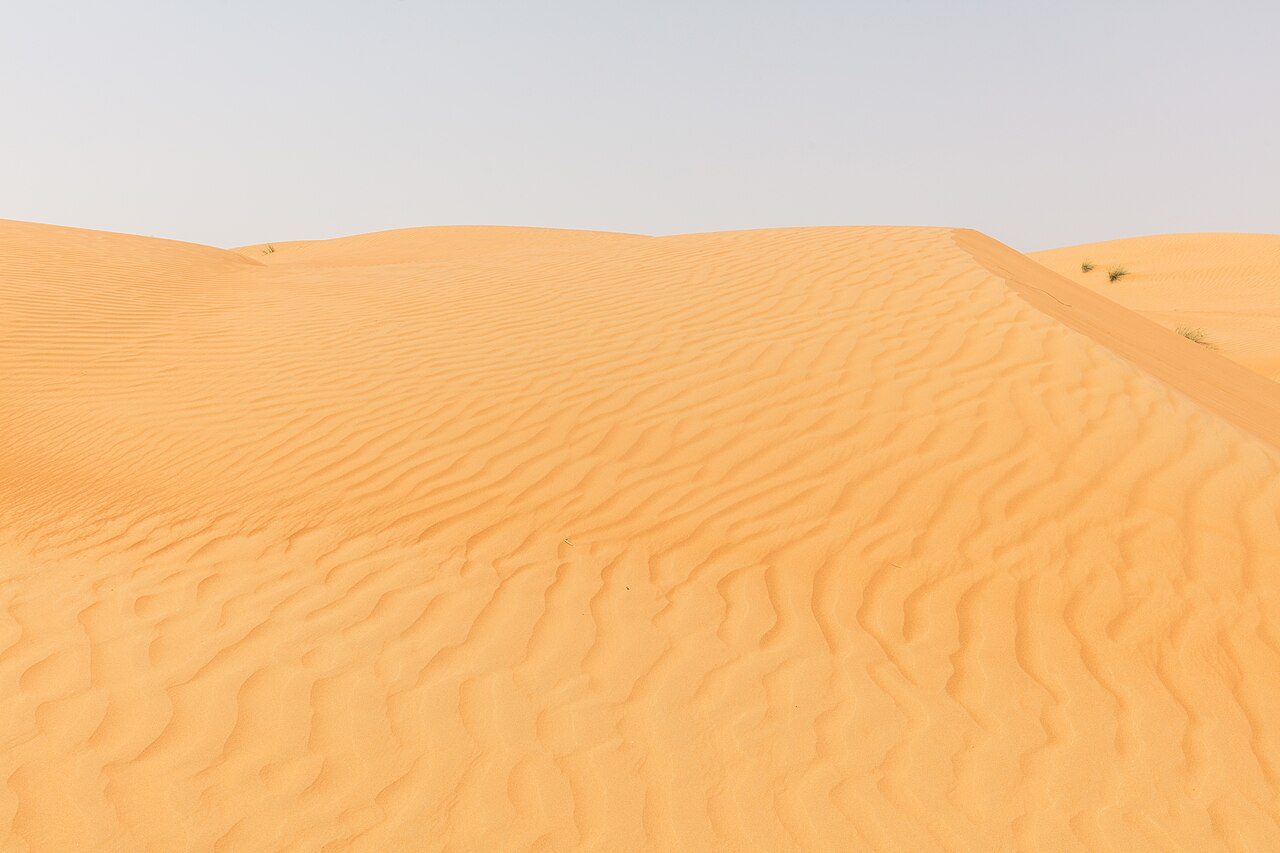
The Wahiba Sands, also called the Sharqiyah Sands, are a sea of dunes covering about 12,500 square kilometres in eastern Oman. Long ridges of orange sand run north to south, some rising about 100 metres. Bedouin families still live along the edges with their camels and goats. Visitors come from Bidiyah to drive over the dunes, ride camels and stay in desert camps.
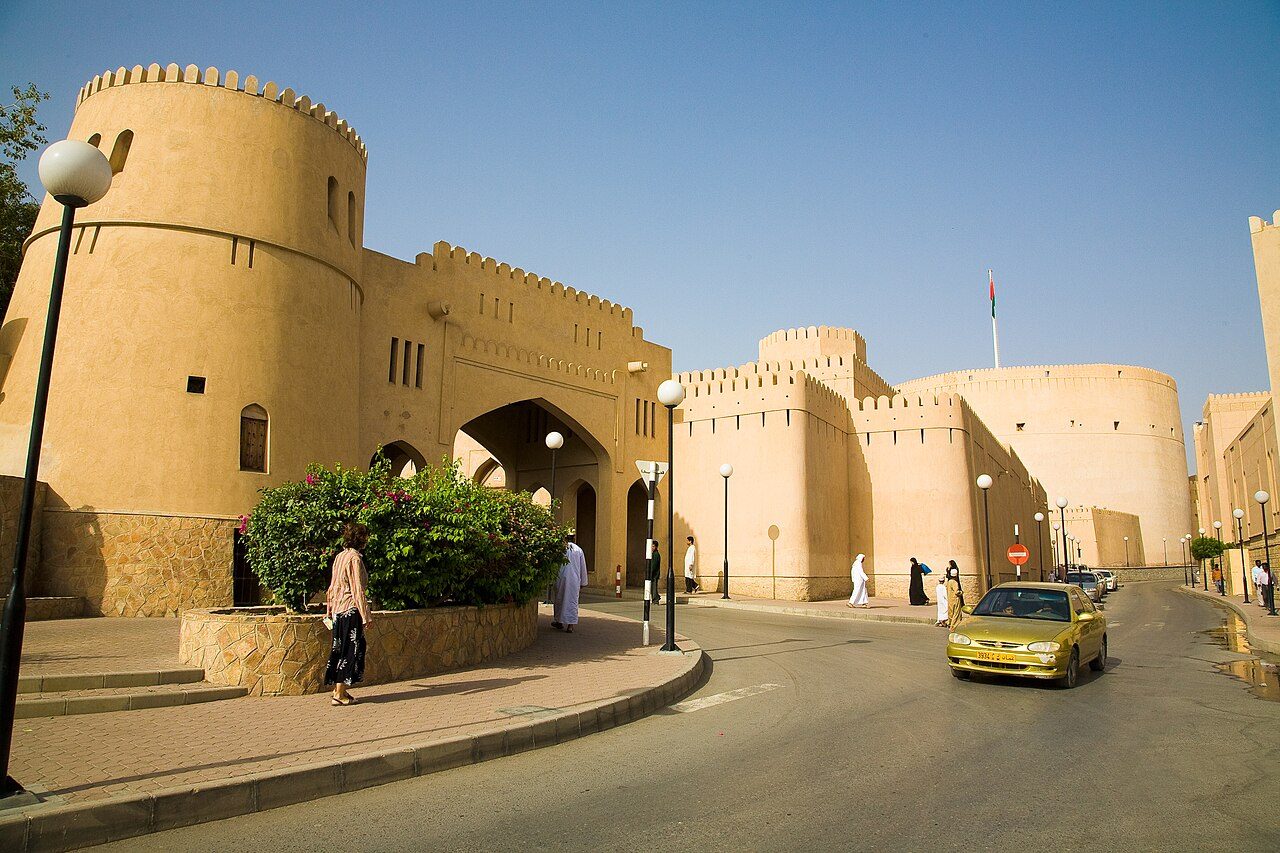
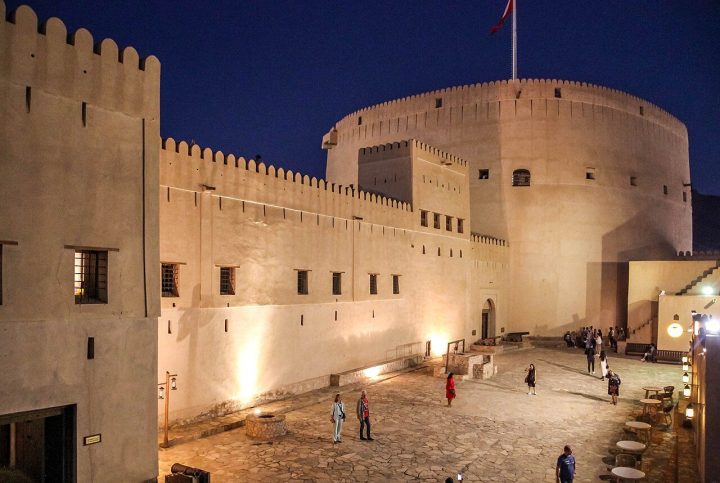
Nizwa Fort was built in the 1650s by Imam Sultan bin Saif Al Yarubi, and took about twelve years to complete. Its huge round tower, about 36 metres across, is the largest of its kind in Oman. Inside are stairways with trap doors, pits and shafts for pouring hot date syrup on attackers. From the top there are views over the palm groves, the souq and the Hajar Mountains.
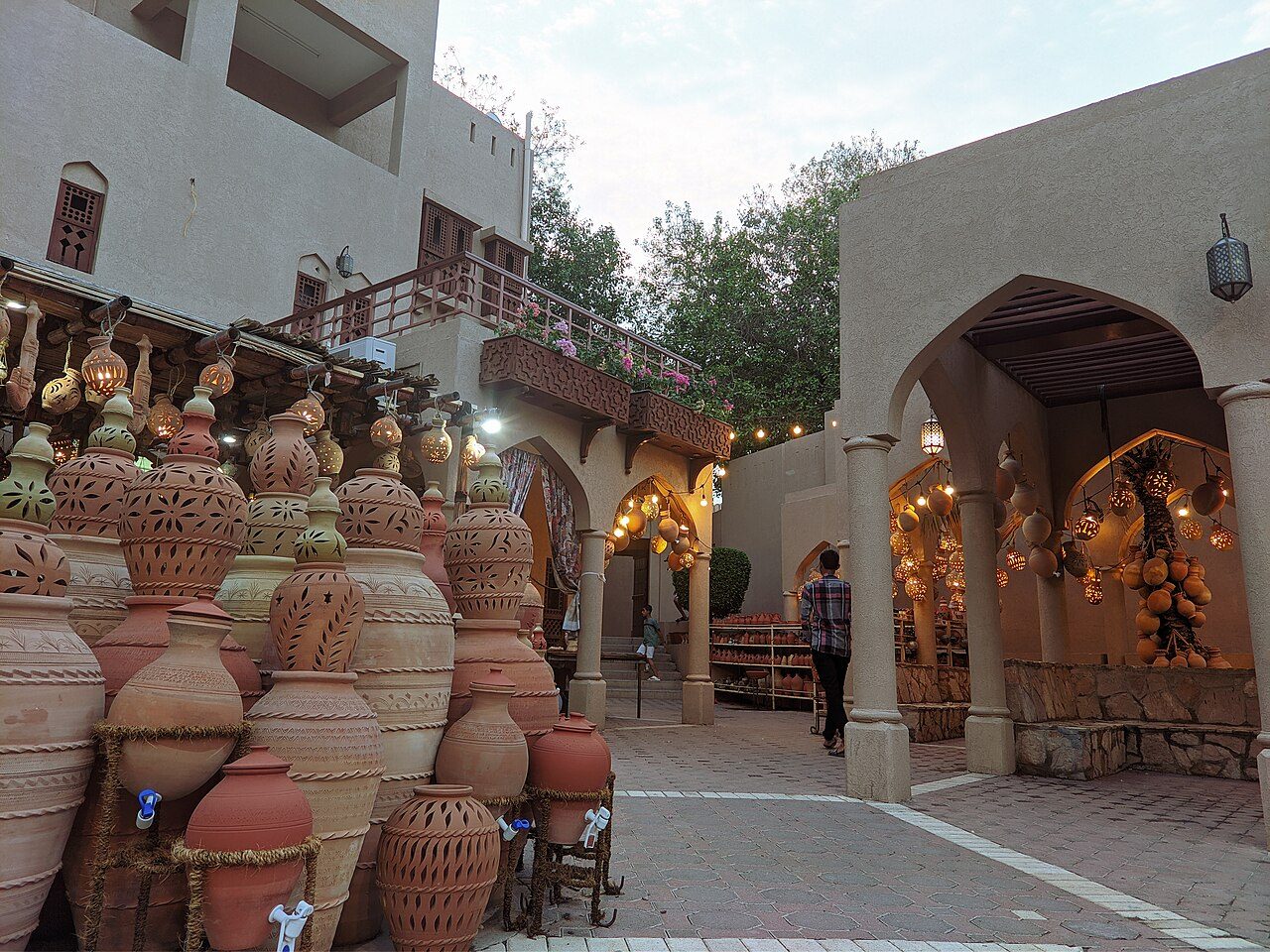
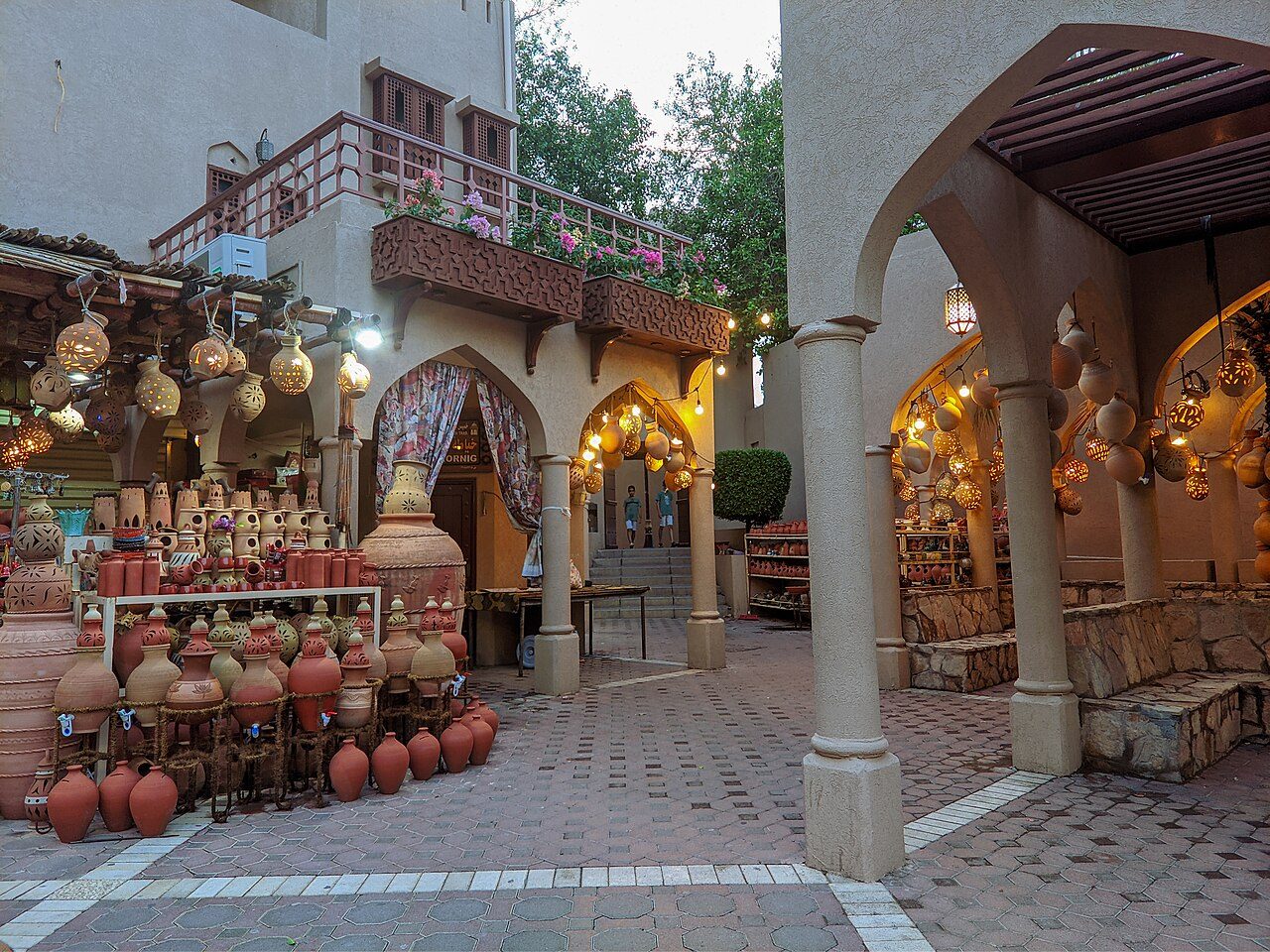
Nizwa Souq lies beside the fort in the old capital of Oman's interior. It is one of the oldest markets in the country. Separate halls sell dates, vegetables, meat, fish, spices and halwa, while other shops are known for silver khanjars, pottery and copper work. On Friday mornings a lively goat and cattle market is held, where animals are led around a ring of buyers.
12
STOP 12 OF 17
Jebel Shams
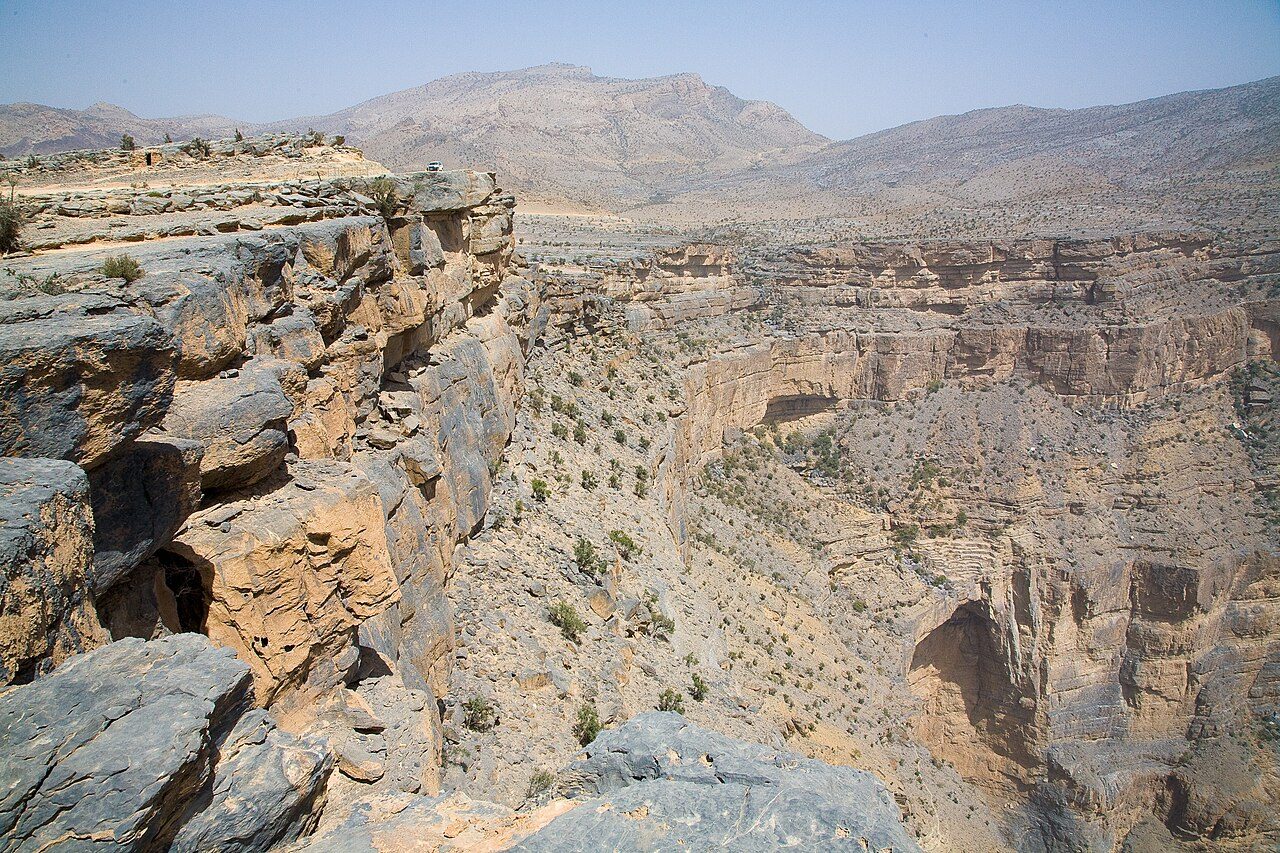
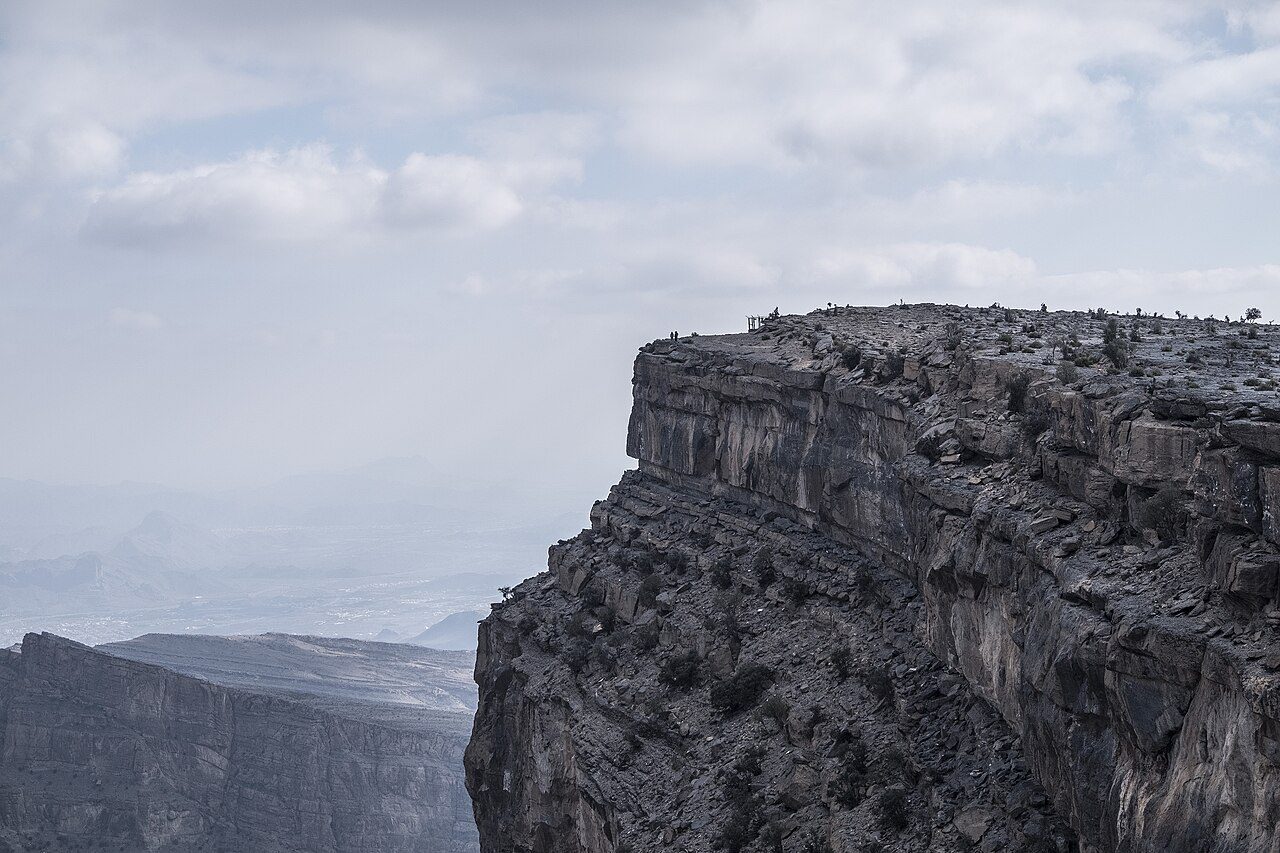
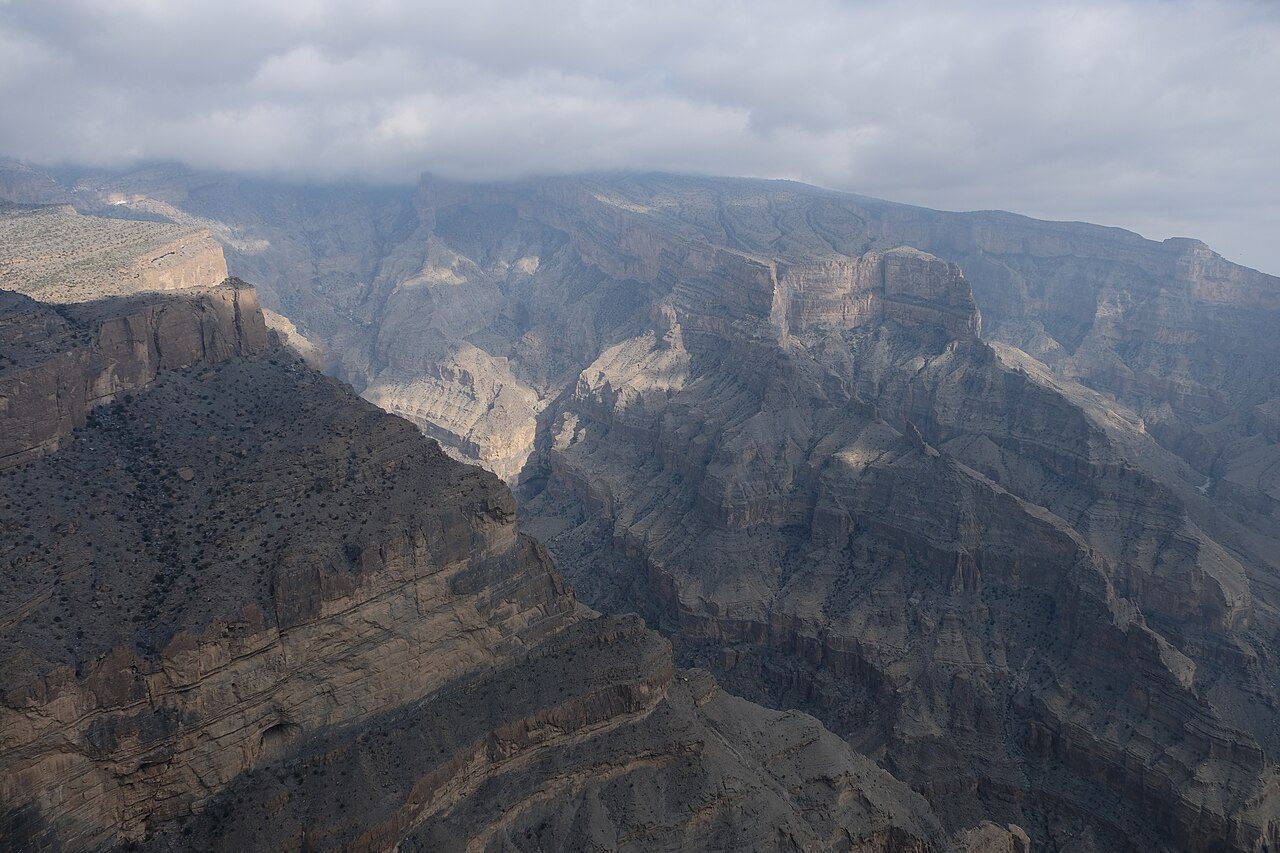
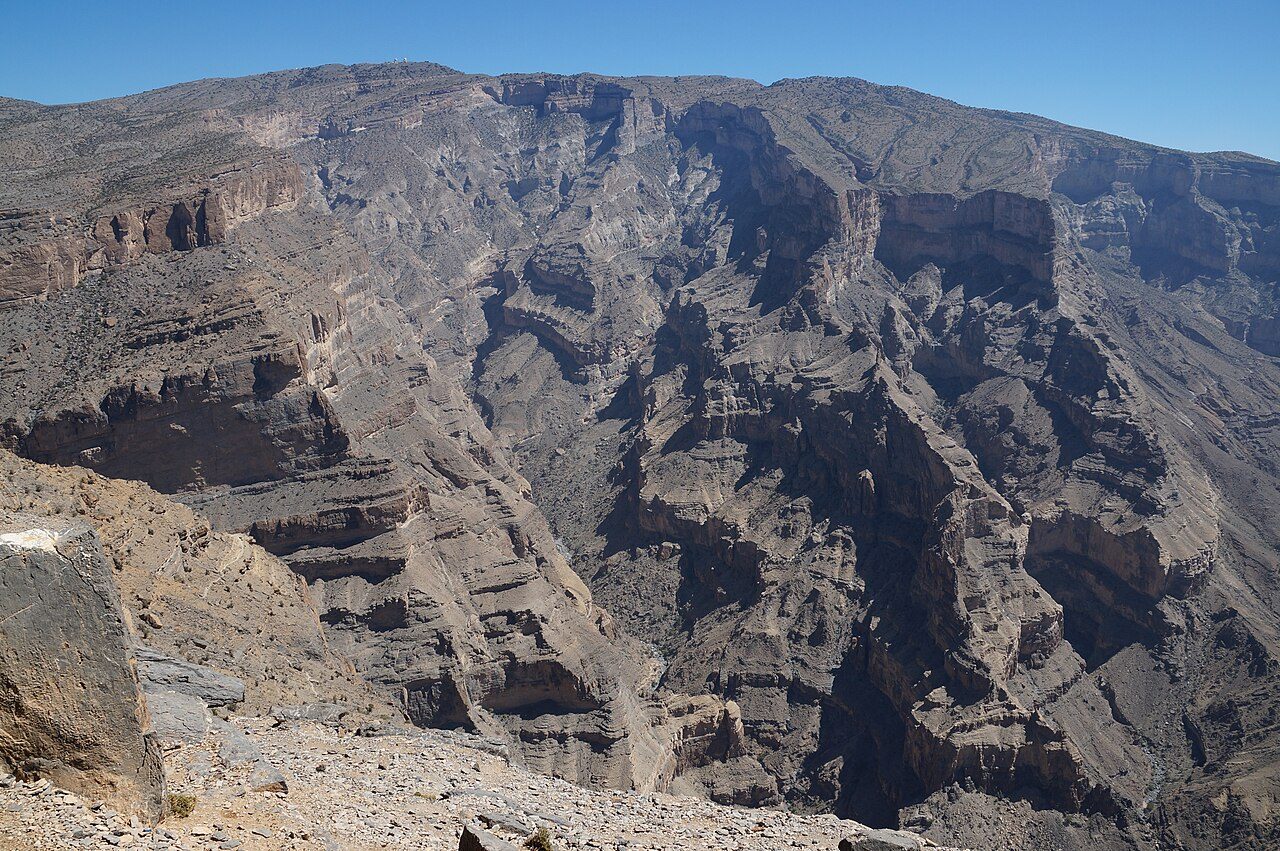
Jebel Shams, the Mountain of the Sun, is the highest peak in Oman at about 3,000 metres. Beside it lies Wadi Ghul, often called the Grand Canyon of Arabia, a gorge roughly a kilometre deep. A road climbs to viewpoints at the rim. The Balcony Walk follows an old path along the canyon wall to an abandoned village. Nights here are cold, even in summer.
13
STOP 13 OF 17
Al Hamra Old Town
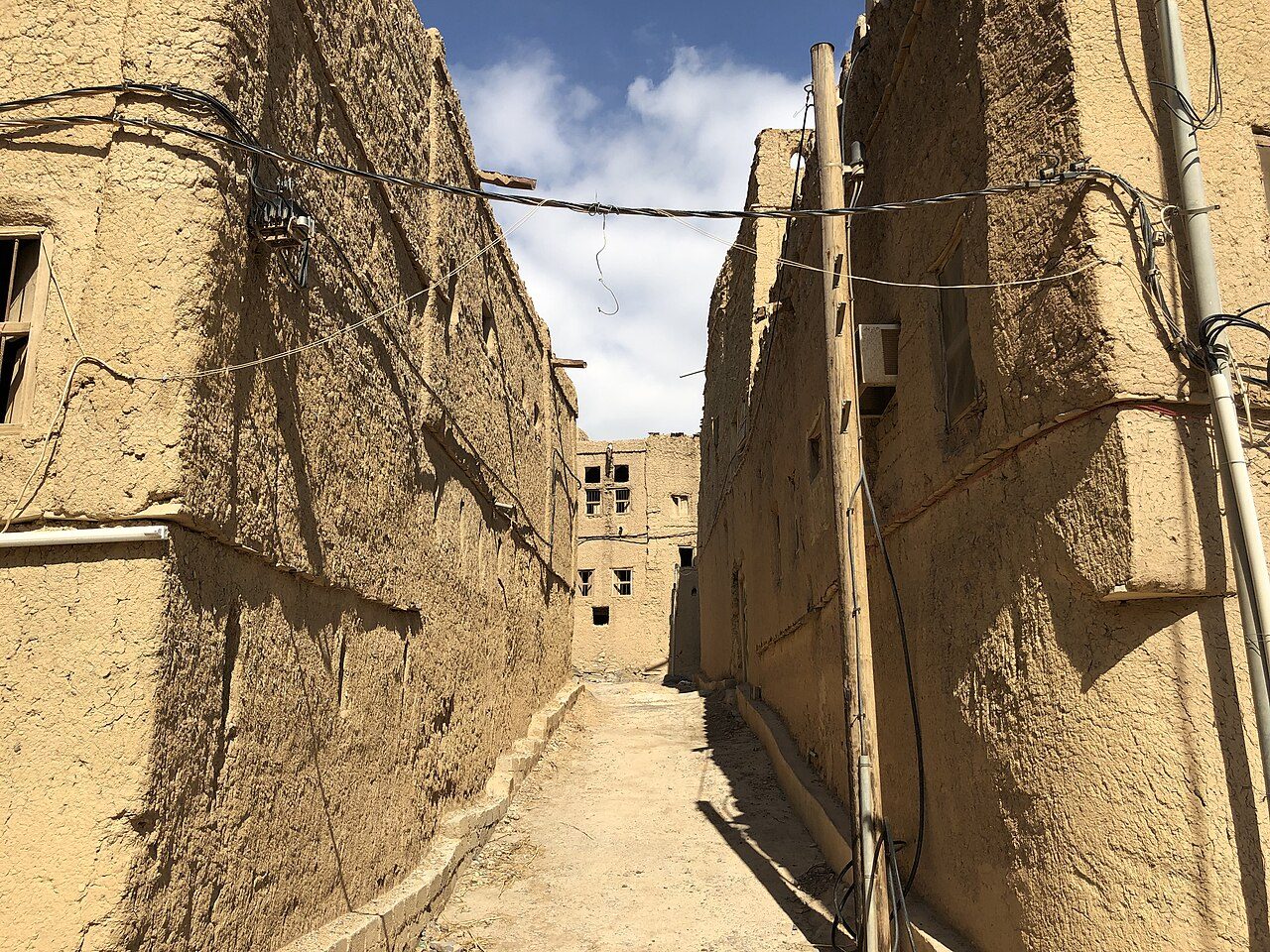
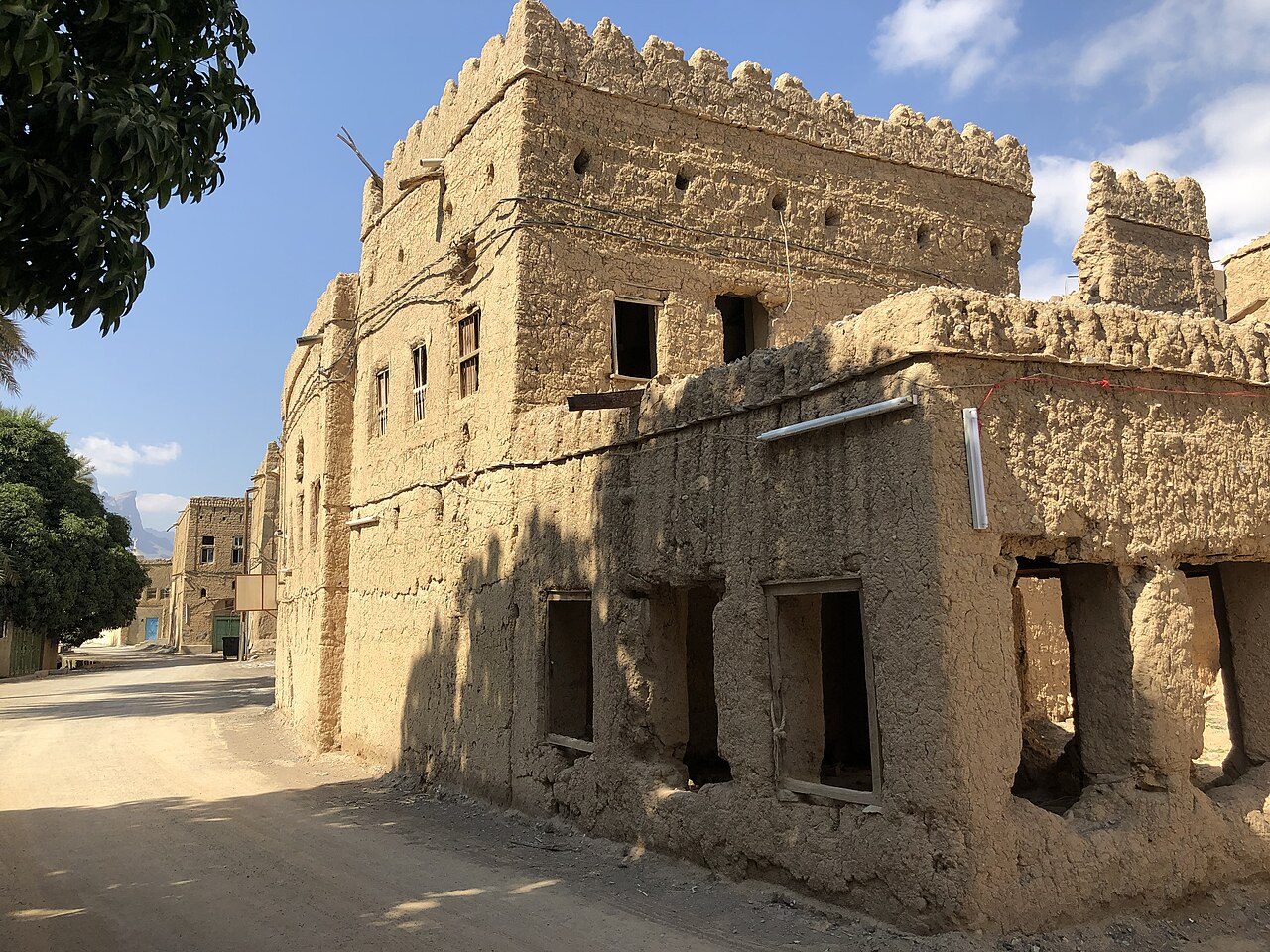
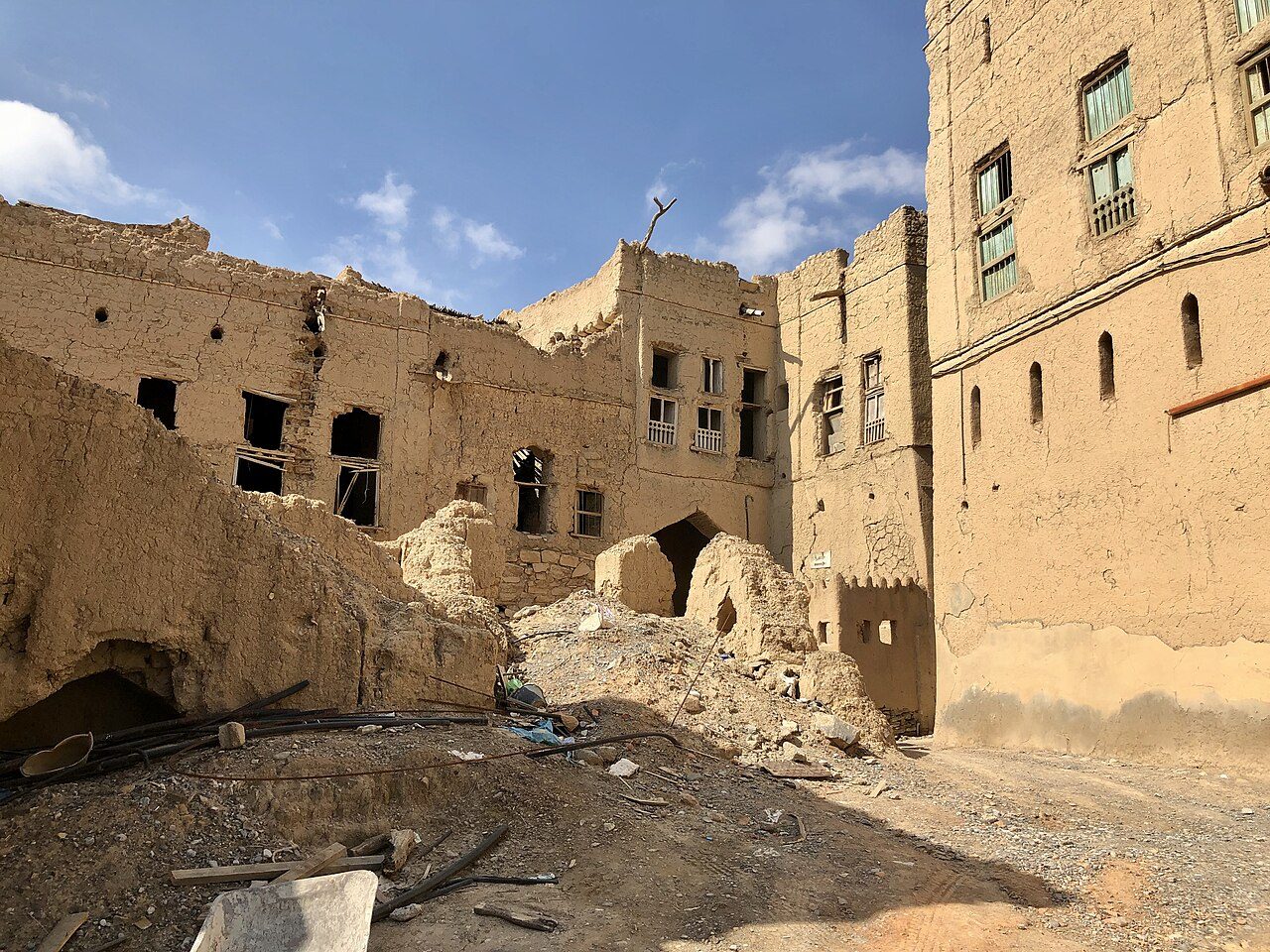
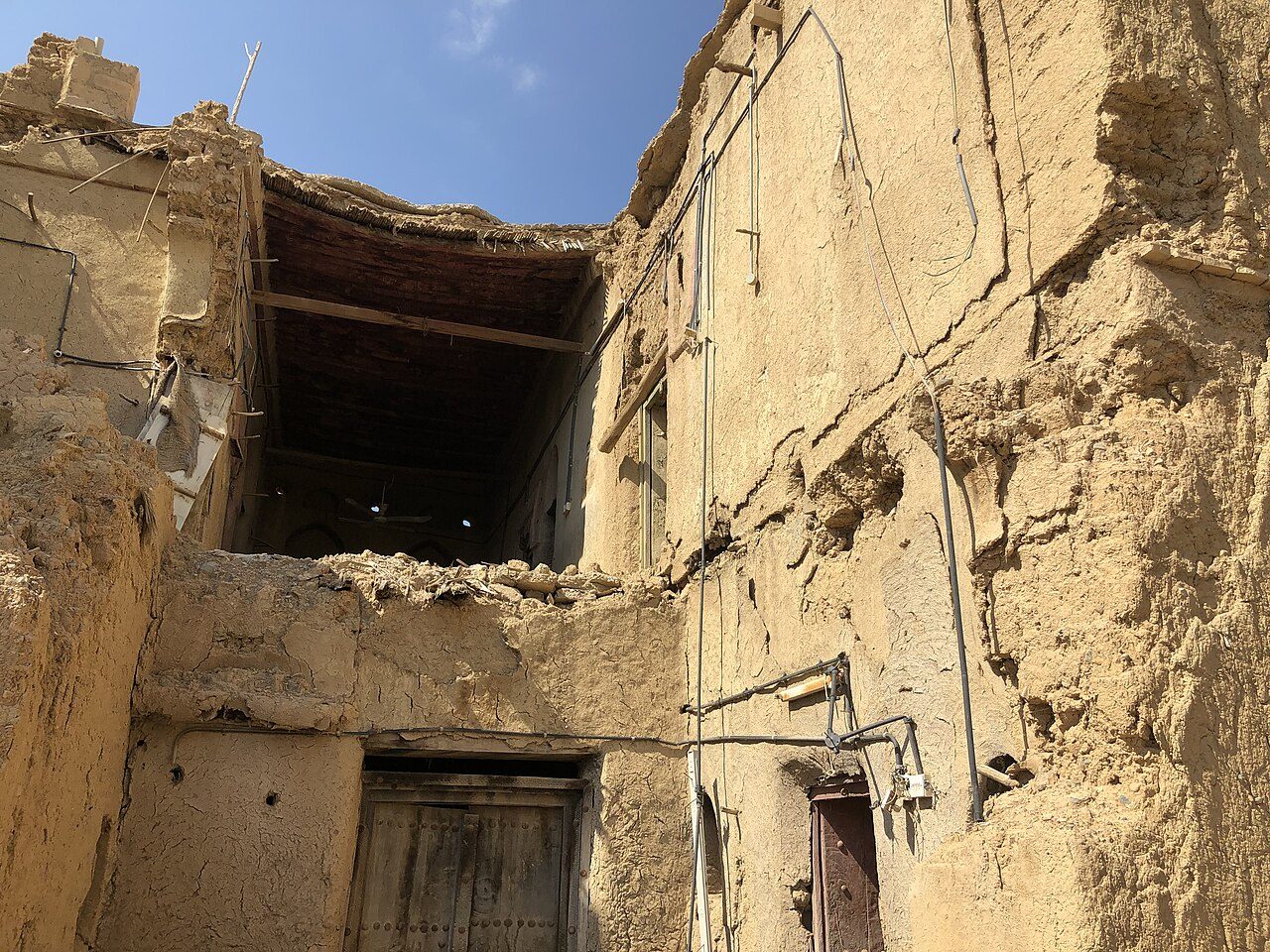
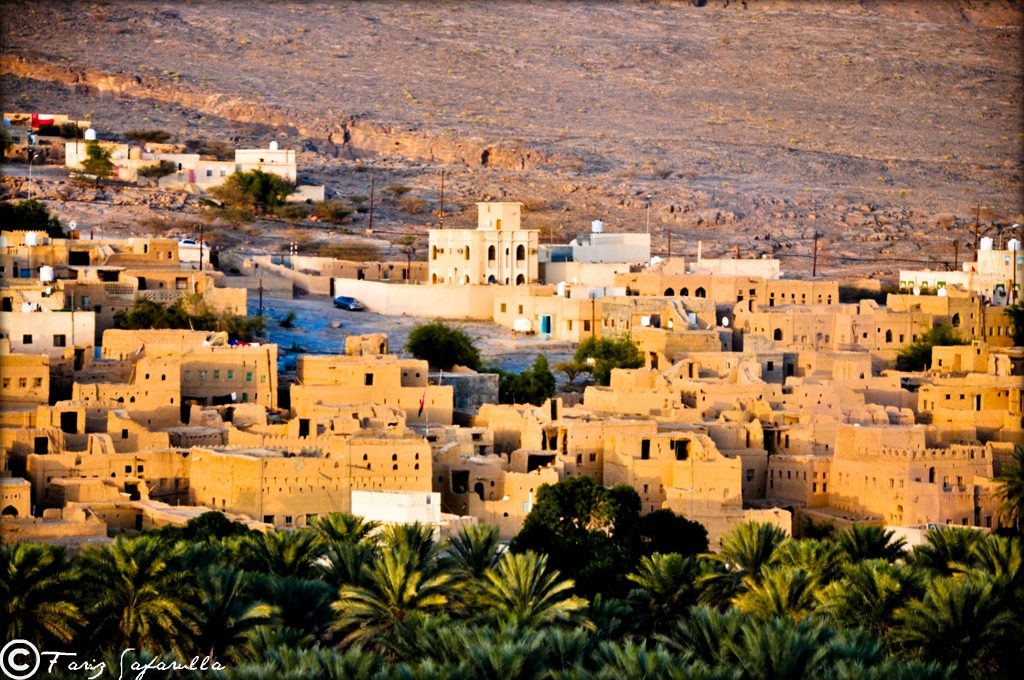
Al Hamra is a town at the foot of the Hajar Mountains, founded about 400 years ago. Its old quarter is one of the best preserved in Oman, with rows of mud-brick houses two and three storeys high along quiet lanes. Many have painted wooden ceilings and carved doors. Some houses are now empty and crumbling, while one, Bait Al Safah, works as a living museum.
14
STOP 14 OF 17
Misfat Al Abriyeen
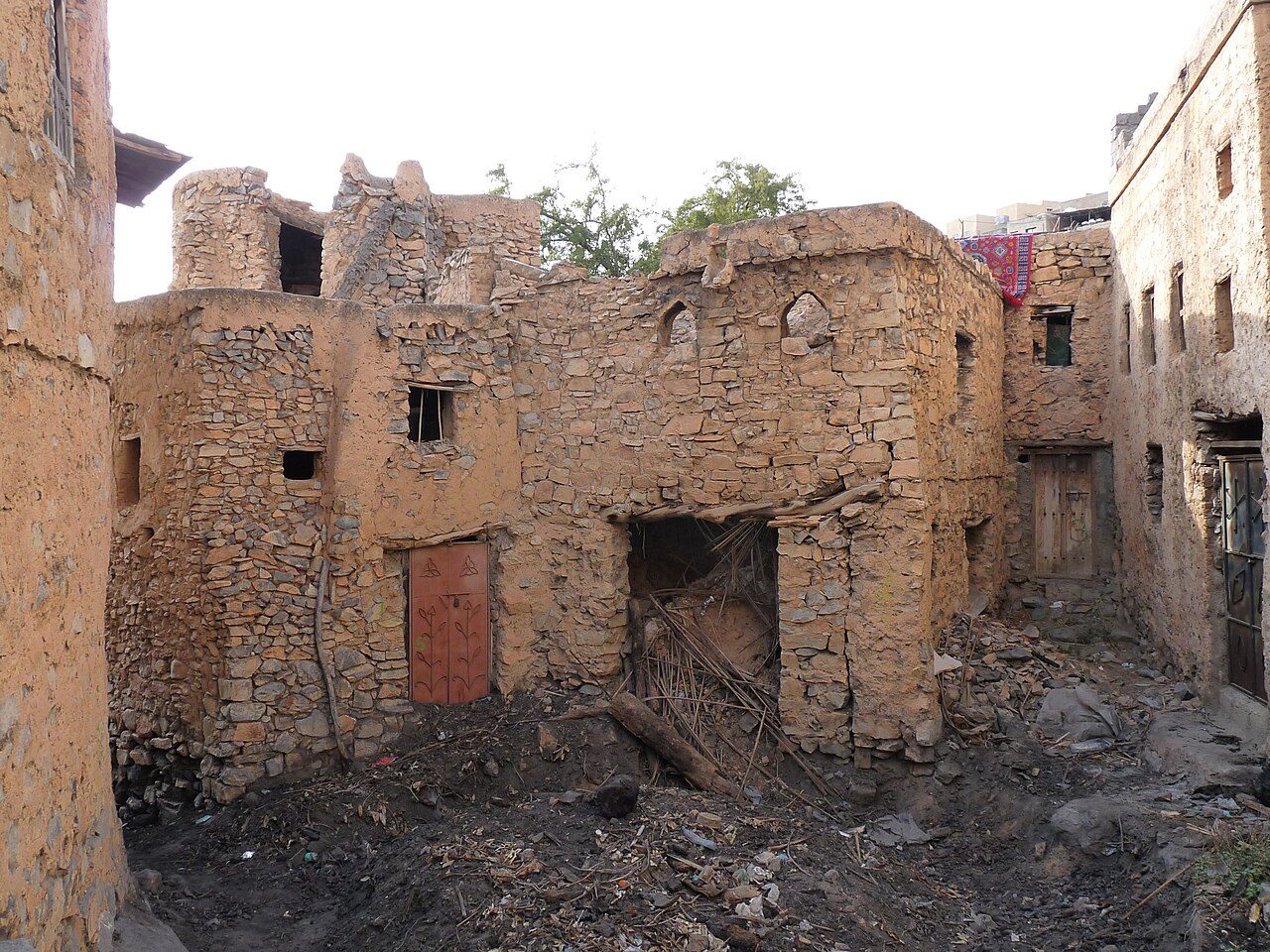
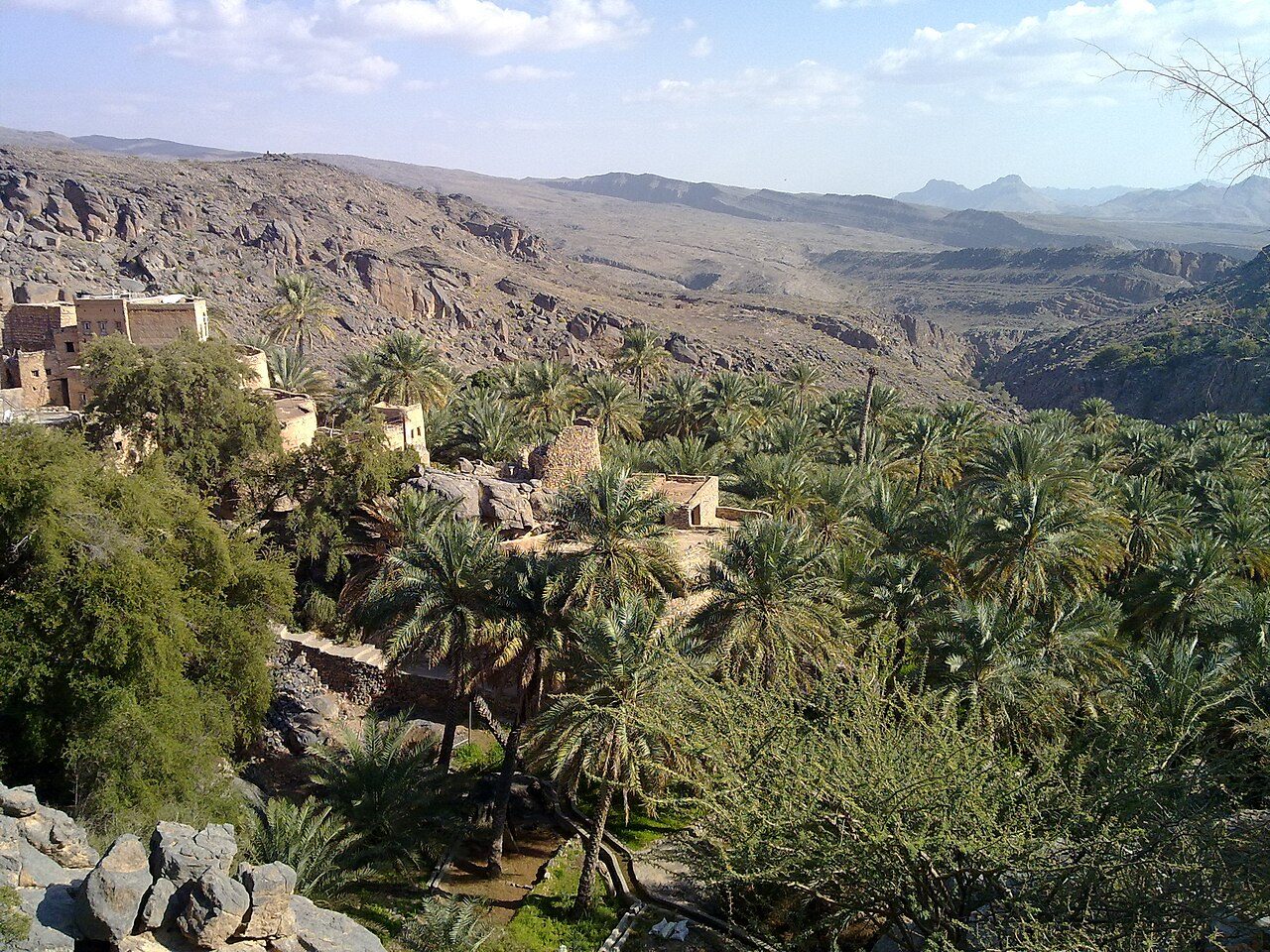
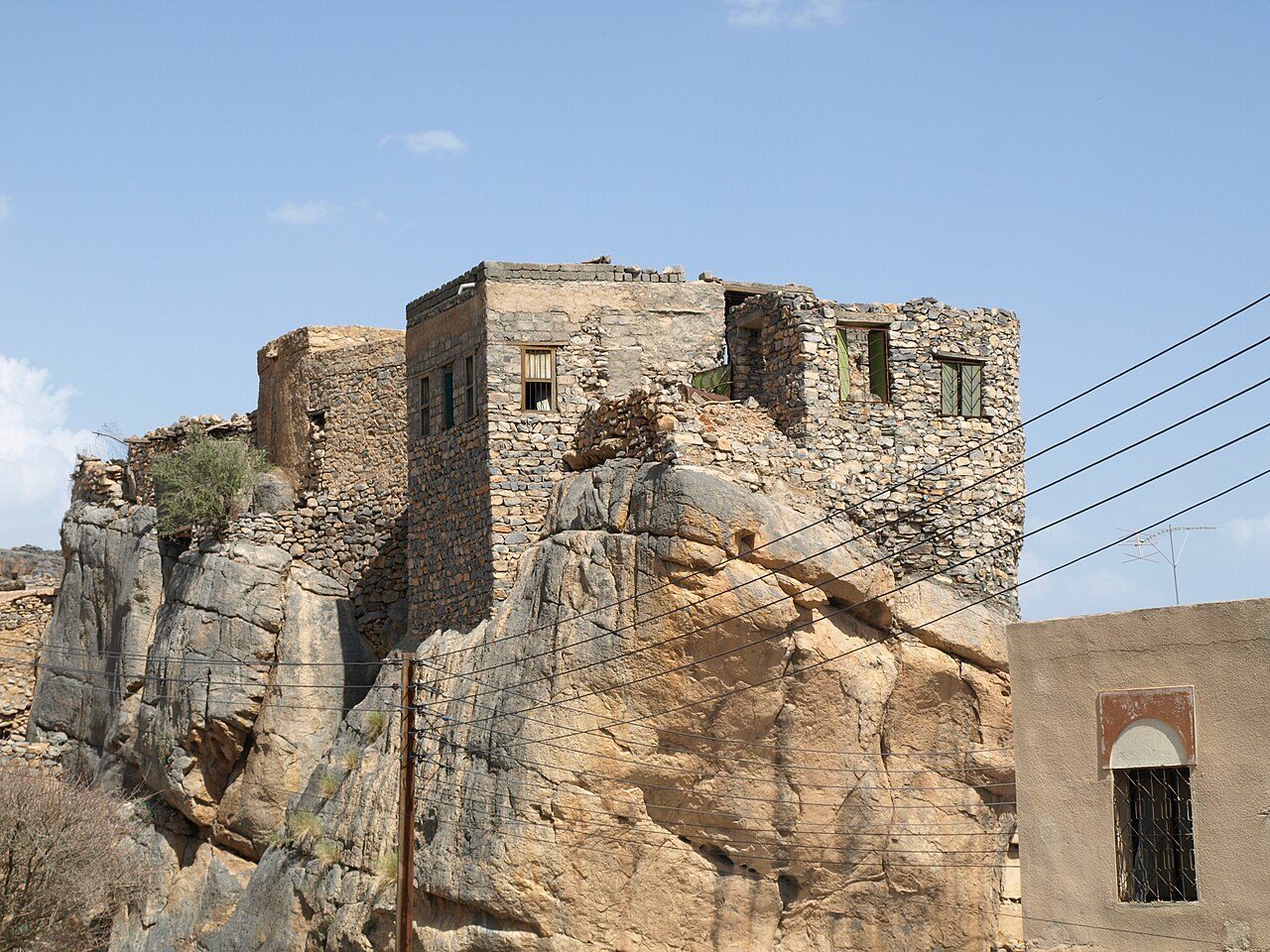
Misfat Al Abriyeen is a mountain village near Al Hamra, built on a steep rocky slope about 1,000 metres above sea level. Its old houses of stone and mud stand on boulders above terraced gardens of date palms, bananas and lemons. An ancient falaj channel carries spring water through the terraces. Narrow lanes and stairways wind between the houses and down into the shade of the palms.
15
STOP 15 OF 17
Jabrin Castle
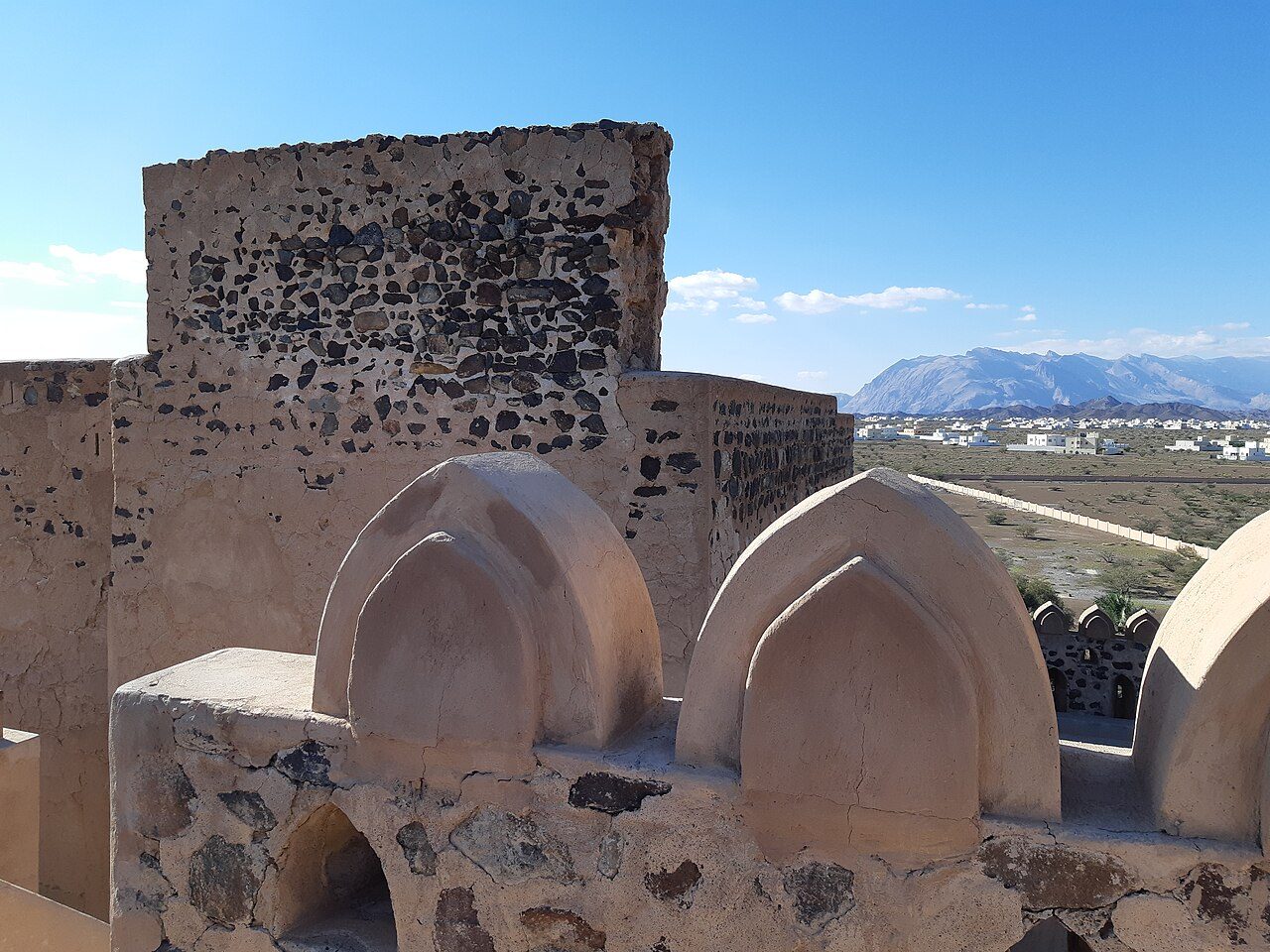
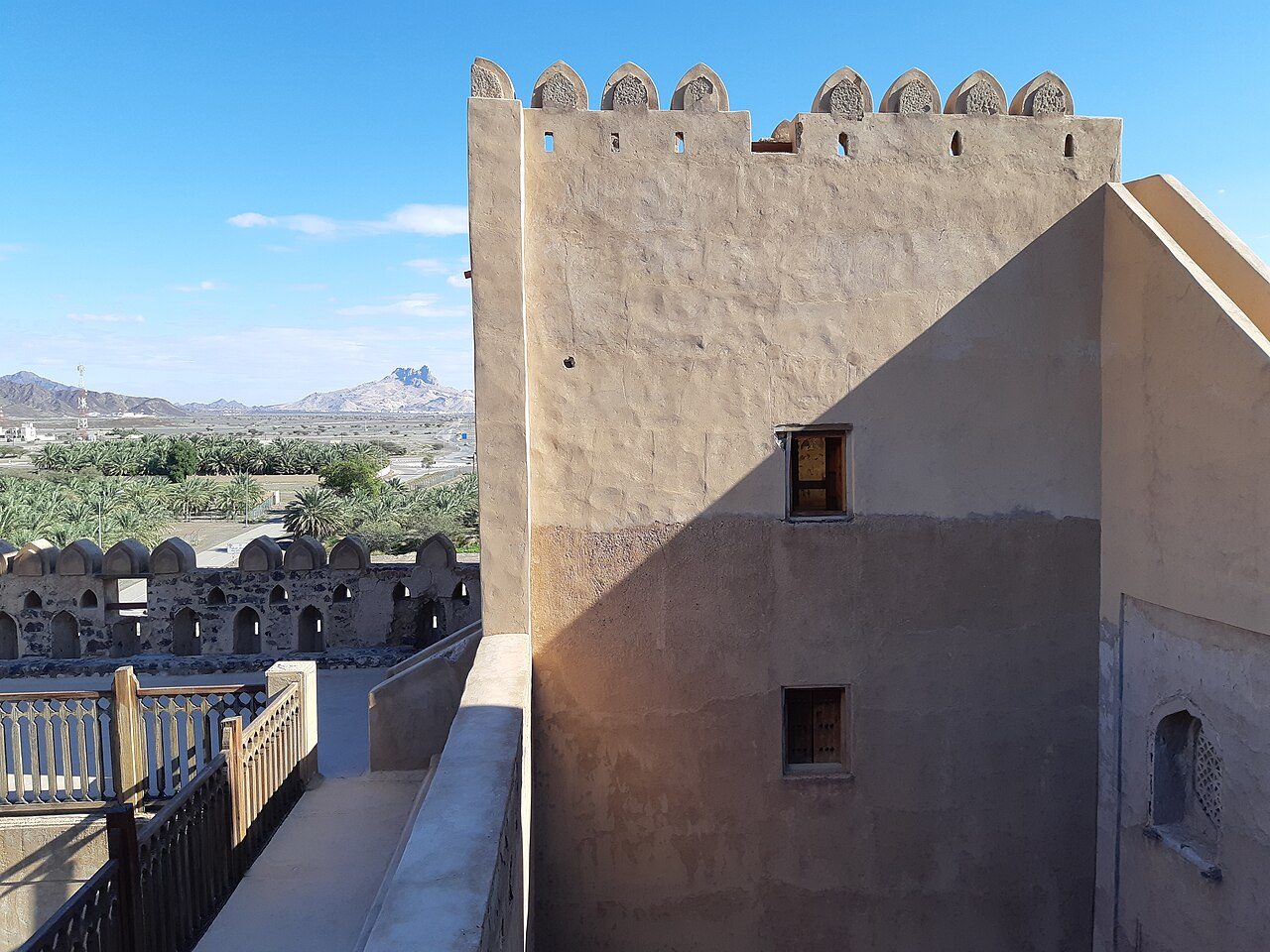
Jabrin Castle was built around 1670 by Imam Bilarab bin Sultan Al Yarubi as a home and a place of learning, not just a fortress. It is admired as the finest of Oman's castles for its painted wooden ceilings, carved doors and arched windows. Rooms include a sun and moon hall, a date store and the Imam's tomb. The castle rises from a plain of date palms near Bahla.
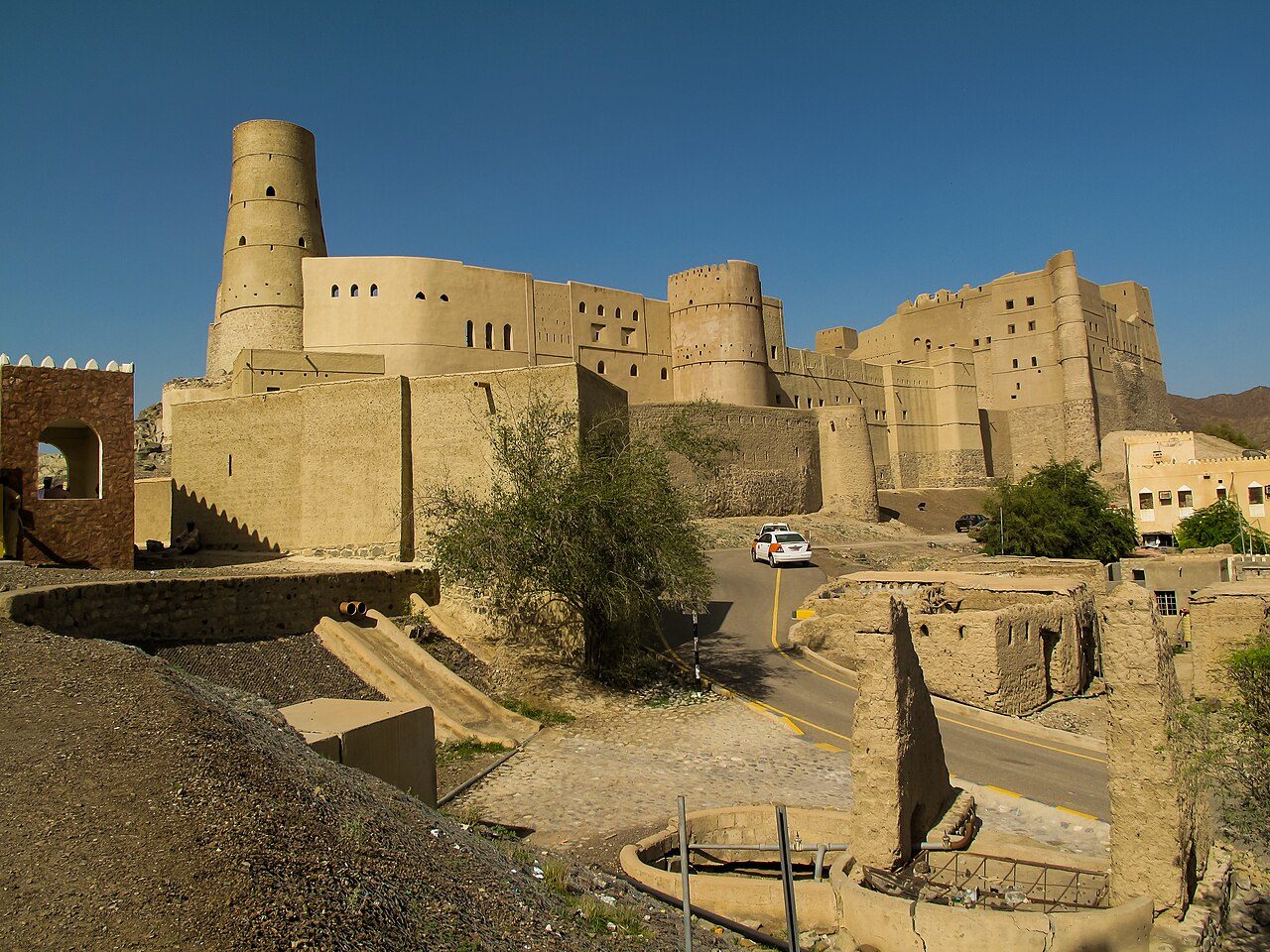
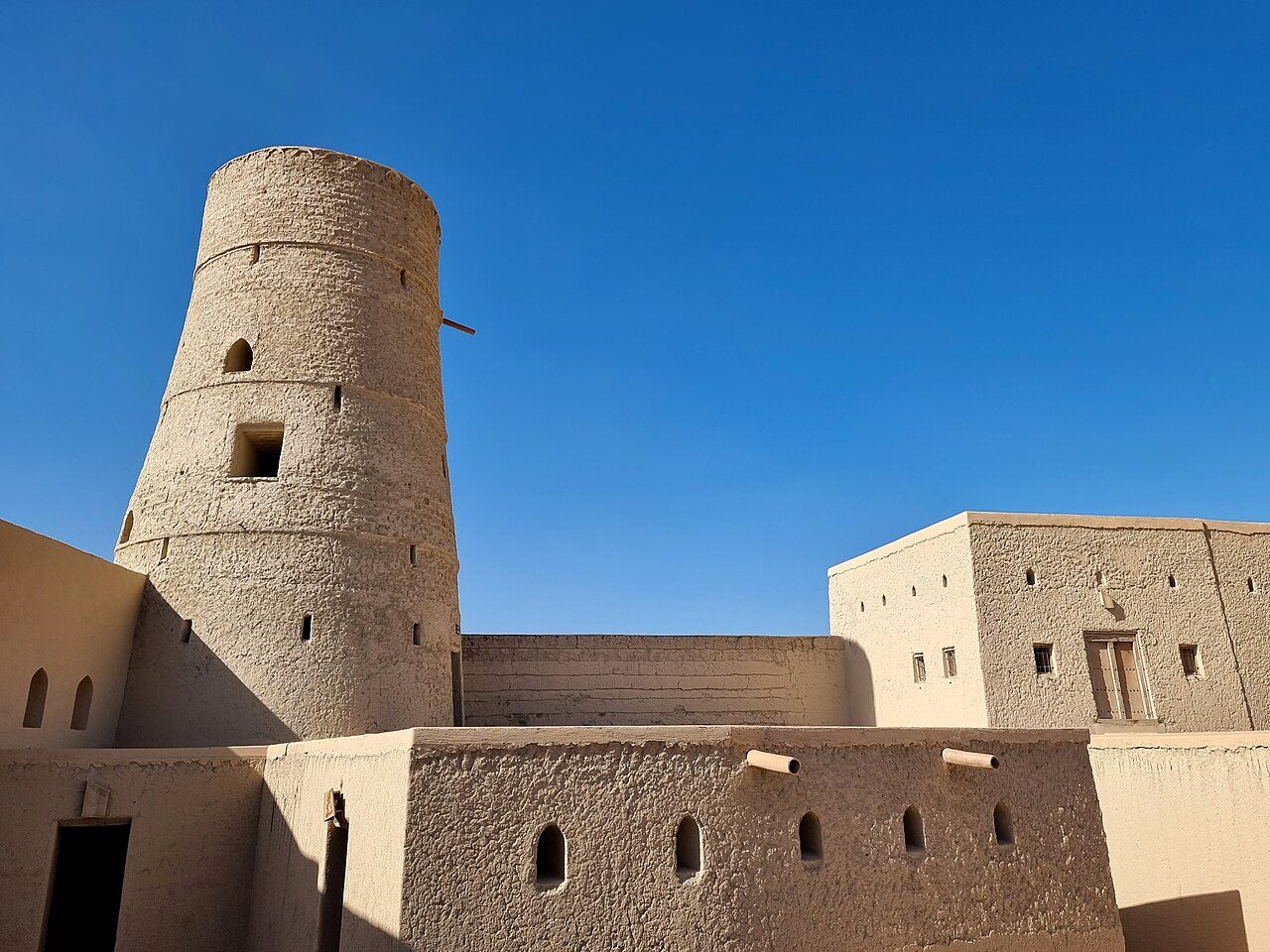
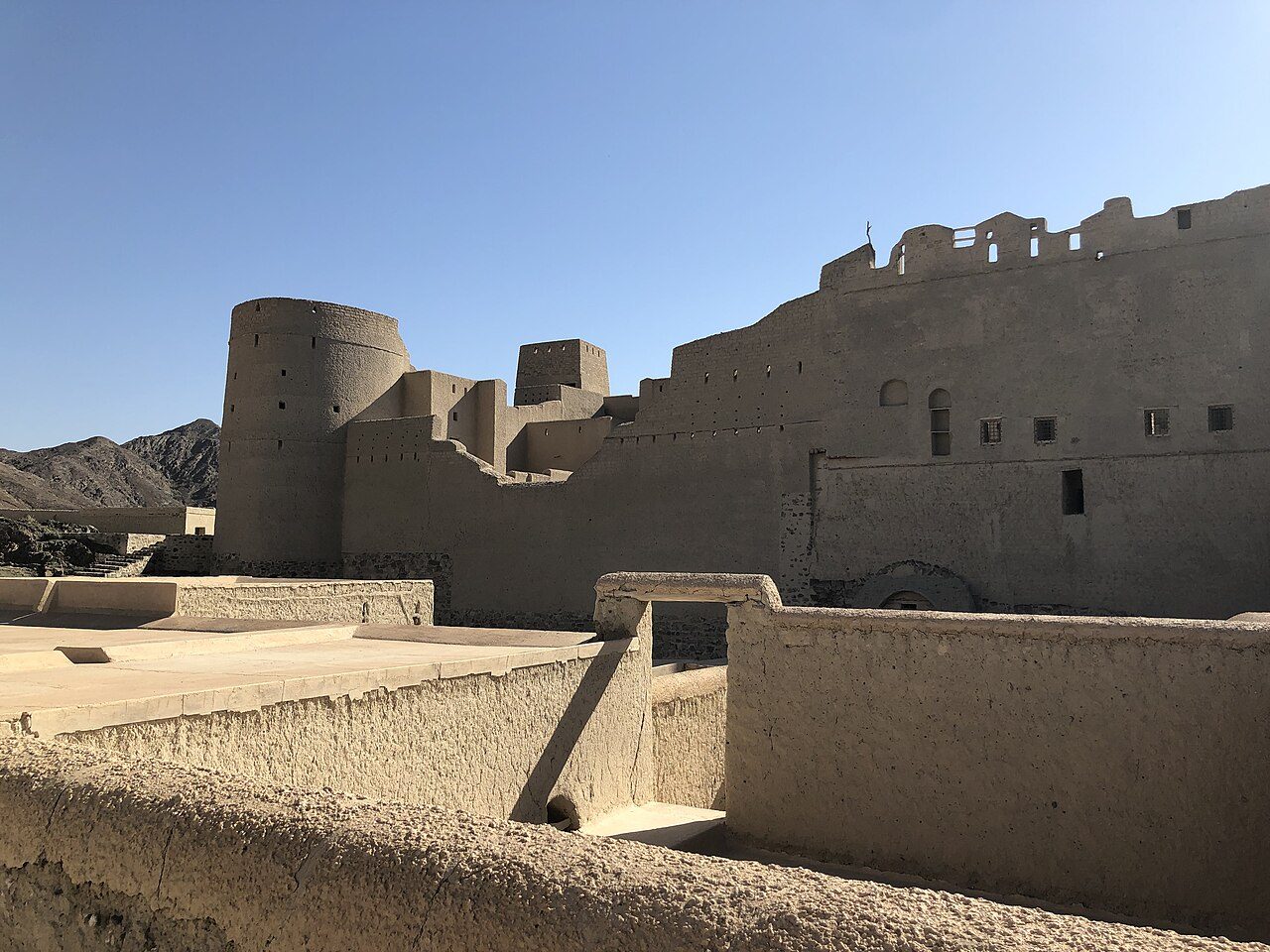
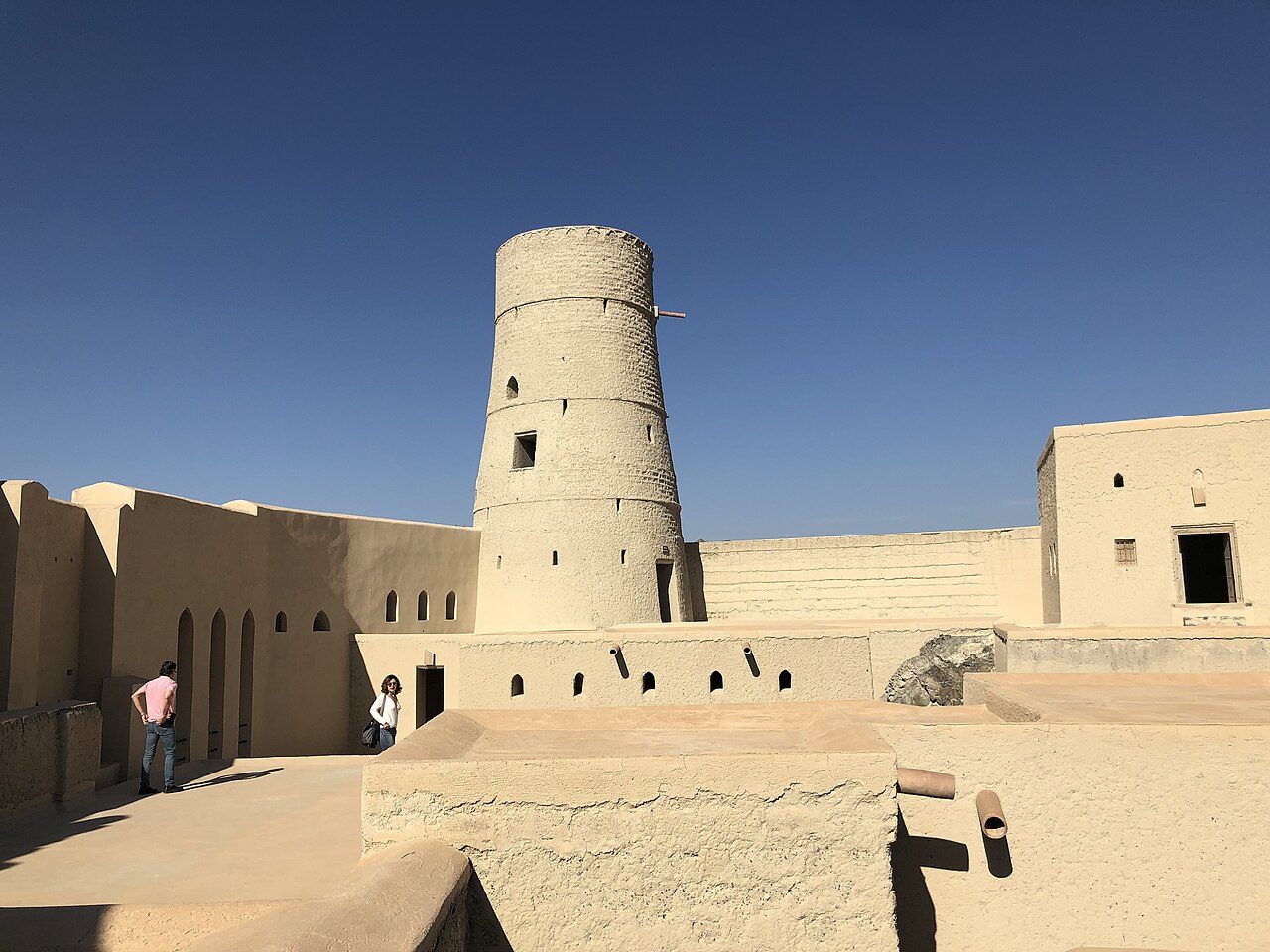
Bahla Fort is a huge mud-brick fortress at the foot of Jebel Akhdar, and a UNESCO World Heritage Site since 1987. It was the stronghold of the Banu Nebhan tribe, who ruled the region from the 12th to the 15th century. The fort stands on a stone base above the oasis, and a mud wall about 12 kilometres long once enclosed the whole town. It reopened in 2012 after long restoration.
17
STOP 17 OF 17 · LAST STOP
Nakhal Fort
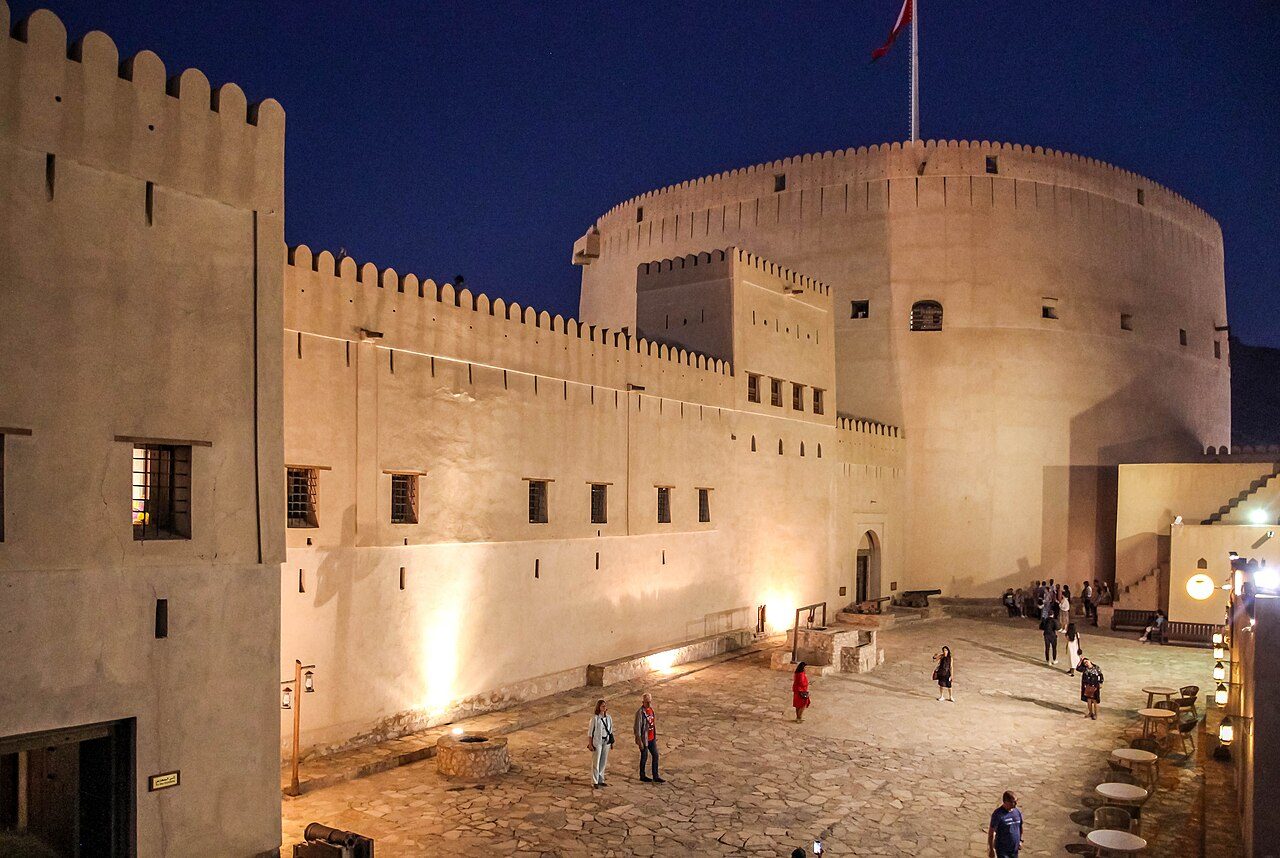
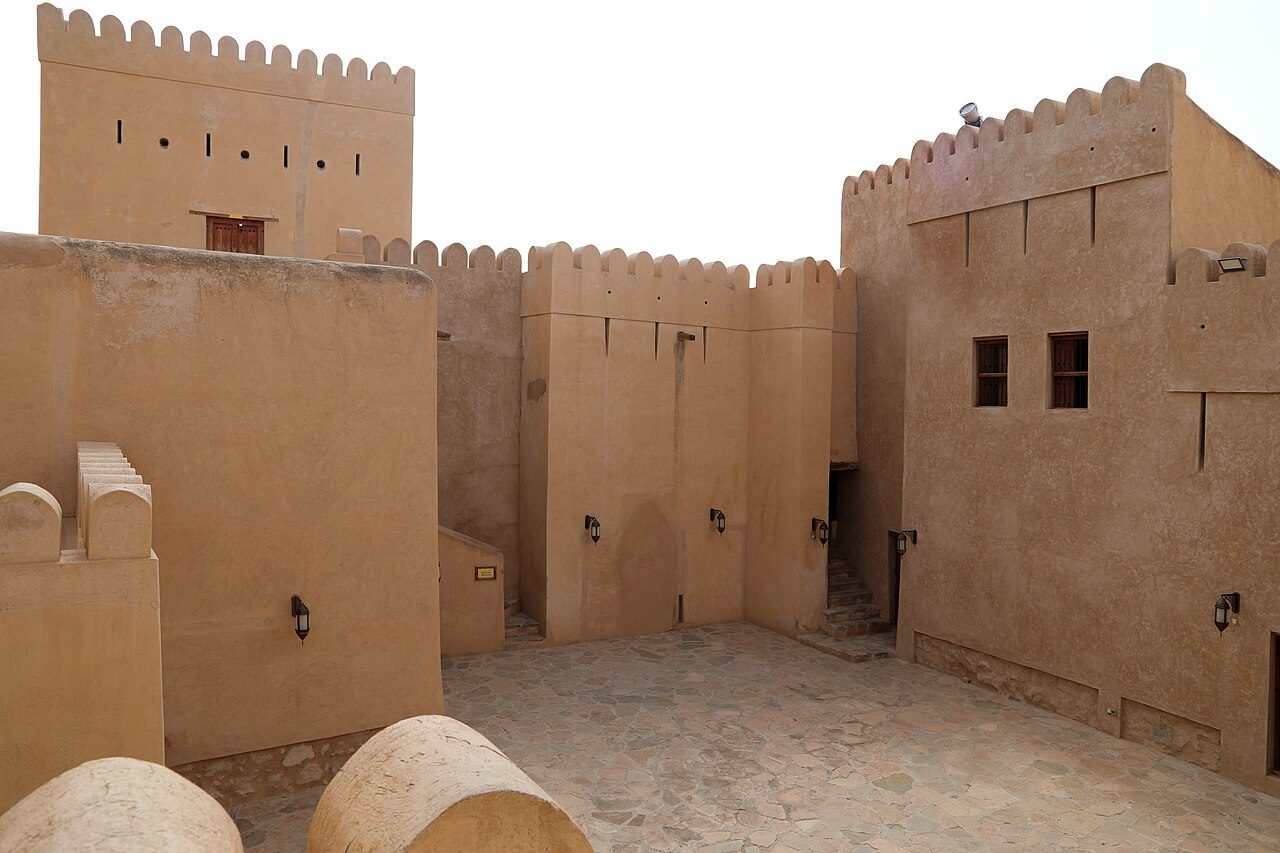
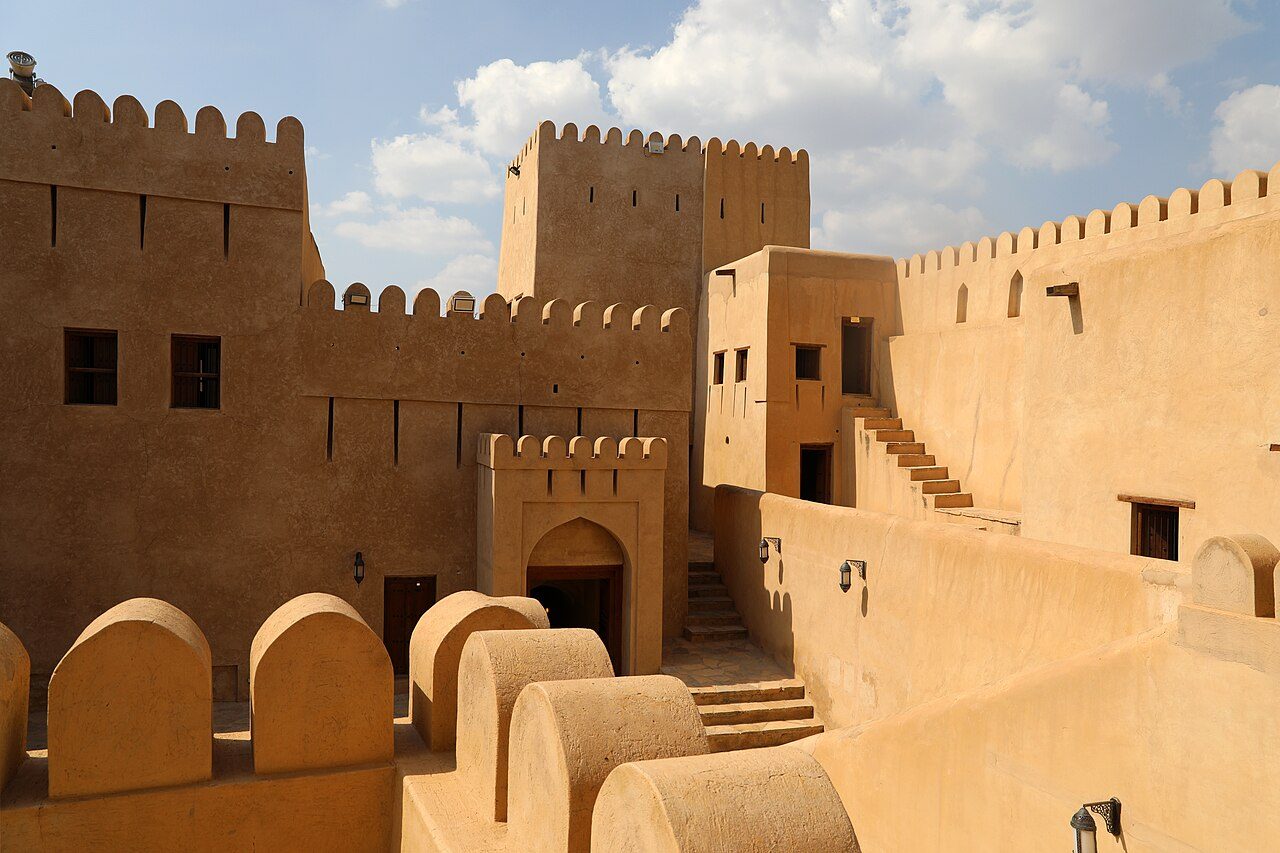
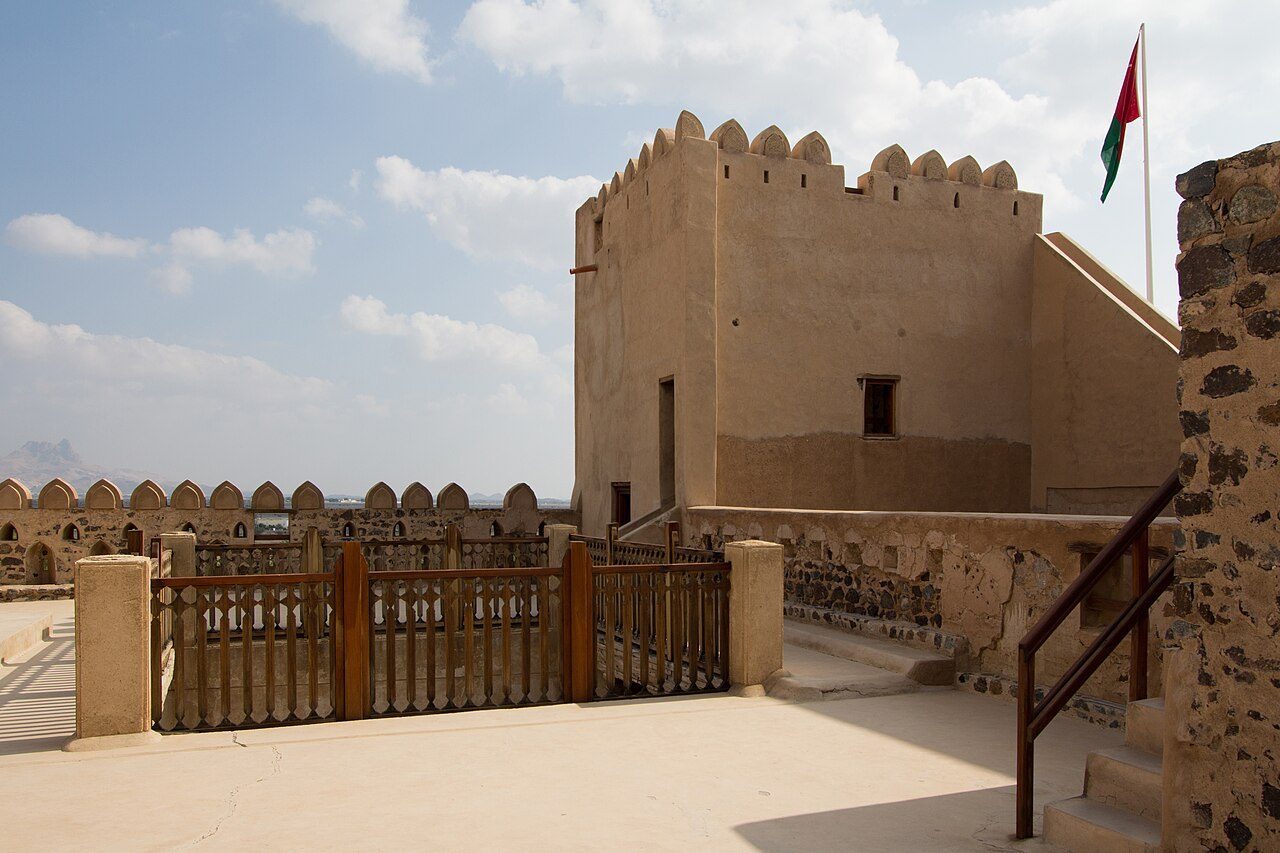
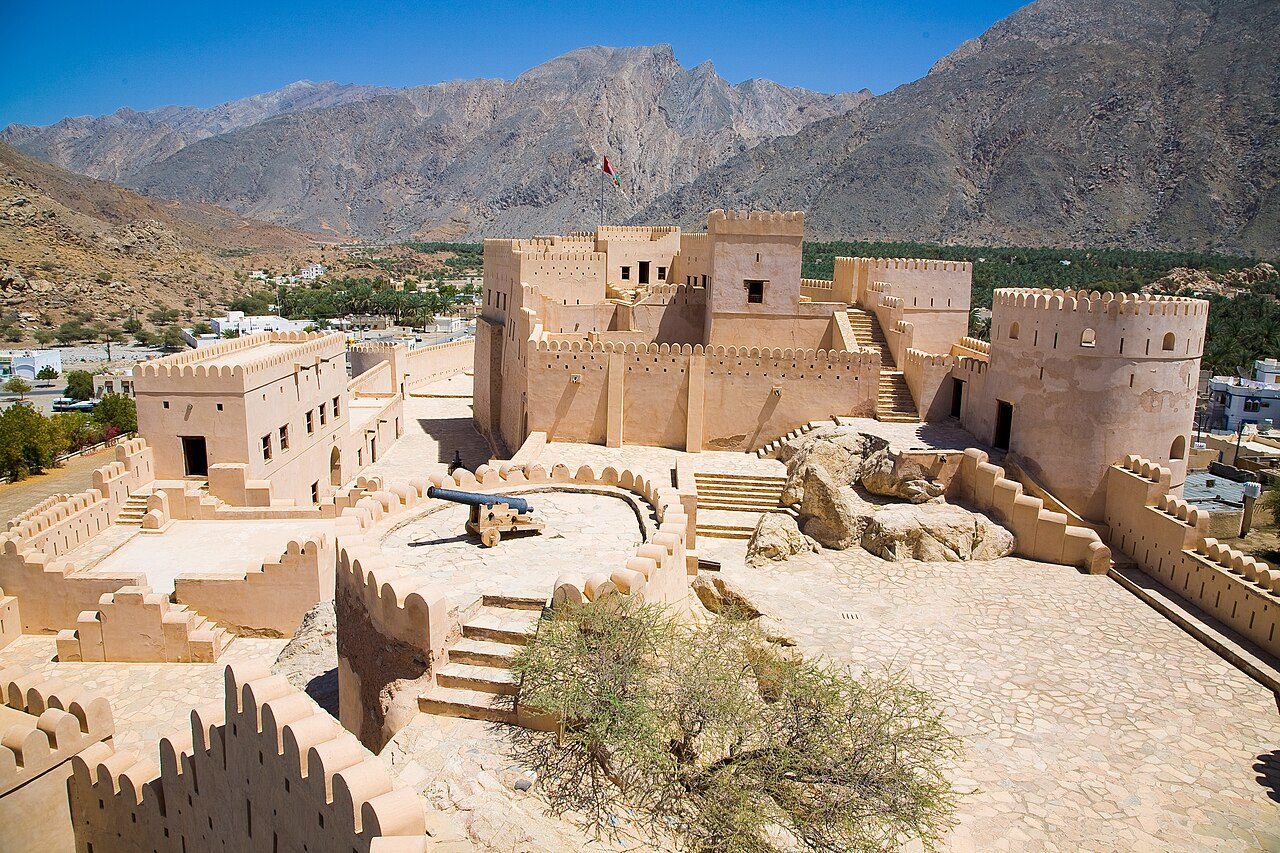
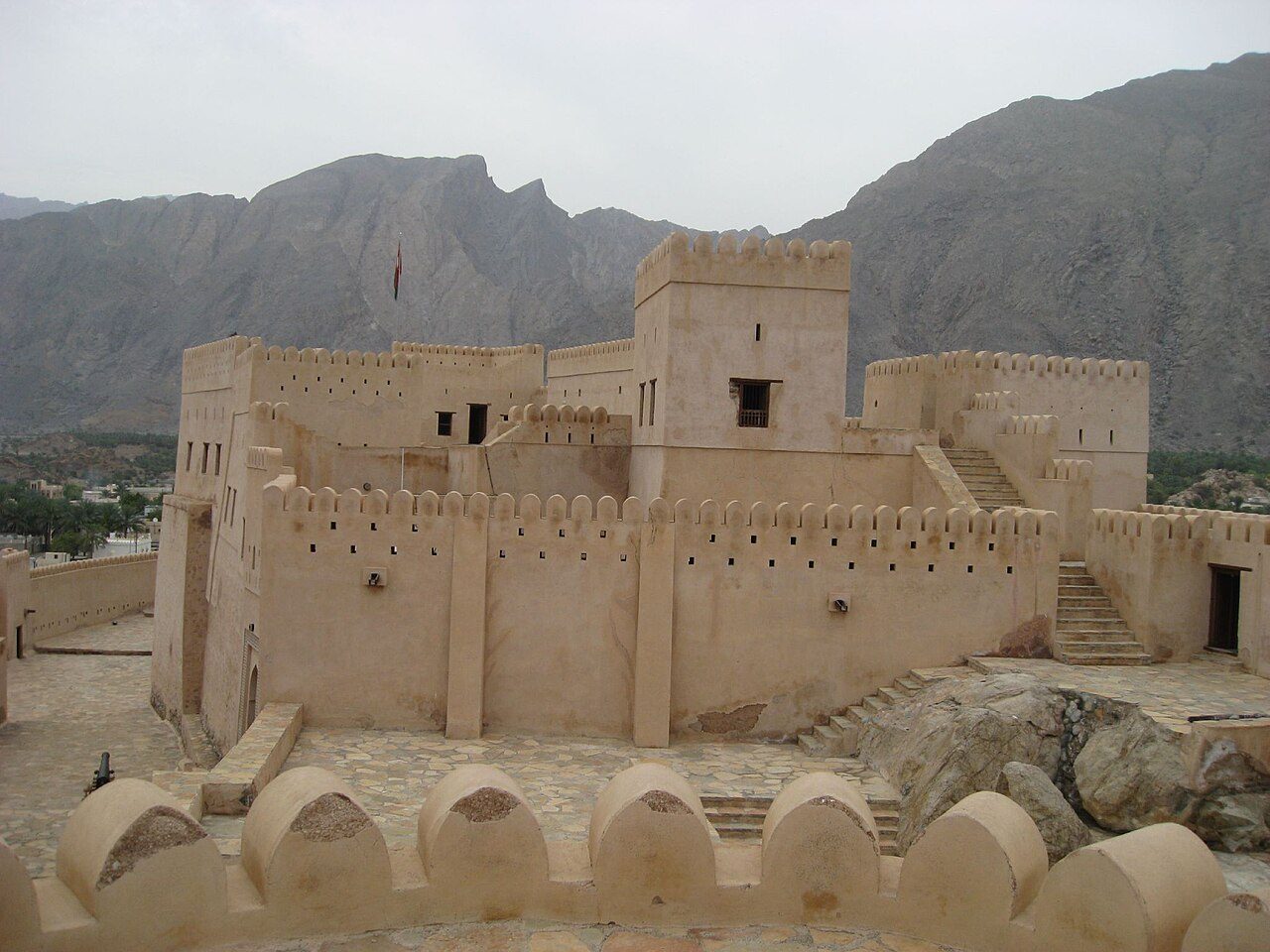
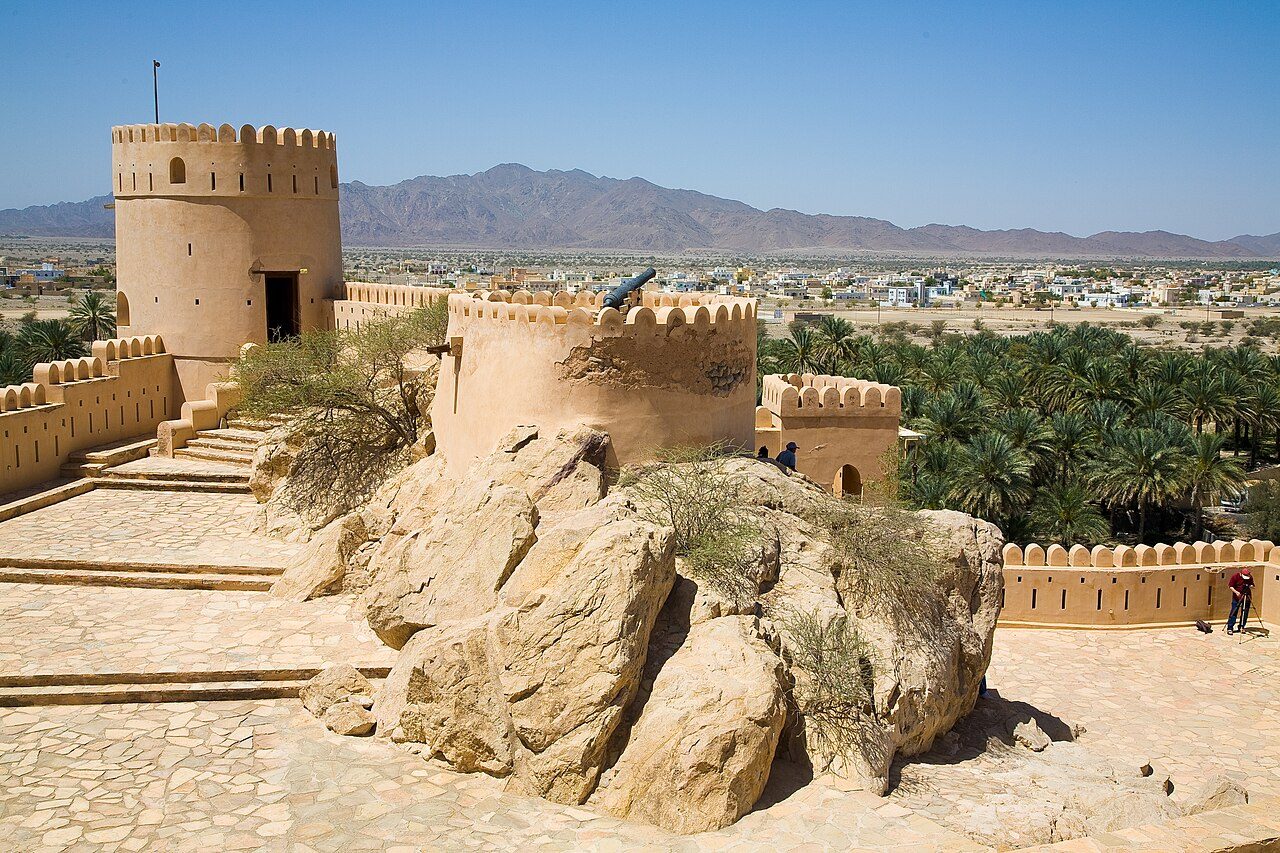
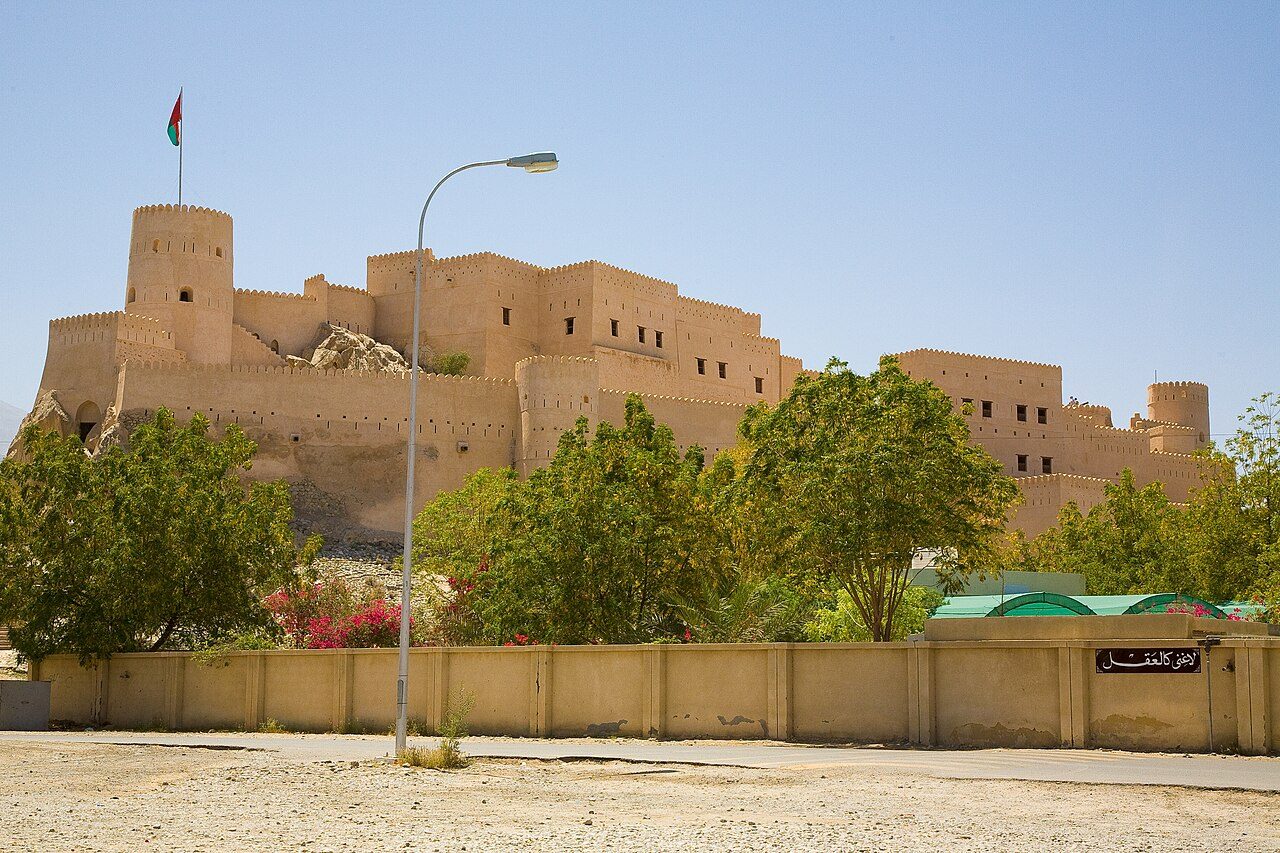
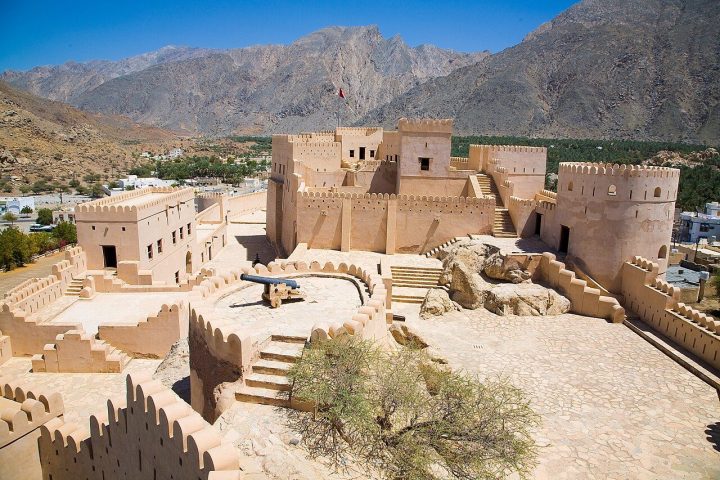
Nakhal Fort stands on a rocky outcrop at the foot of the Western Hajar, above a wide sea of date palms. Parts of it are believed to date from before Islam, and it was rebuilt by Omani imams in the 17th century and extended in 1834. The walls follow the uneven shape of the rock. Inside are living rooms, a mosque and towers with wide views. Warm springs flow nearby at Ain Al Thawarah.
Seasons from 20 years of NASA POWER climate data.
 WaTrips