Namgyal Tsemo, Spituk and Stok, Shey, Thiksey, Stakna and Hemis, Basgo, Likir and Alchi, then Lamayuru, Mulbekh and the Kargil War Memorial.
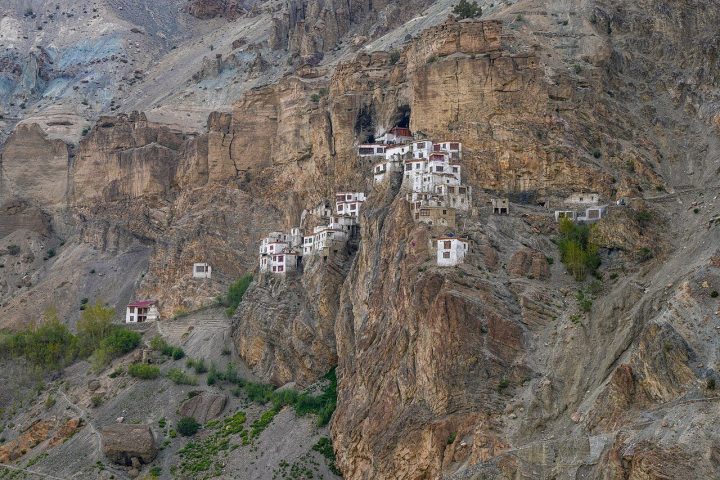
Ladakh's Buddhist monasteries cling to cliffs and hilltops along the Indus. Day one stays near Leh at Namgyal Tsemo, Spituk and Stok Palace. Day two follows the river east to Shey, Thiksey for morning prayers, Stakna and Hemis, the largest. Day three goes west to Basgo, Likir and Alchi, whose 11th-century paintings are among the finest in the Himalaya. Day four continues past the eroded moonland around Lamayuru to the rock-carved Maitreya at Mulbekh and the Kargil War Memorial at Drass. Many monasteries hold masked dance festivals in summer; June to September is best.
01
STOP 1 OF 13
Namgyal Tsemo Monastery
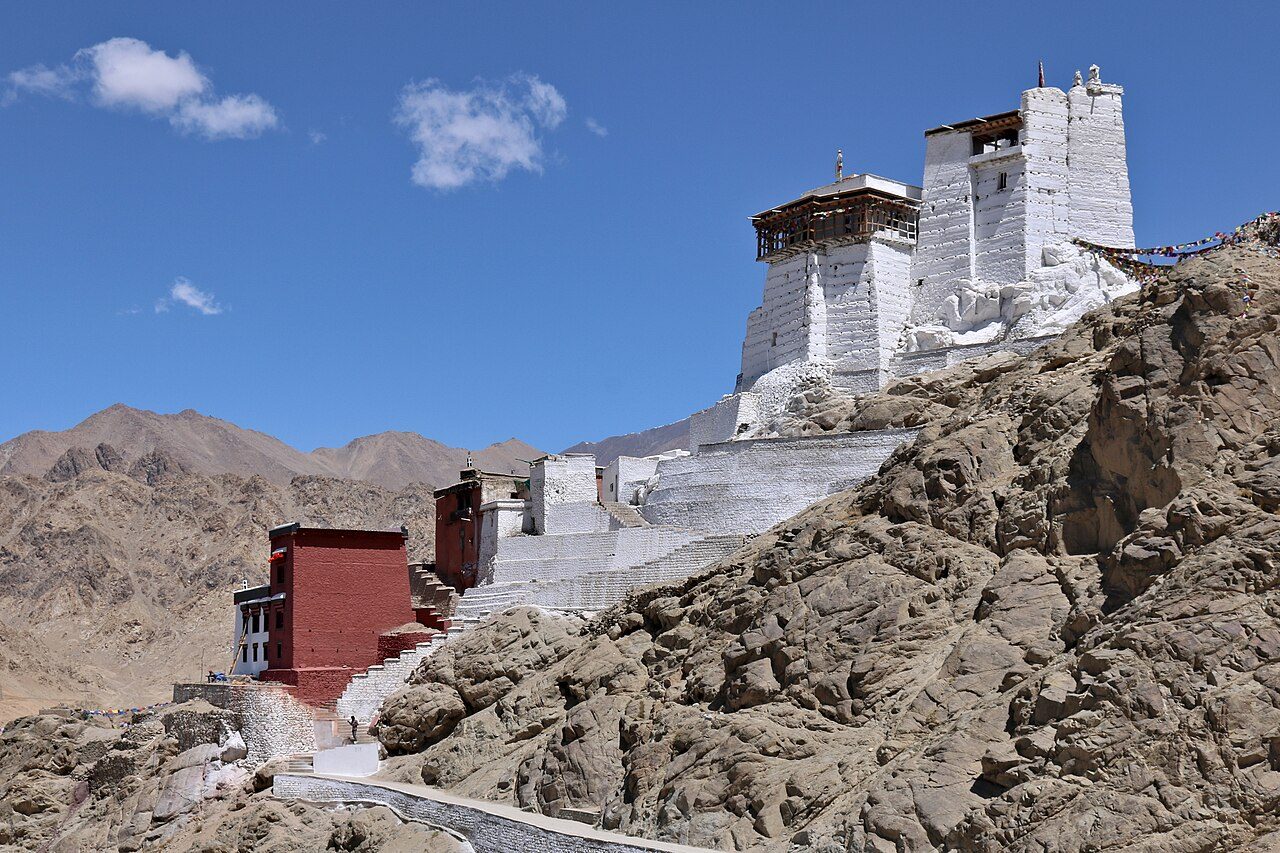
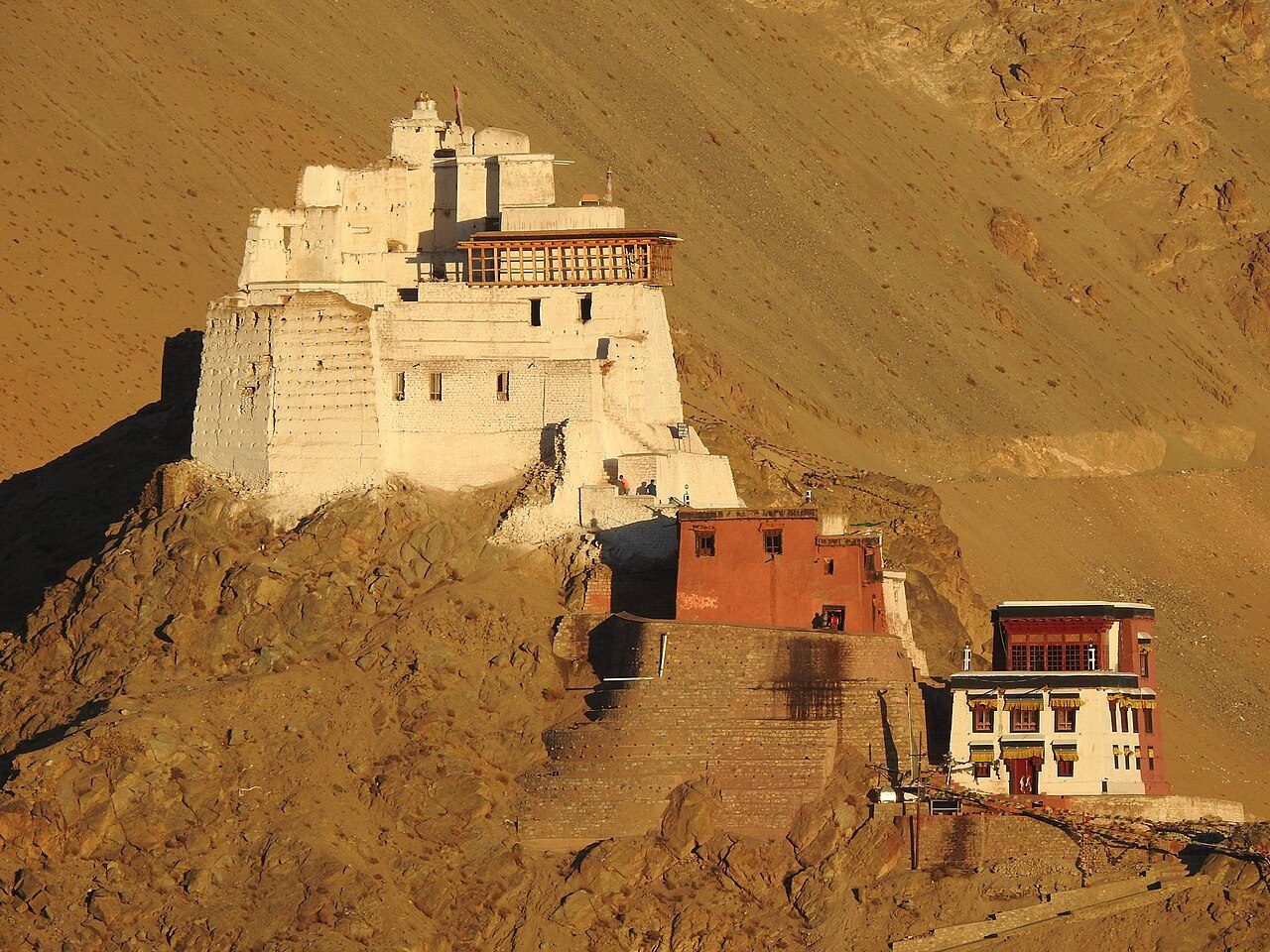
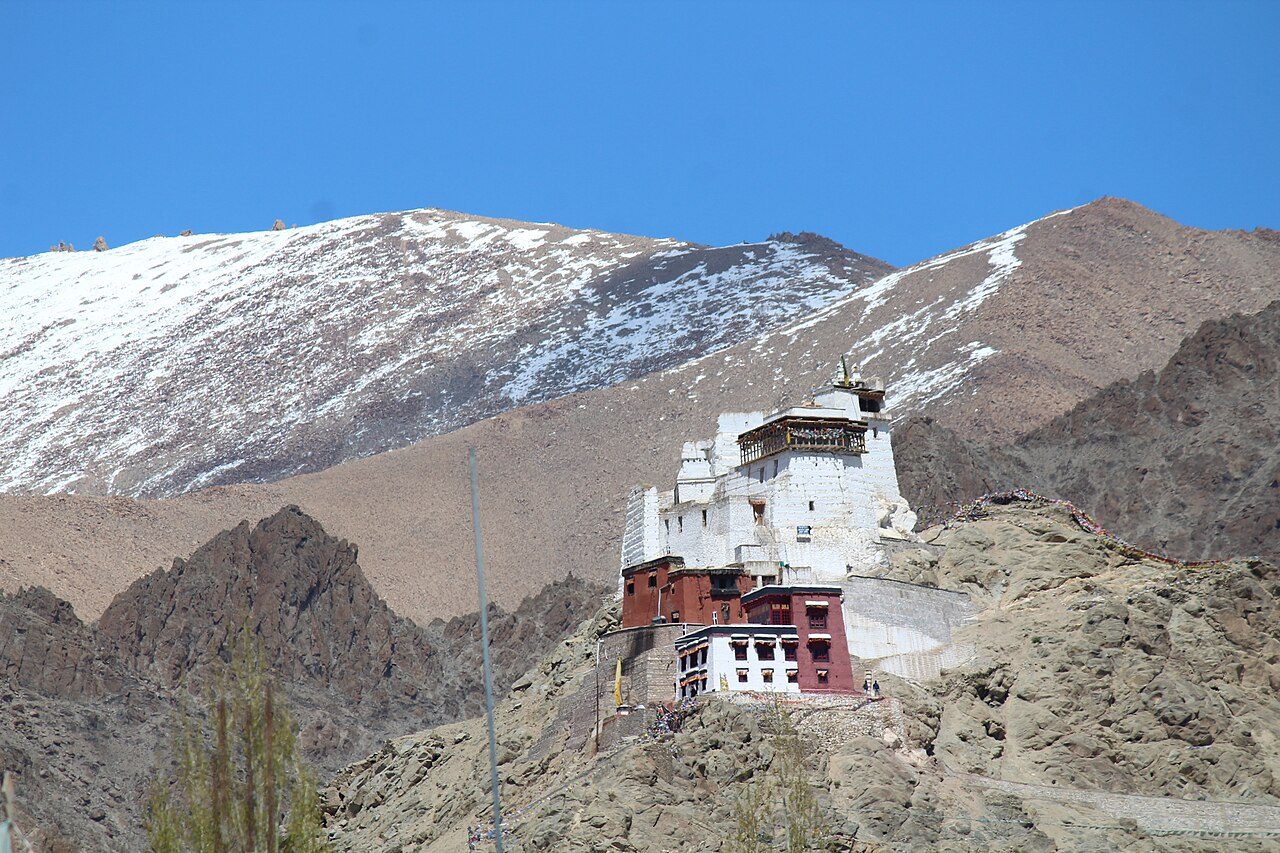
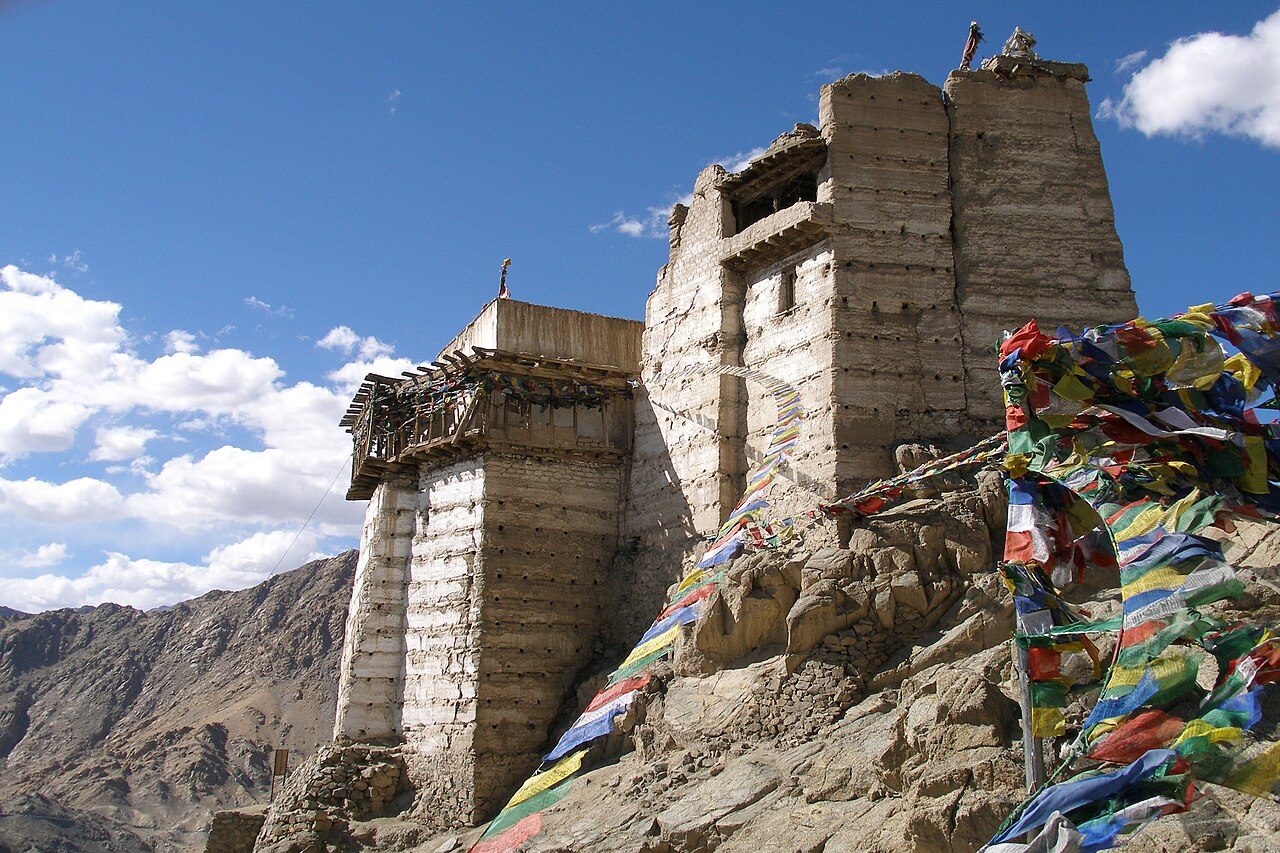
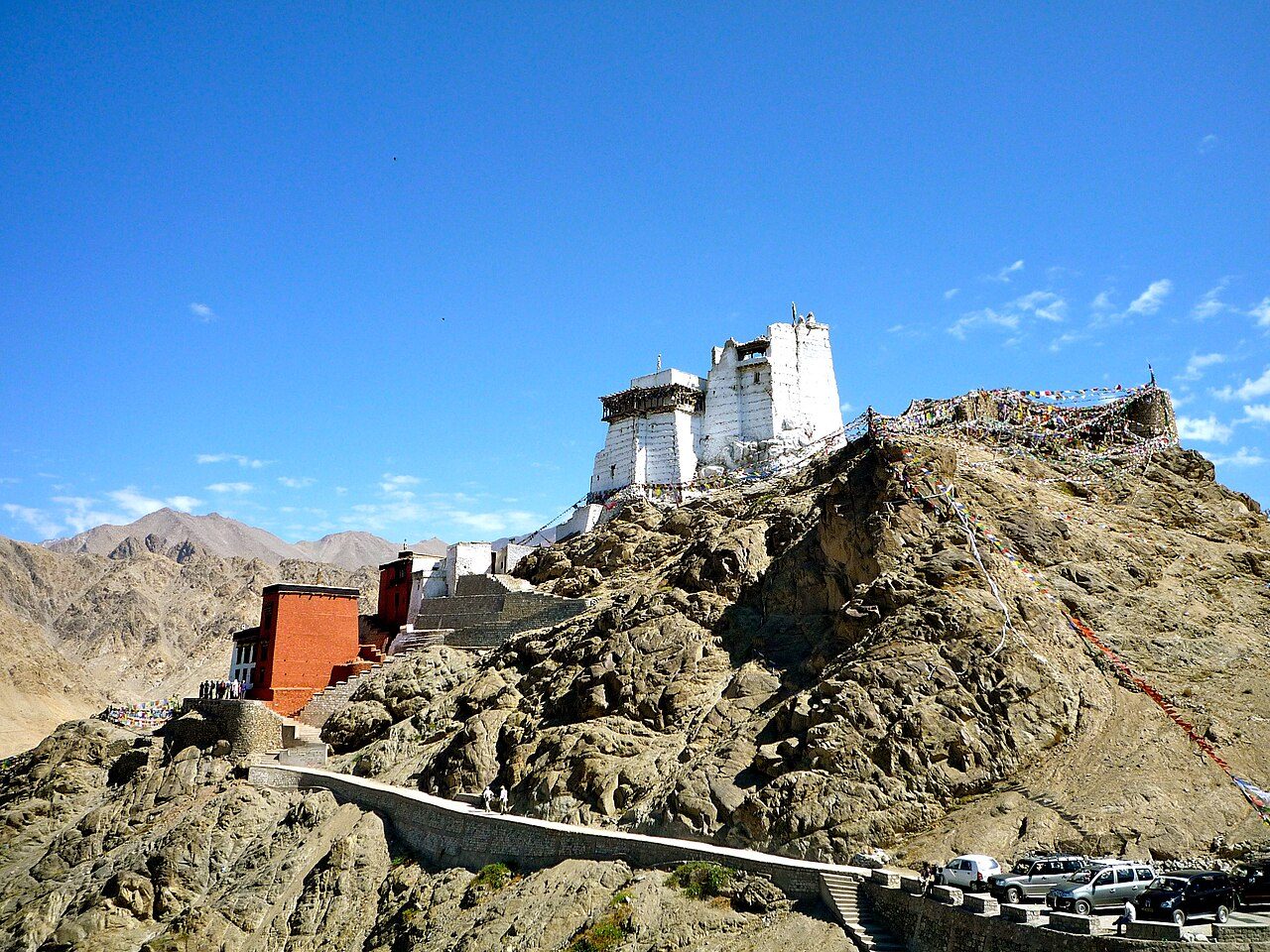
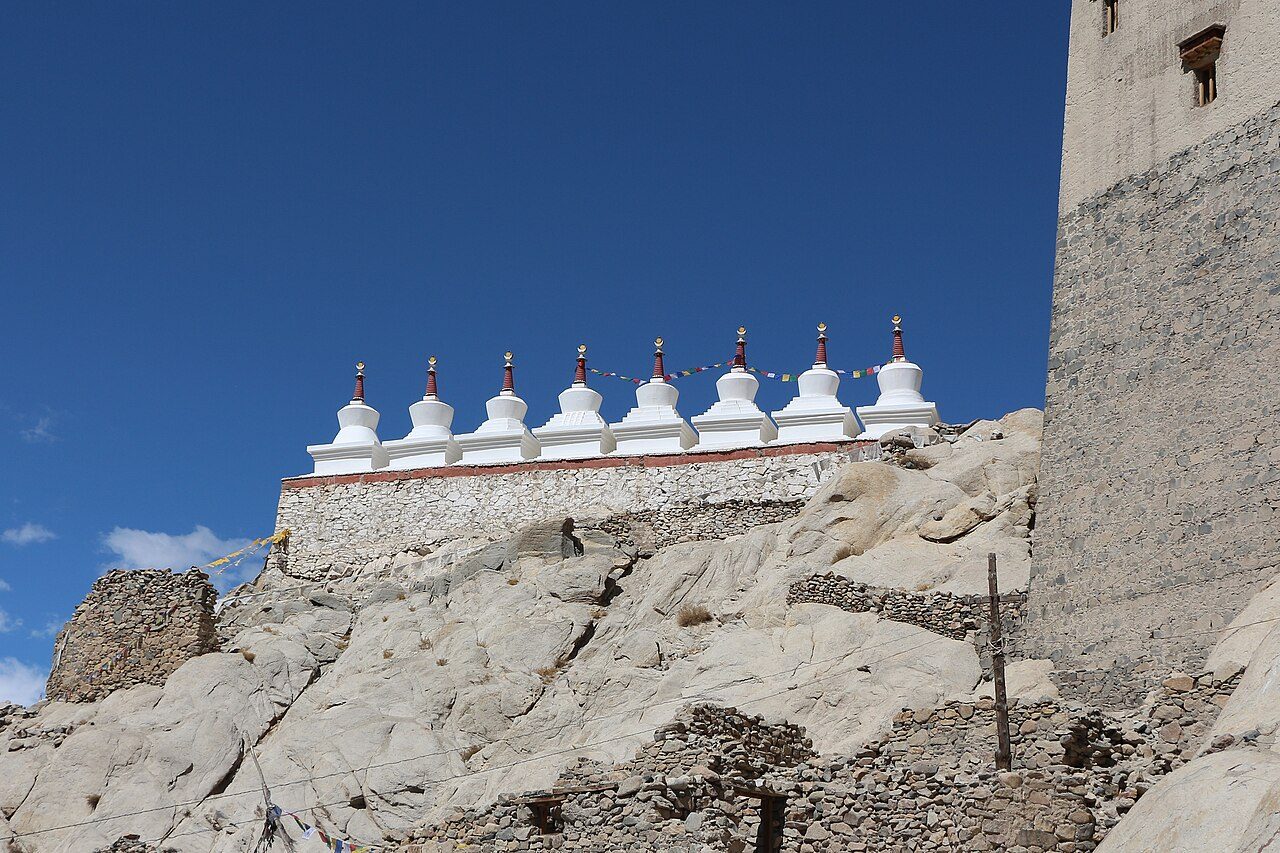
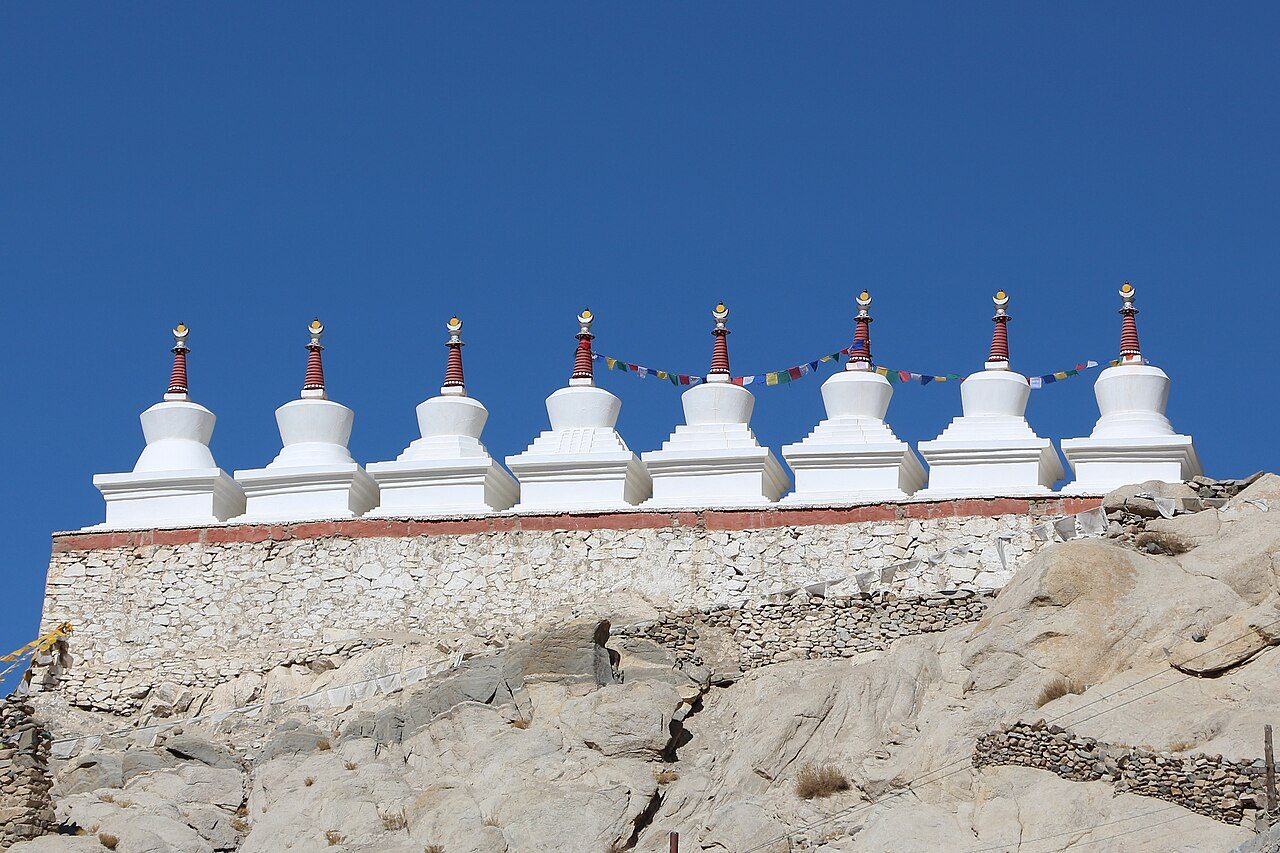
Namgyal Tsemo Monastery stands on the peak above Leh Palace, founded around 1430 by King Tashi Namgyal. Its temple holds a three-storey gold statue of Maitreya Buddha, and a ruined fort beside it marks an early royal residence. Strings of prayer flags stretch across the summit, which gives the widest view of Leh. A steep path climbs from the palace.
02
STOP 2 OF 13
Spituk Monastery
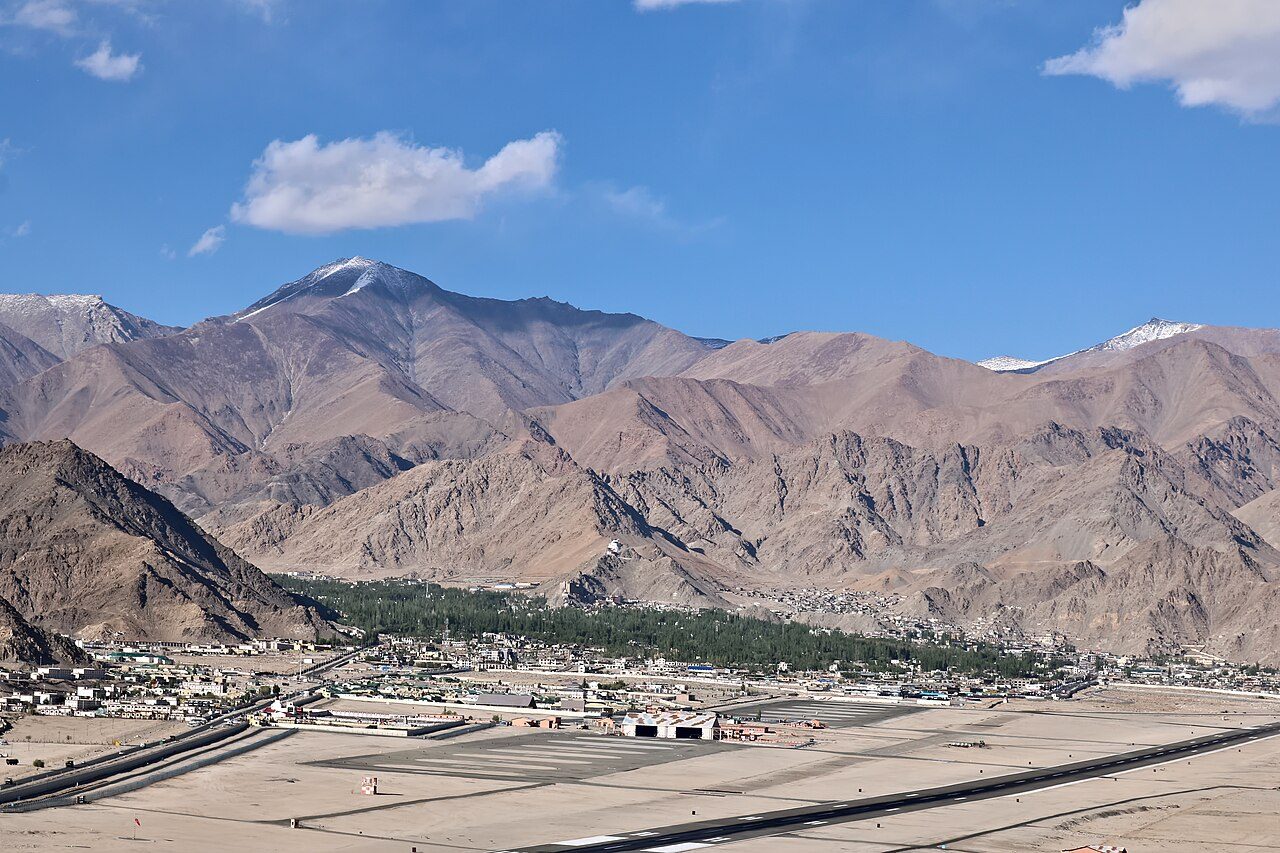
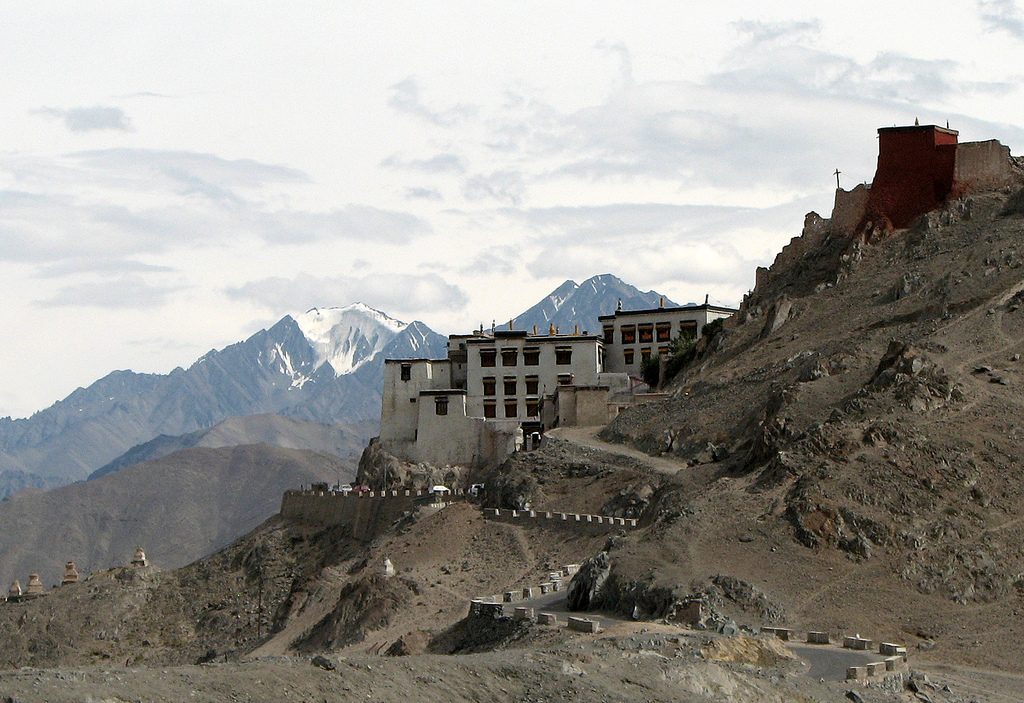
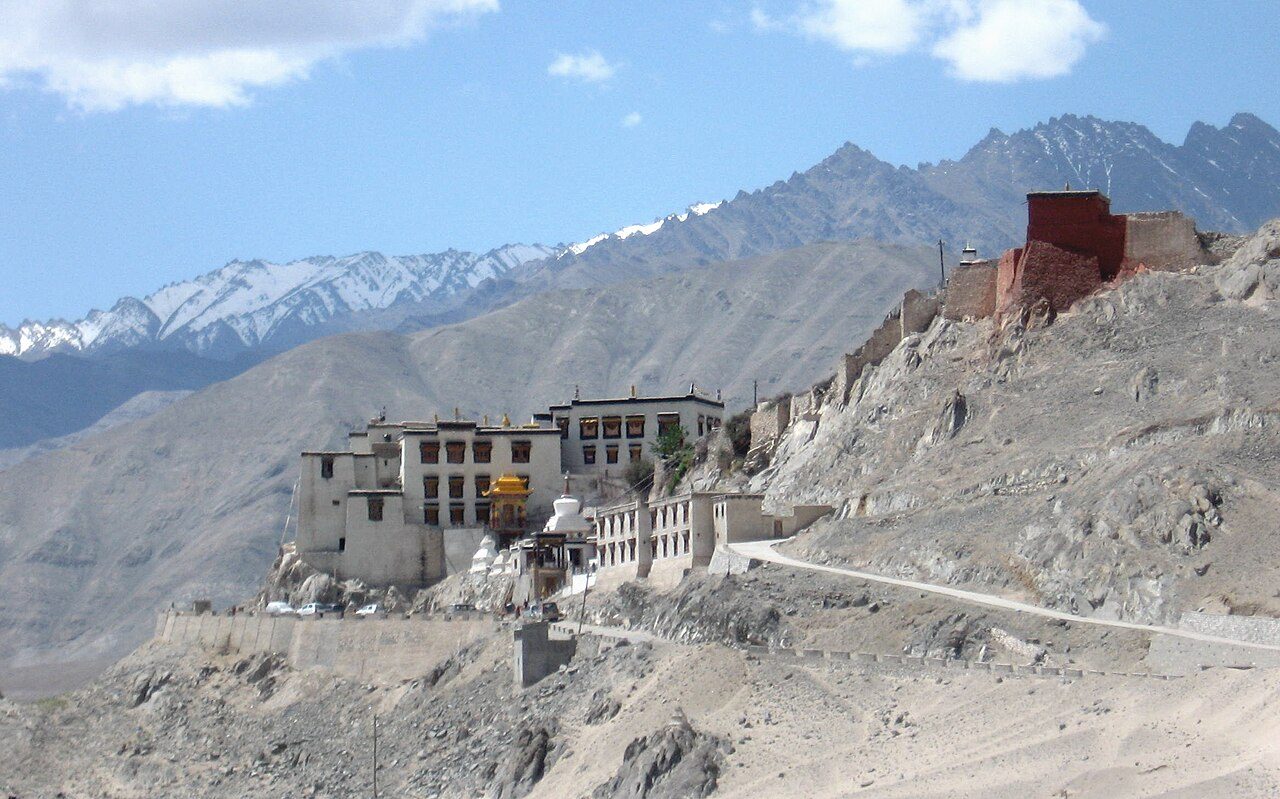
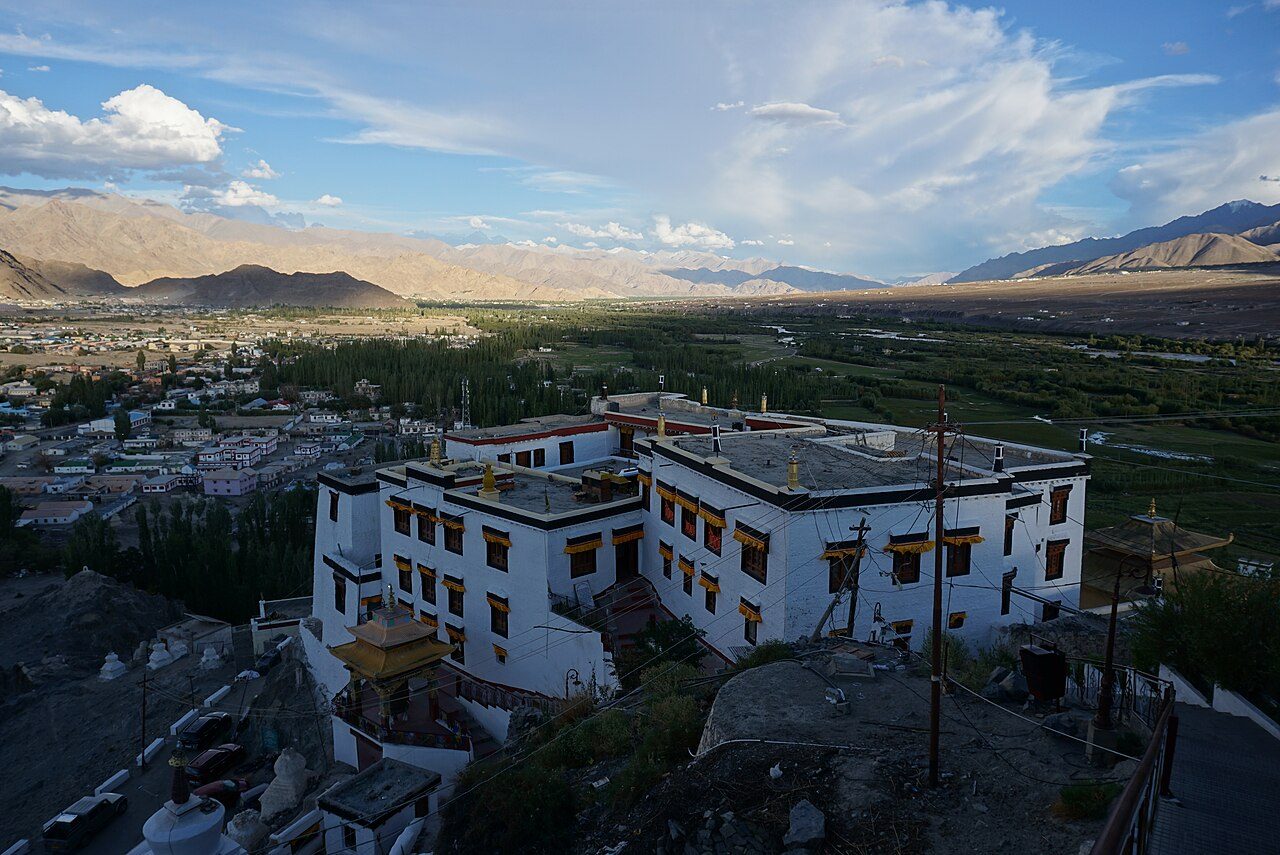
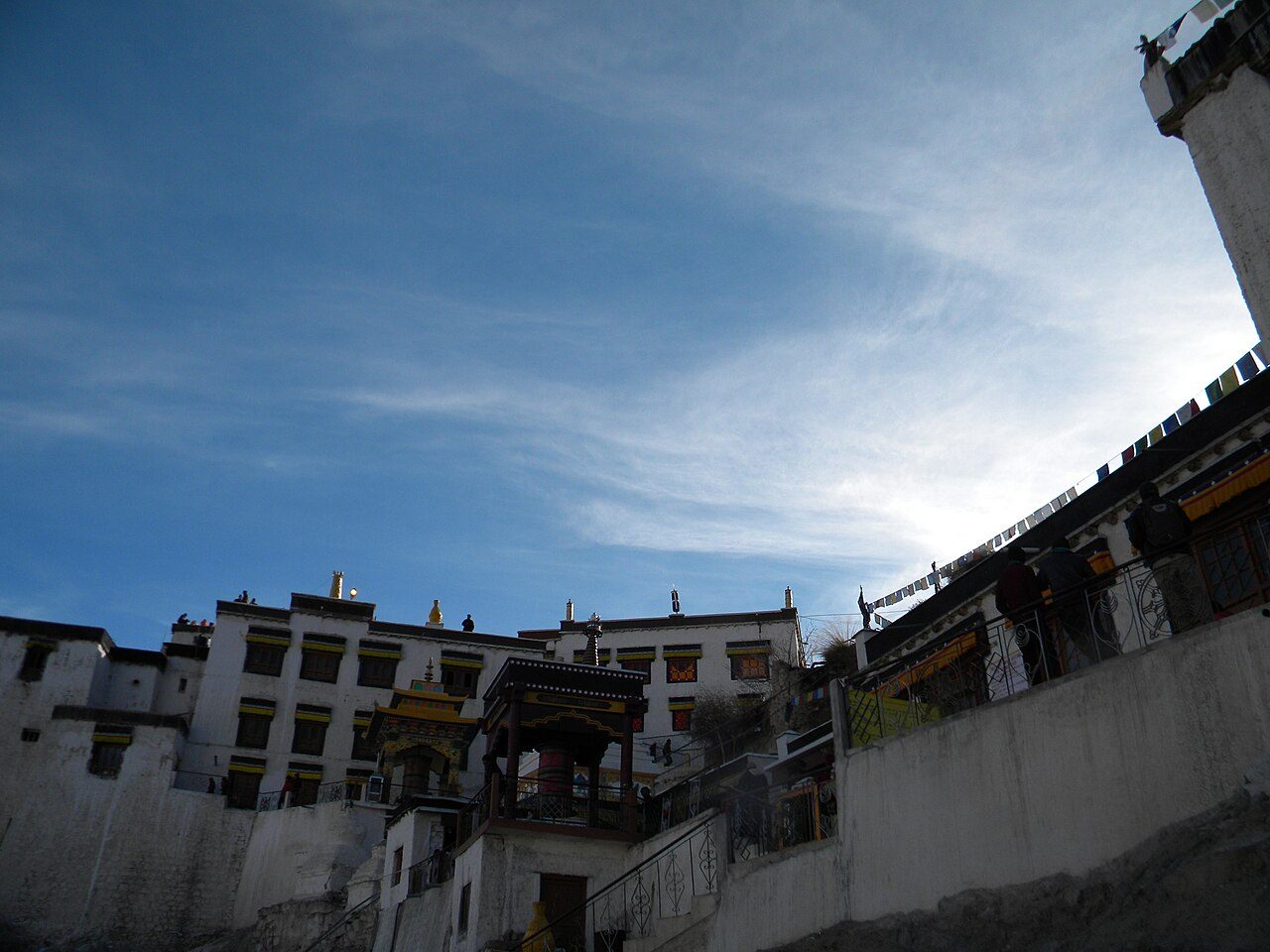
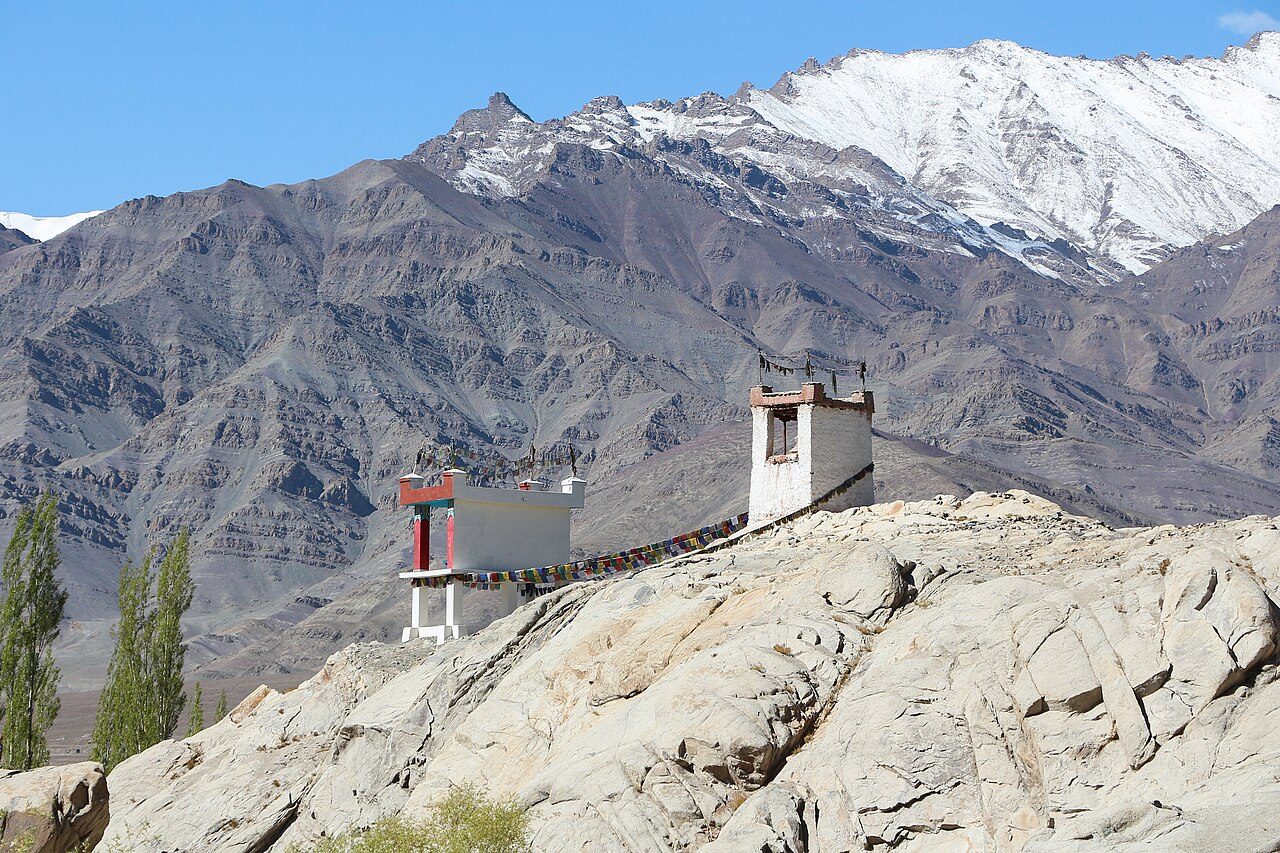
Spituk Monastery stands on a rock outcrop above the Indus, eight kilometres from Leh beside the airport. Founded in the 11th century, it belongs to the Gelug school and has about a hundred monks. A temple to the goddess Kali at the top holds fierce masked images unveiled only during the Gustor festival in January. The terrace overlooks the runway and river.
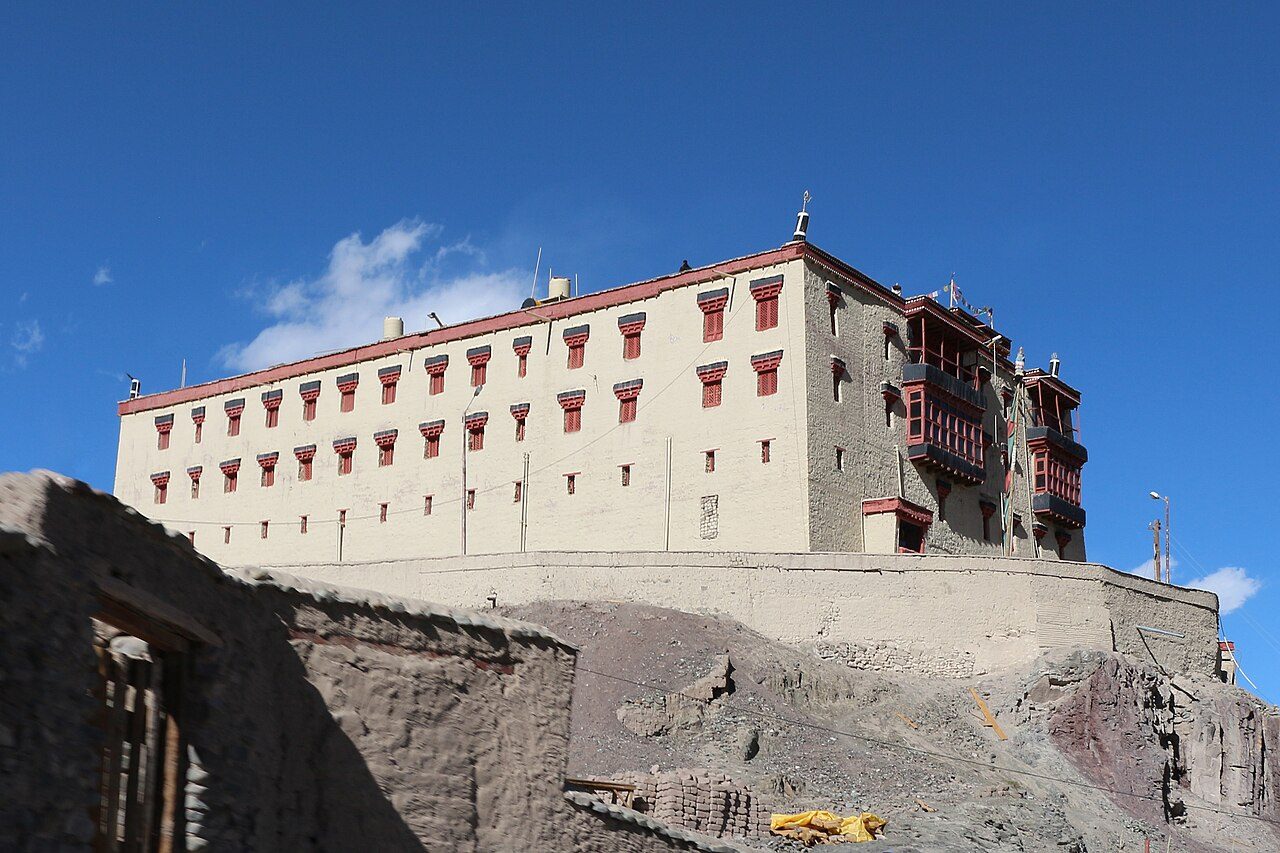
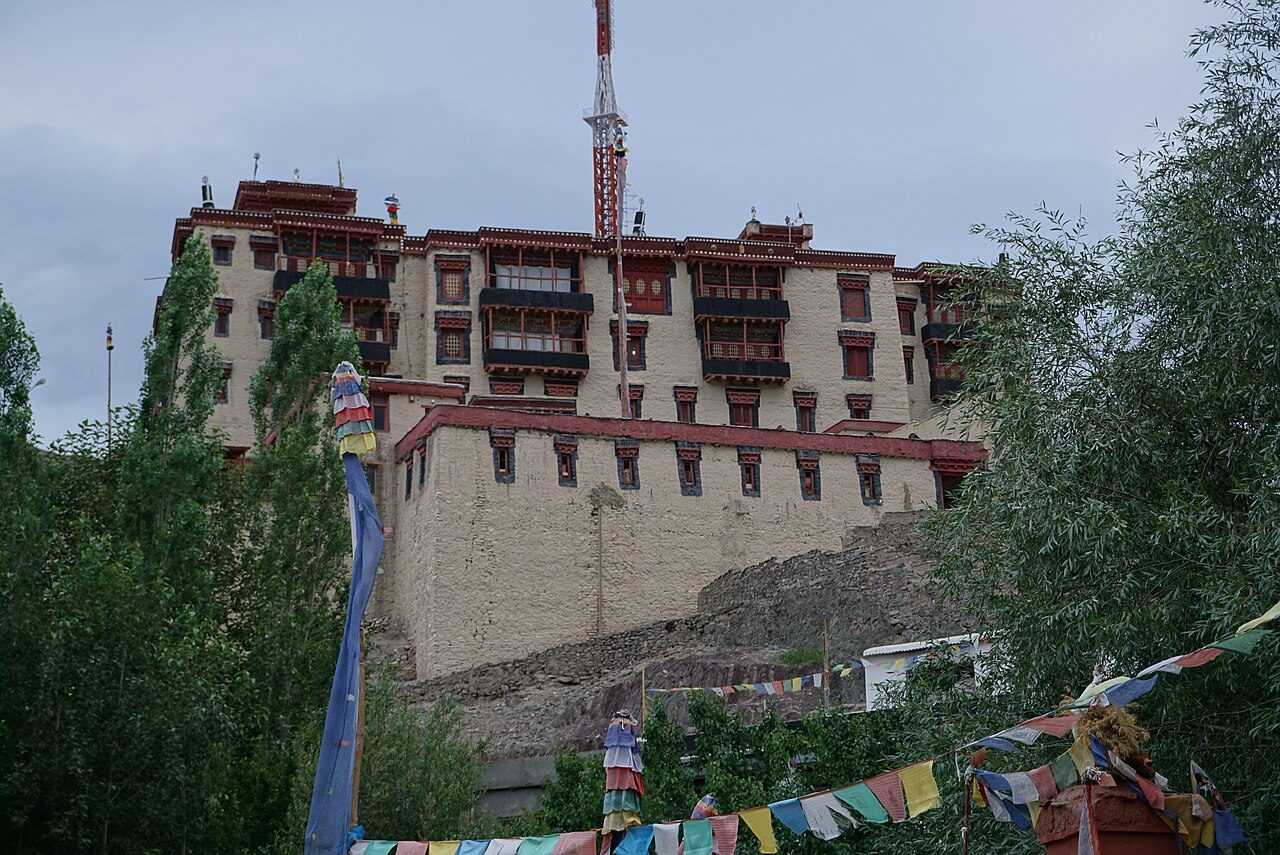
Stok Palace, across the Indus from Leh, was built in 1820 and became the home of Ladakh's royal family after they lost power. Part of it is still their residence and part is a heritage hotel. A museum displays royal crowns, the queen's turquoise-studded headdress, ceremonial dress, thangkas and arms.
Shey Palace, 15 km from Leh, was the summer residence of the kings of Ladakh, built in 1655 by Deldan Namgyal. The palace is mostly in ruins, but its monastery holds a gilded copper statue of Shakyamuni Buddha about 12 metres tall, one of the largest in Ladakh. The ridge looks out over the Indus valley and fields of barley.
05
STOP 5 OF 13
Thiksey Monastery
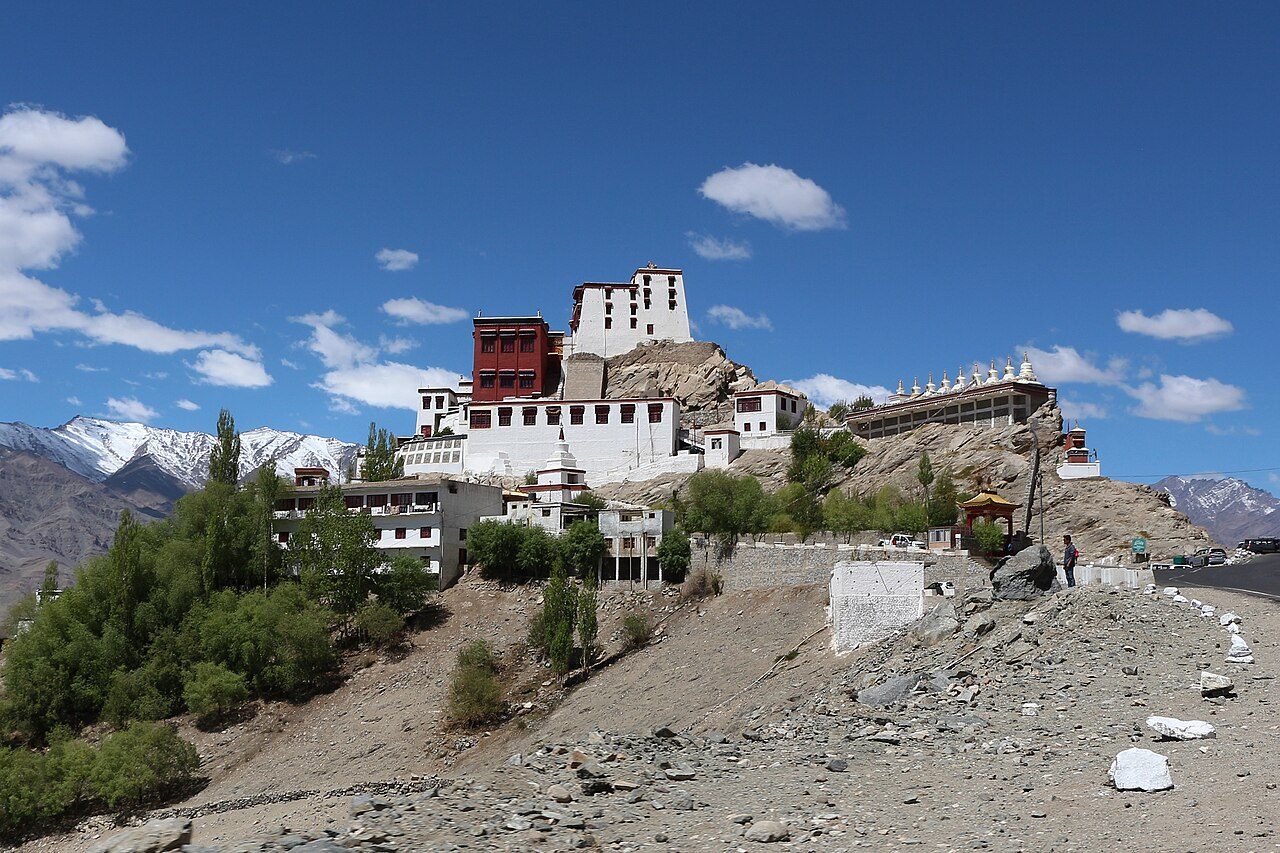
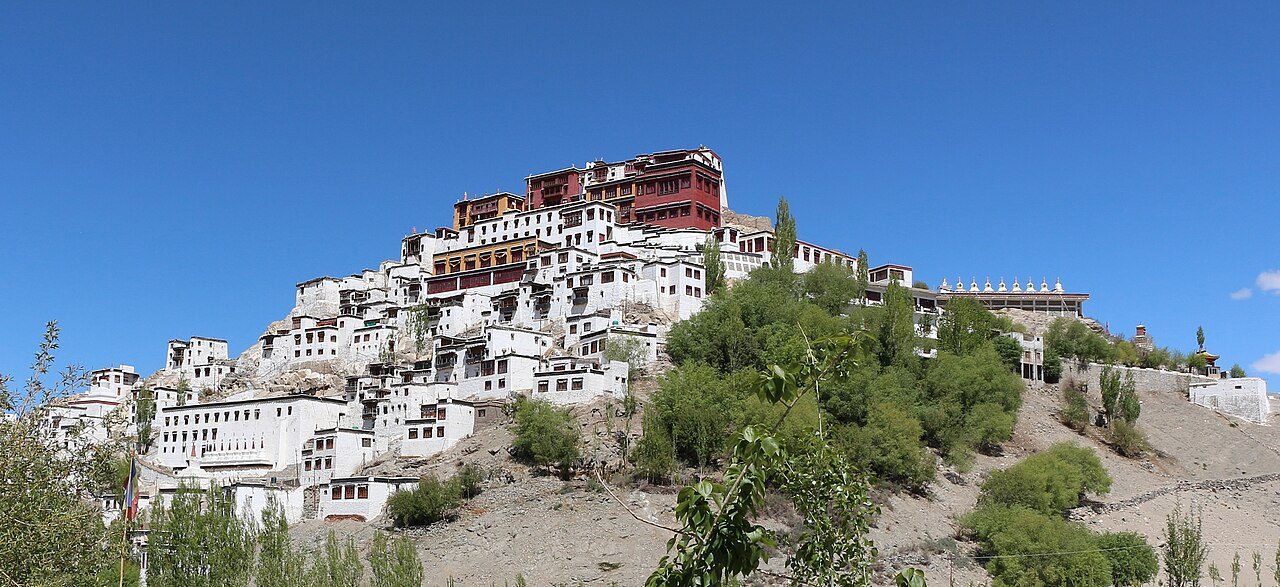
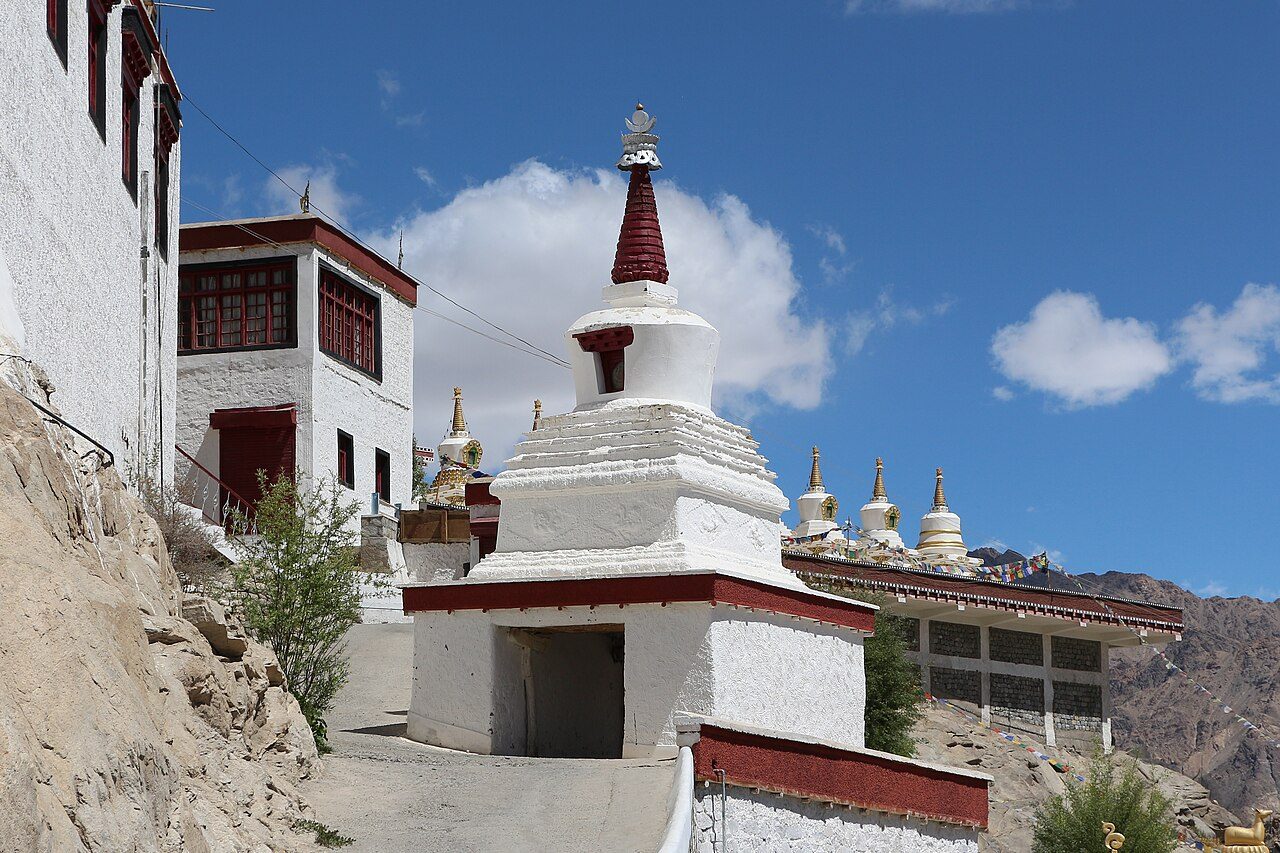
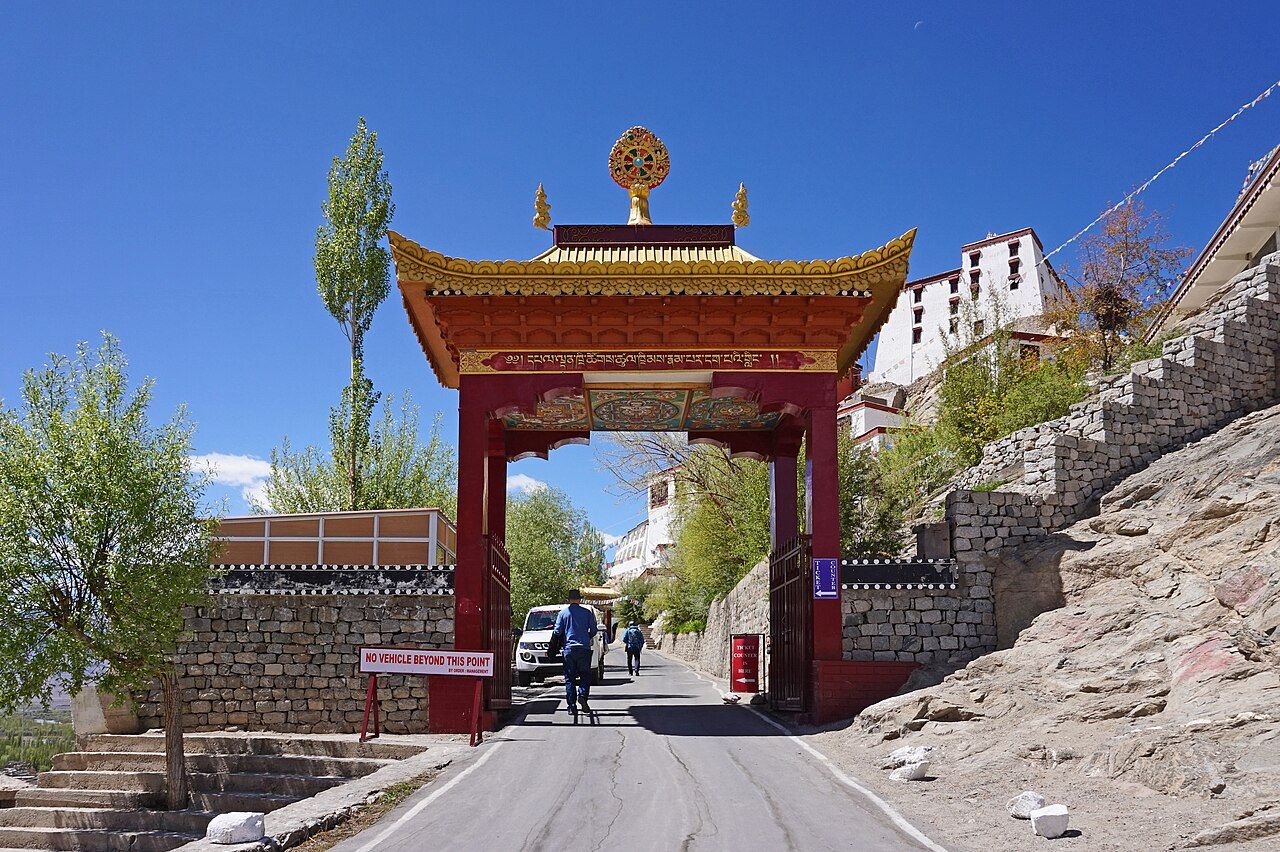
Thiksey Monastery, 19 km from Leh, is a twelve-storey complex of the Gelug school that climbs a hill like a small town and is often likened to the Potala Palace. Its Maitreya Temple houses a seated statue of the future Buddha about 15 metres high, rising through two storeys. Visitors may attend the monks' morning prayers at dawn.
06
STOP 6 OF 13
Stakna Monastery
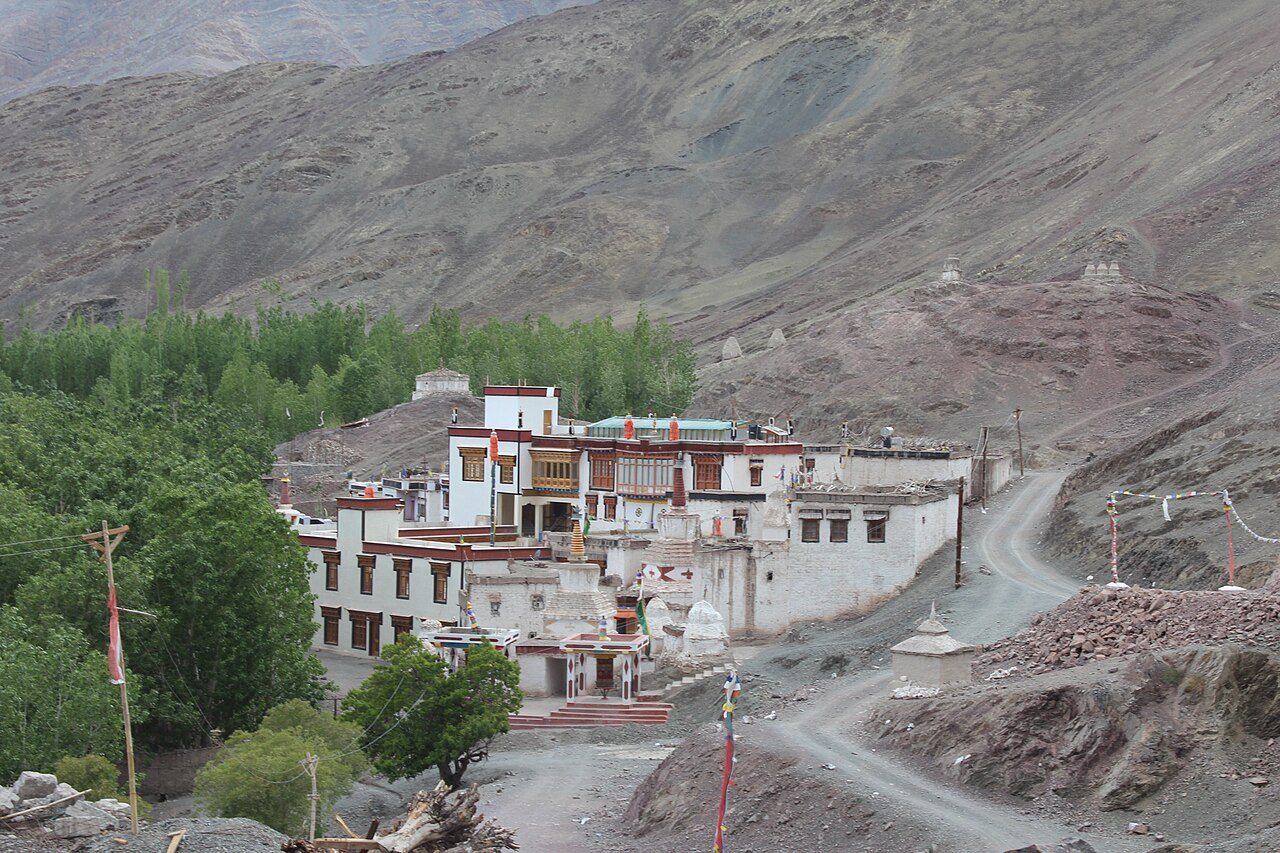
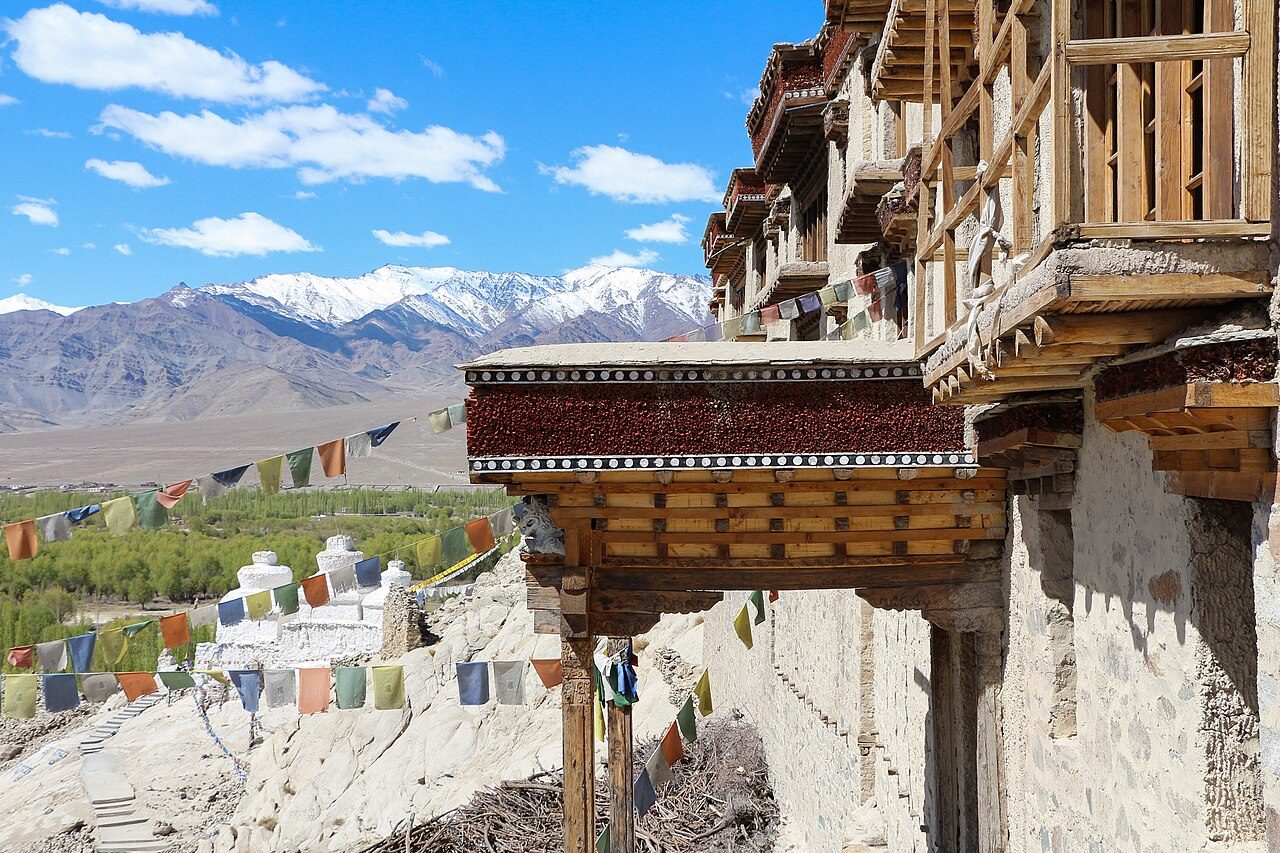
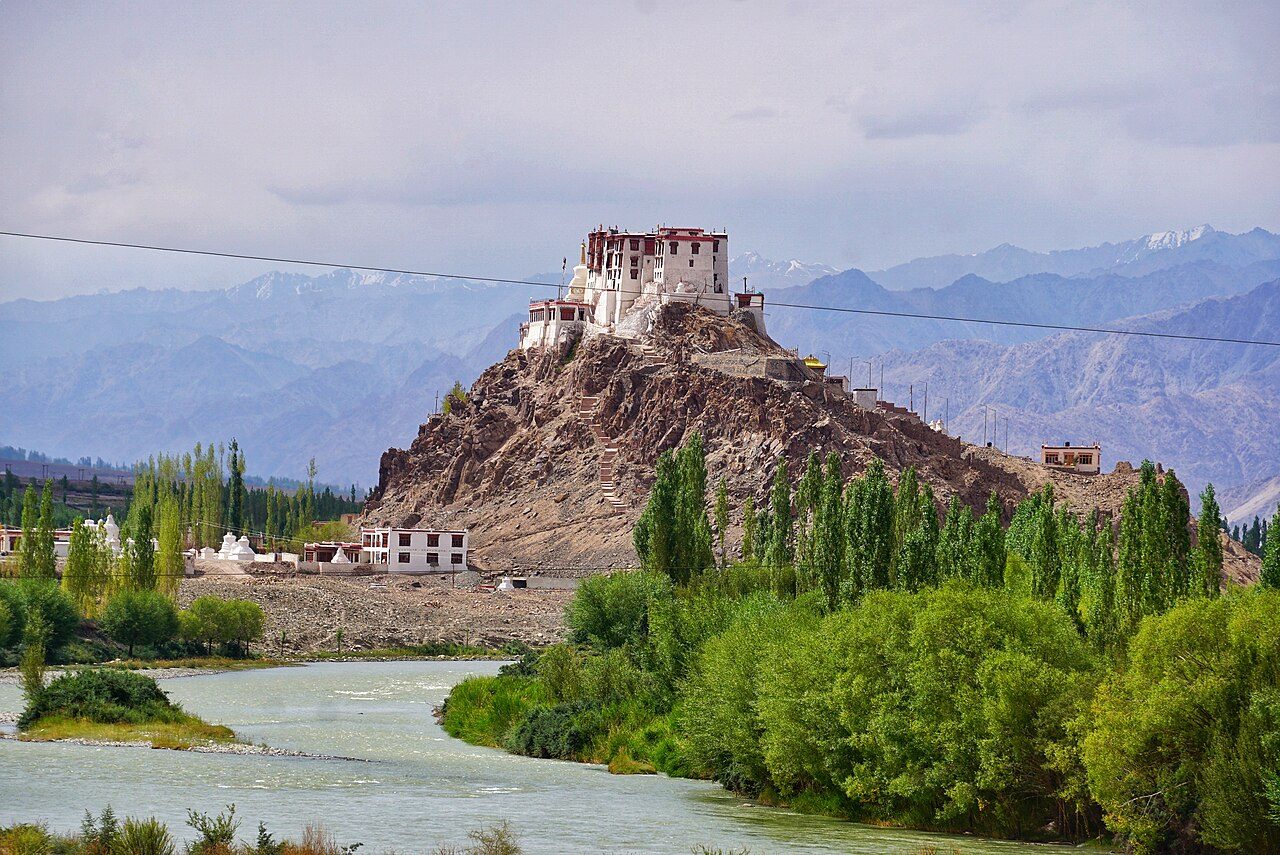
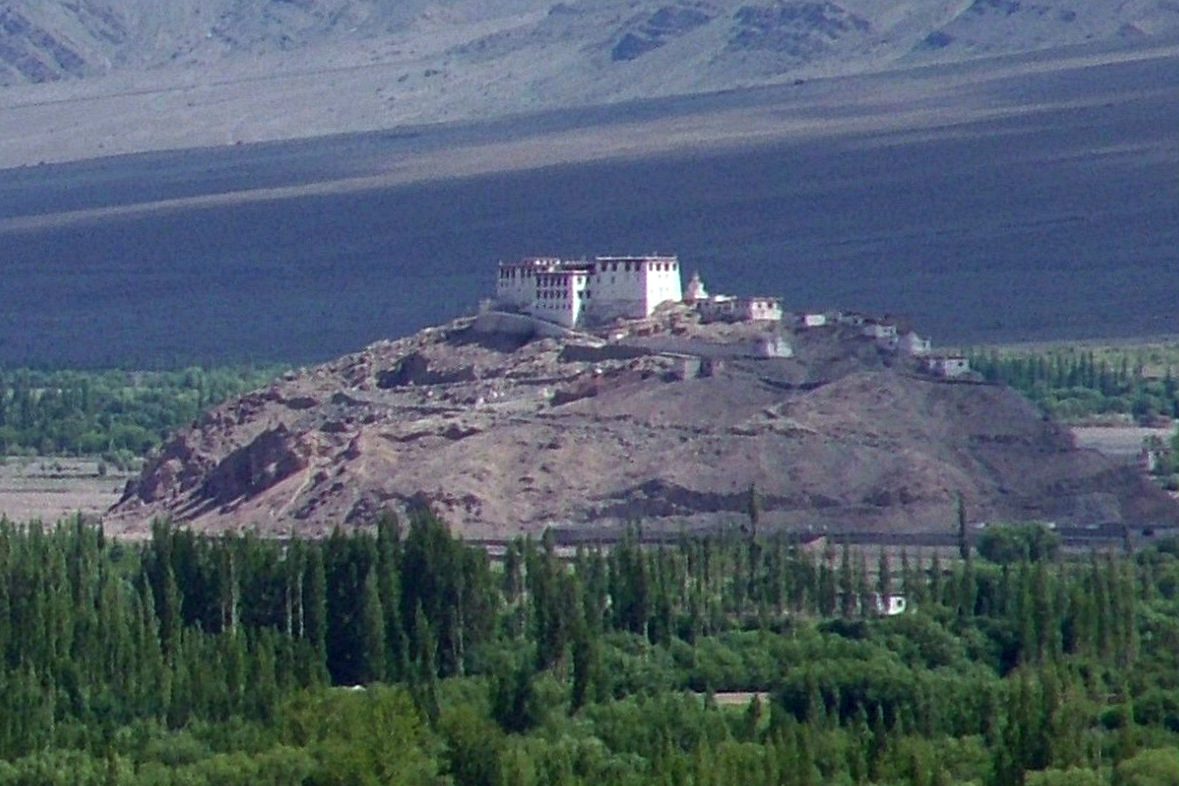
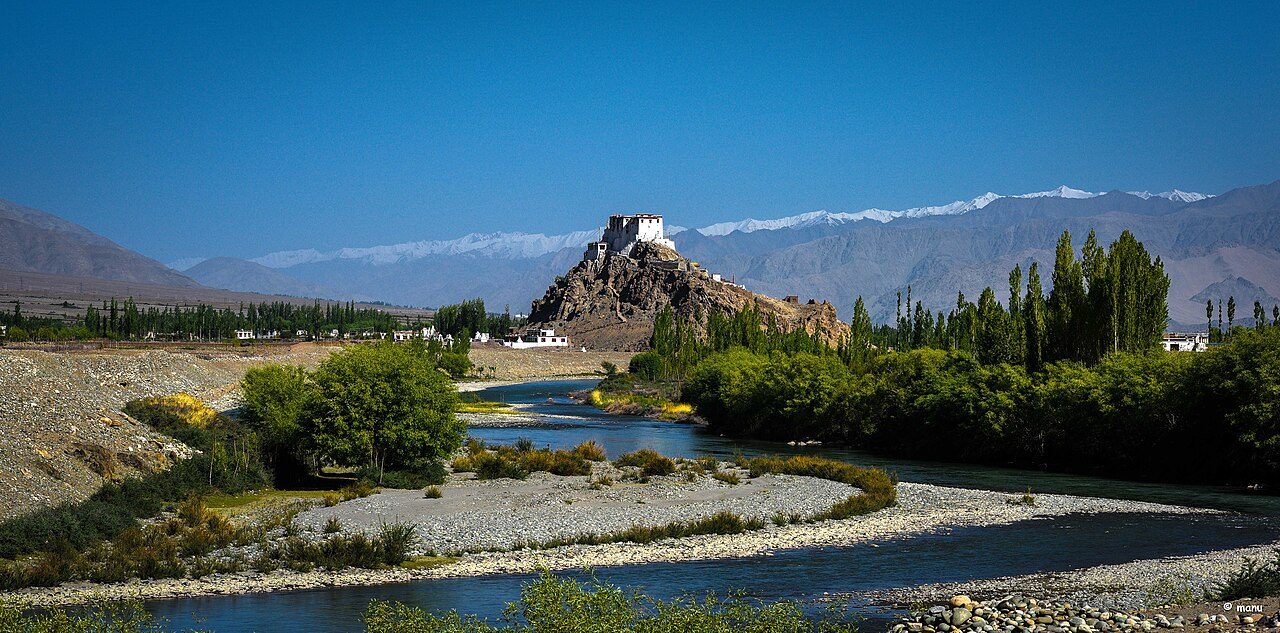
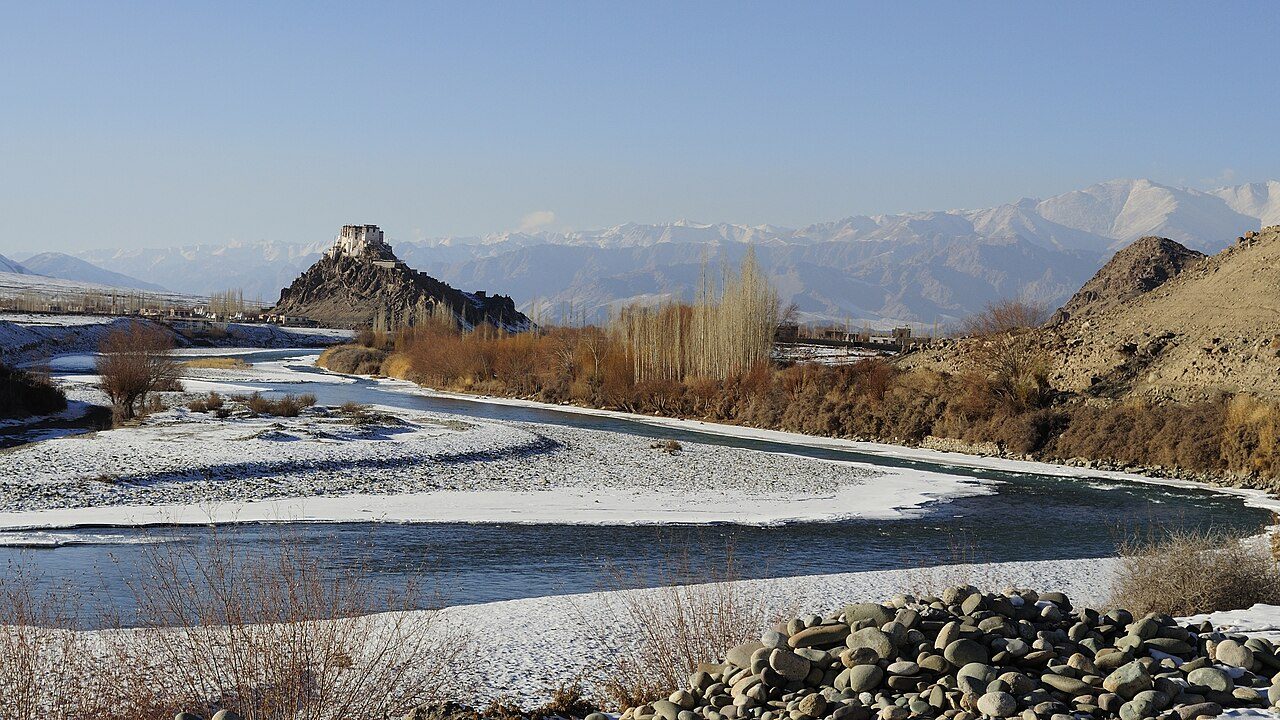
Stakna Monastery sits on a rock shaped like a tiger's nose, from which it takes its name, above a bend of the Indus about 25 km from Leh. It was founded in the late 16th century by a Bhutanese scholar and belongs to the Drukpa school. The small monastery has a silver chorten and bright murals, and its roof looks along the valley towards Thiksey.
07
STOP 7 OF 13
Hemis Monastery
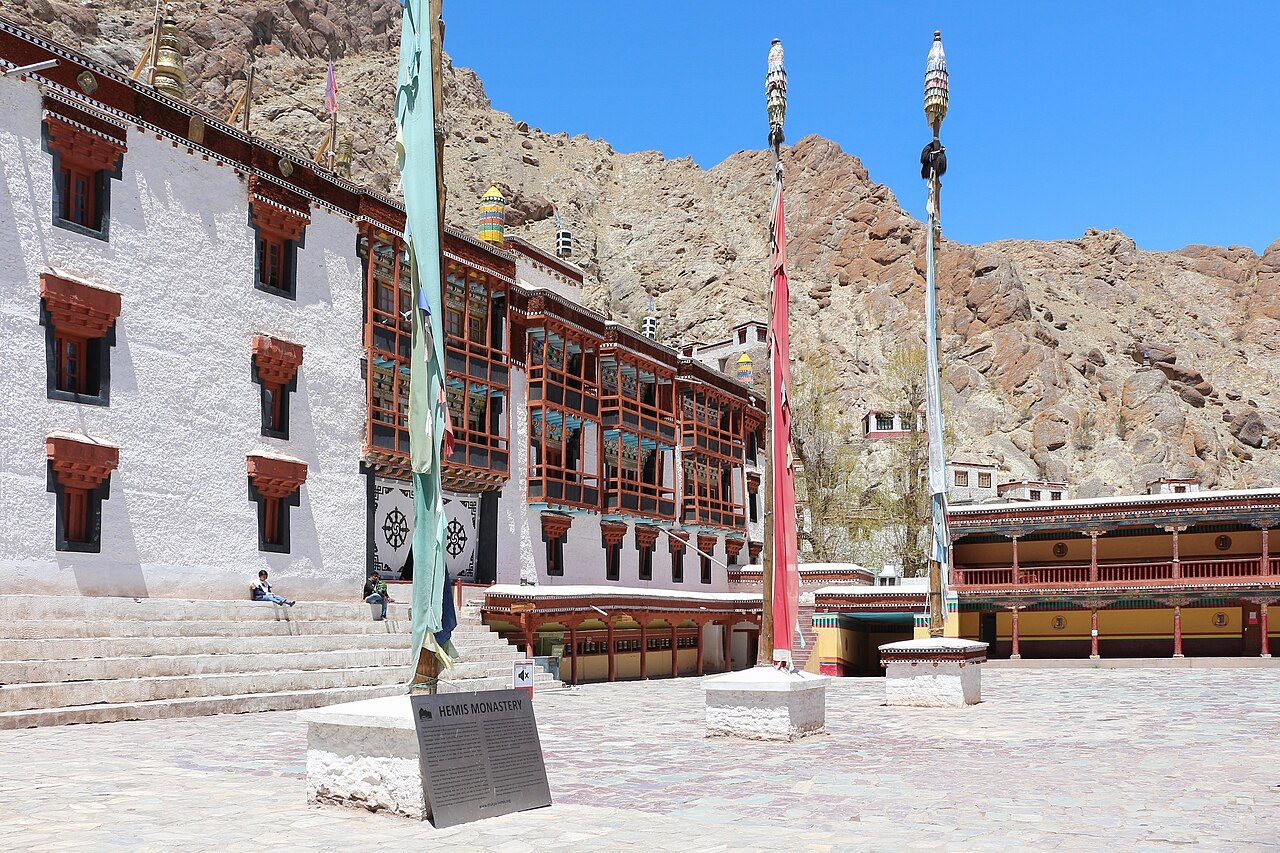
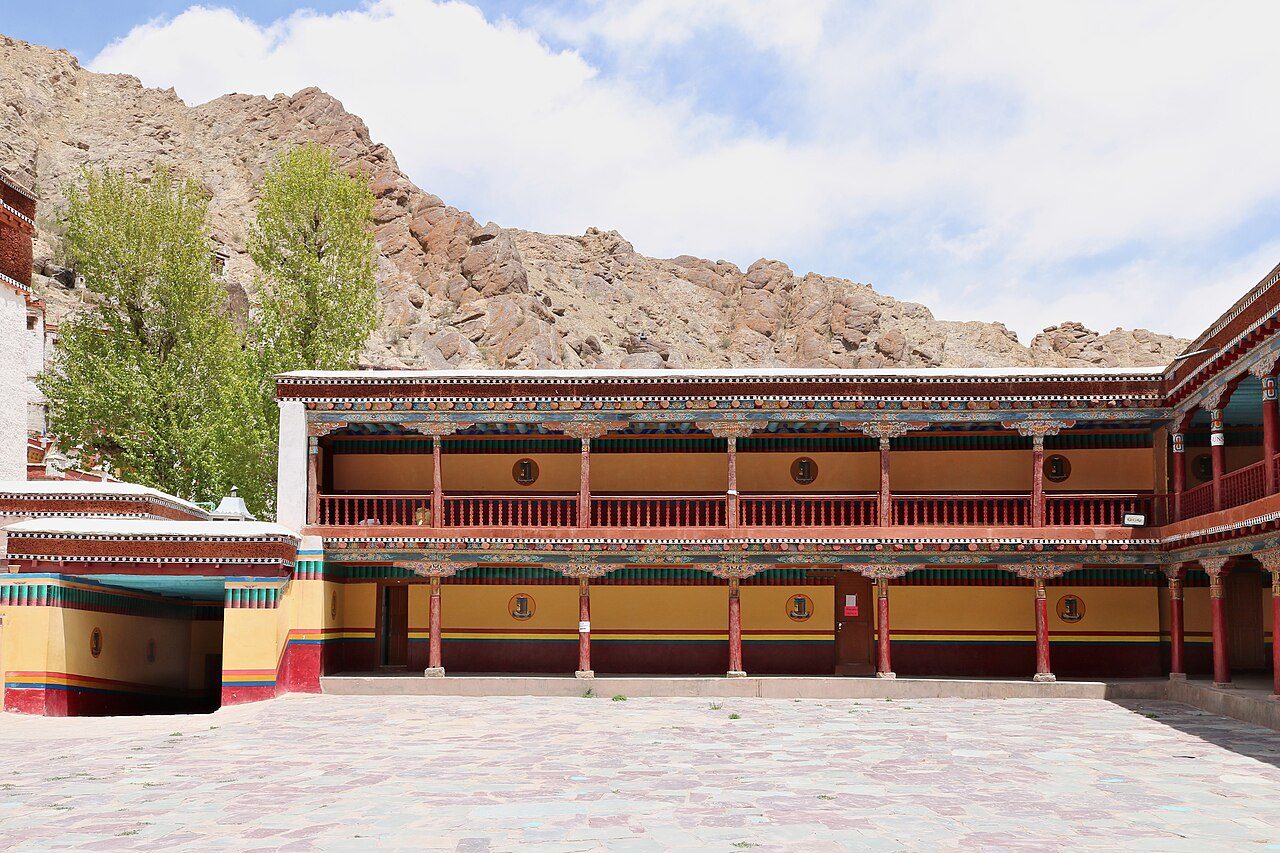
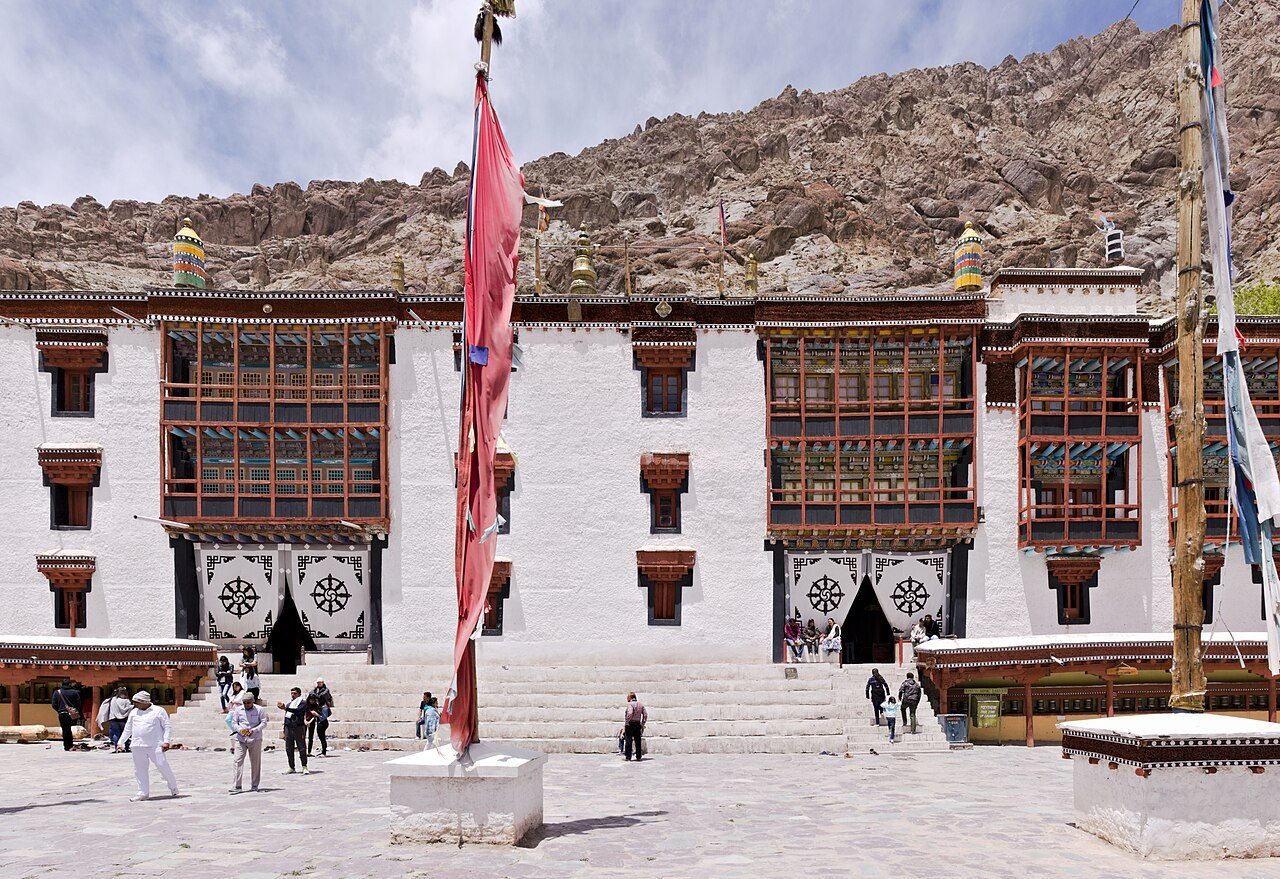
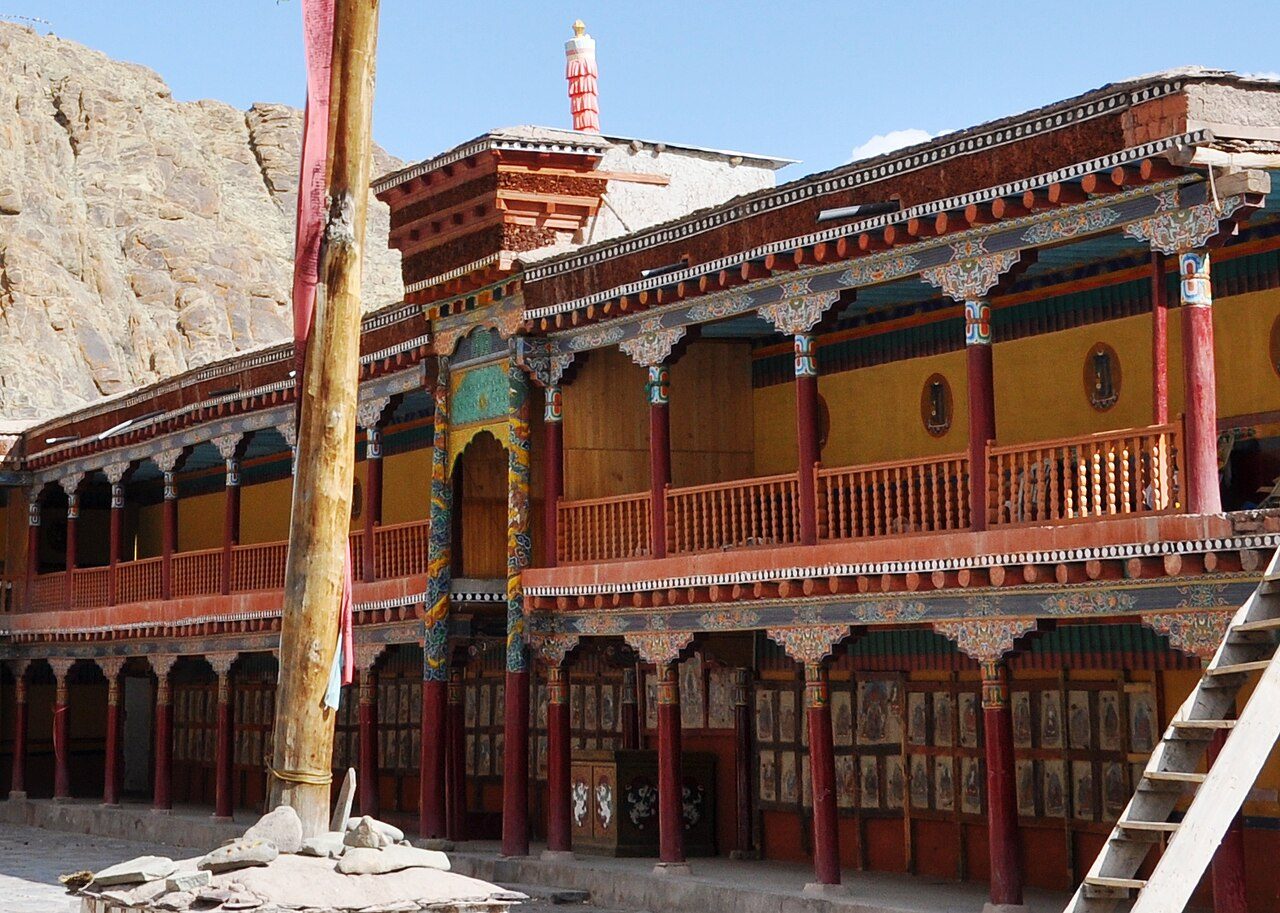
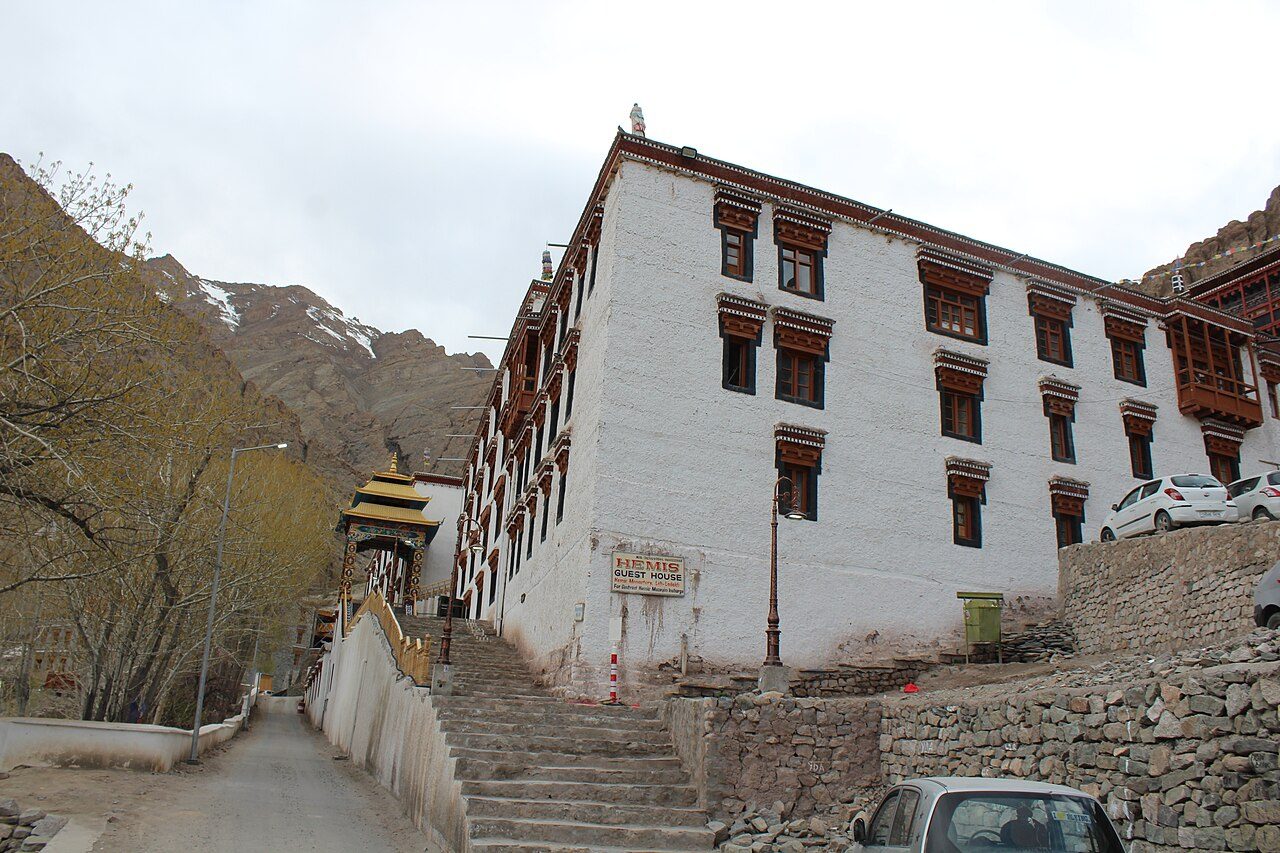
Hemis is the largest and wealthiest monastery in Ladakh, belonging to the Drukpa lineage, hidden in a side valley 45 km from Leh. Re-established in 1672 under King Sengge Namgyal, it is famous for the Hemis Festival each June or July, when masked dances honour Padmasambhava. A museum displays thangkas, statues and ritual objects.
08
STOP 8 OF 13
Basgo Monastery
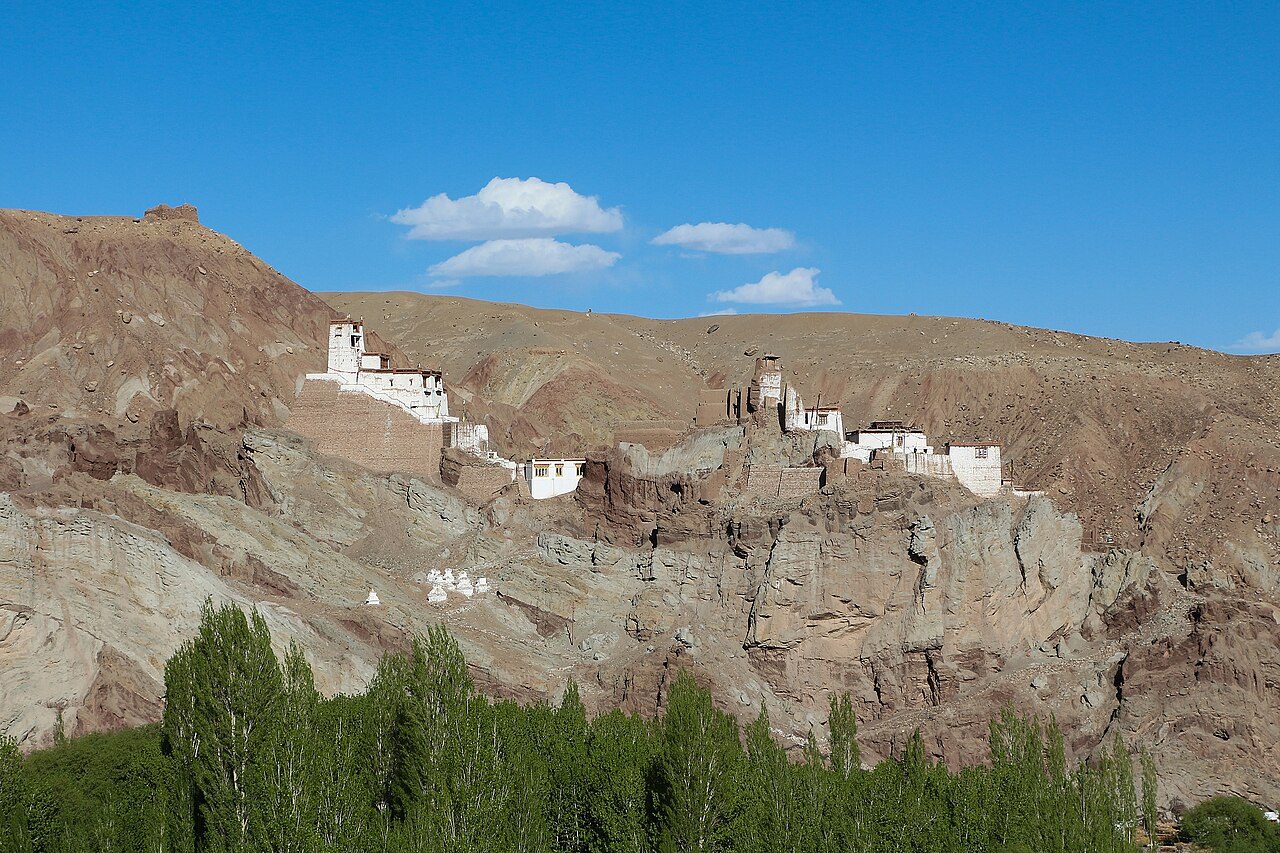
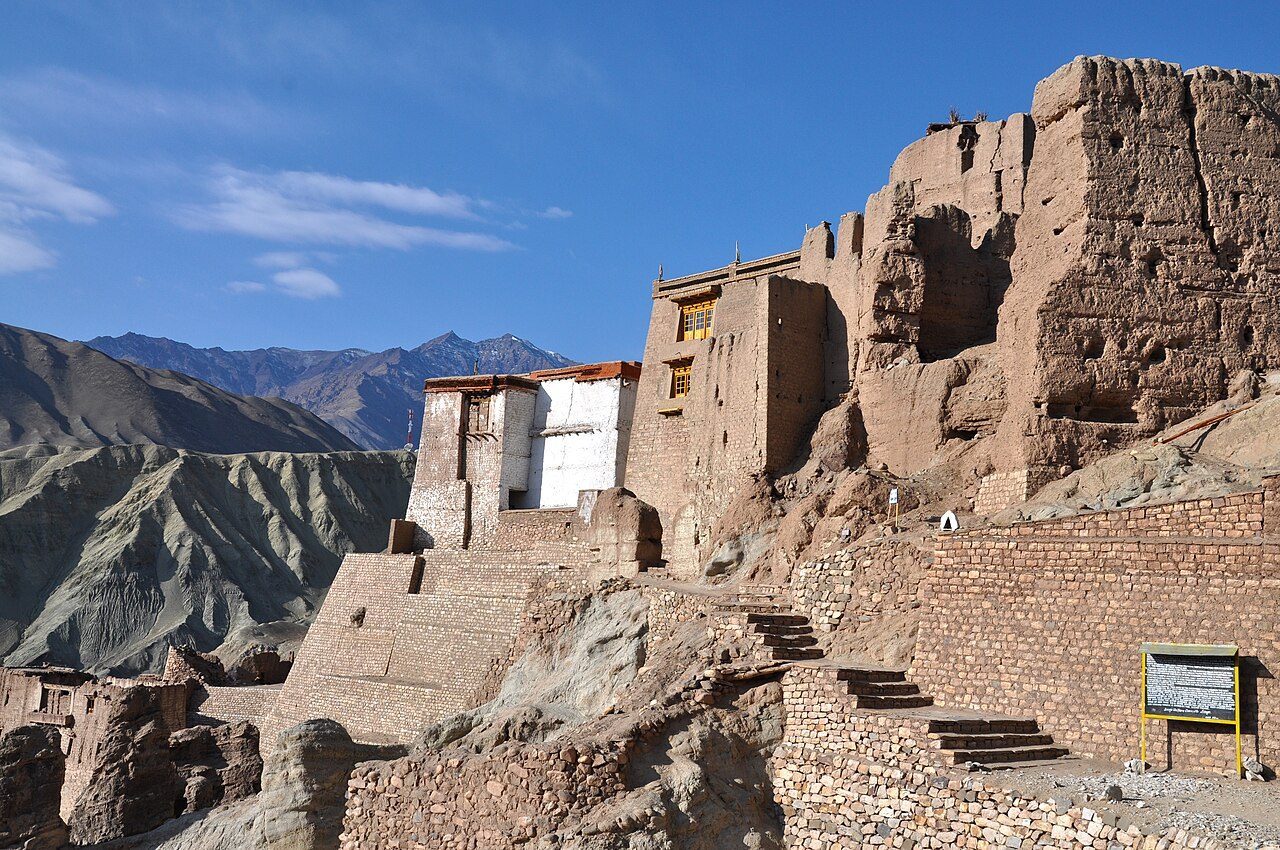
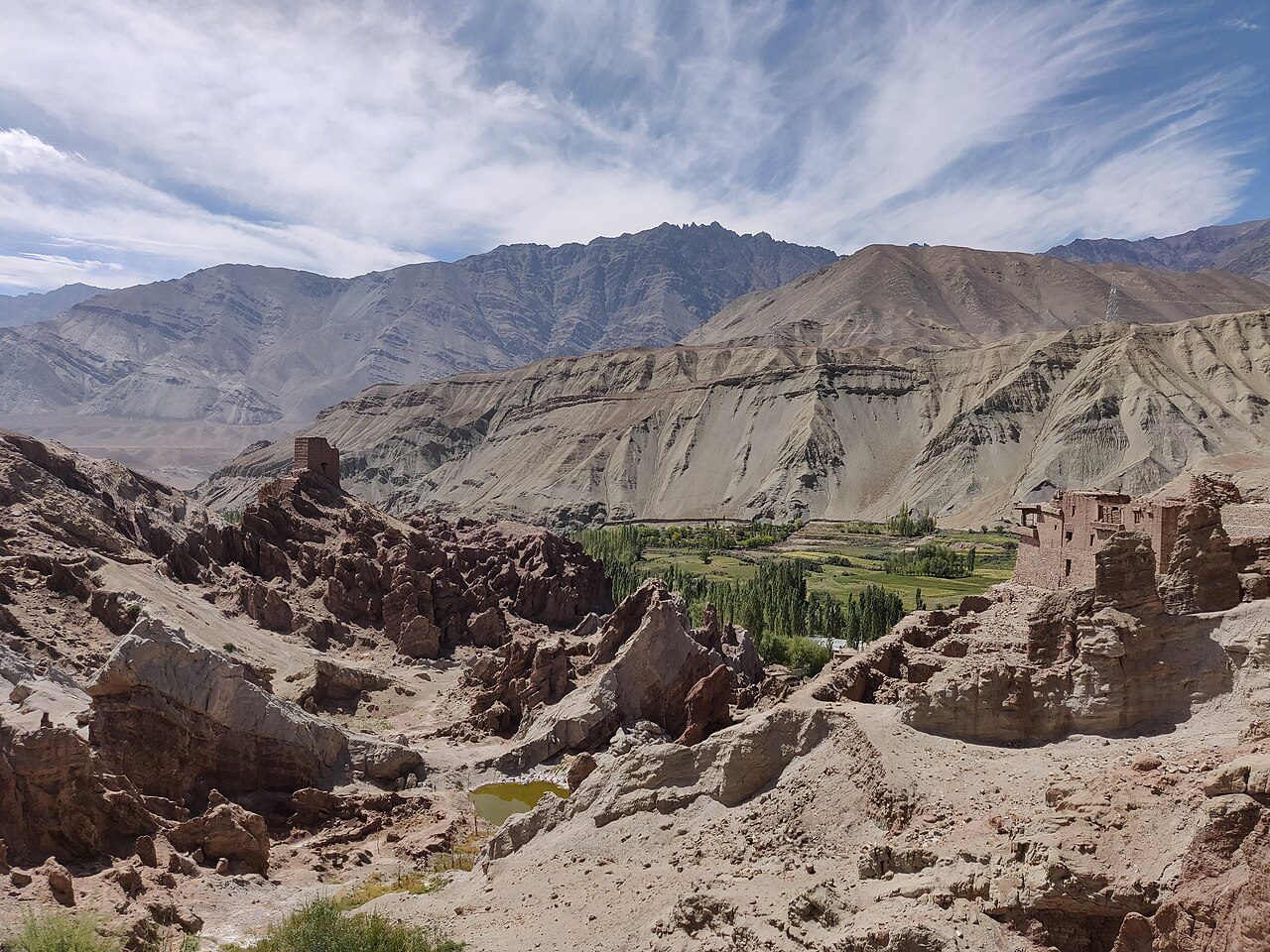
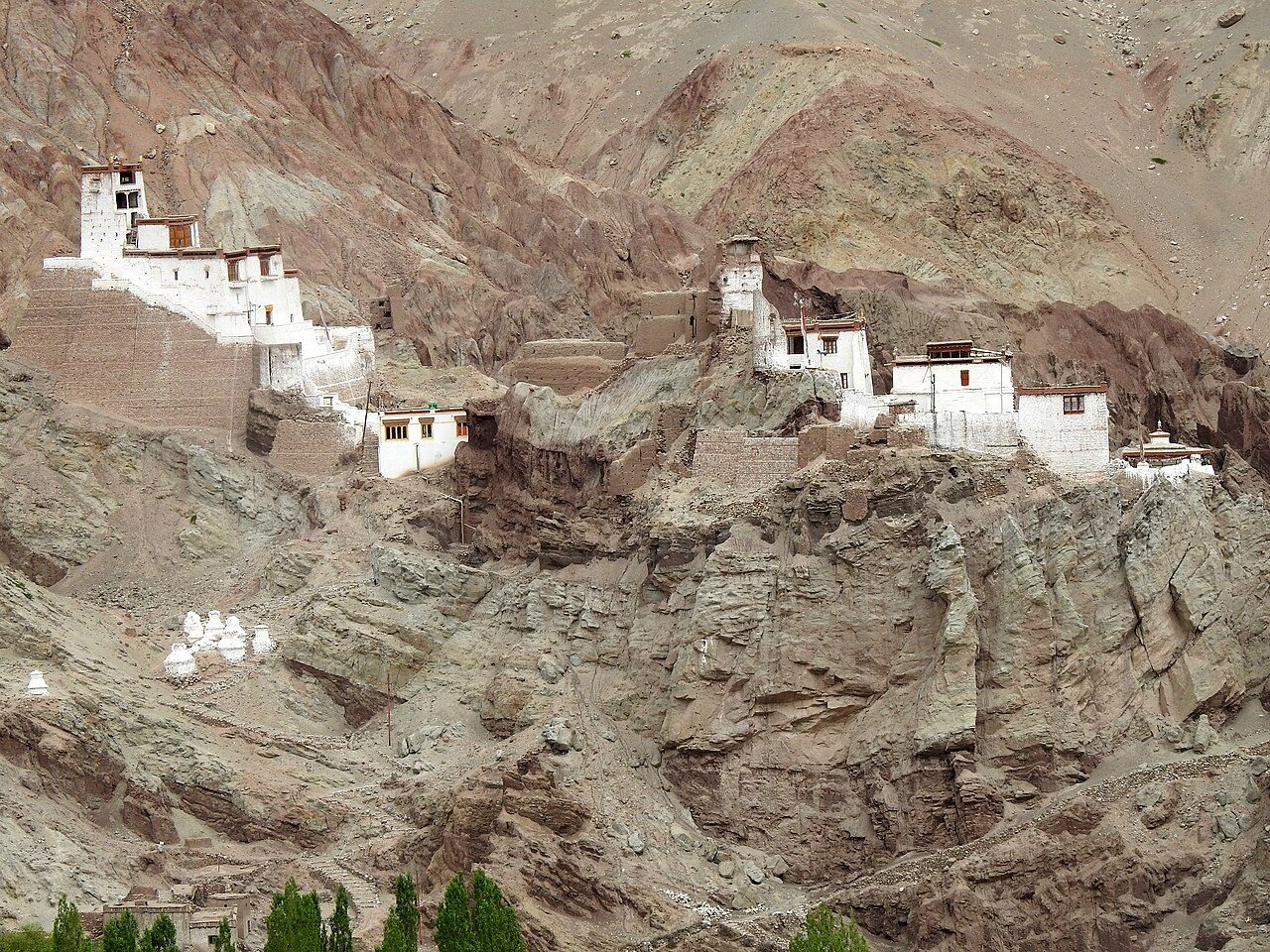
Basgo, 40 km from Leh, was once a capital of lower Ladakh. Its ruined mud-brick citadel and temples stand on eroded clay hills above the Indus. Three temples survive, built in the 16th and 17th centuries, housing large images of Maitreya, including one of gilded copper two storeys high, with original murals.
09
STOP 9 OF 13
Likir Monastery
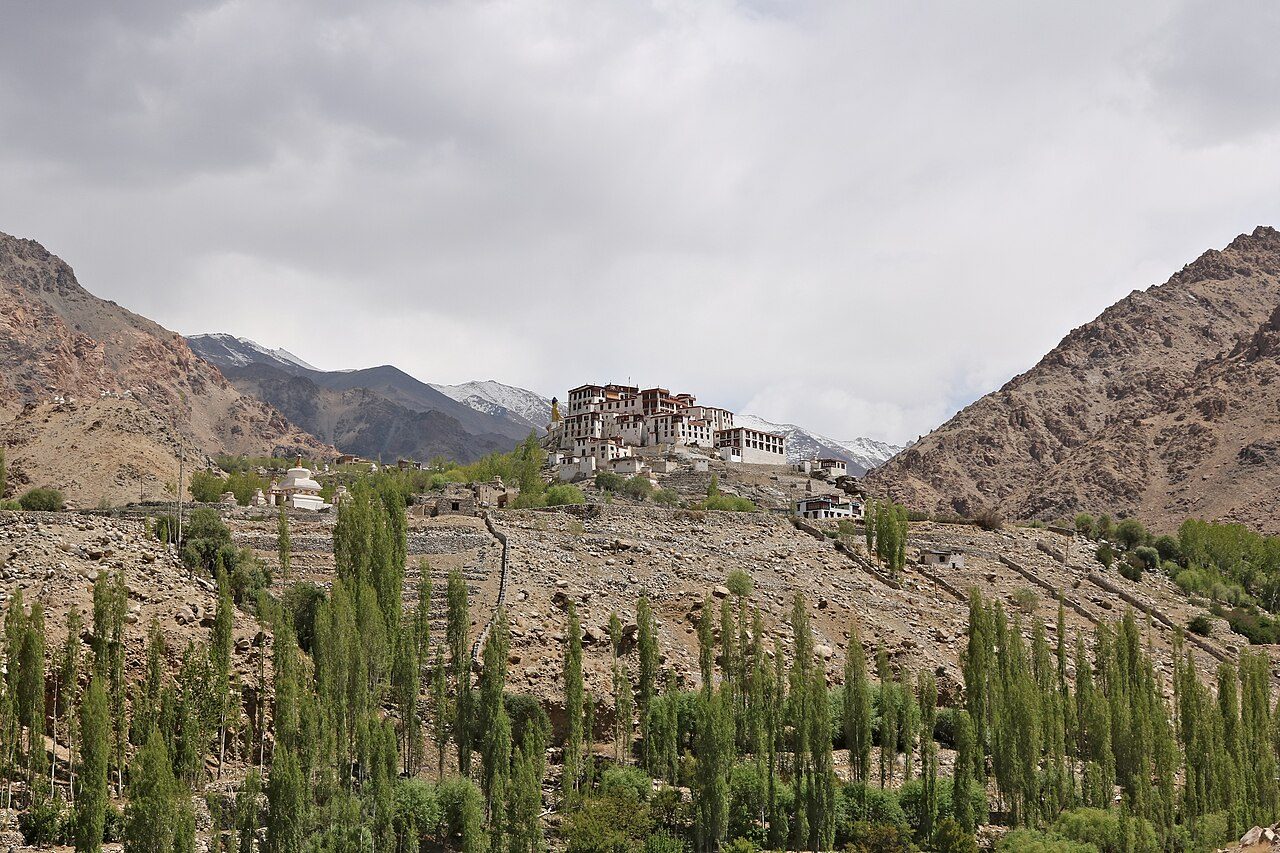
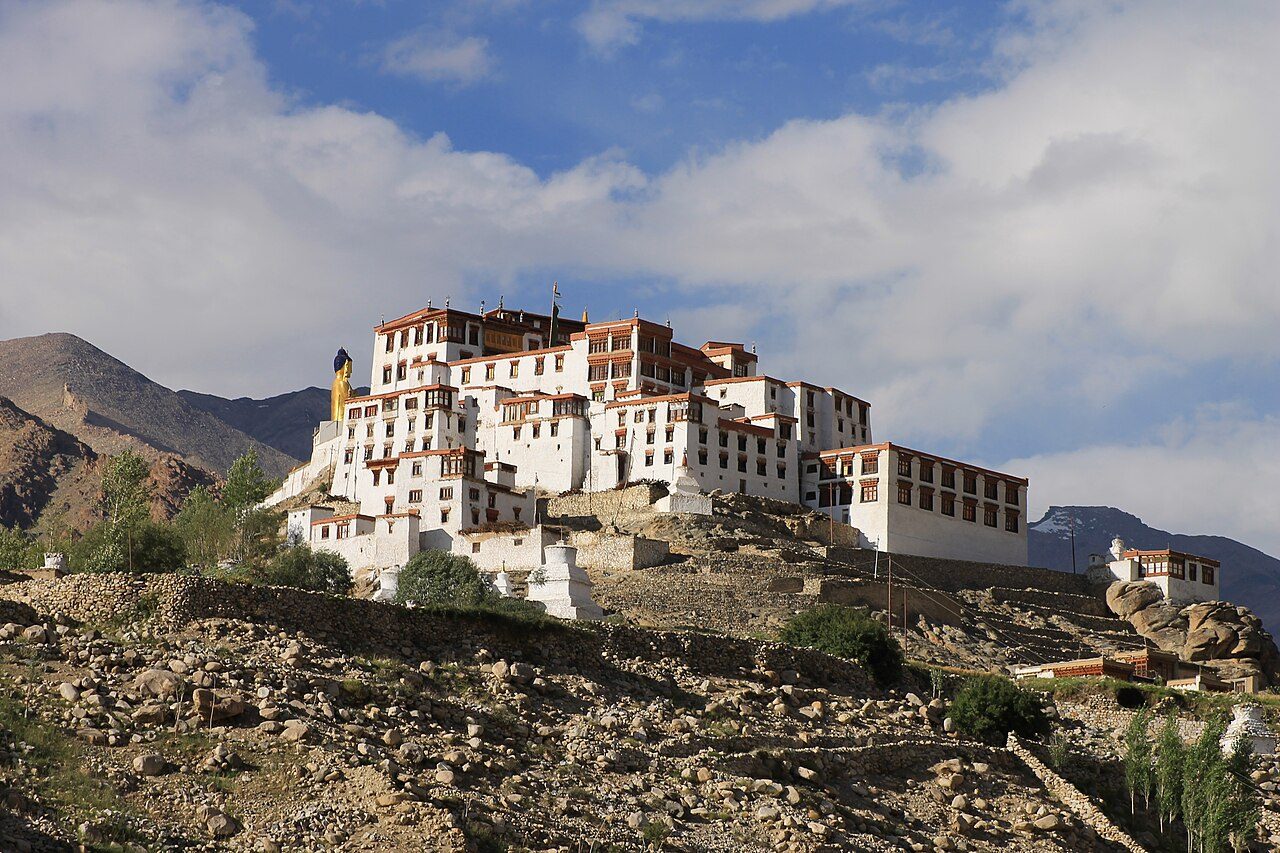
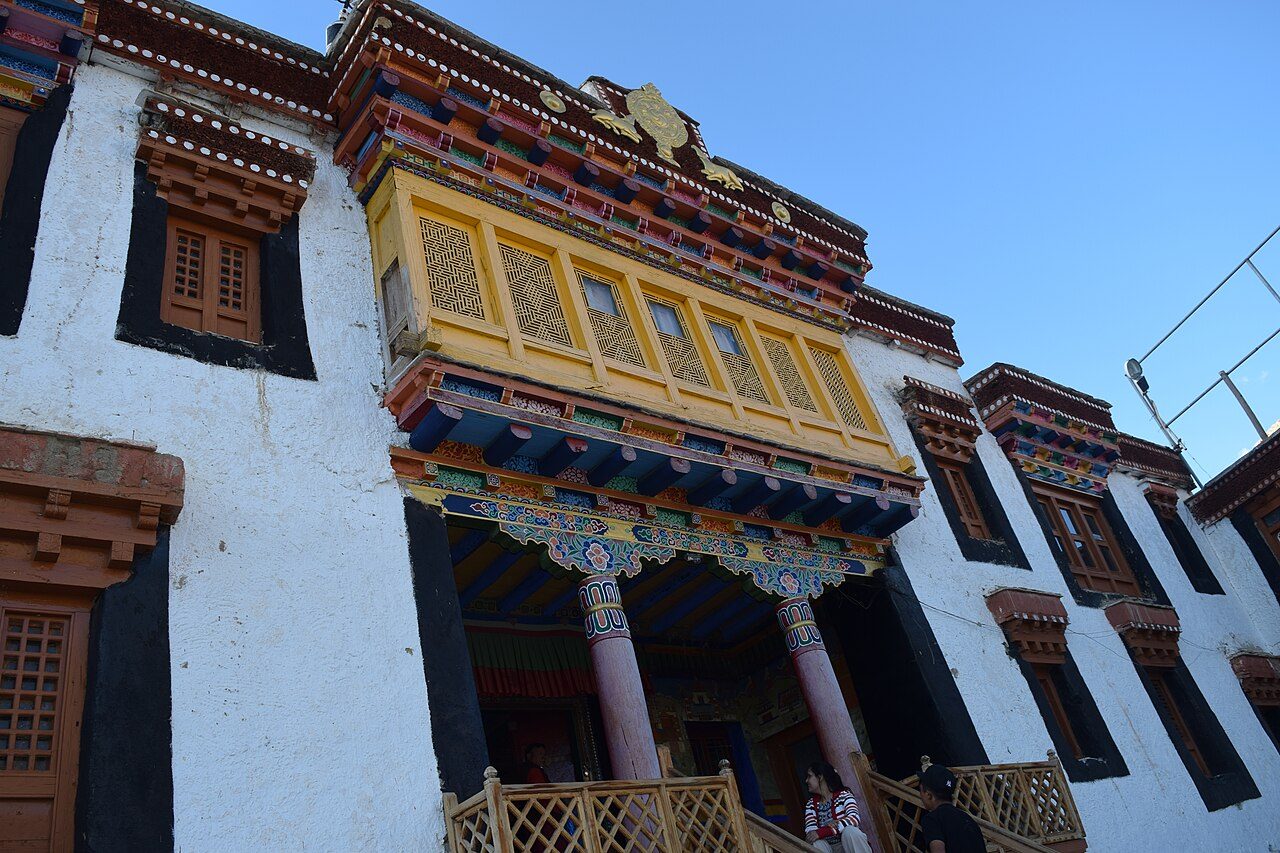
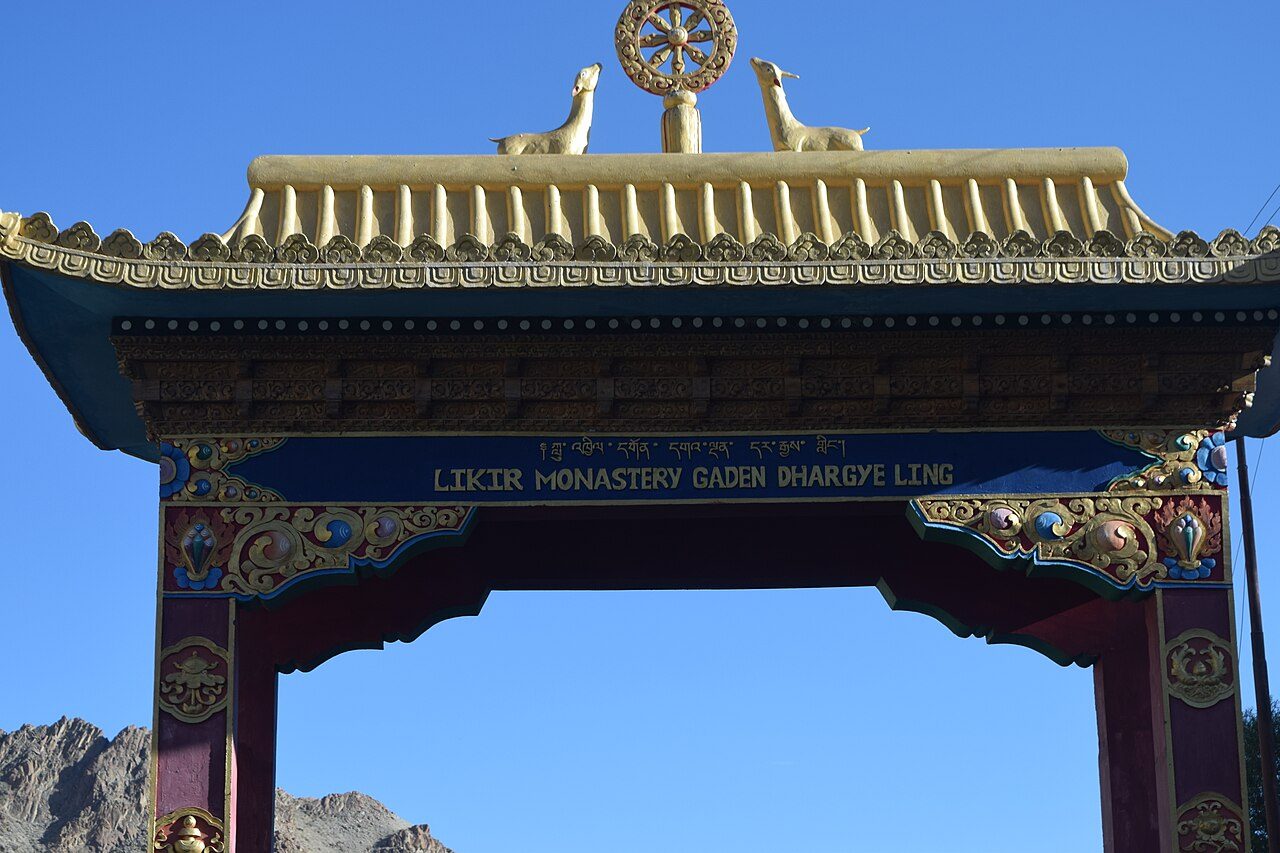
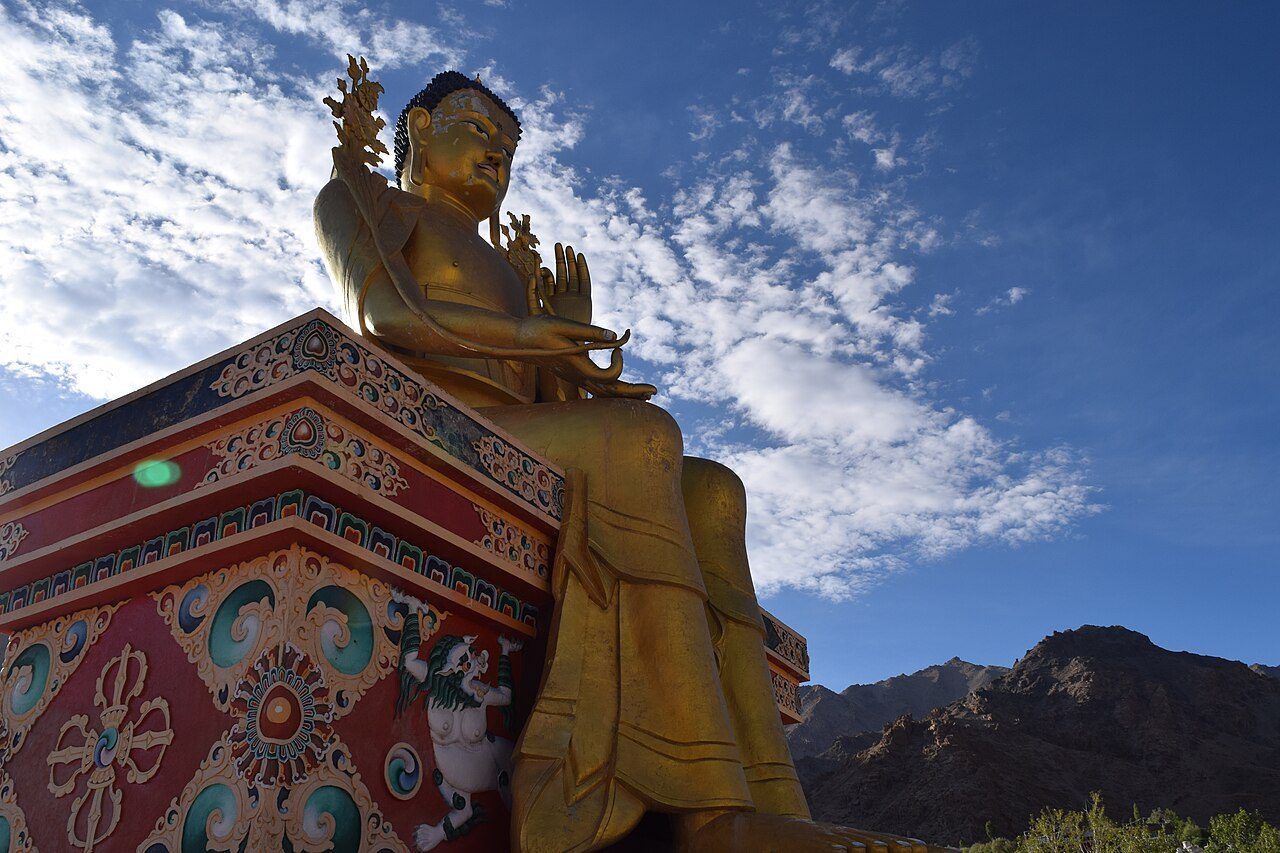
Likir Monastery, founded in the 11th century and re-established in the 15th under the Gelug school, stands on a hill in a side valley 52 km from Leh. A gilded statue of Maitreya Buddha about 23 metres tall sits in the open beside it. The monastery has a small museum and assembly halls with old thangkas and murals.
10
STOP 10 OF 13
Alchi Monastery
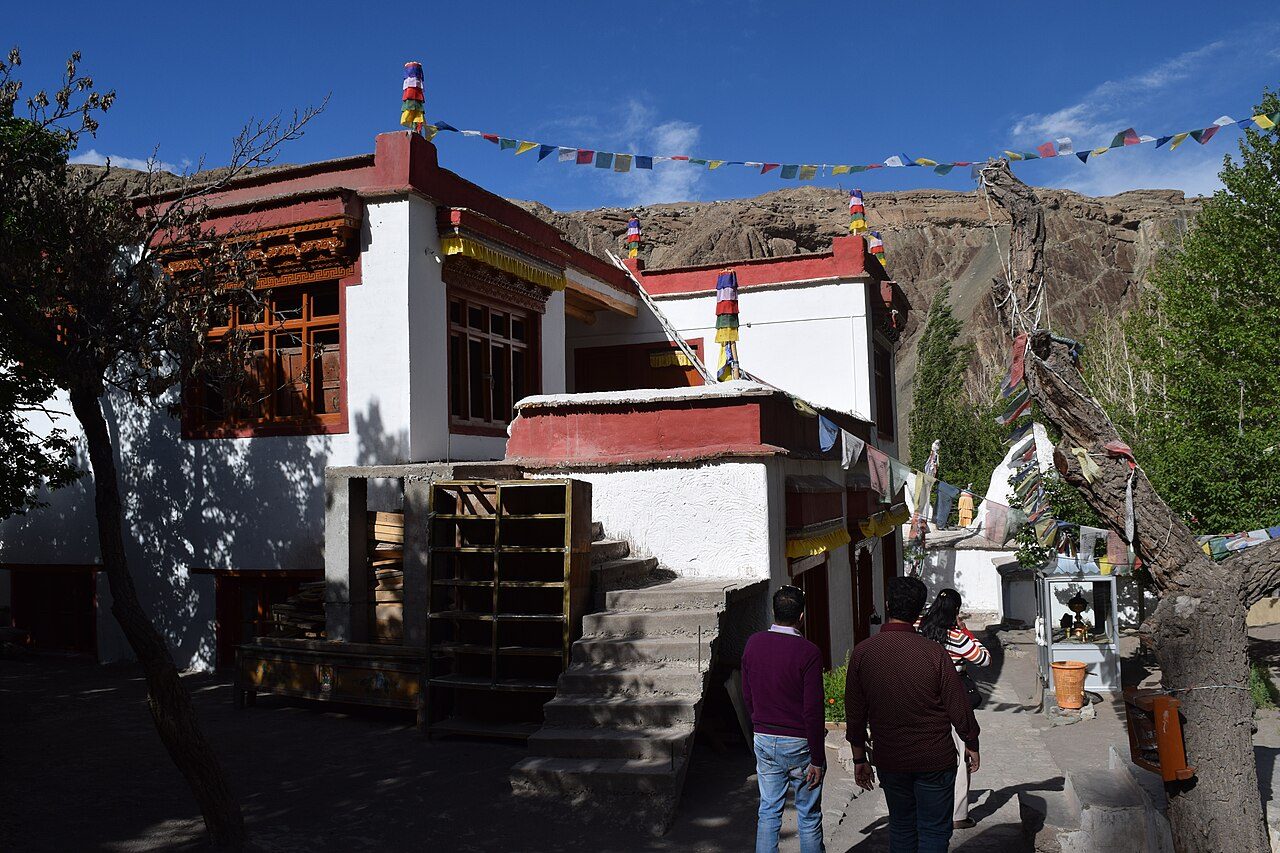
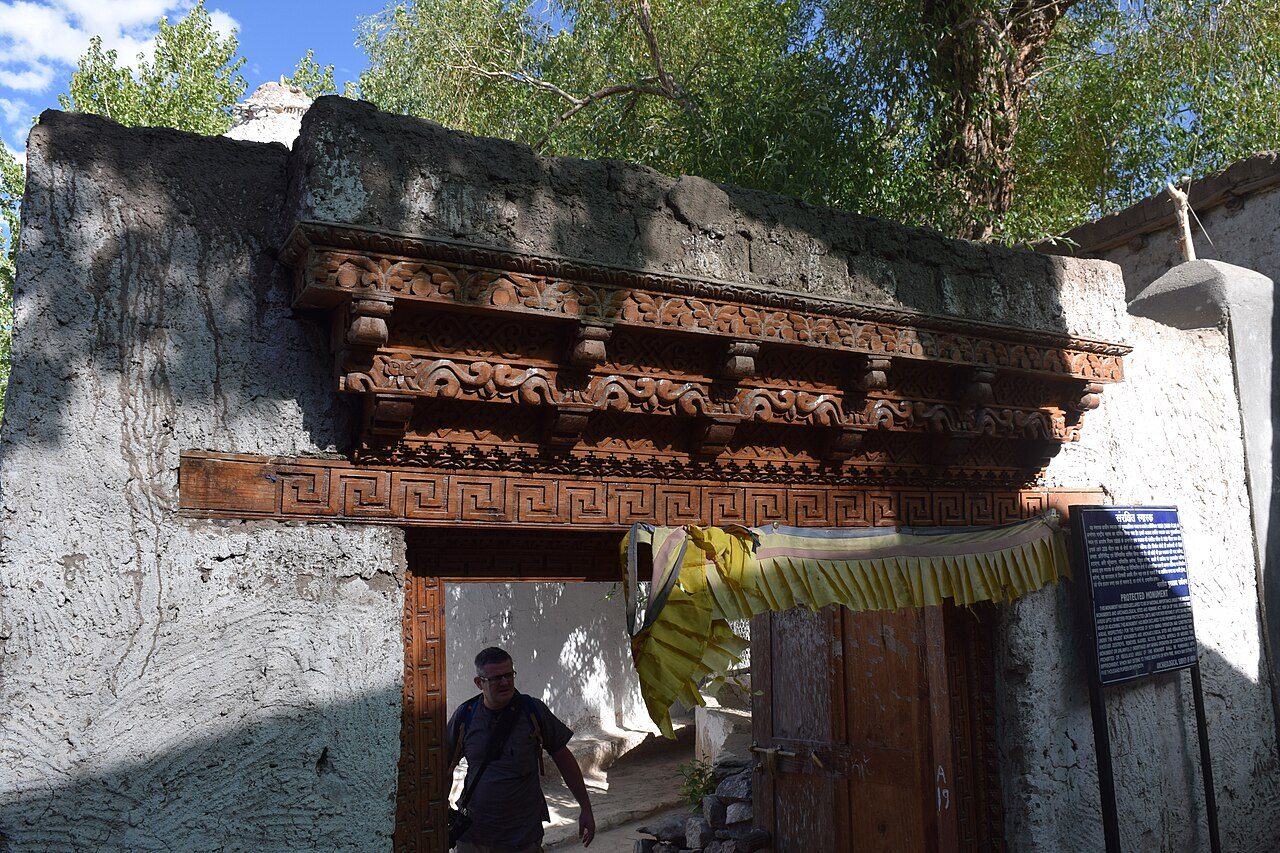
Alchi is one of the oldest monastic complexes in Ladakh, founded in the 11th or 12th century on the bank of the Indus. Unlike most monasteries it stands on flat ground. Its small temples contain exceptionally well-preserved wall paintings and wood carvings in a style influenced by Kashmir. Photography inside is not allowed.
11
STOP 11 OF 13
Lamayuru Monastery
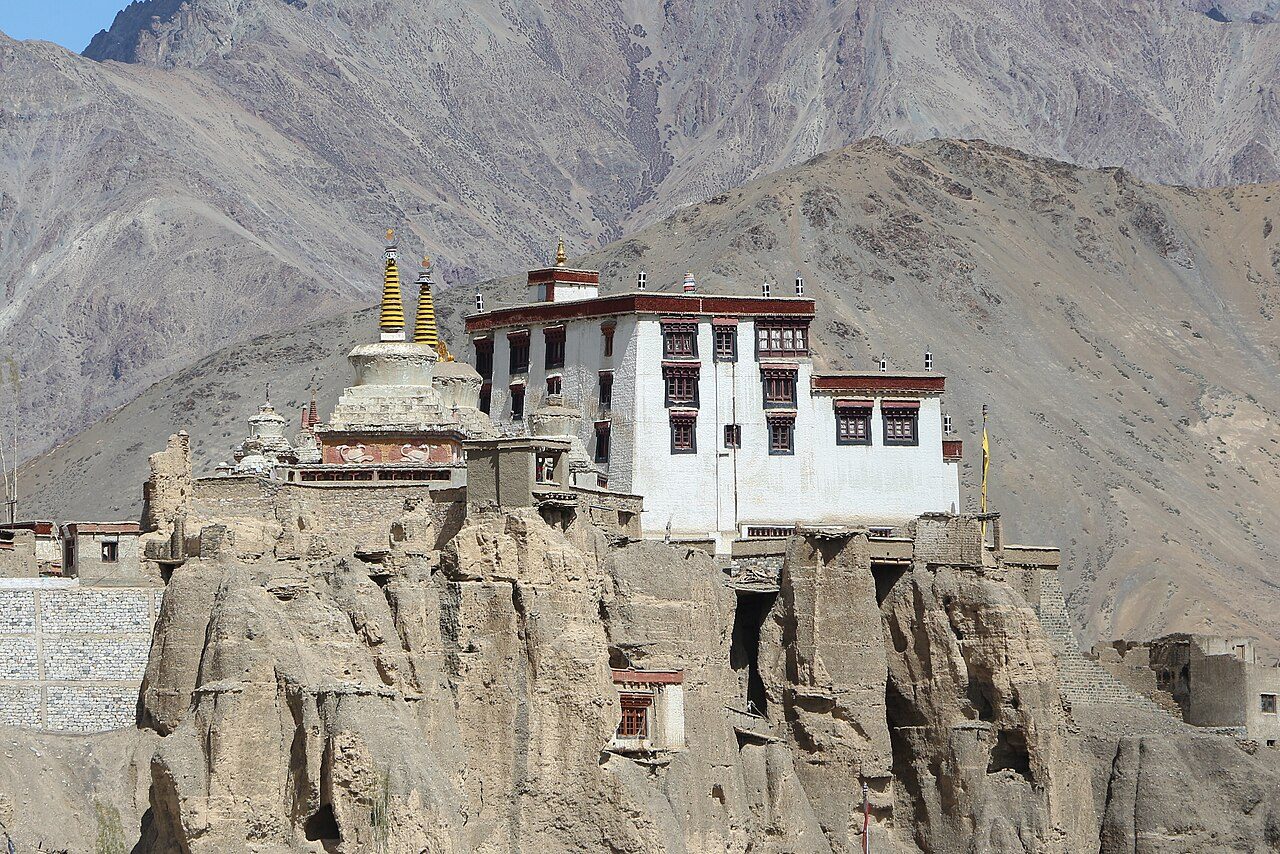
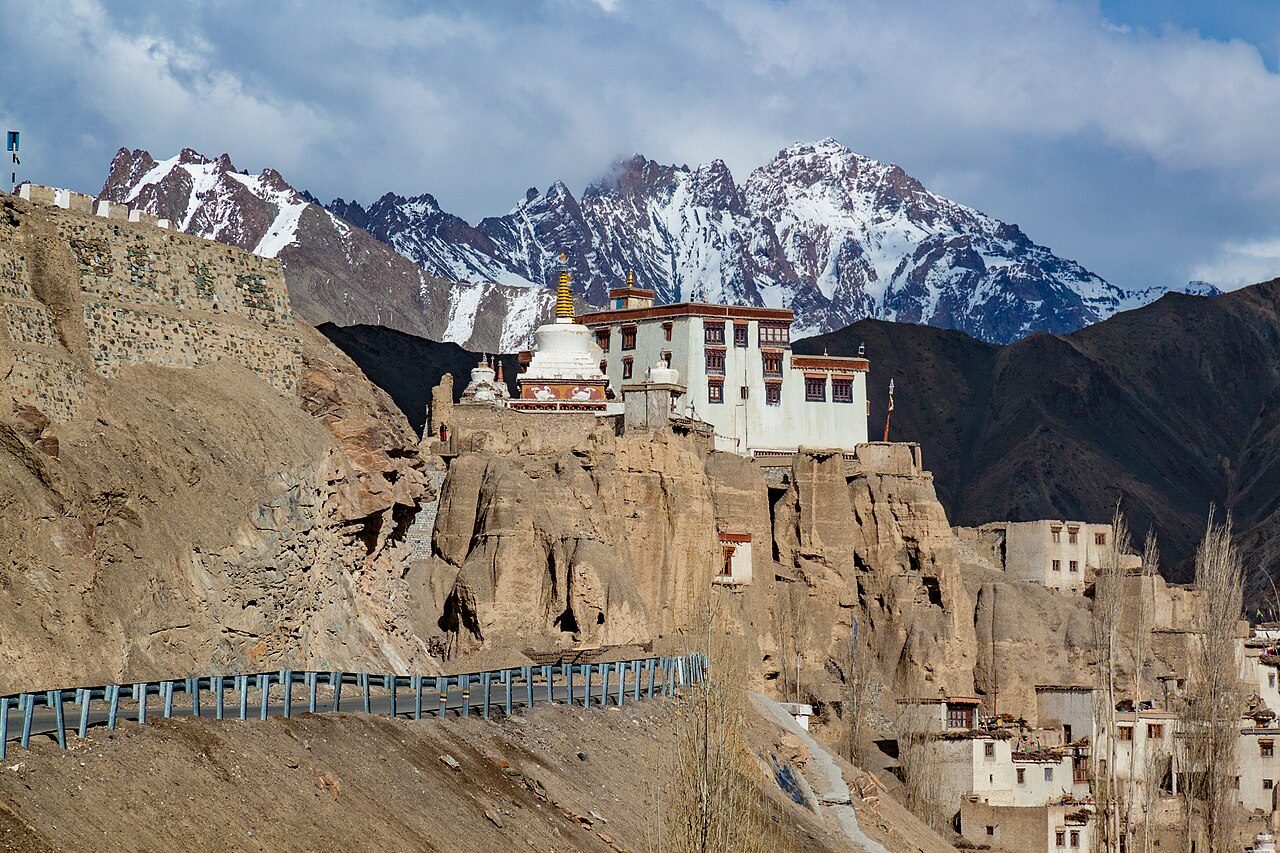
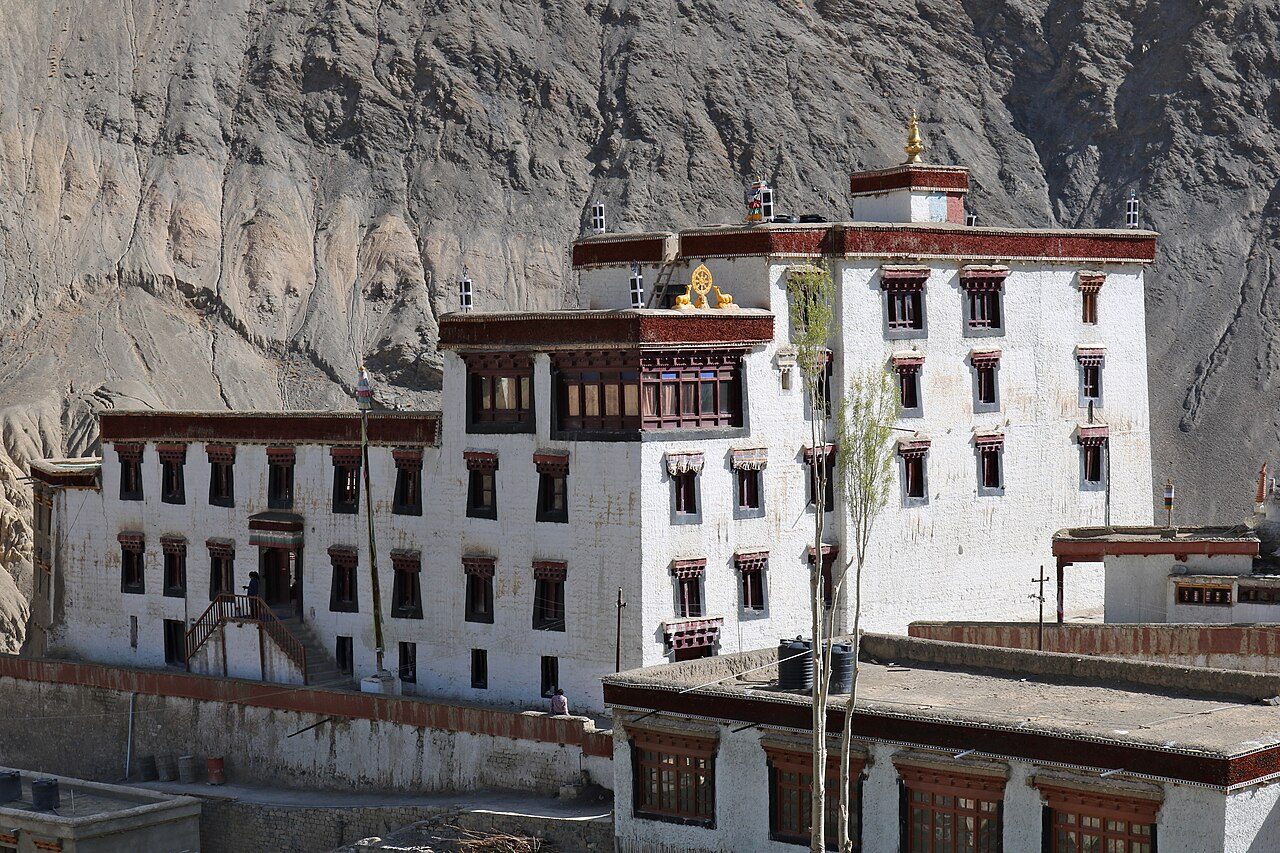
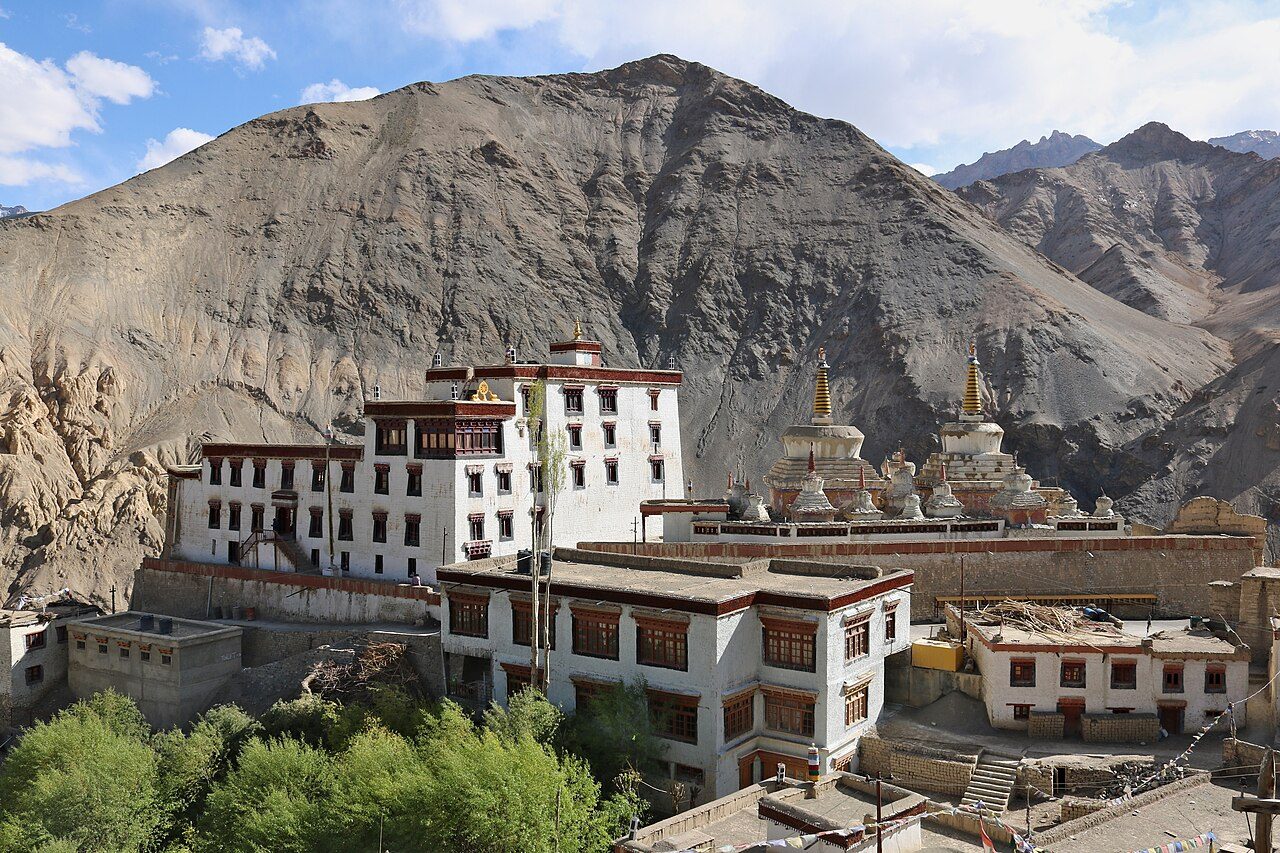
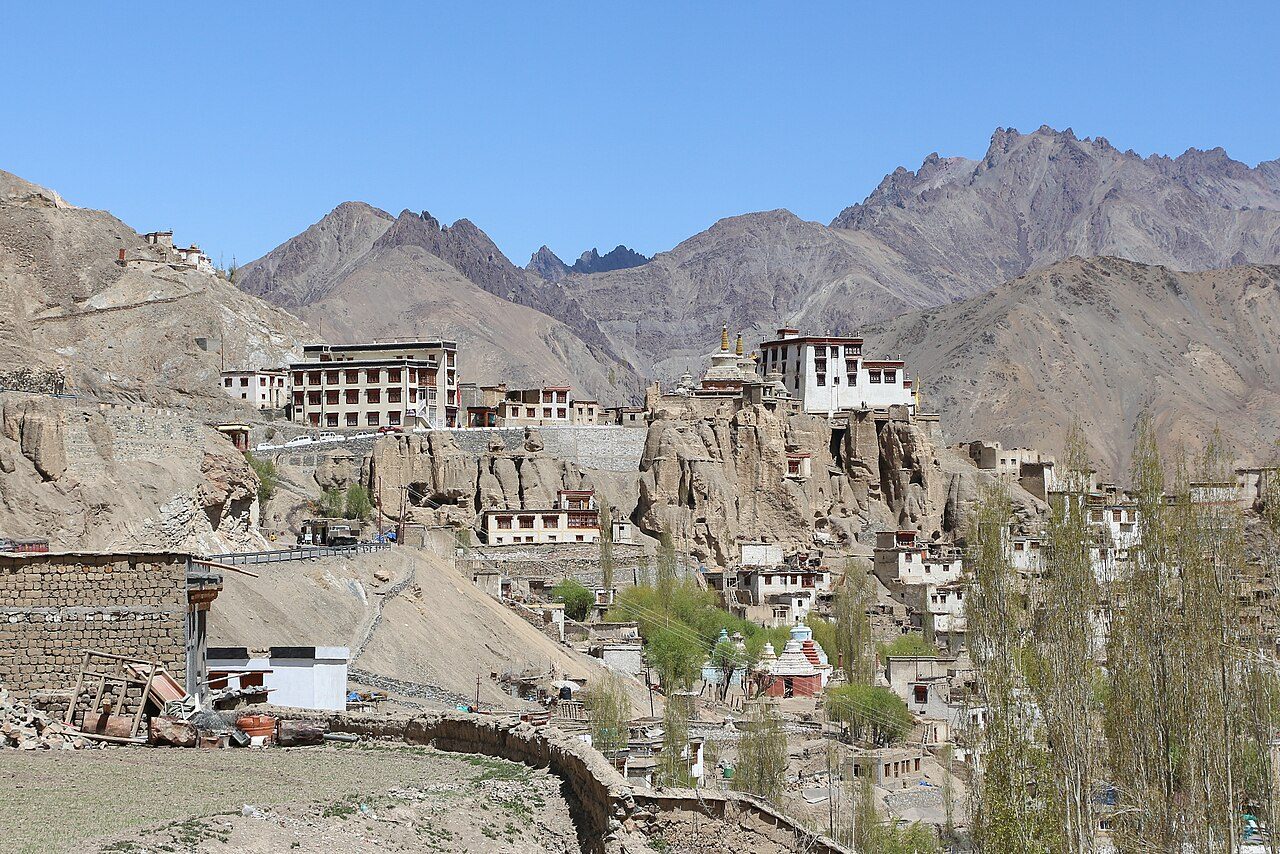
Lamayuru is one of the oldest and largest monasteries in Ladakh, founded in the 11th century on a crag above the Leh-Srinagar road. Legend says the valley was once a lake drained by a saint. The eroded hills around it are known as 'Moonland' for their pale, cratered appearance. The Yuru Kabgyat festival, with masked dances, is held in summer.
12
STOP 12 OF 13
Mulbekh Monastery
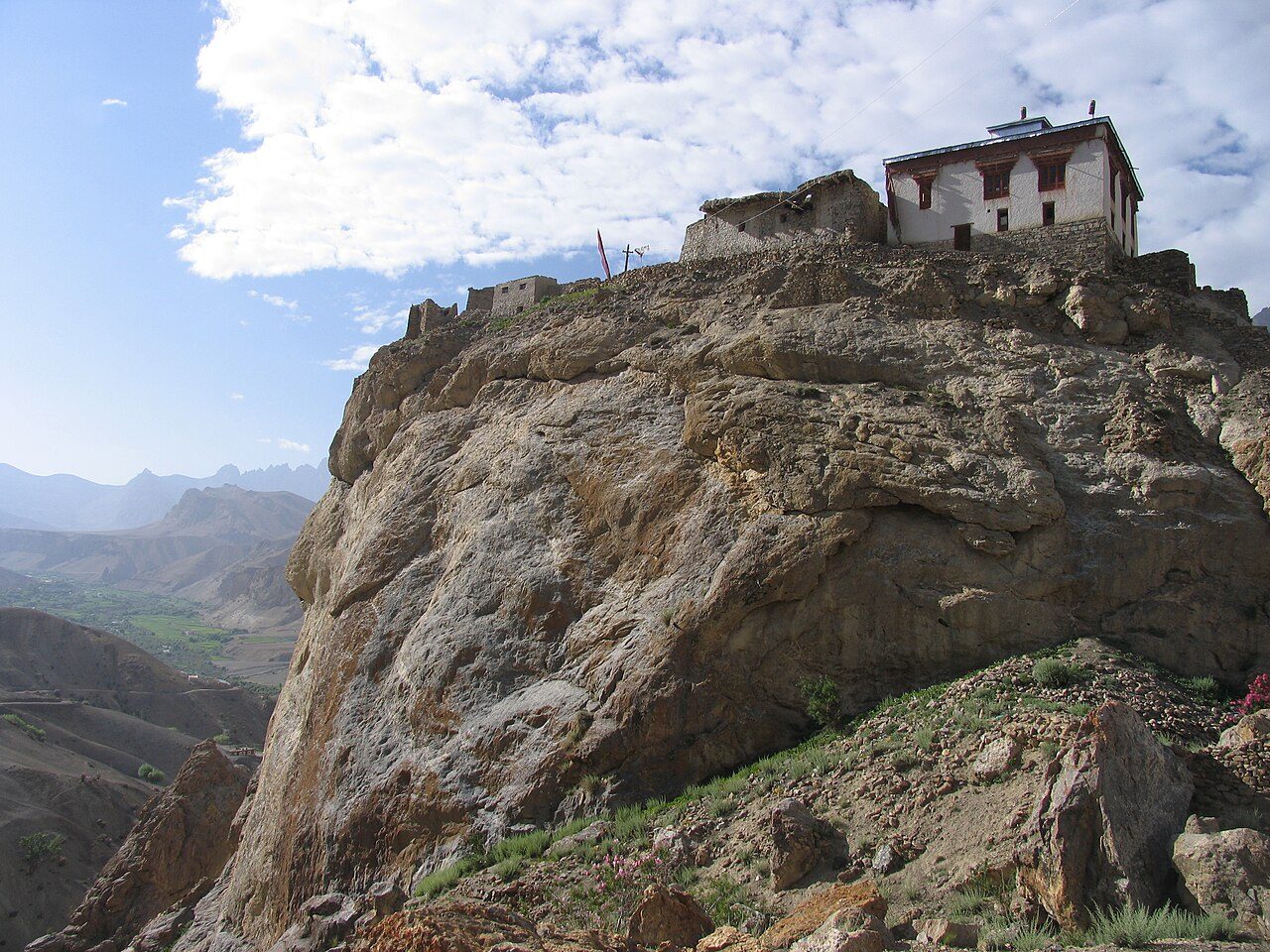
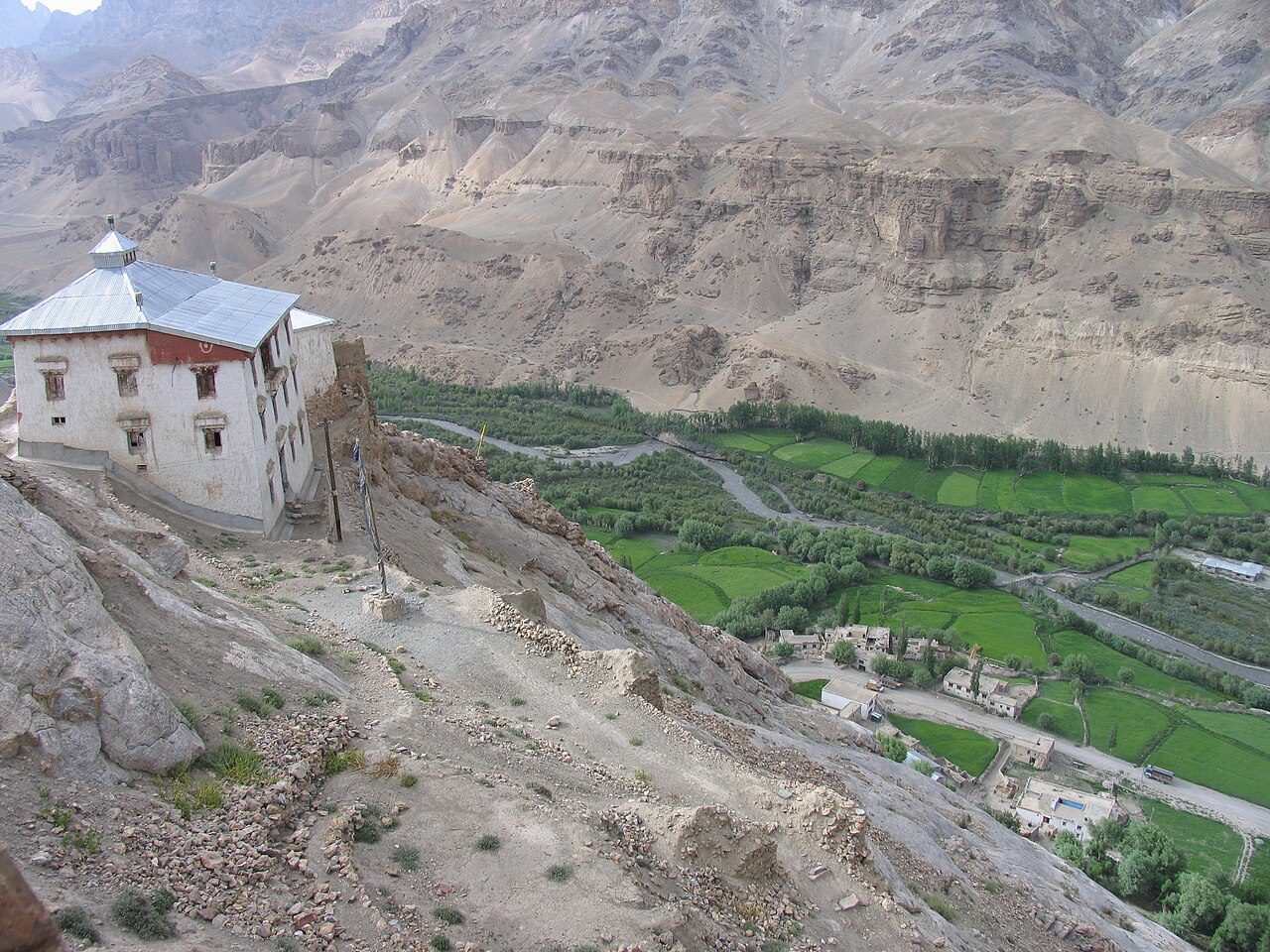
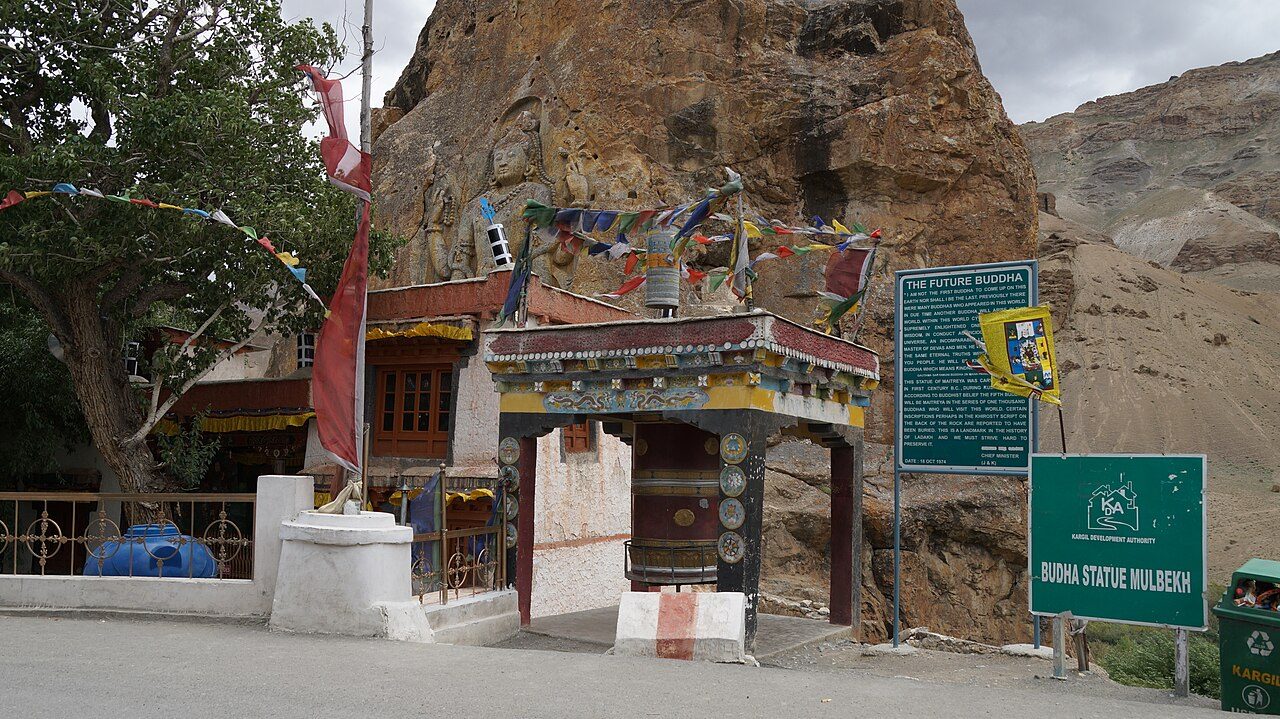
Mulbekh, on the highway between Kargil and Leh, is known for a figure of Maitreya Buddha about nine metres high carved into a rock face beside the road, generally dated to around the 8th century. A small temple stands at its foot. Two monasteries, of the Drukpa and Gelug schools, perch on a crag high above the village.
13
STOP 13 OF 13 · LAST STOP
Kargil War Memorial
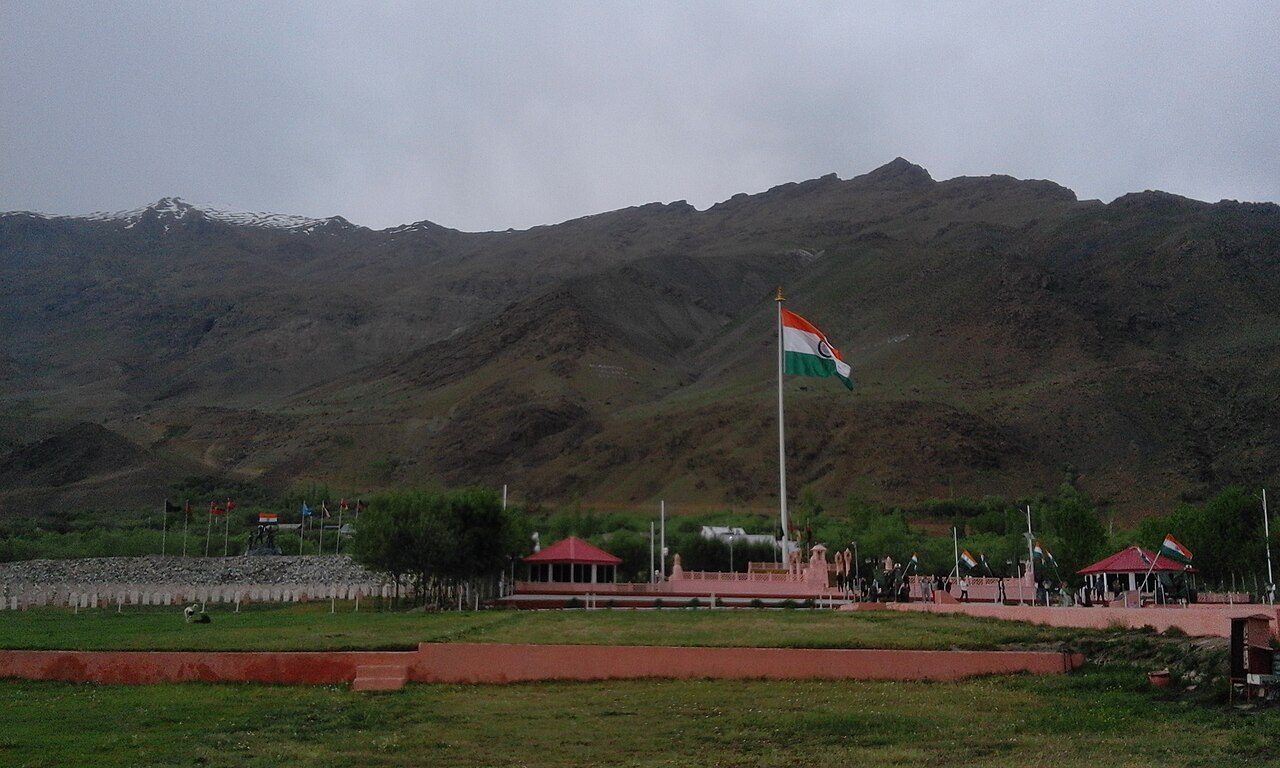
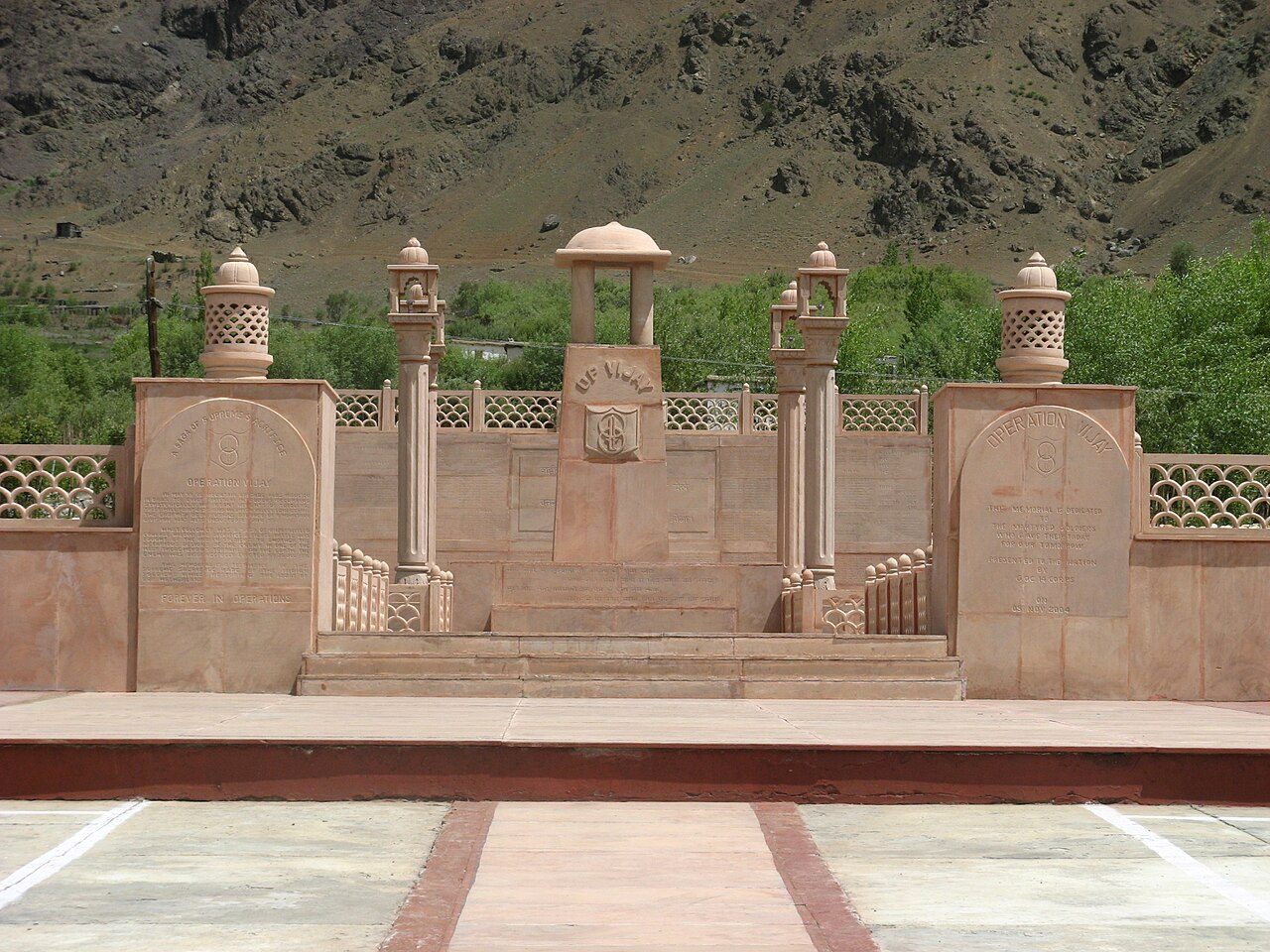
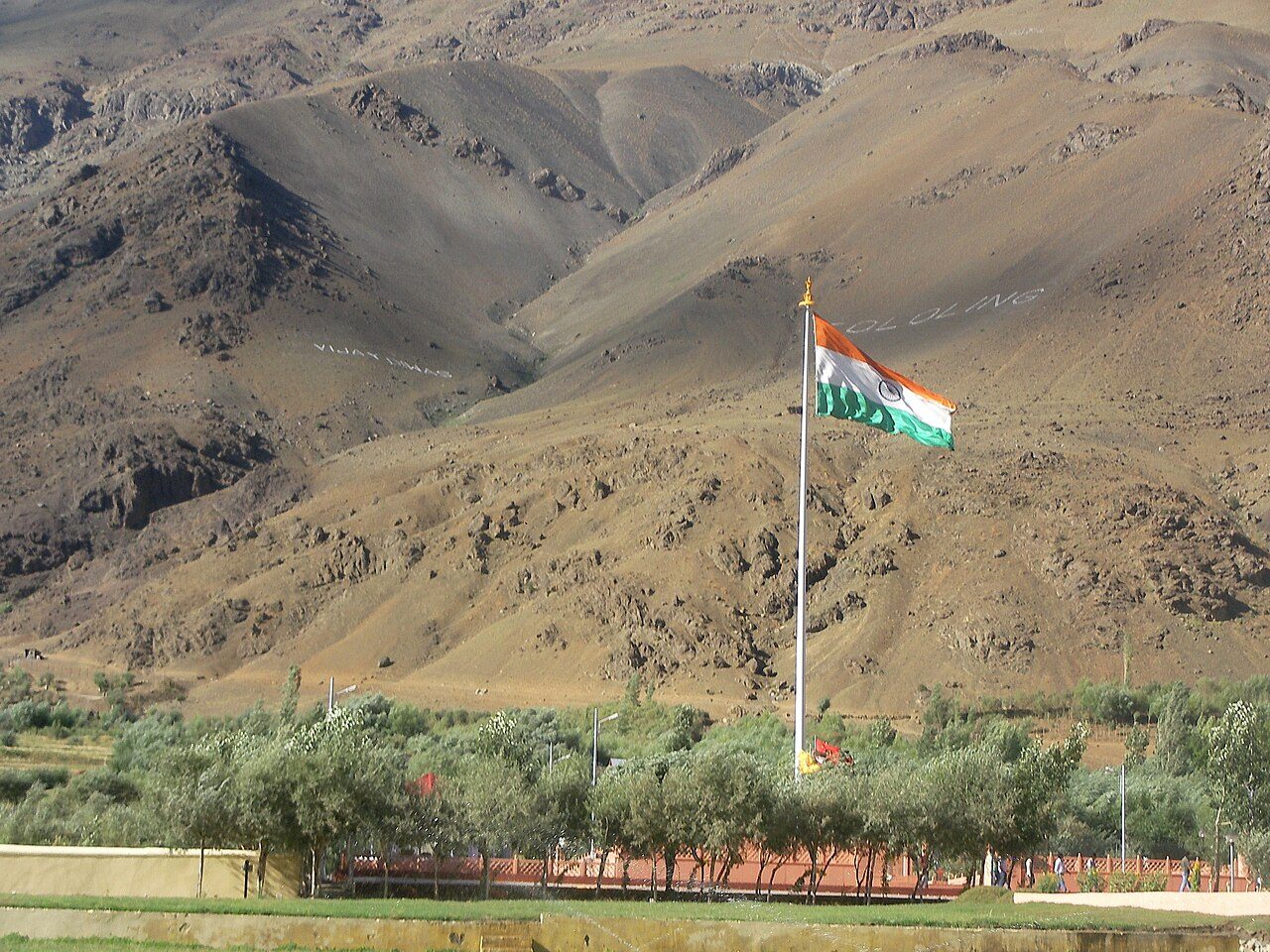
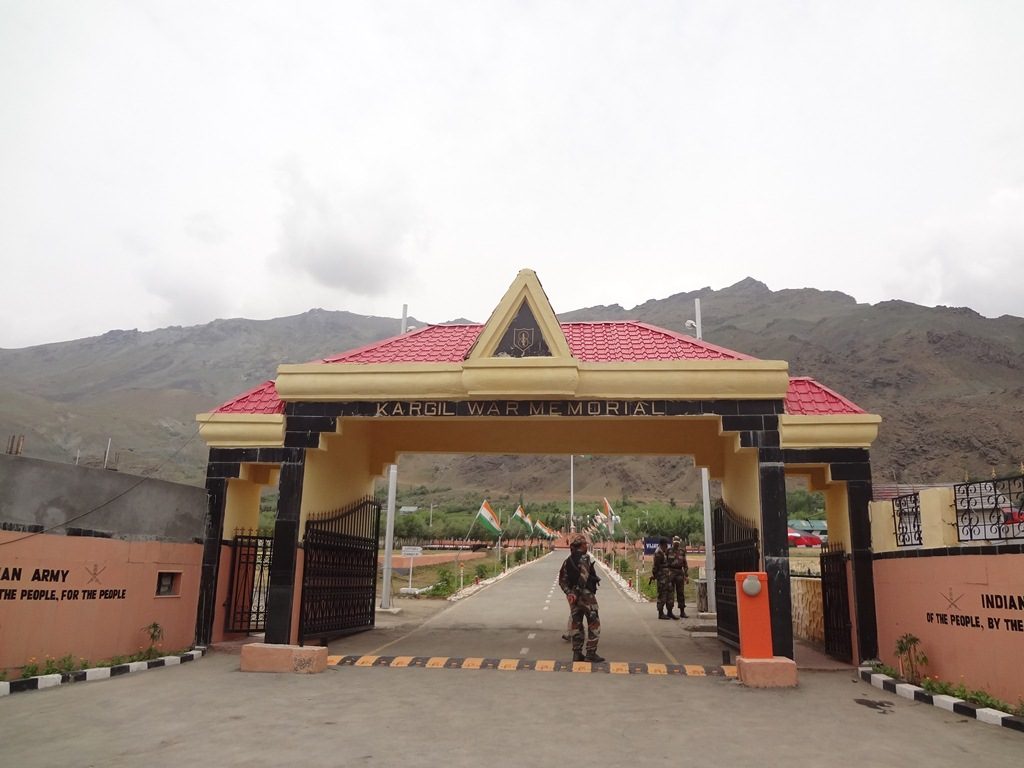
The Kargil War Memorial at Drass was built by the Indian Army to honour the soldiers who died in the 1999 conflict. A pink sandstone wall bears their names, an eternal flame burns before it, and a large national flag flies with Tololing ridge and Tiger Hill visible behind. A small museum displays photographs and captured weapons. Drass is among the coldest inhabited places in India.
Seasons from 20 years of NASA POWER climate data.
 WaTrips