Bali in 7 Days: Sea Temples, Ubud, Mount Batur and the Rice Terraces
7 DAYS21 placesby WaTrips
Tanah Lot and Uluwatu, Ubud's palace and Monkey Forest, Tirta Empul, sunrise on Mount Batur, Besakih, Lempuyang and Jatiluwih.
A week gives you Bali beyond the beach. Start on the south coast with sunset at Tanah Lot, the cliff temple of Uluwatu and its kecak fire dance, and seafood on Jimbaran Bay. Move up to Ubud for the palace, the Monkey Forest, the water temple of Saraswati and the Tegallalang rice terraces, then the holy spring at Tirta Empul and the rock-cut shrines of Gunung Kawi. Climb Mount Batur for sunrise, visit Besakih and the Gates of Heaven at Lempuyang, and finish at the lake temple of Ulun Danu and the UNESCO terraces of Jatiluwih. April to October is dry.
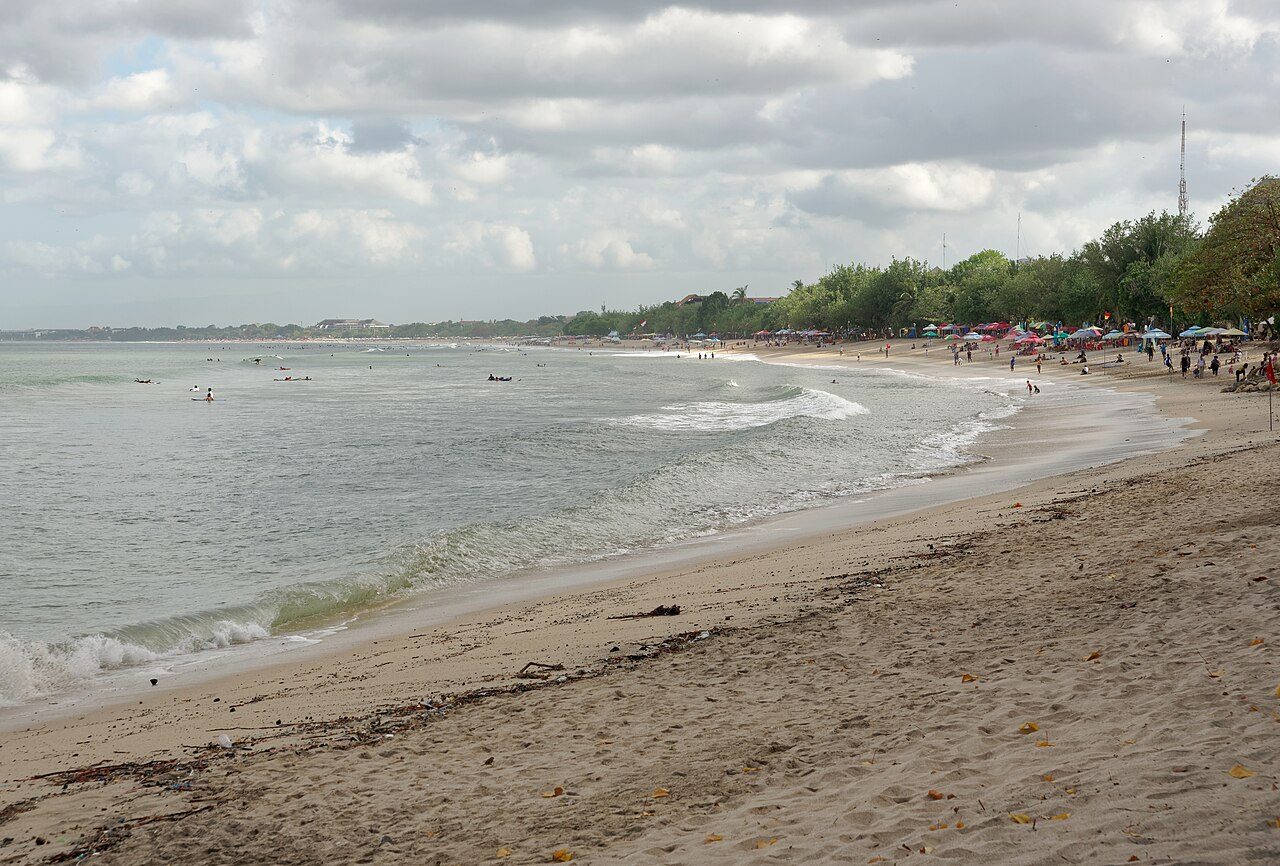
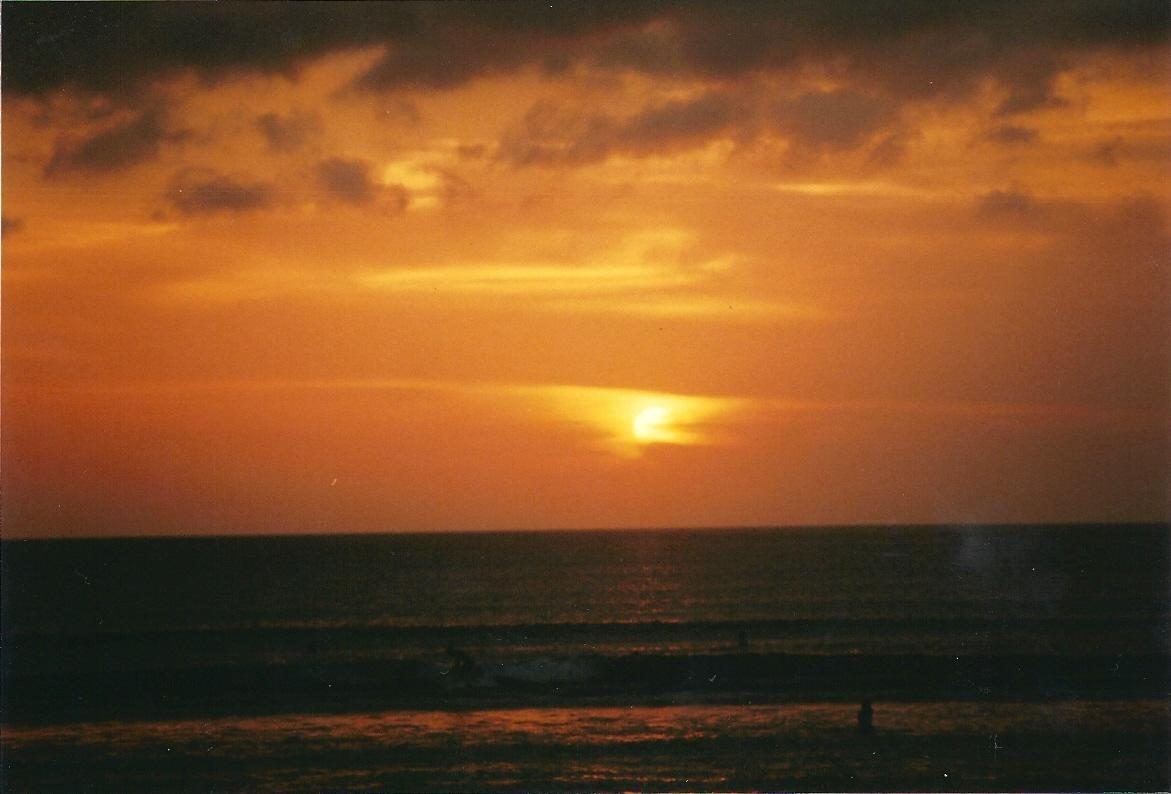
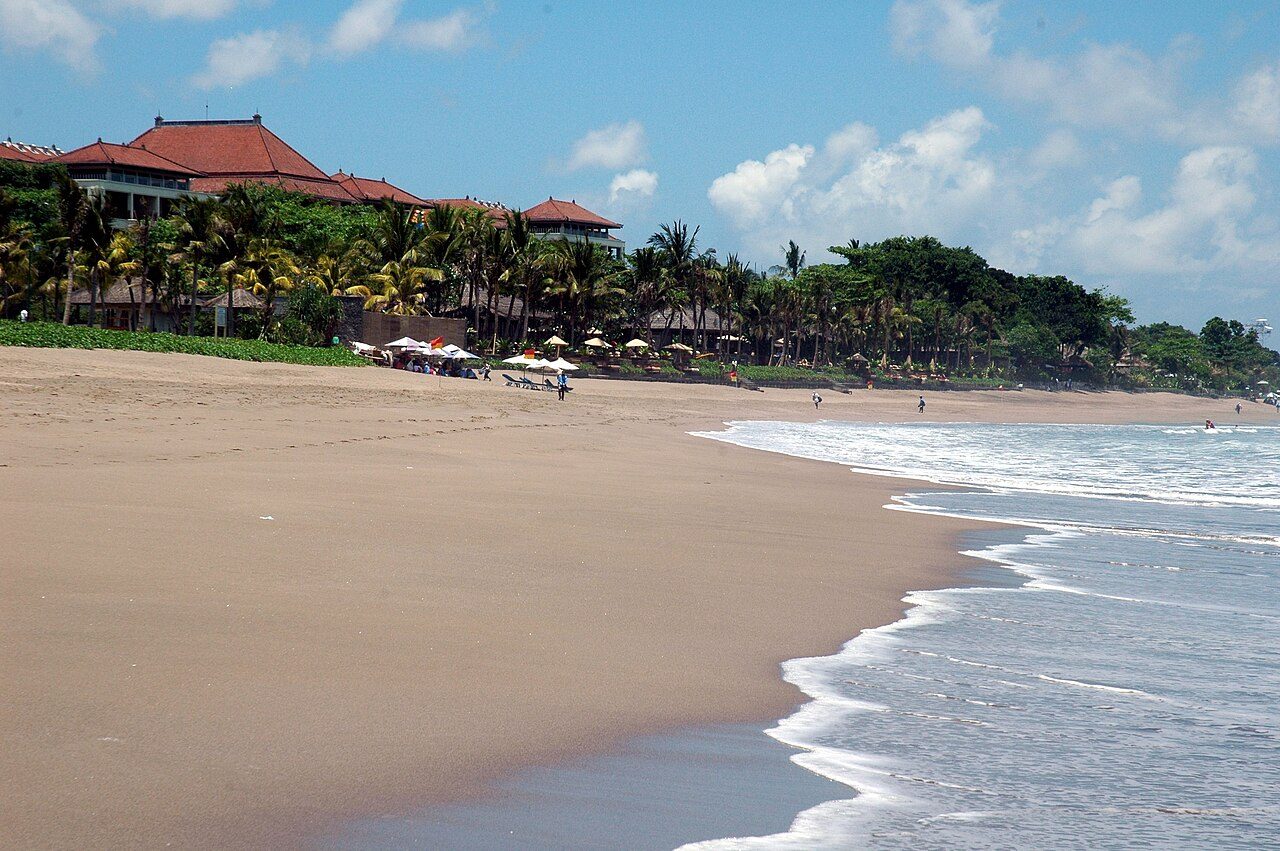
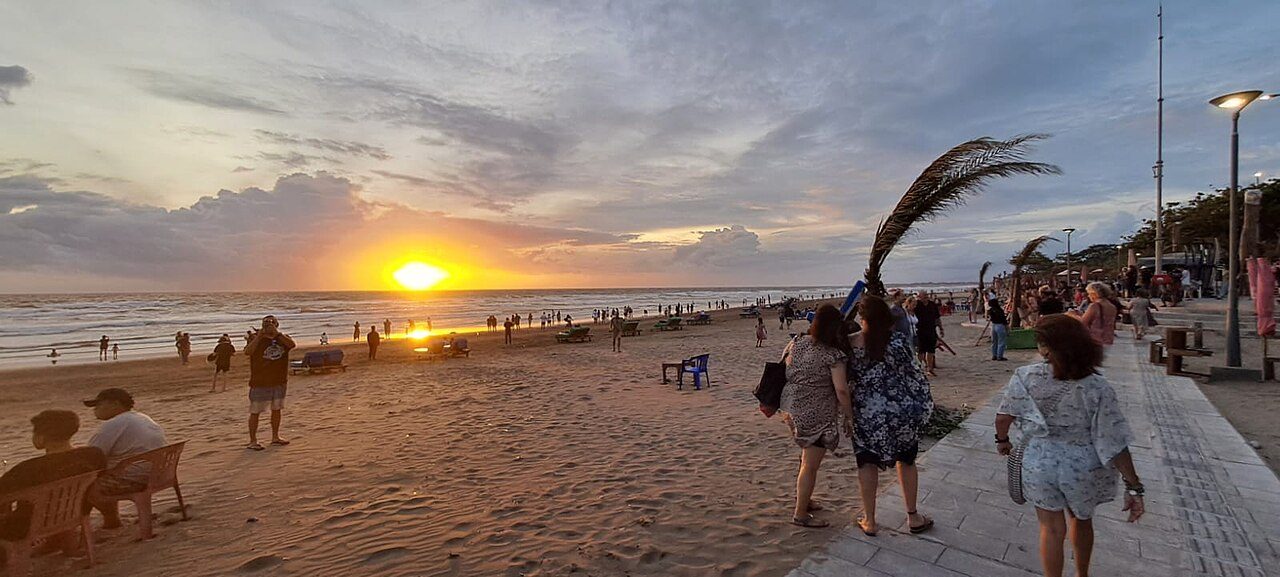
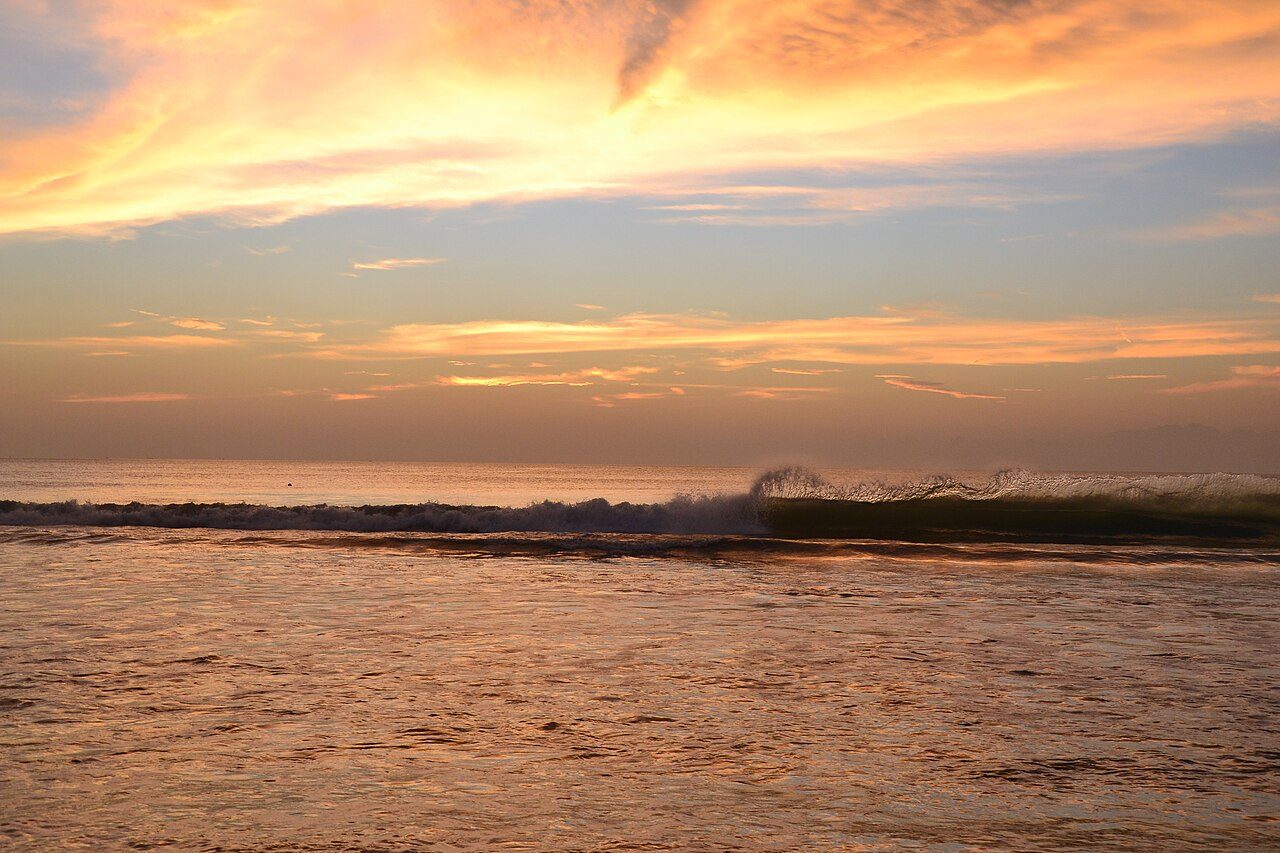
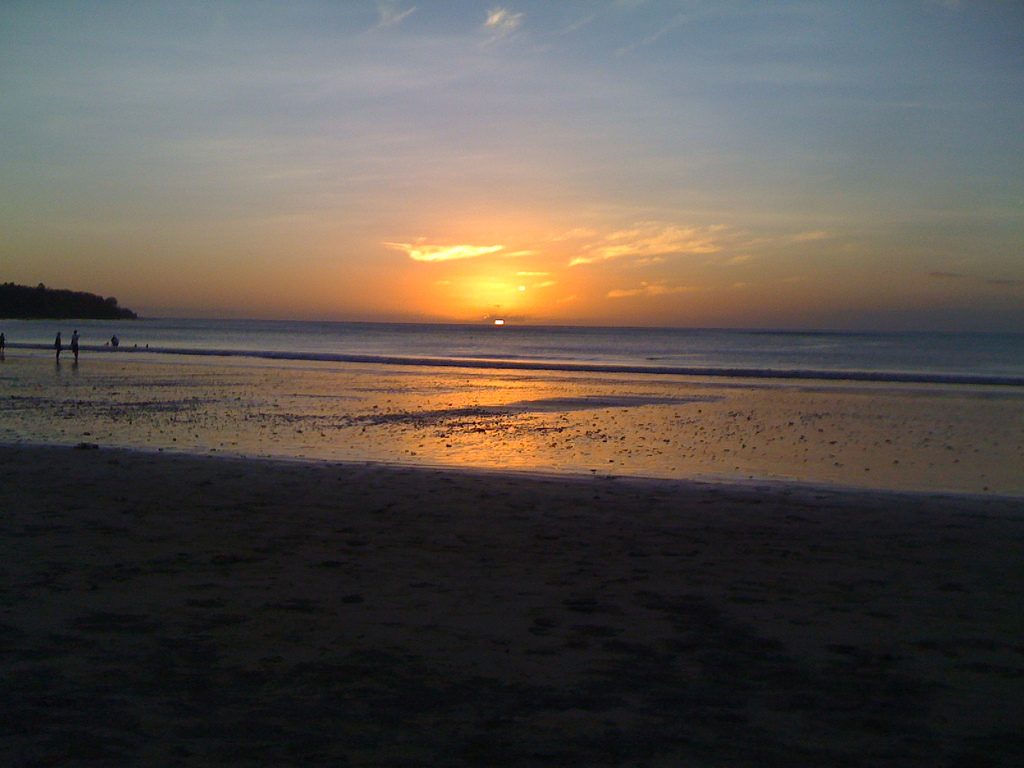
Kuta Beach is a long stretch of sand on the southwest coast of Bali, near the airport. It was among the first places in Bali to attract foreign surfers and travellers in the 1960s and 1970s. Its gentle waves make it a good place to learn surfing. Hotels, shops and bars line the beach road. Sunset over the ocean draws crowds every evening.
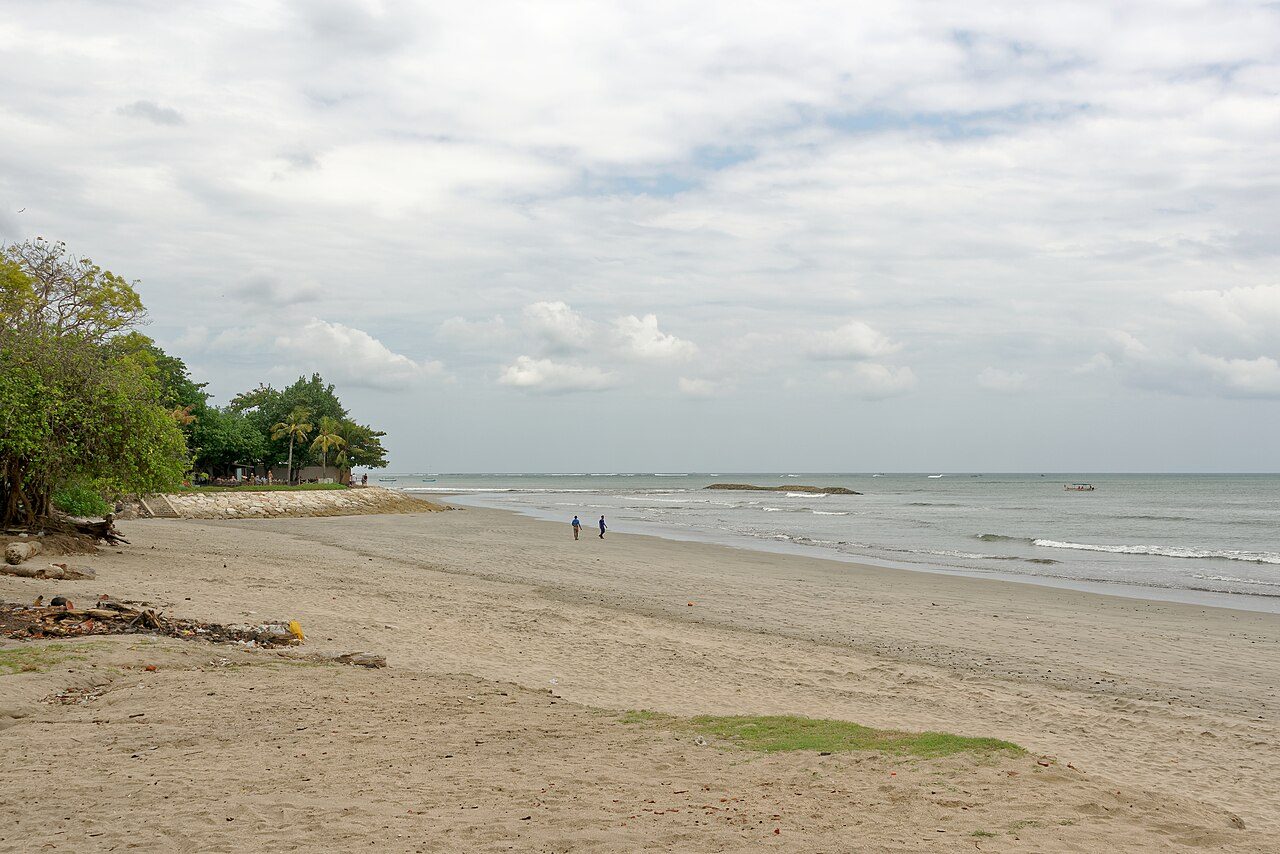
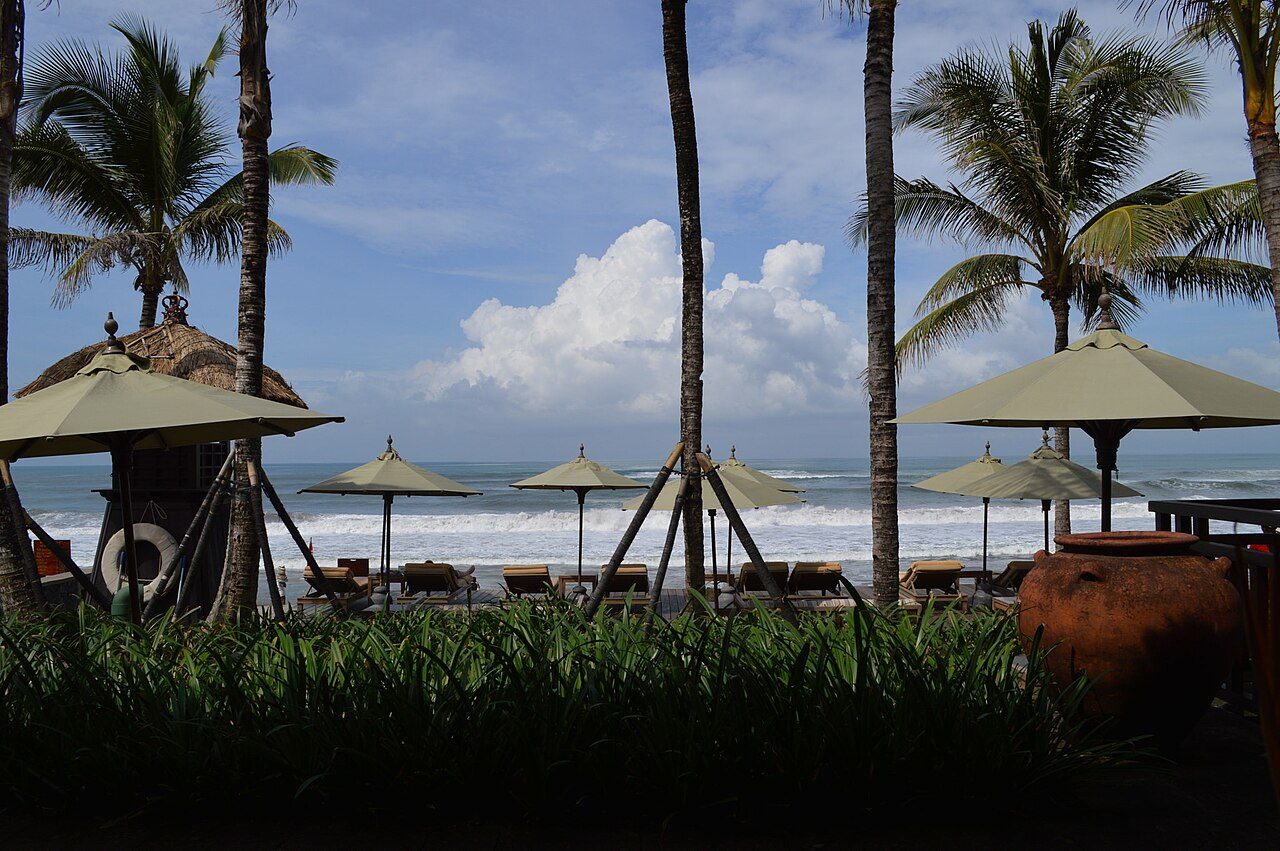
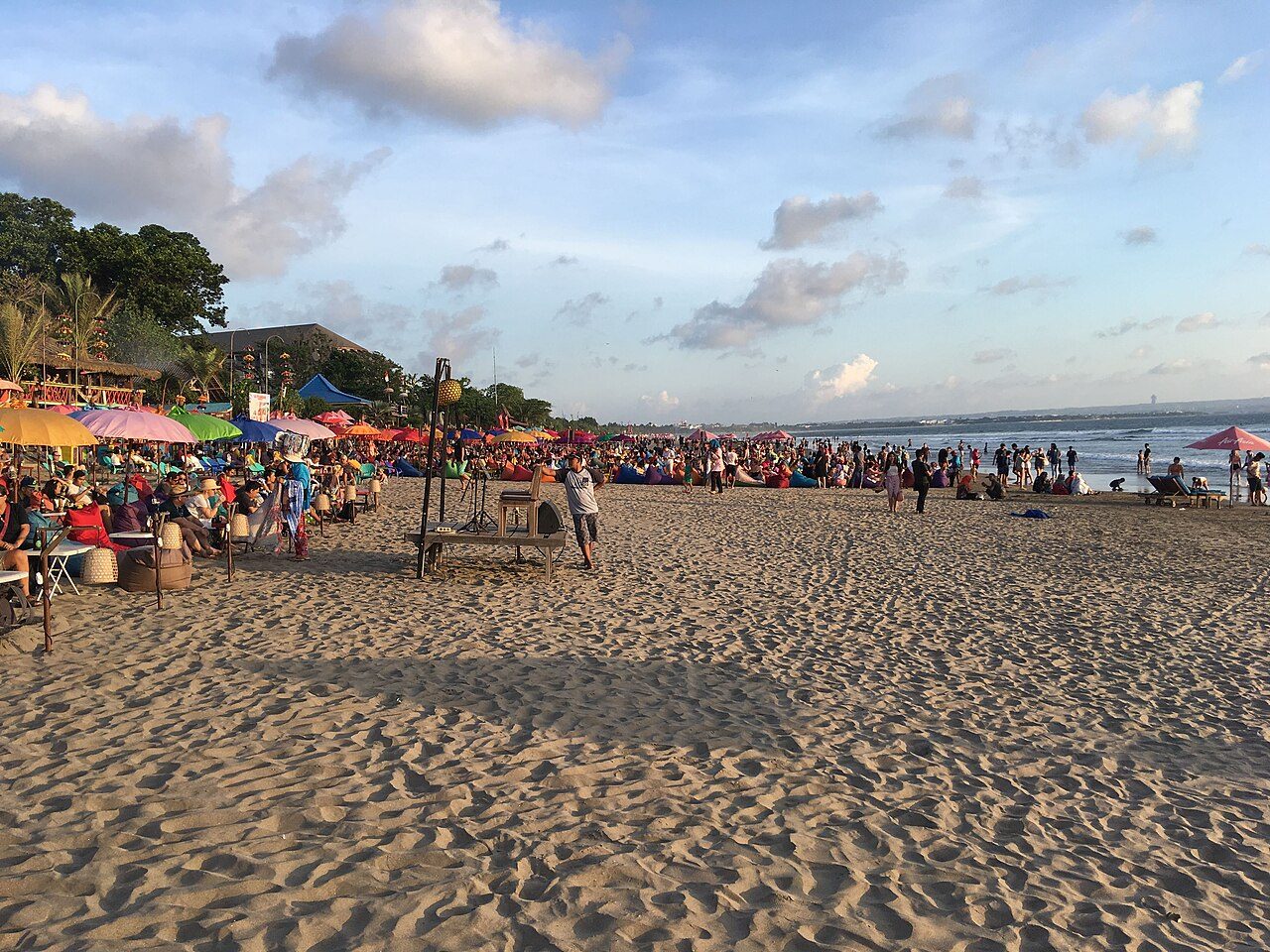
Seminyak Beach lies north of Kuta on Bali's southwest coast. The wide sand beach is quieter than Kuta and lined with upscale hotels, villas and beach clubs. Coloured beanbags and umbrellas are set out on the sand in the late afternoon for watching the sunset. The streets behind it are known for boutiques, restaurants and spas.
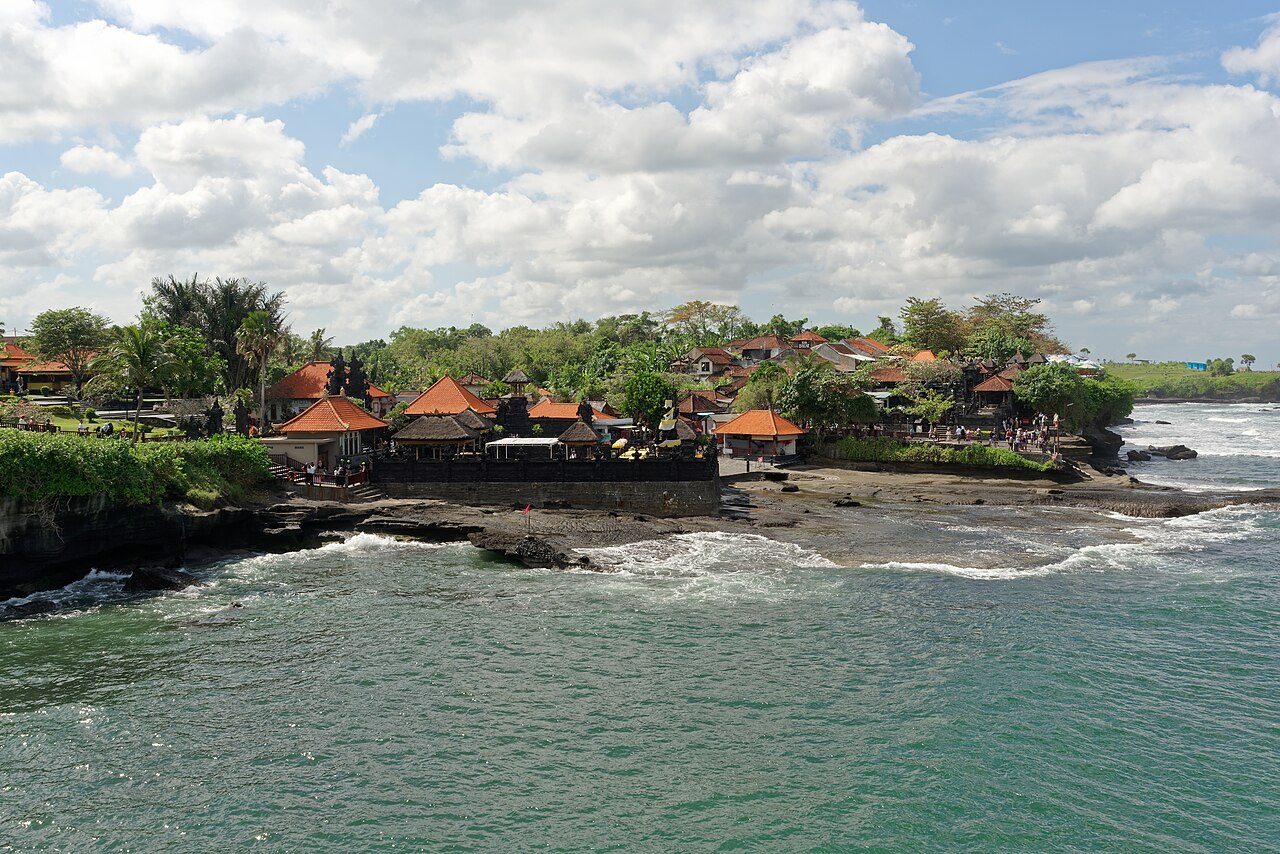
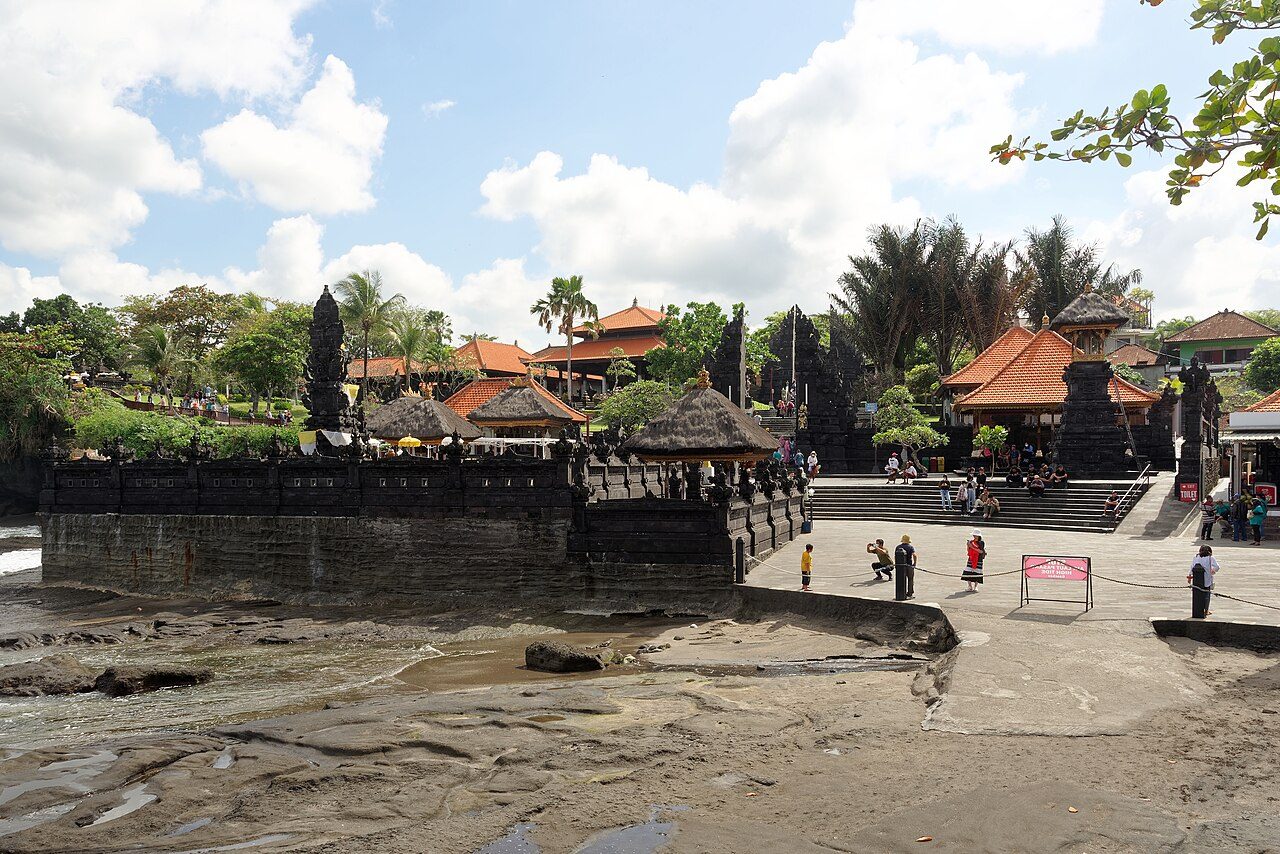
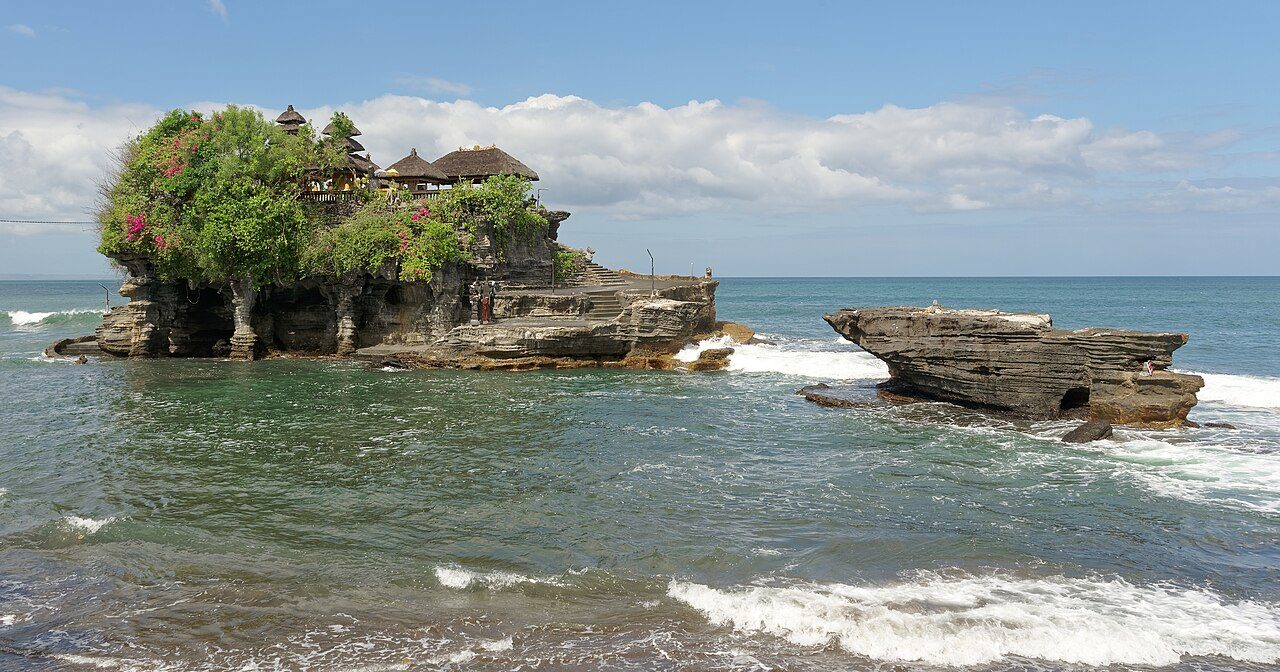
Tanah Lot is a Hindu sea temple standing on a rocky outcrop off the southwest coast of Bali. It is said to have been founded in the 16th century by the priest Dang Hyang Nirartha, and it is one of Bali's seven sea temples. At high tide the rock becomes an island. Sea snakes living in the rocks are believed to guard it. Crowds gather on the cliffs to watch the sunset behind it.
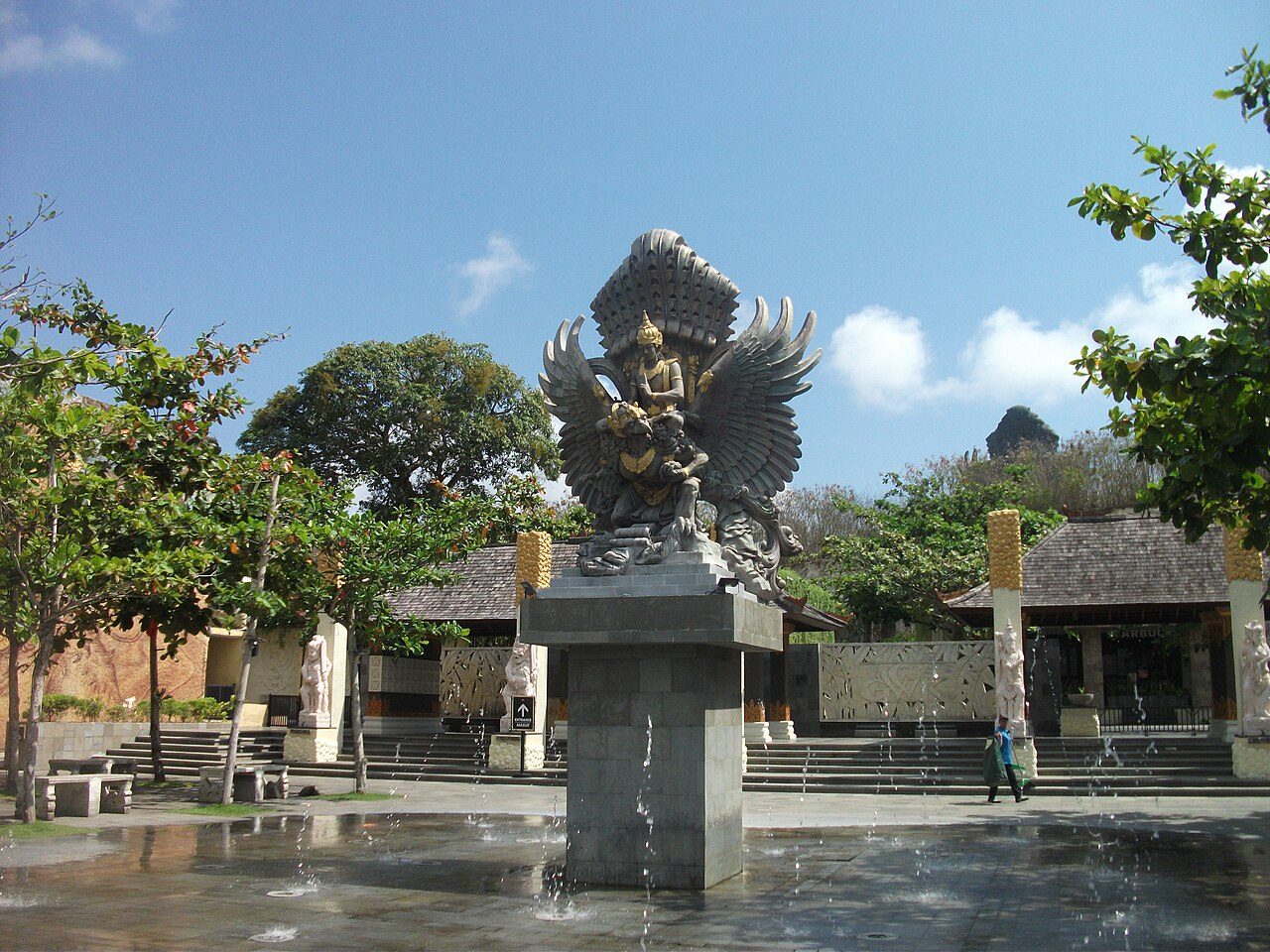
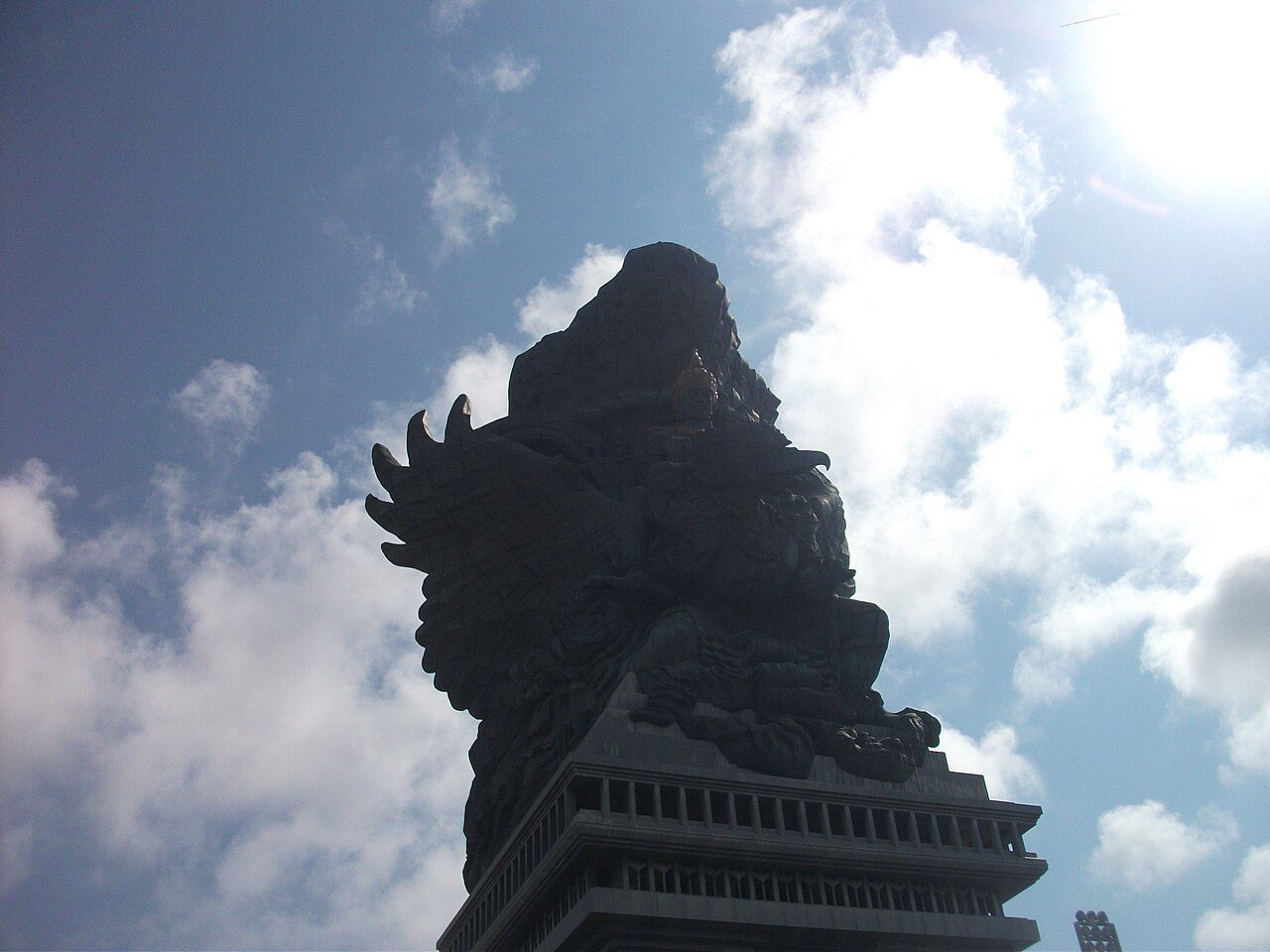
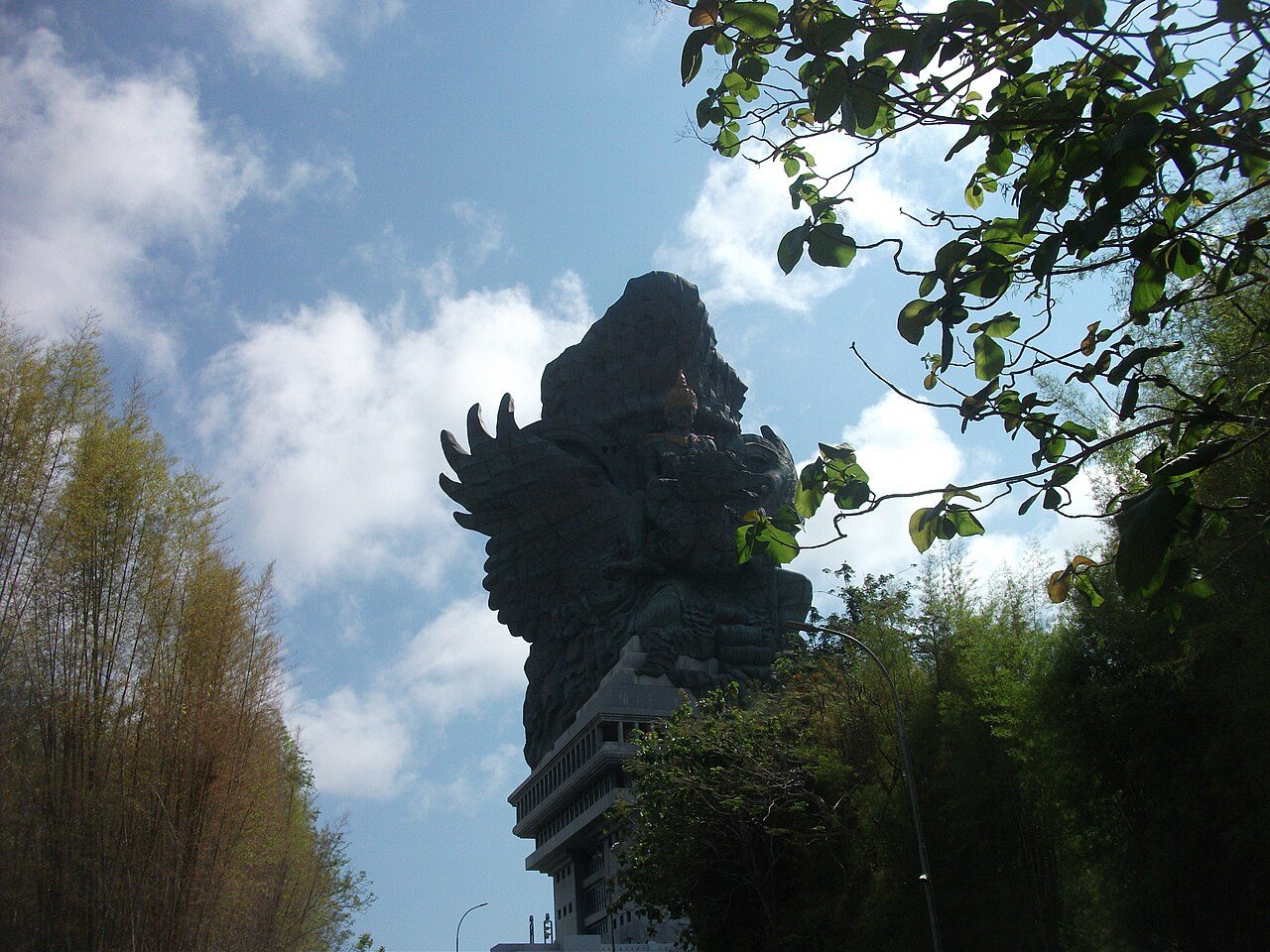
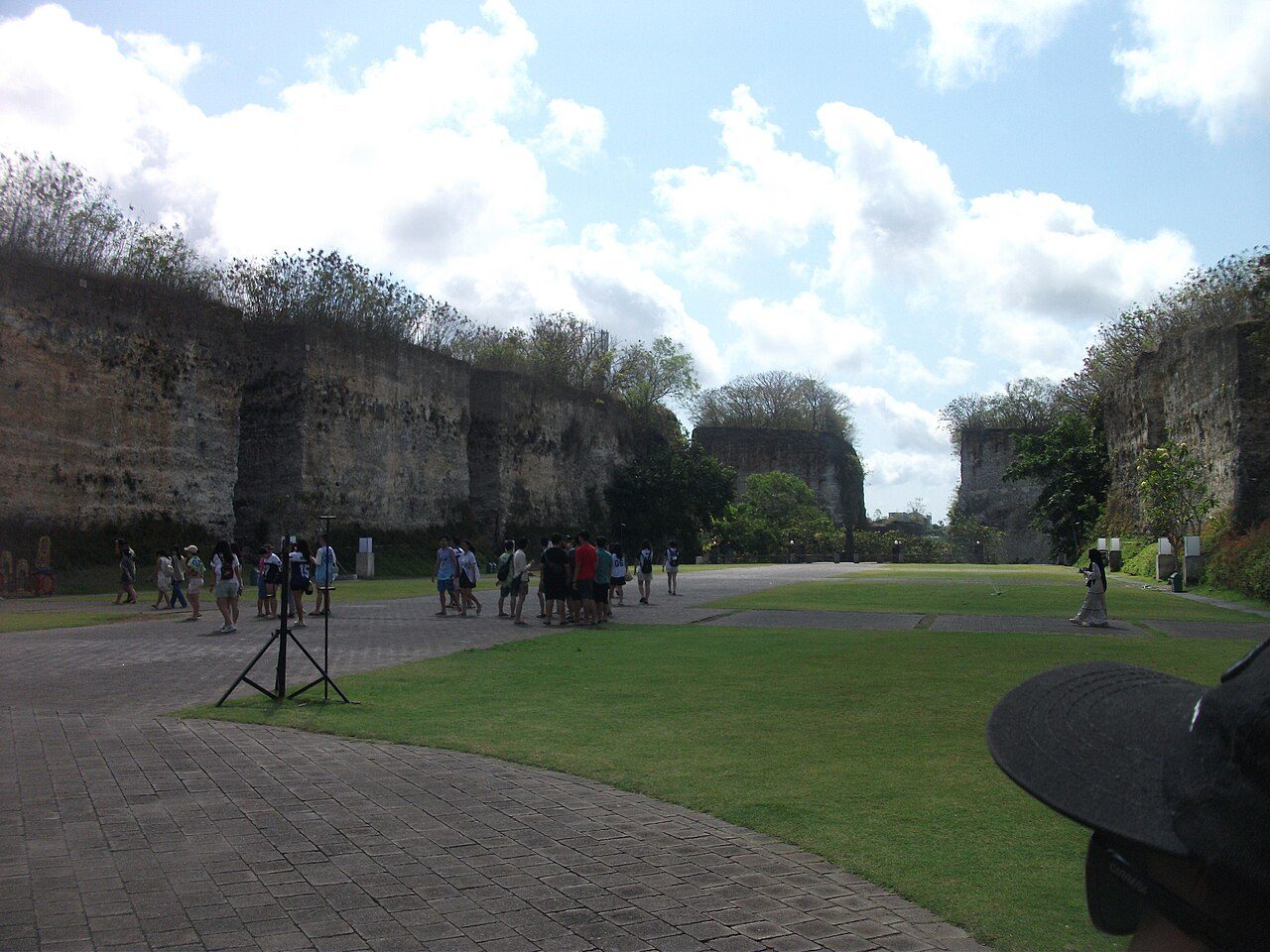
Garuda Wisnu Kencana is a cultural park on the Bukit peninsula in southern Bali. It is home to a statue of the Hindu god Vishnu riding the bird Garuda, completed in 2018. With its base, it is about 121 metres high, one of the tallest statues in the world. The park was cut from a limestone quarry, leaving tall stone walls around its plazas.
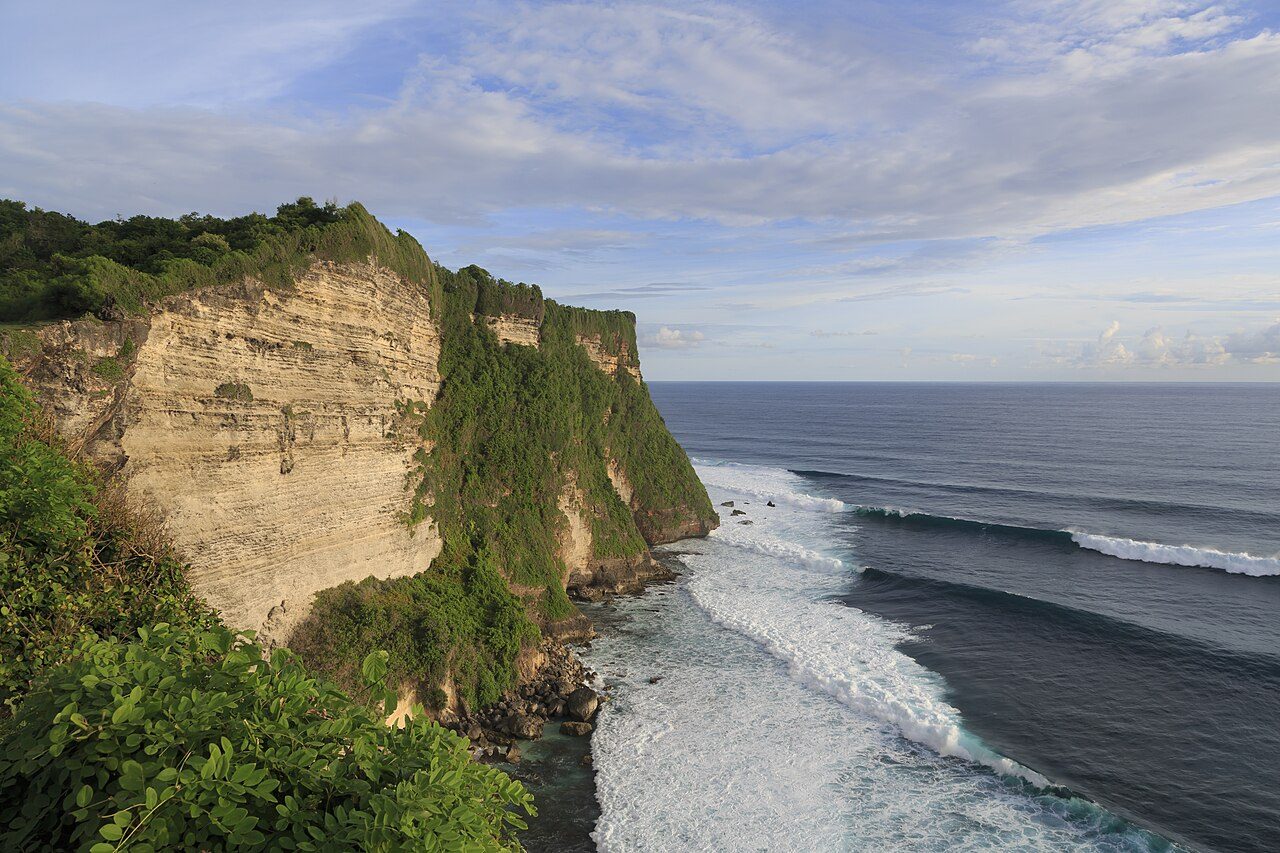
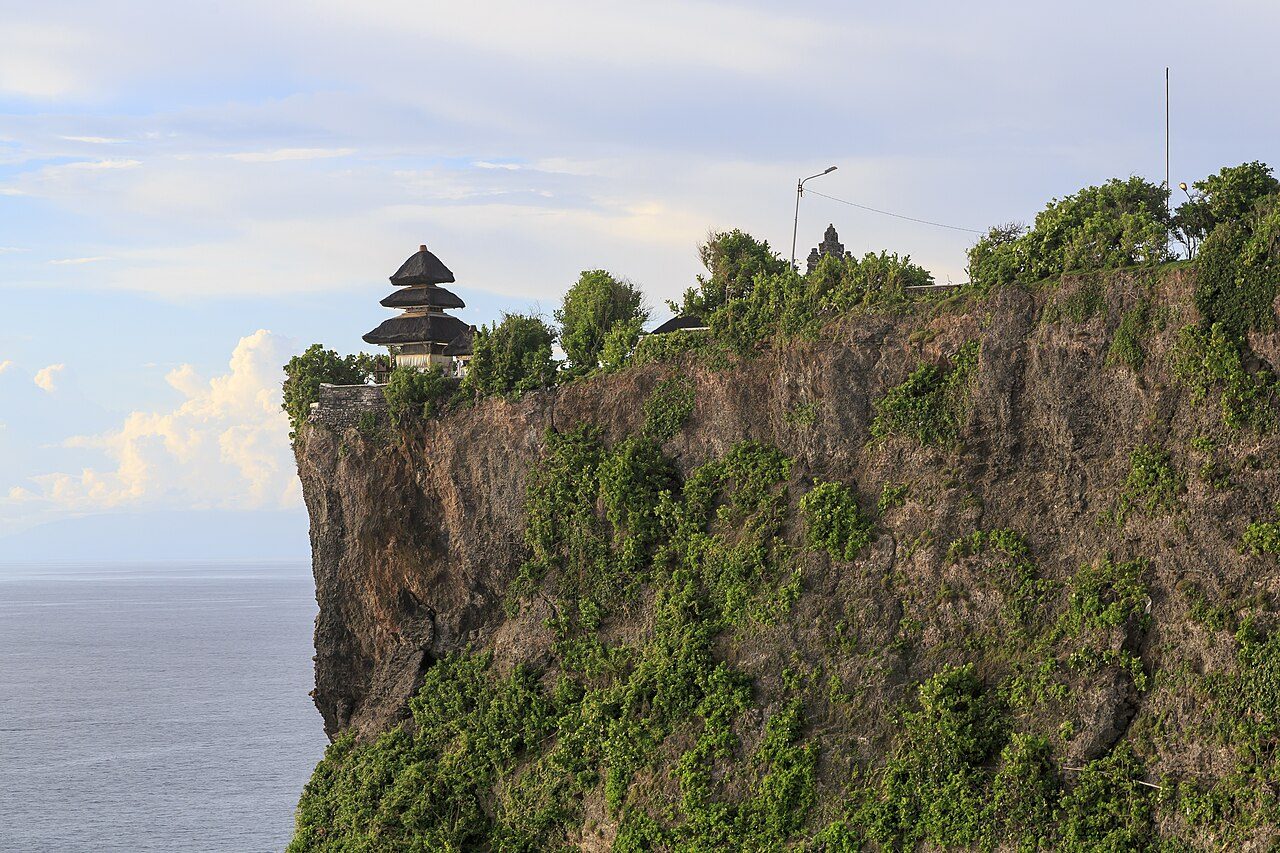
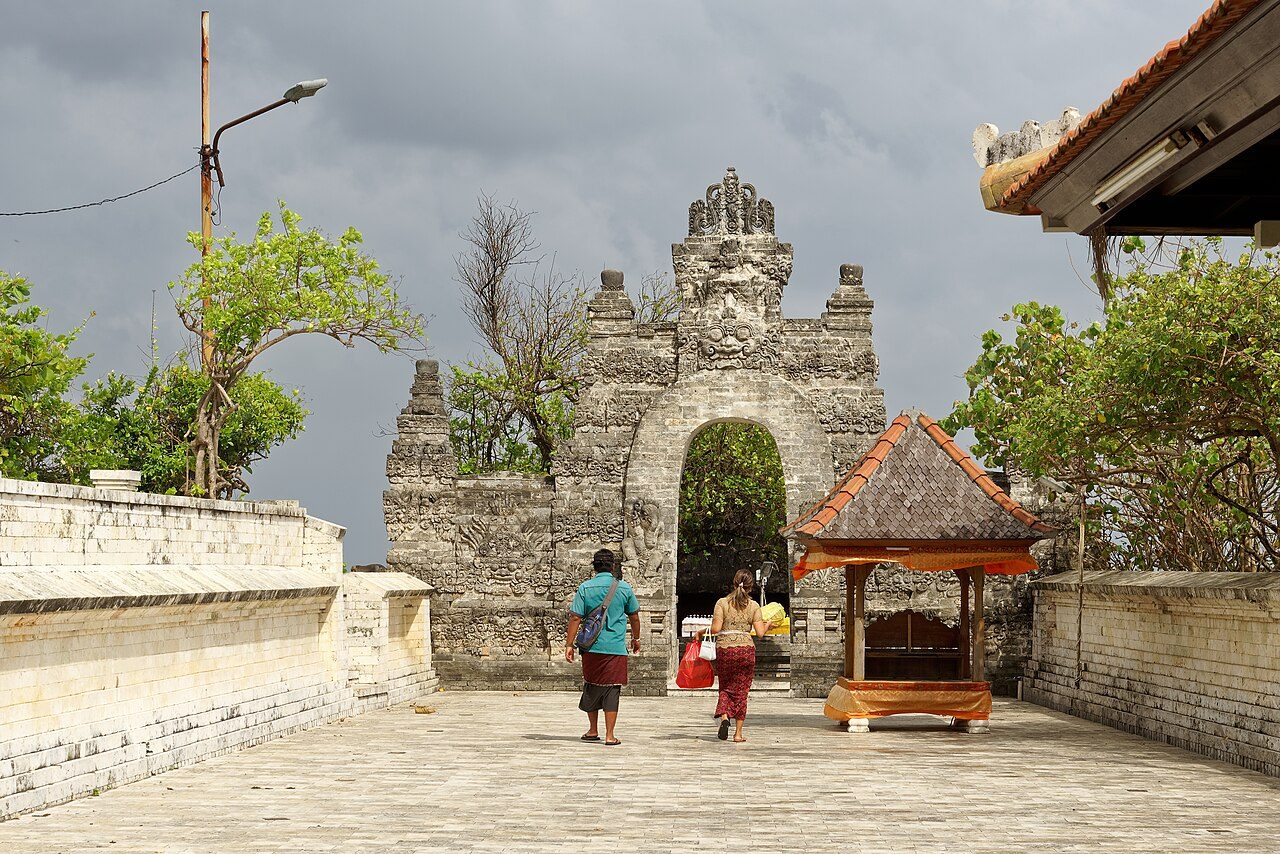
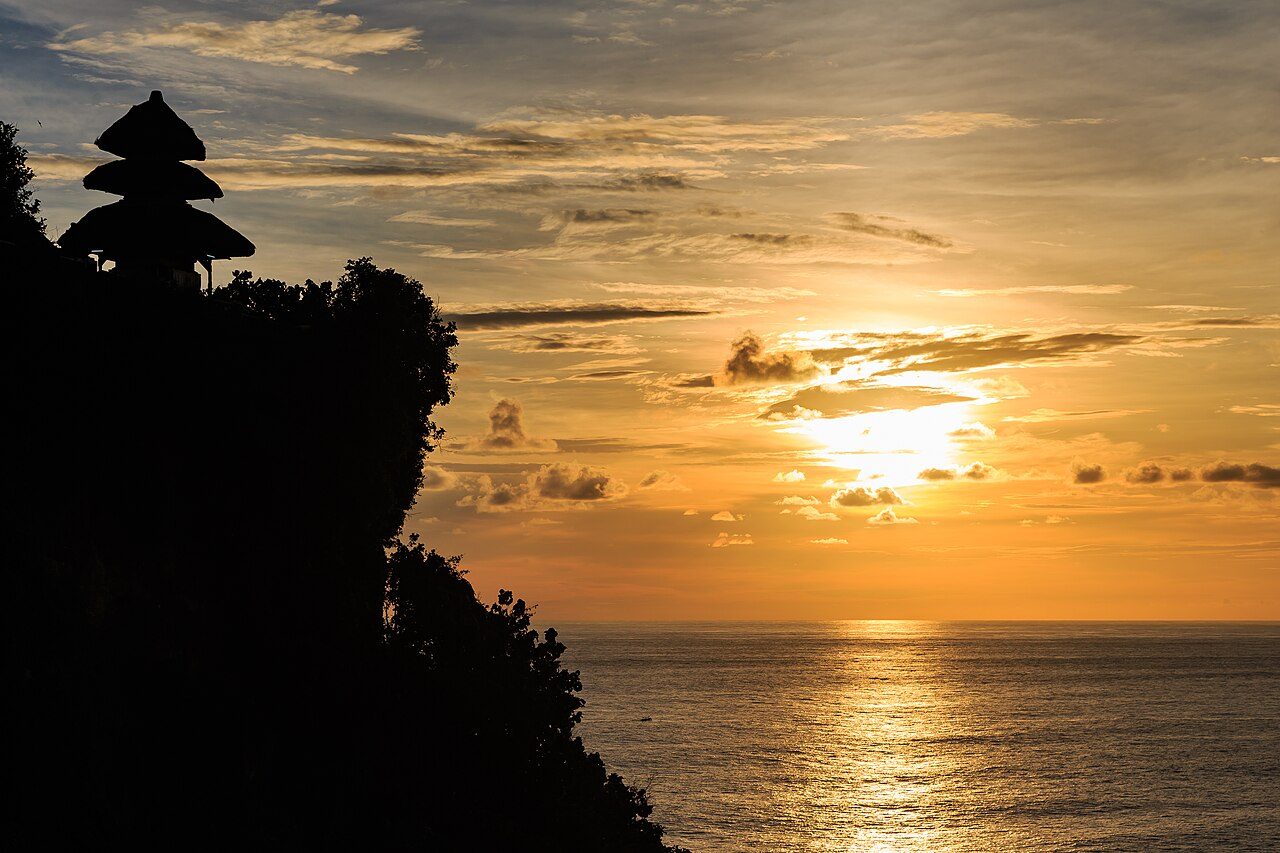
Uluwatu Temple, Pura Luhur Uluwatu, sits on the edge of a cliff about 70 metres above the Indian Ocean at the southwestern tip of Bali. It is one of the island's six main temples, believed to protect Bali from evil sea spirits. Long-tailed macaques live around it and often snatch visitors' belongings. A Kecak fire dance is performed on an open stage by the cliff at sunset.
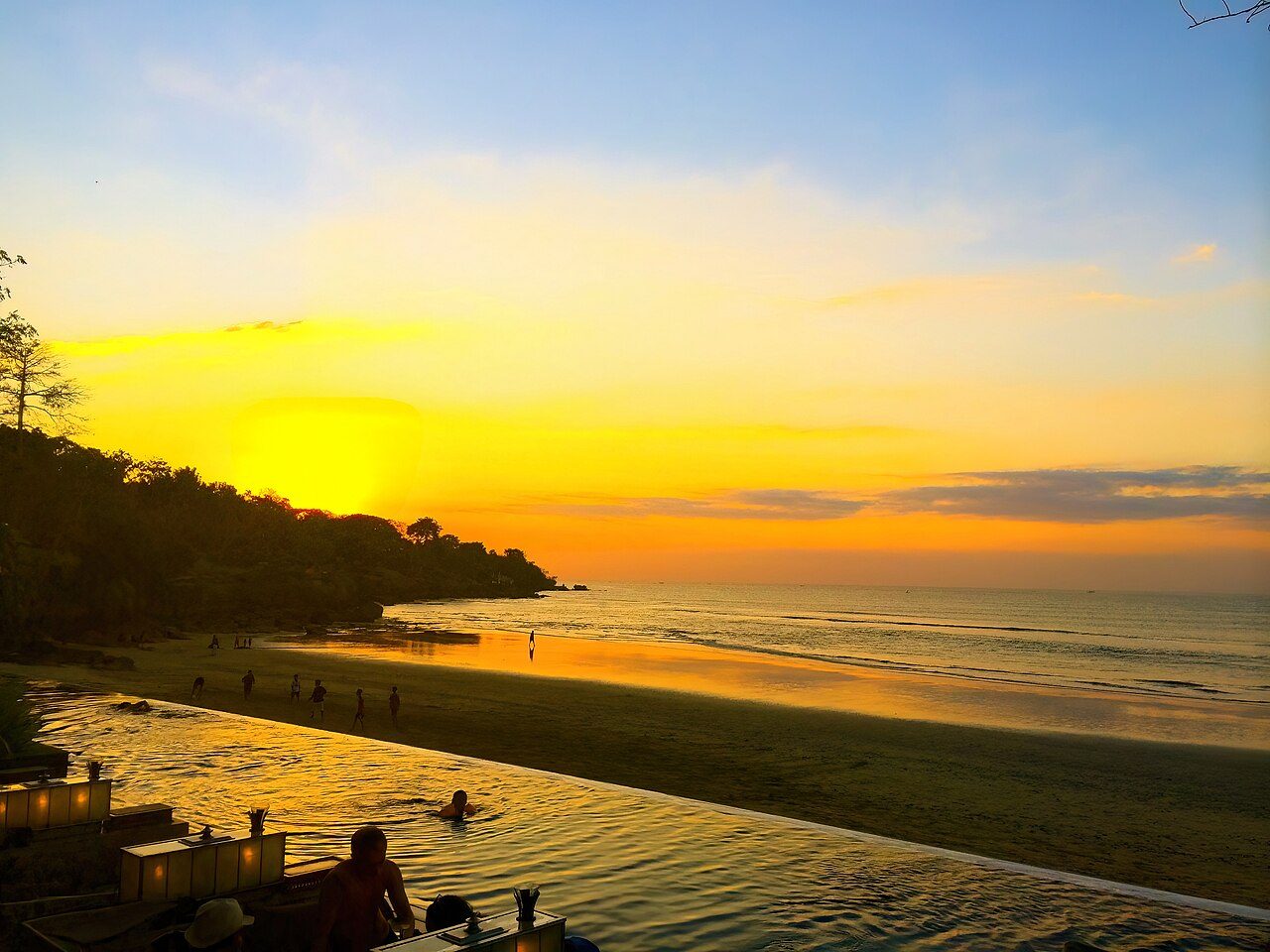
Jimbaran Bay is a curved beach south of Bali's airport. It was a fishing village, and colourful fishing boats still pull up on the sand, with a fish market at the northern end. In the evening, tables are set out on the beach for seafood dinners grilled over coconut husks as the sun sets over the bay. The water is calm and good for swimming.
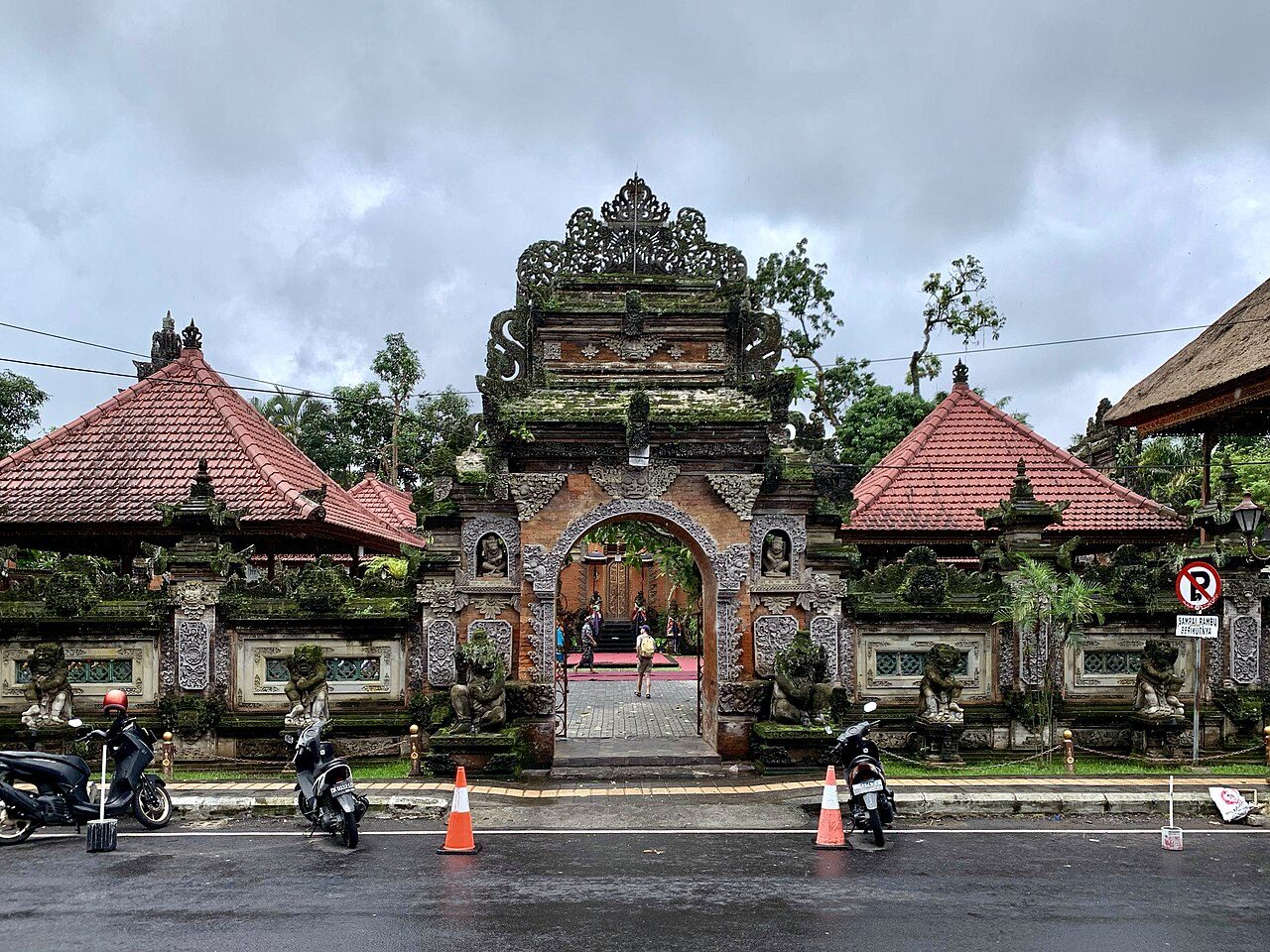
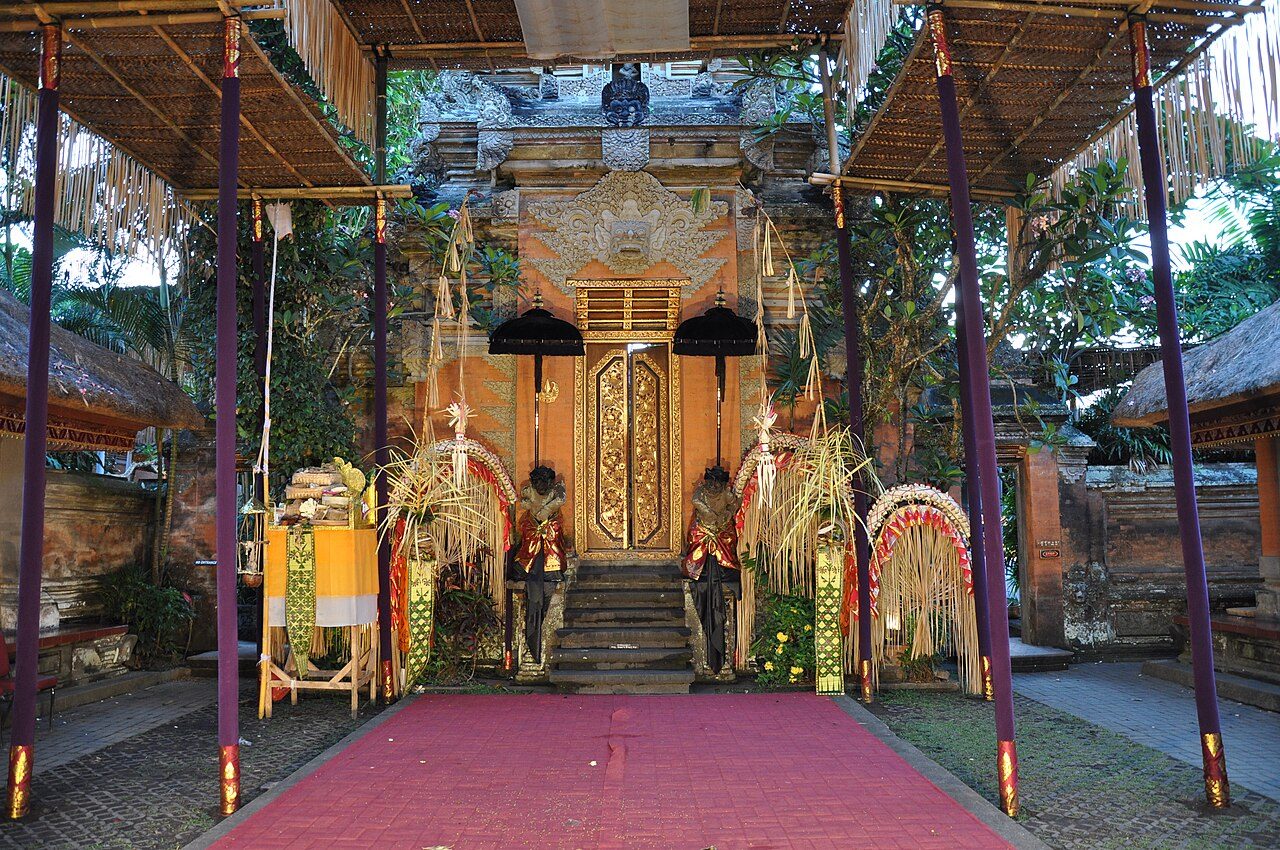
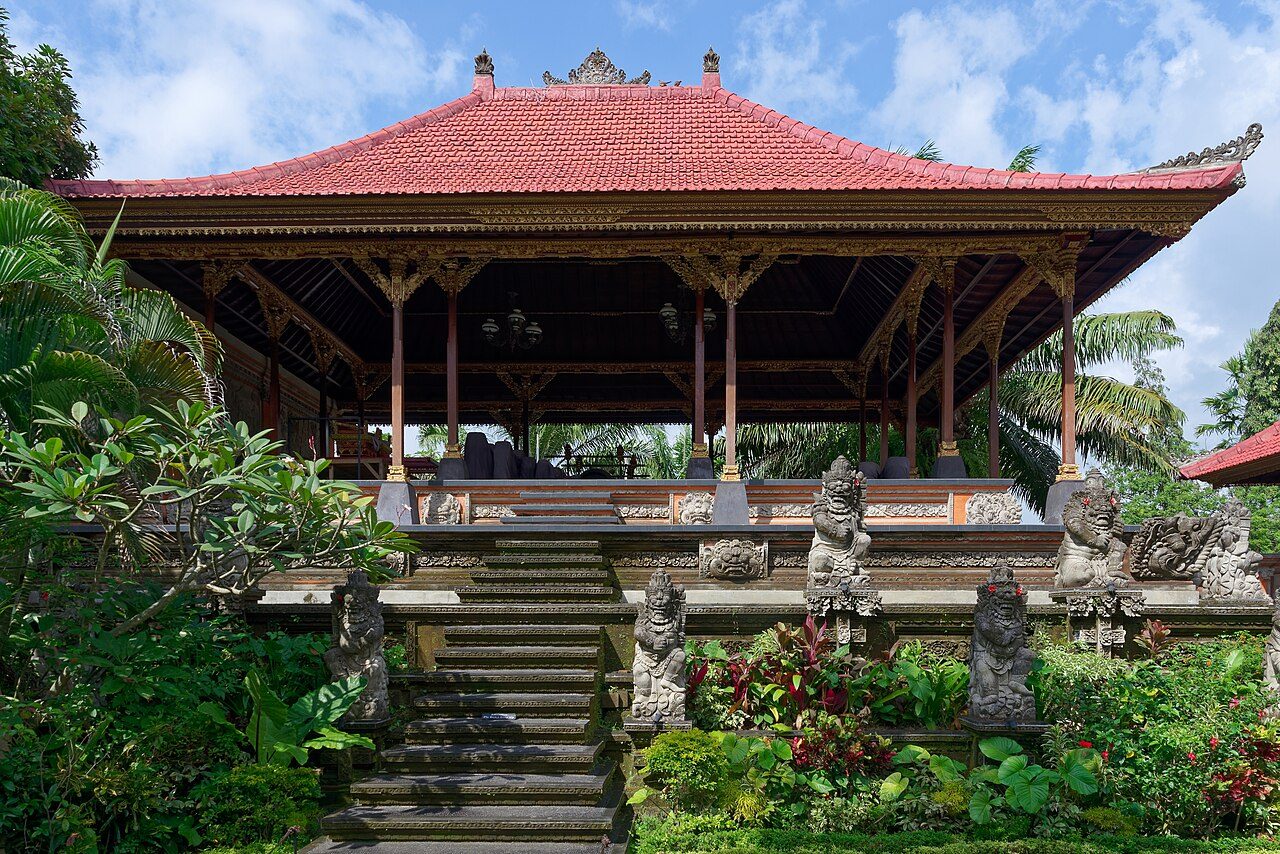
Ubud Palace, Puri Saren Agung, stands at the main crossroads of Ubud. It was the home of the royal family of Ubud, and the descendants still live here. The palace was largely rebuilt after an earthquake in 1917. Its courtyards are filled with carved gates, statues and pavilions. Traditional Balinese dance shows are held in the courtyard most evenings.
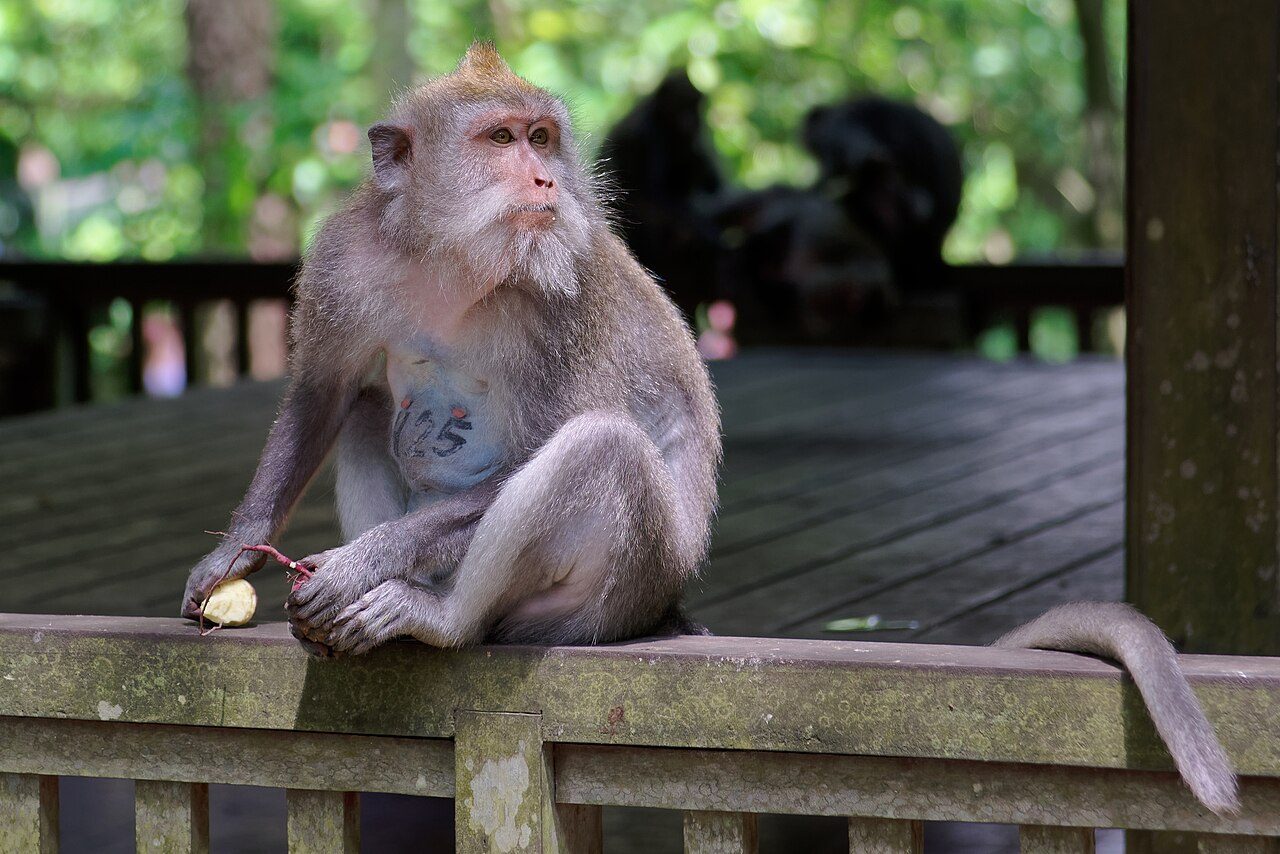
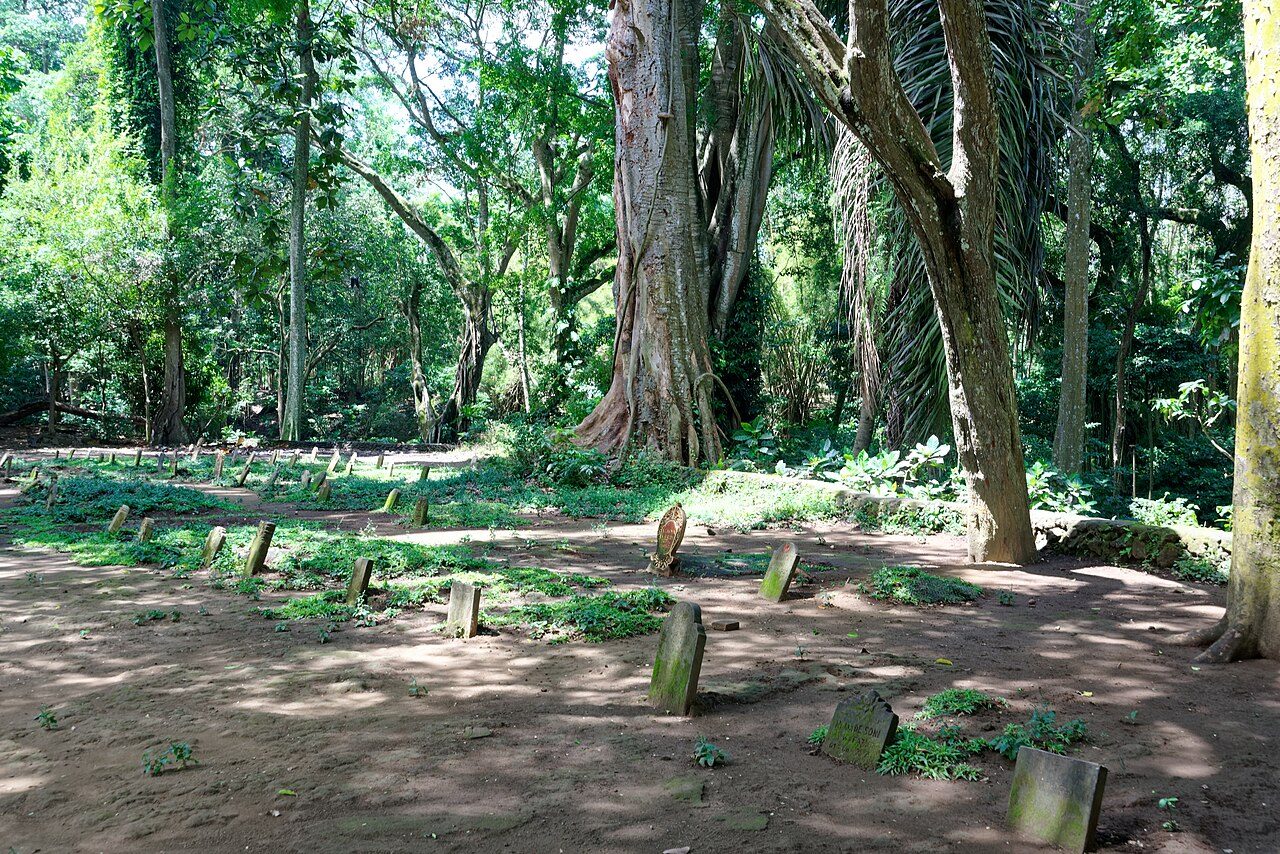
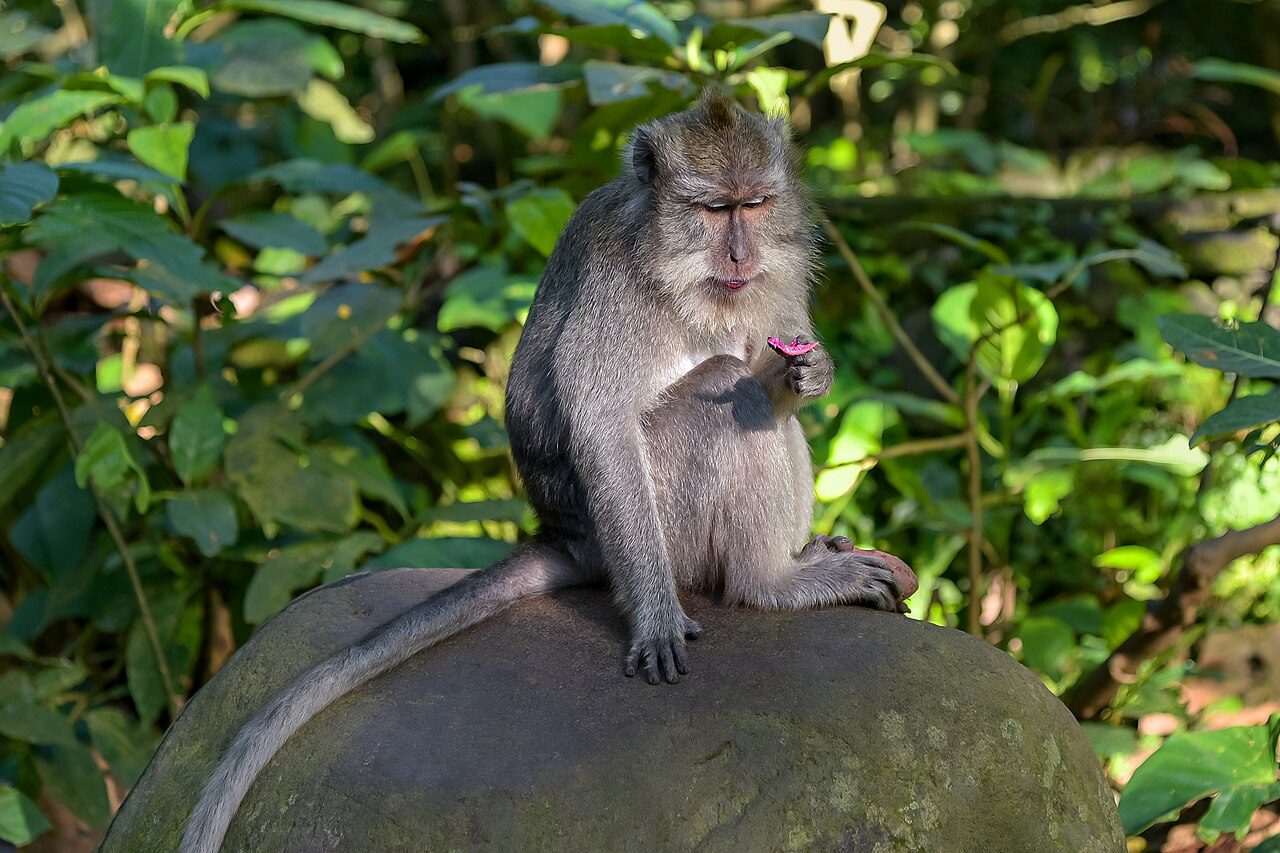
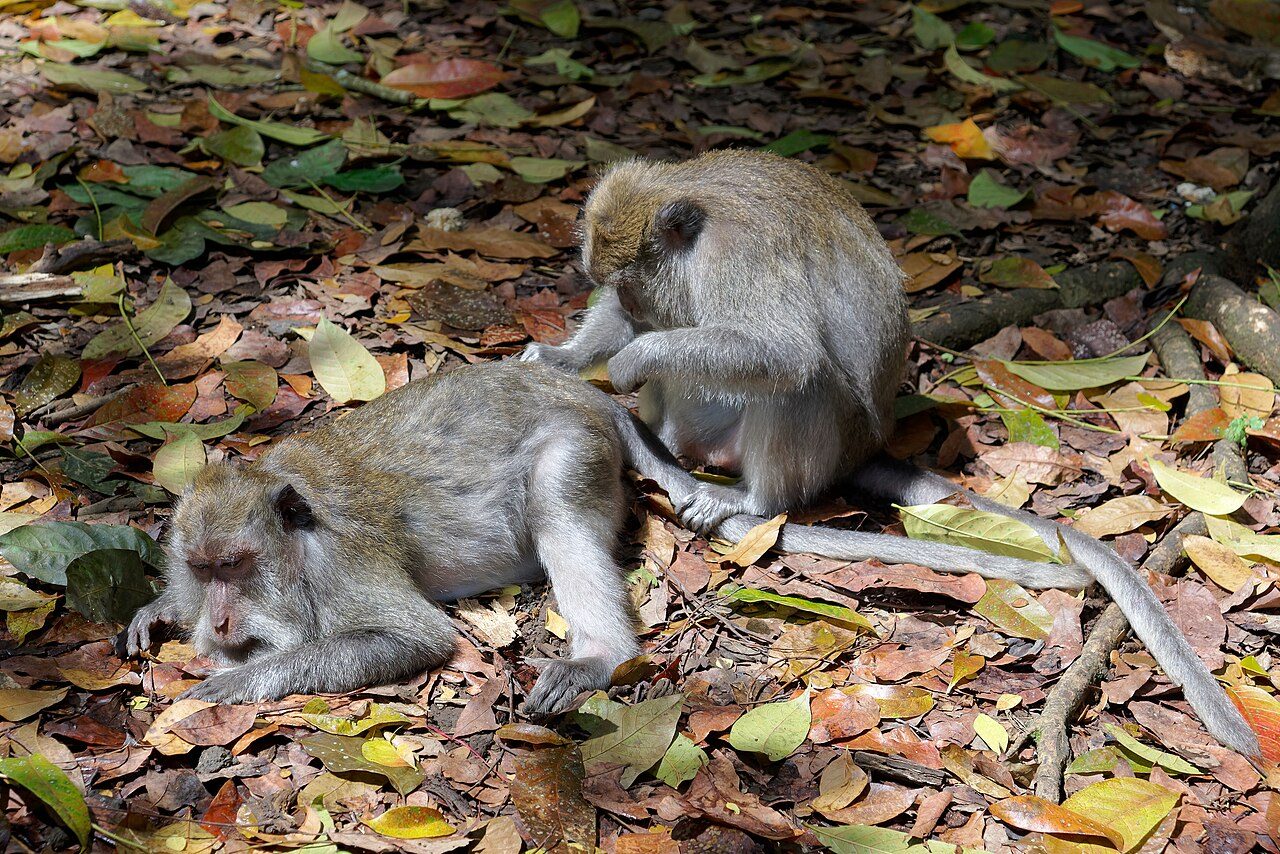
The Sacred Monkey Forest Sanctuary in Ubud is a forest reserve home to over a thousand long-tailed macaques. Under huge banyan and nutmeg trees stand three Hindu temples dating from the 14th century, covered in moss. Stone dragons line a bridge over a ravine. The monkeys roam freely and are known for taking food and belongings from visitors.
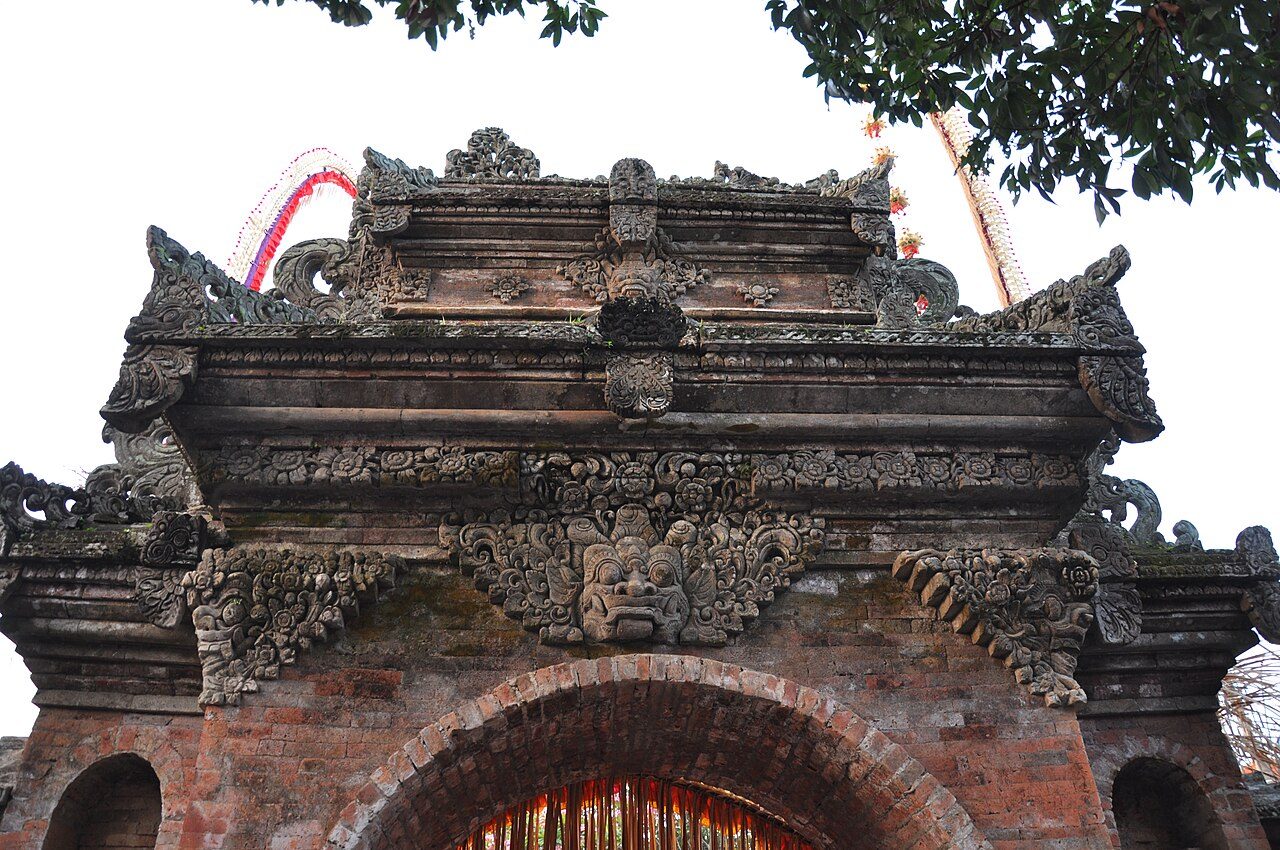
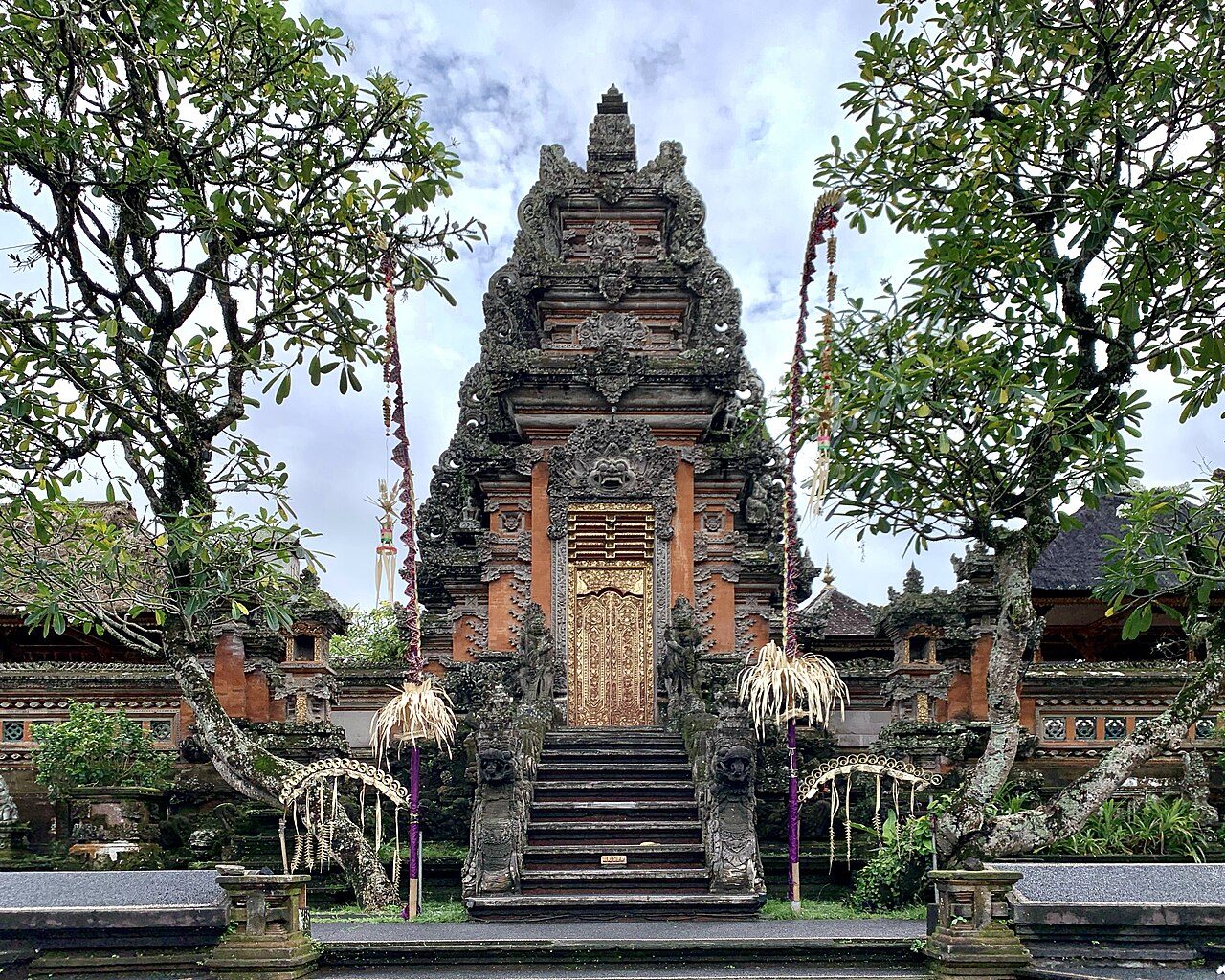
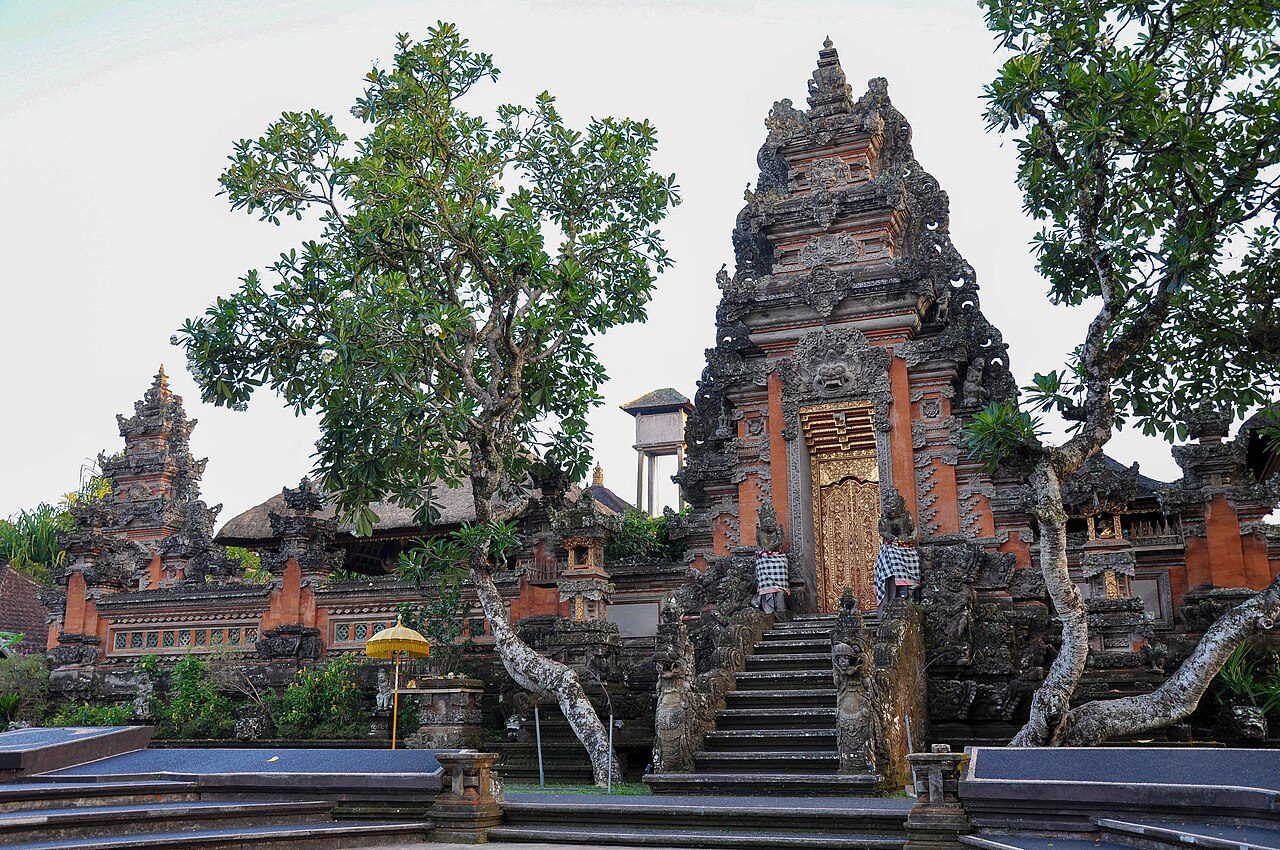
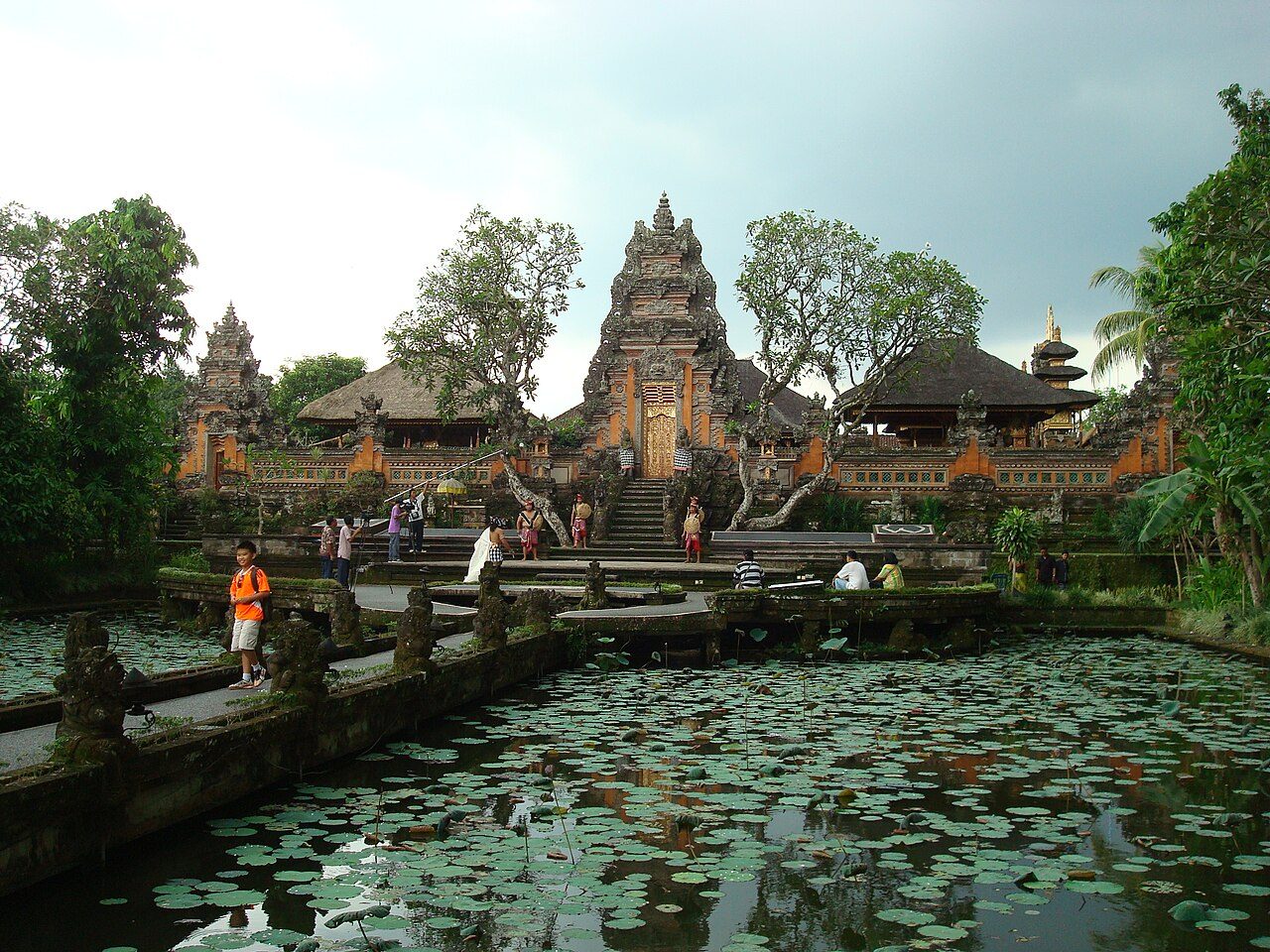
Pura Taman Saraswati is a temple in the centre of Ubud, dedicated to Saraswati, the goddess of learning, arts and literature. It was built in the 1950s by the artist I Gusti Nyoman Lempad. A path crosses a pond filled with pink lotus flowers towards the carved red brick gate. Dance performances are held in its courtyard in the evenings.
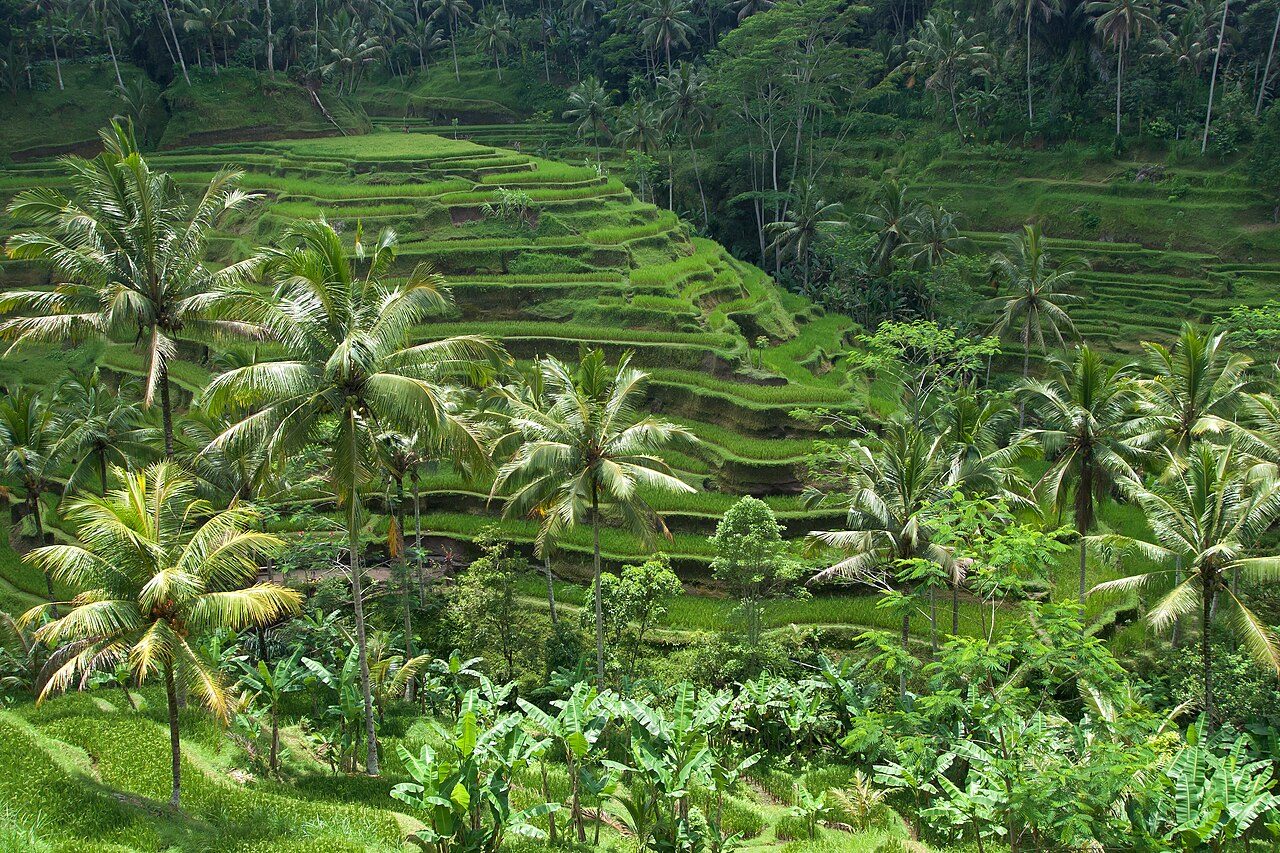
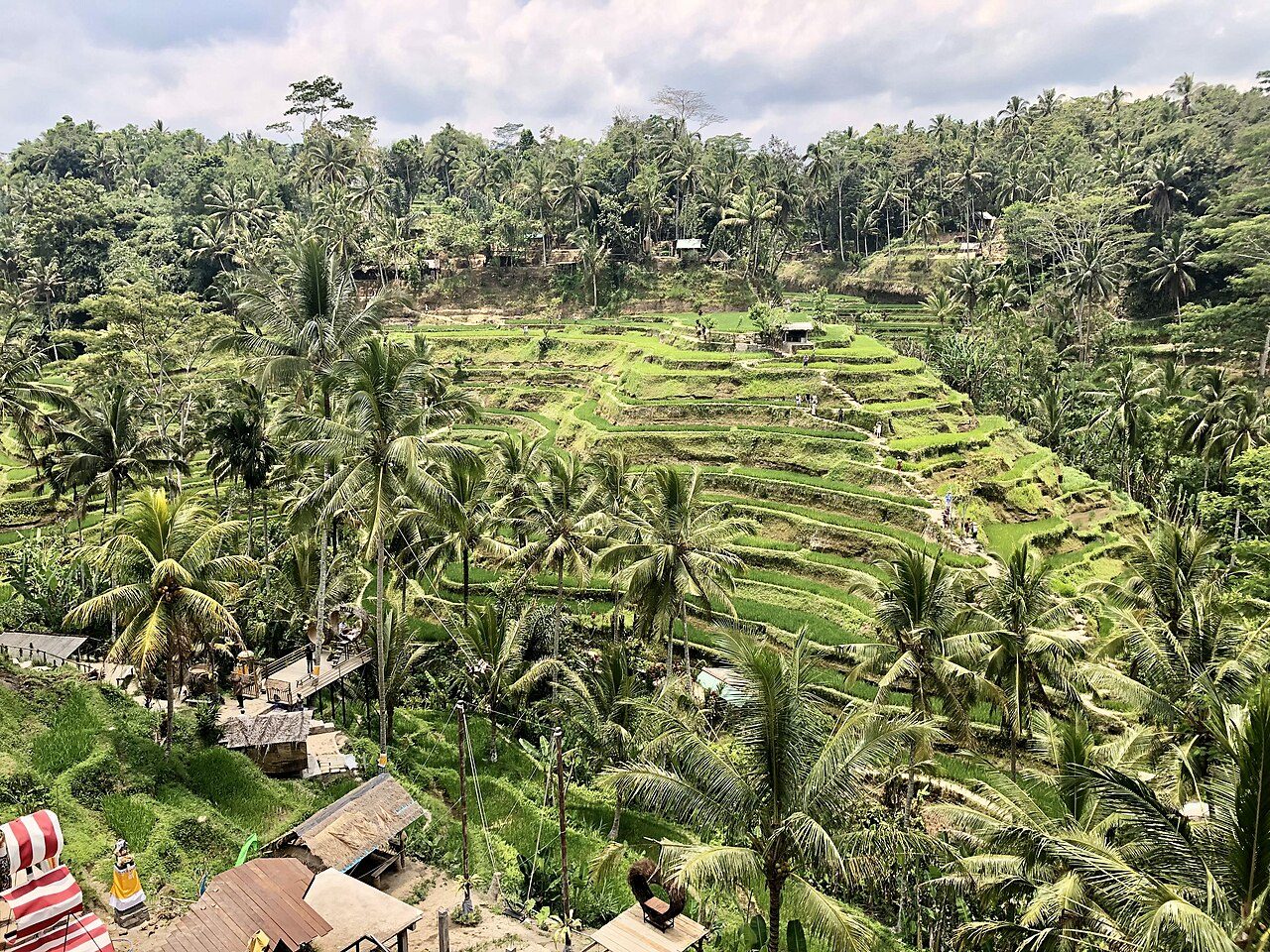
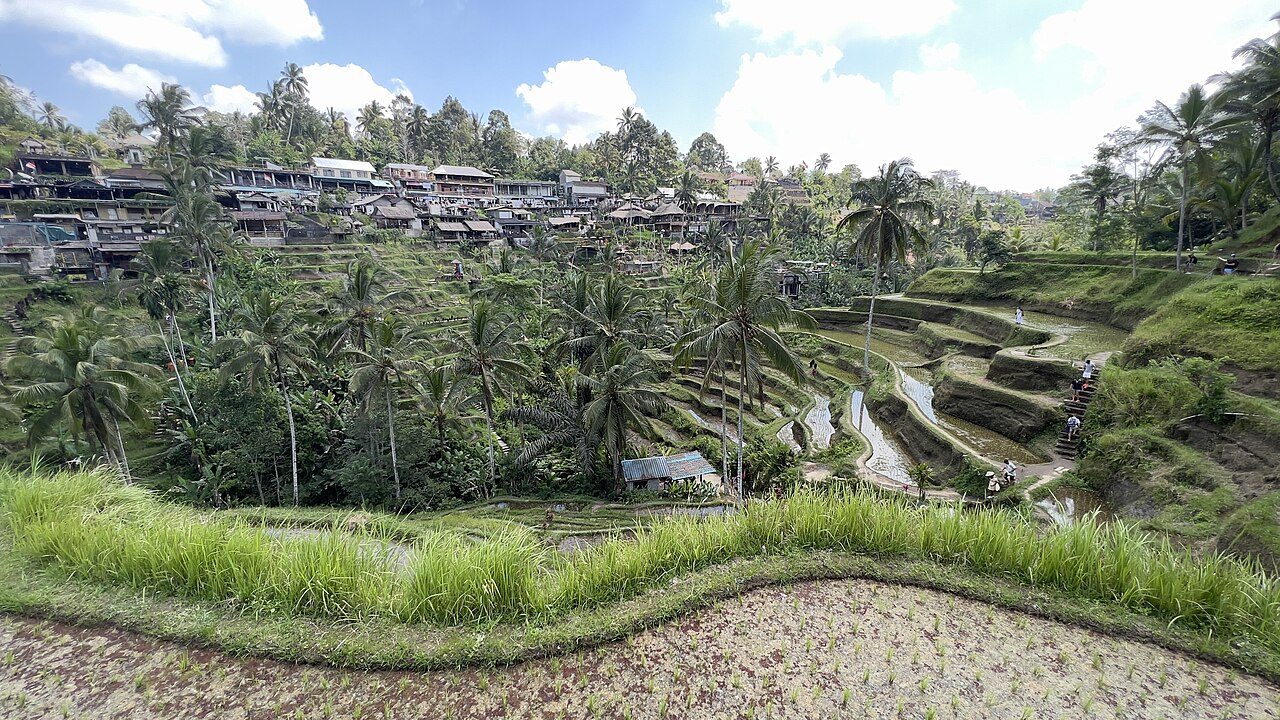
The Tegallalang rice terraces lie north of Ubud. Green terraces step down the steep sides of a valley under coconut palms. They are watered by subak, a traditional Balinese system of shared irrigation run by farmers' groups and temples, recognised by UNESCO. Paths lead down through the fields, and cafes and swings line the rim of the valley.
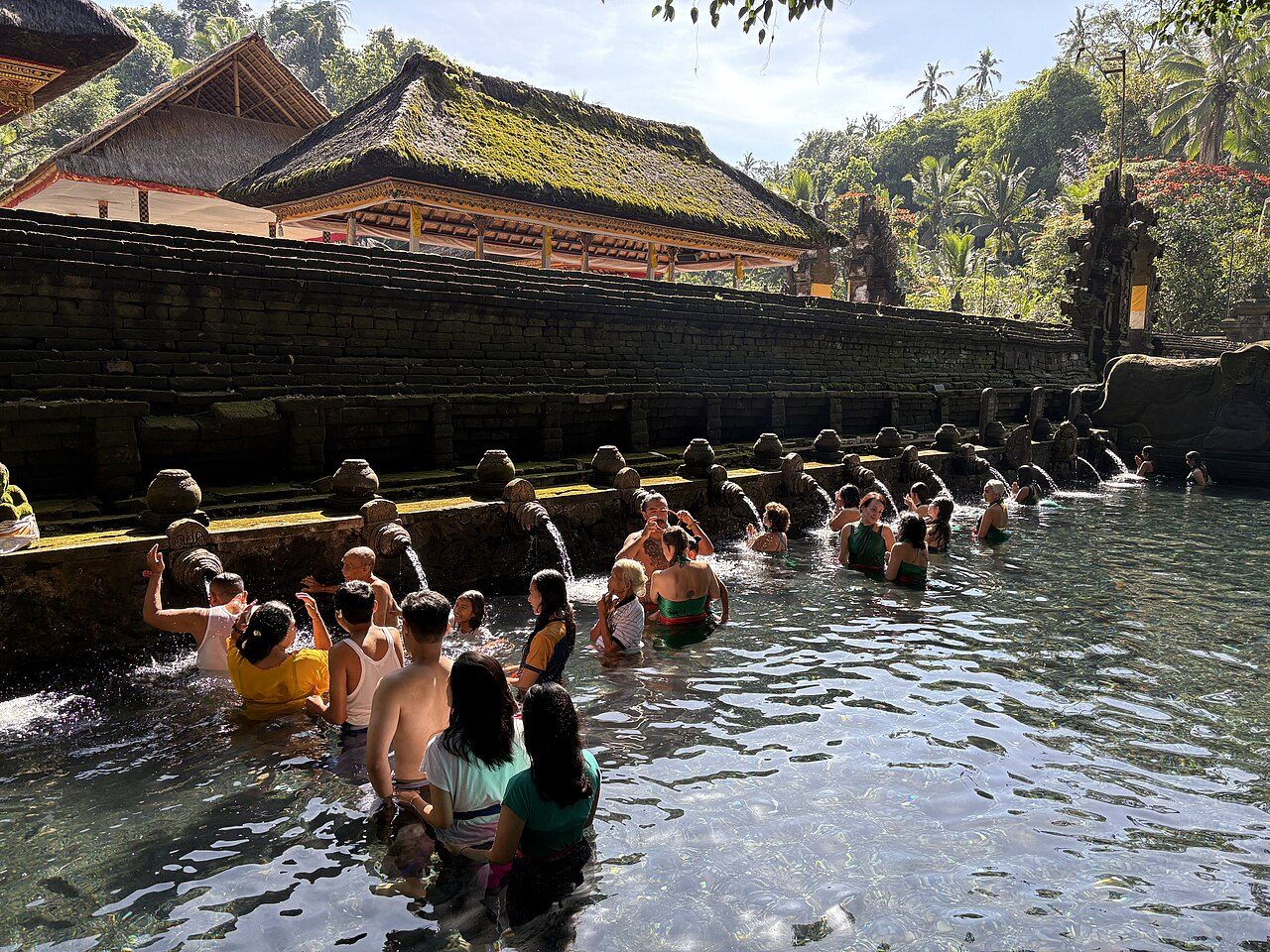
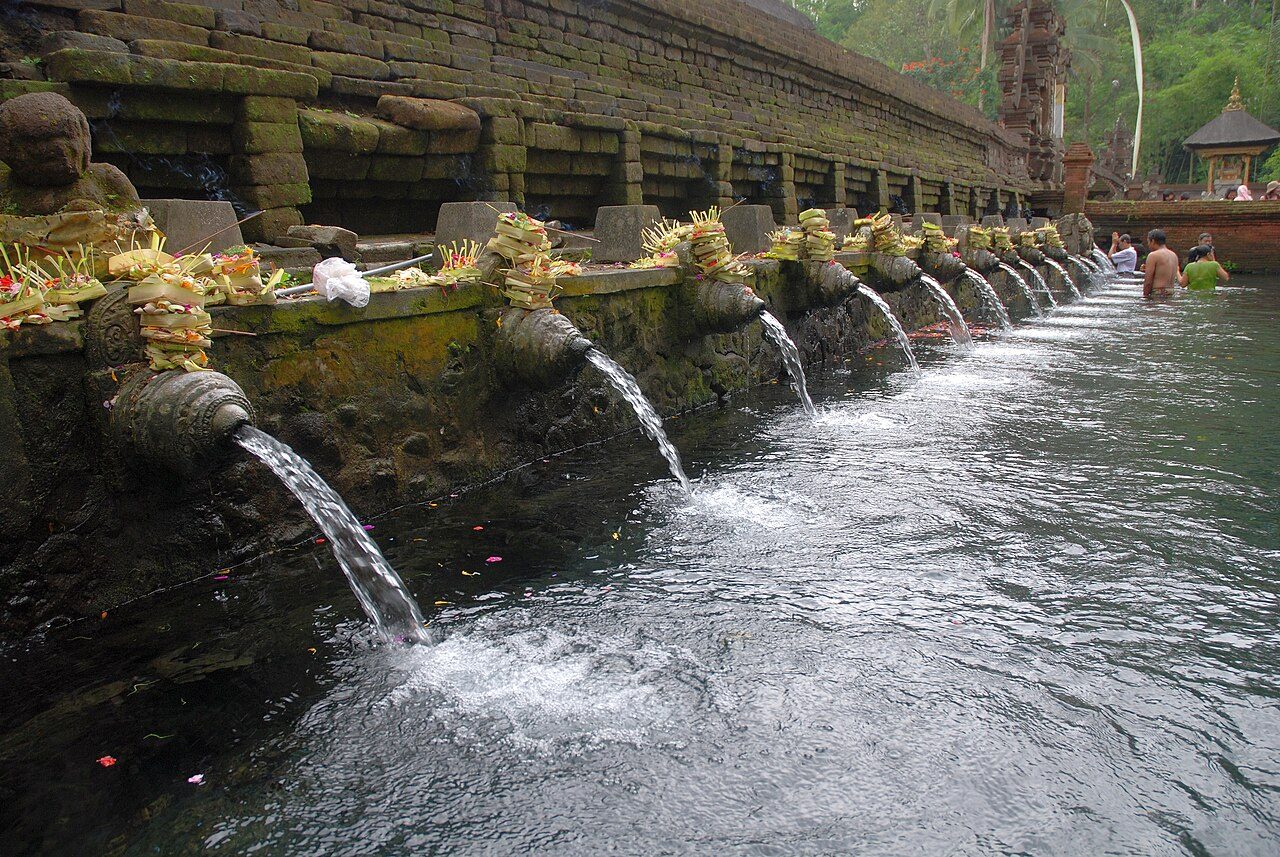
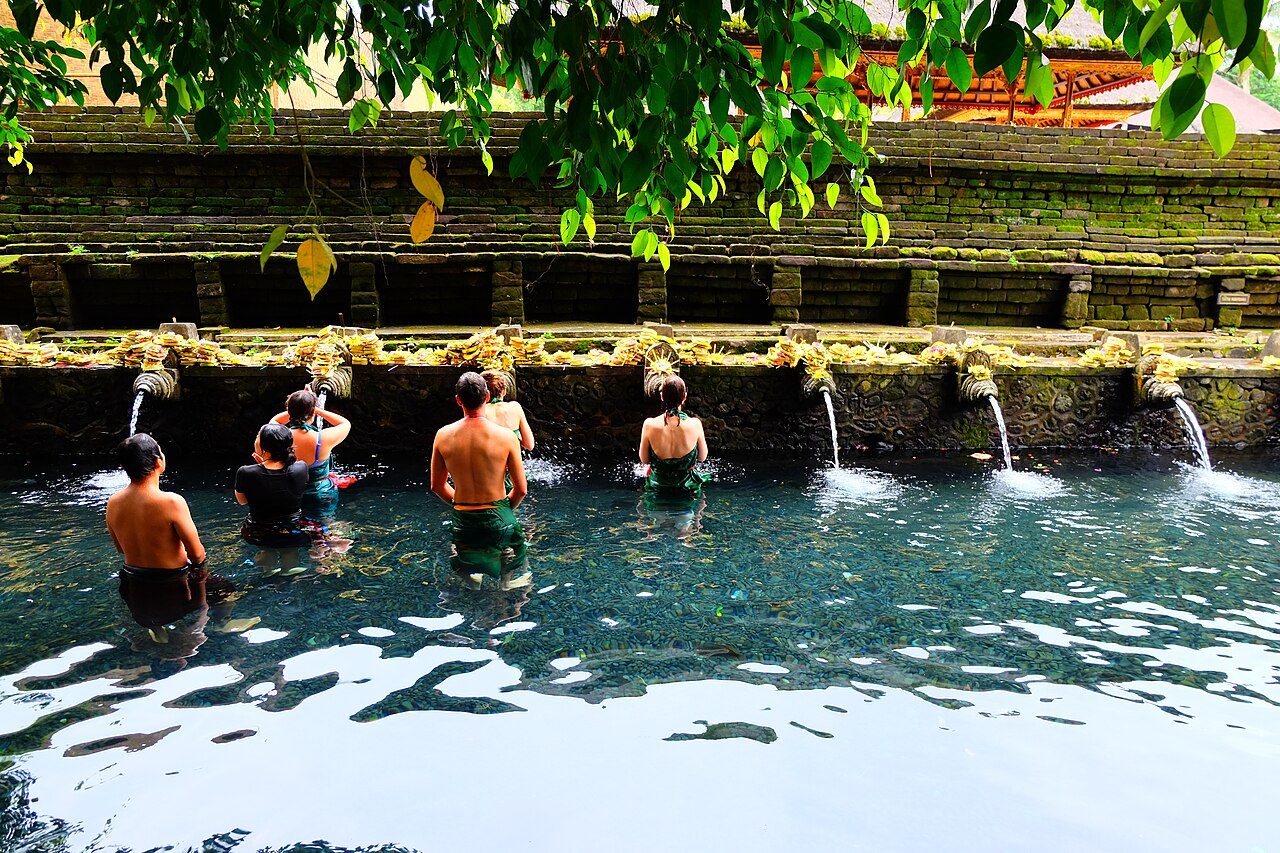
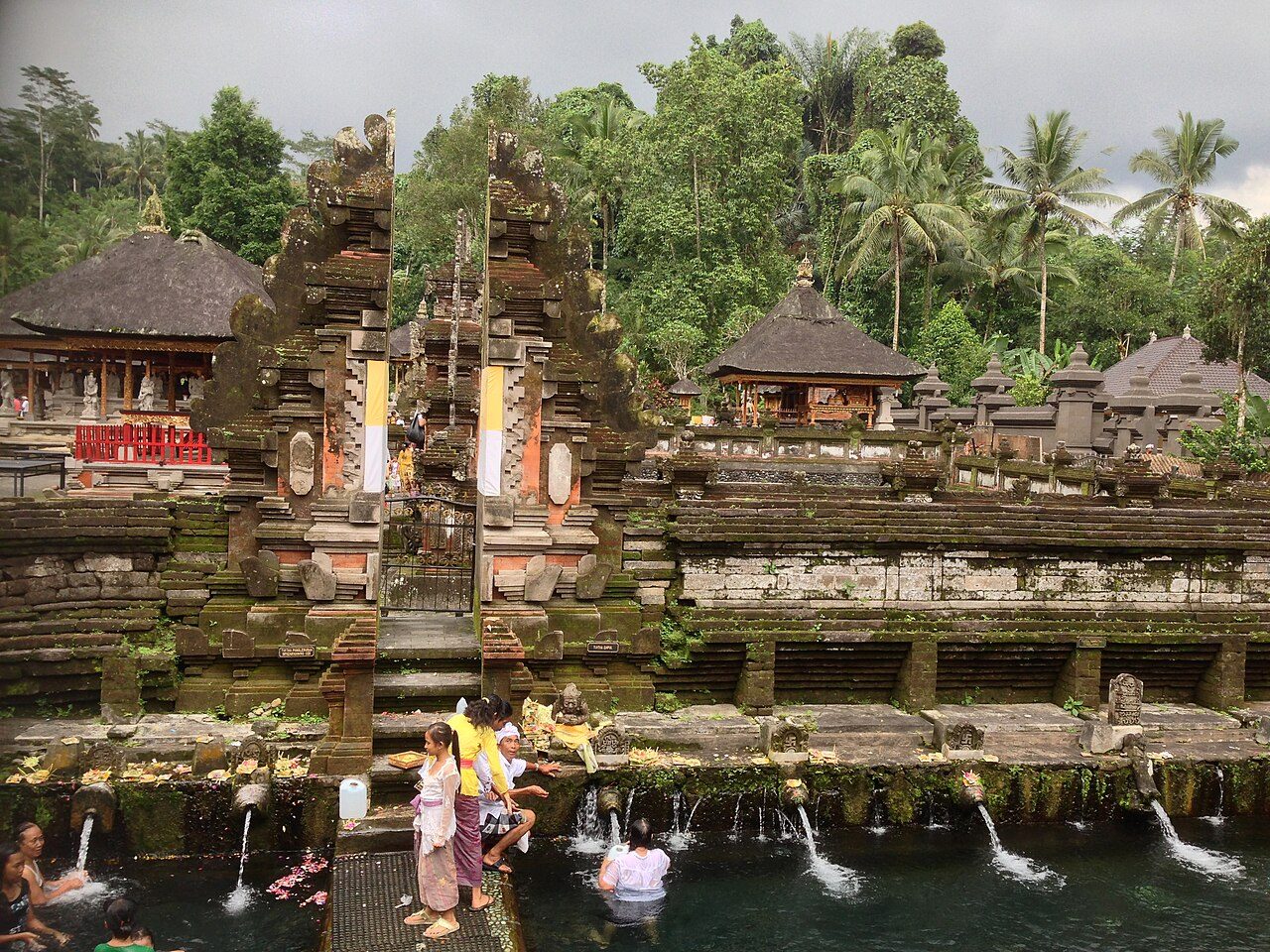
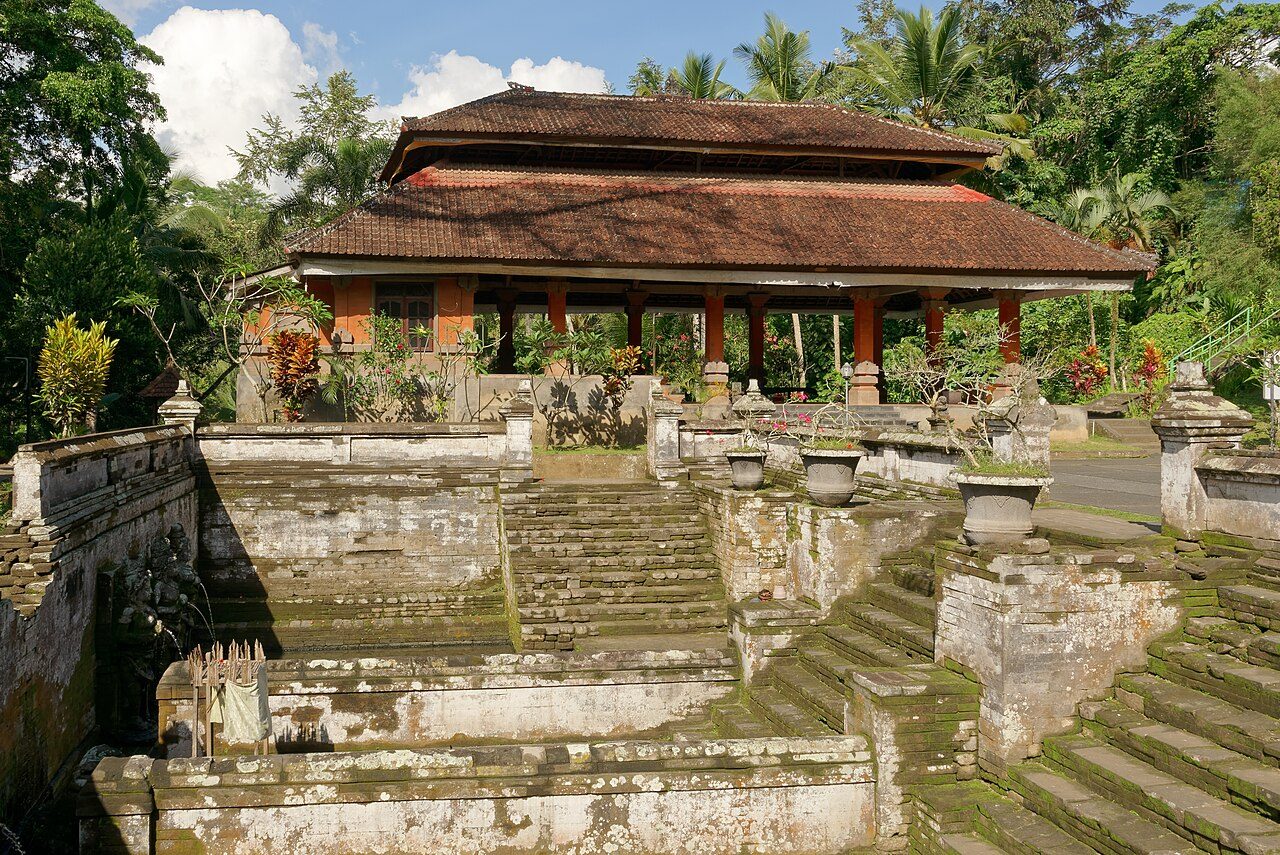
Tirta Empul is a Hindu water temple near Tampaksiring in central Bali, founded around 962. It is built around a sacred spring that feeds a long pool with rows of stone spouts. Balinese Hindus come to bathe under each spout in turn as a ritual of purification, and visitors may join wearing a sarong. A presidential palace built for Sukarno overlooks the temple.
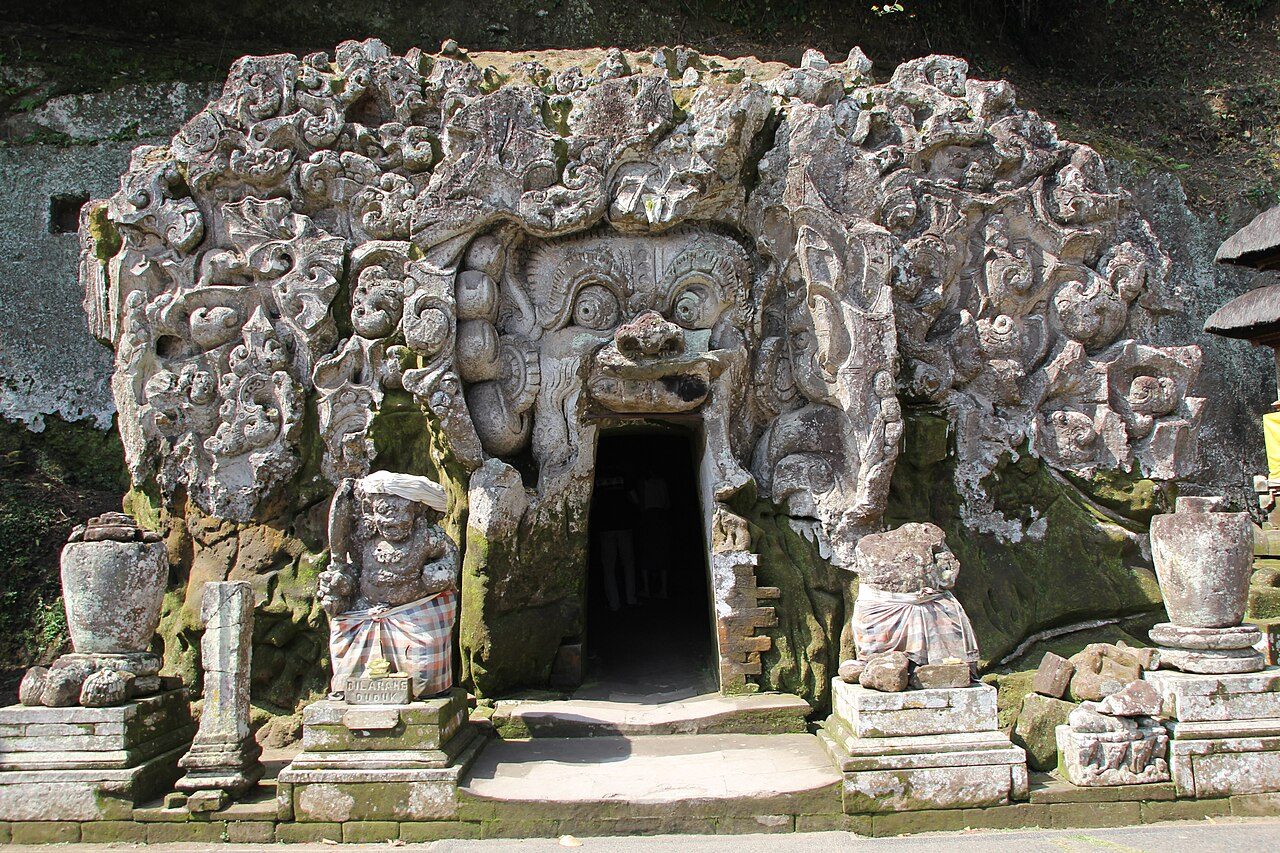
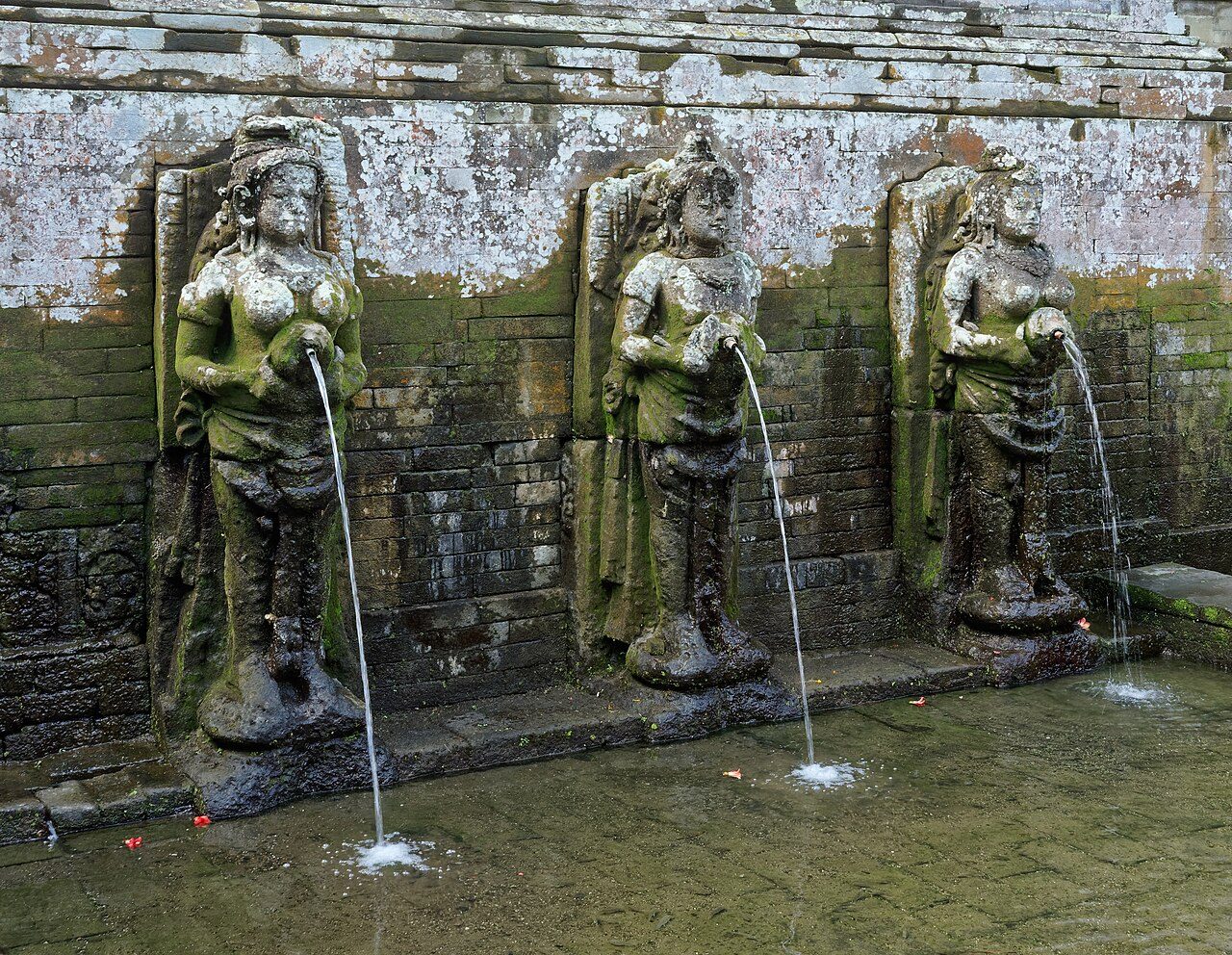
Goa Gajah, the Elephant Cave, is a sanctuary near Ubud dating from around the 11th century. Its entrance is carved into a rock face with a fearsome demon face whose mouth forms the doorway. Inside the small cave are shrines to Ganesha and Shiva. Bathing pools with statues of nymphs pouring water lie in front, and steps lead down to a stream and Buddhist relics.
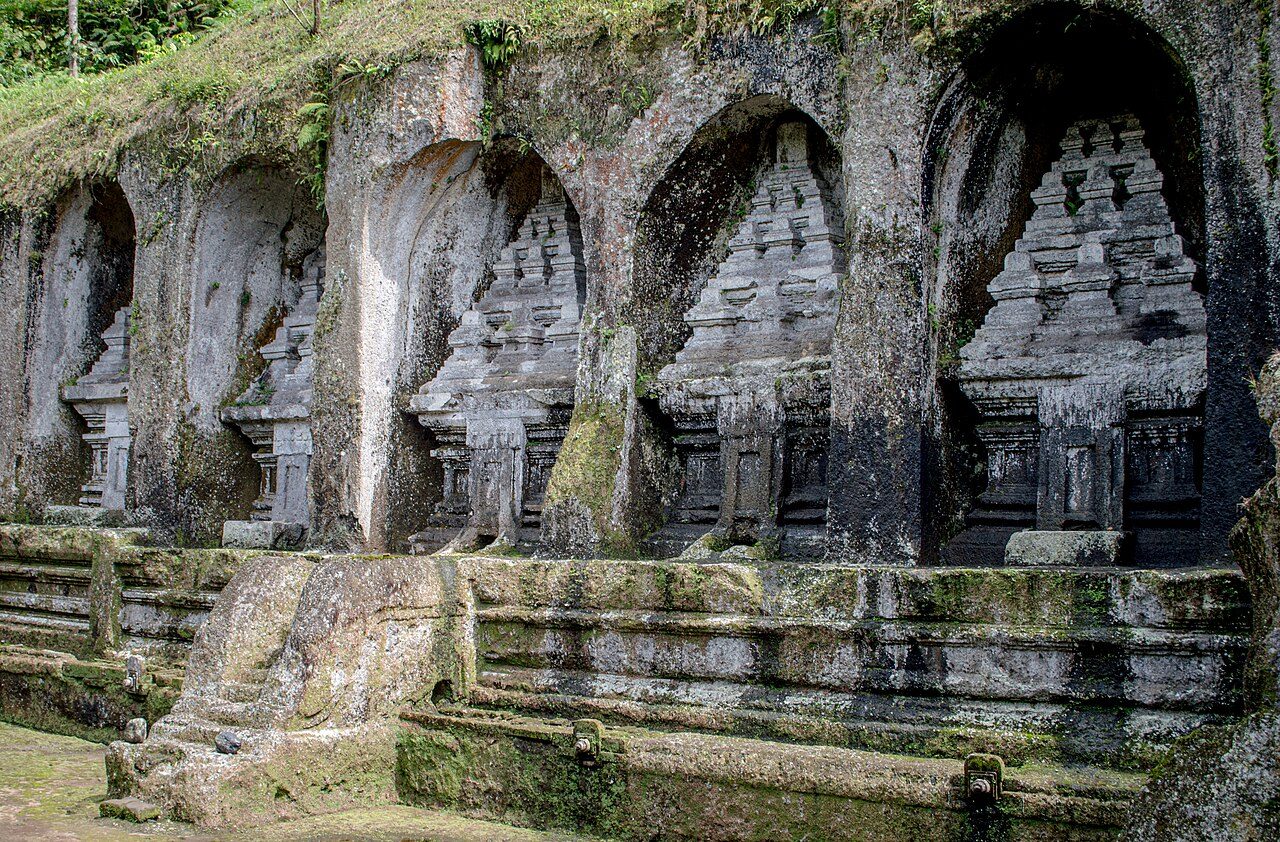
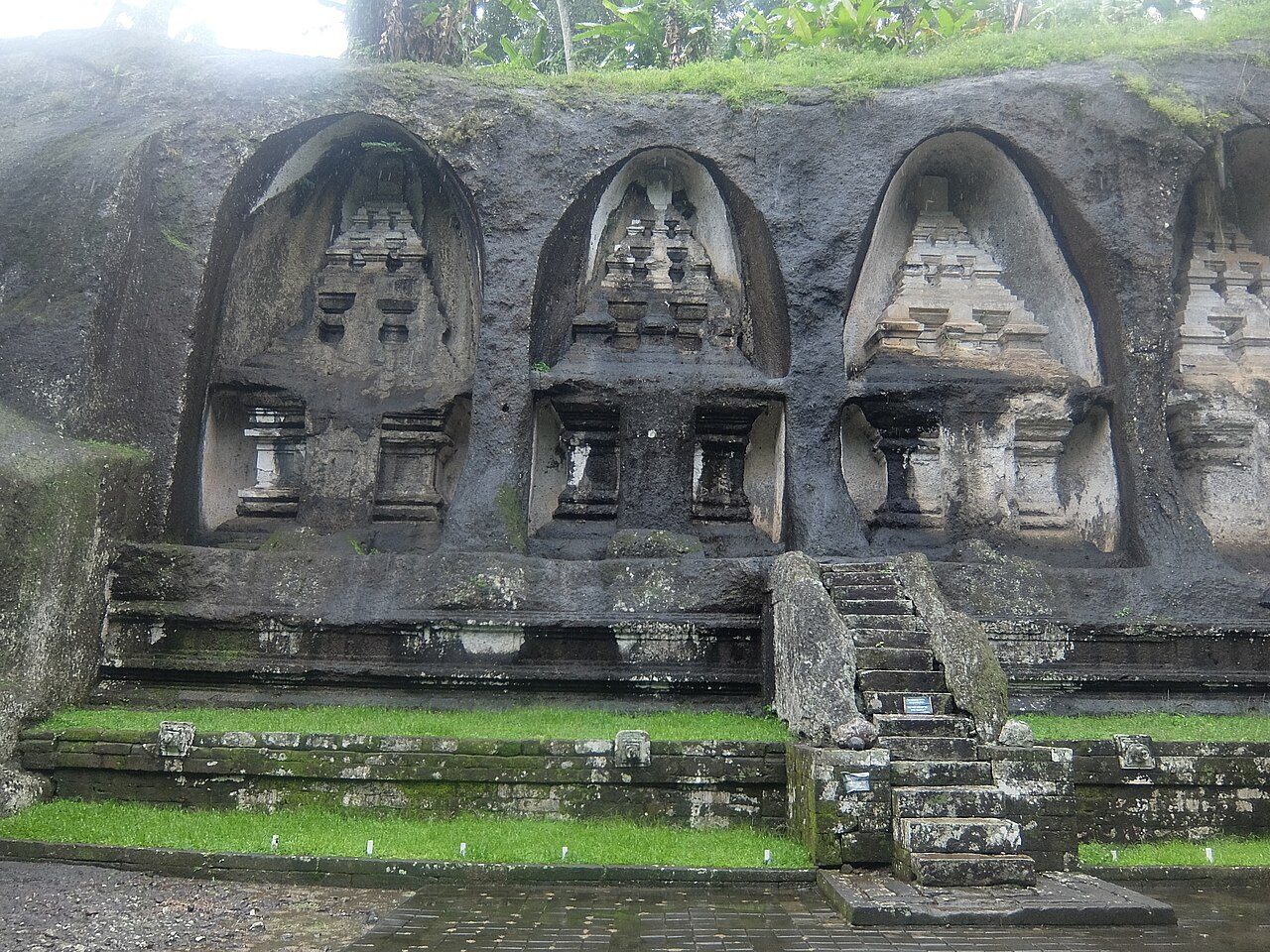
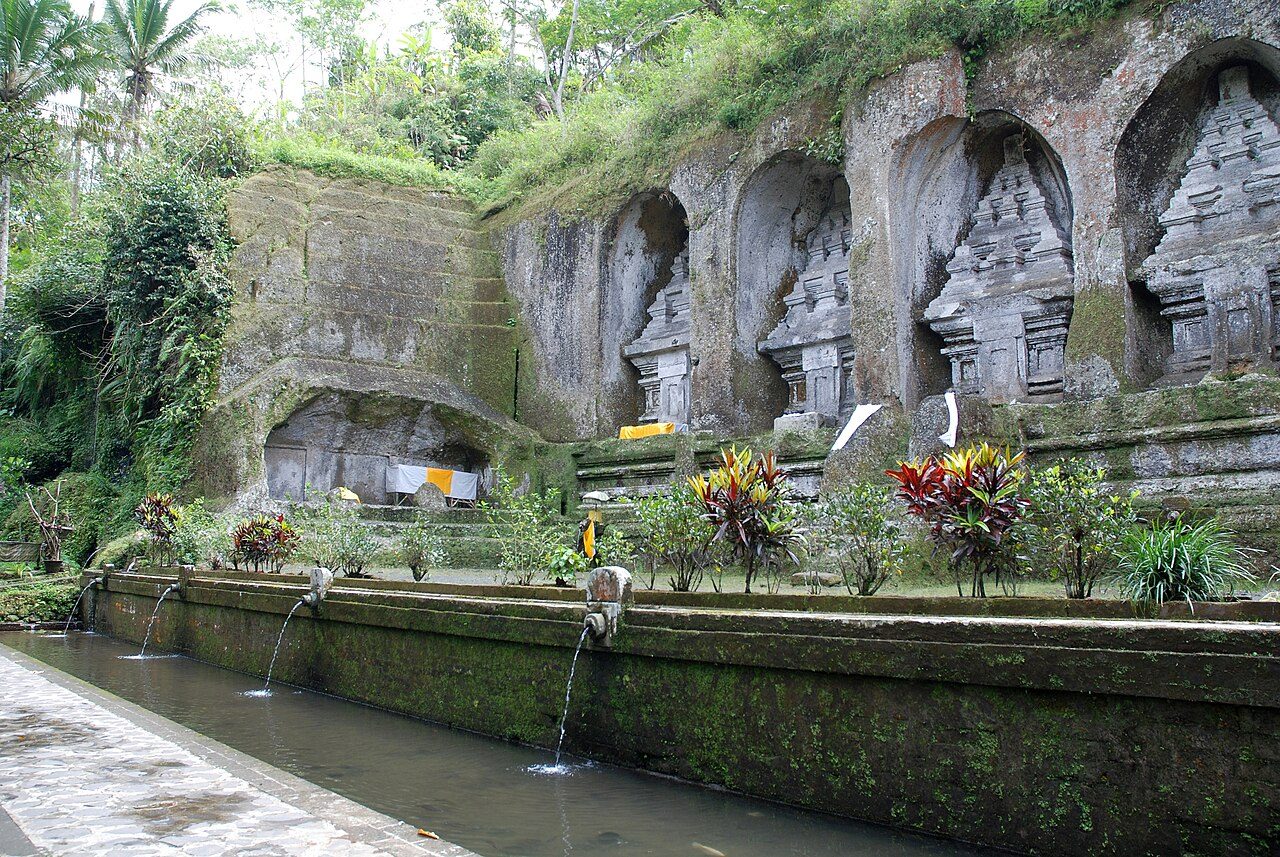
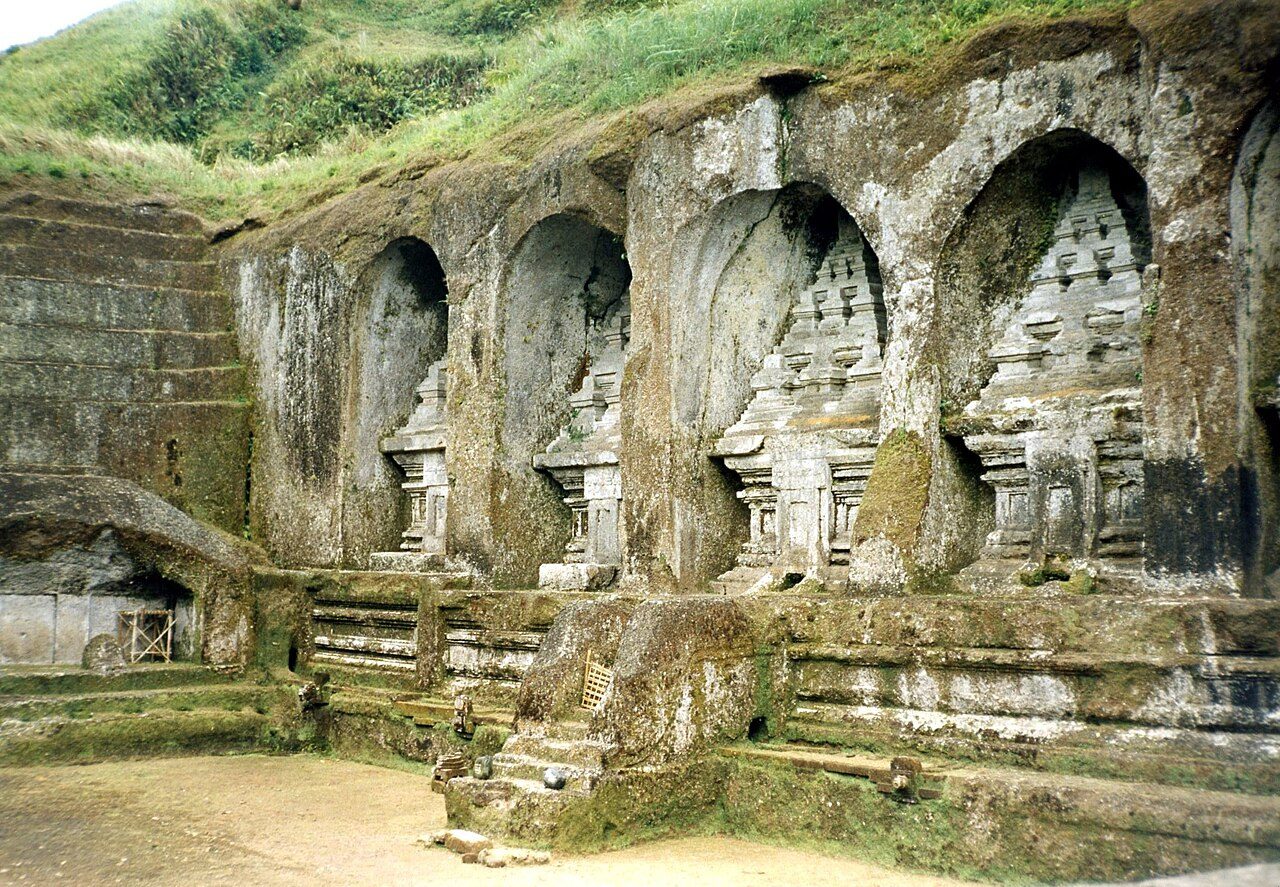
Gunung Kawi is an 11th-century temple and funeral complex near Tampaksiring. Ten shrines, each about seven metres high, are cut into niches in the cliffs on both sides of the Pakerisan River. They are thought to honour King Anak Wungsu and his family. A path of over 300 steps leads down through rice terraces to the river valley.
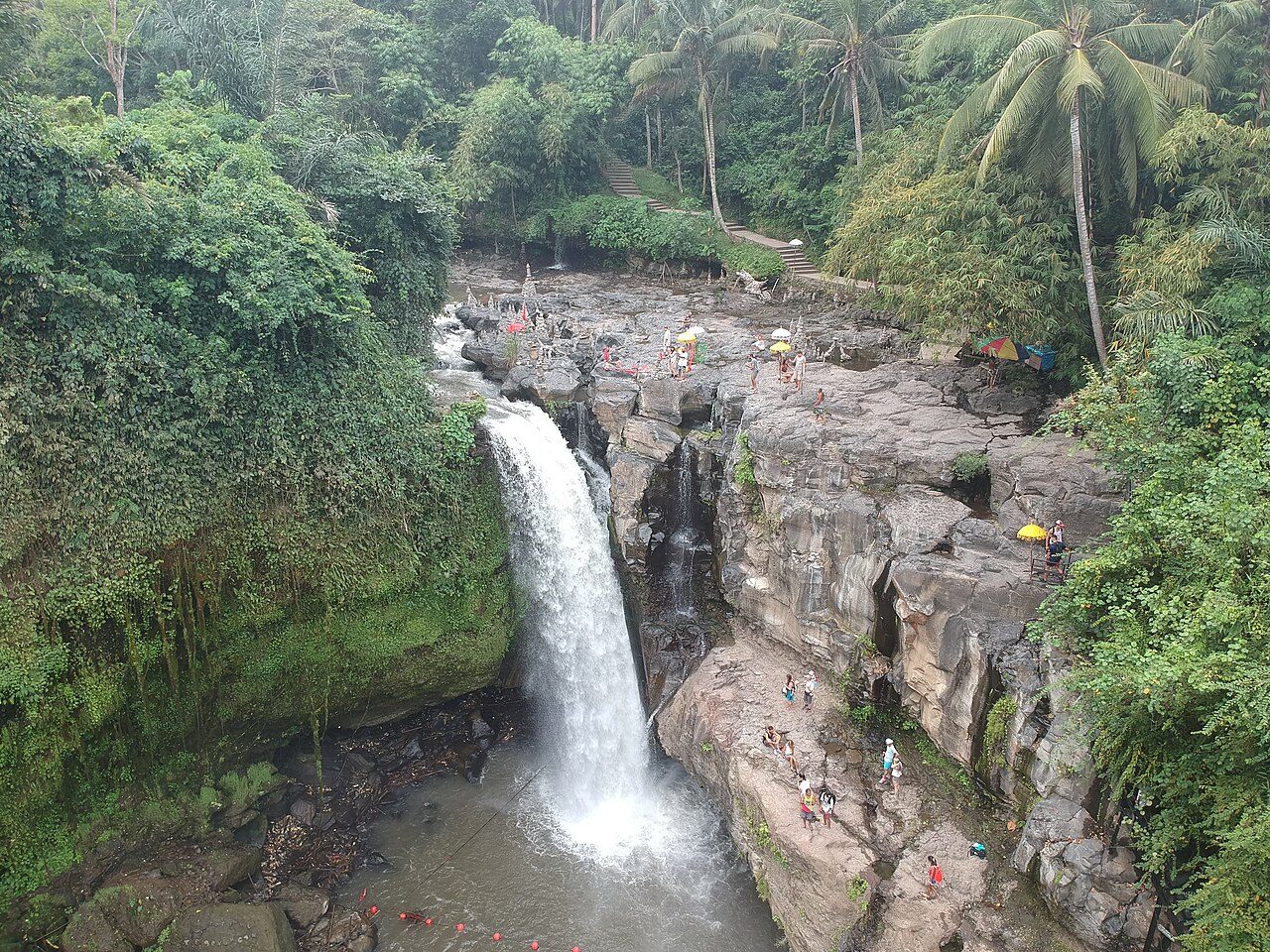
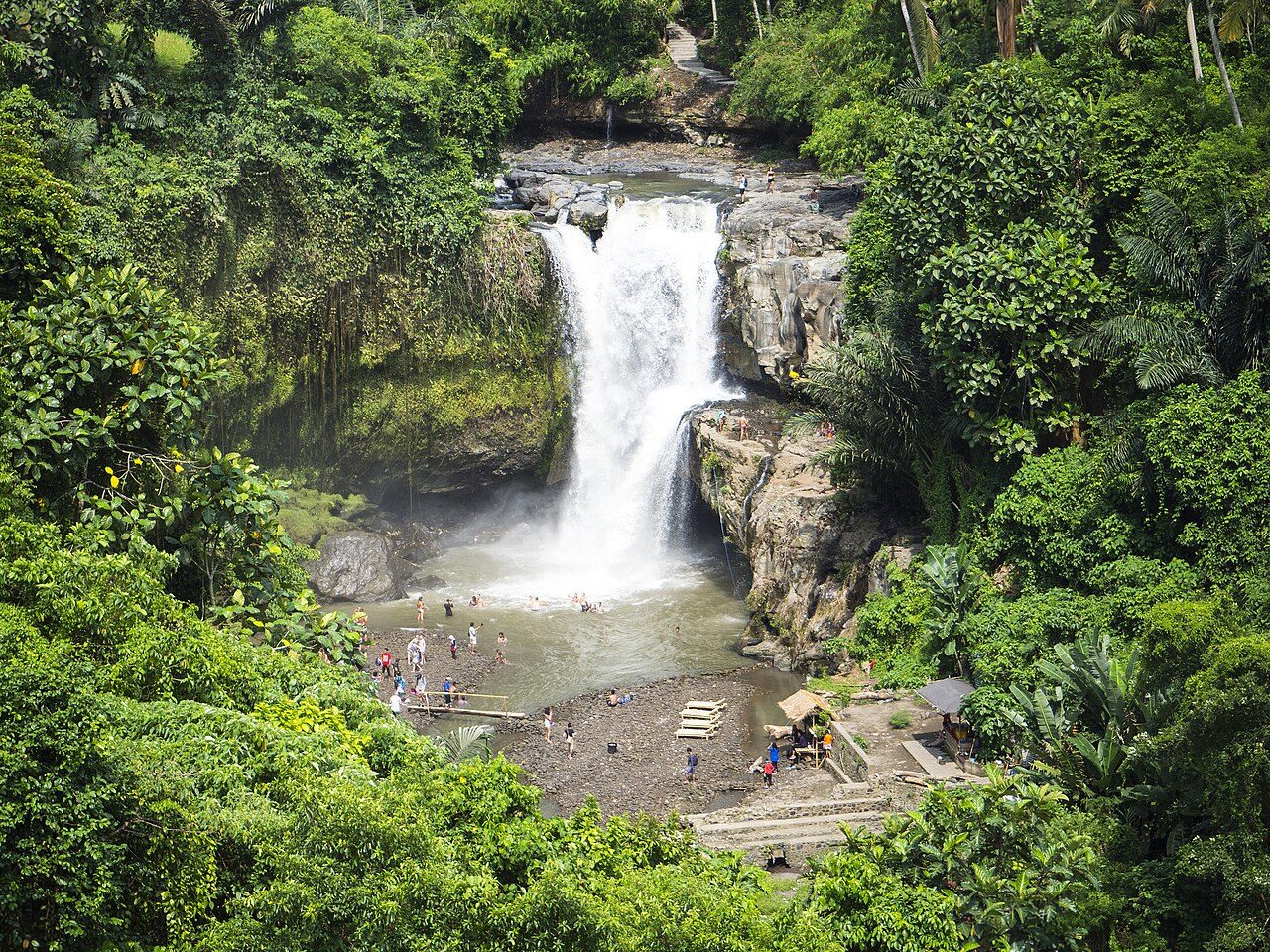
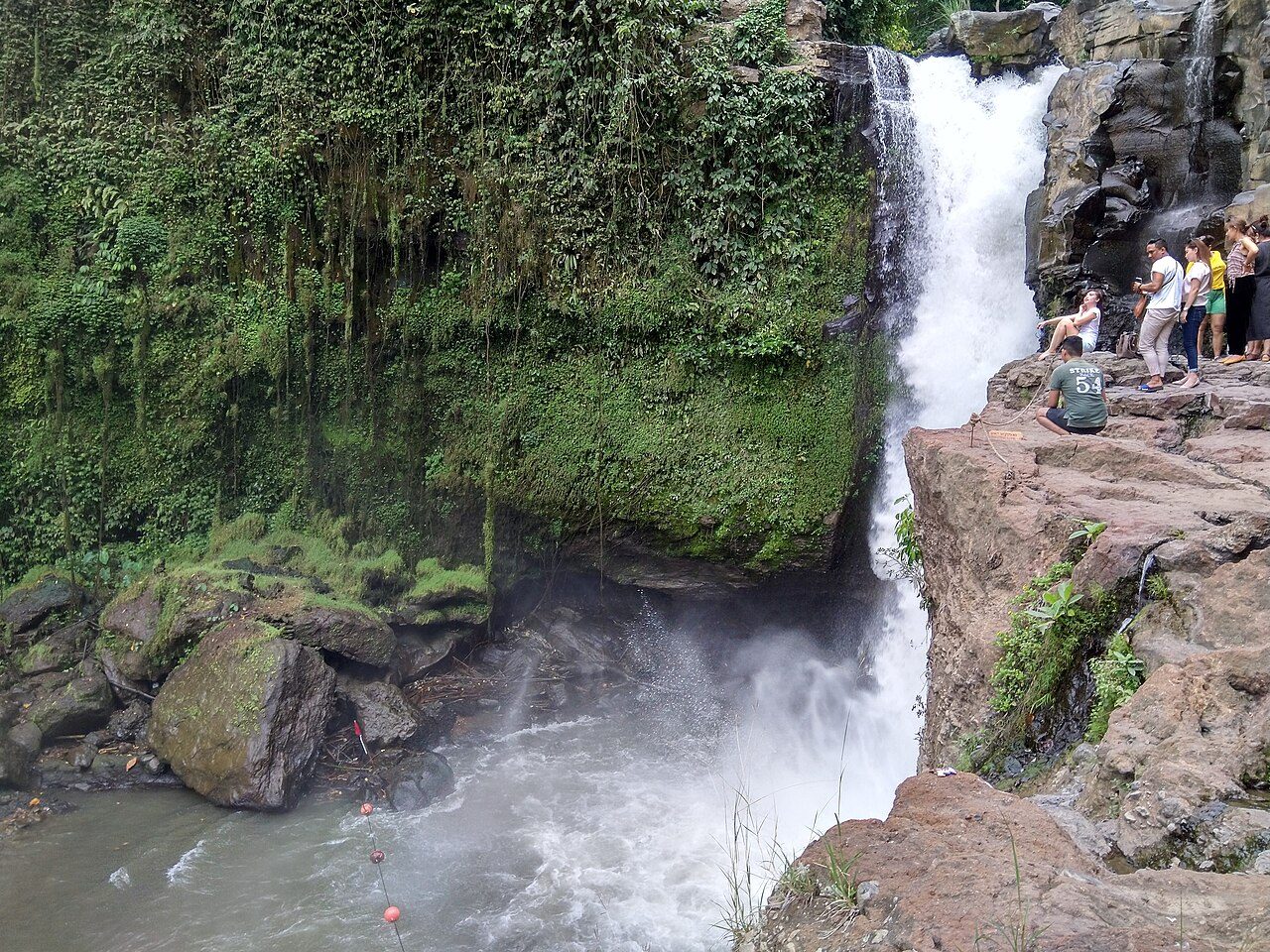
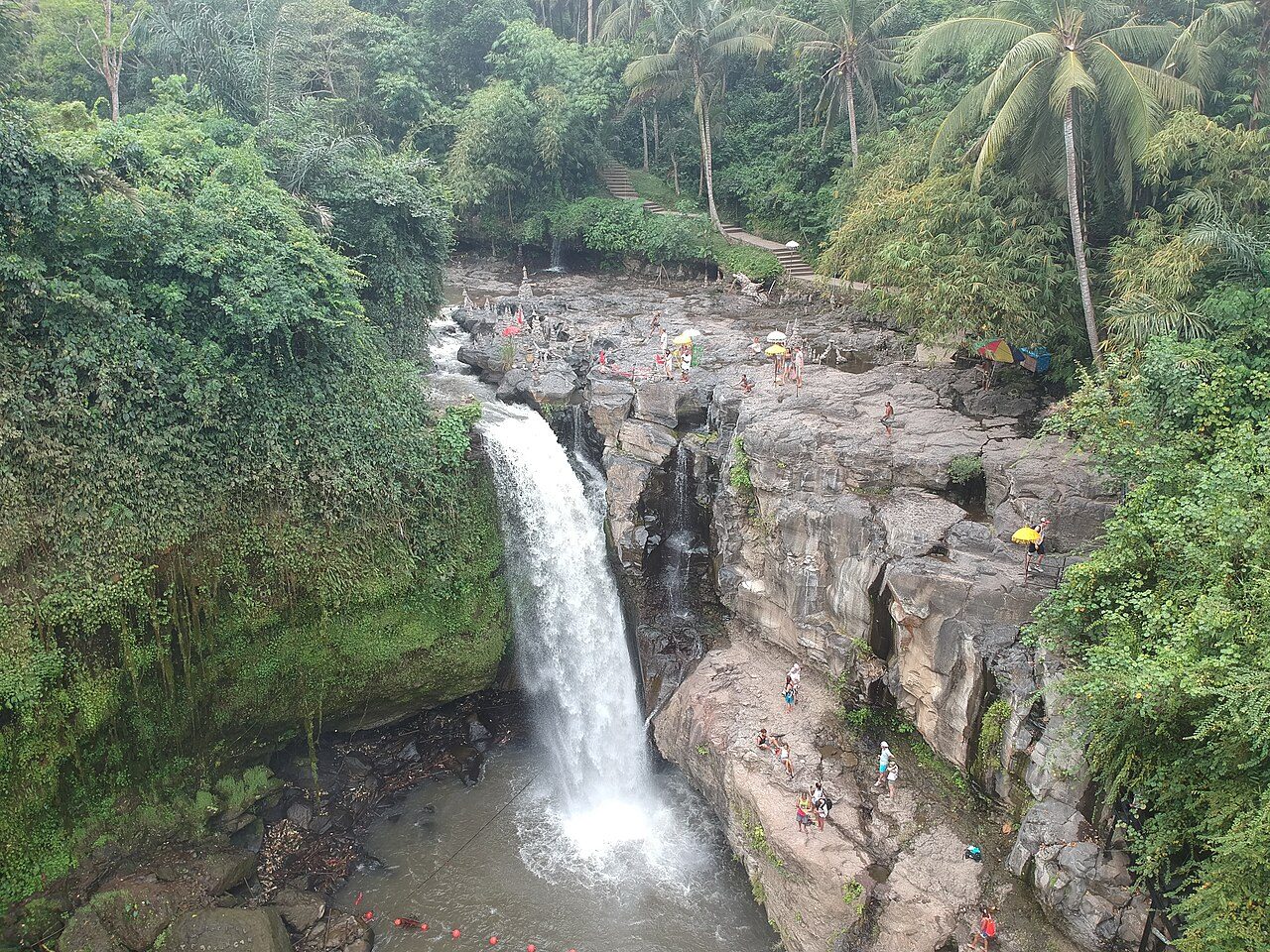
Tegenungan Waterfall lies south of Ubud in Gianyar. The Petanu River tumbles down a rocky cliff into a wide pool in a jungle valley. It is one of the few large waterfalls in Bali not in the mountains, so it is easy to reach. Steps lead down to the base, where visitors can wade into the pool. Viewing terraces above look over the falls.
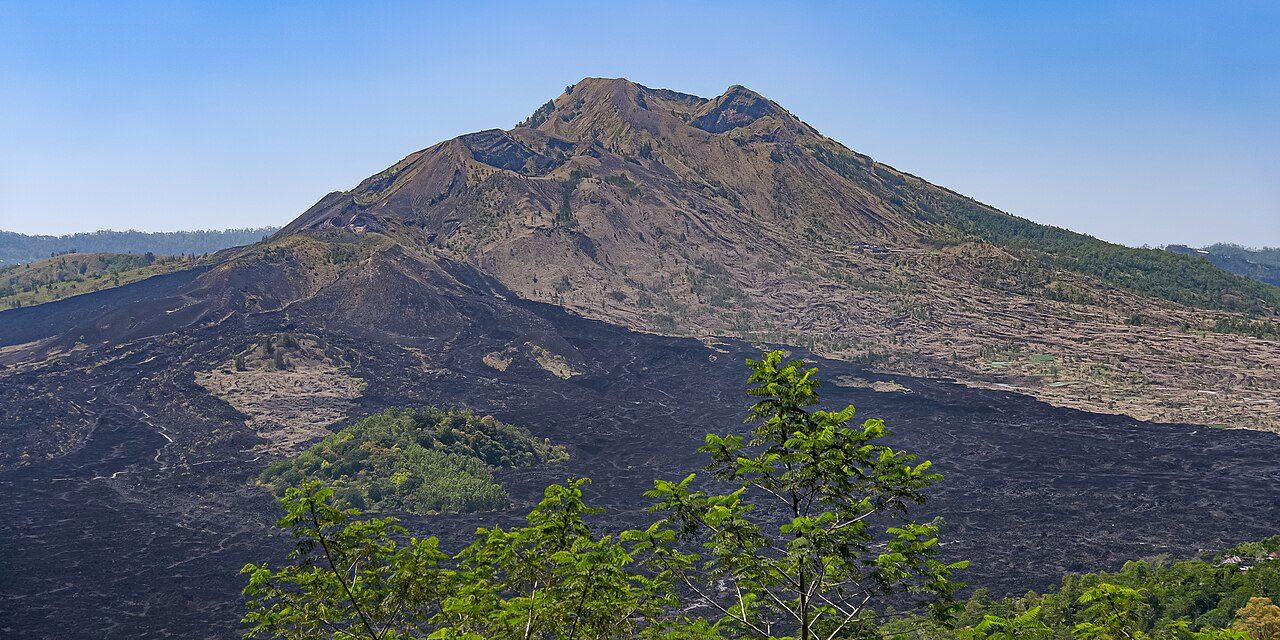
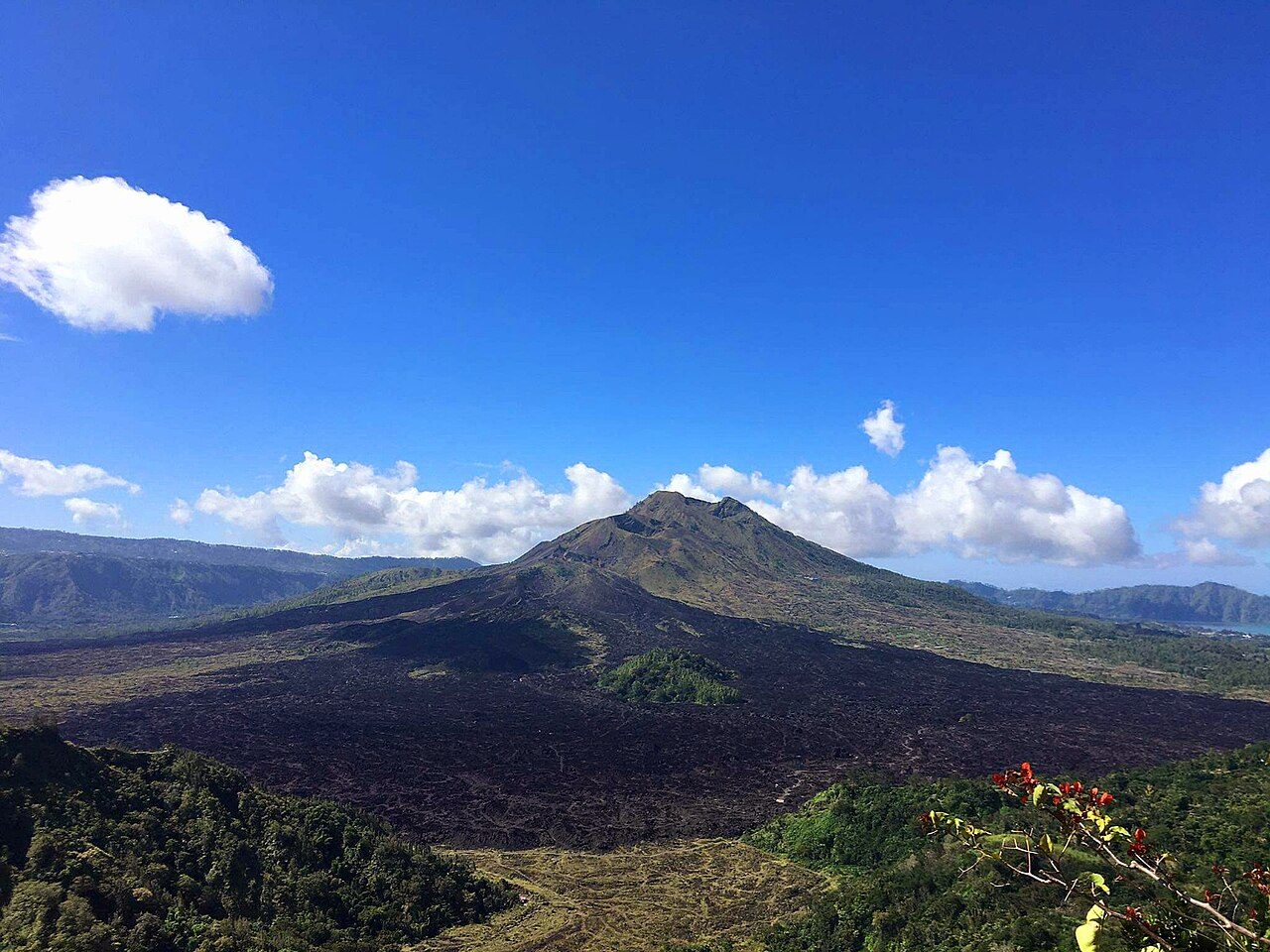
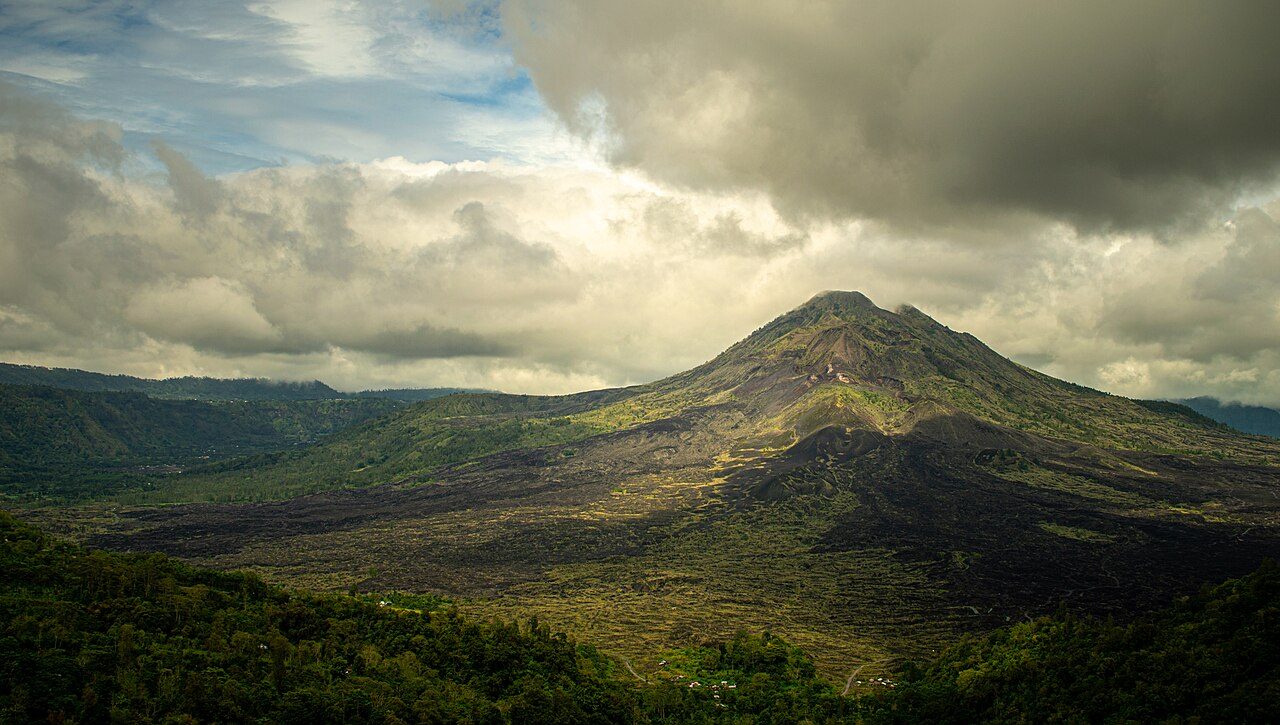
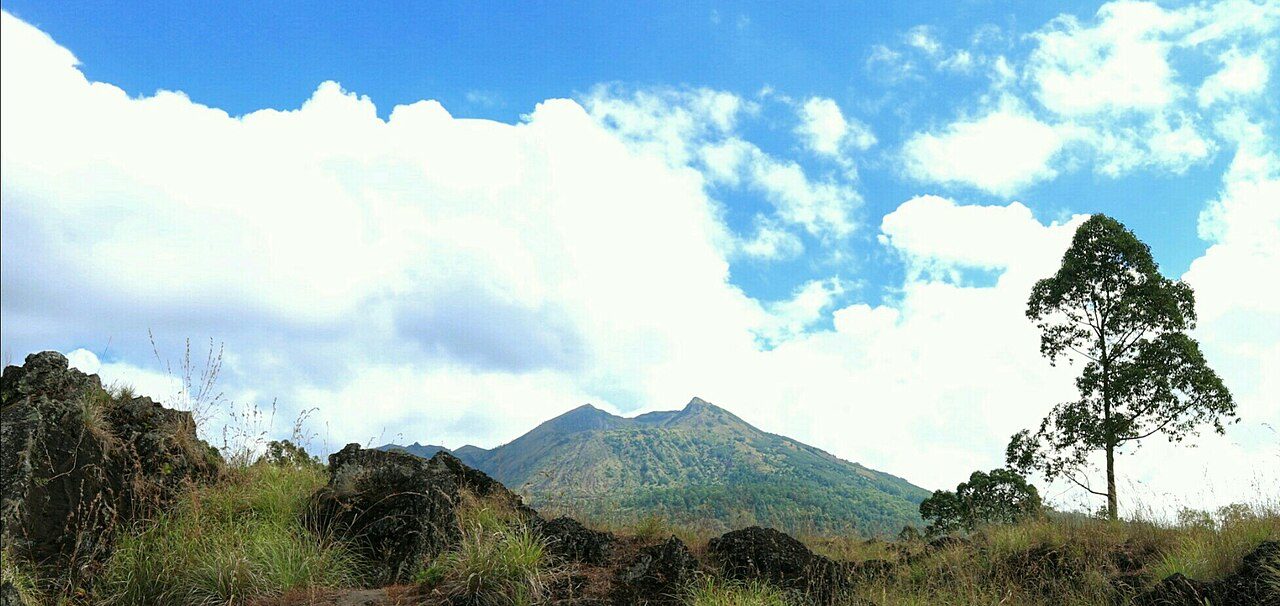
Mount Batur is an active volcano in the Kintamani highlands of northeast Bali, rising to about 1,717 metres. It stands inside a huge caldera, beside Lake Batur. It is the most popular climb in Bali, with hikers setting off before dawn to watch the sunrise from the summit over Mount Agung and Mount Rinjani on Lombok. Steam vents still rise near the top.
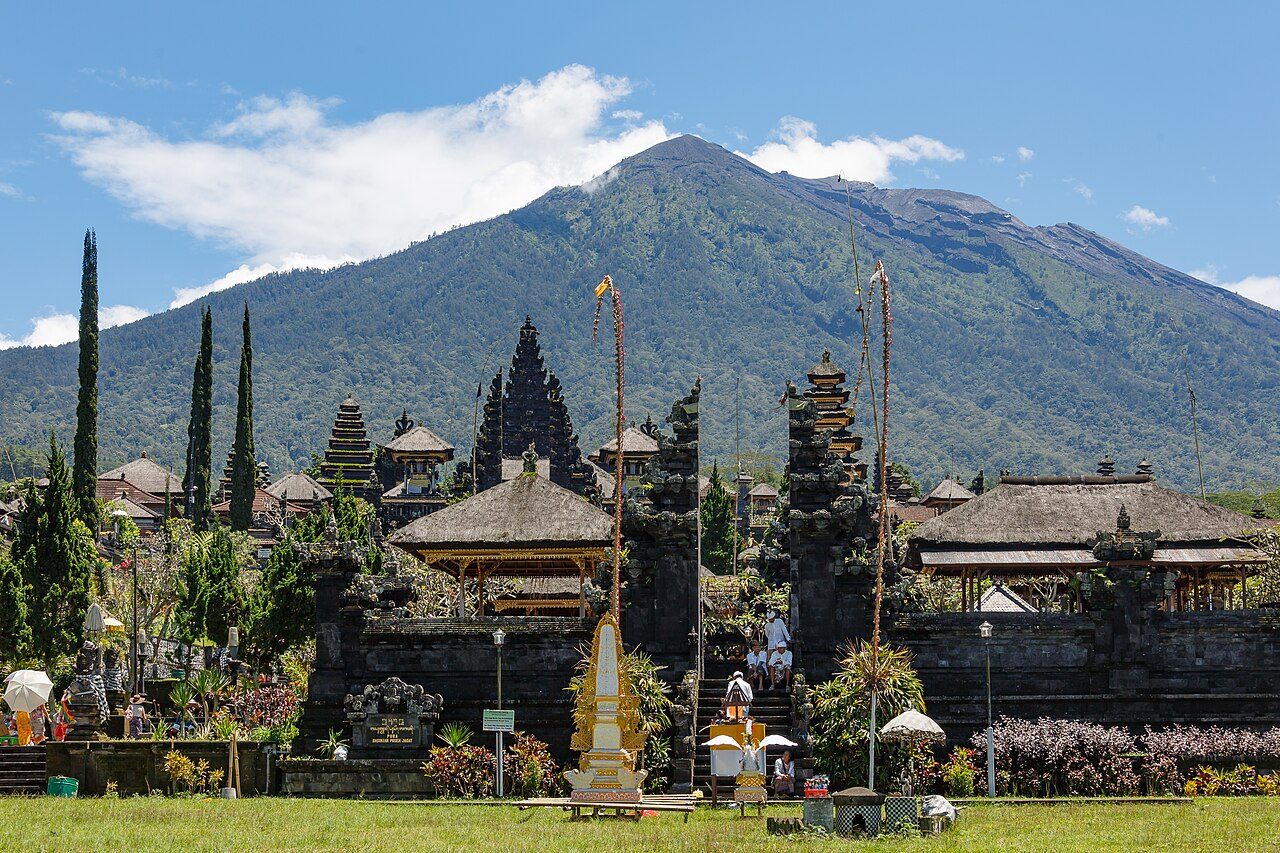
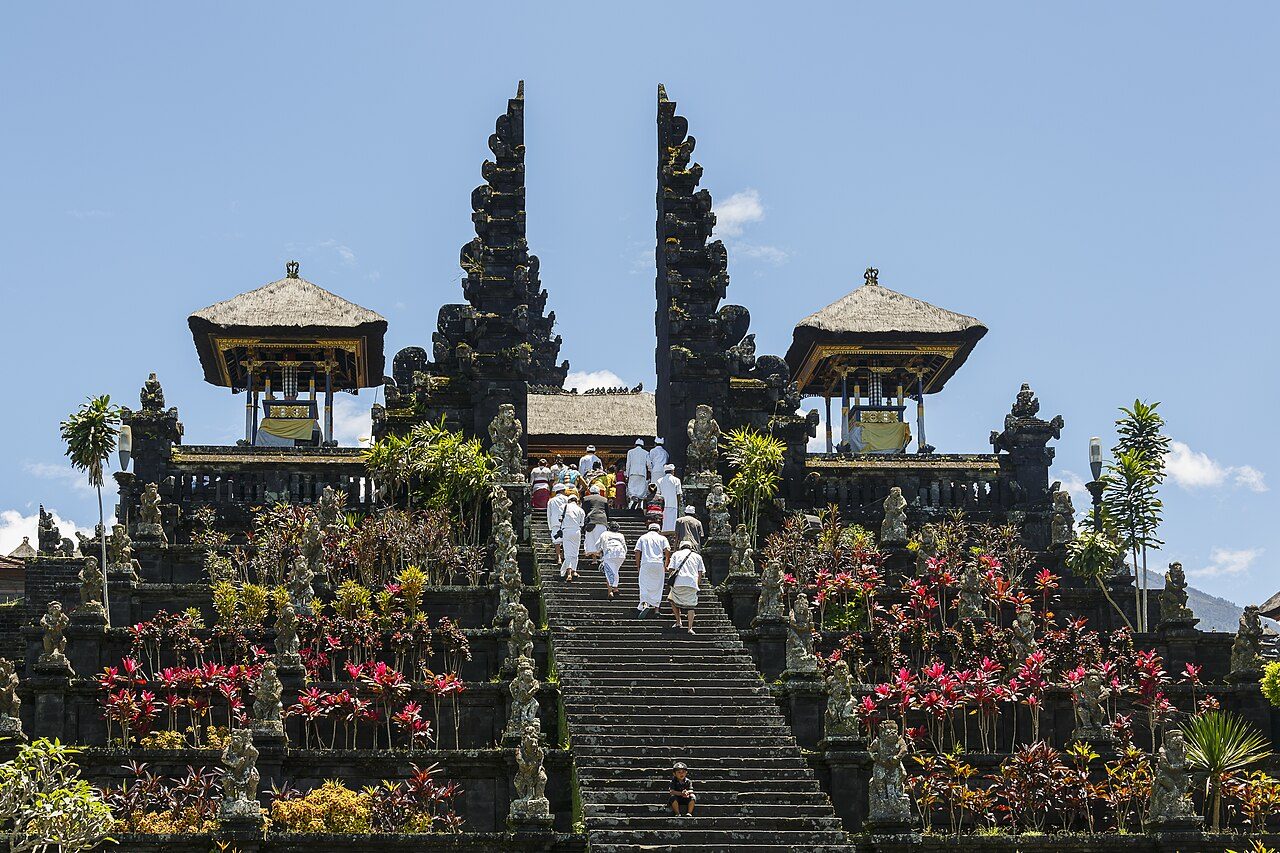
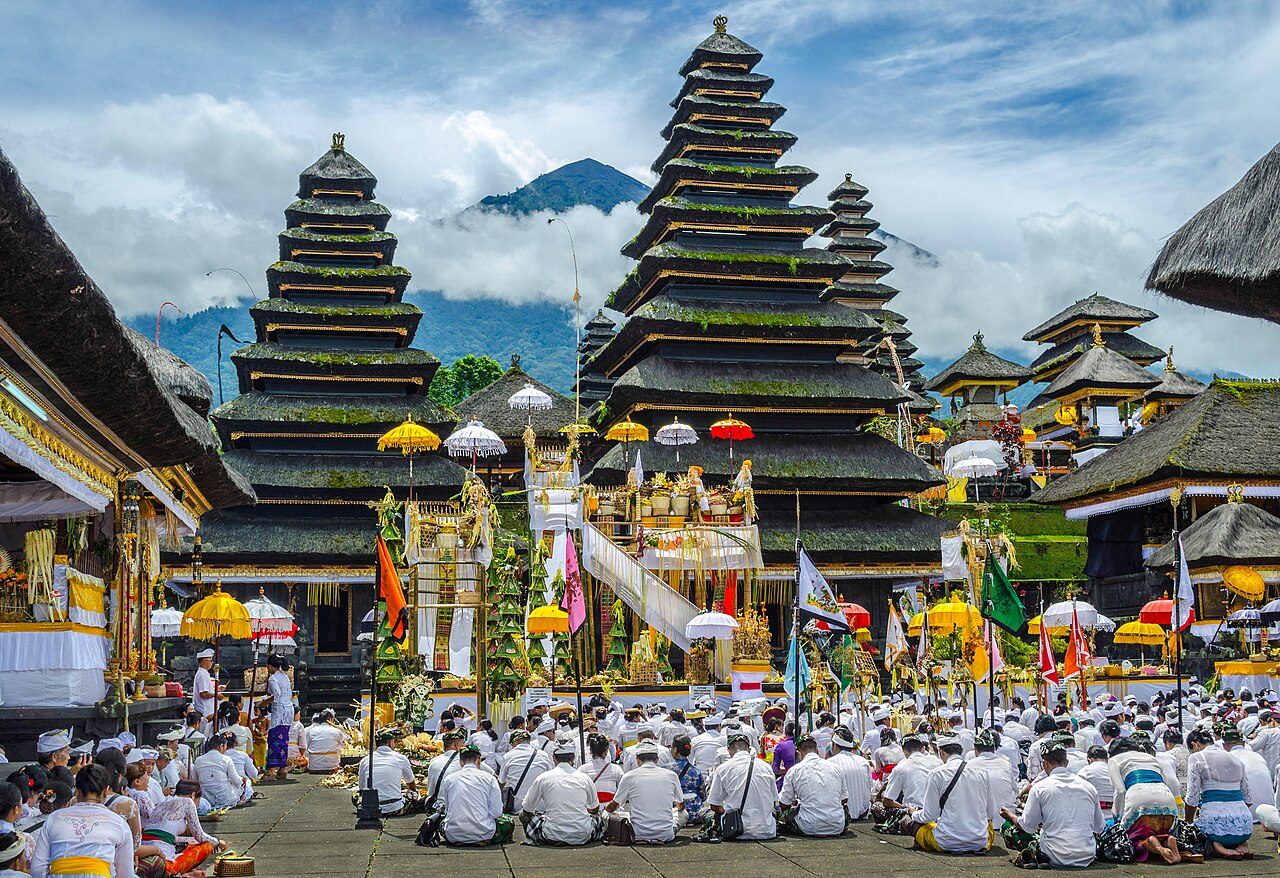
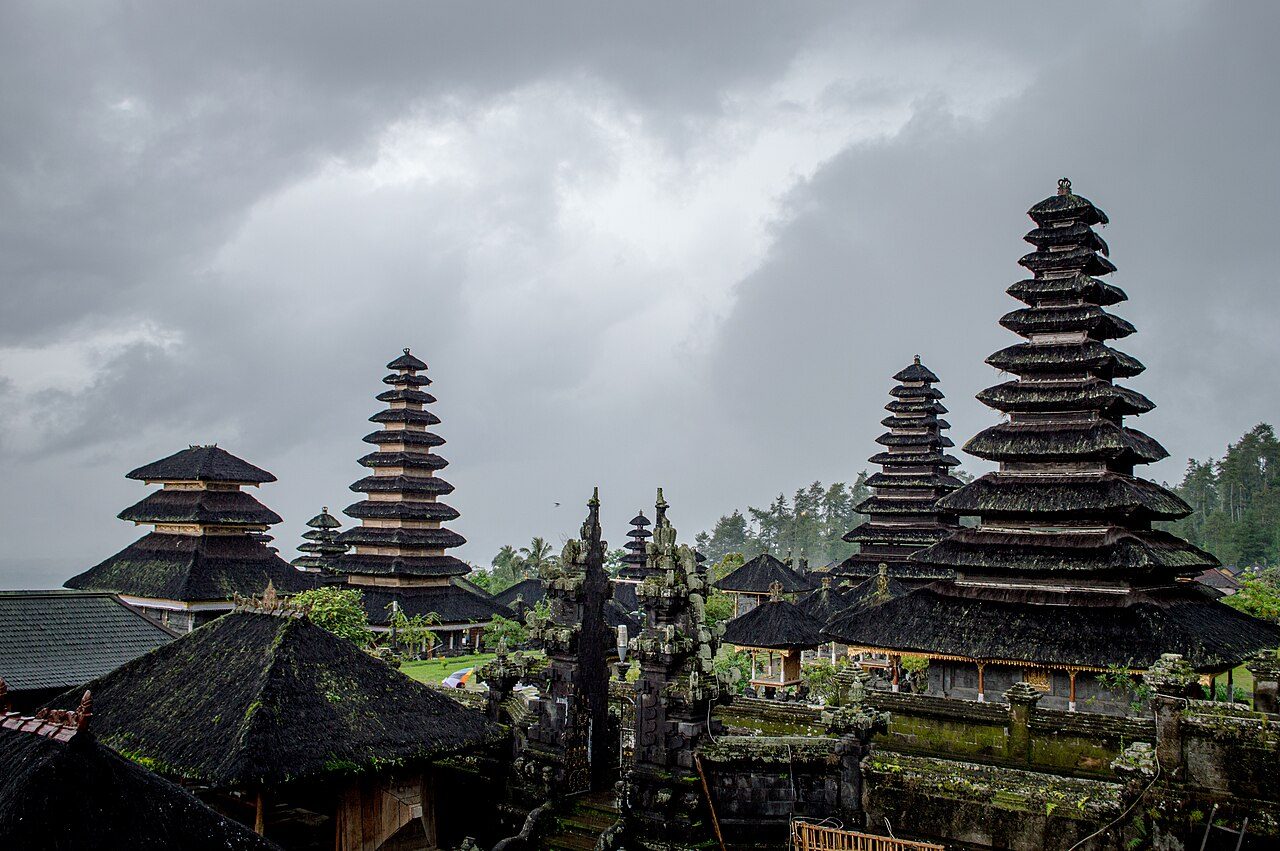
Besakih Temple, on the slopes of Mount Agung, is the largest and holiest temple complex on Bali, often called the Mother Temple. It consists of more than 80 temples set on terraces climbing the mountainside, the main one being Pura Penataran Agung. Its history goes back over a thousand years. In 1963 lava from Agung's eruption flowed just past the complex.
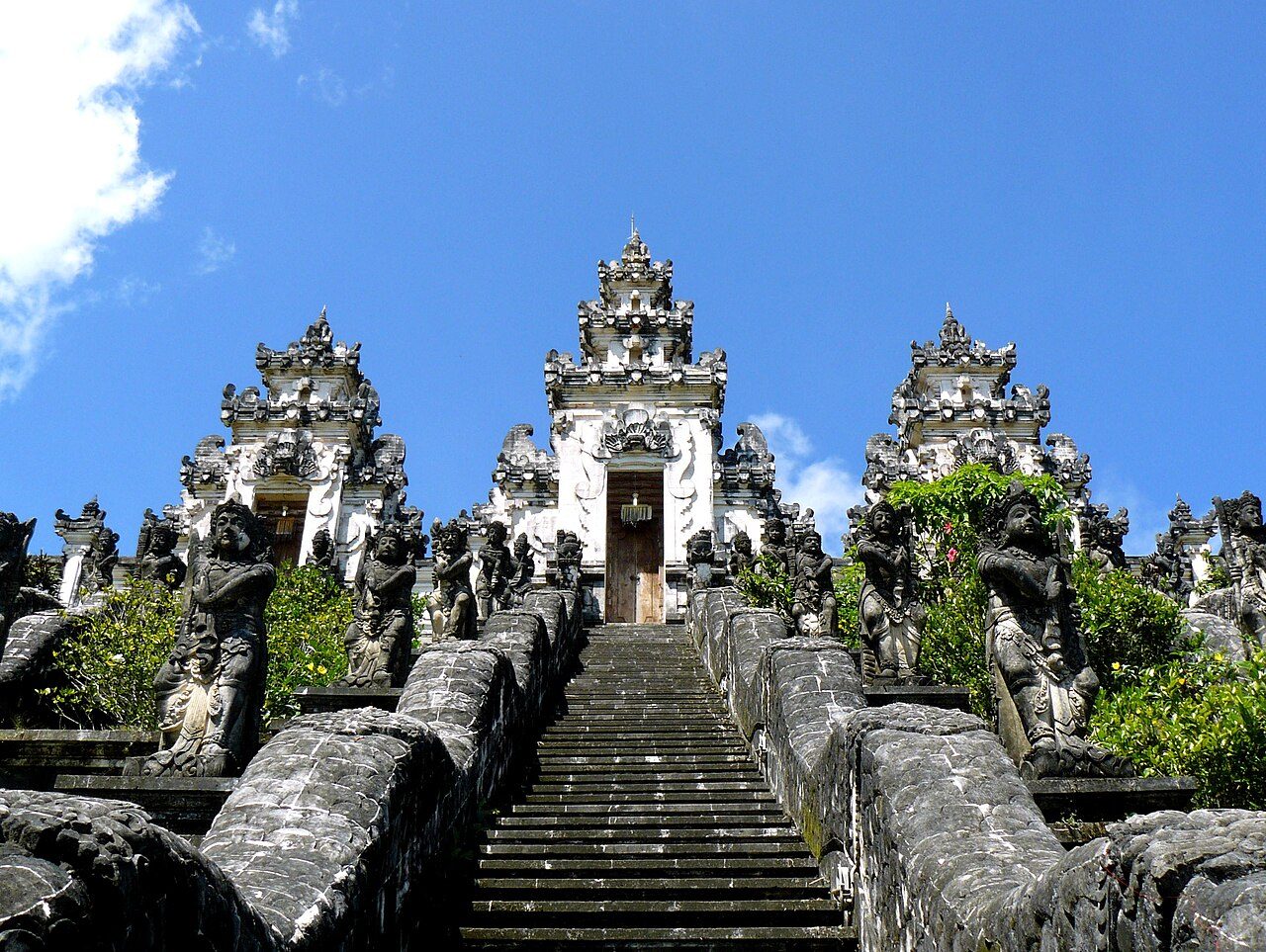
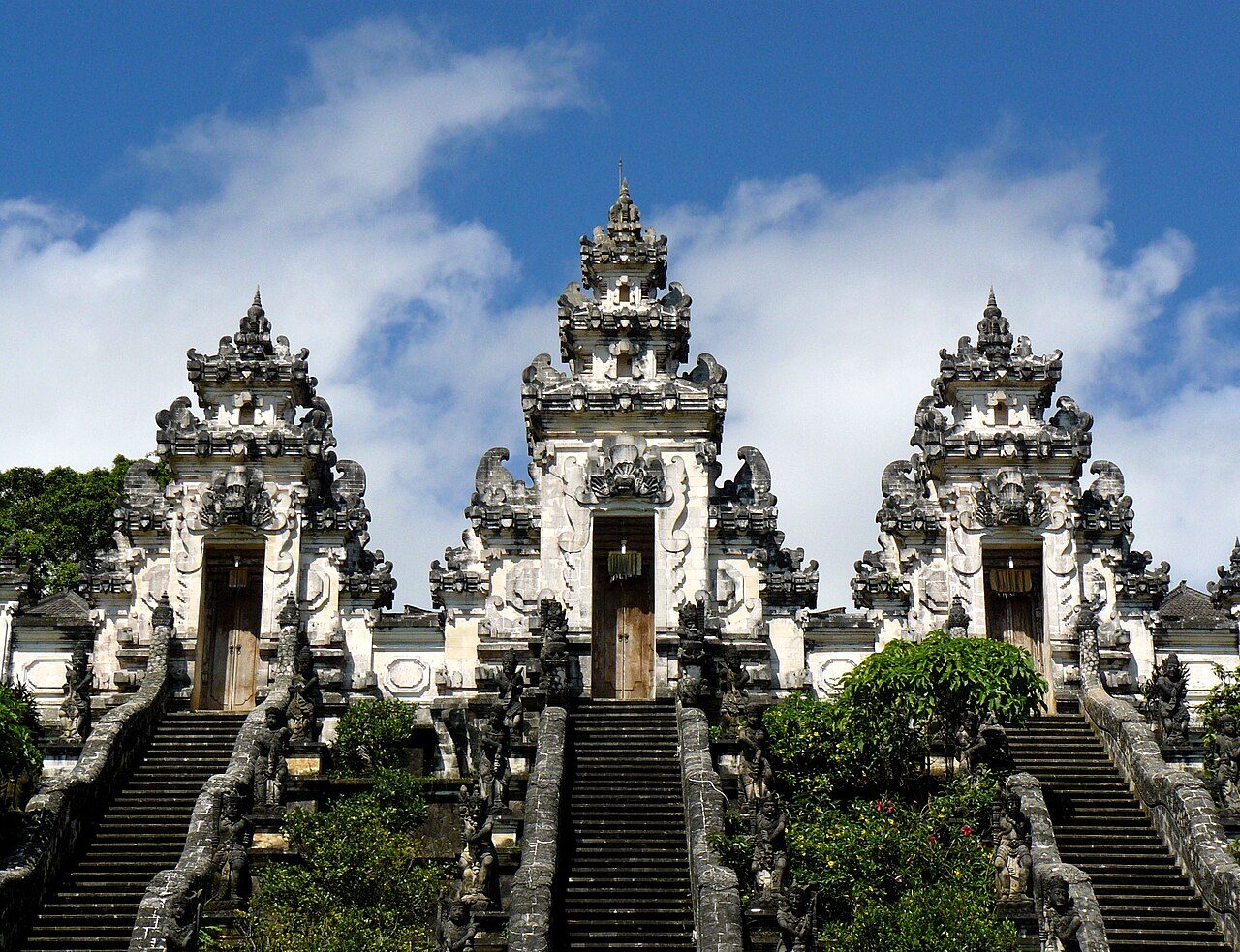
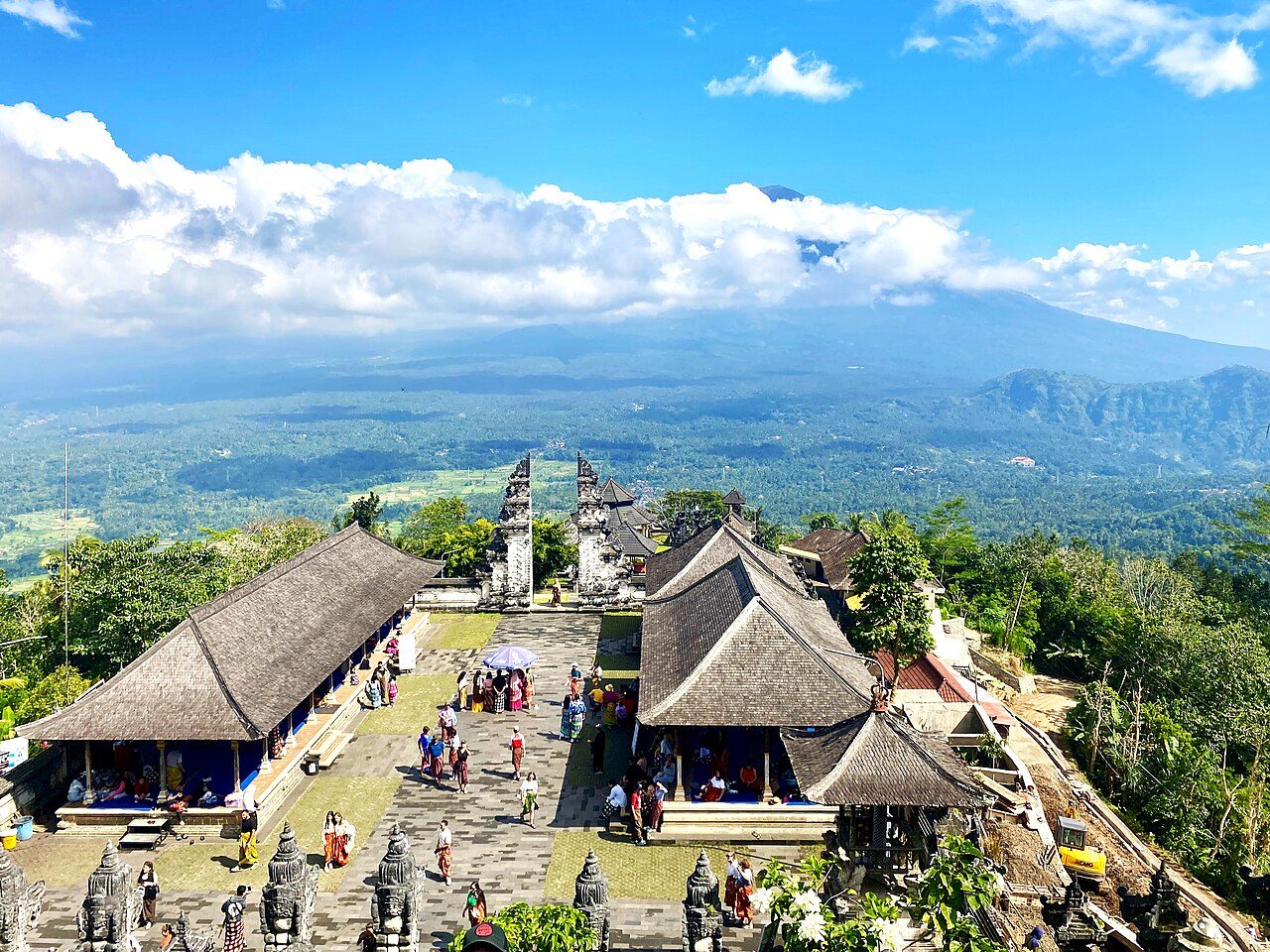
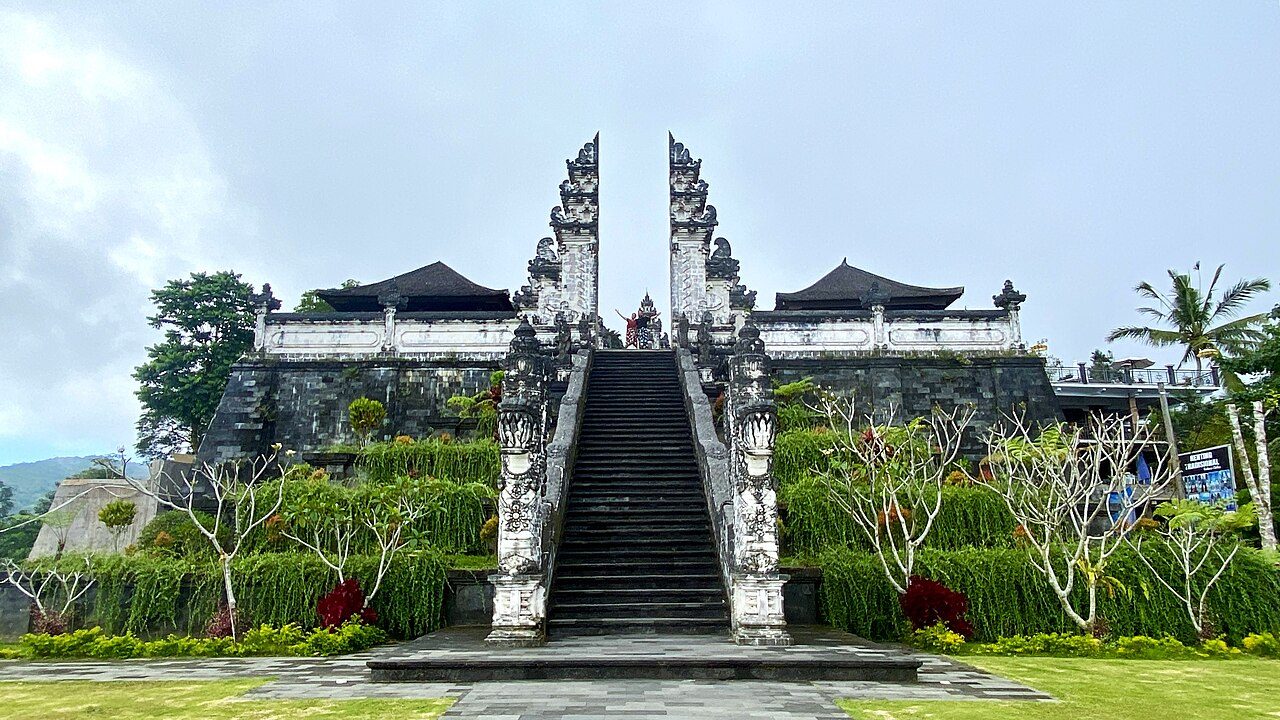
Lempuyang Temple stands on Mount Lempuyang in eastern Bali and is one of the island's oldest and most sacred temples. The lower temple, Pura Penataran Agung Lempuyang, has a split gate that frames Mount Agung in the distance and has become one of Bali's most photographed views. A long climb of about 1,700 steps leads through the forest to the highest temple.
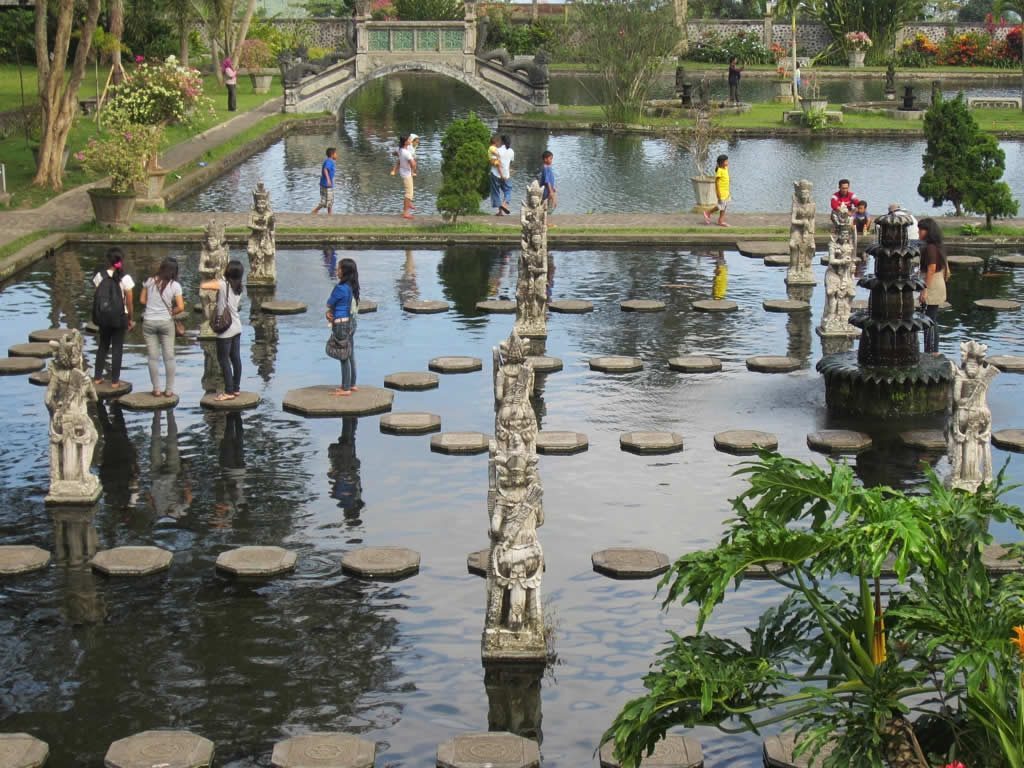
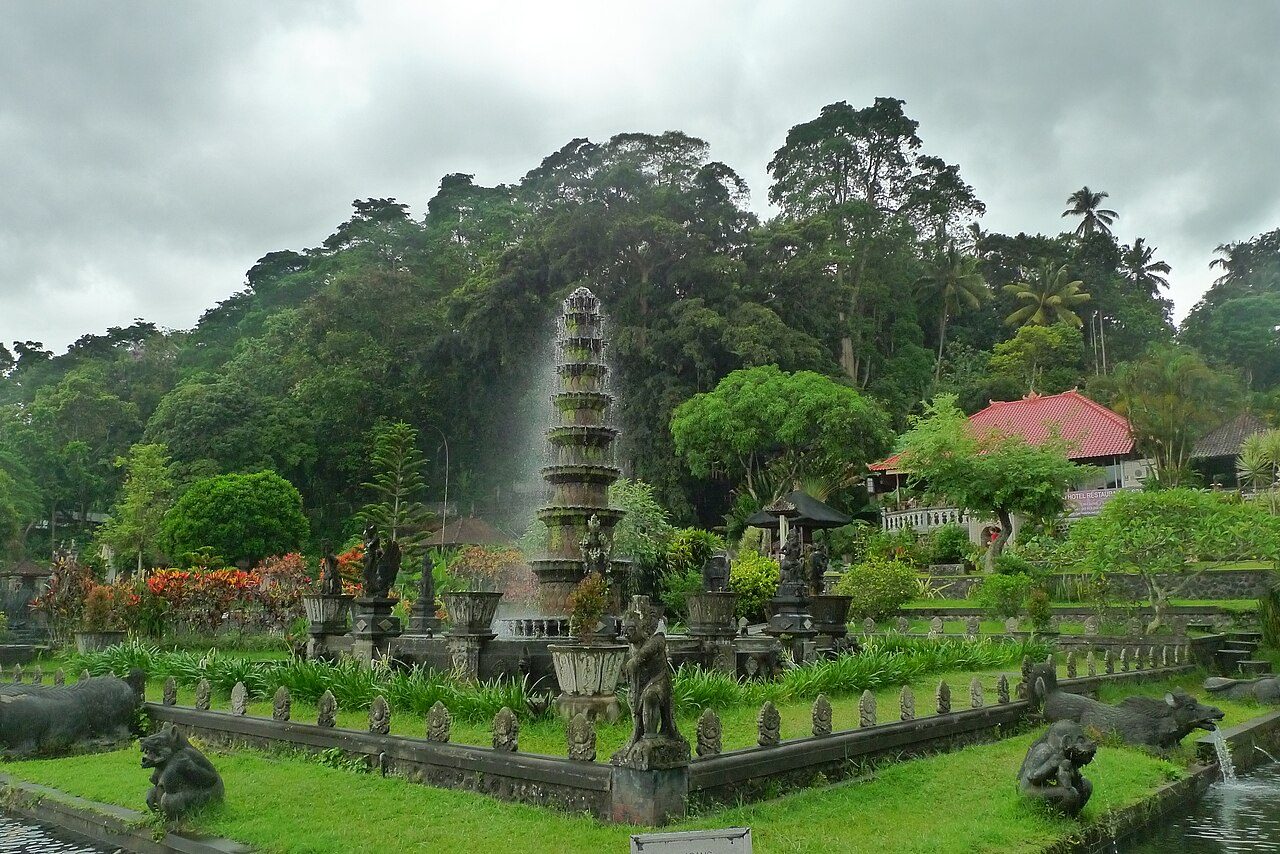
Tirta Gangga is a former royal water palace in eastern Bali, built in 1946 by the last king of Karangasem. Its name means water from the Ganges. The gardens have pools full of fish, fountains and stone statues, with paths of stepping stones crossing the water. A multi-tiered fountain stands in the centre. The rice terraces around it are among the finest in east Bali.
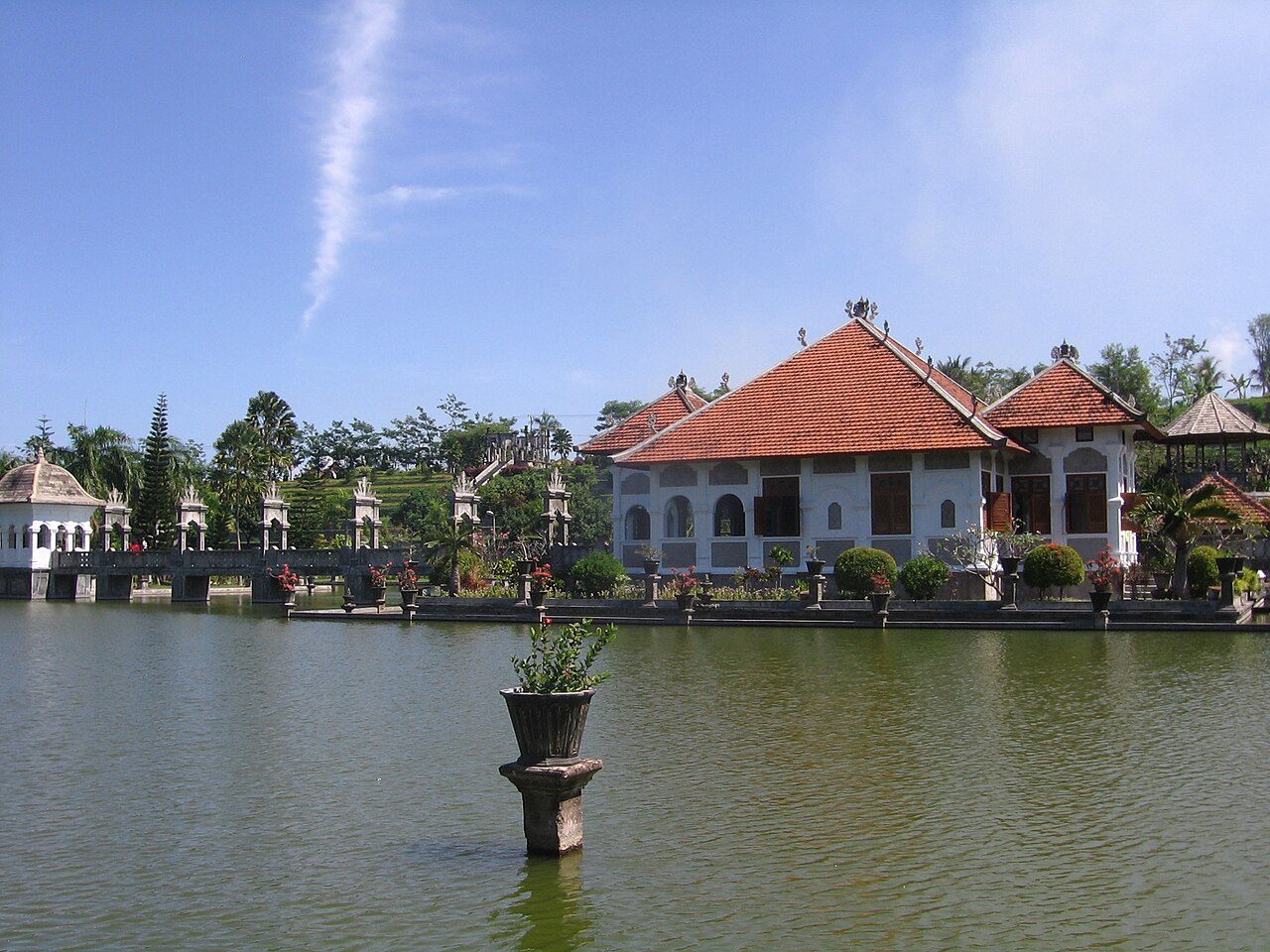
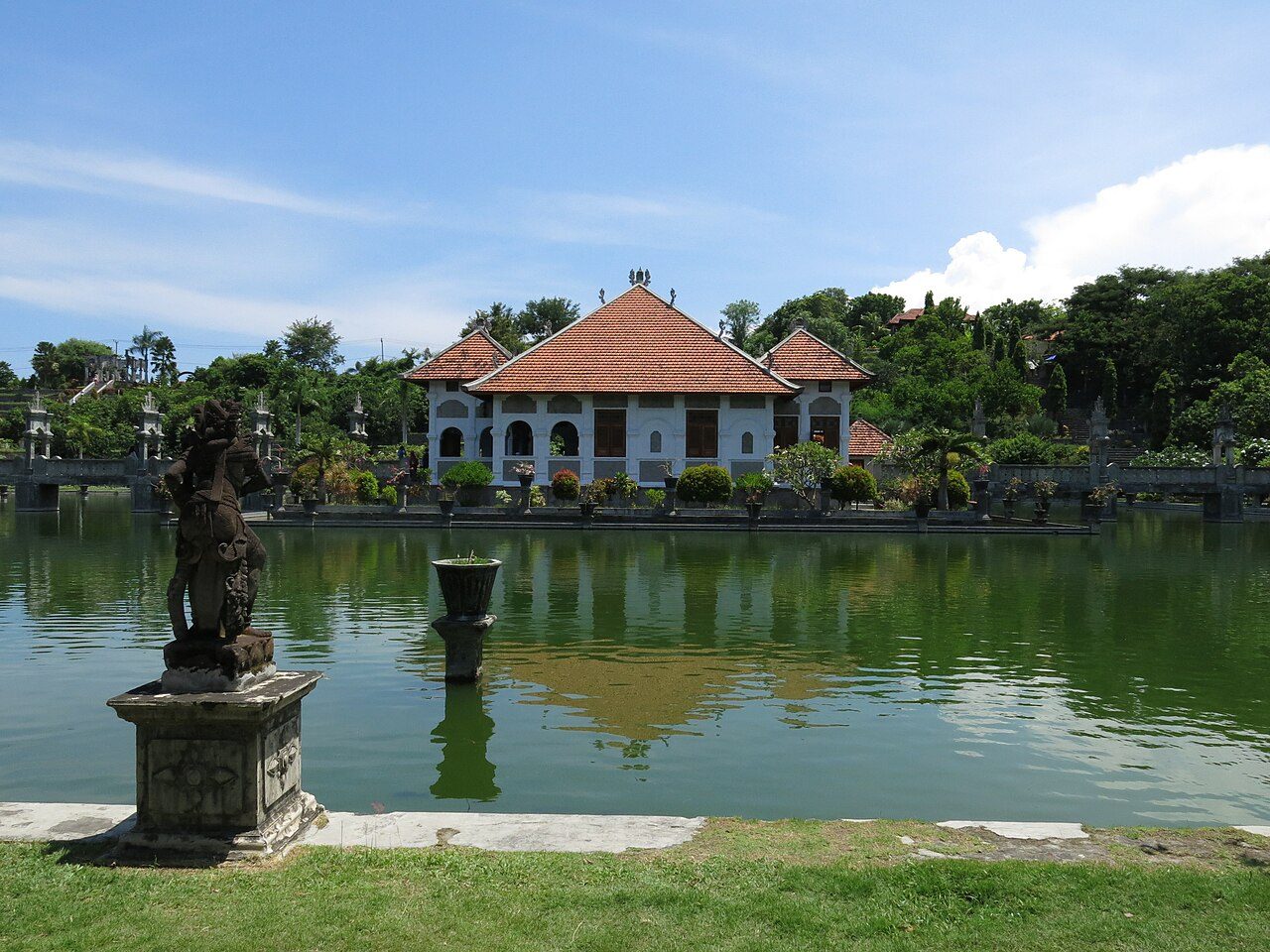
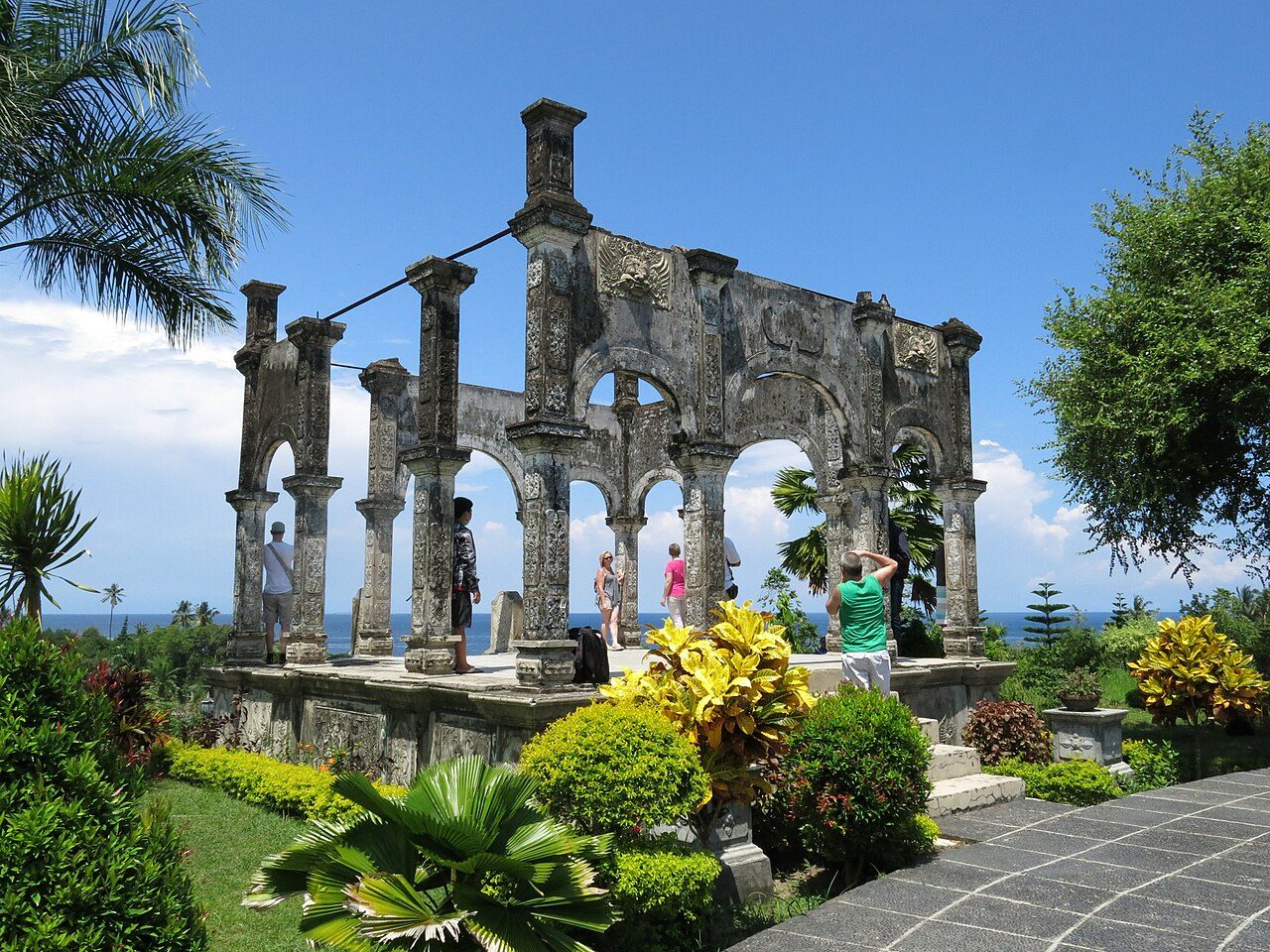
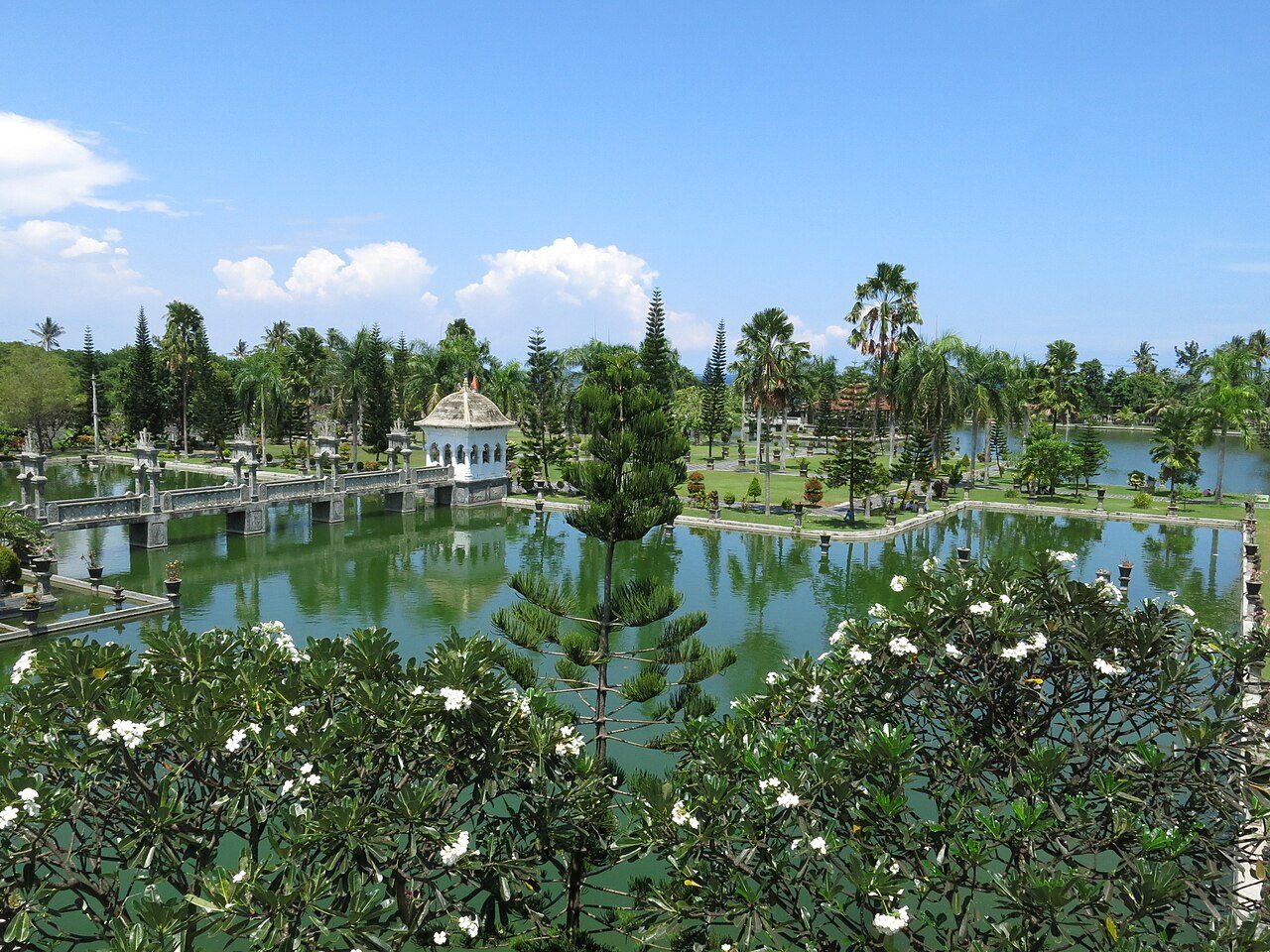
Taman Ujung, also called Taman Sukasada Ujung, is a water palace near Amlapura in eastern Bali. It was built in the early 20th century by the king of Karangasem and mixes Balinese and European styles. Its pavilions stand in large ponds linked by bridges, with Mount Agung in the background. It was damaged by an earthquake and has been restored.
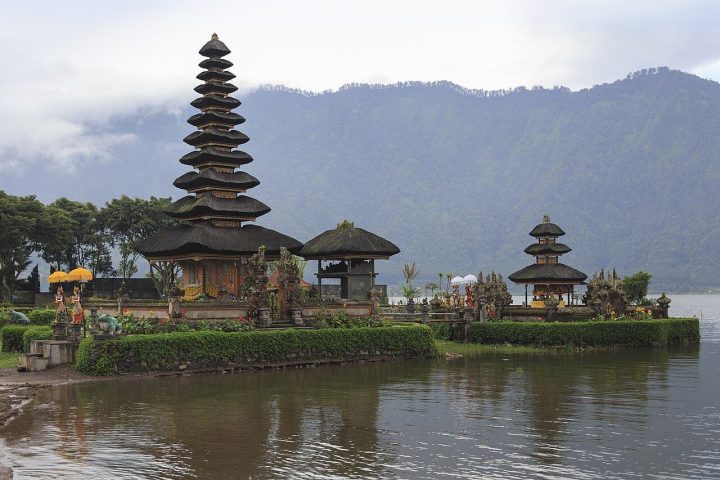
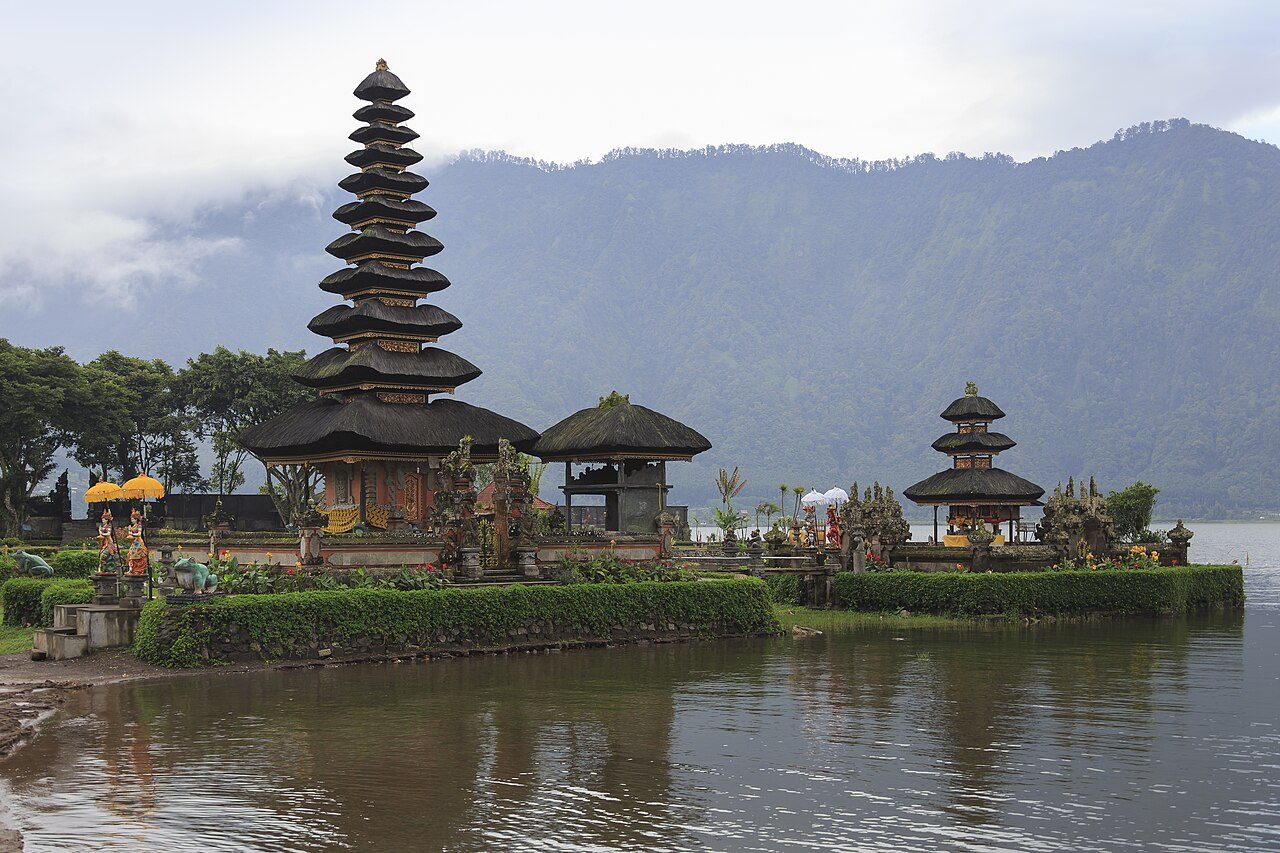
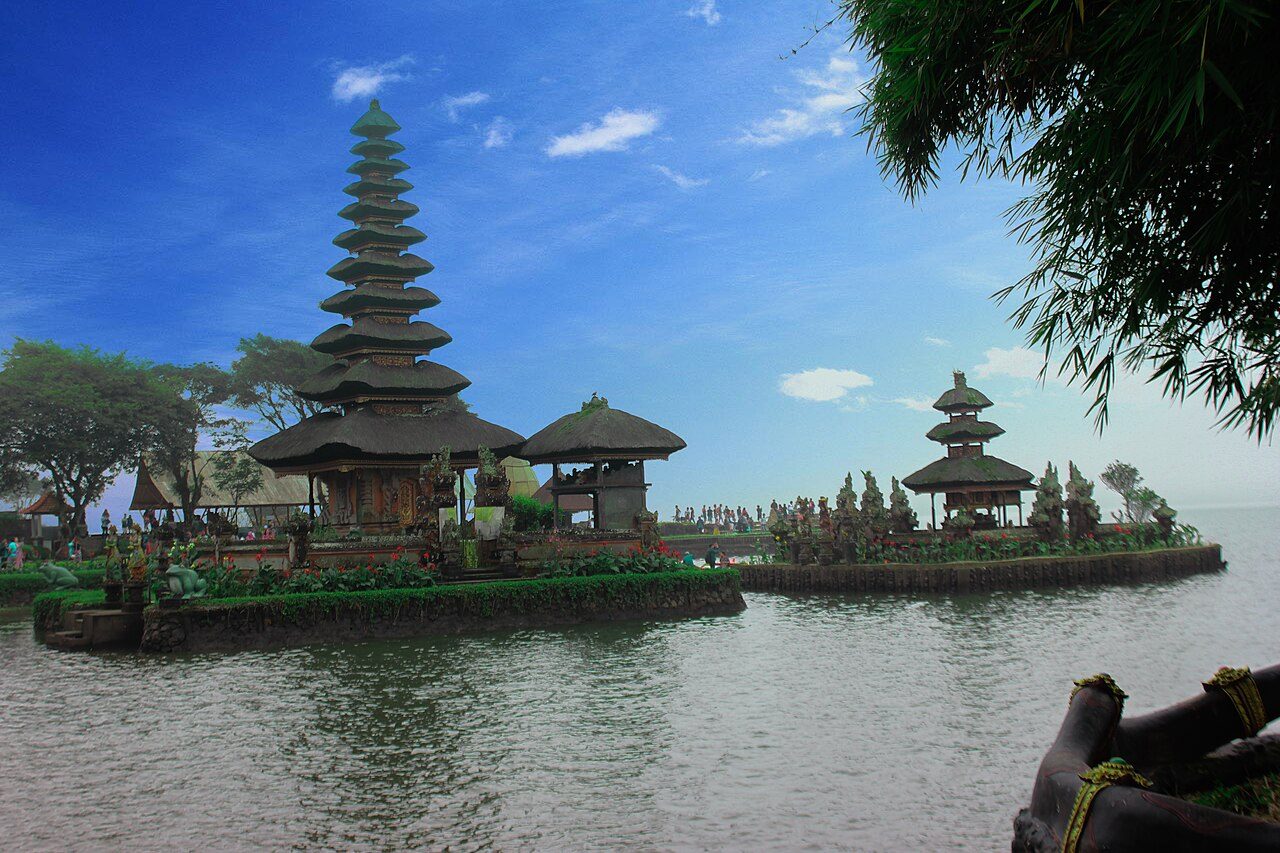
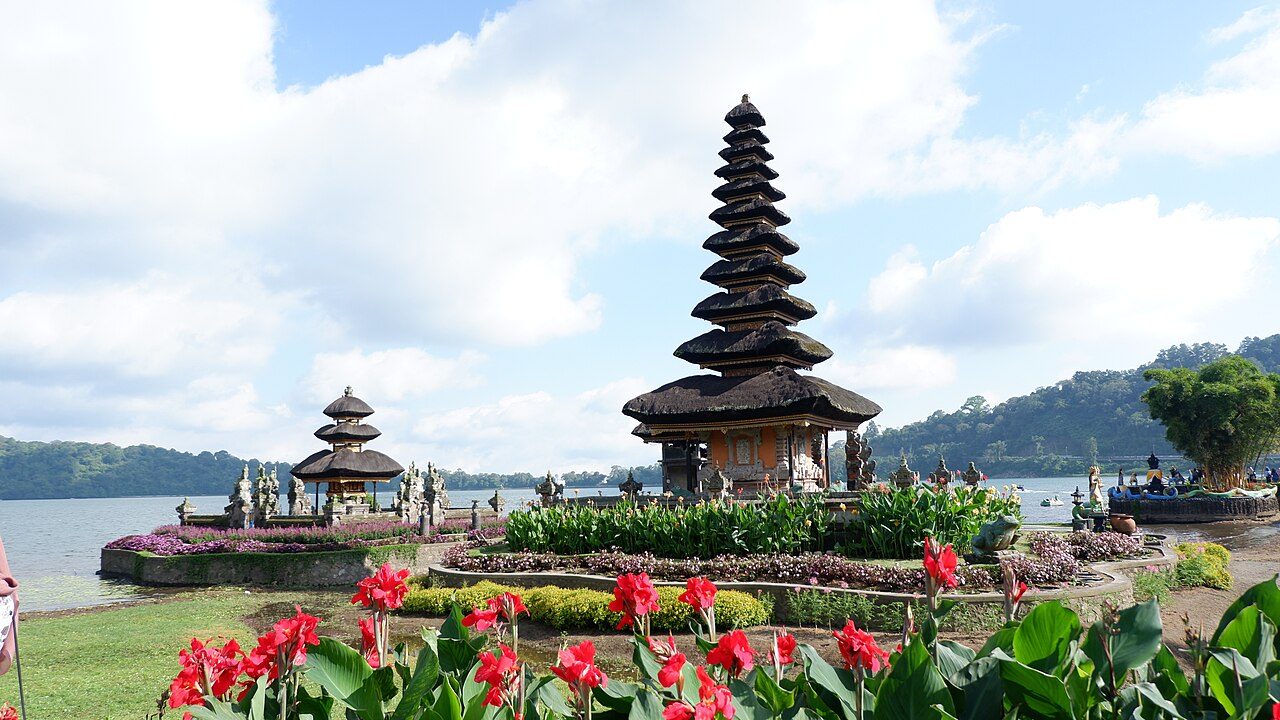
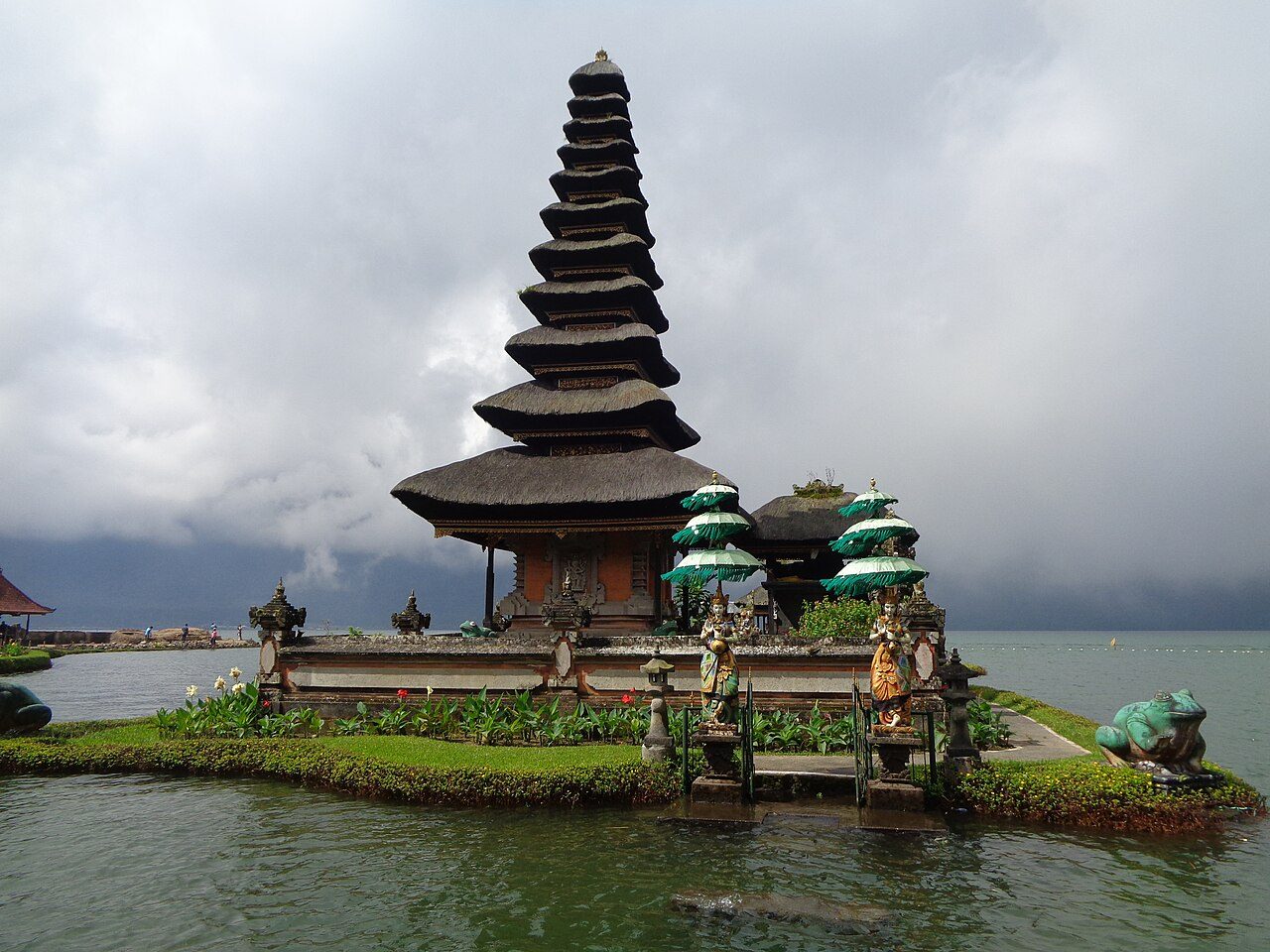
Pura Ulun Danu Beratan is a water temple on the shore of Lake Beratan in the cool highlands near Bedugul. Built in 1633, it honours Dewi Danu, the goddess of the lake, whose waters irrigate the farms of central Bali. Its tiered meru shrines appear to float on the lake when the water is high. The temple appears on the Indonesian 50,000 rupiah note.
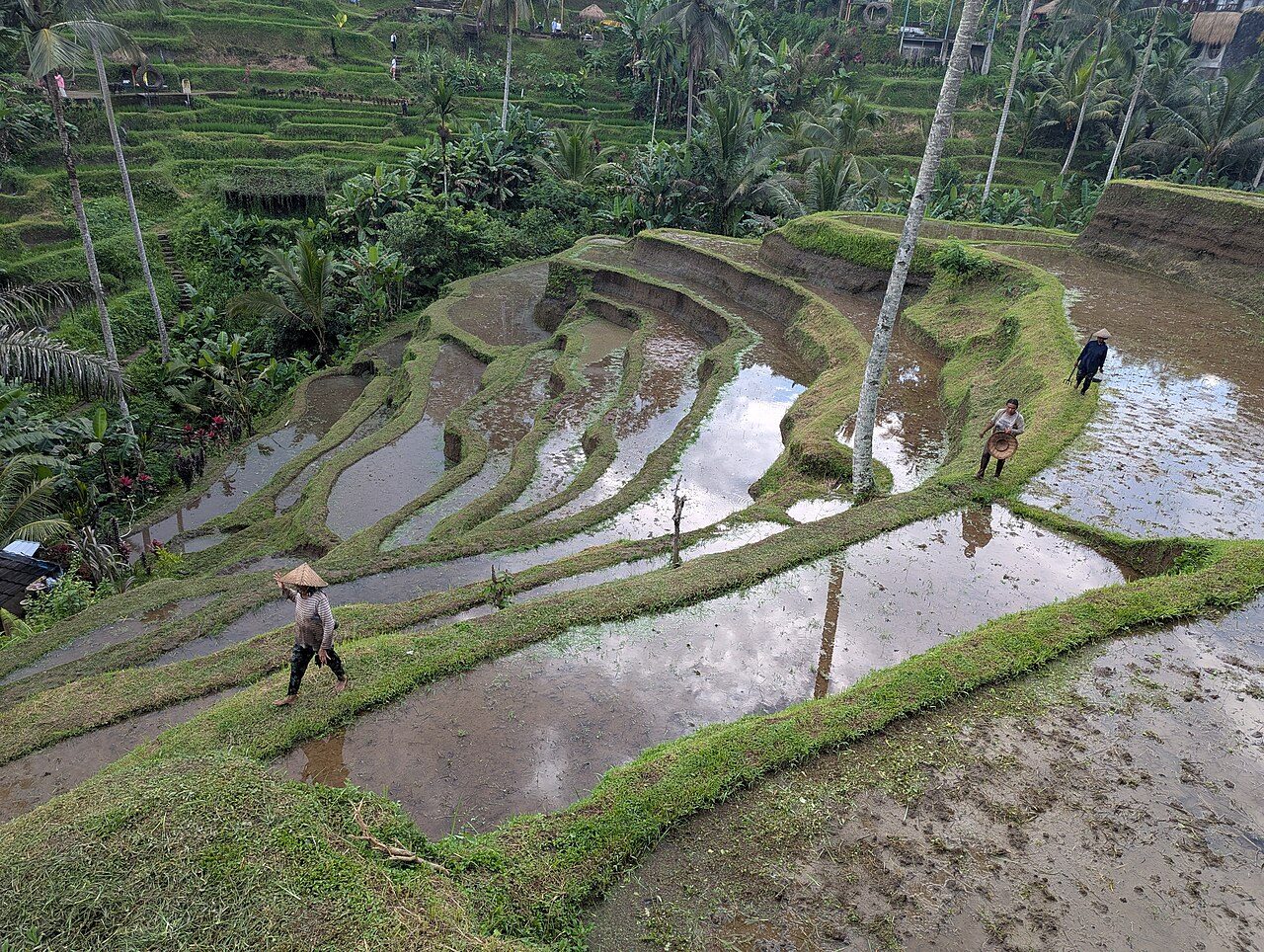
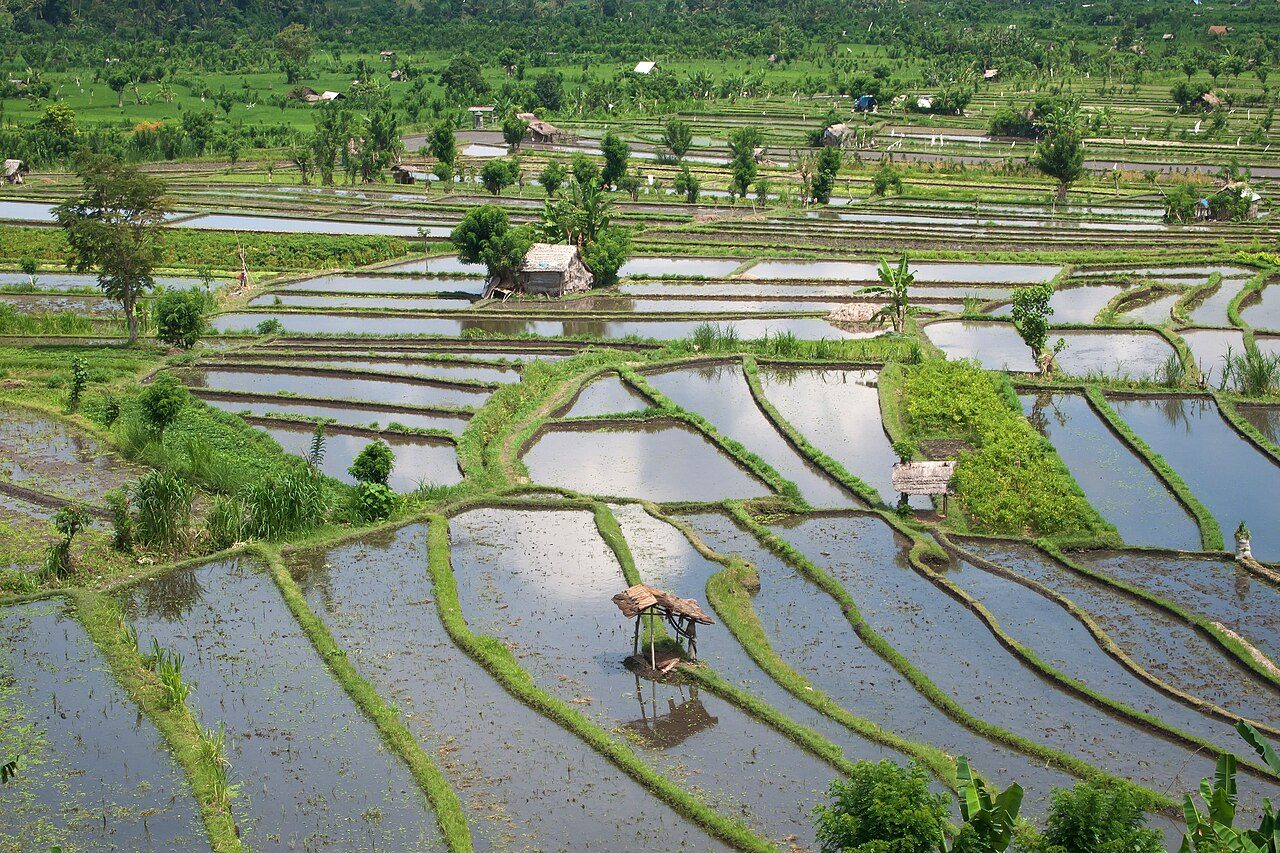
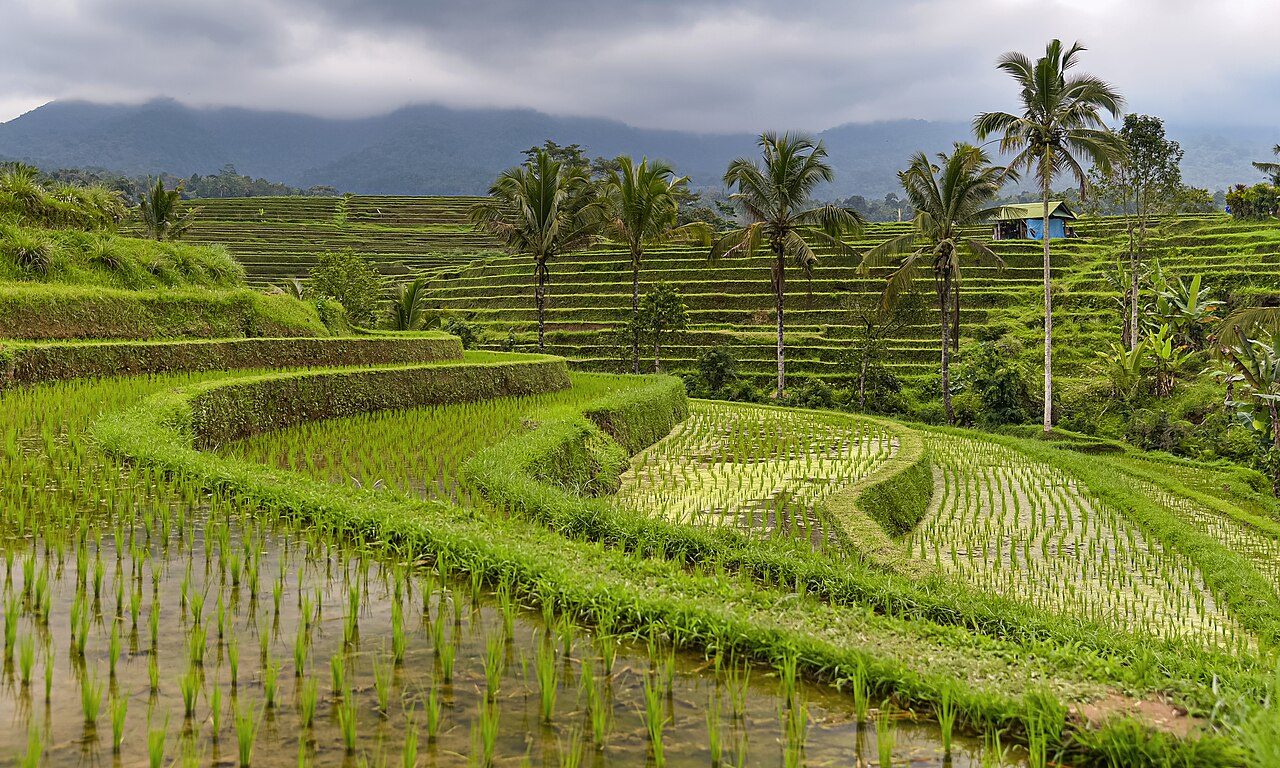
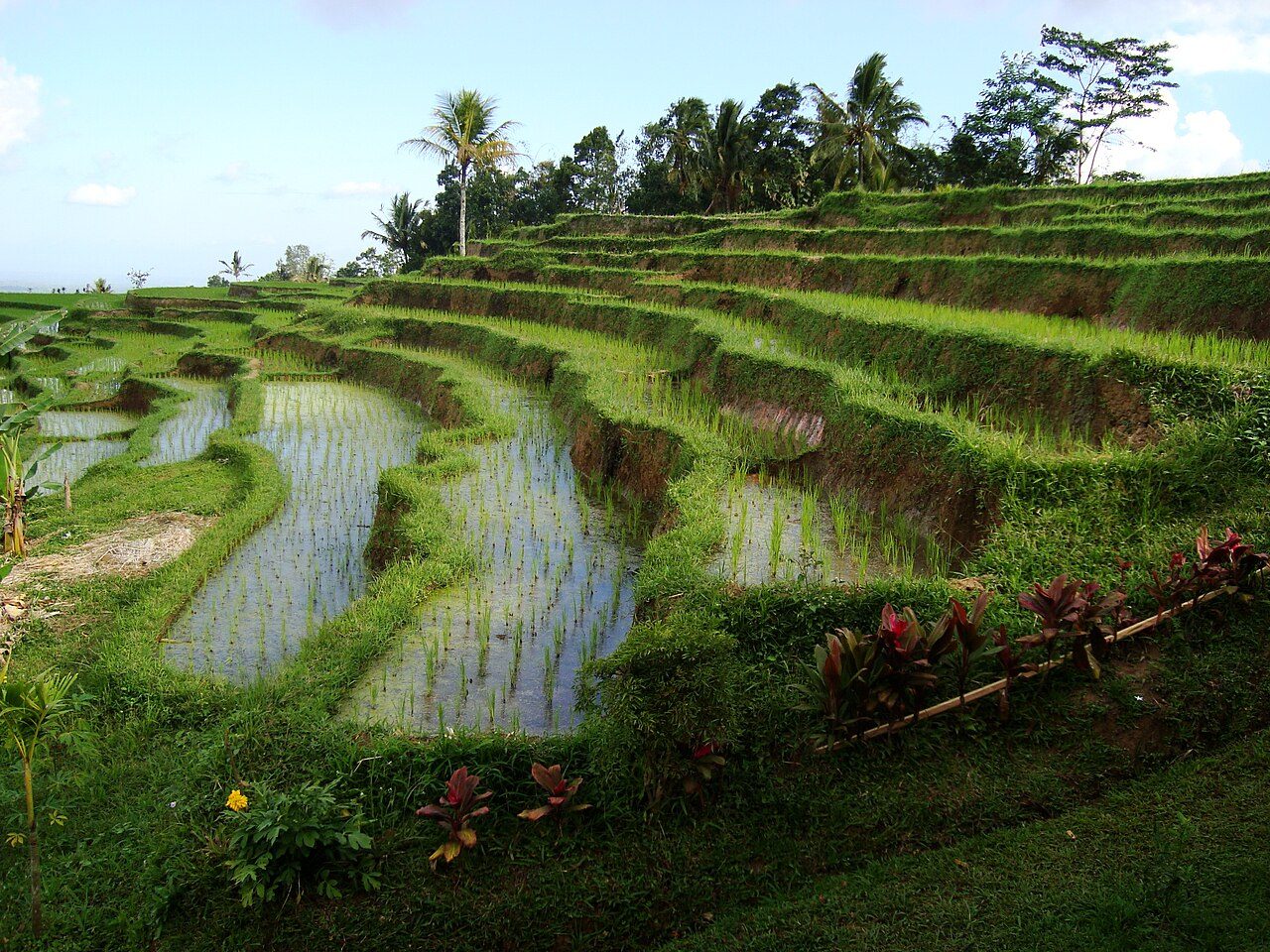
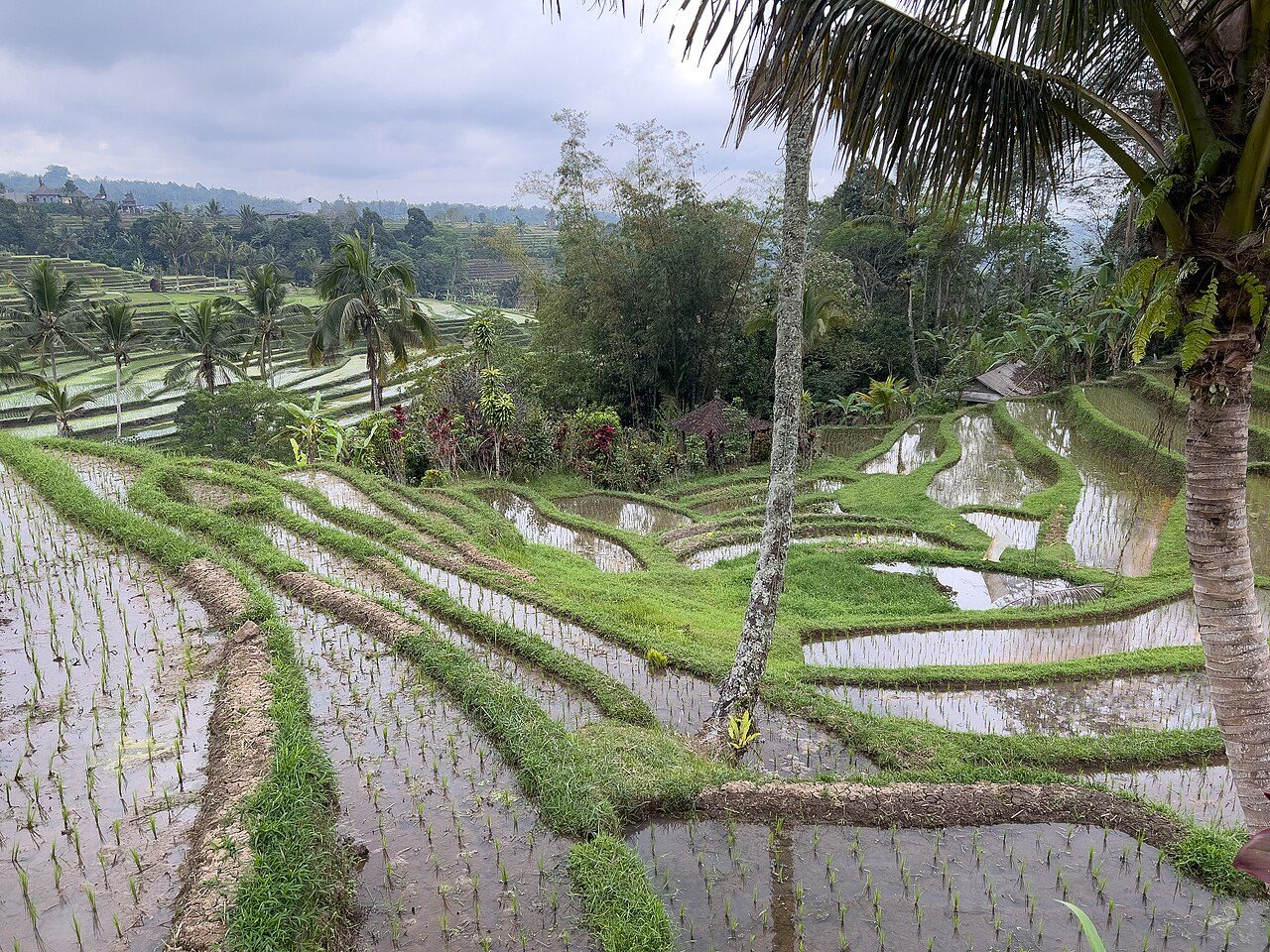
The Jatiluwih rice terraces cover over 600 hectares on the slopes of Mount Batukaru in Tabanan. They are among the largest and most beautiful in Bali, and are part of the Cultural Landscape of Bali Province, a UNESCO World Heritage Site since 2012 that protects the subak irrigation system. Walking trails wind through the fields with views towards the volcanoes.
Best weather: Jun – OctHeavy rain: Dec – Feb
Seasons from 20 years of NASA POWER climate data.
Was this trip blog helpful?
0
0
Ready to follow this route?
Copy all 21 stops into your trip plans in the app.
 WaTrips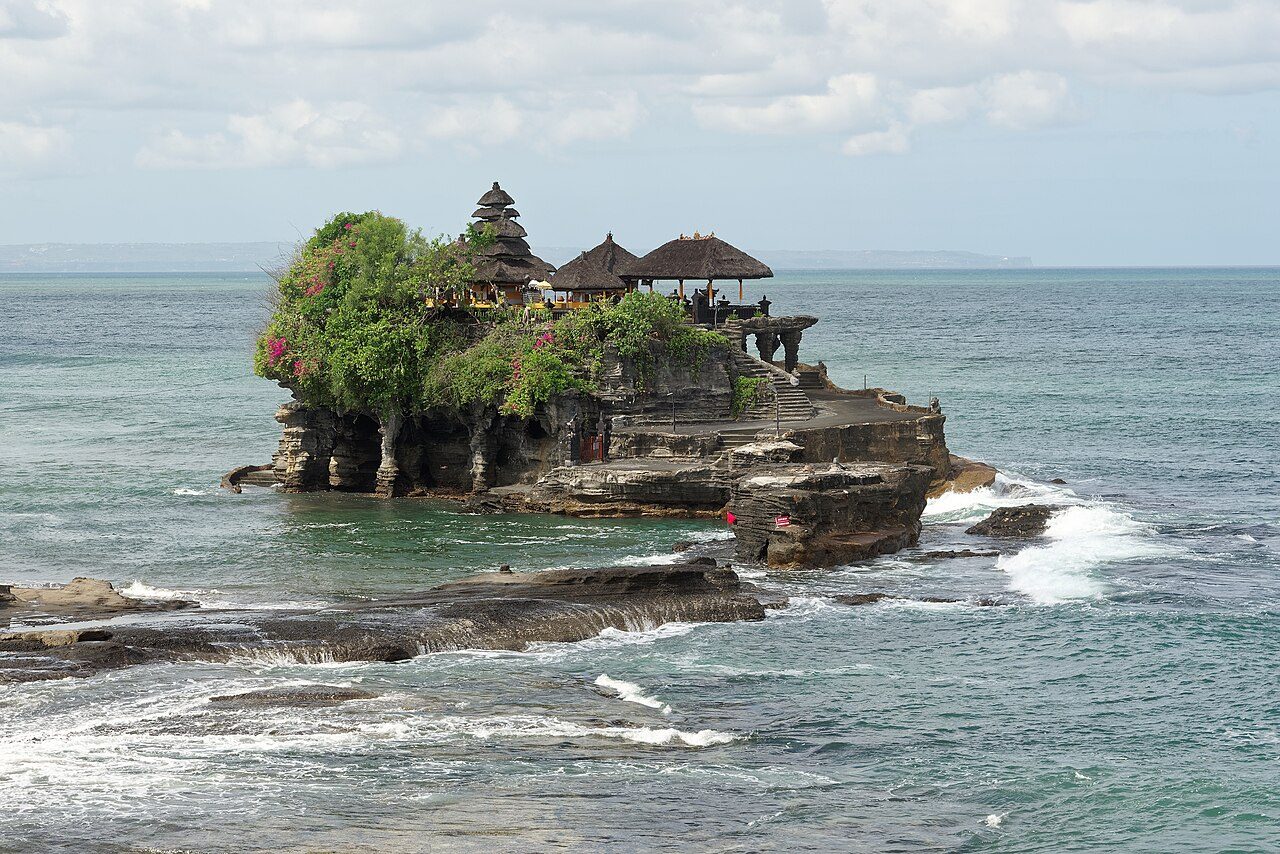



 BikesBooking
 Localrent
 Airalo
 Tiqets