 WaTrips

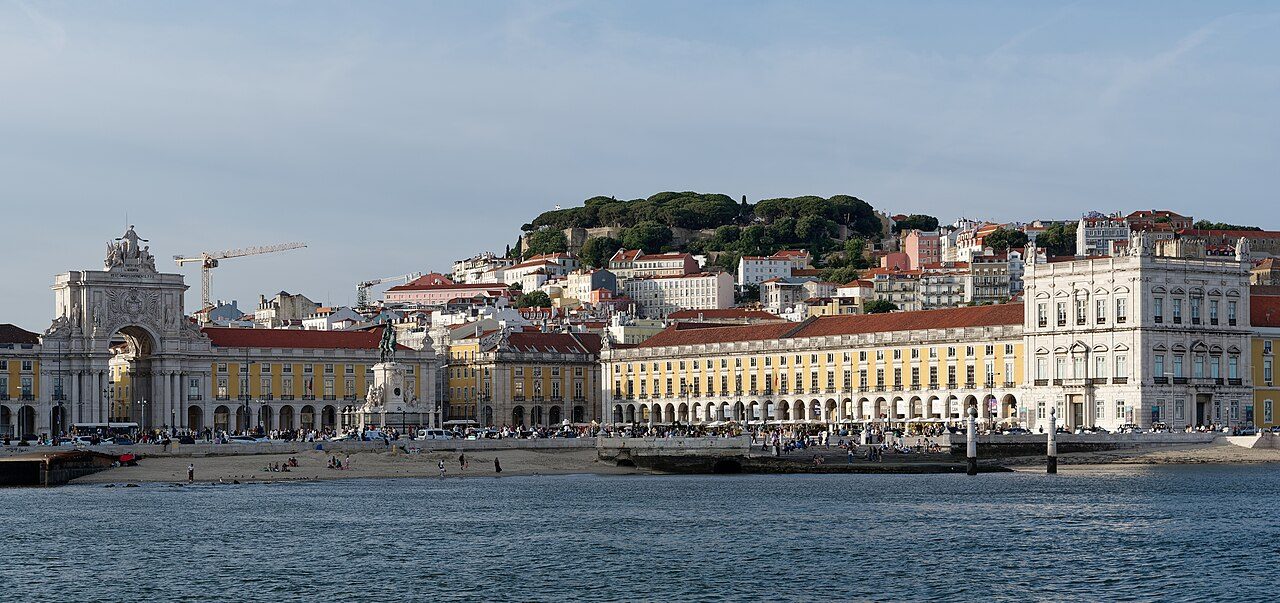
Praça do Comércio, Commerce Square, is Lisbon's grandest square, a vast open space facing the River Tagus, framed on three sides by elegant yellow arcaded buildings. At its centre stands a bronze equestrian statue of King José I, and on its northern side the triumphal Arco da Rua Augusta leads into the Baixa, the city's downtown. On the river side, marble steps descend to the water, once the ceremonial entrance to the city for those arriving by sea.
Still known to many Lisboetas by its old name, Terreiro do Paço, the Palace Yard, the square is a symbol of the city's rebirth after the great earthquake of 1755.
A Short History
For more than two centuries, this site was occupied by the Ribeira Palace, the royal residence built by King Manuel I in the early sixteenth century, with its magnificent library and riverside terrace. On 1 November 1755, a massive earthquake, followed by a tsunami and fires, destroyed much of Lisbon, including the palace and its treasures.
King José I's chief minister, the Marquis of Pombal, led the reconstruction of the city. The architects Eugénio dos Santos and Carlos Mardel designed a new, rational grid of streets for the Baixa and the great square on the waterfront, renamed to celebrate the commerce that would revive the city. The square was also the scene of a dramatic event in 1908, when King Carlos I and his heir were assassinated here, an episode that led to the end of the Portuguese monarchy two years later.
What to See
The equestrian statue of King José I, by the sculptor Joaquim Machado de Castro, was unveiled in 1775. On the northern side, the Arco da Rua Augusta, completed in the nineteenth century, is decorated with statues of historical figures and allegories of Glory, Genius and Valour. A lift and stairs lead to a viewpoint on top of the arch, offering views over the square, the river and down the straight streets of the Baixa.
On the waterfront, the Cais das Colunas, two marble columns standing on steps that lead into the river, once marked the formal landing place for royalty and dignitaries. It is a popular spot to sit and watch the boats and the sunset. Around the square, the arcades house cafés and restaurants, including the Martinho da Arcada, one of the oldest cafés in Lisbon and a favourite of the poet Fernando Pessoa. The Lisbon Story Centre, an interactive museum, tells the story of the city and the 1755 earthquake.
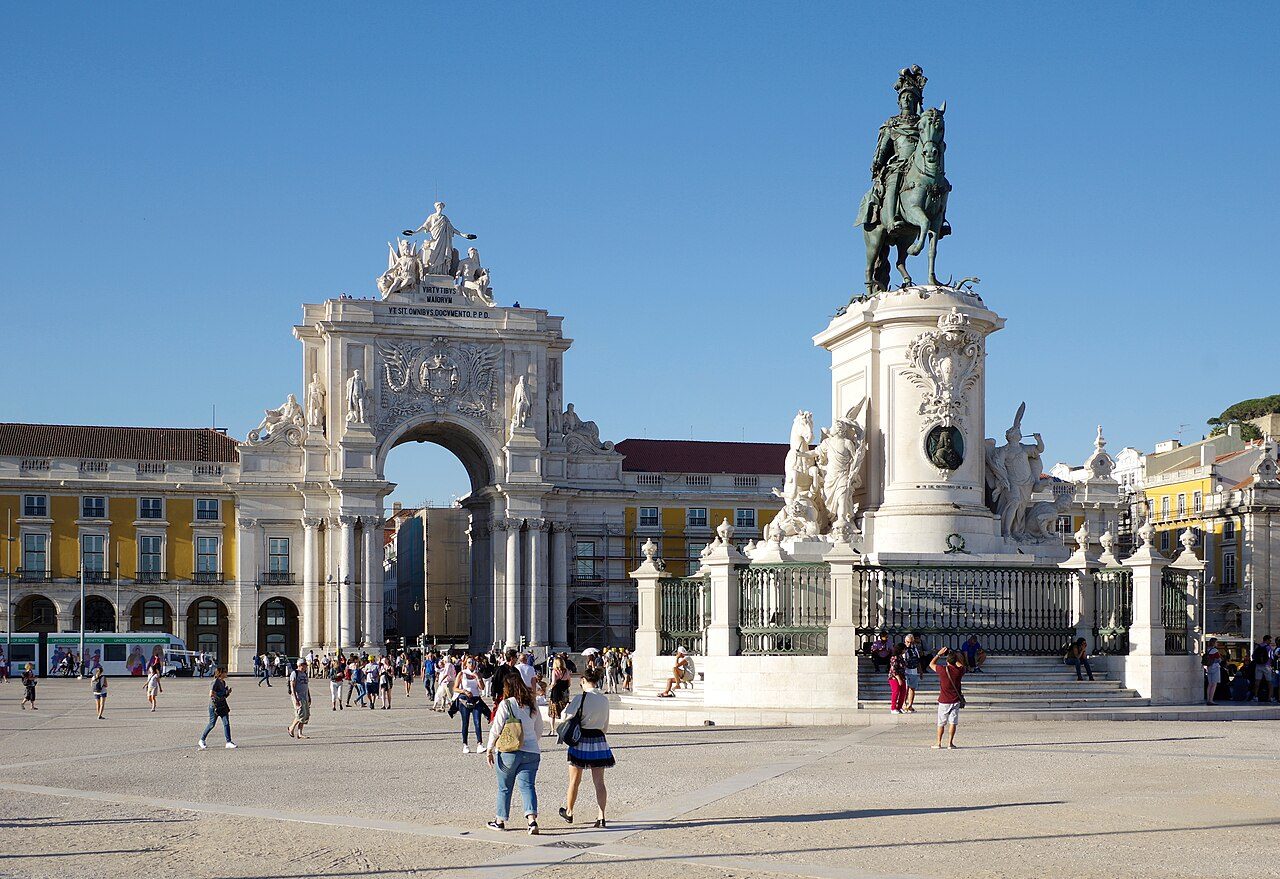
Walk through the Arco da Rua Augusta into the Baixa Pombalina, one of the earliest examples of large-scale urban planning in Europe, whose buildings were designed with innovative earthquake-resistant wooden frameworks. Rua Augusta, the pedestrianised main street, is lined with shops, cafés and street performers.
Things to Do
- ✓Climb to the viewpoint on top of the Arco da Rua Augusta.
- ✓Watch the sunset from the Cais das Colunas.
- ✓Have coffee at the historic Martinho da Arcada café.
- ✓Learn about the 1755 earthquake at the Lisbon Story Centre.
- ✓Stroll along Rua Augusta into the Baixa.

Practical Tips
The square is a public space, free to visit at any time. The viewpoint on top of the arch and the Lisbon Story Centre charge entry fees and have their own opening hours. The square is well connected: the Terreiro do Paço metro station is right beside it, trams 15 and 25 pass along the waterfront, and ferries to the south bank of the Tagus leave from the nearby terminal.
The square is used for concerts, festivals and big events, especially in summer and at New Year, which can temporarily limit access. Restaurants in the arcades are pleasant but often more expensive than those in the side streets of the Baixa. Watch out for street sellers offering fake drugs or sunglasses; simply ignore them.
Combining Your Visit
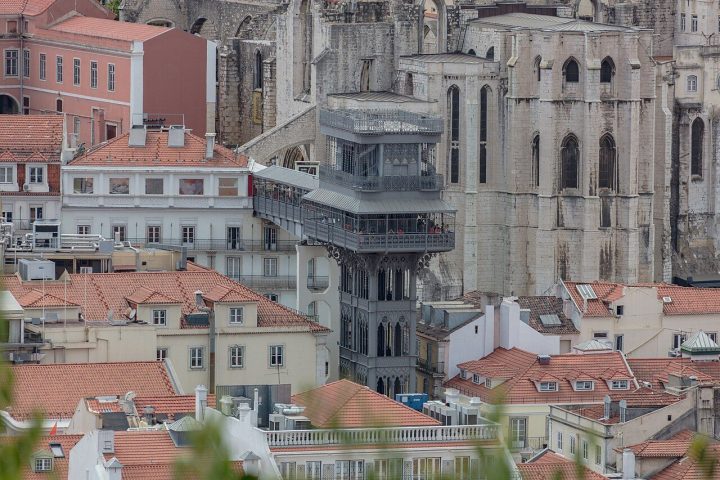
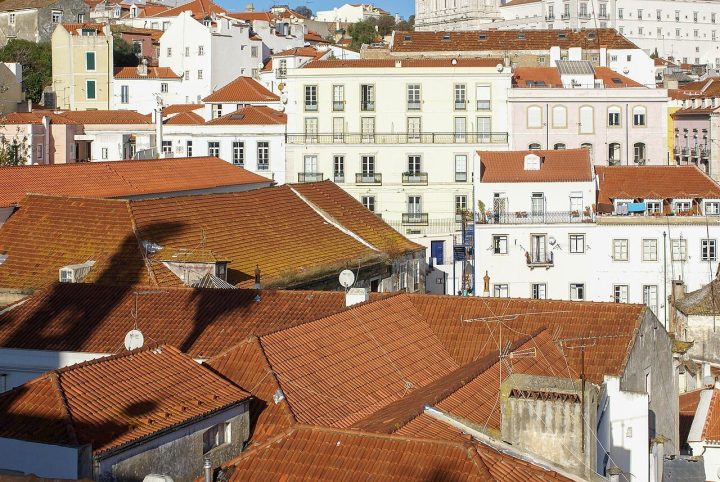
From the square, walk west along the riverside to Cais do Sodré and the Time Out Market, or east to the Alfama and the Lisbon Cathedral. The Baixa leads north to Rossio square and the Santa Justa Lift, which rises to the Chiado and Bairro Alto districts. Allow about an hour for the square, the arch and a coffee.

Comments
Been here, or planning to go? Share a tip or ask a question.
Sign in with Google to comment or vote. Your email is never shown.