 WaTrips
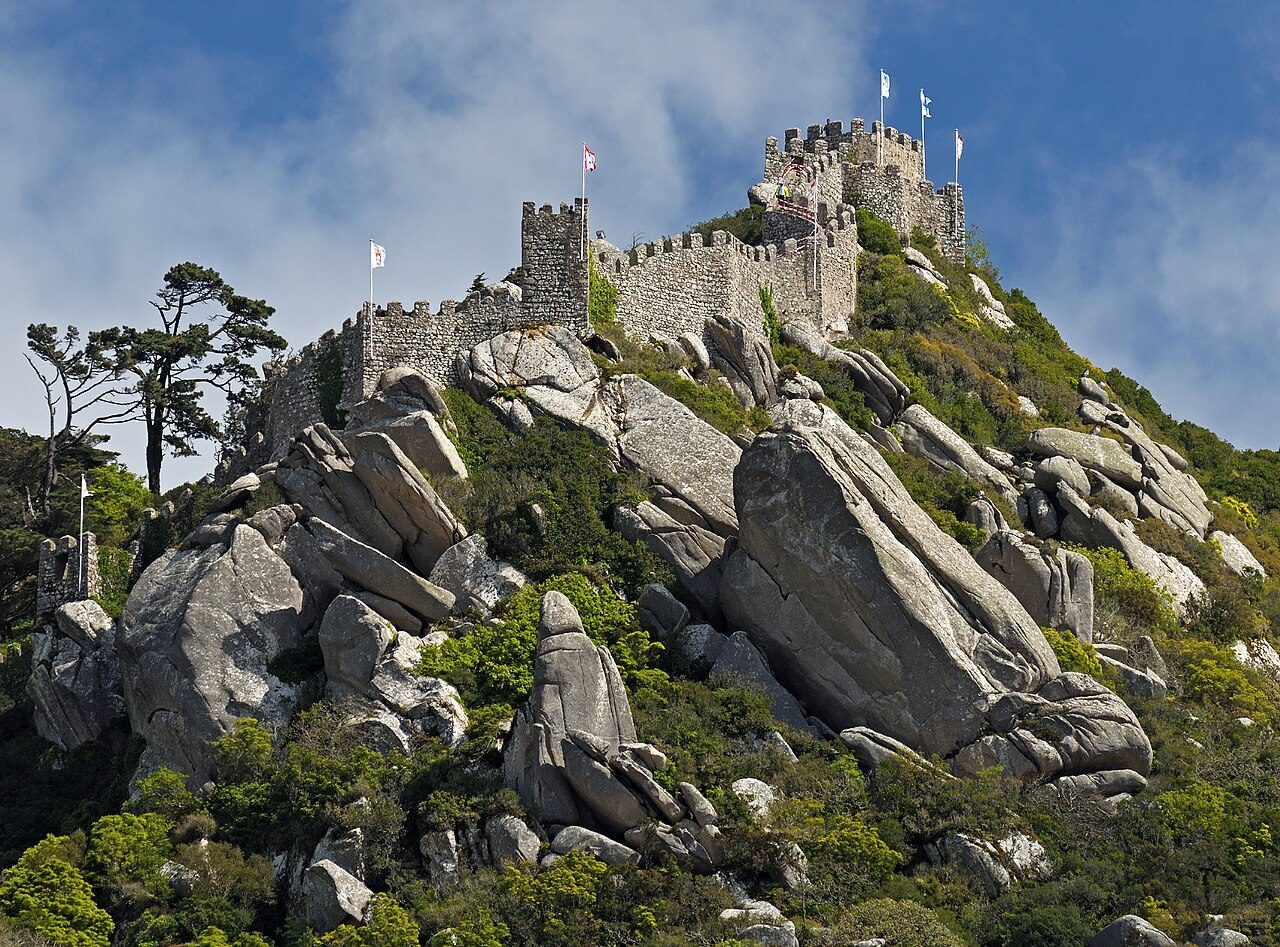
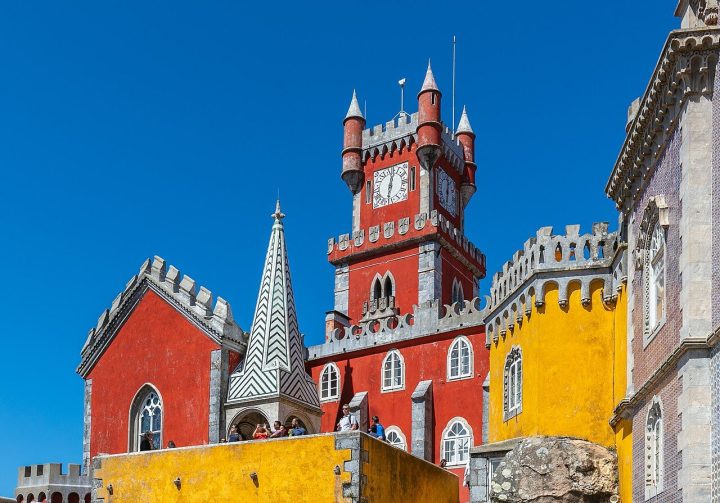
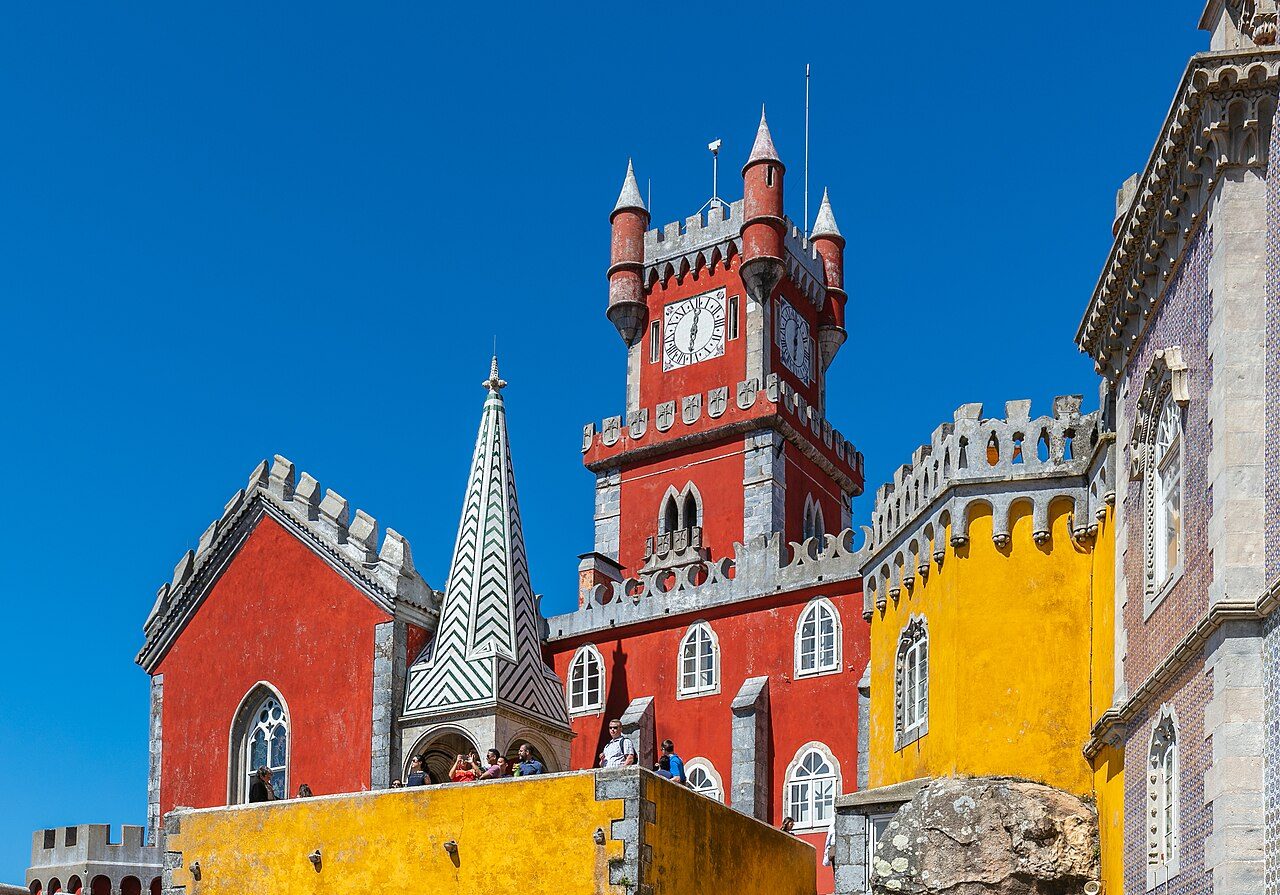
The path climbs through a forest of moss-covered boulders and twisted trees until, quite suddenly, a wall of grey stone rises ahead, crowned with square battlements. Pass through the gate and the castle opens up before you: ramparts running along the spine of a granite ridge, dipping and climbing from tower to tower like a miniature Great Wall. On one side, the land drops away towards the Atlantic; on the other, the painted towers of Pena Palace rise from the trees on the neighbouring peak.
The Moorish Castle, Castelo dos Mouros, is the oldest of Sintra's great monuments, and in many ways the most atmospheric. There are no furnished rooms or gilded halls here, just stone, sky and some of the most spectacular views in Portugal. This guide tells its story and explains how to make the most of a visit.
A fortress of al-Andalus
In the early 8th century, Muslim armies from North Africa crossed into the Iberian Peninsula, and much of what is now Portugal became part of al-Andalus. Over the 9th and 10th centuries, the Moors built a fortress on this rocky ridge high above Sintra. From here, the garrison could watch the surrounding countryside and the coastal routes to Lisbon, then a Moorish city called al-Ushbuna.
Archaeologists have found that the hilltop was occupied long before that, with traces going back thousands of years, but the castle as we know it is a product of the Islamic period. Inside its walls was a small settlement, with houses, grain silos and a large cistern to collect rainwater.
Conquest and decline
In 1147, the first king of Portugal, Afonso Henriques, captured Lisbon with the help of crusaders on their way to the Holy Land. With the city lost, the Moorish garrison at Sintra surrendered the castle to the Christians. Afonso Henriques had the fortress strengthened, and a small Romanesque church, dedicated to Saint Peter, was built within the walls for the Christian settlers.
Over the following centuries, as the frontier moved south and the population settled in the valley below, the castle gradually lost its military importance. It was abandoned and slowly fell into ruin, a process made worse by the earthquake of 1755, which damaged the walls and the chapel.
A Romantic restoration
The castle's revival came in the 19th century, thanks to King Ferdinand II, the same artistic king who built Pena Palace on the neighbouring peak. Ferdinand bought the ruins and restored the walls, not as an archaeologist would today, but in the Romantic spirit of the age, rebuilding battlements and towers to create the picturesque silhouette he wanted to see from his palace. He also planted the forest that now surrounds the castle.
Today the castle is cared for by Parques de Sintra, the organisation that also manages Pena Palace and Monserrate, and it is part of the Cultural Landscape of Sintra, a UNESCO World Heritage Site. Excavations continue to reveal the remains of the medieval settlement.
Walking the battlements
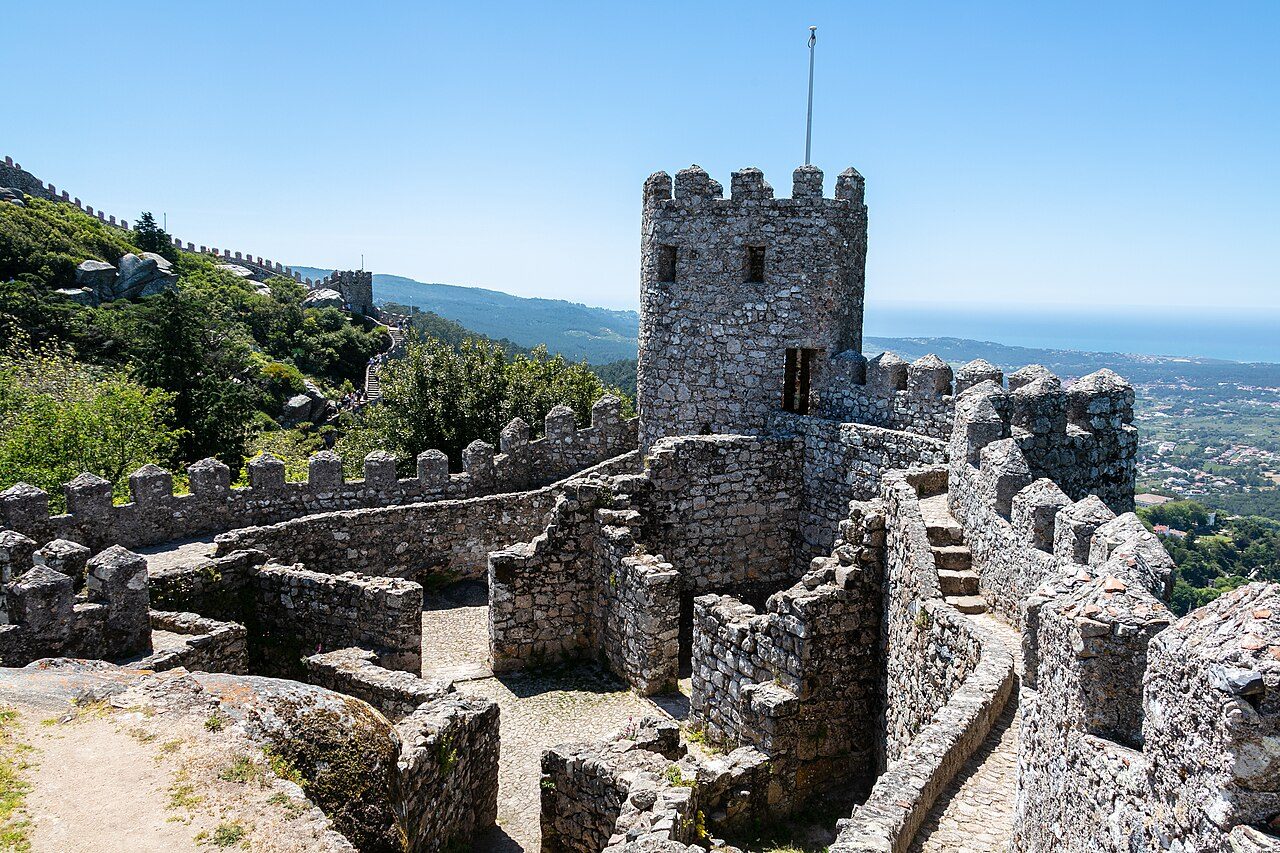
The main attraction is simply walking the walls. Stone stairways climb from tower to tower along the ridge, and every corner opens a new view: Sintra's old town and the National Palace, with its two great conical chimneys, far below; the coastline and the ocean to the west; and Pena Palace, perched on its peak, looking even more like a fairytale from here than it does up close.
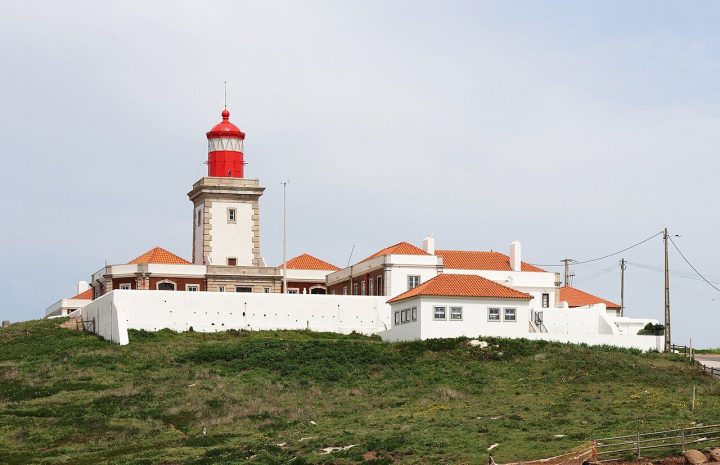
The highest point is the Royal Tower, reached by a long flight of steps. It's said that Ferdinand II liked to come up here to paint the views. On a clear day you can see all the way to Lisbon and the Tagus estuary, and out along the coast towards Cabo da Roca.
Inside the walls
Within the castle, you can see the remains of the Romanesque Chapel of São Pedro, the grain silos dug into the rock, the old cistern and an archaeological area where the foundations of medieval houses have been uncovered. A small interpretation centre displays finds from the excavations and explains how people lived here in the Islamic and early Christian periods.
Things not to miss
- ✓Walk the full length of the battlements along the ridge.
- ✓Climb the Royal Tower, the castle's highest point.
- ✓Look for the classic view of Pena Palace from the walls.
- ✓See the ruined Romanesque chapel and the medieval silos.
- ✓Visit the interpretation centre and its archaeological finds.
- ✓Take the forest footpath down to Sintra's old town.
How to get there
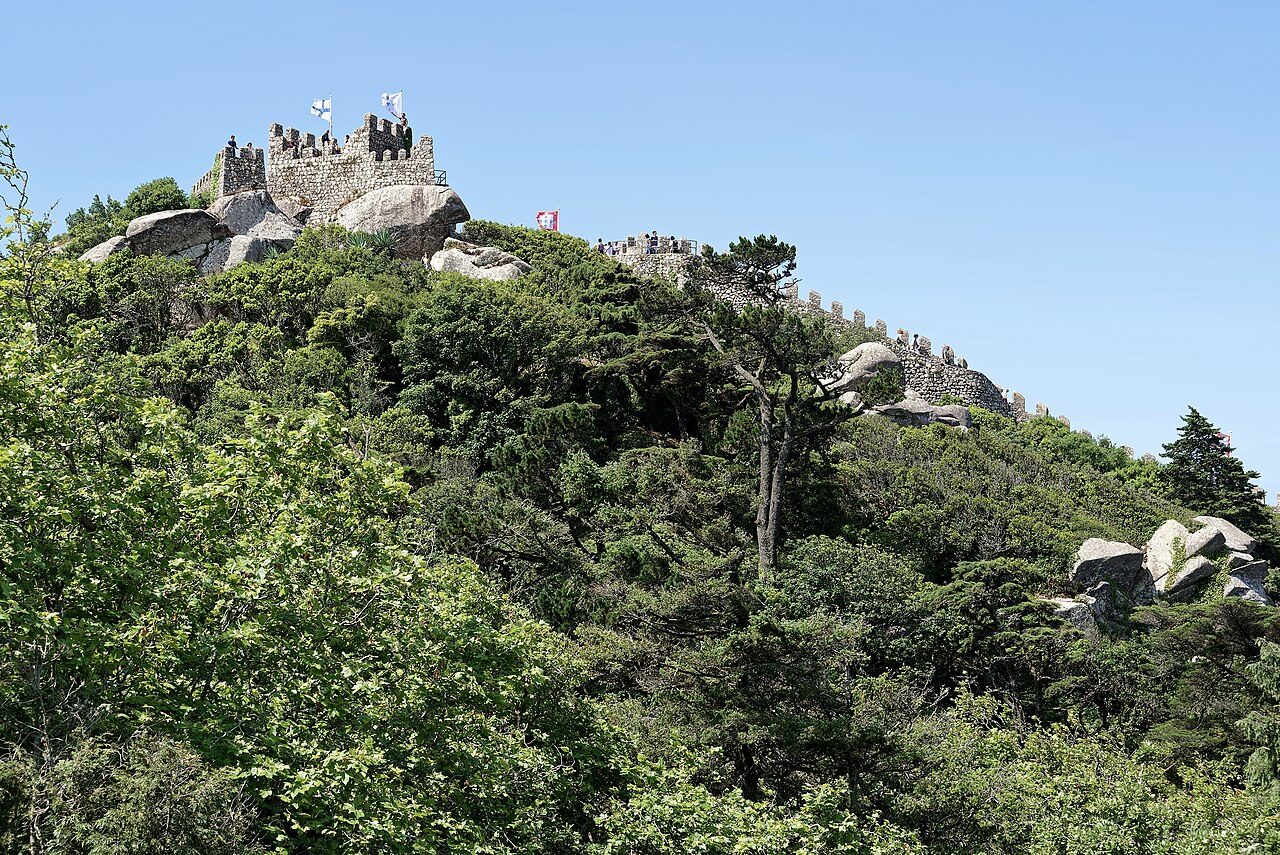
From Lisbon, trains from Rossio station reach Sintra in about 40 minutes. From Sintra station or the old town, the 434 tourist bus loops up the hill and stops at the castle entrance, close to the stop for Pena Palace. Taxis and tuk-tuks are also available. If you like walking, a marked footpath climbs from the old town, near the Church of Santa Maria, through the forest to the castle in about 40 minutes; it is steep but very beautiful.
Tickets and opening hours
Tickets are sold at the entrance and online through Parques de Sintra, and combined tickets with Pena Palace and other monuments are available. The castle is open every day except a few holidays, with longer hours in summer. Check current prices and opening hours before you go.
Best time to visit
The castle is at its best on a clear day, when the views stretch to the ocean. Mornings are often quieter, and late afternoon light on Pena Palace is beautiful. Sintra's hills are frequently wrapped in mist, especially in the morning, so it's worth keeping your plans flexible.
Practical tips
Wear sturdy shoes: the walls involve a lot of steps, some steep and uneven, and railings are limited in places. The ridge is exposed, so bring a layer for the wind, and sun protection in summer. There's a small café near the entrance for drinks and snacks.
Combining your visit
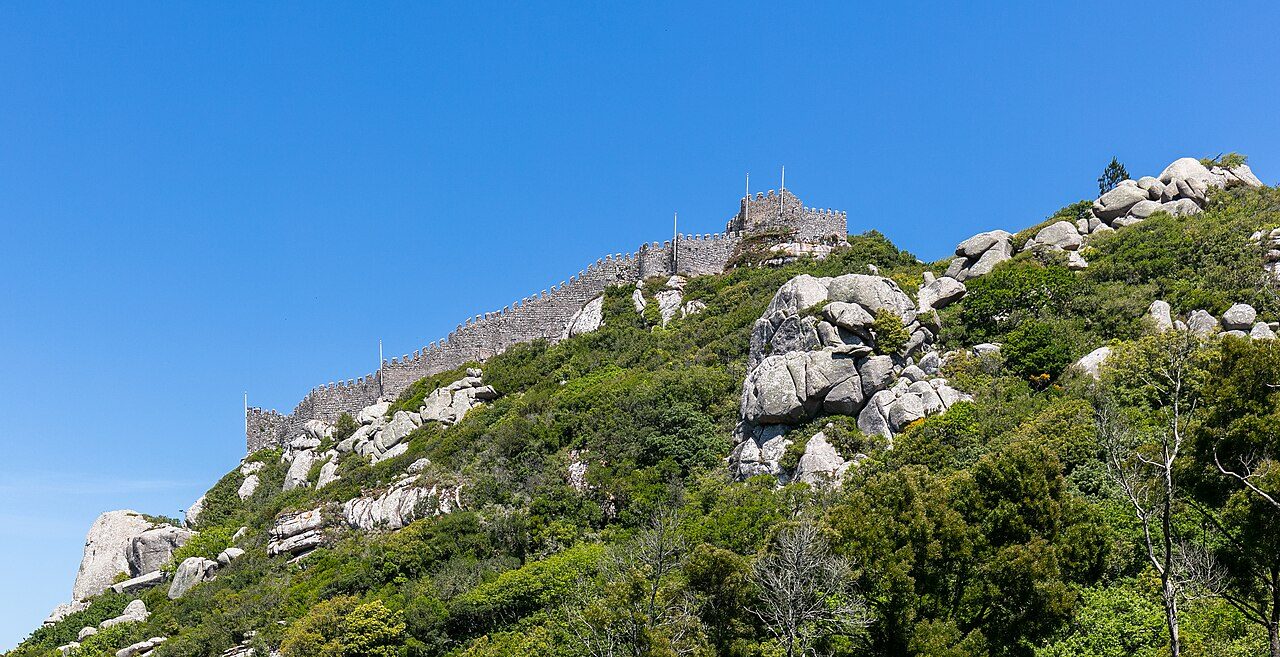
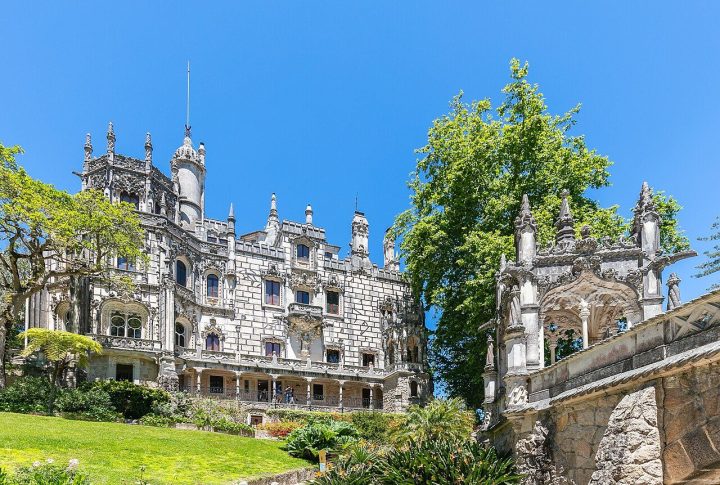
The castle is a natural partner to Pena Palace, about a 10-minute walk away. With an early start, you can see Pena in the morning, walk the castle walls before lunch, then follow the forest path down to the old town and finish the afternoon at Quinta da Regaleira or the Sintra National Palace.
Frequently asked questions
Is the Moorish Castle worth visiting if I see Pena Palace? Yes. The two are very different, and the castle offers the best views of Pena and the whole region.
How long does it take? Allow one to two hours to walk the walls and see the site.
Is it suitable for children? Most children love it, but supervise them closely on the walls, where the drops are steep.
Standing on the Royal Tower, with the wind in your face and Pena glowing on the next hill, it's easy to imagine the watchmen who stood here a thousand years ago, scanning the horizon for whatever might come next.

Comments
Been here, or planning to go? Share a tip or ask a question.
Sign in with Google to comment or vote. Your email is never shown.