 WaTrips
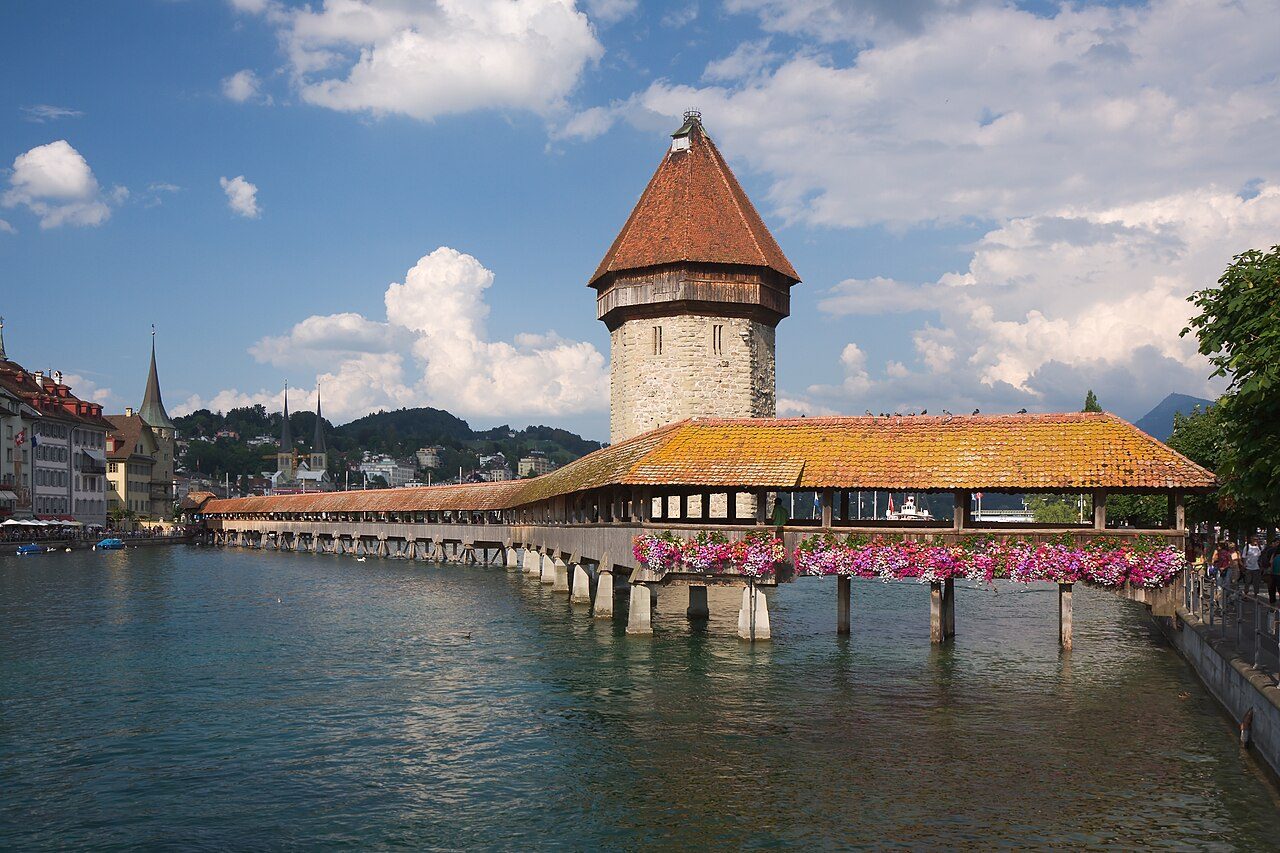
The wooden boards creak gently beneath your feet as you walk along the covered bridge. Window boxes overflowing with red geraniums line its sides, and through the openings you see swans gliding on the clear green water of the River Reuss. Above your head, painted triangular panels hang from the roof beams, telling stories of saints, battles and legends. Halfway across, an octagonal stone tower rises from the water, and beyond the river, the mountains around Lake Lucerne glow in the evening light.
The Chapel Bridge, Kapellbrücke, is the symbol of Lucerne and one of the most famous sights in Switzerland. Built in the 14th century, it's often described as the oldest covered wooden bridge in Europe. This guide explains its history and how to enjoy it.
A bridge for defence
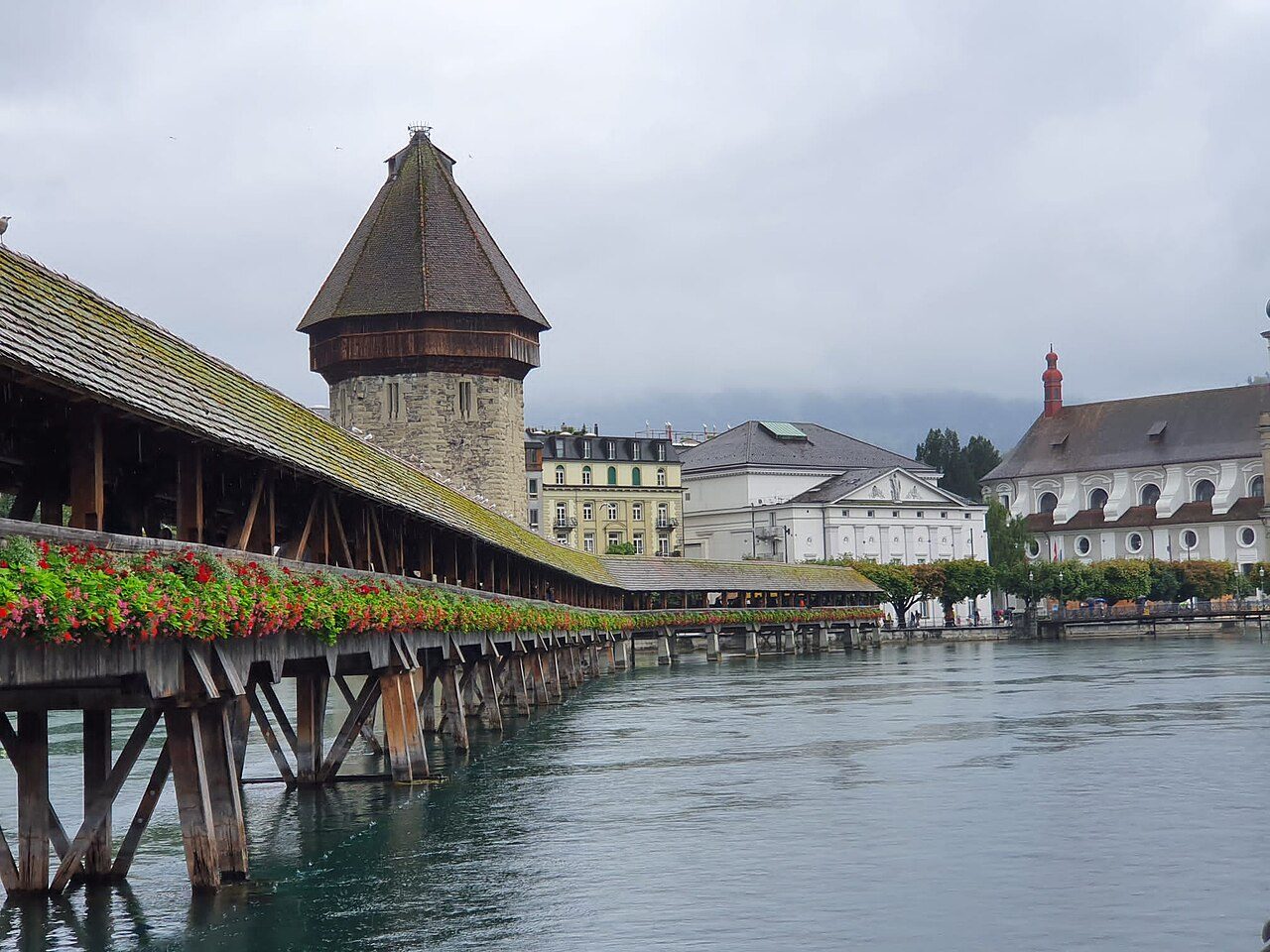
The Chapel Bridge was built in the first half of the 14th century, as part of Lucerne's fortifications, protecting the town from attack from the lake. It crosses the River Reuss diagonally, near where it flows out of Lake Lucerne. The bridge takes its name from St Peter's Chapel, which stands at its northern end.
Originally, the bridge was much longer than it is today. As the riverbanks were filled in and developed over the centuries, it was shortened, and today it is about 200 metres long.
The Water Tower
The octagonal stone Wasserturm, the Water Tower, stands in the river beside the bridge and is even older than the bridge itself. Over the centuries, it served as a prison, a torture chamber, a treasury and an archive. It's not open to the public, but it's one of the most photographed buildings in Switzerland.
The painted panels
In the 17th century, a series of triangular paintings was added to the roof beams of the bridge. Painted mainly by Hans Heinrich Wägmann, they depicted scenes from the history of Lucerne and of Switzerland, and the lives of the city's patron saints, Leodegar and Mauritius. They were meant to inspire civic pride and faith in passers-by.

The 1993 fire
In the night of 18 August 1993, a fire broke out beneath the bridge and spread rapidly along the dry wooden structure. Much of the bridge was destroyed, along with many of its historic paintings. The people of Lucerne were devastated, and the bridge was rebuilt as quickly as possible, reopening in 1994. Some of the original paintings were saved or restored, and you can still see charred panels on the bridge, a reminder of the fire.
The Spreuer Bridge
Further down the river, the Spreuer Bridge, Spreuerbrücke, is another covered wooden bridge, built in the 15th century and less crowded. Its roof is decorated with a remarkable series of 17th-century paintings showing the Dance of Death, a medieval theme in which Death appears among people from every walk of life, a reminder that no one escapes their fate.
The Musegg Wall
Above the old town, the Musegg Wall, a well-preserved section of the medieval town walls with nine towers, stretches along the hill. Several towers can be climbed in summer, offering views over the rooftops, the river and the lake. The Zyt Tower contains the oldest clock in Lucerne, which is allowed to strike one minute before all the other clocks in the city.
Things not to miss
- ✓Walk across the Chapel Bridge and look up at the painted panels.
- ✓Photograph the bridge and Water Tower from the riverbank.
- ✓Find the charred paintings from the 1993 fire.
- ✓Cross the Spreuer Bridge and see the Dance of Death.
- ✓Climb the towers of the Musegg Wall in summer.
- ✓Explore the painted houses of the old town squares.

How to get there
The Chapel Bridge is a short walk from Lucerne's main railway station, which has direct trains from Zurich, Bern and Basel. The old town is pedestrian-friendly and easy to explore on foot.
Best time to visit
The bridge is open at all times and free to cross. Early morning and late evening are the quietest and most atmospheric times. In spring and summer, the flower boxes are in full bloom.
Frequently asked questions
Is the Chapel Bridge original? Much of it was rebuilt after the 1993 fire, but it follows the original design, and some historic paintings survive.
Is it free to cross? Yes, it's free and open at all times.
How old is it? It dates from the 14th century.
Cross the bridge at dusk, as the lights reflect in the river and swans glide beneath you, and you'll understand why this old wooden bridge has become the heart of Lucerne.

Comments
Been here, or planning to go? Share a tip or ask a question.
Sign in with Google to comment or vote. Your email is never shown.