
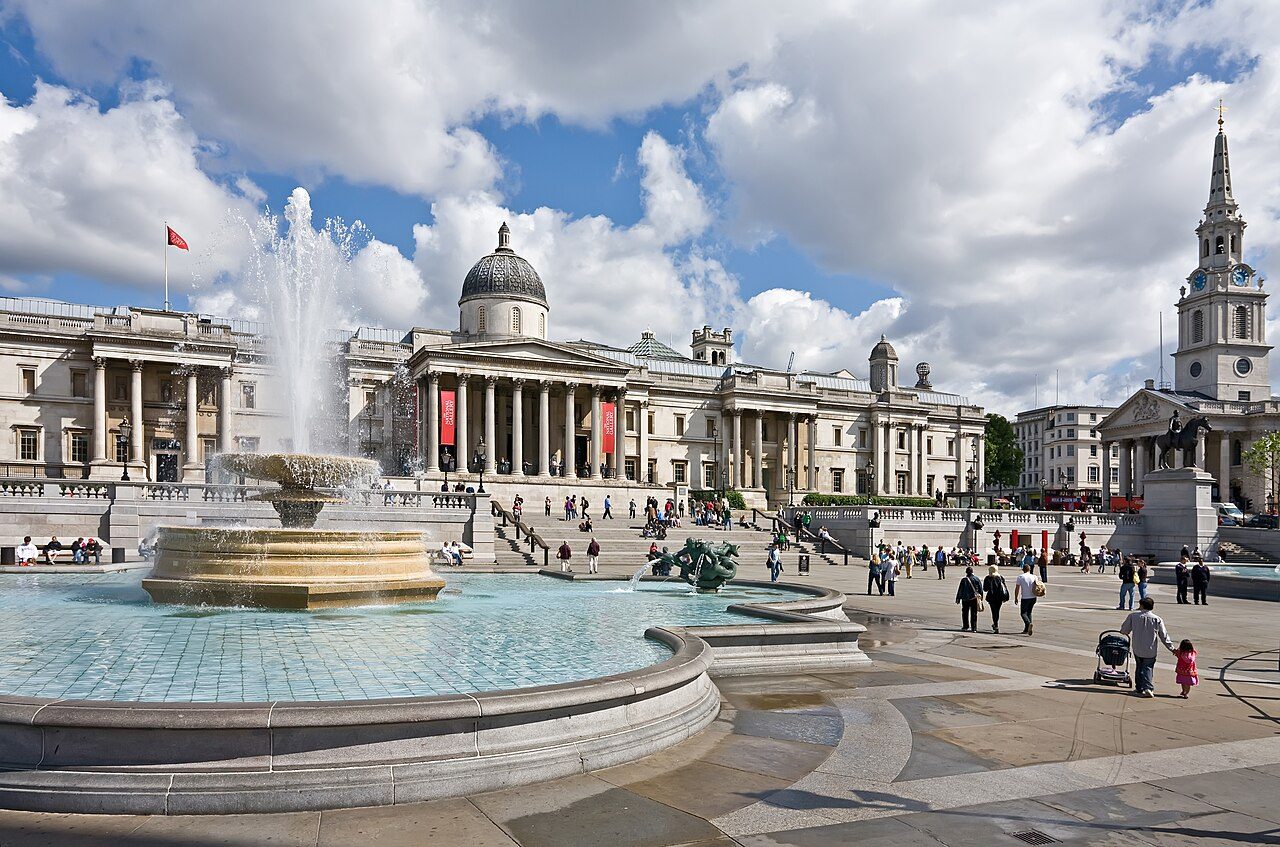
Children clamber onto the backs of four enormous bronze lions, laughing as their parents take photos. Fountains splash, street performers gather crowds, and buses roar around the edges of the square. High above it all, on top of a towering granite column, a solitary figure in an admiral's hat gazes south towards the sea he once commanded. Behind you, the grand portico of one of the world's great art galleries looks down over the scene. This is Trafalgar Square, the bustling heart of London.
Trafalgar Square is one of London's most famous public spaces, a place for celebrations, protests, gatherings and everyday life. This guide explains its story and what to see.
A square named after a battle
The square commemorates the Battle of Trafalgar, fought off the coast of Spain on 21 October 1805, when the British fleet under Admiral Horatio Nelson defeated the combined fleets of France and Spain. The victory secured British naval supremacy for a century, but Nelson himself was killed by a musket ball during the battle, becoming a national hero.
The square was laid out in the 1830s and 1840s, following plans by the architect John Nash and later Charles Barry, on the site of the old royal stables. It became a grand public space at the meeting point of the West End, Westminster and the City.
Nelson's Column
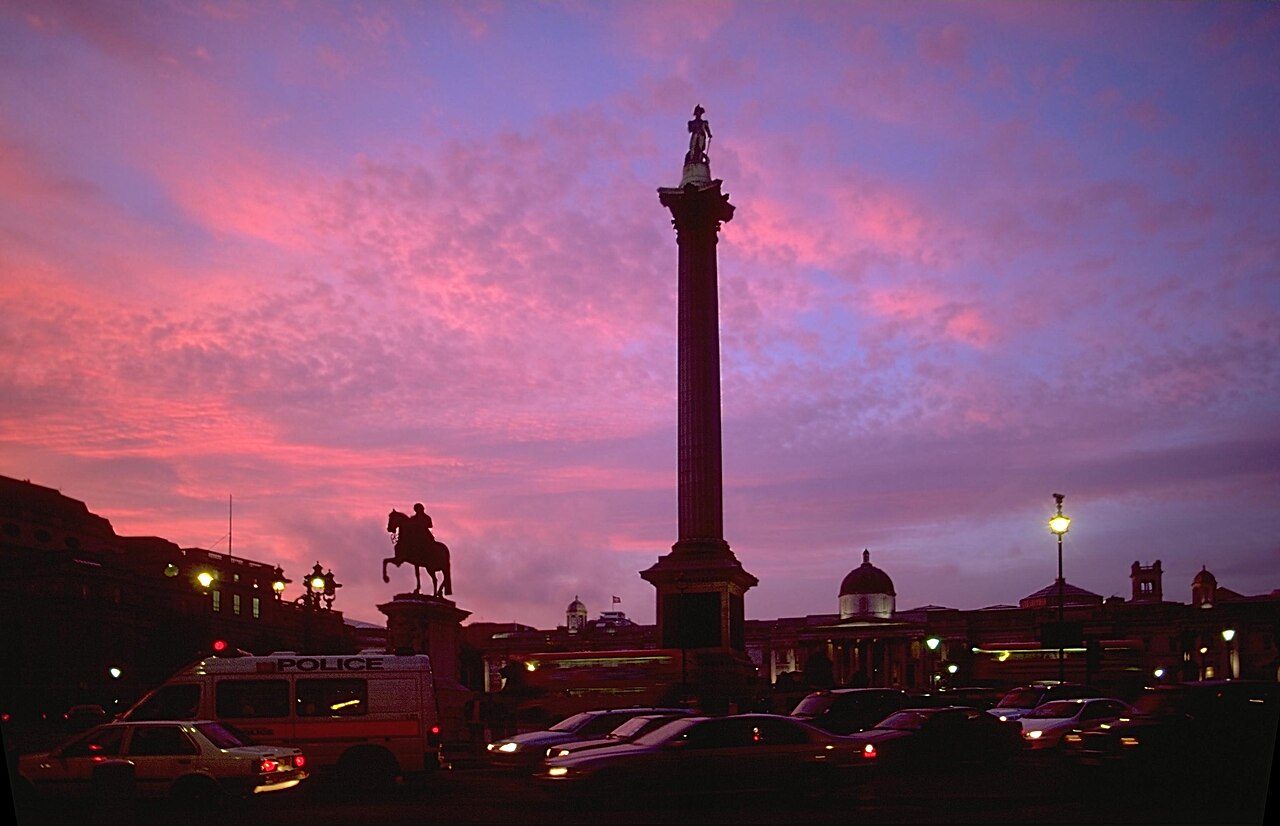
Nelson's Column, completed in 1843, rises about 52 metres high, including the statue of Nelson at the top. At its base, bronze reliefs depict scenes from Nelson's most famous battles; they were cast, it's said, from melted-down cannons captured from the French. Around the column sit four huge bronze lions, designed by the painter Sir Edwin Landseer and added in 1867.
The Fourth Plinth
Three of the square's four corner plinths hold statues of kings and generals. The fourth, in the northwest corner, was originally meant for an equestrian statue that was never completed, and it remained empty for more than 150 years. Since 1999, it has displayed a changing series of contemporary artworks, from a giant blue cockerel to a ship in a bottle, sparking debate and delight.
The National Gallery
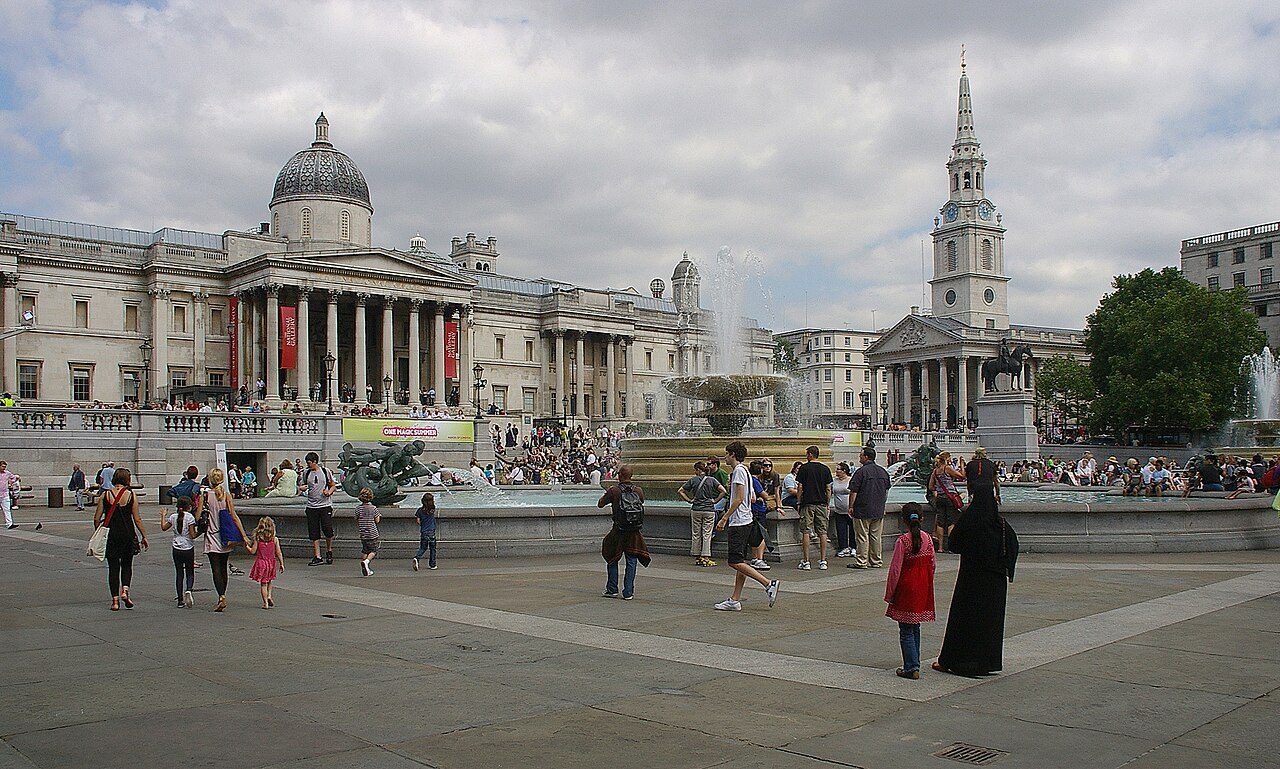
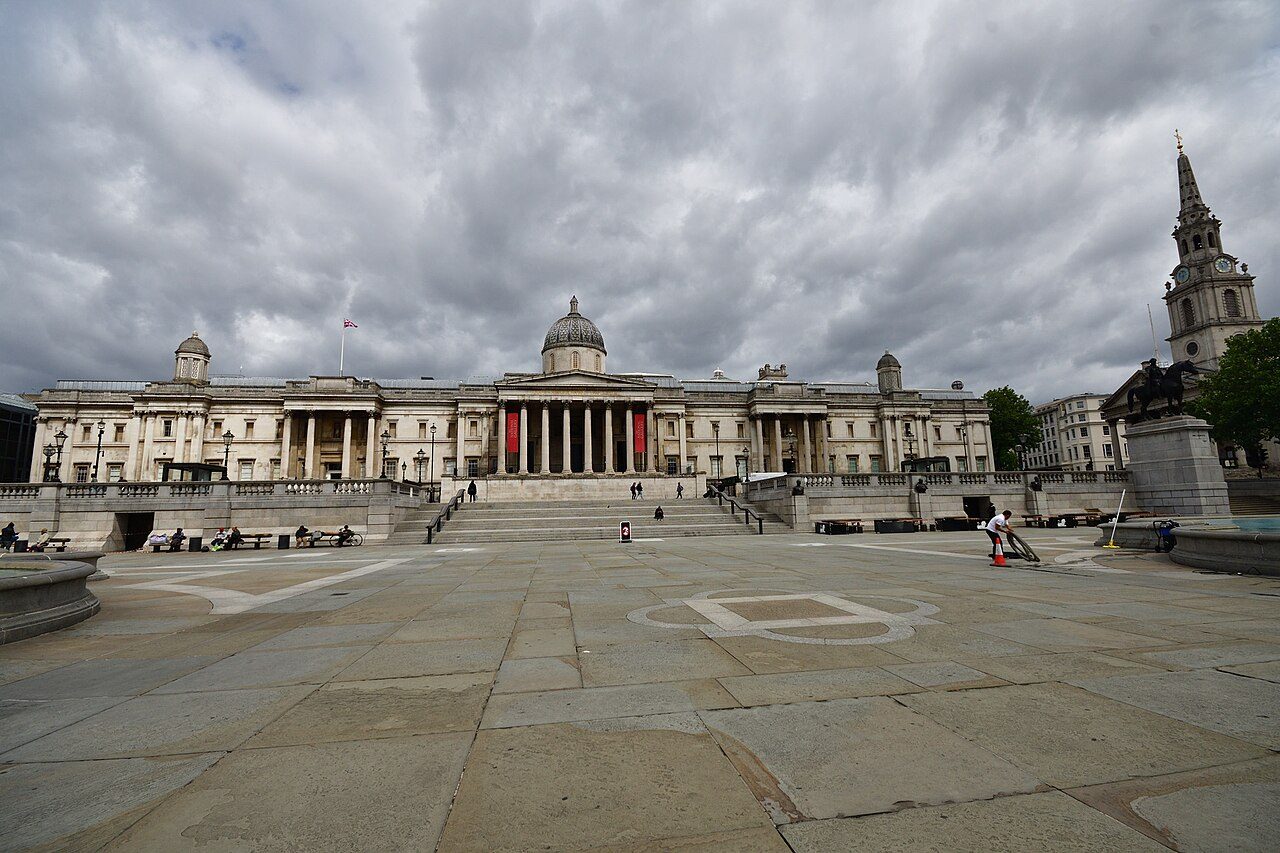
On the northern side of the square stands the National Gallery, one of the world's great art museums, with a collection of European paintings from the 13th to the early 20th centuries, including works by Leonardo da Vinci, Van Eyck, Titian, Rembrandt, Turner, Constable, Monet and Van Gogh's Sunflowers. Entry to the permanent collection is free. Next door, the National Portrait Gallery displays portraits of famous Britons.
St Martin-in-the-Fields
In the northeast corner stands the church of St Martin-in-the-Fields, an elegant 18th-century church by James Gibbs, whose design inspired many churches in America. It's known for its concerts, its café in the crypt and its work with homeless people.
The centre of London
Just south of the square, a statue of King Charles I on horseback marks the original site of the Charing Cross, a medieval memorial cross. This spot is traditionally used as the point from which distances to London are measured.
Christmas and celebrations
Every year since 1947, the city of Oslo has given London a large Christmas tree as a thank-you for Britain's support during the Second World War. It's lit in an annual ceremony in early December. The square also hosts New Year's celebrations, festivals and public events.
Things not to miss
- ✓Admire Nelson's Column and Landseer's lions.
- ✓See the latest artwork on the Fourth Plinth.
- ✓Visit the National Gallery for free.
- ✓Have coffee in the crypt café of St Martin-in-the-Fields.
- ✓See the Norwegian Christmas tree in December.
- ✓Find the statue of Charles I marking the centre of London.
How to get there
The square is next to Charing Cross station and Charing Cross tube station, and a short walk from Leicester Square and Embankment.
Best time to visit
The square is lively at any time. Early morning is quietest for photos, and evenings bring a buzzing atmosphere. December is special for the Christmas tree and carol singing.
Frequently asked questions
Is Trafalgar Square free? Yes, and so is the National Gallery's permanent collection.
Can I climb on the lions? Many visitors do, but take care, as they're high and slippery.
What's on the Fourth Plinth? A changing series of contemporary artworks.
Sit on the steps of the National Gallery as the lights come on around the square, and you'll feel the pulse of London all around you.

Comments
Been here, or planning to go? Share a tip or ask a question.
Sign in with Google to comment or vote. Your email is never shown.