
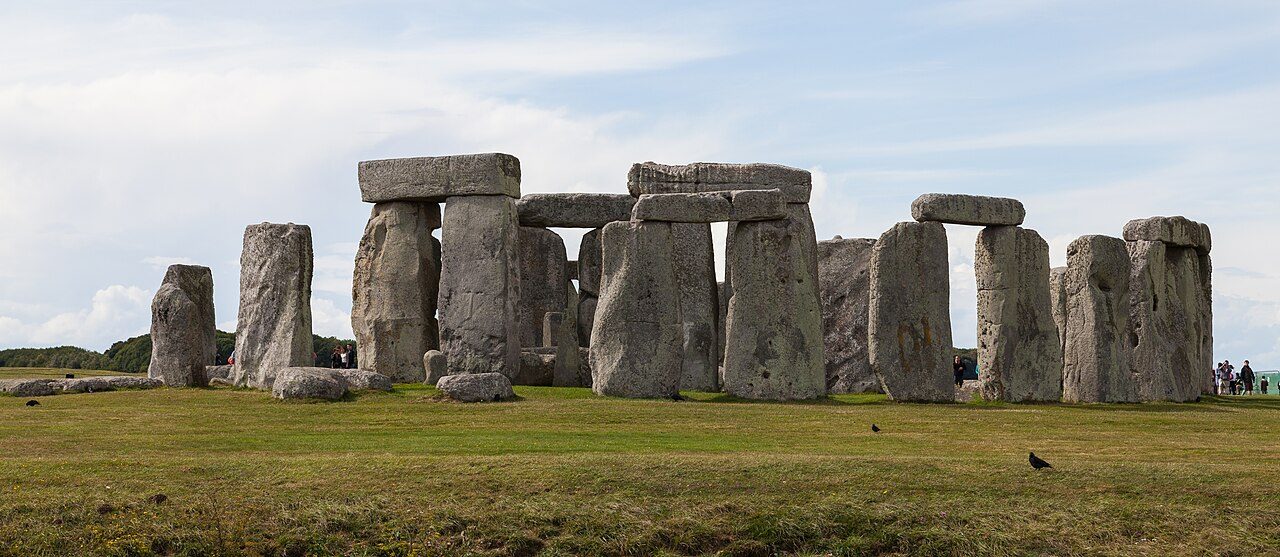
The shuttle bus drops you on the open plain, and you walk up a gentle slope. At first, the stones look smaller than you expected. Then you get closer, and their true scale becomes clear: great grey pillars twice the height of a person, some still topped by massive horizontal lintels, standing in a ring against the wide Wiltshire sky. Crows perch on the tops, and the wind whistles between the stones. They have stood here for some 4,500 years, and we still don't fully know why.
Stonehenge, on Salisbury Plain in southern England, is the most famous prehistoric monument in Europe and, with nearby Avebury, a UNESCO World Heritage Site. This guide explains what we know about it and how to visit.
Built over a thousand years
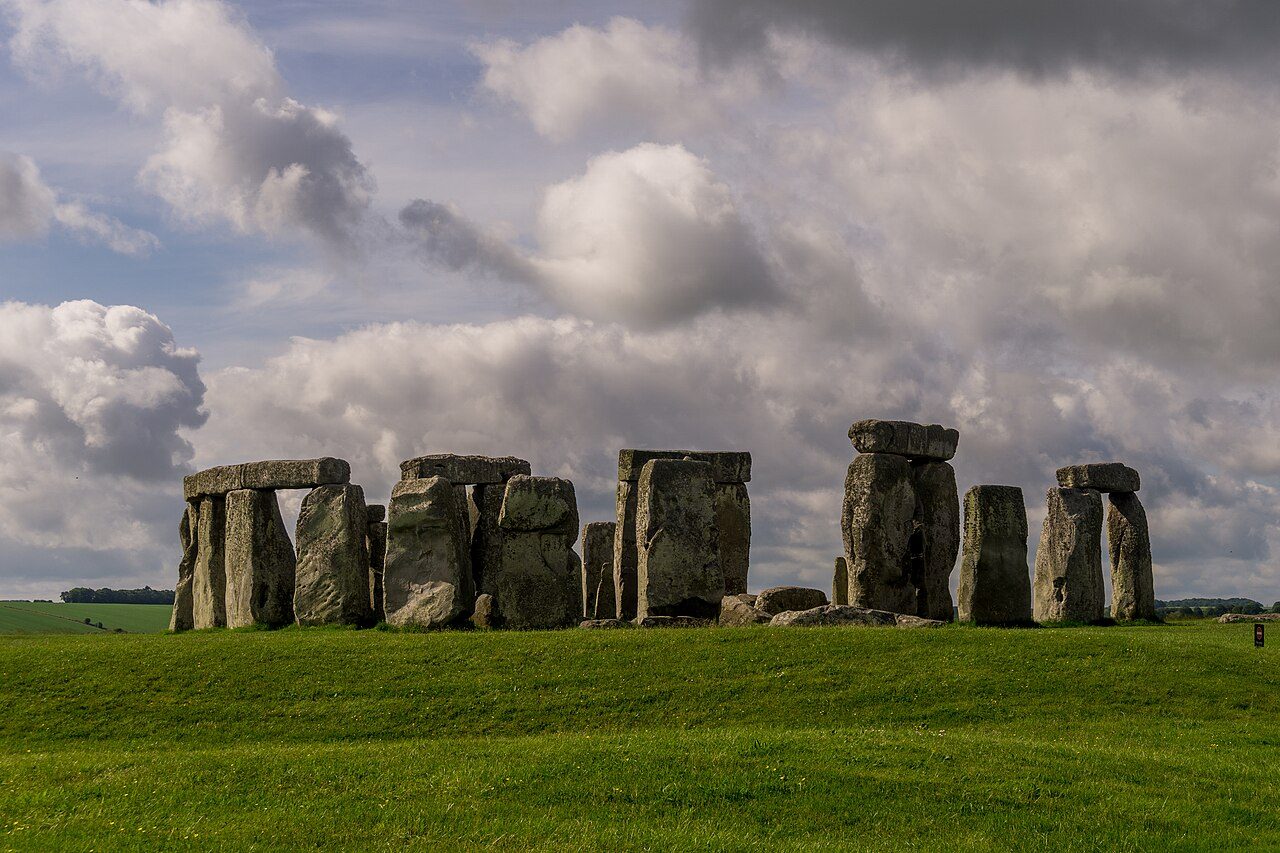
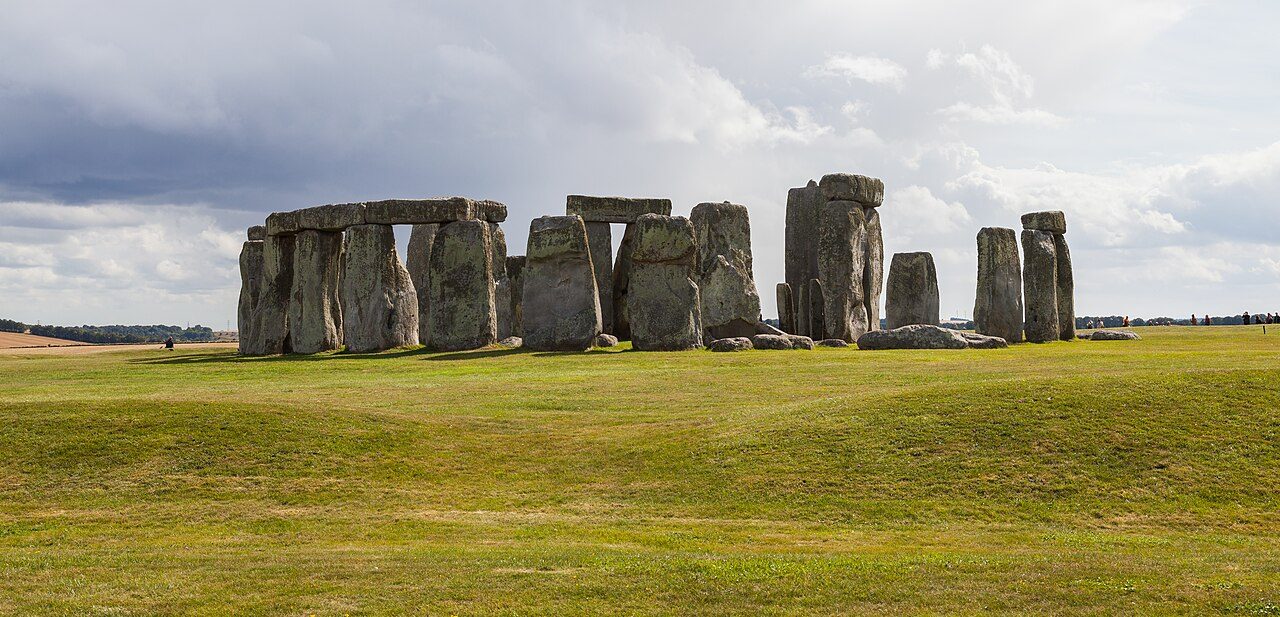
Stonehenge was not built all at once. Around 3000 BC, the first monument was a circular ditch and bank, with a ring of pits that may have held timber posts or stones, and some cremation burials. Around 2500 BC, the great stones were raised: an outer circle of huge sarsen stones topped with lintels, and inside it a horseshoe of five giant trilithons, two uprights with a lintel across the top. Smaller bluestones were arranged within. The monument was rearranged several times over the following centuries.
Where did the stones come from?
The large sarsen stones, some weighing around 25 tonnes or more, were brought from the area around West Woods, about 25 kilometres to the north. The smaller bluestones came from much further away, the Preseli Hills in southwest Wales, more than 200 kilometres away. In 2024, scientists announced that the Altar Stone, a large slab at the centre, came from northeast Scotland, more than 700 kilometres away. How Neolithic people moved these stones, without wheels or metal tools, remains one of the great puzzles of prehistory, though theories include sledges, rollers, ropes and huge teams of people.
Aligned with the sun
Stonehenge is aligned with the movements of the sun. On the summer solstice, the sun rises over the Heel Stone, outside the circle, and its first rays shine into the centre. On the winter solstice, the sun sets in the opposite direction, between the stones of the great trilithon. Many archaeologists believe the winter solstice may have been especially important, a time of feasting and ceremonies.
What was it for?
No one knows for certain. Theories include a temple to the sun, a place to mark the seasons, a burial ground, a place of healing, or a monument to ancestors. Archaeologists have found the remains of a large settlement nearby, at Durrington Walls, where people seem to have gathered for great feasts at midwinter. Stonehenge was probably part of a wider ceremonial landscape, with burial mounds, avenues and other monuments.
The visitor centre
Visits begin at the visitor centre, about 2 kilometres from the stones, where an exhibition displays archaeological finds and a reconstruction of a man who lived around 5,500 years ago, based on his skeleton. Outside, reconstructed Neolithic houses show how people may have lived. From there, a shuttle bus or a walk across the fields takes you to the stones. A path circles the monument, but visitors normally can't walk among the stones, except on special early-morning or evening access visits, which must be booked well in advance.
The solstices
On the summer and winter solstices, English Heritage usually allows people to gather among the stones at sunrise, attracting thousands of visitors, including modern Druids and pagans. Check the official arrangements in advance.
Things not to miss
- ✓Walk the path all the way around the stones.
- ✓See the Heel Stone and the solstice alignment.
- ✓Explore the exhibition and the Neolithic houses at the visitor centre.
- ✓Walk across the landscape to the stones instead of taking the shuttle.
- ✓Book a Stone Circle access visit to stand inside the circle.
- ✓Visit Avebury, another great stone circle nearby.

How to get there
Stonehenge is about 15 kilometres north of Salisbury, which has trains from London Waterloo. A tour bus runs from Salisbury to Stonehenge, and many coach tours run from London. By car, it's about two hours from London.
Tickets and opening hours
Timed tickets must usually be booked in advance online. Check current prices and opening hours on the English Heritage website.
Best time to visit
Arrive at opening time or later in the afternoon, when the light is softer and the crowds thinner. Bring warm, waterproof clothing, as the plain is exposed to wind and rain.
Frequently asked questions
Can you touch the stones? Normally no, except on special access visits.
How old is Stonehenge? The earliest phase dates from around 3000 BC, and the great stones from around 2500 BC.
How long should I spend there? Two to three hours.
Stand on the plain at sunset as the shadows of the stones stretch across the grass, and you'll feel the mystery that has drawn people to this place for nearly five thousand years.


Comments
Been here, or planning to go? Share a tip or ask a question.
Sign in with Google to comment or vote. Your email is never shown.