 WaTrips
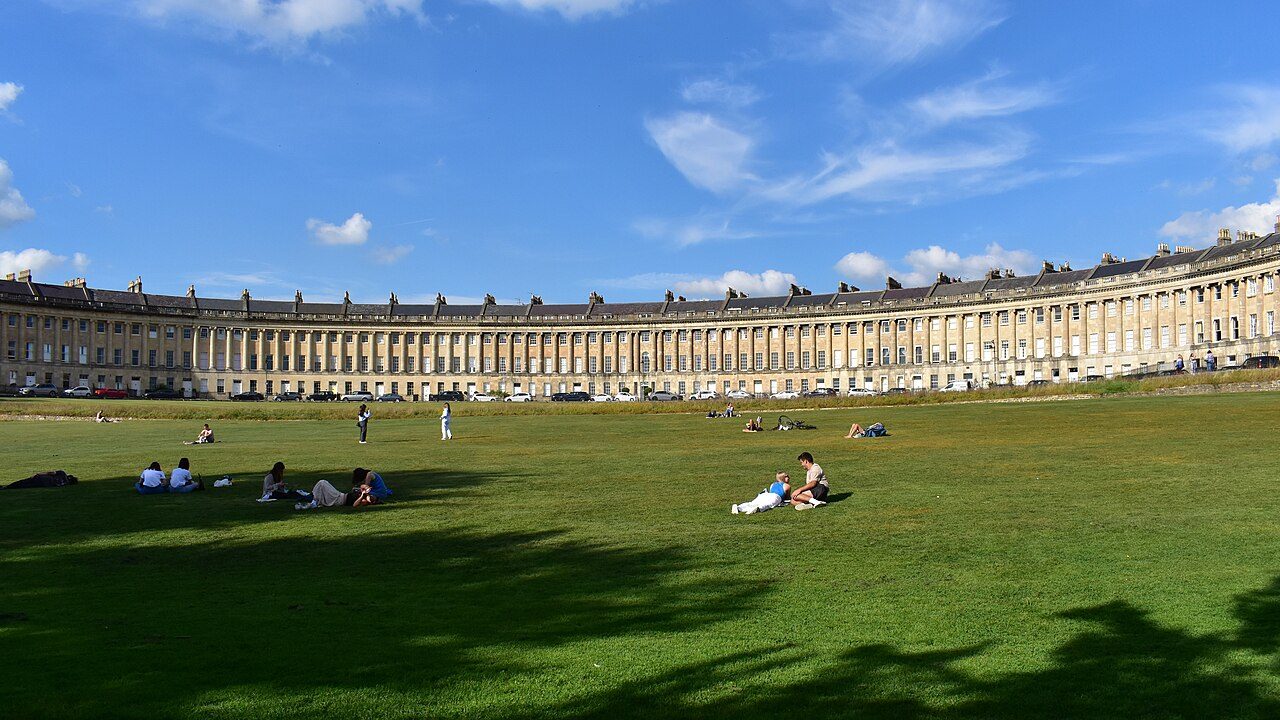
You walk up a gentle hill, past elegant townhouses, and suddenly the view opens. In front of you, a vast lawn slopes down towards a park, and wrapping around it in a great, graceful arc stands a single continuous terrace of honey-coloured stone, more than 150 metres long, lined with more than a hundred tall columns. Its windows glint in the afternoon sun, and its perfect symmetry seems almost too elegant to be real. This is the Royal Crescent, one of the finest examples of Georgian architecture in the world.
The Royal Crescent, in the UNESCO-listed city of Bath, is a symbol of the city's 18th-century golden age, when Bath was the most fashionable resort in Britain. This guide explains its story and how to explore it.
Bath's golden age
In the 18th century, Bath, famous for its hot springs, became a fashionable resort where the wealthy came to take the waters, attend balls, gamble and find husbands and wives for their children. To house them, architects and builders transformed the city with elegant streets, squares and terraces built in the local golden Bath stone.
John Wood the Younger
The Royal Crescent was designed by the architect John Wood the Younger and built between 1767 and 1774. His father, John Wood the Elder, had designed the Circus, a circle of townhouses nearby, and many other buildings in Bath. The Crescent was a bold idea: thirty townhouses joined together behind a single, grand façade, facing open parkland, so that residents felt they were living in a palace in the countryside.
What's behind the façade
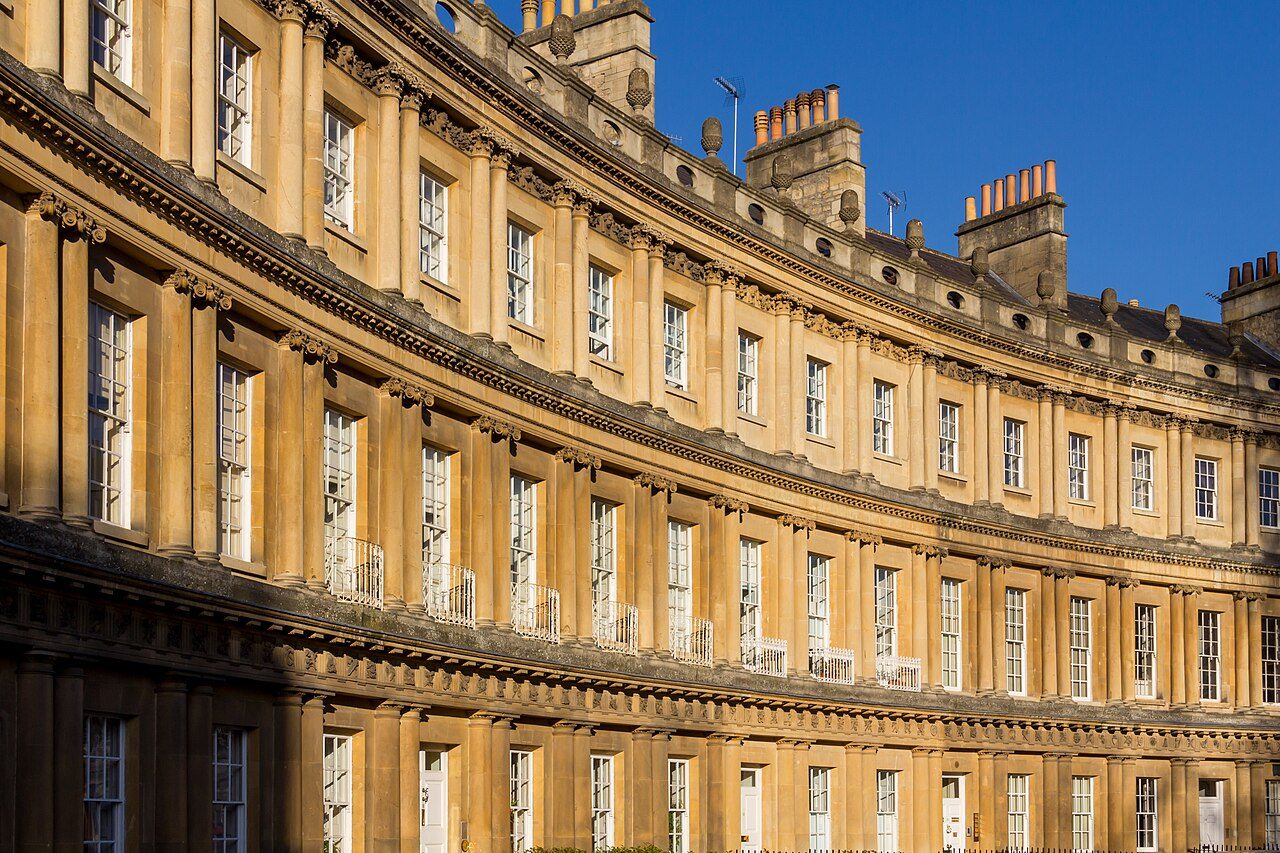
The front of the Crescent is perfectly uniform, with a ground floor topped by Ionic columns rising to the roof. But the builders only had to follow Wood's design for the front. Each owner could design the back of their house as they wished, so the rear of the Crescent is a jumble of different heights, windows and styles, a contrast summed up in a local saying about elegant fronts and messy backs.
No. 1 Royal Crescent
The first house in the Crescent, No. 1 Royal Crescent, has been restored as a museum showing how a wealthy family and their servants lived in the 18th century. You can explore elegant drawing rooms and bedrooms, as well as the kitchen and servants' quarters below stairs.
Jane Austen's Bath
The novelist Jane Austen lived in Bath from 1801 to 1806, and the city appears in her novels Northanger Abbey and Persuasion, which describe its social whirl of balls, assemblies and walks. The Jane Austen Centre tells the story of her life in the city, and every September, the Jane Austen Festival fills Bath with people in Regency costume.
On screen
The Royal Crescent and its surroundings have appeared in many films and television series set in the Georgian and Regency periods, including the popular series Bridgerton.
Royal Victoria Park
In front of the Crescent, the lawn is separated from Royal Victoria Park by a ha-ha, a hidden ditch that keeps out animals without spoiling the view. The park has gardens, a botanical garden, play areas and space for picnics, and hot-air balloons sometimes lift off from here on summer evenings.
Things not to miss
- ✓Admire the full curve of the Crescent from the lawn.
- ✓Visit No. 1 Royal Crescent.
- ✓See the Circus nearby.
- ✓Walk around the back to see the varied rear façades.
- ✓Explore the Jane Austen Centre.
- ✓Stroll through Royal Victoria Park.
How to get there
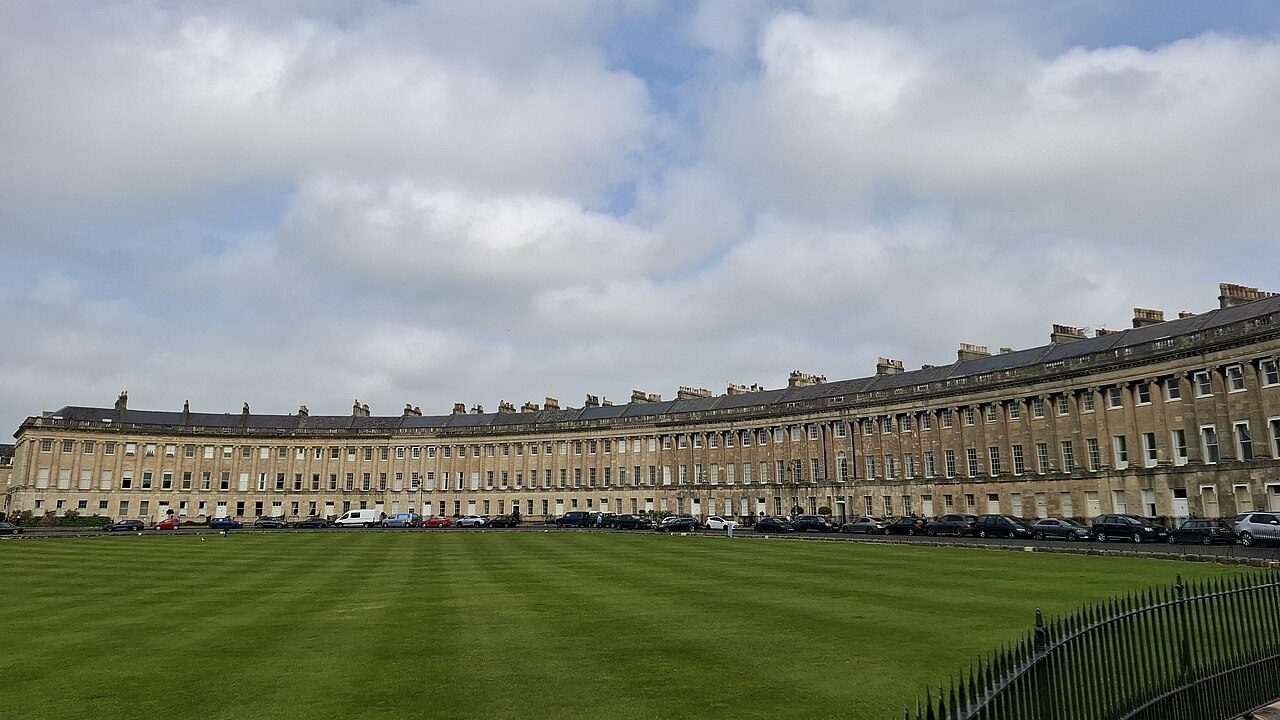
The Royal Crescent is about 15 minutes' walk from Bath city centre and Bath Spa station.
Best time to visit
Late afternoon and sunset light make the stone glow golden. The Crescent is beautiful in every season.
Frequently asked questions
Can you go inside the Royal Crescent? Yes, at the No. 1 Royal Crescent museum. Most houses are private.
Who designed it? John Wood the Younger.
Is it free to visit? Yes, from outside.
Stand on the lawn as the sun sets and the Crescent glows gold, and you'll understand why Bath was once the most elegant place in Britain.

Comments
Been here, or planning to go? Share a tip or ask a question.
Sign in with Google to comment or vote. Your email is never shown.