 WaTrips

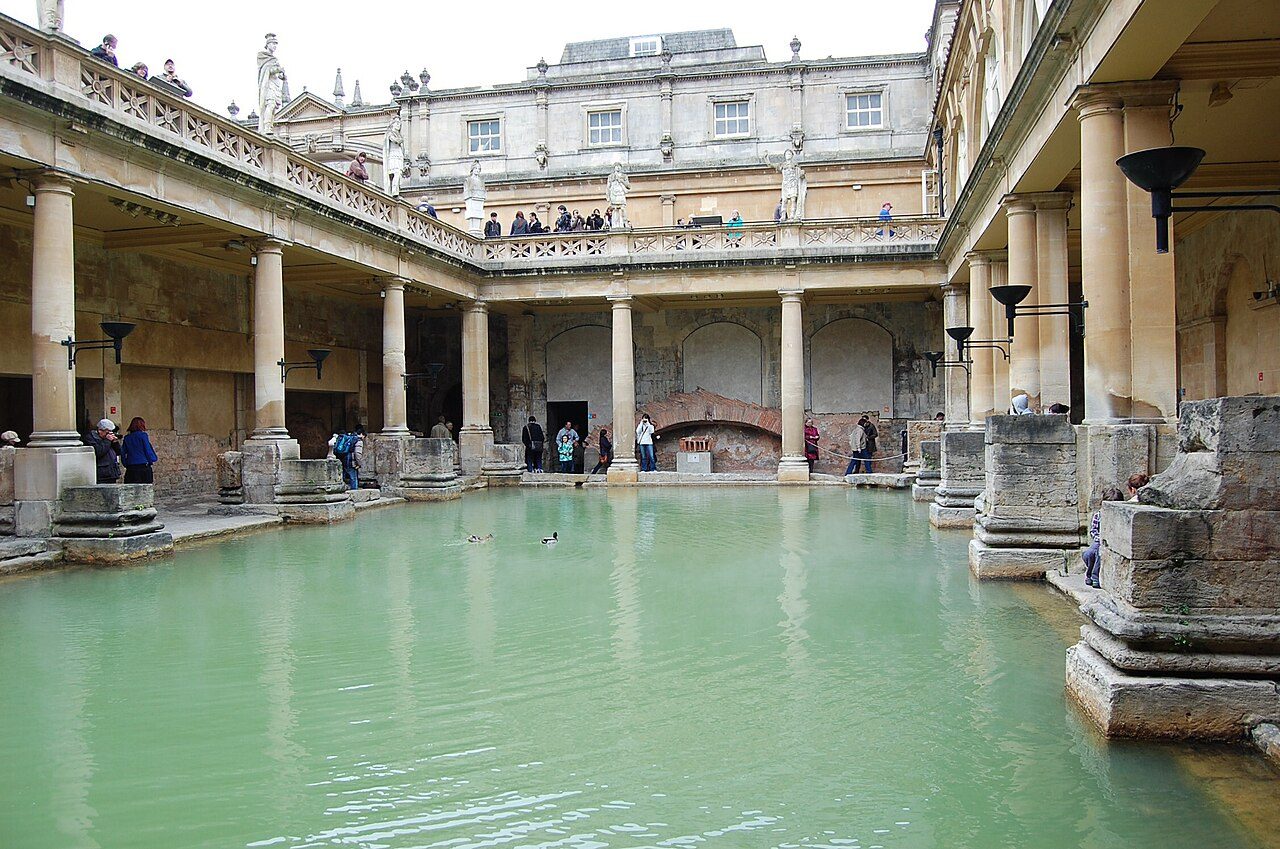
Steam rises from a great rectangular pool of green water, drifting up past stone columns and statues of Roman emperors gazing down from the terrace above. The water is warm, bubbling up from deep beneath the earth, just as it has for thousands of years. Two thousand years ago, Romans swam, gossiped and prayed here, in a grand temple and bathing complex built around Britain's only hot springs. Today, the pool still steams, and the stones around it still carry the marks of their feet.
The Roman Baths, in the centre of the city of Bath, are one of the best-preserved Roman religious spas in the world, and the heart of a city that is itself a UNESCO World Heritage Site. This guide explains their story and how to visit.
Britain's hot springs
Bath's springs are the only naturally hot springs in Britain. Rainwater falls on the nearby Mendip Hills, sinks deep underground, is heated by the earth and rises again here at a temperature of around 46°C. More than a million litres of mineral-rich water emerge every day. Long before the Romans, the Celtic people of the area considered the springs sacred, dedicated to their goddess Sulis.
Aquae Sulis
After the Romans invaded Britain in AD 43, they built a temple and bathing complex around the springs, beginning around AD 60 to 70. They named the town Aquae Sulis, the waters of Sulis, and identified the Celtic goddess with their own Minerva, worshipping her as Sulis Minerva. Over the following centuries, the complex grew into a grand series of pools, saunas and heated rooms, drawing visitors from across the Roman Empire.
The Great Bath
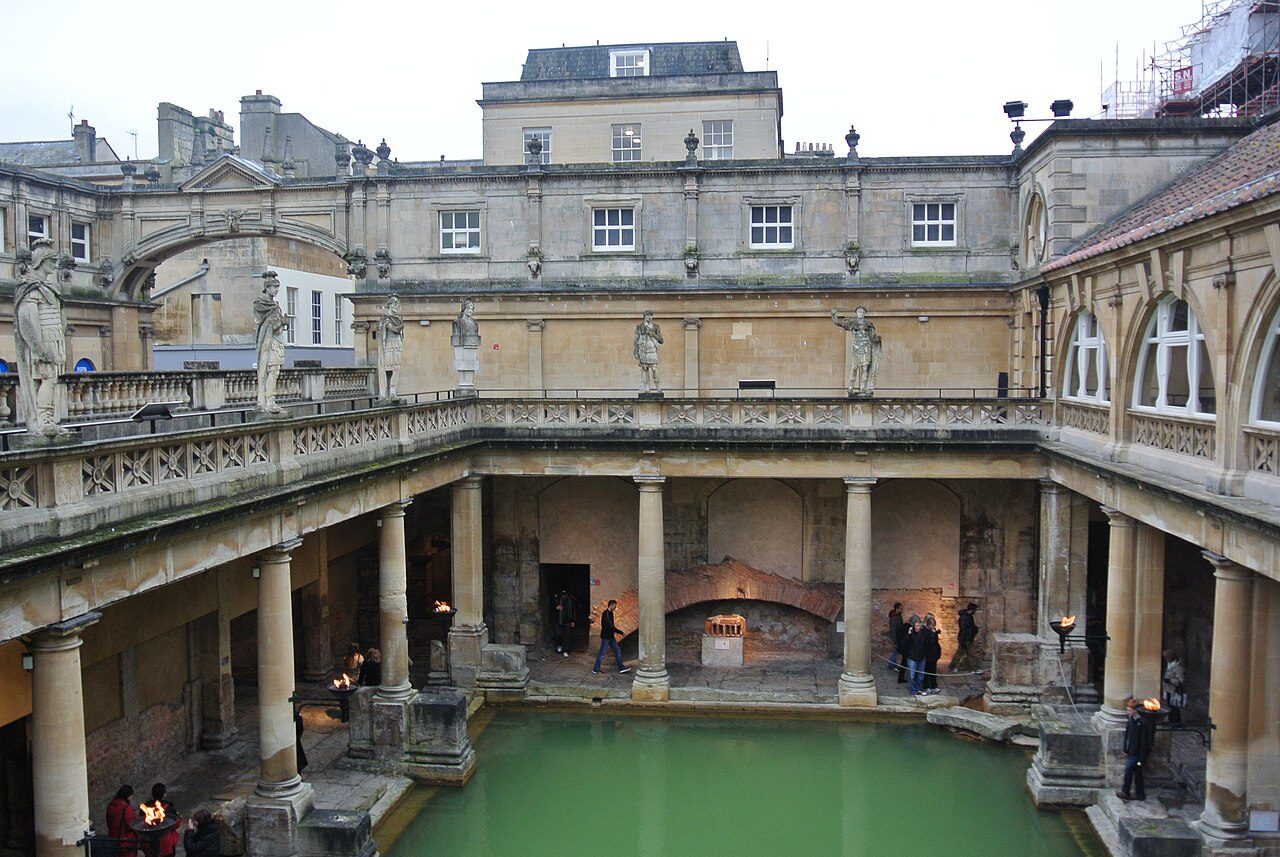
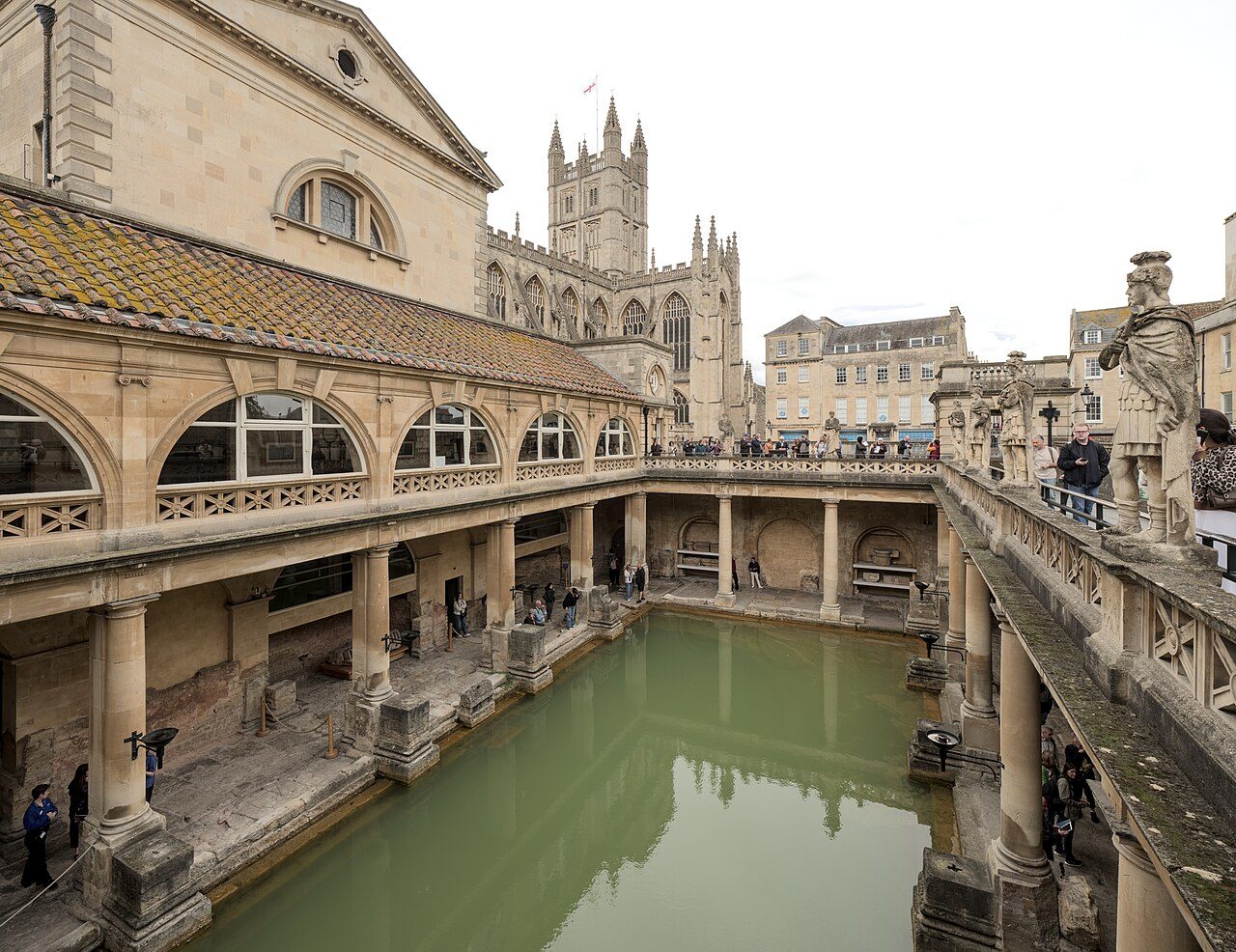
The Great Bath, the centrepiece of the complex, is a large pool lined with lead and fed by the hot spring. In Roman times, it was covered by a great vaulted roof. The pillars, terraces and statues around the pool today were added in the 19th century, when the Roman remains were rediscovered and excavated, but much of the pool and its surroundings are Roman.
Treasures of the temple
The museum displays extraordinary finds. The carved pediment of the temple features a fierce face, often called the Gorgon's head, surrounded by flowing hair and snakes. The gilt bronze head of Sulis Minerva, discovered in 1727, is one of the most famous Roman objects found in Britain. You can also see the Sacred Spring itself, where the hot water bubbles up, and the remains of the temple courtyard and changing rooms.
Curses to the goddess
Among the most fascinating finds are more than a hundred small sheets of lead or pewter inscribed with curses. Romans who had been wronged, often by theft, threw them into the sacred spring, asking the goddess to punish the culprits. They often named the stolen items, from cloaks to coins, and sometimes listed suspects, giving a vivid picture of everyday life and grievances.
The Georgian revival
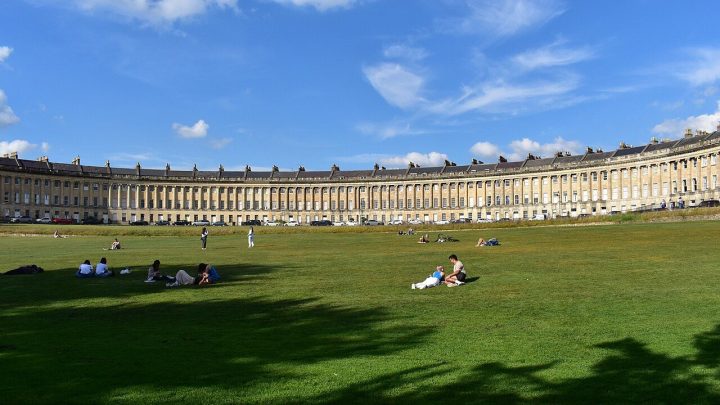
In the 18th century, Bath became the most fashionable spa town in Britain. Elegant society came to take the waters and socialise, and the city was rebuilt in honey-coloured stone. The Pump Room, overlooking the baths, was built at the end of the 18th century as a place to drink the spa water and meet. It's now a restaurant, and you can still taste the warm mineral water there. Visitors can't bathe in the Roman Baths, but at the modern Thermae Bath Spa nearby, you can swim in the naturally warm water, including in an open-air rooftop pool.
Things not to miss
- ✓See the steaming Great Bath.
- ✓Watch the hot water bubble up in the Sacred Spring.
- ✓See the gilt bronze head of Sulis Minerva.
- ✓Read the Roman curse tablets.
- ✓Taste the spa water in the Pump Room.
- ✓Bathe in the rooftop pool at Thermae Bath Spa.
How to get there
Bath is about 90 minutes by train from London Paddington. The Roman Baths are in the city centre, about 5 to 10 minutes' walk from Bath Spa station, next to Bath Abbey.
Tickets and opening hours
Tickets with timed entry are best booked online. Audio guides are included. In summer, the baths sometimes open in the evening, when the pools are lit by torches. Check current prices and times before you go.
Best time to visit
Arrive at opening time to avoid the crowds, especially in summer and during school holidays. Torchlit evening visits in summer are particularly atmospheric.
Frequently asked questions
Can you swim in the Roman Baths? No, but you can bathe at Thermae Bath Spa nearby.
How old are the Roman Baths? They were begun around 2,000 years ago.
How long should I spend there? About two hours.
Watch the steam drift over the Great Bath as the light fades, and you'll feel the presence of all the Romans who came here to bathe, pray and curse their enemies nearly two thousand years ago.

Comments
Been here, or planning to go? Share a tip or ask a question.
Sign in with Google to comment or vote. Your email is never shown.