
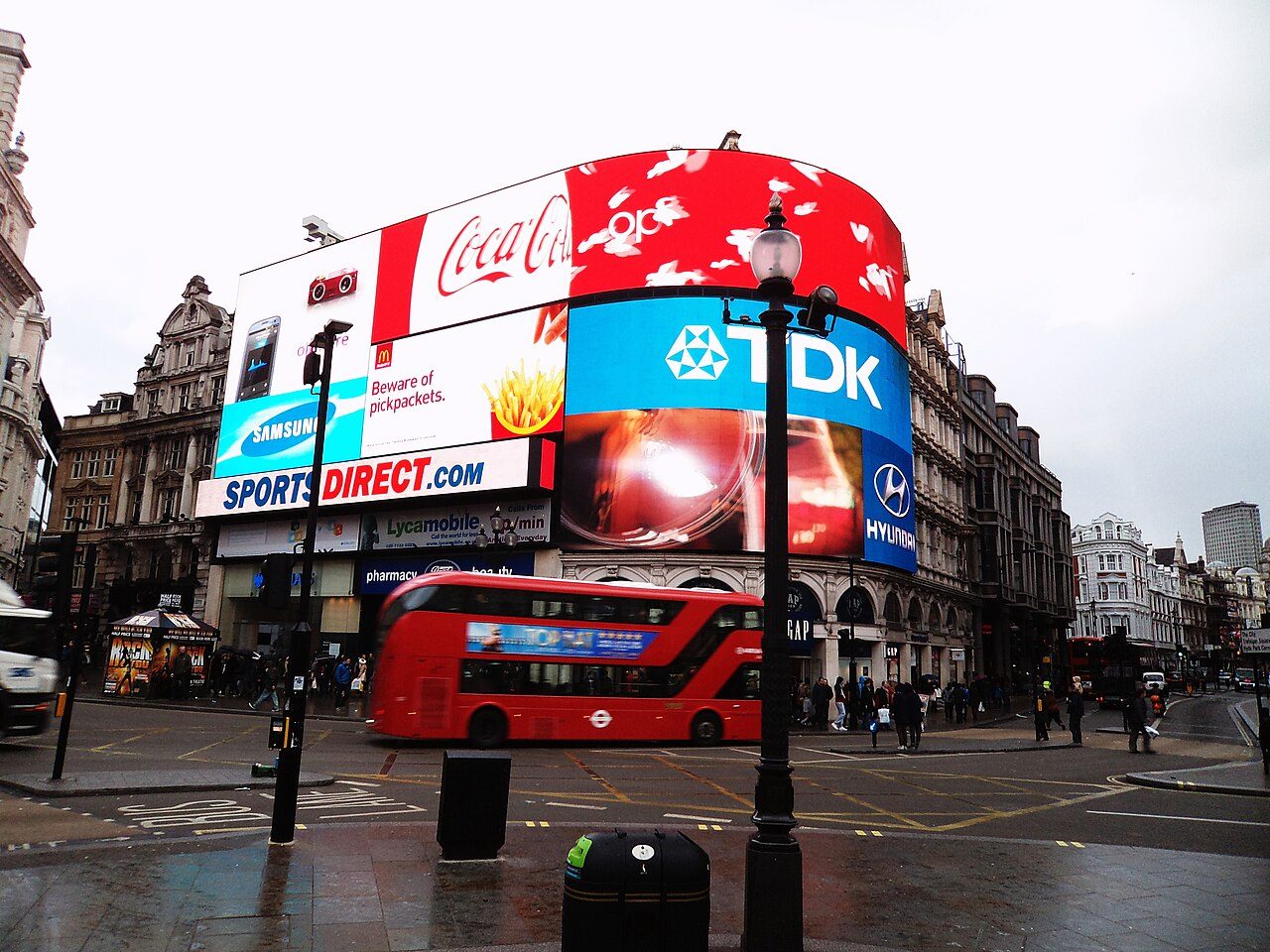
As darkness falls, the giant curved screens on the corner building blaze into life, throwing coloured light across the faces of the crowd below. Black cabs and red double-decker buses swirl around the junction, horns sound, and people sit on the steps of a fountain beneath a winged figure poised on one foot with his bow drawn. In every direction, streets lead off towards theatres, restaurants, shops and bars. For more than a century, this has been one of the busiest, brightest crossroads in the world.
Piccadilly Circus, in the heart of London's West End, is a famous meeting point and a symbol of the city's energy. This guide explains its story and what to see nearby.
A name from a fashion accessory
In the early 17th century, a tailor named Robert Baker made his fortune selling piccadills, stiff decorative collars and ruffs that were highly fashionable at the time. He built a large house in the area, which people mockingly nicknamed Piccadilly Hall. The name stuck, and the main road to the west became Piccadilly.
Nash's junction
In 1819, the architect John Nash created a circular junction here to connect Piccadilly with his grand new Regent Street, part of a plan to link the Prince Regent's home with Regent's Park. The word circus comes from the Latin for circle, describing a round open space where streets meet. Later changes, including the construction of Shaftesbury Avenue, altered its shape, and it's no longer truly circular.
The statue everyone calls Eros
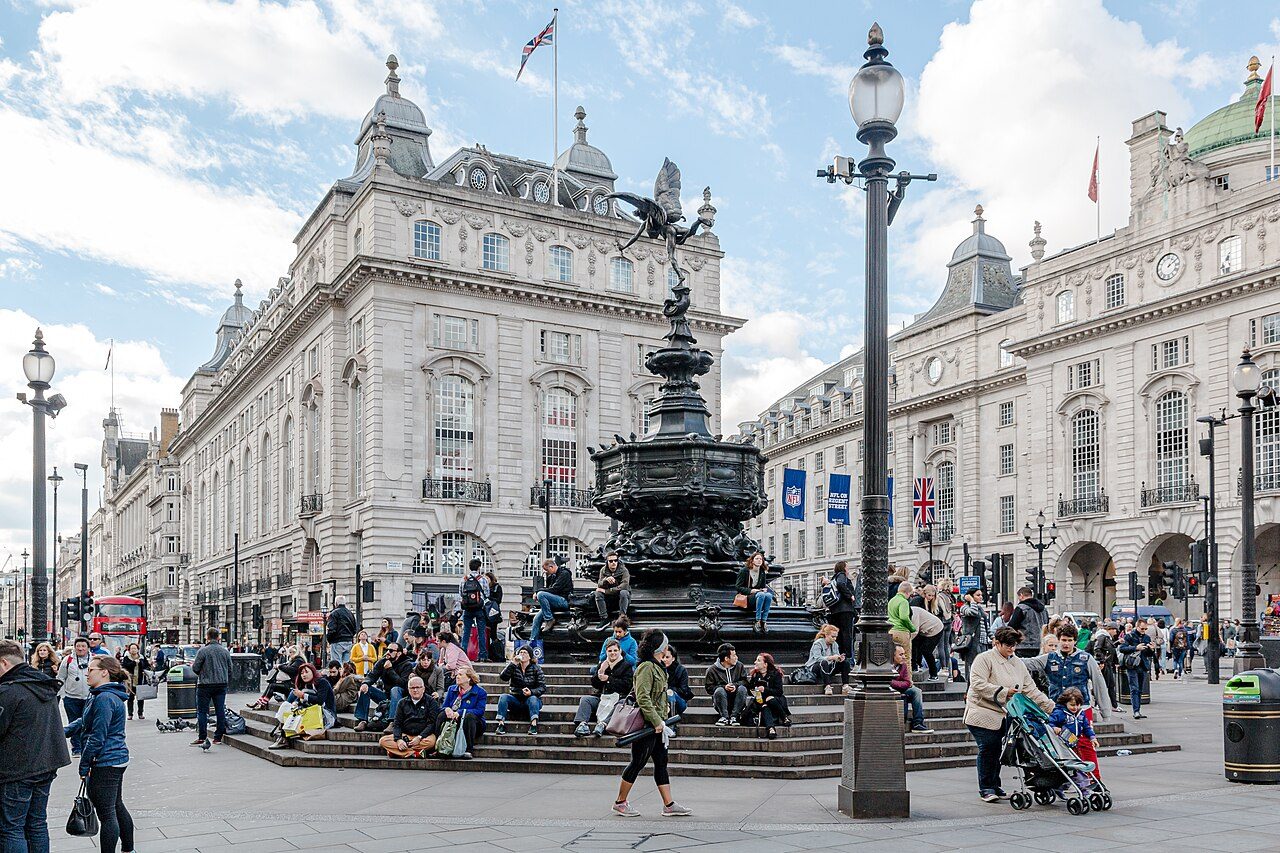
At the centre of the circus stands the Shaftesbury Memorial Fountain, unveiled in 1893 to honour the Earl of Shaftesbury, a Victorian politician and campaigner who fought to improve conditions for factory workers and poor children. On top stands a winged archer, made of aluminium, one of the first statues cast in that metal, by the sculptor Alfred Gilbert. Almost everyone calls the statue Eros, but it was intended to represent his brother Anteros, a symbol of selfless love, reflecting Shaftesbury's charitable work.
The bright lights
The first illuminated advertisements appeared on the buildings of Piccadilly Circus in the early 20th century, and the corner became famous for its neon signs. Today, a single giant curved digital screen dominates the northern side, one of the most famous advertising spaces in the world. The lights have been switched off only on rare occasions, such as during the Second World War and for moments of national mourning.
Theatres and the West End
Piccadilly Circus is at the edge of Theatreland. The Criterion Theatre, beneath the circus itself, is one of London's most charming Victorian theatres. Shaftesbury Avenue, leading northeast, is lined with theatres showing plays and musicals, and Leicester Square and Soho, with their restaurants and nightlife, are just a few minutes away.
Shopping and historic shops
Regent Street curves north with its elegant shopfronts, and Piccadilly runs west towards Green Park. Along Piccadilly, you'll find Fortnum and Mason, the grand old department store famous for its tea and hampers, Hatchards, London's oldest surviving bookshop, the Burlington Arcade, a covered Regency shopping arcade with uniformed beadles, and the Royal Academy of Arts.
Things not to miss
- ✓See the illuminated screens after dark.
- ✓Sit on the steps of the Shaftesbury Memorial Fountain.
- ✓Watch a show in the West End.
- ✓Stroll along Regent Street.
- ✓Visit Fortnum and Mason and the Burlington Arcade.
- ✓See an exhibition at the Royal Academy of Arts.

How to get there
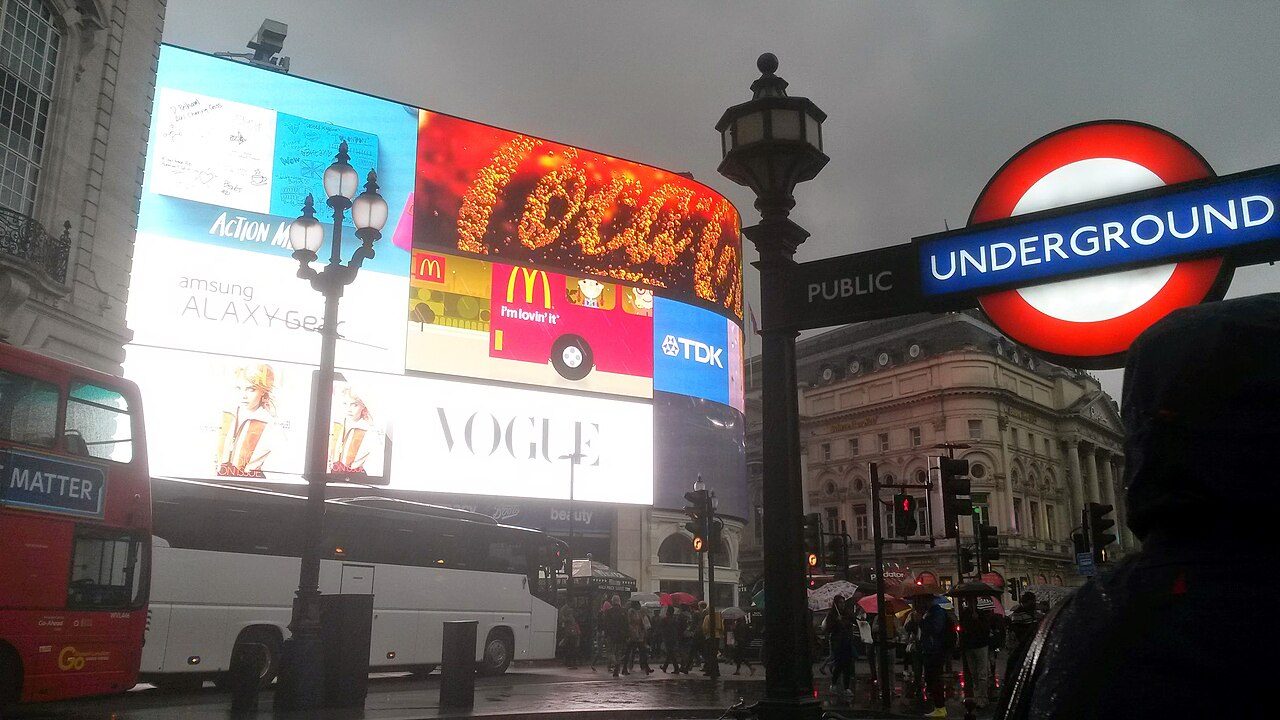
Piccadilly Circus tube station, on the Piccadilly and Bakerloo lines, opens directly onto the junction.
Best time to visit
Evenings are the most atmospheric, when the screens light up and the theatres fill. The area is busy at all hours, especially on weekends.
Frequently asked questions
Why is it called a circus? From the Latin word for circle, describing a round junction.
Is the statue really Eros? It's meant to be Anteros, Eros' brother, though most people call it Eros.
Is it free? Yes, it's a public space.
Stand by the fountain as the screens glow and the city roars around you, and you'll feel the restless, glittering energy that makes London's West End unique.

Comments
Been here, or planning to go? Share a tip or ask a question.
Sign in with Google to comment or vote. Your email is never shown.