

Inside the great glasshouse, the air is hot and heavy, and drops of water fall from the leaves of palm trees towering towards the curved glass roof. You climb a white spiral staircase to a narrow walkway high among the fronds and look down on a jungle of bananas, cocoa trees and giant ferns. Outside, beyond the glass, a lake shimmers, peacocks wander, and an ornate Chinese pagoda rises above the trees. You're still in London, but it feels like a journey around the world.
The Royal Botanic Gardens, Kew, on the banks of the Thames in southwest London, is one of the most important botanical gardens in the world and a UNESCO World Heritage Site. This guide explains its story and highlights.
A royal garden
Kew's history as a garden began in the 18th century, when Princess Augusta, mother of King George III, founded a botanical garden here in 1759. Under the guidance of the naturalist Sir Joseph Banks, who had sailed with Captain Cook, Kew began to collect plants from around the world, sending plant hunters across the globe.
In 1840, the gardens became a national botanical garden. Today, Kew is a world-leading centre of plant science, with one of the largest collections of living plants anywhere, as well as a vast herbarium, library and laboratories. Its Millennium Seed Bank, at its sister garden of Wakehurst in Sussex, stores seeds from tens of thousands of plant species to protect them from extinction.
The Palm House
The Palm House, built in the 1840s by the architect Decimus Burton and the engineer Richard Turner, is one of the most important surviving Victorian structures of glass and iron. Inside, a tropical rainforest climate supports palms, fruit trees and plants used for food, medicine and materials. Beneath it, a marine display shows life in tropical seas.
The Temperate House
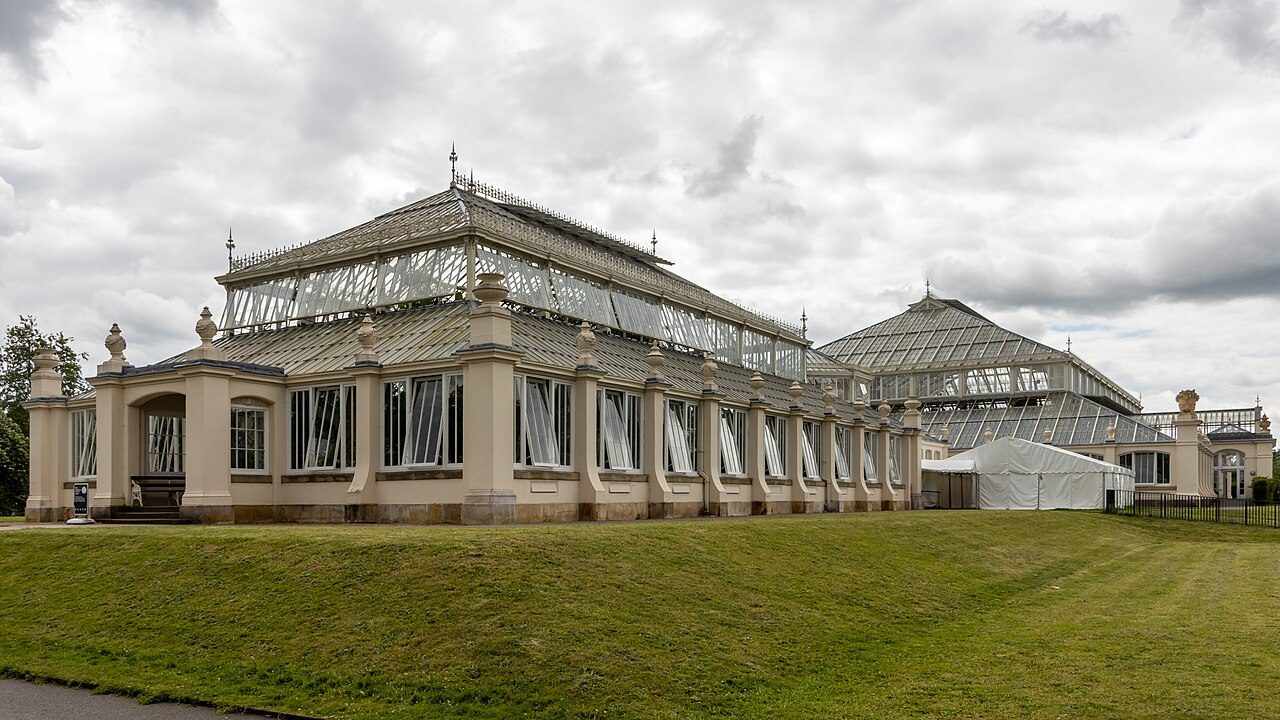
The Temperate House, also designed by Burton, is the largest surviving Victorian glasshouse in the world. It reopened in 2018 after a major restoration and houses plants from temperate regions of Africa, Australia, the Americas and Asia, including some of the rarest plants on Earth.
The Great Pagoda
Built in 1762 by the architect Sir William Chambers, the Great Pagoda is a ten-storey Chinese-style tower about 50 metres high, inspired by Europe's fascination with Chinese art. It was originally decorated with dozens of carved dragons, which disappeared over time; they were recreated and returned in a restoration completed in 2018. You can climb the pagoda for views over the gardens at certain times of year.
The Treetop Walkway and The Hive
The Treetop Walkway, 18 metres above the ground, lets you walk among the crowns of oaks, chestnuts and limes. Nearby, The Hive, a large sculpture of aluminium, is inspired by the life of a beehive, with lights and sounds that respond to the activity of real bees in the gardens.
Kew Palace
Kew Palace, a small red-brick palace built in the 17th century, was a home of King George III and his family, including during his periods of illness. It's the smallest of the royal palaces and is open seasonally.
Things not to miss
- ✓Climb the spiral staircase in the Palm House.
- ✓Explore the Temperate House.
- ✓See the dragons on the Great Pagoda.
- ✓Walk the Treetop Walkway.
- ✓Visit Kew Palace and its royal kitchens.
- ✓See the Marianne North Gallery of botanical paintings.
How to get there
Kew Gardens station, on the District line and the Overground, is a short walk from the Victoria Gate. Riverboats from Westminster also run to Kew in summer.
Tickets and opening hours
Tickets are cheaper online. Opening hours vary with the seasons. Some attractions, such as Kew Palace and the Pagoda, open only seasonally. Check current details before you go.
Best time to visit
Spring brings magnolias, cherry blossoms and bluebells; summer, roses and water lilies; autumn, glorious colours; and winter, the Christmas light trail.
Frequently asked questions
How long should I spend at Kew? At least half a day.
Is Kew worth visiting? Yes, it's one of the world's great gardens.
Can I bring a picnic? Yes, picnics are allowed in the gardens.
Stand among the palms in the warm, green air of the Palm House, and you'll understand why Kew has been inspiring gardeners, scientists and visitors for more than 250 years.

Comments
Been here, or planning to go? Share a tip or ask a question.
Sign in with Google to comment or vote. Your email is never shown.