Northern Thailand Loop: Chiang Mai, Doi Inthanon, Pai, Mae Hong Son and Chiang Rai
7 DAYS19 placesby WaTrips
Chiang Mai's temples, Doi Inthanon, the road to Pai and Mae Hong Son, and Chiang Rai's White Temple.
The north is Thailand at its greenest and coolest, and this loop suits riders well. Spend two days among Chiang Mai's old-city temples and up on Doi Suthep, then a day on Doi Inthanon, the country's highest peak. Take the famous 762 curves to Pai for sunset at the canyon, and carry on to quiet Mae Hong Son with its lakeside temple. End in Chiang Rai with the White Temple, the Blue Temple, Baan Dam and the Golden Triangle. November to February brings clear, cool mornings; avoid March and April, when smoke from field burning can be heavy.
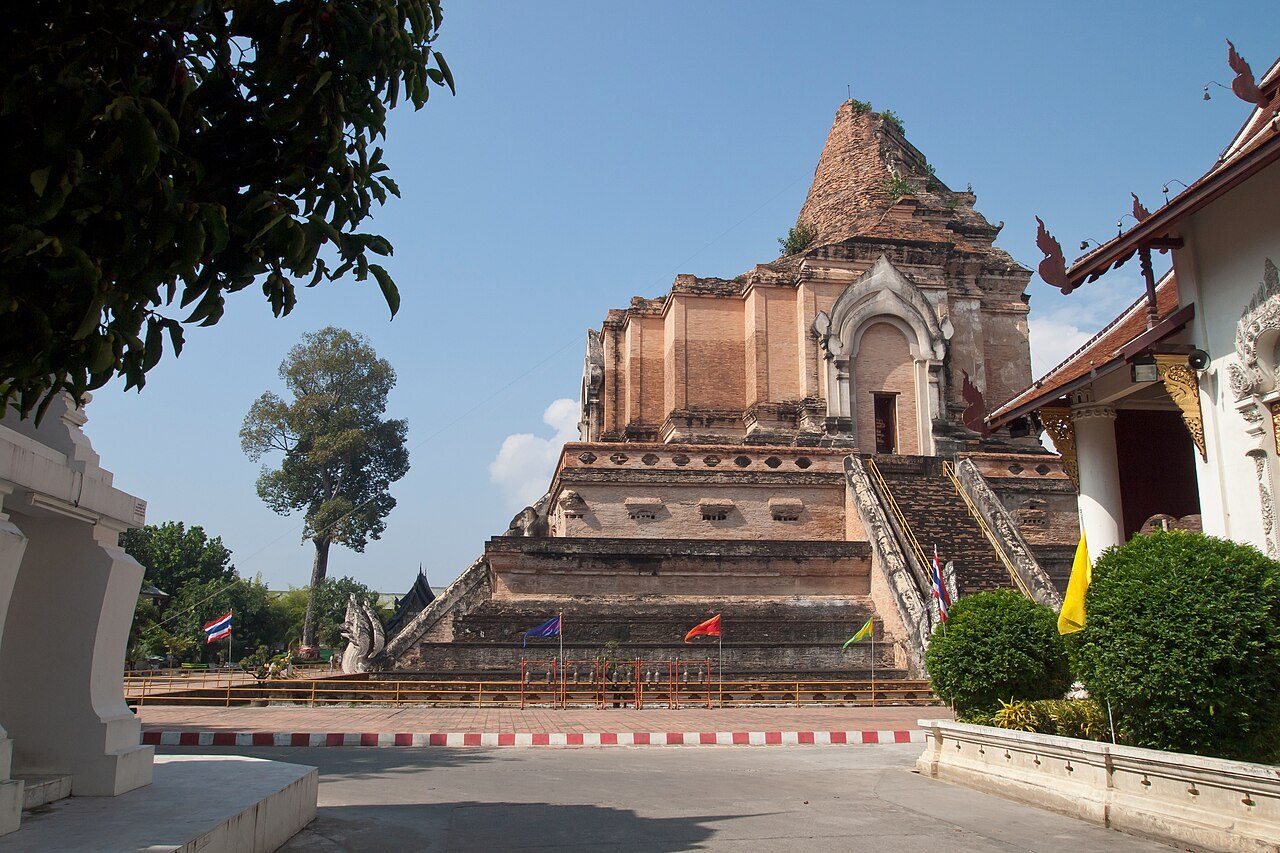
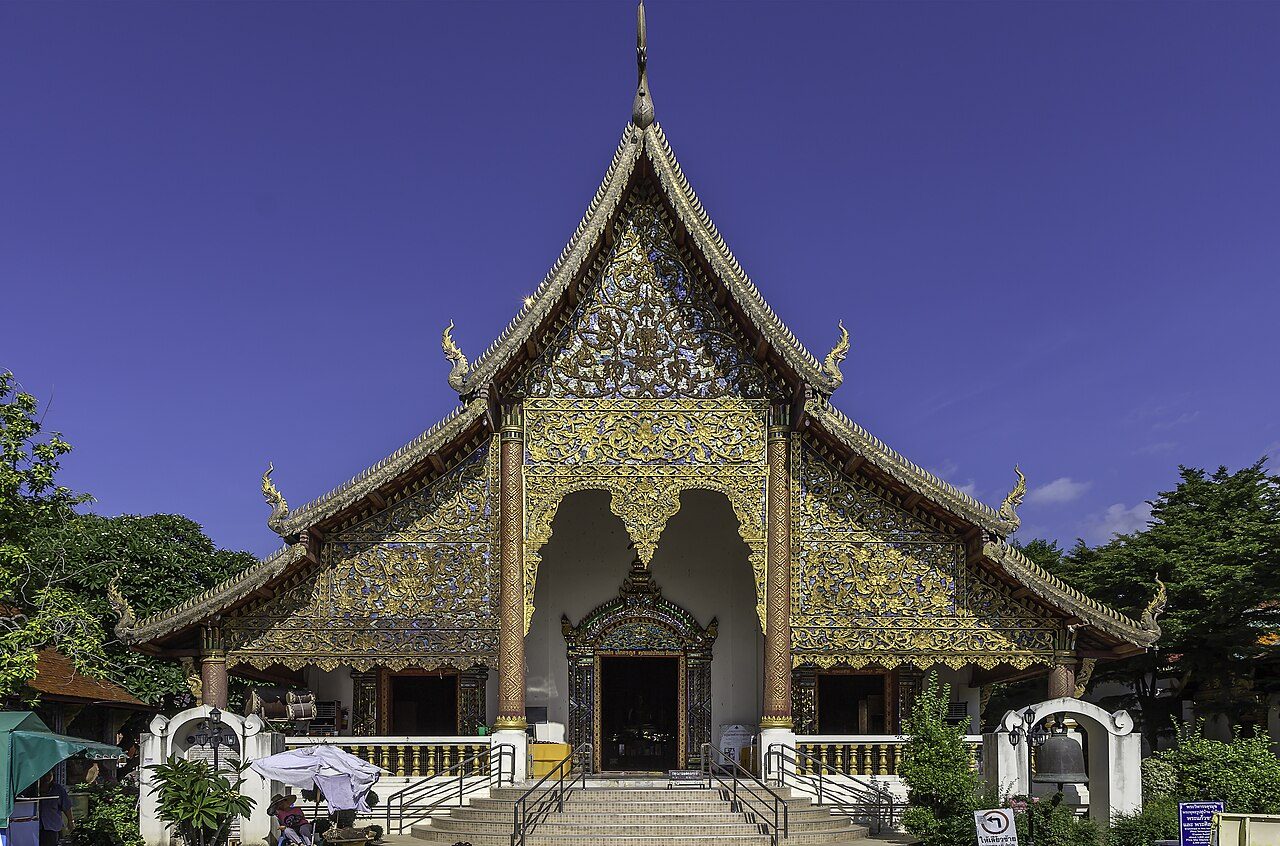
Wat Chedi Luang stands in the centre of old Chiang Mai. Its great brick chedi was built in the 15th century and once rose about 80 metres, the tallest structure in the Lanna kingdom. An earthquake in 1545 brought down its top. The Emerald Buddha was kept here for some decades. The chedi's stairs are guarded by naga serpents and elephant sculptures.
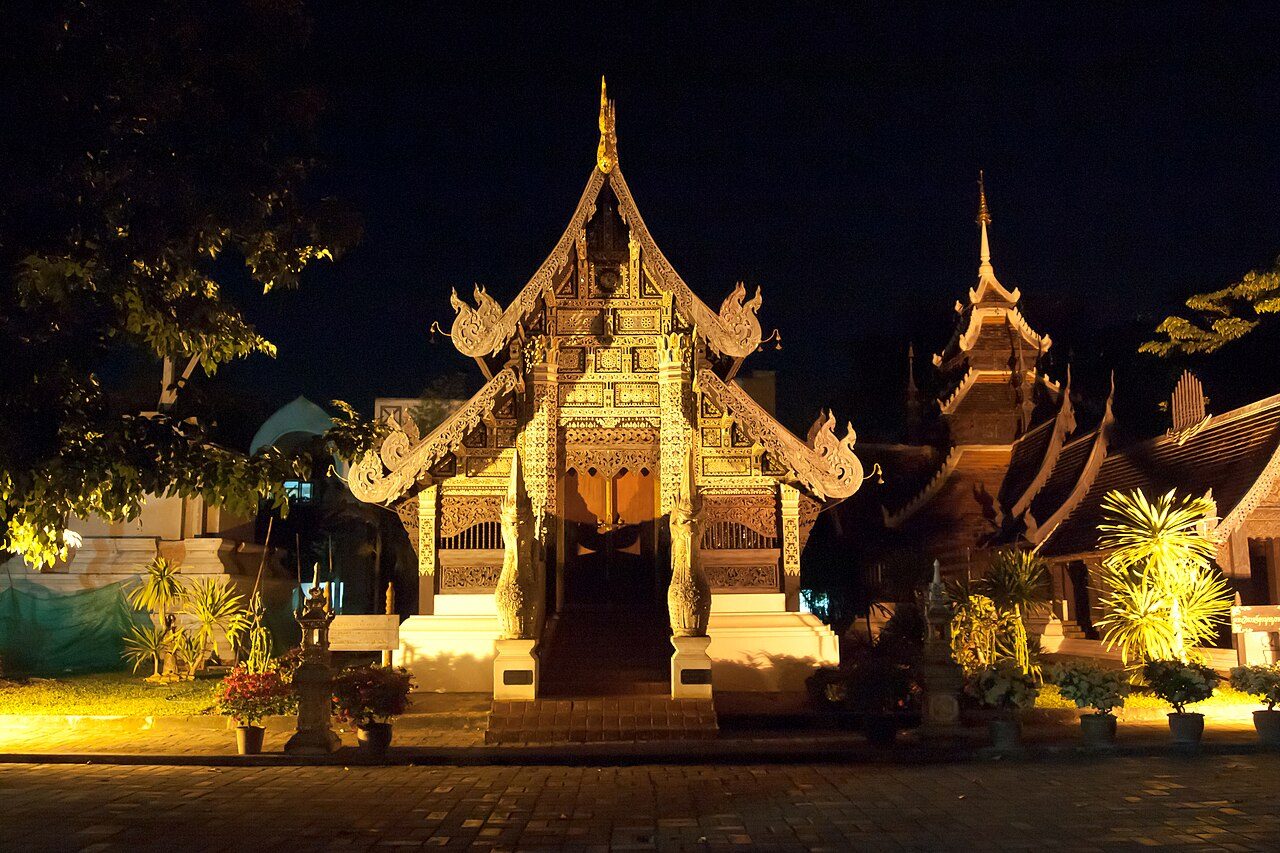
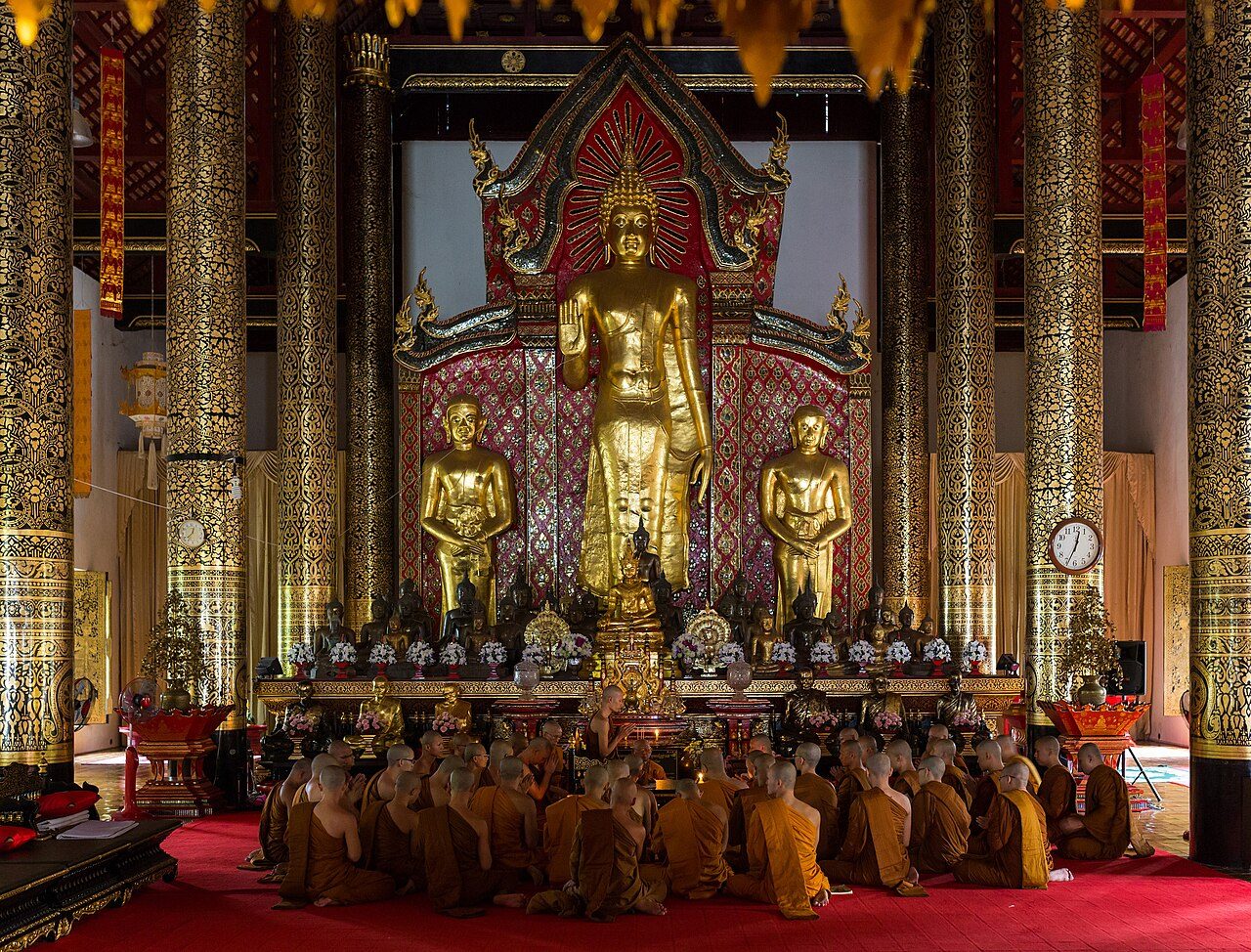
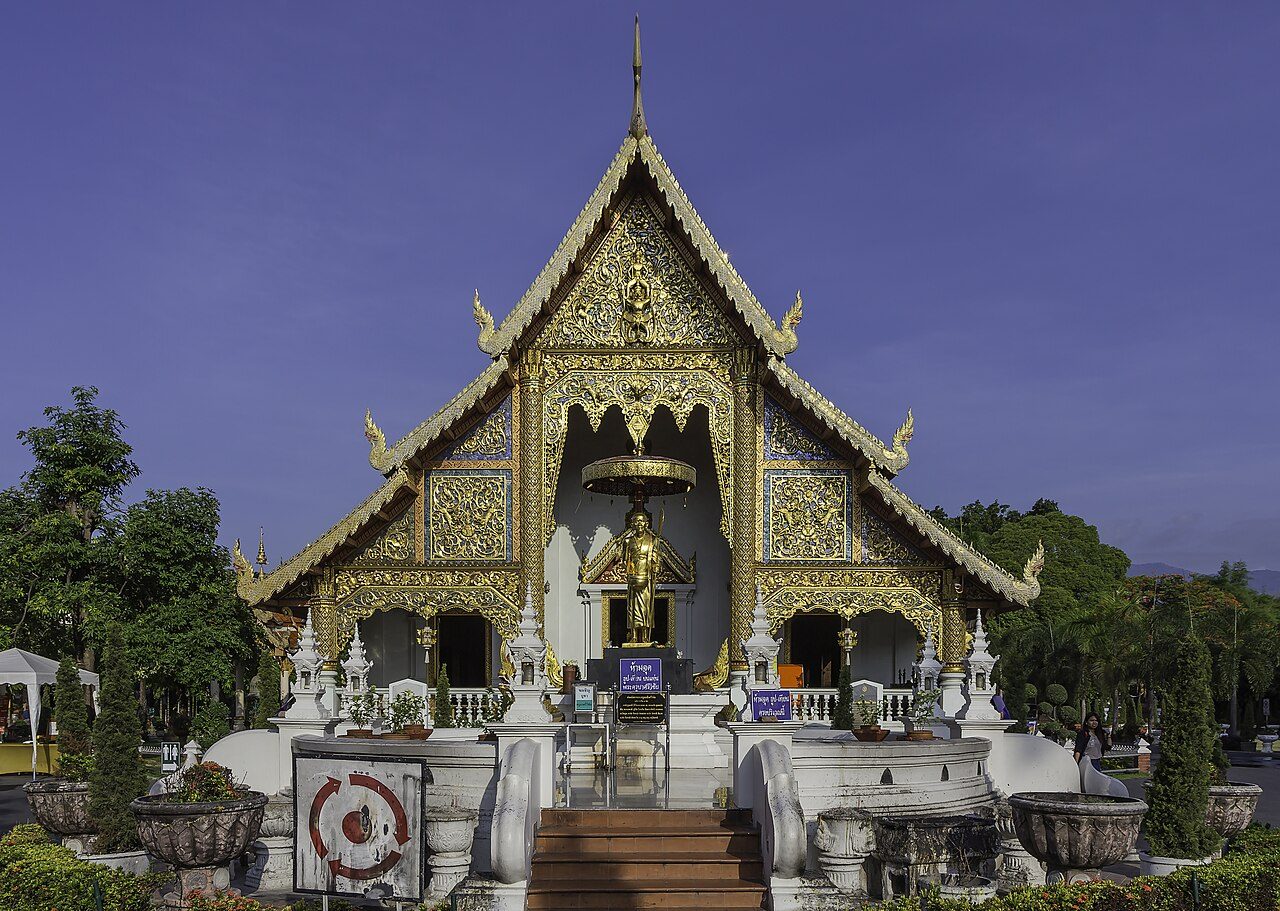
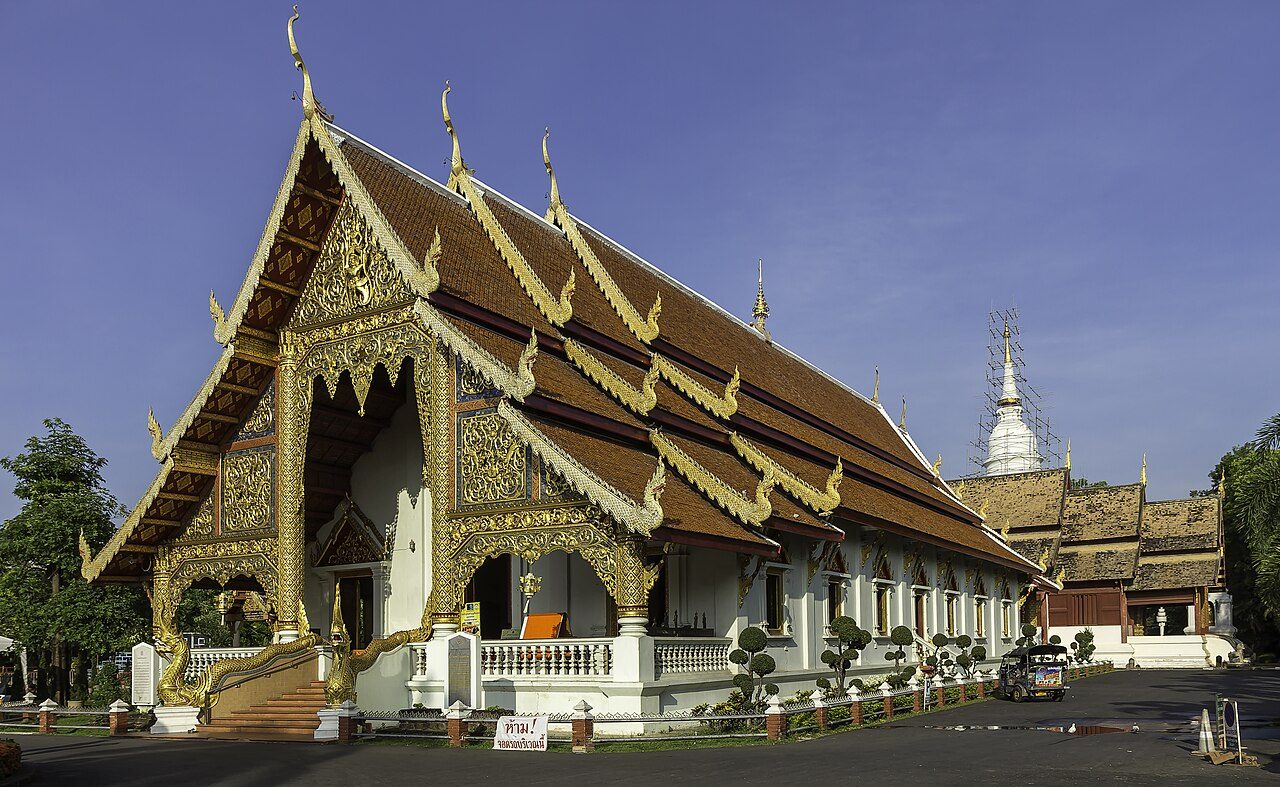
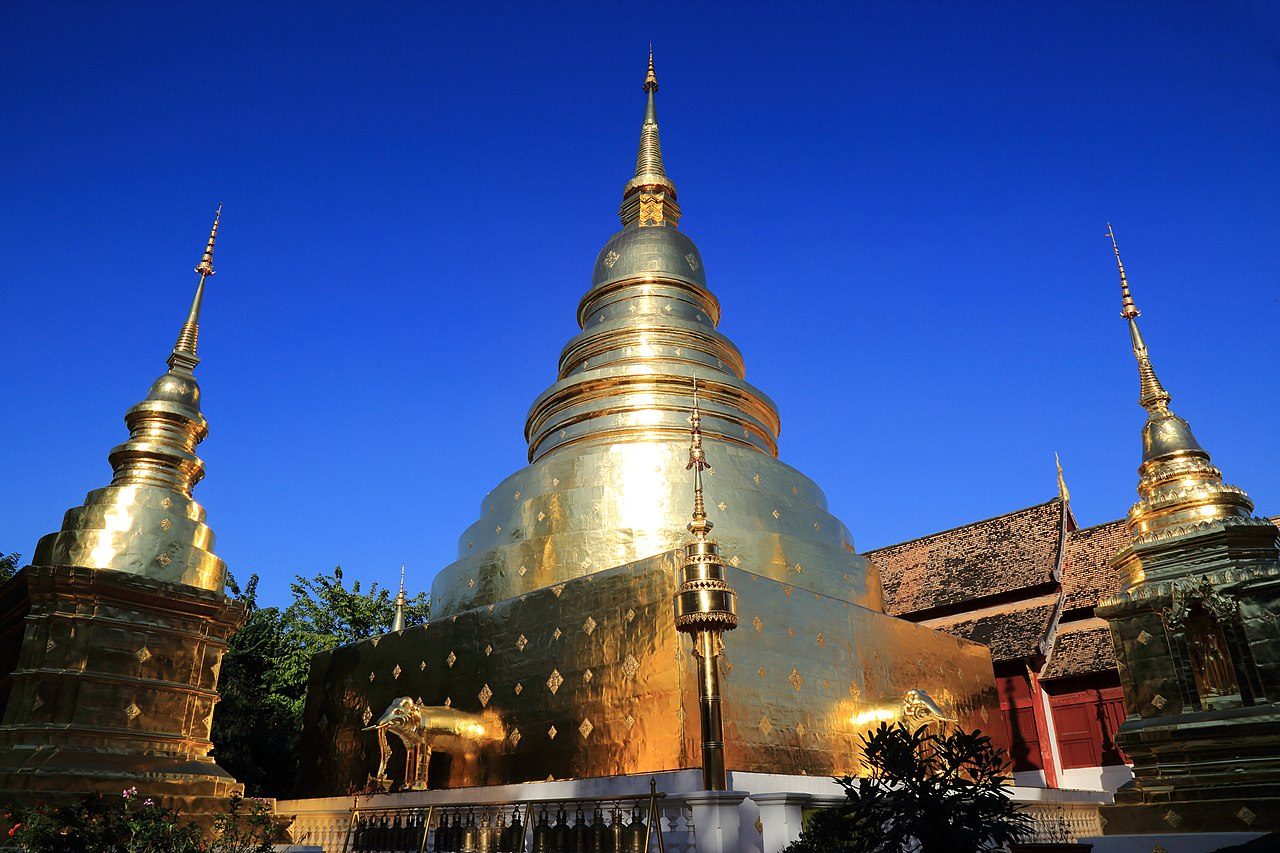
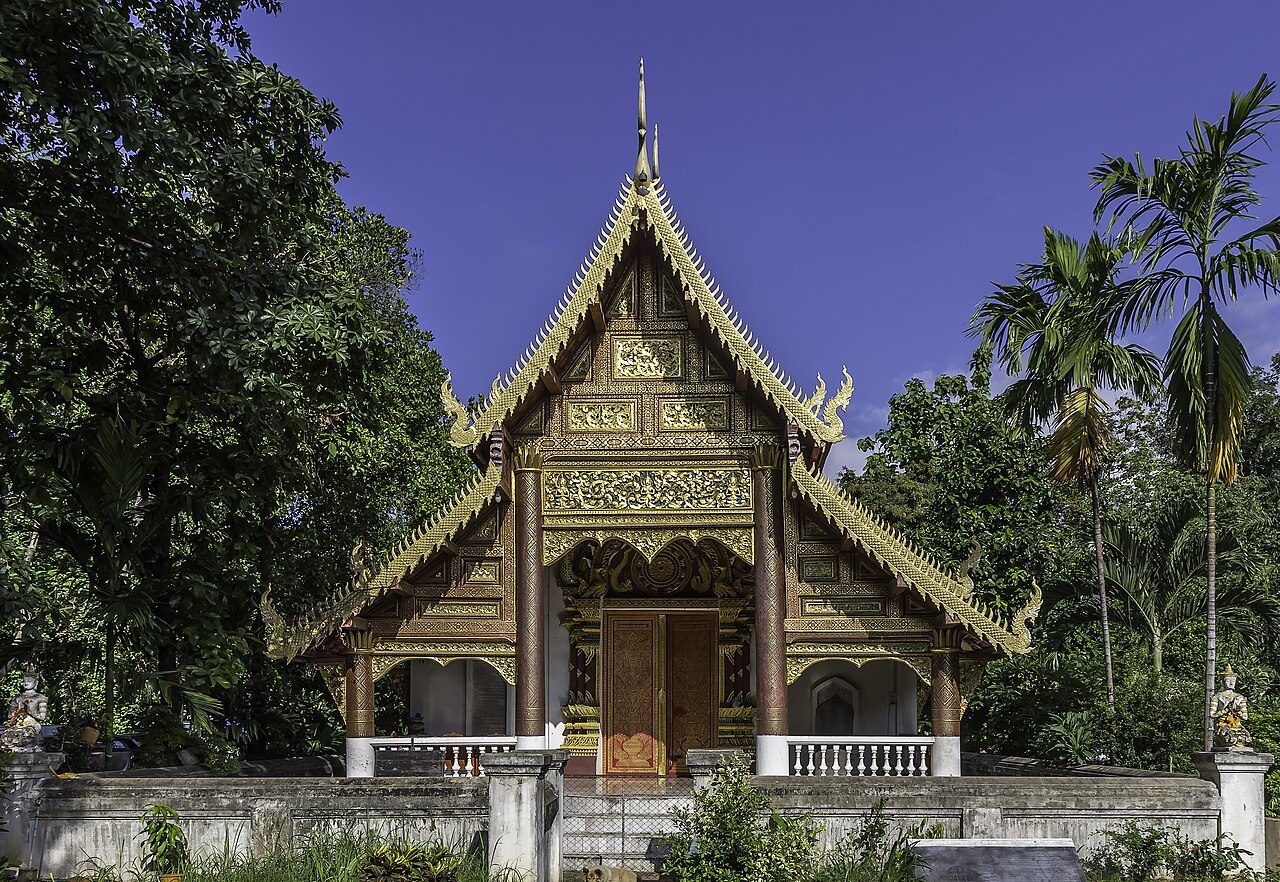
Wat Phra Singh is one of the most honoured temples in Chiang Mai, founded in 1345. It houses the Phra Buddha Sihing, a revered Buddha image paraded through the city during the Songkran new year festival. The small Lai Kham chapel is a fine example of Lanna architecture, with carved gables and wall paintings of daily life in old northern Thailand.
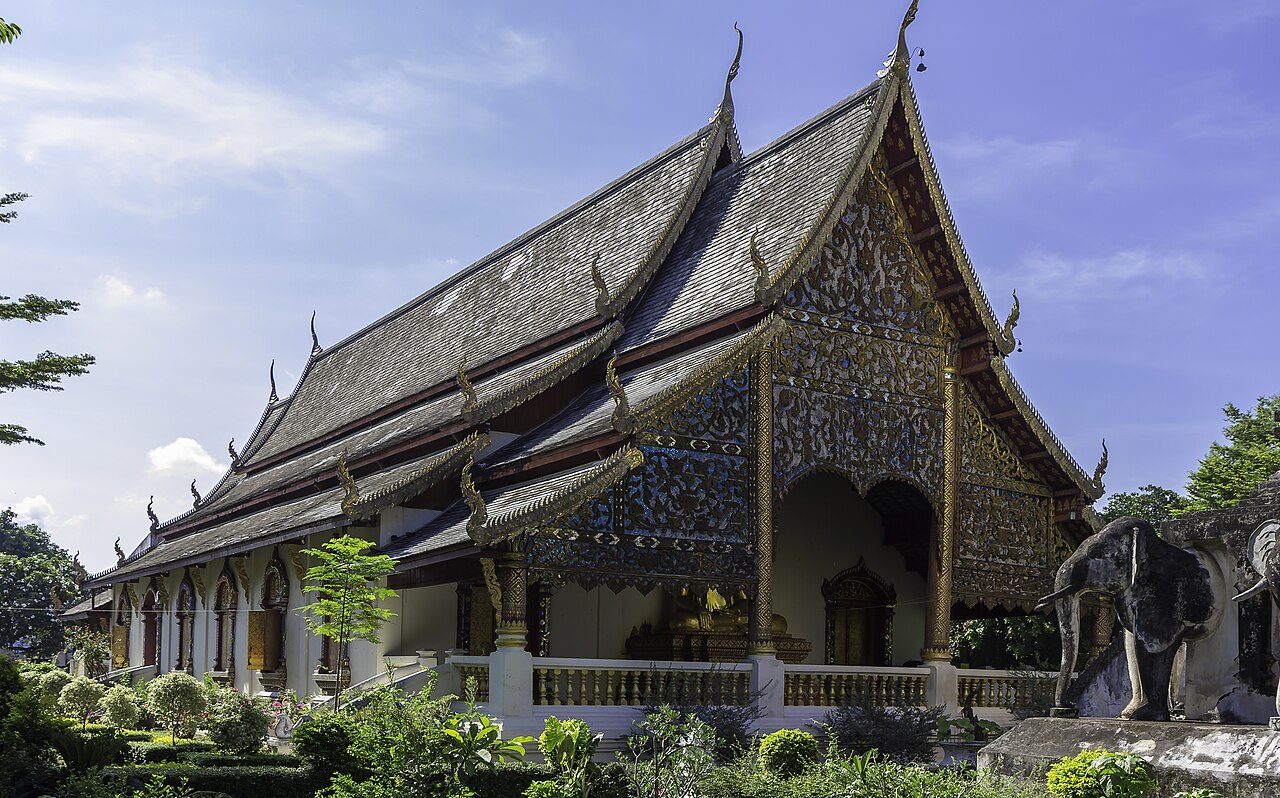
Wat Chiang Man is thought to be the oldest temple in Chiang Mai, built by King Mangrai in 1296, the year he founded the city. Its chedi rests on a base of sculpted elephants. Two small revered Buddha images are kept in one of its halls, one carved of crystal and one of marble. The main hall is a fine example of Lanna style.
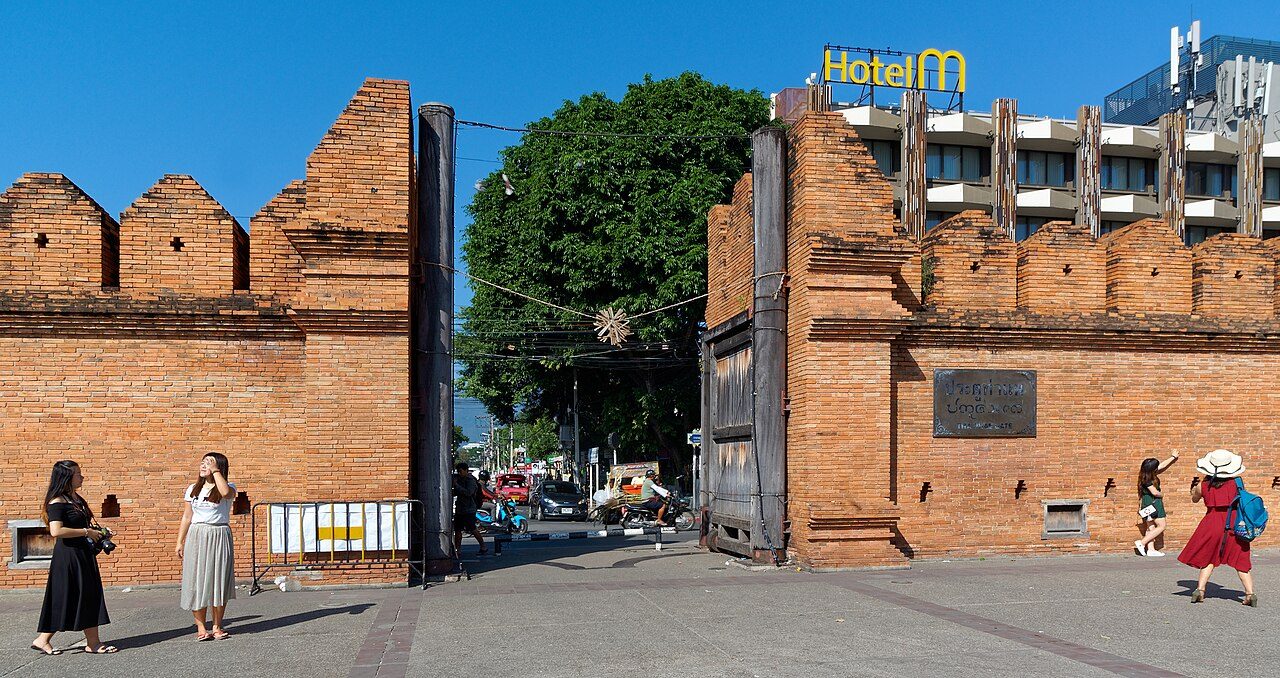
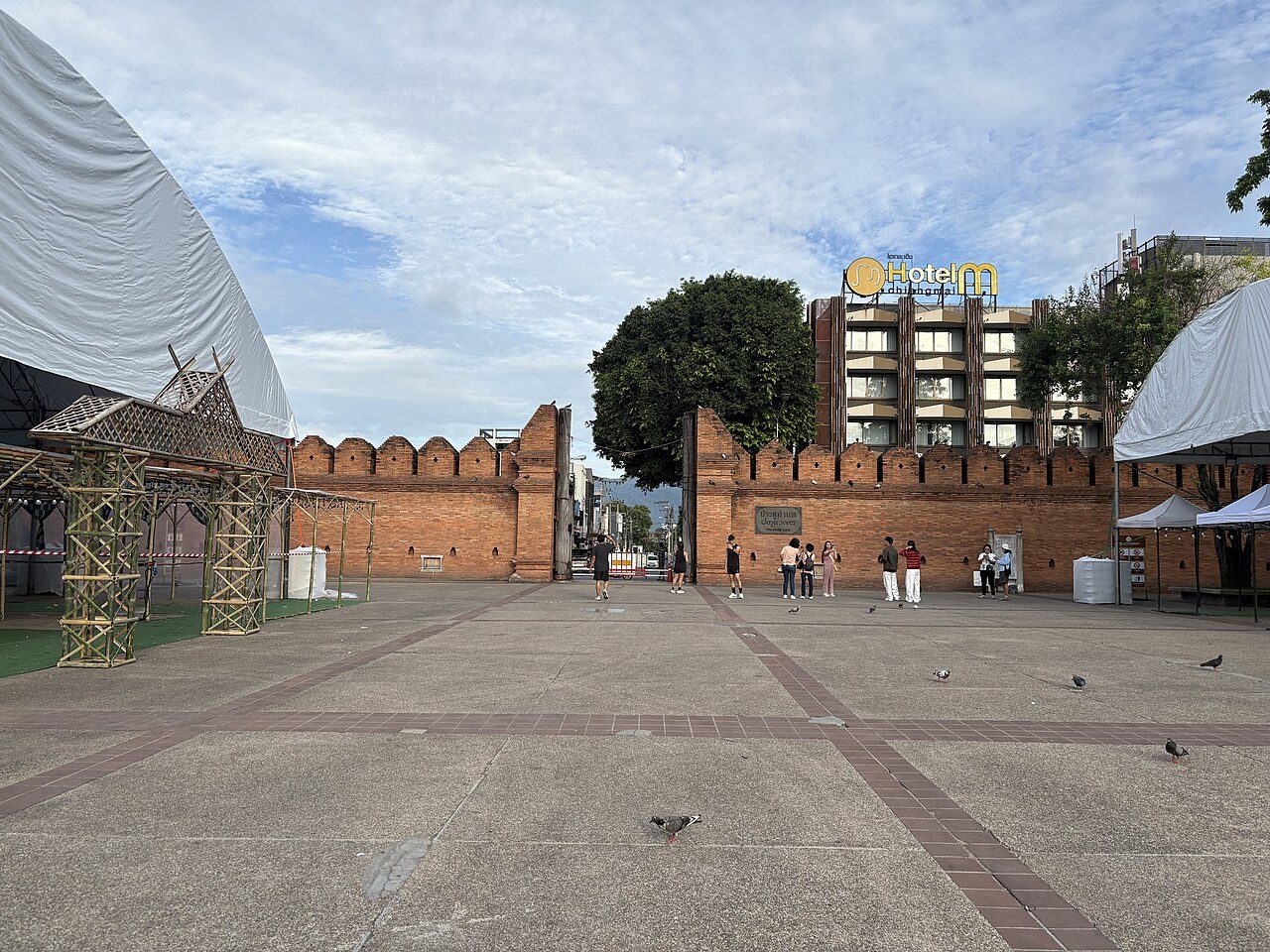
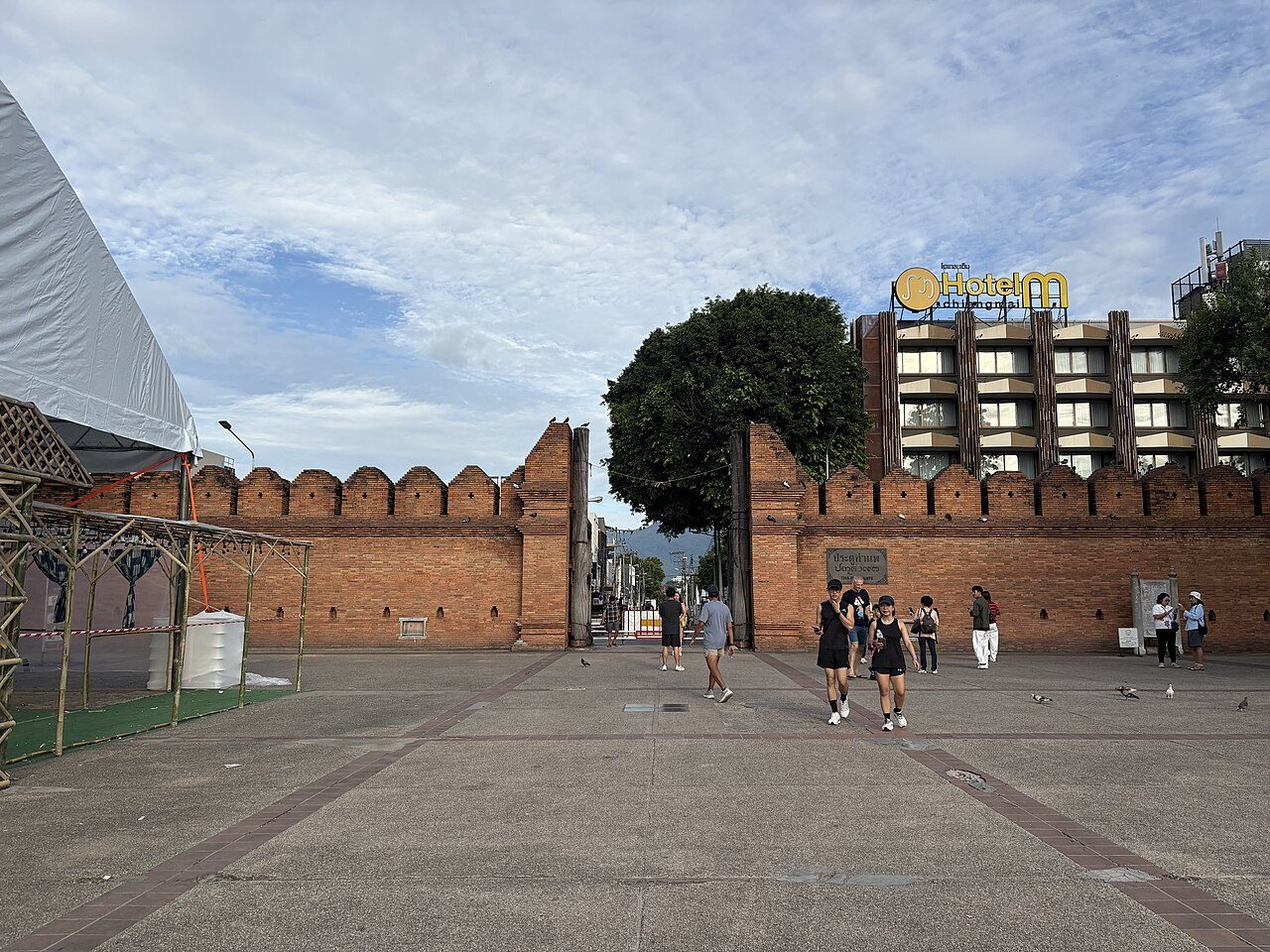
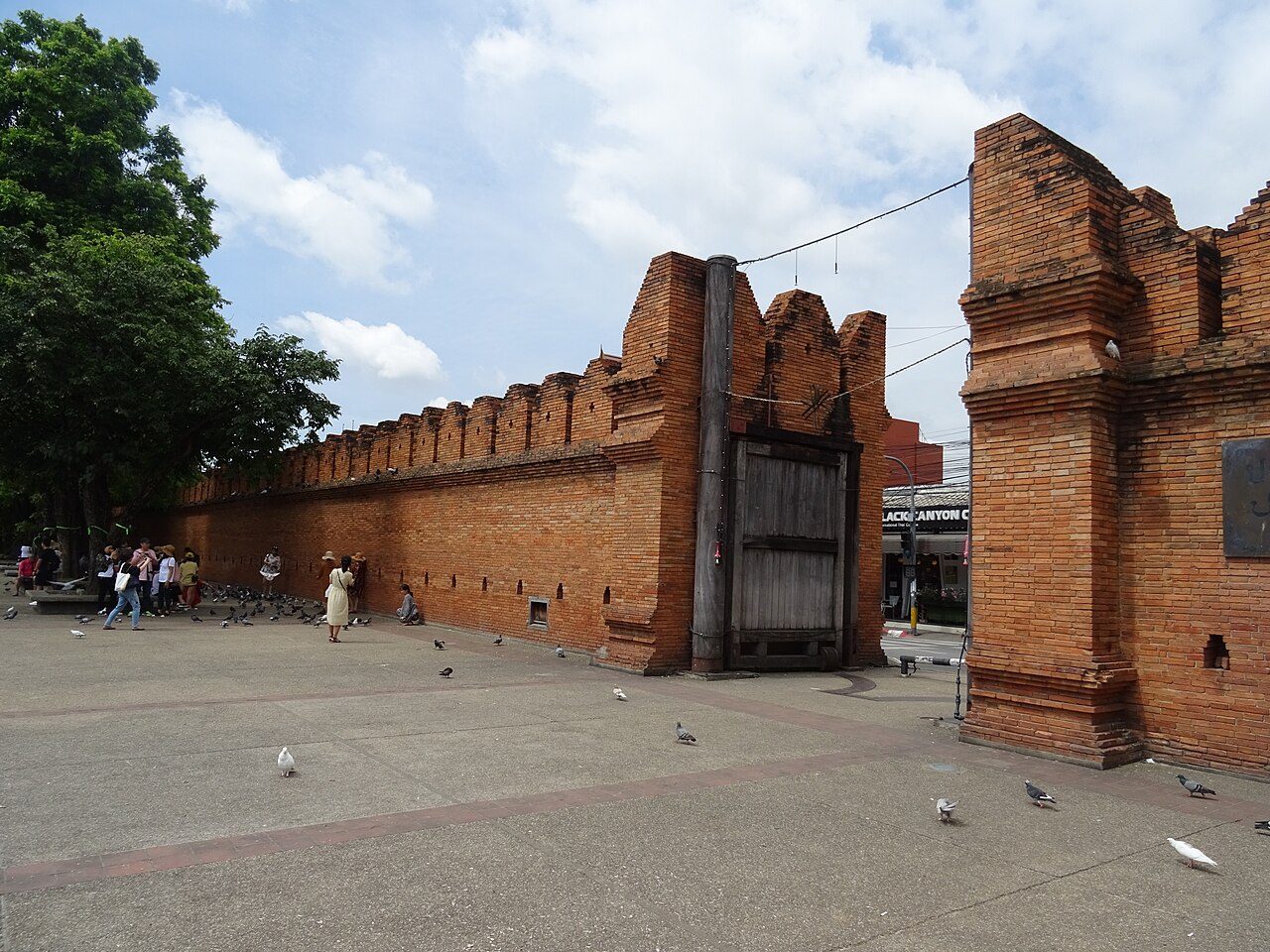
Tha Phae Gate is the best known of the gates in the old city wall of Chiang Mai. The wall and moat were built in the 13th century and rebuilt in the 19th. The present gate is a reconstruction from the 1980s, with thick brick walls and a wide square in front. It is a meeting point for festivals, and the Sunday Walking Street market starts here.
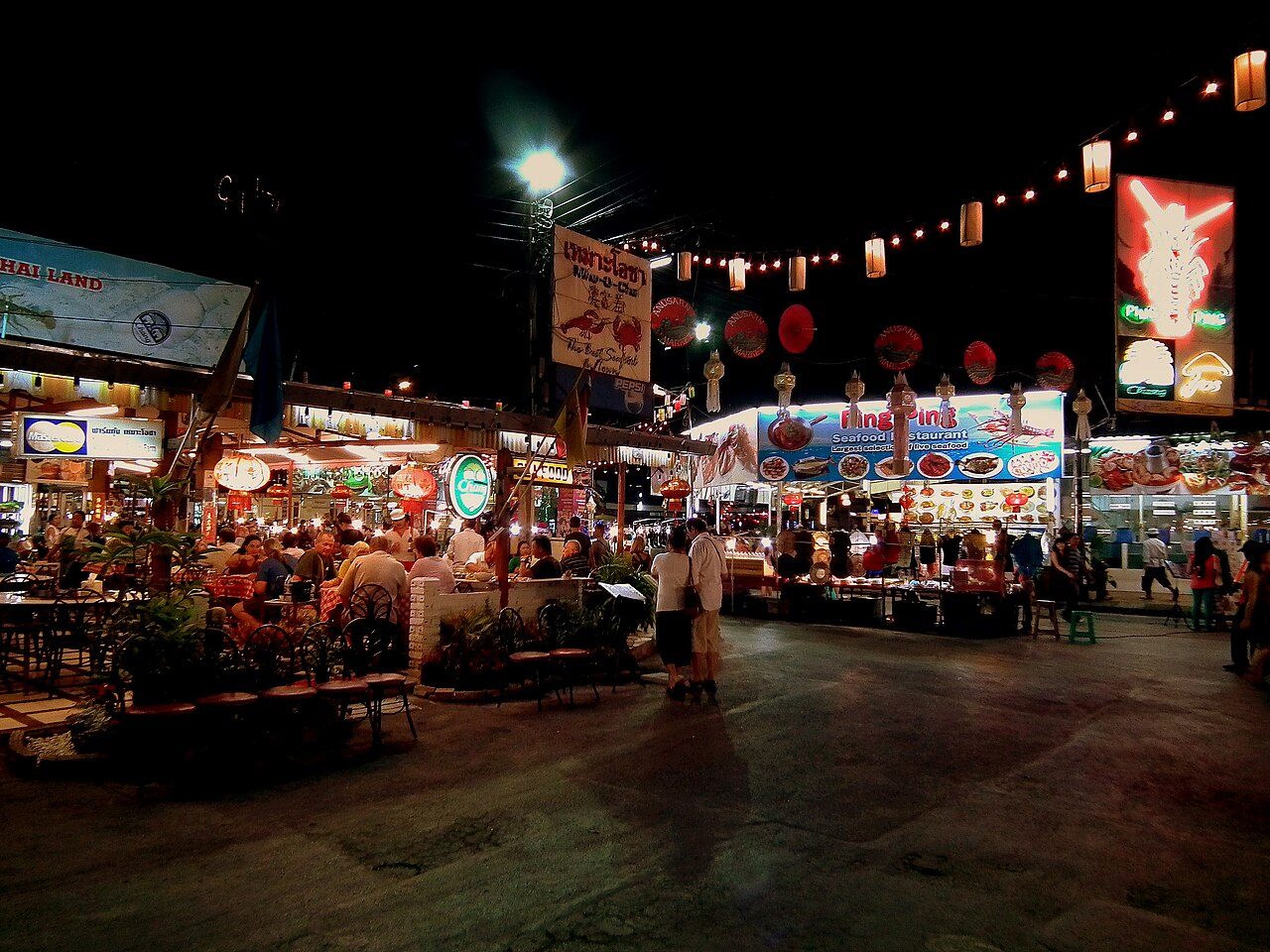
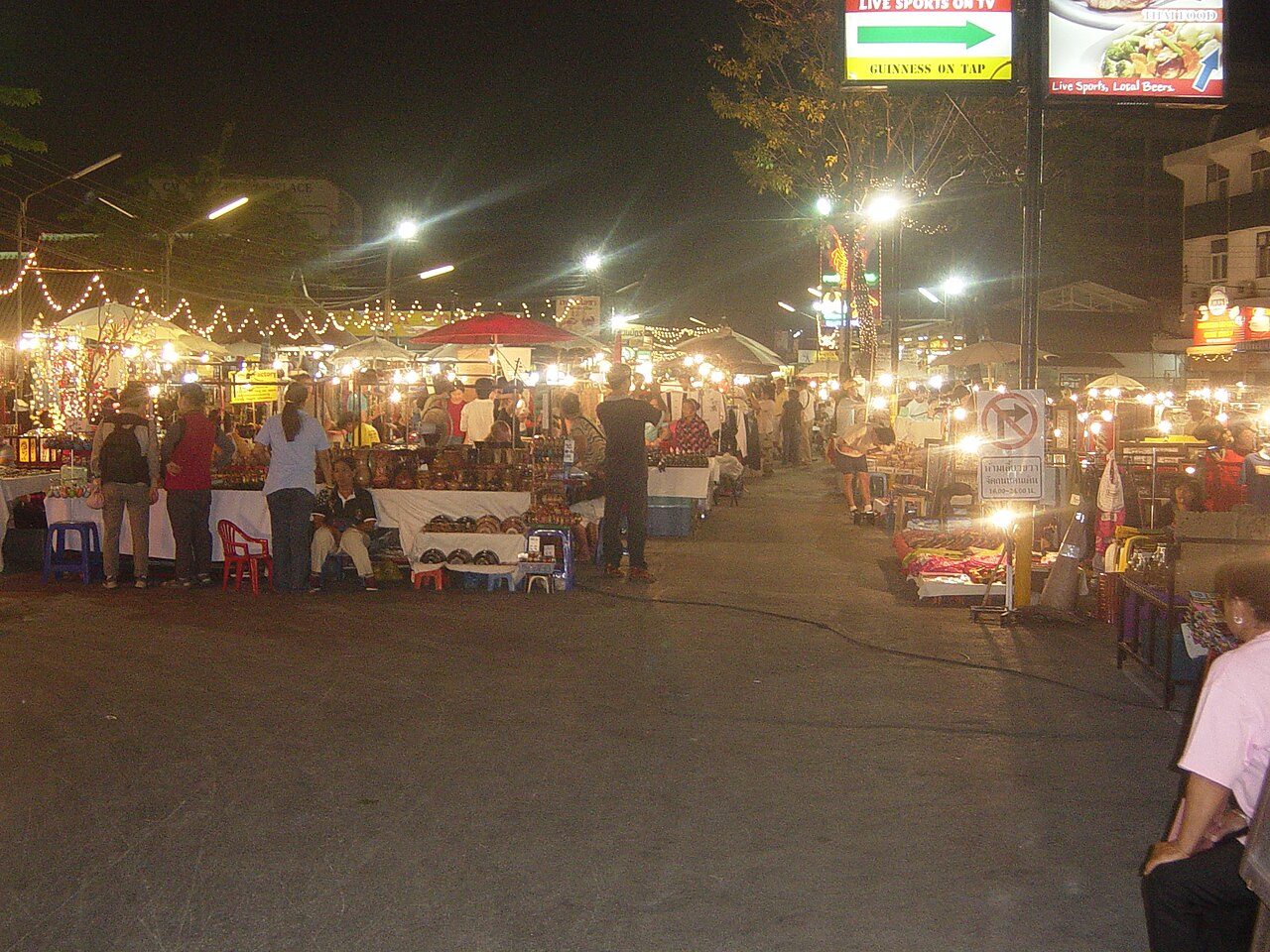
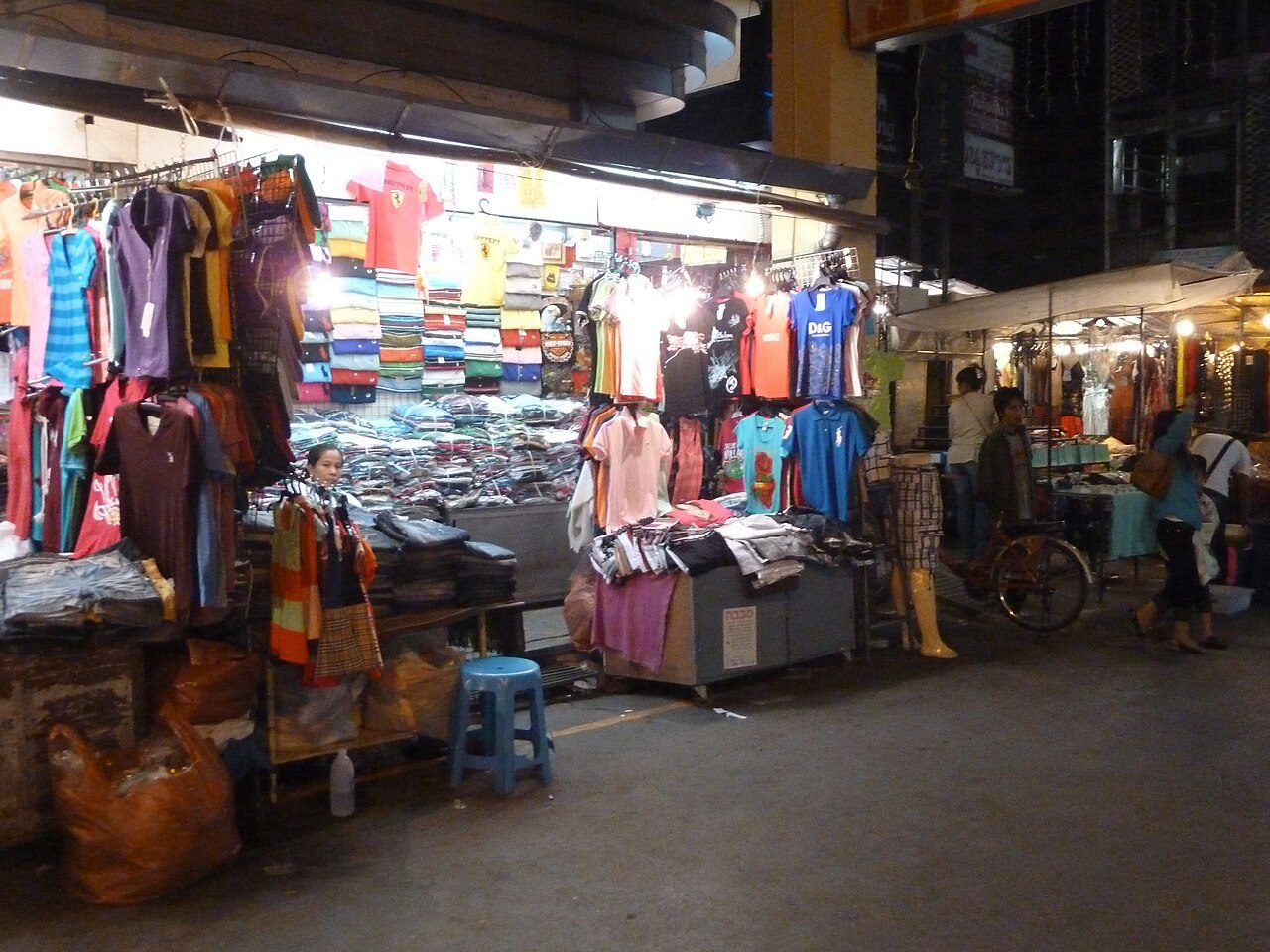
The Chiang Mai Night Bazaar fills several blocks of Chang Khlan Road, east of the old city. It began in the days when caravans from Yunnan stopped here to trade. Every evening the pavements are packed with stalls selling crafts, clothes, hill tribe textiles, carvings and souvenirs. Covered markets and food courts lie beside the main road.
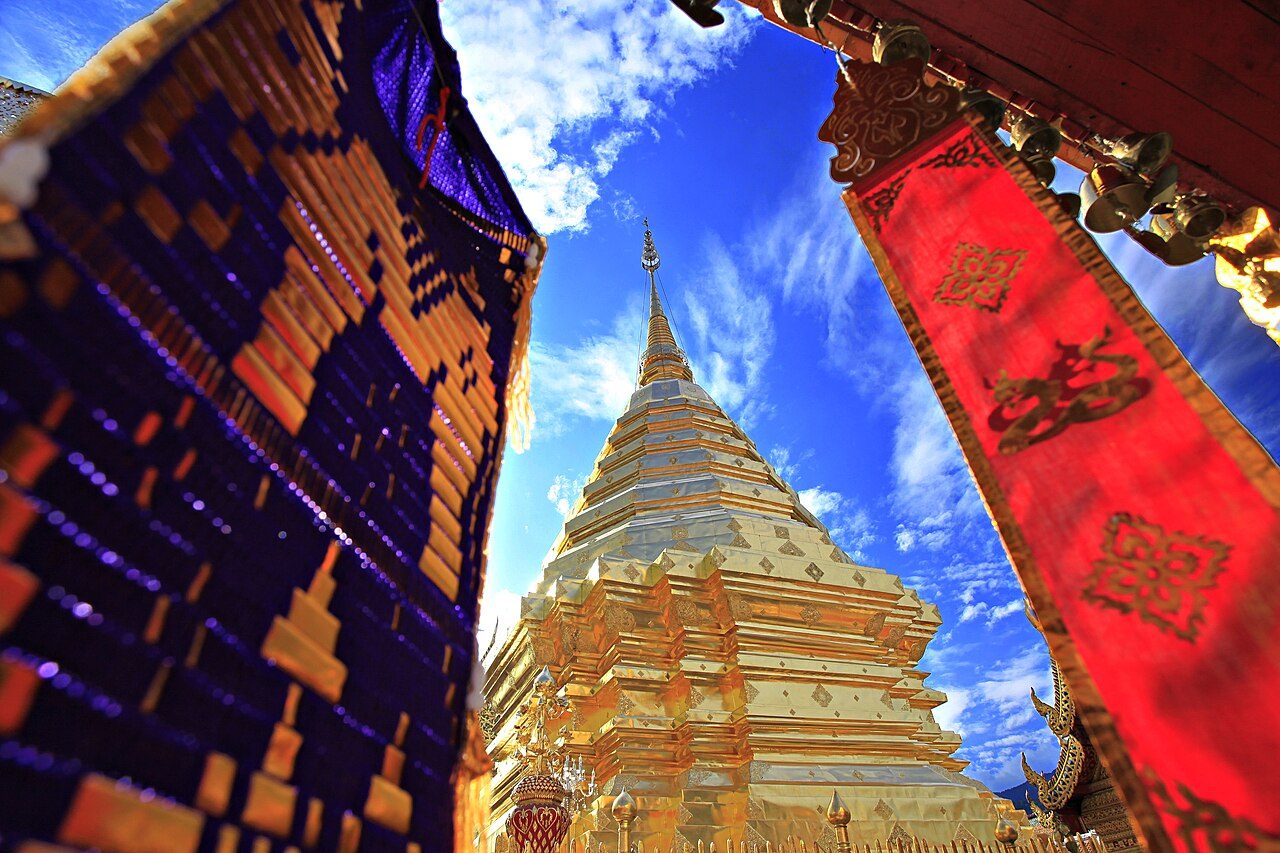
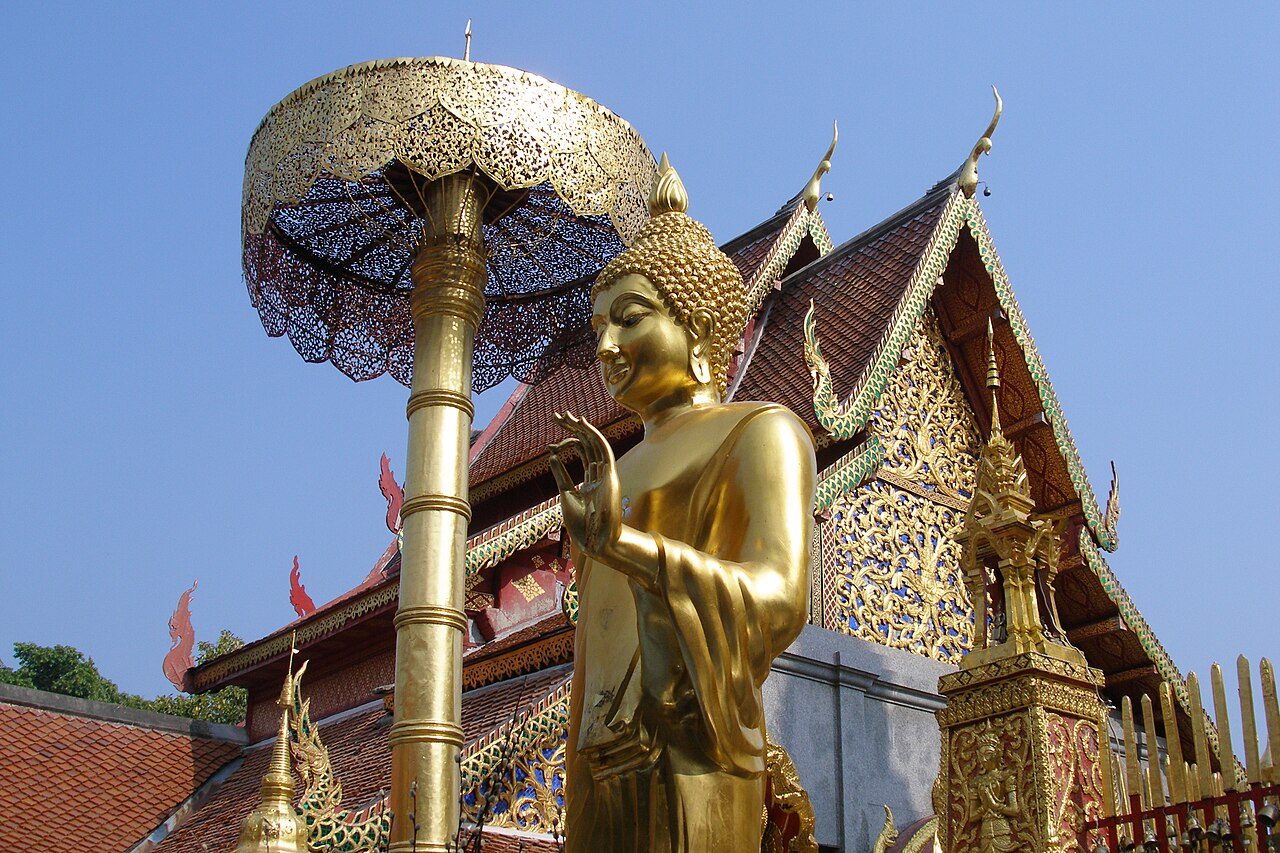
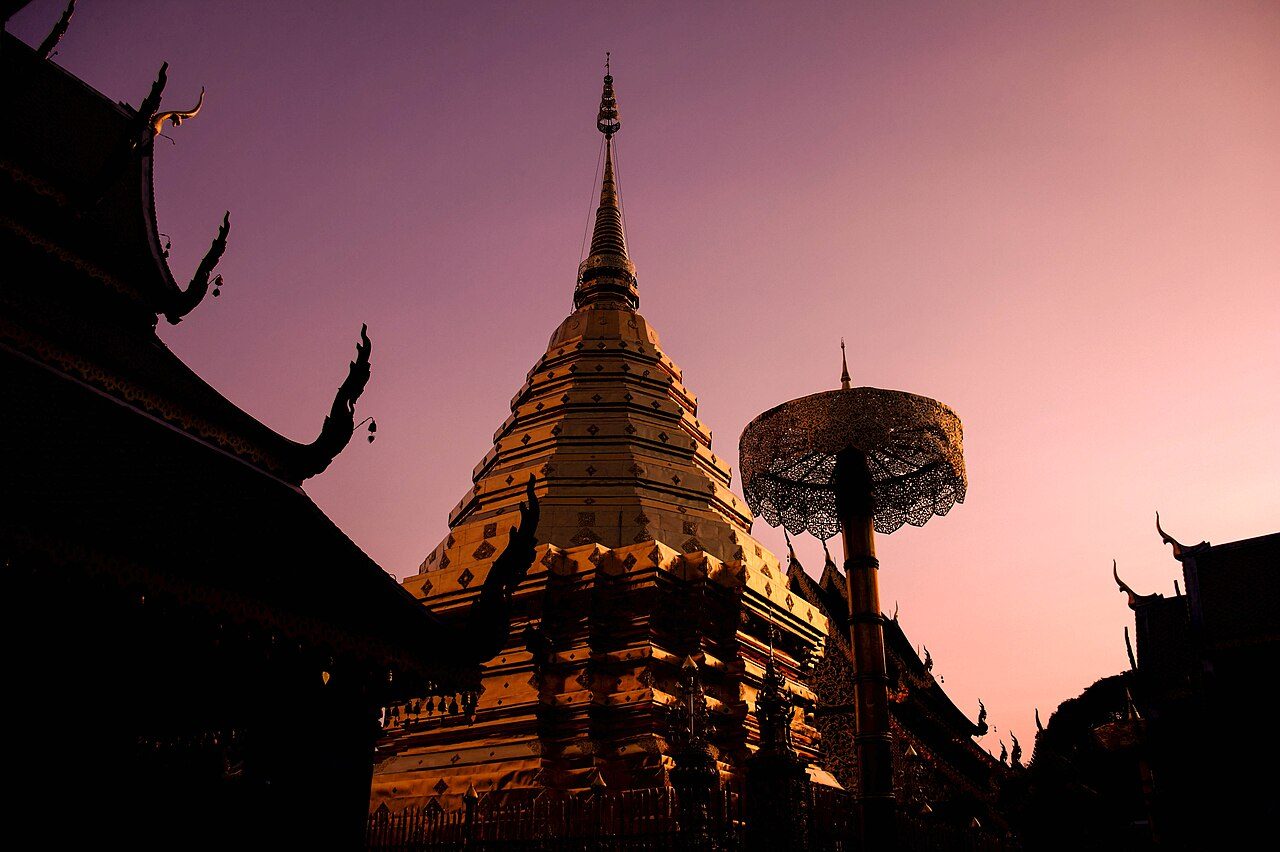
Wat Phra That Doi Suthep stands on a mountain above Chiang Mai, about 1,000 metres up. It was founded in the late 14th century. Legend says a white elephant carrying a relic of the Buddha climbed the hill and died here, and the temple was built on the spot. A staircase of over 300 steps lined with naga serpents leads to the golden chedi and a view of the city.
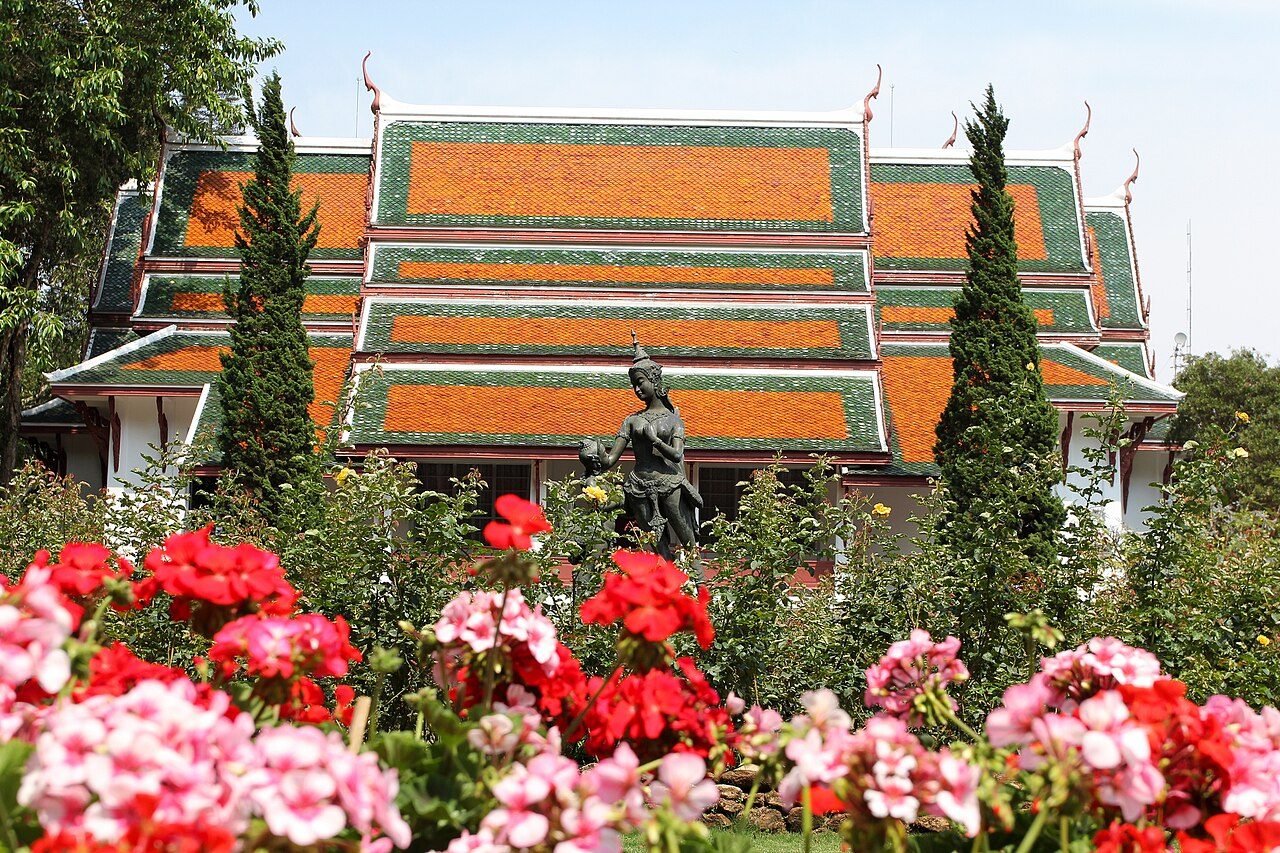
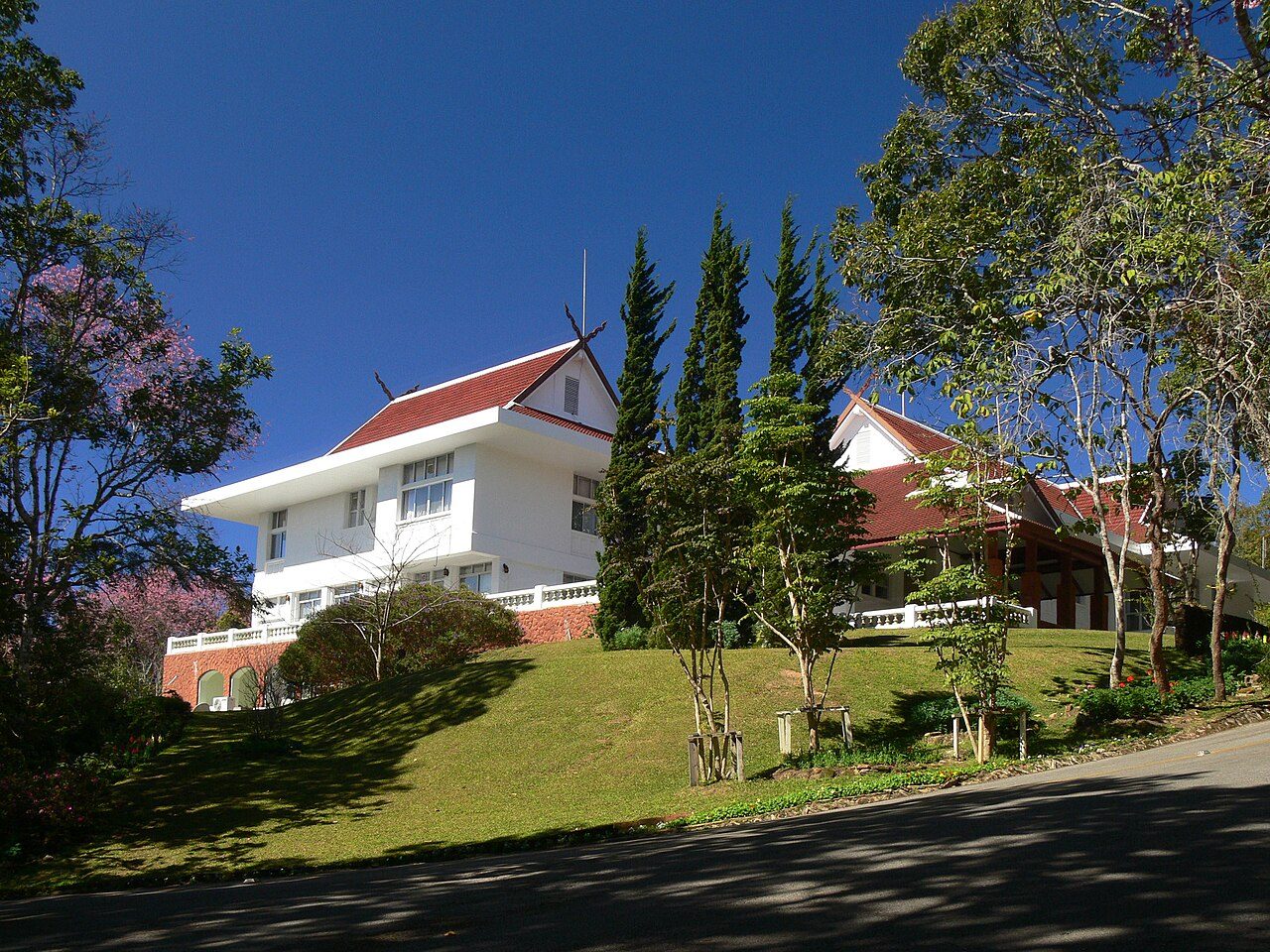
Bhubing Palace is the royal winter residence on Doi Buak Ha, near Doi Suthep, built in 1961. It is used when the royal family visits the north. When the royals are away, visitors can walk through its large gardens, which are famous for their roses and other flowers from cooler climates. The palace buildings themselves are seen only from outside.
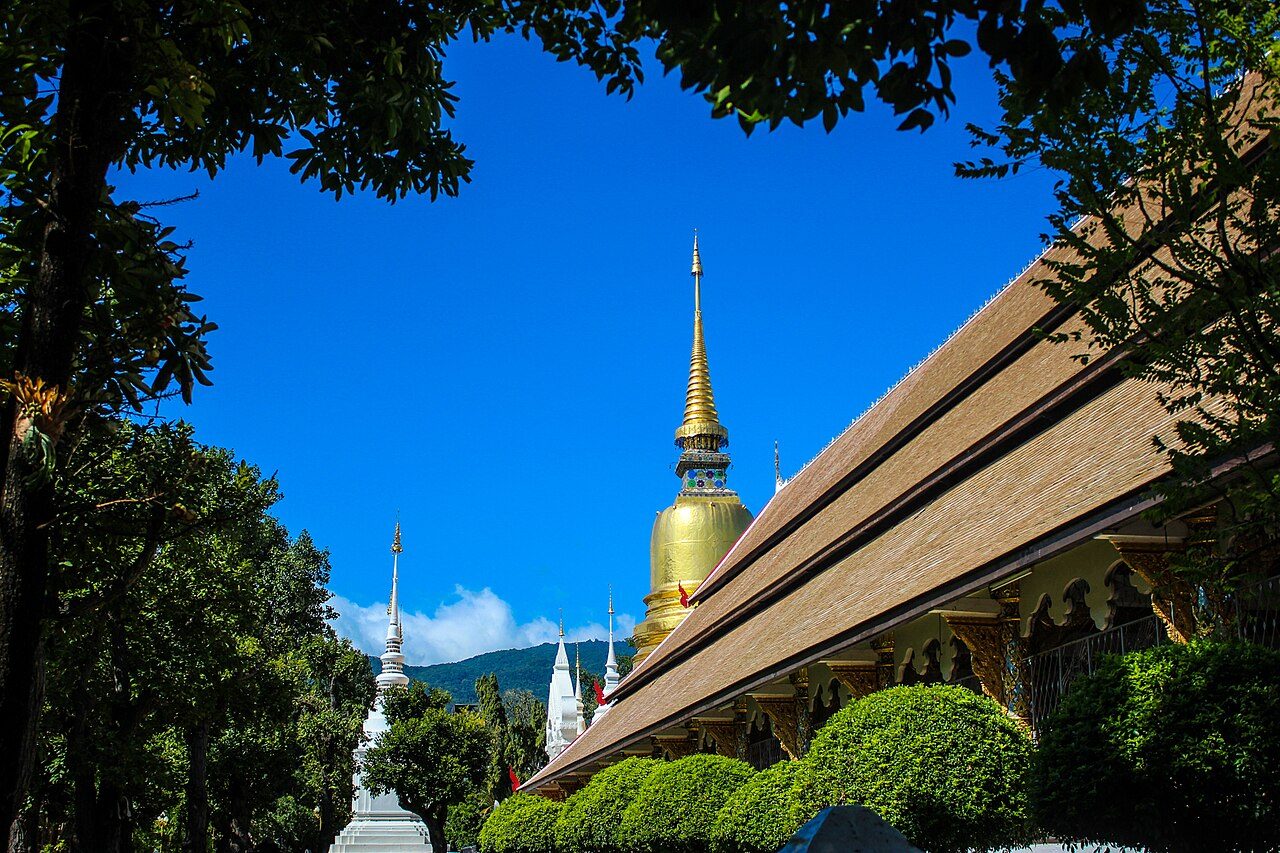
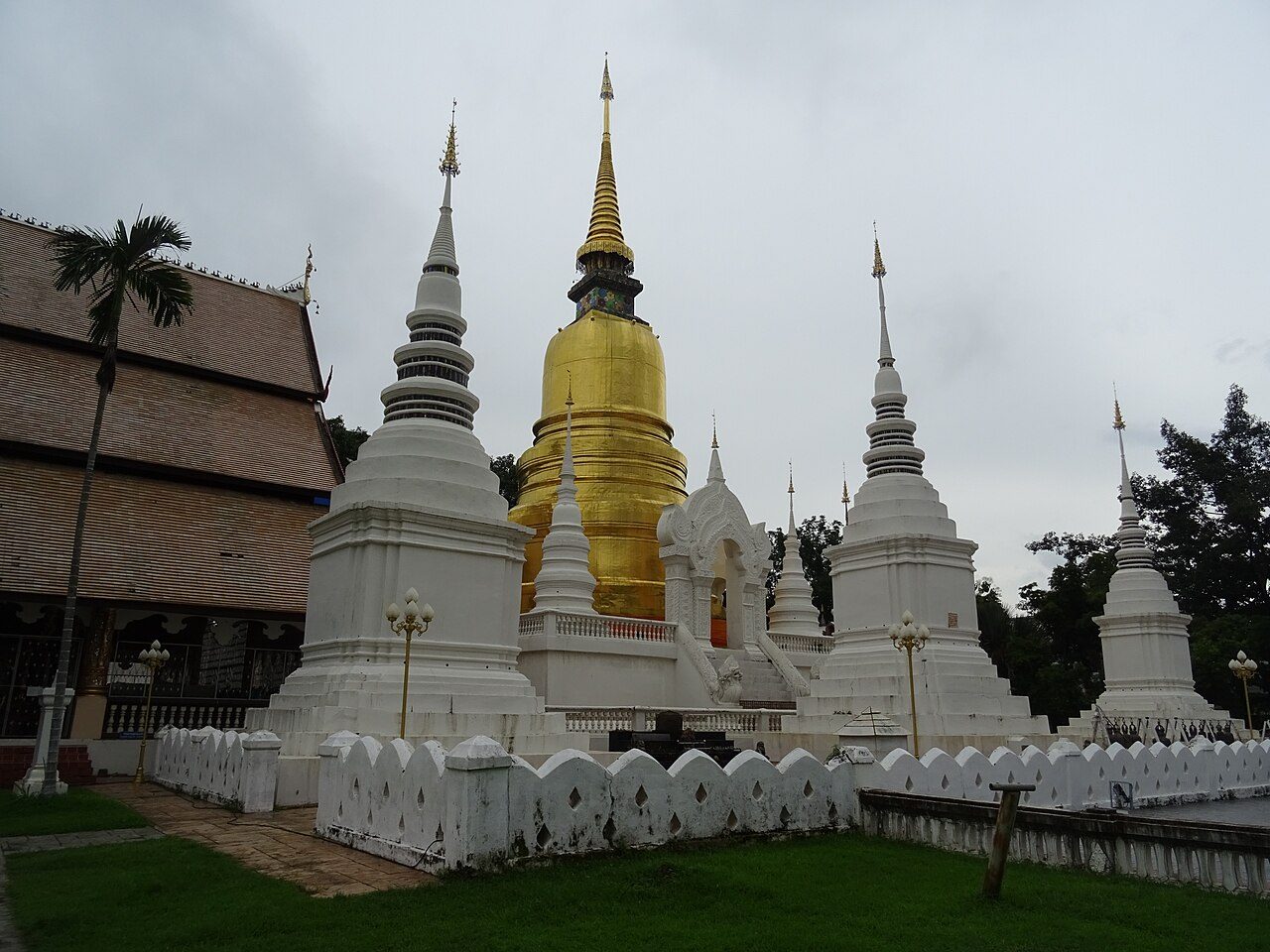
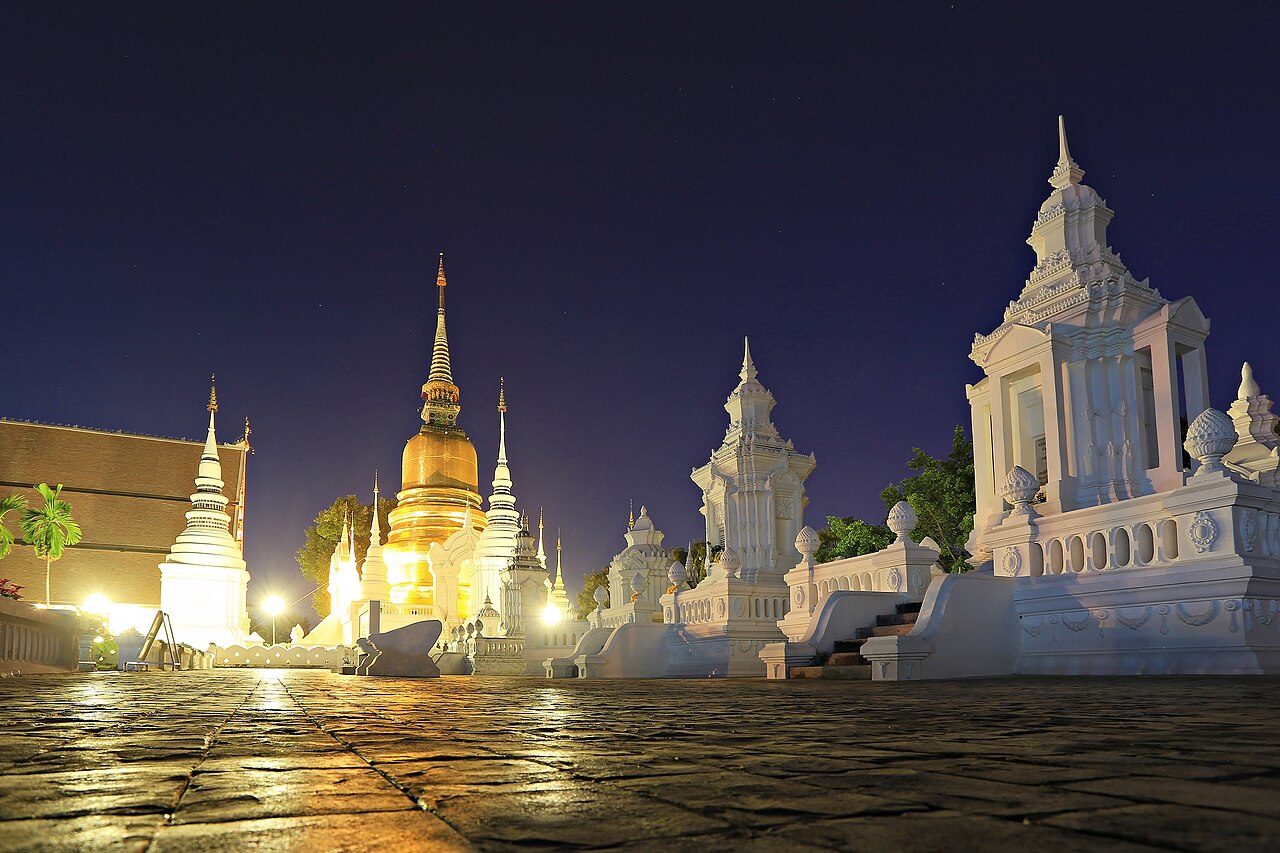
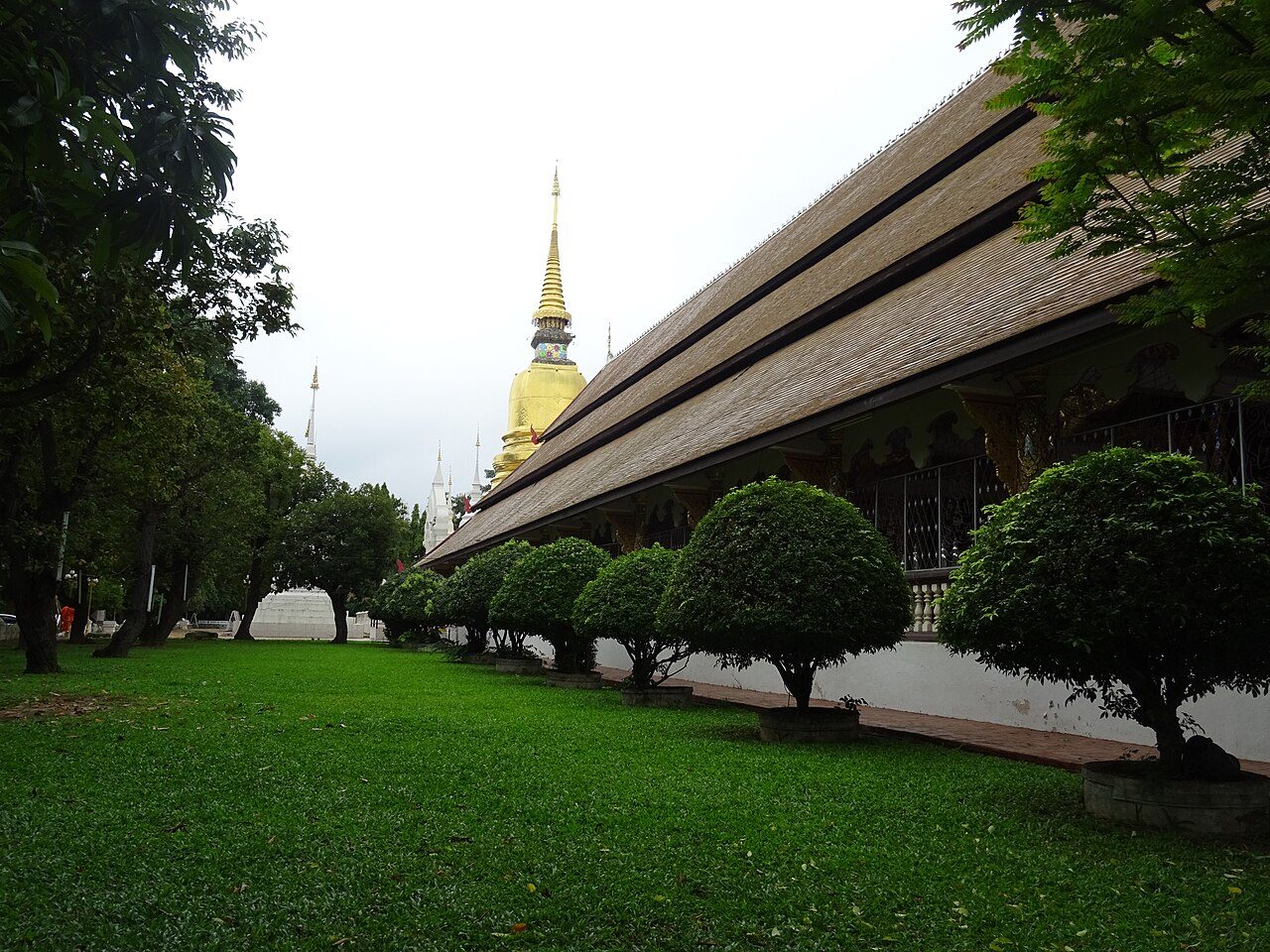
Wat Suan Dok lies west of Chiang Mai's old city. It was built in the 14th century in a flower garden of the Lanna king. Its large bell-shaped chedi is said to hold a relic of the Buddha. A field of white chedis beside it holds the ashes of Chiang Mai's royal family. The temple runs a Buddhist university and offers talks with monks for visitors.
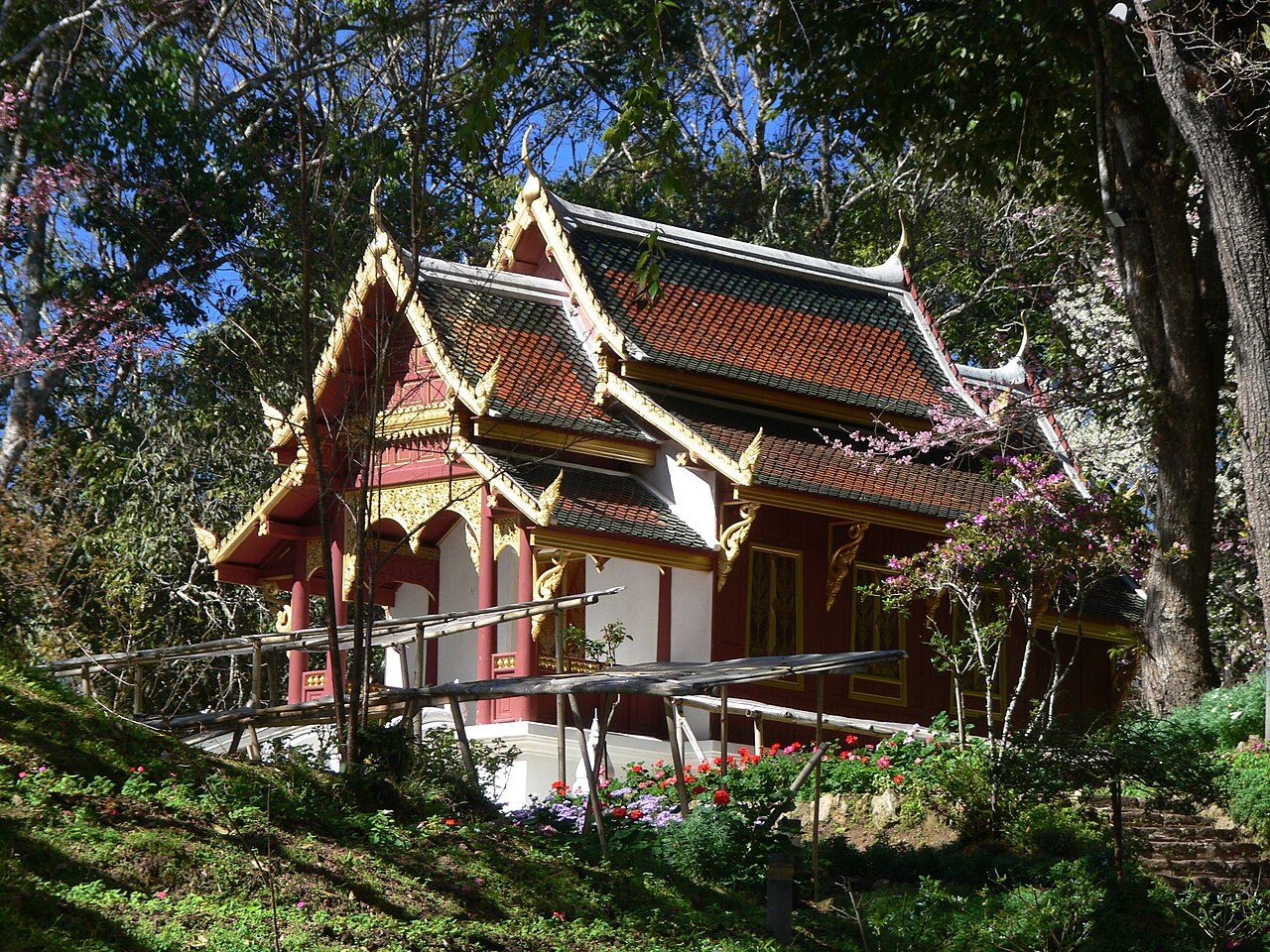
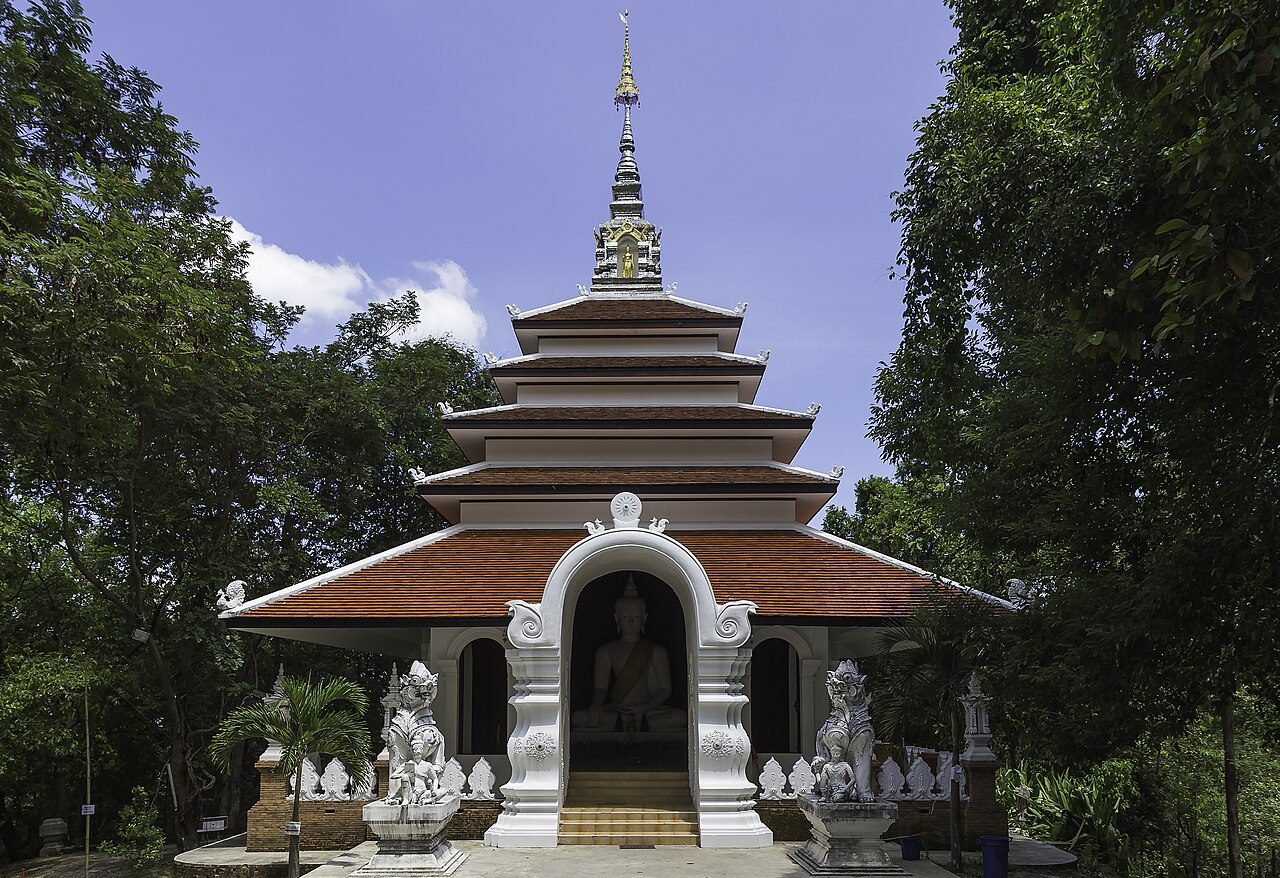
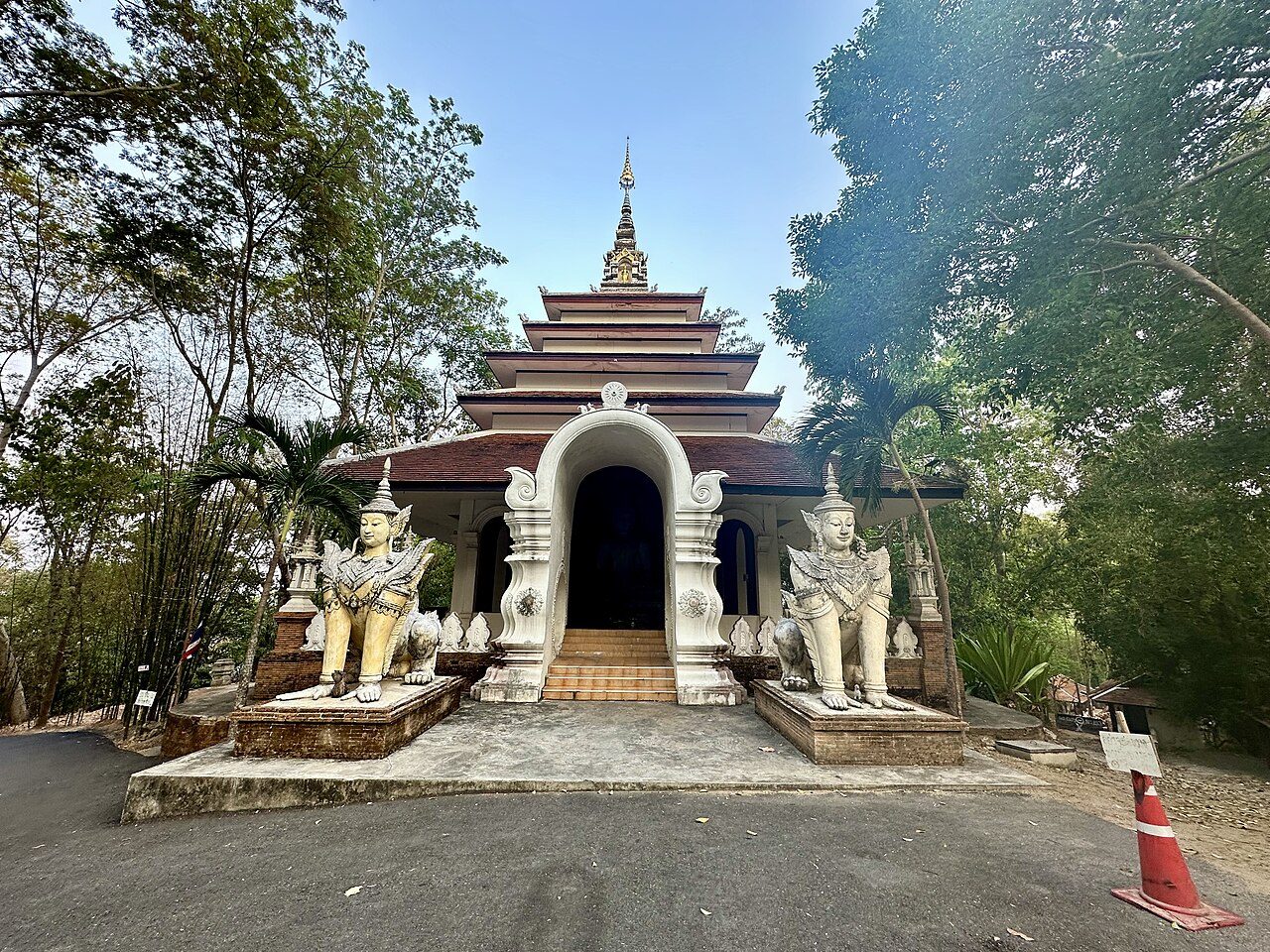
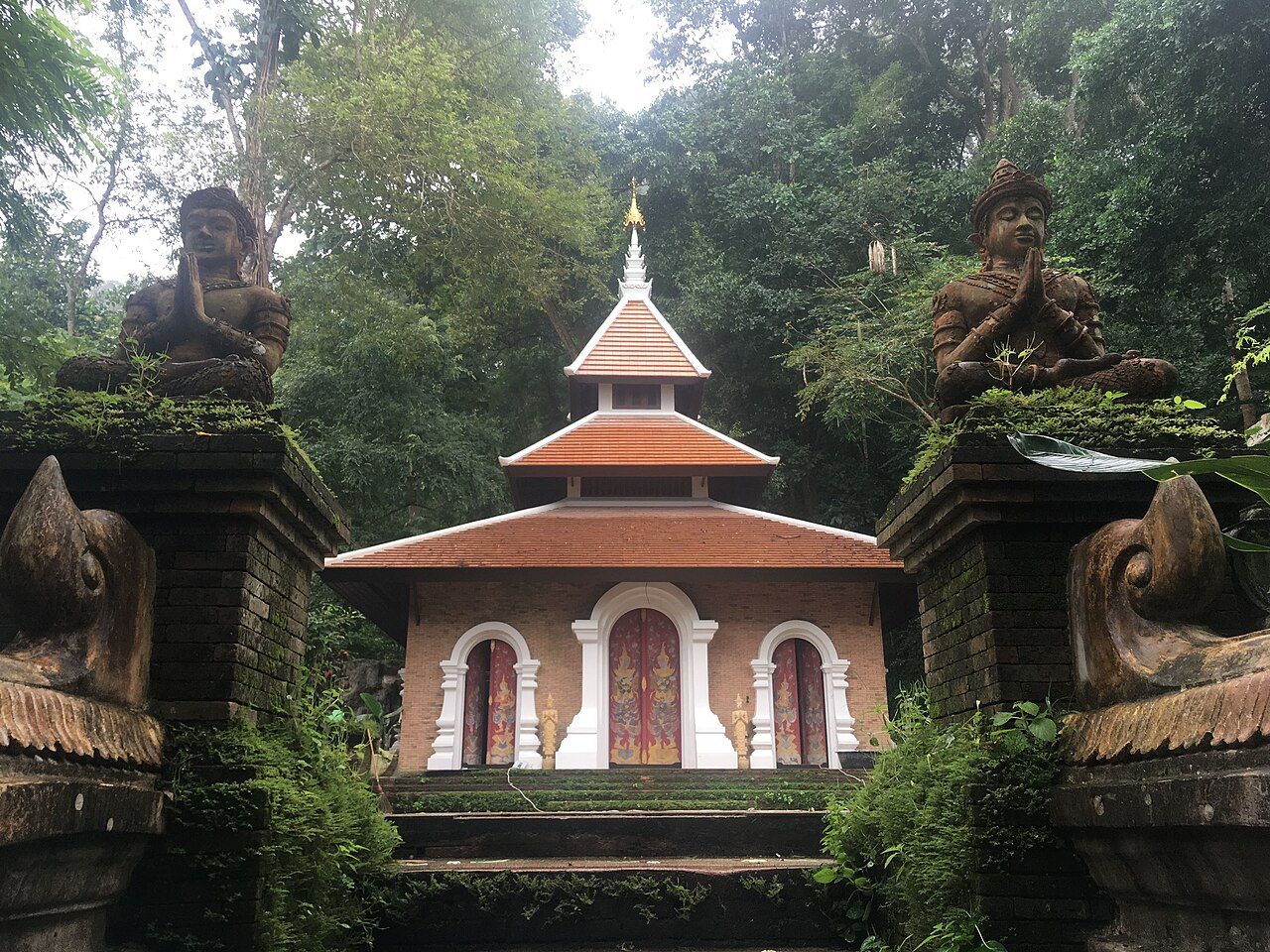
Wat Pha Lat is a small temple hidden in the forest on the slope of Doi Suthep. It was a resting place for pilgrims climbing to Wat Phra That Doi Suthep before the road was built. Its old buildings stand beside a stream that flows over rock slabs, giving the temple its name. A walking trail, the Monk's Trail, leads to it from the edge of Chiang Mai.
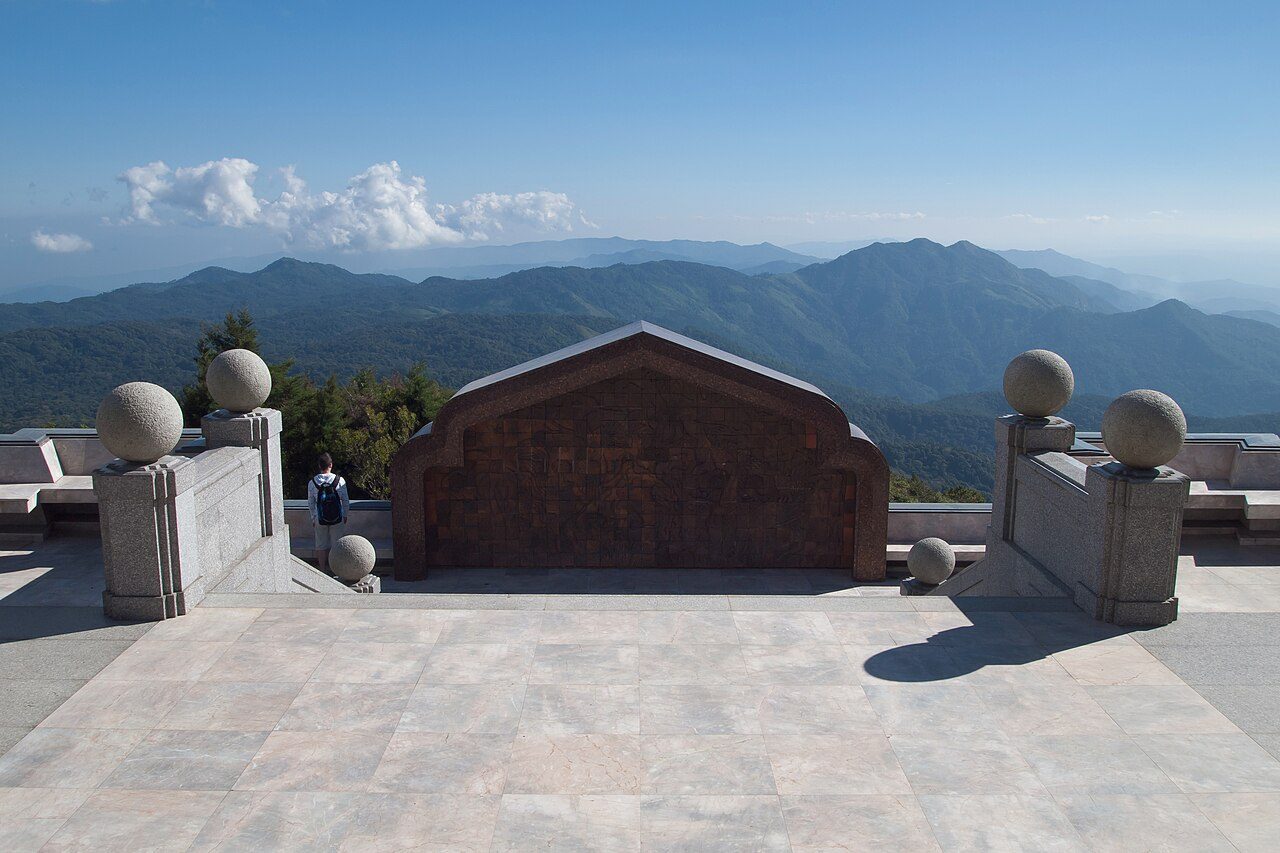
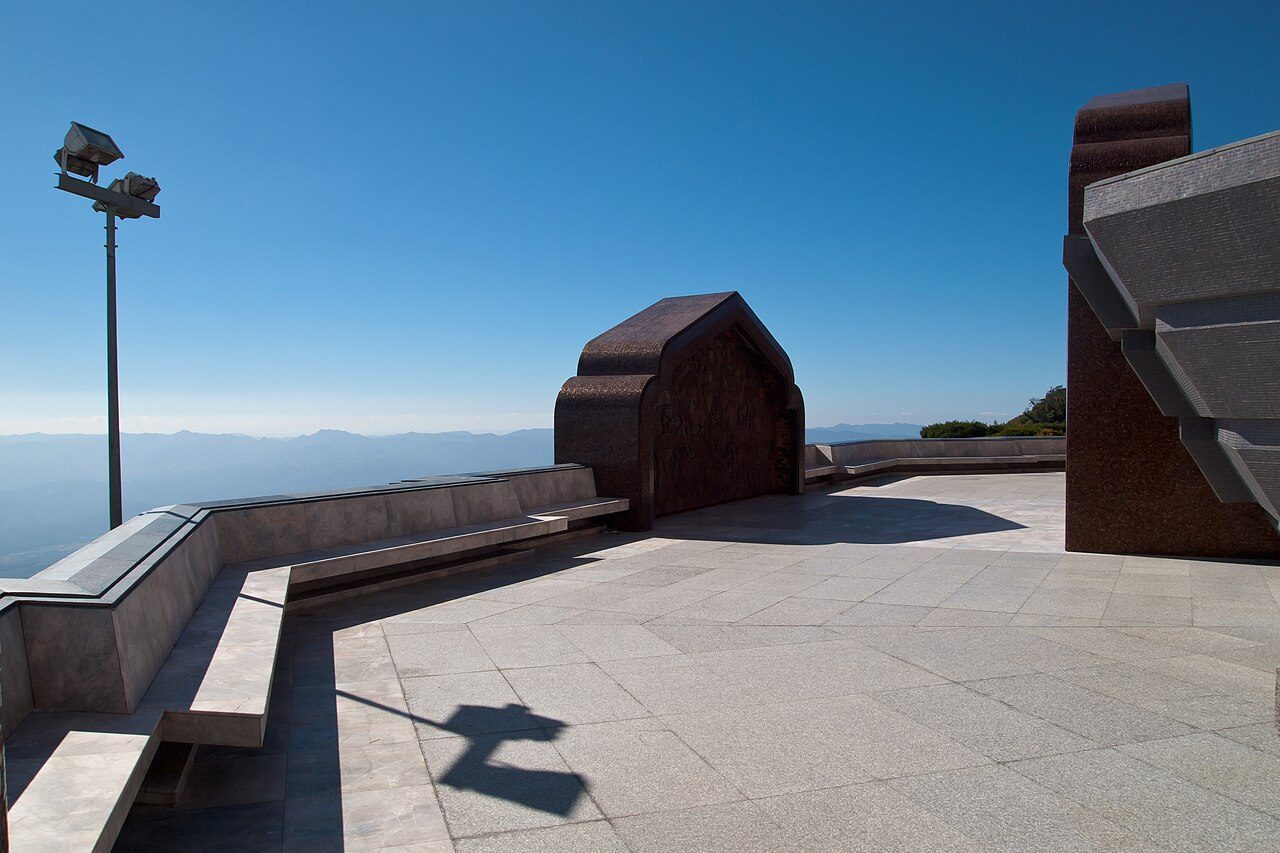
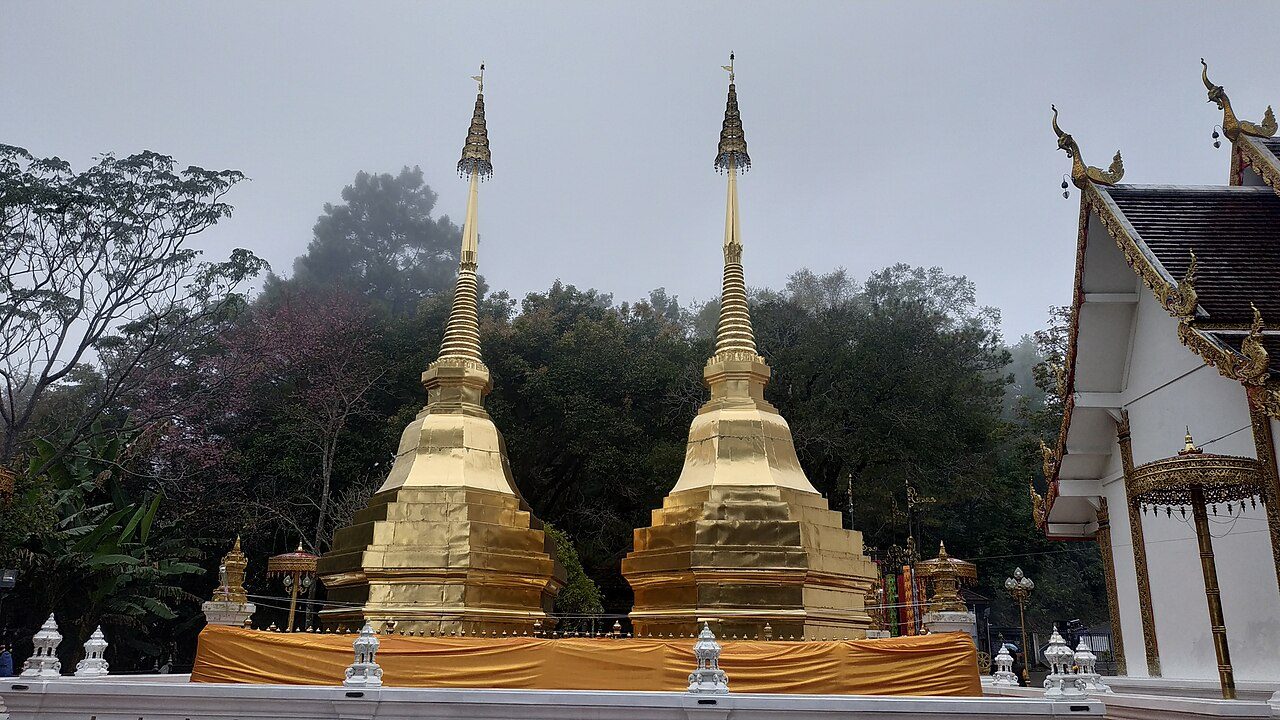
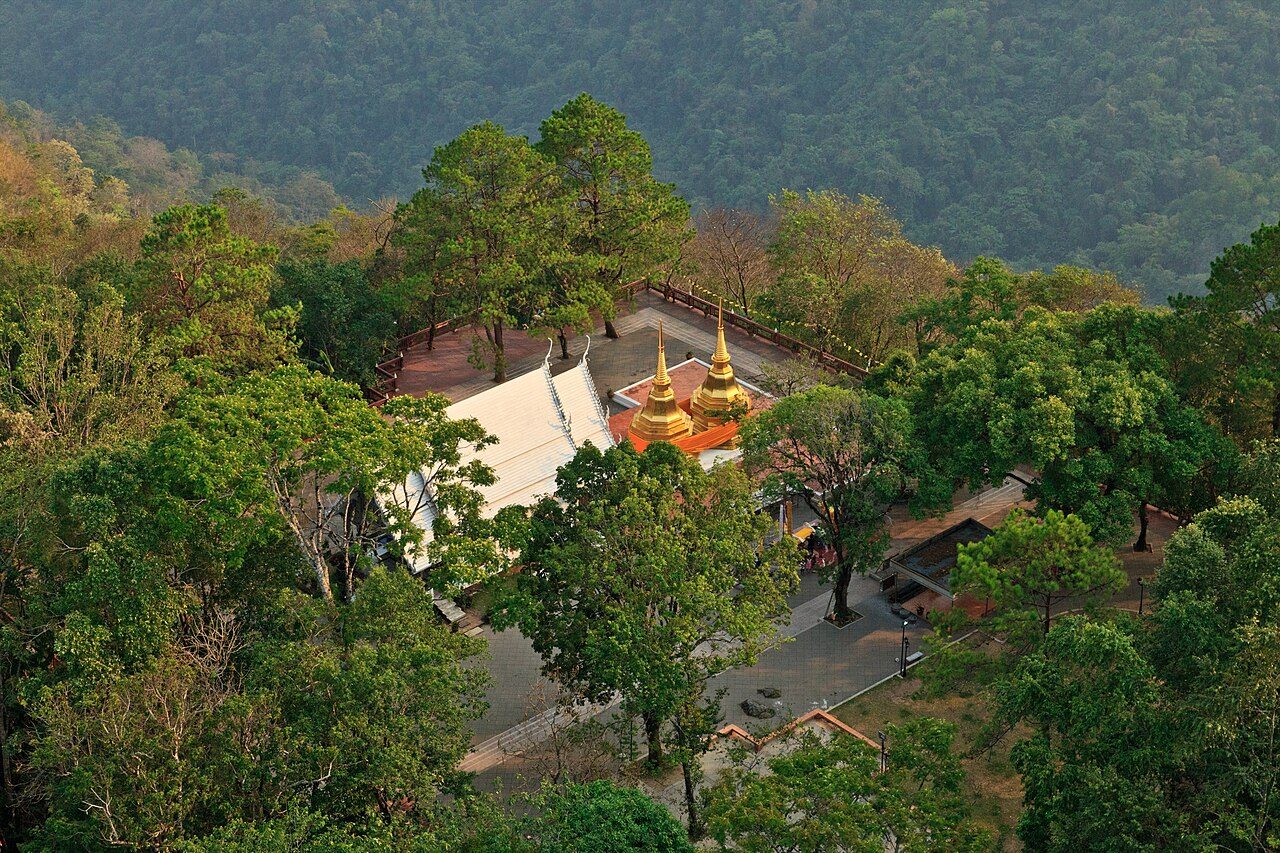
Doi Inthanon is the highest mountain in Thailand, at about 2,565 metres. It lies in a national park southwest of Chiang Mai. A road climbs to the summit, where a cool cloud forest grows. Near the top stand two chedis built in honour of King Bhumibol and Queen Sirikit, set in flower gardens. The park also has many waterfalls and Hmong and Karen villages.
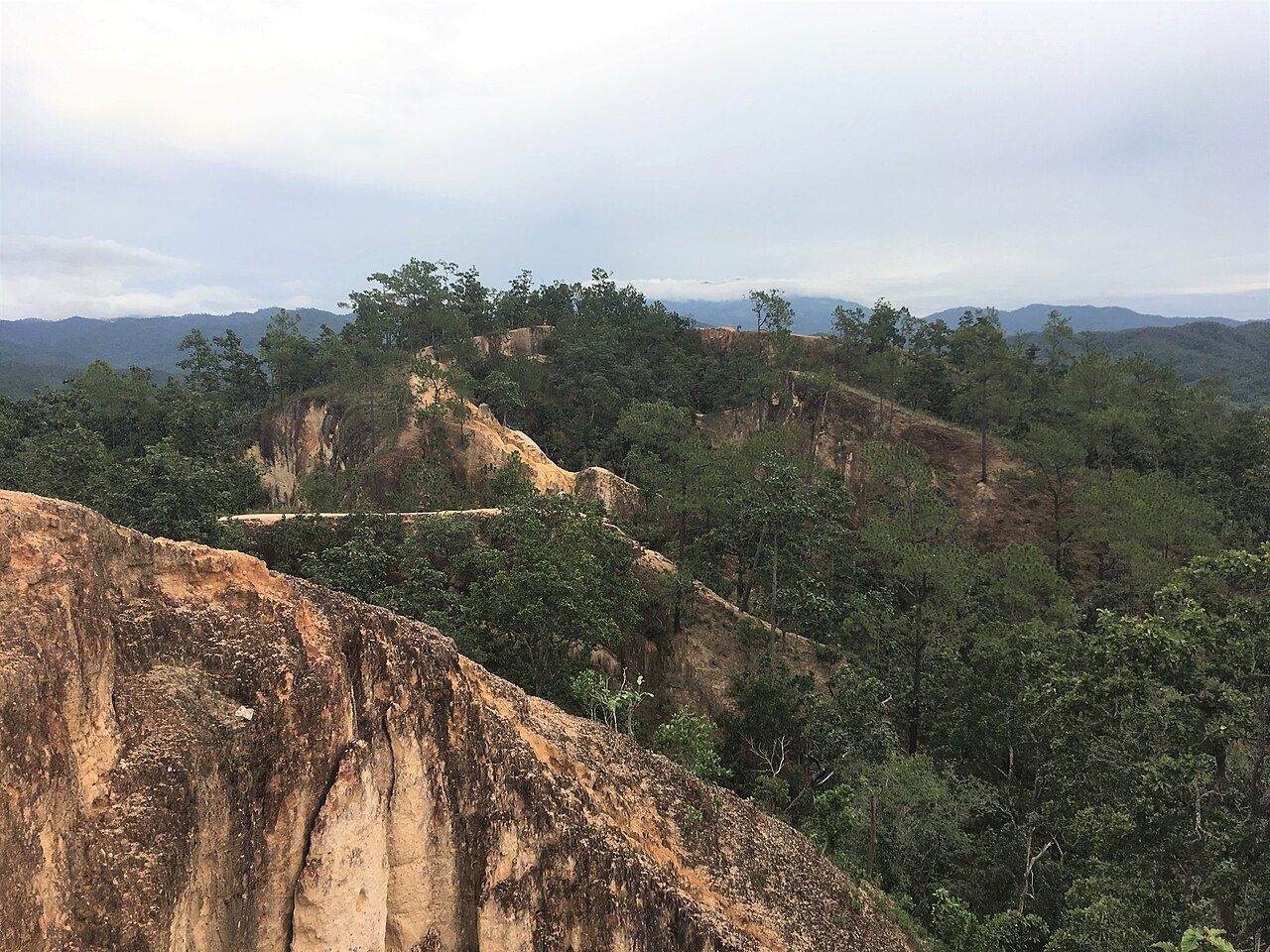
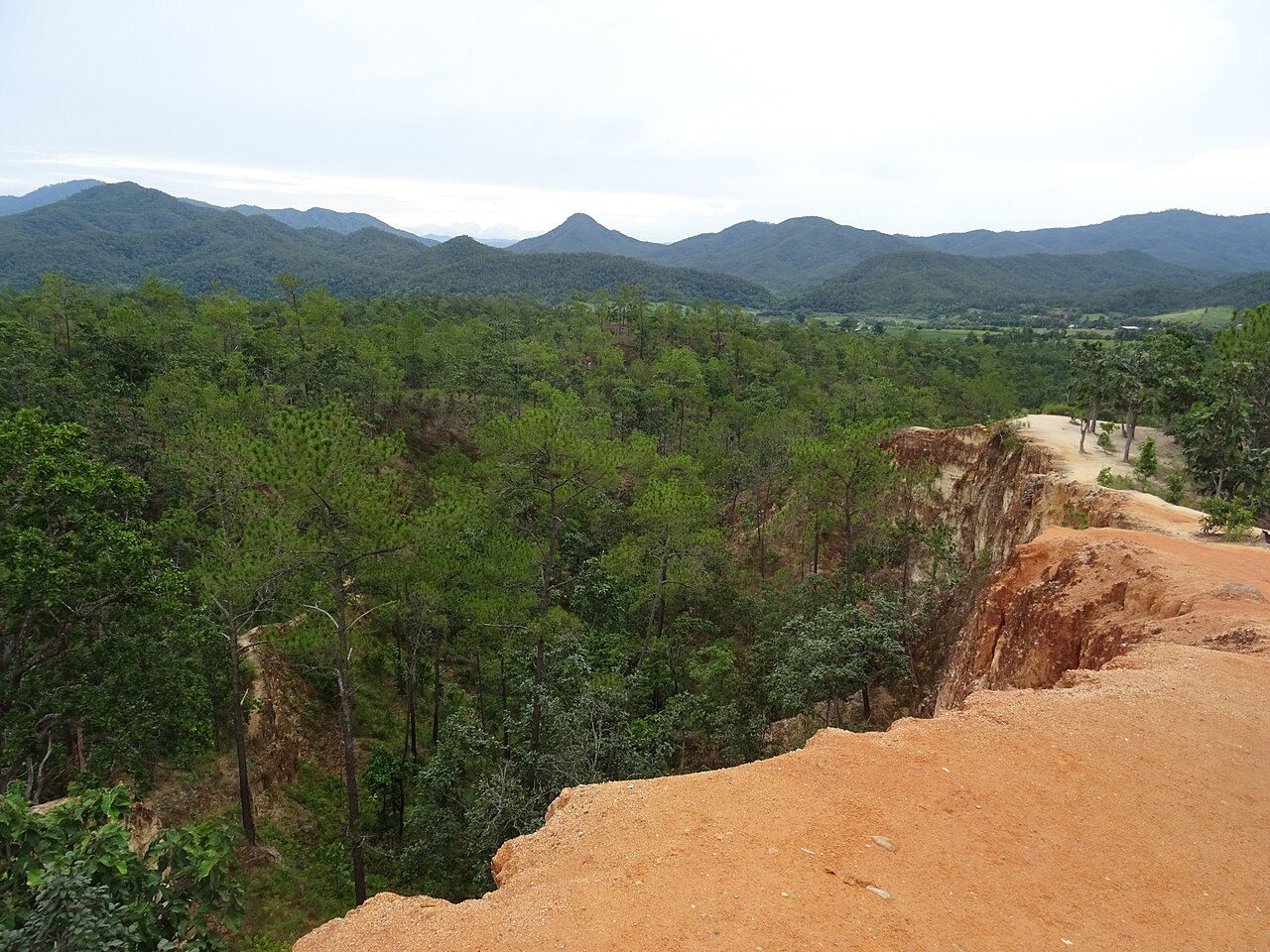
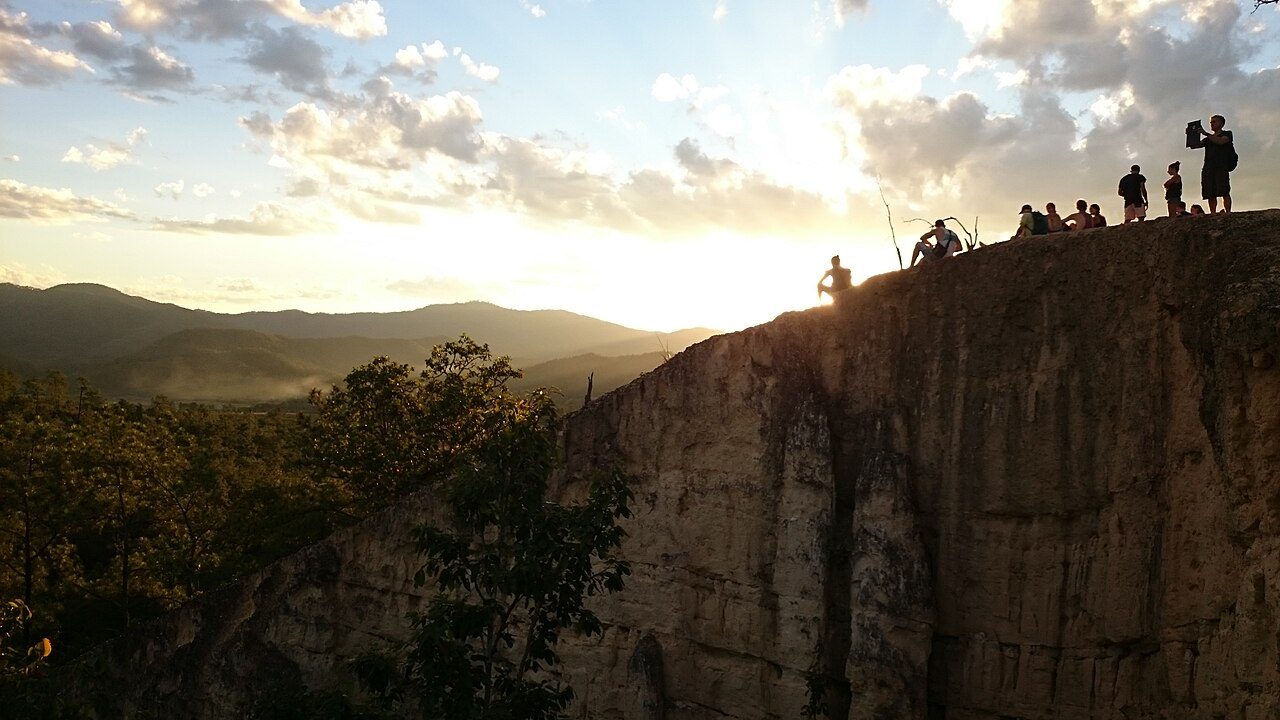
Pai Canyon, also called Kong Lan, lies a few kilometres south of Pai in Mae Hong Son. Erosion has cut the soft sandstone into narrow ridges with steep drops on both sides, covered in pine trees. Paths run along the narrow tops of the ridges. It is a popular spot to watch the sunset over the hills of the Pai valley.
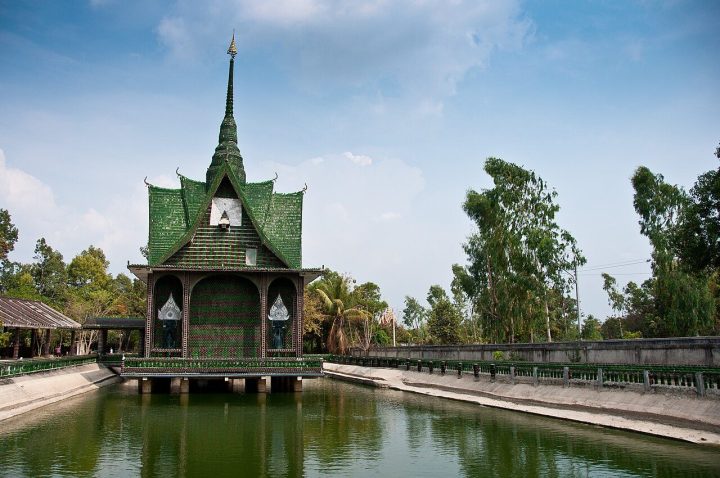
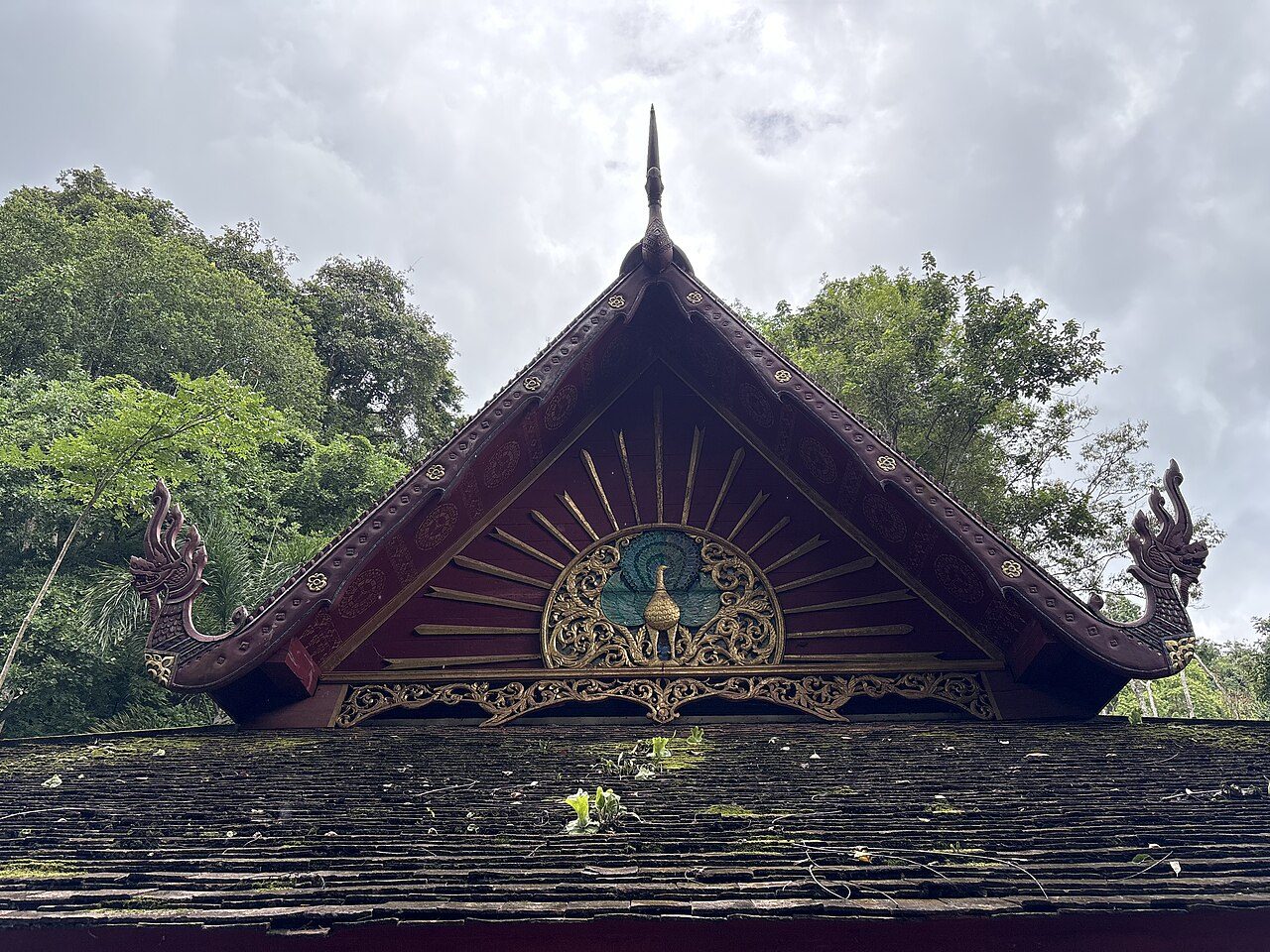
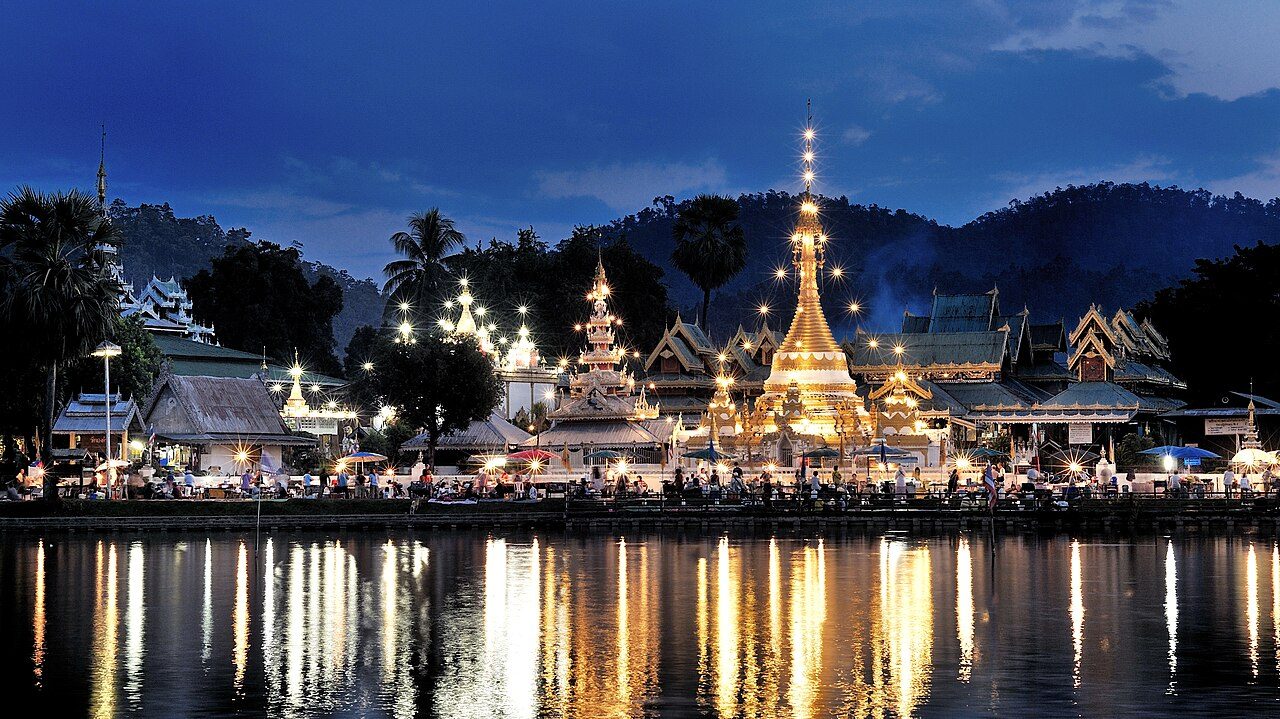
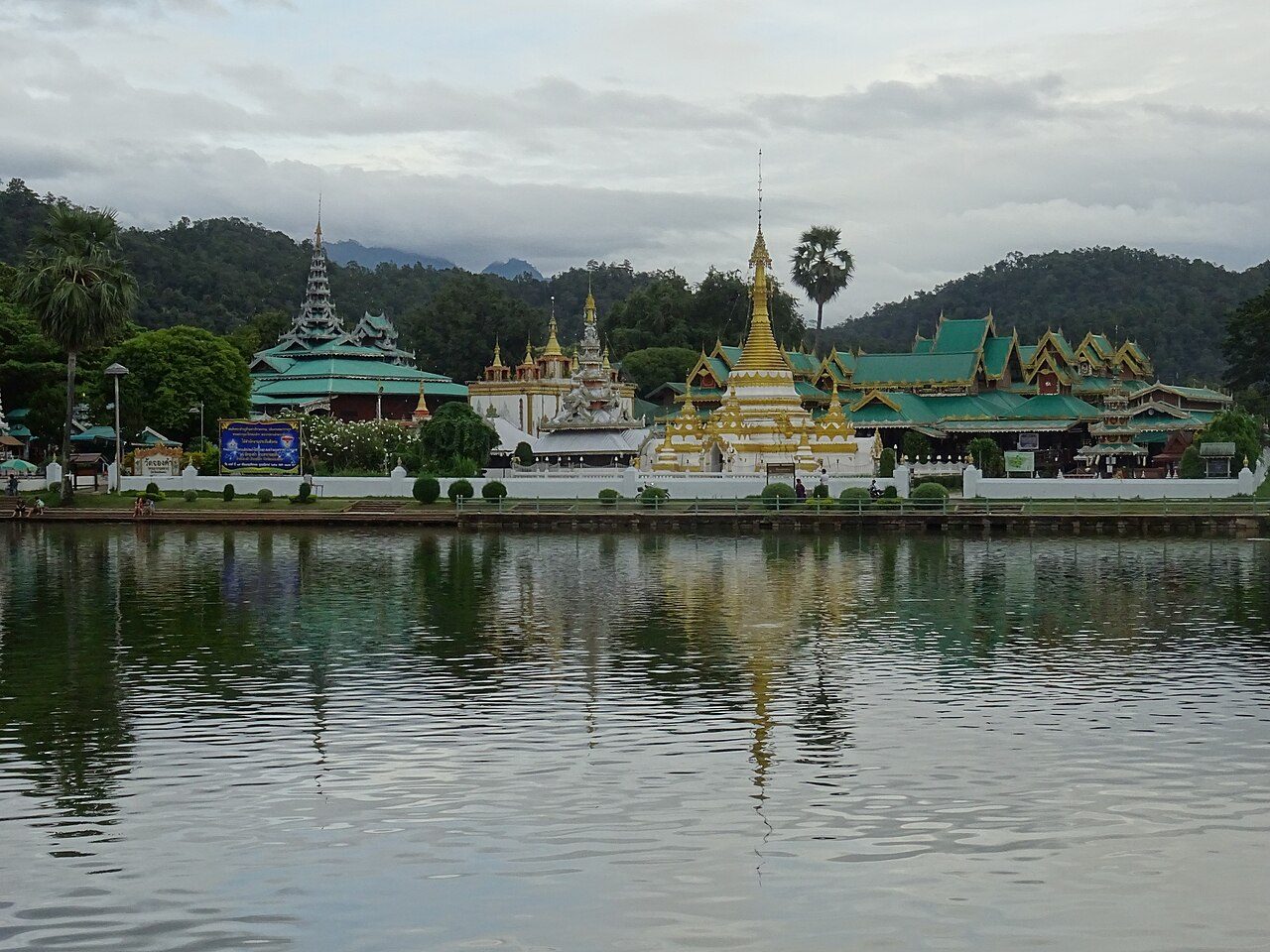
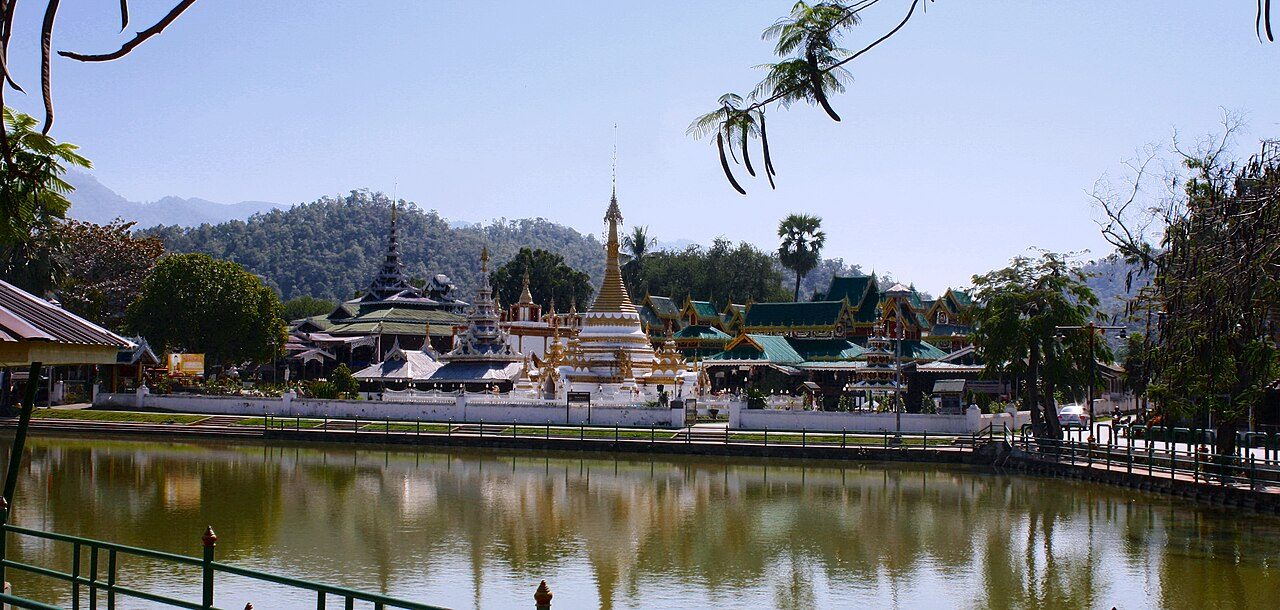
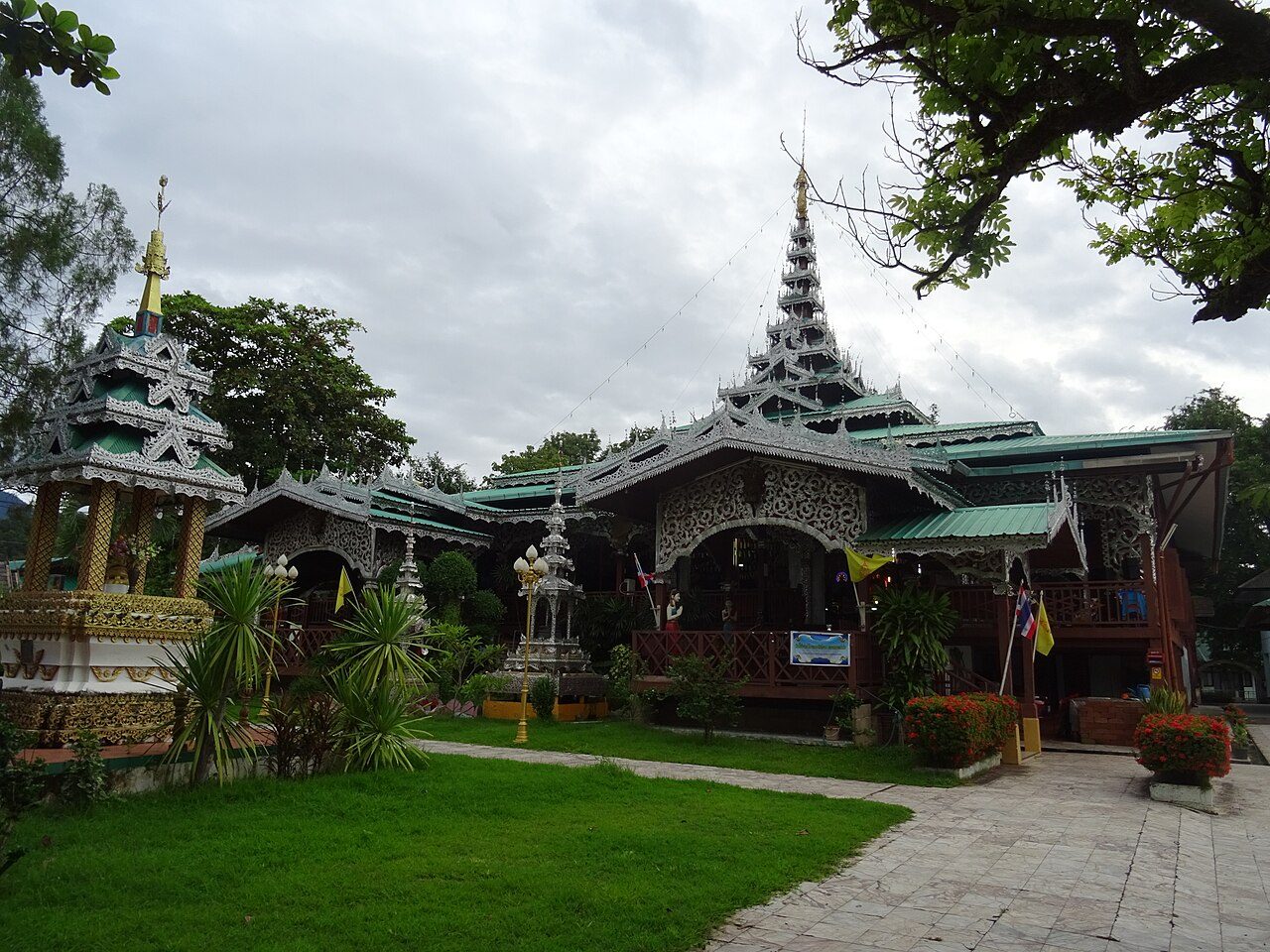
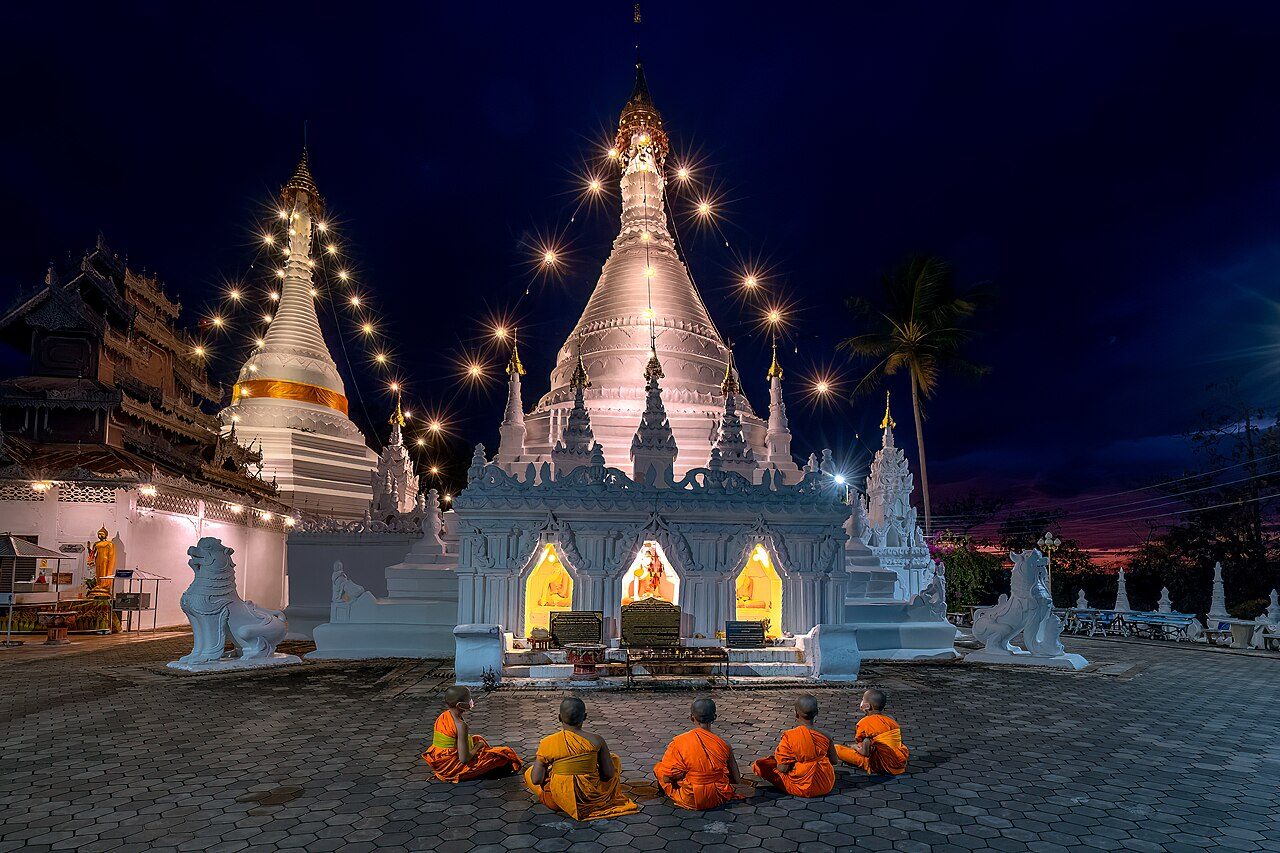
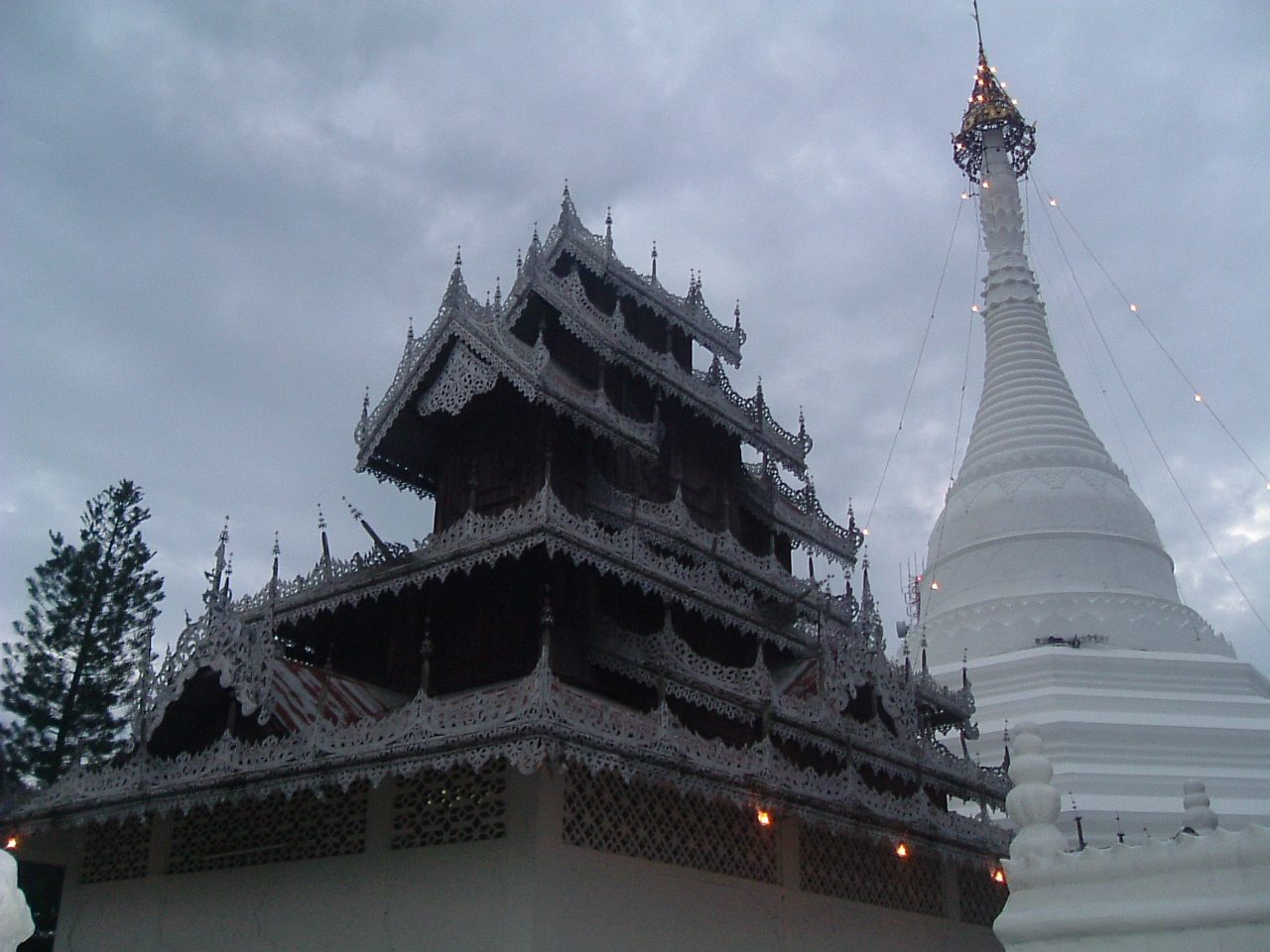
Wat Chong Kham is a Burmese style temple on the edge of Chong Kham Lake in Mae Hong Son. It was built in the 19th century by Shan people from Myanmar. Next to it stands the twin temple Wat Chong Klang. Their white and gold chedis and tiered roofs reflect in the lake, and at night the lights of the temples shimmer on the water.
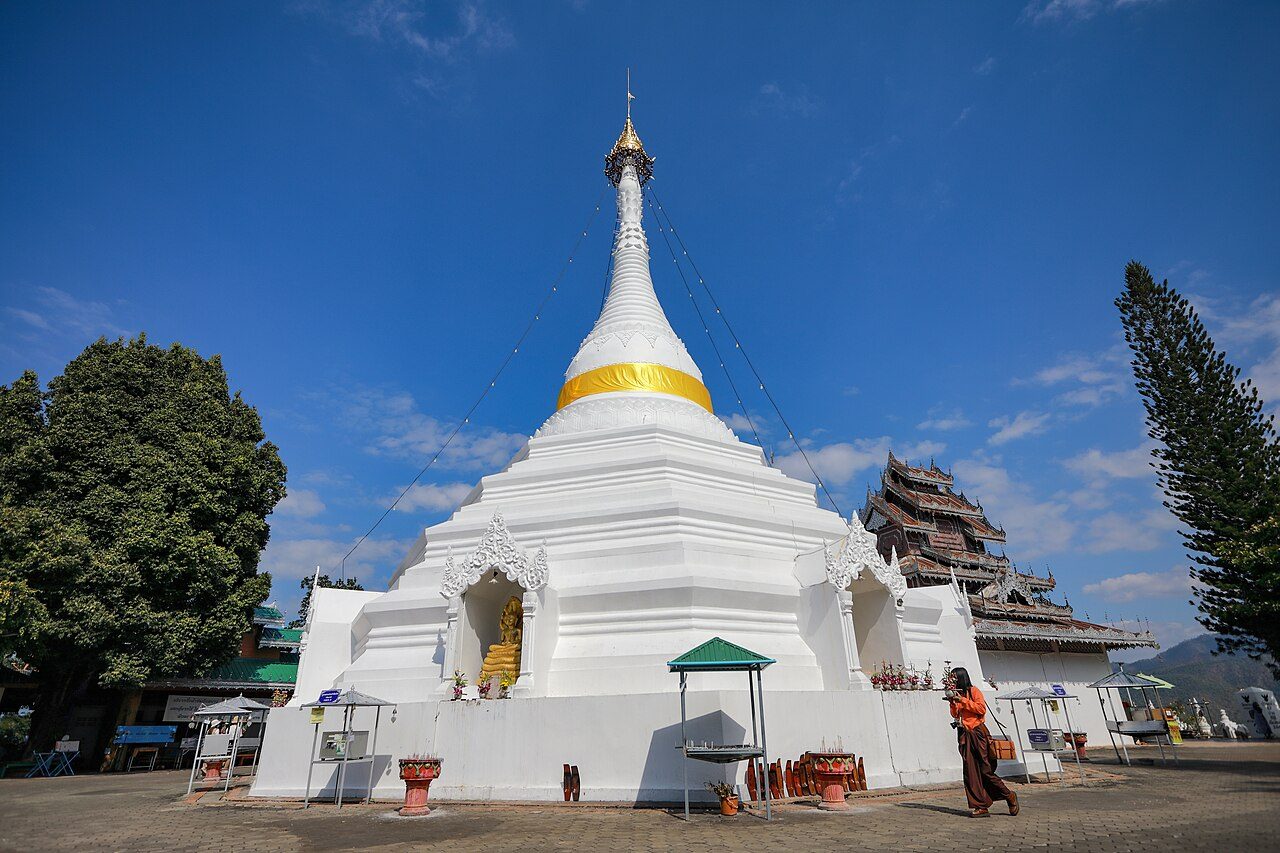
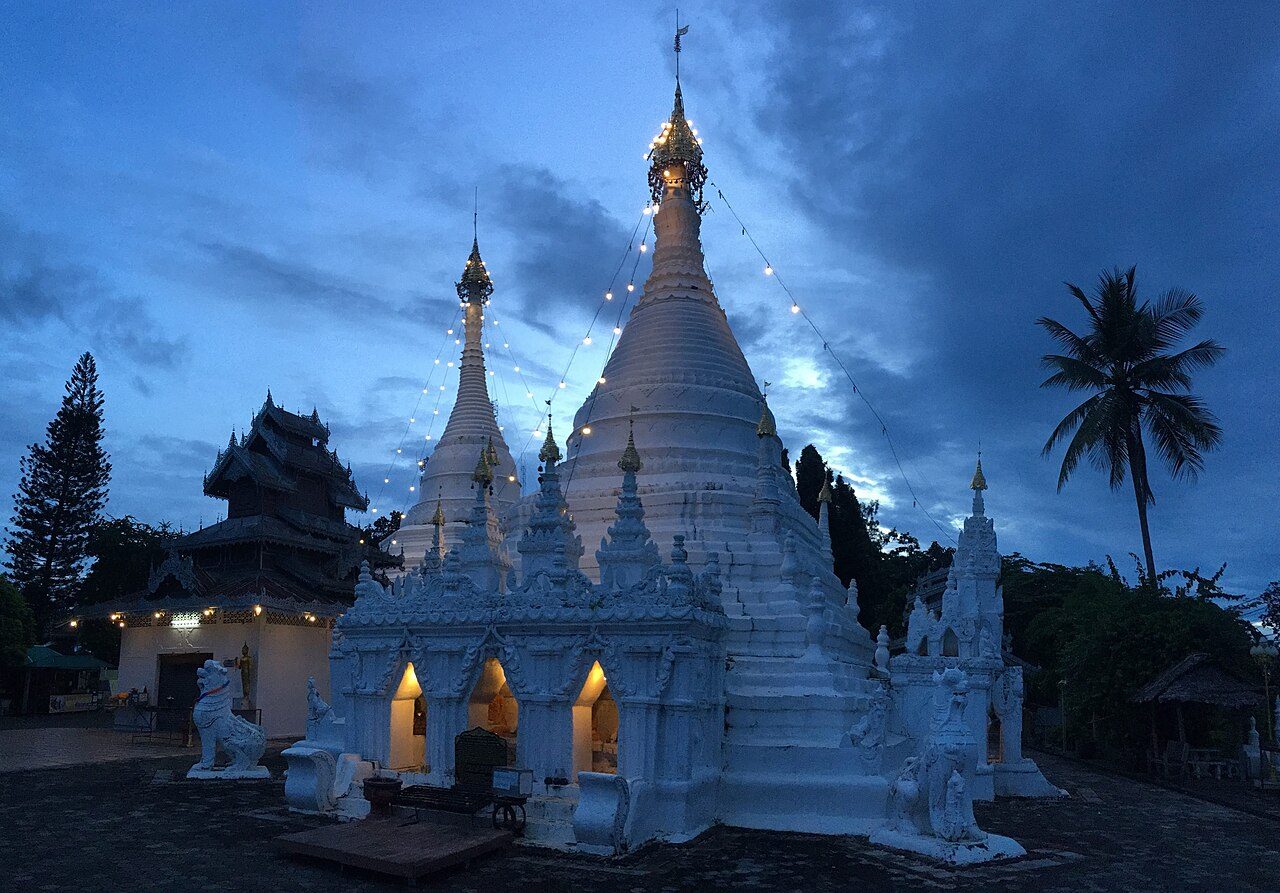
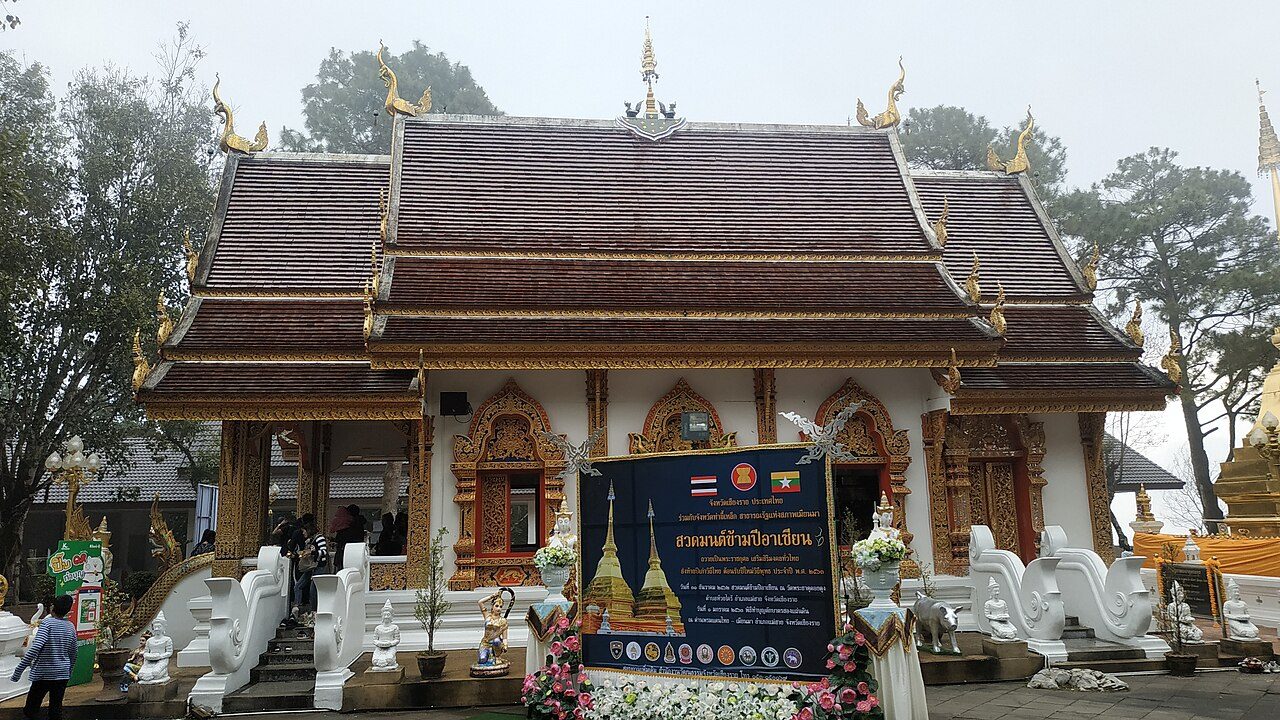
Wat Phra That Doi Kong Mu stands on a hill above the town of Mae Hong Son. It was built in the 19th century by a Shan ruler, and its two white chedis in Burmese style hold relics. The hilltop terrace gives views over the town, Chong Kham Lake and the mountains, and the valley often fills with mist in the early morning.
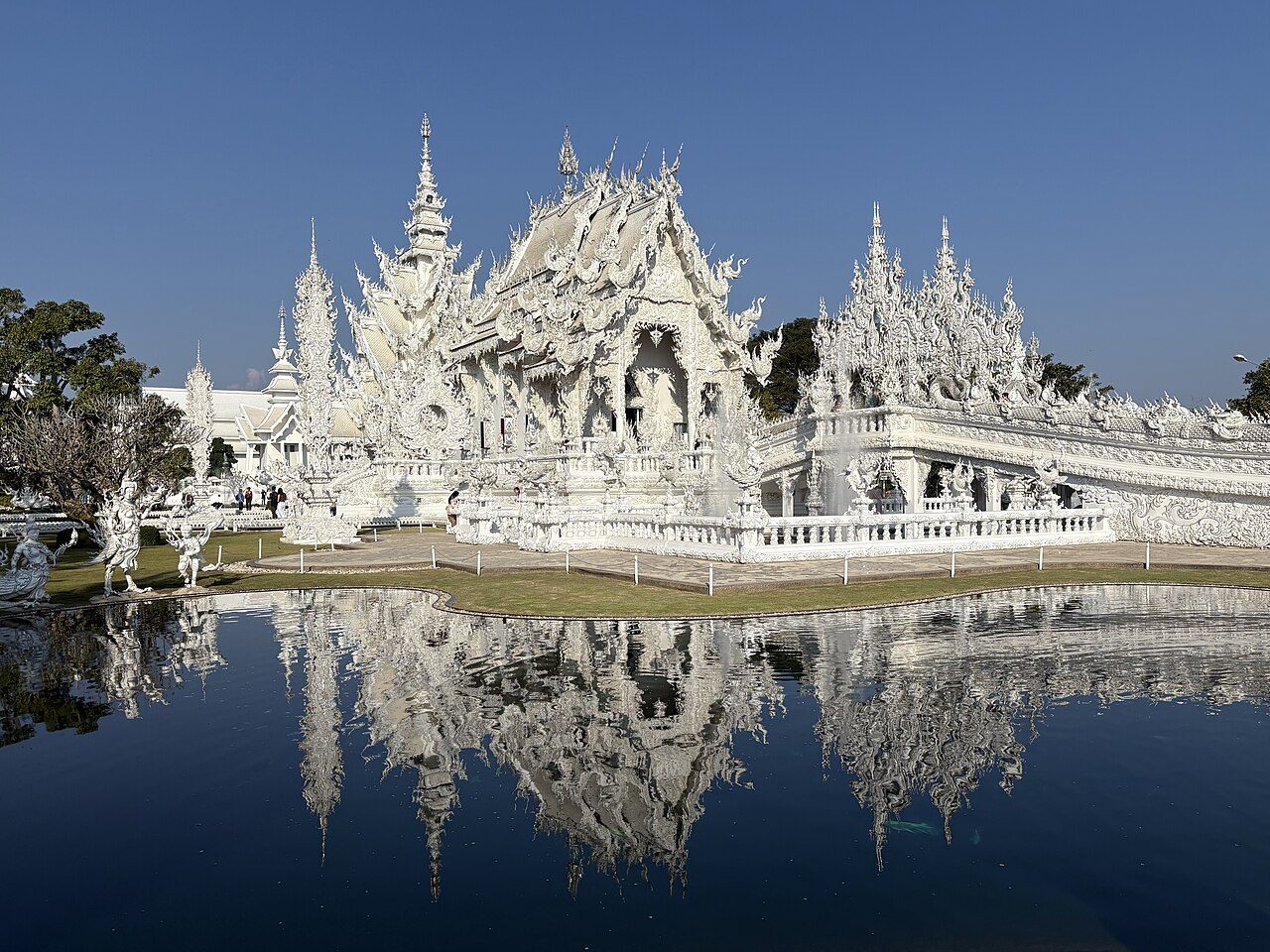
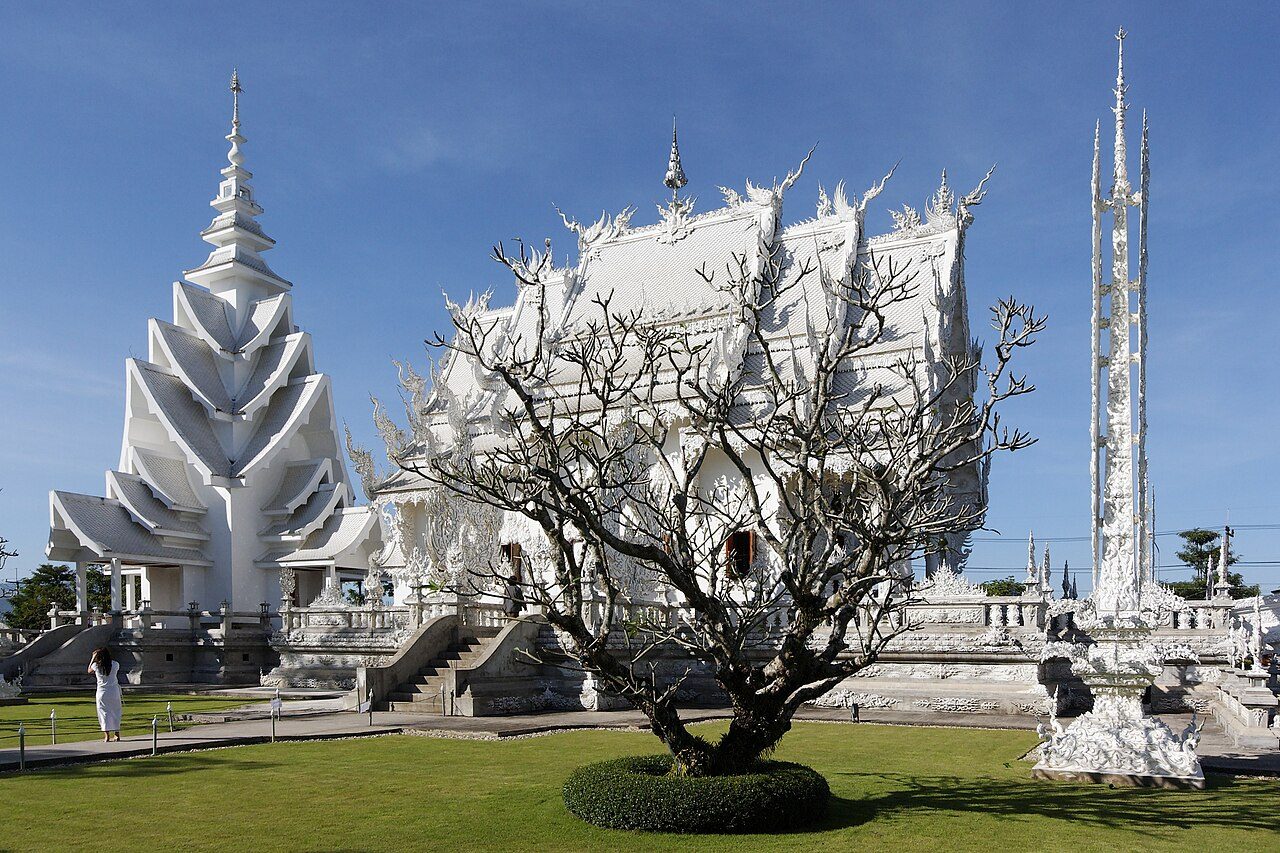
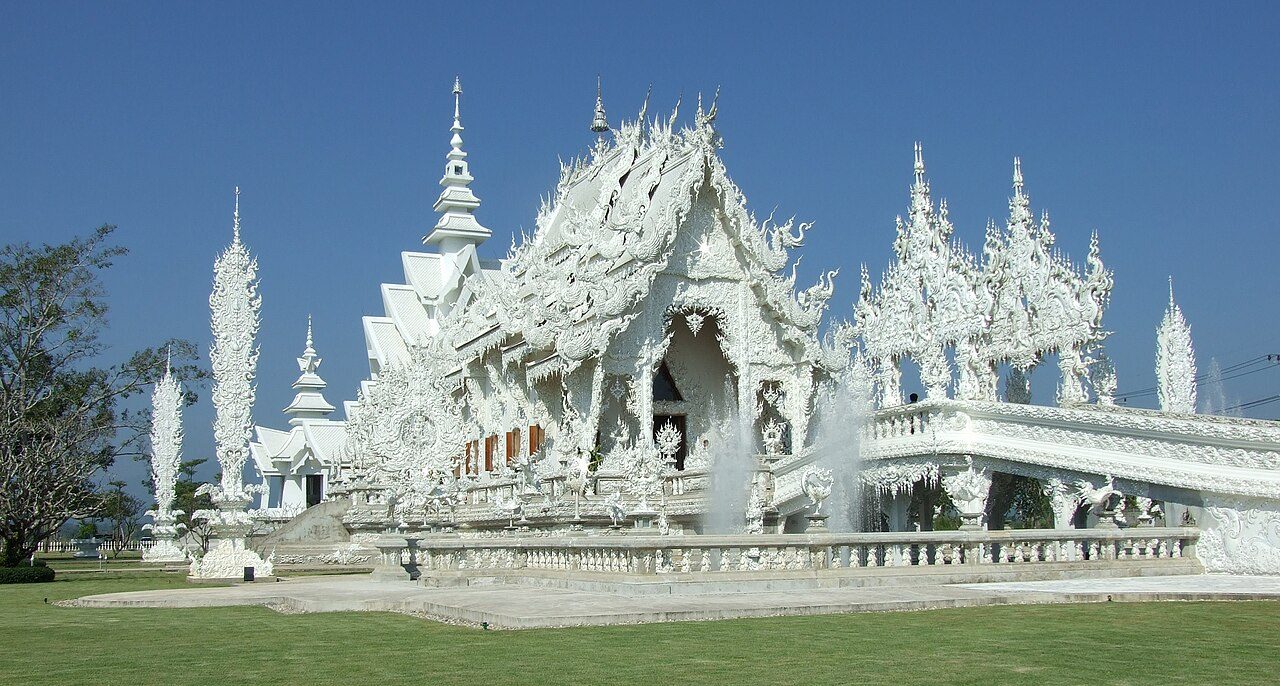
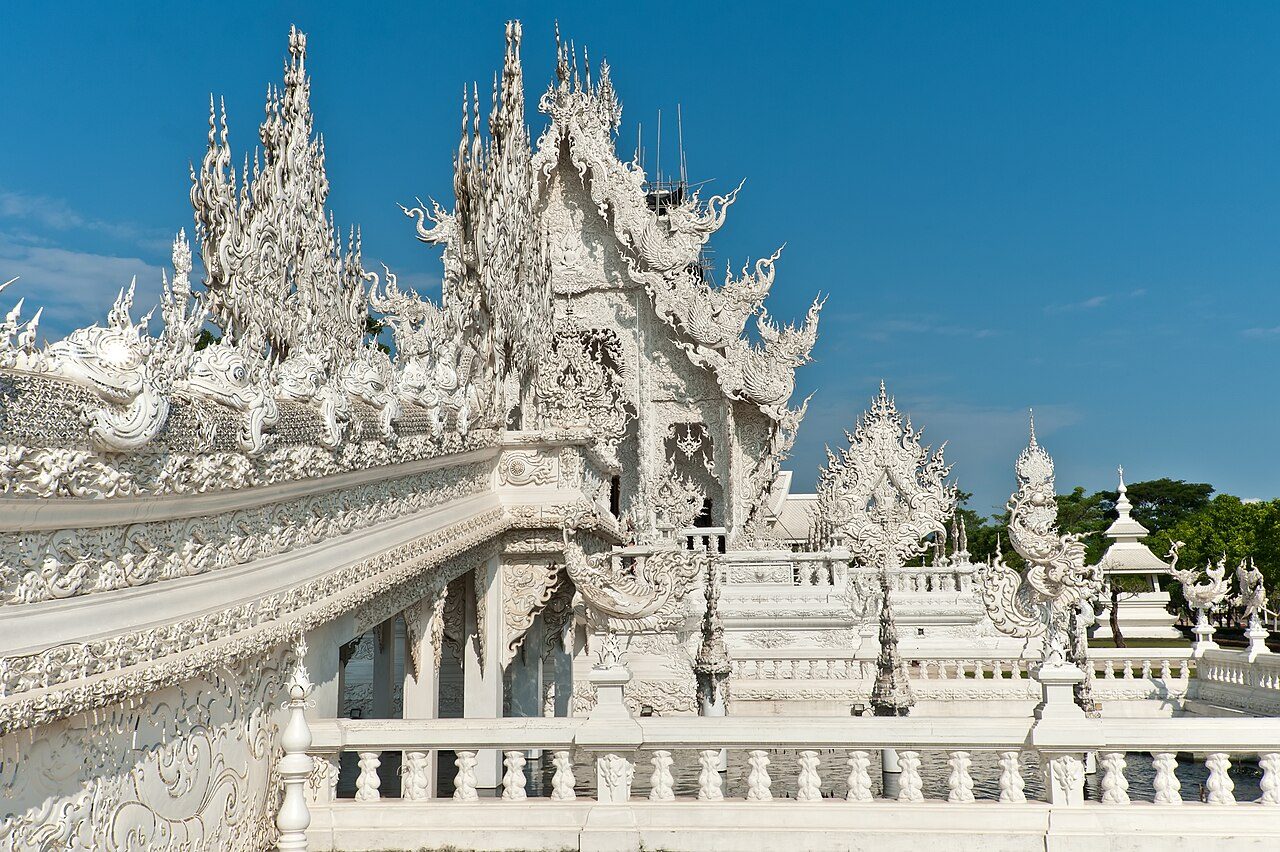
Wat Rong Khun, the White Temple, is a temple in Chiang Rai designed by the artist Chalermchai Kositpipat, who began it in 1997. Its white plaster and mirrored glass stand for the purity of the Buddha. To enter, visitors cross a bridge over a pit of reaching hands, a symbol of escape from desire. Inside, murals mix Buddhist themes with figures from modern popular culture.
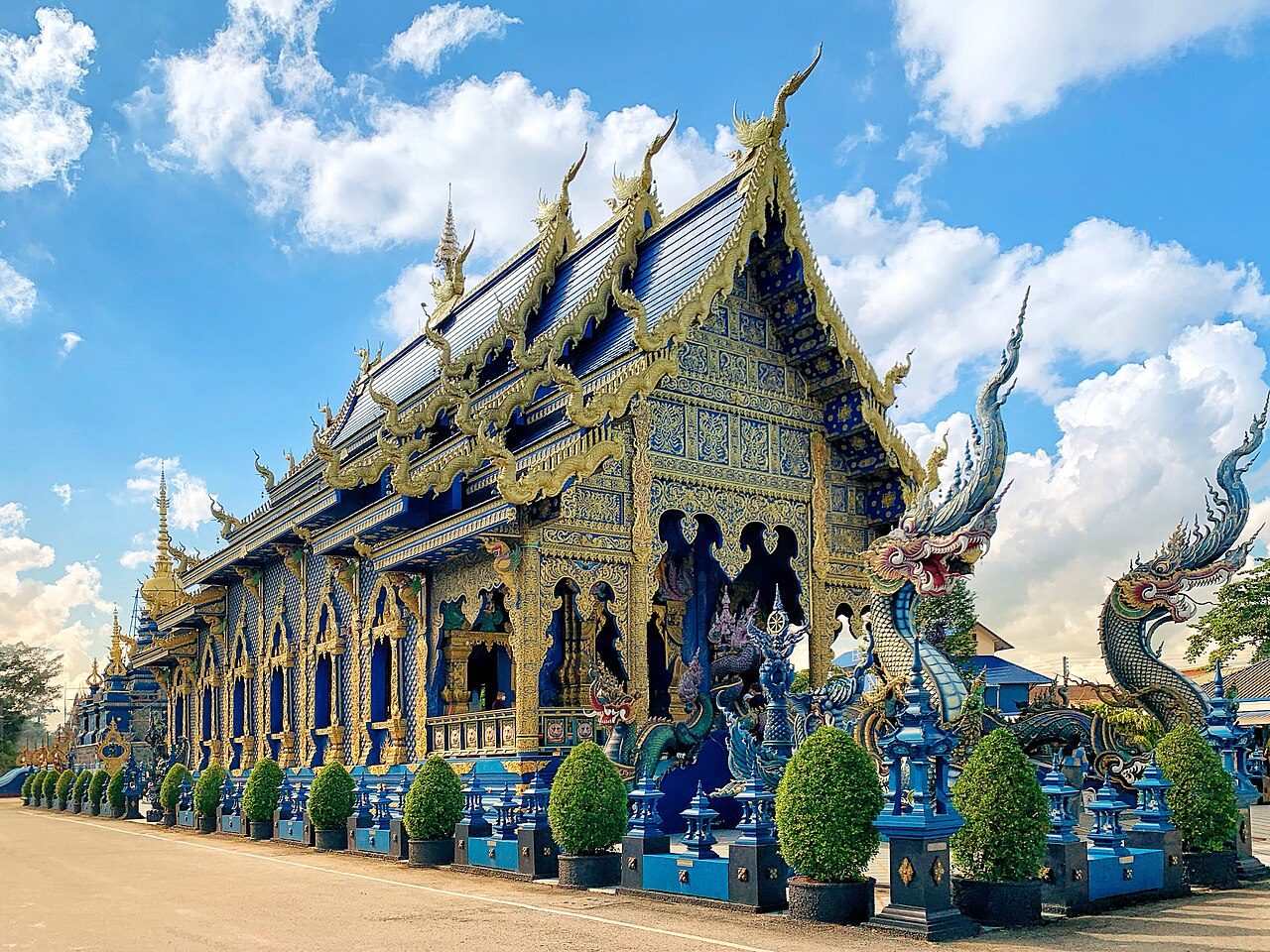
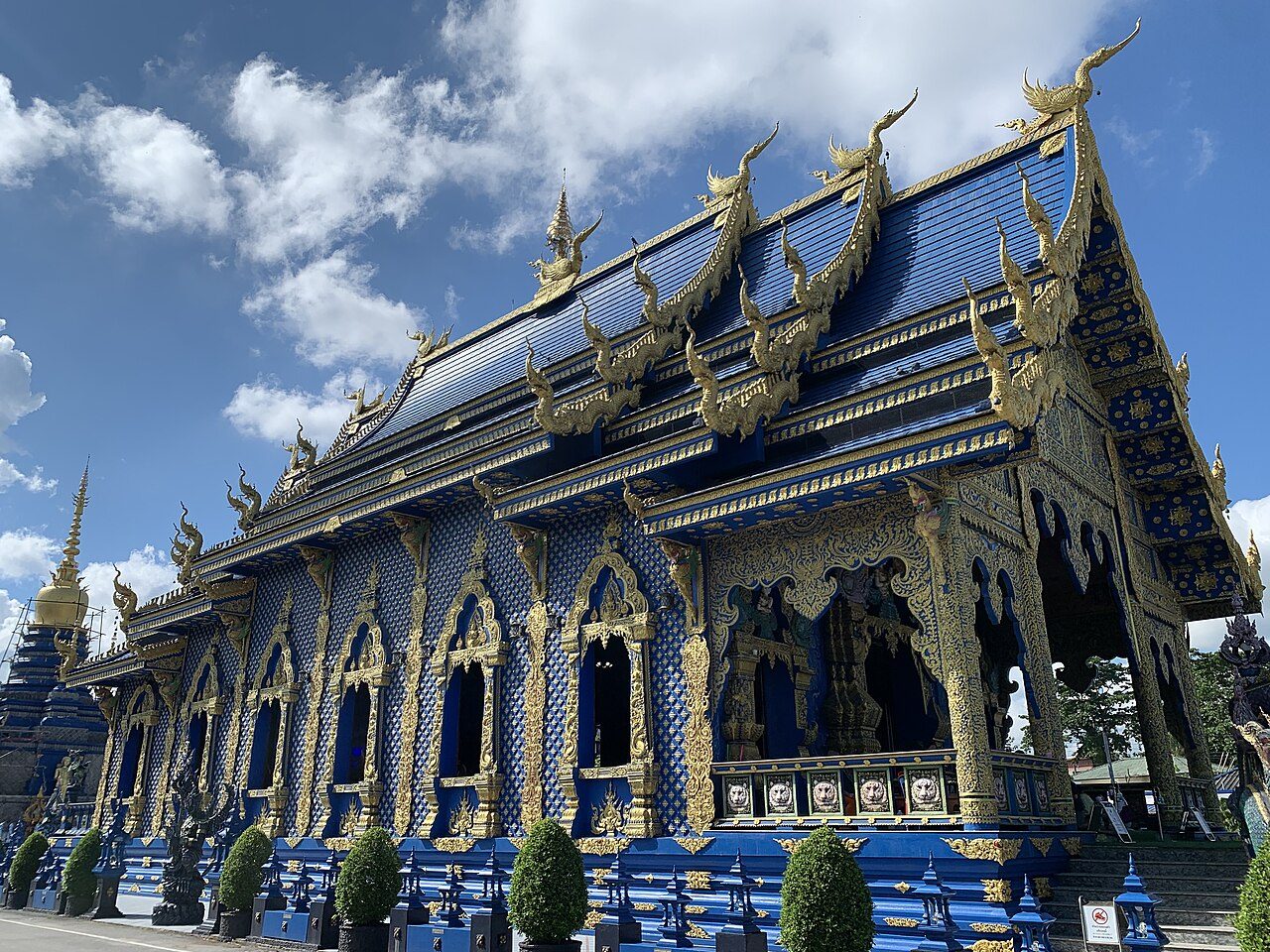
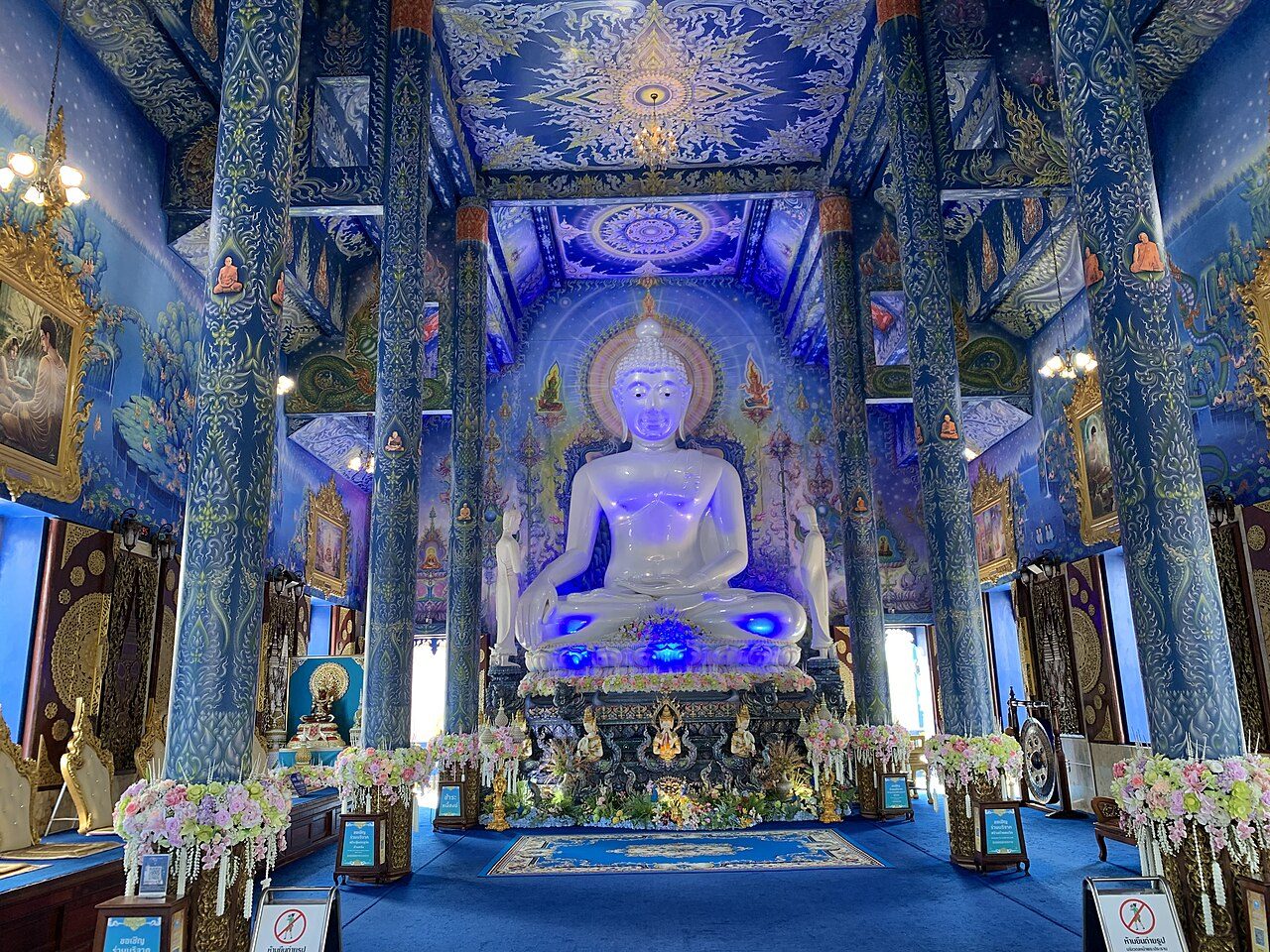
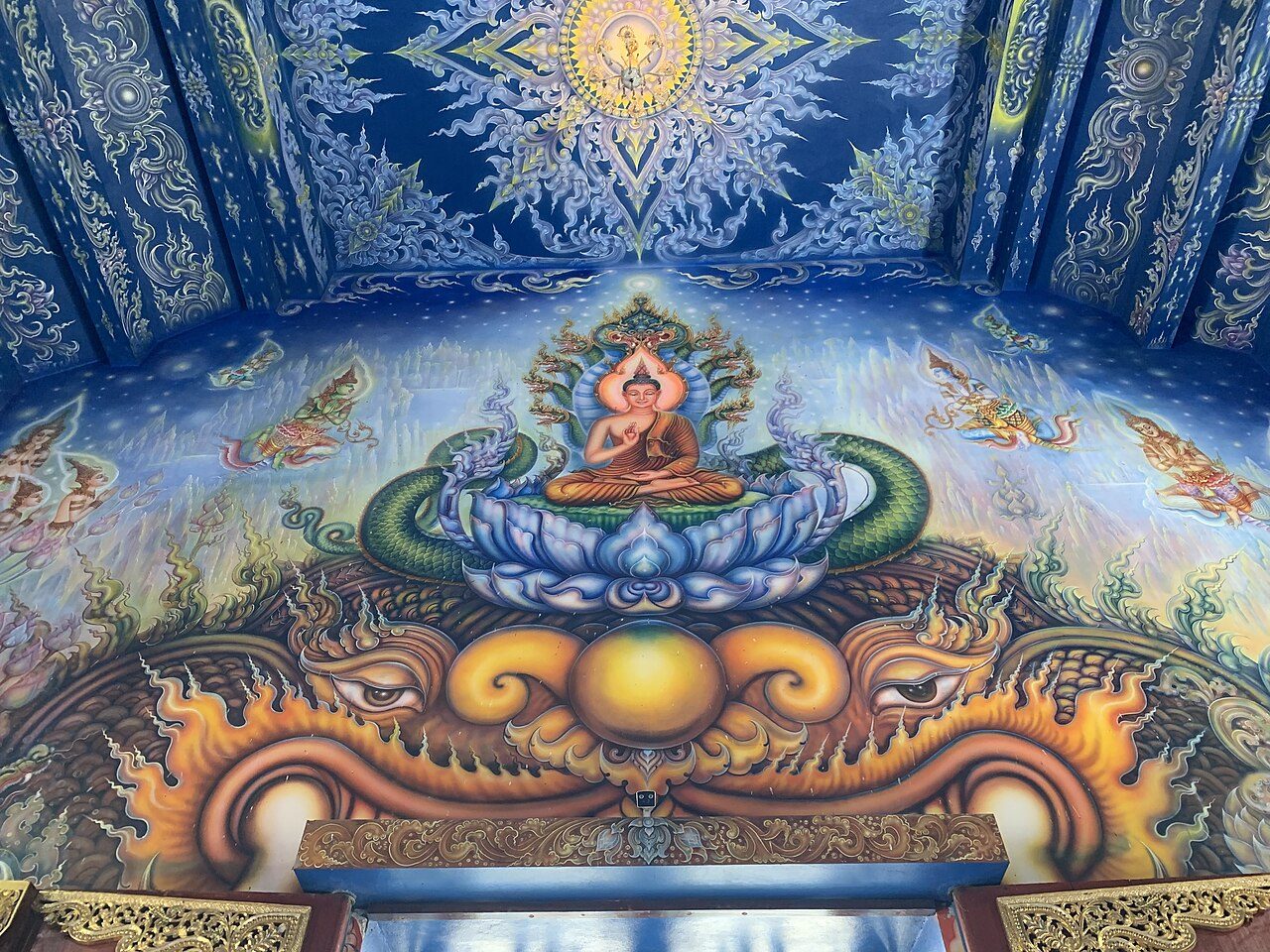
Wat Rong Suea Ten, the Blue Temple, is in the Rong Suea Ten district of Chiang Rai. It was built from 2005 on the ruins of an old temple. Its hall is painted in deep blue and gold, with dragons and naga serpents along the roofs. Inside sits a large white Buddha image under a ceiling of swirling designs. It was created by an artist who studied under Chalermchai Kositpipat.
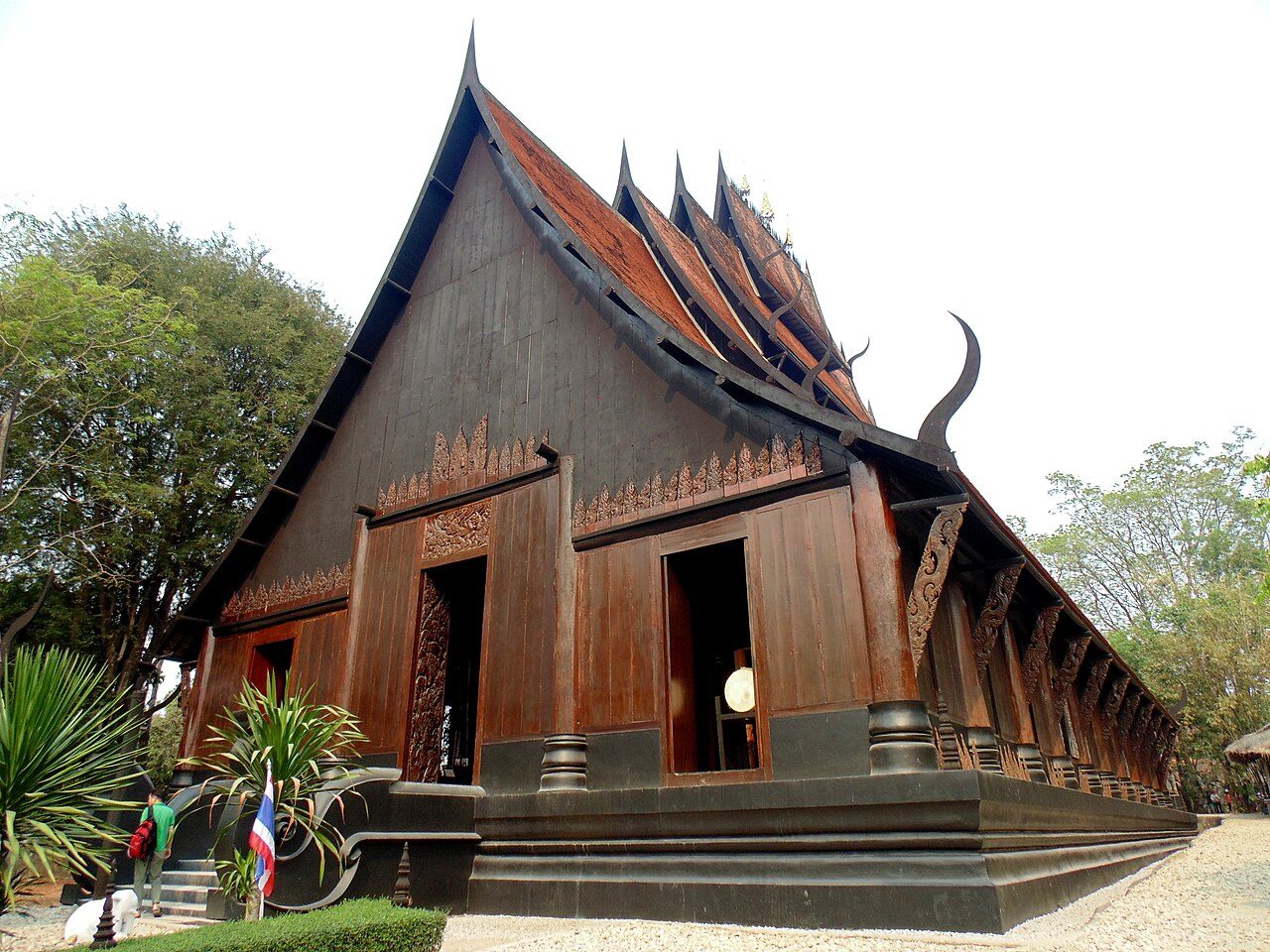
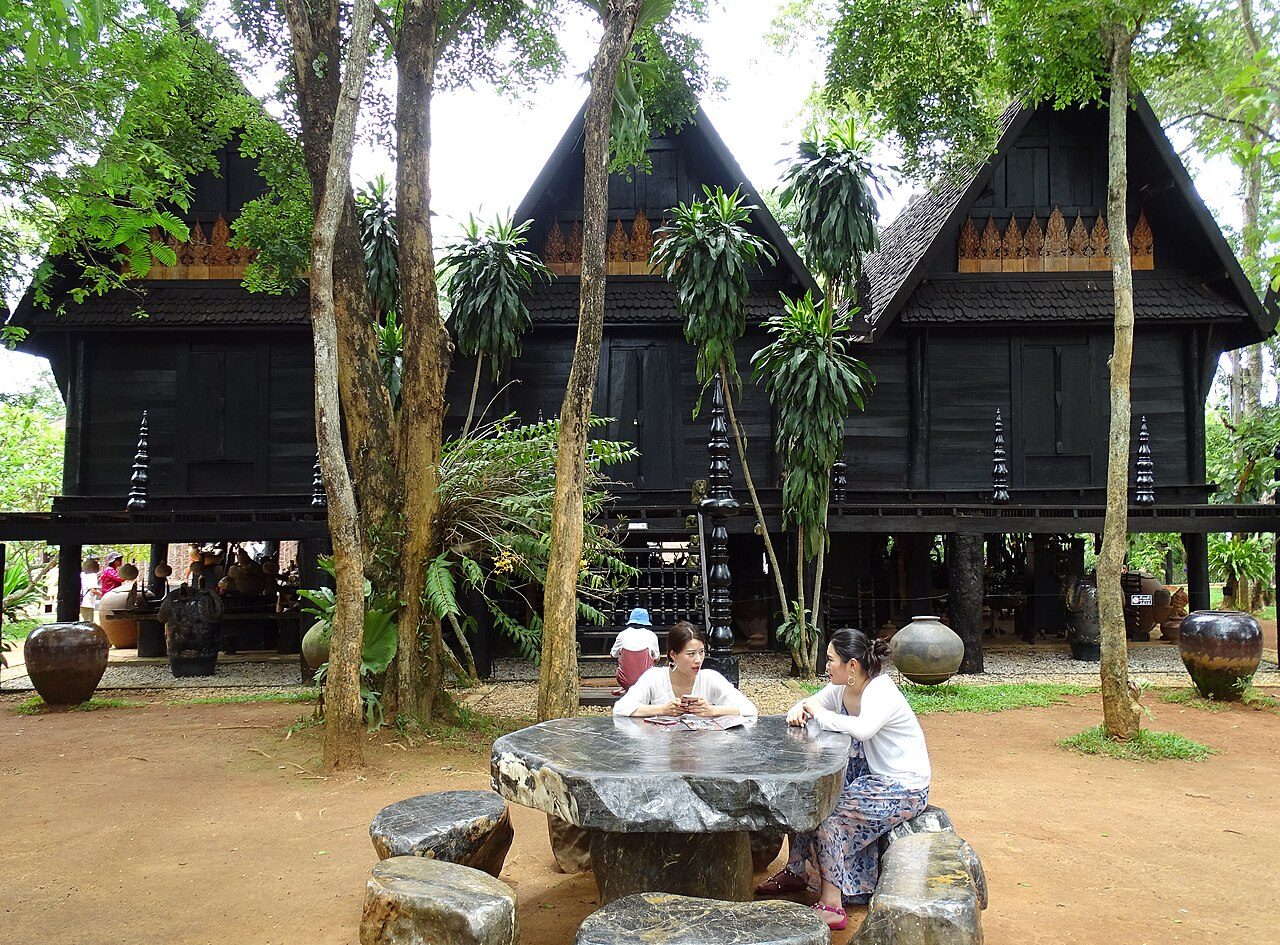
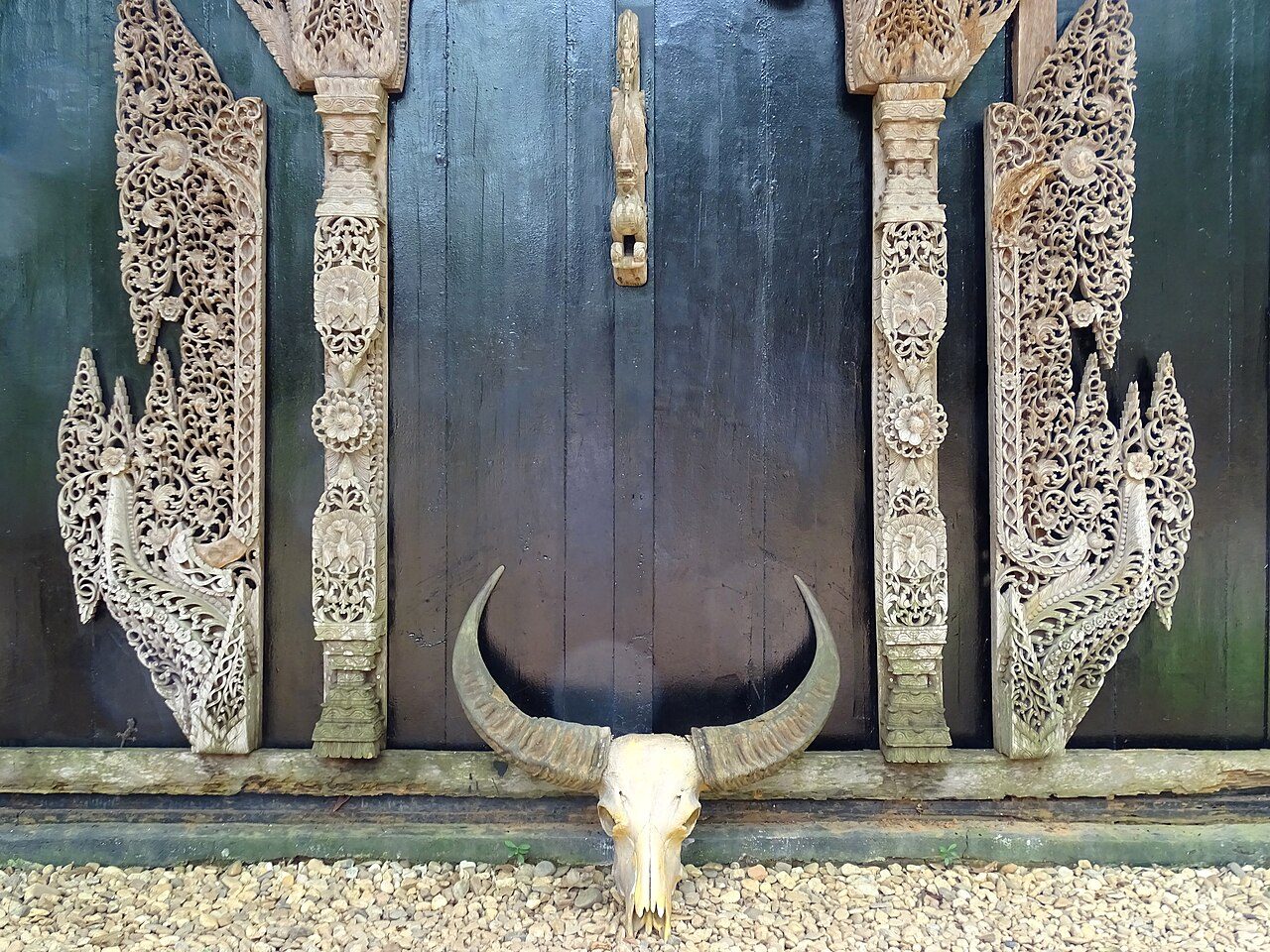
Baan Dam, the Black House, is a museum north of Chiang Rai created by the artist Thawan Duchanee. Around forty dark buildings stand in a garden, mixing Lanna temple forms with very personal art. They are filled with animal skins, horns, bones, carved furniture and paintings. Thawan worked on it for decades until his death in 2014.
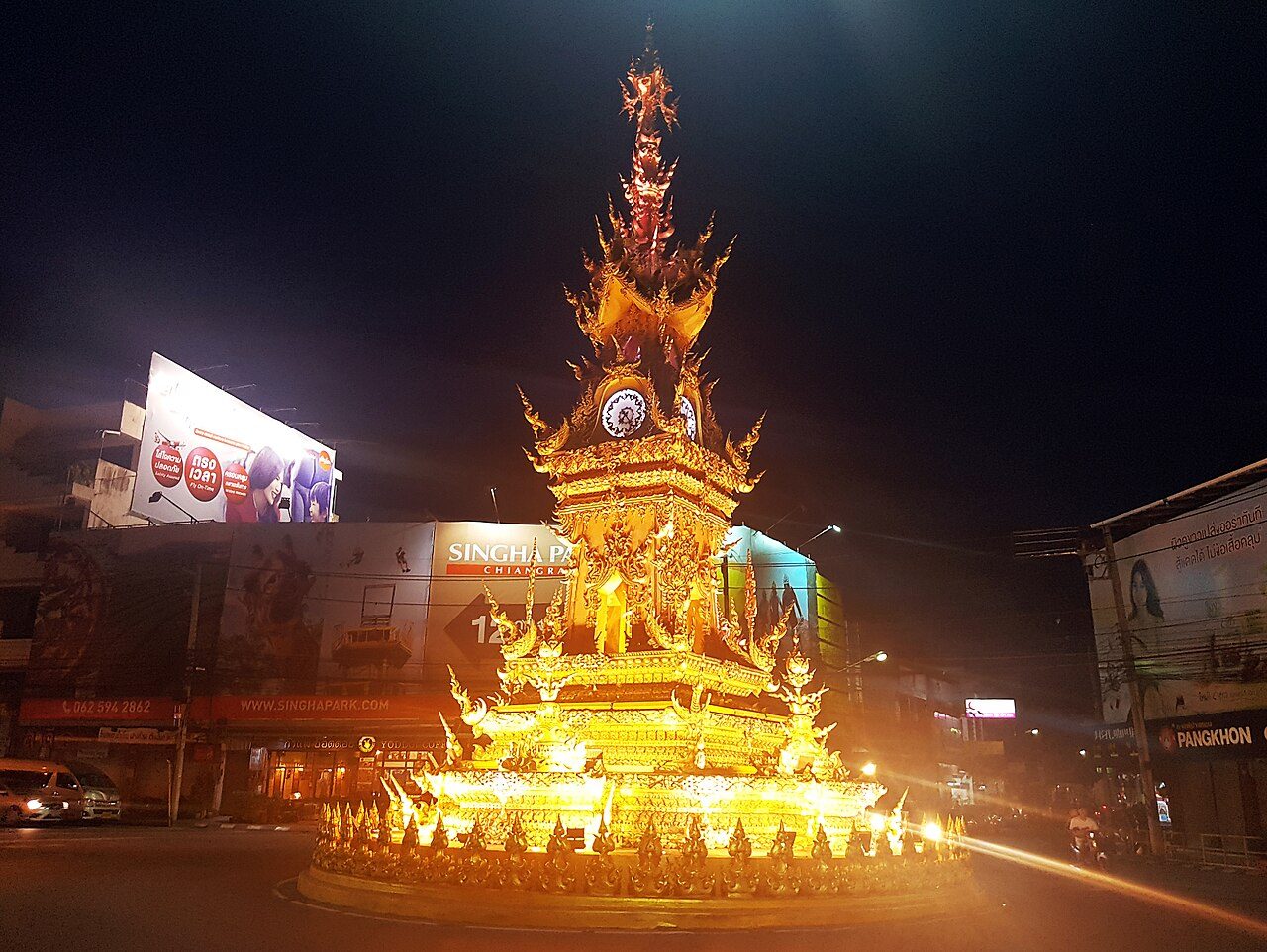
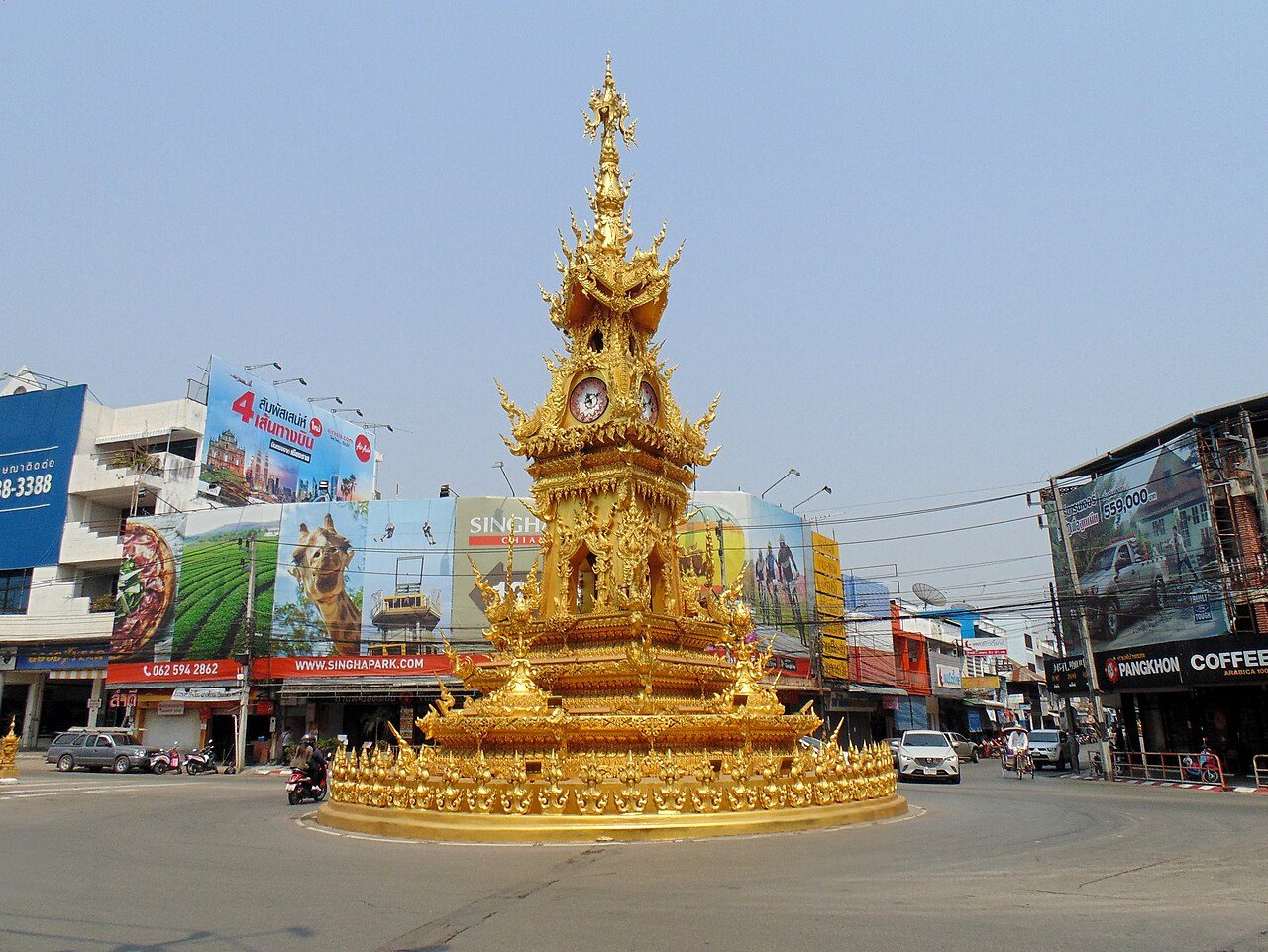
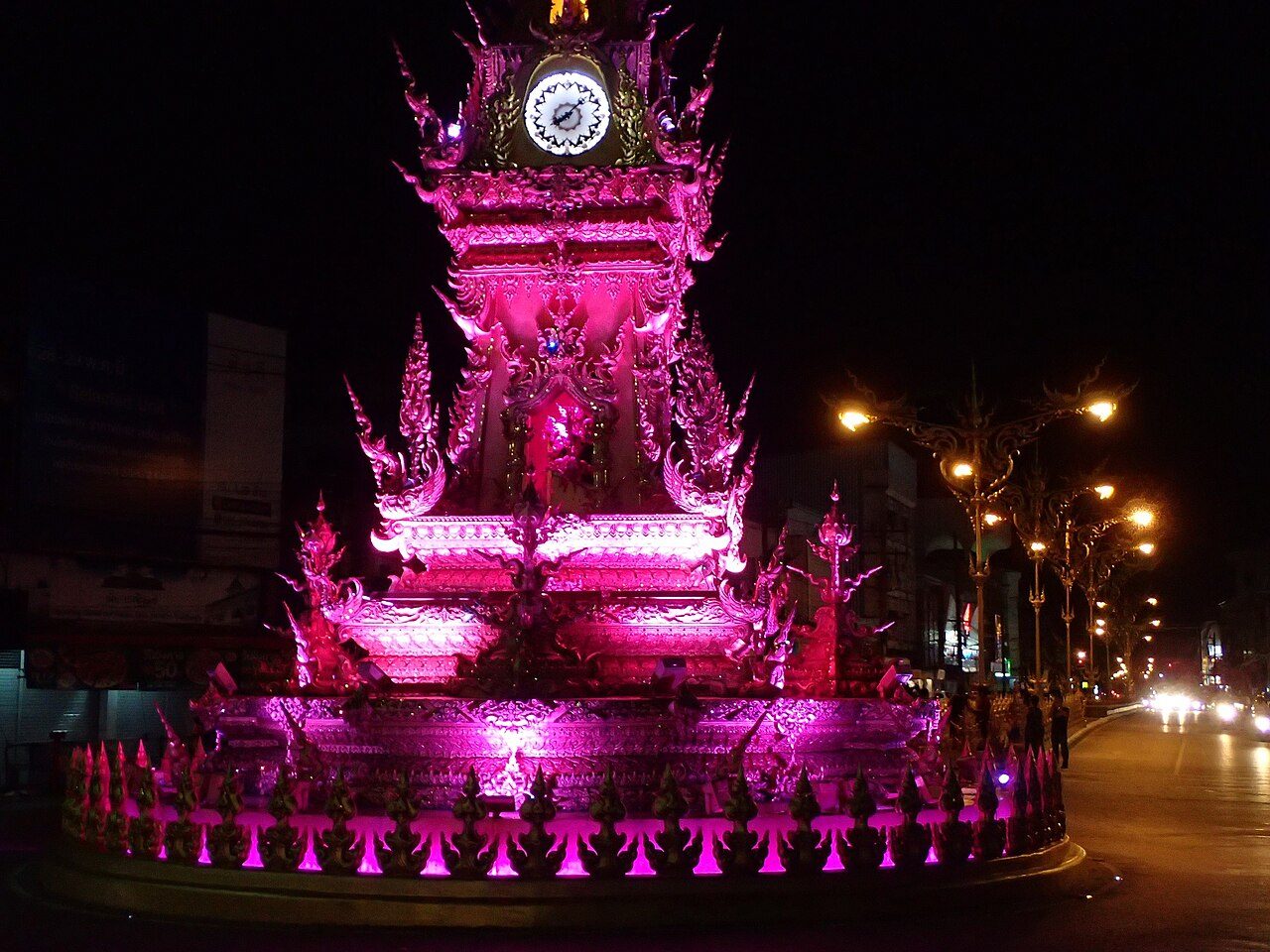
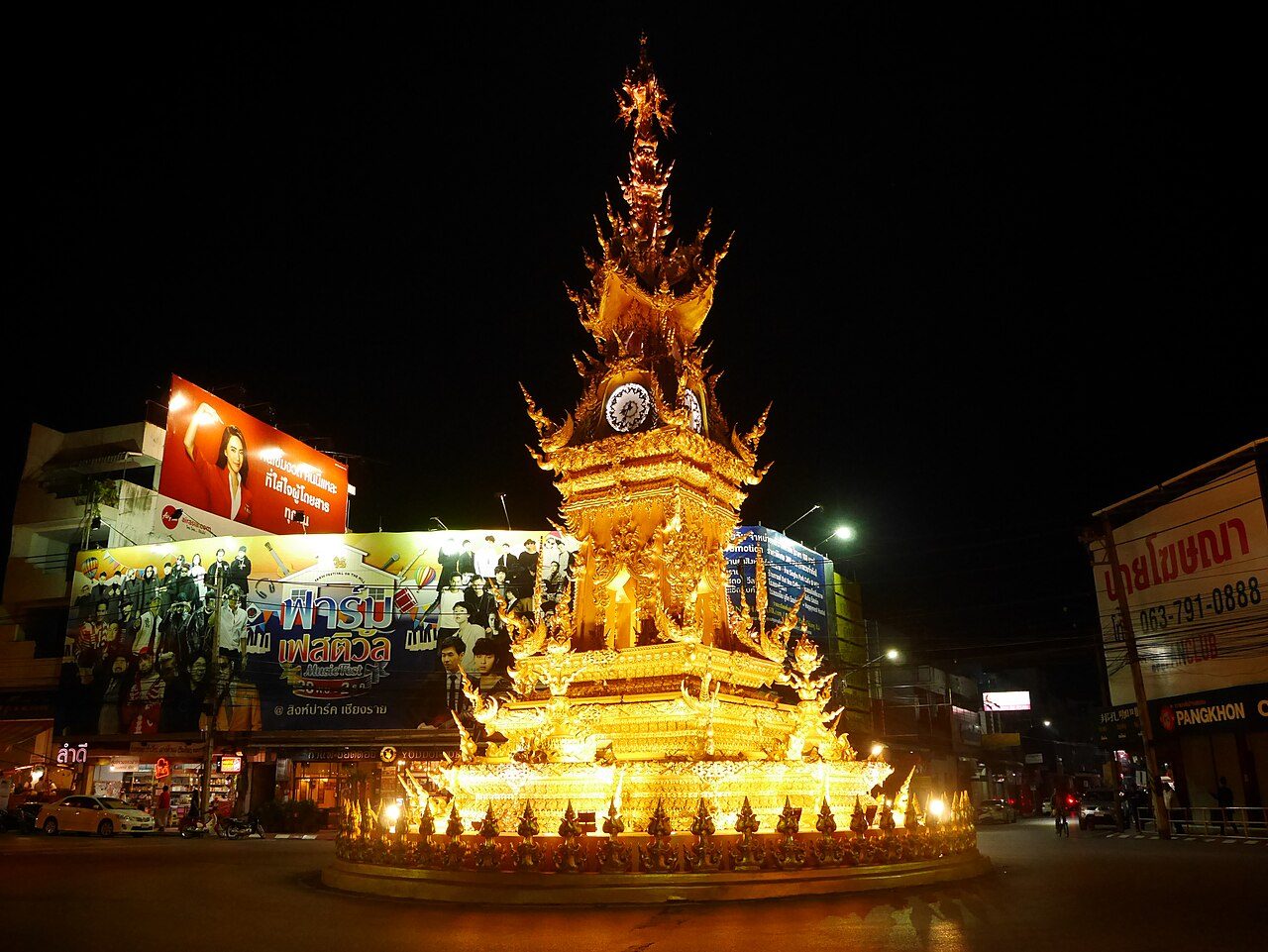
The Chiang Rai Clock Tower stands at a busy junction in the centre of the city. It was designed by Chalermchai Kositpipat, the artist of the White Temple, and opened in 2008. The ornate golden tower is decorated with swirling forms. Every evening a short light and music show plays at set times, changing its colours. It is a well known symbol of Chiang Rai.
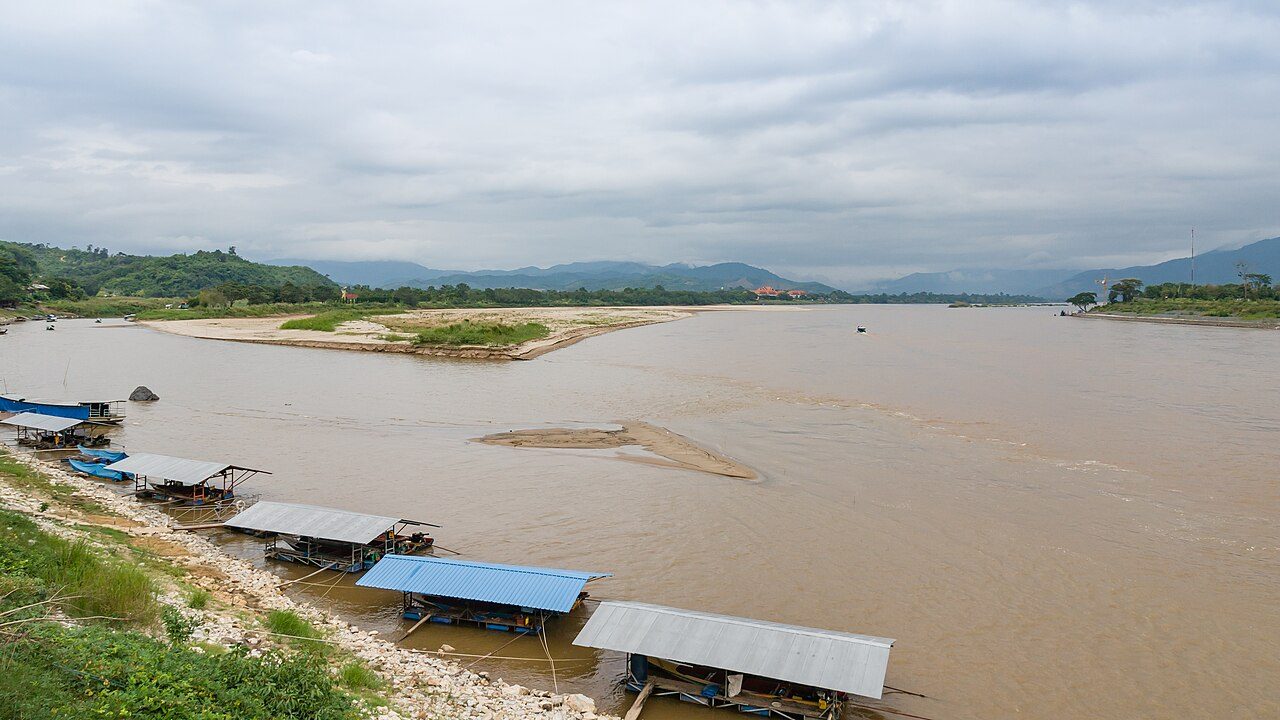
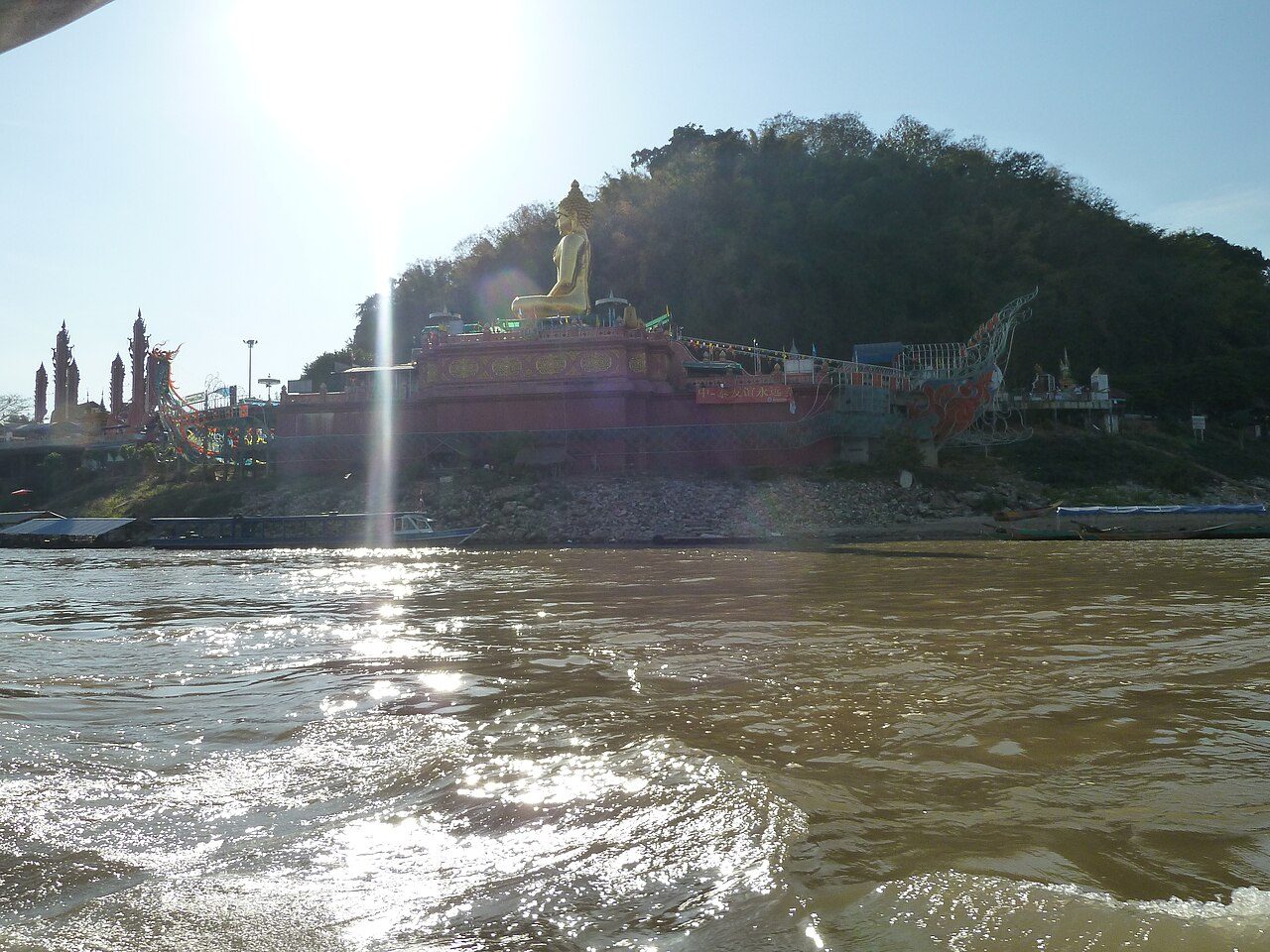
The Golden Triangle is the area where the borders of Thailand, Laos and Myanmar meet at the junction of the Ruak and Mekong rivers. It was once known as a centre of opium growing. At Sop Ruak, a viewpoint looks across to the other two countries. A large seated golden Buddha stands on the riverbank, and the Hall of Opium museum tells the history of the trade.
Doi Tung is a mountain in Chiang Rai province near the Myanmar border. On its slope stands the Doi Tung Royal Villa, the home of the Princess Mother, King Bhumibol's mother, who started a project in 1988 to replace opium growing with coffee, macadamia and crafts. Her Mae Fah Luang Garden is famous for its flowers. Near the summit stands Wat Phra That Doi Tung.
Best weather: Nov – MarHeavy rain: Aug
Seasons from 20 years of NASA POWER climate data.
Was this trip blog helpful?
0
0
Ready to follow this route?
Copy all 19 stops into your trip plans in the app.
 WaTrips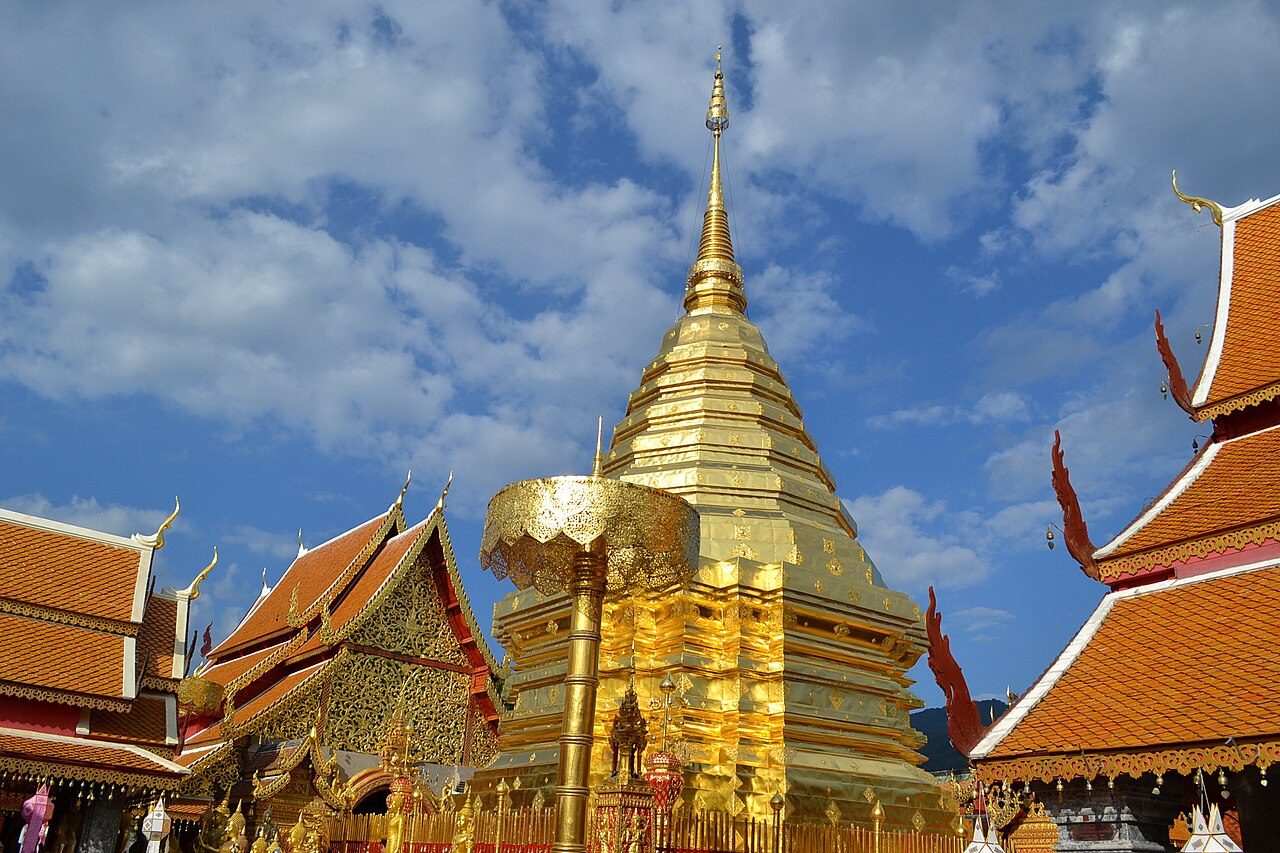








 BikesBooking
 Localrent
 Airalo
 Tiqets