Krishna Janmasthan and Vishram Ghat, Vrindavan's temples and Prem Mandir at night, then Govardhan and Barsana.
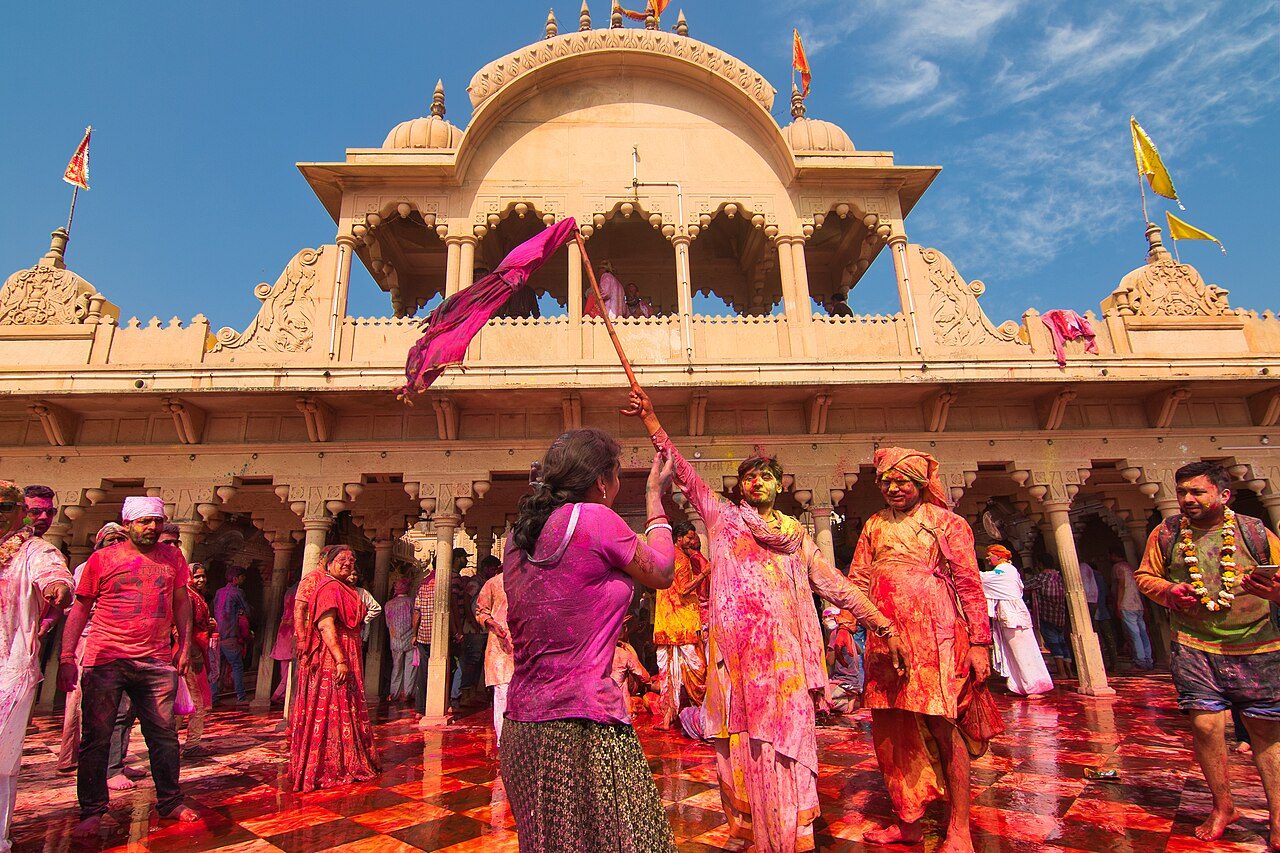
Braj, the land of Krishna, is a short ride from Delhi or Agra. Day one starts in Mathura at Krishna Janmasthan, the Dwarkadhish temple and Vishram Ghat on the Yamuna, then moves to Vrindavan for the red sandstone Govind Dev temple, ISKCON, and Prem Mandir lit up after dark. Day two visits Kusum Sarovar near Govardhan and the Radha Rani temple on its hill at Barsana. Holi here is famous but very crowded; October to March is the most comfortable time.
01
STOP 1 OF 8
Krishna Janmasthan Temple
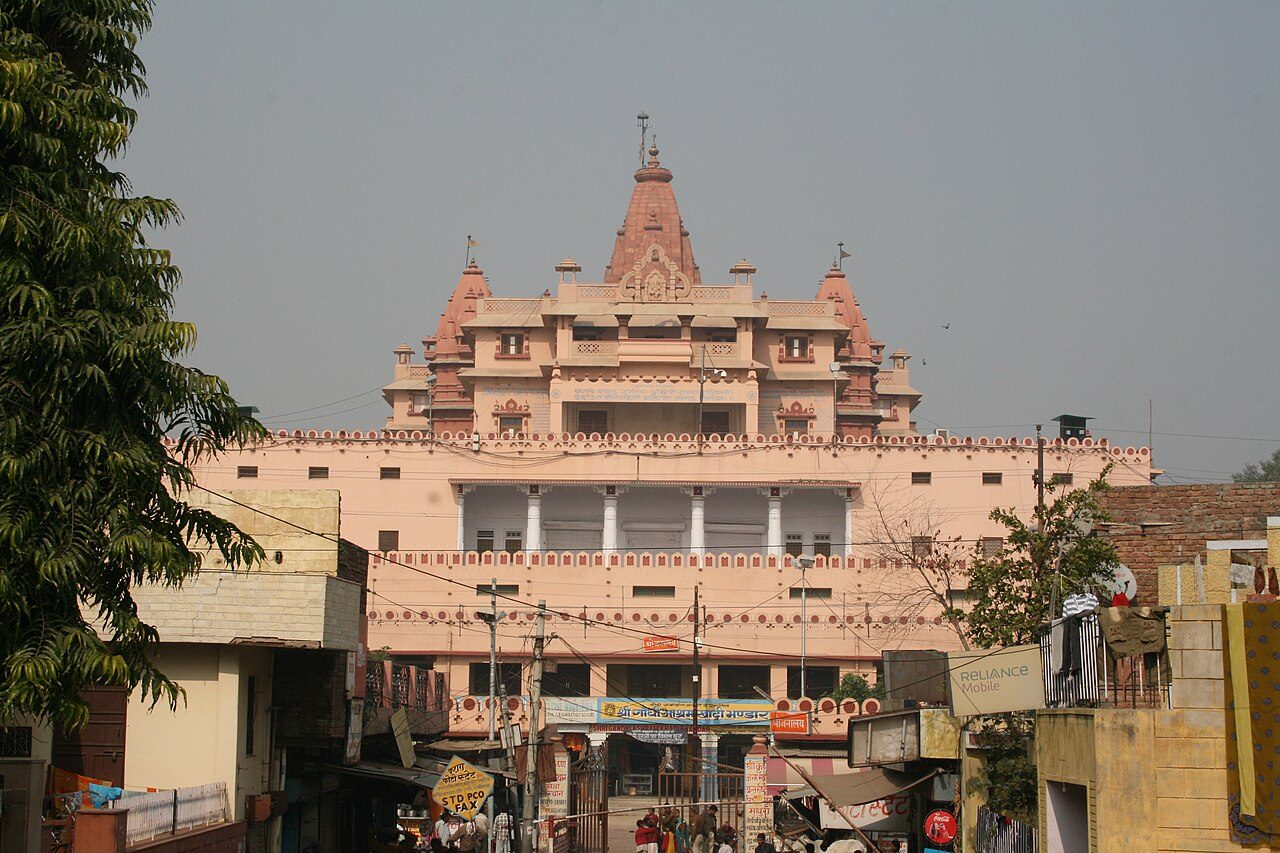
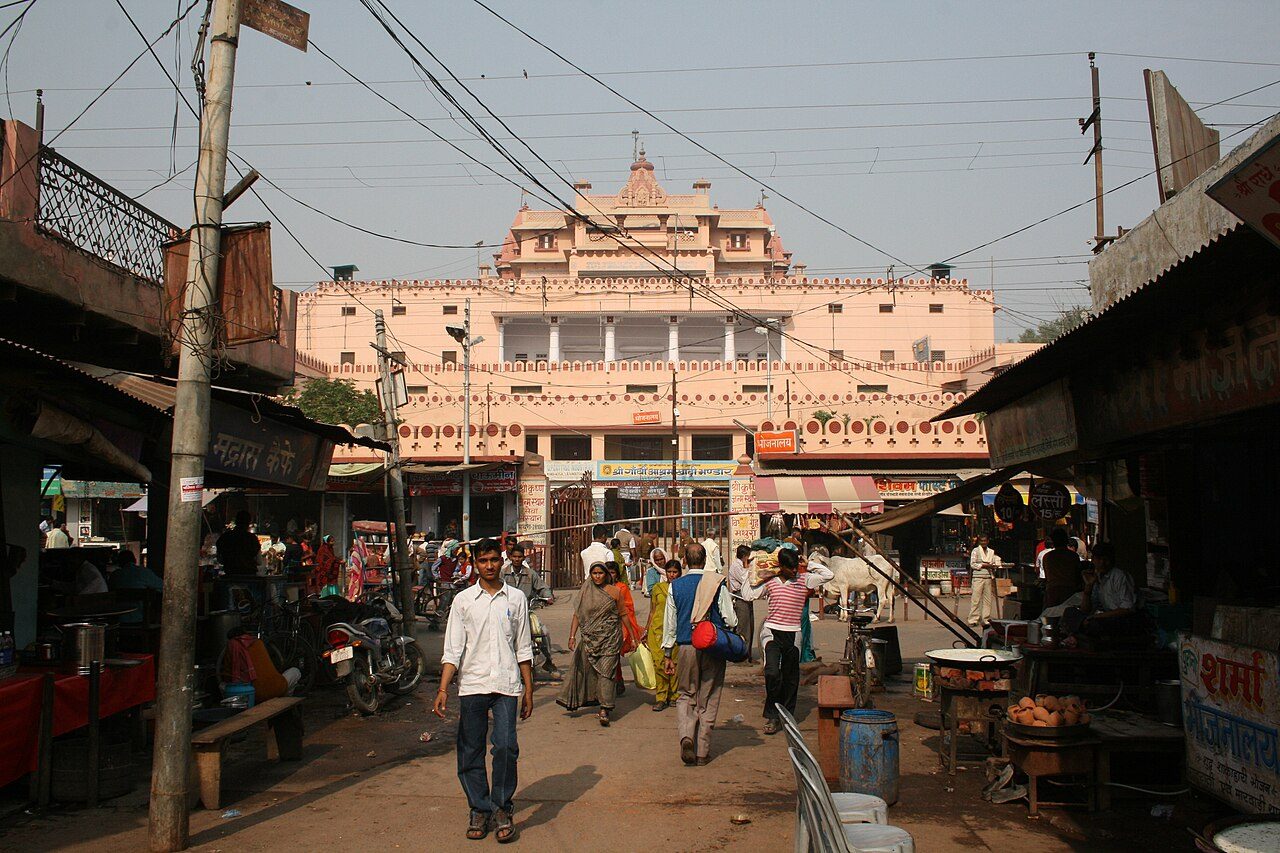
The Krishna Janmasthan temple complex in Mathura stands on the site traditionally revered as the birthplace of Krishna. Temples here were built and destroyed several times over two thousand years. The present complex includes the Keshavdeva temple, a small shrine representing the prison cell of his birth, and the large Bhagavata Bhavan. Security is strict and phones and cameras must be deposited. Janmashtami draws huge crowds.
02
STOP 2 OF 8
Dwarkadhish Temple Mathura
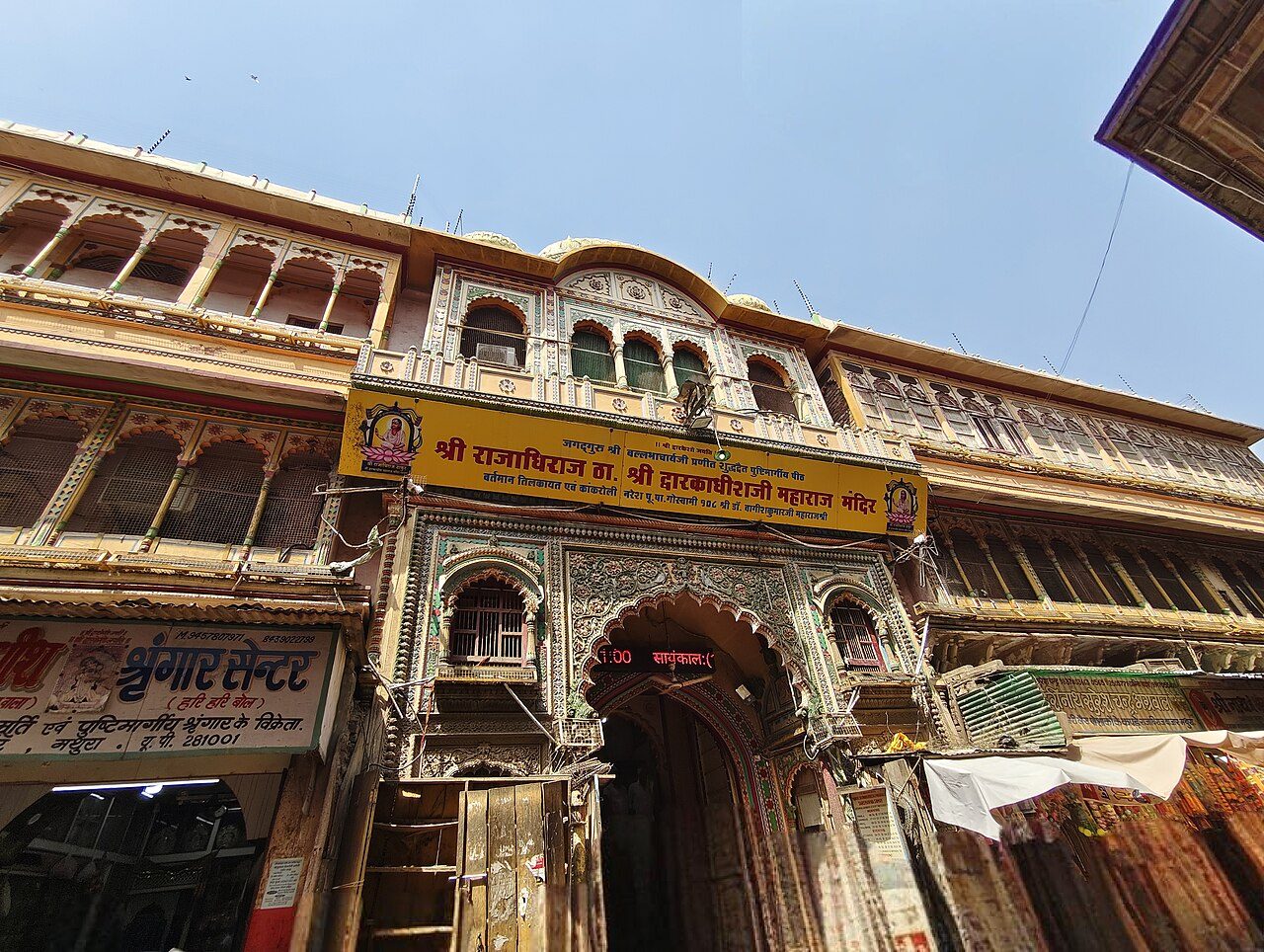
The Dwarkadhish temple in Mathura was built in 1814 by Seth Gokul Das Parikh, treasurer of the Gwalior state. Dedicated to Krishna as king of Dwarka, it is known for its carved Rajasthani-style entrance, painted ceilings and courtyard. It stands in the old city near the Yamuna ghats and is especially lively during the monsoon swing festival of Hindola, and on Holi and Janmashtami.
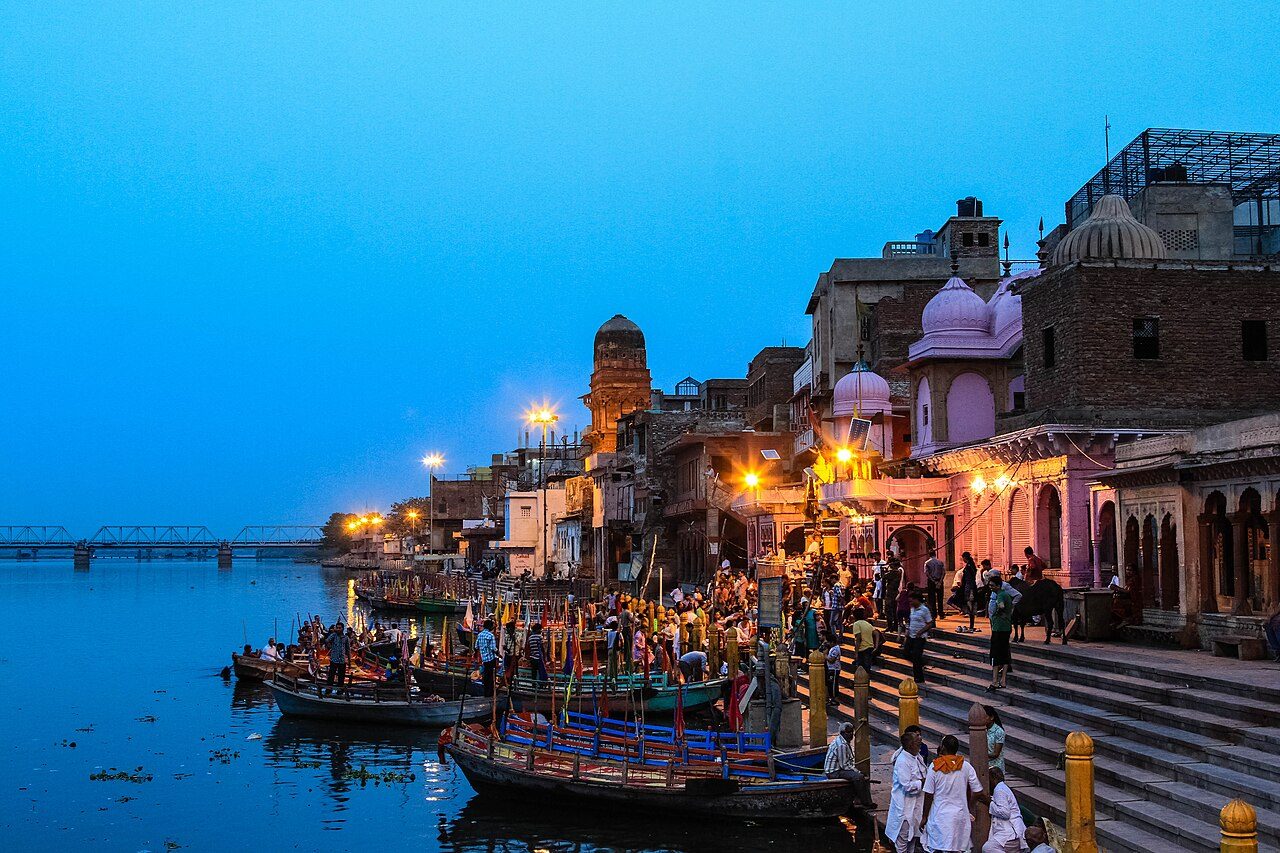
Vishram Ghat is the principal bathing ghat on the Yamuna at Mathura. According to tradition, Krishna rested here after killing the tyrant Kansa, which gives the ghat its name. It is lined with temples and arched pavilions, and the customary circuit of the city begins and ends here. Evening aarti, when lamps are floated on the river, is the best time; boats can be hired for a view of the ghats.
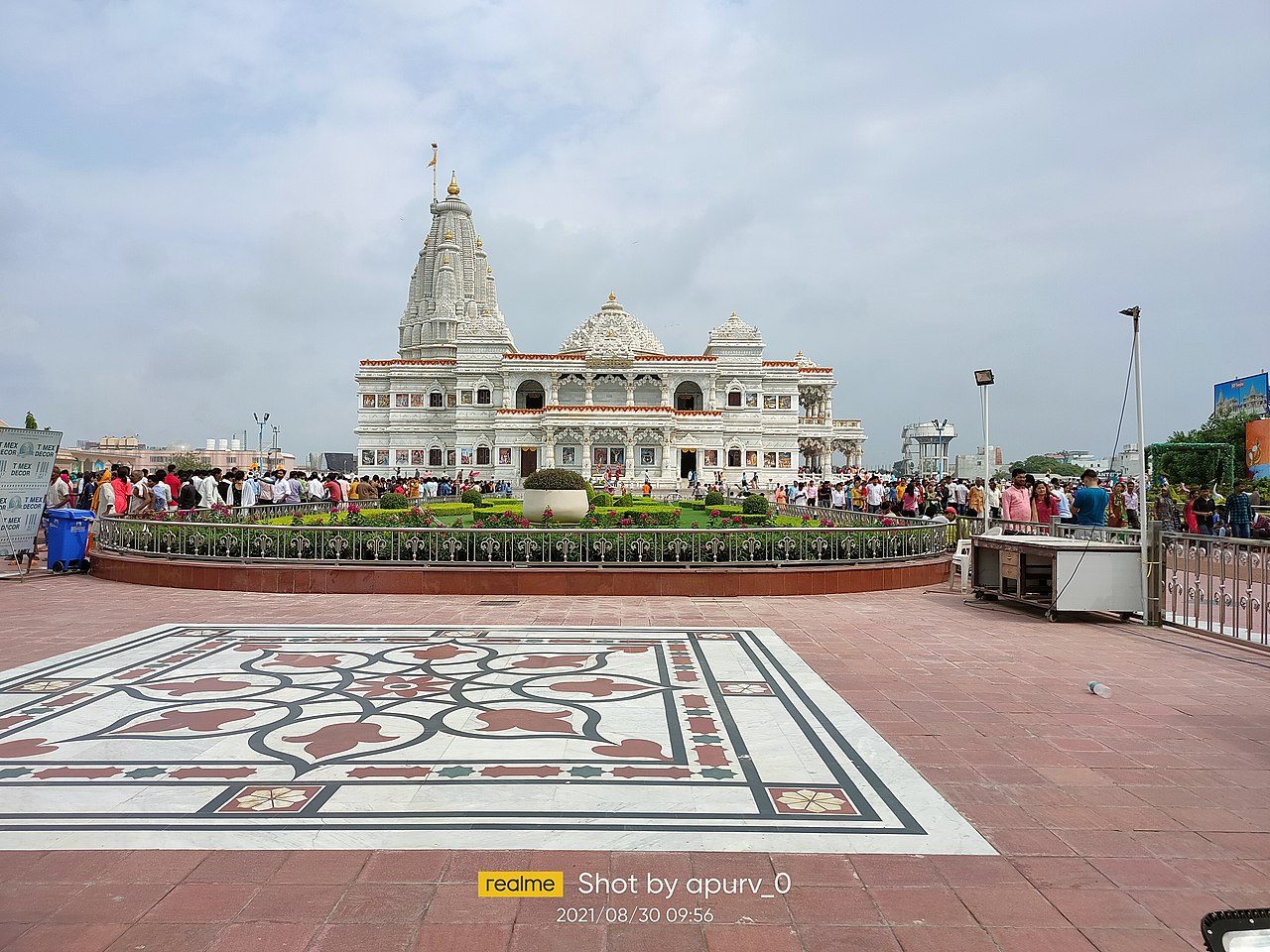
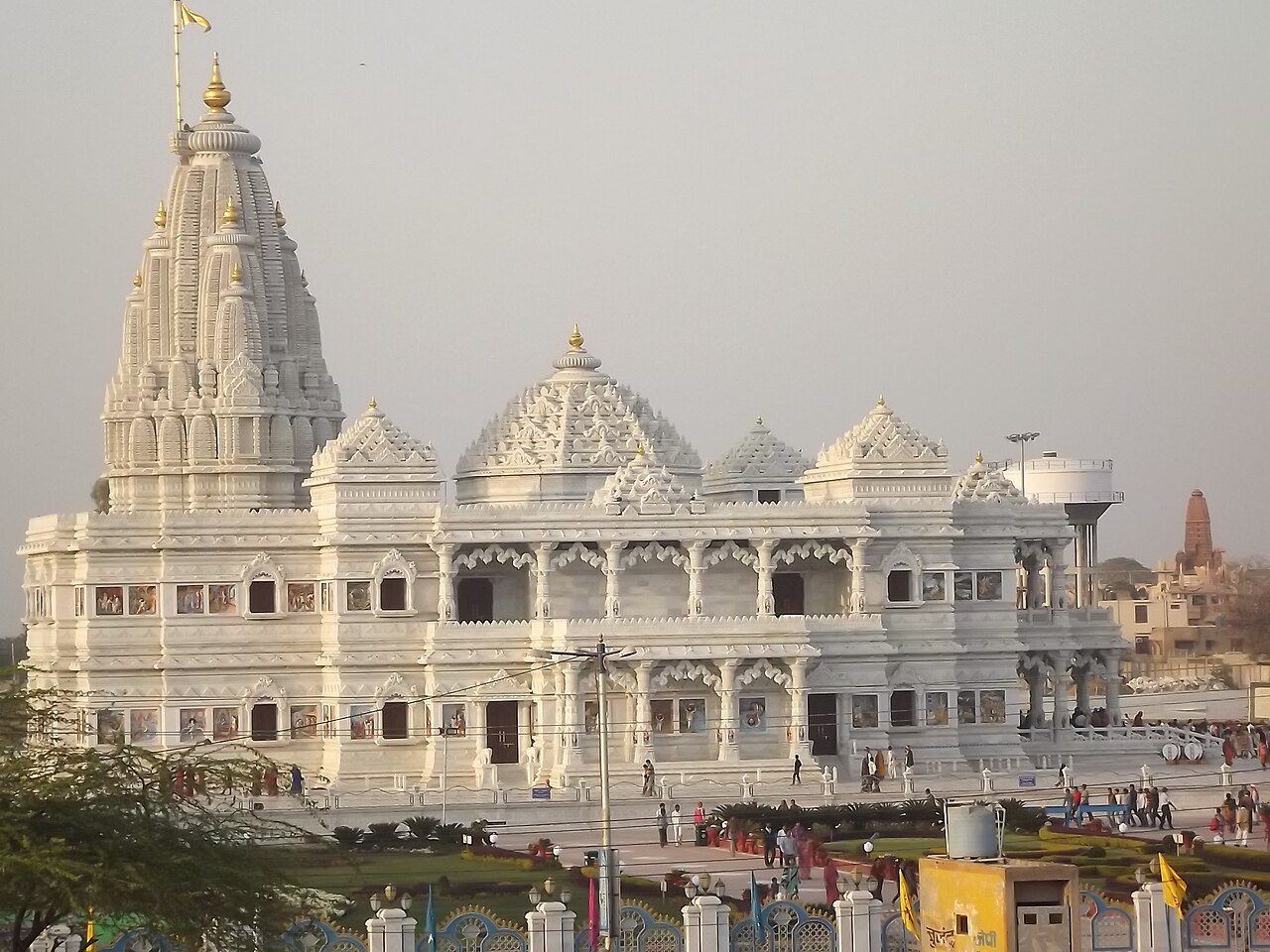
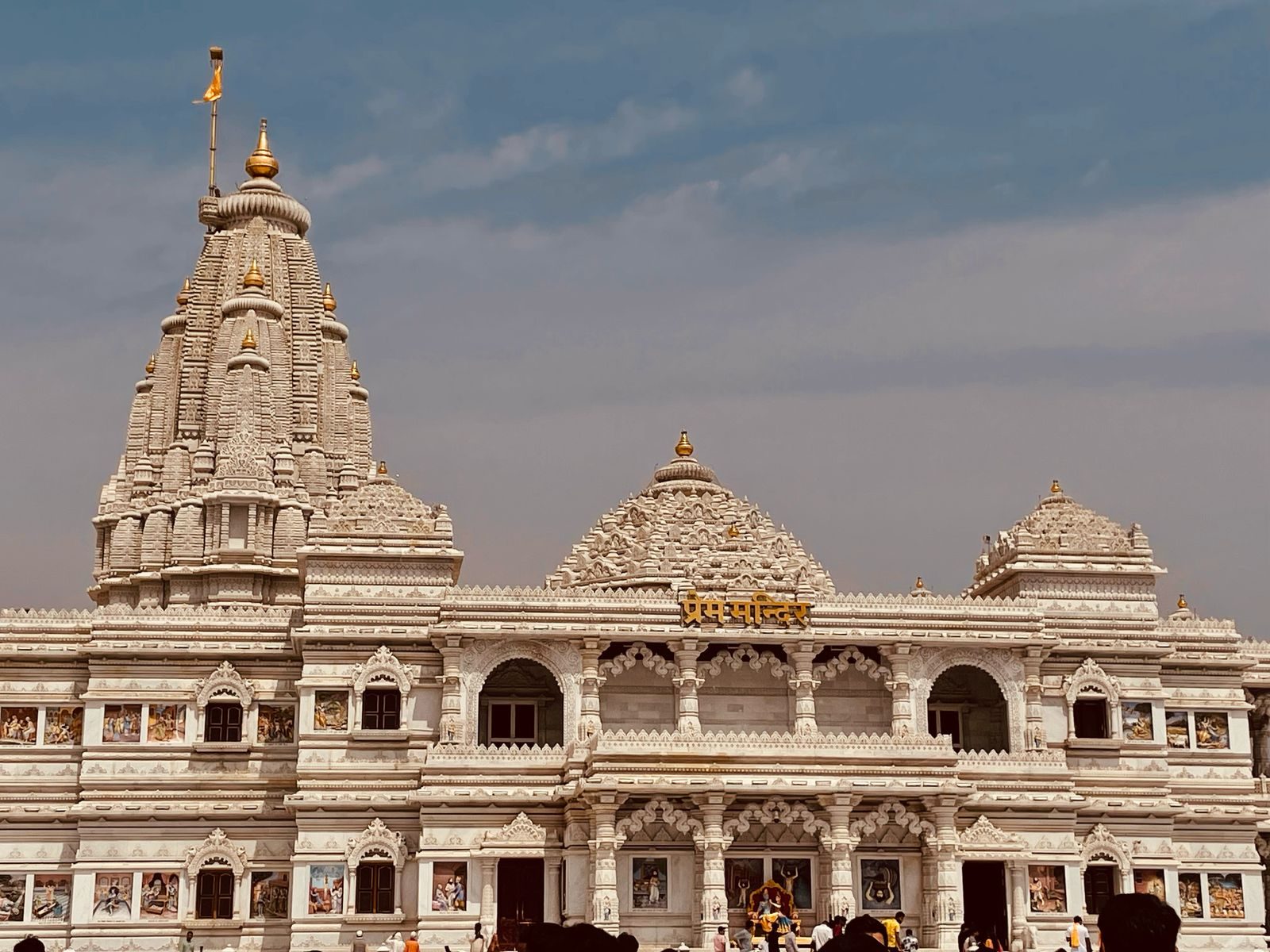
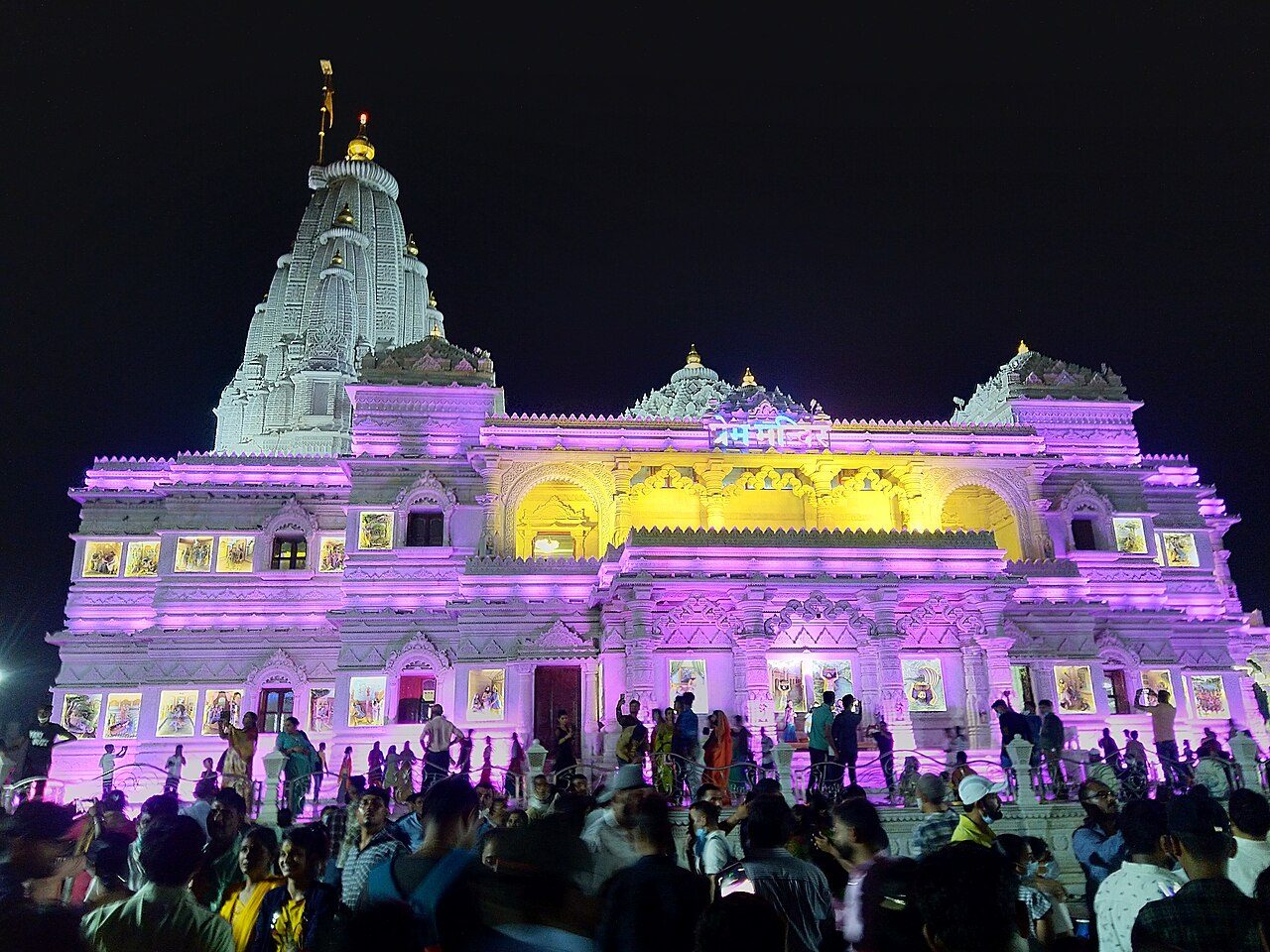
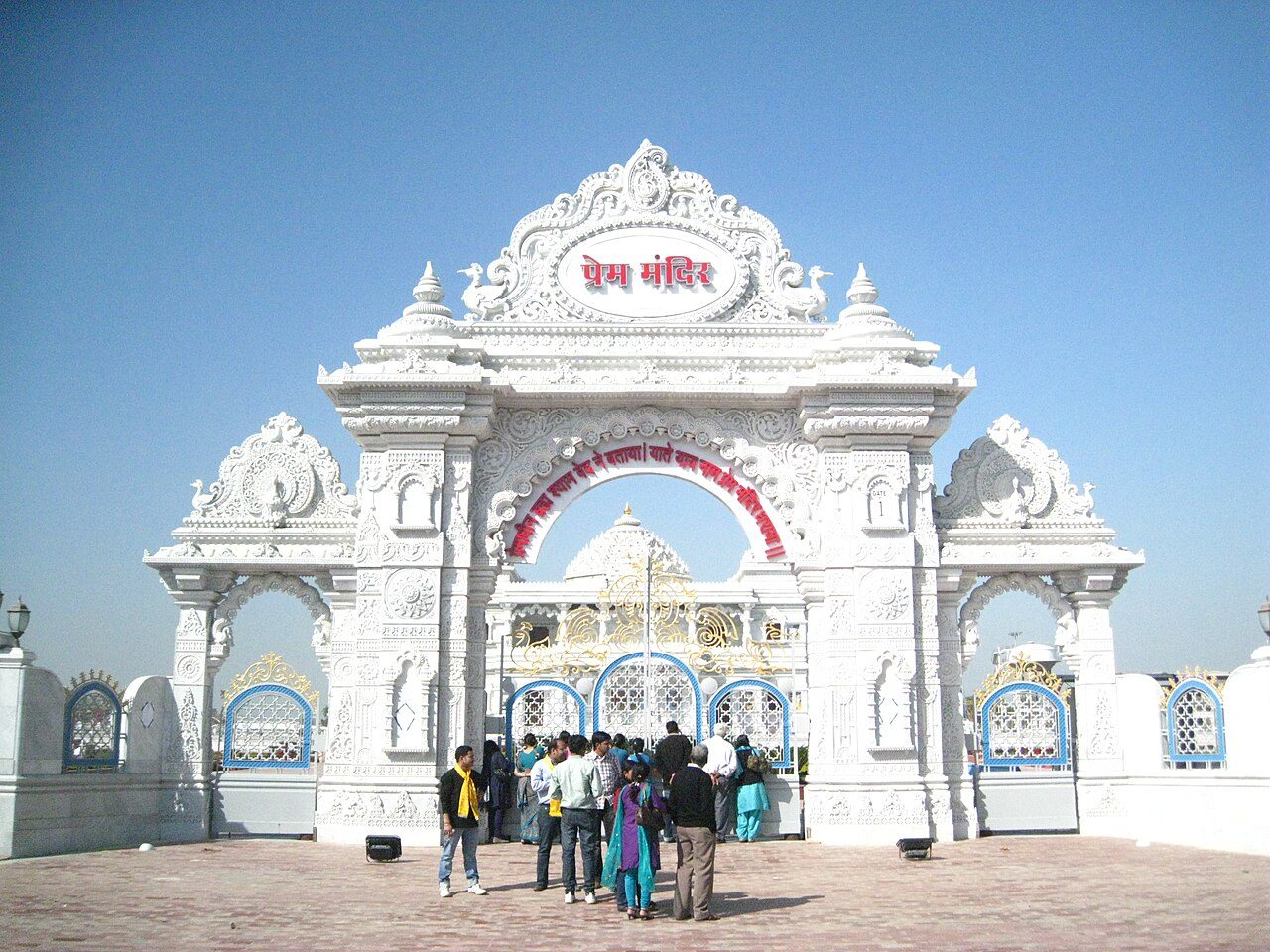
Prem Mandir, the Temple of Love, was built by Jagadguru Kripalu Maharaj in Vrindavan and opened in 2012. Constructed of white Italian marble, it is dedicated to Radha-Krishna and Sita-Ram, with walls carved with scenes from their lives. Life-size tableaux of Krishna's pastimes stand in the gardens. After dark the temple is lit in changing colours and a musical fountain show is held.
05
STOP 5 OF 8
ISKCON Vrindavan
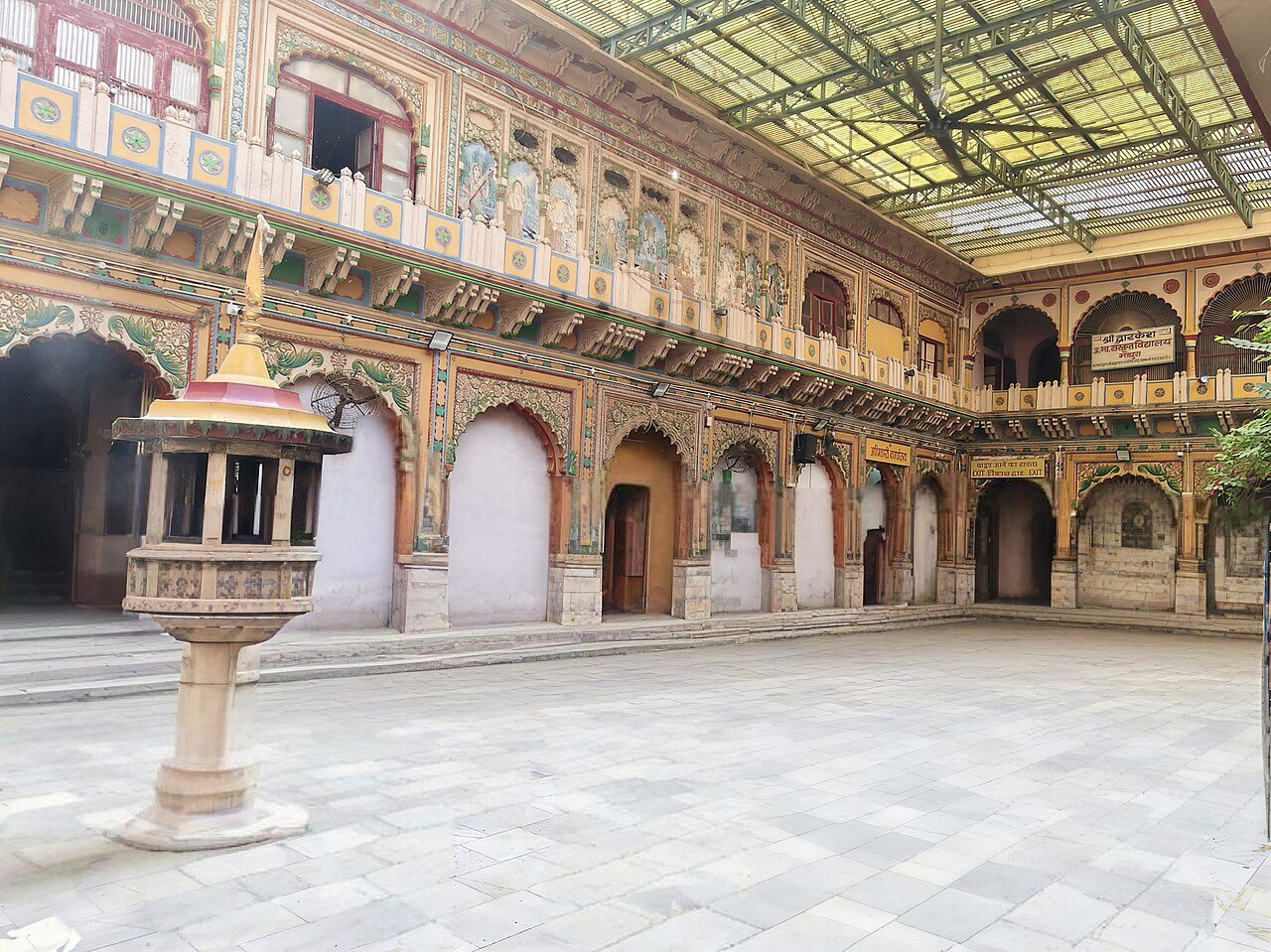
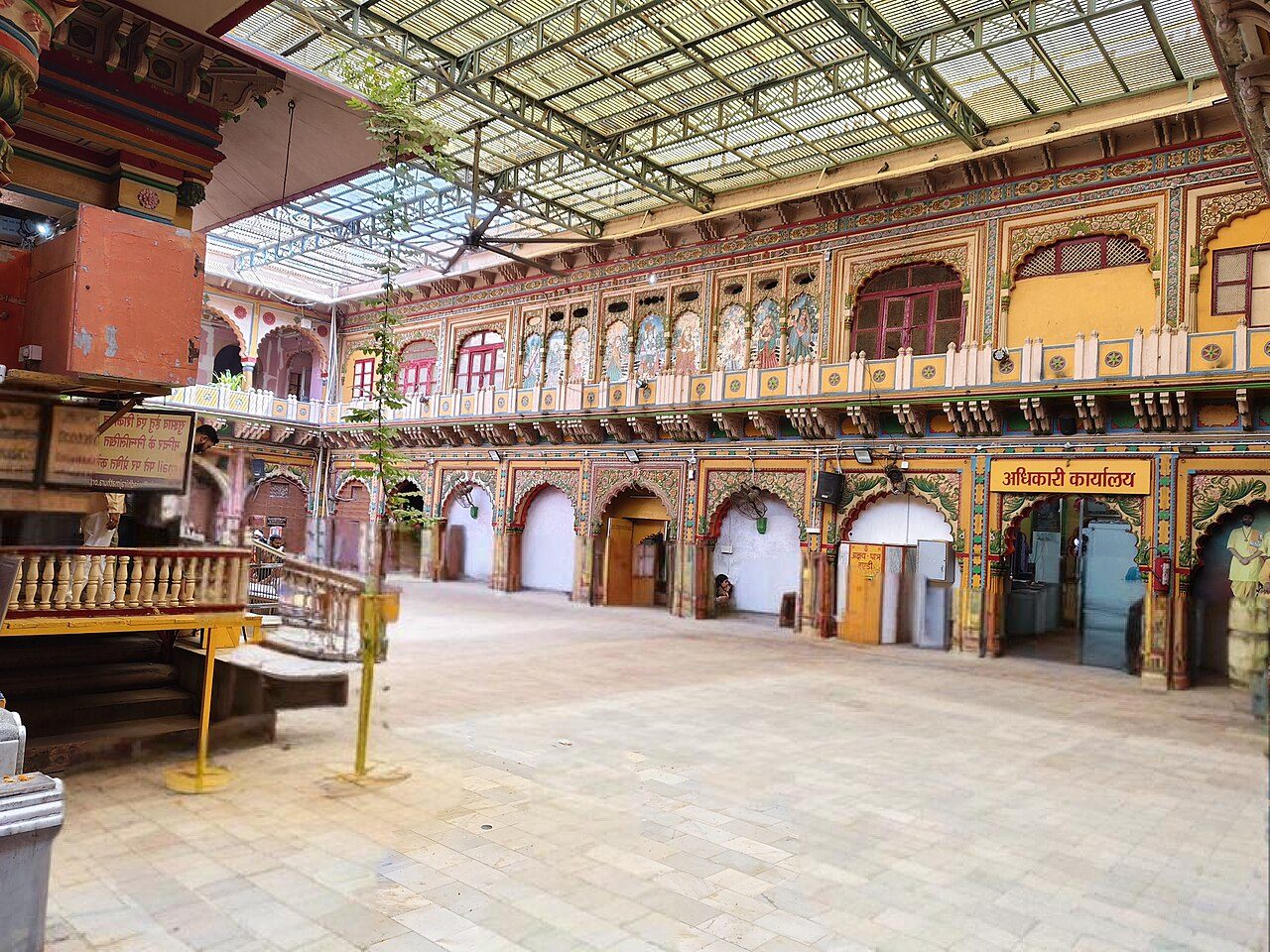
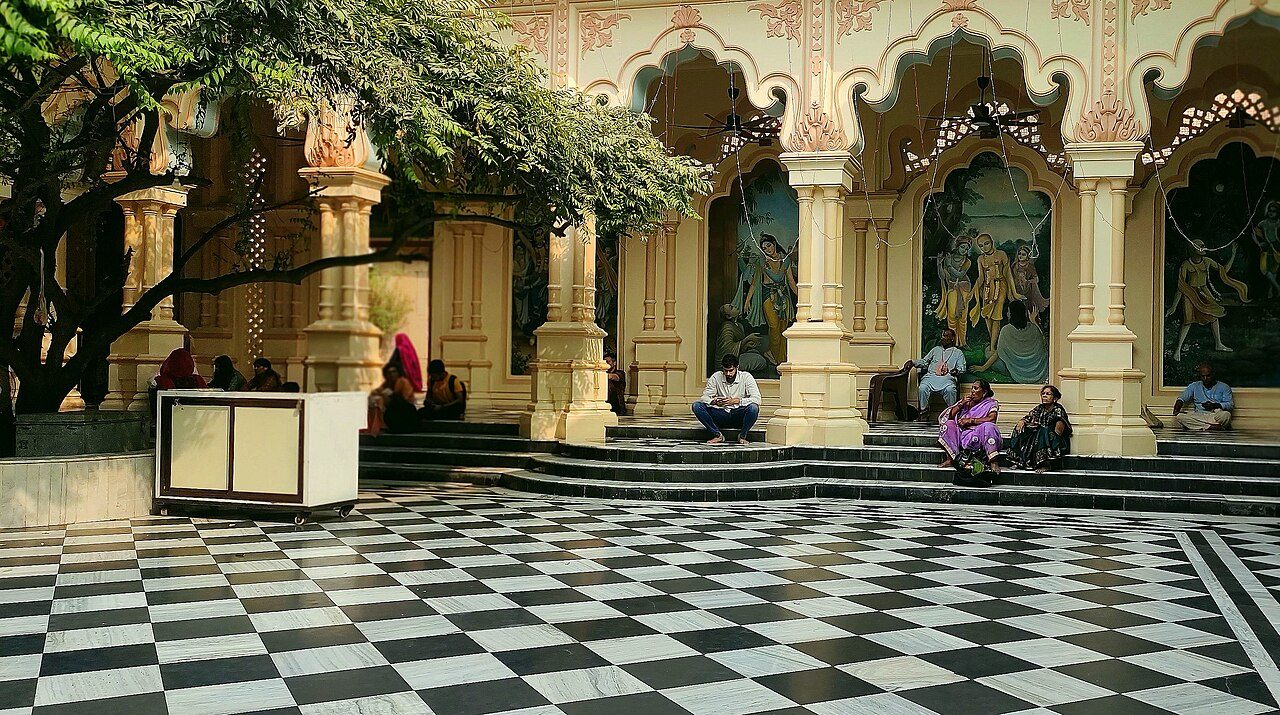
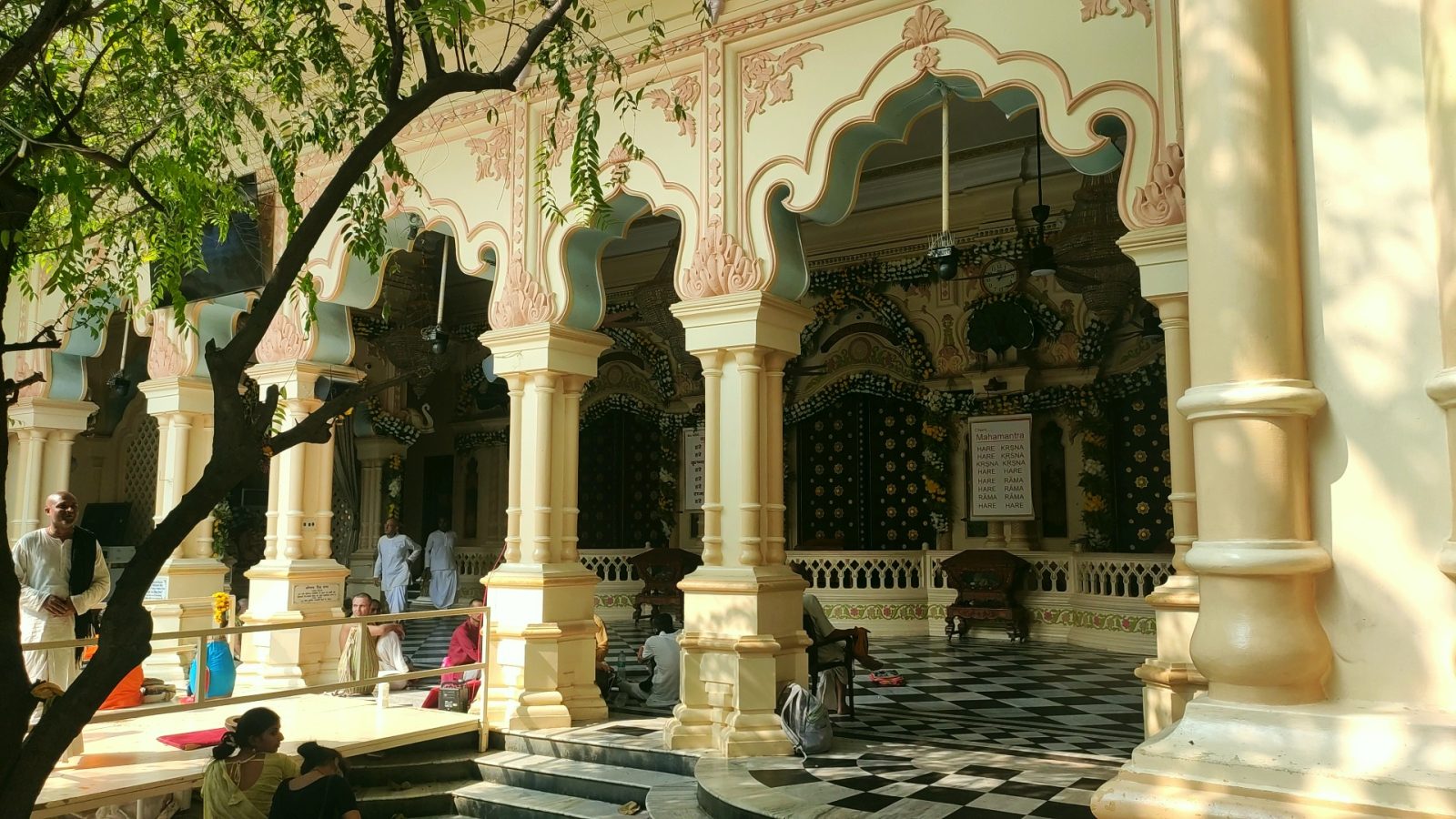
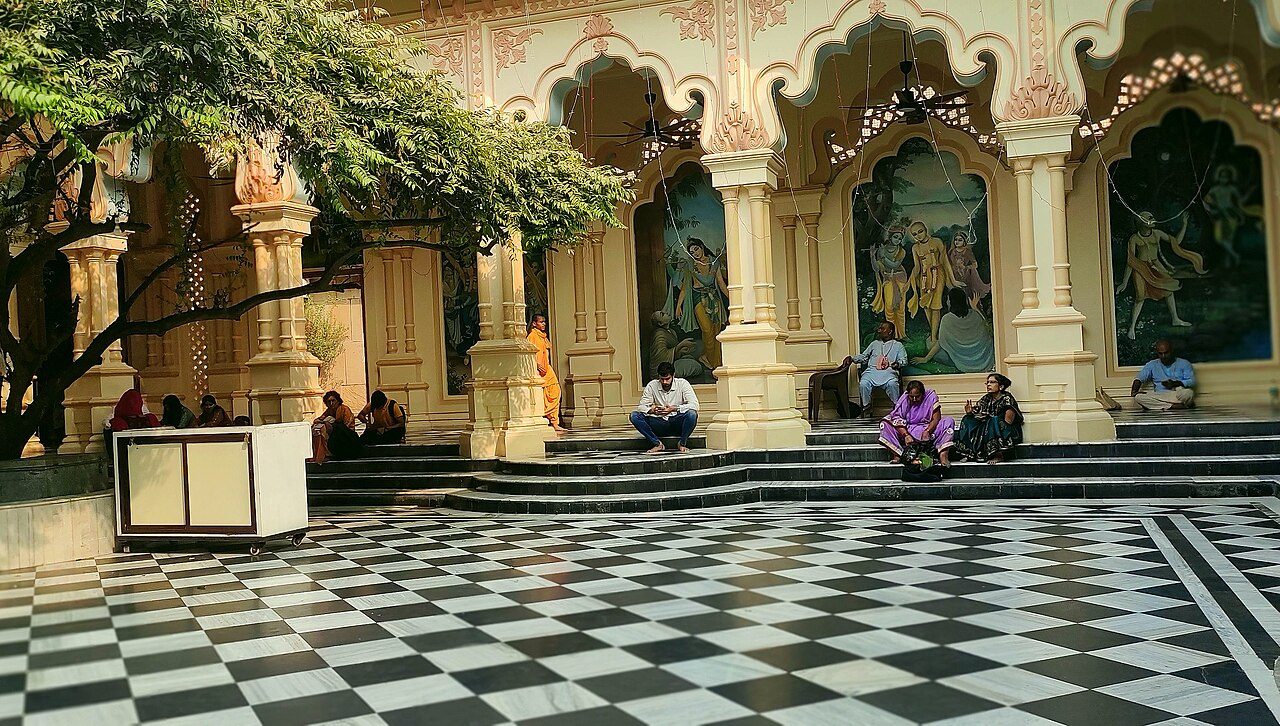
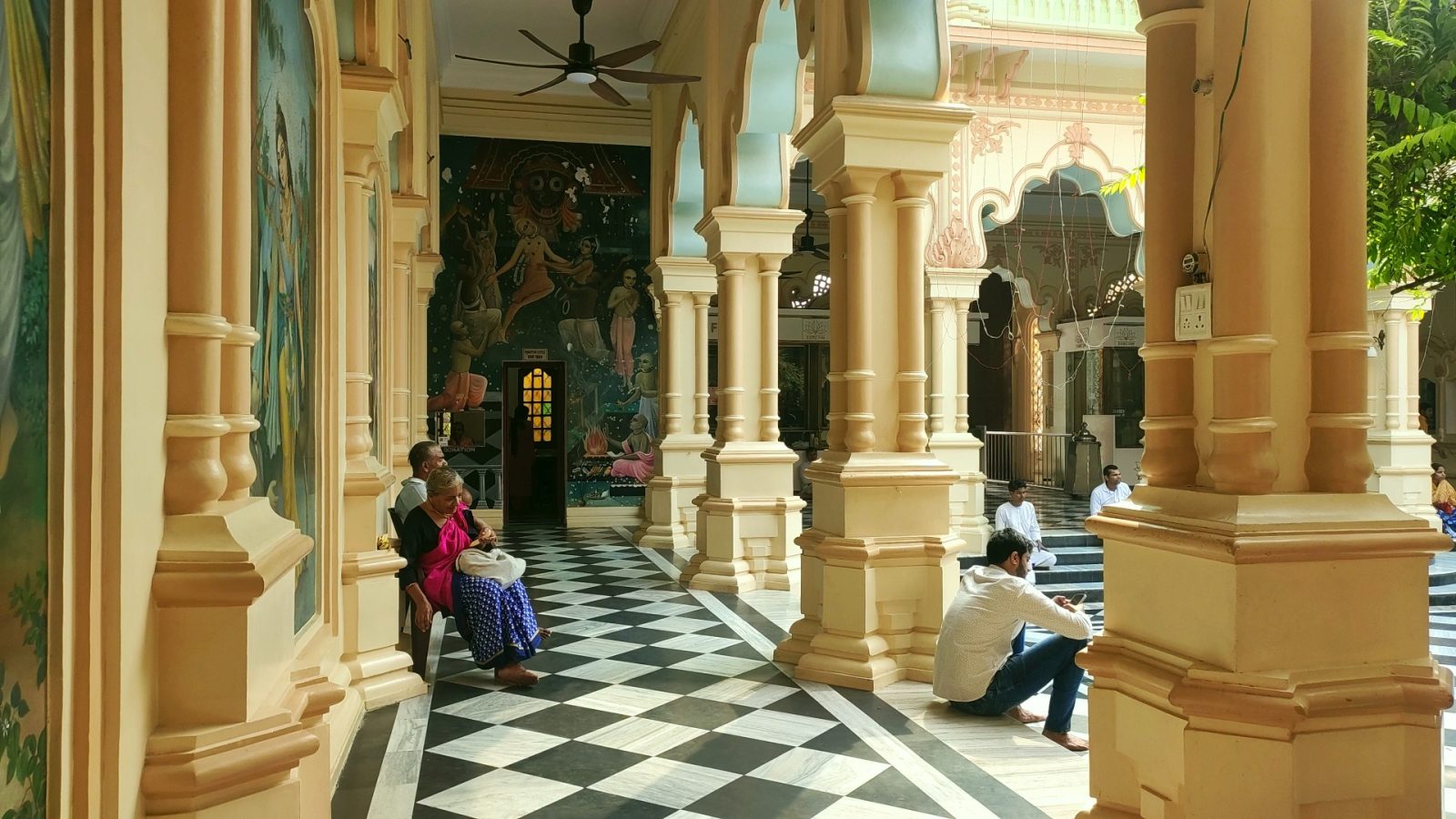
The Krishna Balaram Mandir in Vrindavan was established in 1975 by A. C. Bhaktivedanta Swami Prabhupada, founder of ISKCON. The white marble temple has three altars, for Gaura-Nitai, Krishna-Balaram and Radha-Shyamsundar, around a courtyard with a chequered floor and a tamal tree. Prabhupada's samadhi stands at the entrance. Continuous kirtan and devotees from around the world give it a distinctive atmosphere.
06
STOP 6 OF 8
Govind Dev Temple
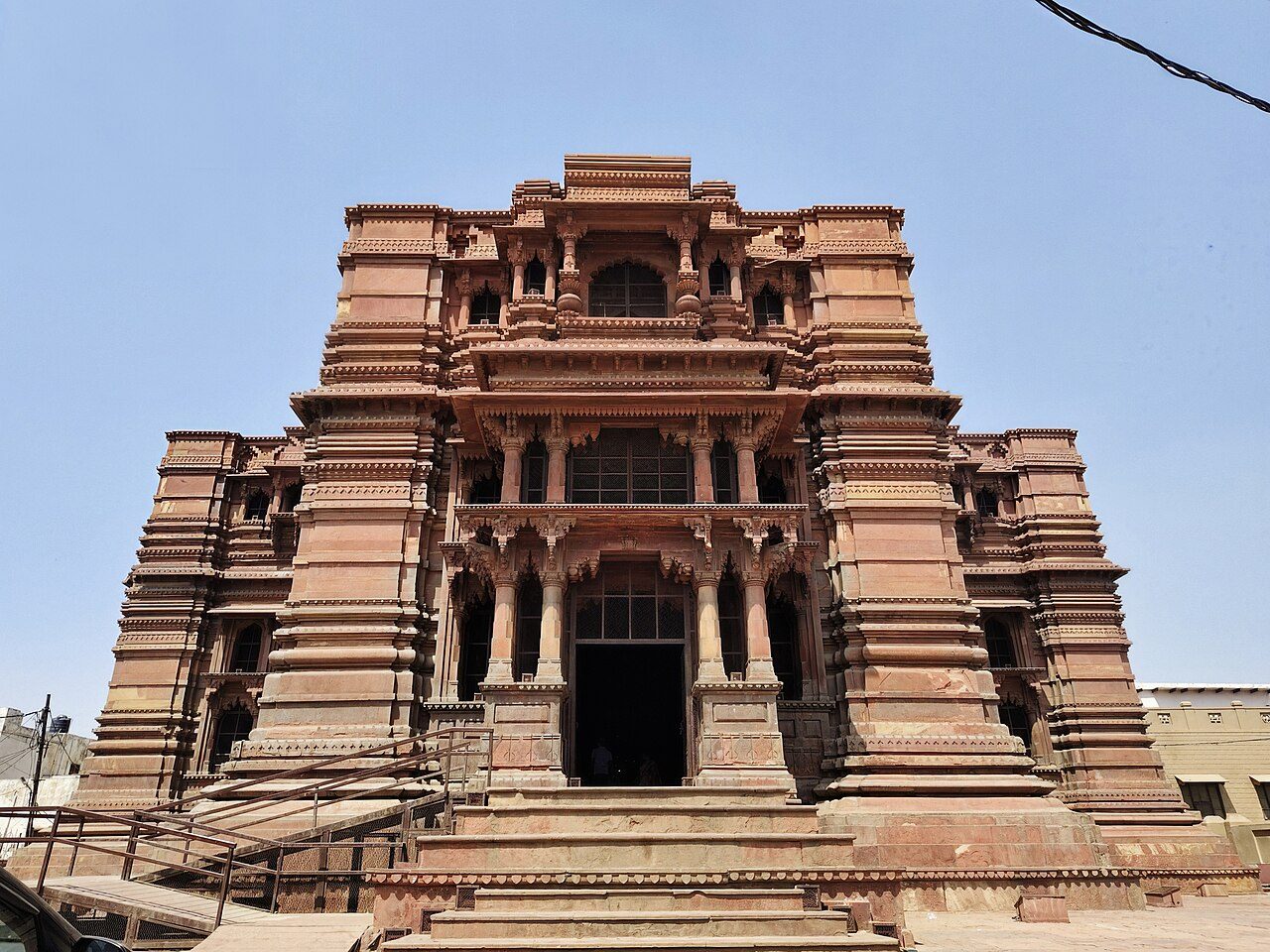
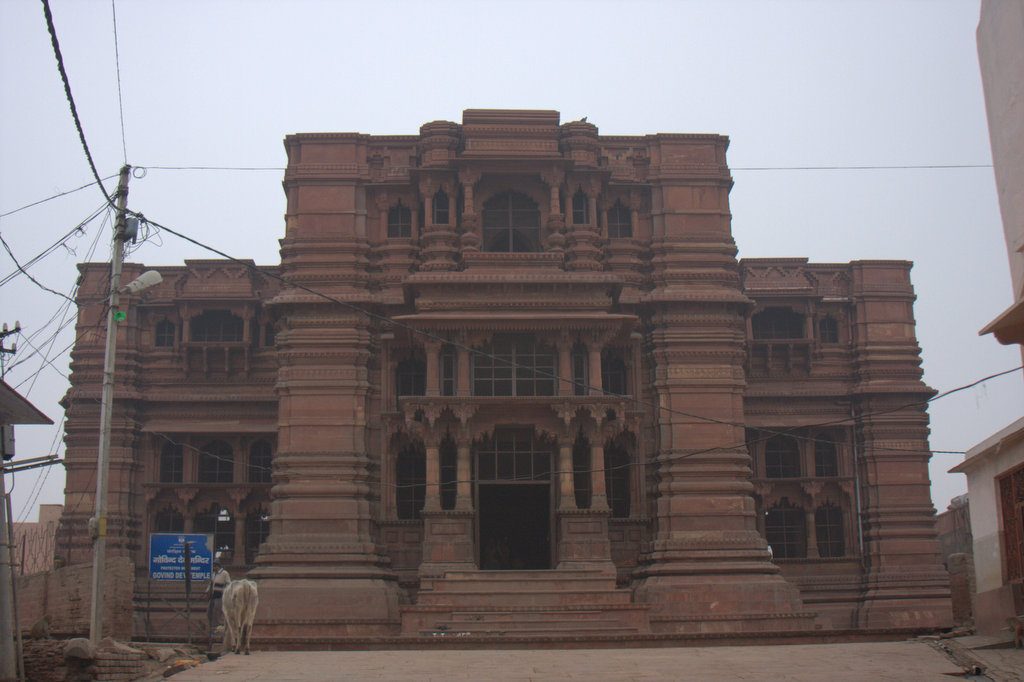
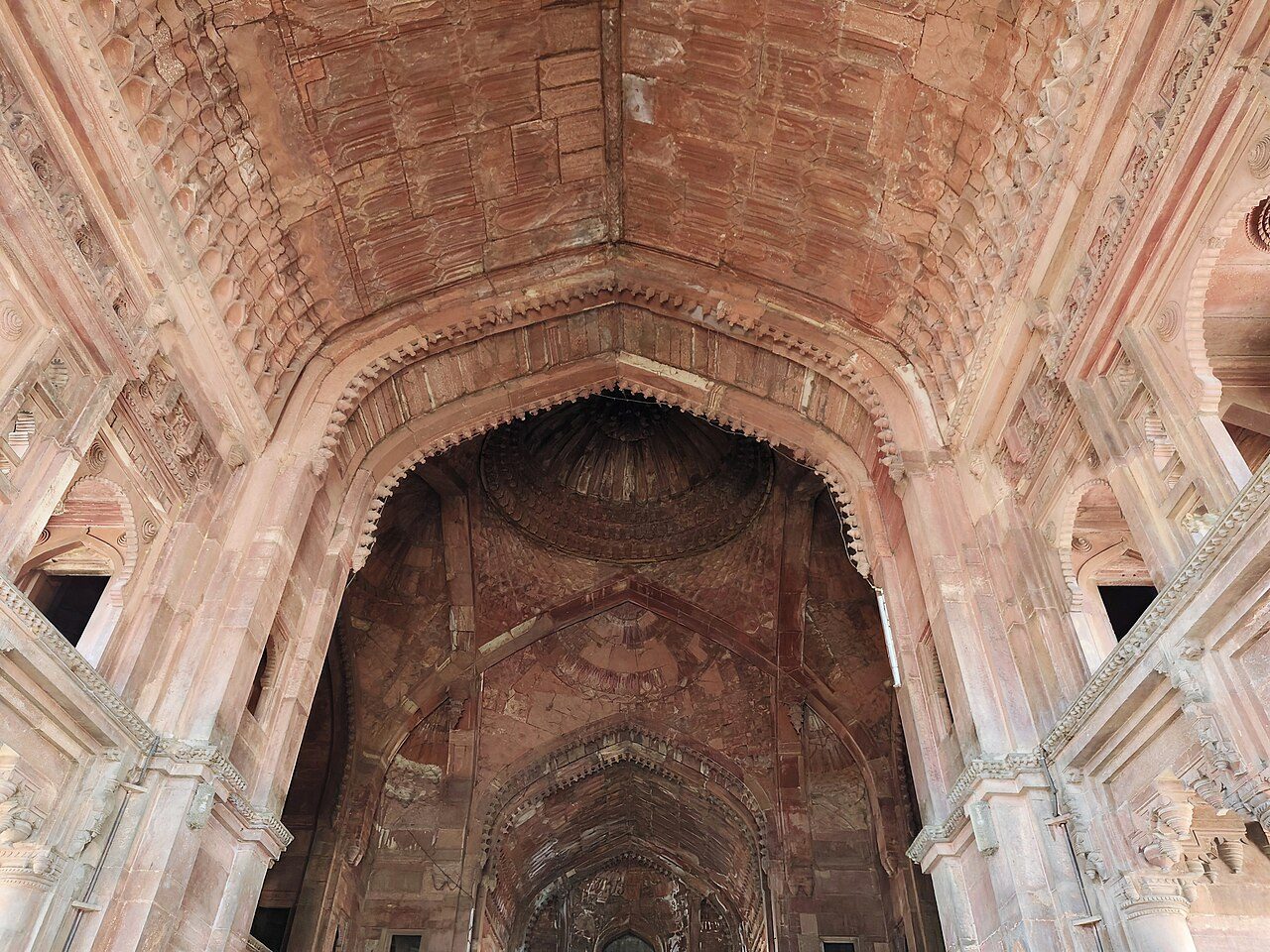
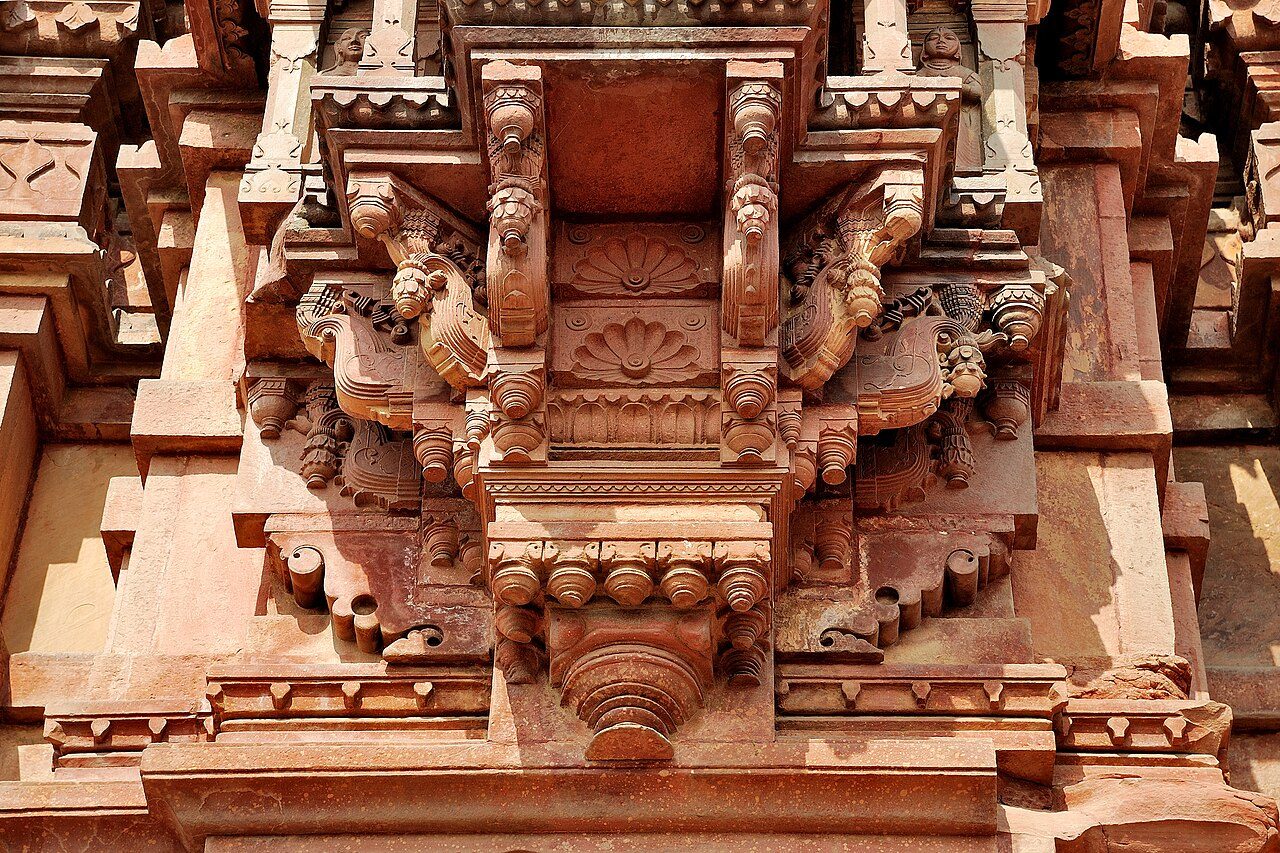
The Govind Dev temple in Vrindavan was built in 1590 by Raja Man Singh of Amber, with red sandstone donated by the emperor Akbar. Its vaulted hall, combining Hindu, Islamic and western elements, was unlike any other temple of its time. It originally rose seven storeys; the upper levels were demolished under Aurangzeb, and the original deity was taken to Jaipur. The surviving structure remains deeply impressive.
07
STOP 7 OF 8
Kusum Sarovar
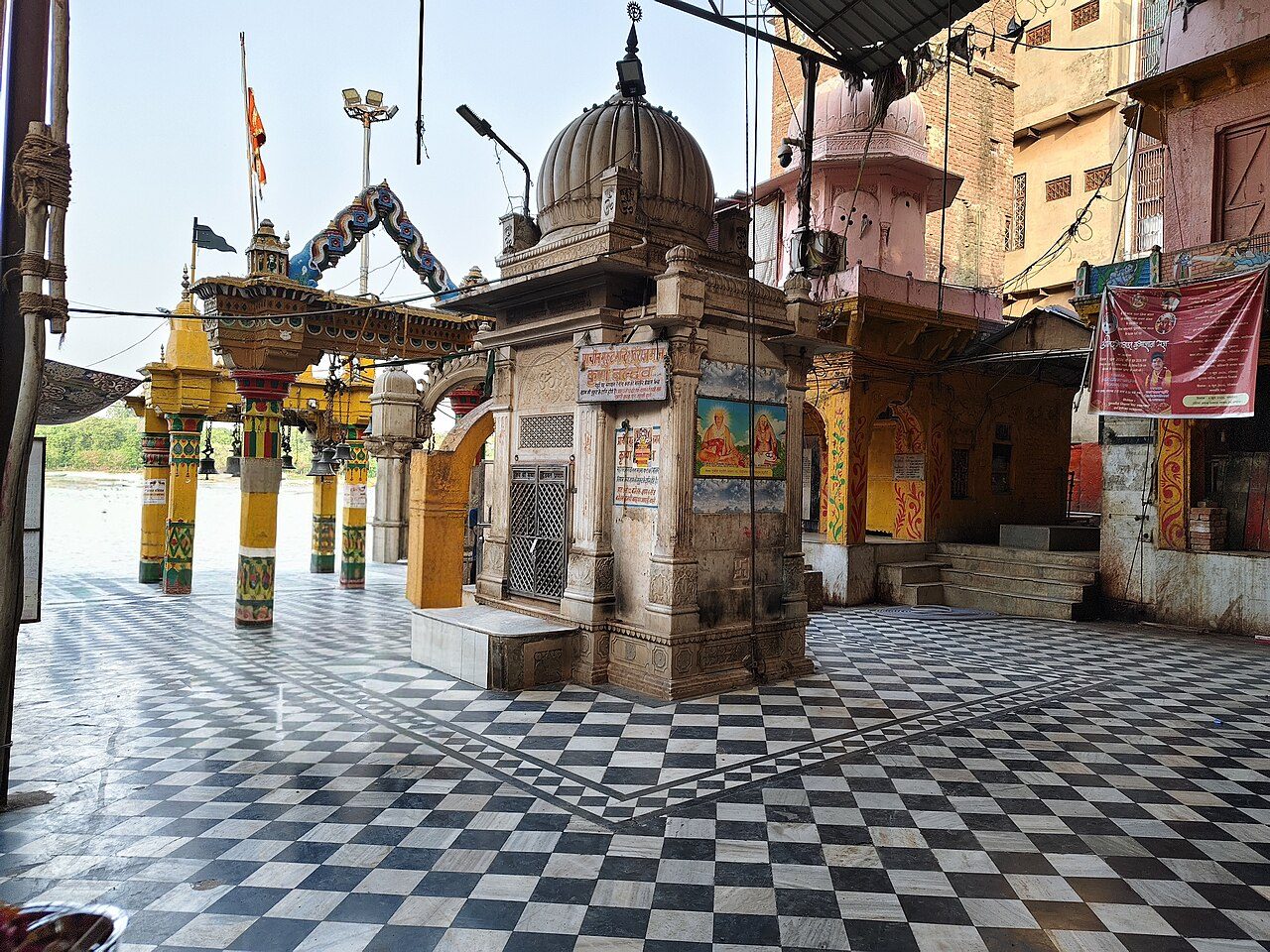
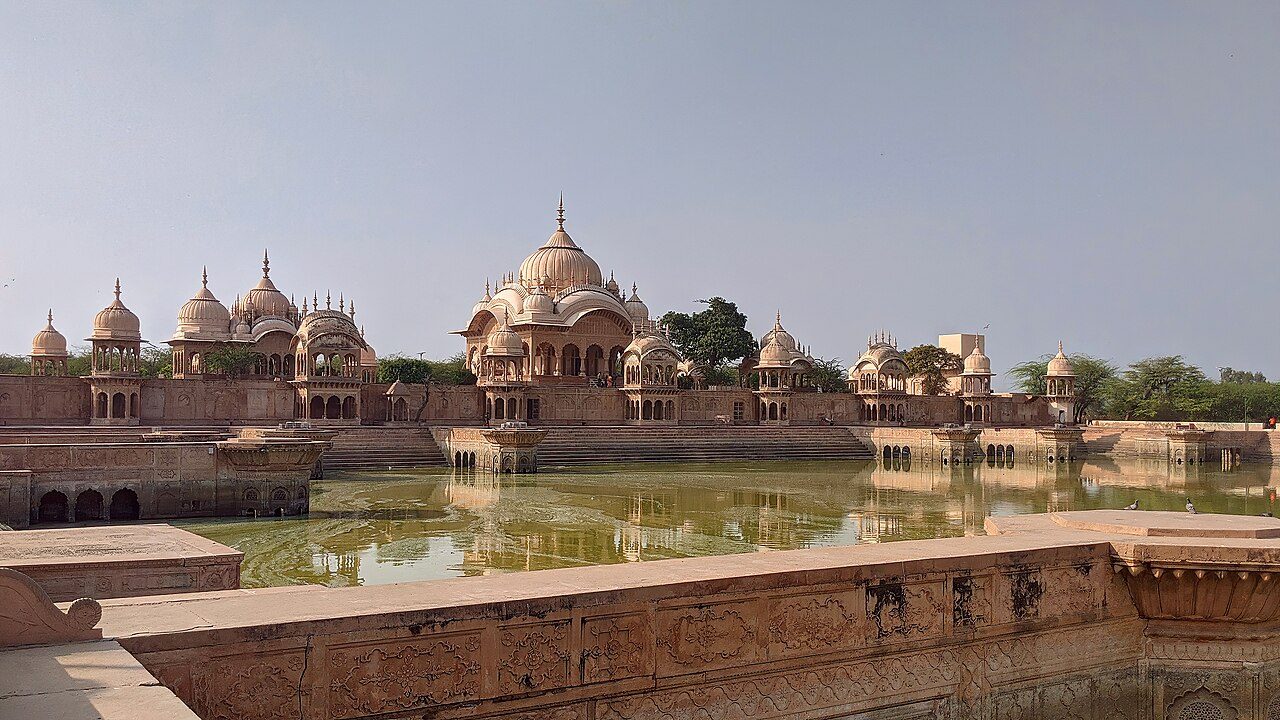
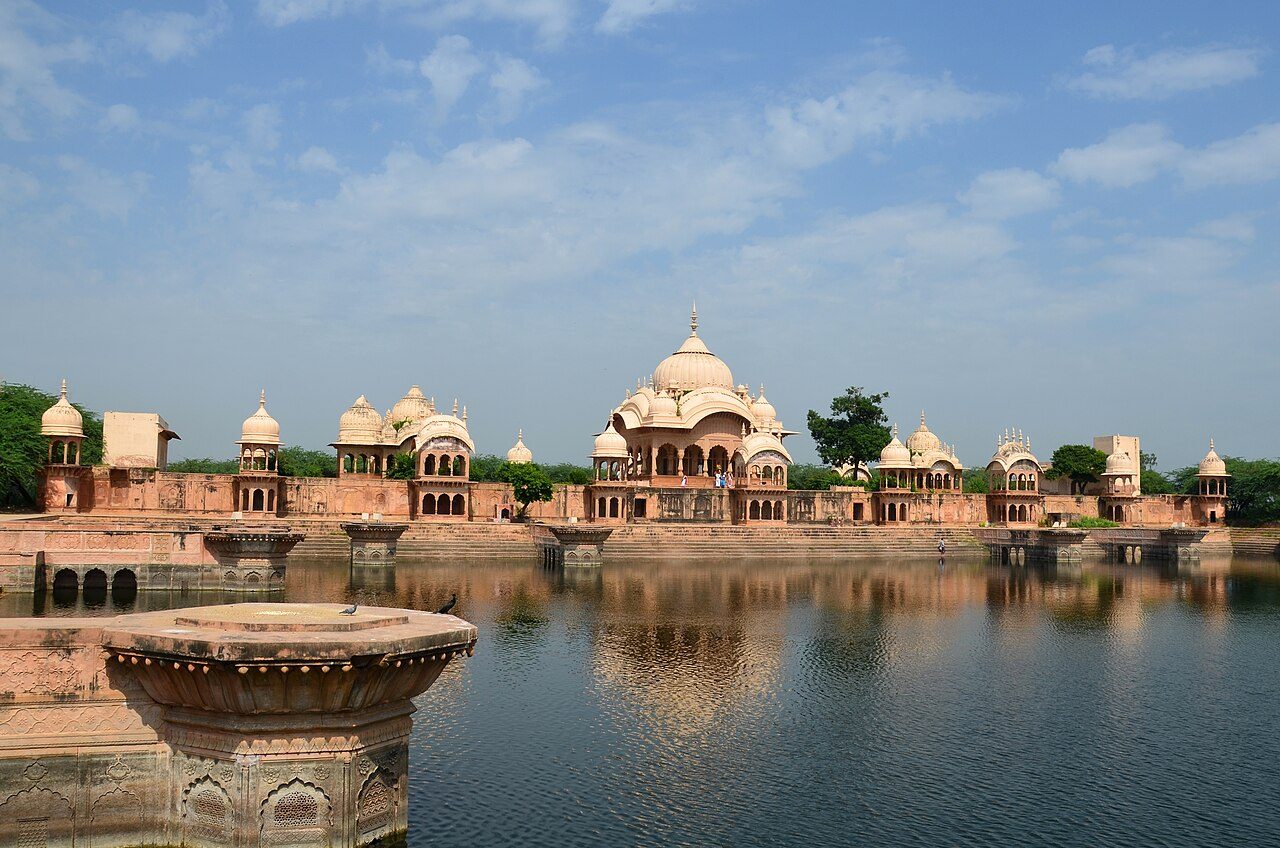
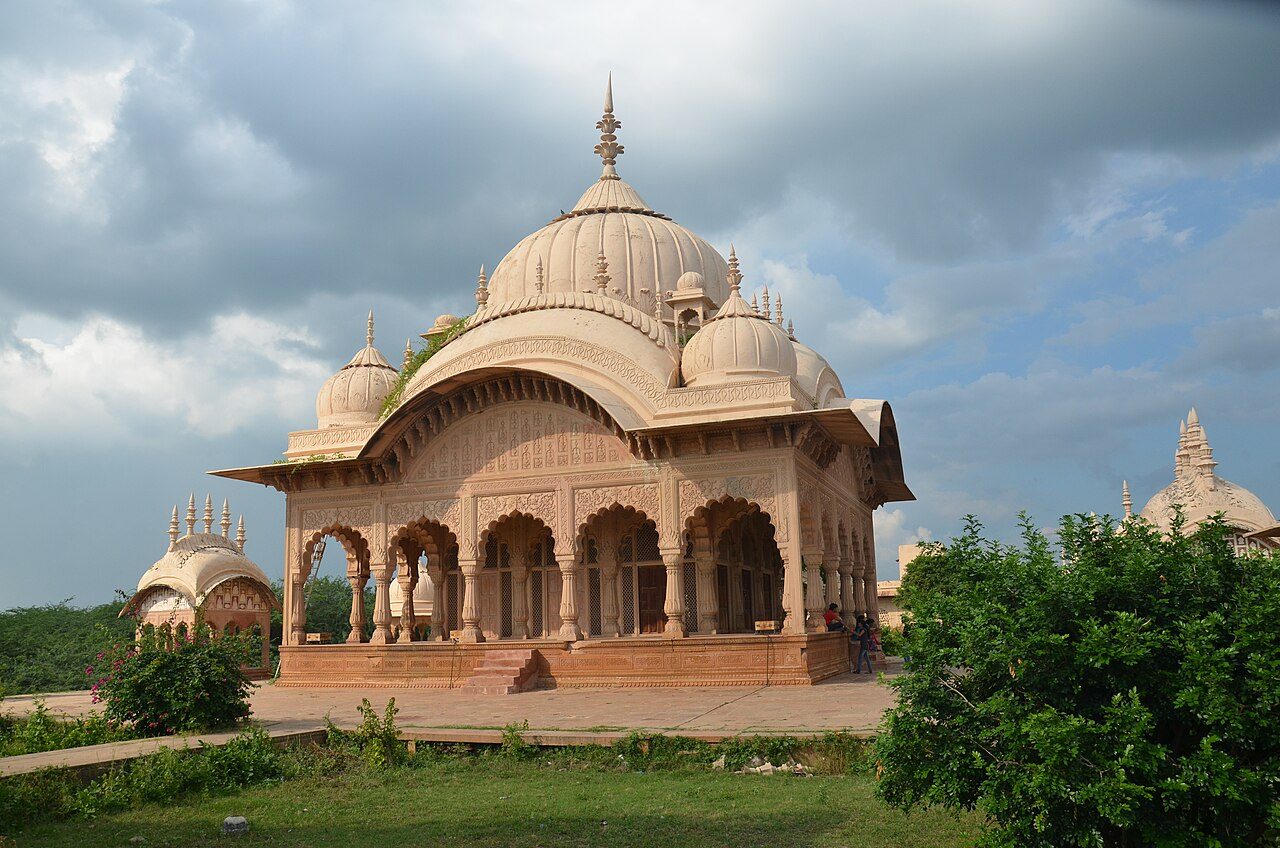
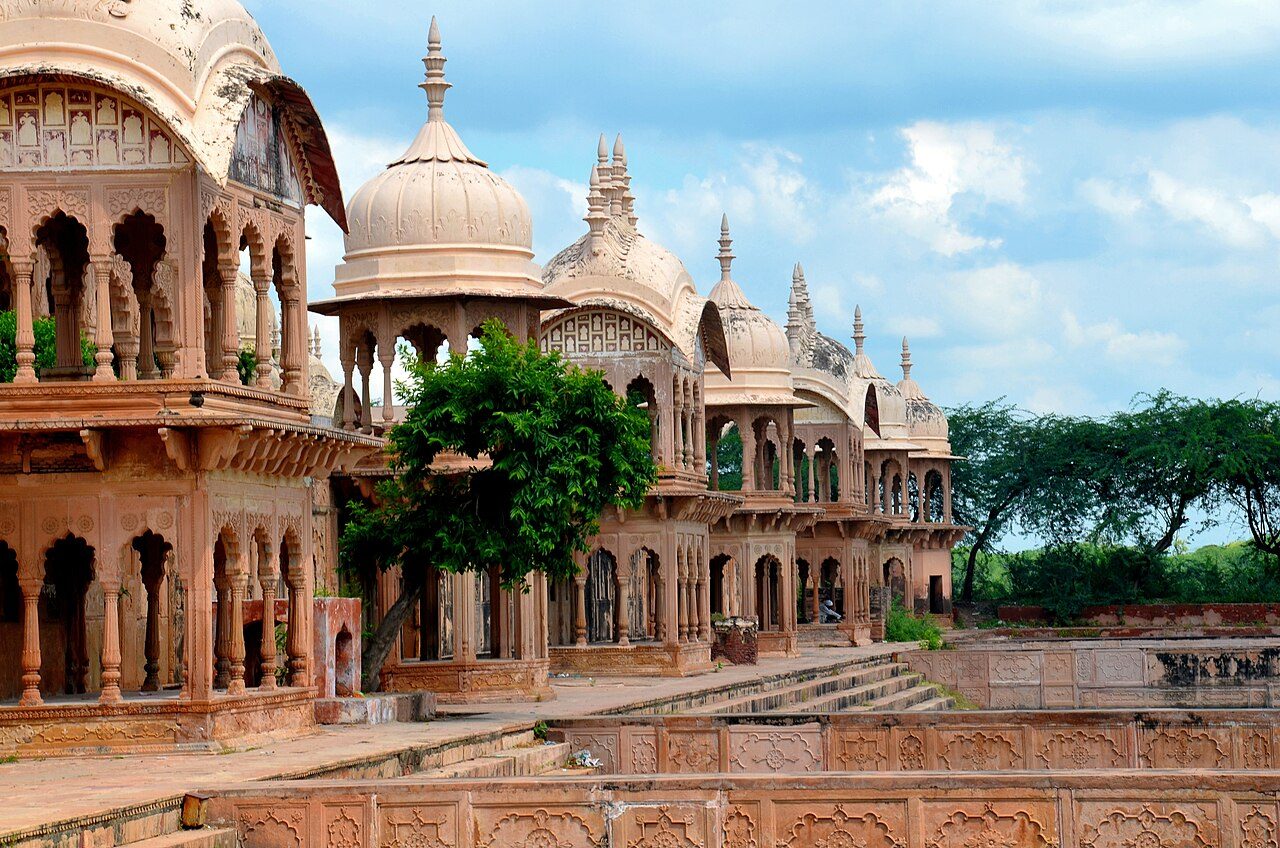
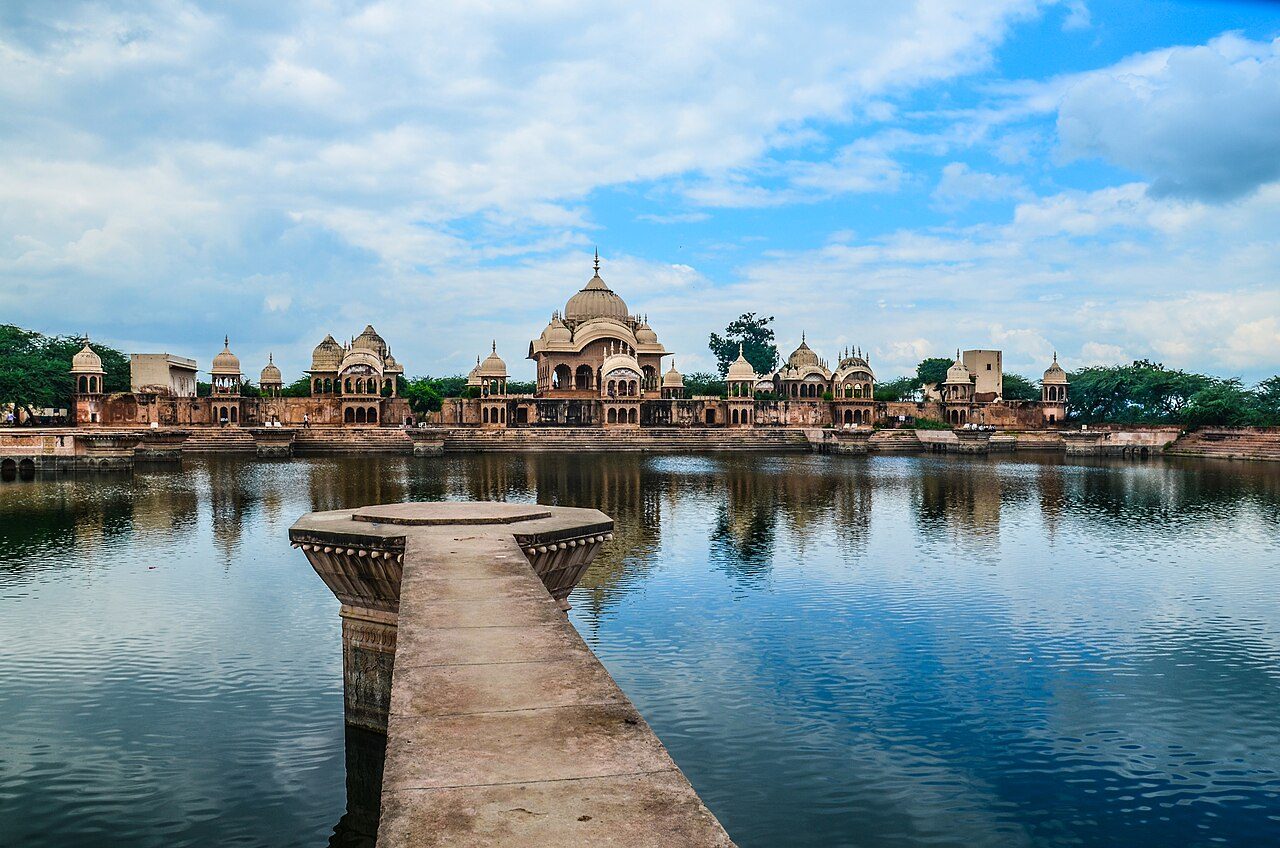
Kusum Sarovar is a sacred tank on the pilgrim path around Govardhan hill, associated with stories of Radha gathering flowers for Krishna. On its bank stand ornate sandstone cenotaphs built in the 18th century by Jawahar Singh, ruler of Bharatpur, in memory of his father Suraj Mal, with painted ceilings showing scenes from Krishna's life. The pavilions reflected in the water are loveliest at sunset.
08
STOP 8 OF 8 · LAST STOP
Radha Rani Temple Barsana
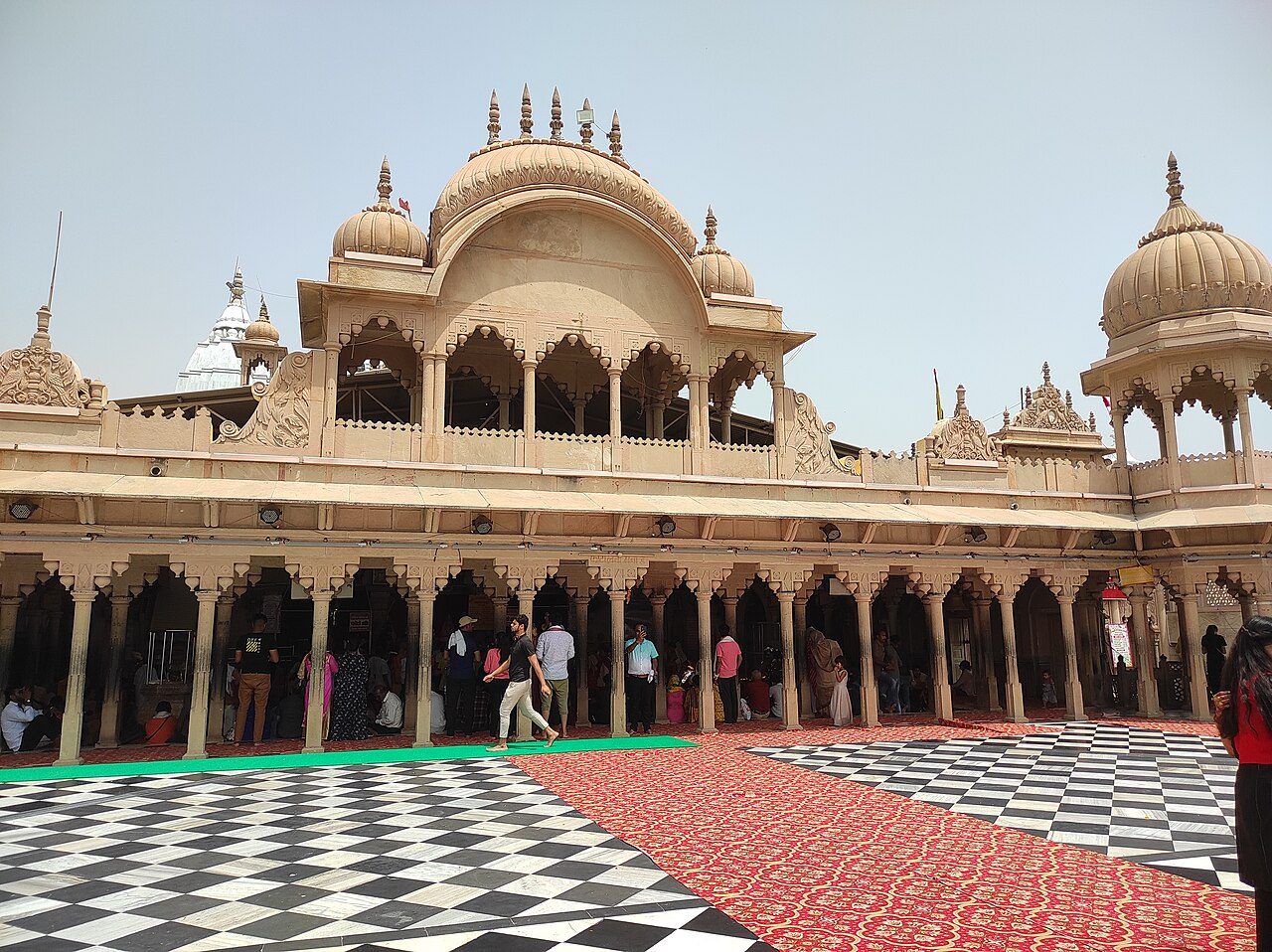
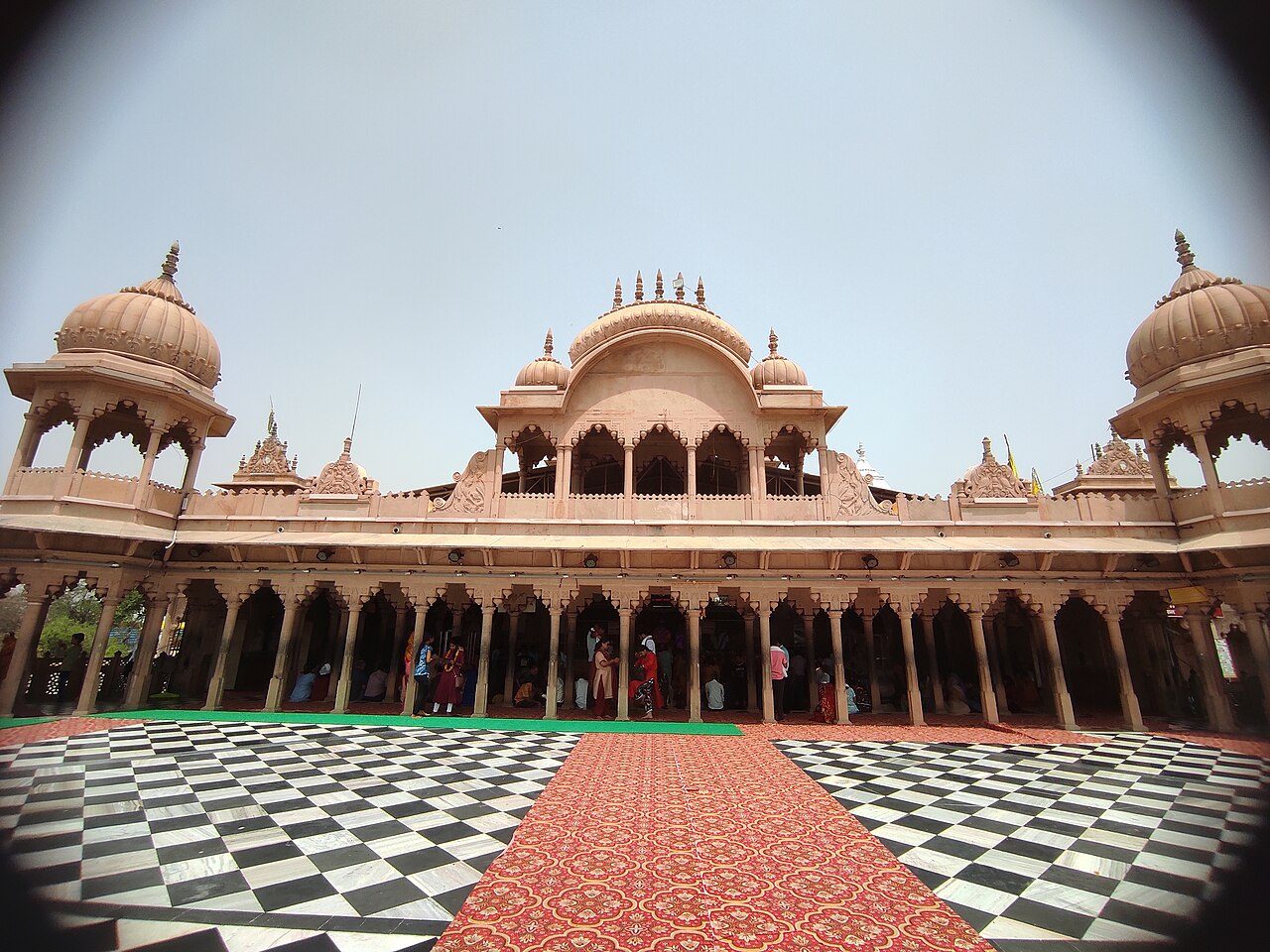
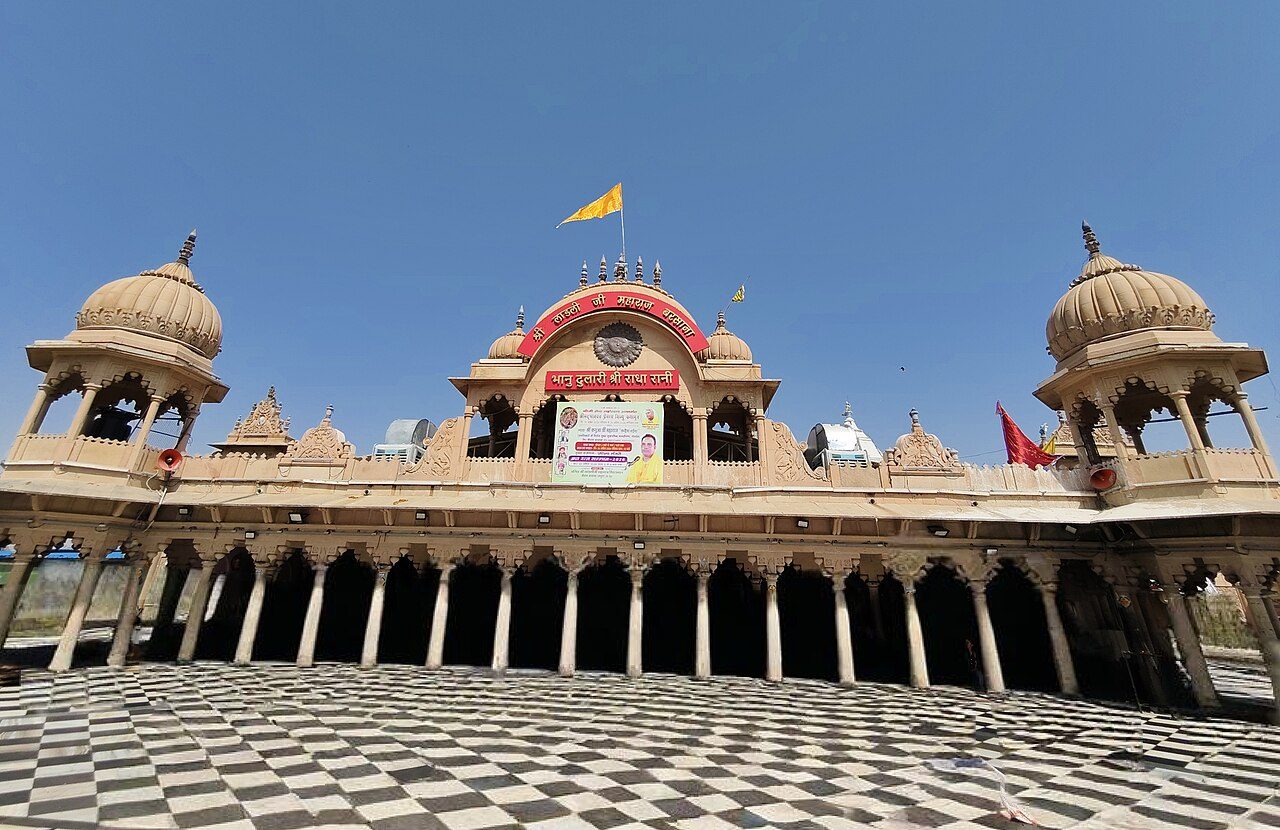
The Radha Rani temple, also called Shriji temple, crowns Bhanugarh hill in Barsana, revered as the home of Radha. The present red and white stone building, with arches, domes and painted interiors, is reached by a climb of more than two hundred steps. Barsana is famous for Lathmar Holi, when women playfully beat men with sticks, and for Radhashtami, the festival of Radha's birth.
Seasons from 20 years of NASA POWER climate data.
 WaTrips