Arupadai Veedu: A Pilgrimage to the Six Abodes of Murugan in 5 Days
5 DAYS10 placesby WaTrips
All six sacred abodes of Lord Murugan in one trip — Tiruttani, Swamimalai, Palani, Thiruparankundram, Pazhamudircholai and Tiruchendur.
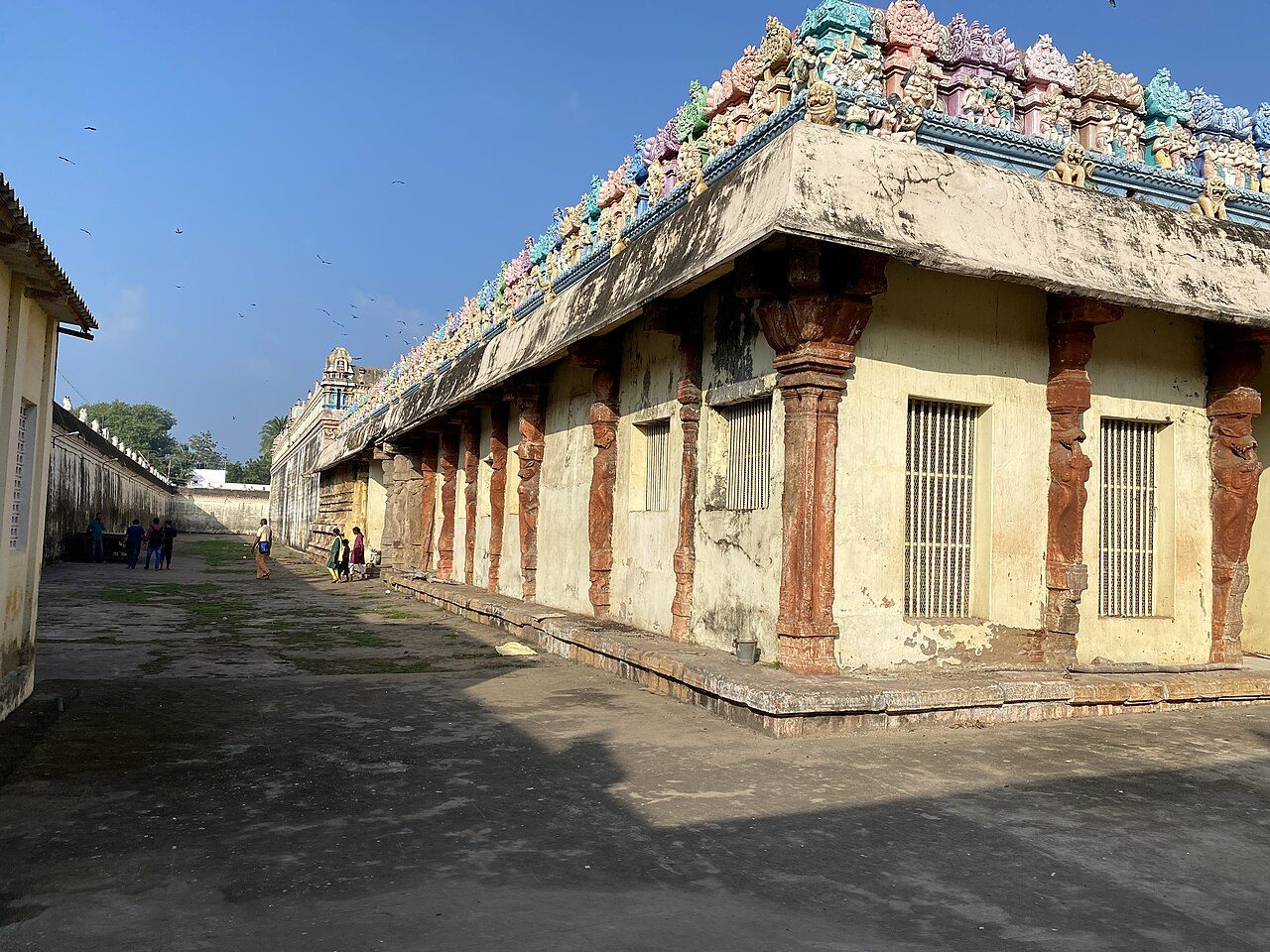
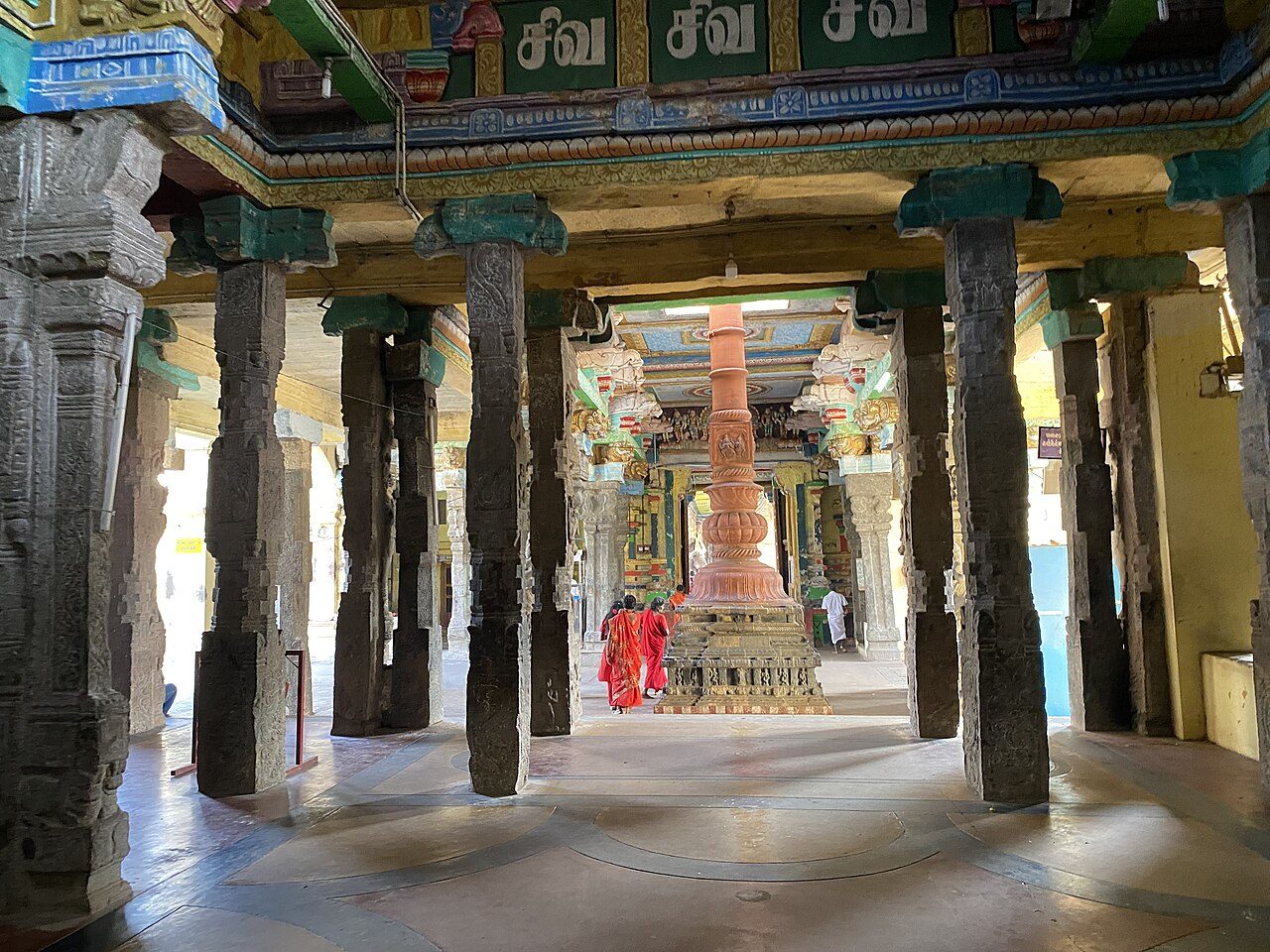
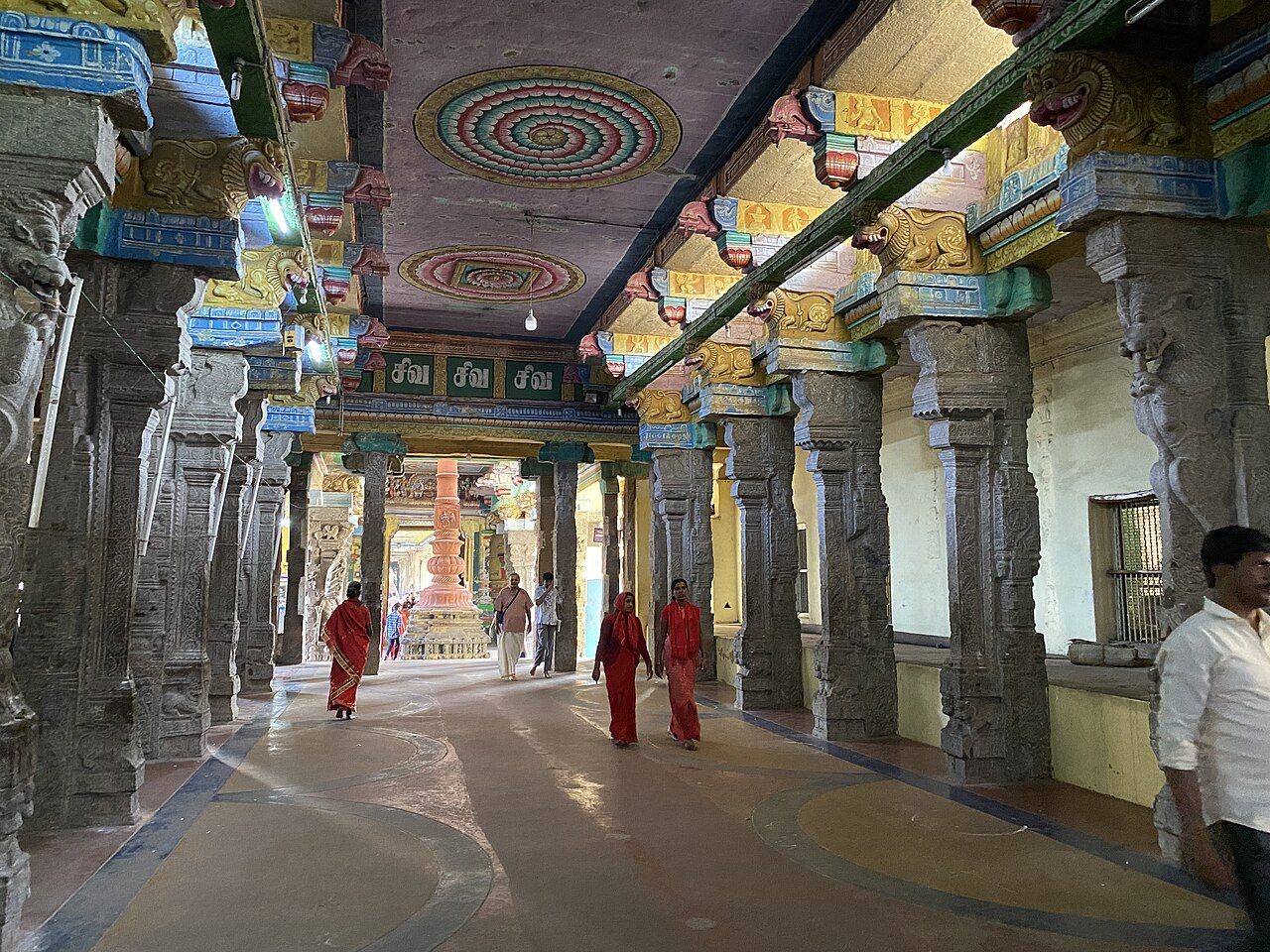
For devotees of Lord Murugan, the Arupadai Veedu, his six sacred abodes, are the most important pilgrimage in Tamil Nadu. This route visits all six in five days. Start at the hill temple of Thiruttani near Chennai, then go to Swamimalai near Kumbakonam, where Murugan taught his father the meaning of Om, with the great temples of Kumbakonam and Darasuram nearby. Day three takes in Vayalur and the hilltop temple at Palani. In Madurai, visit Thiruparankundram and Pazhamudircholai, with the Meenakshi Temple in between. The journey ends on the seashore at Tiruchendur. Wear traditional dress, leave footwear outside, and expect crowds on Krithigai days and during Thaipusam.
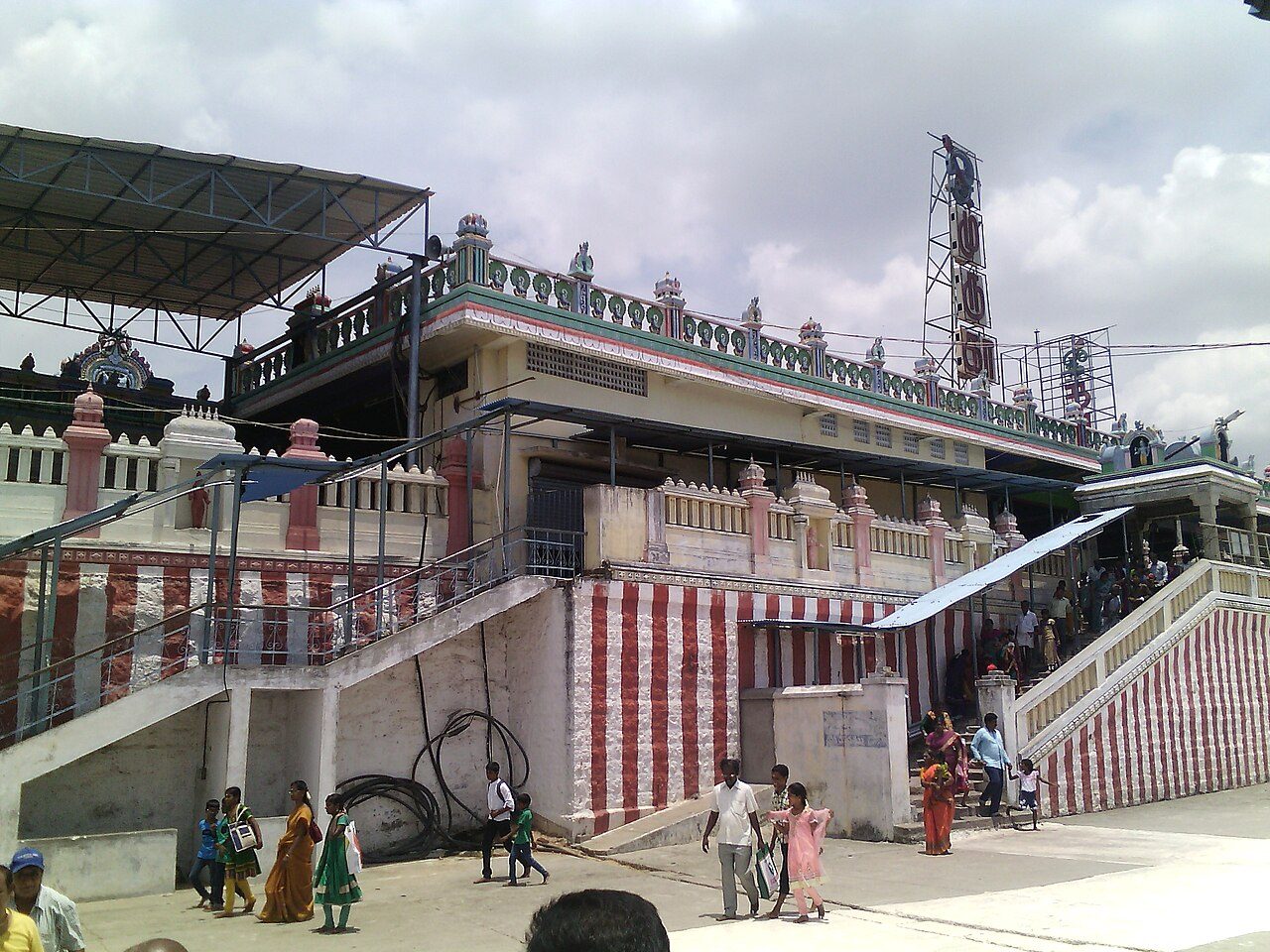
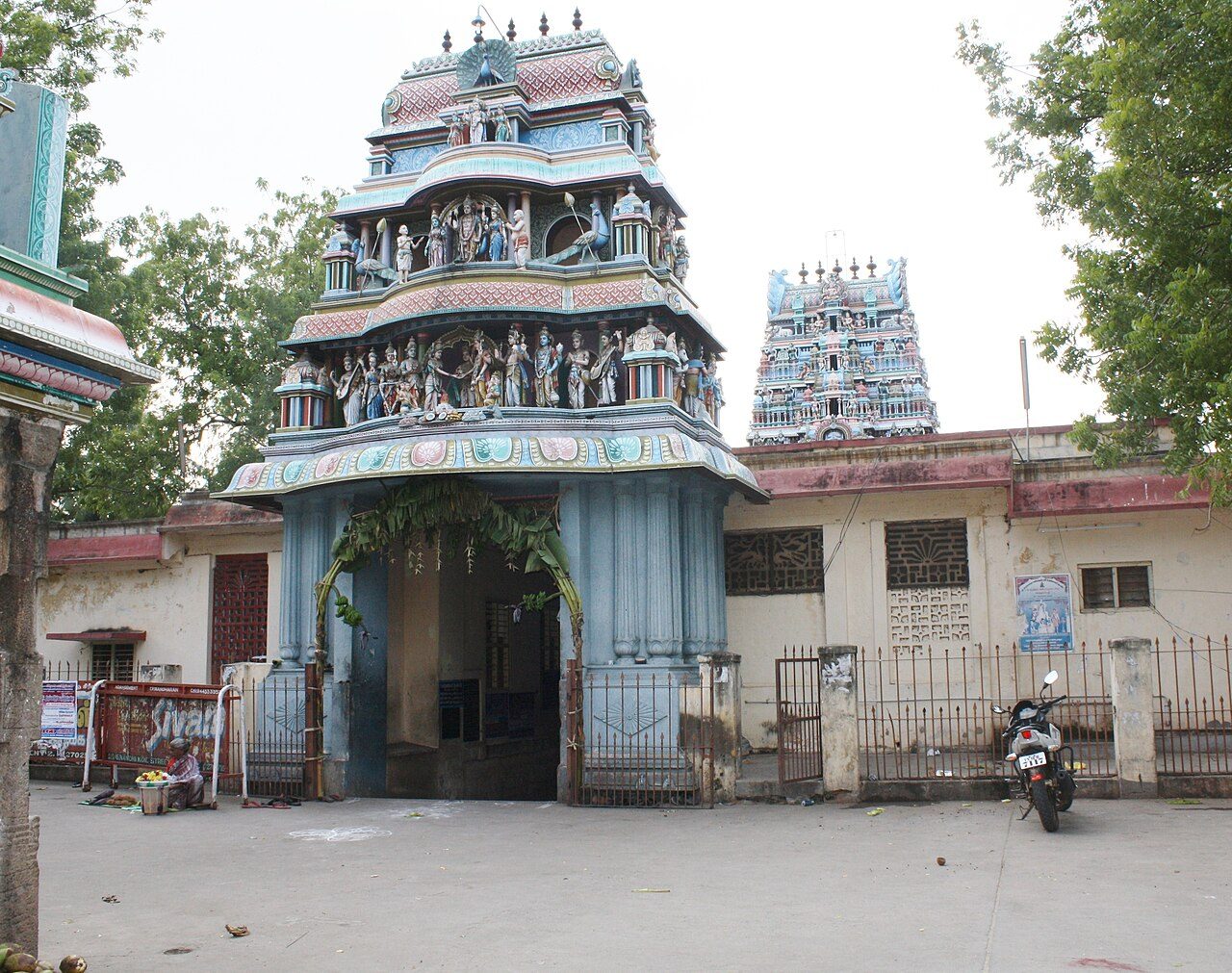
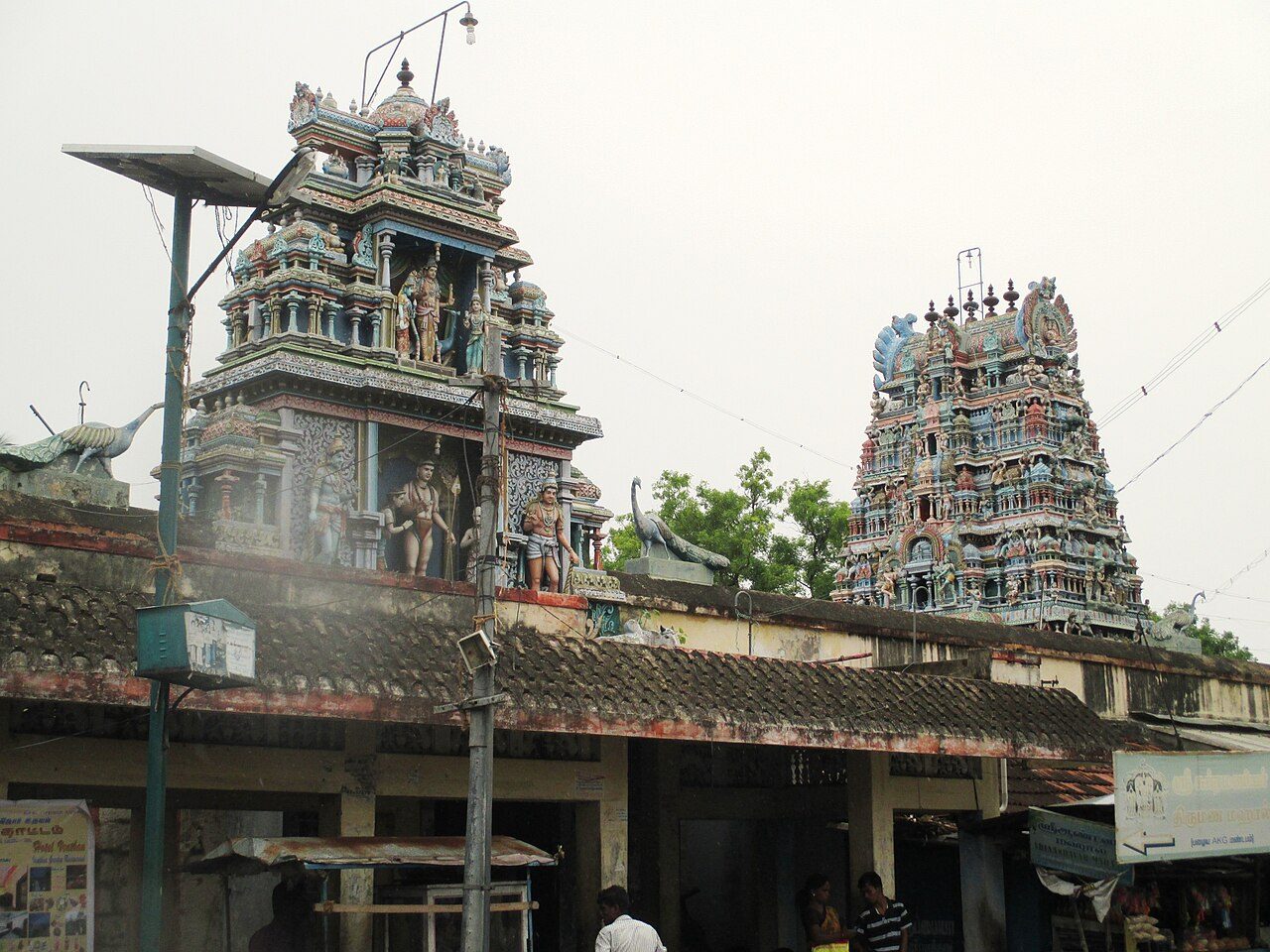
One of Murugan's six sacred abodes, this temple crowns a hill above the town of Tiruttani, where the god is believed to have rested after his battle with the demon Surapadman and married Valli. A stairway of 365 steps, one for each day of the year, leads to the shrine, and on New Year's Eve devotees sing a hymn on every step. The Aadi Krithigai festival in July and August draws huge crowds.
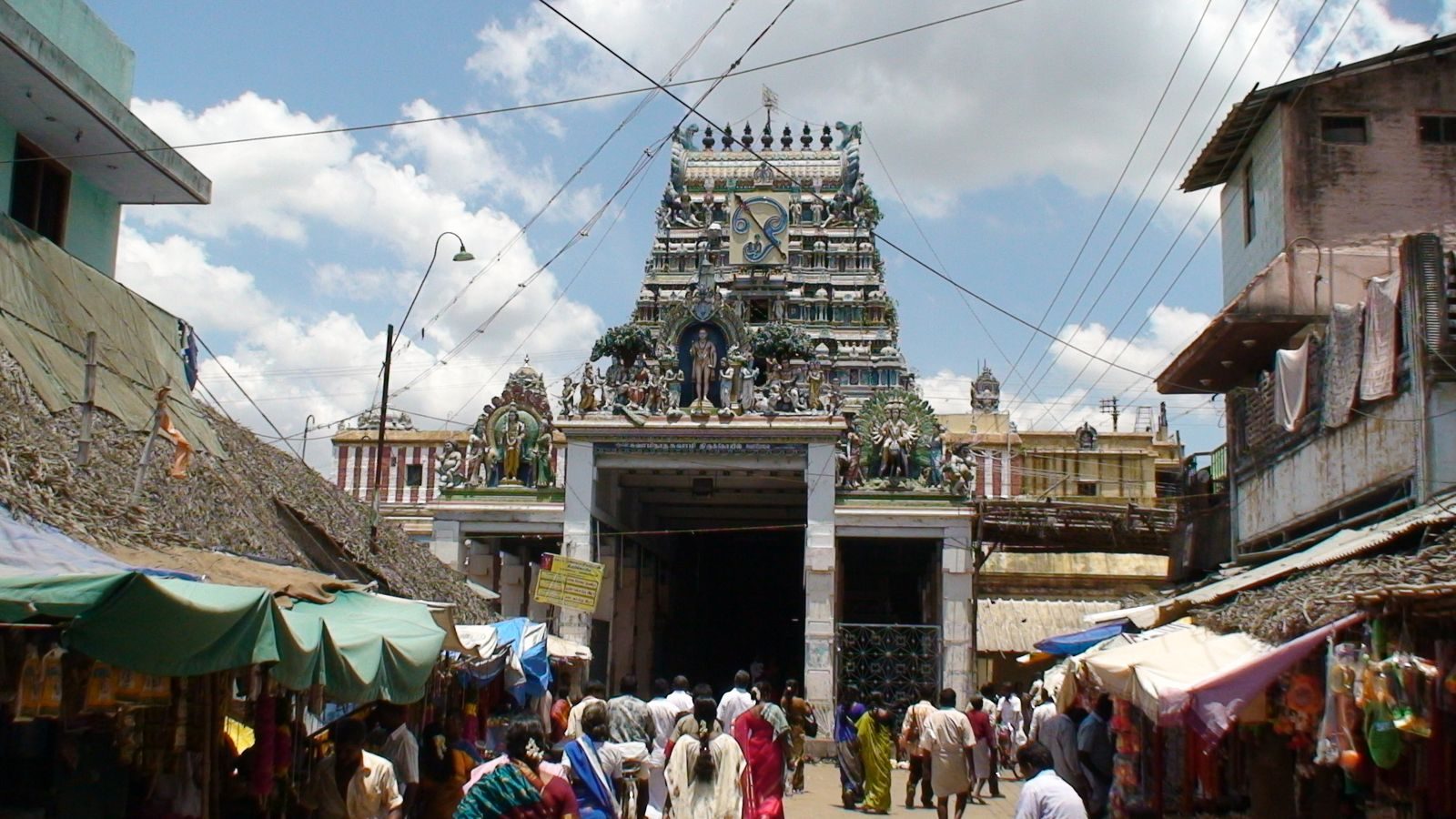
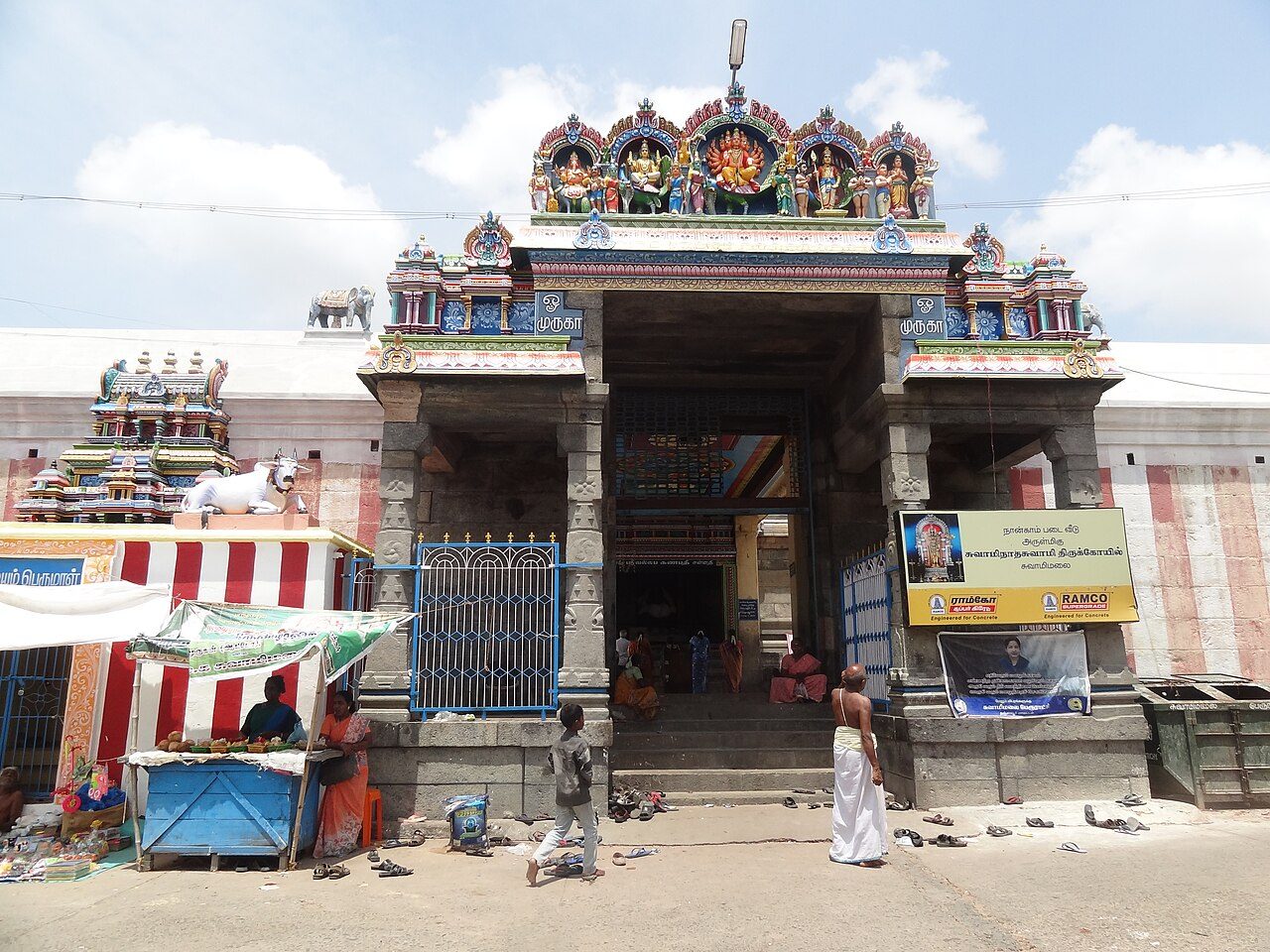
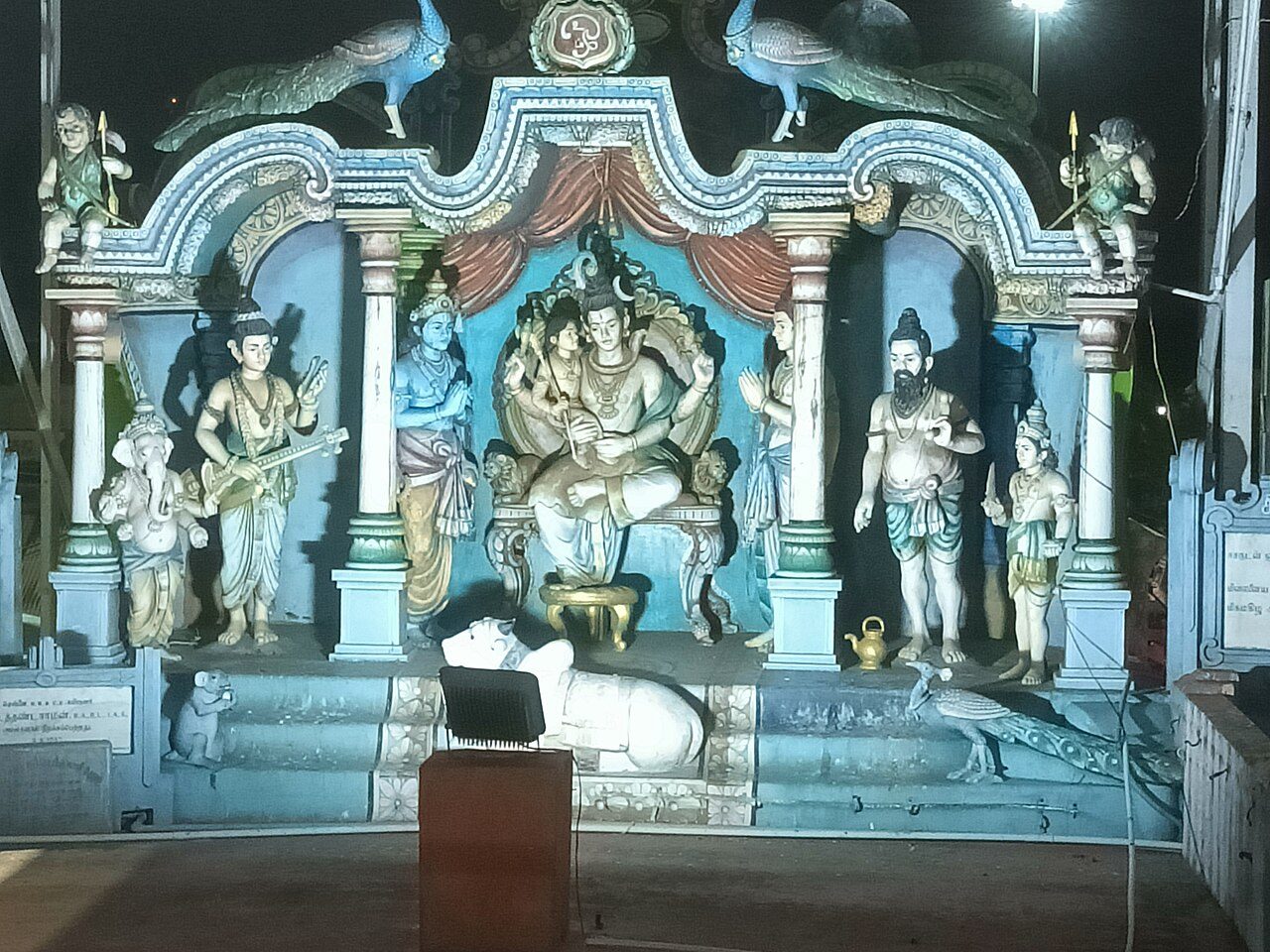
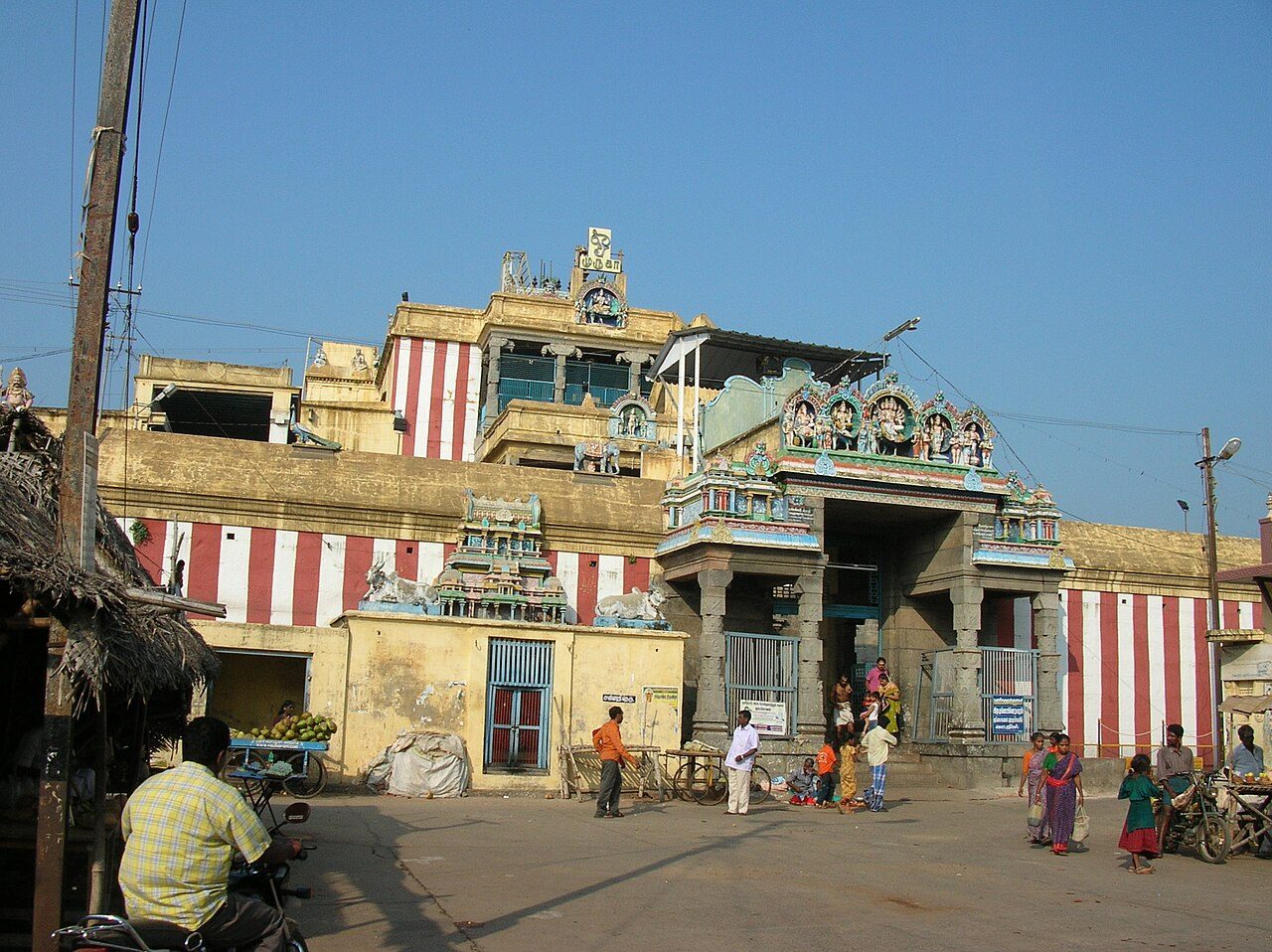
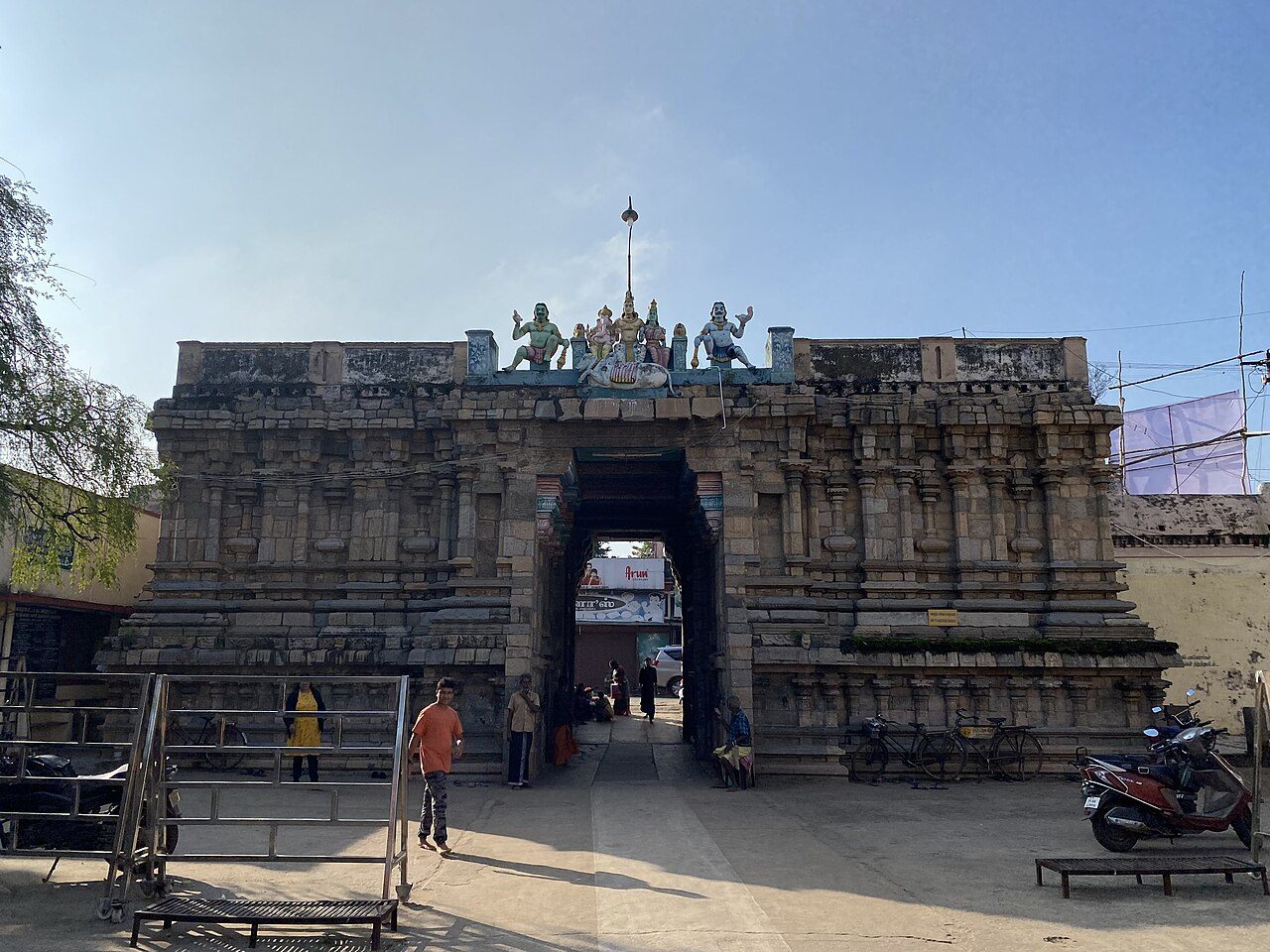
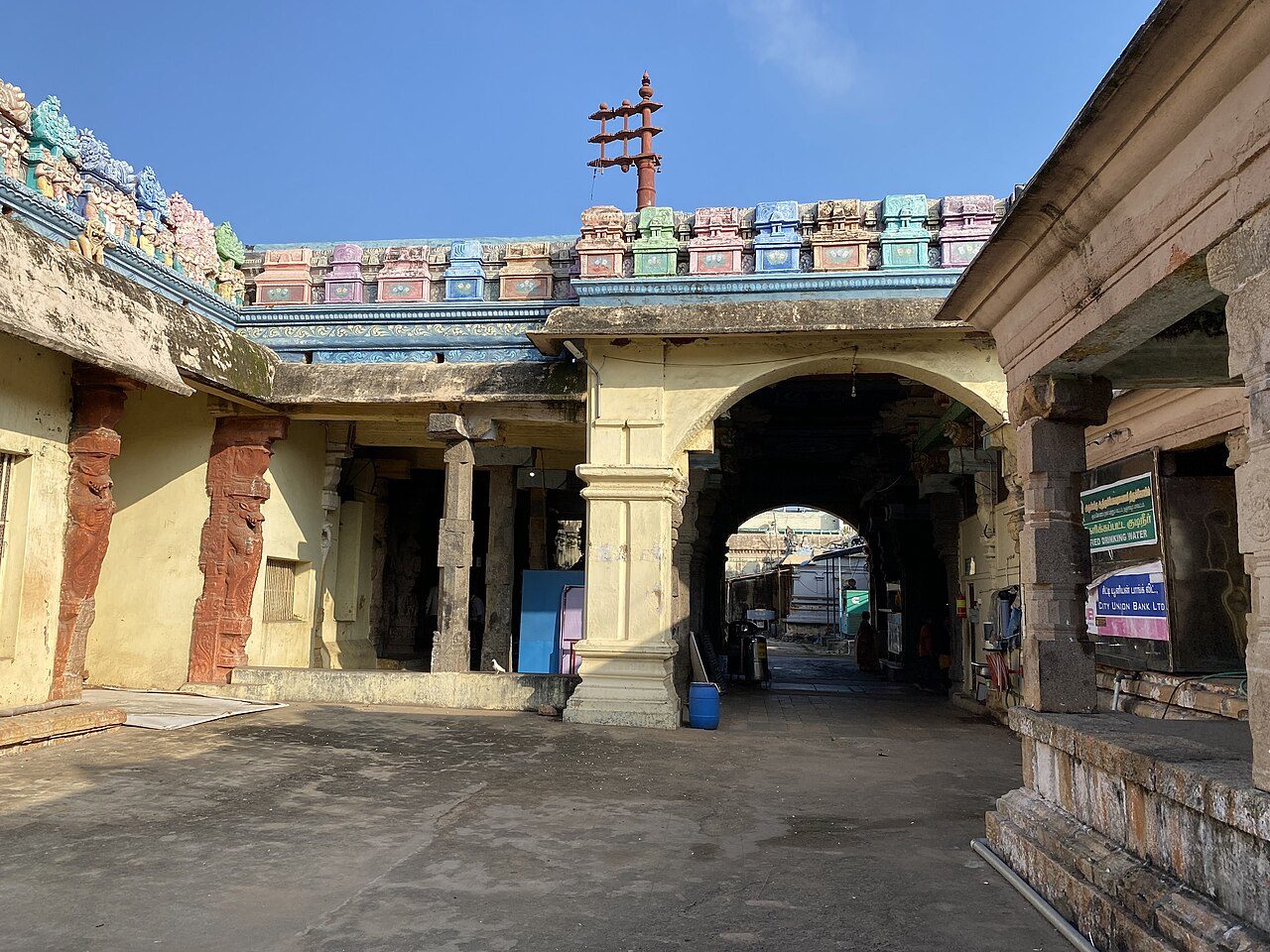
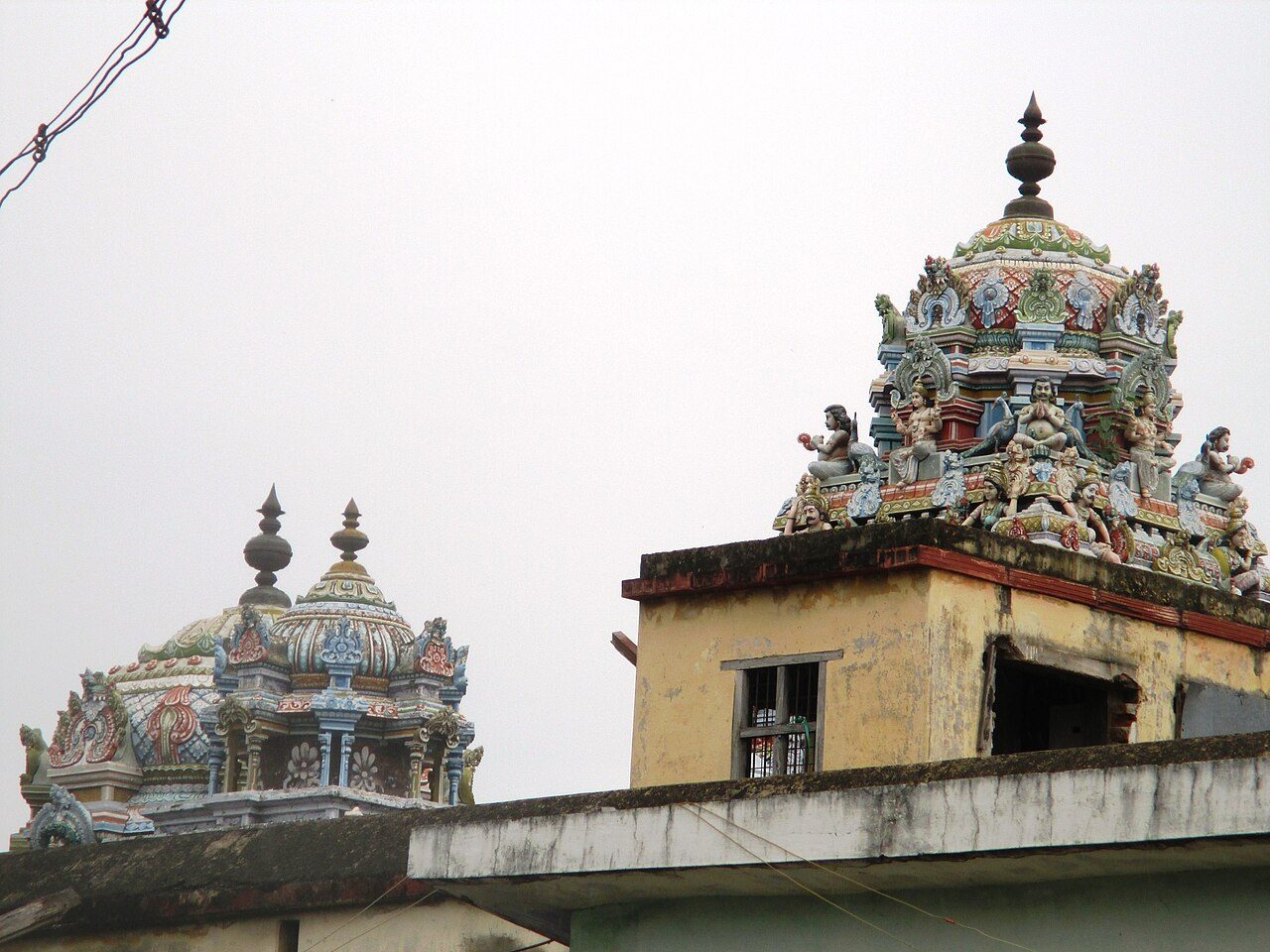
One of the six sacred abodes of Murugan, the temple stands on an artificial mound, with Murugan's shrine above and the shrines of Shiva and Parvati below. Legend says that here Murugan explained the meaning of Om to his father Shiva, earning the name Swaminatha, teacher of the lord. Sixty steps, named after the sixty years of the Tamil cycle, lead up to the shrine. The village is also known for bronze icons still cast by the lost-wax method.
The largest Shiva temple in Kumbakonam, and the one the town takes its name from: legend says a pot of nectar, carried by the great flood at the end of an age, came to rest here and Shiva shaped it into the linga. The temple's present form dates largely from the Nayak period, with a tall gopuram, a long pillared corridor and a hall where the 27 stars and 12 signs of the zodiac are carved on a single stone. It is the focus of the Mahamaham festival.
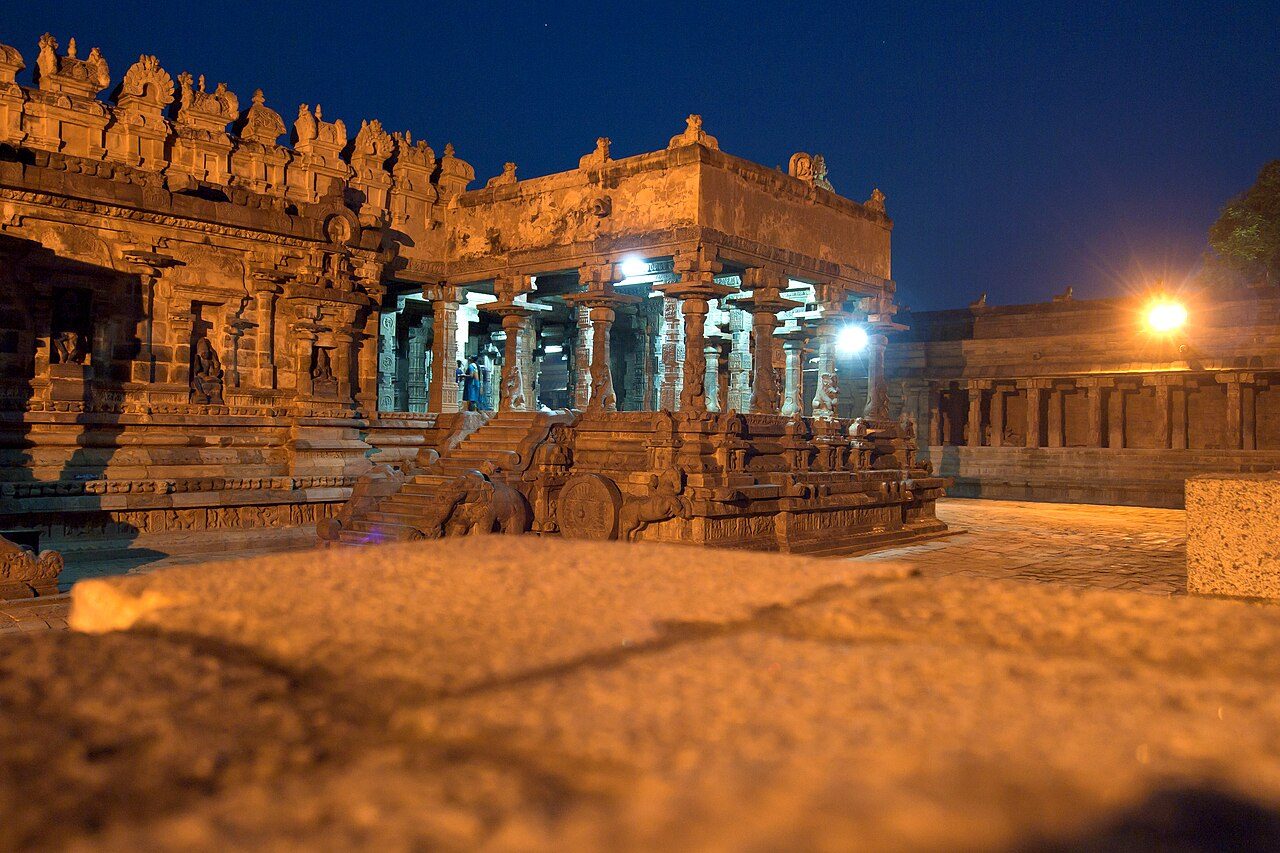
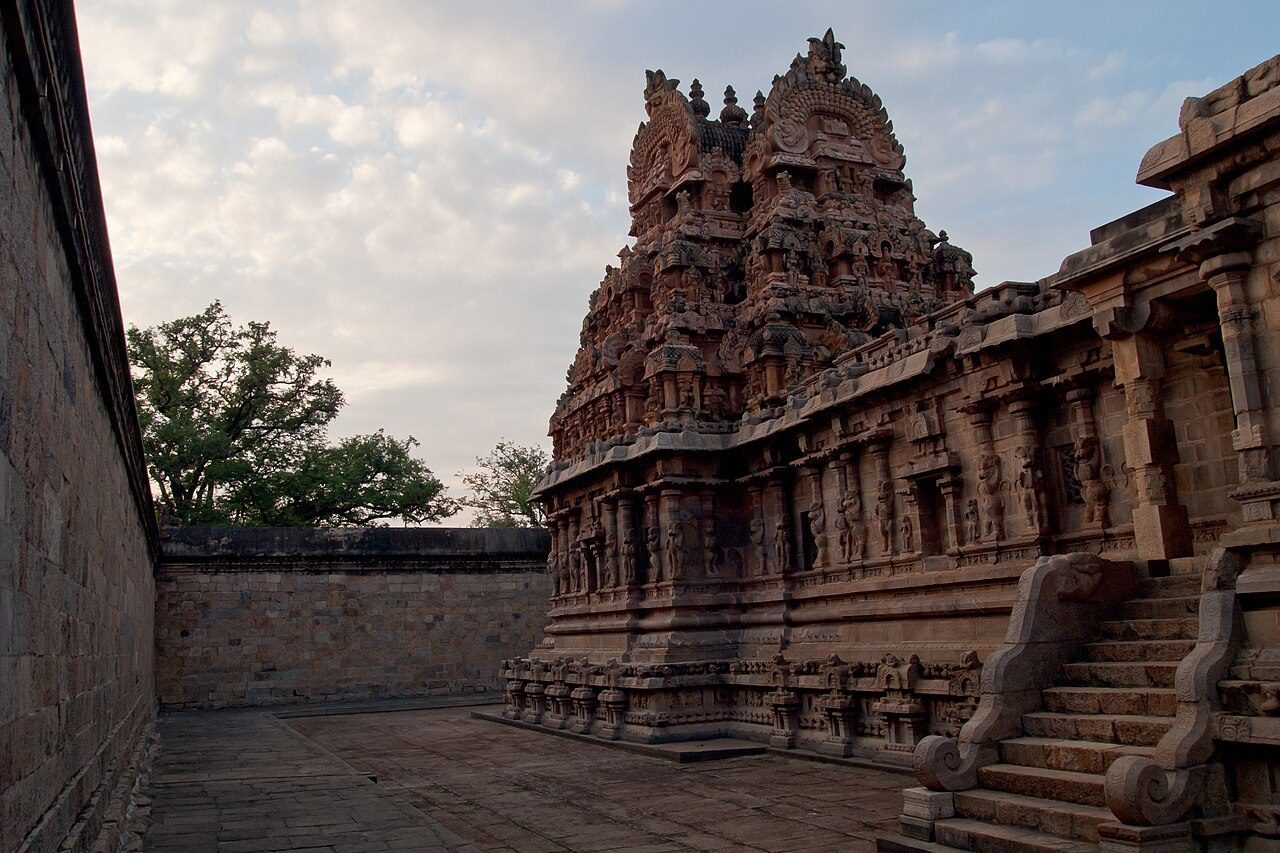
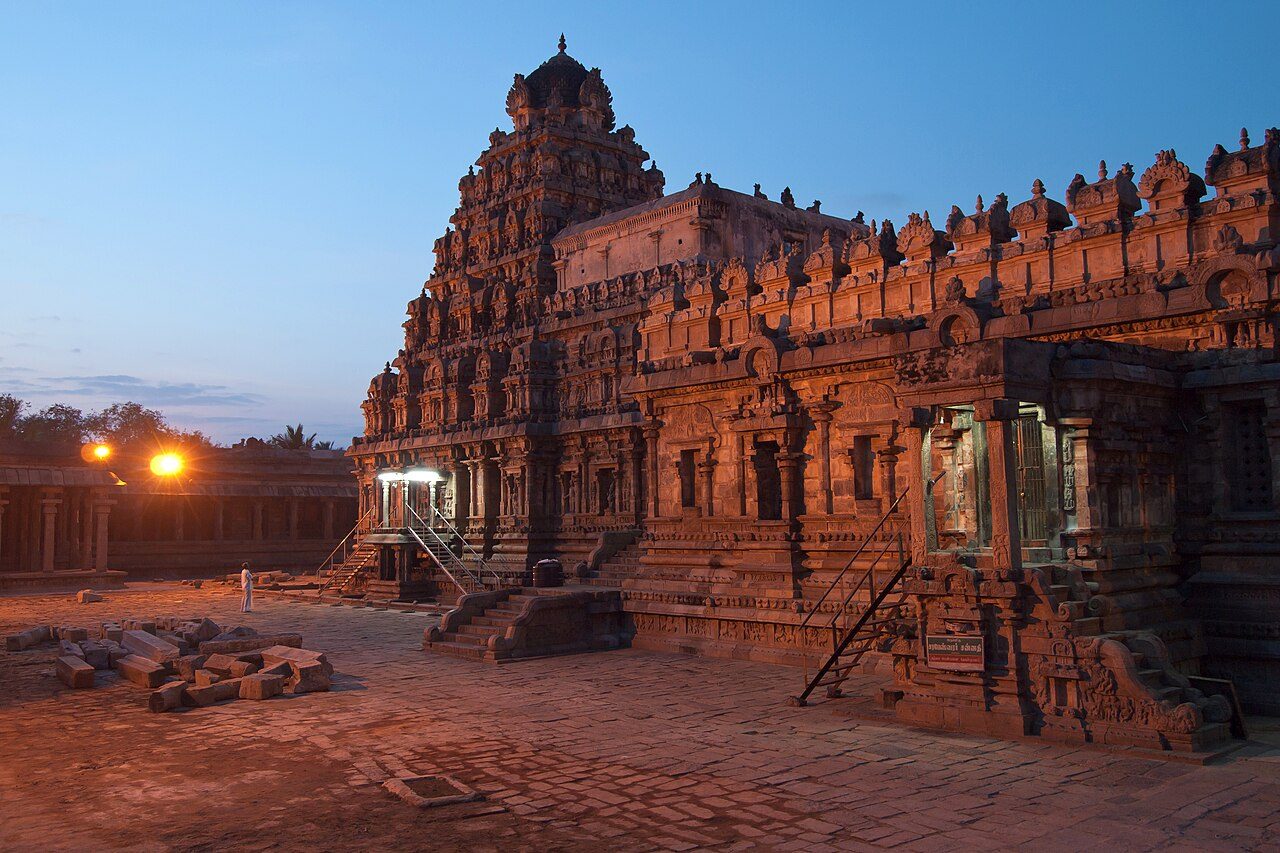
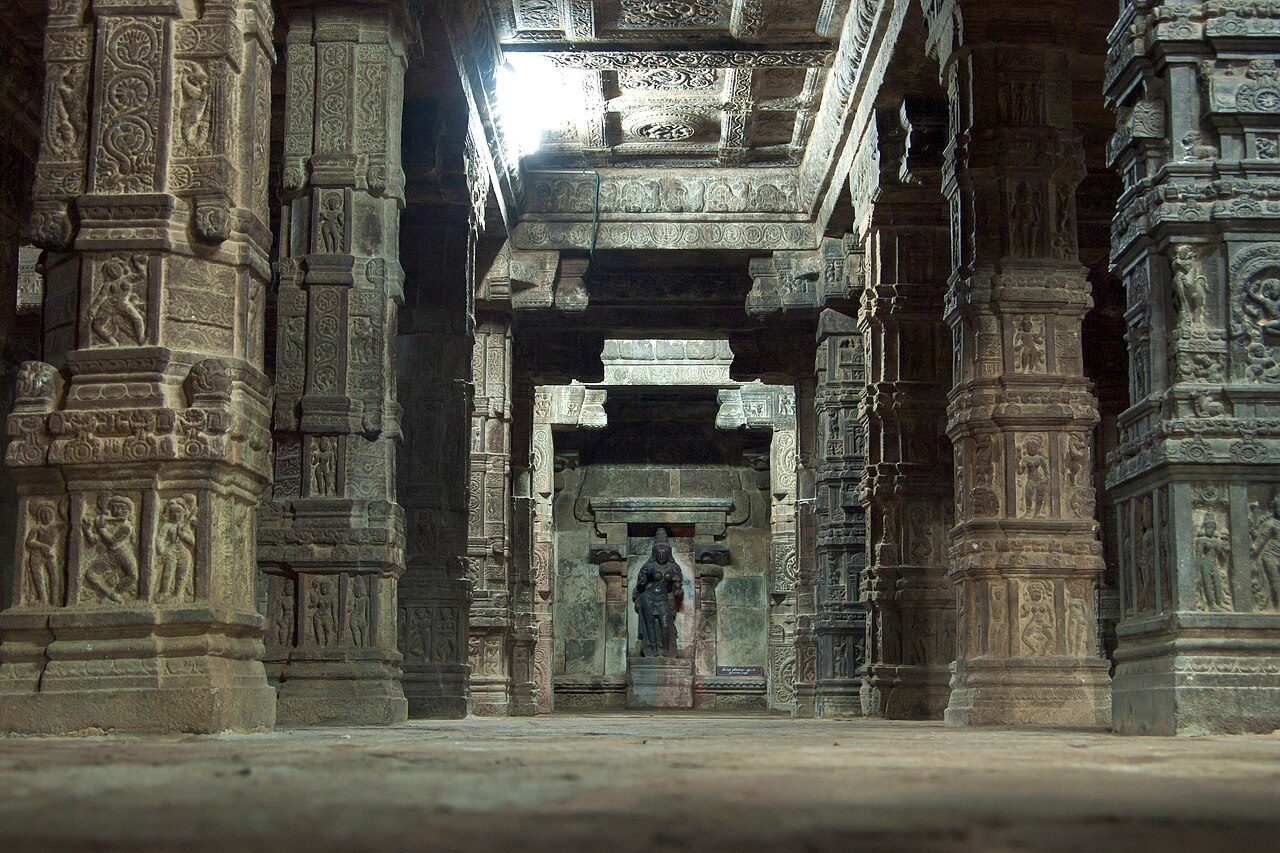
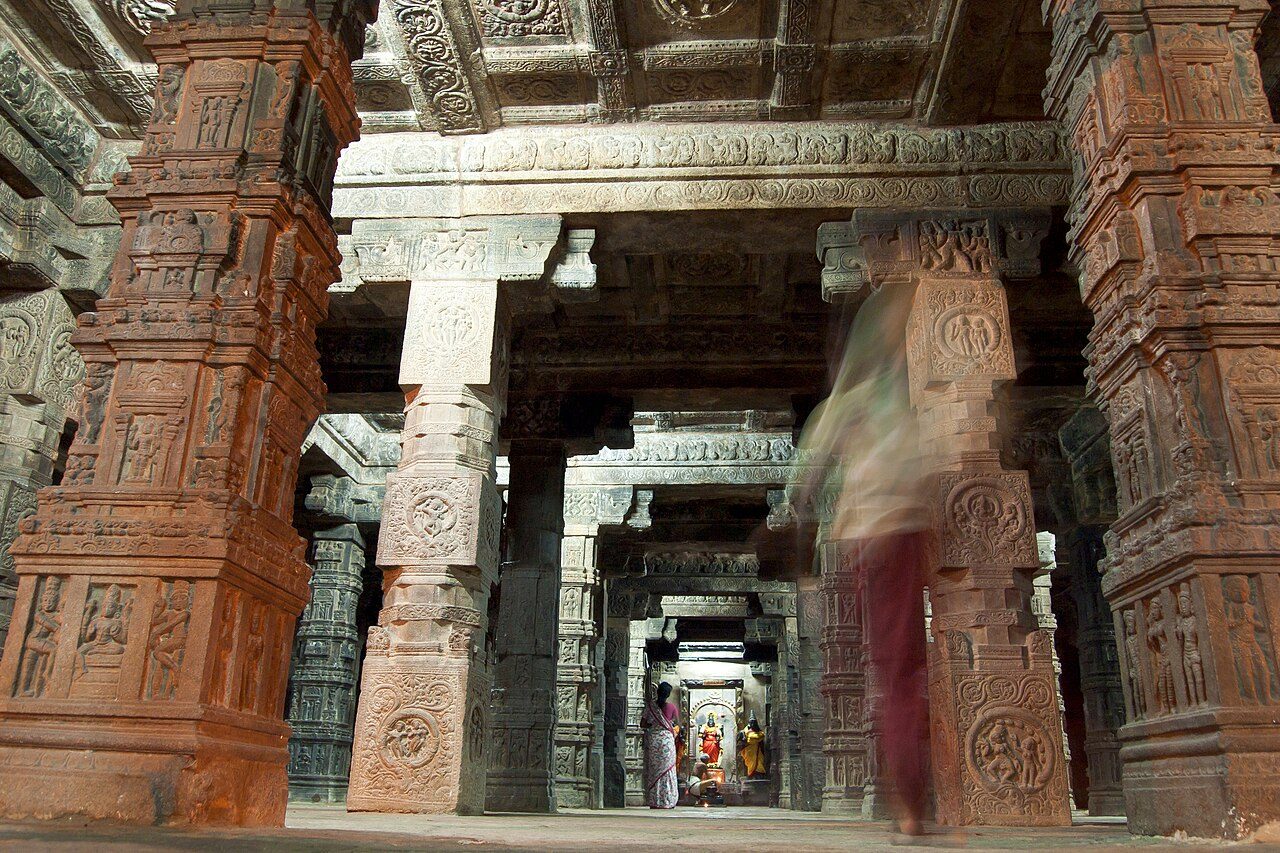
Built by the Chola king Rajaraja II in the 12th century, this temple at Darasuram is one of the three Great Living Chola Temples on the UNESCO World Heritage list. It is smaller than the temples at Thanjavur and Gangaikonda Cholapuram but richer in detail: the front hall is carved as a chariot with stone wheels drawn by horses, and the entrance steps are said to give out musical notes. Pillars and walls carry minute friezes of dancers, musicians and Puranic stories.
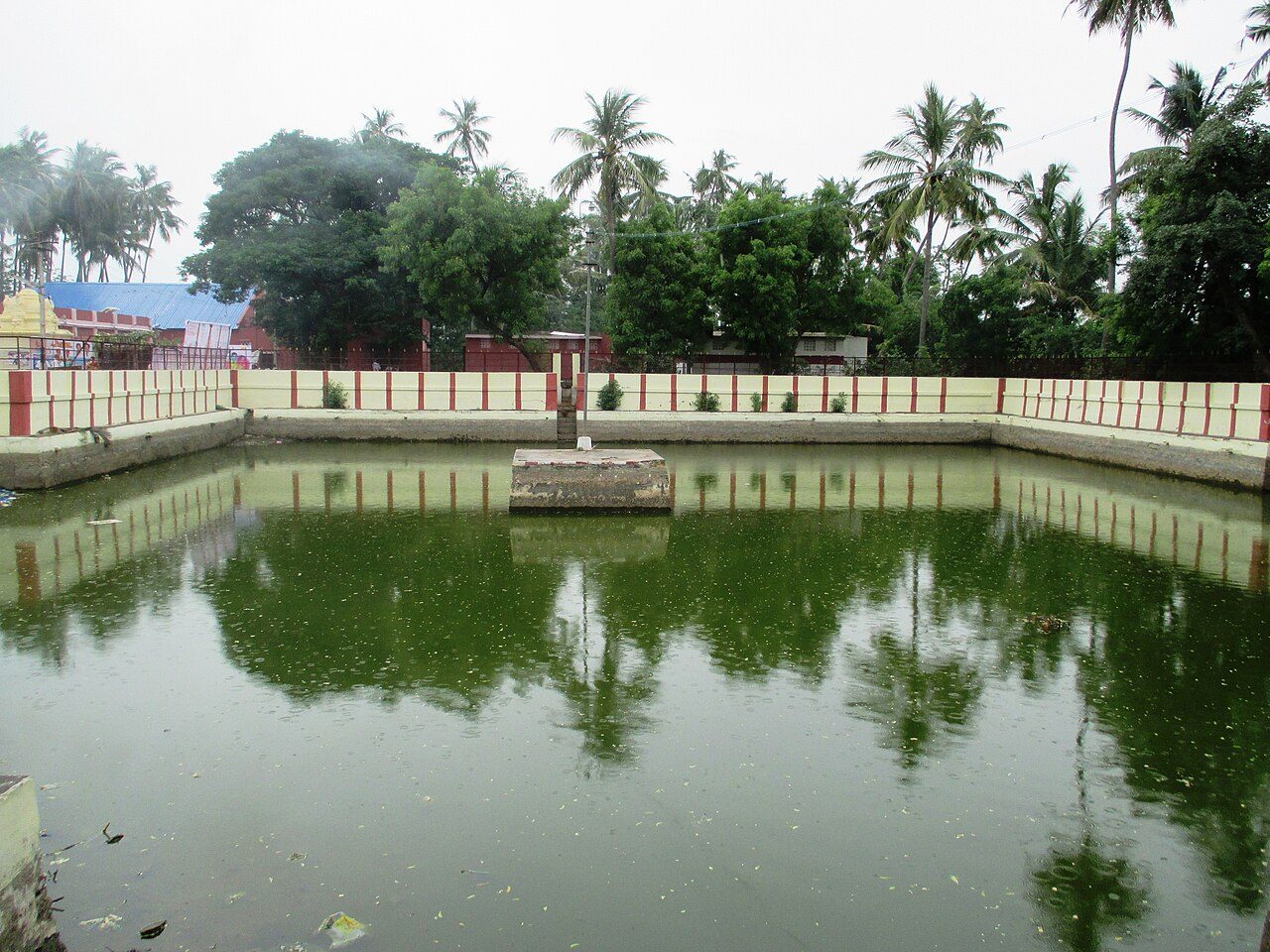
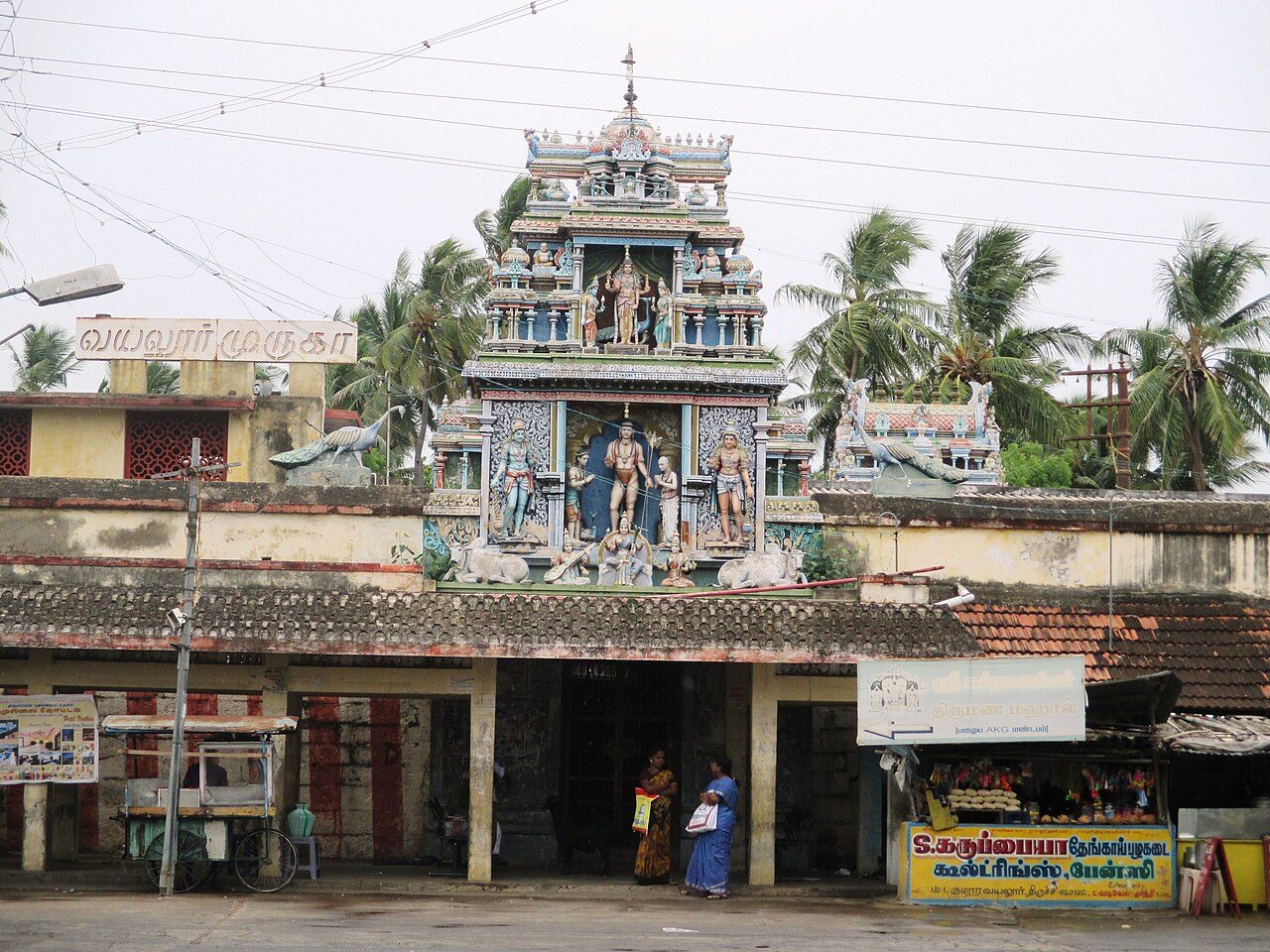
A Murugan temple set among paddy fields outside Tiruchirappalli; vayal means field. It is linked to the 15th-century poet Arunagirinathar, who is said to have had a vision of Murugan here and composed some of his Thiruppugazh hymns in the god's honour. The temple's quiet setting, tank and painted halls make a peaceful contrast to the crowded temples in the city.
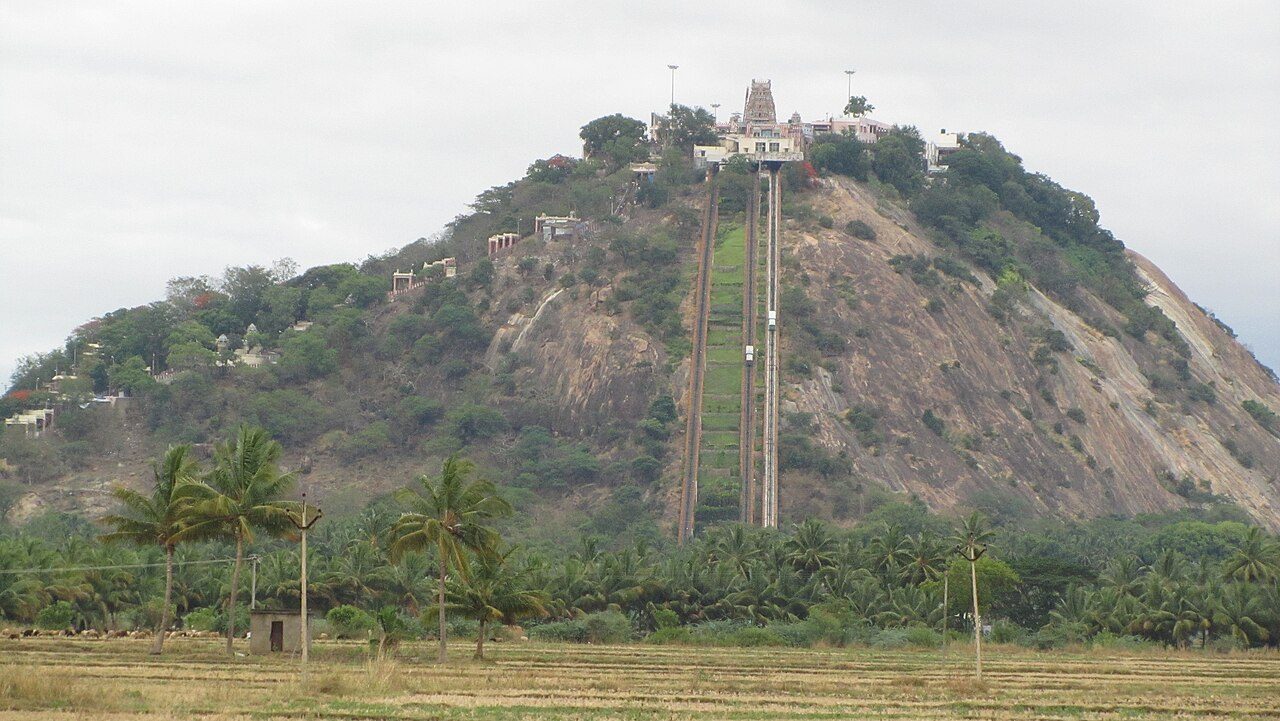
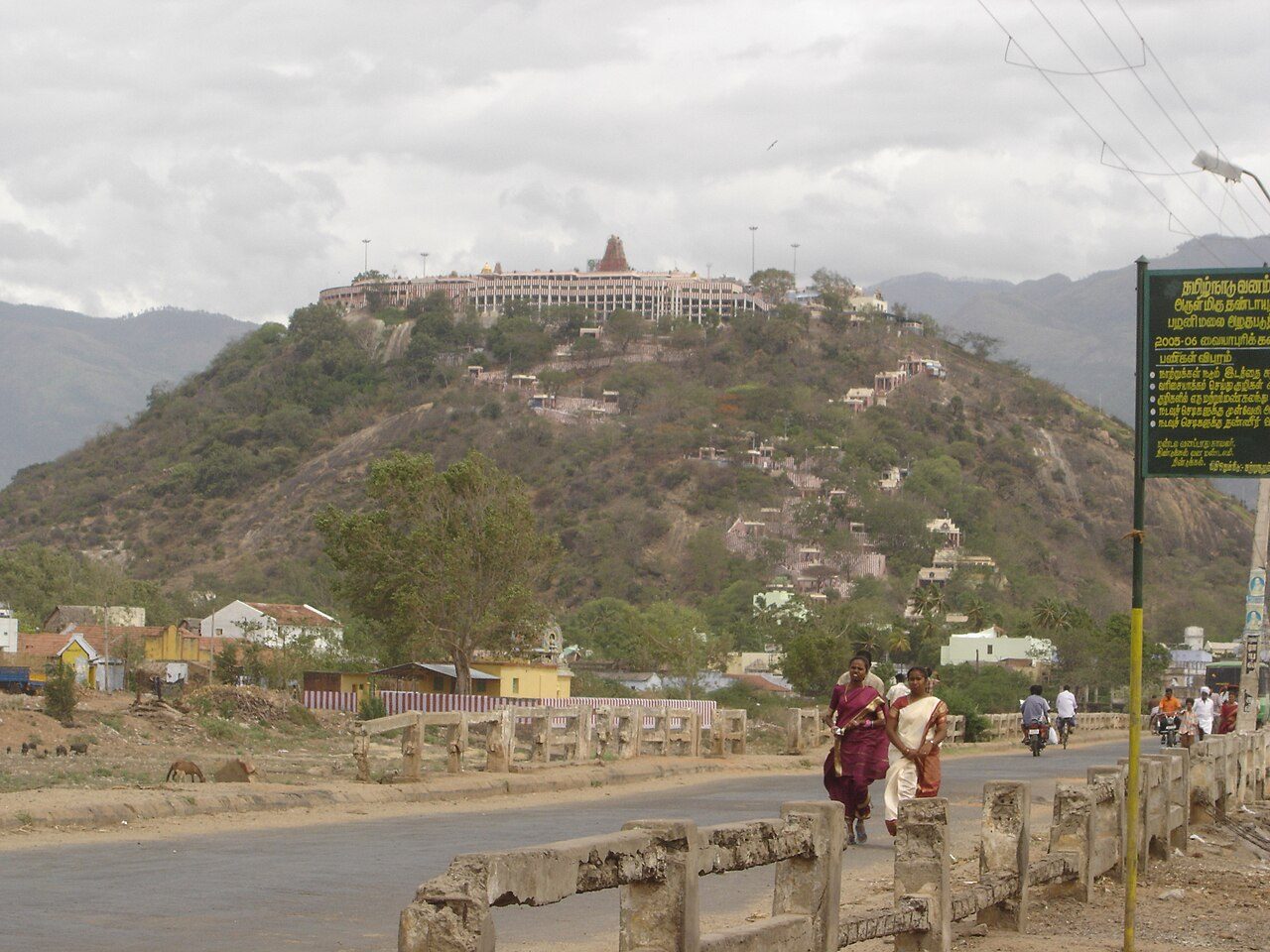
One of the six abodes of Murugan, standing on a hill about 160 metres above the town, where the deity is shown as a renunciate holding a staff. The image is traditionally held to be made of navapashanam, an amalgam of nine minerals, and pilgrims climb barefoot or take the winch railway.
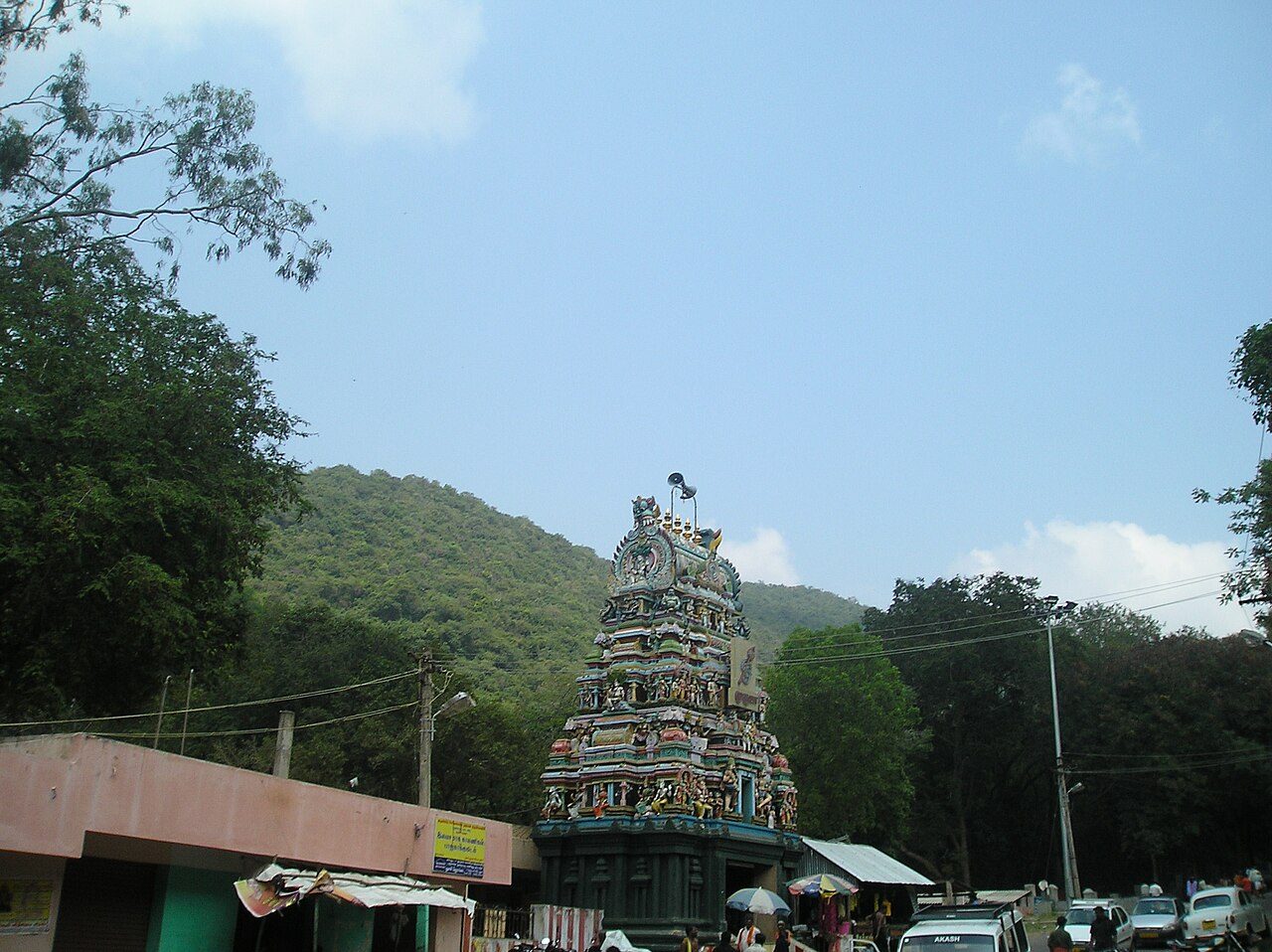
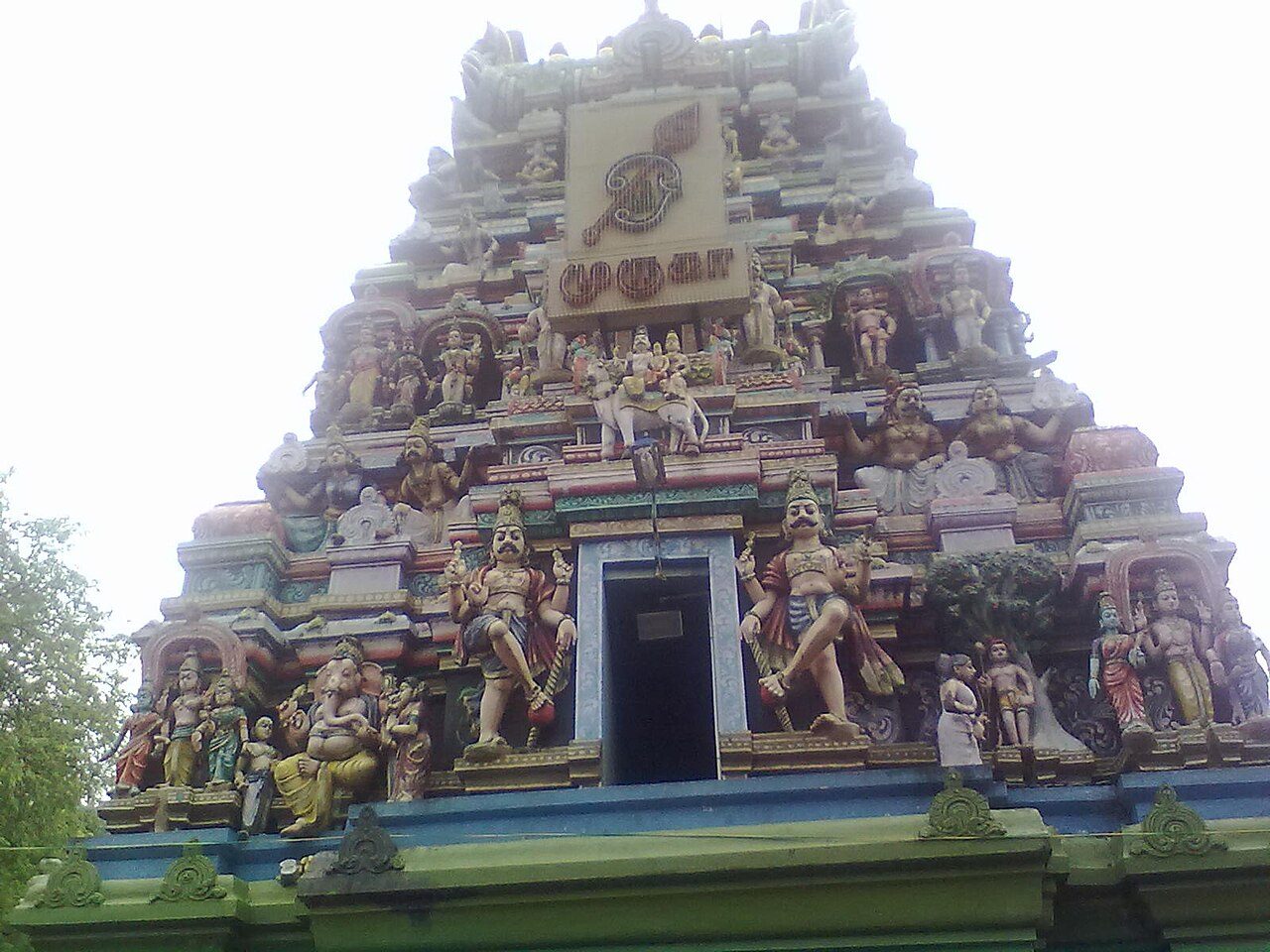
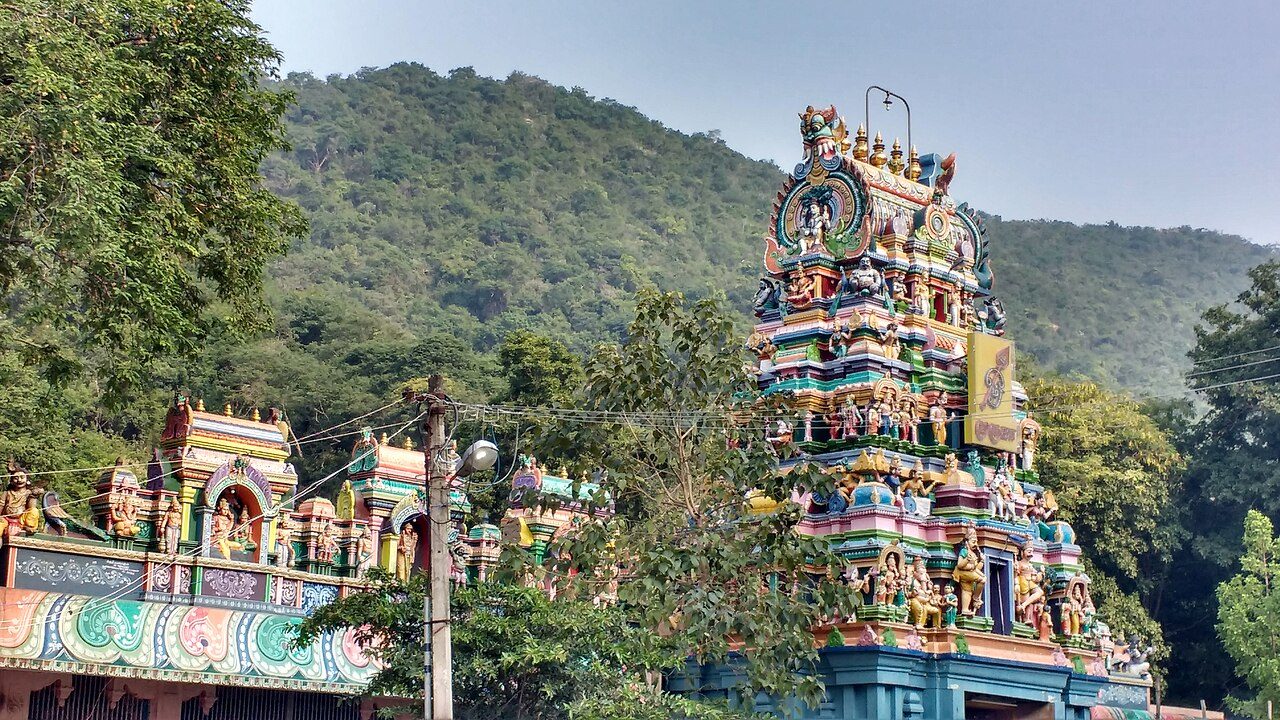
The sixth and last of Murugan's Arupadai Veedu abodes, set in hill forest above Alagar Kovil. Tradition places here the meeting between Murugan and the poet Avvaiyar over the roasted and unroasted fruit, a story every Tamil child learns. The spring called Nupura Gangai flows on the hillside close by.
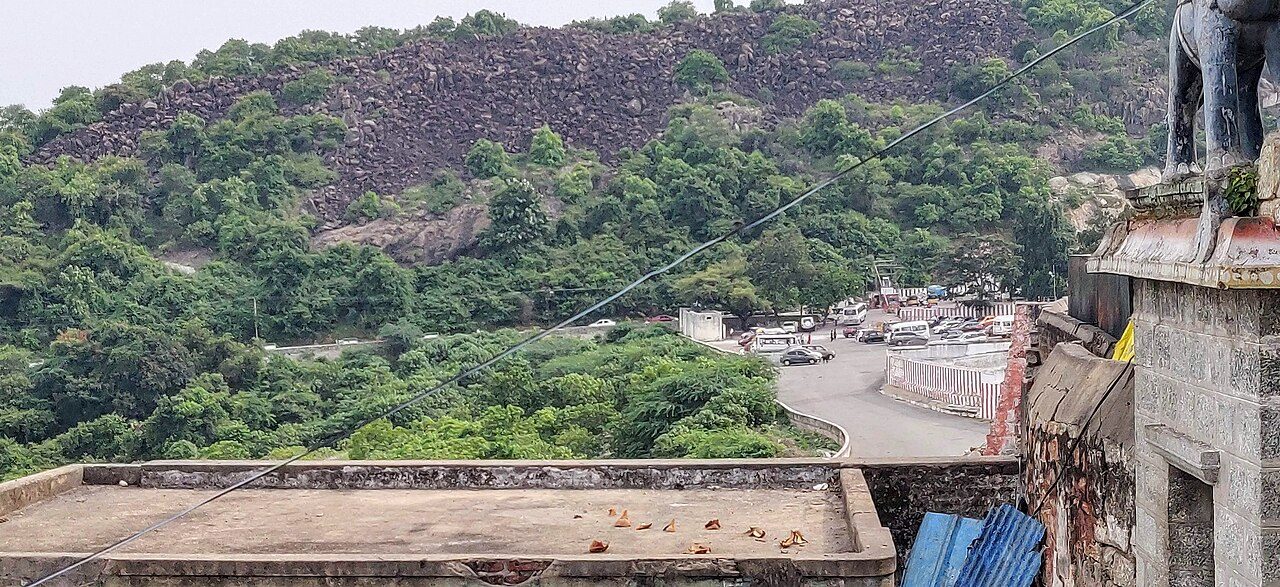
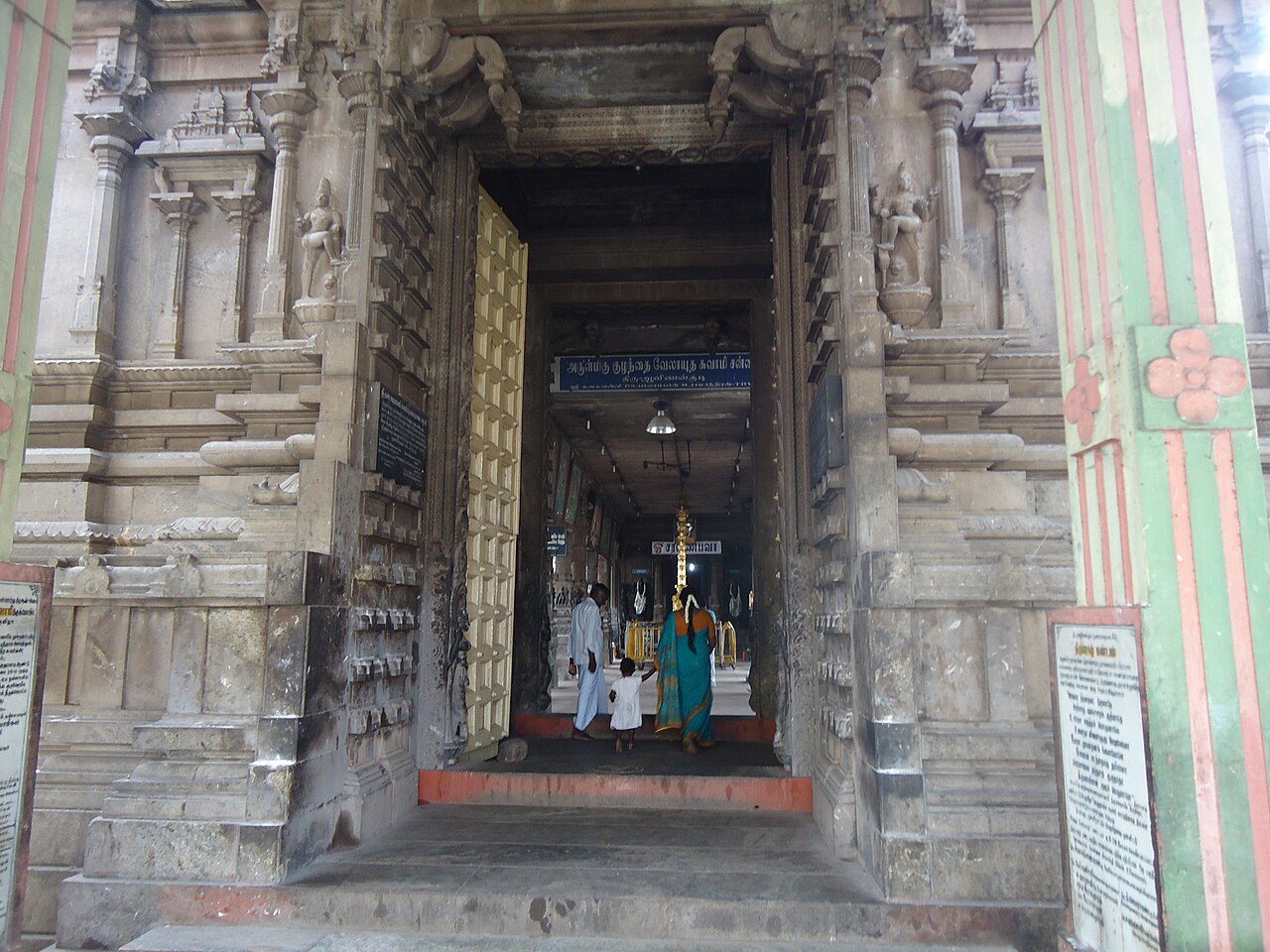
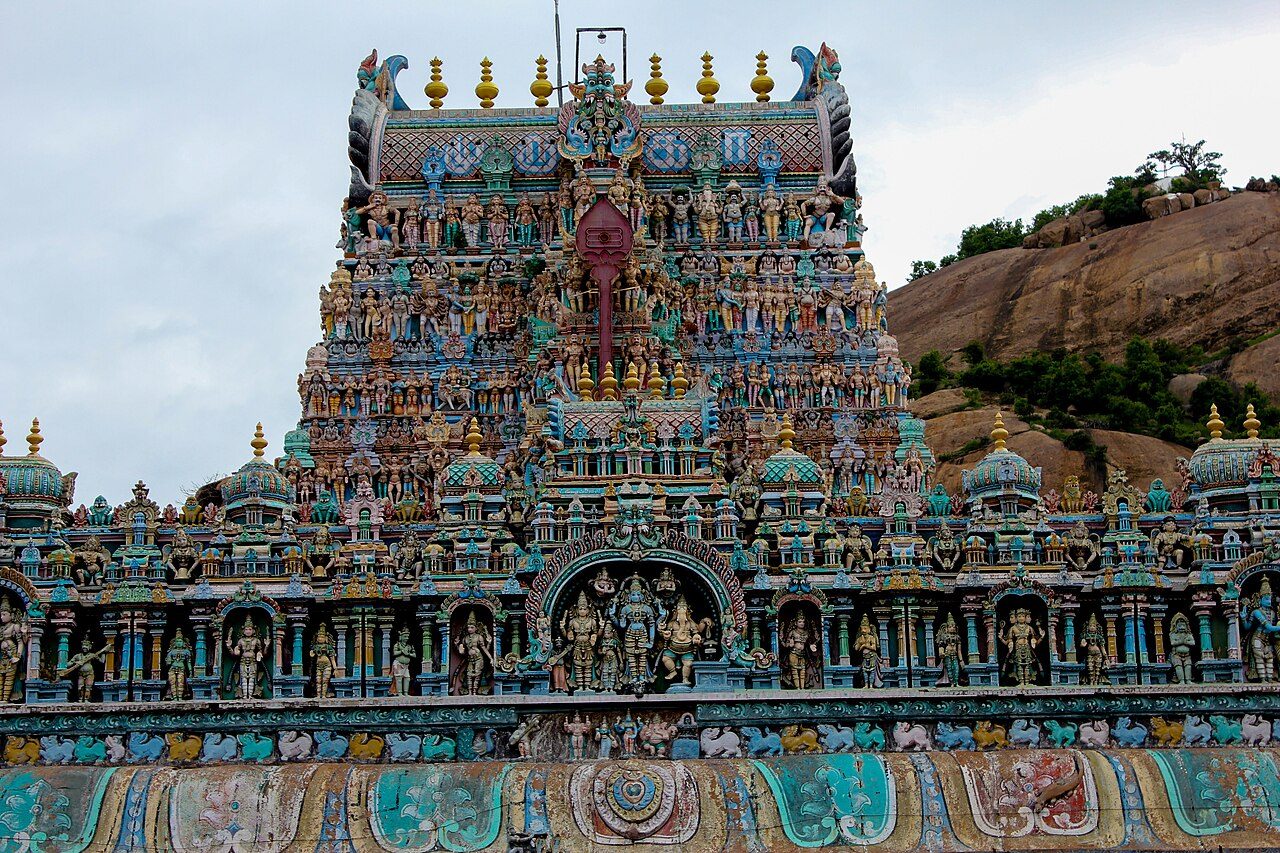
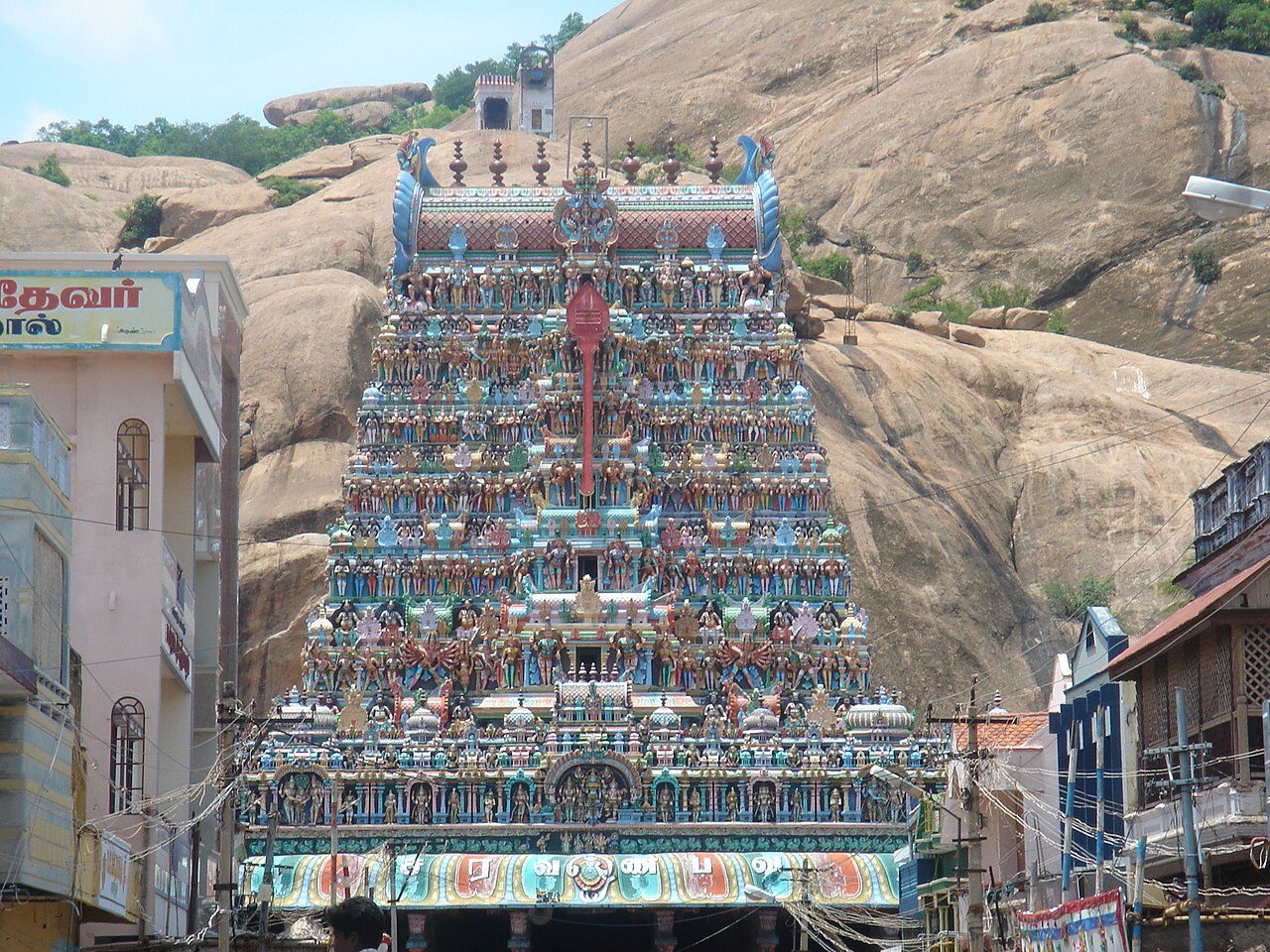
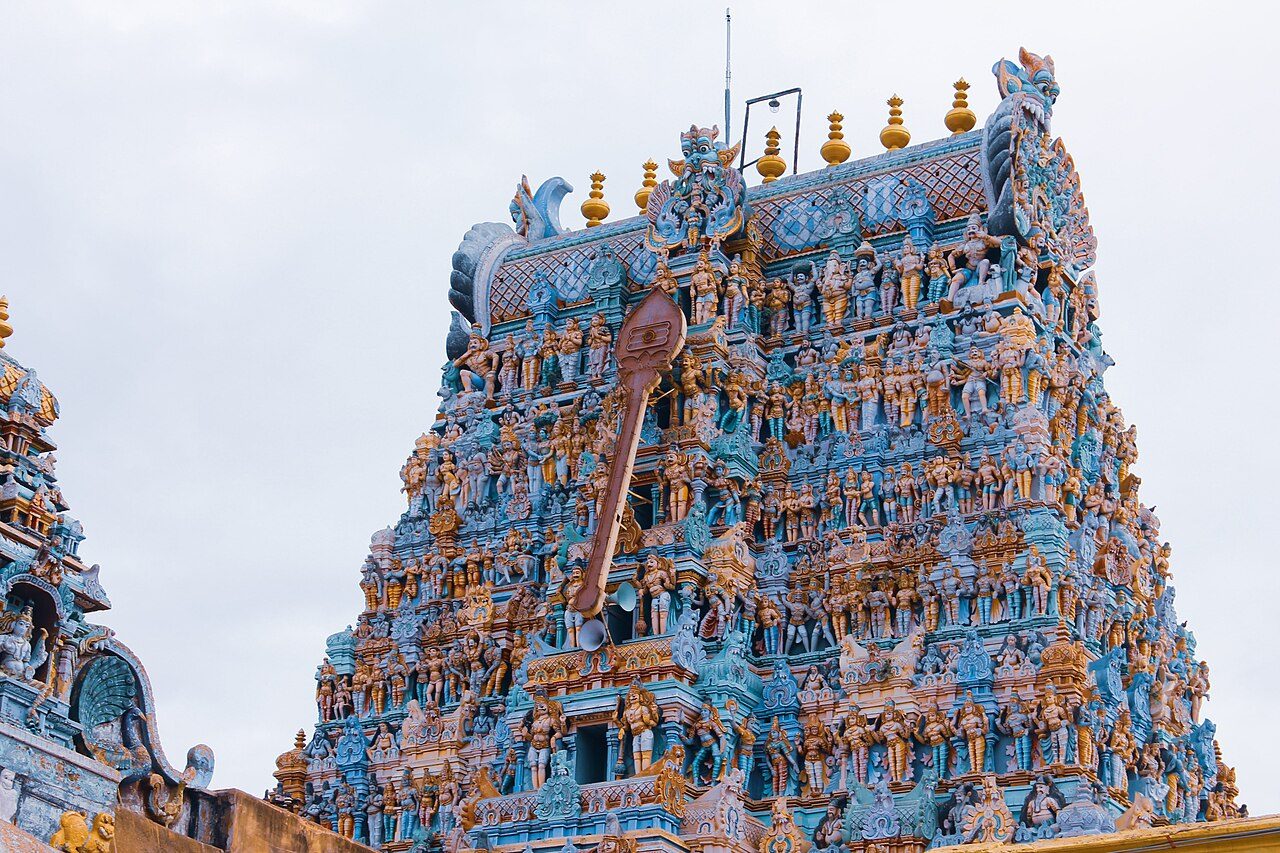
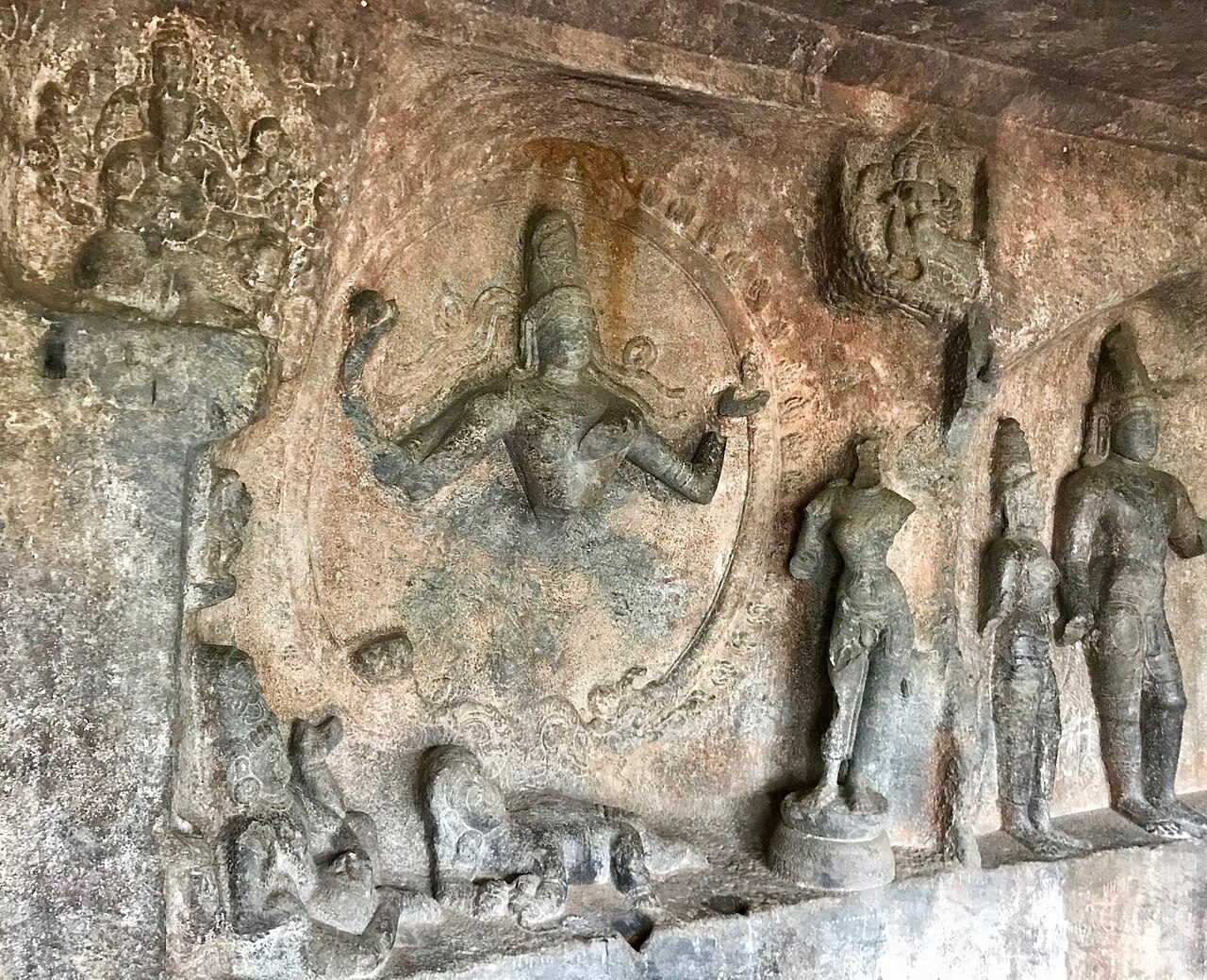
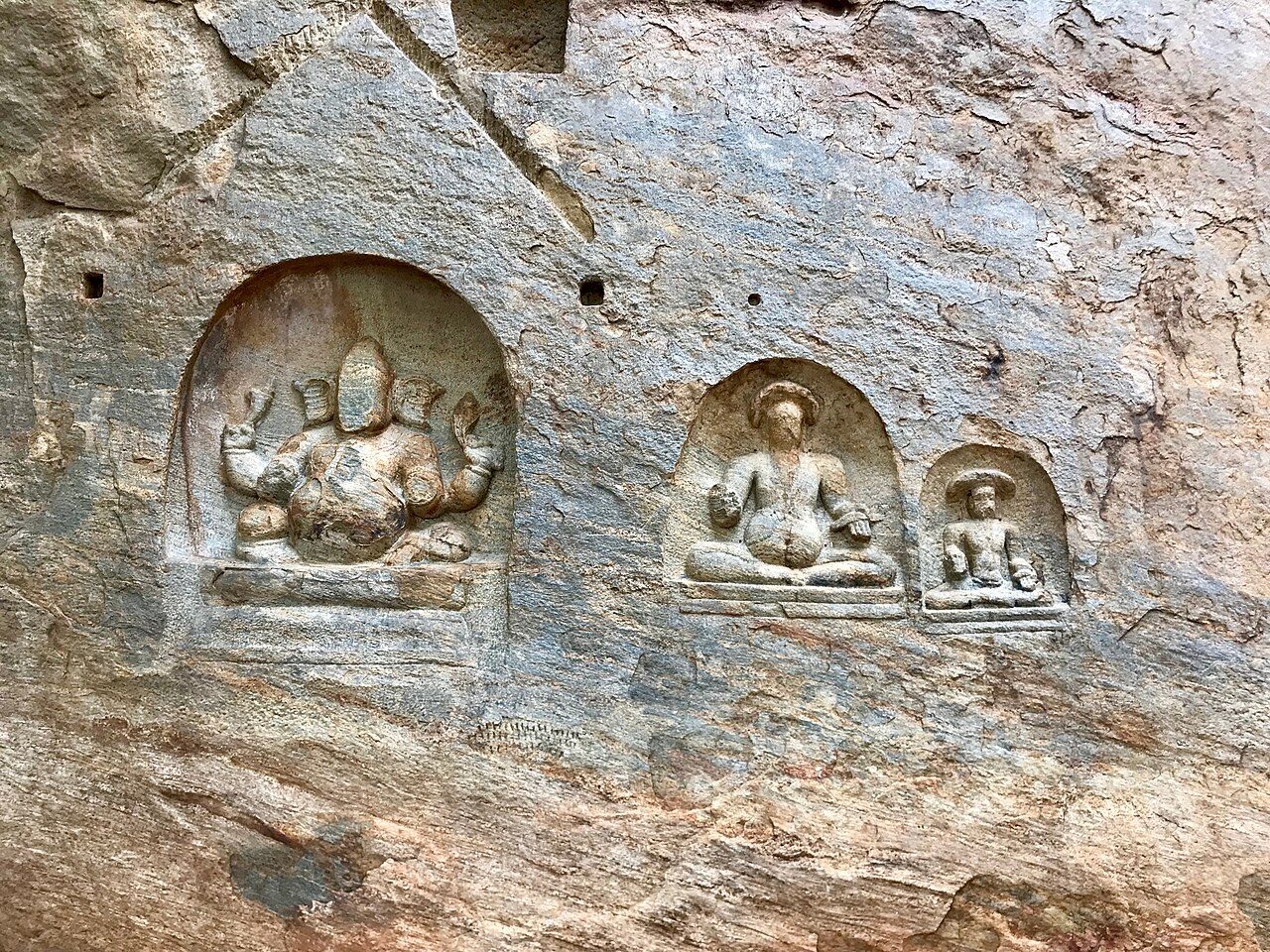
The first of Murugan's six Arupadai Veedu abodes, cut into a granite hill south of Madurai, where the god is said to have married Deivanai after defeating Surapadman. The inner shrines are Pandya-period rock-cut work, among the earliest cave temples in Tamil Nadu, with Nayak halls built in front. The same hill carries a dargah and Jain beds, so three faiths have left their mark on it.
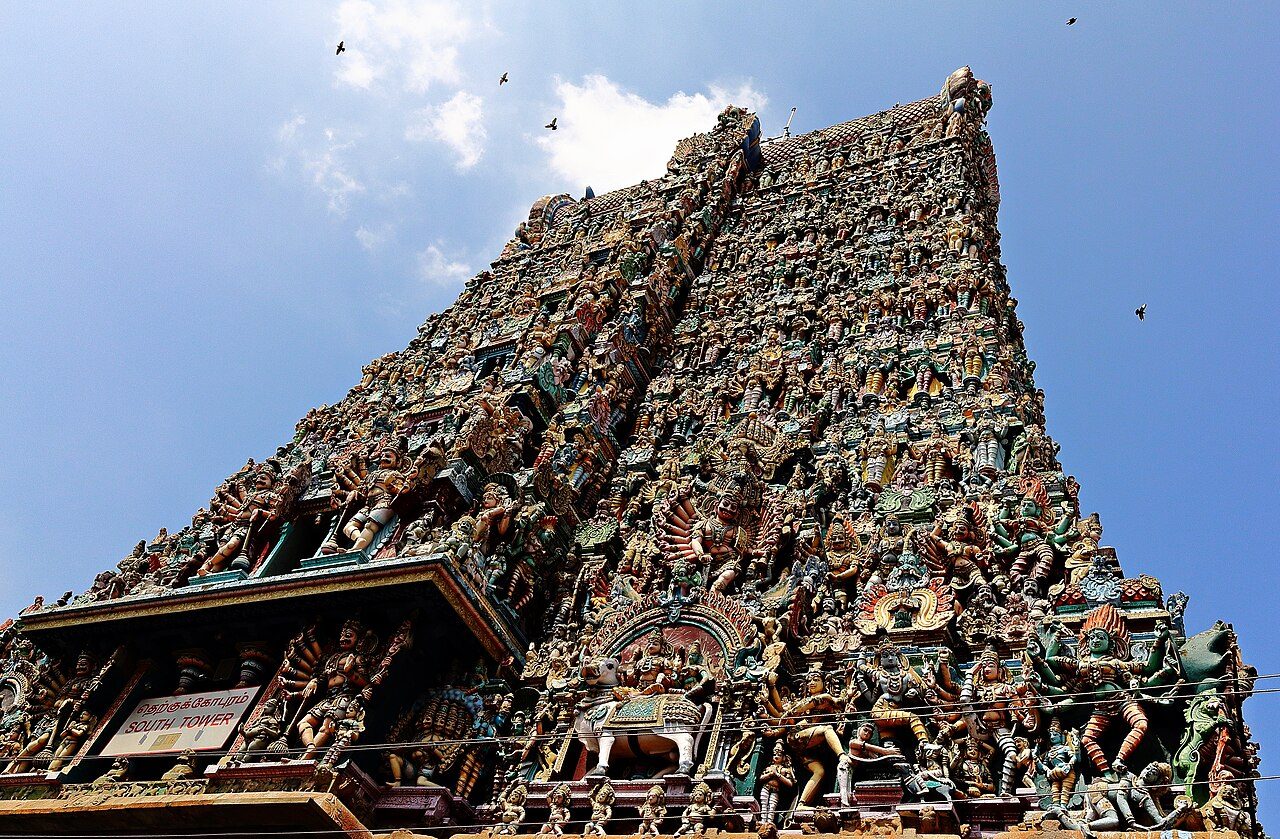
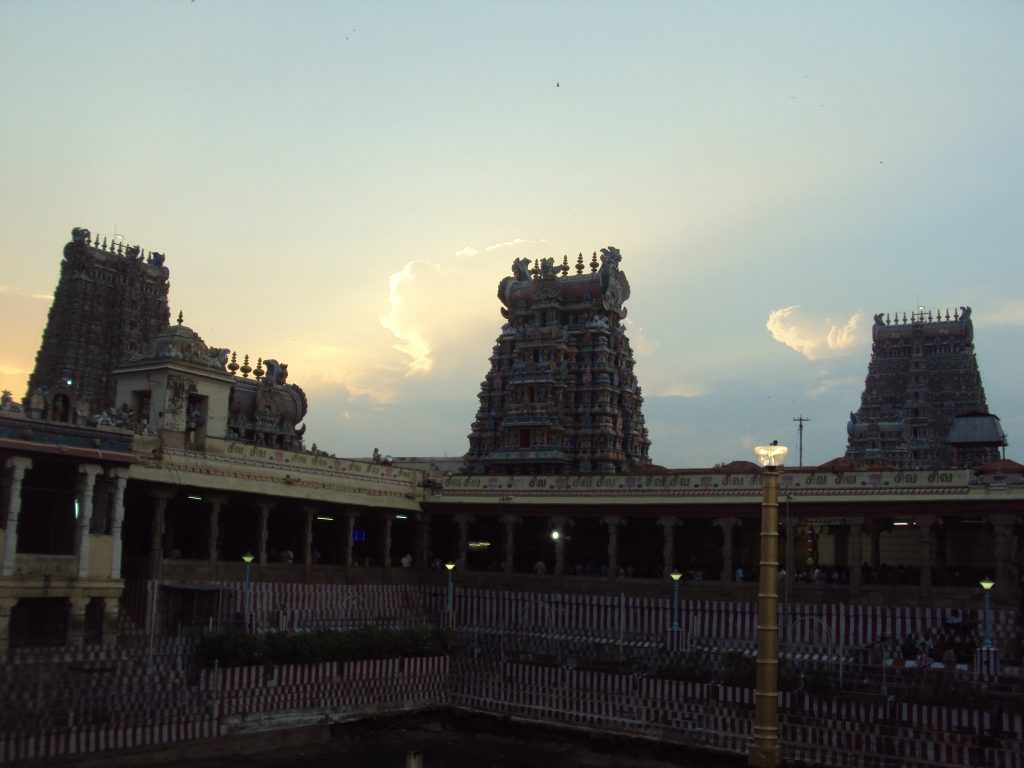
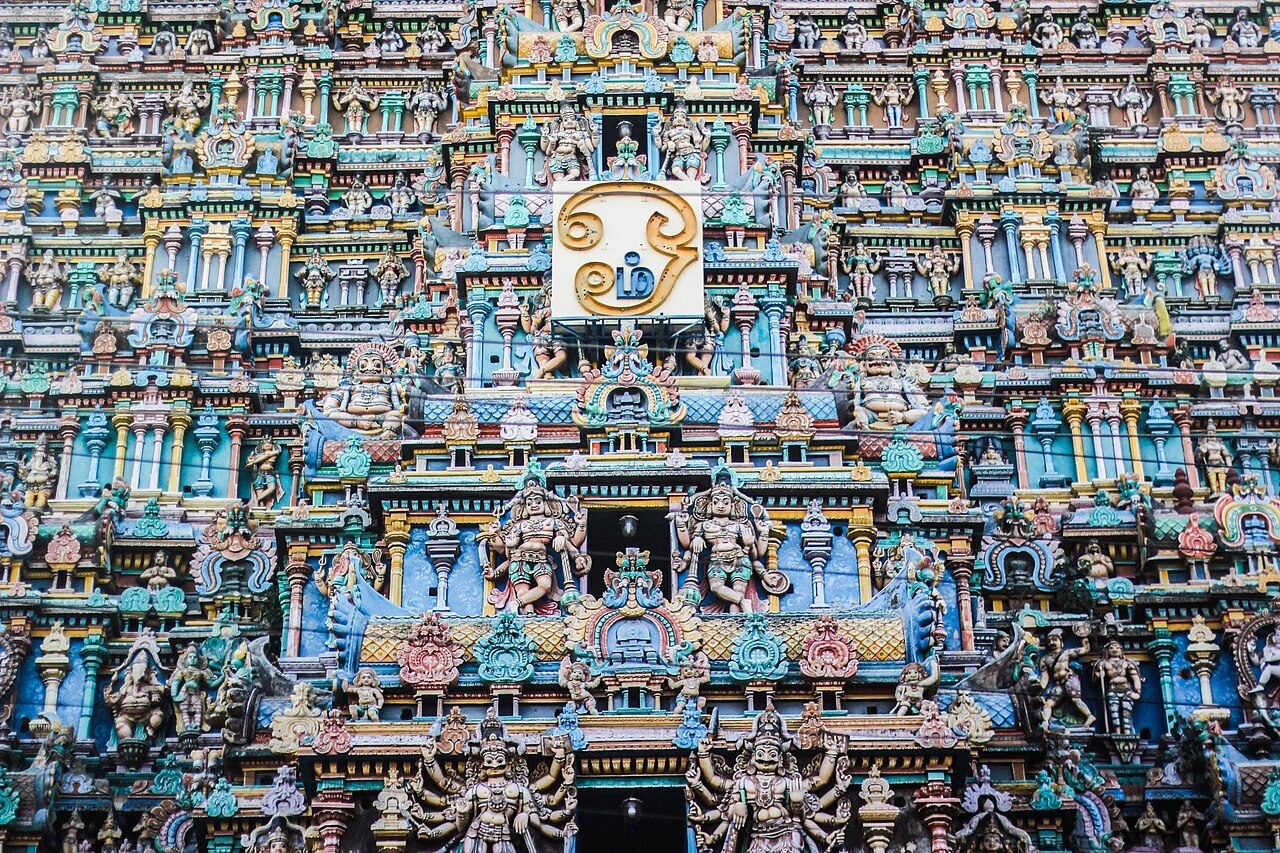
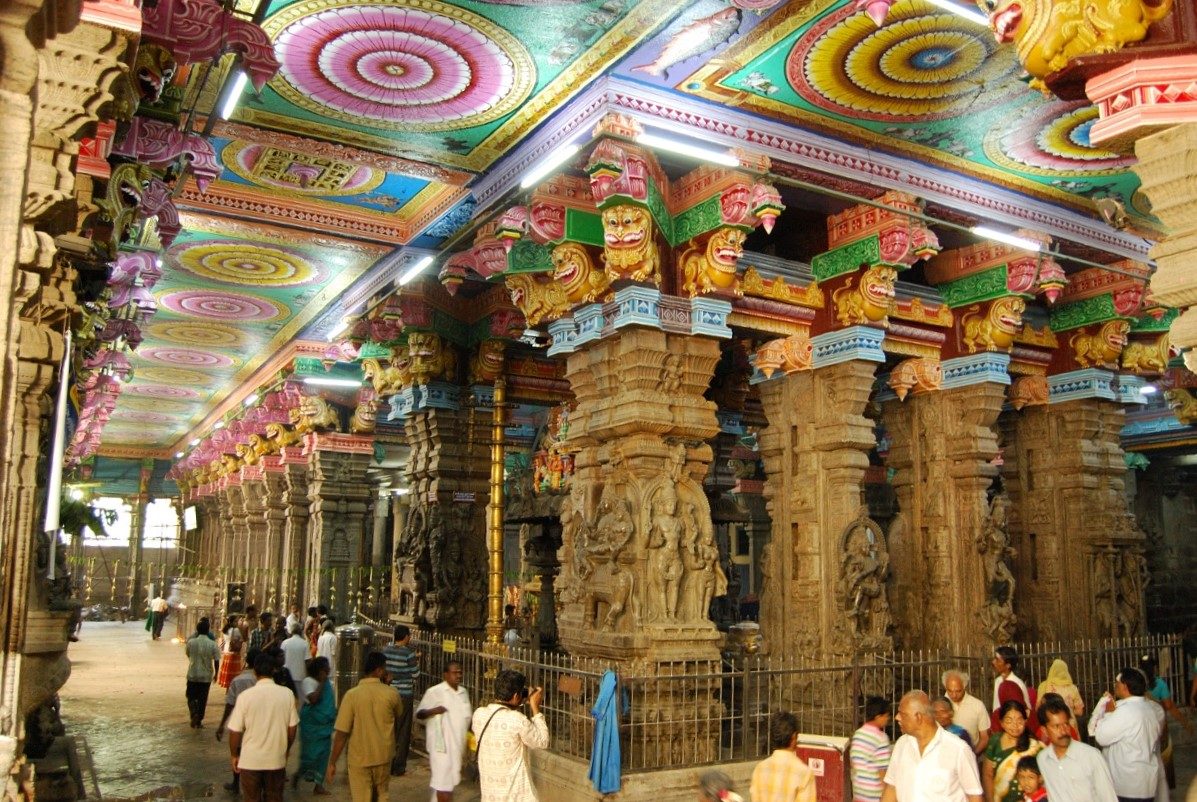
The great twin temple of Madurai, where Meenakshi, the fish-eyed goddess, takes precedence over her consort Sundareswarar - an unusual arrangement in a Shiva temple. The city is laid out in concentric squares around it, and the present structure is largely the work of the Nayak rulers of the 16th and 17th centuries, after the earlier temple was sacked in 1310. Its fourteen gopurams, the thousand-pillared hall and the Chithirai festival of Meenakshi's marriage draw millions of pilgrims a year.
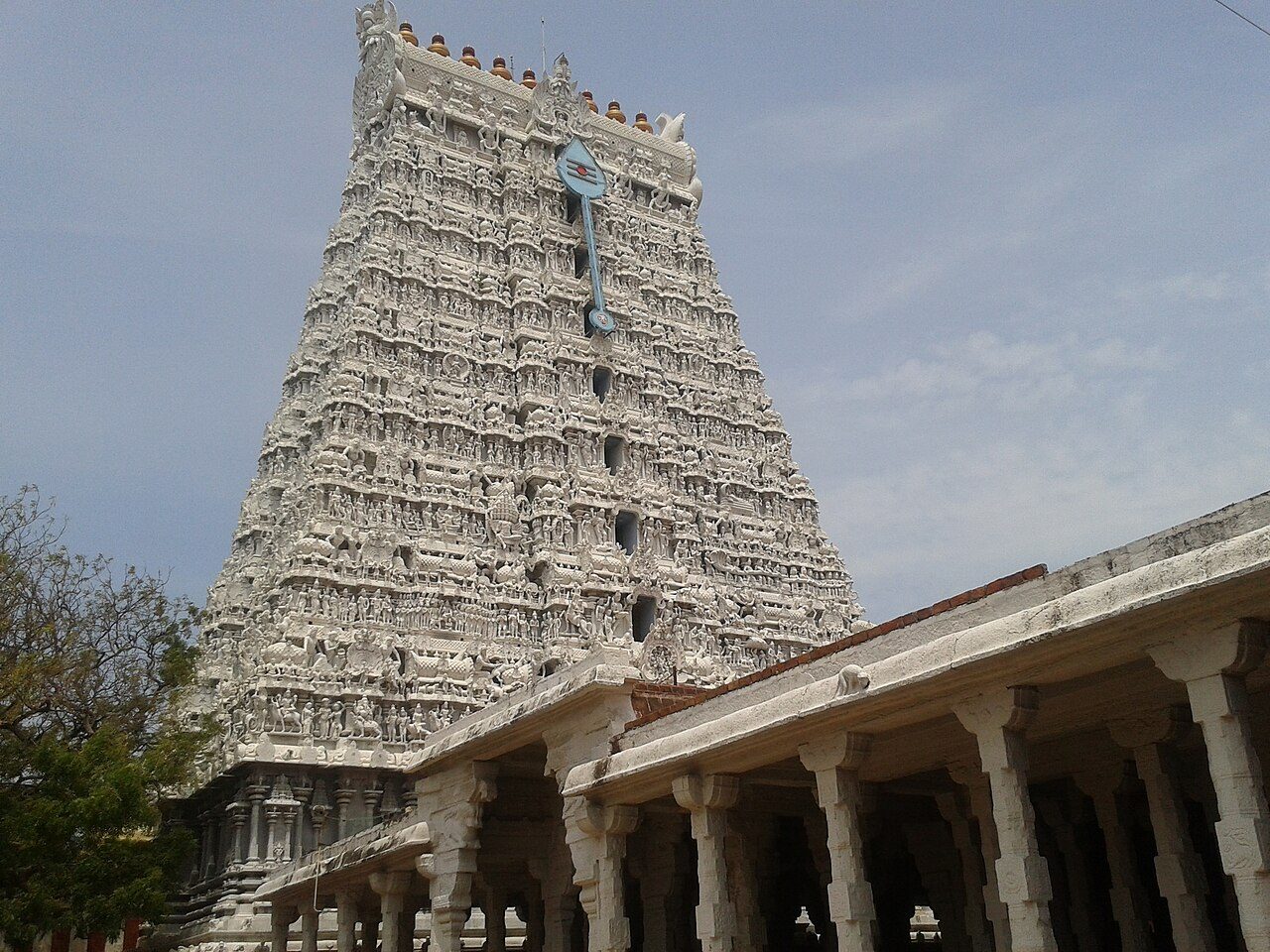
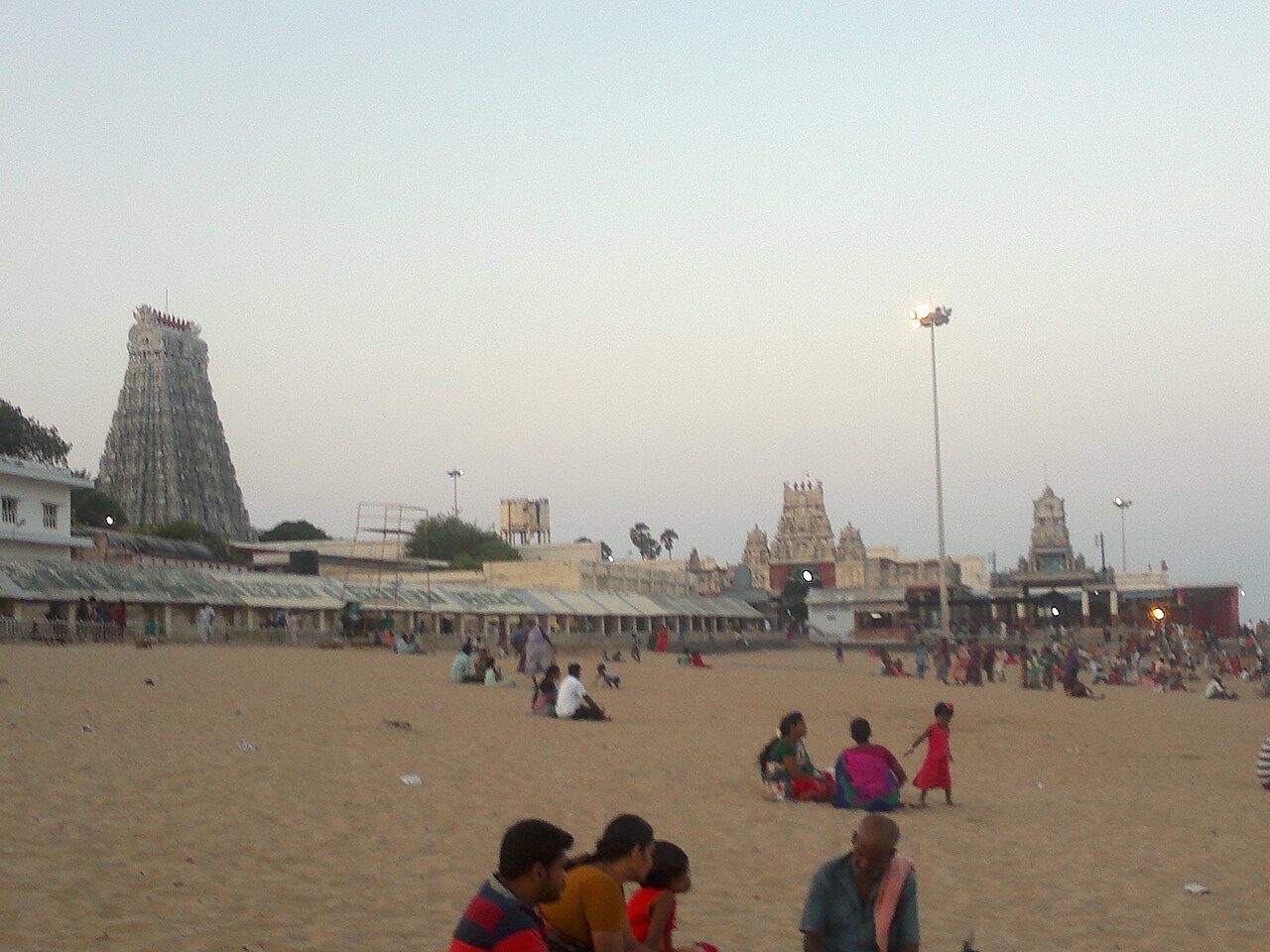
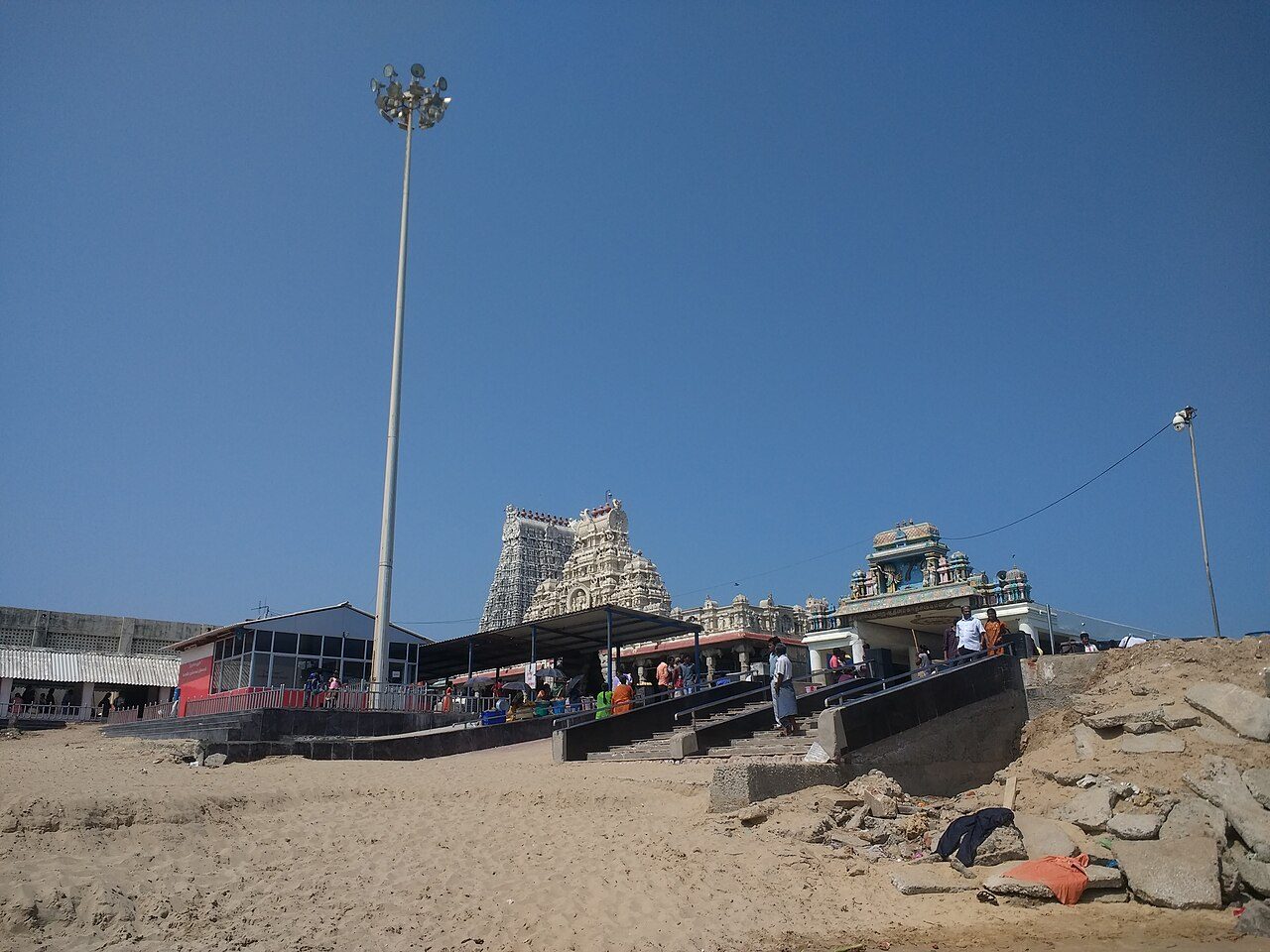
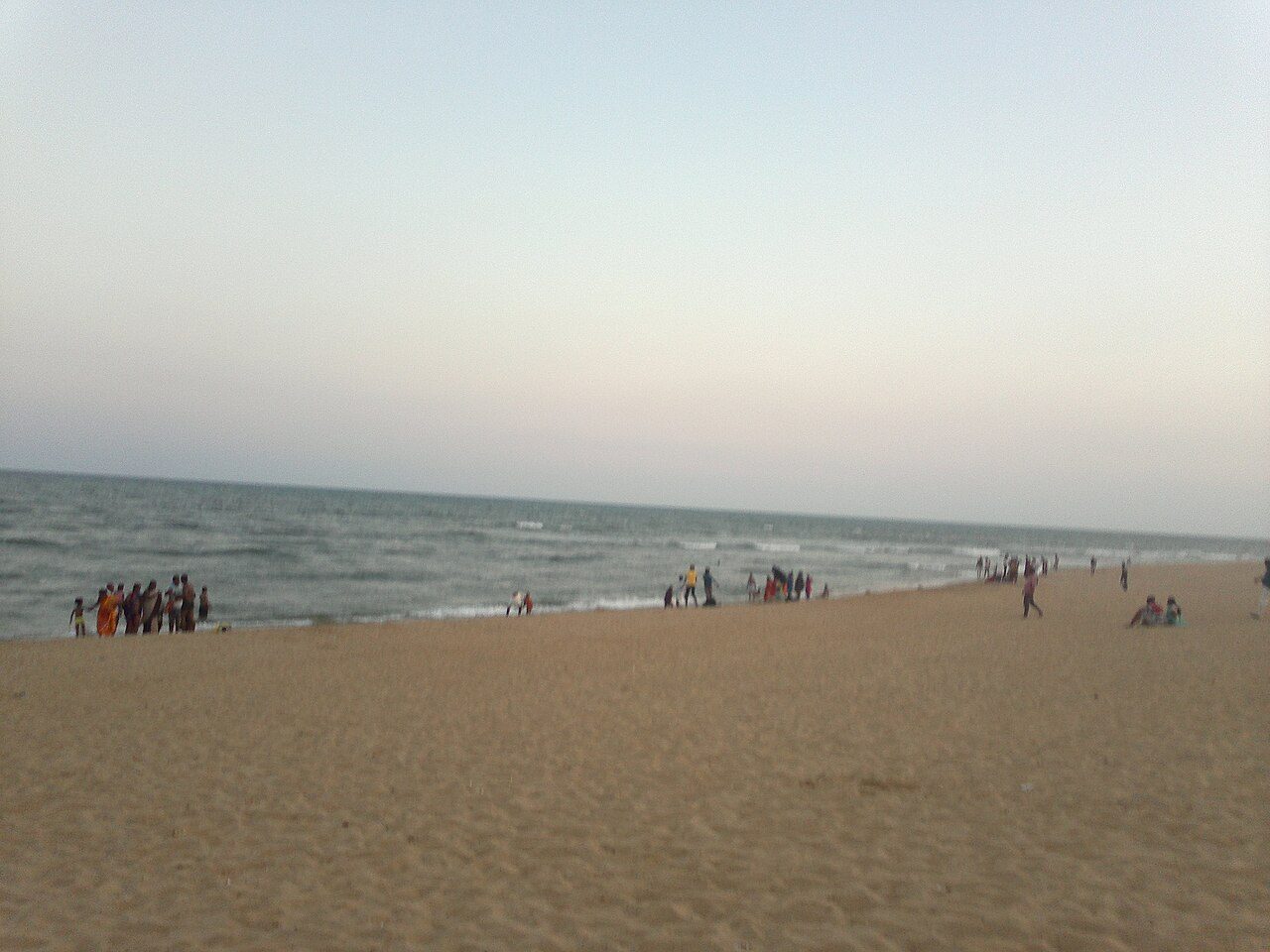
The only one of Murugan's six sacred abodes set on the seashore, this temple stands right beside the Gulf of Mannar, where the god is believed to have defeated the demon Surapadman. The Skanda Sashti festival in October and November re-enacts the battle on the beach before huge crowds. The nine-tier rajagopuram rises more than 40 metres, and pilgrims bathe in the sea and at the small Nazhi Kinaru well before going in to worship.
Best weather: Dec – Mar
Seasons from 20 years of NASA POWER climate data.
Was this trip blog helpful?
0
0
Ready to follow this route?
Copy all 10 stops into your trip plans in the app.
 WaTrips